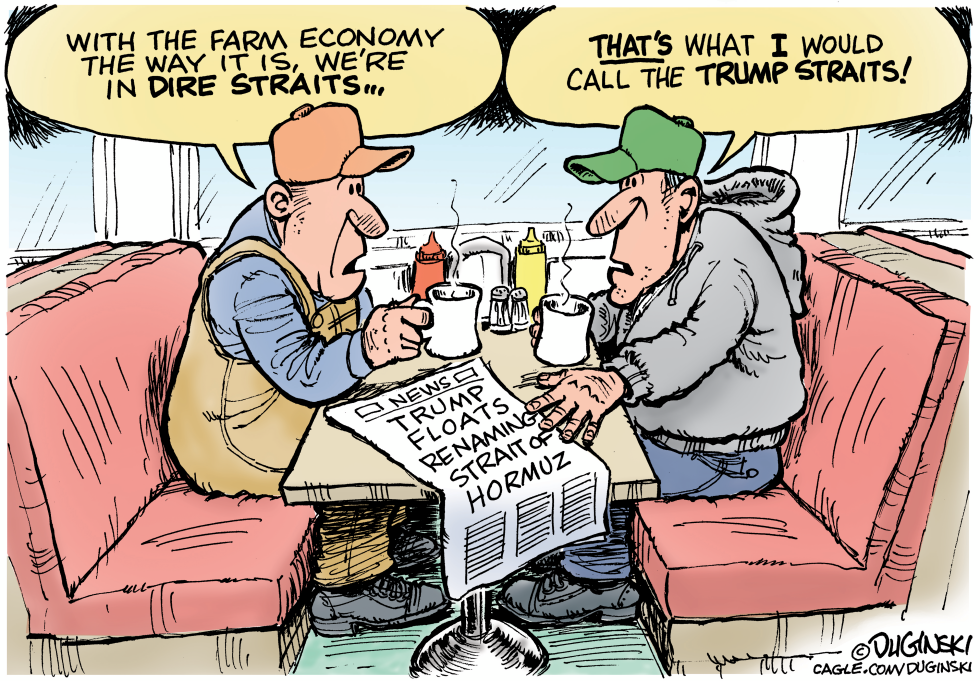
Donald Trump has floated the idea of renaming the Strait of Hormuz, a key Middle East shipping route, drawing attention to its potential effects on global trade and domestic sectors. The proposal arrives as agricultural producers face persistent economic challenges including high input costs and market volatility. The cartoon uses the pun on "dire straits" to connect the foreign policy suggestion to farm belt hardships, implying the rename distracts from or worsens real economic pressures on rural communities.
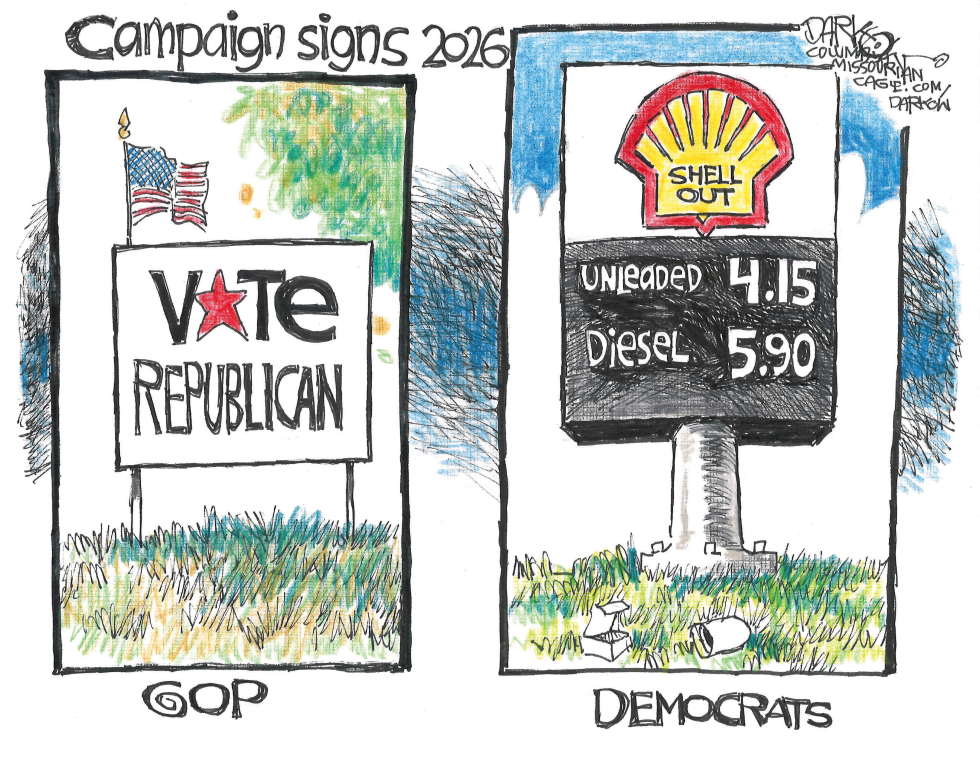
As the 2026 midterm campaigns intensify, Democrats confront voter frustration over elevated gasoline and diesel prices at the pump. The Shell station sign reading Shell Out with unleaded at $4.15 and diesel at $5.90 underscores how economic pressures can overshadow traditional political messaging. Republicans benefit from straightforward campaign signage while Democrats appear tied to the cost increases. The cartoon argues that fuel prices serve as a more potent electoral signal than yard signs for one party.
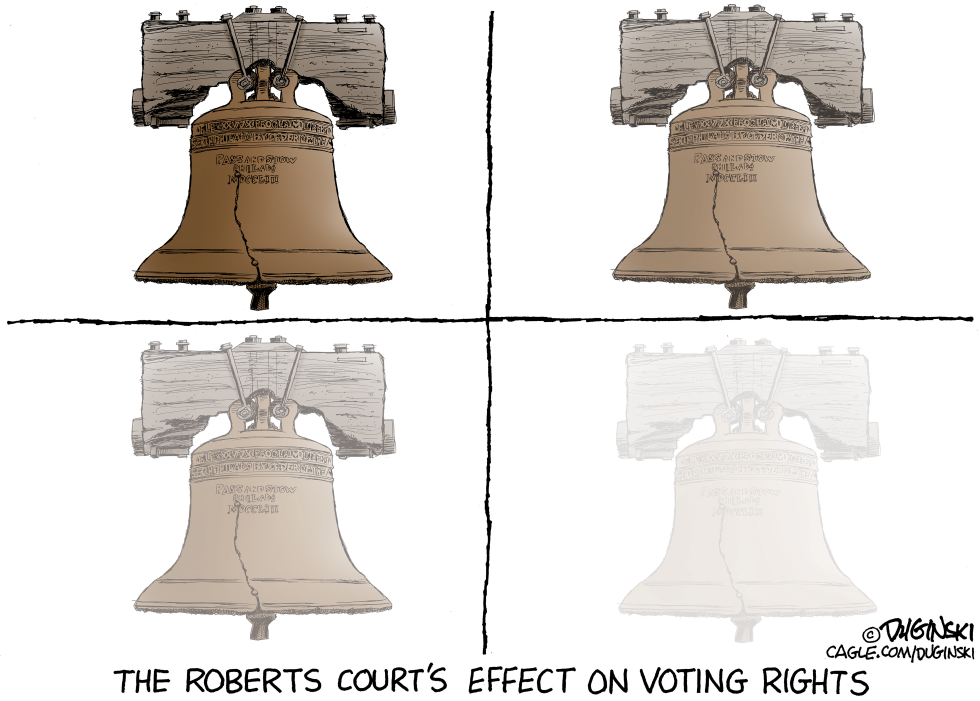
The Supreme Court under Chief Justice John Roberts has issued a series of decisions that have curtailed key provisions of the Voting Rights Act, most notably in Shelby County v. Holder and subsequent cases limiting federal oversight of state election laws. These rulings have shifted power to states, enabling new voting restrictions in multiple jurisdictions. The editorial cartoon frames this judicial trend as a deliberate fading of the Liberty Bell, a symbol of American liberty, to argue that the court's actions are systematically undermining voting access and protections established decades earlier.
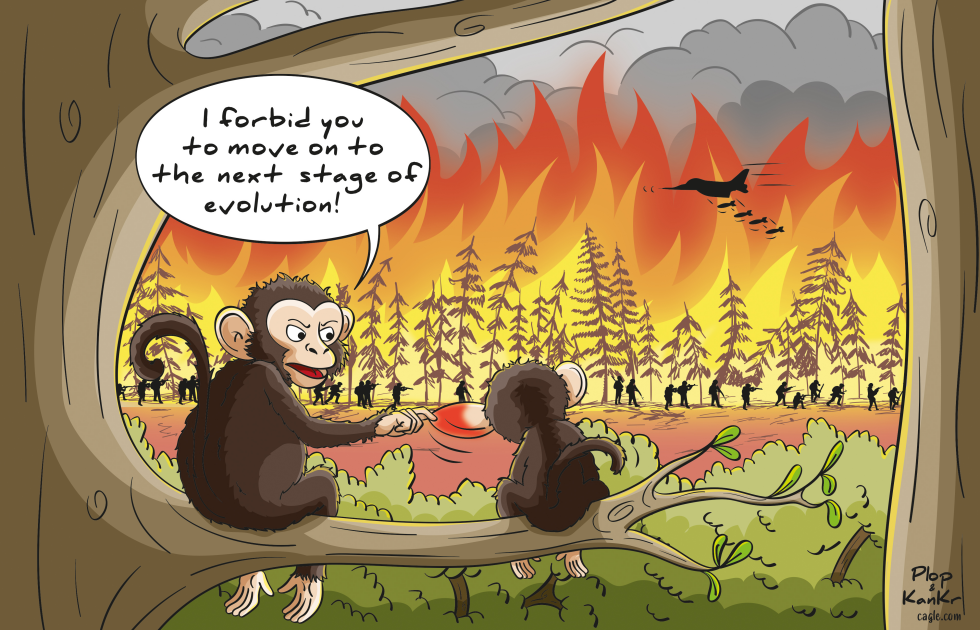
The cartoon published on September 7, 2026, shows two monkeys on a tree branch overlooking a forest fire. One monkey holds a red object and declares it forbids the next stage of evolution. In the background, soldiers stand in formation and a fighter jet flies overhead. The image responds to ongoing themes of war disrupting societal and human development. It uses the monkeys to represent humanity stalled by violence and destruction rather than advancing.
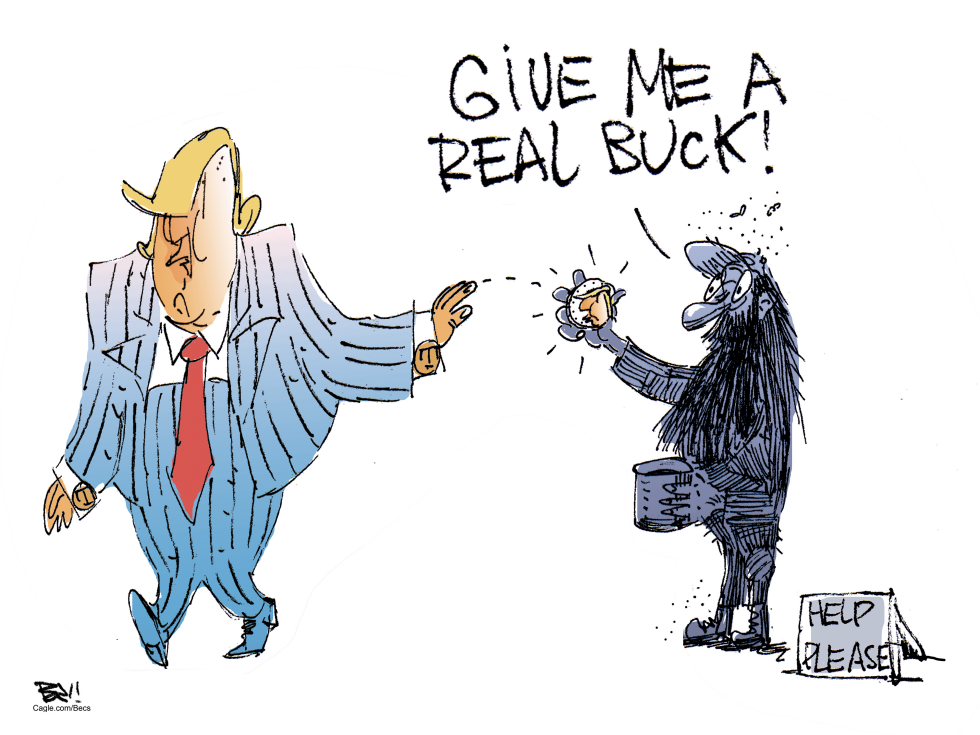
Donald Trump promotes a dollar bearing his image as a symbol of economic strength. The move draws immediate public pushback questioning its actual worth. Critics argue the branding fails to address underlying fiscal challenges. The cartoon frames the dollar as an unconvincing substitute that fails to satisfy basic needs for credible value.
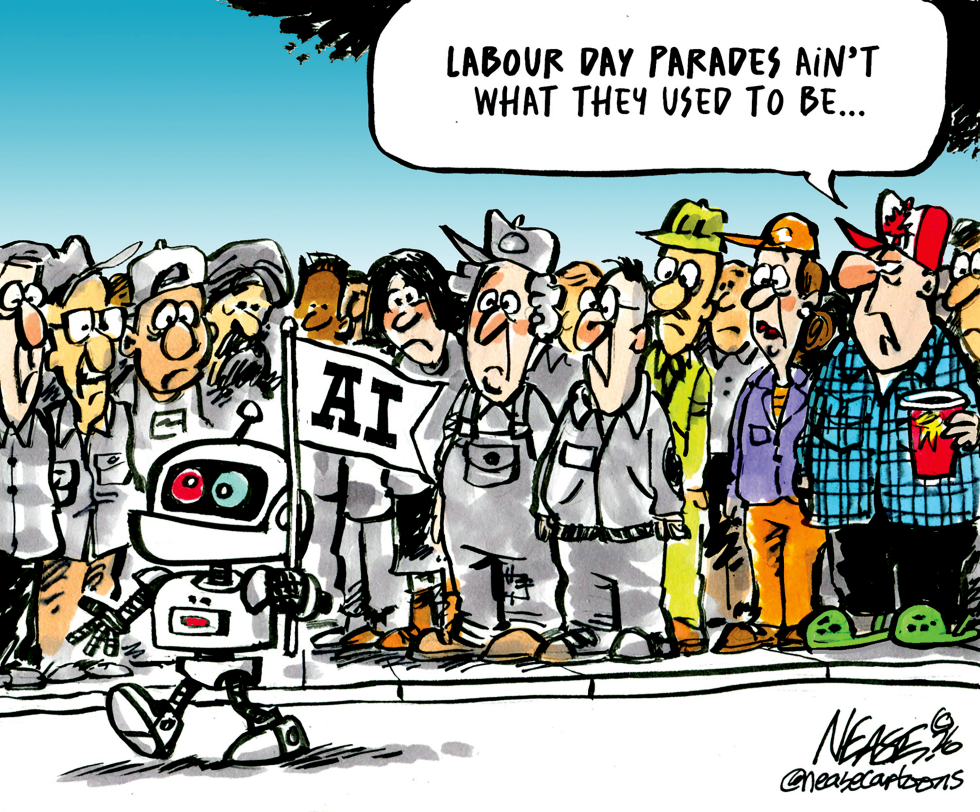
On Labour Day 2026, artificial intelligence continues its rapid integration into workplaces across Canada and beyond, prompting questions about job security for human workers. The cartoon captures this transition by placing a robot at the head of a traditional parade. The editorial position highlights the irreversible change automation brings to labor traditions and employment.
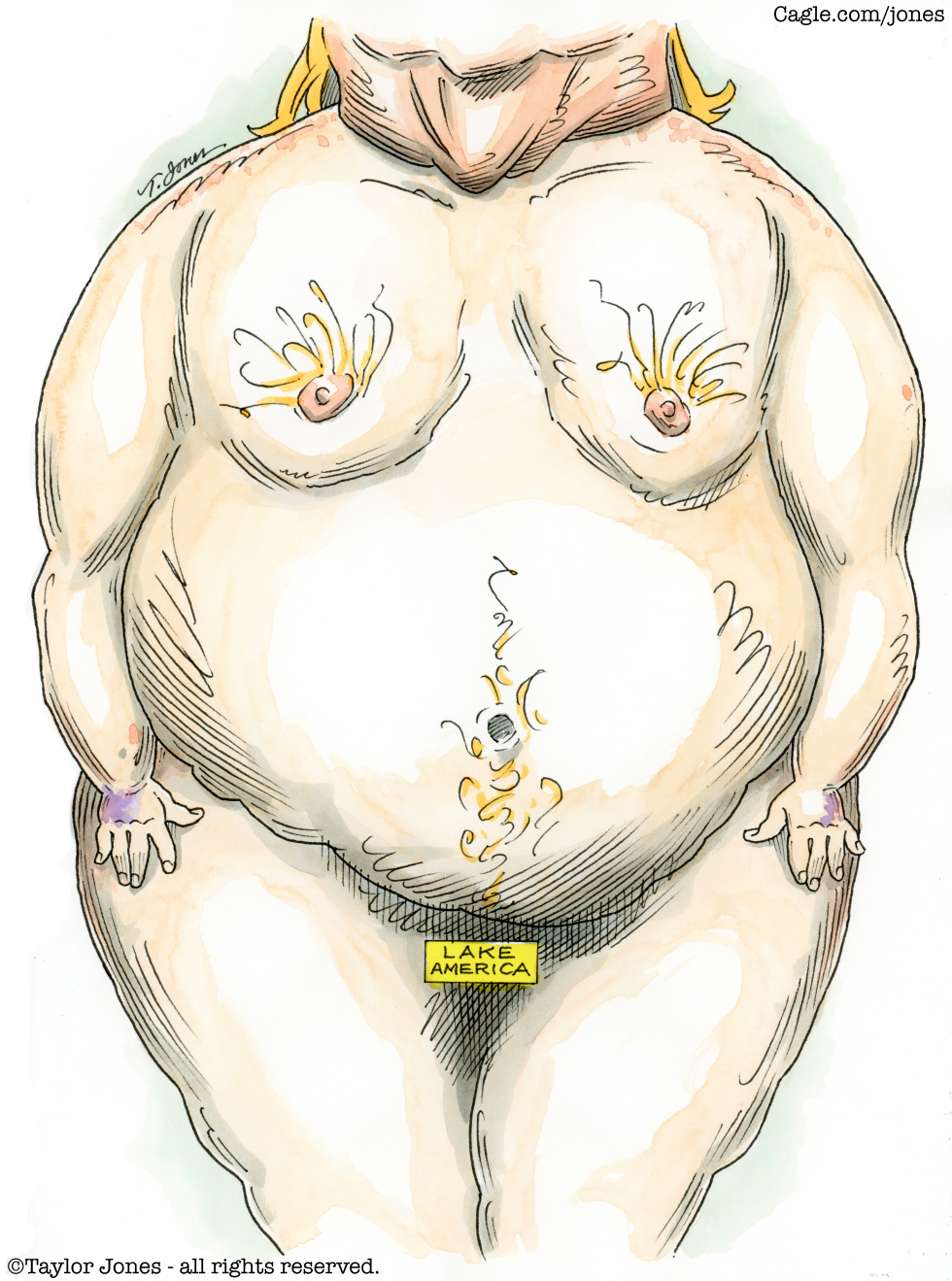
An assassination attempt on Donald Trump in 2024 left the former president wounded and the country shaken. The incident highlighted deep political divisions and risks of violence in American campaigns. The cartoon uses the Lake America label on the figure to argue that the attack damaged the nation itself, not just one man.
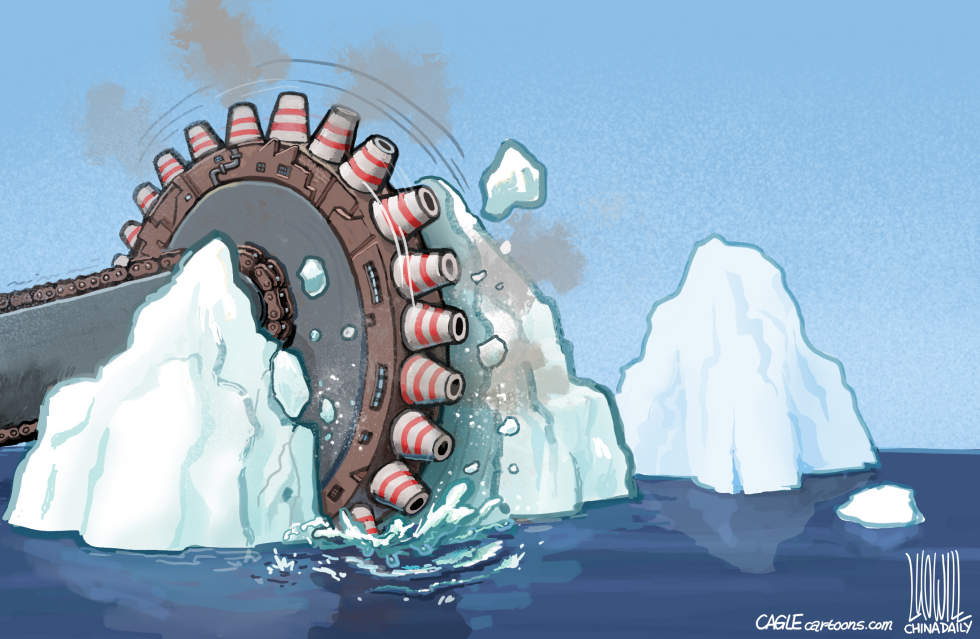
The cartoon depicts a large industrial drilling machine actively breaking through Arctic ice floes in open water. The machine features multiple red-and-white striped cylindrical components and emits dark exhaust. Icebergs float nearby under a clear sky. Published by China Daily, the image addresses ongoing concerns over resource extraction in polar regions and its contribution to ice loss.
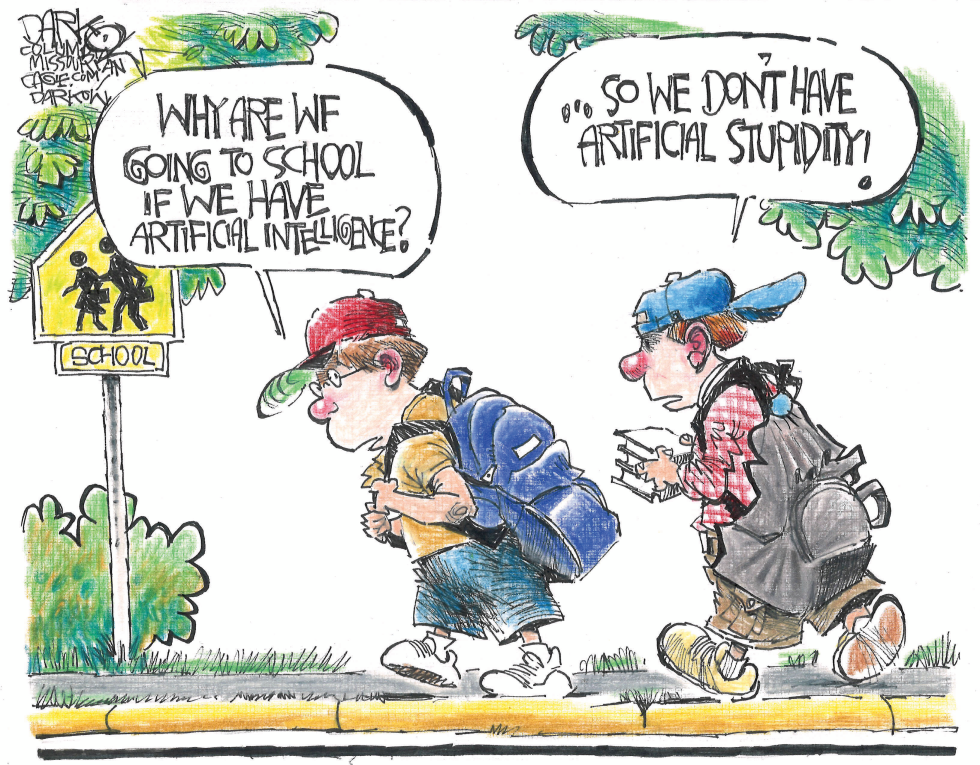
By 2026, rapid advances in artificial intelligence have prompted widespread questions about the ongoing role of traditional schooling. Students and educators alike wonder whether classroom learning retains value when AI tools can supply instant answers and assistance. The debate centers on whether reliance on AI risks producing graduates lacking critical thinking skills. Without structured education, society could face a generation marked by artificial stupidity rather than genuine understanding. The piece argues that schools remain necessary to build real intelligence and avoid that outcome.
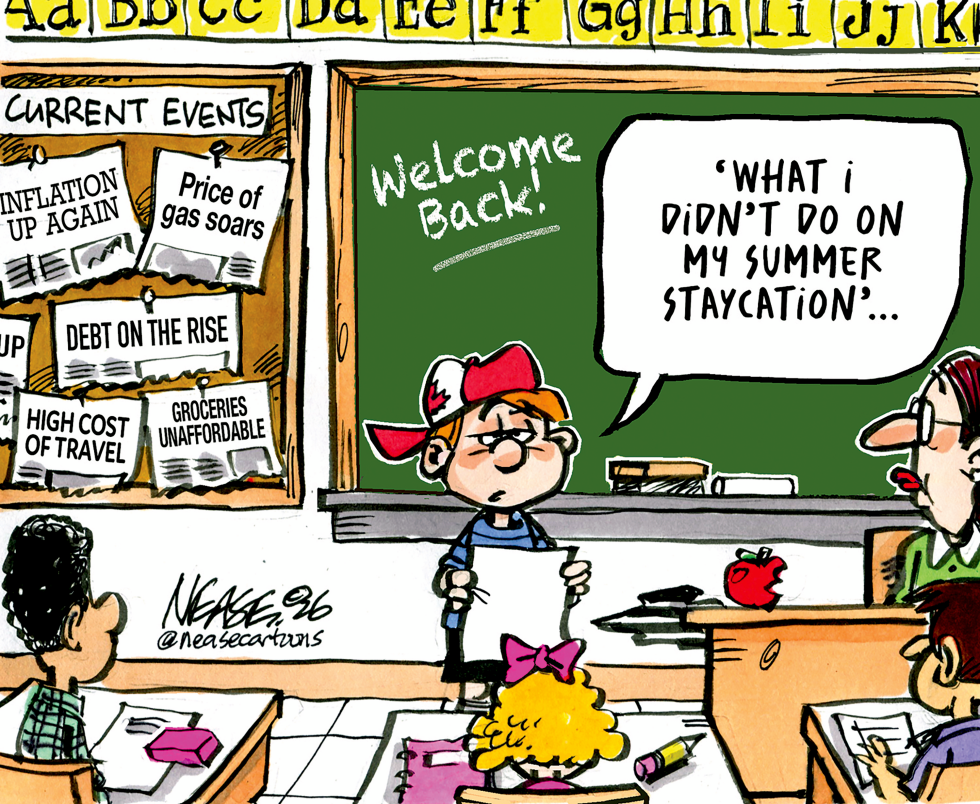
Rising inflation, gas prices, and household debt have made traditional summer vacations unaffordable for many families, leading to increased staycations as the new school year starts. The cartoon captures this cost-of-living squeeze through a classroom presentation on what students did not do over the break. It underscores how everyday expenses now dominate family decisions and limit leisure options.
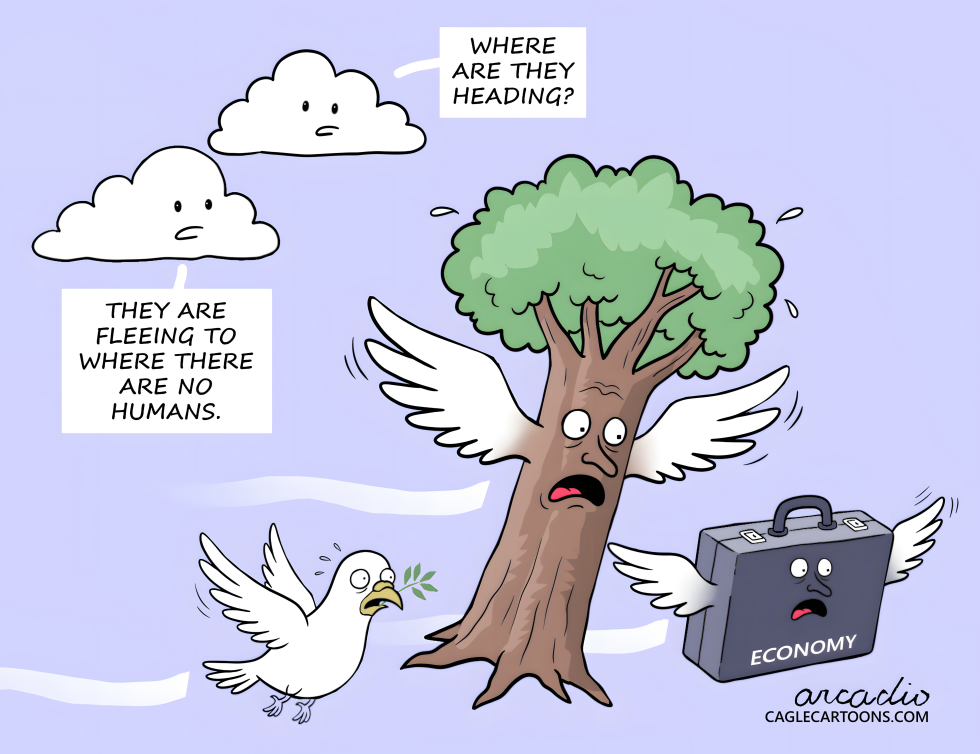
No single dated event anchors this cartoon, which addresses the ongoing dynamic of economic activity retreating from areas of heavy human environmental impact. The piece uses the visual of a winged briefcase labeled Economy fleeing alongside a concerned tree to highlight how unchecked human presence disrupts both natural systems and economic stability. It argues that reducing human interference allows nature to stabilize, indirectly benefiting long-term economic health by creating conditions where resources and peace can return.
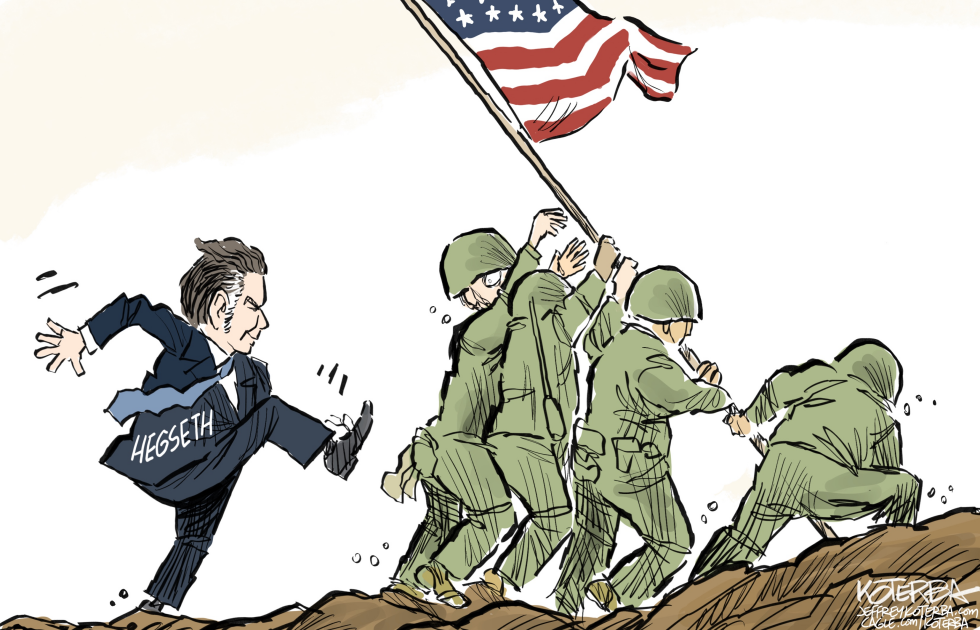
Pete Hegseth's conduct as a defense figure has drawn scrutiny for its effects on military readiness. Reports and commentary point to internal friction and lowered morale within the armed forces. The cartoon frames these developments as direct interference that leaves troops struggling to maintain core functions. Critics argue the pattern reflects broader leadership shortcomings at a time when force preparedness faces external pressures. The piece takes the position that Hegseth's approach actively harms the institution rather than strengthening it.
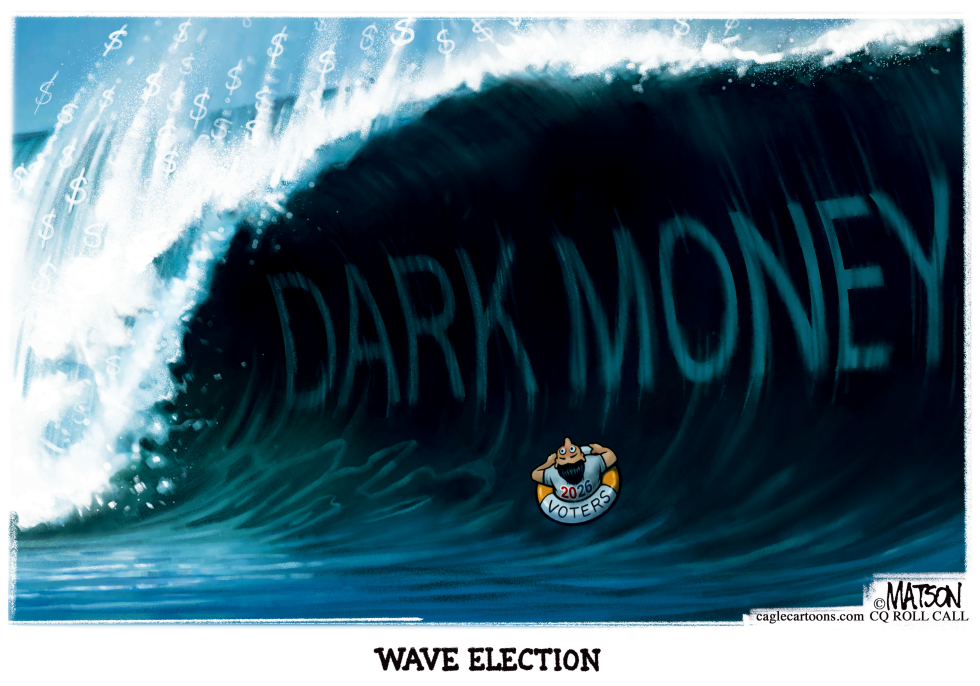
Unregulated dark money continues to pour into the 2026 election cycle, raising concerns that voters will be sidelined by massive undisclosed spending. The influx comes as candidates and outside groups prepare for midterm contests across the country. Critics argue the surge distorts democratic participation and drowns out ordinary voices. The editorial cartoon depicts this dynamic as an overwhelming wave labeled dark money bearing down on a lone voter buoy. It takes the position that such spending poses a direct threat to fair elections and calls for stronger safeguards.
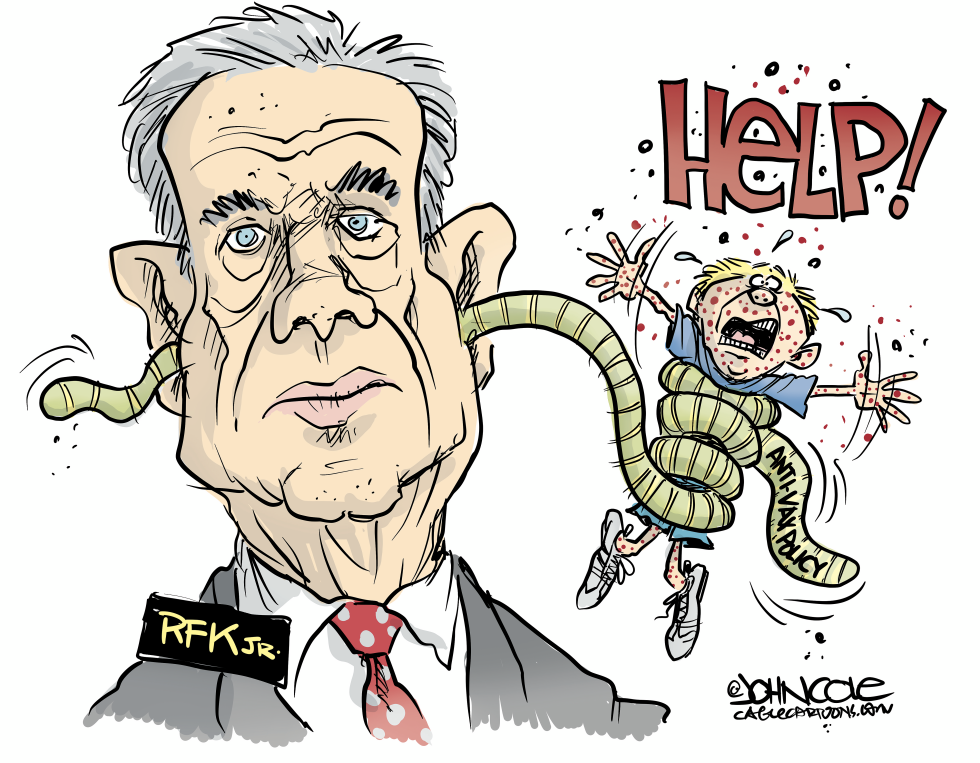
Robert F. Kennedy Jr faces renewed scrutiny over his past brain worm infection and longstanding anti-vaccine positions as he influences health policy. The episode highlights risks to childhood immunization rates and public trust in medical guidance. The piece argues these personal and ideological factors directly threaten child safety.
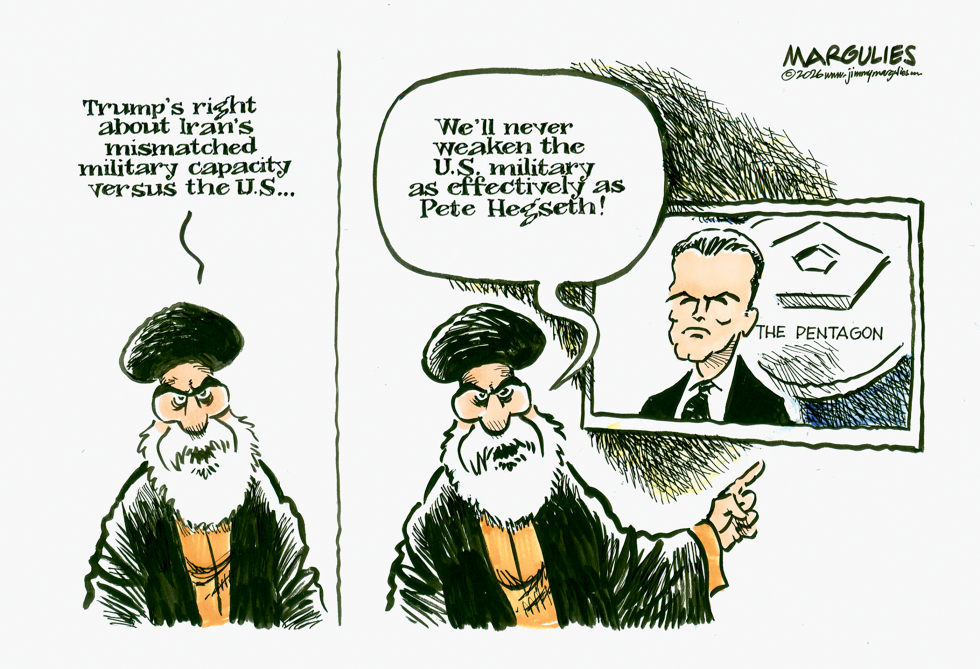
On September 2, 2026, an editorial cartoon shows Iran's Ayatollah endorsing Pete Hegseth's leadership at the Pentagon by claiming he weakens the US military more effectively than Iran could. The piece references Trump's prior assessment of Iran's inferior military capacity. It highlights concerns over Hegseth's qualifications and potential damage to US defense readiness under the Trump administration. The cartoon argues that Hegseth's appointment poses a greater internal threat to American military strength than external adversaries like Iran.