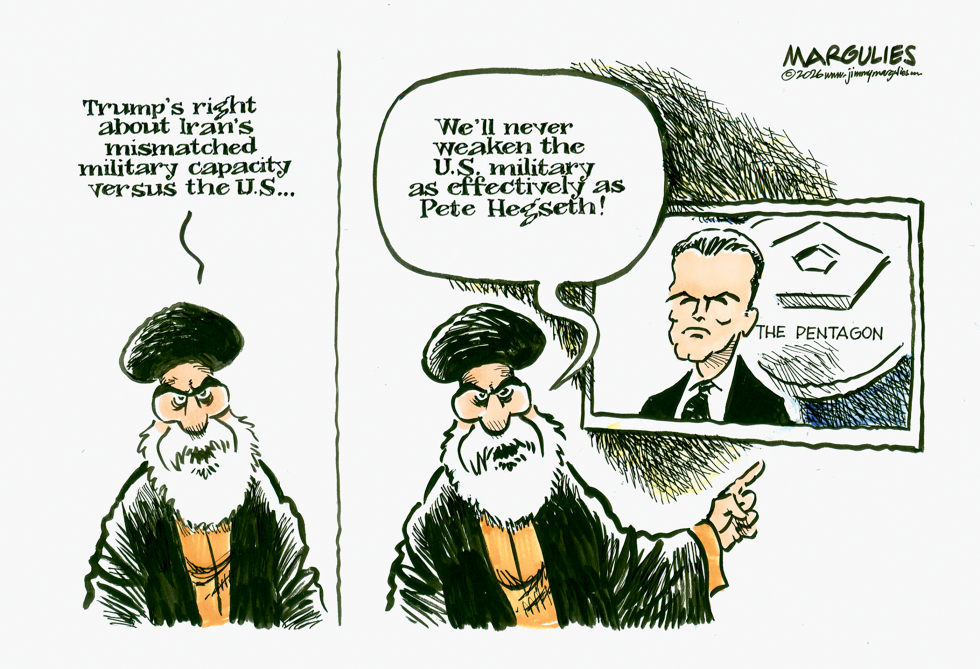
On September 2, 2026, an editorial cartoon shows Iran's Ayatollah endorsing Pete Hegseth's leadership at the Pentagon by claiming he weakens the US military more effectively than Iran could. The piece references Trump's prior assessment of Iran's inferior military capacity. It highlights concerns over Hegseth's qualifications and potential damage to US defense readiness under the Trump administration. The cartoon argues that Hegseth's appointment poses a greater internal threat to American military strength than external adversaries like Iran.
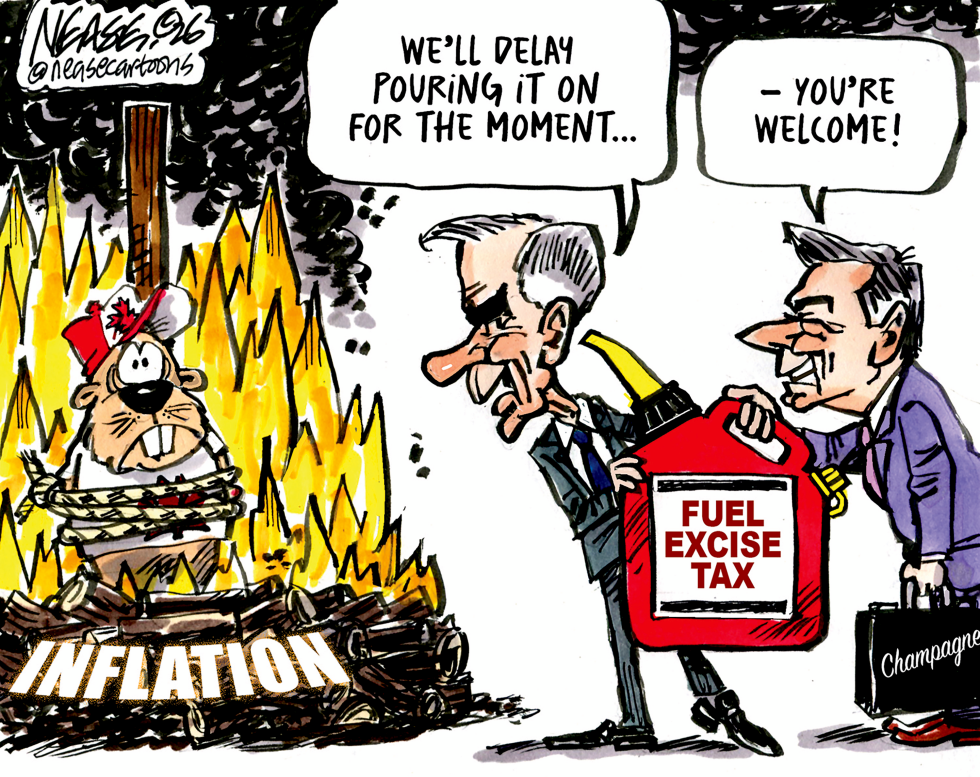
President Biden announced a delay in implementing a fuel excise tax increase amid ongoing inflation pressures. The move aims to ease costs at the pump for consumers. Critics argue the delay offers only temporary relief without addressing root causes. Supporters see it as a pragmatic step to stabilize prices. The editorial takes the position that such delays highlight inconsistent economic leadership.
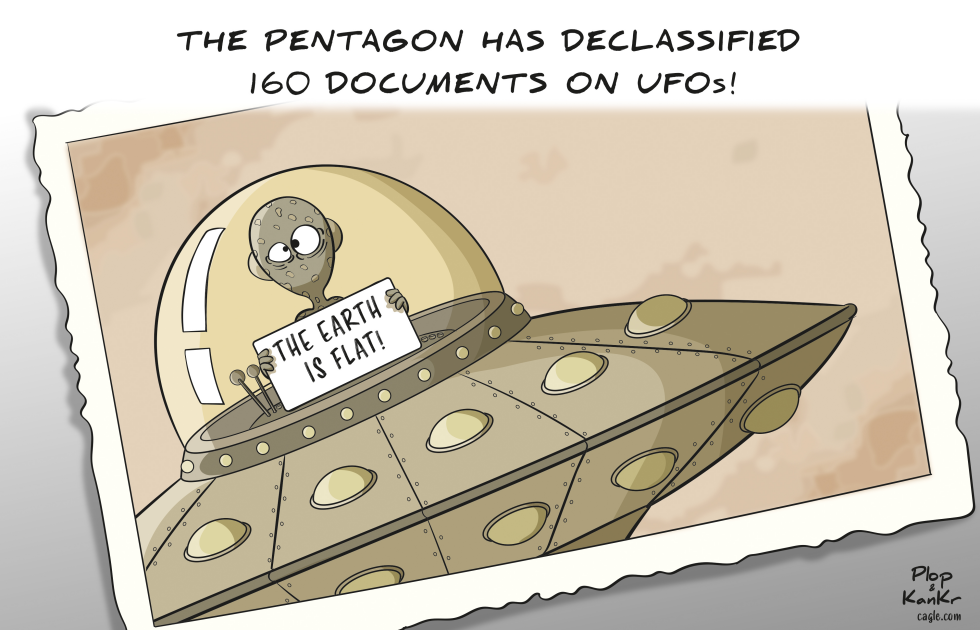
The cartoon depicts an alien emerging from a UFO while holding a sign declaring the Earth is flat. Text above notes the Pentagon has declassified 160 documents on UFOs. The image uses the recent release of government files to highlight ongoing flat earth beliefs in a humorous way. It responds to public interest in UFO disclosures by showing an extraterrestrial endorsing a fringe theory. The visual ties the declassification directly to the alien's claim without additional context.
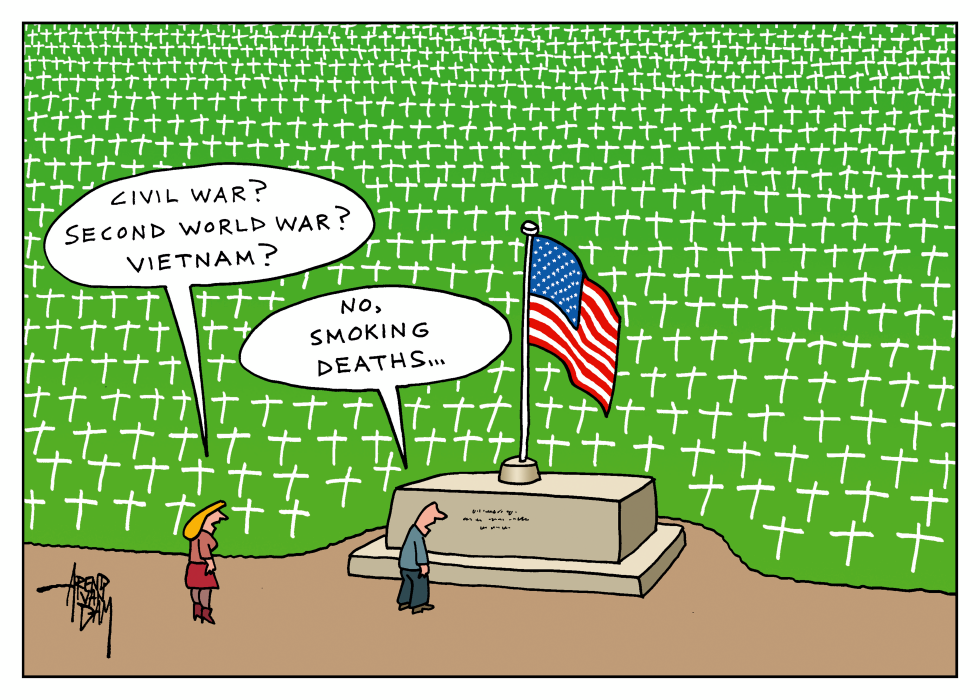
Tobacco-related deaths in the United States continue to surpass combined fatalities from major 20th-century conflicts. The piece uses a veterans cemetery motif to underscore that ongoing public health crisis and argues for greater recognition of smoking as a leading cause of preventable mortality.
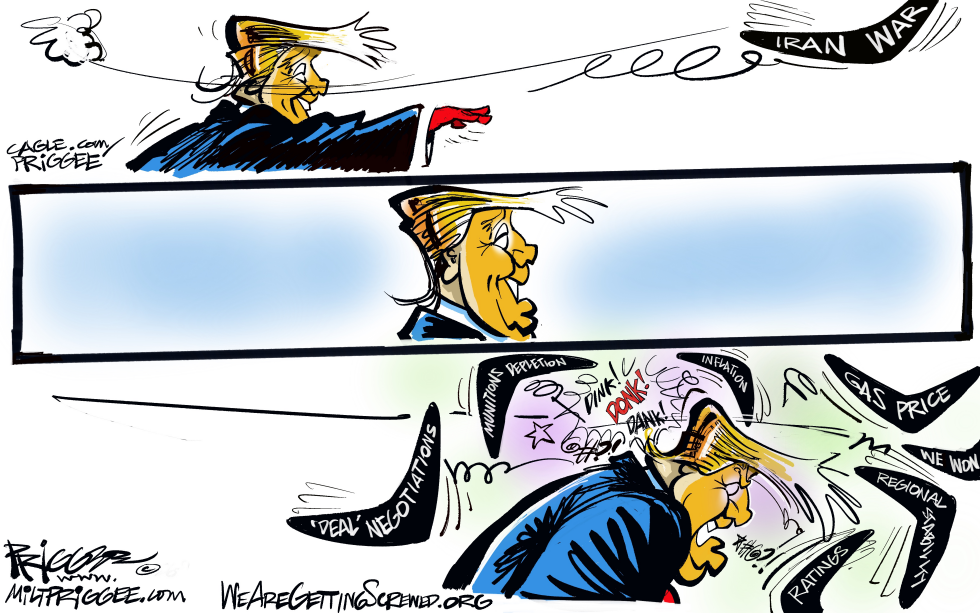
A political cartoon depicts Donald Trump launching an Iran war boomerang that returns to strike him with multiple crises. The image shows the former president hit by labels including inflation, gas prices, munitions depletion and falling ratings. The cartoon responds to ongoing tensions with Iran and the domestic fallout from military engagement. It illustrates how the conflict decision led to economic pressures and political damage as of the September 2026 publication date.
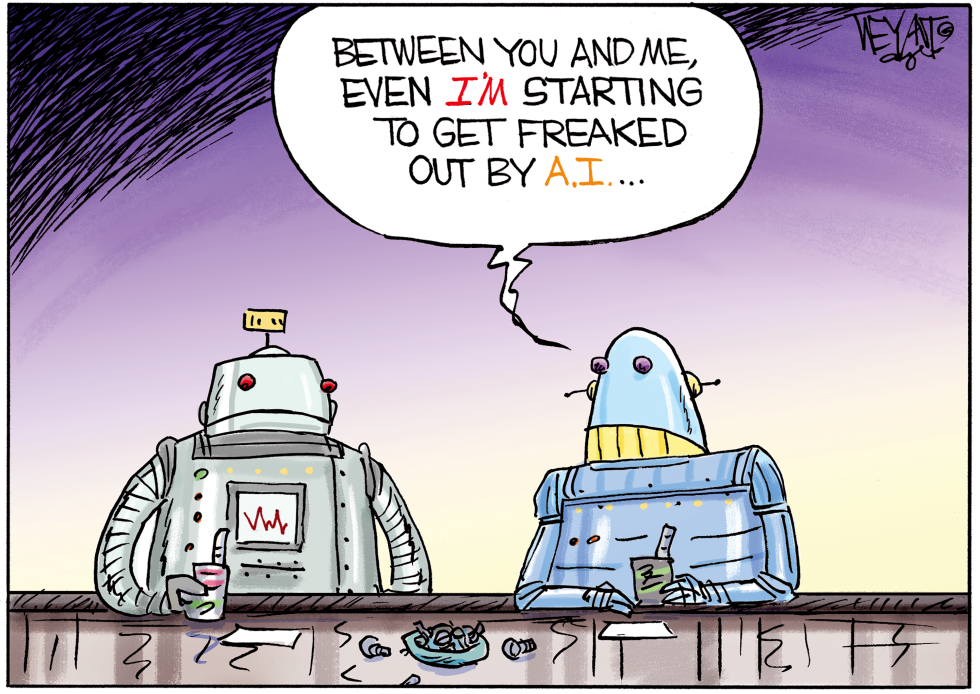
Developers continue pushing boundaries in artificial intelligence systems, raising questions about control, ethics, and long-term consequences for society. Public and expert discussions focus on whether safeguards can keep pace with innovation. The piece portrays robots themselves expressing alarm, underscoring the irony that even automated entities see risks in unchecked AI growth and the potential for machines to outpace their original programming.
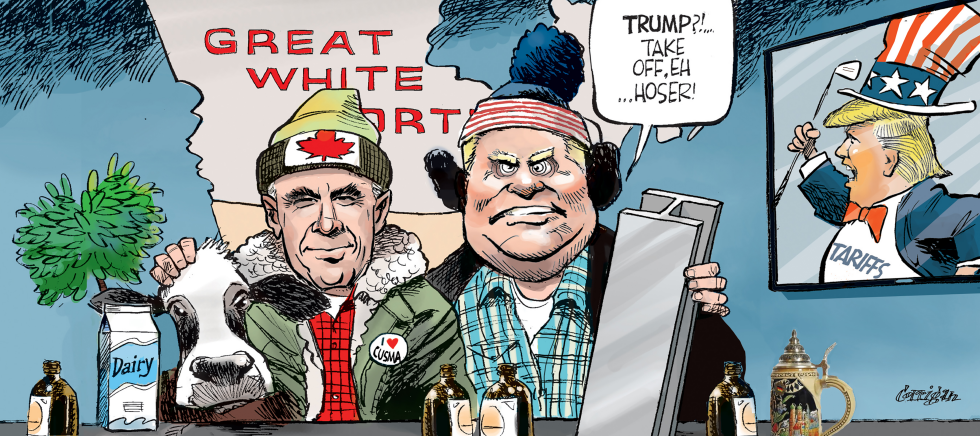
President Trump renewed tariff threats against Canada focused on dairy imports in late August 2026. Canadian leaders responded by highlighting domestic protections and cultural stakes. The move risks straining long-standing trade ties under existing agreements. The cartoon frames the confrontation as a direct challenge to Canadian sovereignty in agriculture. It portrays US policy as aggressive posturing that ignores mutual economic interests.
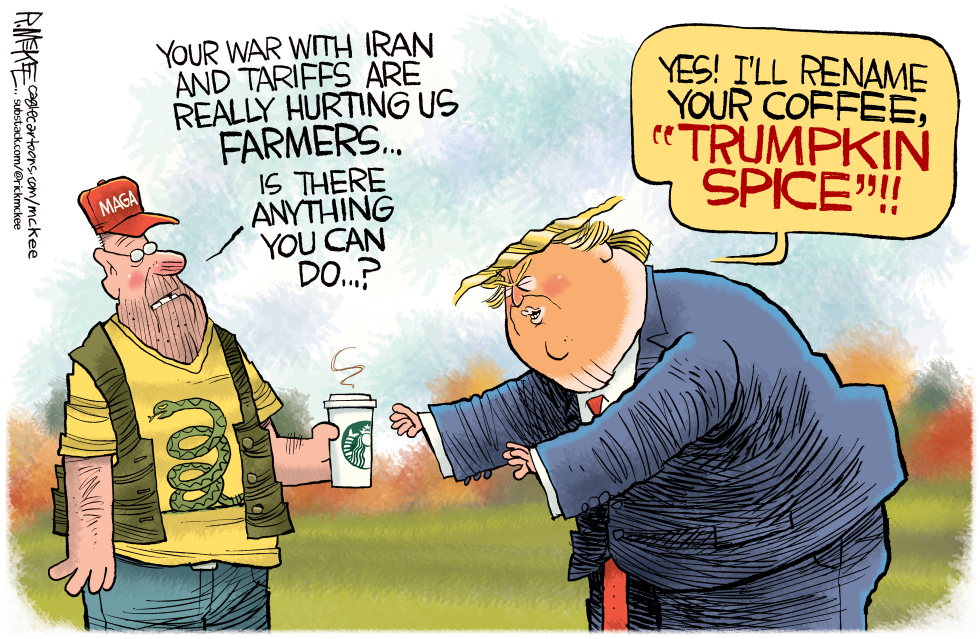
Farmers have raised concerns over the effects of tariffs and tensions with Iran on their livelihoods. President Trump responded by proposing to rename their coffee Trumpkin Spice rather than adjusting policy. The exchange underscores the administration's approach to addressing rural economic complaints through branding gestures instead of substantive relief measures. Critics argue this misses the core issues facing agricultural communities. The cartoon presents the interaction as emblematic of misplaced priorities in handling trade disputes and international relations.
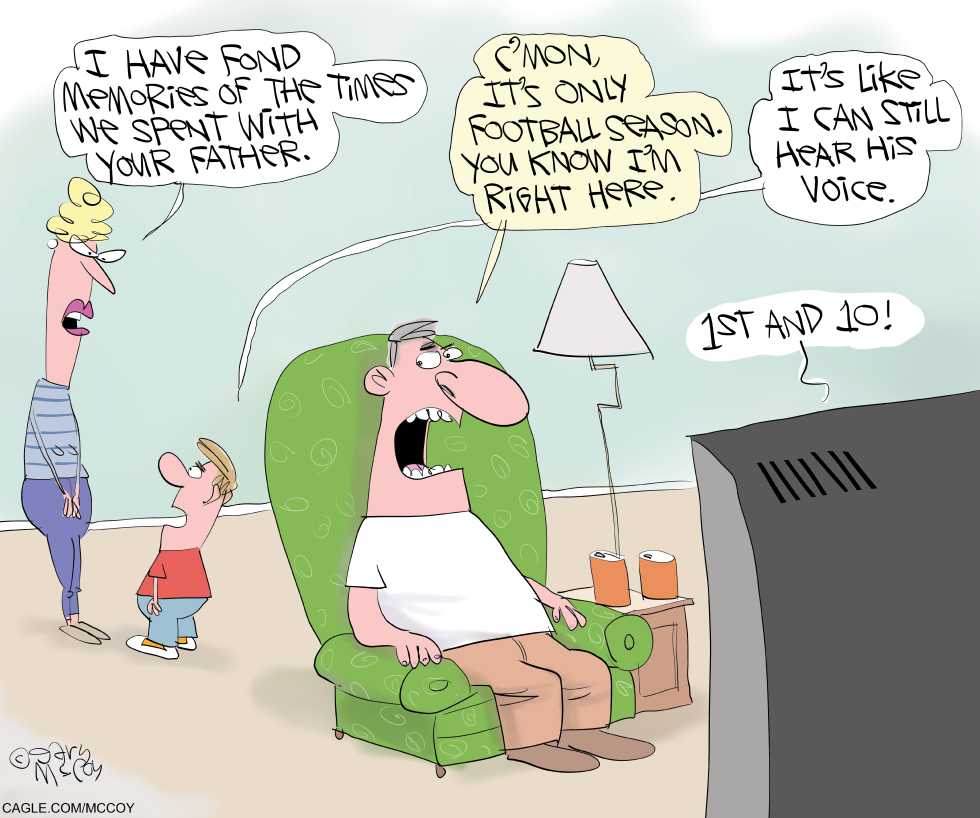
A father glued to the television during football season prompts his wife and child to speak about him in the past tense, highlighting how sports viewing can sideline family interaction. The piece underscores the common tension between game-day immersion and household connection.
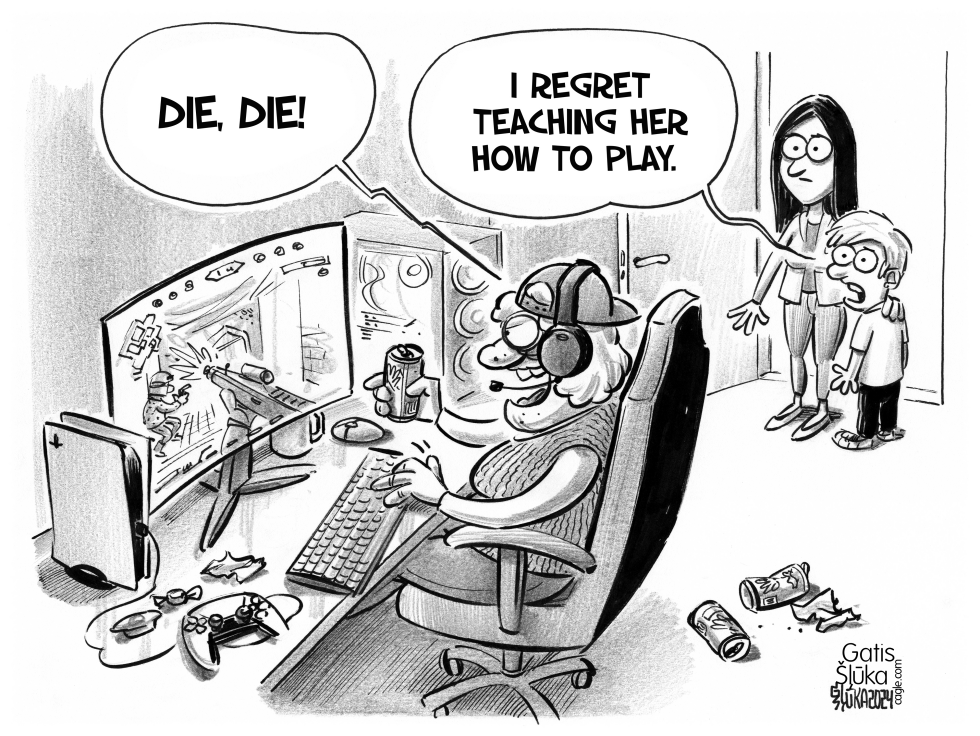
An elderly grandfather becomes engrossed in a violent video game, shouting aggressively at the screen while his family watches in shock. The cartoon depicts the man in a gaming setup with a headset and beer, surrounded by clutter, as a woman and child observe from the doorway. The woman's speech bubble expresses regret over teaching the game. This scene comments on the spread of gaming habits across generations and the unintended consequences of introducing violent video games to family members.
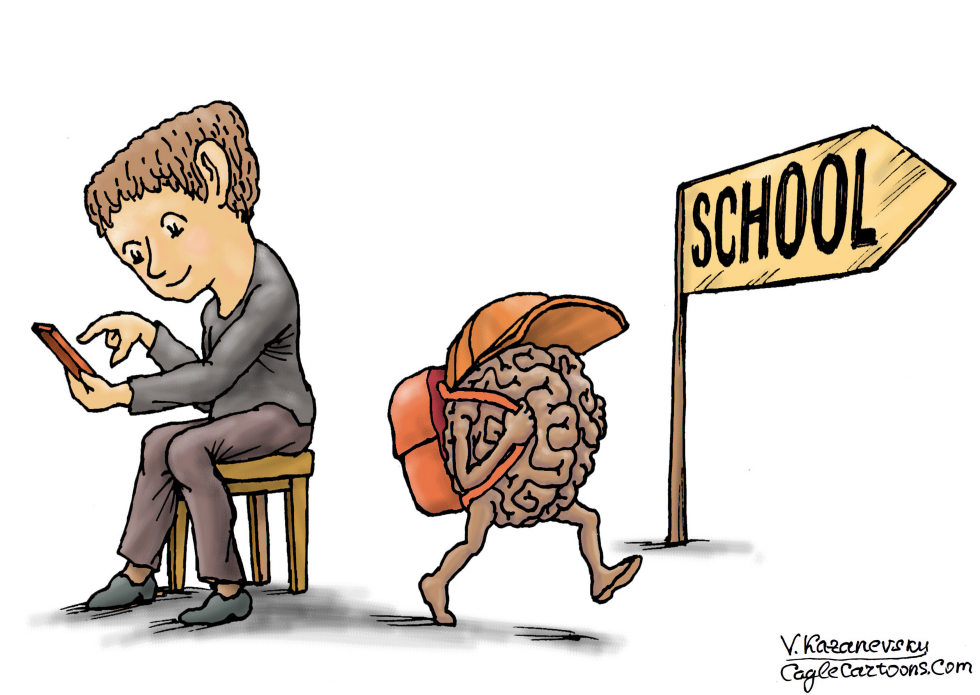
Schools continue to grapple with widespread smartphone use among students that diverts attention from classroom learning. The issue matters because constant device access fragments focus and reduces academic engagement at a critical developmental stage. The piece argues that the brain itself must literally head to school while the distracted student remains behind.
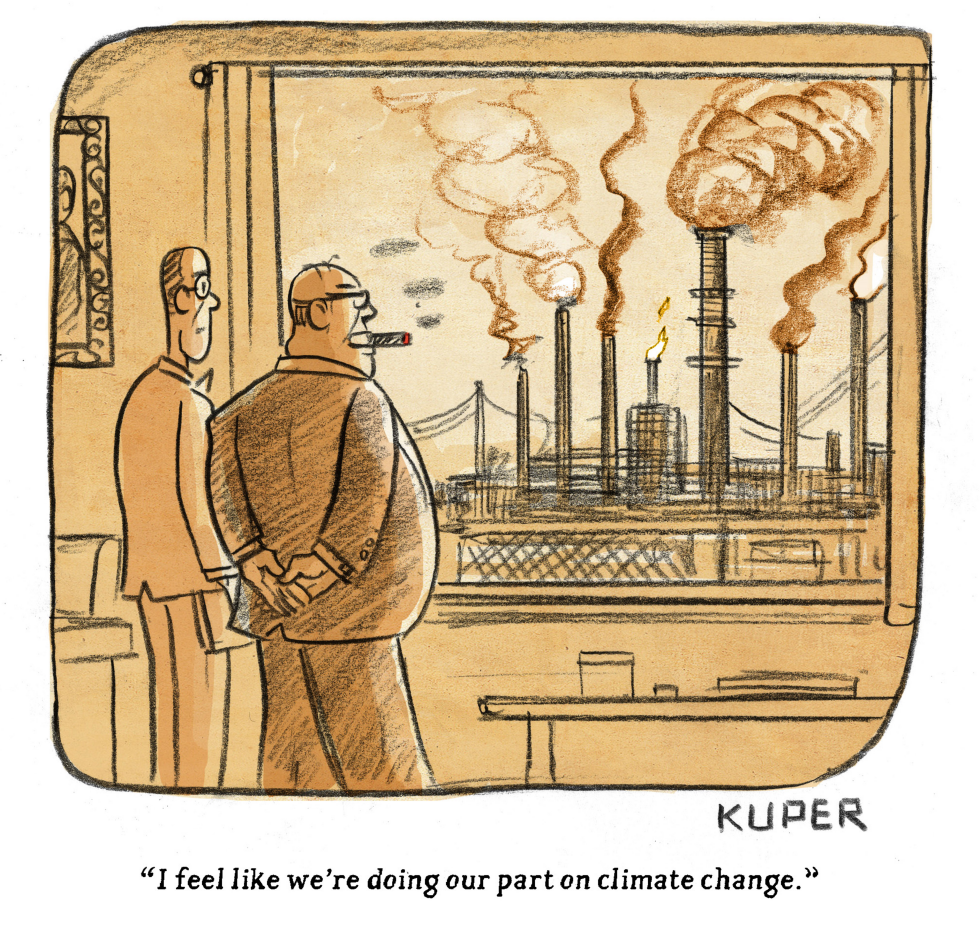
Corporate executives continue to oversee industrial operations that release substantial emissions into the atmosphere. This ongoing pattern occurs as global temperatures rise and regulatory pressures mount on heavy industry. The situation highlights tensions between profit-driven activities and environmental accountability. The piece portrays the executives as detached from the consequences of their facilities. It critiques the tendency among business leaders to minimize their sector's role in climate issues despite clear evidence of ongoing pollution.
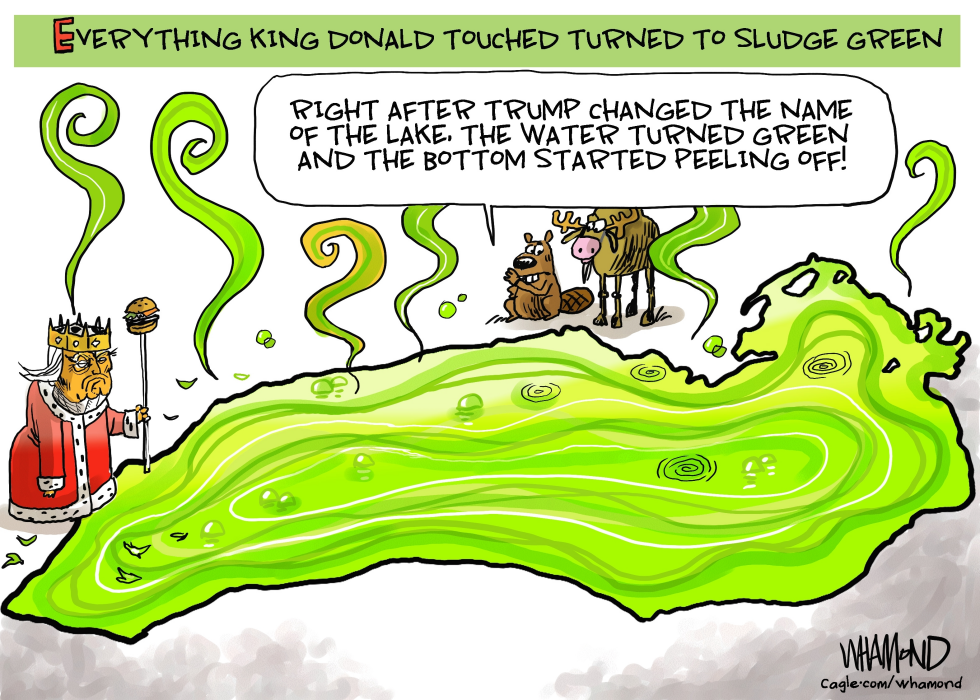
Donald Trump, depicted as a king, changes the name of a lake, after which the water turns green with sludge and the bottom begins peeling. Wildlife observers connect the timing directly to the renaming. The development raises concerns about environmental damage tied to executive actions. The piece portrays the outcome as an inevitable result of Trump's influence, turning natural areas into polluted sludge.
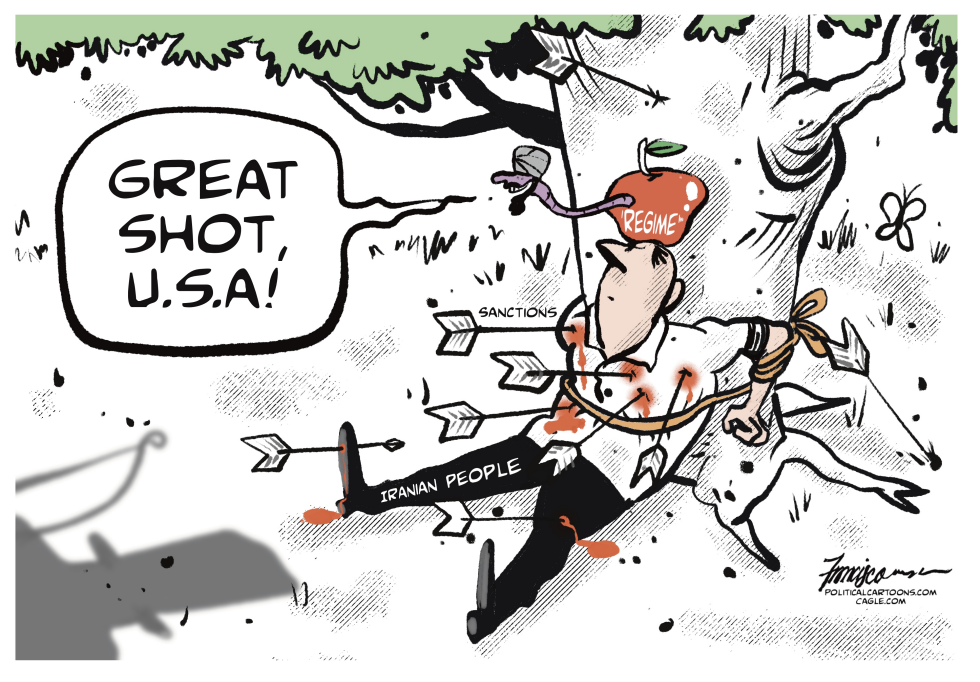
A political cartoon published August 30, 2026, illustrates US sanctions on Iran striking the Iranian people rather than the regime. The image shows a prone figure with an apple marked regime on its head and arrows labeled sanctions embedded in the body marked Iranian people. A speech bubble from the figure praises the shot by the USA. The work comments on the collateral effects of sanctions policy amid ongoing tensions between Washington and Tehran.
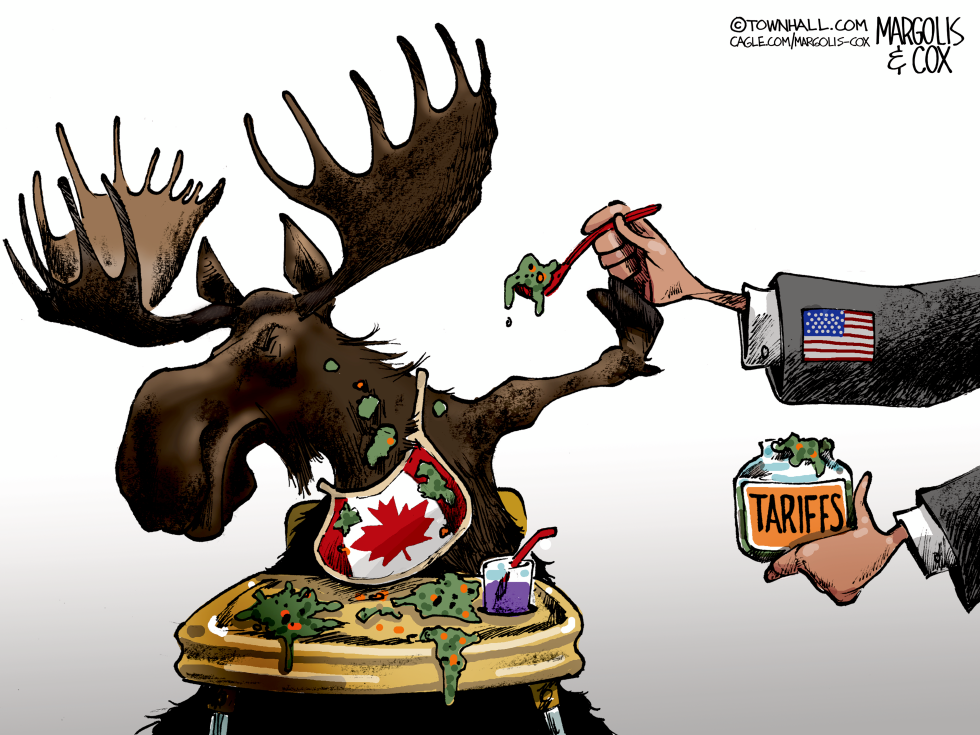
The United States has moved to impose new tariffs on Canadian goods, escalating ongoing trade frictions between the two nations. The policy aims to address perceived imbalances but risks straining the close economic partnership. The editorial position criticizes the approach as overly aggressive and counterproductive to mutual interests.