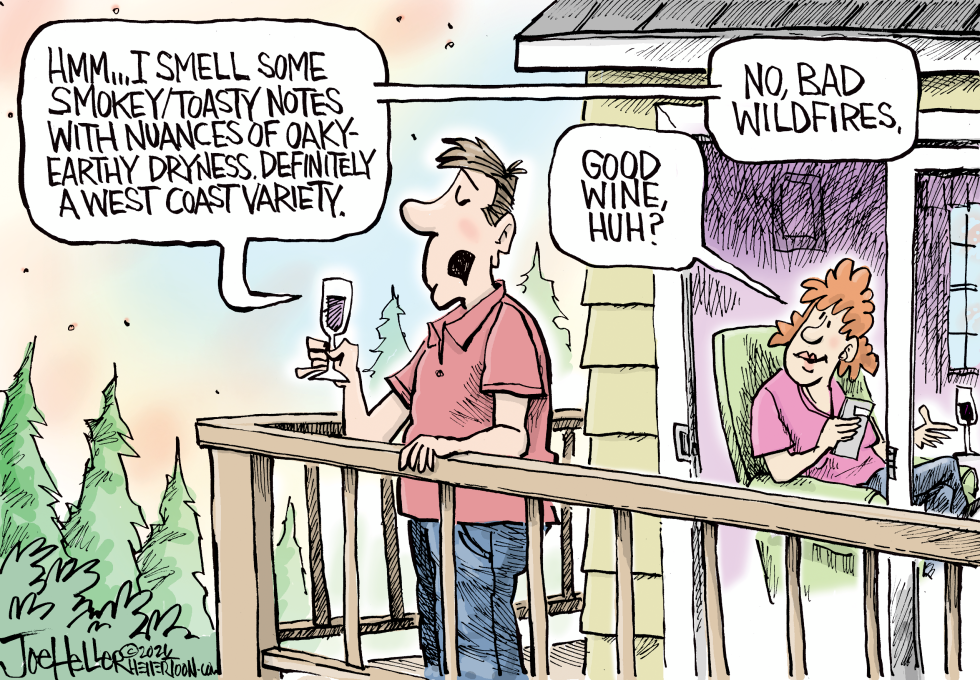
Wildfires burning across western regions have filled the air with thick smoke, prompting residents to stay indoors or adapt outdoor routines. The smoke's intensity has become noticeable even in casual settings like evening gatherings. This piece responds by showing a couple misidentifying the smoke as desirable wine characteristics, underscoring how routine activities now intersect with fire season realities and the need for greater awareness of environmental conditions.
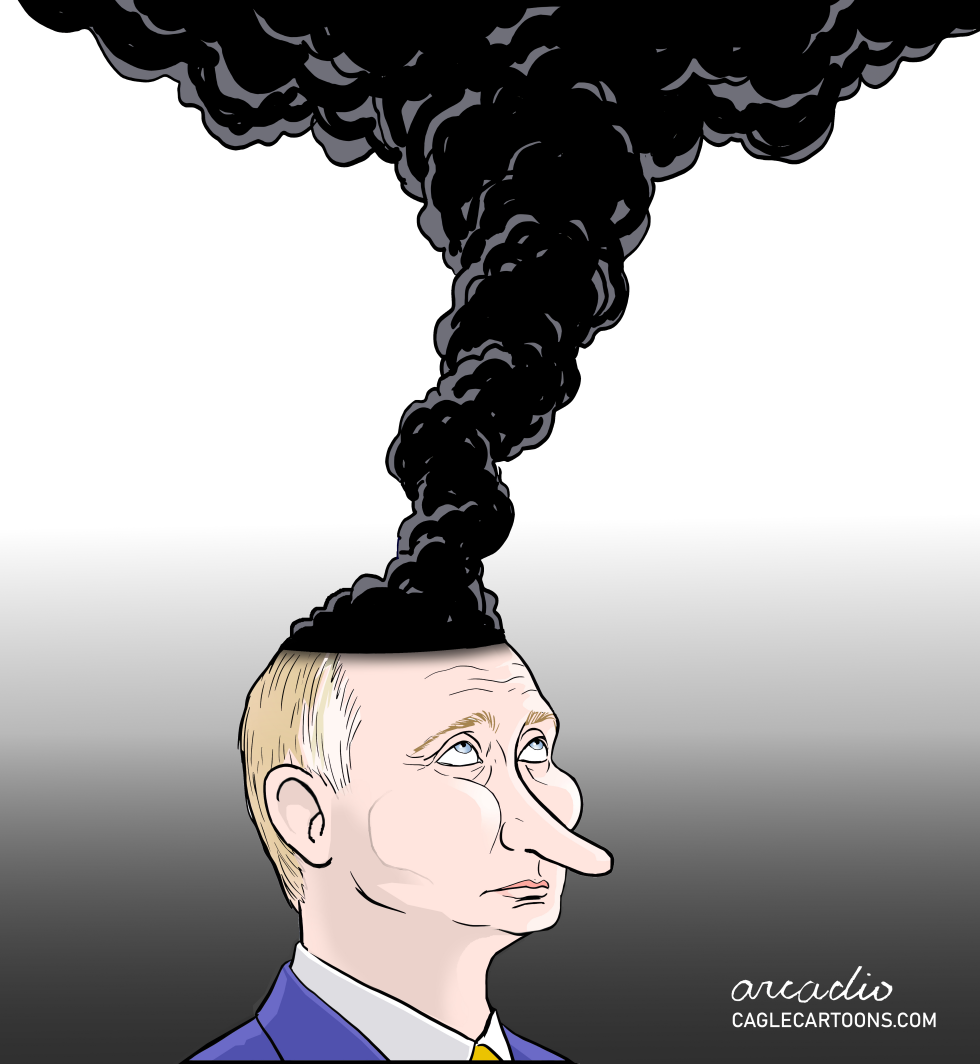
Ukraine has intensified strikes on Russian energy and industrial targets, aiming to disrupt Moscow's war funding. The moves come as Western sanctions already limit Russia's export revenues and force budget reallocations. The editorial position holds that sustained Ukrainian pressure can force Russia toward negotiations by eroding its financial base.
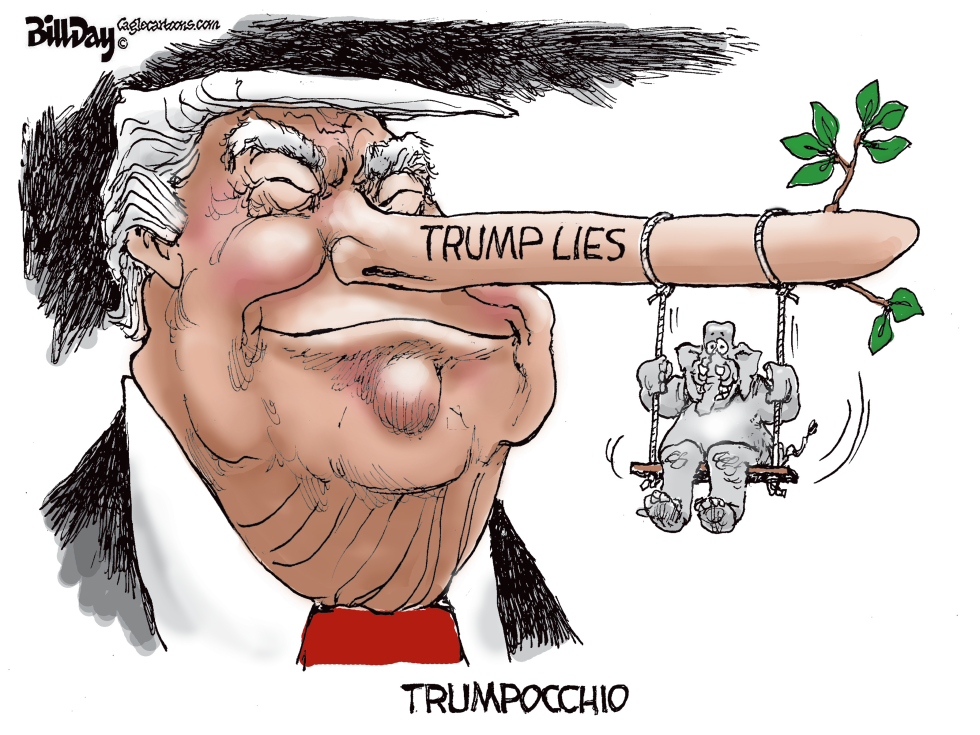
Donald Trump continues a pattern of public statements widely described as misleading. The Republican Party remains closely tied to those statements. This dynamic affects voter trust and party cohesion ahead of future elections. The editorial takes the position that Trump's falsehoods have become the central support structure for the GOP.
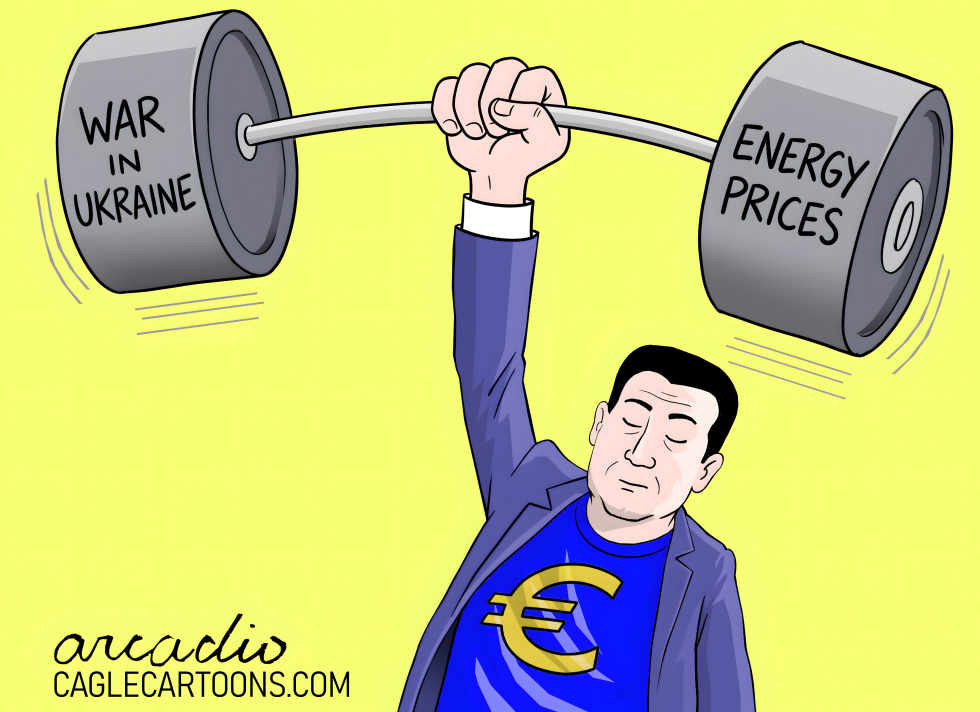
The Eurozone continues to absorb economic shocks from the Ukraine conflict and elevated energy costs. These pressures test the currency's stability and the broader European economy. The image portrays the Euro successfully shouldering both loads, underscoring its capacity to endure without collapse.
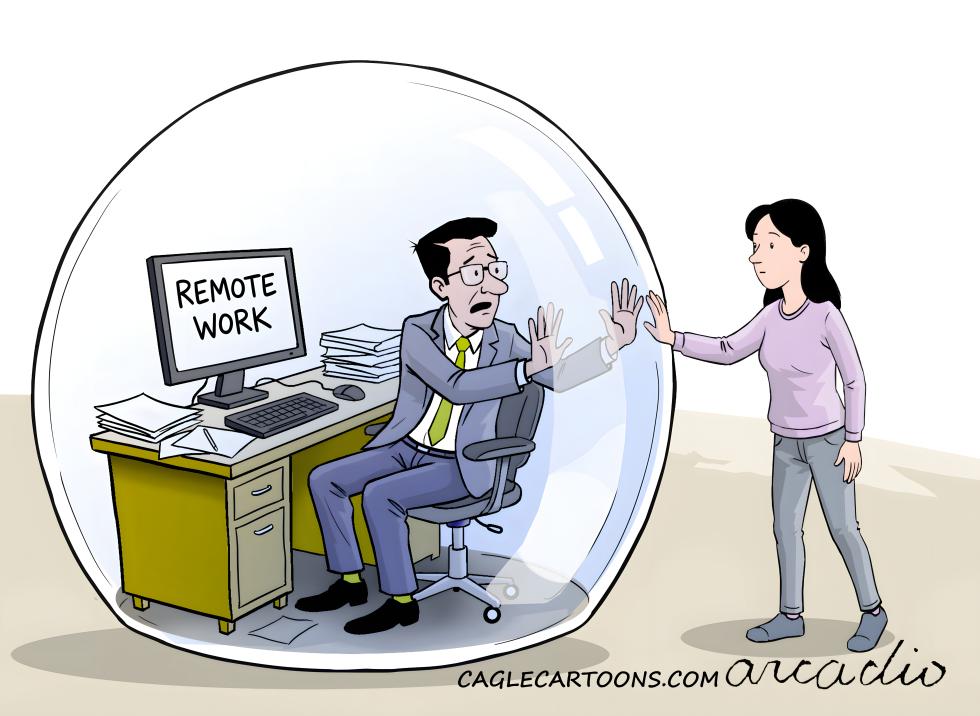
Remote work arrangements have expanded rapidly since the pandemic, allowing employees to perform duties from home but raising concerns about reduced collaboration and social connection in offices. The piece responds to ongoing debates over hybrid schedules and their impact on workplace culture. It takes the position that remote setups create artificial barriers that separate workers from direct human interaction and shared reality.
Wildfires intensified by climate change continue to ravage forests worldwide, threatening ecosystems and communities. On the 2026 date of this piece, ongoing heat and drought patterns fuel larger blazes with little relief in sight. The editorial argues that inaction on emissions leaves nature itself bearing the visible scars of rising temperatures and extreme weather.
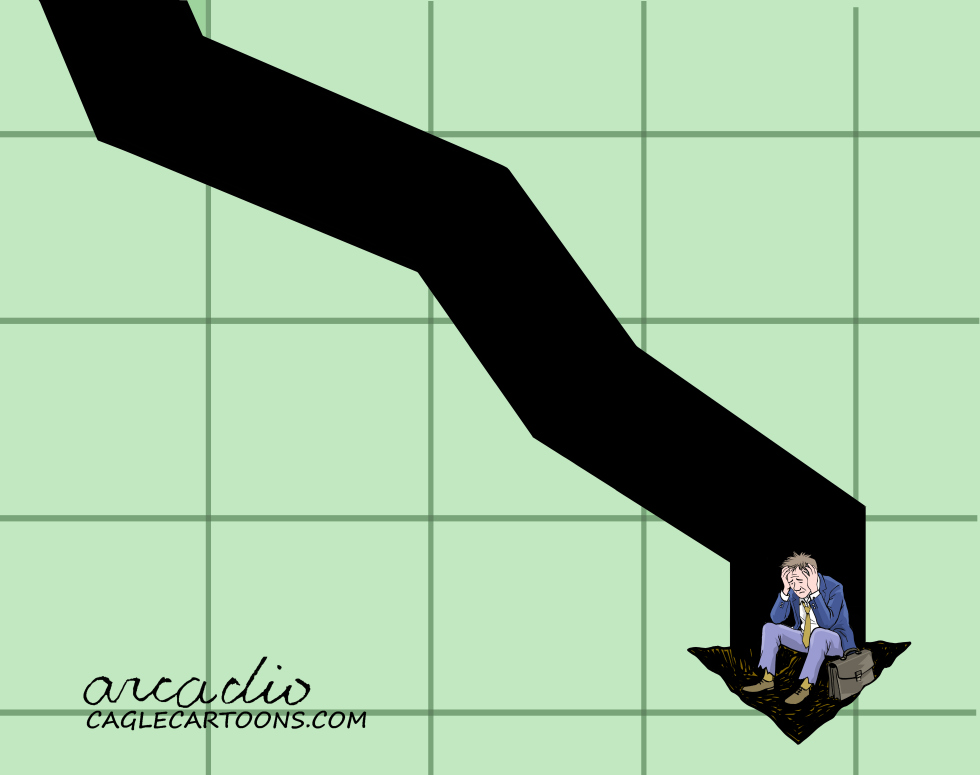
Businesses face mounting pressure from ongoing economic contraction that leaves executives isolated and without clear recovery paths. The decline affects employment, investment, and market stability across sectors. The piece highlights the personal toll on those navigating the downturn and underscores the urgency of addressing root causes before further damage spreads.
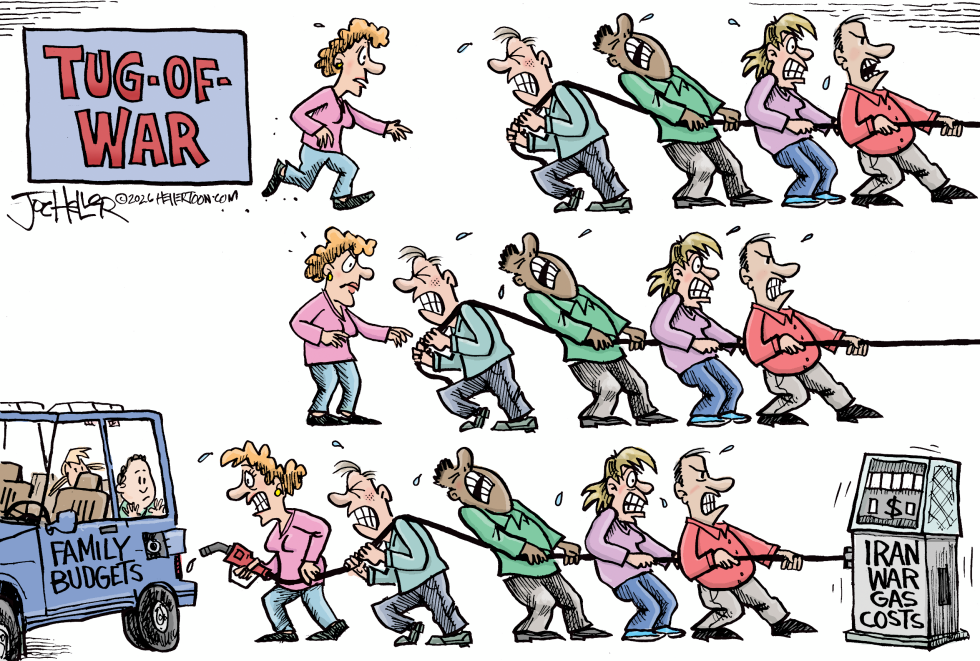
Rising gas prices linked to potential conflict with Iran are pressuring household budgets across the country. The cartoon illustrates the direct economic tug between military action abroad and everyday costs at the pump, arguing that families bear the immediate burden of such decisions.
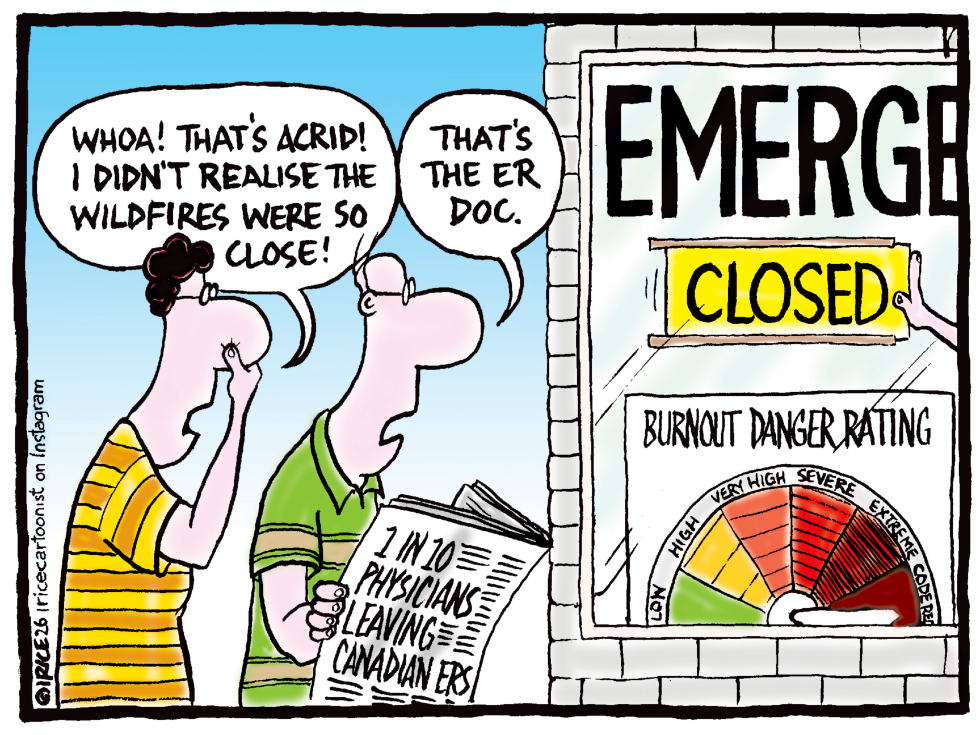
Canadian emergency rooms face mounting closures as one in ten physicians depart amid rising burnout, compounded by wildfire smoke exposure. The staffing crisis leaves communities without timely care during peak summer health threats. The editorial highlights how environmental pressures accelerate an already fragile healthcare system, urging immediate policy intervention to retain medical staff.
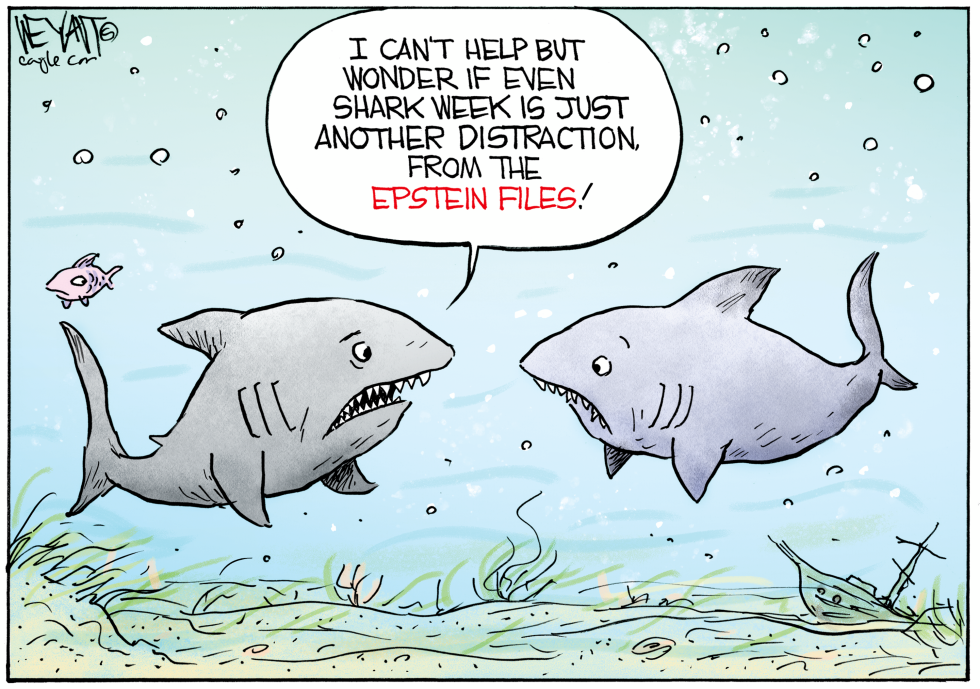
Around late July 2026, renewed attention to Epstein-related court documents coincided with the annual Shark Week programming block on cable television. Observers noted the overlap as another instance of entertainment scheduling pulling focus from ongoing legal disclosures involving powerful figures. The editorial takes the position that such timing functions as a recurring mechanism to sideline substantive coverage of the files.
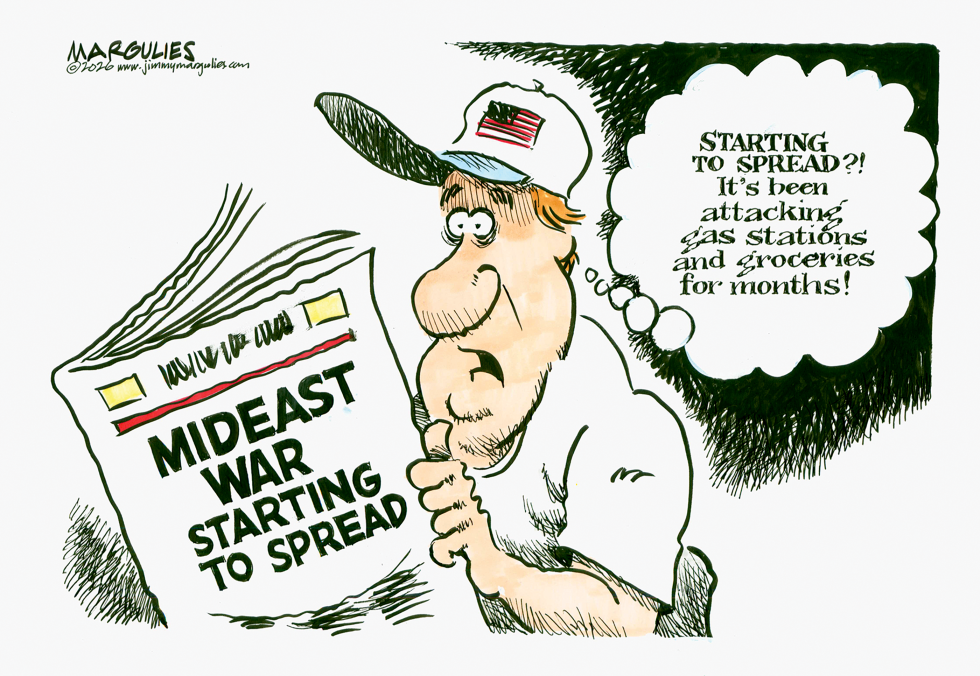
A newspaper headline declares the Mideast war starting to spread, prompting public reaction over its effects on daily costs. The piece highlights how energy and food prices have already risen due to ongoing regional conflict. It takes the position that the economic consequences for Americans have been evident long before any formal expansion of the fighting.
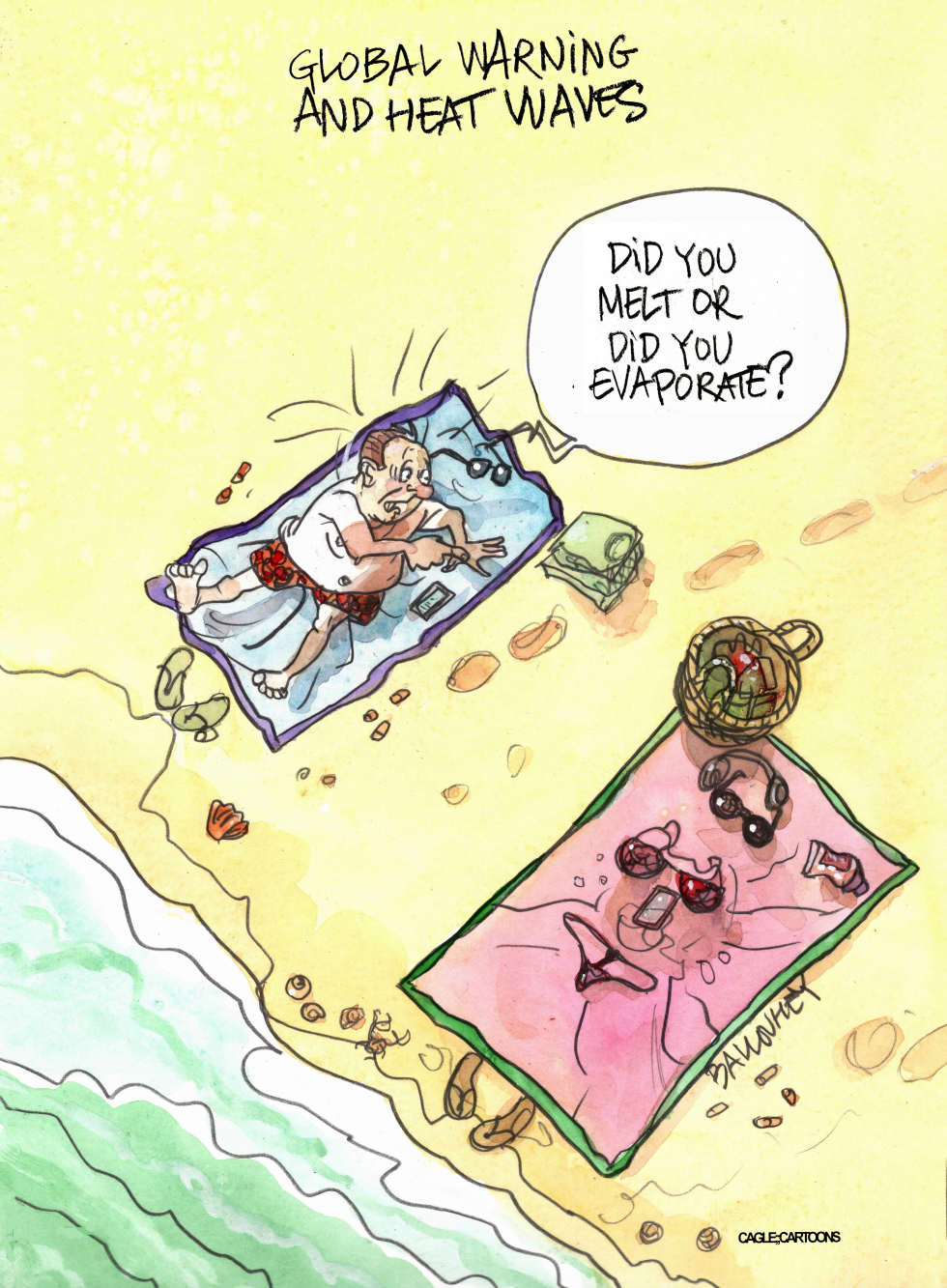
Record heat waves linked to global warming are affecting beach areas worldwide. Visitors face intense temperatures that prompt concerns over personal safety and environmental impact. The situation highlights ongoing climate pressures on daily activities. The piece argues that such conditions demand immediate attention to rising temperatures and their direct effects on people.
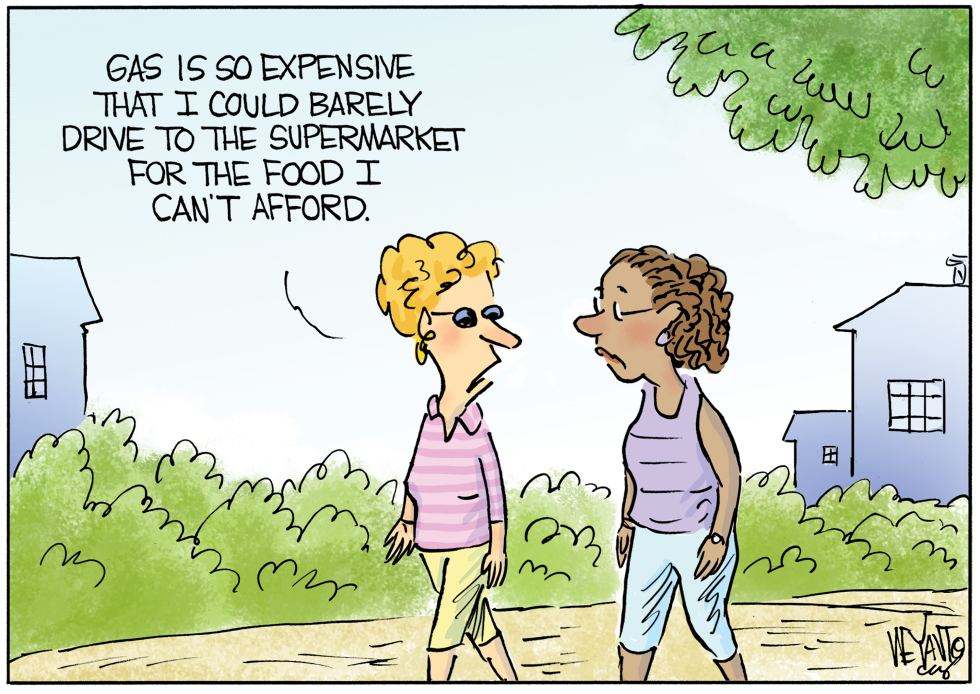
Elevated gasoline prices continue to squeeze household budgets by raising the cost of essential travel for groceries. Families report that filling the tank now competes directly with buying food, amplifying the effects of broader inflation on daily necessities. The editorial highlights how these intertwined expenses limit mobility and purchasing power for average consumers.
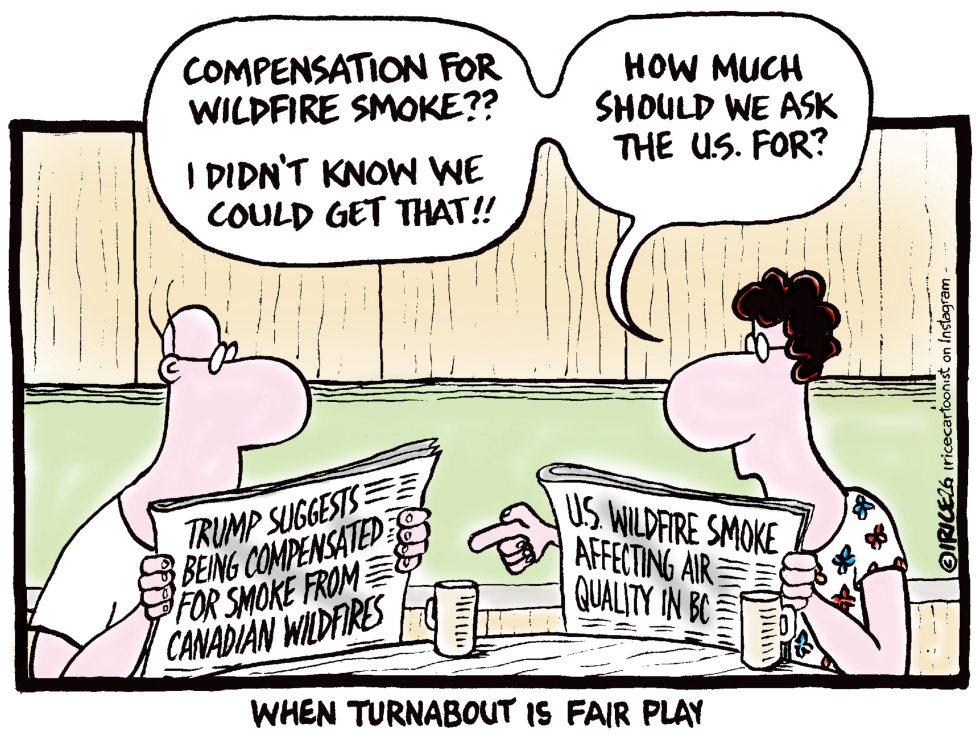
Donald Trump suggested the U.S. should receive compensation for smoke from Canadian wildfires. The cartoon responds by showing Canadians considering a reciprocal claim for smoke from U.S. wildfires affecting British Columbia air quality. It underscores the political dynamic of mutual environmental grievances between the two nations.
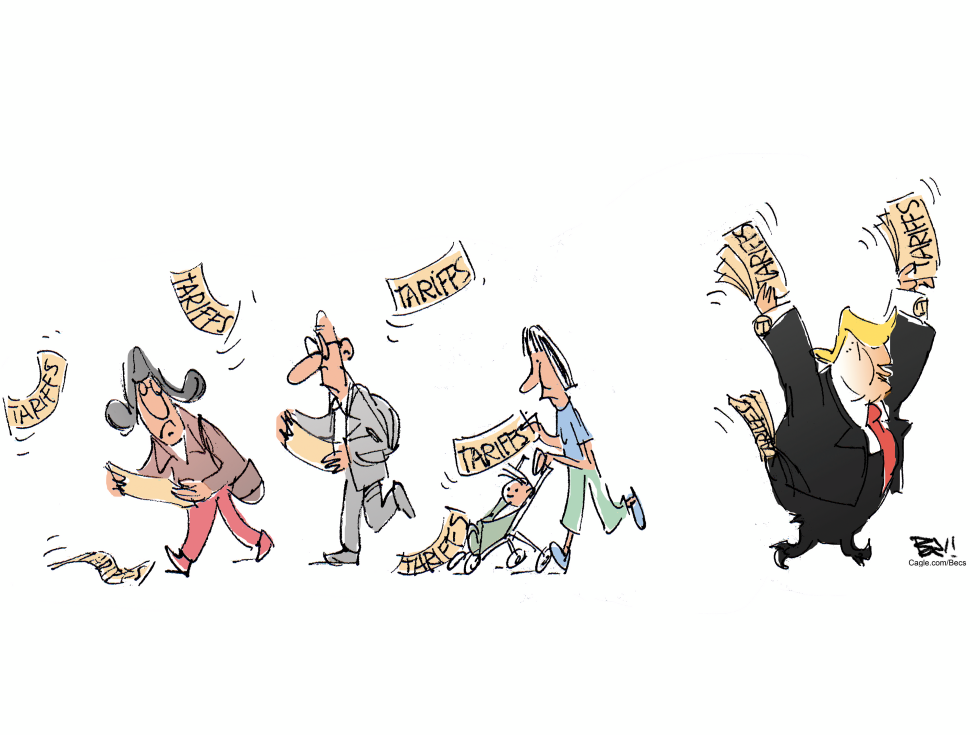
Donald Trump expanded tariffs across trading partners in mid-2026, triggering immediate market volatility and diplomatic pushback. The move raised costs for consumers and businesses reliant on imports. The piece portrays the policy as an indiscriminate barrage that disrupts daily life and global commerce.