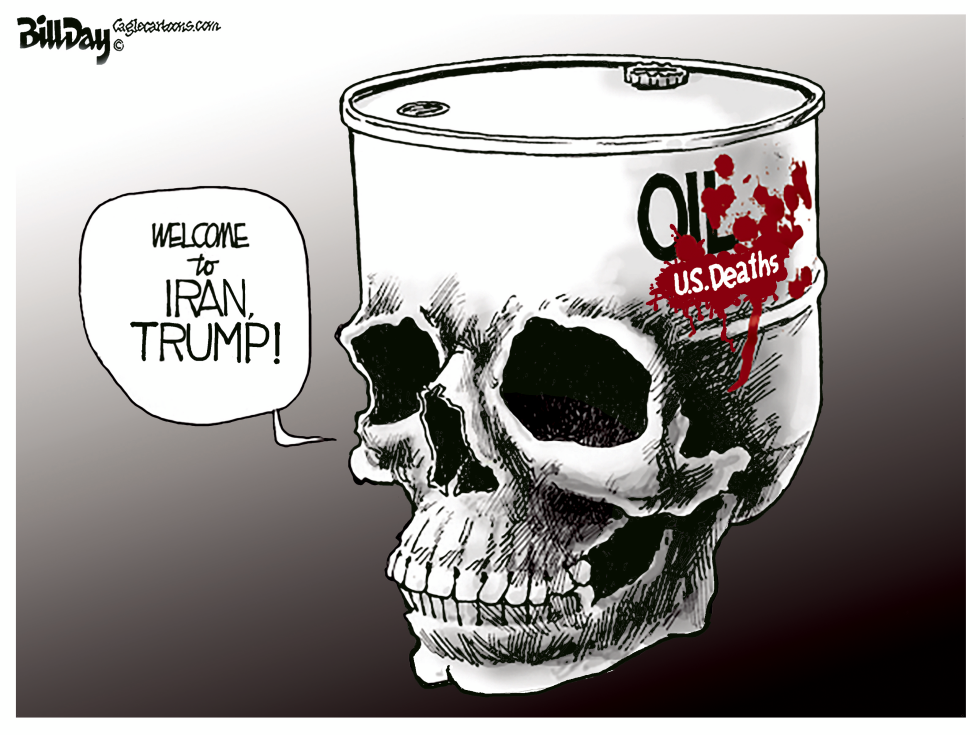
Donald Trump confronts a pointed visual rebuke linking US involvement in Iranian oil to American deaths. The image responds to persistent tensions over energy resources and foreign policy decisions in the Middle East. Critics argue such engagements carry heavy human costs without clear strategic gains. The piece takes the position that Trump's approach risks repeating costly patterns of intervention driven by oil interests rather than broader security needs.
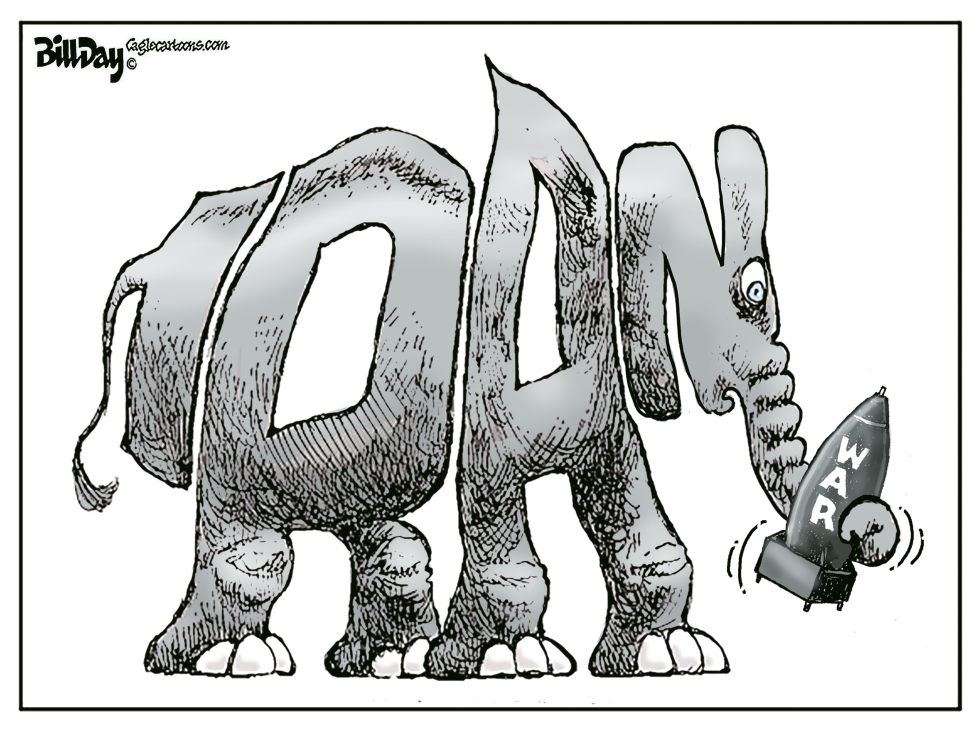
The Republican Party continues to navigate internal divisions over foreign policy and military engagement. Recent statements from party leaders have emphasized strength abroad while avoiding specific commitments on ongoing global conflicts. The piece portrays the GOP elephant as directly handling a war bomb, underscoring the risks of escalating rhetoric. It highlights how party identity remains tied to assertive defense postures. The editorial position criticizes the embrace of war imagery as potentially reckless.
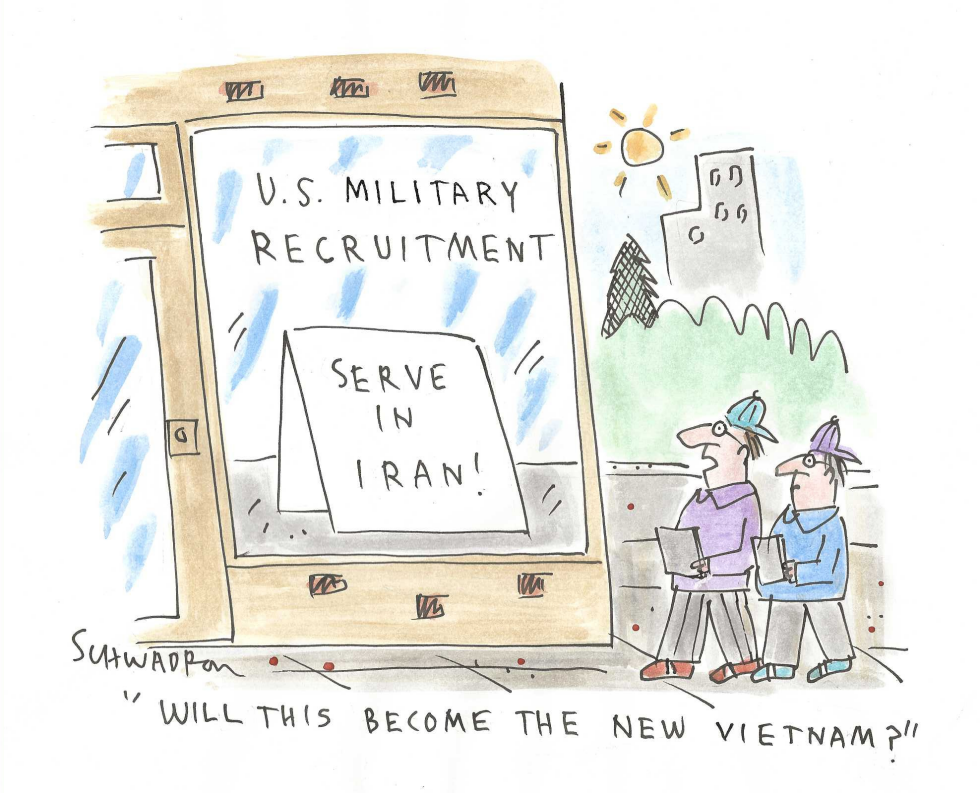
U.S. military recruitment efforts have begun highlighting opportunities to serve in Iran, prompting public questions about potential escalation. The move comes amid ongoing regional tensions and draws direct comparisons to the Vietnam War era. Observers worry the campaign signals a shift toward deeper U.S. military commitments overseas. The editorial takes the position that such recruitment tactics risk repeating past mistakes by underestimating public resistance to prolonged conflicts.
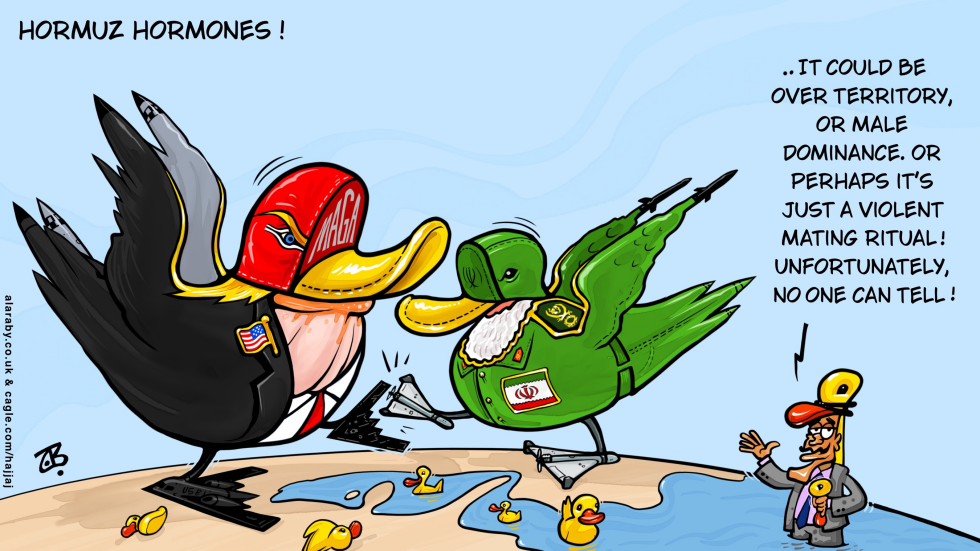
The cartoon shows a black bird wearing a MAGA hat facing off against a green bird bearing Iran's flag, both armed and aggressive over a body of water labeled with Hormuz references. Small ducks swim below while a commentator speculates on motives ranging from territory to mating rituals. The image responds to ongoing US-Iran frictions in the Strait of Hormuz by framing the standoff through animal behavior analogies.
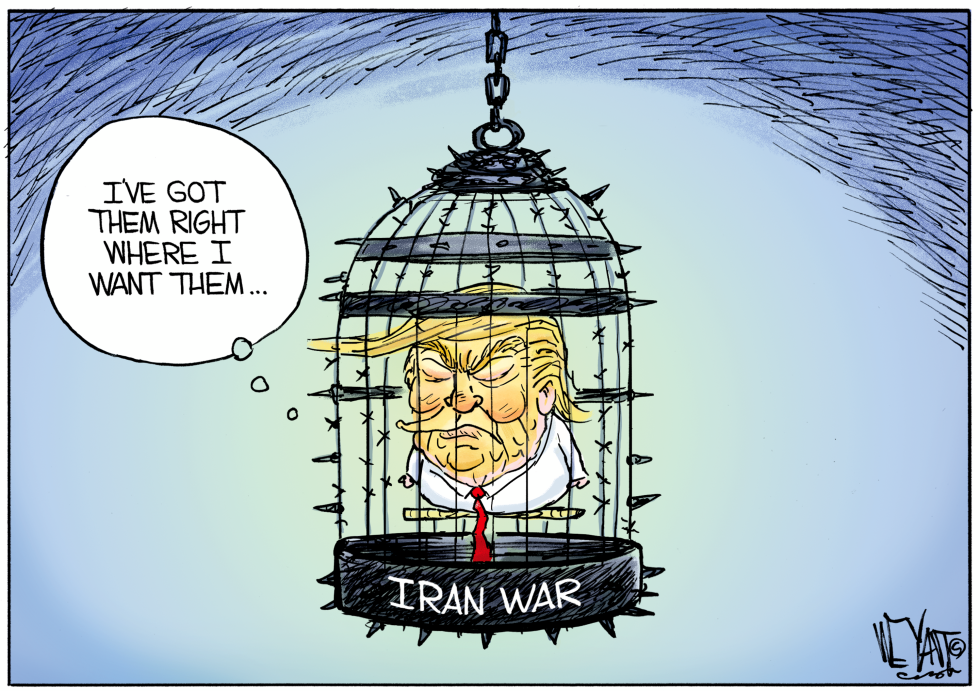
Tensions with Iran escalated in mid-2026 as U.S. policy under President Trump faced renewed scrutiny over military posturing and diplomatic isolation. The administration maintained that pressure tactics had adversaries exactly where officials wanted them. Critics argued the approach risked broader regional conflict without clear exit strategy. The cartoon presents the president as confined by the very confrontation he promotes, underscoring a disconnect between rhetoric and outcome.
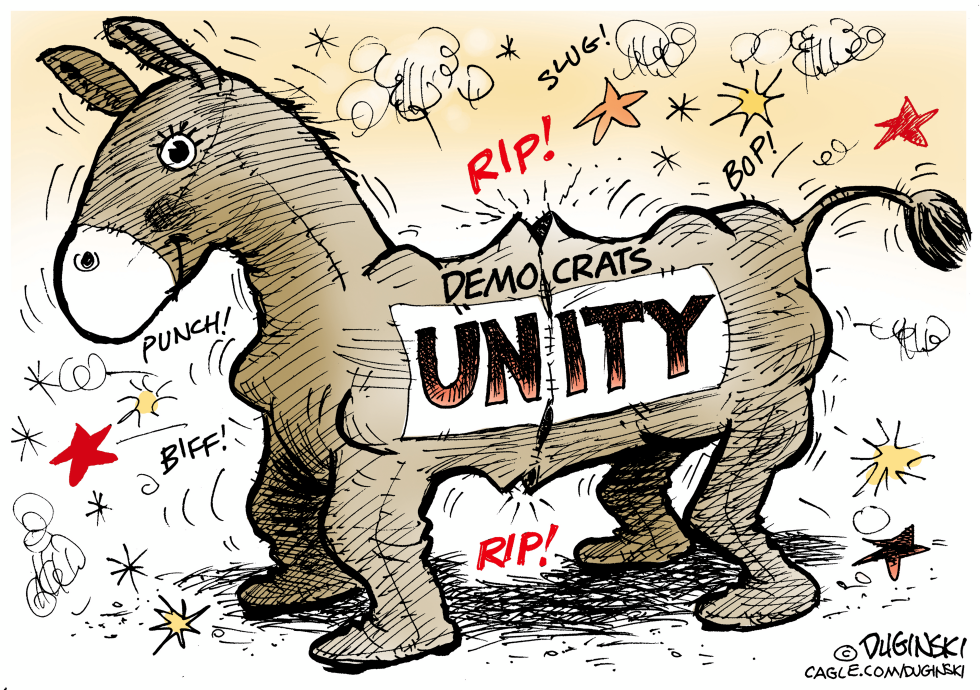
Democrats continue to display public divisions over strategy and messaging in the run-up to midterm and presidential contests. Party leaders struggle to project cohesion on issues ranging from economic policy to social priorities. The resulting perception of disarray weakens their ability to counter Republican narratives and mobilize voters. The cartoon highlights how these internal conflicts undermine the party's core message of unity.
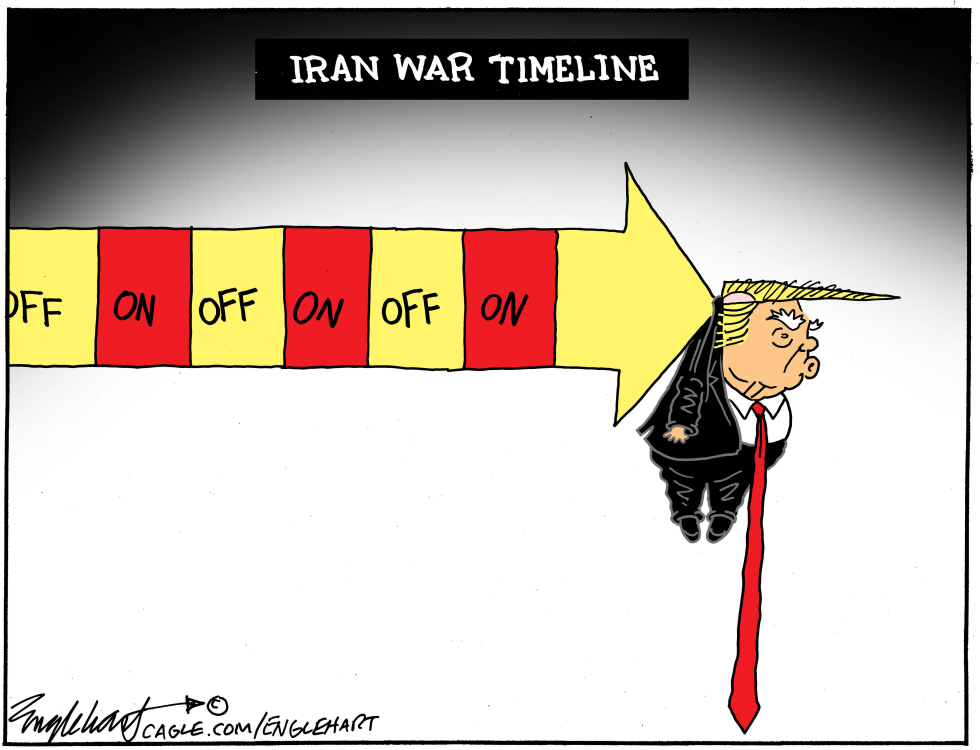
Donald Trump has repeatedly signaled shifting positions on potential military action against Iran in recent months. The timeline of statements shows repeated reversals between confrontation and restraint. Observers note the pattern raises questions about consistency in U.S. foreign policy toward Tehran. The piece portrays the back-and-forth as an erratic sequence with the latest signal pointing toward engagement.
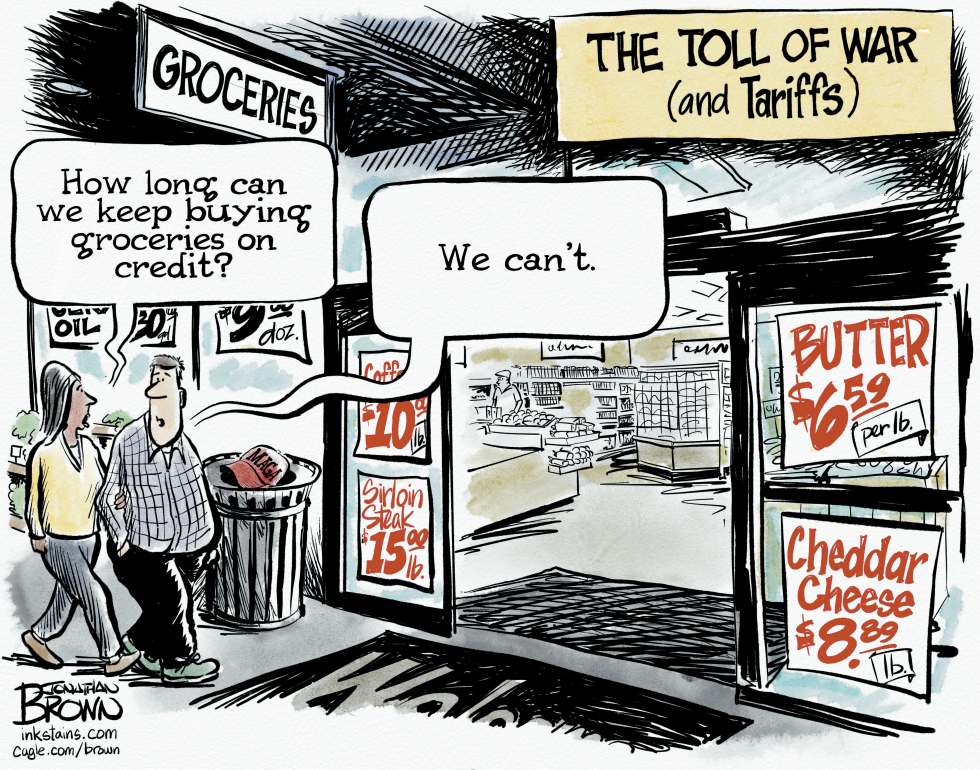
A political cartoon depicts a couple leaving a grocery store after learning they cannot continue buying food on credit. Signs inside show sharply higher prices for butter at $6.59 per pound, cheddar cheese at $8.89 per pound and sirloin steak at $15 per pound. A banner overhead reads The Toll of War (and Tariffs). The scene illustrates how ongoing conflict and trade barriers have driven up everyday food costs leaving households to rely on credit that is no longer sustainable.
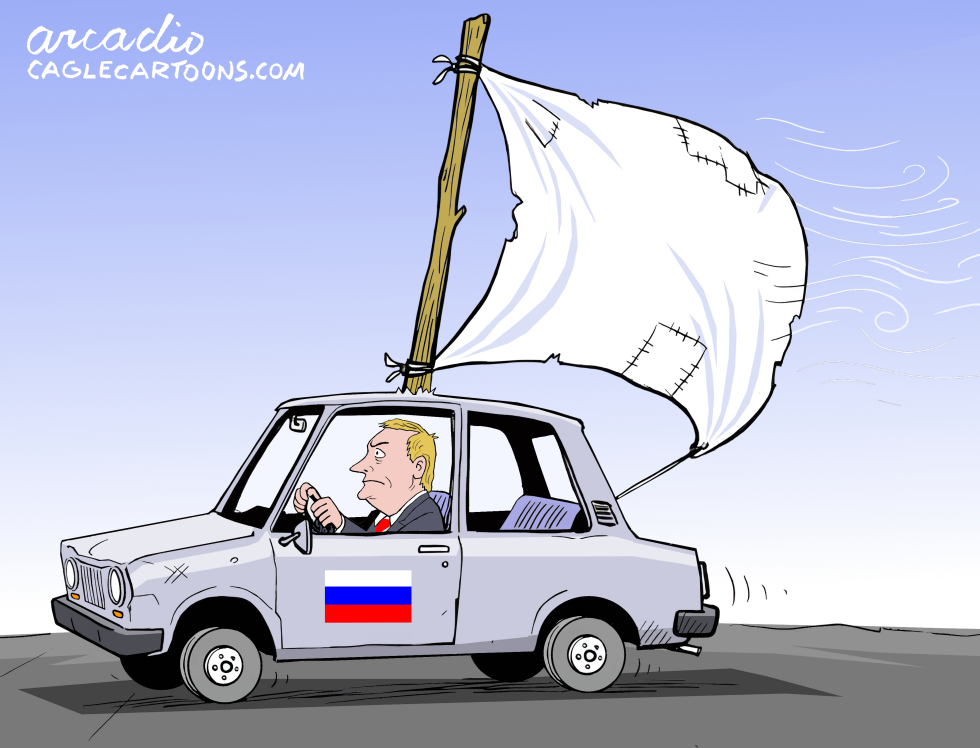
The image depicts a Russian leader driving a small car marked with the national flag while a large white flag on a wooden pole extends from the vehicle. The scene shows the driver gripping the wheel with a forward gaze as the flag billows behind. This visual responds to ongoing developments in Russia's international posture during mid-2026. The white flag serves as a direct symbol of capitulation amid continued geopolitical tensions. The composition places the action on an open road under clear skies to emphasize the motion and the gesture.
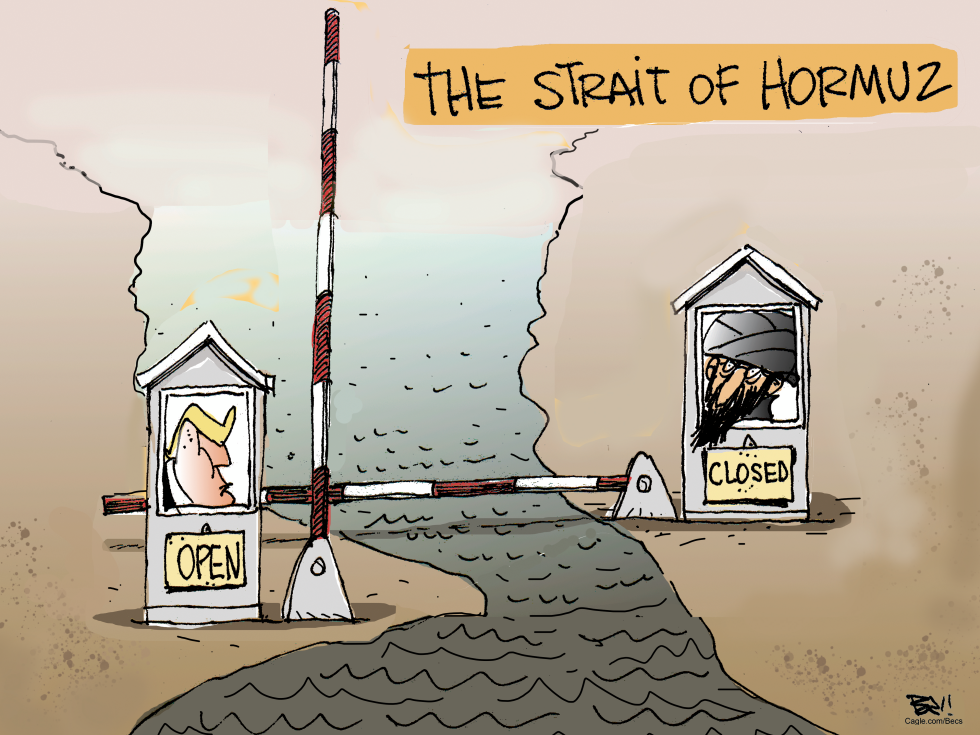
The Strait of Hormuz remains a flashpoint for global oil transit as the United States and Iran maintain opposing stances on access. Donald Trump positions an open checkpoint while an Iranian official signals closure. The editorial highlights the standoff's direct impact on energy markets and shipping security.
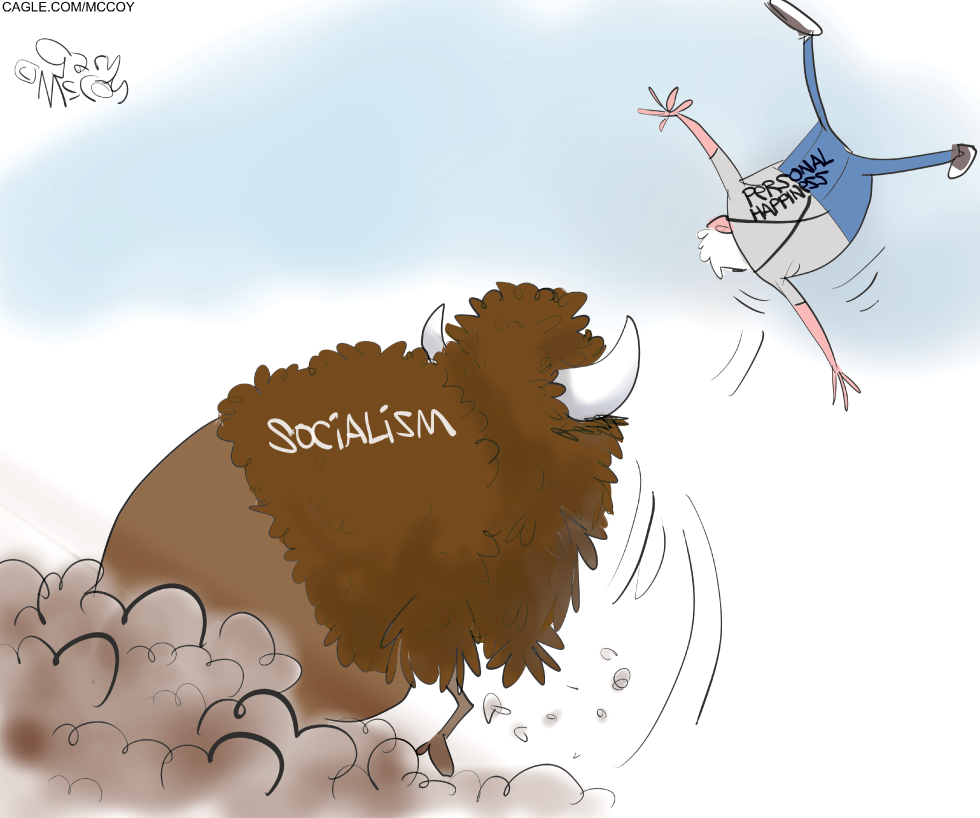
A bison marked socialism sends a person marked personal happiness tumbling through the air. The scene shows the animal in motion with dust rising from its hooves while the figure spins upside down.
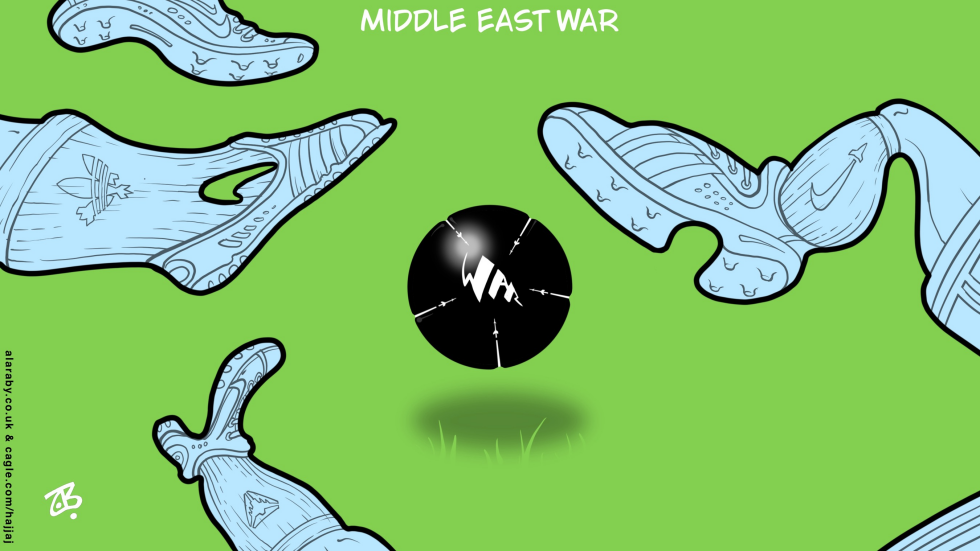
Multiple sneakers bearing recognizable brand logos converge on a black ball marked WAR against a solid green background. The text MIDDLE EAST WAR appears at the top. The composition shows the ball under simultaneous assault from several directions with motion lines indicating impact.
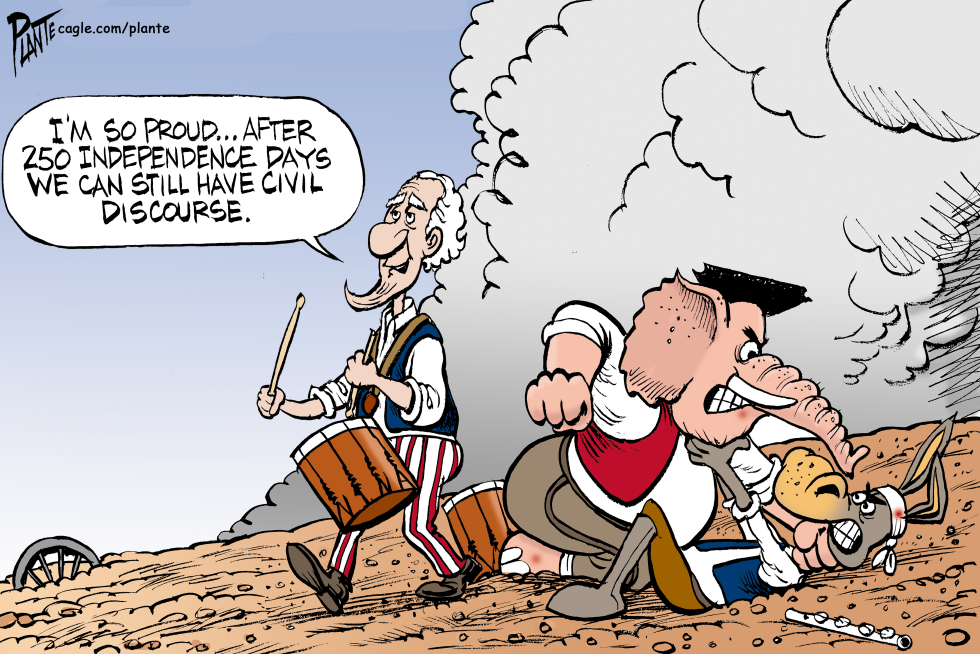
On the 250th anniversary of American independence, a Revolutionary War drummer expresses pride in continued civil discourse even as the Republican elephant and Democratic donkey grapple violently on the ground nearby.
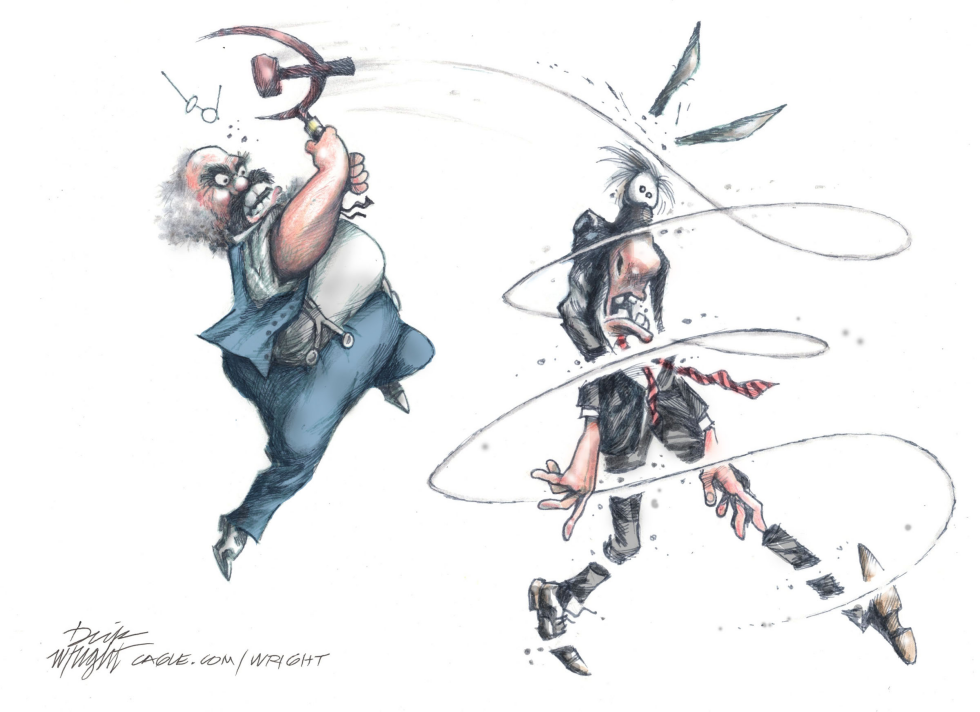
On June 30 2026 Dick Wright depicts a hammer and sickle wielding figure lunging at a suited Democrat form. The strike sends the target figure flying apart in fragments. The image responds to ongoing debates over ideological influences within the Democratic Party during the 2026 election cycle.
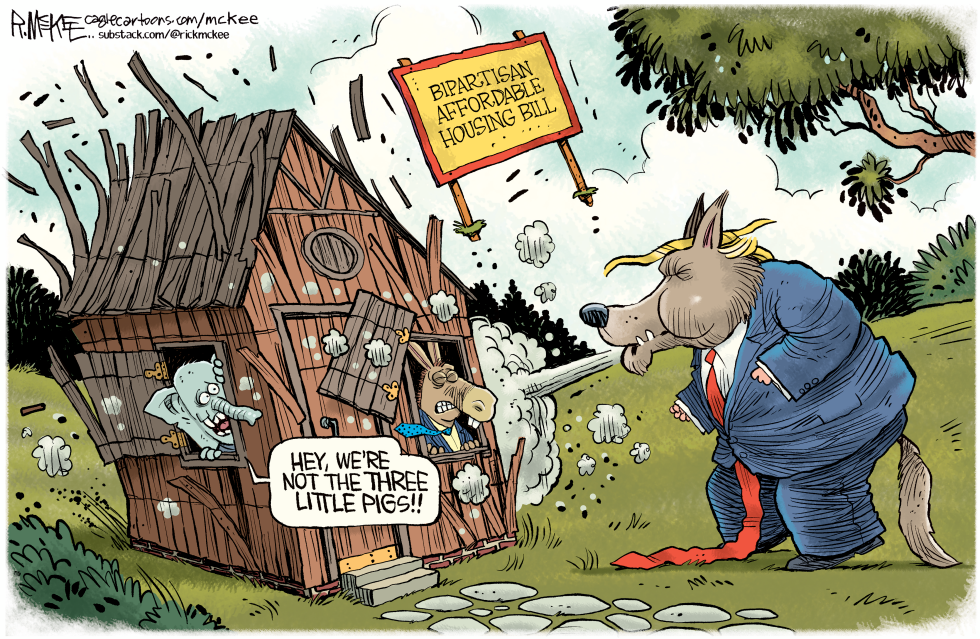
On June 25, 2026, cartoonist Rick McKee depicts former President Donald Trump as a wolf blowing down a wooden house marked as a bipartisan affordable housing bill. An elephant and donkey peer out from the damaged structure, one declaring they are not the three little pigs. The image responds to ongoing congressional debates over housing legislation in mid-2026.