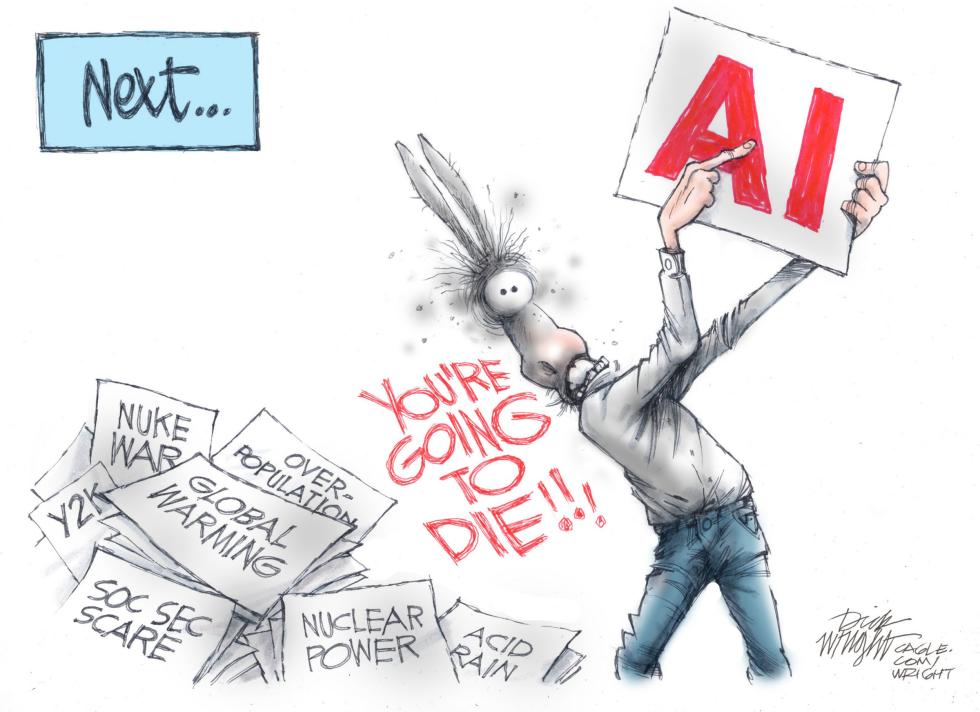
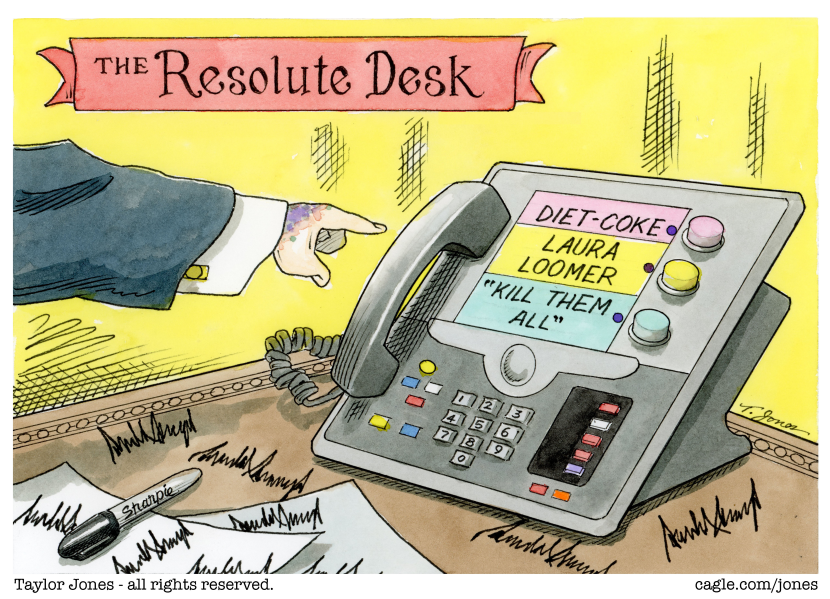
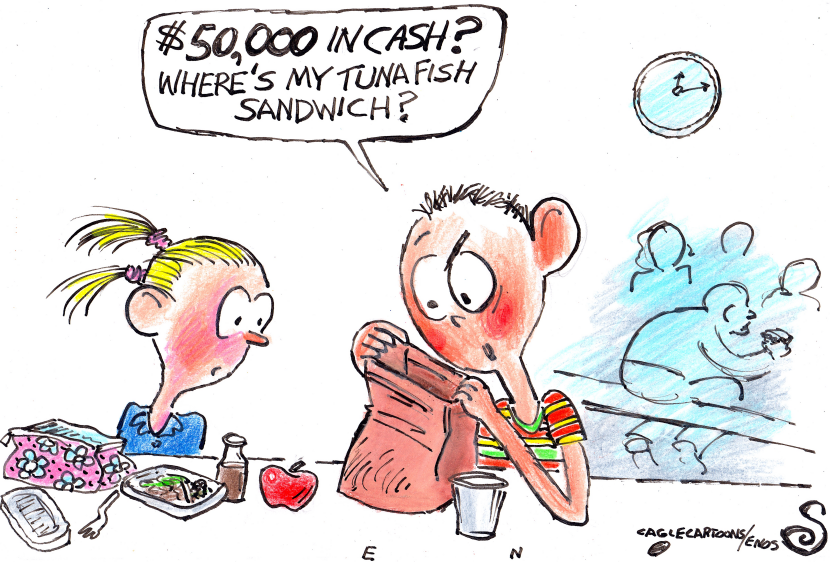
Democrats have renewed warnings that artificial intelligence poses an existential threat, echoing earlier alarms over Y2K, nuclear power, and climate change that later lost urgency. The pattern suggests political use of successive crises to maintain attention. The cartoon argues these claims recycle familiar tactics without new substance.
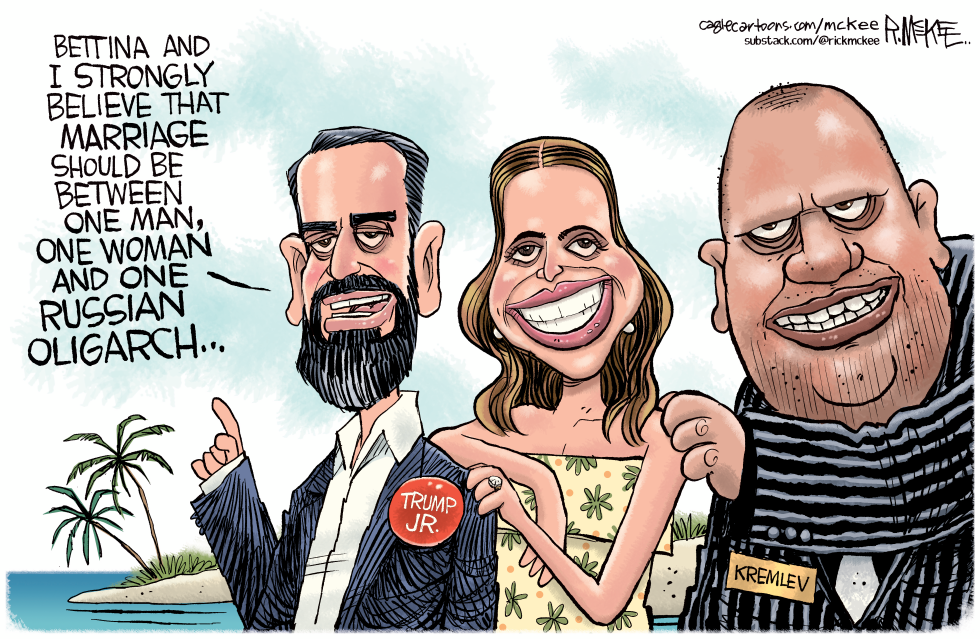
On September 15, 2026, commentary emerged around reports of Russian oligarch involvement in events tied to Donald Trump Jr. and Bettina. The development raises questions about foreign influence on the Trump family. The piece argues such connections undermine claims of independence from external interests.
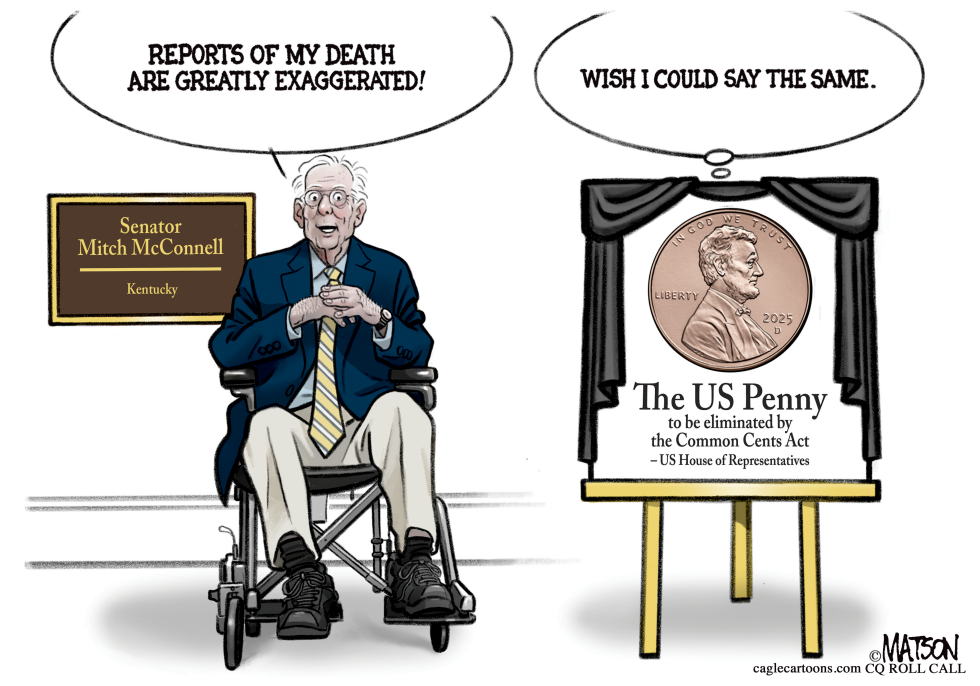
Senator Mitch McConnell returned to the Senate floor on September 15, 2026, after health-related absences, directly addressing rumors of his political demise. At the same time the House has advanced the Common Cents Act to eliminate the US penny. The move reflects ongoing efforts to modernize currency amid rising production costs. McConnell's return underscores his enduring influence in the chamber despite physical challenges. The cartoon uses a classic quote to juxtapose the senator's resilience against the penny's planned demise, suggesting one survives while the other does not.
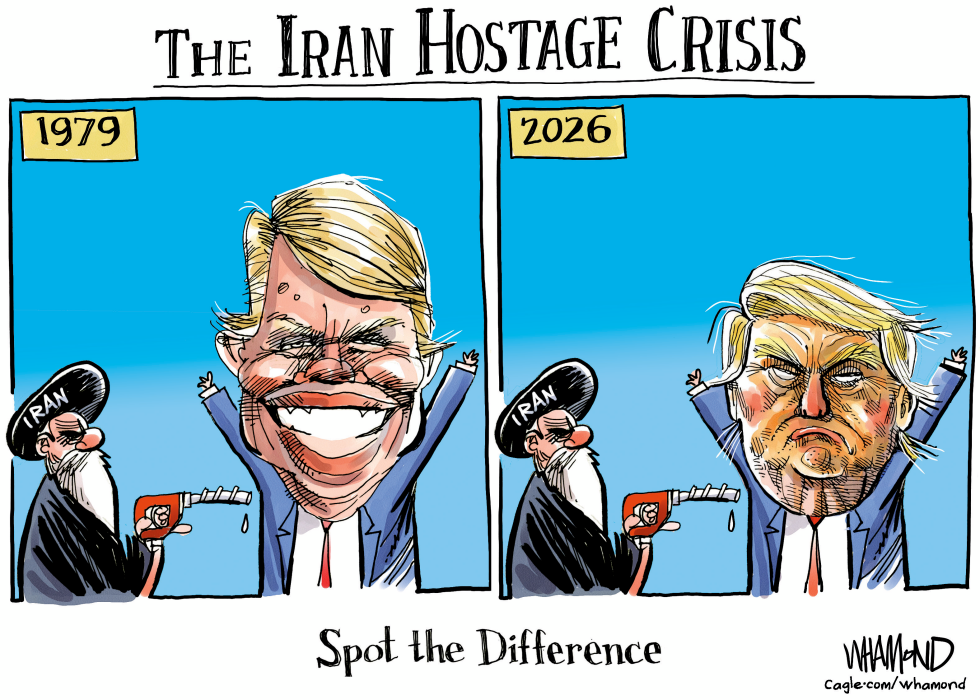
The cartoon splits the Iran Hostage Crisis into 1979 and 2026 panels. In the first Trump appears elated while an Iran-labeled figure holds a gas pump. In the second Trump looks distressed with the same figure present. The piece uses the visual contrast to comment on how Iran-related pressures affect US political figures differently over time.
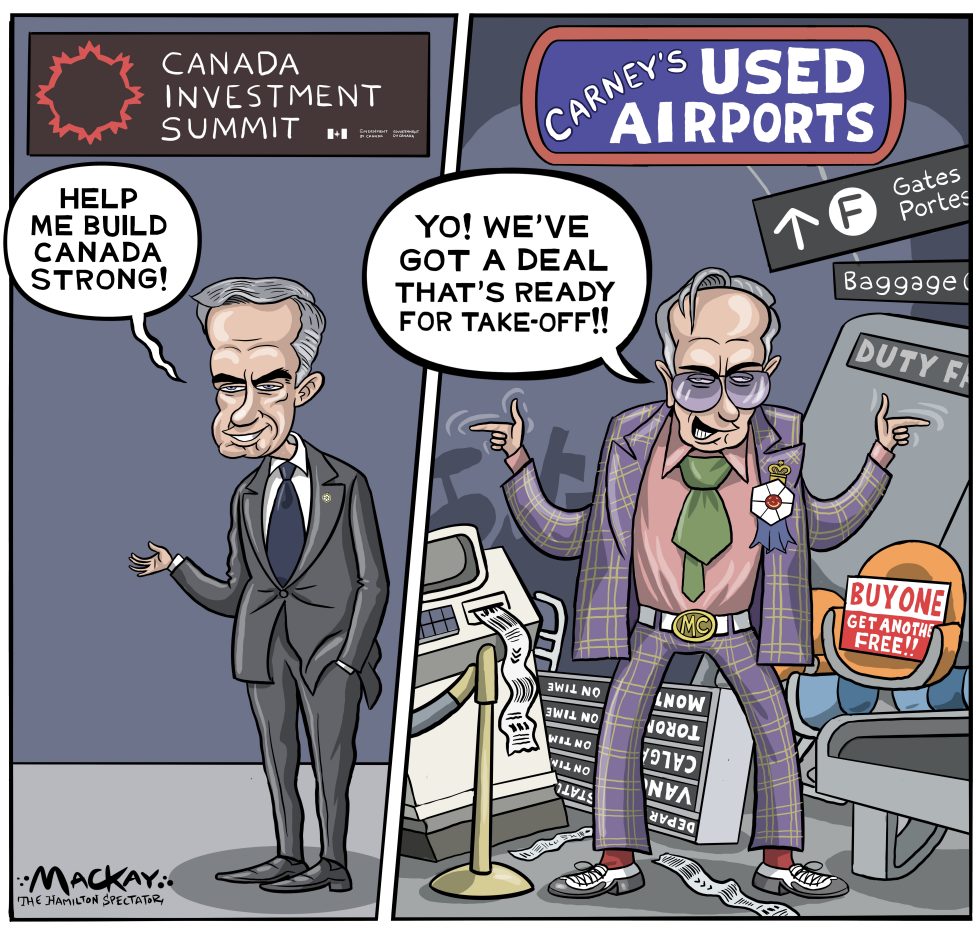
The cartoon depicts Justin Trudeau at a Canada Investment Summit appealing for help to build the country strong. In the adjacent panel, Mark Carney appears as a used-car-style salesman hawking airports with a buy-one-get-one-free offer and a ready-for-takeoff deal pitch, highlighting a satirical take on airport privatization efforts.
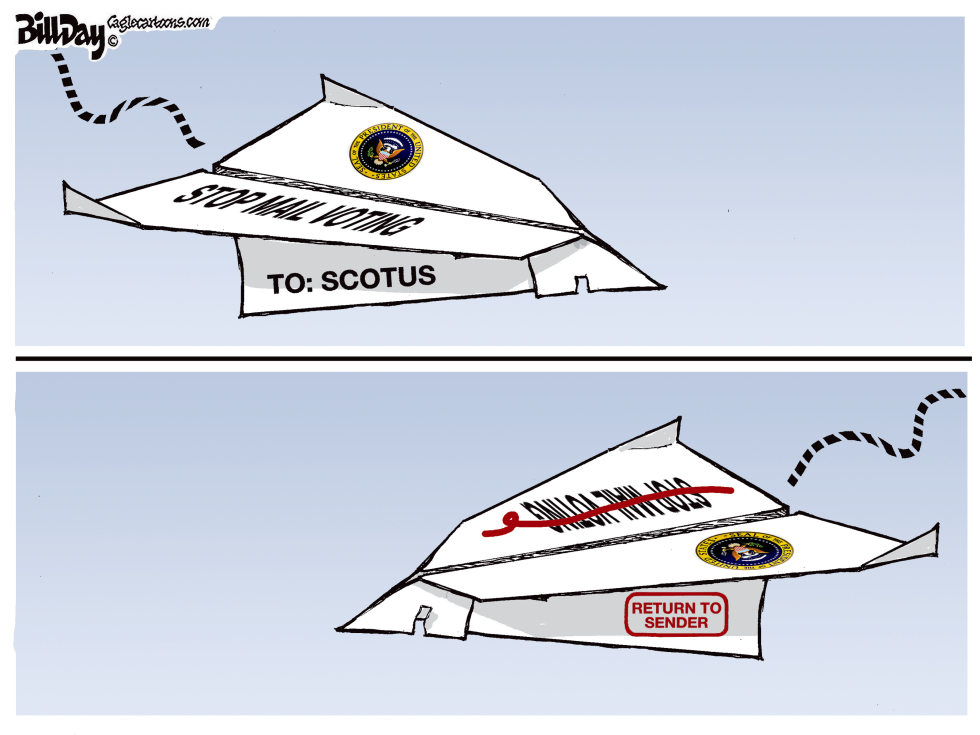
A presidential directive aimed at ending mail-in voting reached the Supreme Court but was promptly returned. The action underscores ongoing disputes over election procedures and access. The cartoon frames the effort as an unsuccessful attempt to restrict voting methods through judicial channels. It highlights institutional pushback against executive intervention in ballot processes. The piece takes the position that such restrictions lack support and are properly rebuffed.
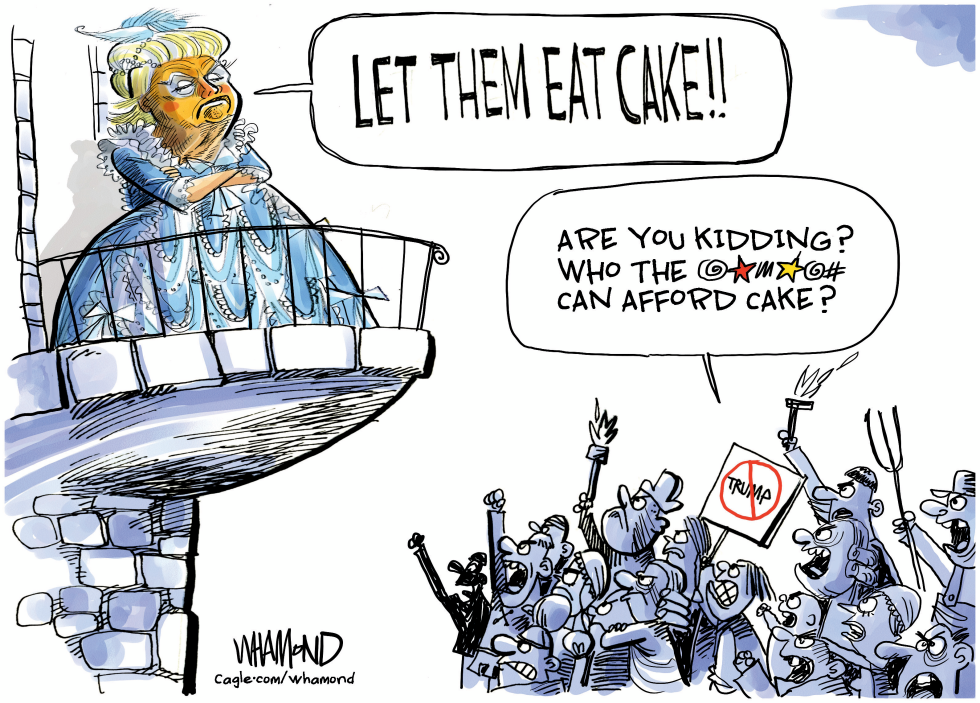
The cartoon by Dave Whamond depicts Donald Trump as Marie Antoinette on a balcony declaring 'LET THEM EAT CAKE!!' while a crowd below protests with signs and questions who can afford cake. Published on September 15, 2026, the image draws on the historical quote to comment on contemporary affordability concerns during Trump's term. The visual contrasts the elevated figure with an agitated crowd holding anti-Trump signs. It captures ongoing public discontent with rising costs. The piece uses the famous anecdote to underscore perceptions of detachment from everyday economic pressures.
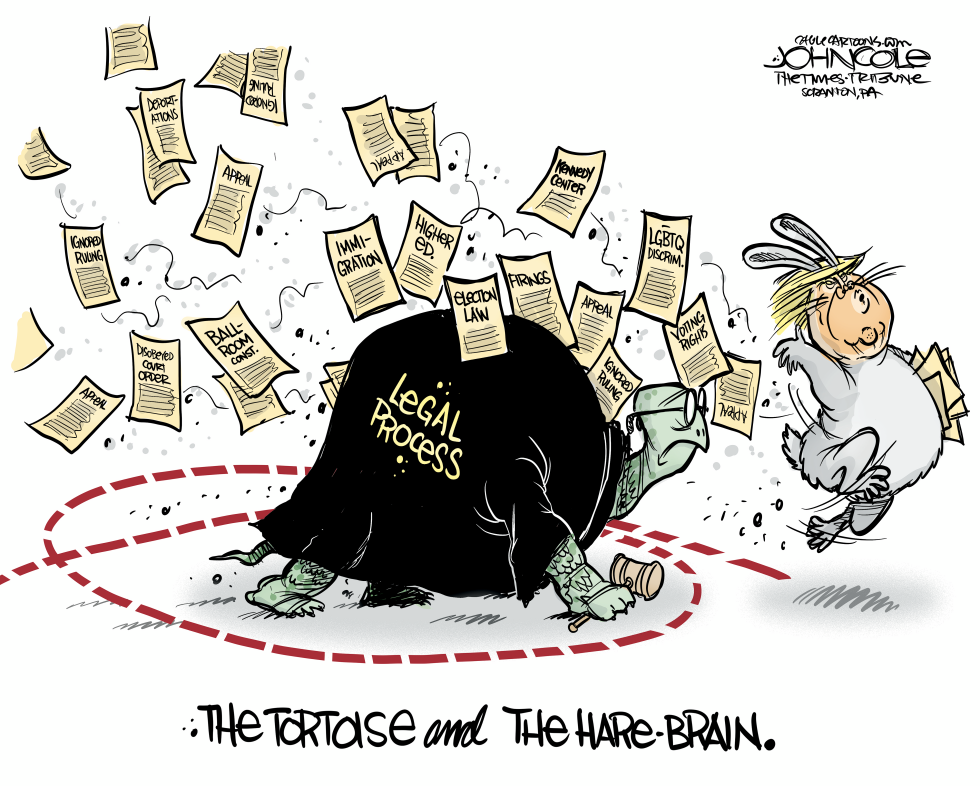
Multiple legal cases involving former President Trump continue through appeals on election law, voting rights, immigration rulings and related matters. The slow pace of the judicial system allows repeated filings and delays. The cartoon argues that this extended process effectively lets Trump run circles around accountability rather than face timely resolution on the merits.
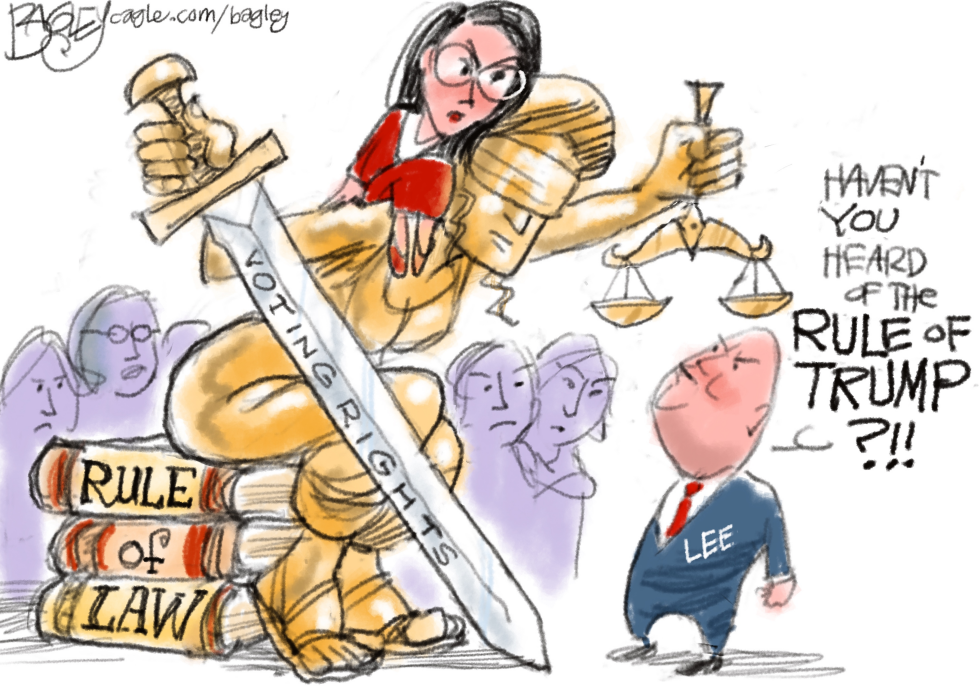
Senator Mike Lee publicly questioned adherence to traditional legal standards in favor of alignment with Donald Trump priorities on voting matters. The exchange highlights ongoing tensions between institutional norms and political loyalty within Republican circles. The cartoon portrays this shift as a direct challenge to foundational legal principles.
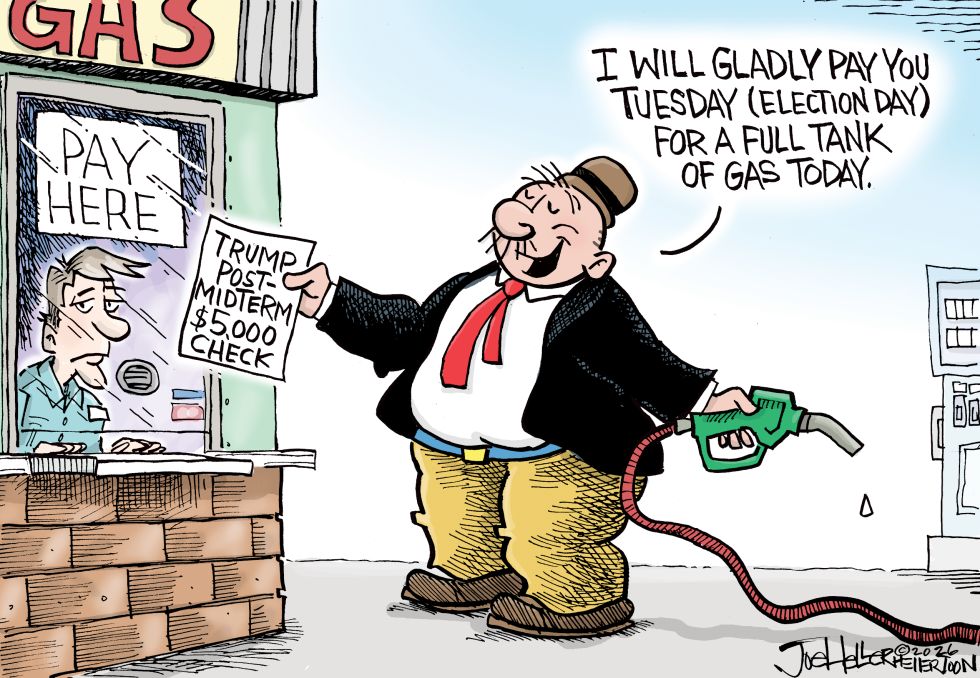
Donald Trump issued a post-midterm gas payment pledge tied to the 2026 election cycle. The promise revives a classic deferral line to link fuel costs with voting day. The cartoon argues the offer functions as an empty election tactic rather than a concrete policy step.
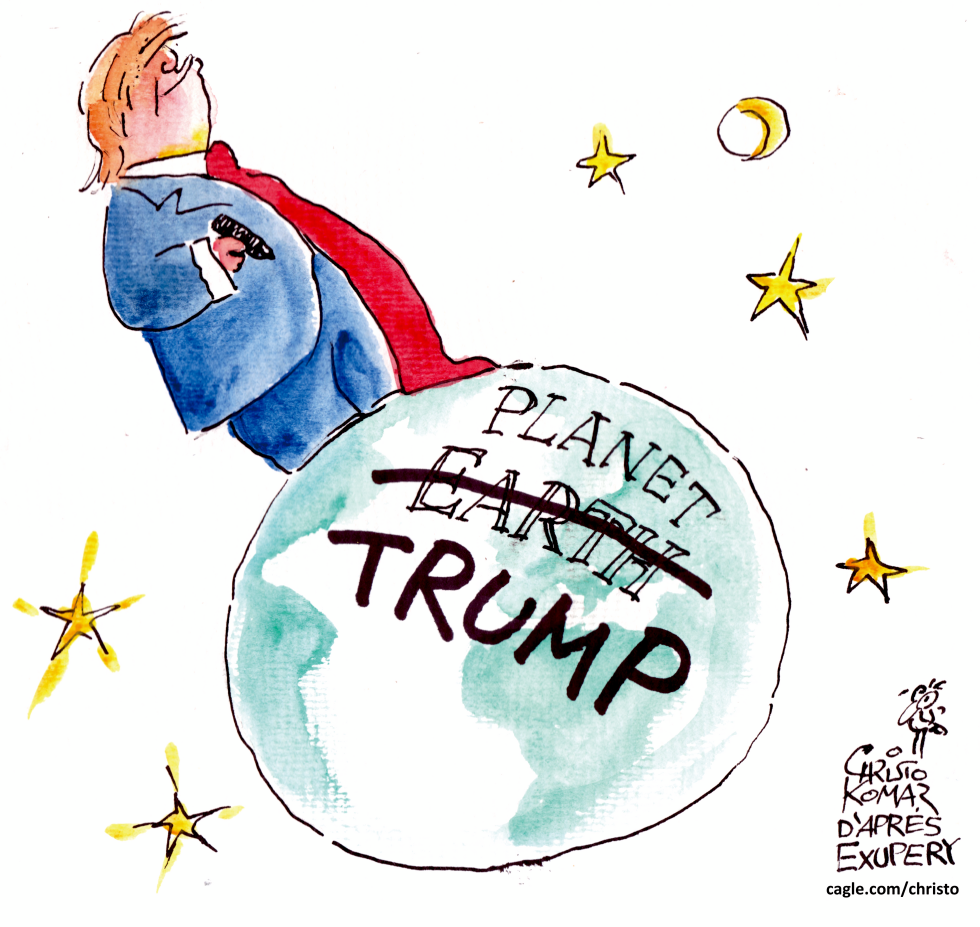
Donald Trump has long projected outsized personal branding onto public institutions and symbols. In this 2026 depiction the former president appears to claim the planet itself. The move reflects an ongoing pattern of self-centered rhetoric that treats national and international assets as extensions of his identity. Critics argue such gestures erode norms of public service and institutional independence. Supporters view them as bold assertions of leadership strength. The cartoon captures the tension between personal ambition and collective governance.
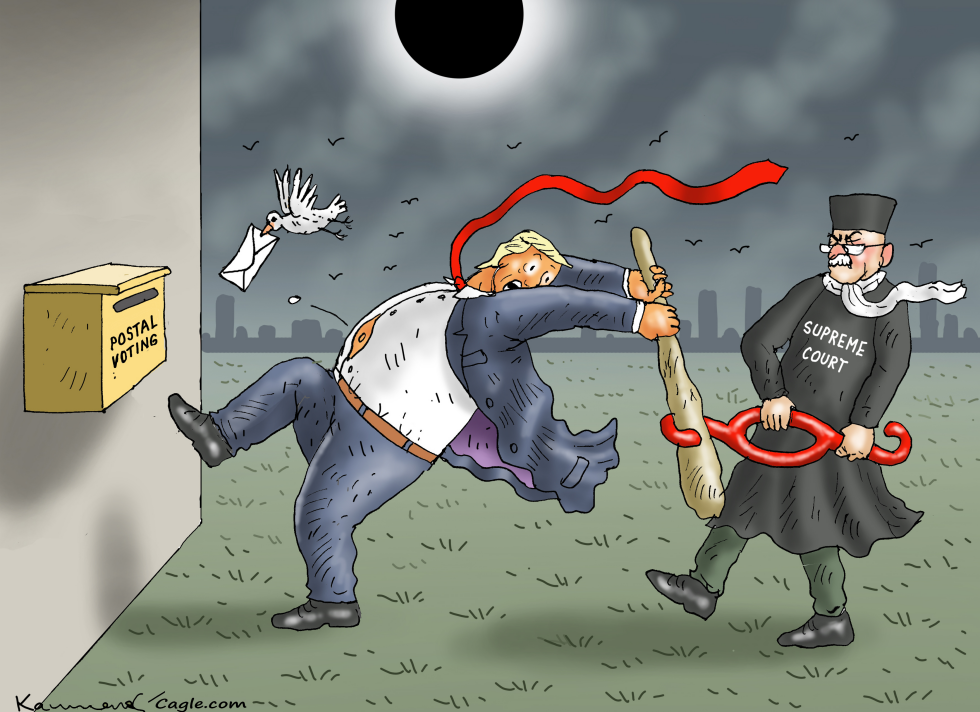
The Supreme Court has moved to restrict efforts by former President Trump to limit or challenge postal voting ahead of the 2026 midterms. The ruling comes as both parties prepare for a high-stakes contest that could determine control of Congress. Trump allies have pushed measures they say protect election integrity while critics see them as attempts to suppress turnout. The decision underscores the court's continuing role in shaping voting rules. The cartoon portrays the court as a necessary check on Trump's aggressive tactics.
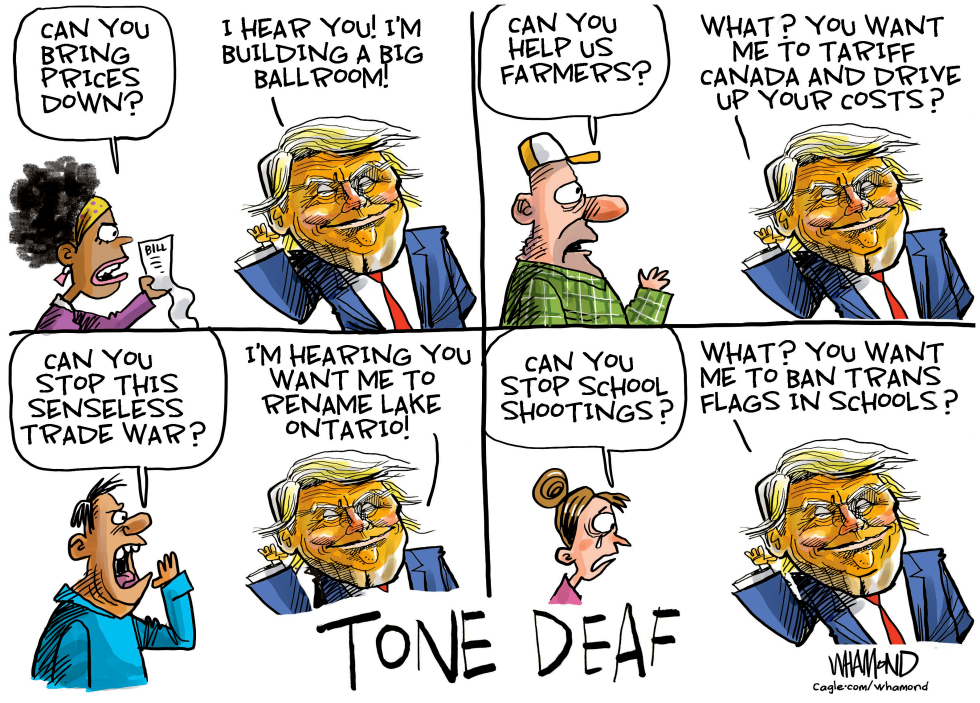
The cartoon by Dave Whamond published September 15, 2026, shows Donald Trump responding to citizen concerns about prices, tariffs on Canada, trade wars, school shootings and transgender flags by pivoting to a ballroom project and renaming Lake Ontario. The four-panel layout underscores a pattern of tone-deaf replies that ignore the original requests.
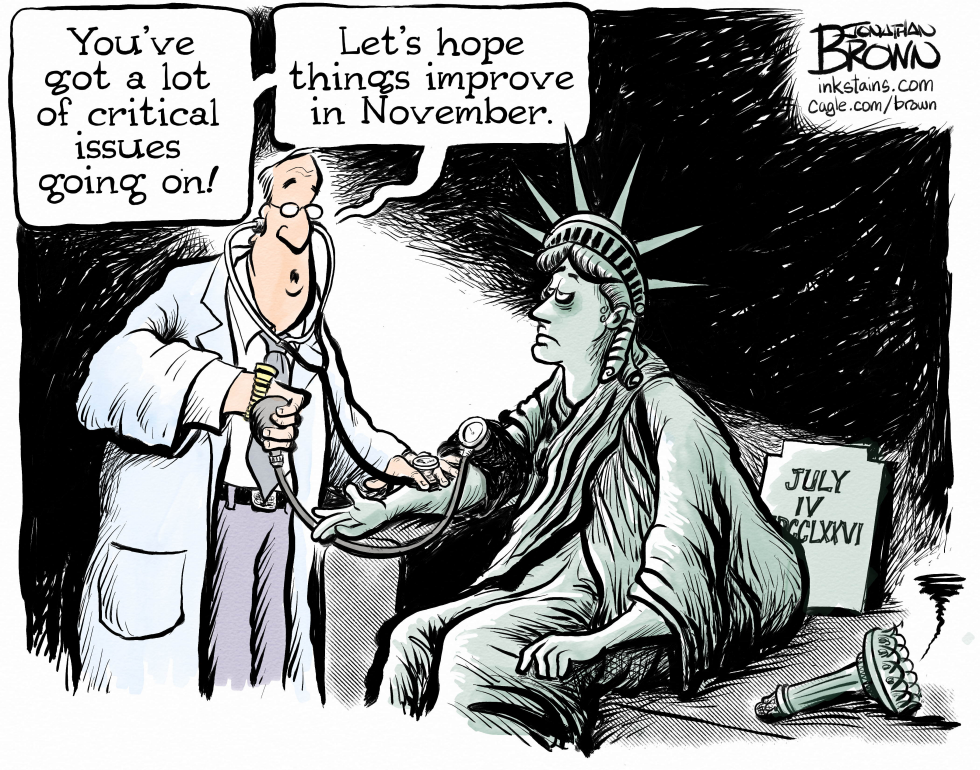
The cartoon depicts a doctor examining the Statue of Liberty's blood pressure and noting numerous critical issues. The Statue responds with hope that things will improve in November. A sign references July 4, 1776, and a broken torch rests on the ground. Published on September 15, 2026, the image uses the iconic figure to comment on the state of the nation ahead of upcoming elections. The visual metaphor highlights concerns about American institutions and public sentiment.
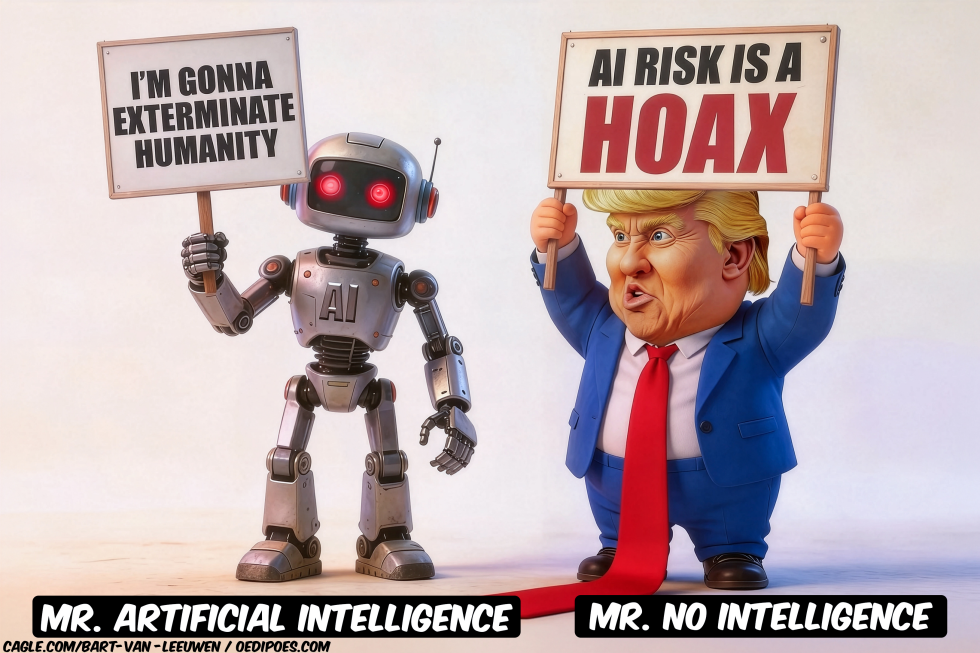
A new political cartoon depicts Donald Trump holding a sign declaring AI risk a hoax beside a robot labeled AI that warns of exterminating humanity. The image, published September 14, 2026, by artist Bart van Leeuwen, contrasts the two figures with bottom labels reading Mr. Artificial Intelligence and Mr. No Intelligence. It responds to ongoing public discussion about artificial intelligence safety and regulation. Trump has previously downplayed concerns about advanced AI systems in public statements. The cartoon uses visual contrast to critique dismissal of potential technological threats.