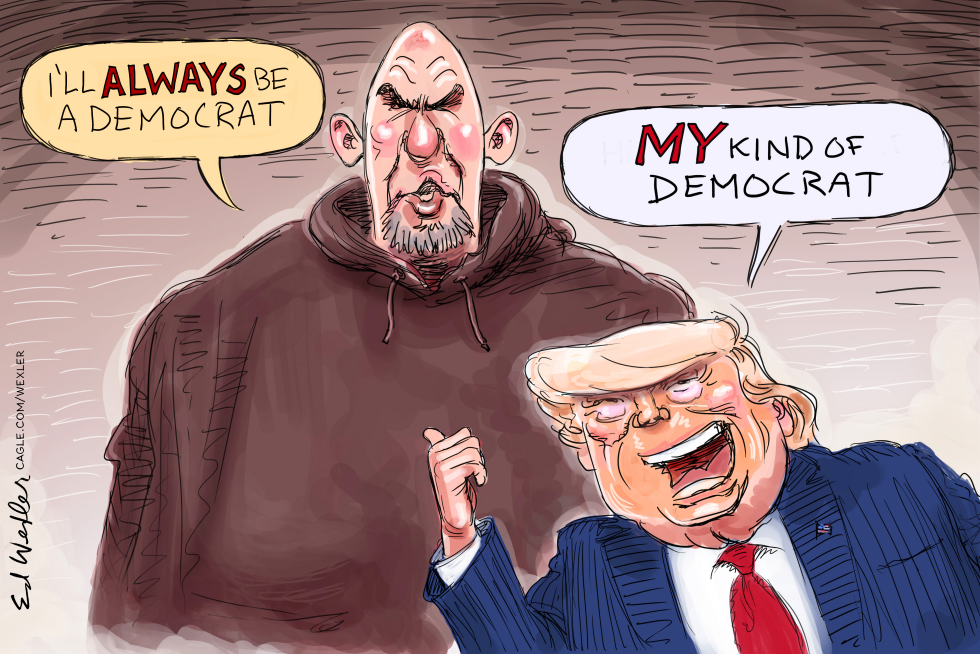
Donald Trump publicly endorsed a Democrat who declared he would always remain in the party. The statement drew attention because it came from a figure outside Trump's usual base. Observers noted the remark as part of ongoing efforts to attract voters across traditional lines. The cartoon presents the exchange as evidence that Trump sees value in Democrats who refuse to change affiliation. It frames the moment as revealing Trump's strategic tolerance for opposition loyalty when it suits his purposes.
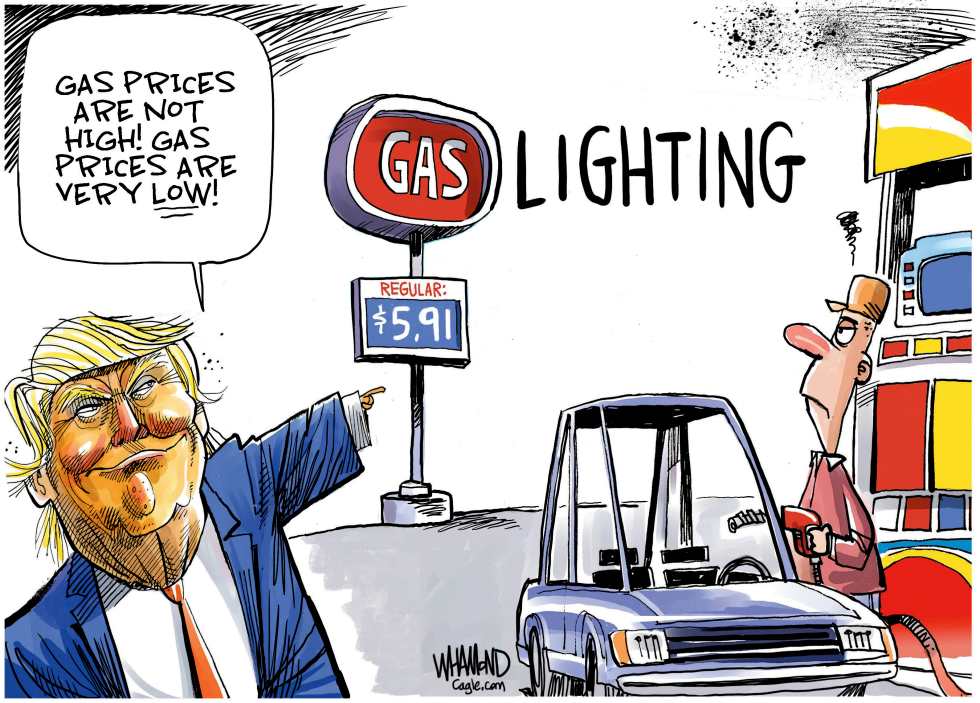
Donald Trump has repeatedly asserted that gas prices are very low even as national averages hover near record territory. The statement comes amid ongoing public frustration with energy costs that have remained elevated for months. The editorial takes the position that such denials amount to deliberate misdirection rather than engagement with economic data.
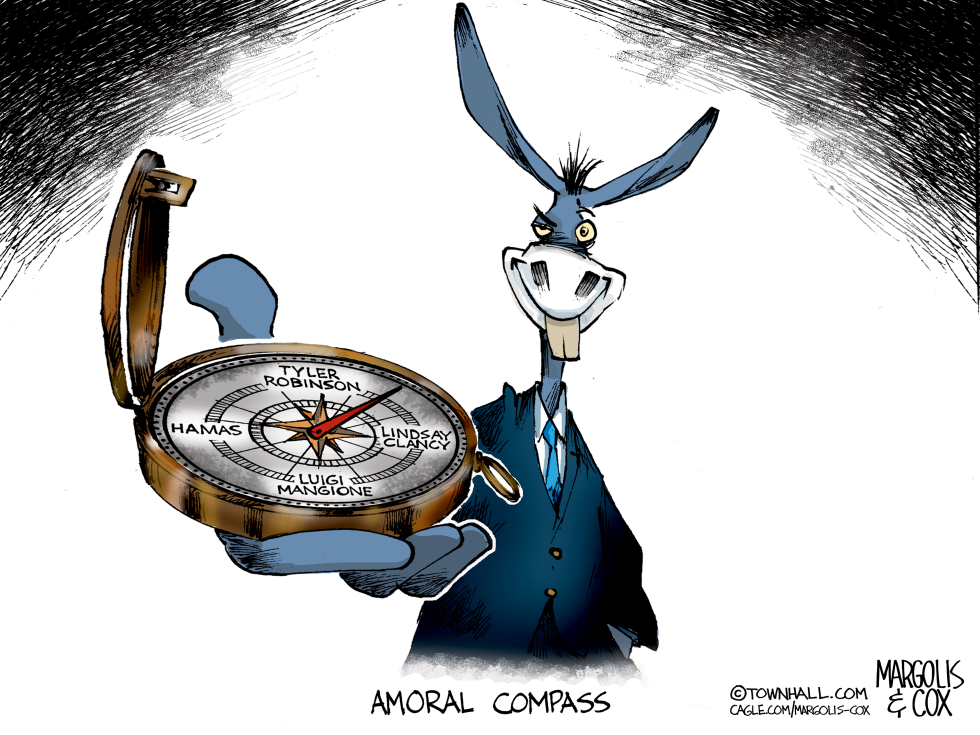
On September 11, 2026, a political cartoon by Margolis & Cox depicts the Democratic Party's moral framework as broken by associating it with figures such as Luigi Mangione, Lindsay Clancy, Tyler Robinson, and Hamas. The piece argues that progressive tolerance for these cases reveals a deeper ethical failure. It matters because public trust in political morality shapes elections and policy debates. The cartoon takes the position that the left has abandoned consistent principles in favor of selective outrage.
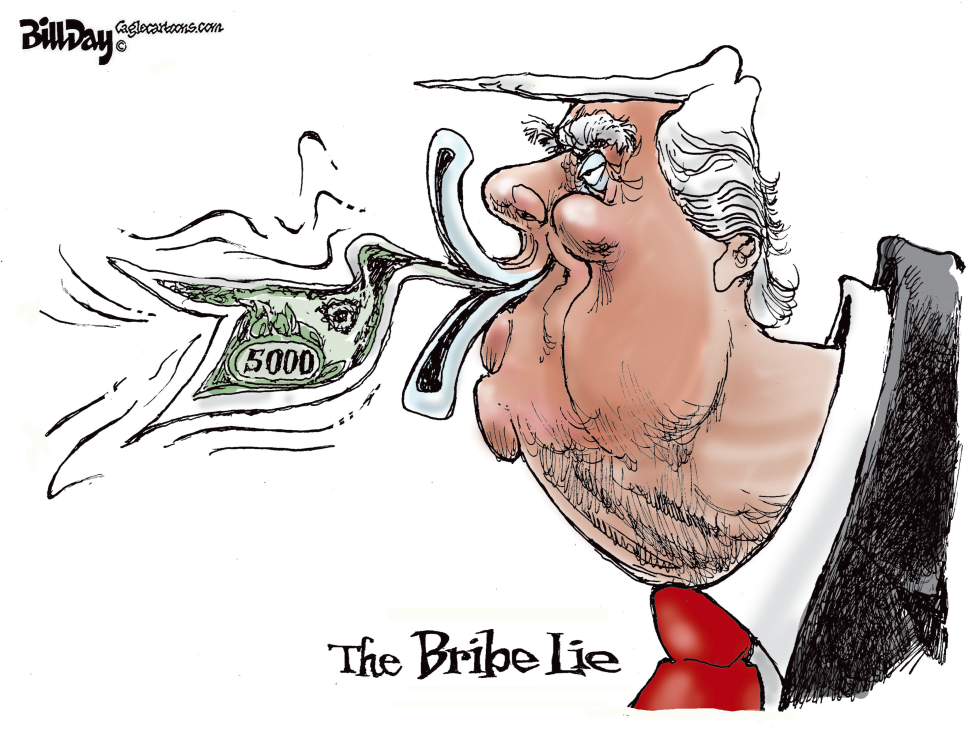
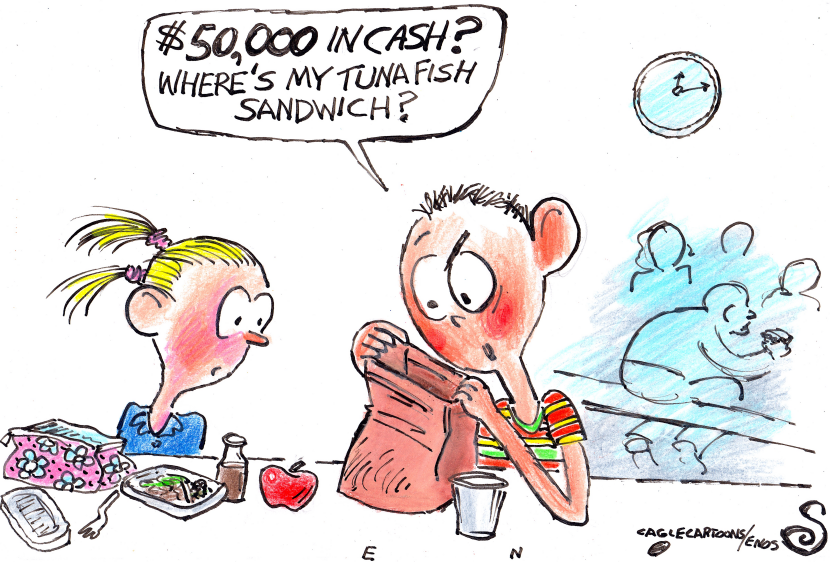
Donald Trump has repeatedly denied receiving improper payments or bribes tied to official actions. Recent reports have raised questions about large cash transfers and their origins. The cartoon argues that these denials amount to a lie, with the money trail contradicting public statements. It positions the issue as a test of accountability for the former president and his circle. The piece suggests the public should view such explanations with skepticism given the visible evidence of financial gain.
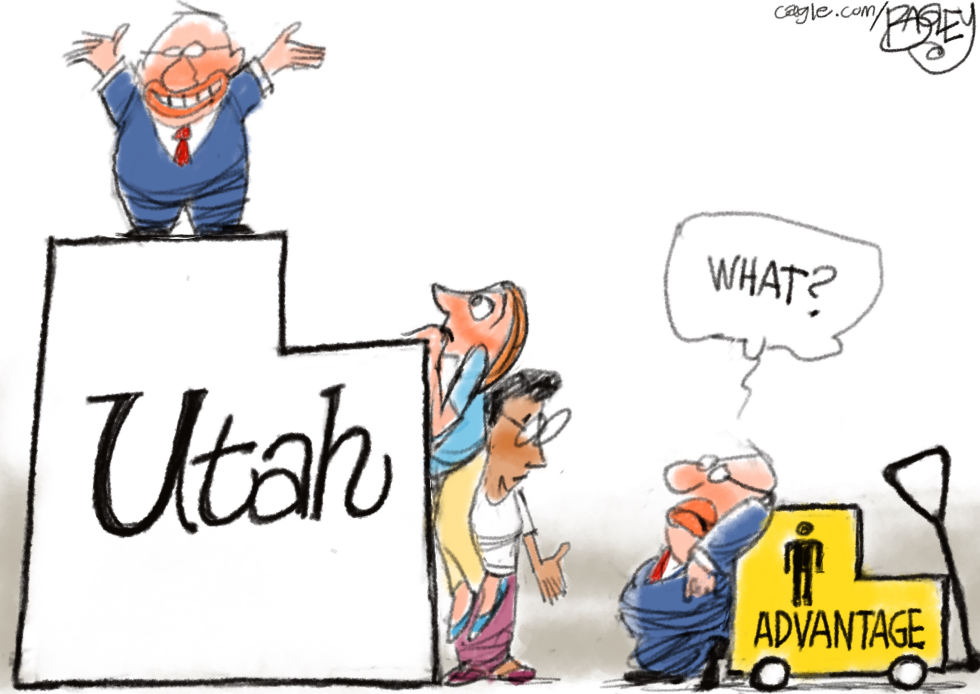
Utah's political advantage has changed hands following recent election developments. Key figures react with visible surprise as power dynamics realign in the state. The shift matters because it alters control and strategy for upcoming contests. The cartoon highlights the unexpected nature of the transition and questions how the new arrangement will hold.
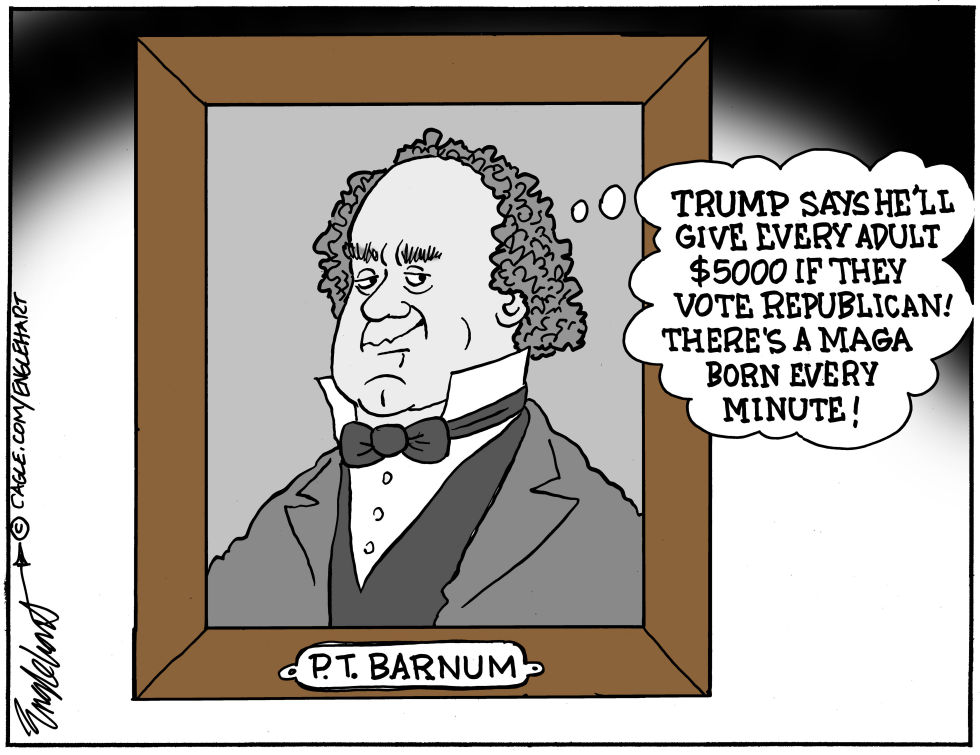
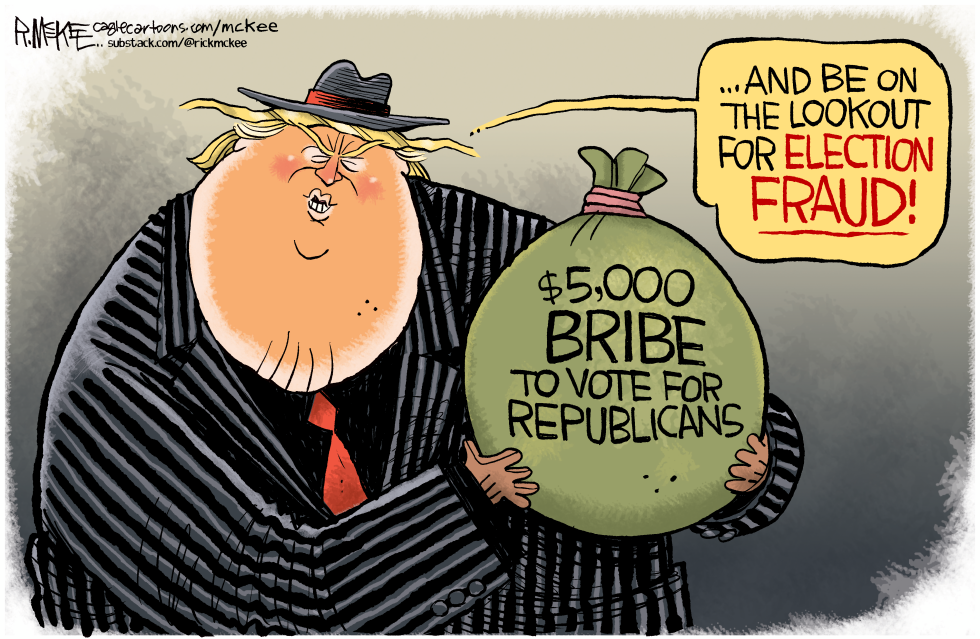
Donald Trump proposed giving $5000 to every adult who votes Republican ahead of the 2026 midterms. The offer drew immediate comparisons to historical figures known for exploiting public gullibility. The cartoon uses the P.T. Barnum portrait and the altered sucker line to argue that the proposal treats voters as marks rather than citizens. It frames the cash pledge as a transparent attempt to buy support through direct payment. The piece suggests the tactic reveals low regard for voter intelligence and reduces elections to transactional exchanges.
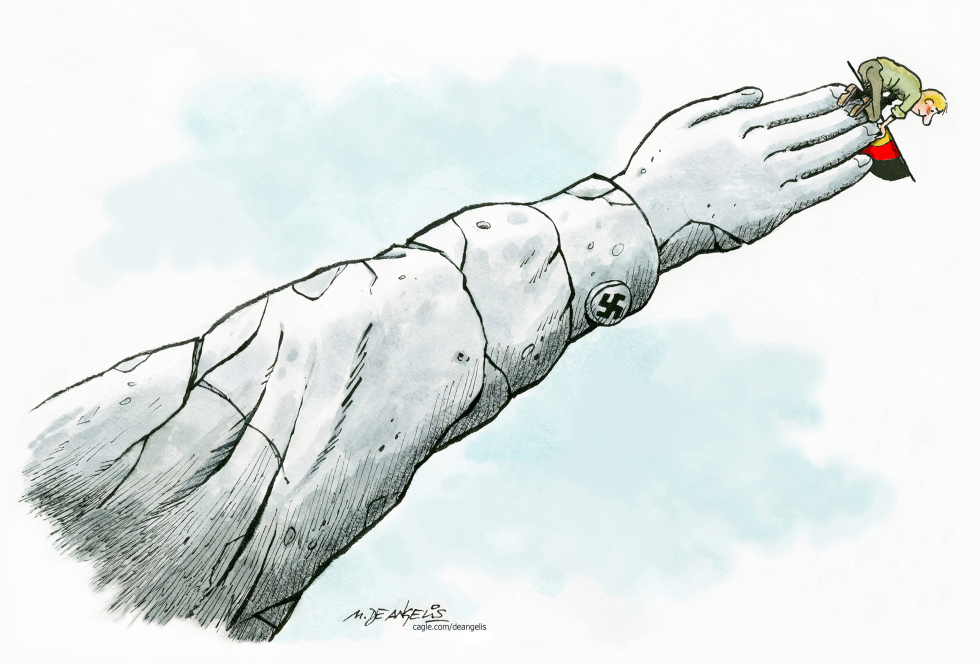
Concerns over far-right political gains in Germany have intensified in recent years, with parties embracing nationalist rhetoric drawing scrutiny for echoing historical extremist movements. The development matters because it tests the resilience of post-war democratic institutions in Europe's largest economy. The cartoon argues that such influences continue to exert a controlling grip on German political life despite decades of denazification efforts.
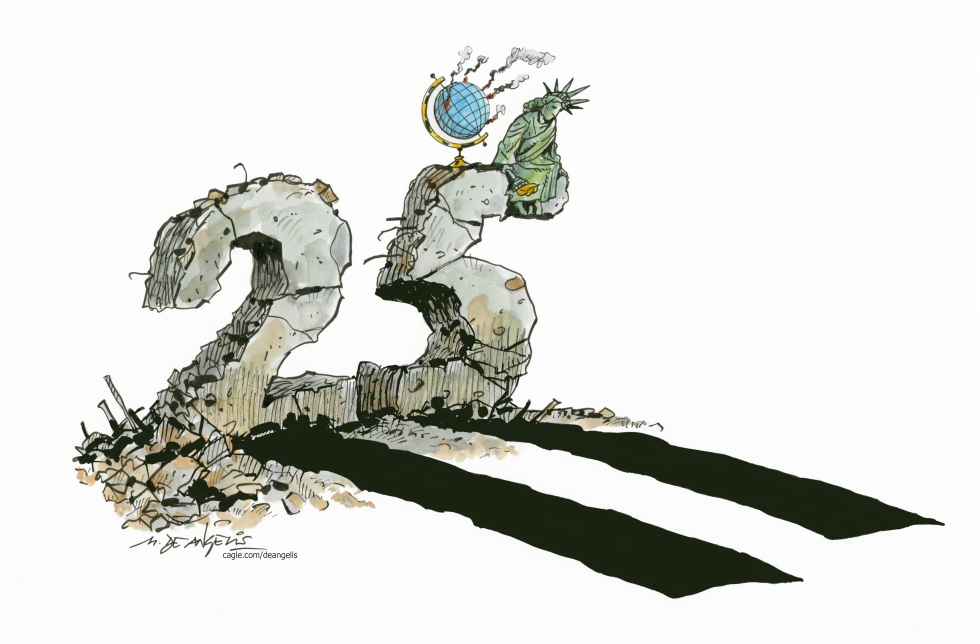
September 11, 2026 marks the 25th anniversary of the attacks that reshaped U.S. foreign policy and domestic security. The milestone arrives amid ongoing global conflicts, eroded alliances, and questions about whether the post-9/11 era delivered promised security. The cartoon frames the anniversary as a moment of visible strain on core American symbols and the broader international order they once anchored.
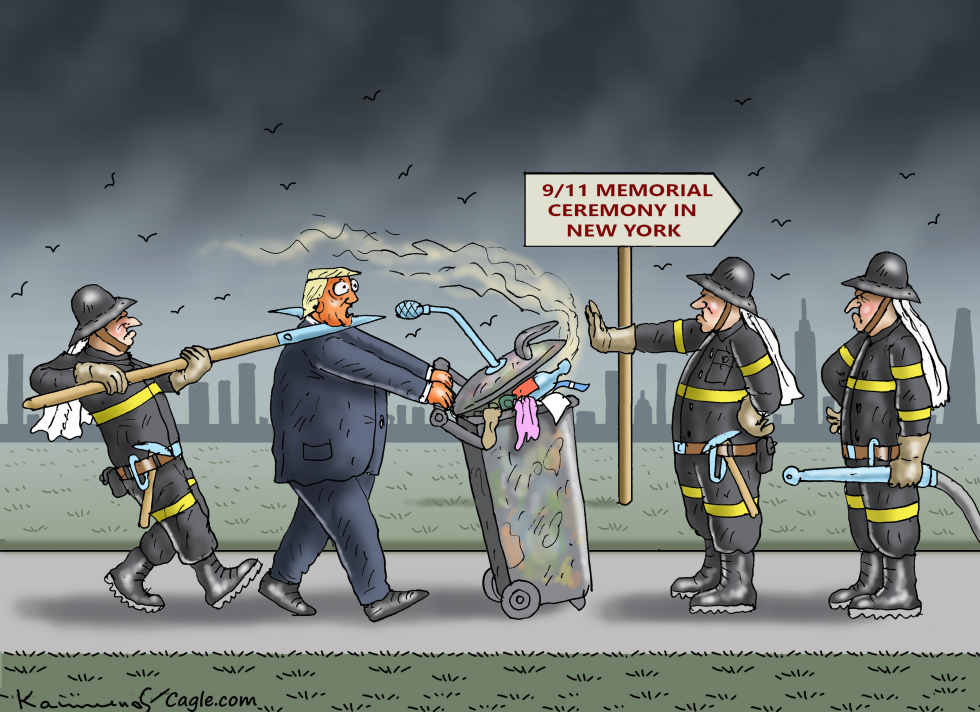
On the 2026 anniversary of the September 11 attacks, New York firefighters prevented Donald Trump from delivering remarks at the memorial ceremony in New York. The action reflects ongoing tensions between the former president and first responders over his past comments and conduct. The cartoon portrays the rejection as decisive and final, underscoring that Trump's presence remains unwelcome at the site.
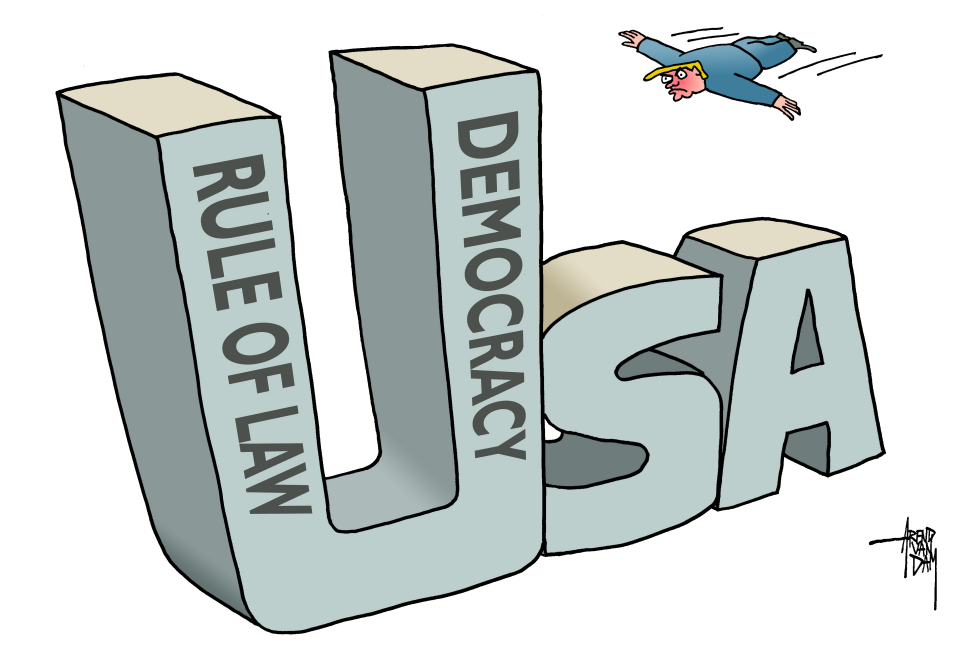
On September 11, 2026, political commentary focused on former President Donald Trump's ongoing conflicts with legal and democratic norms. The cartoon illustrates his ejection from structures labeled rule of law and democracy. This reflects broader concerns over accountability for high office holders. The piece argues that U.S. institutions remain capable of expelling those who undermine core principles.
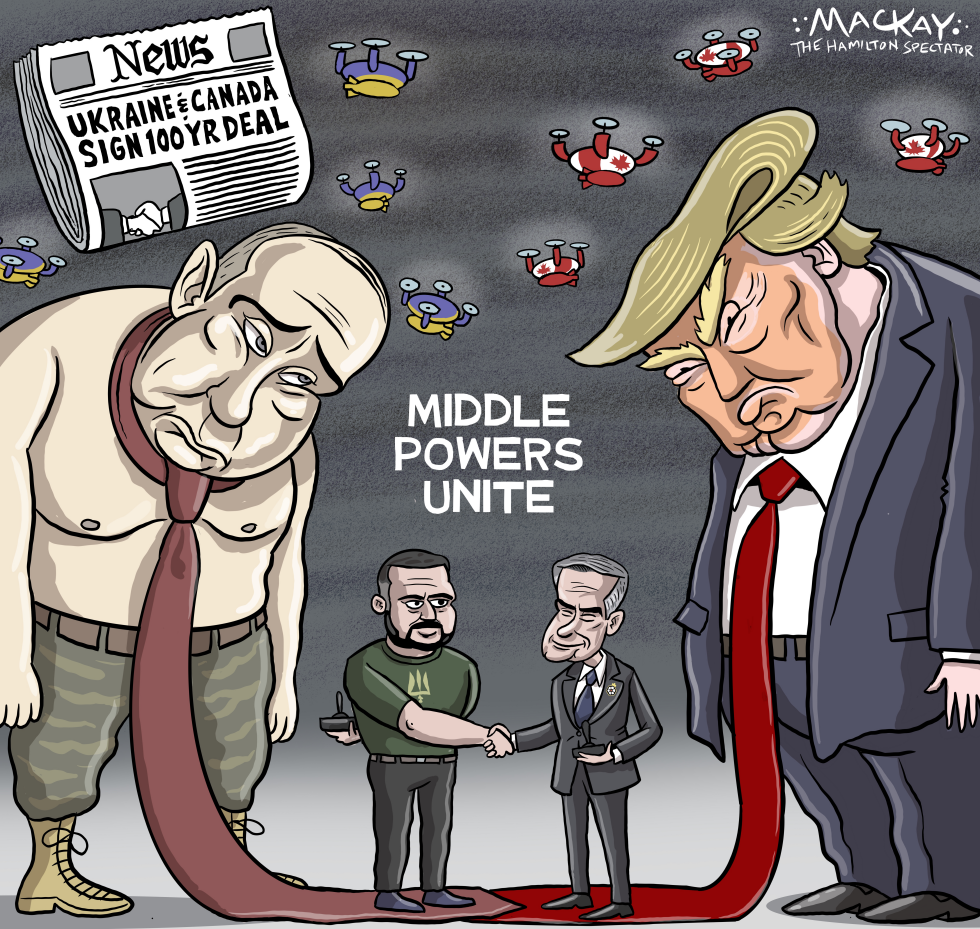
The political cartoon illustrates the signing of a 100-year agreement between Canada and Ukraine, with President Zelenskyy and a Canadian leader shaking hands on a red carpet. Large caricatures of Vladimir Putin and Donald Trump stand on either side, looking down at the smaller central figures. Canadian flag drones fill the background sky near a newspaper announcing the pact. The central text reads Middle Powers Unite. The image comments on how the bilateral deal elevates secondary nations in global affairs while established powers watch the development.
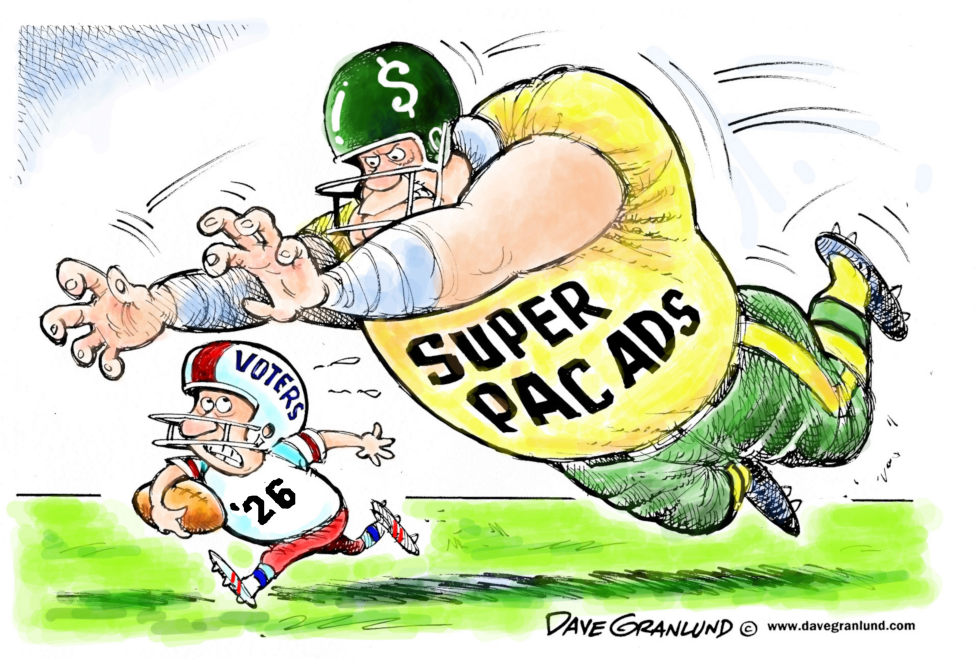
The cartoon depicts a large football player representing Super PAC ads pursuing a much smaller voter figure on a football field. Published on September 11, 2026, the image comments on the growing influence of Super PAC spending in U.S. elections. The oversized player wears a helmet marked with a dollar sign and a jersey labeled Super PAC Ads, while the smaller figure wears a helmet reading Voters and a jersey with the number 26. The visual emphasizes the imbalance between well-funded political advertising and ordinary voters. This reflects ongoing debates about campaign finance and the role of independent expenditure groups following recent election cycles.
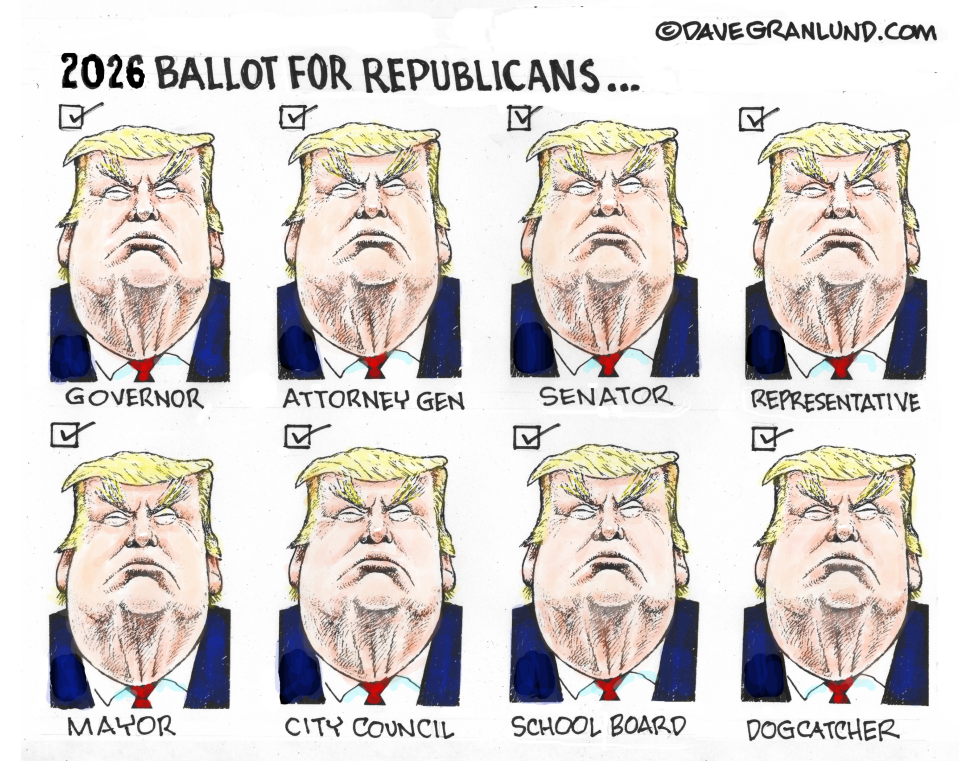
The cartoon depicts eight identical caricatures of Donald Trump filling every position on a 2026 Republican ballot, from governor and attorney general down to dogcatcher. Each image carries a checkmark, underscoring the editorial point that Trump loyalty has become the sole qualification for GOP candidates at every level. Published September 11, 2026, the image comments on the ongoing consolidation of Republican primaries around Trump-aligned figures ahead of the midterm cycle. The visual repetition emphasizes how the former president's influence extends from high-profile statewide offices to local contests. This approach mirrors real-world patterns where Trump endorsements shape candidate selection across the party.
Donald Trump has repeatedly claimed that elections are rigged against Republicans and urged vigilance against fraud. The cartoon responds to this pattern by depicting him offering cash incentives to secure votes for his party. It underscores the perceived double standard in ongoing debates over voting access and integrity ahead of the 2026 midterms. The piece takes the position that such rhetoric from Trump undermines genuine concerns about election security.
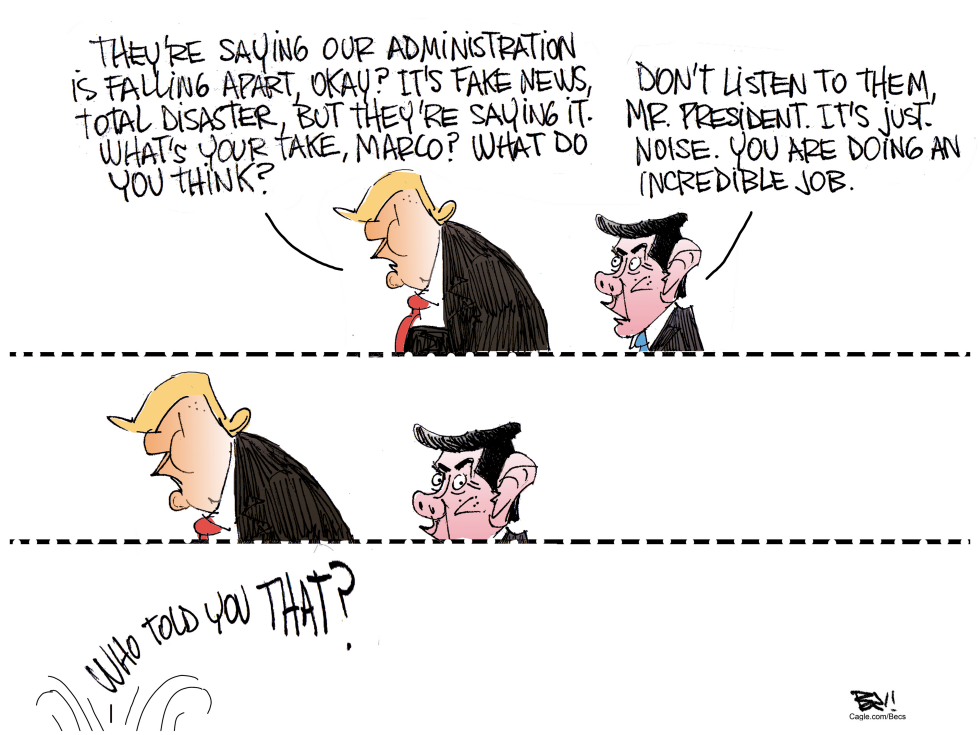
President Trump asked Senator Marco Rubio for his assessment of reports that the administration is in disarray, labeling them fake news. Rubio dismissed the reports as noise and praised Trump's performance. Trump responded by questioning who had told Rubio that assessment. The exchange highlights tensions over loyalty and information flow inside the administration. The cartoon portrays Rubio's positive reply as triggering suspicion rather than reassurance.