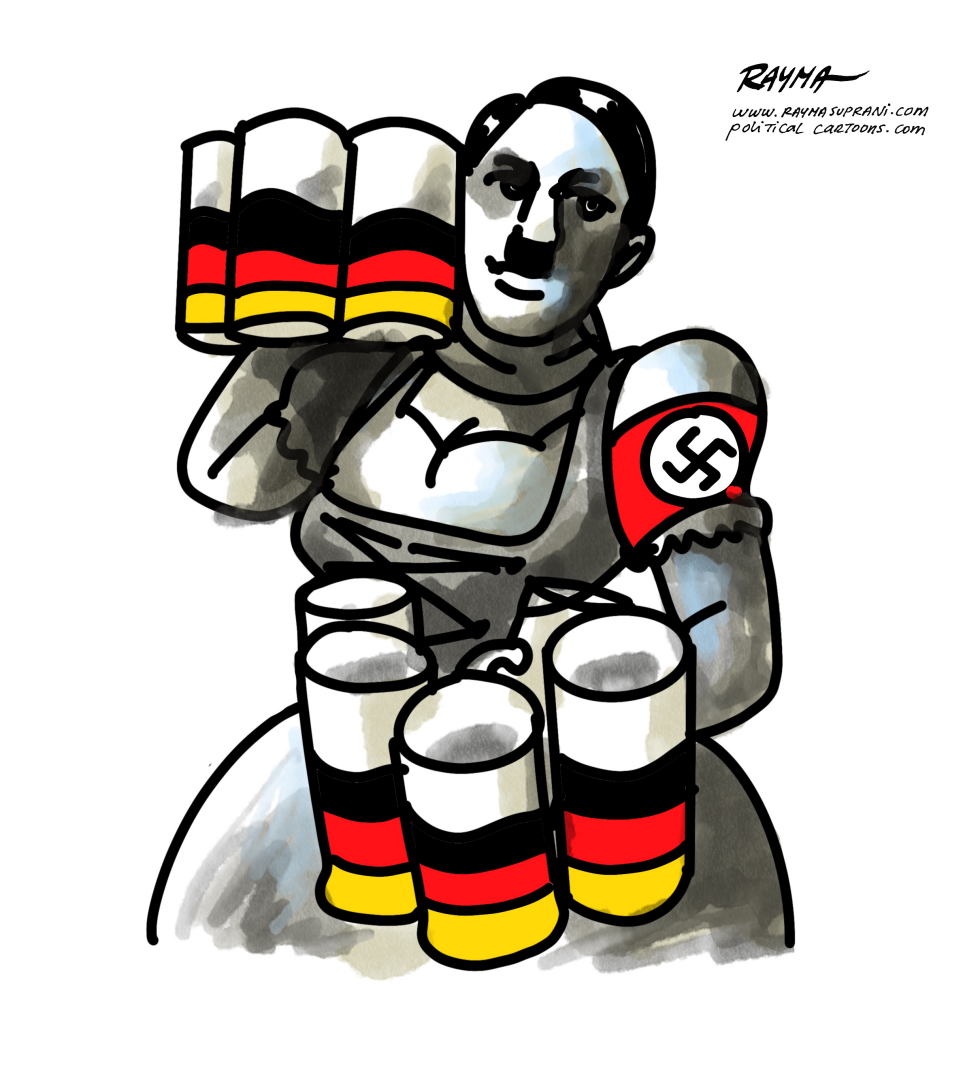
The cartoon depicts a figure resembling Adolf Hitler clad in armor and bearing a swastika armband while surrounded by beer mugs colored like the German flag. It responds to ongoing discussions about far-right movements in Germany by blending historical Nazi references with contemporary beer culture symbols. The work highlights perceived connections between political radicalism and national social customs as of the 2026 publication date. No specific recent event anchors the piece beyond recurring themes of extremism in European politics.
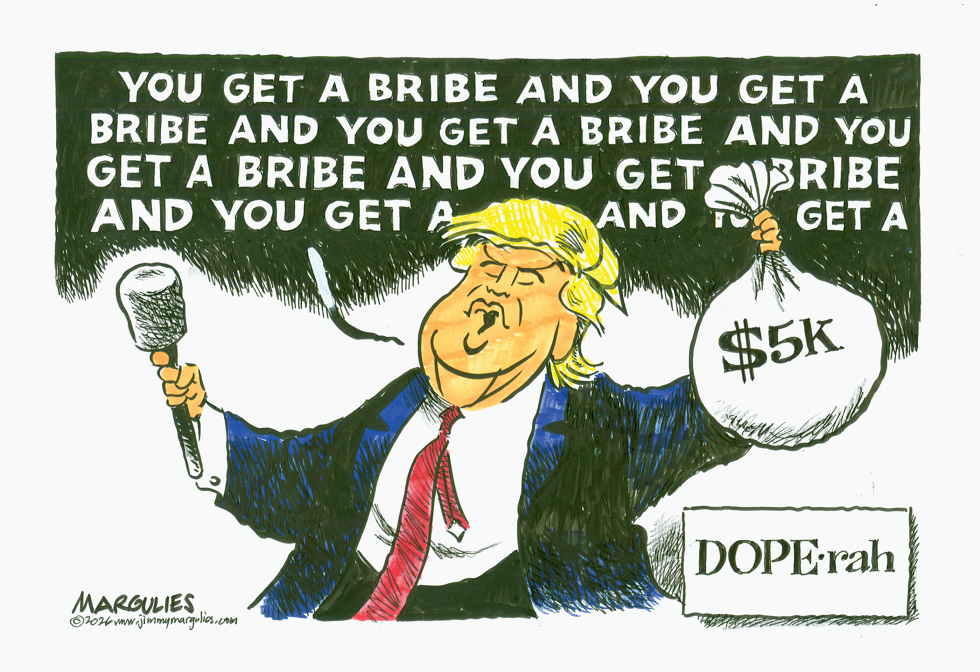
Donald Trump has faced renewed scrutiny over allegations of using official authority to distribute favors and payments. The pattern involves judicial and executive actions that critics say cross into bribery. Such conduct raises questions about accountability in high office. The cartoon frames the behavior as a deliberate, widespread distribution of bribes to allies and supporters. It argues that this approach undermines public trust and normalizes corruption at the highest levels.
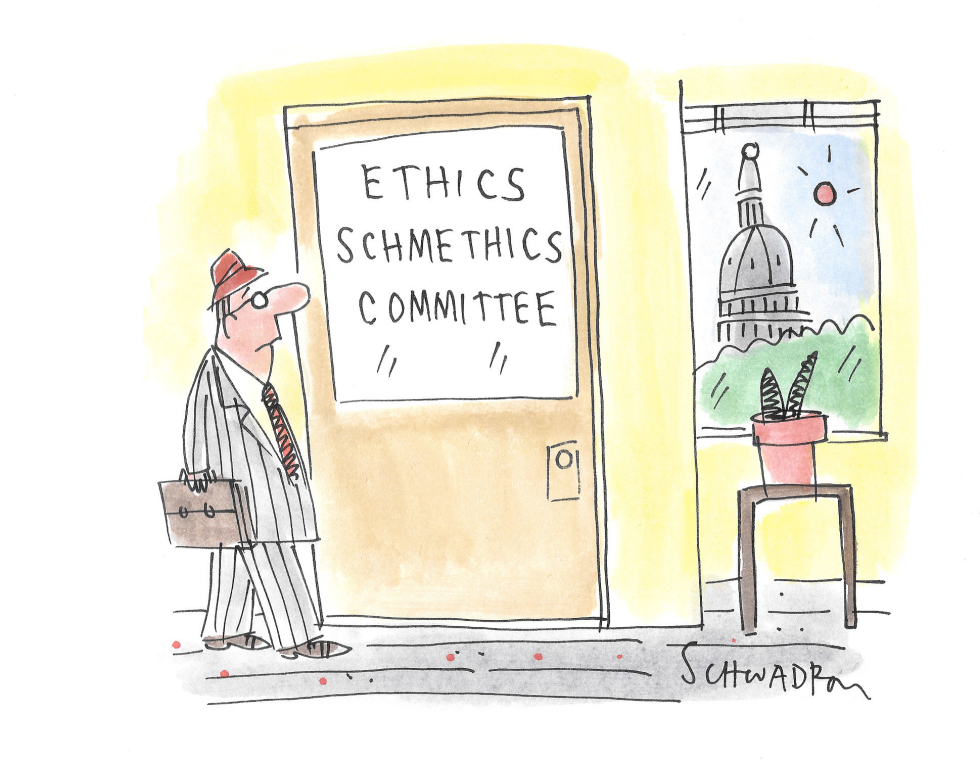
Congress continues to sideline meaningful ethics oversight, with lawmakers showing little interest in strengthening or even respecting the chamber's ethics committee. The panel exists on paper but carries little practical weight in daily operations. This dynamic matters because weak internal standards erode public trust in legislative institutions and invite outside influence. The cartoon captures the prevailing attitude that ethics rules are an afterthought rather than a core responsibility.
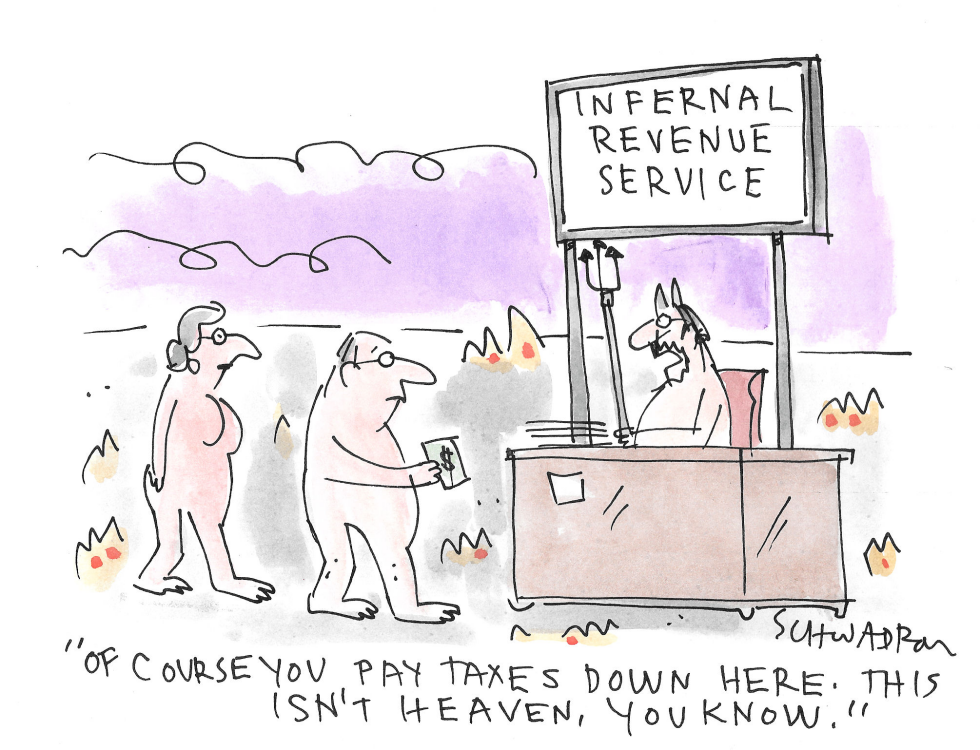
The long-standing adage that only death and taxes are certain receives fresh treatment in a cartoon depicting an IRS outpost operating in hell. No specific policy change or ruling prompted the piece, which instead plays on the enduring public frustration with tax collection as an inescapable force. The editorial stance pokes at bureaucratic persistence, suggesting the tax man follows citizens beyond the grave with the same relentless efficiency seen in life.
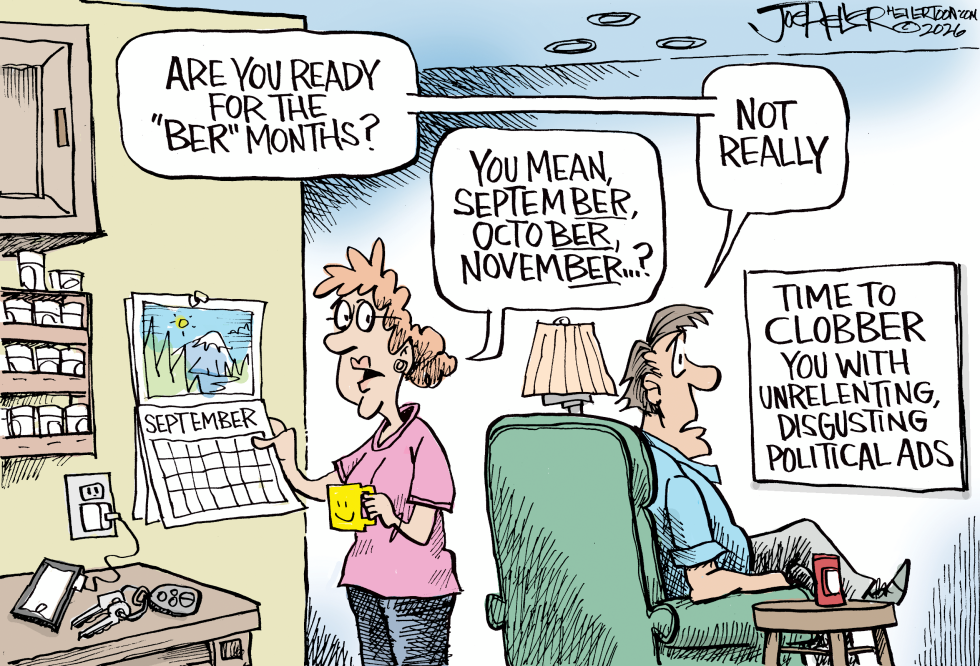
As September begins, the annual cycle of fall political advertising intensifies ahead of November elections. Candidates and outside groups ramp up spending on television, digital and mail campaigns to reach voters. The volume of messages creates widespread fatigue among the public. The cartoon highlights the predictable dread that accompanies the shift from summer to the final stretch of the campaign calendar.
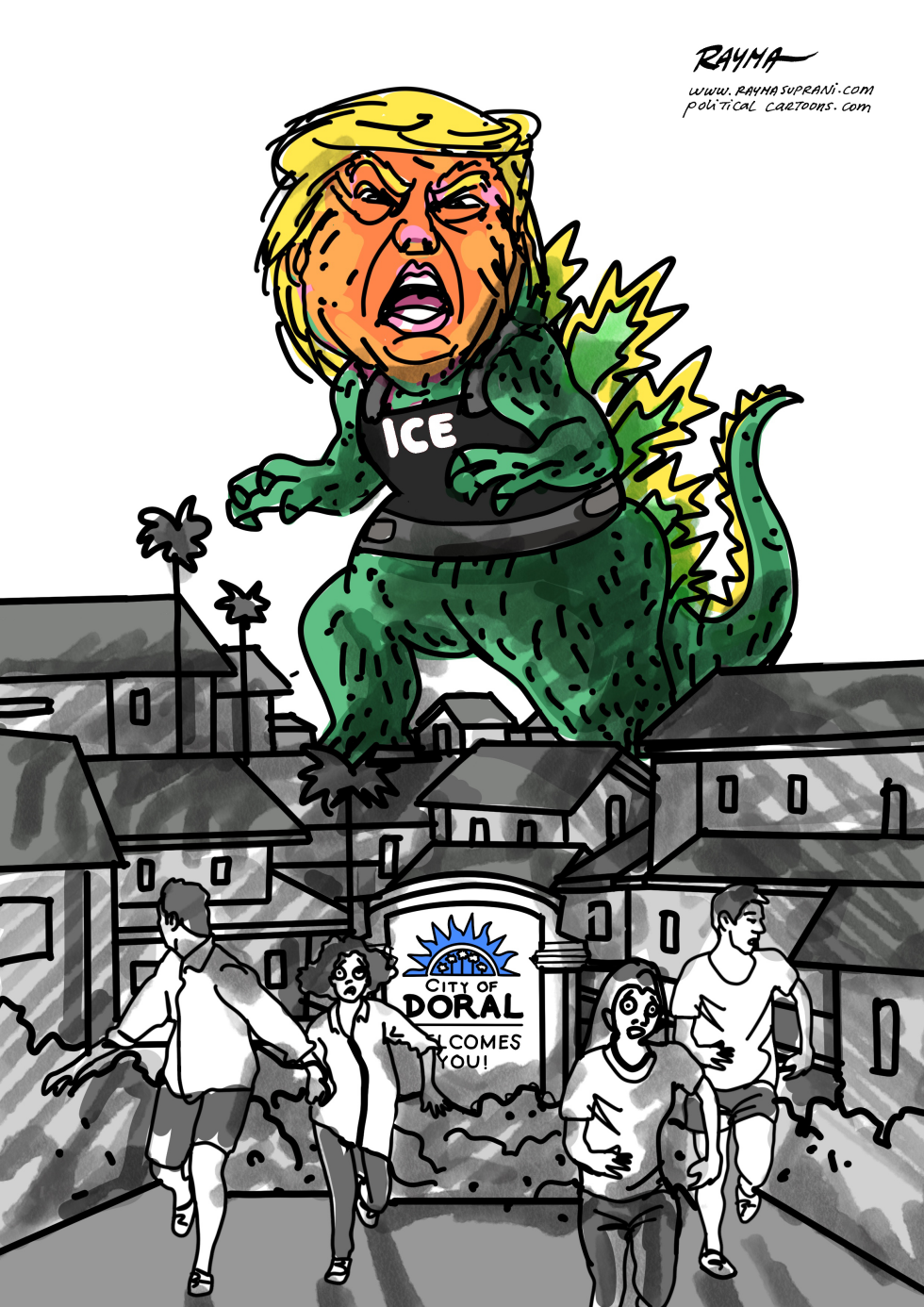
The image shows a large figure resembling Donald Trump dressed as an ICE agent towering over the city of Doral. People run from the scene near a welcome sign. The work addresses immigration enforcement policies active in Florida during 2026.
Donald Trump has signaled plans to impose new voting restrictions before the 2026 midterm elections. The moves come as Republicans seek advantages in key races. Critics argue the changes would suppress turnout among Democratic-leaning voters. Supporters claim the steps address fraud concerns. The cartoon frames the timing as an attack on voting access itself.
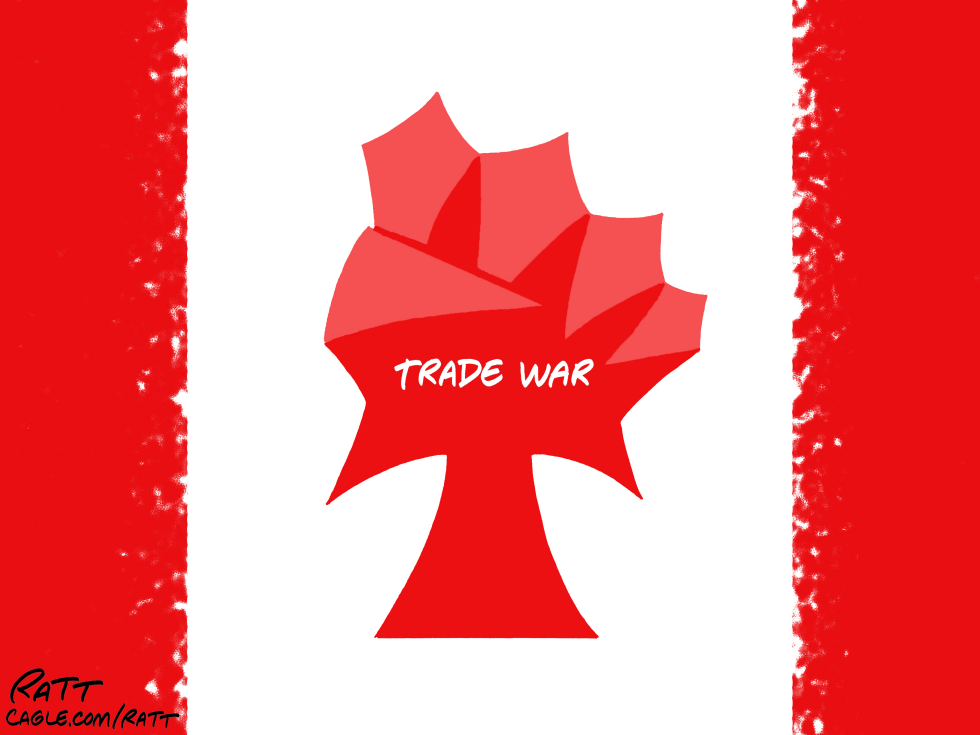
Ongoing US-Canada trade tensions escalated in 2026 with new tariff threats targeting Canadian exports. The dispute threatens key sectors including autos, lumber and agriculture, raising costs for consumers on both sides of the border. Canada has signaled plans to diversify markets and strengthen domestic industry. The cartoon frames the conflict as a direct assault on Canadian sovereignty and economic stability. It portrays the trade war as fracturing national symbols while urging a stronger northern response.
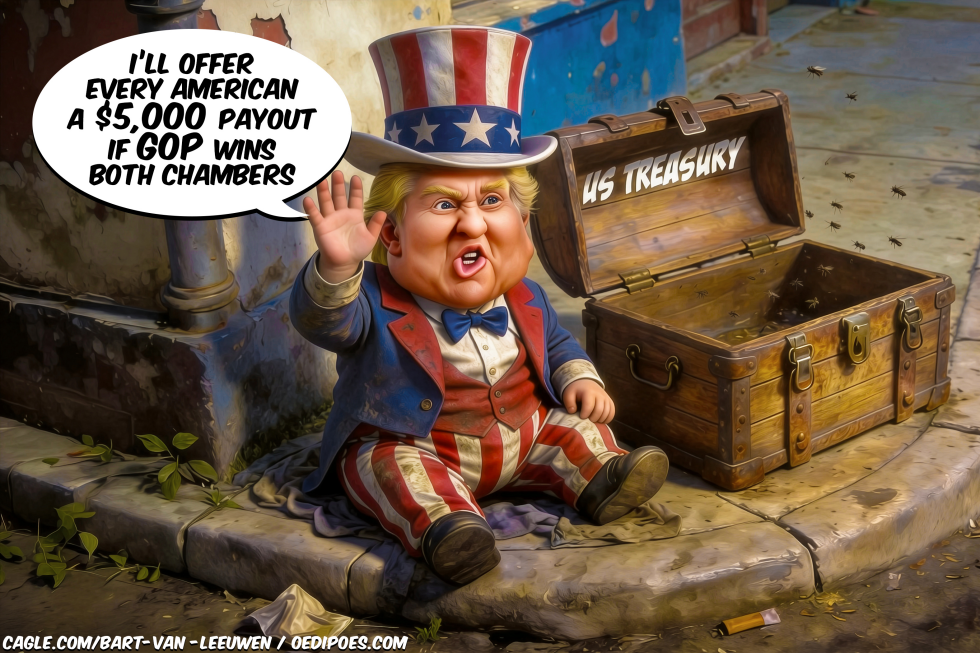
Donald Trump has publicly offered $5000 payments to Americans who follow his directives, framing the incentive as a direct reward for alignment. The pledge has drawn immediate questions from his own base about the status of related DOGE checks previously promised. The move underscores ongoing efforts to maintain supporter enthusiasm through financial inducements. Critics view the tactic as an attempt to convert political loyalty into personal obedience. The cartoon highlights the transactional nature of the offer and the skepticism it has already generated among core supporters.
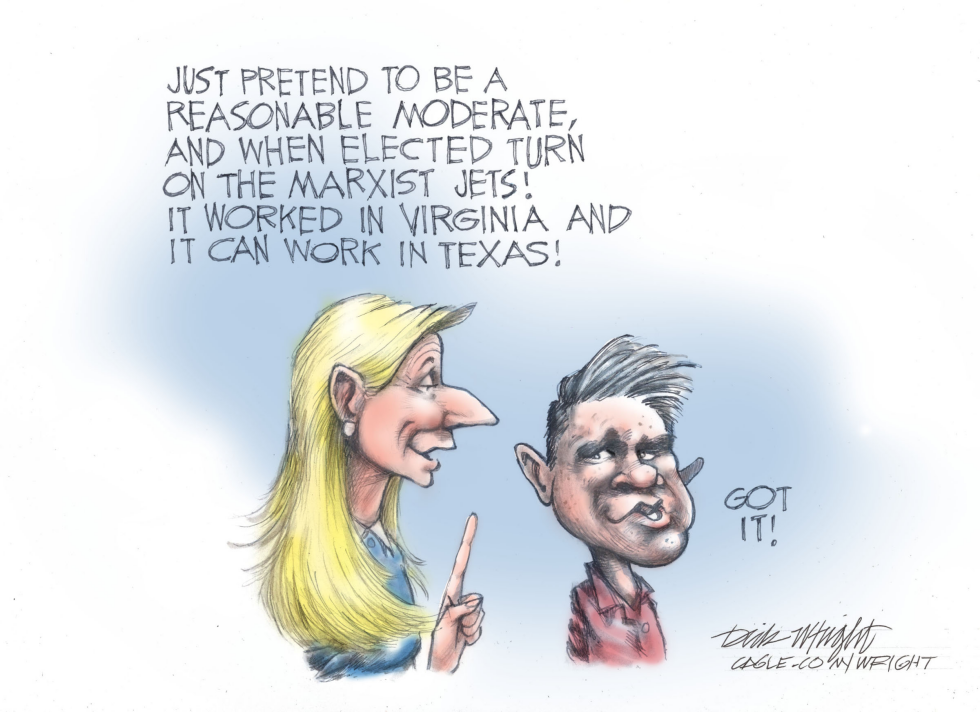
A Texas political candidate is depicted receiving advice to campaign as a moderate before revealing a more radical agenda after election, modeled on Abigail Spanberger's Virginia approach. The cartoon highlights concerns over deceptive campaign strategies in the 2026 cycle and questions the authenticity of centrist positioning by progressive candidates.
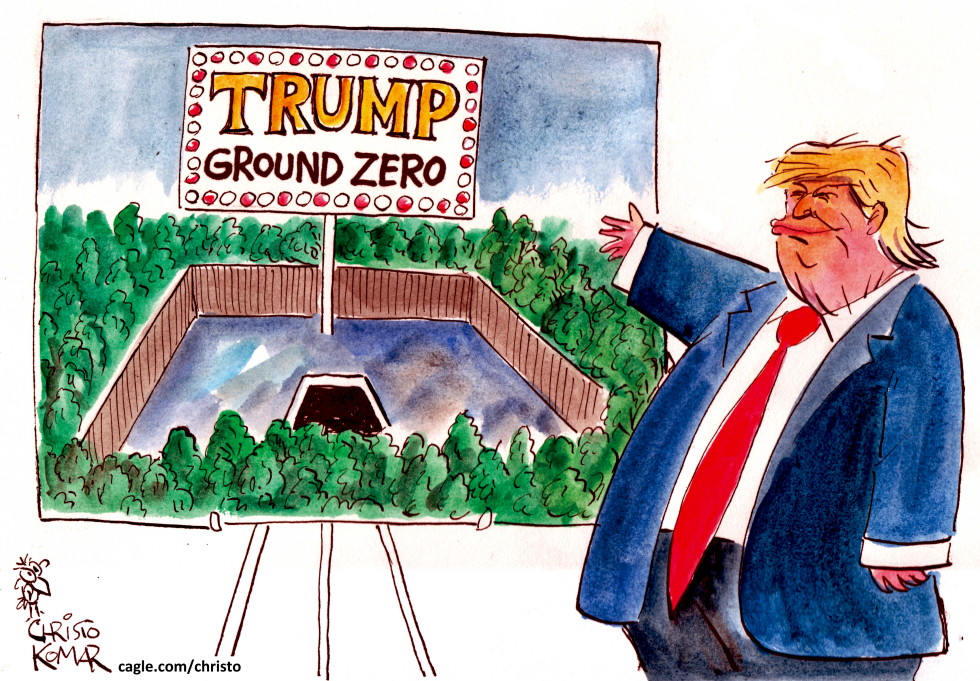
Donald Trump has floated the idea of branding the Ground Zero memorial site with his name. The proposal revives long-standing debates over commercial use of the 9/11 location. Critics argue the move prioritizes personal promotion over solemn remembrance. Supporters see it as consistent with Trump's business approach to public projects. The cartoon depicts the former president enthusiastically presenting the branded sign. It highlights concerns that such branding trivializes a national tragedy for individual gain.
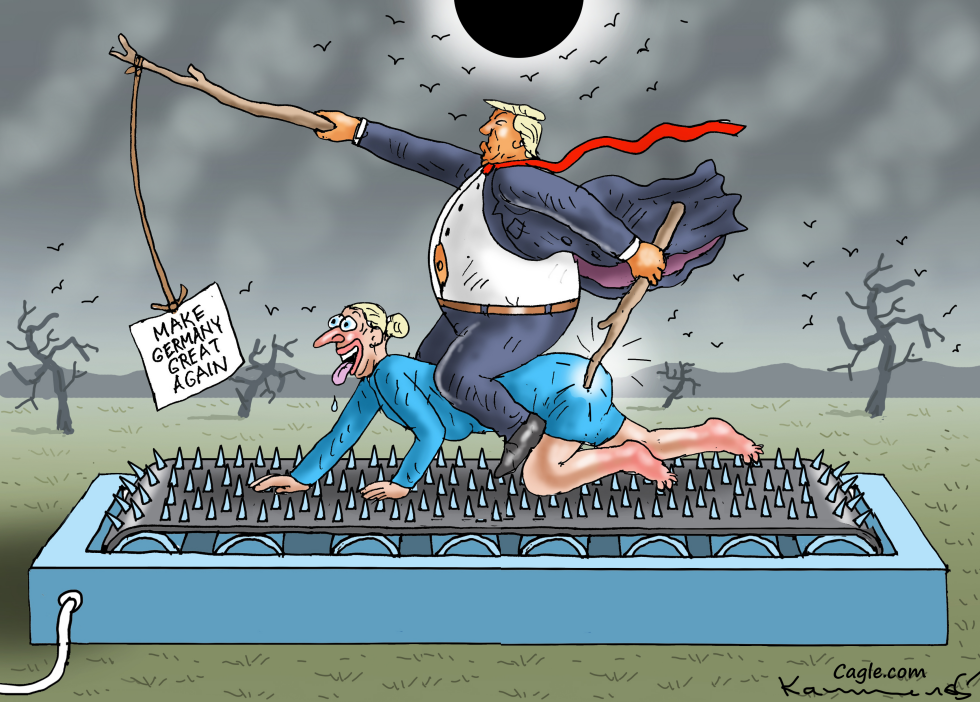
Donald Trump promotes a revival slogan aimed at Germany while Angela Merkel faces the consequences. The effort highlights ongoing tensions in transatlantic relations and questions about external influence on European domestic policy. The piece argues that such interventions impose unnecessary hardship without delivering benefits.
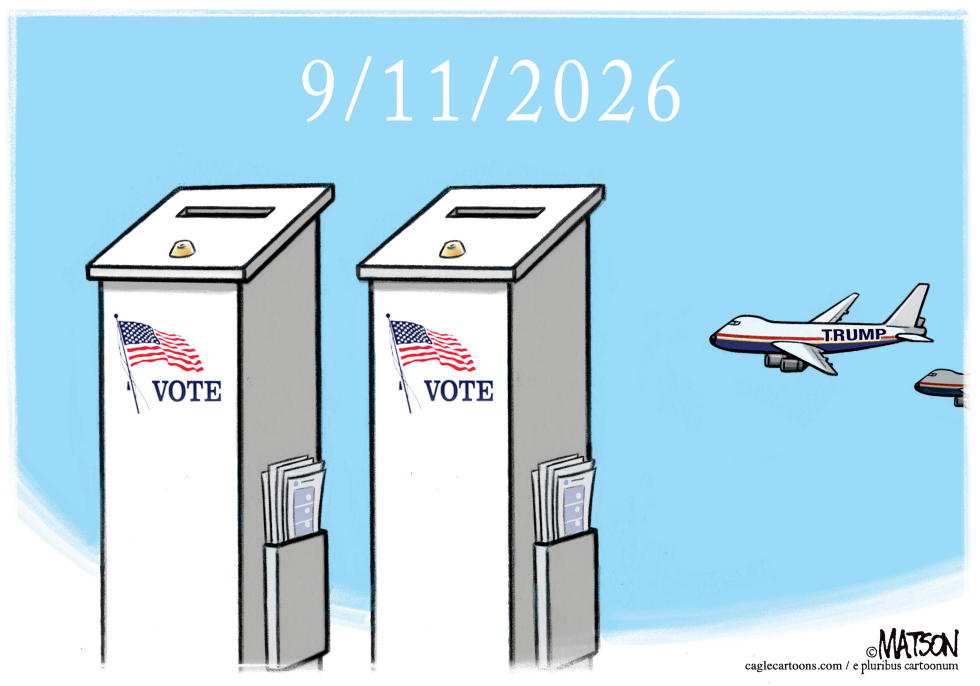
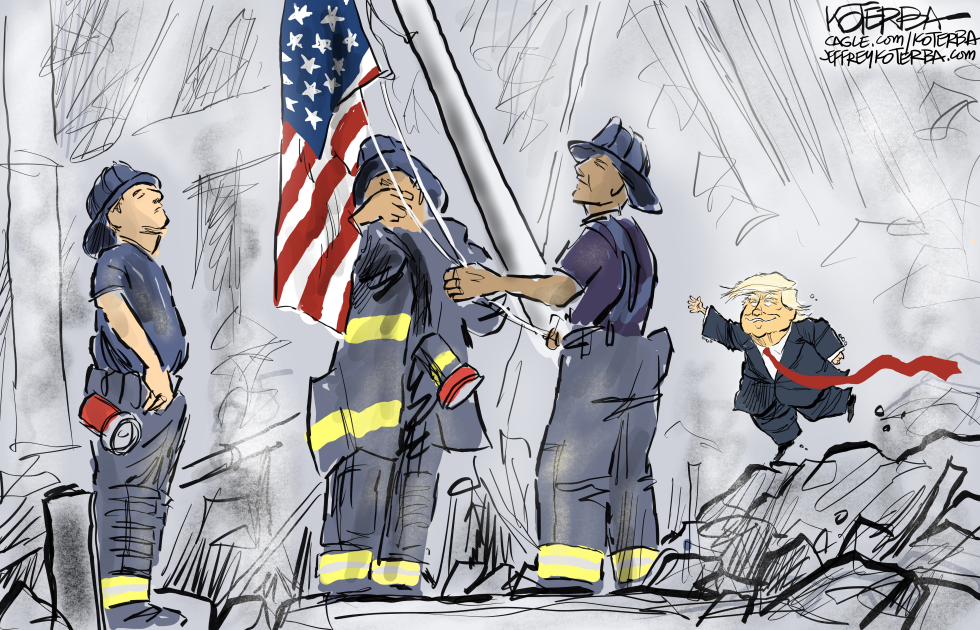
On the eve of the 2026 September 11 anniversary, a cartoon depicts Donald Trump rushing into the iconic firefighter flag-raising scene amid rubble. The image critiques Trump's repeated efforts to associate himself with the 9/11 response despite his limited direct role at the time. The editorial stance highlights perceived opportunism in political figures revisiting national tragedies for personal gain.
The cartoon depicts Donald Trump dressed as Uncle Sam seated on a curb beside an open US Treasury chest filled with flies. He promises every American a $5,000 payout if Republicans win both chambers of Congress. The image responds to campaign rhetoric tying government funds to electoral outcomes ahead of the 2026 midterms. It highlights concerns over using Treasury resources for political advantage. The visual uses the empty chest and insects to suggest depletion or misuse of public money.
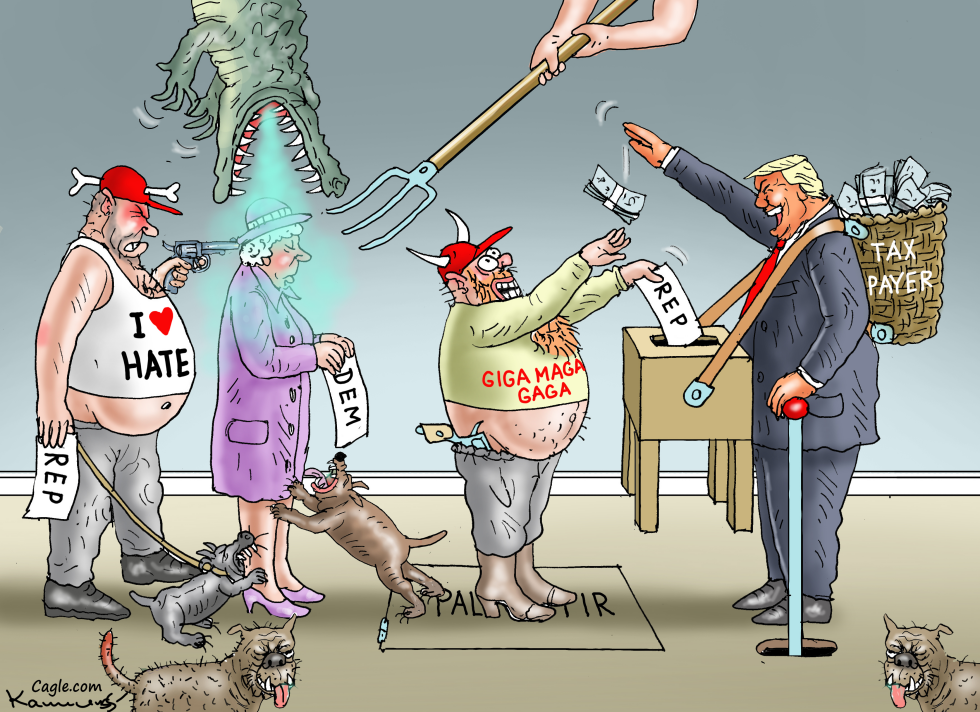
As the 2026 midterm elections approach, former President Trump has positioned himself as a central force in Republican campaigns, directing resources and mobilizing supporters. The cartoon highlights the use of taxpayer money in these efforts and the intense partisan divide, with Democrats portrayed as under attack. It takes the position that such involvement risks undermining fair electoral processes.