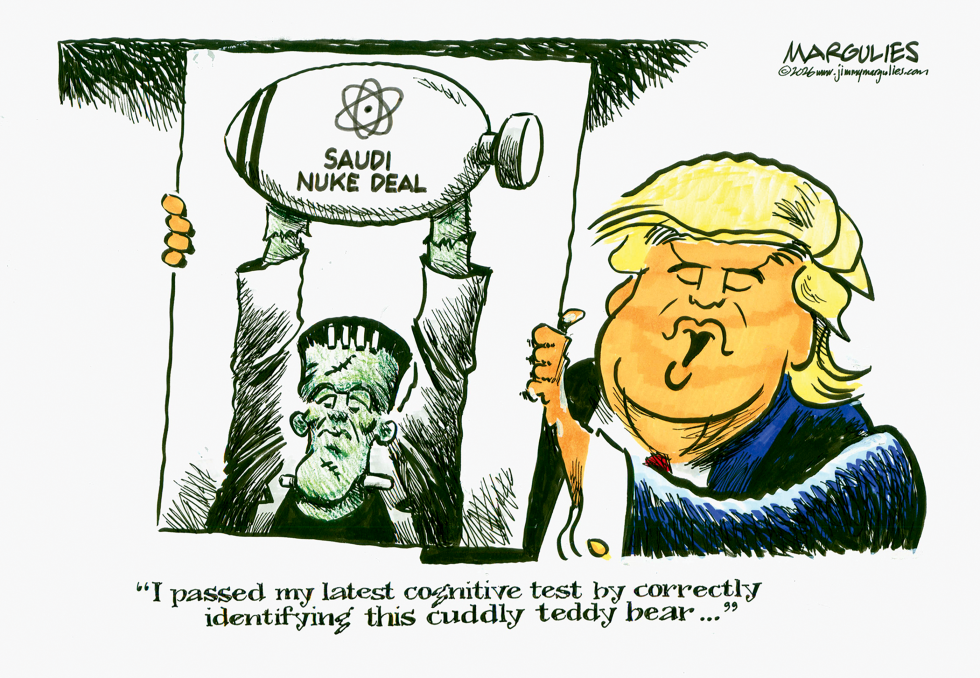
Donald Trump referenced a cognitive test while describing a Saudi nuclear deal in personal terms. The episode occurs against ongoing debates over arms control and Middle East policy. The piece portrays the deal as a dangerous misjudgment.
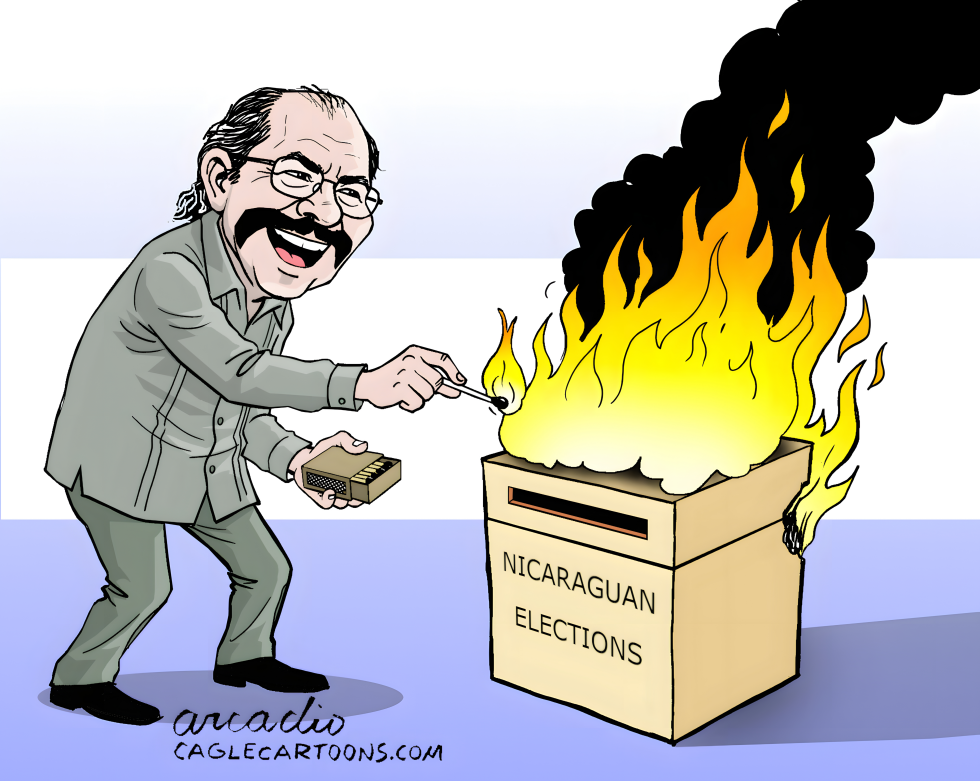
Nicaraguan President Daniel Ortega has publicly stated there will be no more elections, a move that solidifies his long-term grip on power. The declaration comes amid ongoing concerns over democratic backsliding in the Central American nation. This development matters because it removes any remaining avenues for political opposition and citizen participation in governance. The accompanying editorial takes the position that Ortega's action represents a deliberate destruction of democratic institutions rather than a legitimate policy choice.
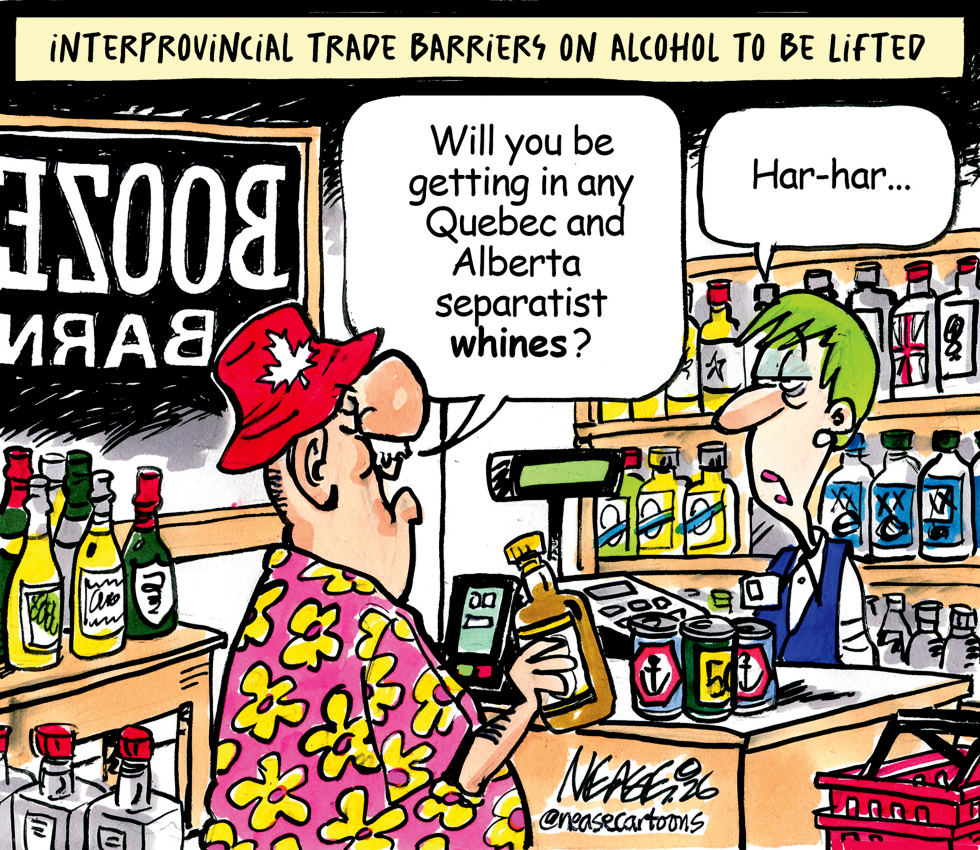
Canada announced it will lift interprovincial trade barriers on alcohol sales. The change opens cross-border provincial liquor markets and prompts complaints from Quebec and Alberta separatists. The cartoon mocks those complaints as mere whines while a clerk offers a dismissive laugh.
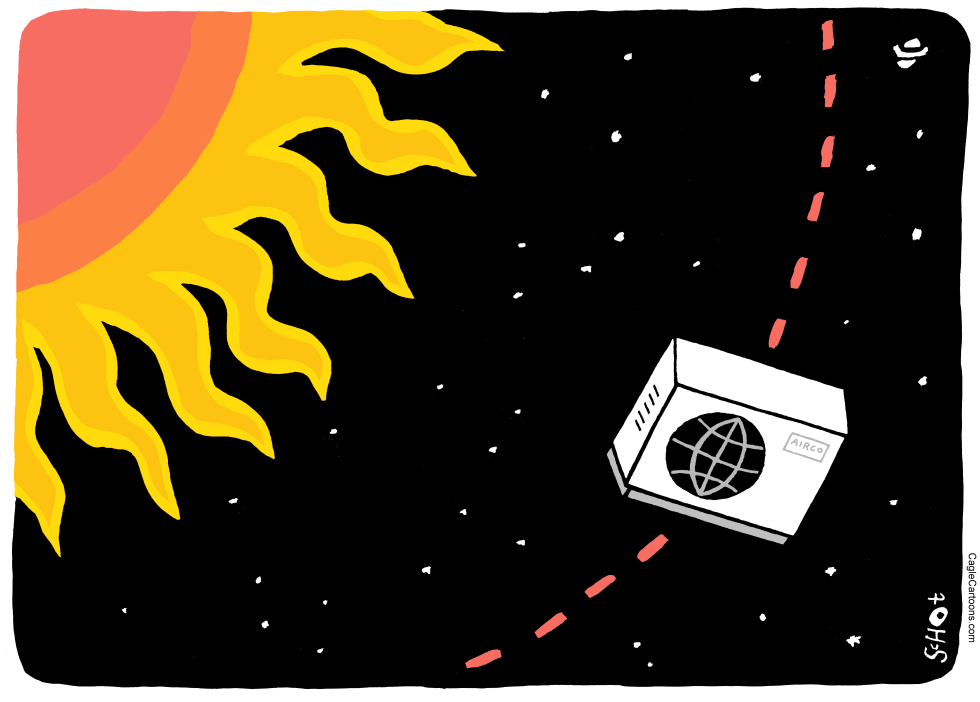
Proposals for space-based geoengineering to offset rising global temperatures have gained attention amid record heat waves. An air conditioner unit placed in orbit represents one speculative approach to reflecting or managing solar energy reaching Earth. The idea highlights both technological creativity and the urgency of climate intervention. The piece takes a skeptical stance toward such far-fetched mechanical fixes.
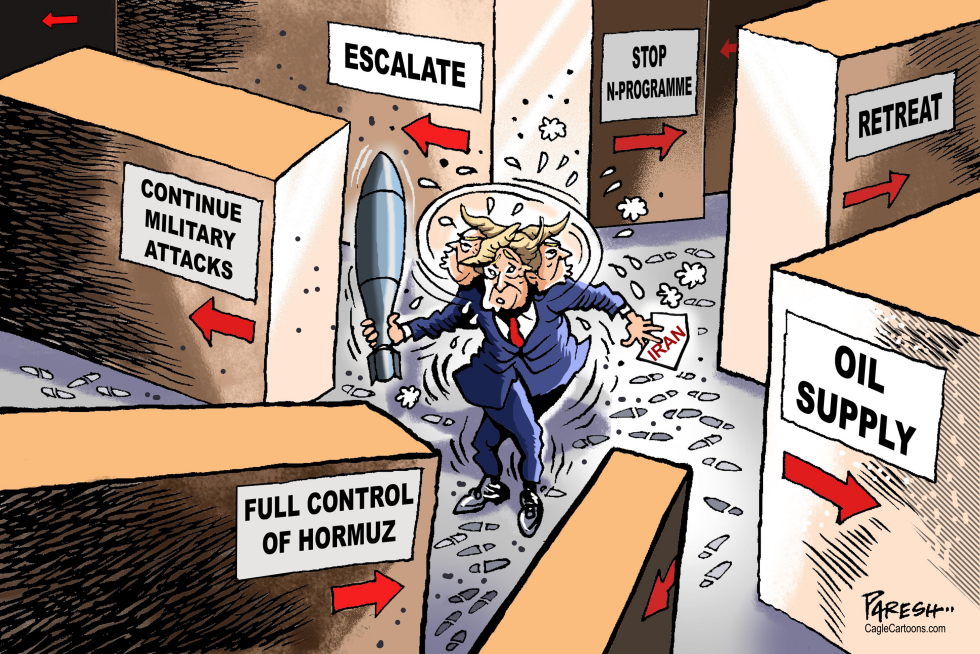
The cartoon shows Donald Trump caught between contradictory policy boxes on Iran, including continuing military attacks, escalating, stopping the nuclear programme, retreating, securing full control of Hormuz and protecting oil supply. Arrows point in conflicting directions while Trump clutches a missile and a paper labeled Iran. Published on July 19, 2026, the image captures the tangled options confronting the administration in the Middle East.
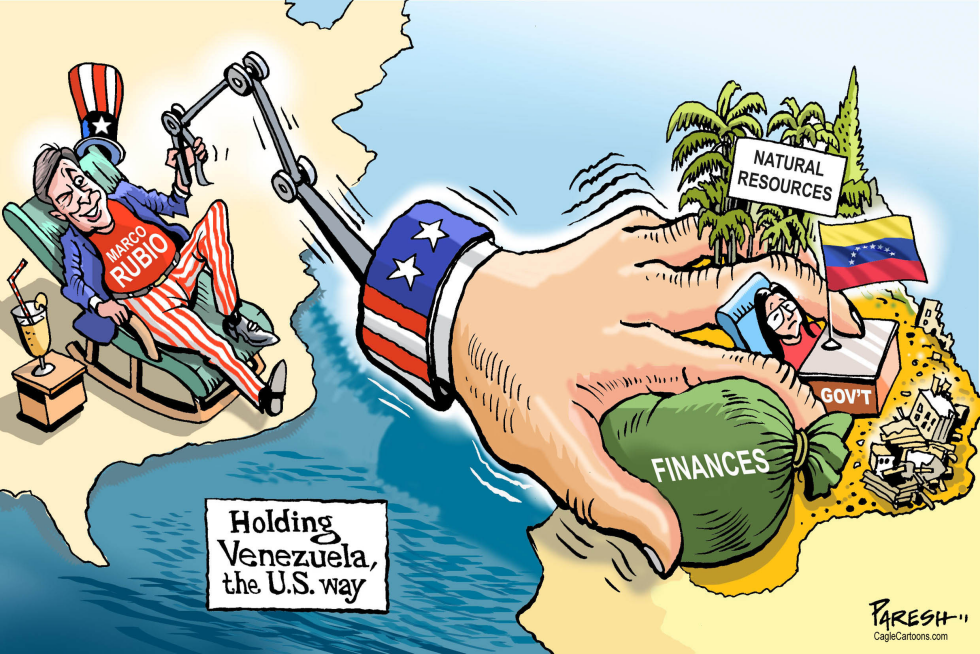
Marco Rubio, as a key US official, directs American control over Venezuela's government, finances and natural resources through direct intervention. The move underscores ongoing US efforts to influence Venezuelan affairs amid economic and political instability in the region. The piece portrays this as an assertive US strategy to maintain dominance.
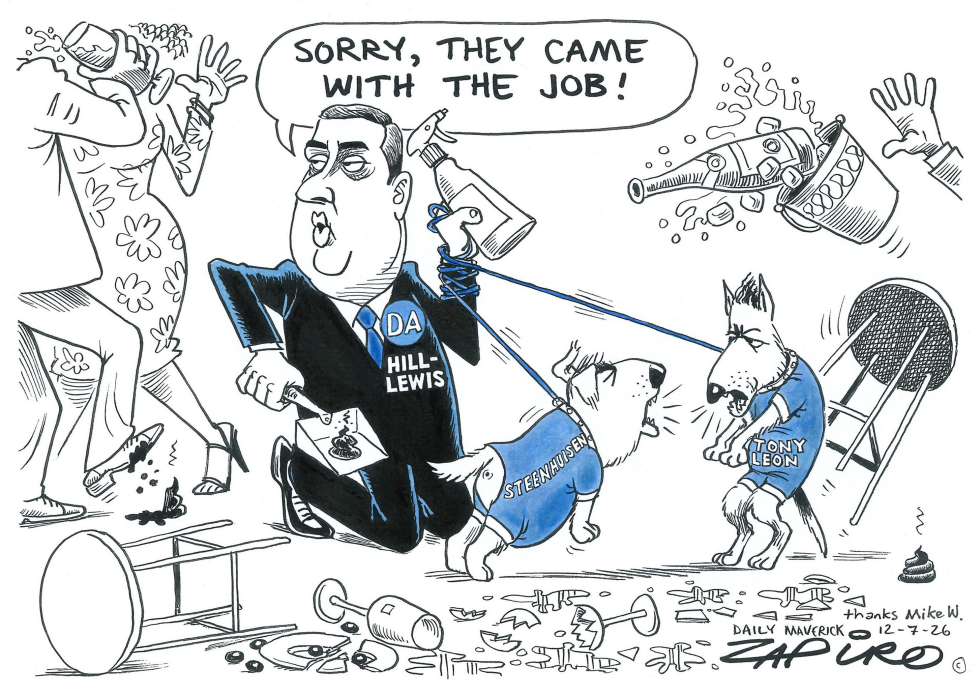
A man identified as DA Hill-Lewis kneels while holding leashes attached to two dogs labeled Steenhuysen and Tony Leon. The dogs appear agitated near overturned furniture and scattered debris. A woman in a patterned dress spills liquid from a glass. A speech bubble from Hill-Lewis states the companions came with the job. Additional elements include a spray bottle and further disarray in the scene.
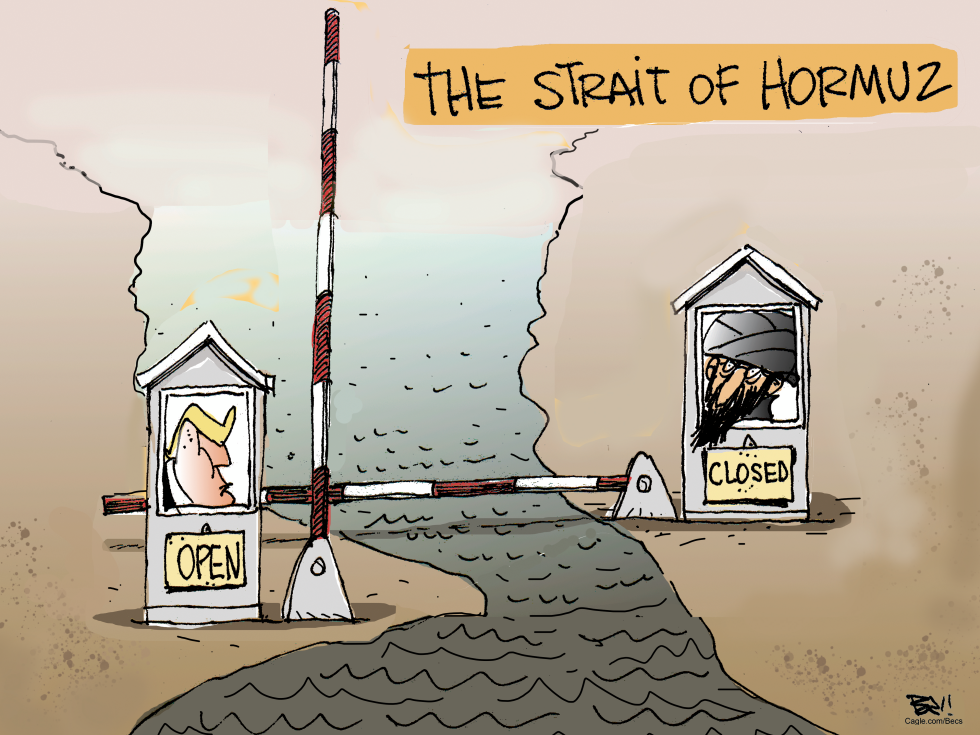
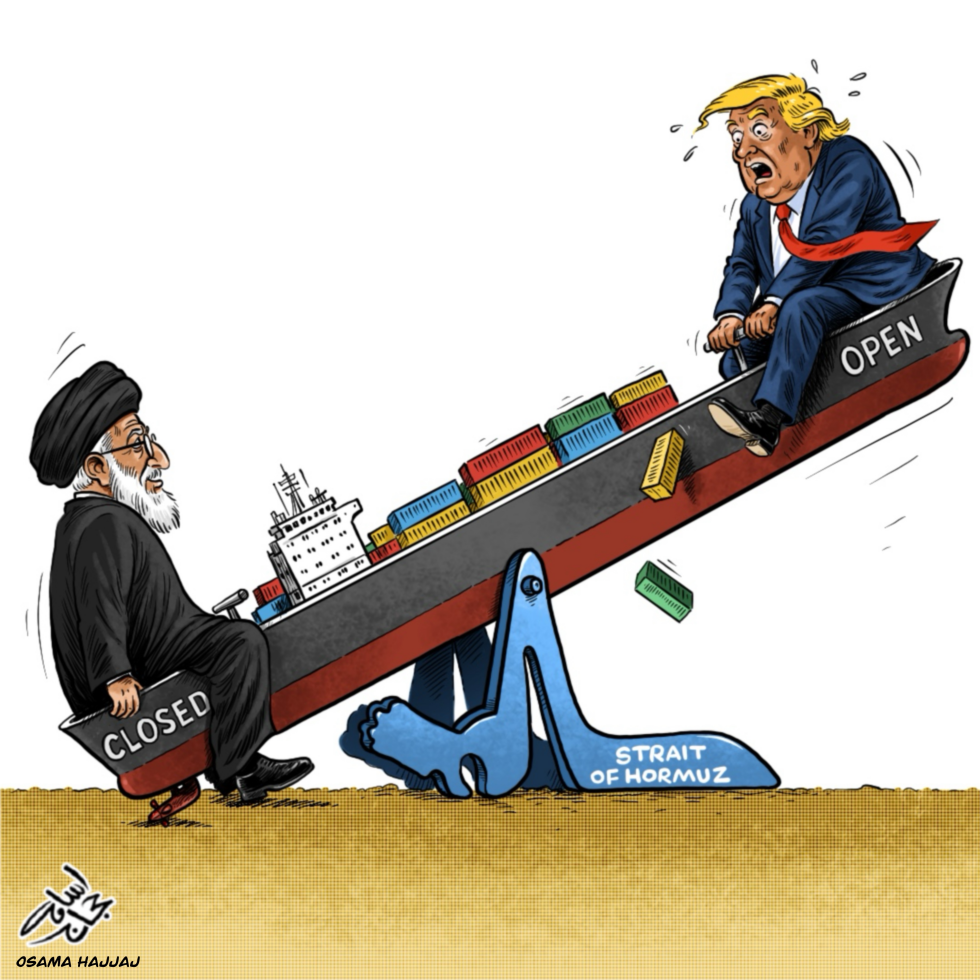
The Strait of Hormuz remains a flashpoint for global oil transit as the United States and Iran maintain opposing stances on access. Donald Trump positions an open checkpoint while an Iranian official signals closure. The editorial highlights the standoff's direct impact on energy markets and shipping security.
A political cartoon shows Donald Trump and Ayatollah Khamenei on opposite ends of a seesaw labeled Strait of Hormuz. Trump occupies the open side while the Iranian leader sits on the closed side. Colorful shipping containers line the beam with some falling off. The image highlights tensions over the vital oil shipping route. The cartoon uses the seesaw to illustrate competing efforts to control access through the strait.
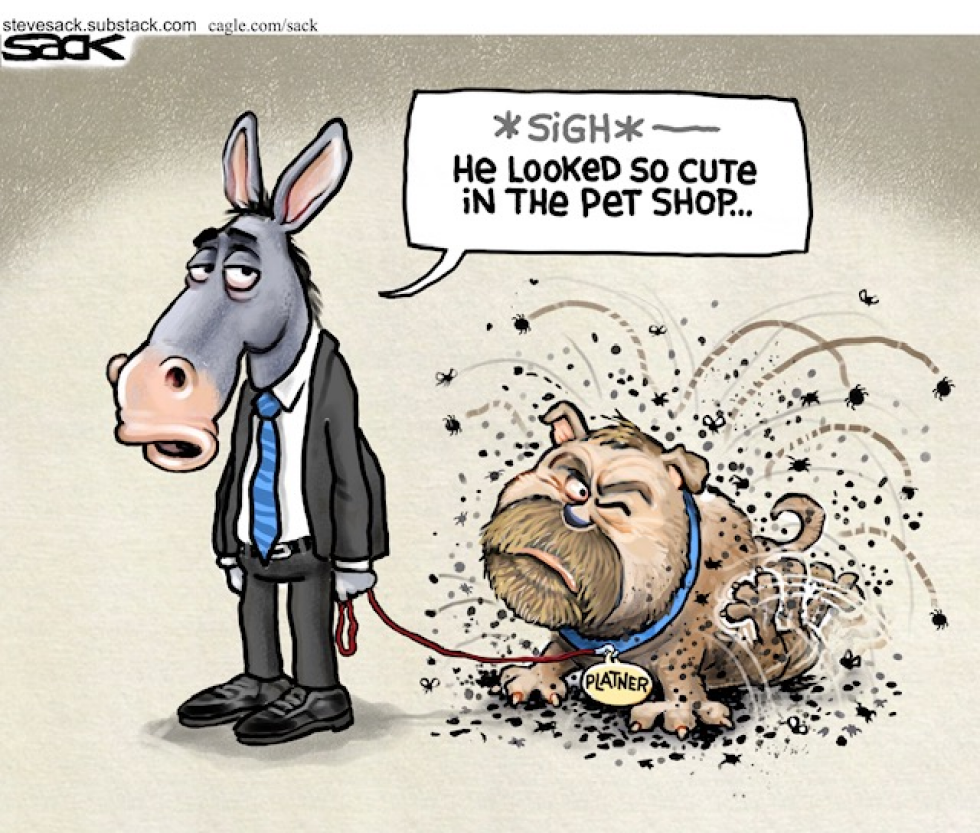
A suited donkey on a leash holds a flea-infested bulldog named Platner on the publication date of July 9, 2026. The donkey sighs about the pet shop appearance while bugs swarm the scene. The image uses standard party symbols to depict buyer remorse over a recent political choice.
Donald Trump leans forward to apply lipstick to a pig wearing an Iran War shirt and seated in a wheelchair. A GOP elephant stands to the left with a startled expression. A sign reading GOP 202 appears behind the elephant. Trump holds a second lipstick tube in his left hand while speaking from a large bubble. The scene includes smoke and a control panel in the foreground.
A revolver appears with its lower portion shaped as the United States map featuring a prominent hole. Smoke rises from the barrel. The phrase more guns sits centered beneath the image. The composition links firearm imagery directly to geographic damage on the date of publication.
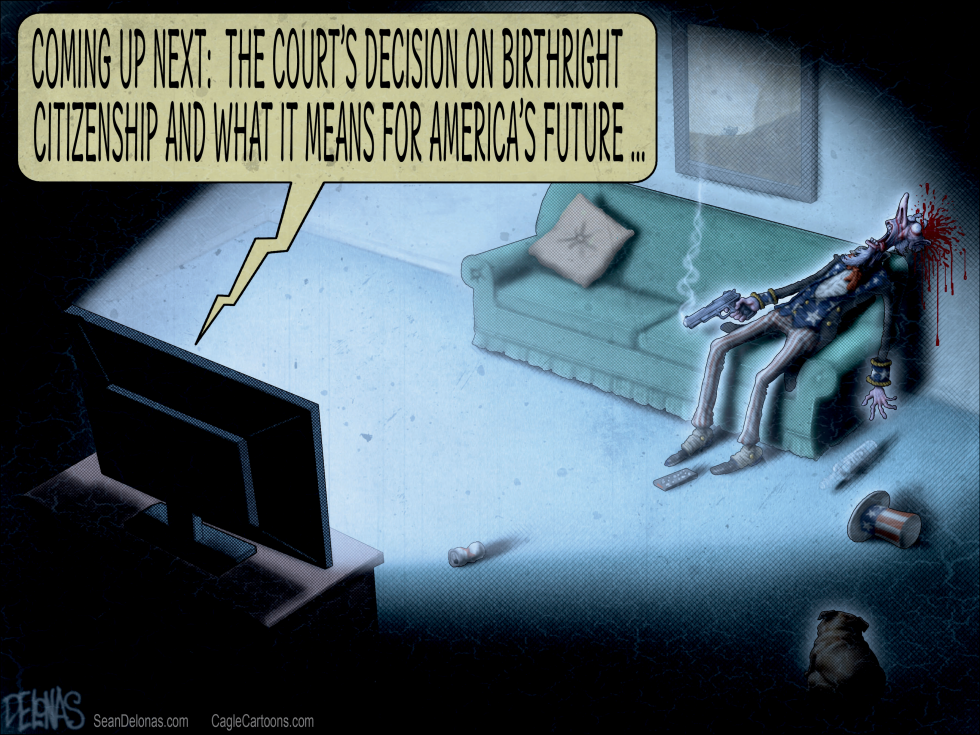
A political cartoon dated July 4, 2026, previews a Supreme Court decision on birthright citizenship. The image shows the figure of Uncle Sam slumped dead on a living room couch with a gunshot wound to the head and blood on the wall. A television in the foreground carries a news teaser about the ruling and its implications for America's future. Scattered items include a handgun, remote control, and top hat on the floor. The cartoon uses stark lighting and a speech bubble to frame the scene as an imminent broadcast segment.
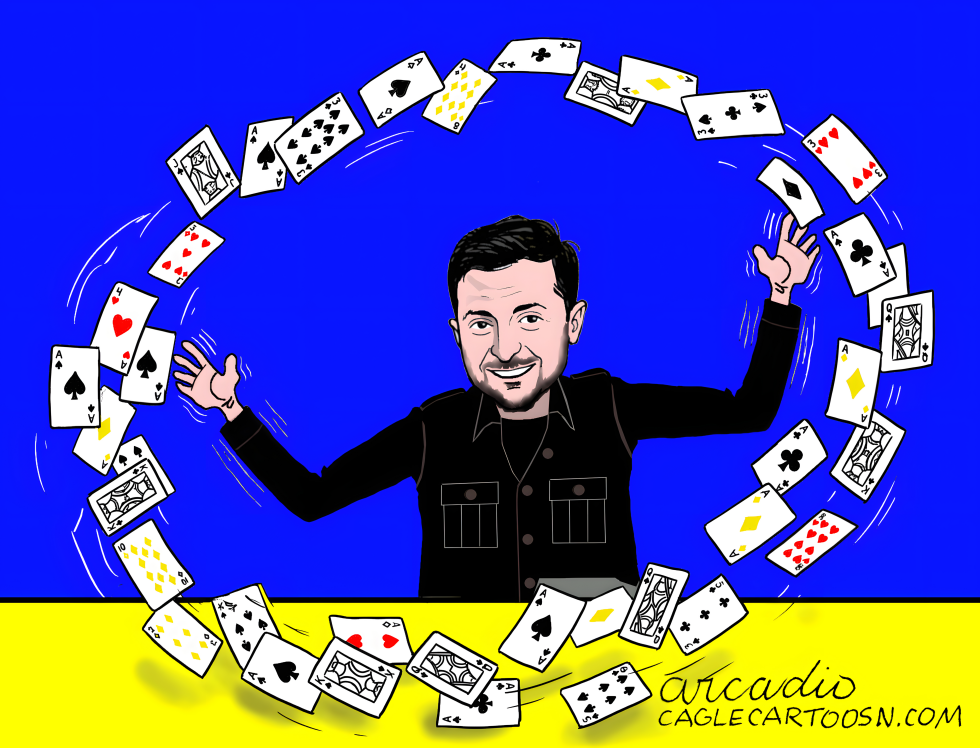
Volodymyr Zelensky appears centered in the image juggling playing cards that form a large circle around him. Cards of various suits fall onto a yellow surface below. The composition from June 30 2026 emphasizes the Ukrainian president maintaining multiple positions at once during ongoing foreign policy developments with Russia.