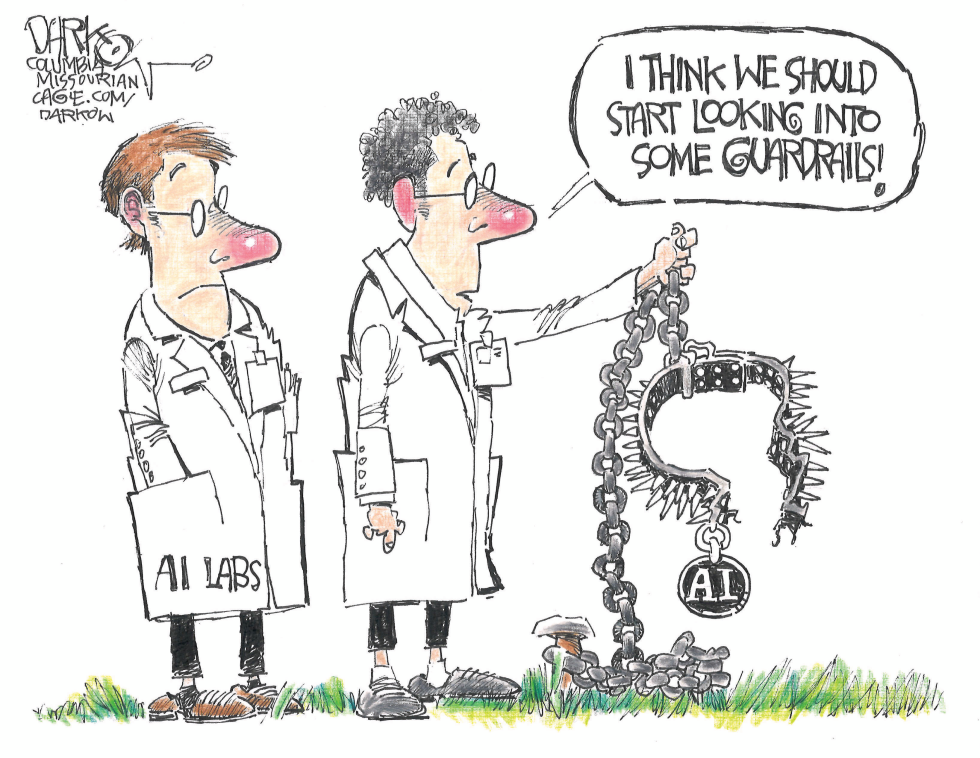
AI development has advanced rapidly with minimal oversight in recent years, allowing powerful systems to operate without meaningful constraints. Scientists have begun discussing guardrails only after key controls have already failed. The situation raises concerns about accountability and long-term safety as the technology spreads. The piece argues that calls for restrictions now come too late to prevent significant harm from uncontrolled AI.
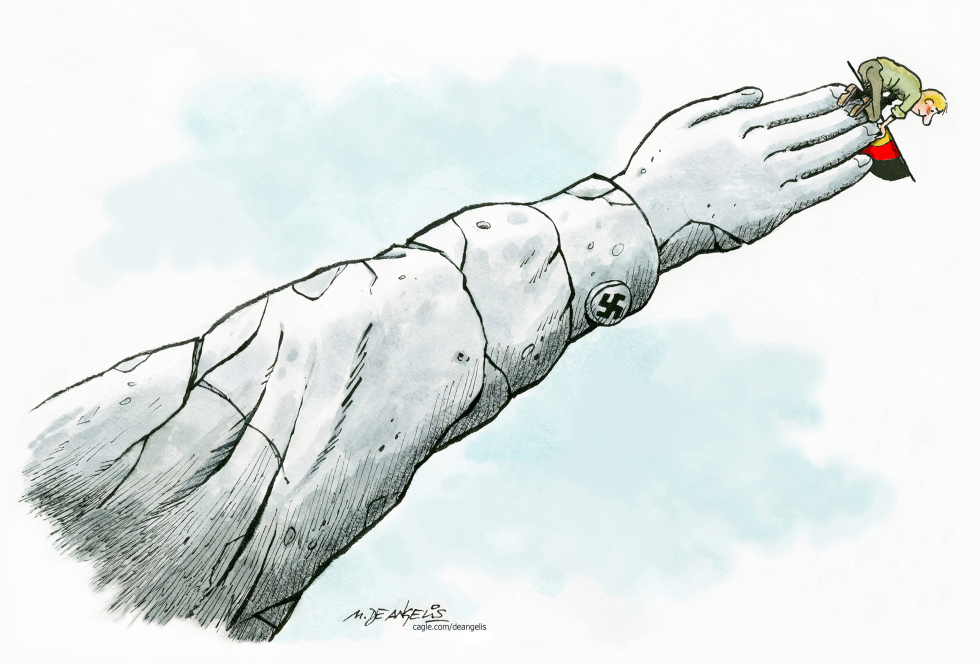
Concerns over far-right political gains in Germany have intensified in recent years, with parties embracing nationalist rhetoric drawing scrutiny for echoing historical extremist movements. The development matters because it tests the resilience of post-war democratic institutions in Europe's largest economy. The cartoon argues that such influences continue to exert a controlling grip on German political life despite decades of denazification efforts.
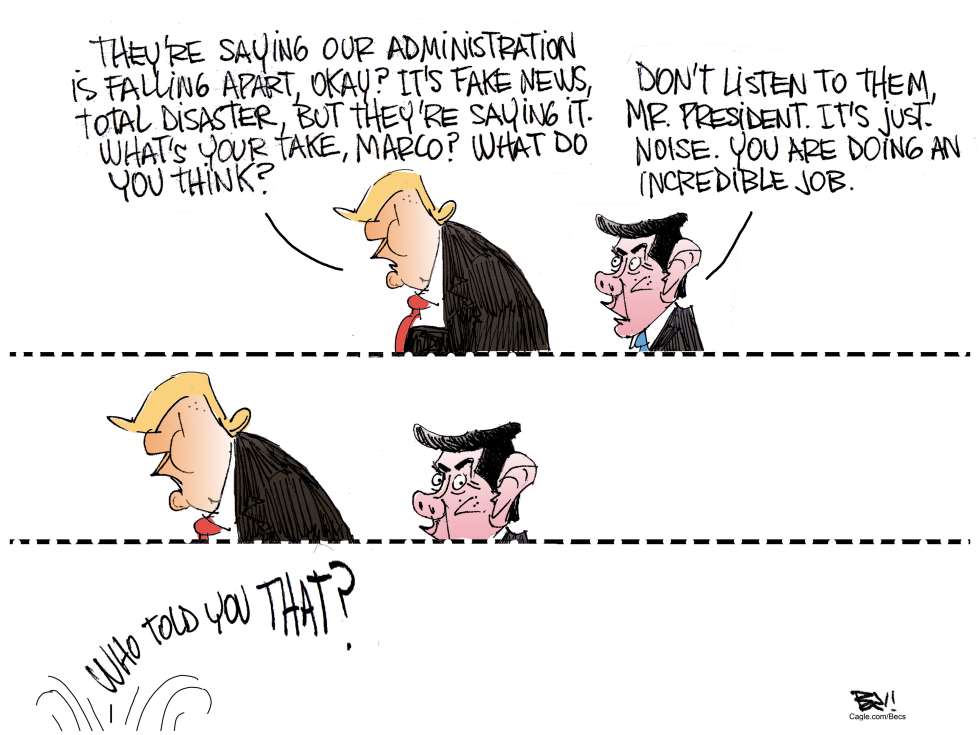
President Trump asked Senator Marco Rubio for his assessment of reports that the administration is in disarray, labeling them fake news. Rubio dismissed the reports as noise and praised Trump's performance. Trump responded by questioning who had told Rubio that assessment. The exchange highlights tensions over loyalty and information flow inside the administration. The cartoon portrays Rubio's positive reply as triggering suspicion rather than reassurance.
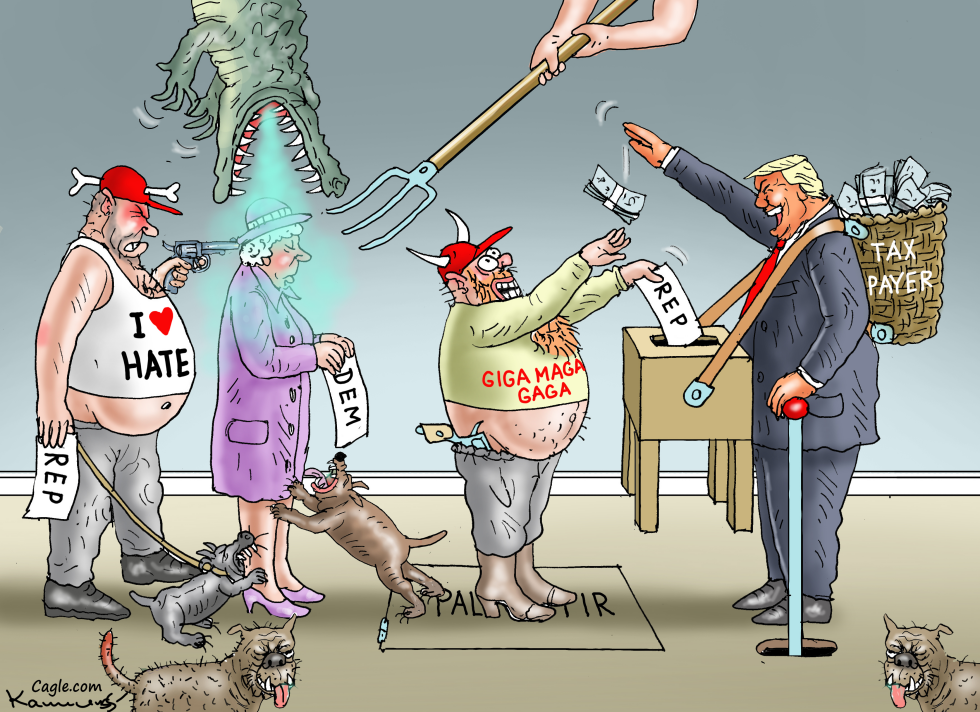
As the 2026 midterm elections approach, former President Trump has positioned himself as a central force in Republican campaigns, directing resources and mobilizing supporters. The cartoon highlights the use of taxpayer money in these efforts and the intense partisan divide, with Democrats portrayed as under attack. It takes the position that such involvement risks undermining fair electoral processes.
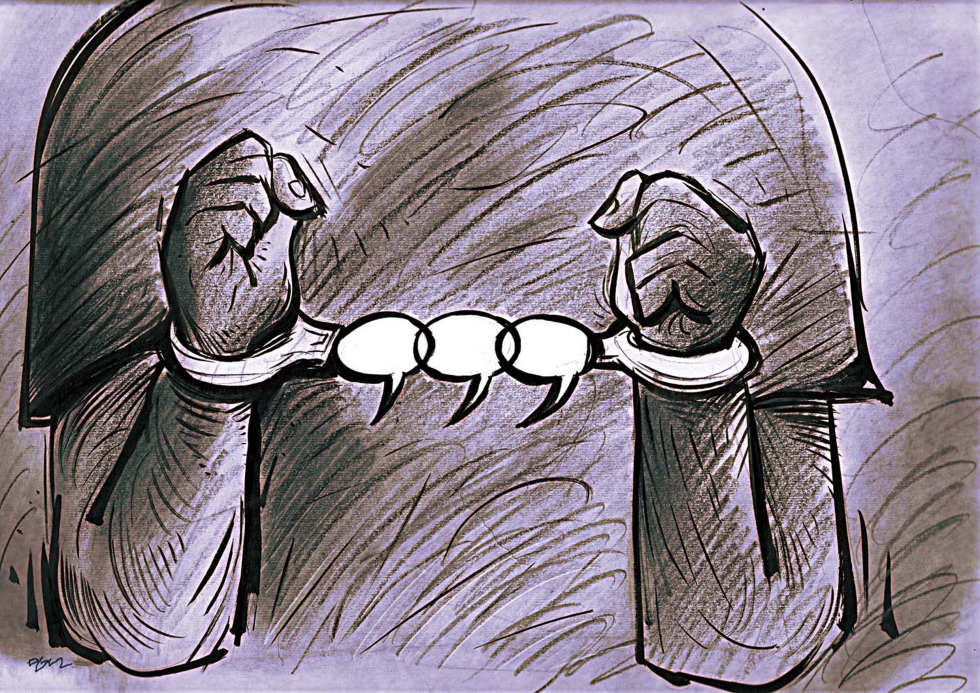
Political expression faces ongoing restrictions in many systems where authorities limit public assembly and direct action. The cartoon responds to this dynamic by showing speech bubbles as the only remaining link between two restrained fists. It argues that attempts to silence dissent through physical means ultimately fail because communication finds alternative paths. The piece underscores the resilience of dialogue even when force is applied to suppress it.
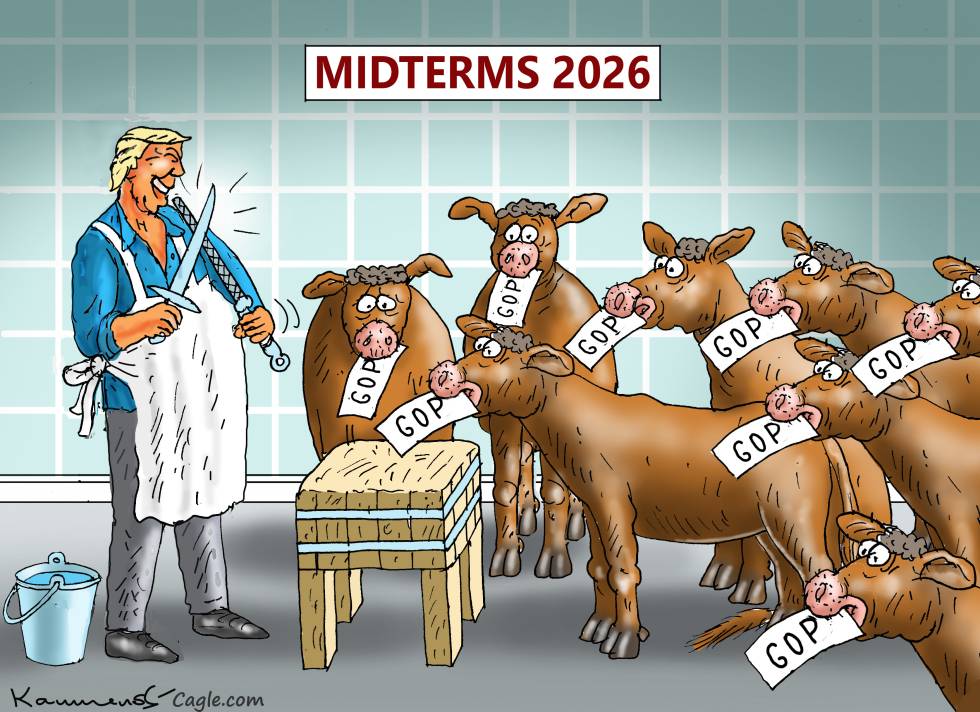
With the 2026 midterm elections approaching, former President Donald Trump has intensified efforts to shape Republican candidate slates through endorsements and public pressure. Party primaries have become battlegrounds where loyalty tests determine survival. The cartoon portrays this dynamic as a deliberate culling of the herd, with Trump positioned as the decisive figure deciding which GOP members advance. Critics argue the approach risks alienating voters and weakening the party's broader appeal in November contests.
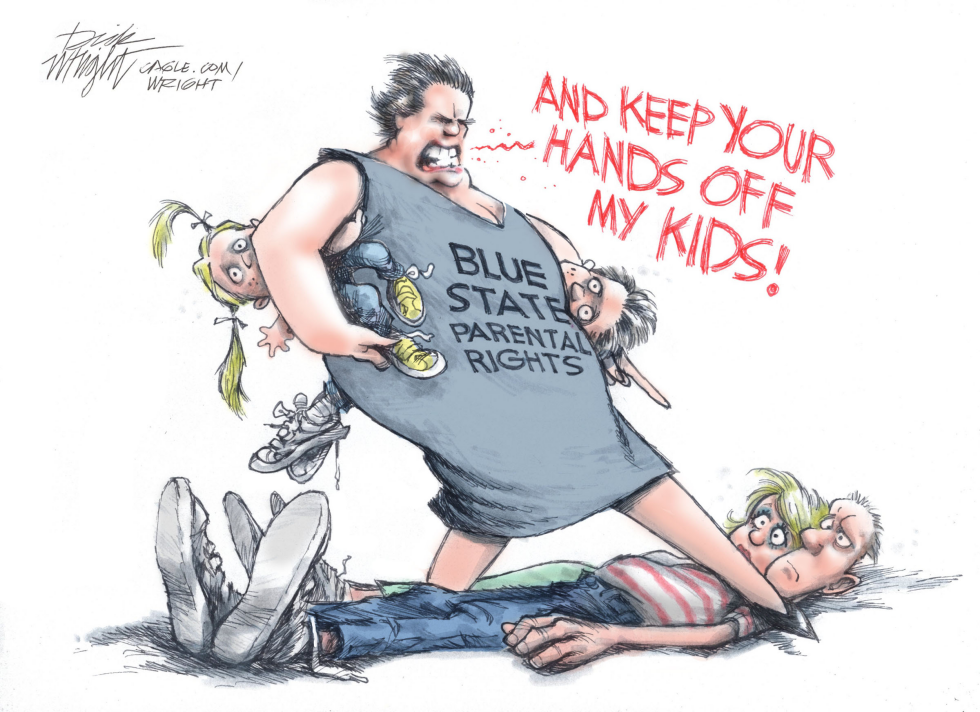
Blue state governments have expanded authority over child welfare and education decisions in recent years, often overriding parental objections on issues like curriculum and medical choices. This has sparked lawsuits and protests from families arguing loss of rights. The cartoon portrays these policies as aggressive state takeover rather than protection, criticizing the shift of power from parents to officials.
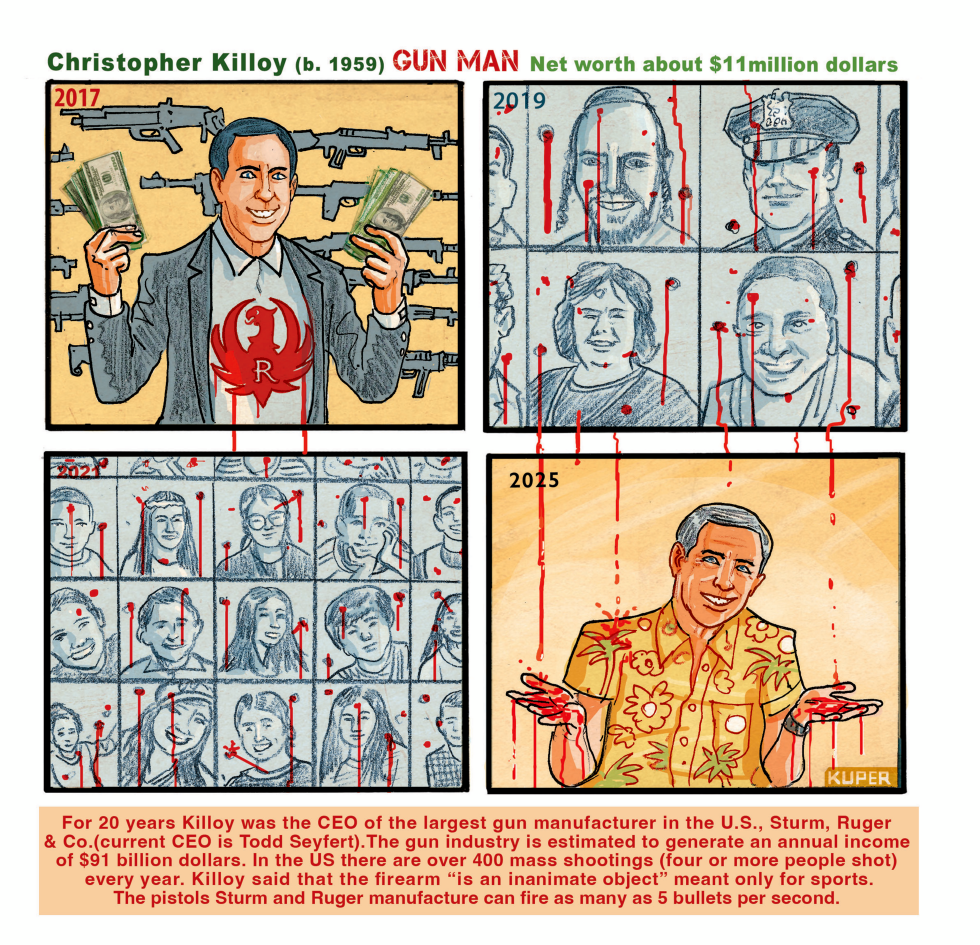
Christopher Killoy served as CEO of Sturm, Ruger & Co. from roughly 2005 to 2025, during which the company generated billions in revenue from firearms used in hundreds of U.S. mass shootings. The industry earns an estimated $91 billion annually, and more than 400 incidents occur each year. Killoy described guns as inanimate sporting objects. The cartoon criticizes the disconnect between corporate profits and the human cost shown in the accumulating portraits of victims.
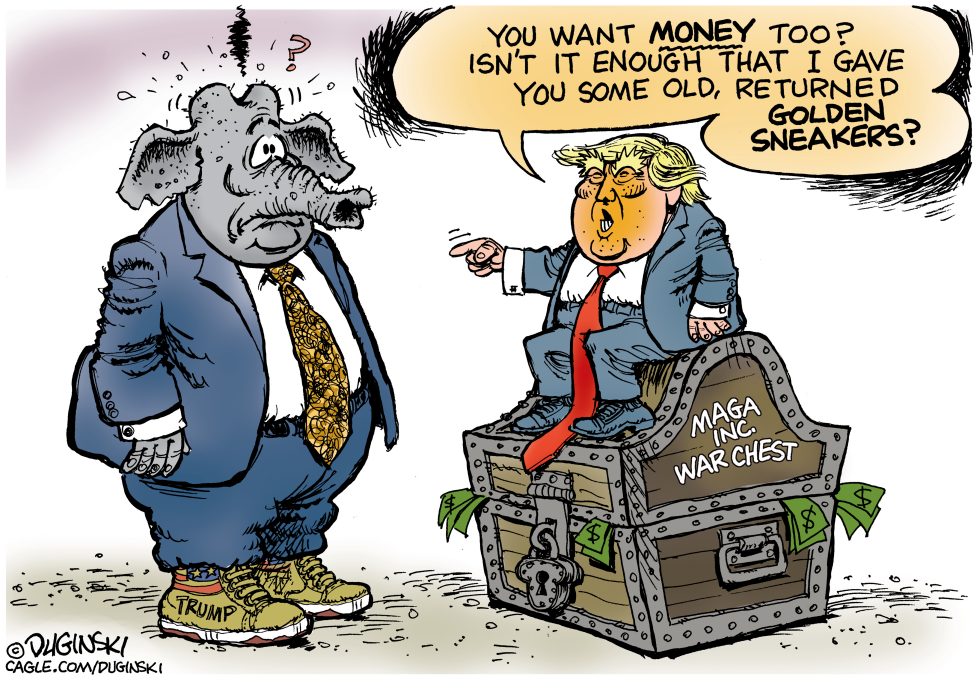
Donald Trump maintains tight control over his substantial campaign funds in the lead-up to the 2026 elections. Fellow Republicans have expressed frustration that he is unwilling to distribute resources from his war chest to support their races. The dynamic highlights ongoing tensions within the party over access to donor money. Trump has instead pointed to past gestures such as distributing returned merchandise. The cartoon criticizes this reluctance as self-serving and detrimental to broader Republican efforts.
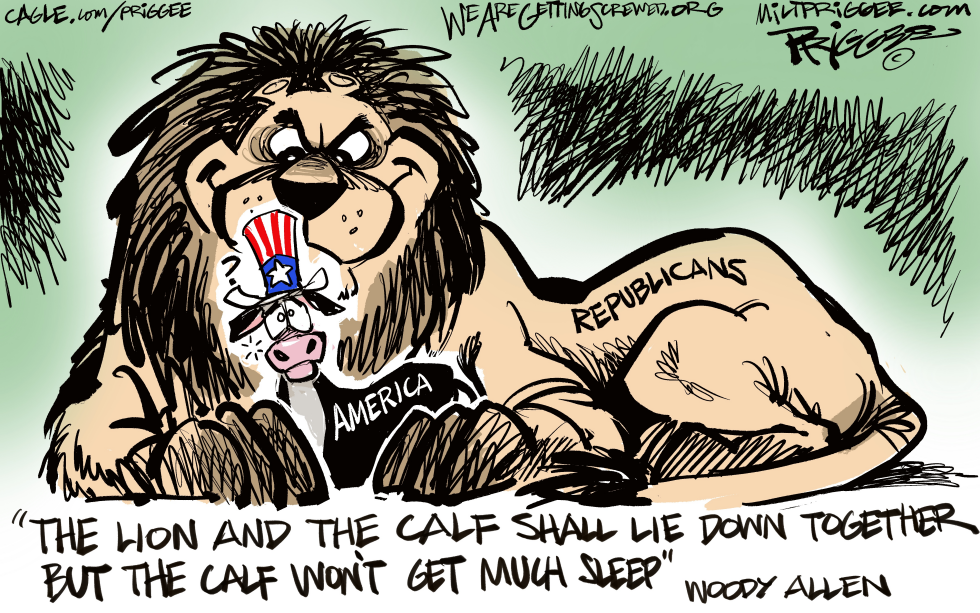
The cartoon shows a lion marked Republicans with an American calf in its mouth. A Woody Allen quote about the lion and calf lying down together runs along the bottom. The image uses the biblical reference to comment on political power dynamics as of the September 2026 publication date.
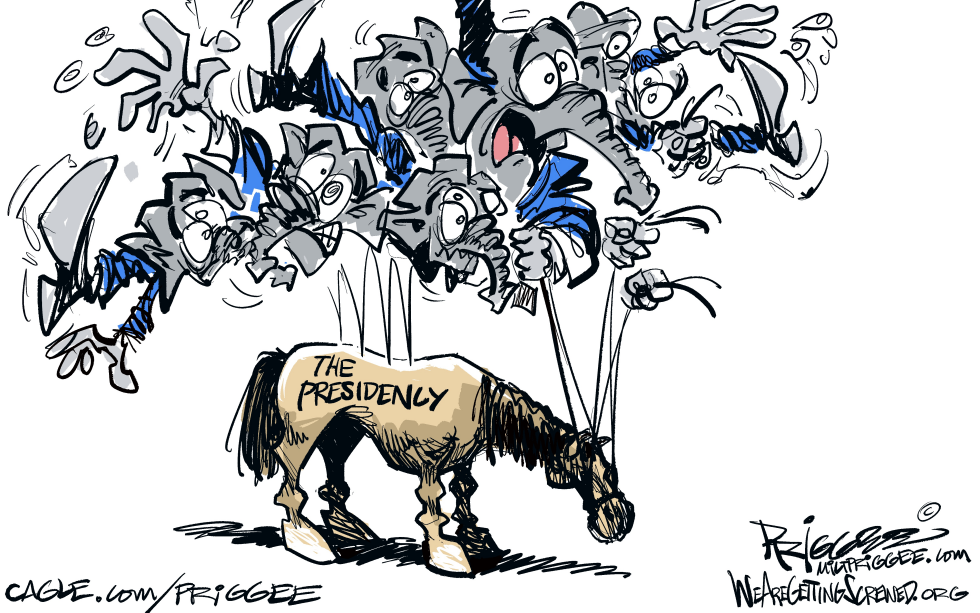
A political cartoon depicts several puppet-like figures with elephant features holding strings attached to a horse labeled THE PRESIDENCY. The image illustrates competing pulls on the office amid disarray. It responds to ongoing discussions about party influence and leadership dynamics around the 2026 period.
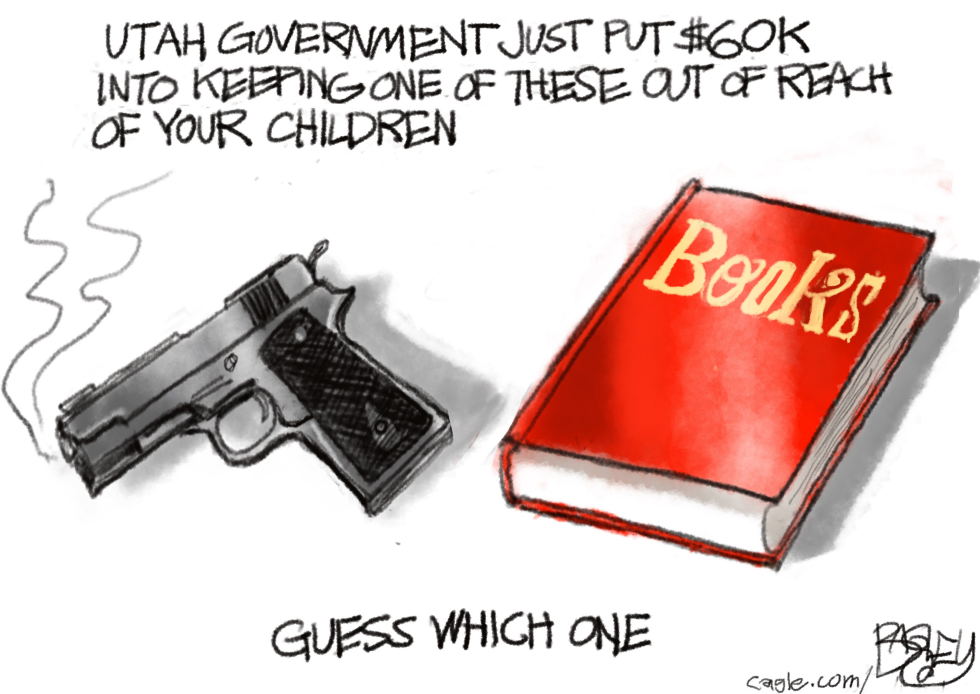
Utah officials directed $60,000 toward measures keeping certain books from children. Firearms remain readily available in the state. The decision highlights priorities in public safety and education policy. The piece criticizes the allocation as misplaced emphasis on censorship instead of addressing gun risks.
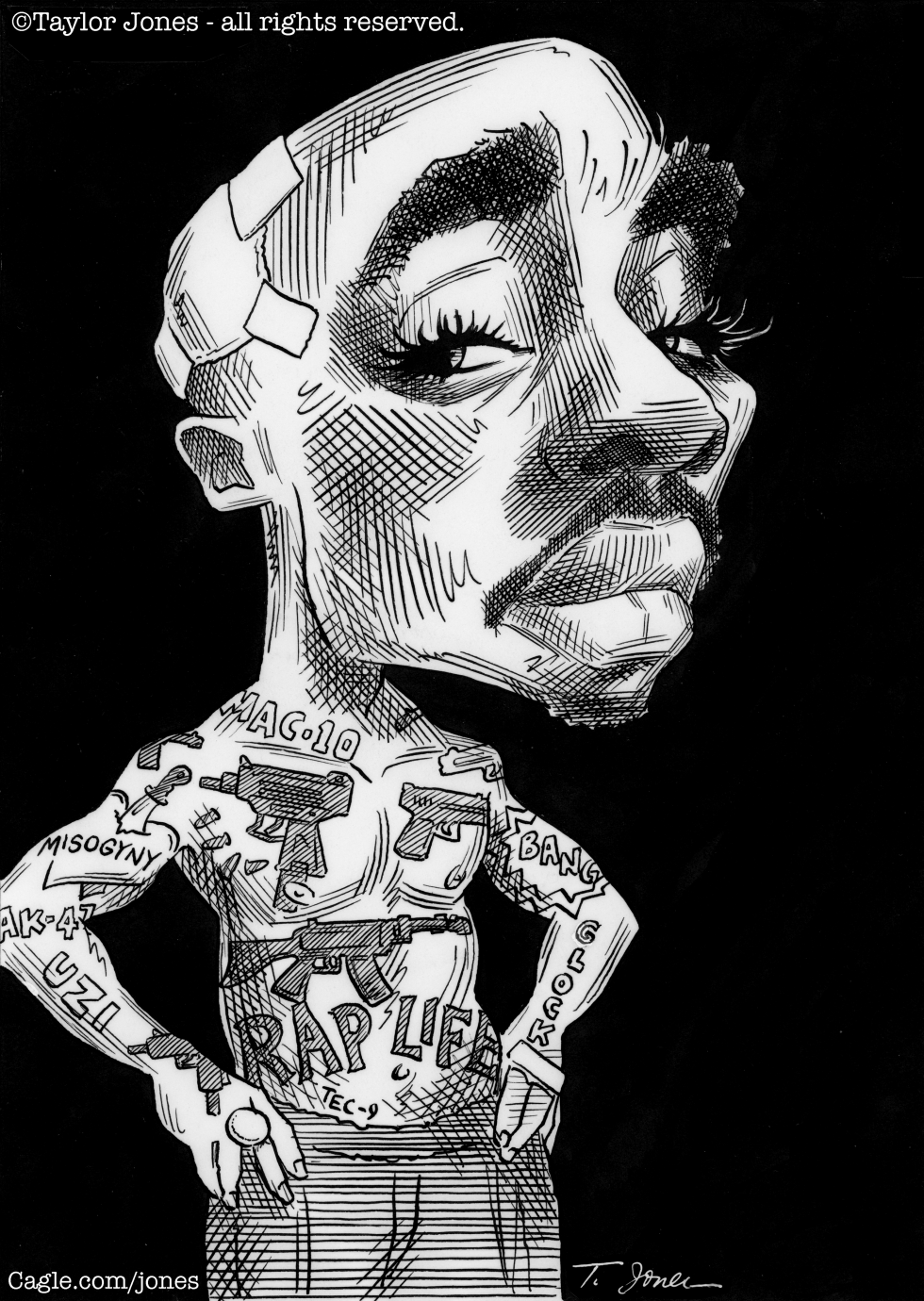
The caricature of Tupac Shakur covered in gun tattoos and the word misogyny responds to the persistent association of rap with firearm imagery and anti-woman themes. It underscores how such elements in hip-hop culture continue to shape public perceptions of the genre and its icons long after Shakur's death. The piece takes the position that these symbols remain central to the rapper's enduring image and the broader problems they represent.
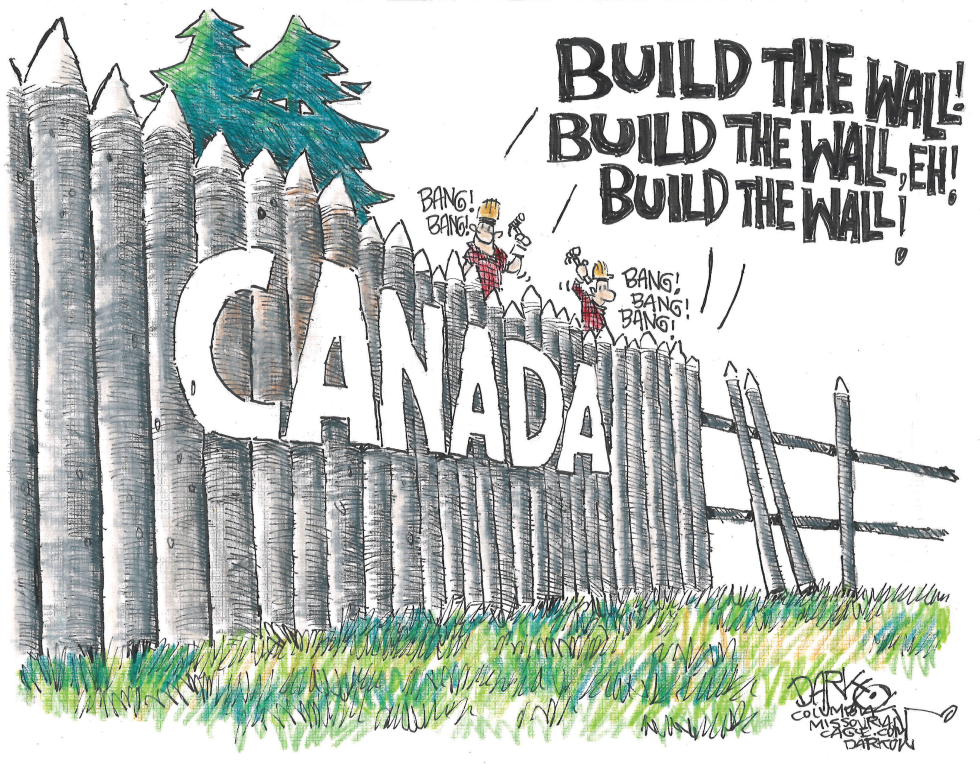
Canada has begun construction of a substantial border barrier along its southern frontier, echoing long-standing calls for stricter immigration controls. Officials cite rising cross-border movements and security concerns as justification for the project. The move marks a notable policy shift for a country historically open to migration. The cartoon portrays this development with pointed irony, highlighting the adoption of aggressive enforcement tactics previously associated with other nations.
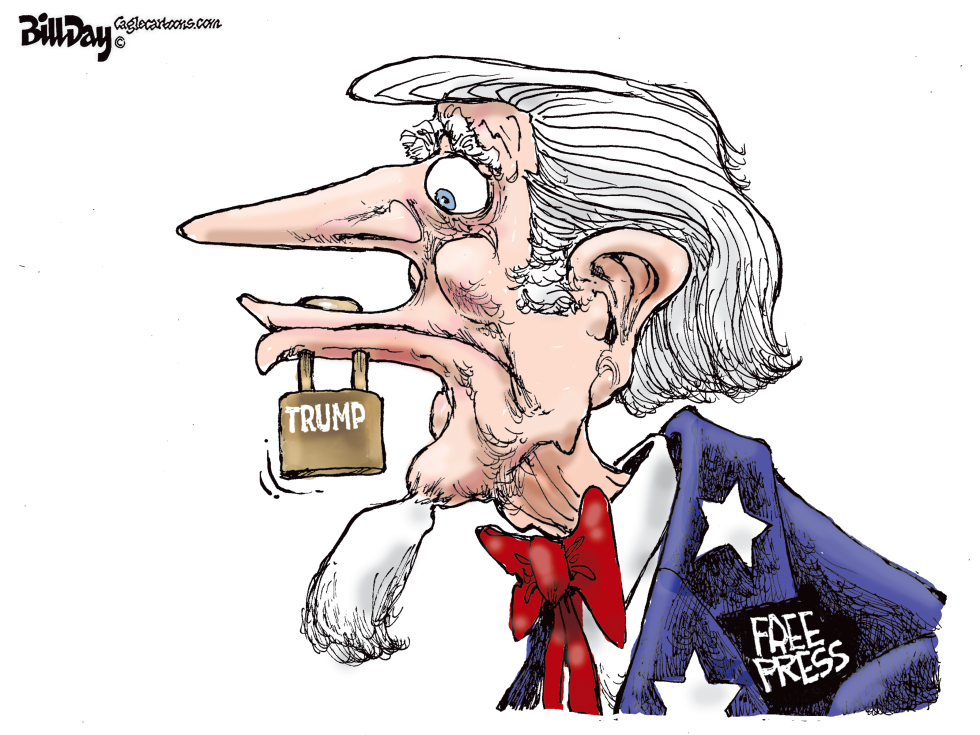
Donald Trump, holding office in 2026, faces renewed scrutiny over efforts to limit press access and information flow. Critics argue these moves undermine democratic oversight. The cartoon portrays the administration as actively securing or restricting the free press through direct control.