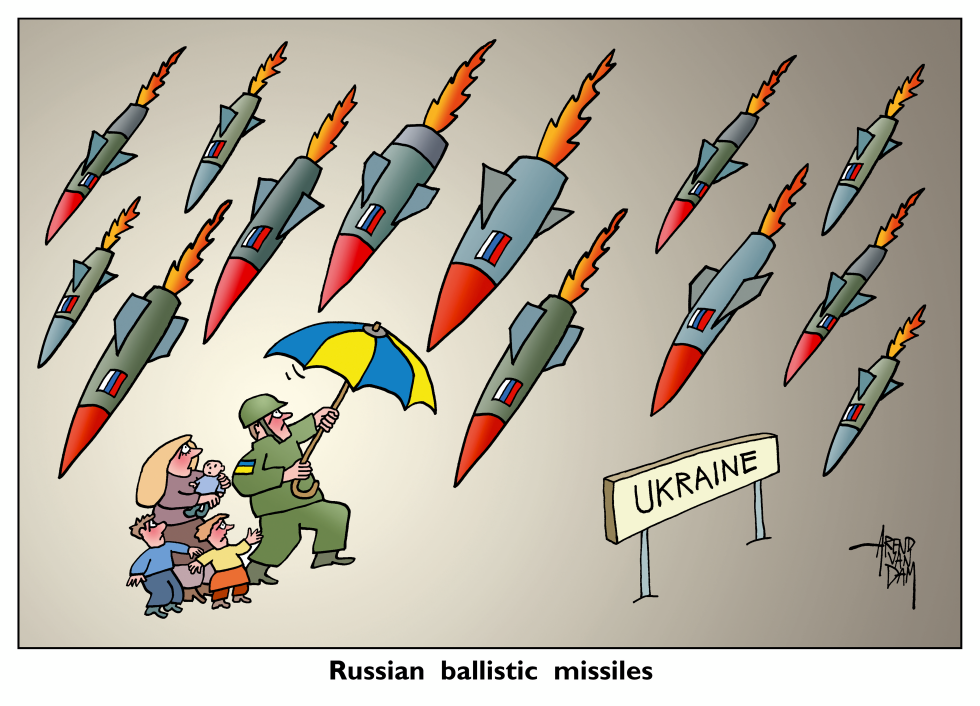
Russian ballistic missile strikes continue to target Ukrainian territory amid the prolonged conflict. A Ukrainian soldier stands at the forefront shielding a family of civilians from the barrage. The attacks underscore the persistent threat to noncombatants and infrastructure. The image frames the soldier's action as a direct barrier between the incoming weapons and those under protection. It emphasizes the role of Ukrainian forces in sustaining civilian safety during sustained aerial assaults.
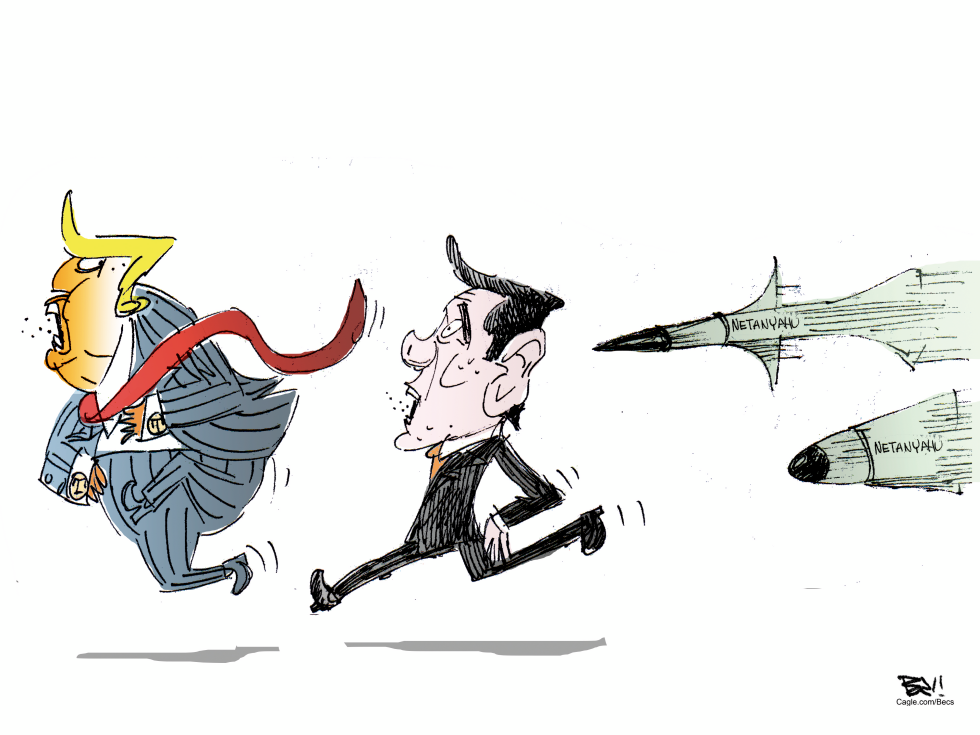
Donald Trump and Benjamin Netanyahu appear under pursuit in a scene tied to ongoing tensions in U.S.-Israel relations and regional security decisions. The image responds to the pattern of policy choices by both leaders that have drawn domestic and international criticism. It frames those choices as returning to affect the two men directly.
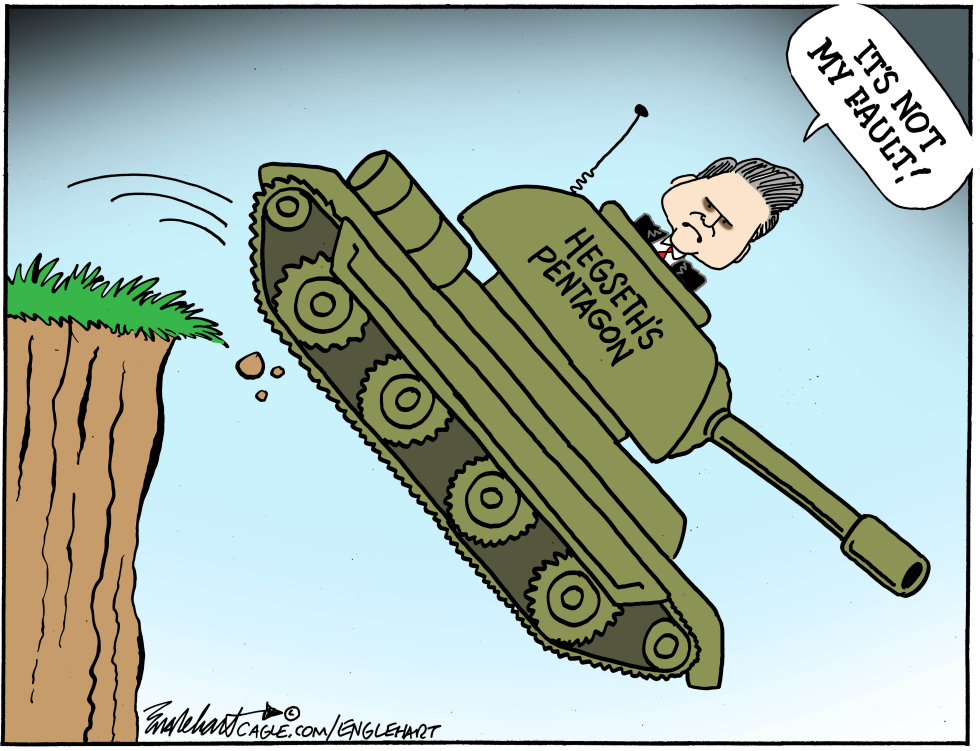
Pete Hegseth serves as Defense Secretary in 2026 amid ongoing questions about Pentagon management and readiness. The tank labeled with his name edges toward a cliff, reflecting institutional instability. The piece argues that leadership accountability remains absent despite visible risks to the department.
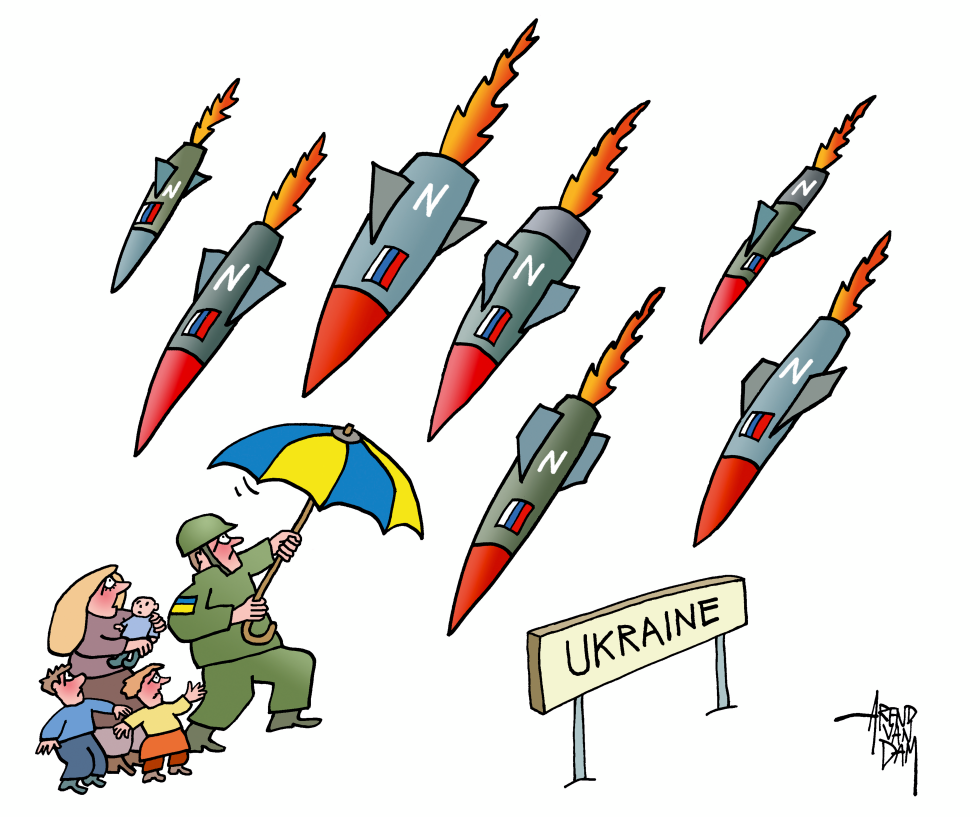
Russia has escalated its campaign against Ukraine with ballistic missiles carrying nuclear markings. The strikes heighten risks to civilian populations already under sustained attack. The editorial argues that such threats underscore the need for stronger defensive measures and international resolve to deter further escalation in the protracted conflict.
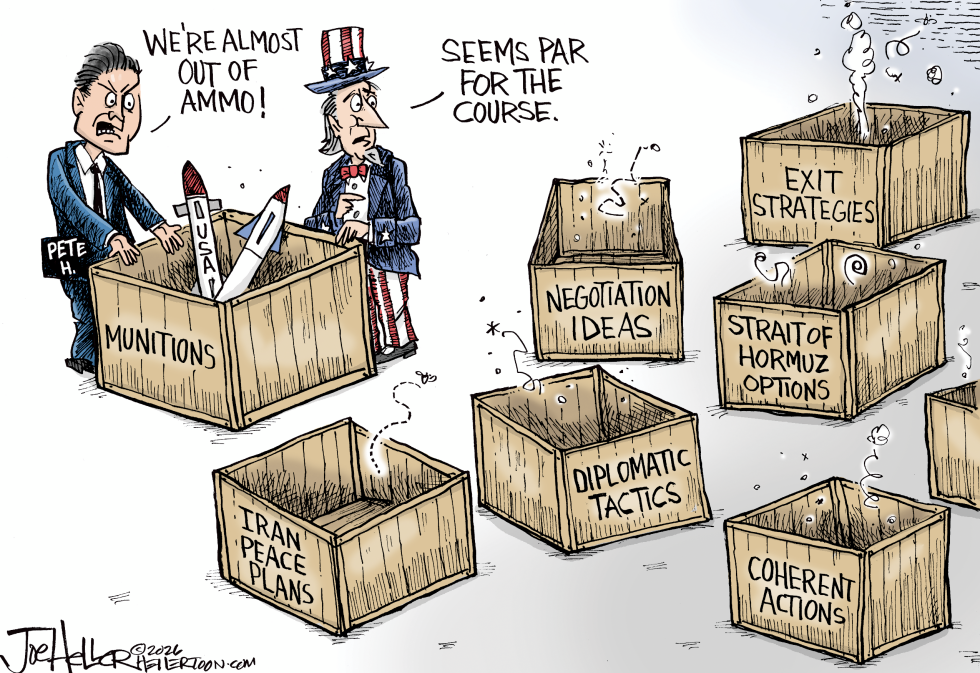
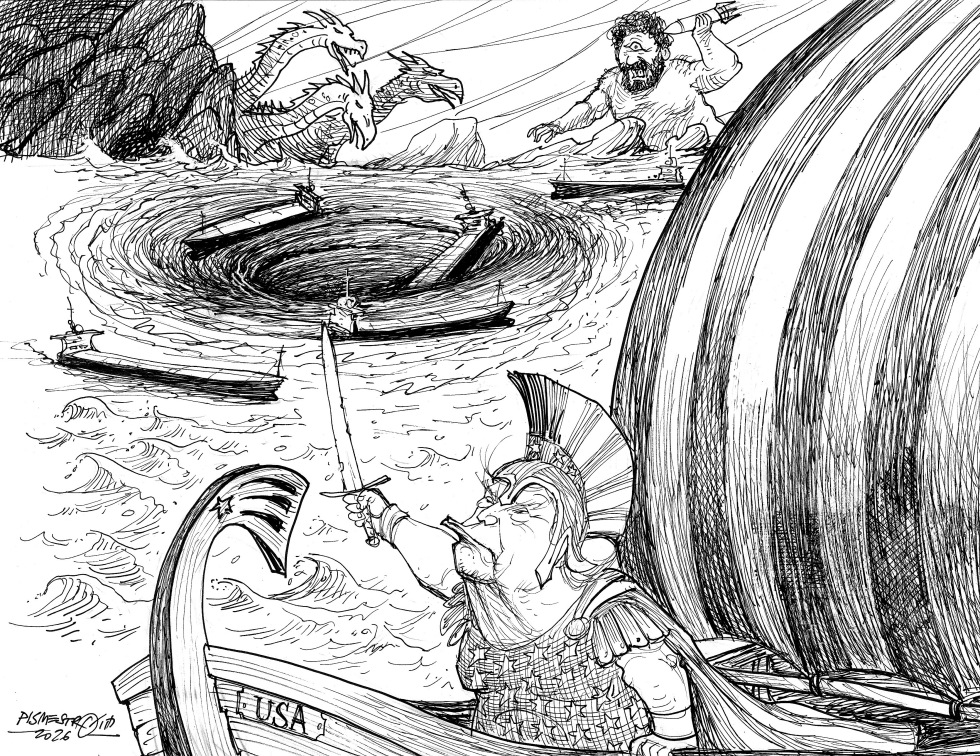
Defense Secretary Pete Hegseth alerts that the United States is nearly out of munitions while pursuing Iran policy options. The cartoon depicts Uncle Sam acknowledging the situation as routine, underscoring limited remaining diplomatic and strategic tools for addressing Iran.
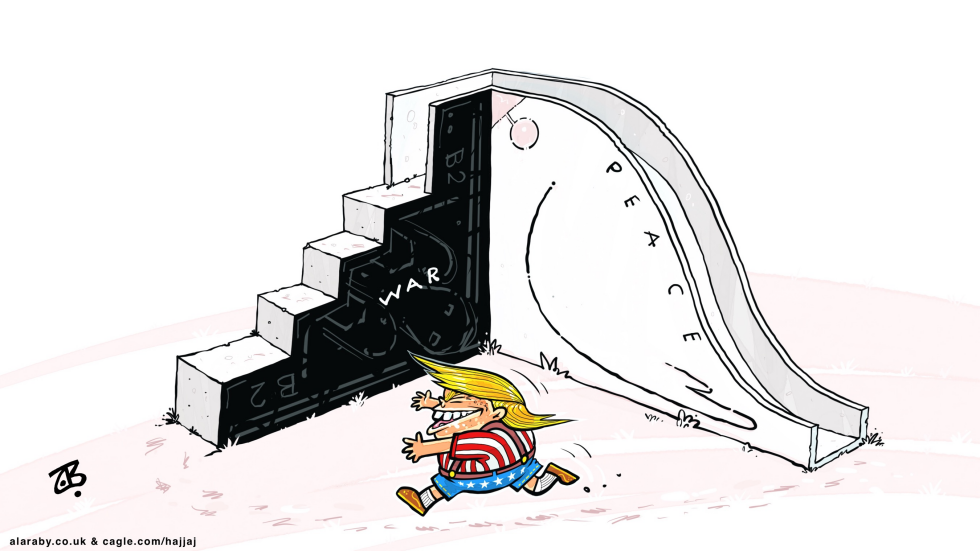
Donald Trump, holding the presidency on the August 2026 publication date, faces renewed questions over military commitments abroad. Recent developments in defense policy have highlighted tensions between continued operations and diplomatic overtures. The piece responds to this dynamic by depicting the president moving away from a war-associated structure toward a peace option. It frames the shift as an abrupt retreat from prior positions rather than a deliberate policy choice. The editorial stance criticizes the move as inconsistent and driven by political expediency instead of strategic consistency.
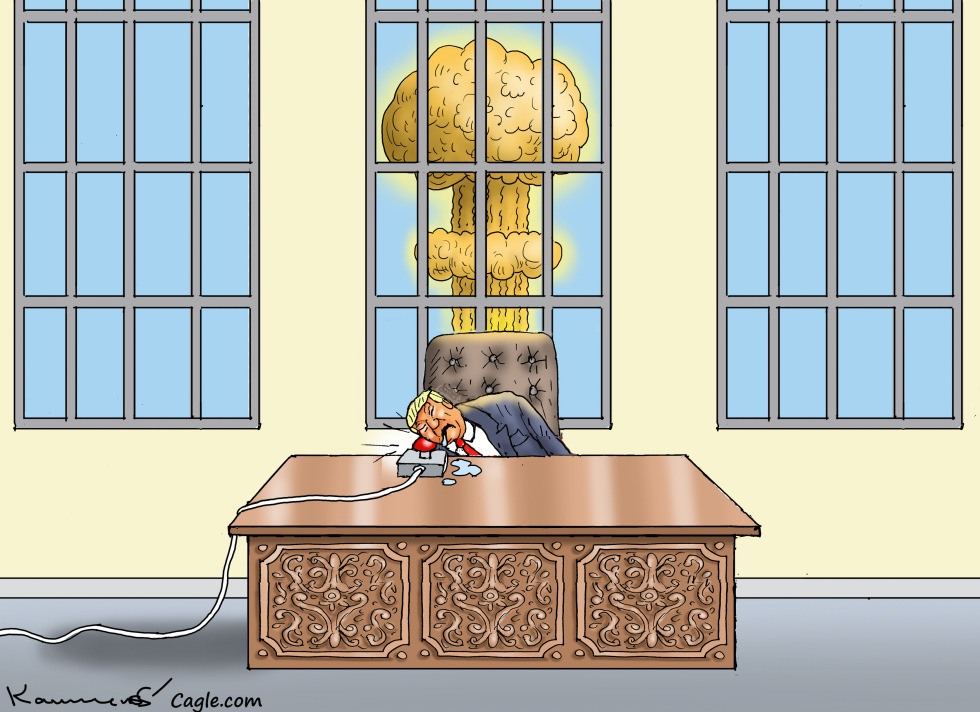
Donald Trump is shown slumped over the nuclear button in the Oval Office as a mushroom cloud rises outside the window. The image captures a moment of apparent inaction or collapse at the desk. The editorial position highlights risks associated with presidential control over nuclear launch authority during a period of heightened global tensions.
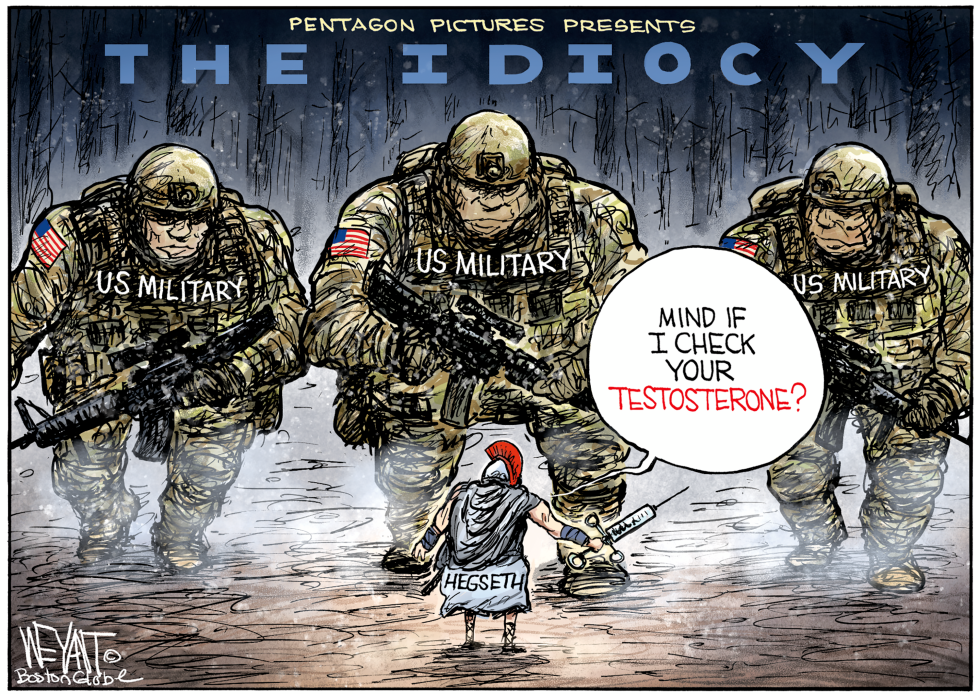
Defense Secretary Pete Hegseth has directed new scrutiny of testosterone levels across US military units. The move comes as the Pentagon reviews physical readiness standards for combat roles. Critics argue the focus distracts from broader readiness issues while supporters say it enforces accountability. The editorial takes the position that such micromanagement undermines troop morale and operational effectiveness.
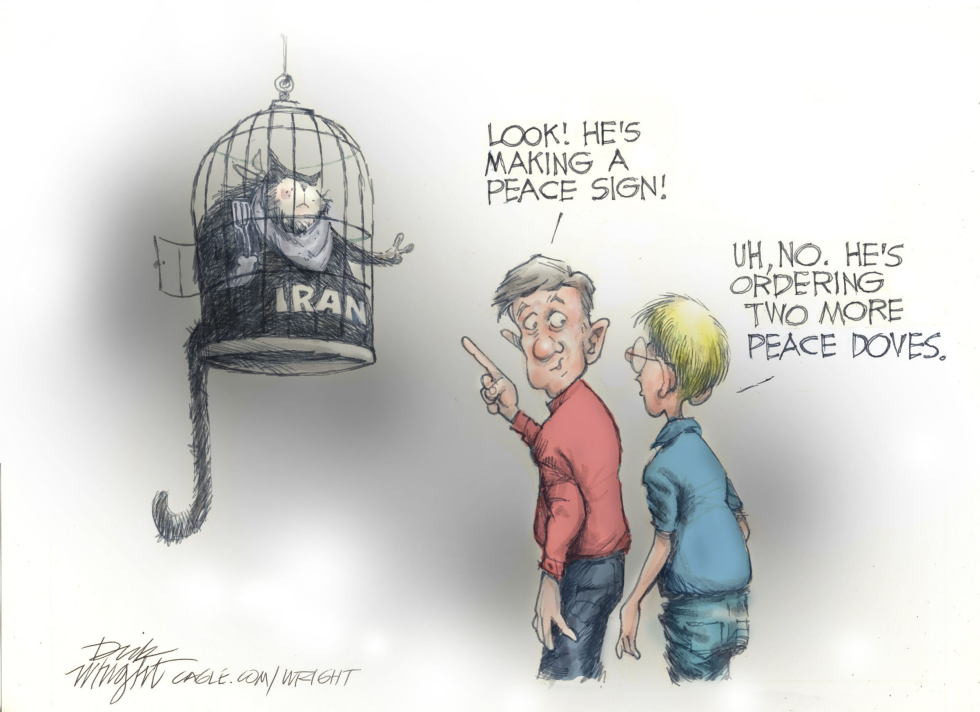
Iran continues to project peaceful intentions while advancing its military capabilities. Recent diplomatic overtures have been met with skepticism from observers who note ongoing weapons development. The piece argues that Iran's gestures are being misinterpreted as peaceful when they signal further aggression.
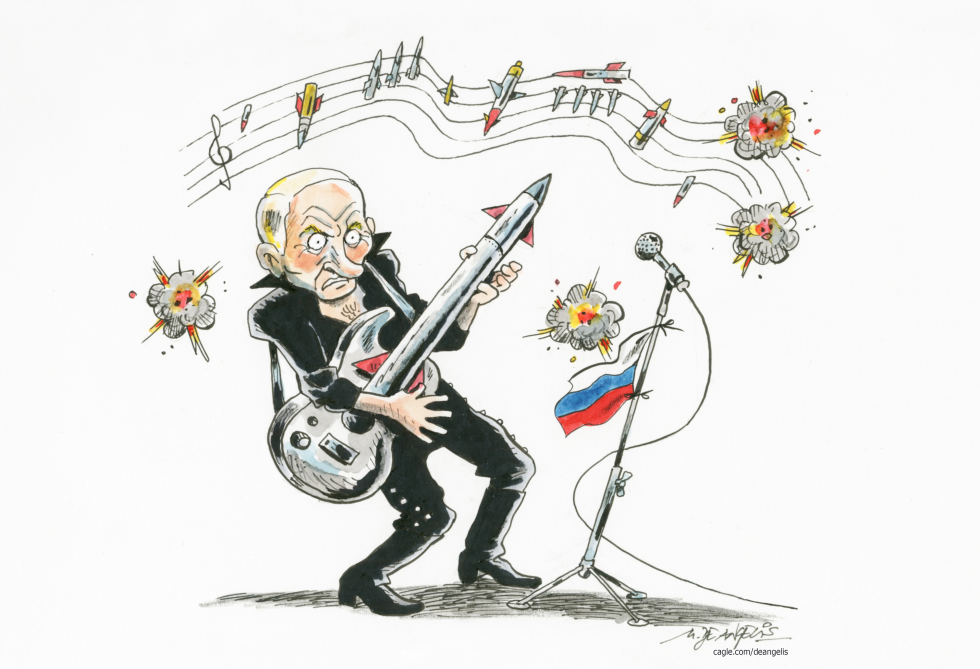
Russian President Vladimir Putin continues directing missile strikes in the Ukraine conflict, maintaining pressure on Kyiv through repeated aerial attacks. The imagery frames this sustained military campaign as a theatrical rock performance. The piece critiques the leader's embrace of destructive weaponry as spectacle rather than strategy.
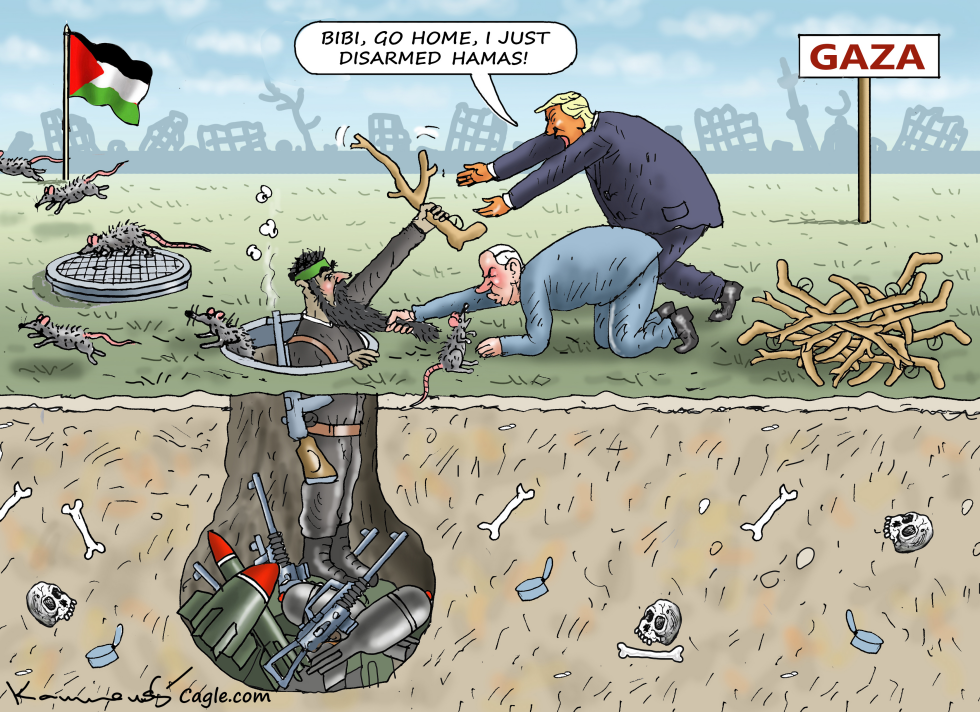
Donald Trump publicly urged Benjamin Netanyahu to leave Gaza, asserting that Hamas had been disarmed, while Joe Biden assisted in efforts to clear remaining tunnel networks. The statement came amid ongoing operations against Hamas infrastructure in the territory. The piece portrays the U.S. leaders as directing the Israeli prime minister's withdrawal from the conflict zone.
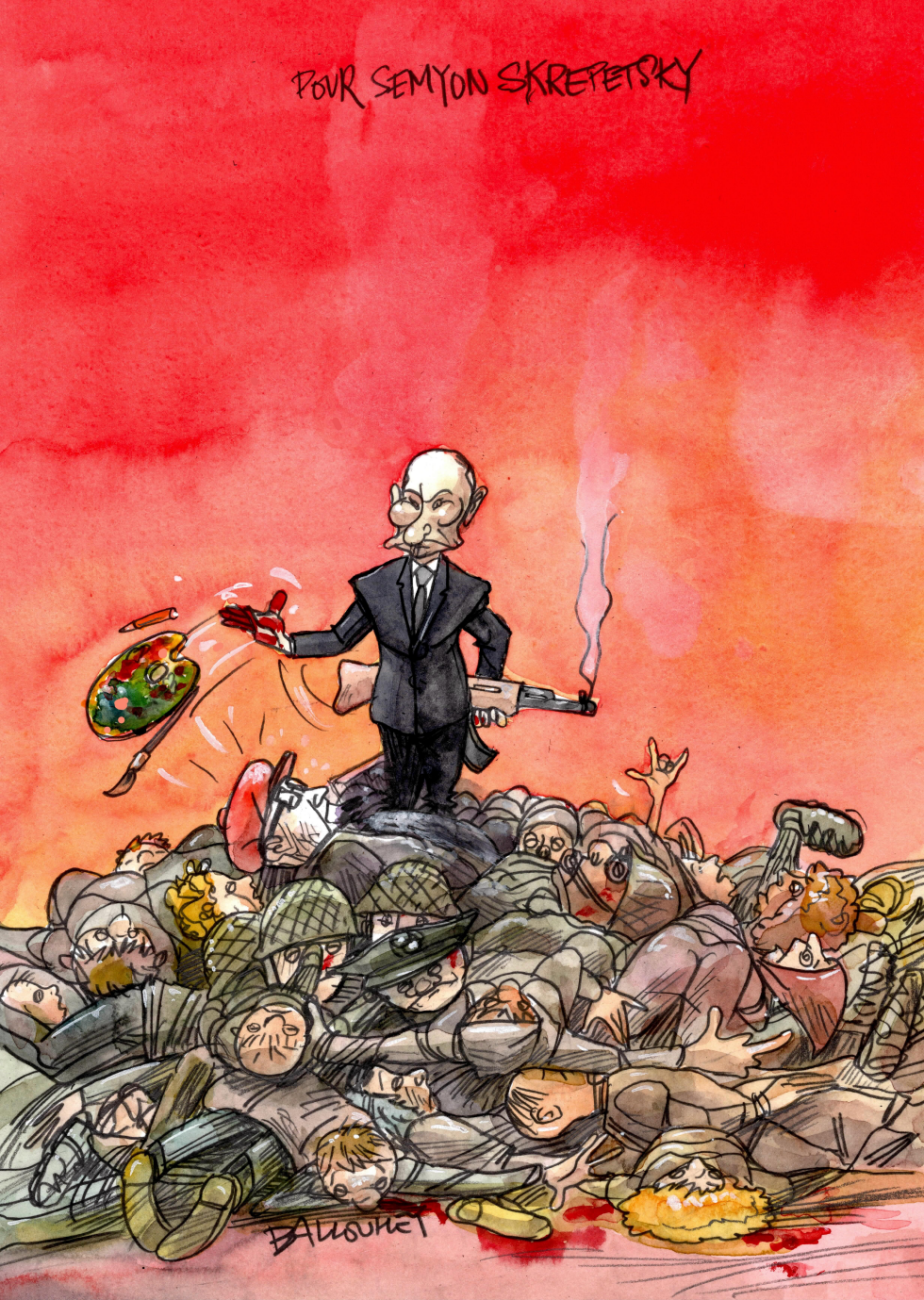
The illustration shows Semyon Skrepetsky standing on a heap of dead soldiers. He grips a rifle in one hand and a painter's palette in the other. Smoke rises from the weapon. The red-orange background suggests conflict. Text above reads 'POUR SEMYON SKREPETSKY'. The scene responds to ongoing military developments involving Russian forces as of the August 2026 publication date. The composition places the central figure above the casualties to emphasize the human cost of the fighting.
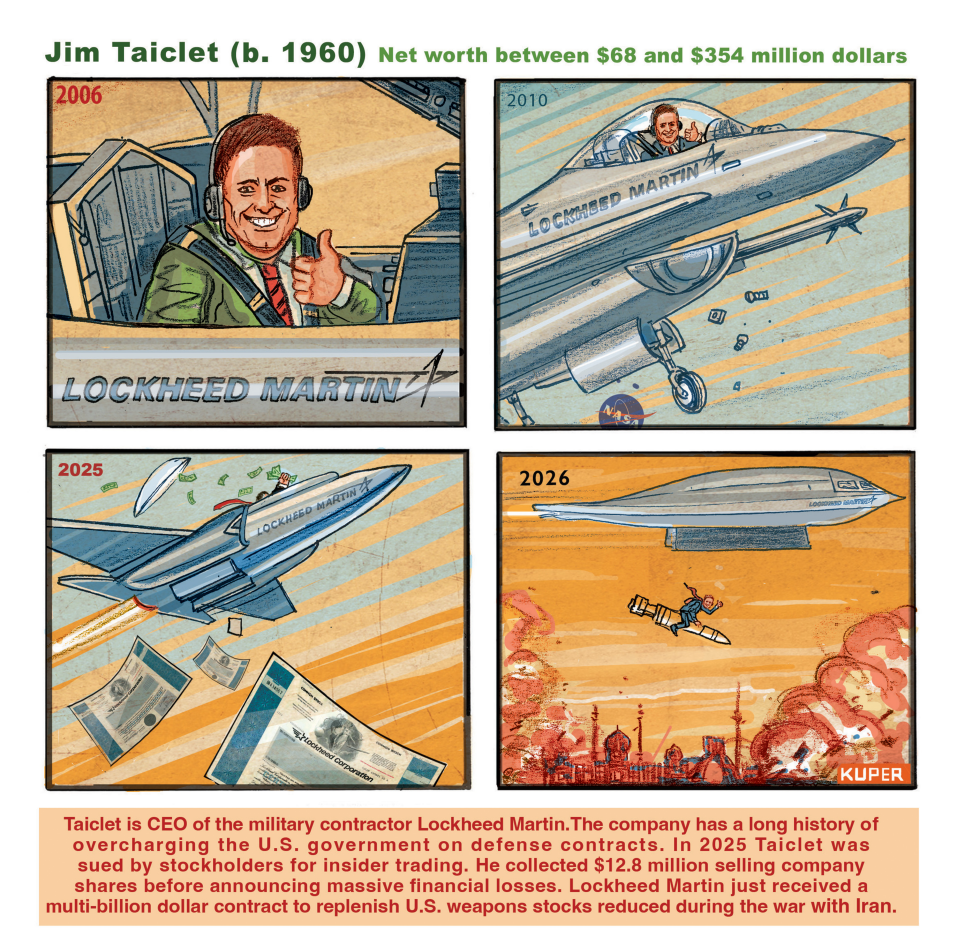
Lockheed Martin CEO Jim Taiclet was sued by stockholders in 2025 for selling $12.8 million in shares before announcing major losses. The company then won a multi-billion contract to replenish weapons depleted in the Iran conflict. The piece criticizes Taiclet and the contractor for insider trading and repeated government overcharging.