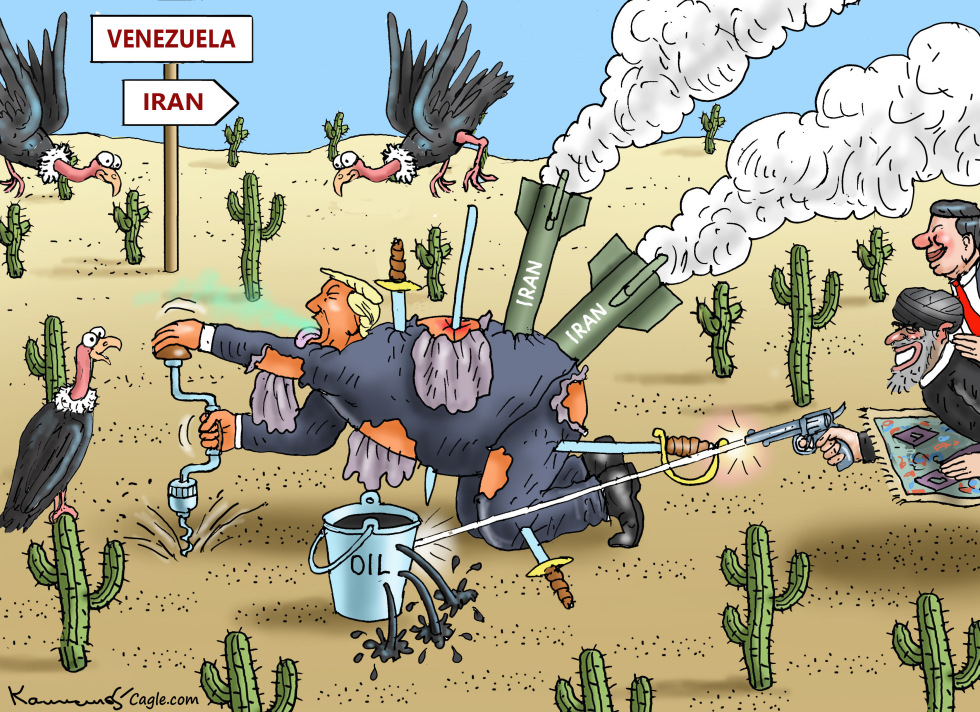
Donald Trump continued efforts to secure oil resources from Venezuela and Iran despite ongoing missile strikes and political pressure from those nations. The moves highlight US energy independence goals amid regional instability. The piece portrays these actions as defiant and opportunistic in the face of direct threats.
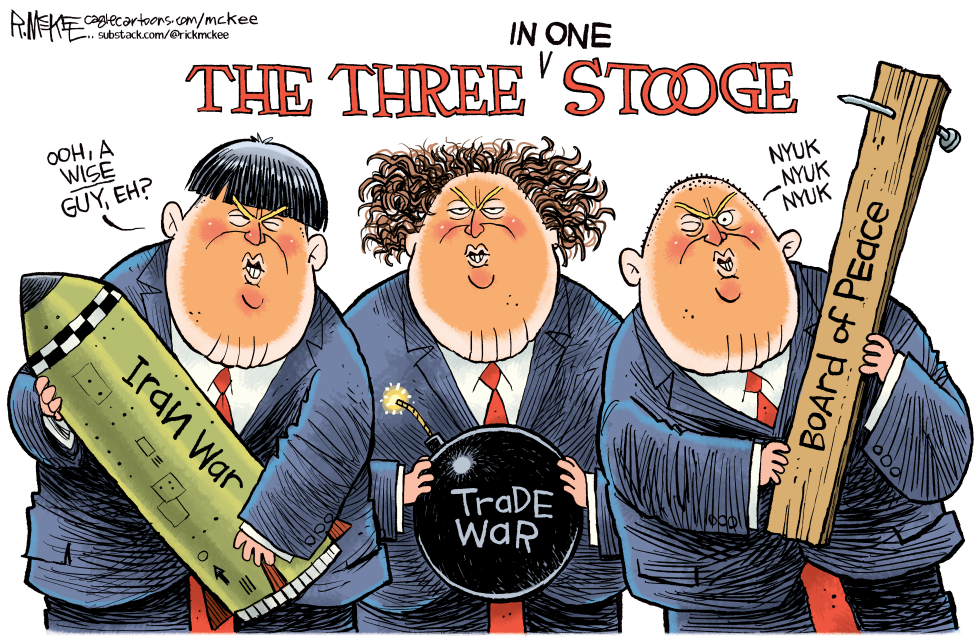
The cartoon depicts three political figures styled as the Three Stooges holding symbols of an Iran War missile, a Trade War bomb and a Board of Peace plank. It responds to ongoing tensions involving Iran policy and trade disputes by using the comedy trio to portray chaotic leadership. The visual argument suggests that efforts at peace coexist with aggressive posturing in both military and economic arenas.
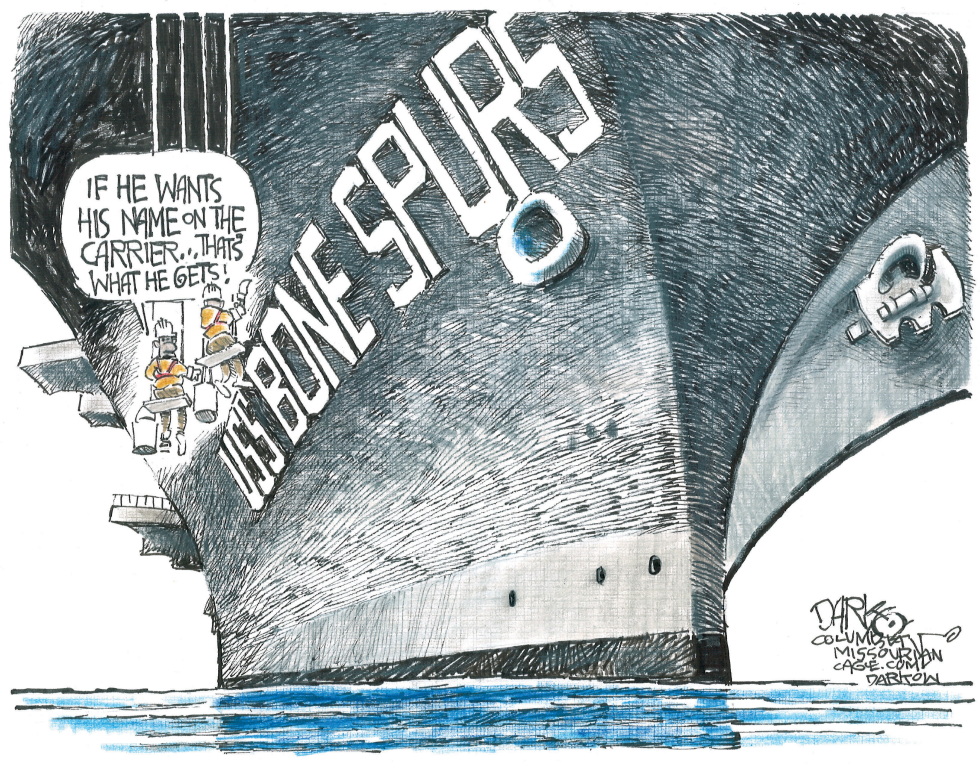
A proposal to rename a U.S. aircraft carrier after Donald Trump has drawn attention to his Vietnam-era draft deferments for bone spurs. The move highlights ongoing debate over military service records of political figures. The piece portrays the renaming as a pointed reminder of those deferments.
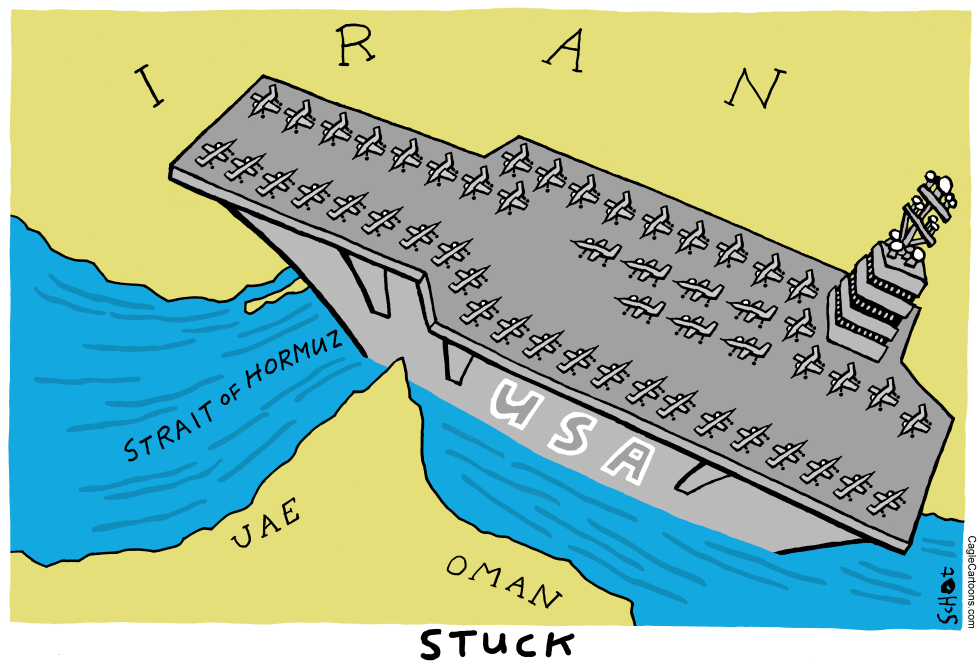
A political cartoon depicts a large US aircraft carrier marked USA jammed in the Strait of Hormuz between land labeled Iran, UAE and Oman. The vessel carries dozens of fighter jets on its deck. The word STUCK appears prominently below the scene. The image responds to persistent concerns over freedom of navigation in the vital oil shipping route. Iran has long threatened to close the strait during conflicts. The cartoon uses the visual of a grounded carrier to illustrate potential US military vulnerability in the narrow passage.
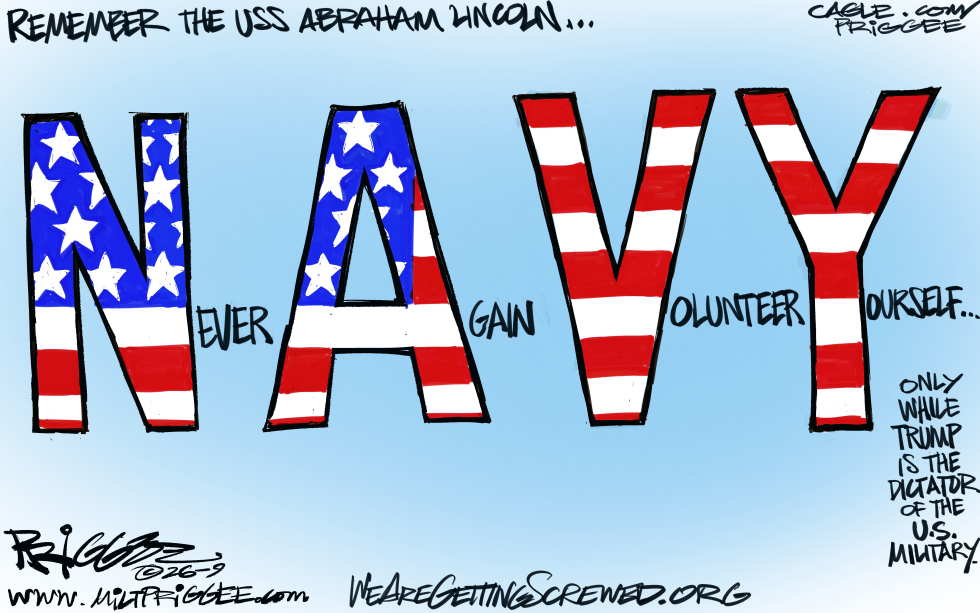
The image reworks the Navy acronym using stars and stripes segments. Inserted words create a full phrase discouraging enlistment. Text at bottom right specifies the condition tied to one individual's role. Top reference recalls a named carrier. Bottom elements include artist credit and website.
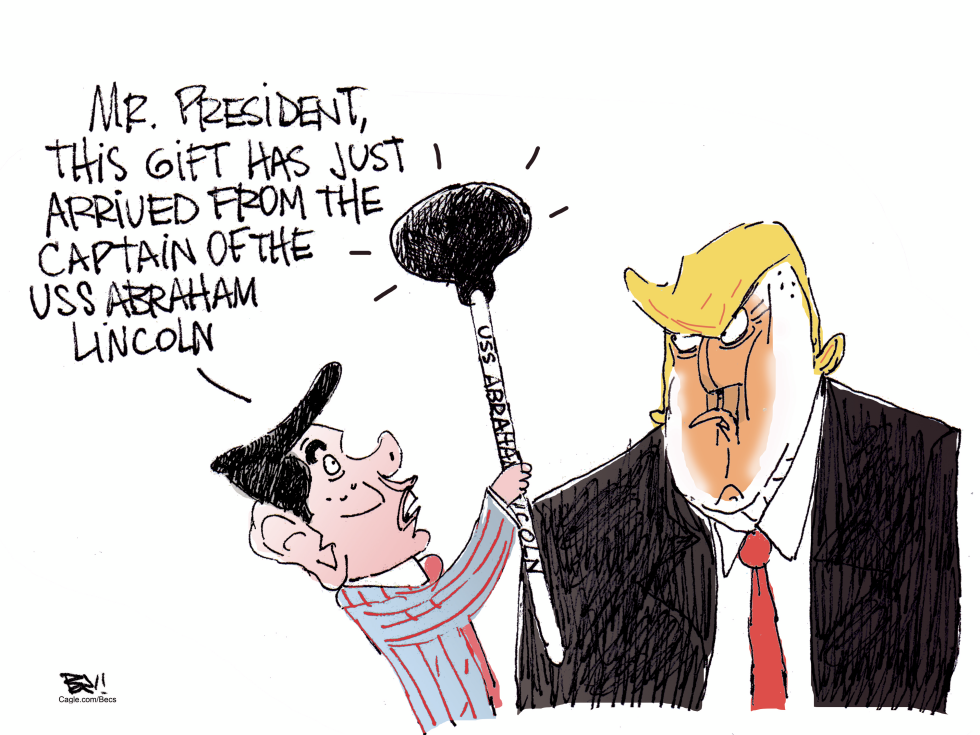
President Trump receives a ceremonial mallet sent by the captain of the USS Abraham Lincoln. The presentation occurs during routine military engagement with the White House. The gift underscores ongoing ties between the administration and naval forces. The editorial highlights the unusual nature of the item and questions its timing and purpose. It suggests the exchange reflects broader patterns in how the president interacts with the armed services.
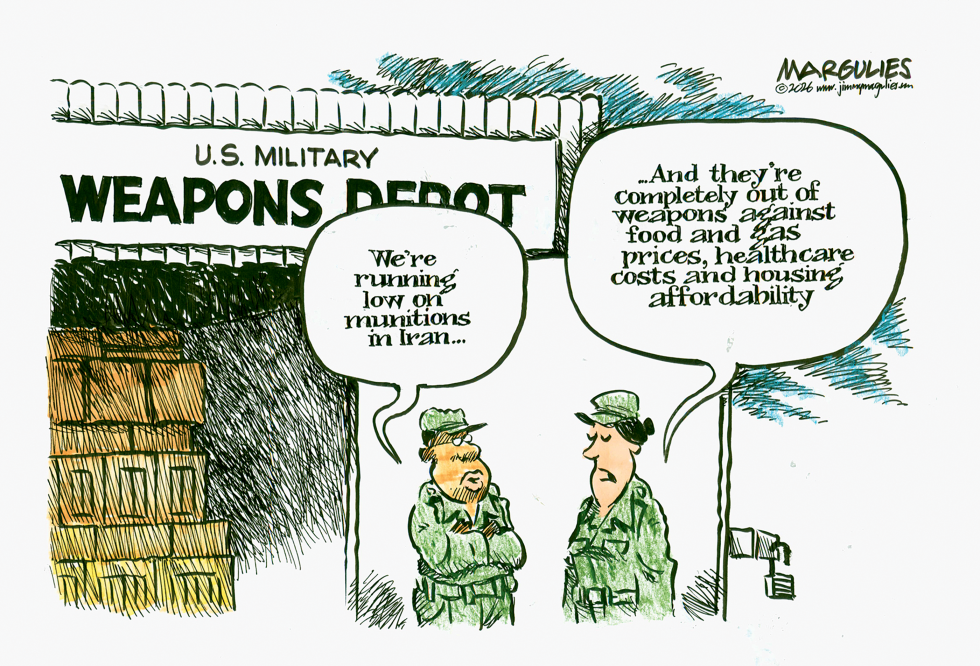
The cartoon depicts two U.S. soldiers outside a weapons depot labeled U.S. Military Weapons Depot. One soldier states the facility is running low on munitions in Iran. The second replies that domestic fronts are out of weapons against food and gas prices, healthcare costs and housing affordability. The image responds to ongoing debates over U.S. military aid commitments abroad and competing budget pressures at home as of the August 2026 publication date. It uses the depot setting and dialogue to contrast foreign military demands with economic challenges facing American households.
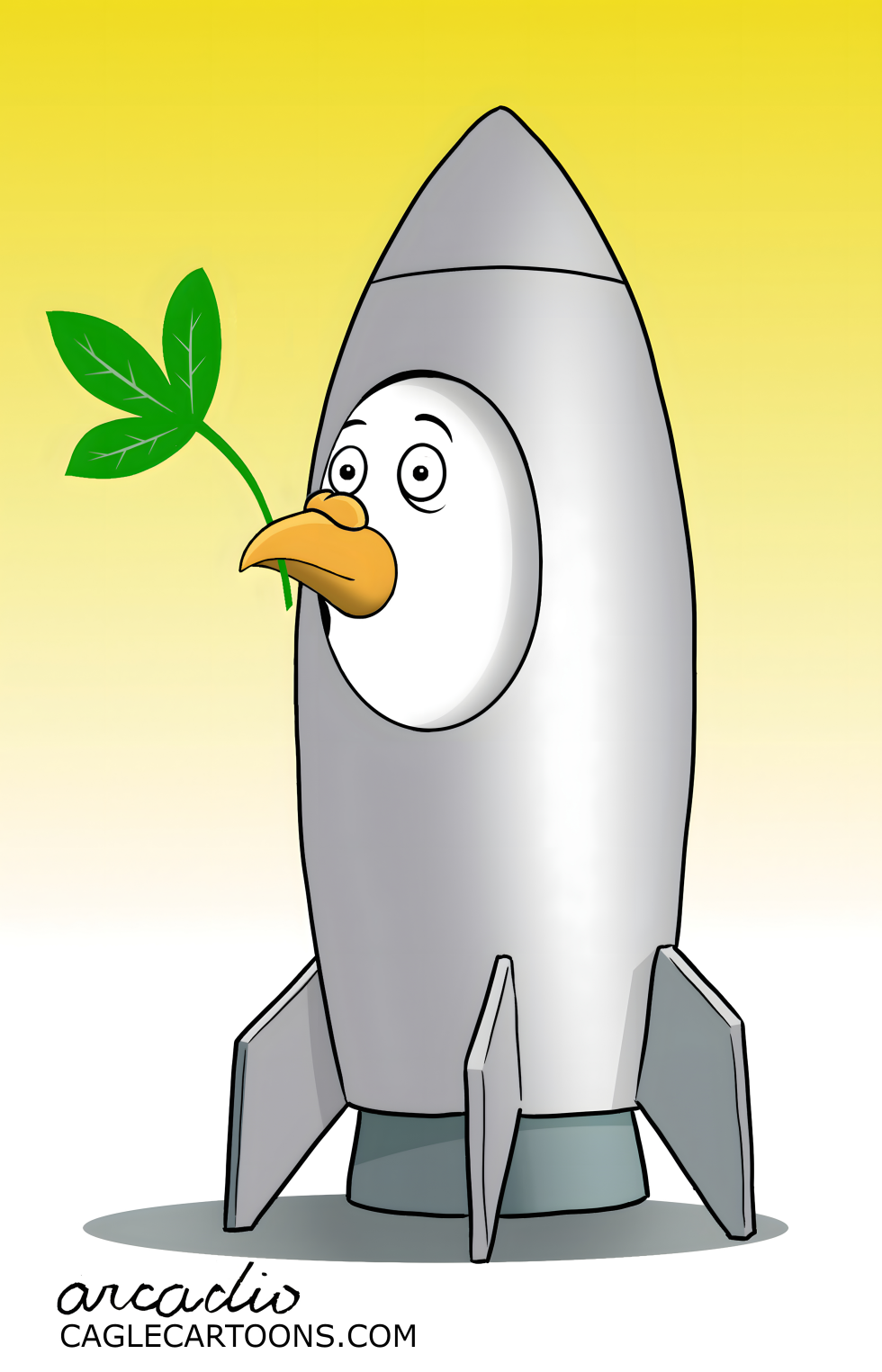
A hybrid rocket and dove figure holding an olive branch appears in editorial imagery dated August 2026. The visual merges symbols of military technology and peace efforts amid ongoing global tensions over defense systems and diplomatic initiatives. The piece presents the combined image as a commentary on attempts to balance strength with reconciliation in international affairs.
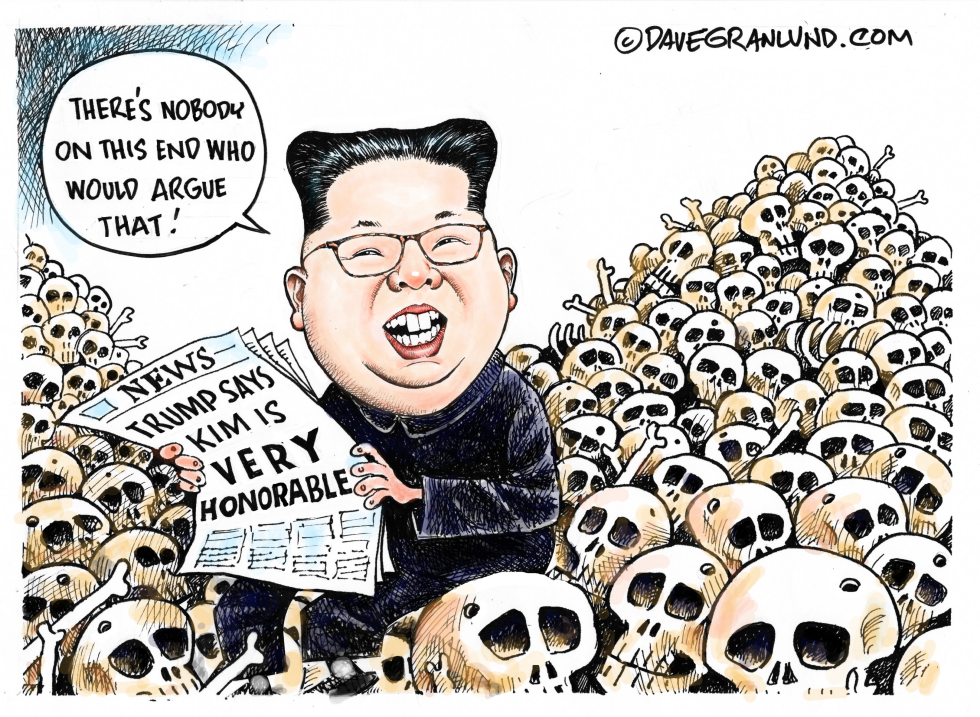
Donald Trump publicly described North Korean leader Kim Jong-un as very honorable. The remark revives questions about U.S. engagement with a regime long accused of severe human rights abuses and internal purges. Critics argue such language undercuts pressure on Pyongyang and signals weakness to allies. Supporters see it as pragmatic diplomacy aimed at reducing nuclear risks. The statement fits a pattern of personal assessments of foreign leaders that have drawn both support and condemnation depending on the political side. The editorial position holds that the praise ignores the human cost inside North Korea and weakens the moral standing of U.S. foreign policy.
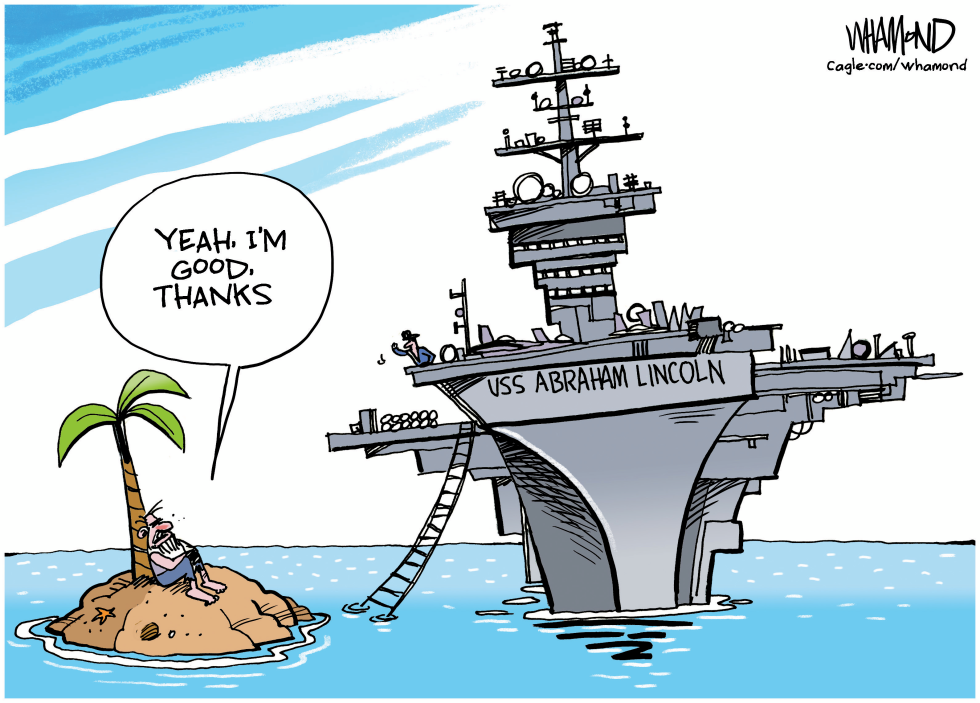
A US Navy aircraft carrier sails past a remote desert island where a lone castaway sits under a palm tree. The ship lowers a ladder in an apparent rescue attempt, yet the stranded figure declines assistance. The scene highlights ongoing debates over US military reach and whether distant outposts or individuals truly seek intervention. The editorial takes the position that such refusals underscore limits to assuming every presence is welcome or needed.
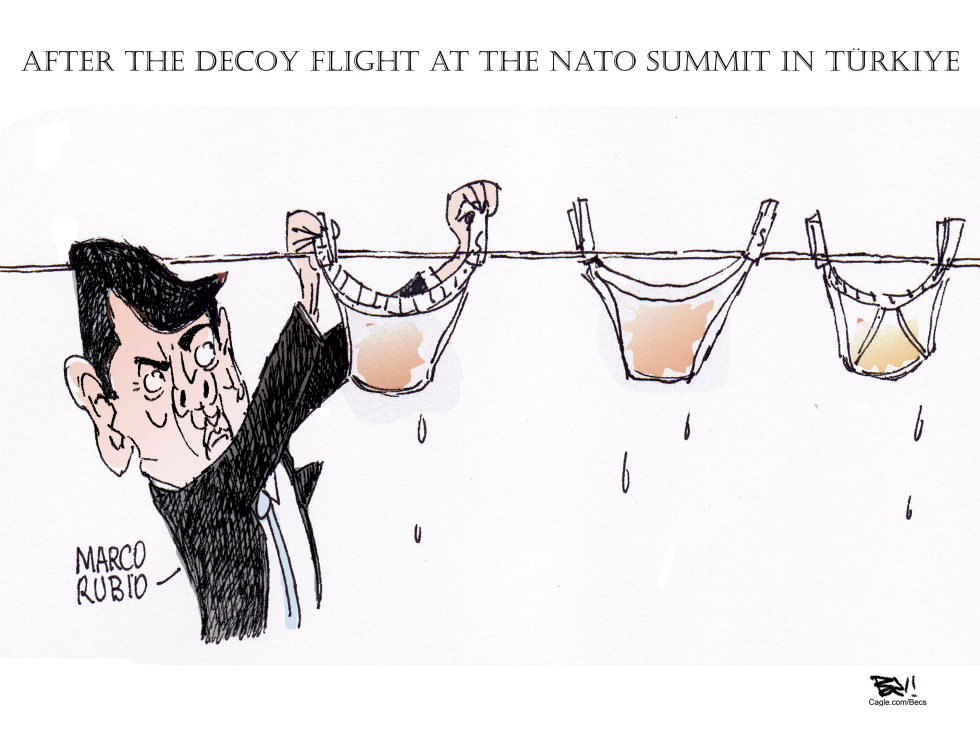
A decoy flight during the NATO summit in Türkiye forced senior U.S. officials including Marco Rubio into damage control over security and optics. The episode highlighted vulnerabilities in summit logistics and personal exposure for attendees. The piece portrays the episode as an embarrassing cleanup task for Rubio.
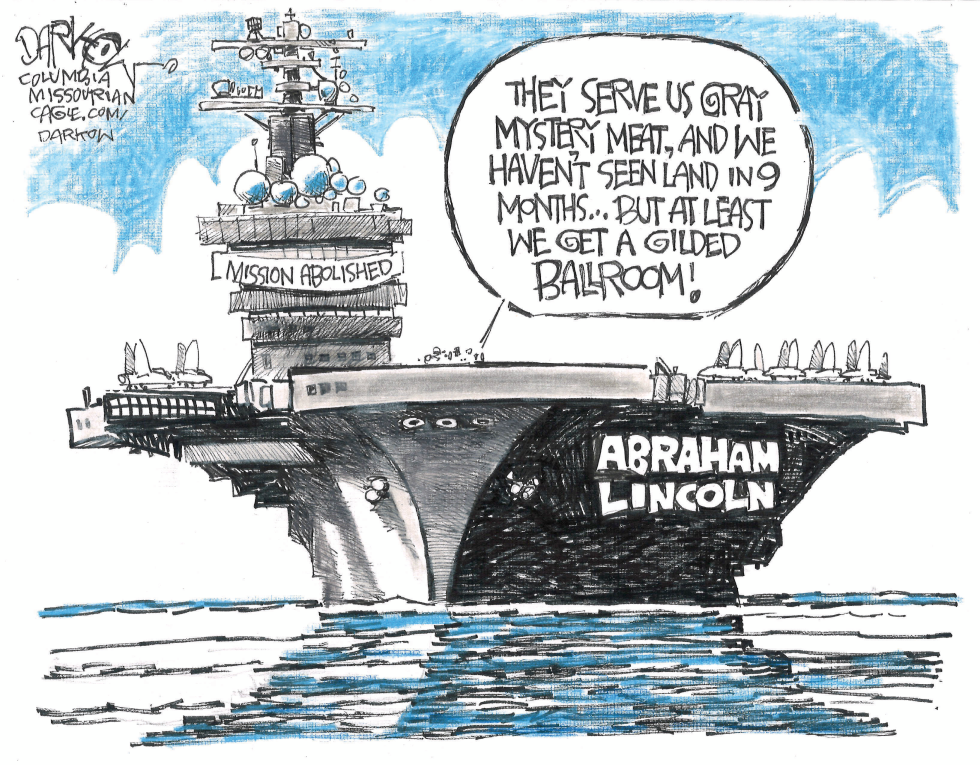
The USS Abraham Lincoln remains on extended deployment with sailors citing ongoing issues with food quality and time at sea. The addition of a gilded ballroom has drawn attention to priorities in naval operations. The piece highlights crew discontent with conditions despite the upgrade.
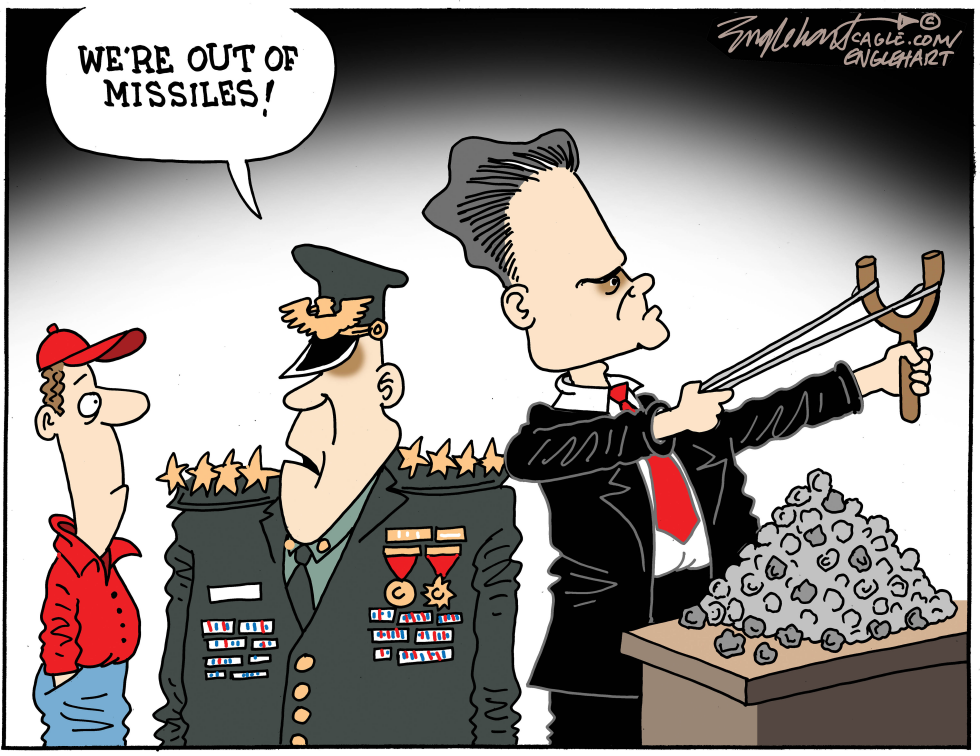
The Pentagon confronts depleted missile inventories during active defense needs. Officials explore improvised options including slingshots loaded with rocks. The development highlights supply chain strains and readiness questions for U.S. forces. The piece criticizes the situation as a failure of planning and resource allocation.
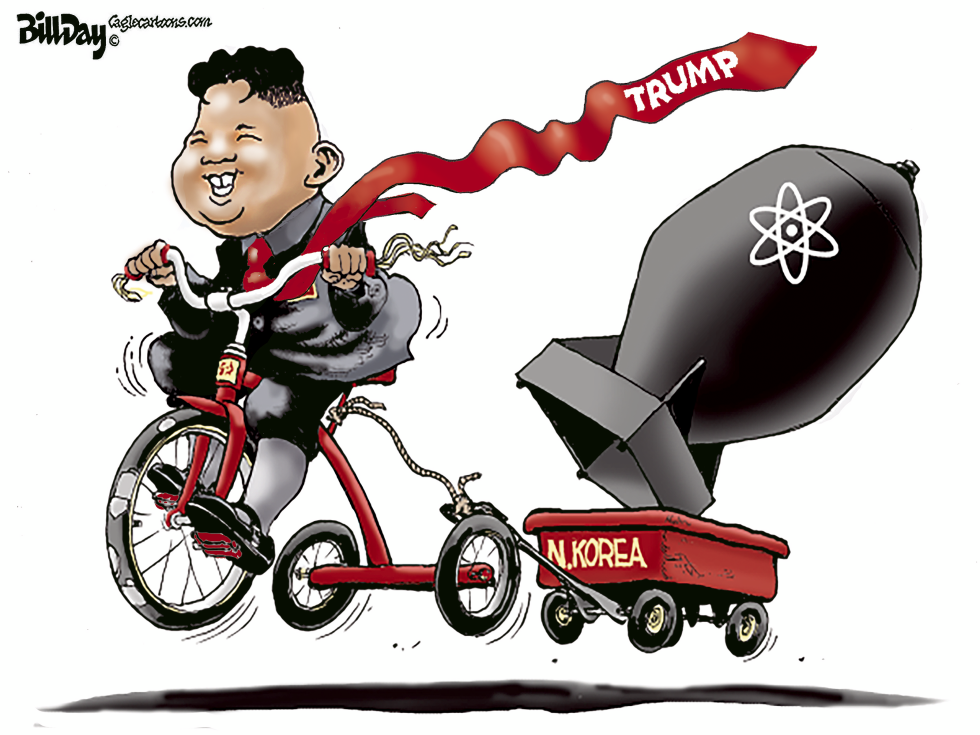
North Korea's leader Kim Jong-un is shown transporting a nuclear bomb on a child's tricycle and wagon toward Donald Trump. The image responds to ongoing tensions over North Korea's nuclear program and its direct implications for U.S. security under the Trump administration.
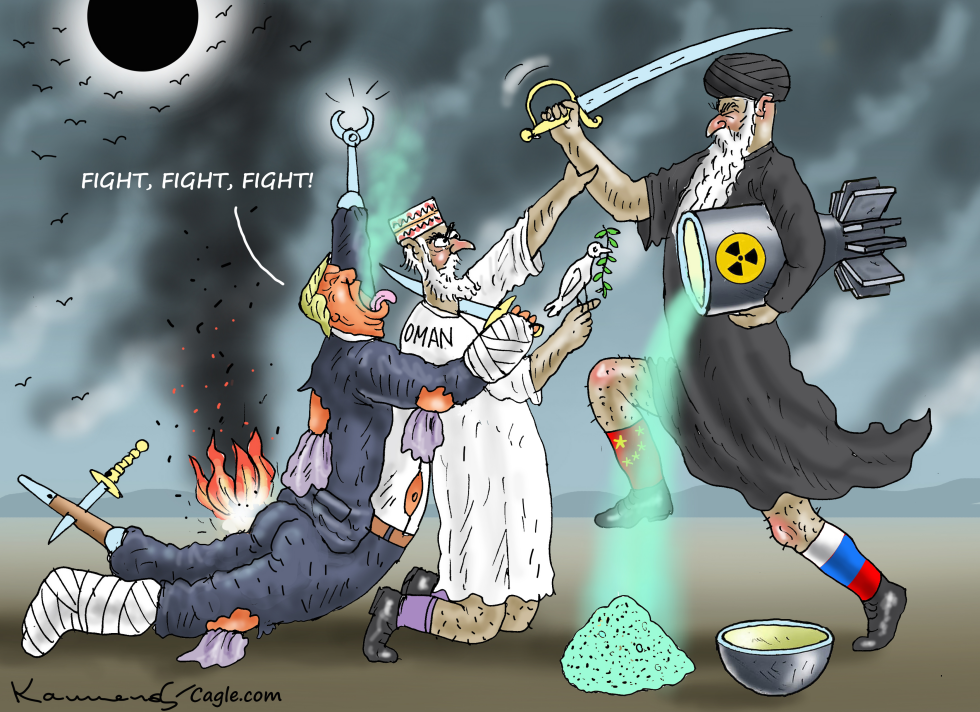
A confrontation involving the former president unfolded in Oman amid regional tensions with a nuclear capable participant. The incident highlights ongoing friction in Middle East diplomacy and arms concerns. The piece portrays the event as a chaotic clash where peace efforts compete with aggressive posturing.