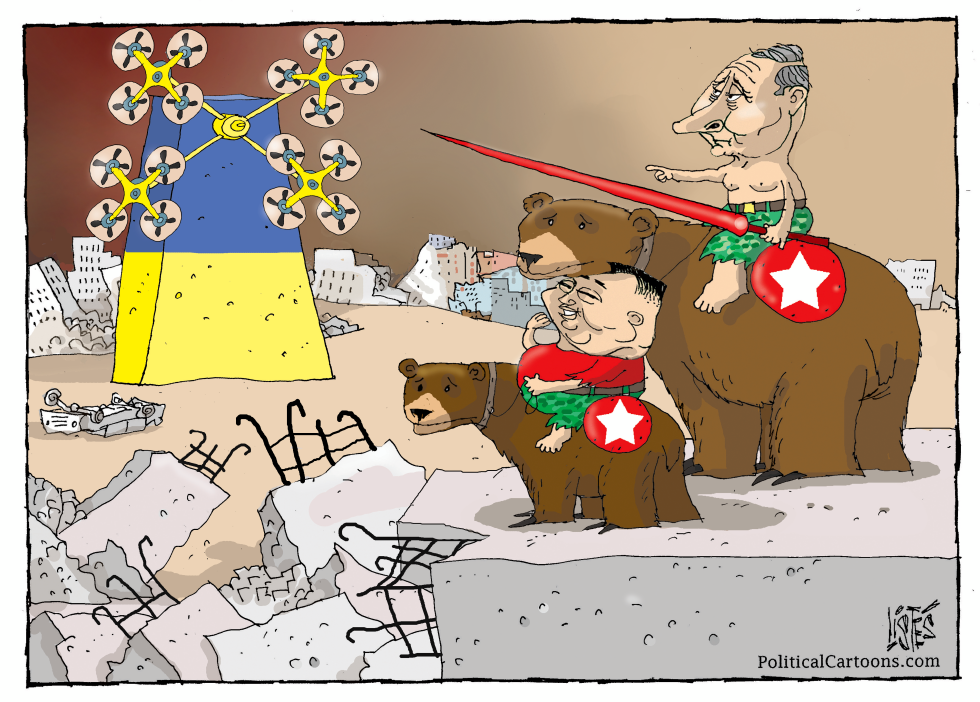
Russian President Vladimir Putin and North Korean leader Kim Jong-un coordinate military support involving drones and personnel in the ongoing Ukraine conflict. The partnership raises concerns over expanded battlefield capabilities and prolonged fighting. The piece portrays their joint advance as a direct strike on Ukrainian infrastructure and sovereignty.
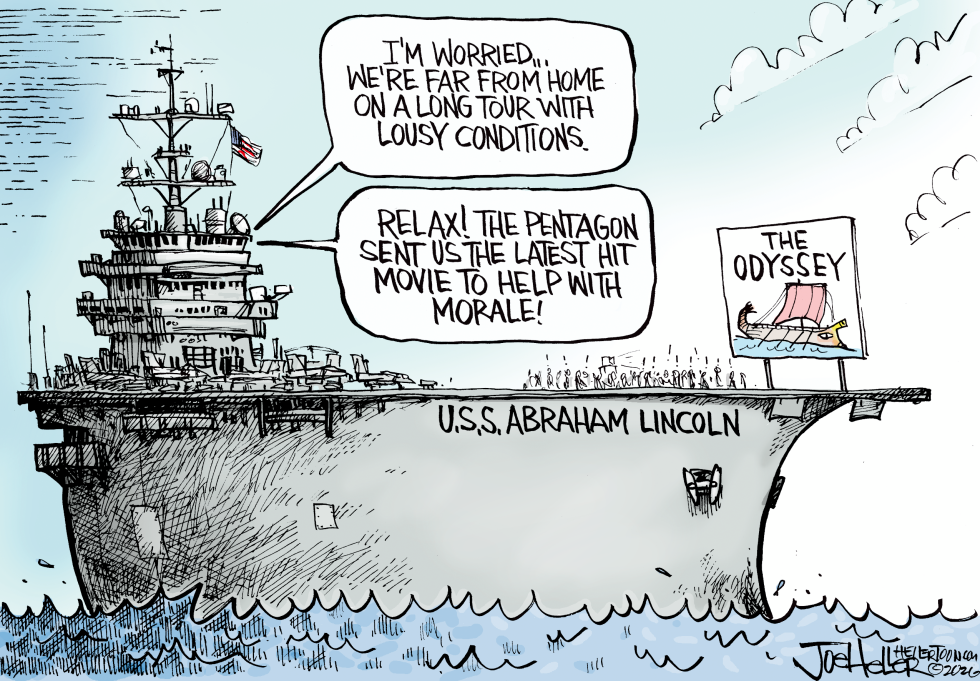
Sailors aboard the USS Abraham Lincoln have raised concerns about extended deployments far from home and substandard living conditions at sea. The Pentagon's response involves screening the film The Odyssey to improve morale among the crew. This approach highlights ongoing challenges in maintaining readiness during prolonged naval operations. The editorial takes the position that such gestures fall short of addressing core issues like crew welfare and rotation schedules.
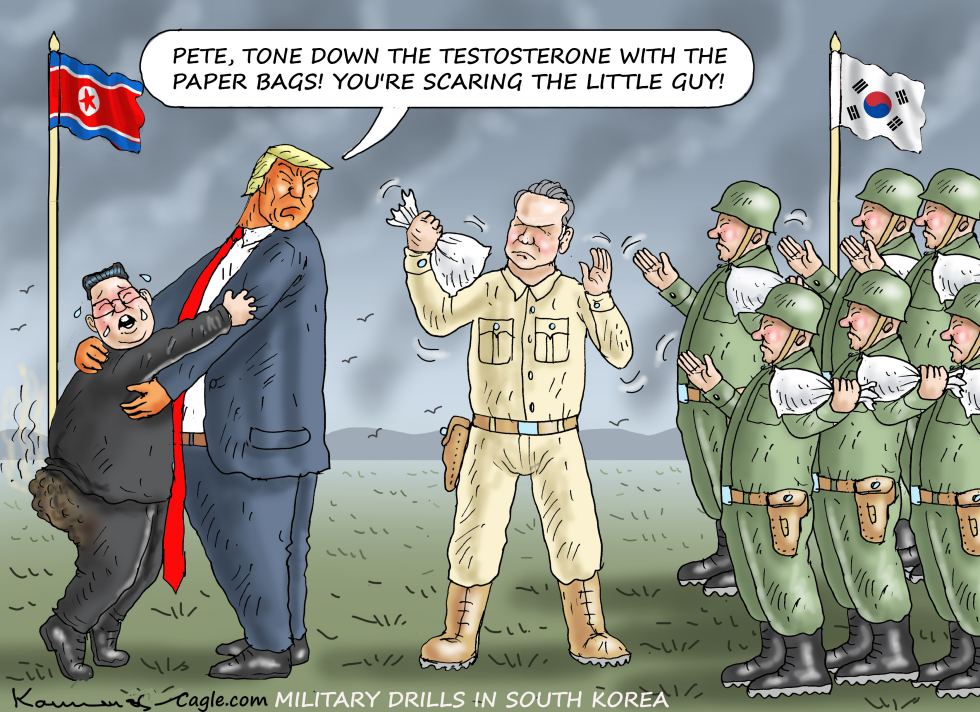
US and South Korean forces conducted joint military drills in mid-August 2026, prompting sharp North Korean protests over perceived threats. Donald Trump appeared at the scene restraining Kim Jong-un while a uniformed figure urged restraint with paper bags to calm the North Korean leader. The image frames the drills as overly provocative and mocks the testosterone-driven posturing on all sides.
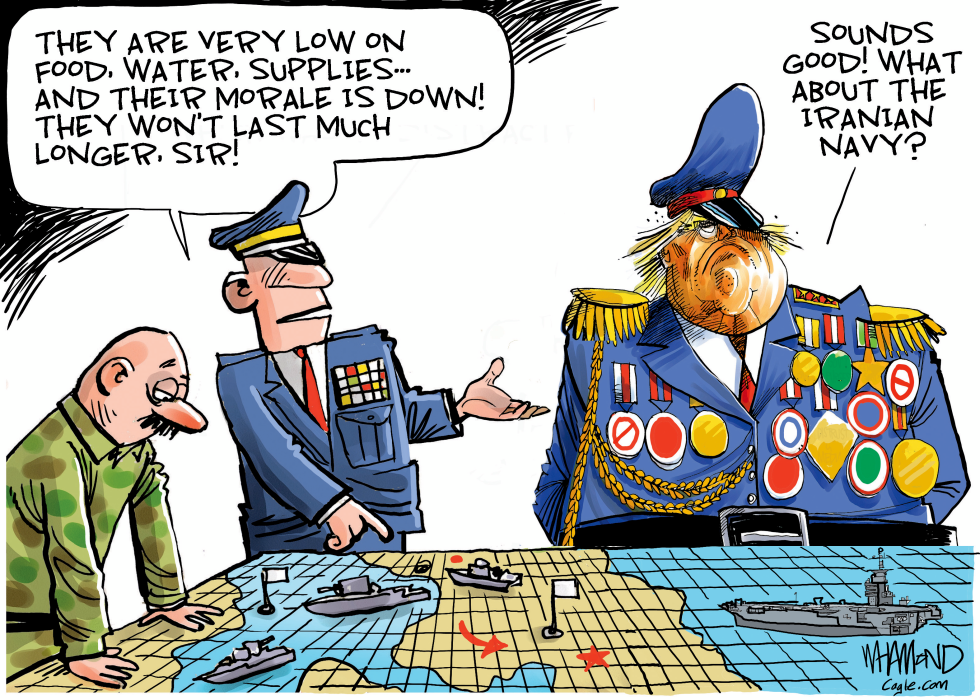
A U.S. Navy carrier faces reported shortages of food, water and supplies along with declining morale in mid-2026. Senior officers brief the president on the situation. The president responds by inquiring about the Iranian Navy instead. The piece portrays the administration as detached from operational readiness concerns in the region.
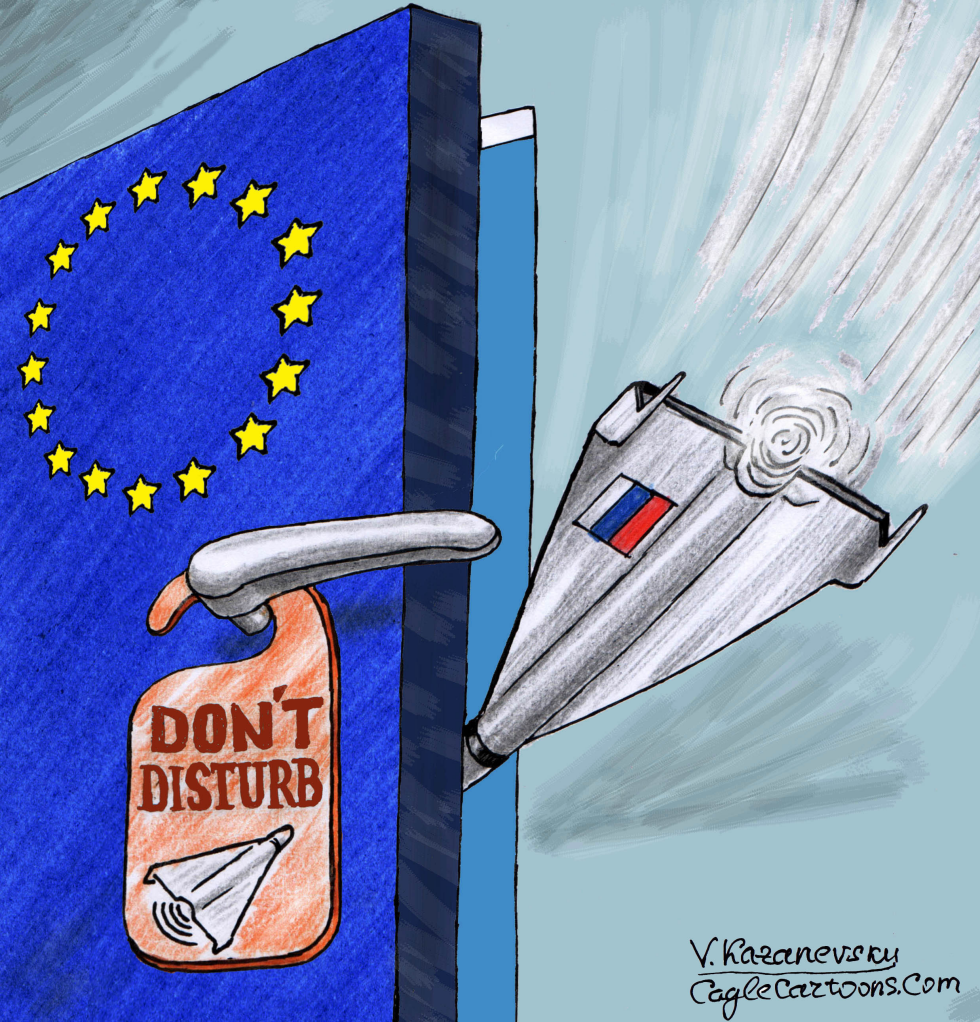
A Russian drone has breached an EU doorway in a symbolic incident highlighting ongoing security concerns from Moscow's actions near European borders. The event underscores vulnerabilities in continental defense amid the protracted Ukraine conflict and repeated airspace violations. The piece argues that EU warnings and isolation measures prove insufficient against persistent Russian incursions.
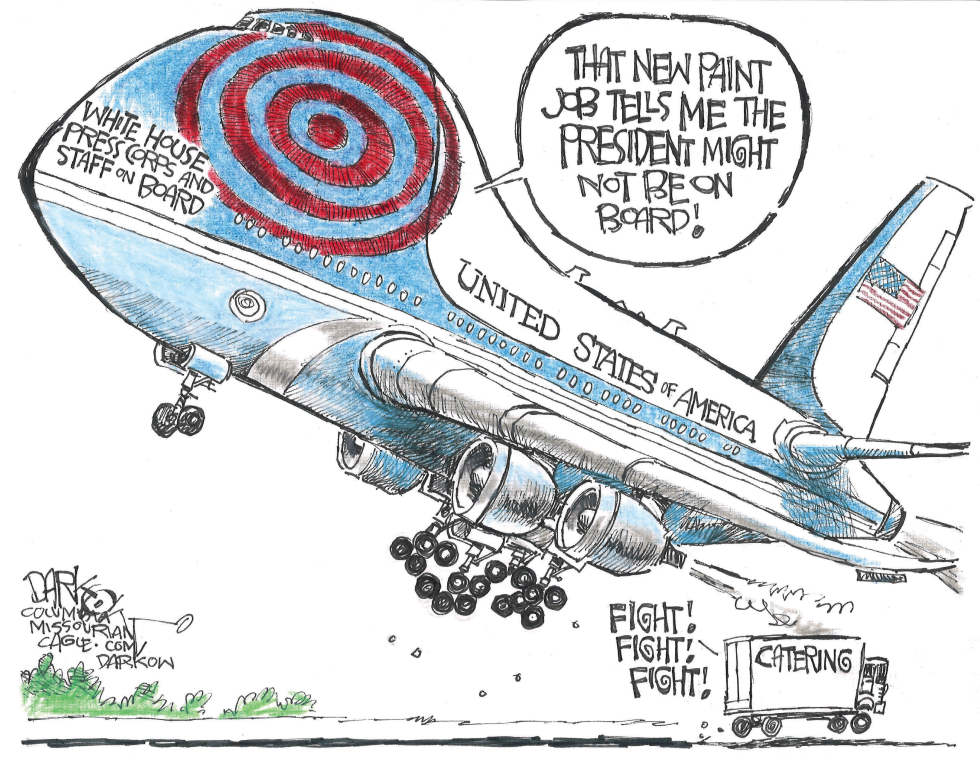
Air Force One appears with a large target painted on its upper fuselage while carrying White House press corps and staff. A nearby catering truck chants fight slogans as the plane descends. The image suggests the president may not be aboard the targeted aircraft. This visual plays on recent tensions surrounding presidential travel and security. The editorial stance highlights perceived risks or distancing from official duties.
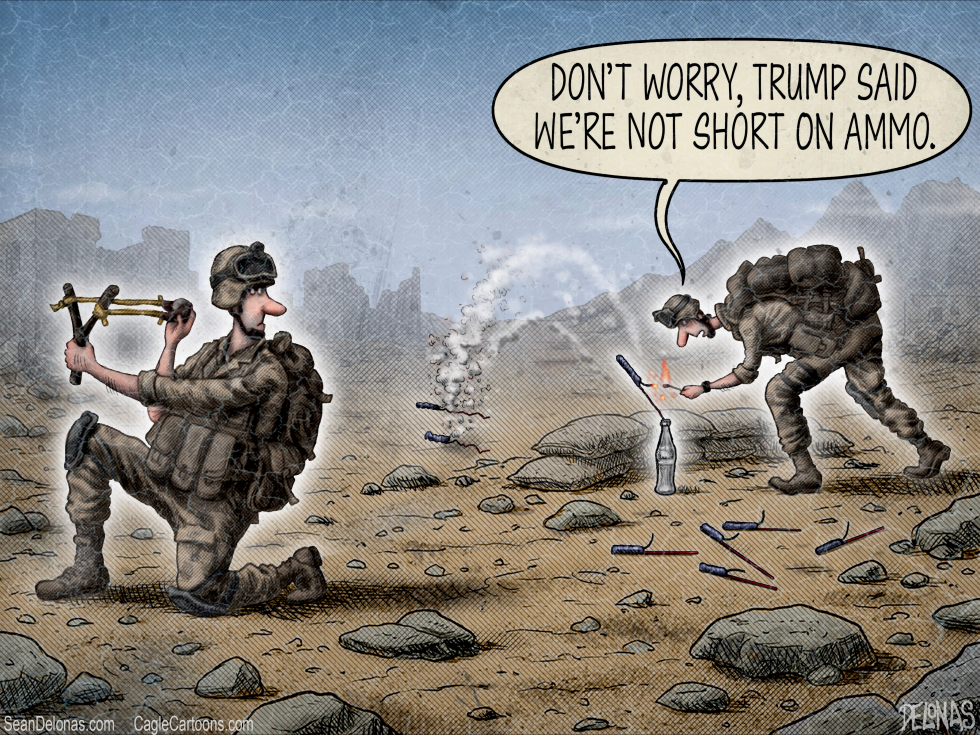
U.S. forces in a desert conflict zone report ammunition shortages forcing improvised weapons. The situation highlights strains on military logistics during ongoing operations. The piece critiques assurances from leadership that supplies remain adequate.
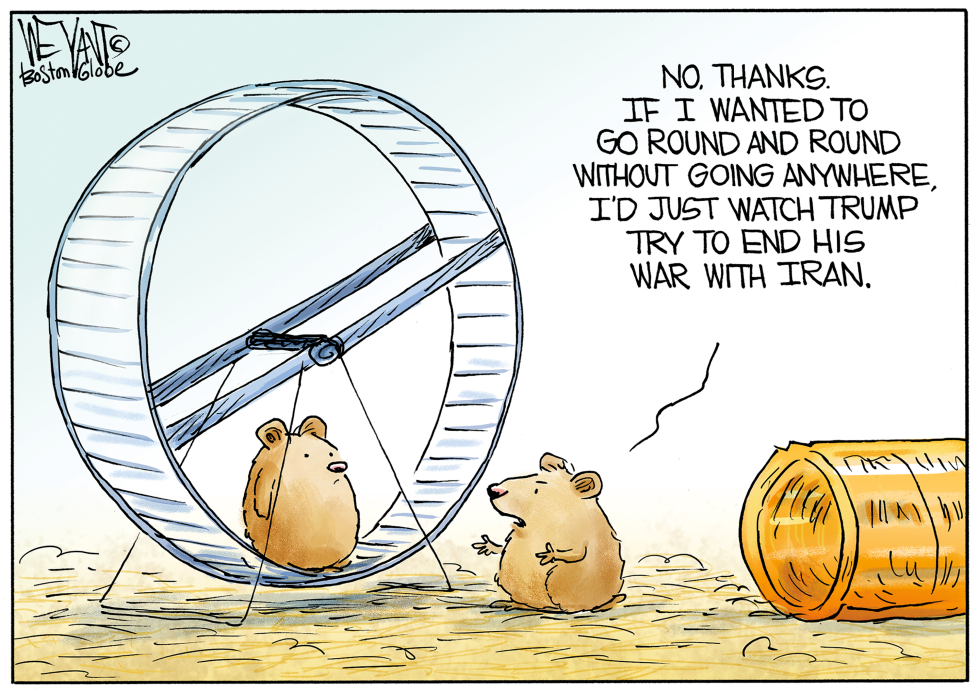
President Trump continues efforts to resolve the ongoing conflict with Iran through repeated diplomatic rounds. The situation remains stalled with no clear progress after multiple attempts. Observers note the repetitive nature of the process without advancement. The piece portrays the hamster's refusal as a commentary on the futility of the approach.
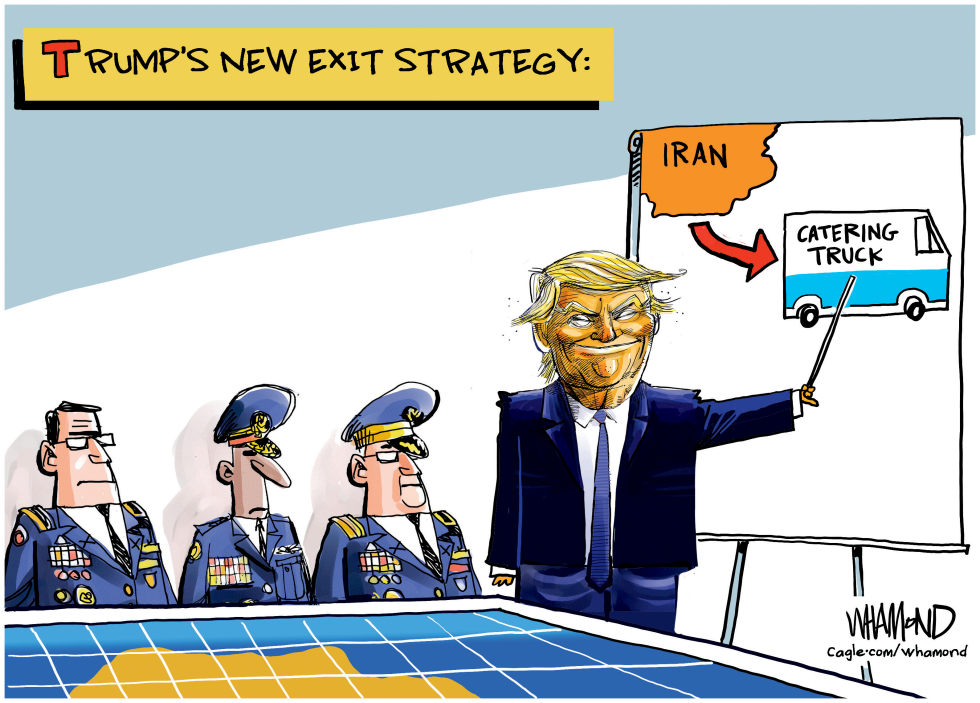
The cartoon depicts Donald Trump addressing three military officers while pointing to a whiteboard labeled Iran with a catering truck illustration. The yellow banner reads Trump's New Exit Strategy. The image uses the catering truck as a visual device for an Iran withdrawal plan. It responds to ongoing discussions about U.S. foreign policy toward Iran in 2026. The composition places Trump in a briefing role with officers seated at a table marked by a grid pattern.
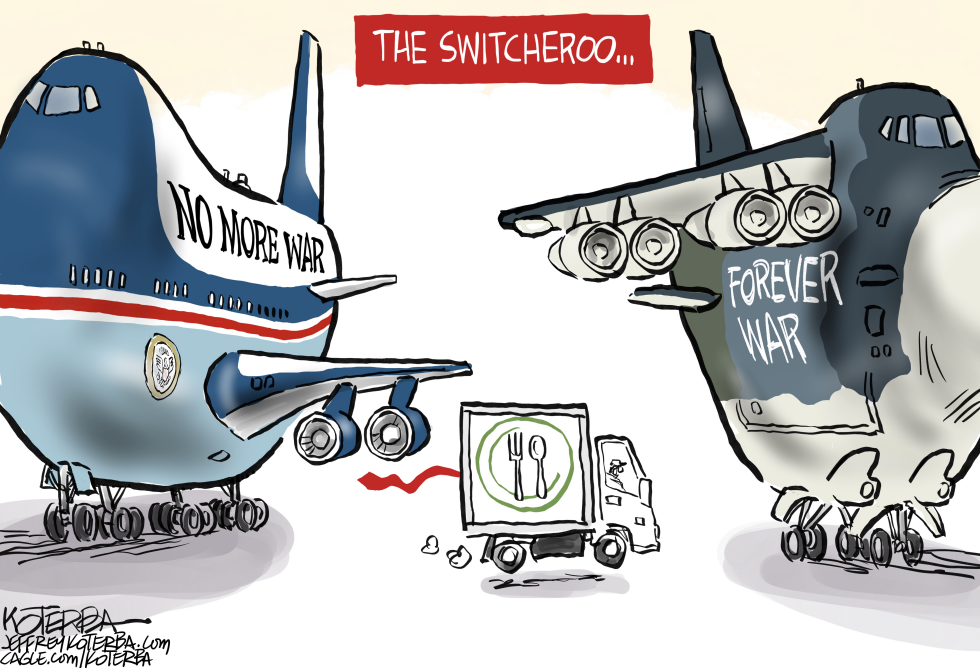
A political shift in military posture draws attention as commitments move from ending wars to sustaining them indefinitely. The editorial critiques the reversal as a cynical about-face on foreign engagements.
Air Force One appears with a prominent target symbol on its fuselage amid questions about an escape vehicle. The image highlights concerns over presidential aircraft security during a period of heightened threats to the presidency. The editorial position critiques vulnerabilities in executive protection protocols.
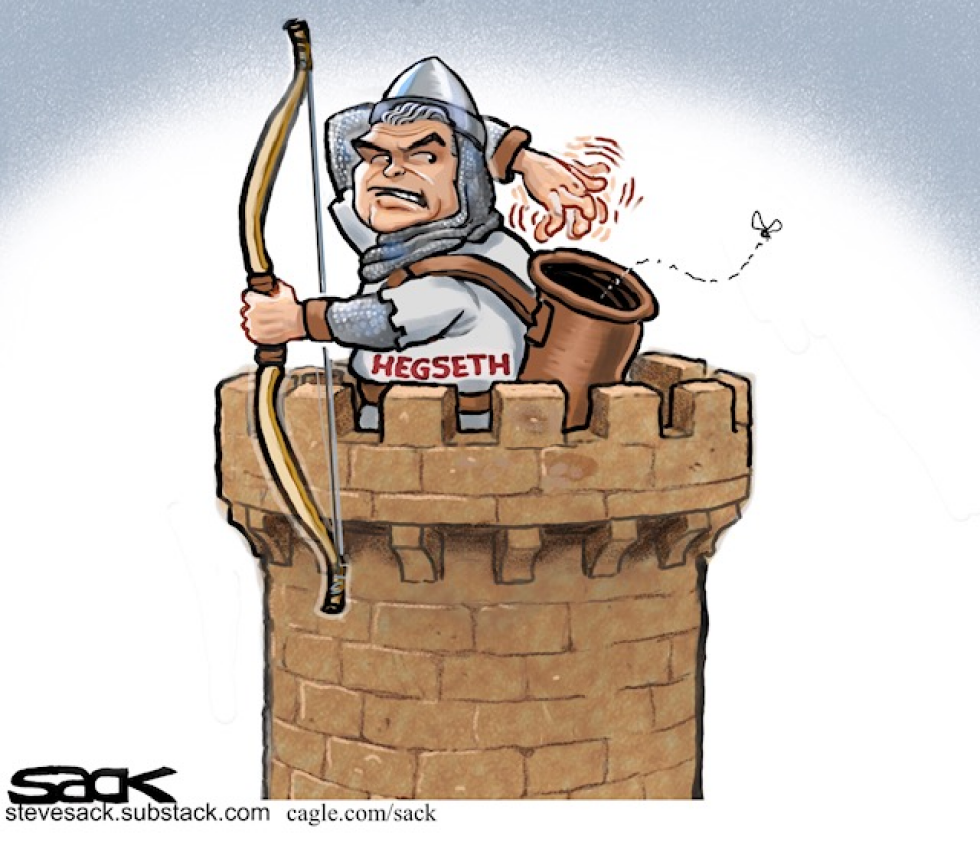
Pete Hegseth serves in a senior defense role under the current administration. Recent internal frictions have drawn attention to his position and decision-making. The piece portrays him as an archer under pressure from behind while attempting to maintain his post.
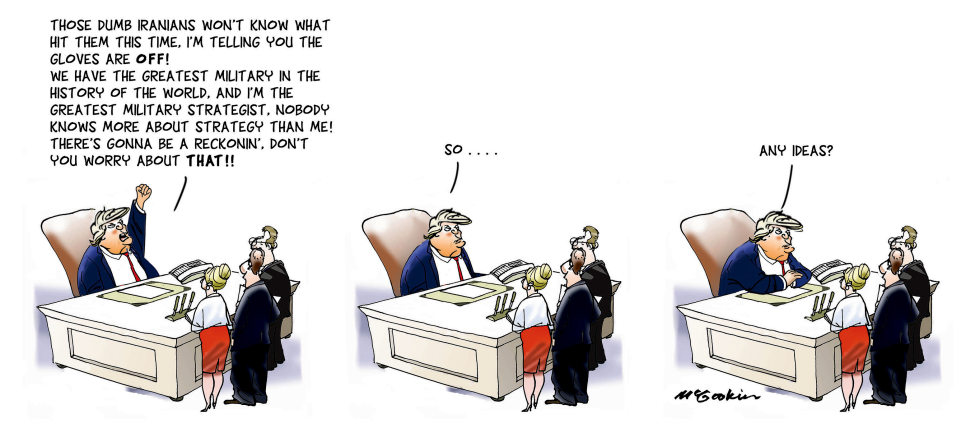
President Trump has directed his national security team to develop new military options regarding Iran. The move comes amid ongoing regional tensions and follows public statements emphasizing U.S. military superiority. The editorial takes the position that such demands reflect an impulsive approach to foreign policy that risks unnecessary escalation without clear strategic direction.