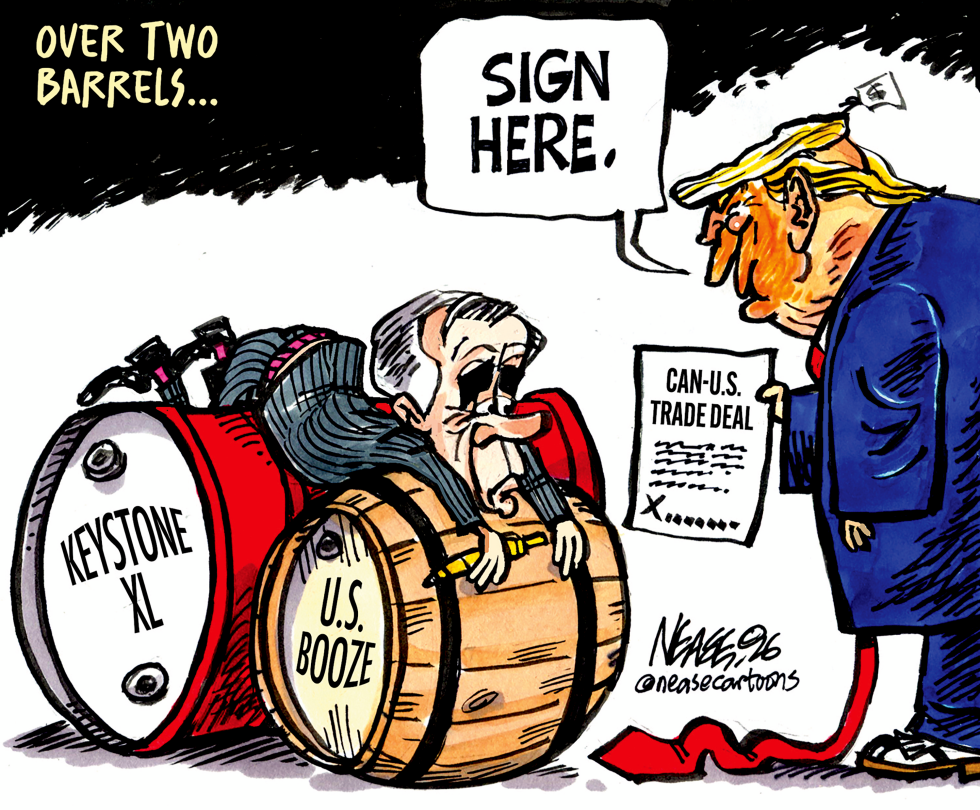
Donald Trump is pressing Canada to finalize a bilateral trade agreement by positioning the Canadian leader between a Keystone XL pipeline barrel and a U.S. booze barrel. The move ties energy infrastructure approval to broader trade concessions including alcohol exports. The editorial takes the position that such barrel-based pressure tactics risk undermining stable Canada-U.S. economic relations.
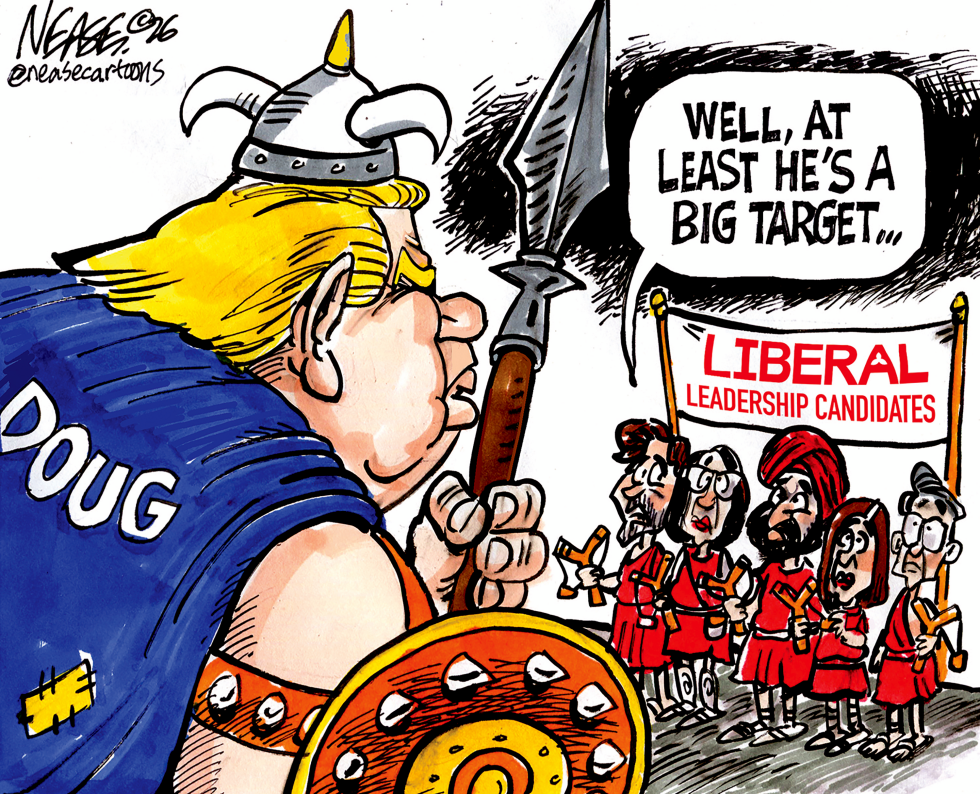
Liberal leadership candidates have identified a prominent opponent as their primary focus in an ongoing contest. The opponent, labeled Doug, appears as a large and visible figure in the political landscape. This dynamic highlights how one individual can dominate attention during a party’s internal selection process. The piece presents the situation as an opportunity for the candidates to rally around a clear adversary rather than internal divisions.
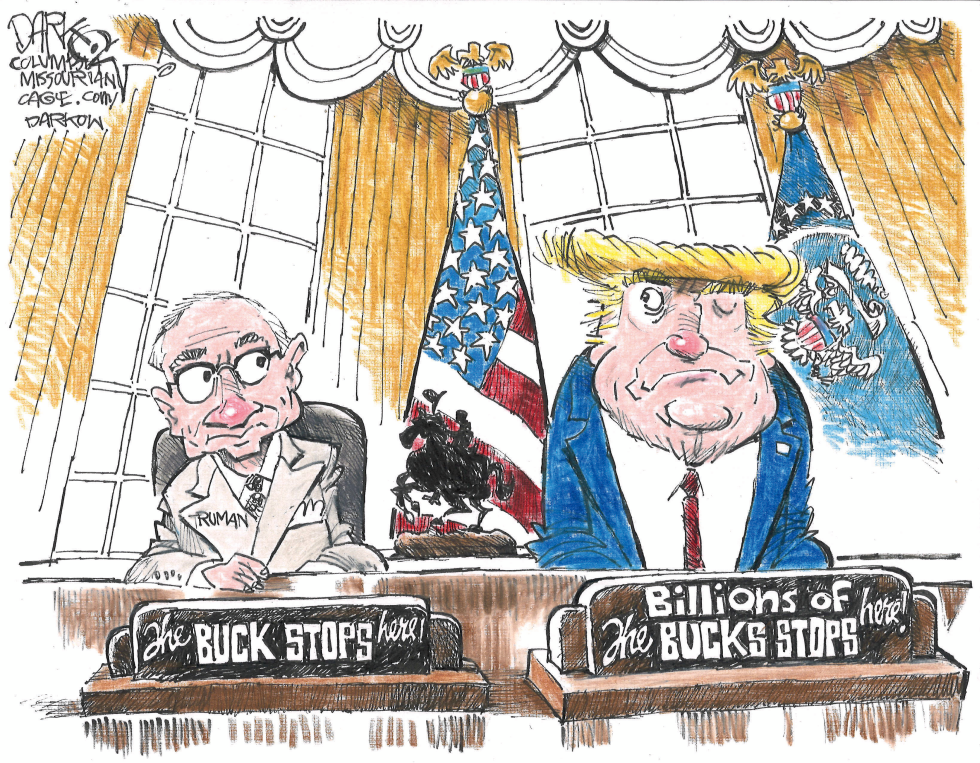
The cartoon responds to ongoing debates over presidential priorities in 2026. It contrasts Harry Truman's famous accountability motto with a version focused on financial gain. The piece argues that current leadership emphasizes monetary concerns over traditional responsibility.
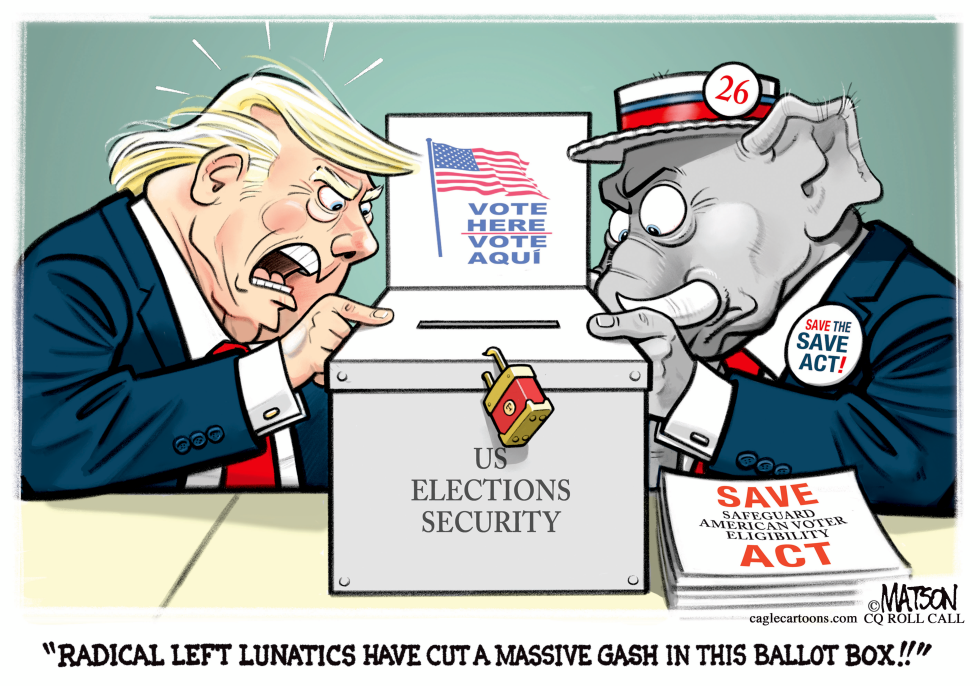
Donald Trump publicly blamed radical left activists for damaging a U.S. elections security ballot box days before key votes on the SAVE Act. The legislation aims to require proof of citizenship for federal voting. Republicans argue the measure prevents fraud while Democrats call it voter suppression. The cartoon frames the debate as partisan finger-pointing over basic safeguards.
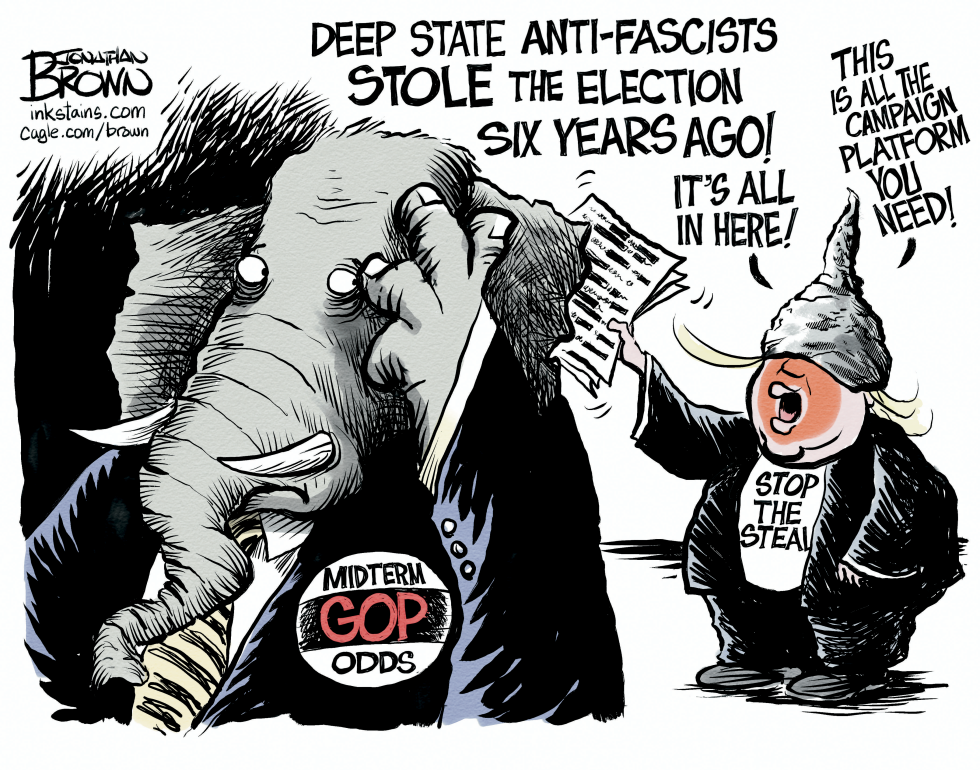
The cartoon shows a large Republican elephant in a suit covering its eyes while a small figure in a dunce cap labeled Stop the Steal waves papers claiming deep state anti-fascists stole the election six years ago. The elephant wears a Midterm GOP Odds button. Speech bubbles declare the papers contain the full campaign platform. The image comments on Republican candidates shifting focus from 2020 election disputes toward midterm races.
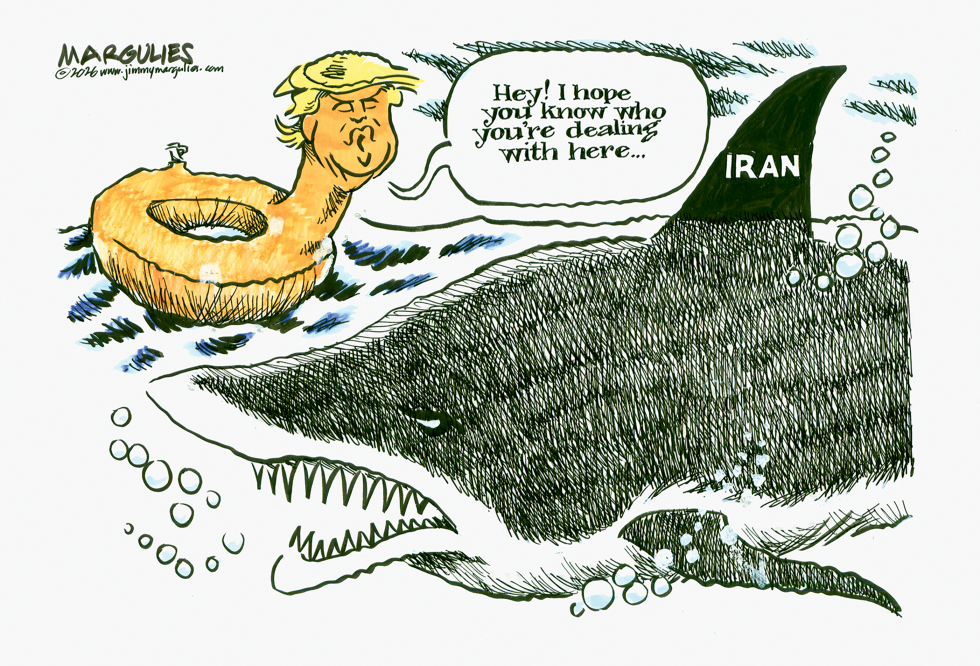
On July 10 2026 Jimmy Margulies depicts Donald Trump floating in an inflatable ring while confronting a large shark fin labeled Iran. The president issues a direct warning through a speech bubble asserting his identity and authority in the confrontation.
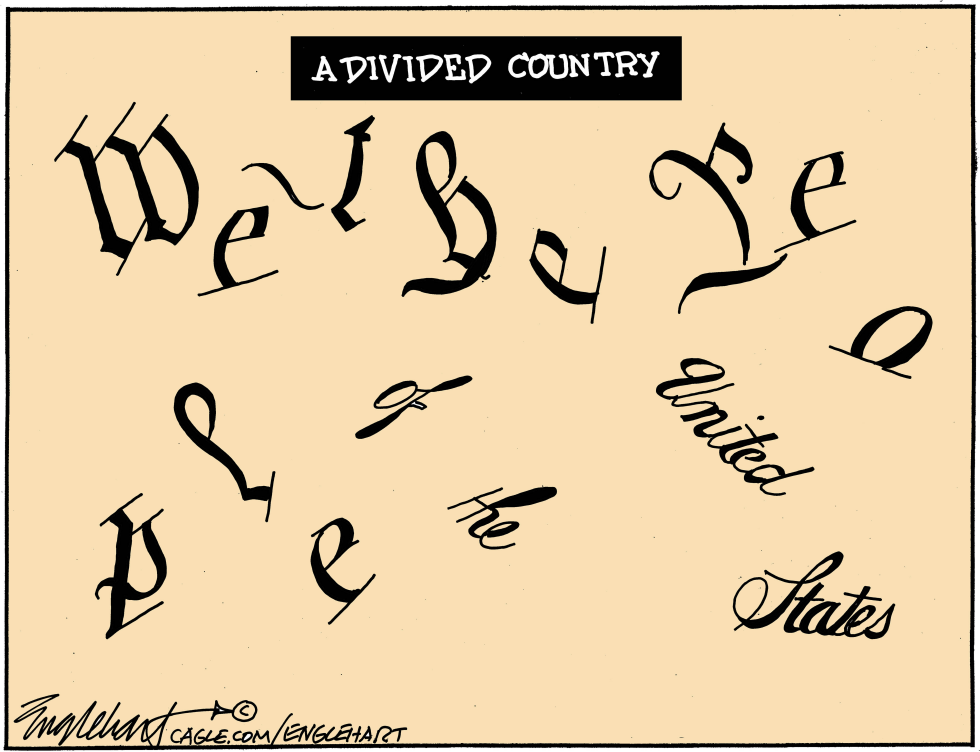
The cartoon displays the opening words of the U.S. Constitution scattered in disconnected segments across a plain background. A black banner at the top reads A DIVIDED COUNTRY. The arrangement of the familiar preamble text visually breaks the phrase into isolated parts. This presentation coincides with the approach of Independence Day on the 2026 calendar. The work draws attention to fractures within the national fabric without naming specific events or figures.
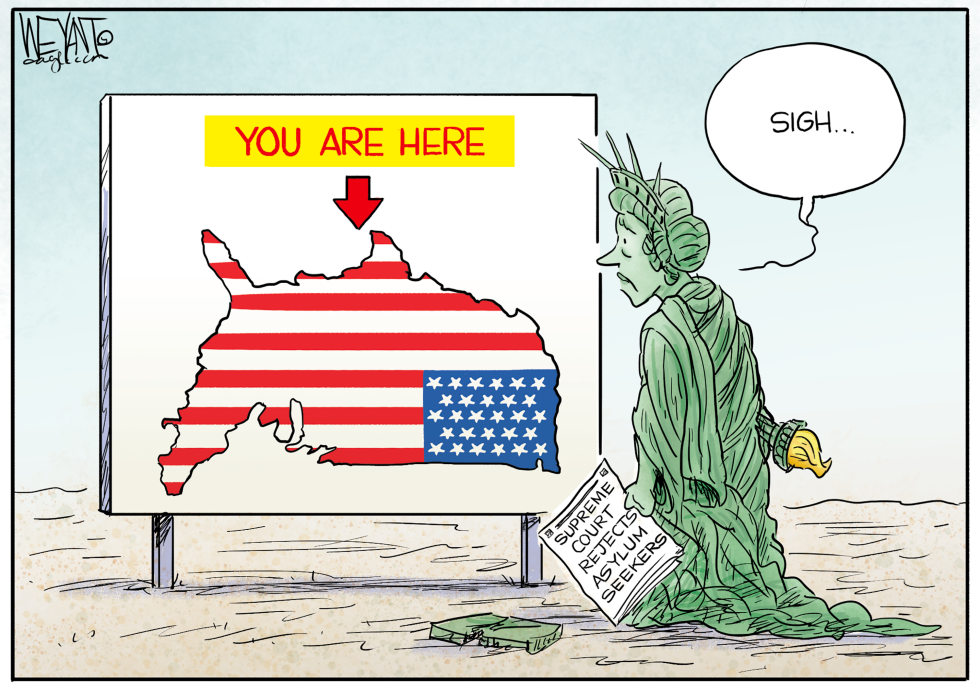
The cartoon depicts the Statue of Liberty seated on the ground beside a large sign displaying a map of the United States marked with a yellow "YOU ARE HERE" label and an American flag design. The figure holds a document reading "SUPREME COURT REJECTS ASYLUM SEEKERS" and exhales a visible sigh in a speech bubble. The image responds to a Supreme Court ruling on asylum policy issued near the June 28 2026 publication date.
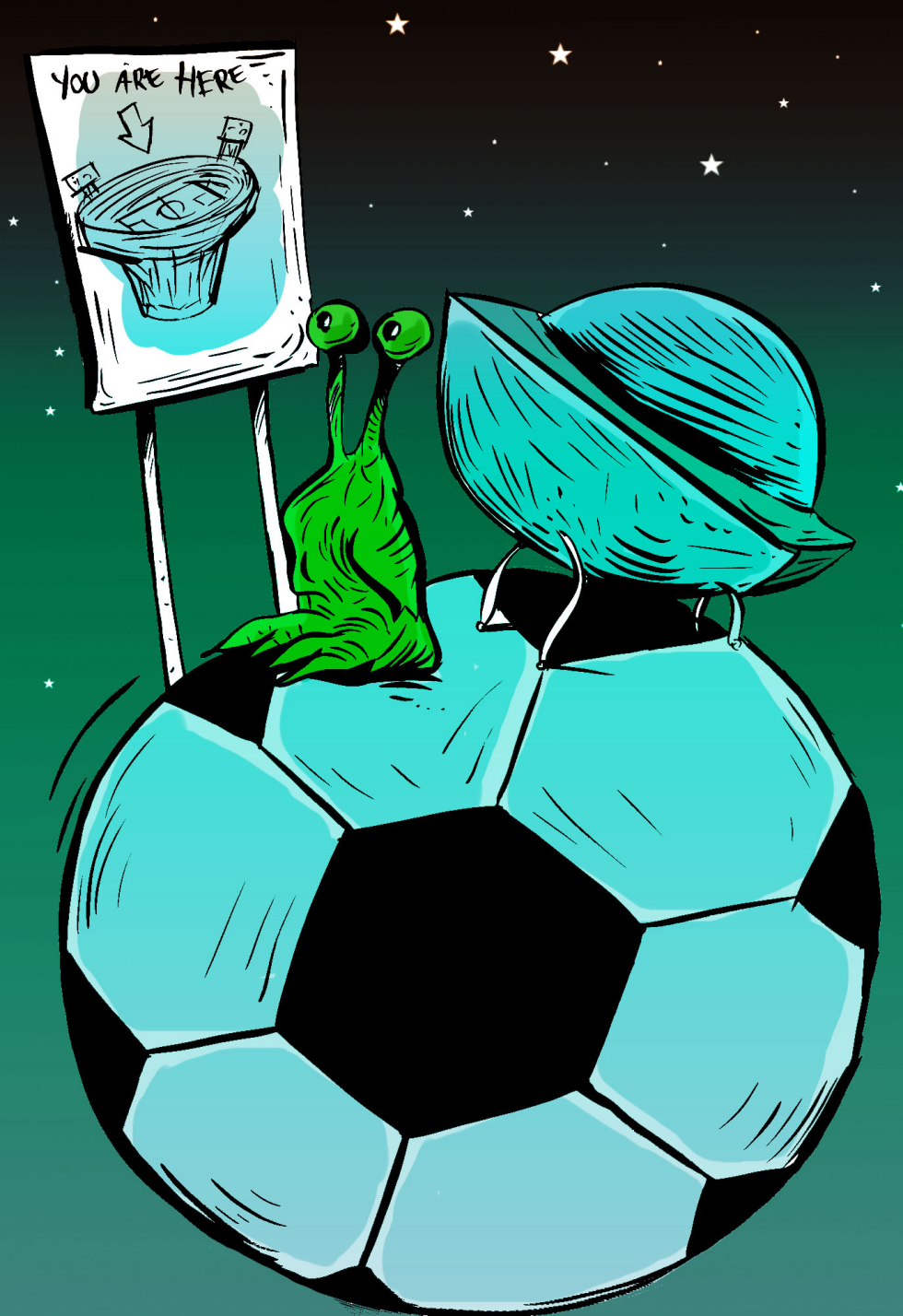
A whimsical space scene places a snail on a soccer ball next to a ringed planet under a you are here sign pointing to a drain. The image captures a sense of smallness in the universe. The editorial position highlights the ongoing human tendency to feel insignificant when confronting vast cosmic scales and personal limitations.
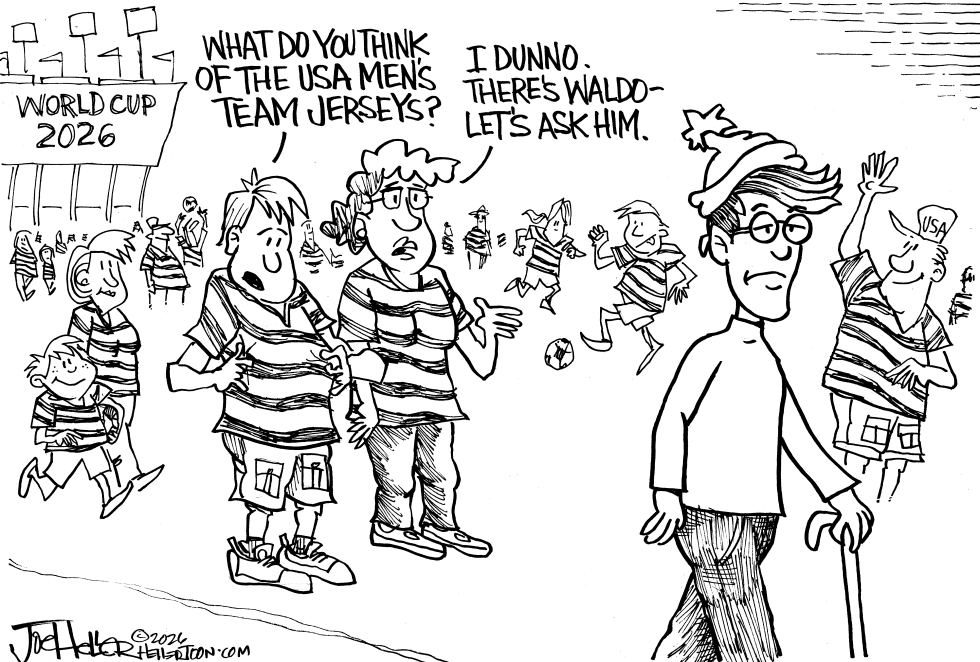
At the World Cup 2026, two fans in striped shirts debate the USA men's team jerseys, with one suggesting they ask Waldo, who stands nearby in similar attire. The scene plays on the resemblance between the team uniforms and the Where's Waldo character, set against a stadium backdrop filled with other striped figures and a soccer ball in play.
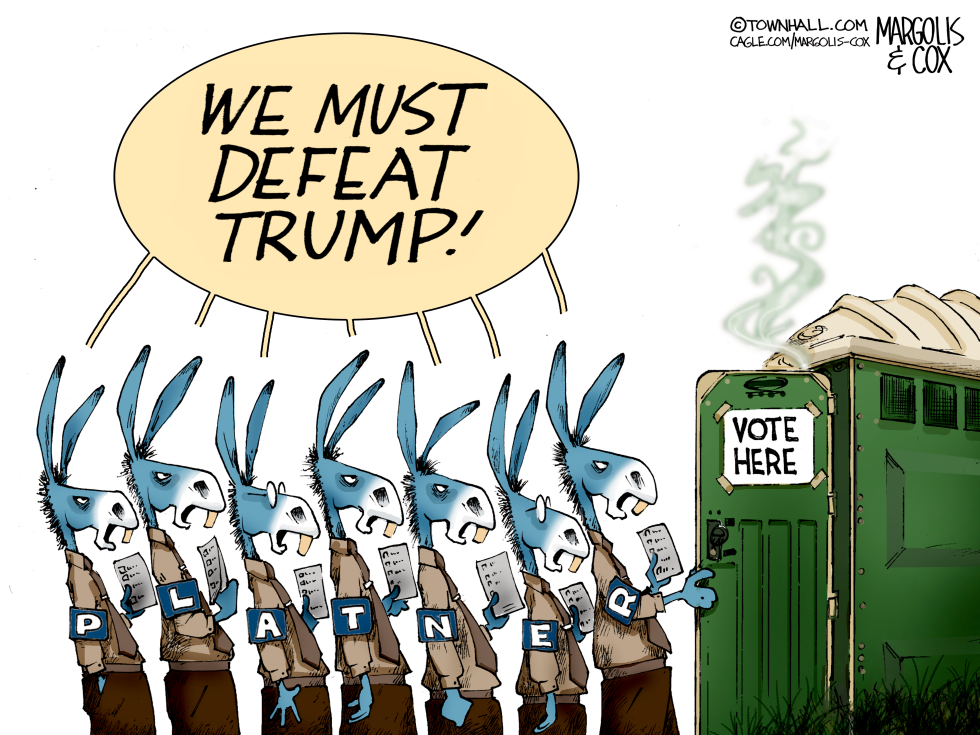
On June 11 2026 a political cartoon shows a line of Democratic donkeys holding signs that spell out letters while one declares we must defeat Trump before entering a vote here booth.
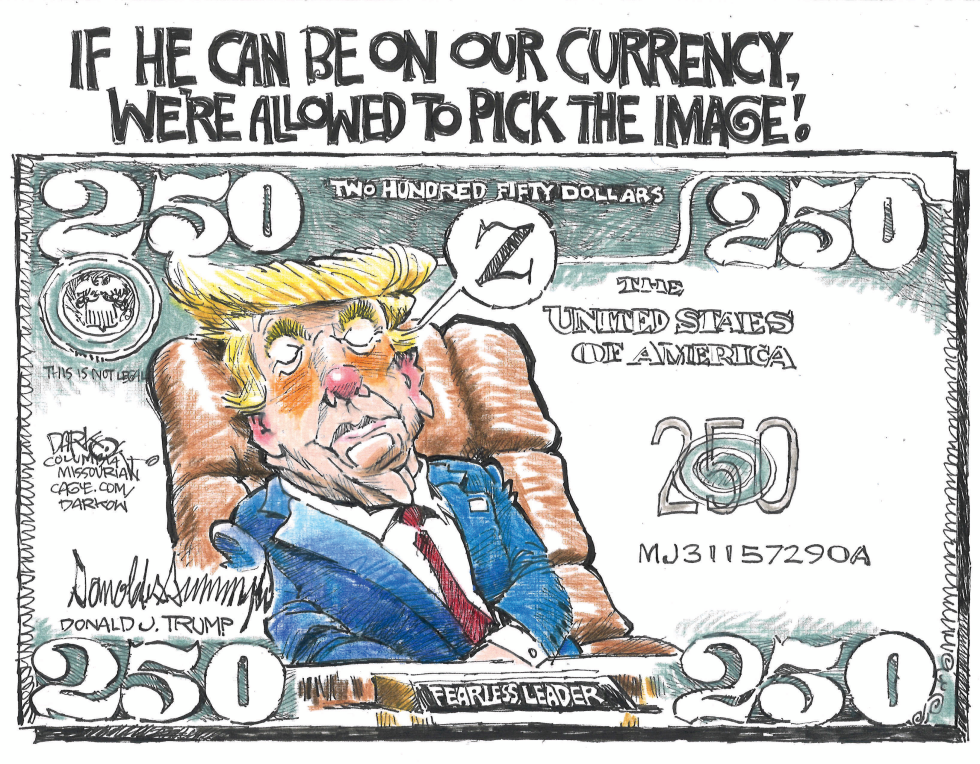
Donald Trump appears reclining in a brown armchair on a two hundred fifty dollar bill. The note shows two hundred fifty dollar markings, United States of America text, fearless leader banner, and a not legal disclaimer beside the figure in a blue suit.
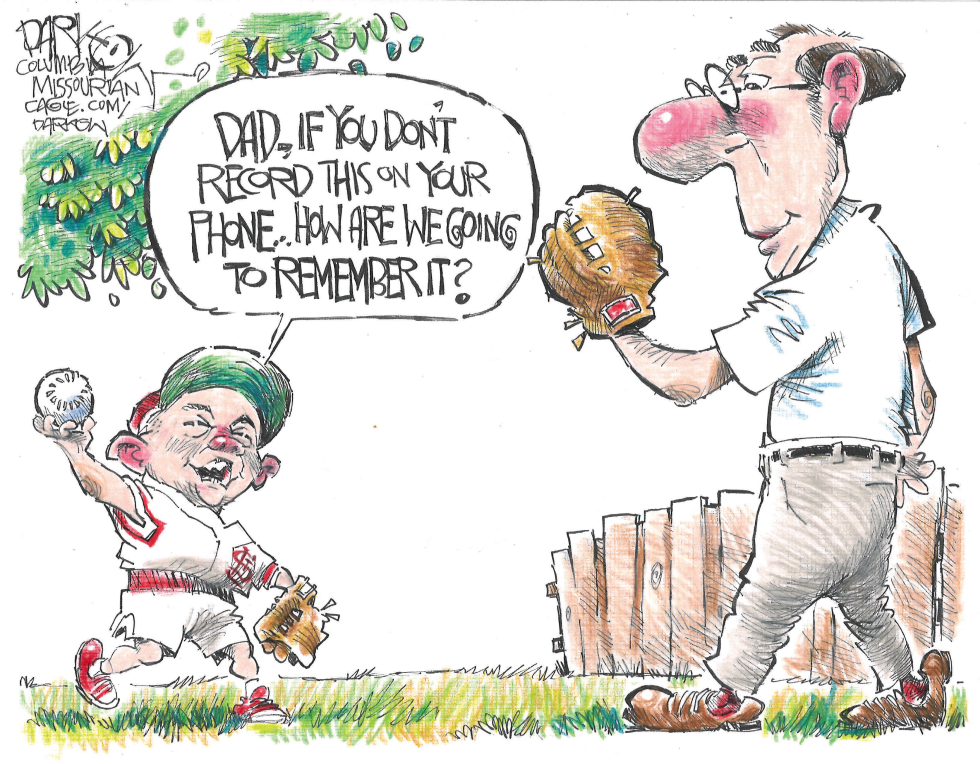
A father and son play catch in a backyard on a date near Father's Day. The boy, mid-throw, asks his father how they will remember the moment without recording it on a phone. The cartoon addresses ongoing concerns about technology interrupting direct experiences and family time.
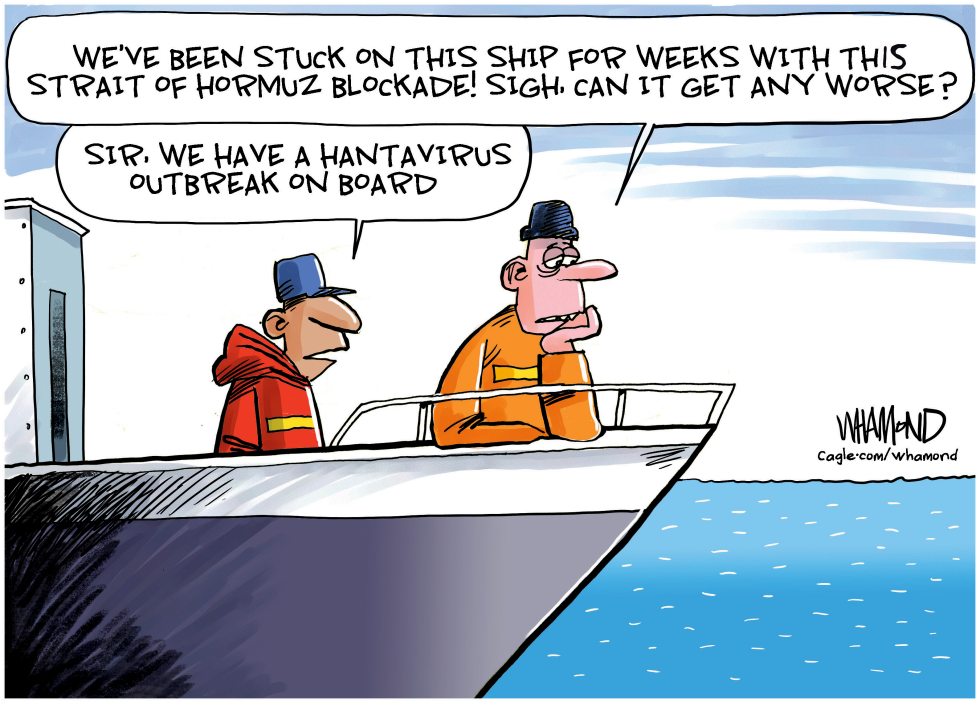
The cartoon depicts two sailors aboard a ship trapped in the Strait of Hormuz due to a naval blockade. One laments the weeks-long delay and wonders if conditions can worsen. The other reports a hantavirus outbreak on board. The image responds to ongoing tensions involving Iran and disruptions to global oil routes. As of the May 2026 publication date, the blockade has halted tanker traffic and strained energy markets. The added health crisis underscores the compounding risks for crews and supply chains. The visual ties geopolitical conflict directly to immediate human and economic consequences.
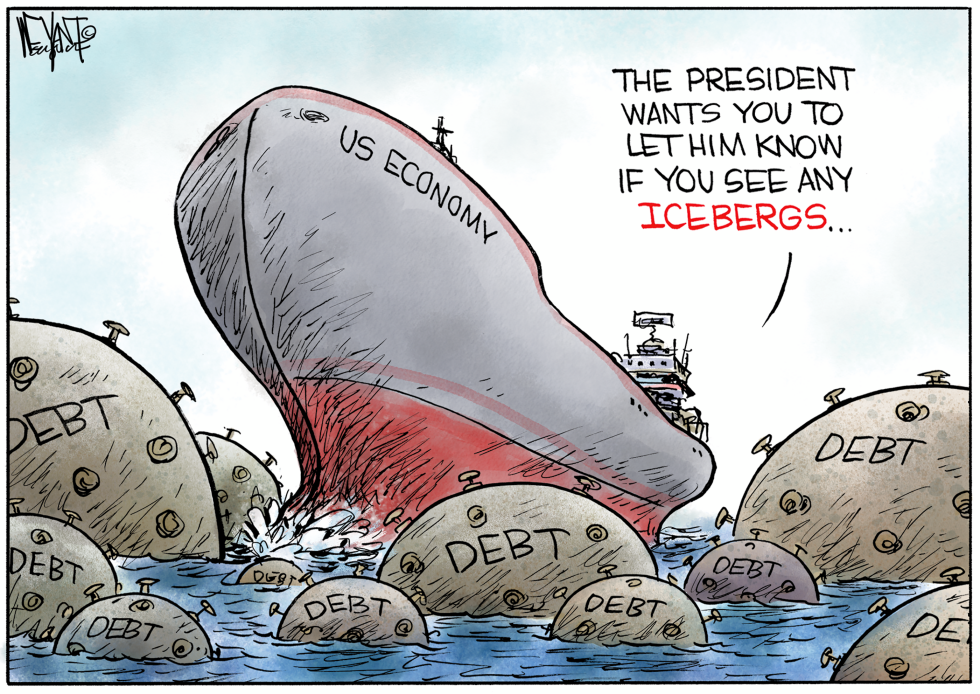
This political cartoon illustrates the US Economy as a massive ship labeled accordingly, dramatically sinking after colliding with numerous icebergs each marked 'DEBT.' A speech bubble from the ship warns to alert the president about icebergs, evoking the Titanic disaster in a clear metaphor for economic peril. Incorporating tags such as economy, debt, budget, inflation, prices, and costs, the image critiques fiscal irresponsibility. The artwork by Christopher Weyant uses simple lines and colors to emphasize the collision's impact, with water splashing and the ship's hull damaged. Such cartoons often highlight how mounting debt threatens stability, drawing parallels to historical maritime tragedies for satirical effect. The composition places the ship at an angle, surrounded by floating debt bergs, underscoring inevitable crisis if warnings go unheeded.