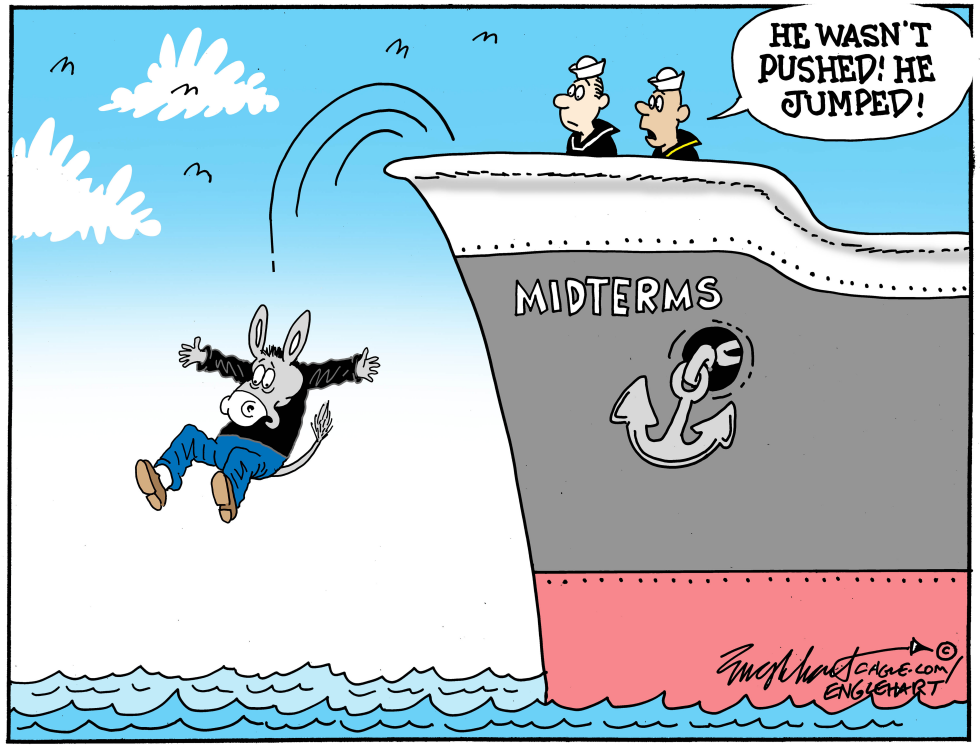
With the 2026 midterm elections approaching, Democratic candidates face headwinds in key races. The party symbol is shown leaping from the midterms vessel into open water. Sailors on deck insist the departure was voluntary. The image captures ongoing Democratic struggles to maintain momentum and voter support in competitive districts. The editorial position frames the move as self-inflicted rather than externally forced.
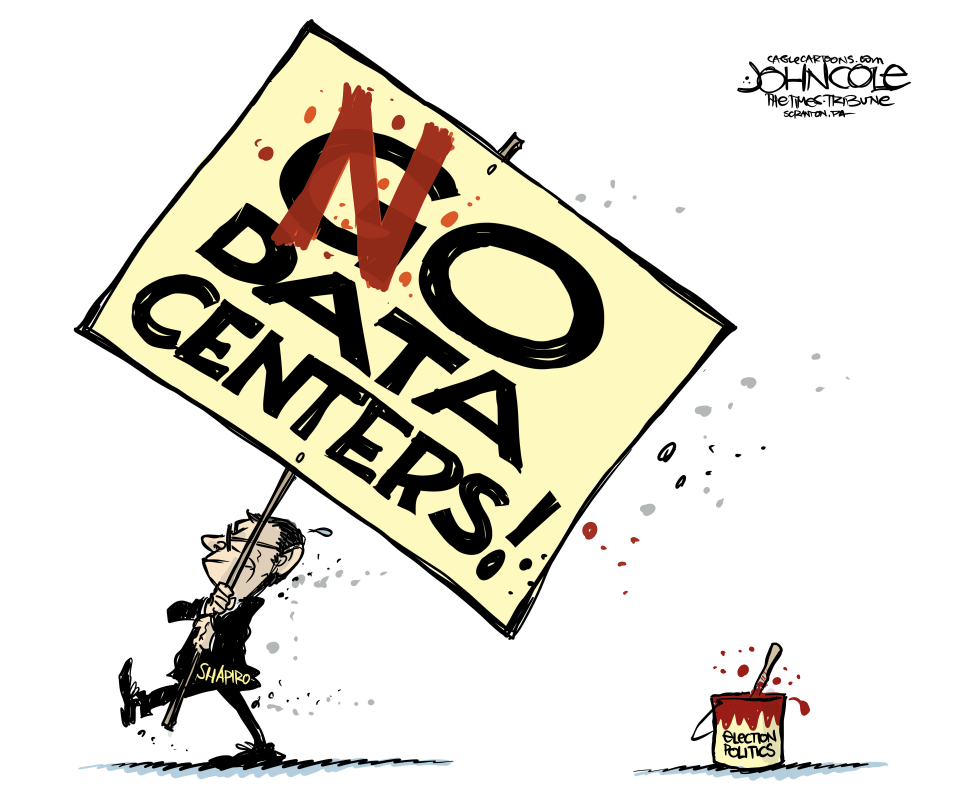
Pennsylvania Governor Josh Shapiro has adjusted his public position on data centers during the 2026 election cycle. The move comes as local communities raise concerns over energy use and land development tied to new facilities. Shapiro now appears to soften earlier opposition. The editorial takes the view that the shift reflects standard campaign maneuvering rather than a substantive policy evolution.
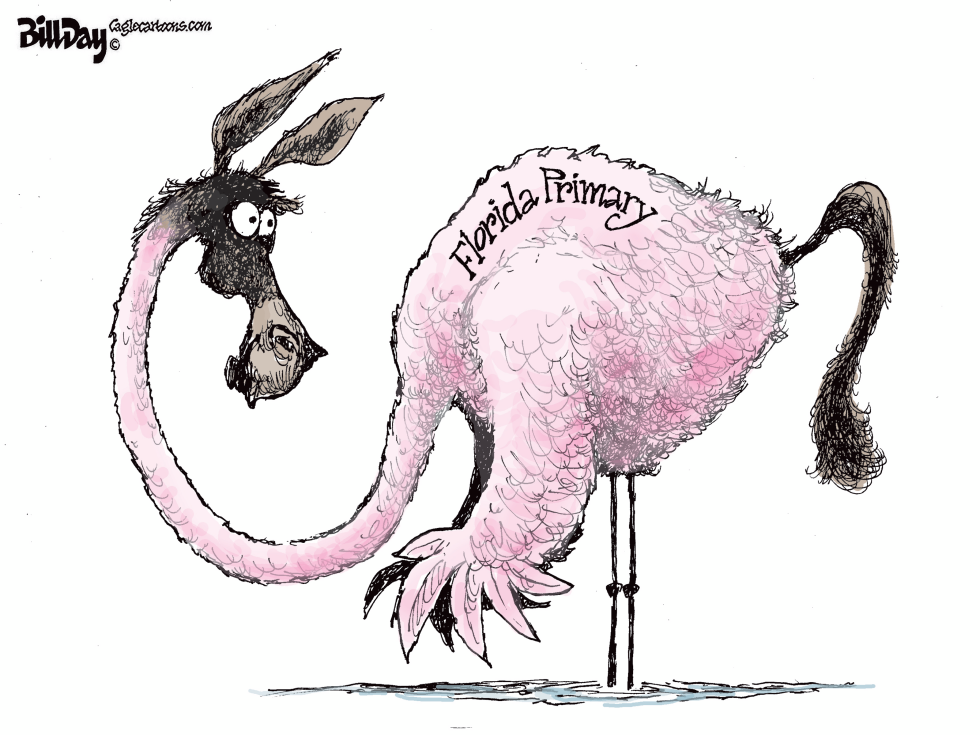
Florida prepares for its primary election with Democratic candidates competing for key nominations. The contest draws attention due to the state's role in national party positioning. The piece portrays the primary as an awkward fusion of traditional party identity and local Florida elements, suggesting the process strains familiar symbols.
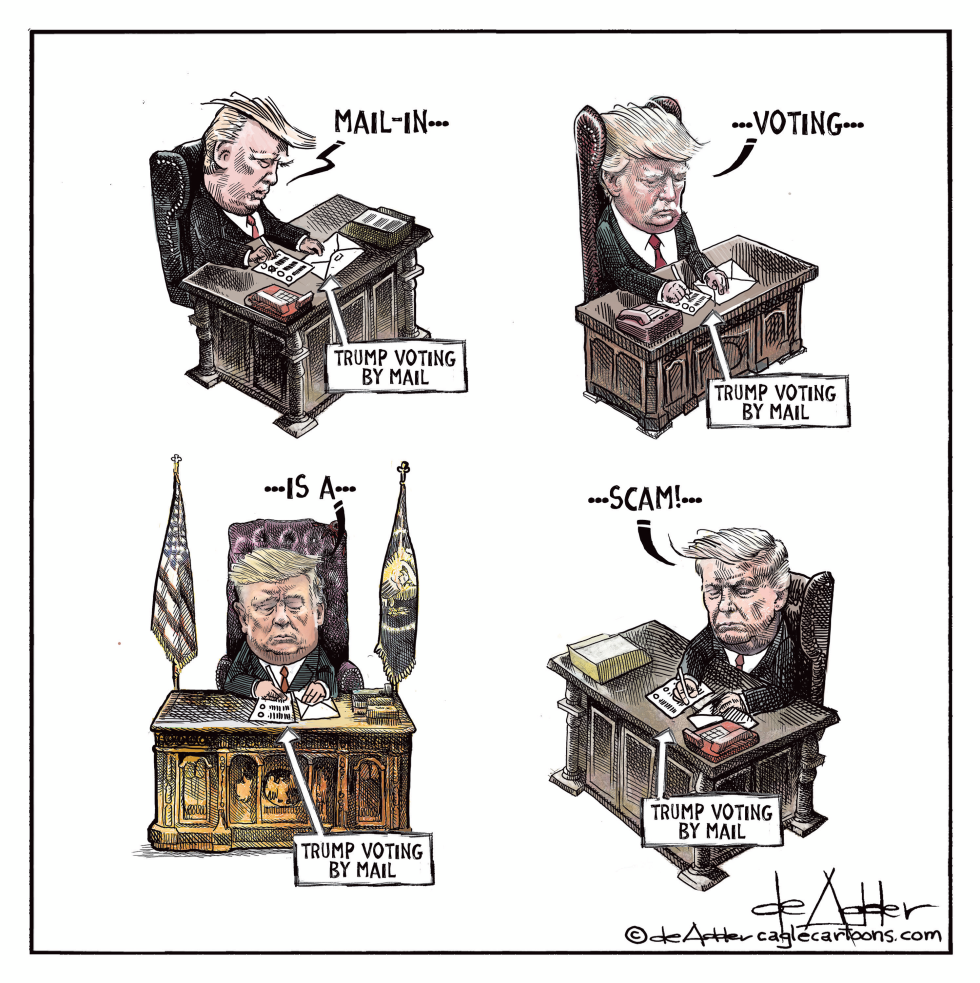
A four-panel cartoon by Michael de Adder published August 18, 2026, shows Donald Trump seated at desks completing mail-in ballots. Text builds across panels to spell MAIL-IN VOTING IS A SCAM while each scene is labeled TRUMP VOTING BY MAIL. The work responds to ongoing debates over mail voting ahead of the 2026 midterms. Trump has repeatedly questioned the security of mail ballots in public statements. The cartoon uses repetition to highlight the contrast between those statements and the depicted actions. No specific new event from the prior month is named in the image itself.
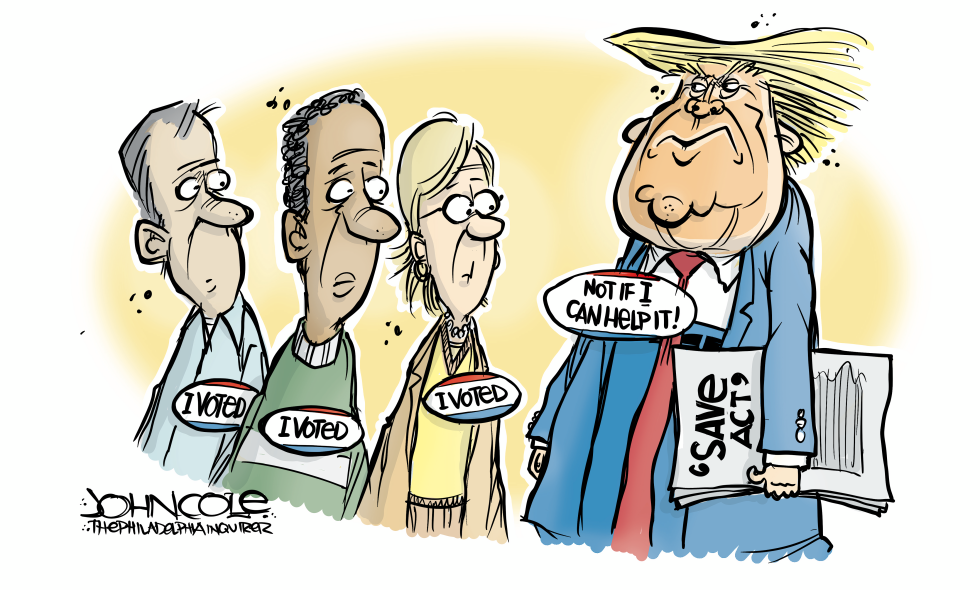
The cartoon shows Donald Trump on the right clutching documents labeled SAVE Act and declaring through a speech bubble, 'NOT IF I CAN HELP IT!' Three voters on the left, an older white man, a Black man and a white woman, each wear prominent I Voted stickers. The composition contrasts the former president's stance against the visible participation of citizens in elections. Published August 16, 2026, the image addresses Trump's resistance to the SAVE Act, a measure aimed at strengthening voter identification requirements. The visual places emphasis on the disconnect between voter engagement and political opposition to related legislation.
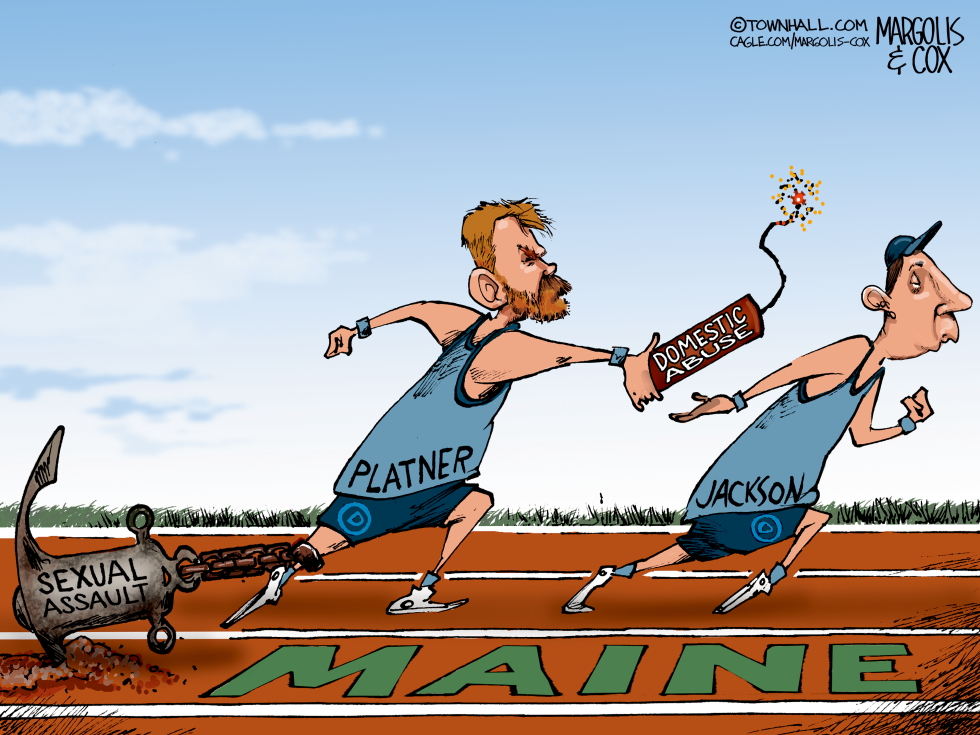
Maine candidates Platner and Jackson compete in a Senate race while facing sexual assault and domestic abuse allegations that threaten their campaigns. The scandals have become central issues in the contest. The piece portrays the candidates as hampered by these controversies.
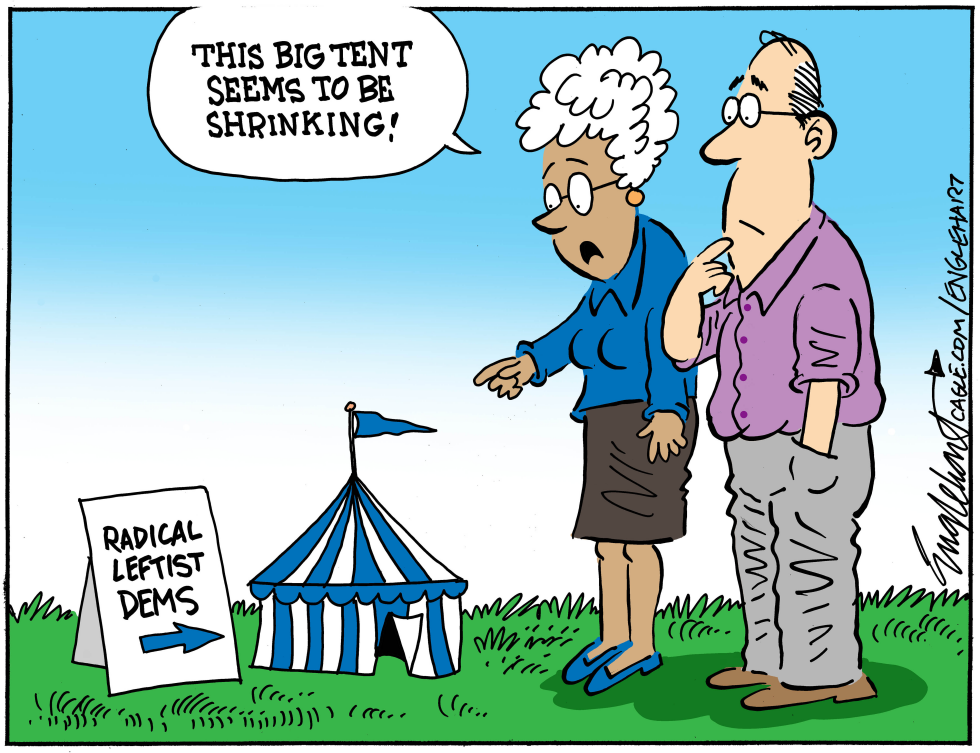
Democratic Party figures have grown concerned that the traditional big tent coalition is contracting as radical leftists consolidate control over the party's direction and messaging. The shift sidelines moderates and narrows the range of acceptable views within the organization. This dynamic raises questions about the party's ability to maintain broad electoral appeal in upcoming cycles. The editorial takes the position that the exclusionary turn is self-defeating and accelerates the party's isolation from mainstream voters.
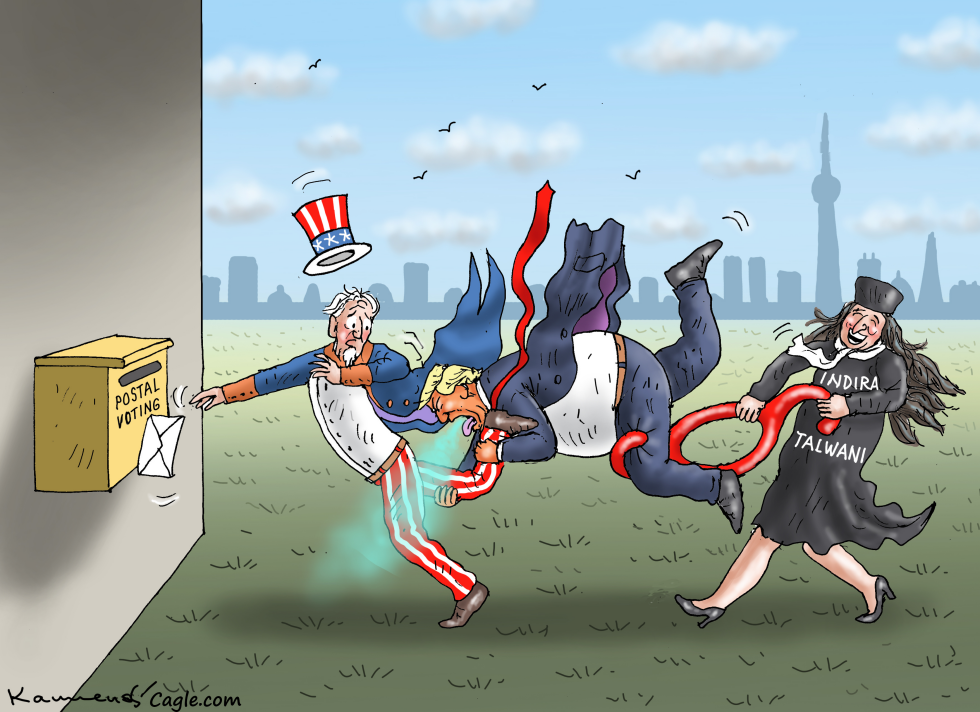
U.S. District Judge Indira Talwani issued a ruling blocking expanded postal voting measures sought by former President Donald Trump in a key election case. The decision highlights ongoing legal battles over ballot access and voting procedures. The piece portrays the conflict as a direct physical struggle between the judge, Trump, and the symbol of American government.
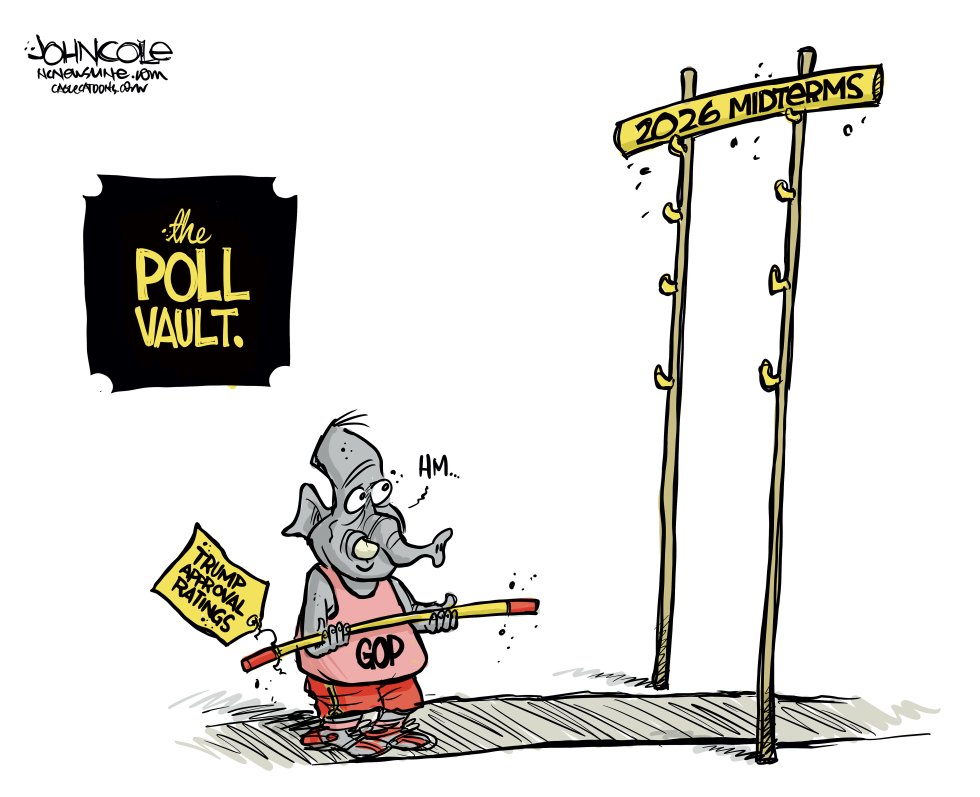
Republicans face the 2026 midterm elections with Donald Trump as a central figure whose approval ratings remain a key variable. Party strategists must decide how heavily to tie their candidates to the former president amid ongoing voter sentiment. The piece portrays the GOP as an athlete preparing to clear the midterm bar but questioning whether the available pole will suffice.
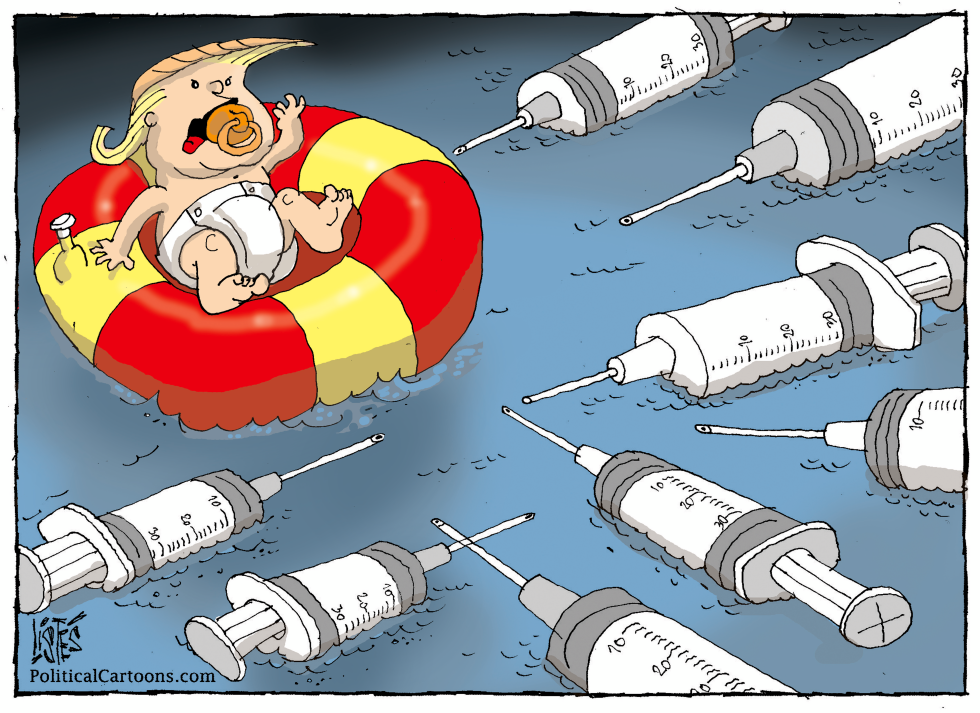
Donald Trump has maintained vocal opposition to certain vaccine mandates and public health measures in recent political discourse. The piece frames this stance through an infant metaphor to underscore perceived vulnerability and fear. It critiques the position as immature amid ongoing public health debates.
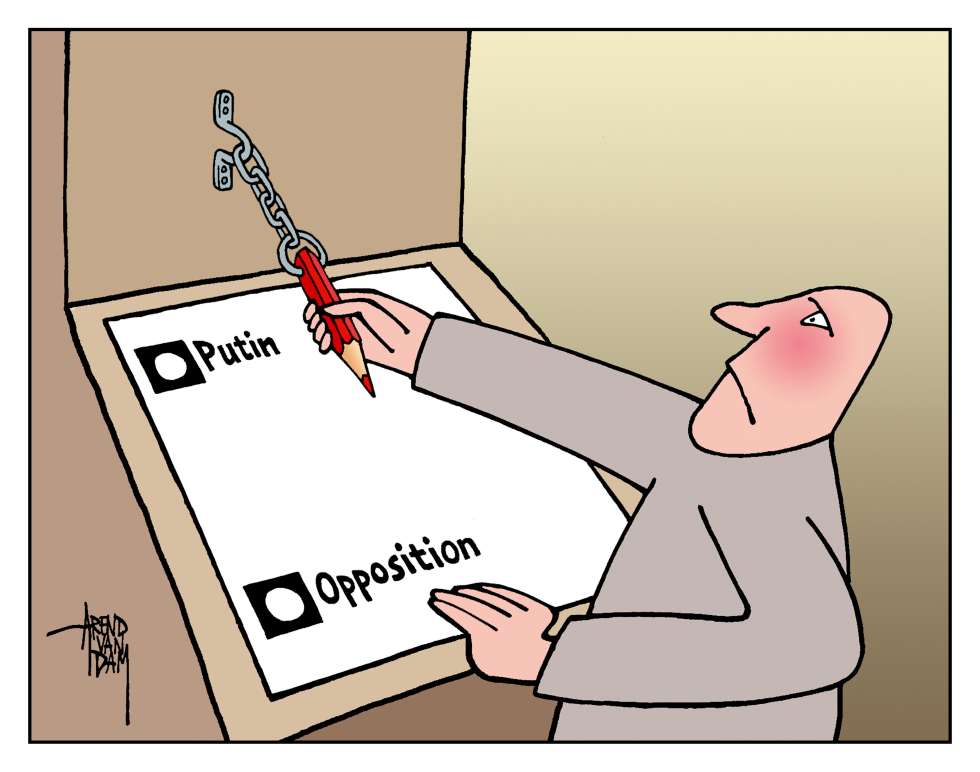
Russian voters face restricted ballot access ahead of the 2026 presidential election cycle. The chained pencil in the voting booth limits choice to the incumbent. This setup underscores ongoing limits on opposition participation. The piece argues that such physical constraints mirror broader electoral controls that prevent genuine competition.
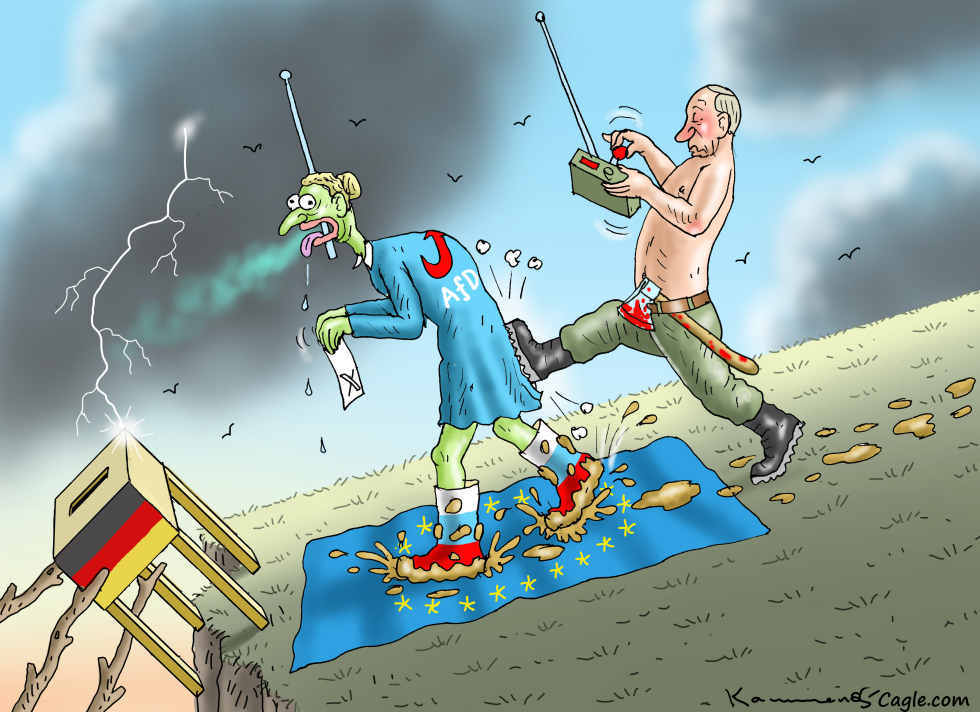
Ahead of German elections, the far-right AfD faces renewed scrutiny over alleged Russian influence. Vladimir Putin is portrayed directing the party's actions against EU interests. The editorial position criticizes AfD as a tool for undermining European unity.
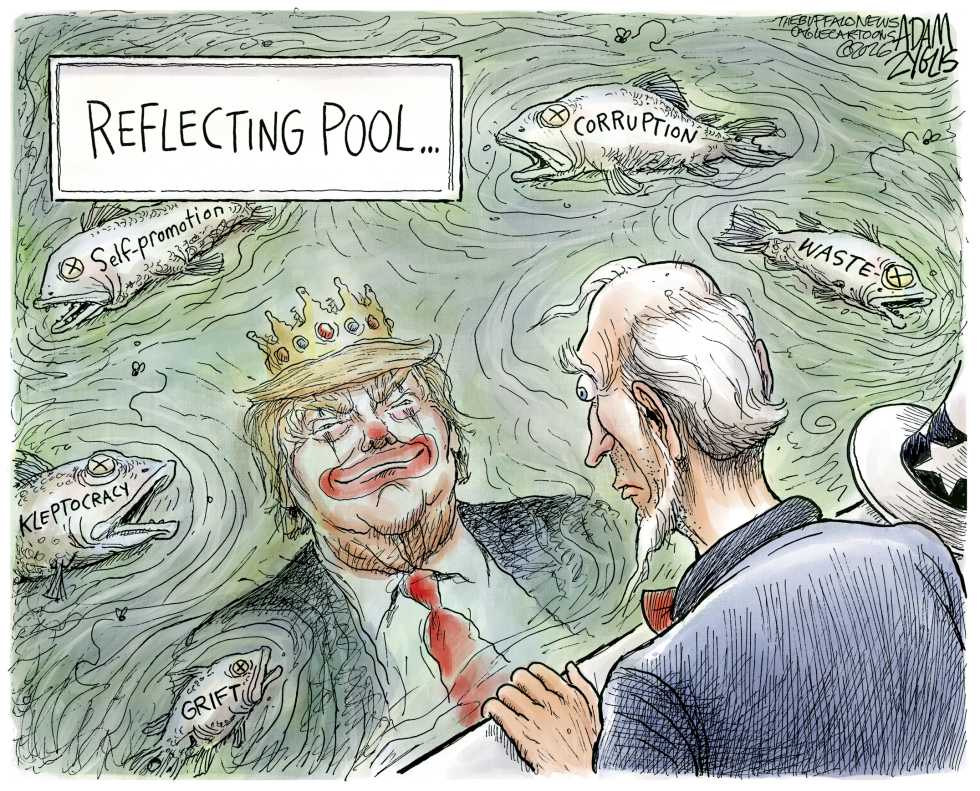
Accusations of kleptocracy and self-dealing have followed Donald Trump through multiple phases of his political career. Critics point to patterns of self-promotion and waste in government dealings. The cartoon frames these issues as dead fish surfacing in a reflecting pool, with Trump depicted wearing a crown and clown makeup while an older observer looks on. The editorial position criticizes Trump as emblematic of corruption and grift.
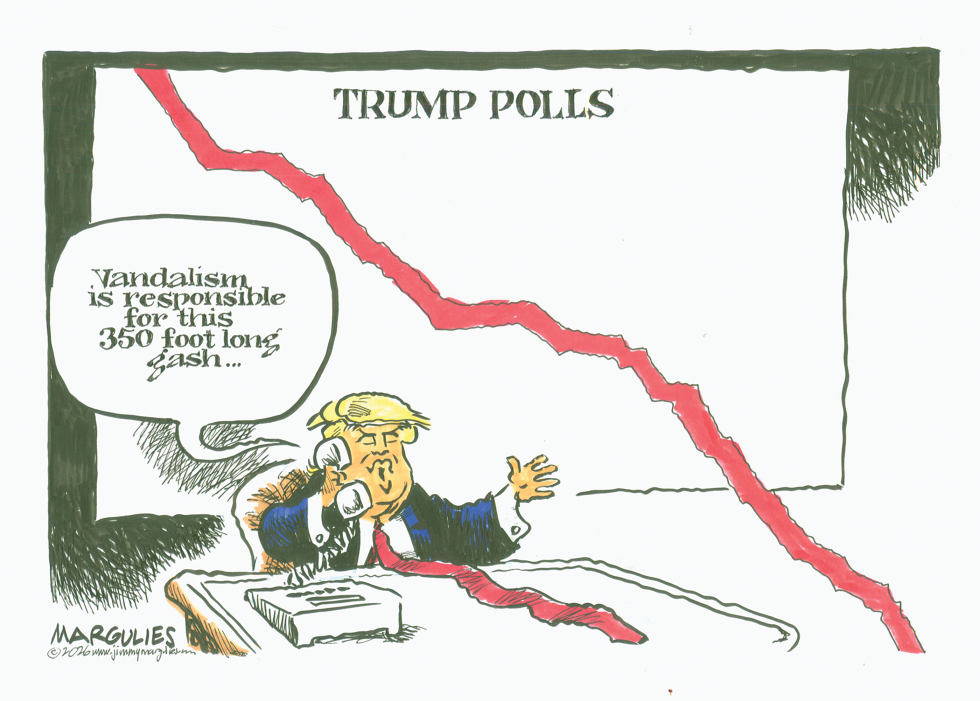
Donald Trump has attributed a steep decline in his polling numbers to alleged vandalism that created a long gash in his chart. The claim comes amid ongoing questions about his support levels ahead of future electoral tests. The piece presents the explanation as an attempt to deflect responsibility for unfavorable results rather than address underlying voter concerns.