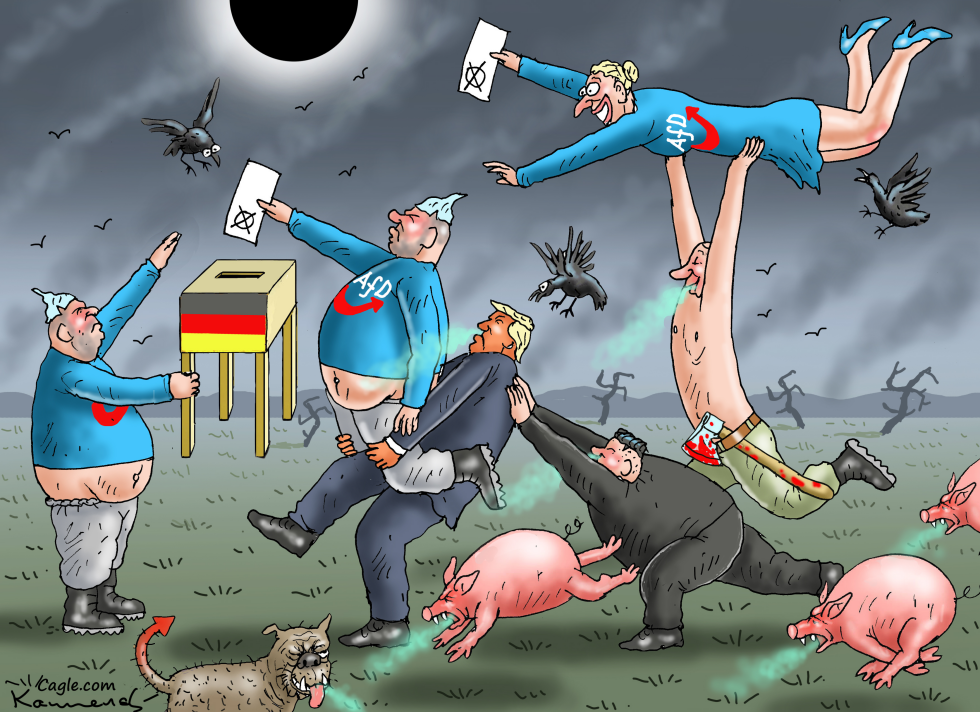
On the eve of German state elections, Donald Trump publicly aligned with the AfD by signaling support for its leader. The move drew attention to foreign influence in European politics and raised questions about the party's direction. The cartoon portrays the endorsement as an attempt to empower a fringe movement through personal patronage.
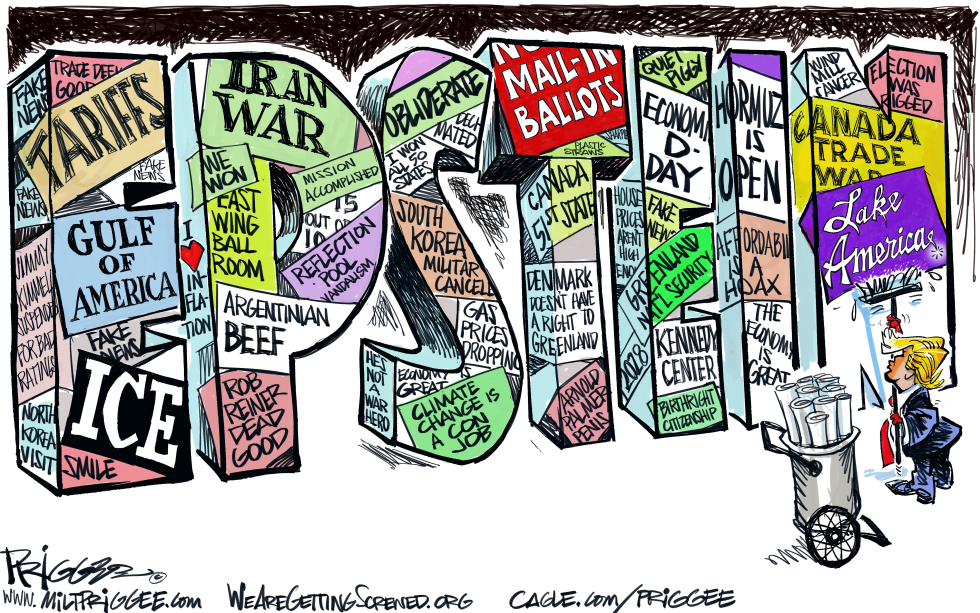
Donald Trump appears in a September 2026 cartoon pushing a cart stacked with signs promoting tariffs, questioning mail-in ballots, and asserting claims about Iran, Canada trade, and domestic issues. The image captures a pattern of public messaging that blends economic nationalism with repeated challenges to established processes. The editorial position frames these statements as a deliberate strategy to keep multiple controversies in motion at once.
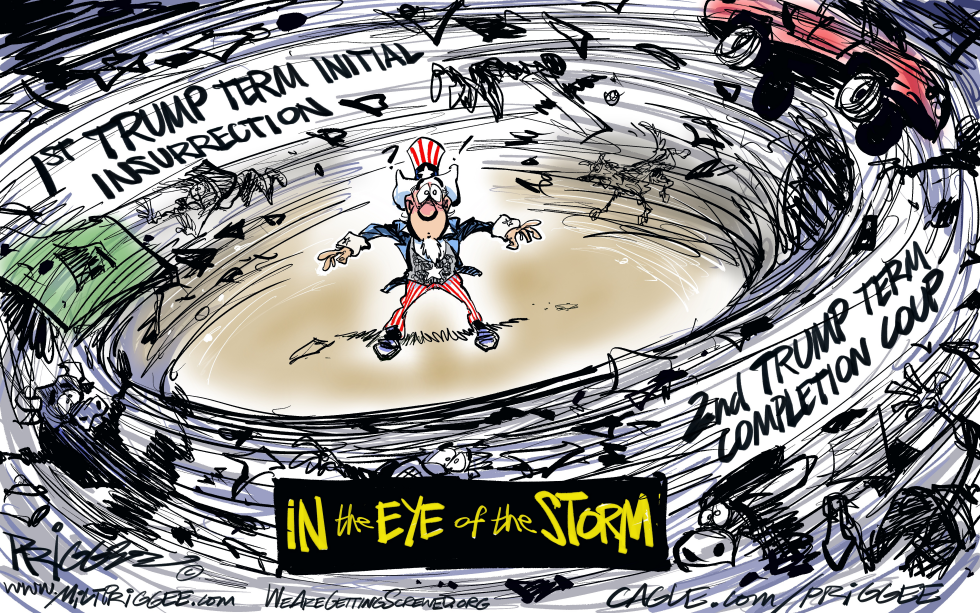
The image shows Uncle Sam positioned in a calm central area surrounded by swirling debris labeled as the first Trump term initial insurrection and the second Trump term completion coup. Text on the left and right frames the scene with those phrases. A banner at the bottom reads in the eye of the storm. The composition places the national symbol between references to past and future political events tied to Donald Trump.
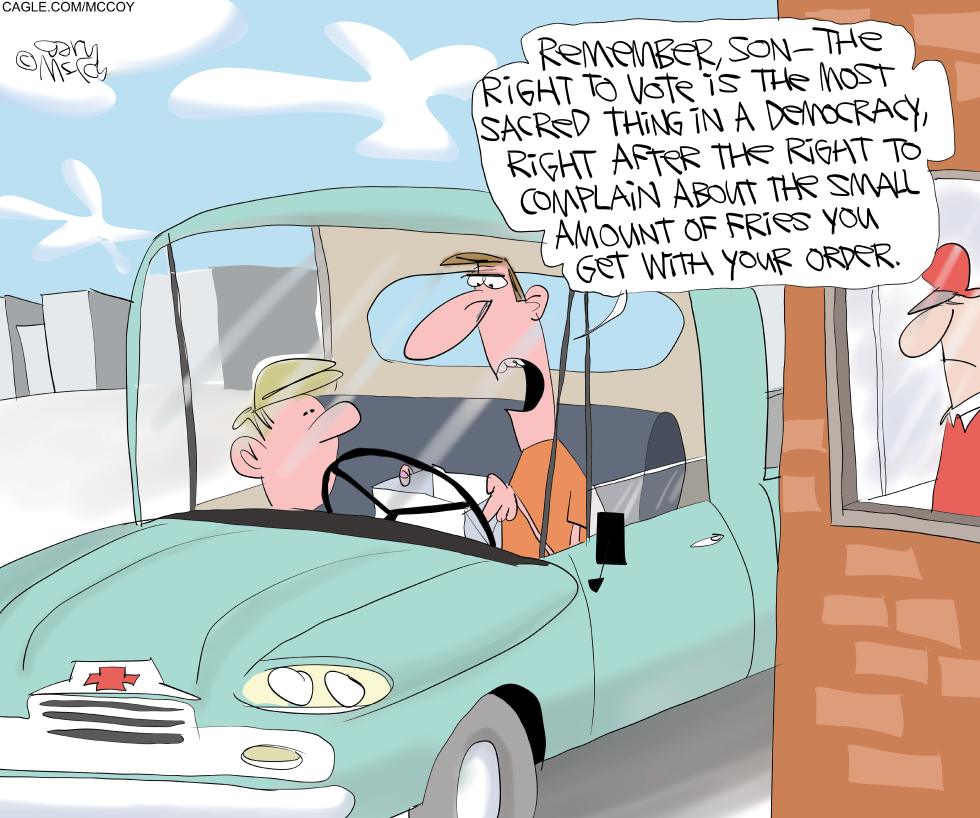
A father uses a drive-thru moment to stress that voting ranks as the most sacred democratic right, just behind complaining about insufficient fries. The exchange highlights how citizens often treat civic participation as secondary to everyday gripes. The piece argues that such misplaced priorities undermine engagement in elections and weaken democratic foundations.
The AfD seeks gains in upcoming German elections with visible support from Donald Trump and other authoritarian figures. The party faces accusations of extremist ties. The cartoon portrays this backing as a direct boost to the far-right campaign while highlighting Nazi symbols on ballots.
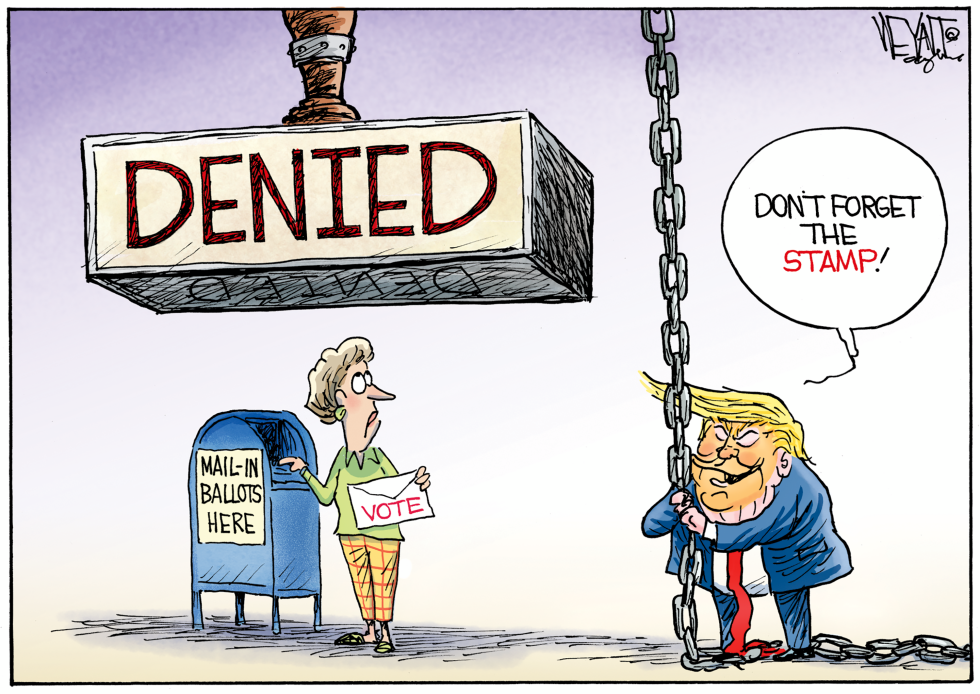
President Trump has directed efforts to deny mail-in ballots in the 2026 election cycle, citing concerns over fraud and integrity. The move affects millions of voters who rely on absentee and mail voting. Critics argue the policy suppresses turnout and favors in-person Republican voters. The cartoon portrays Trump personally enforcing the denial mechanism.
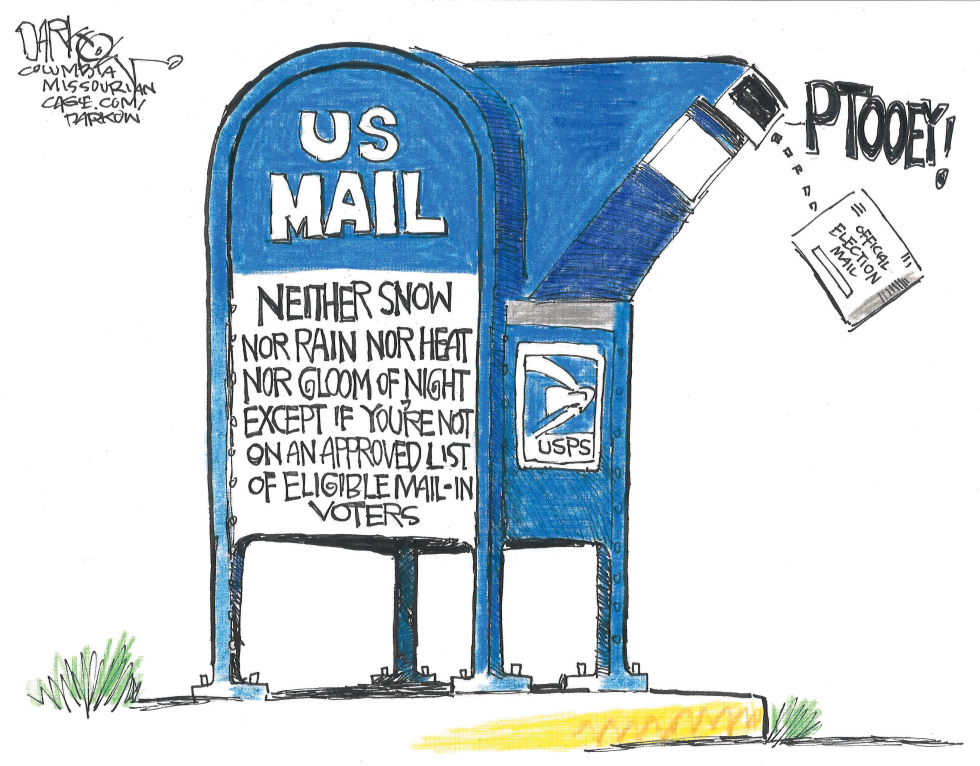
A USPS mailbox rejects mail-in ballots unless the sender appears on an approved list of eligible voters. The action highlights ongoing debates over mail voting security and access ahead of elections. Critics argue such restrictions disproportionately affect certain voter groups and undermine confidence in the postal system. Supporters claim the measures prevent fraud. The cartoon portrays the mailbox as actively enforcing these limits, suggesting institutional barriers to participation.
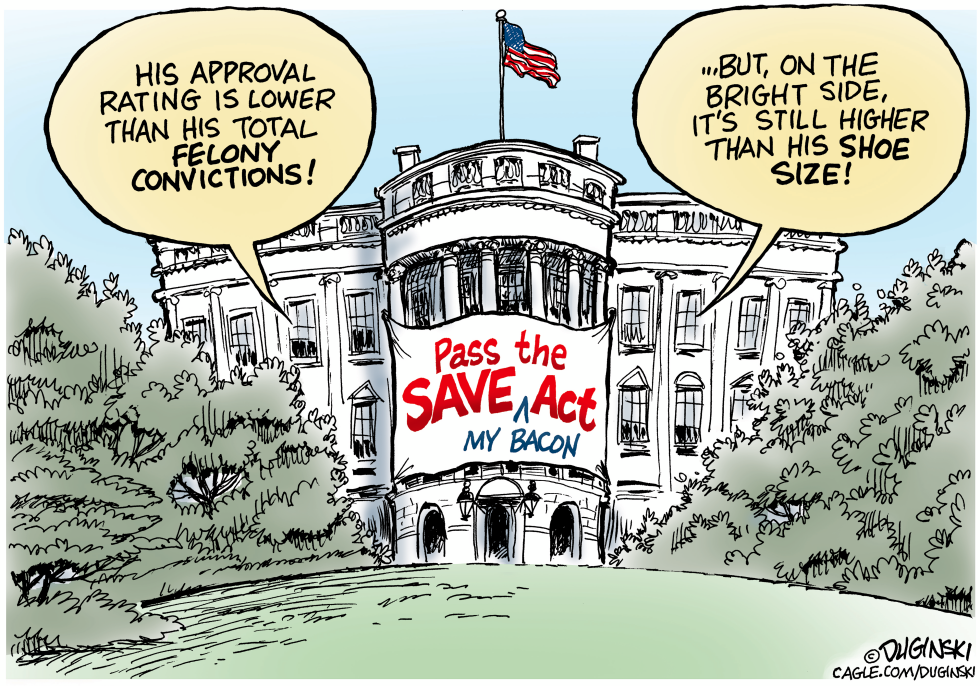
A president facing historically low approval ratings tied to prior felony convictions pushes the SAVE Act through Congress in late summer 2026. The legislation aims to require proof of citizenship for federal voting. The editorial view holds that the effort serves mainly as a lifeline for an embattled administration rather than a substantive reform.
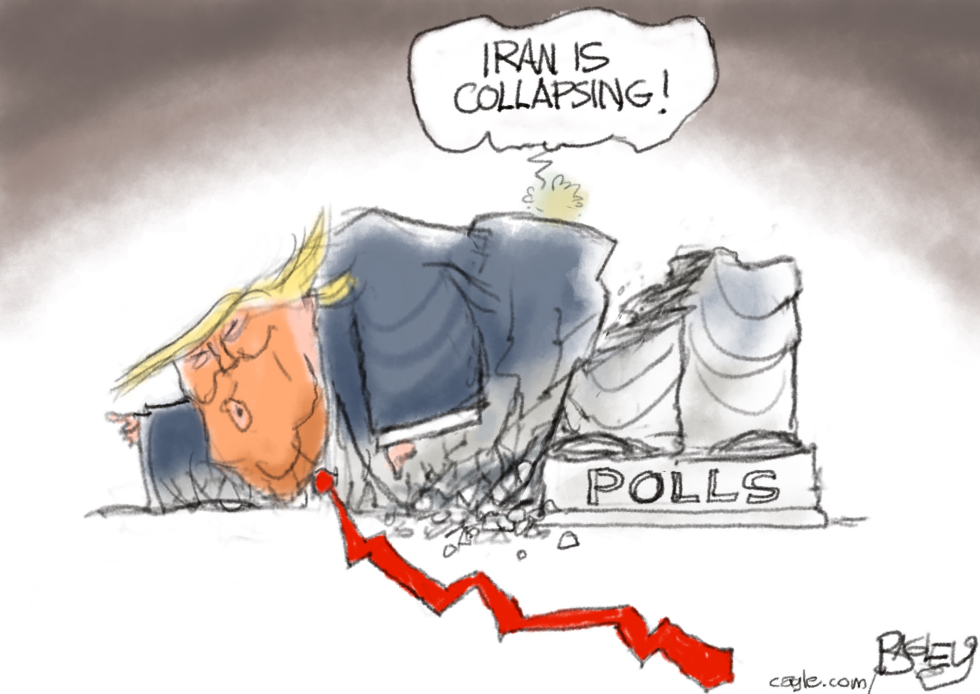
Donald Trump stated that Iran is collapsing even as his own poll numbers declined sharply in late August 2026. The claim drew attention because it came during a period of softening support ahead of midterm elections. The editorial takes the position that the assertion serves mainly as a distraction from domestic political weakness.
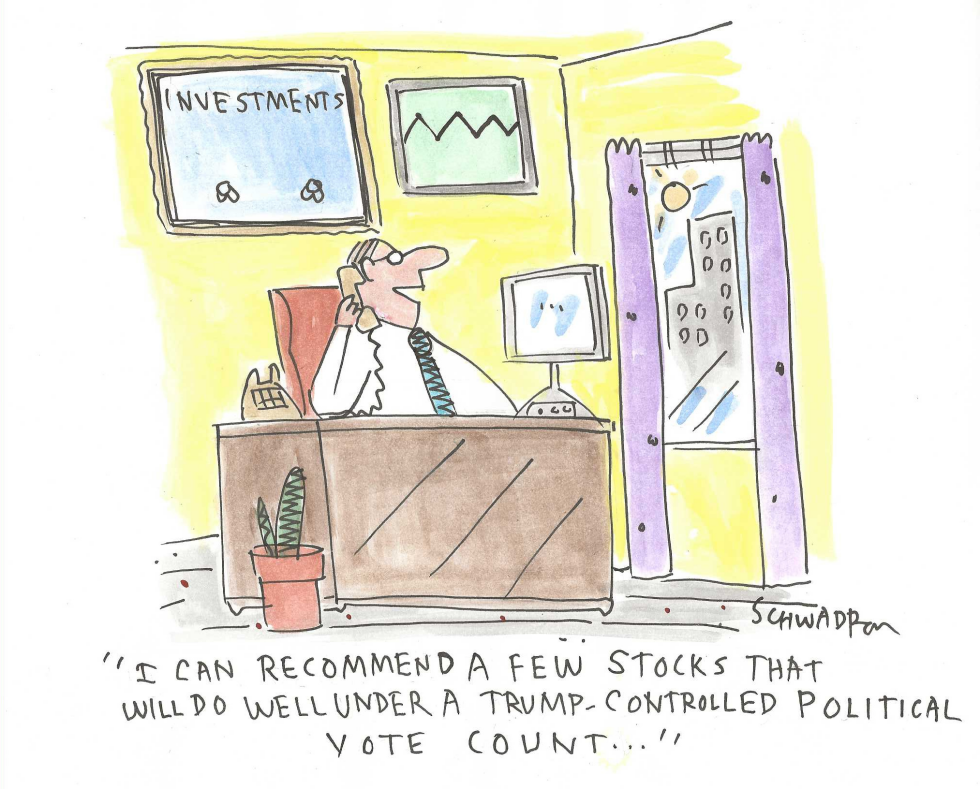
A stockbroker on the phone recommends investments expected to perform under a Trump-controlled political vote count. The scene occurs amid visible symbols of restraint including handcuffs on an investments sign and a barred door resembling a prison cell. The piece responds to ongoing concerns about election integrity and potential political interference in vote tabulation processes. It takes the position that such influence creates opportunities for financial gain tied directly to control over electoral outcomes.
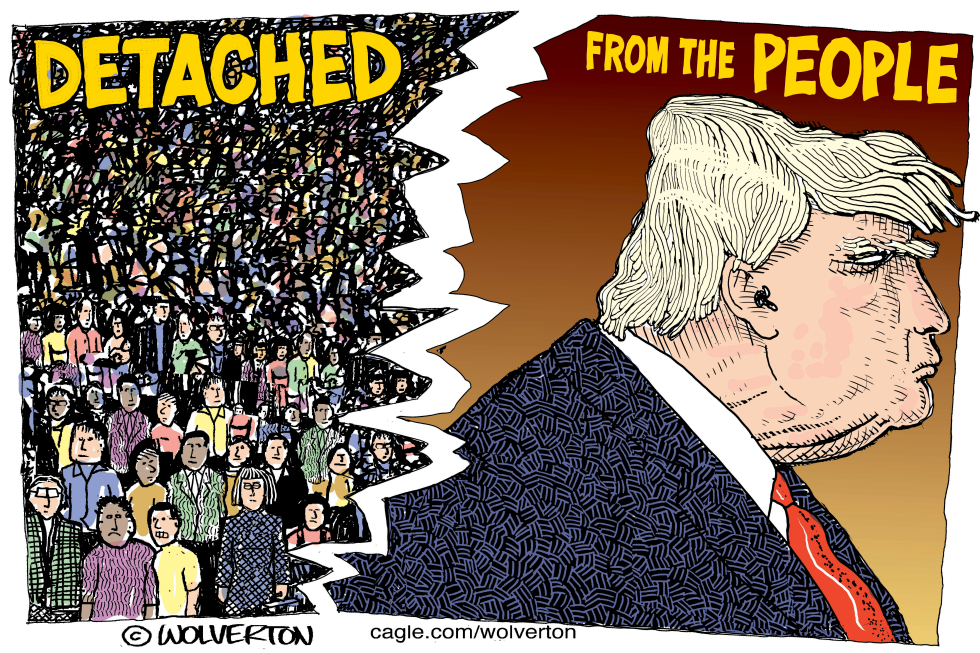
The illustration presents Donald Trump in right profile wearing a dark suit and red tie with an earpiece visible. A jagged white line divides the frame. On the left a dense multicolored crowd fills the space beneath the word DETACHED. On the right the phrase FROM THE PEOPLE appears above the figure. The work responds to ongoing discussions about political figures and public connection during the 2026 period.
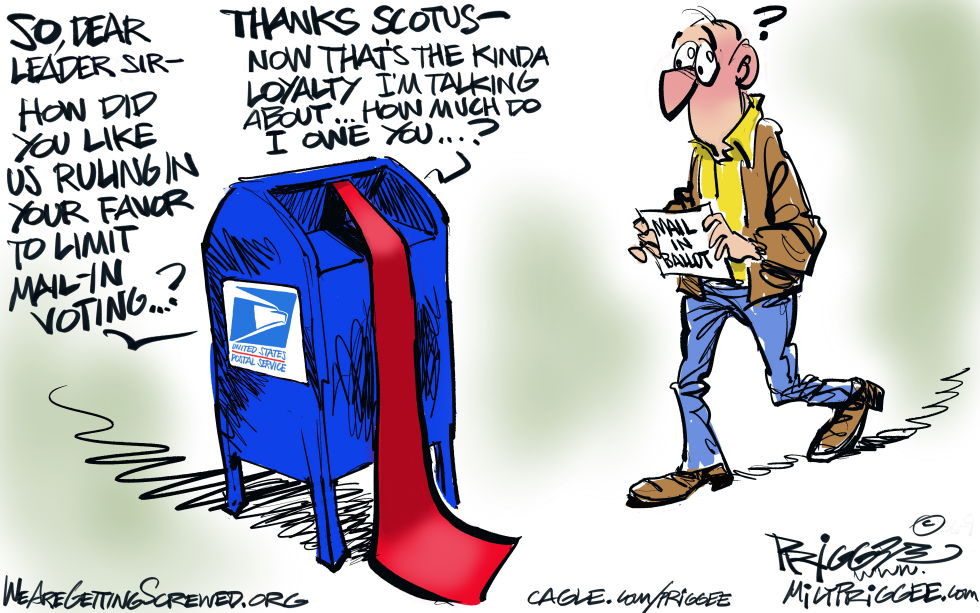
The cartoon shows a voter holding a mail-in ballot and questioning a USPS mailbox about a Supreme Court ruling that limited mail-in voting in favor of a political leader. The mailbox responds with thanks for the loyalty and an offer to pay. The image highlights concerns over judicial influence on elections and voter access as of the 2026 publication date.
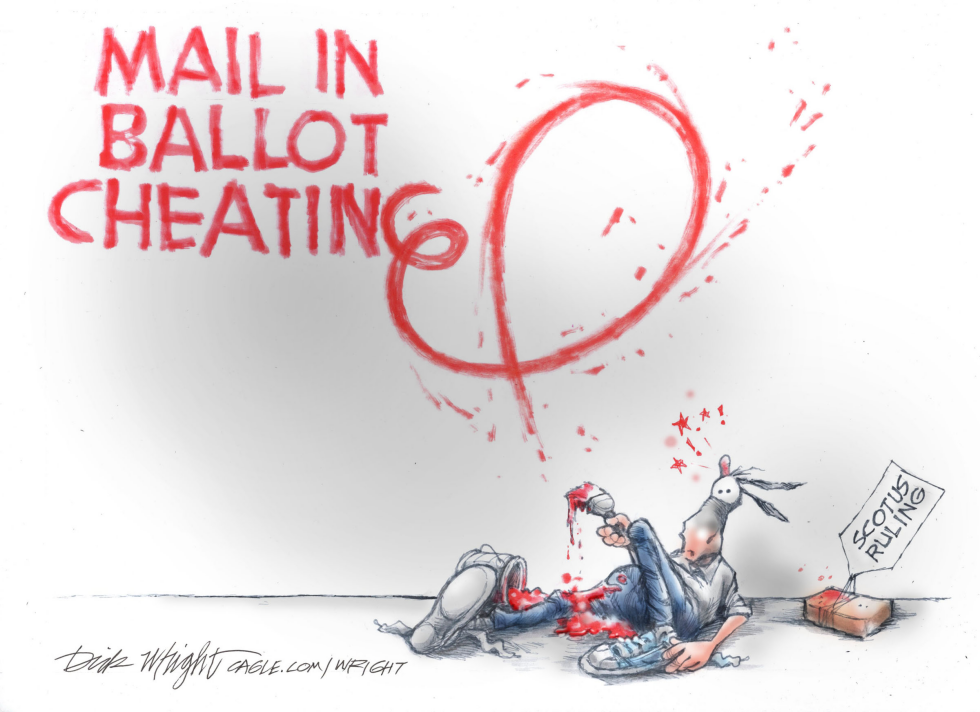
The image depicts the Democratic Party symbol as a donkey lying wounded on the ground with red liquid visible near its body. A large red prohibition symbol covers the words mail in ballot cheating at the top. A sign reading SCOTUS ruling stands nearby next to a box. The composition responds to a Supreme Court decision limiting certain mail-in ballot procedures. The visual argument centers on claims of reduced opportunities for improper voting practices. Publication occurred on August 25 2026. The work uses the party emblem to illustrate the effect of the ruling on one political side. No specific prior case details appear in the image itself.
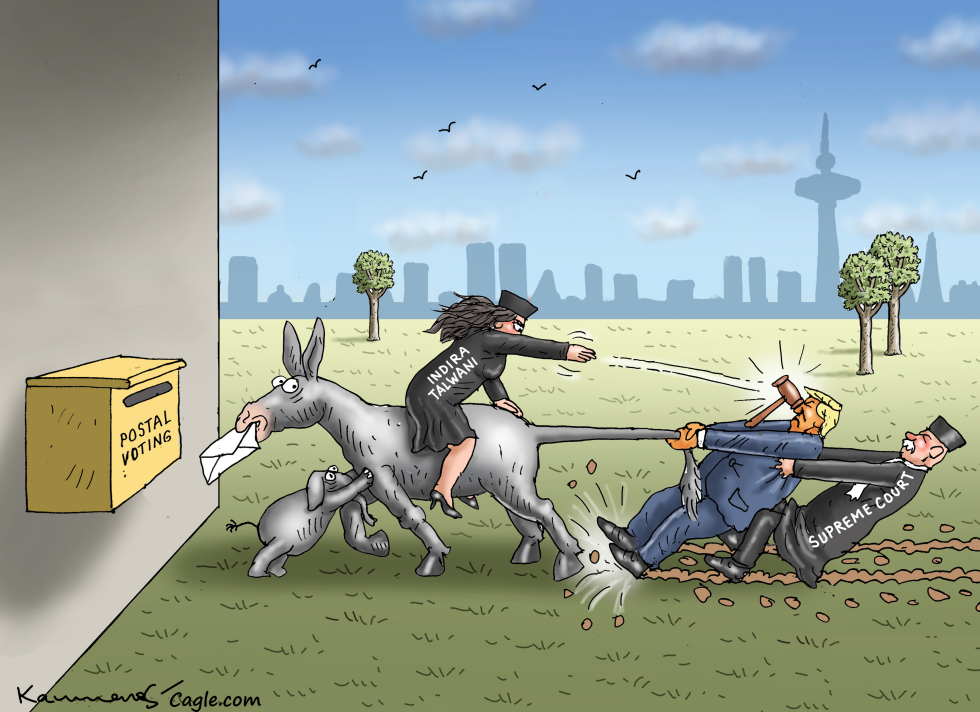
A political cartoon shows federal Judge Indira Talwani riding a Democratic donkey labeled with postal voting while dragging two Supreme Court justices across a field near the Space Needle. The image responds to ongoing disputes over postal voting rules and federal court involvement in election procedures. Talwani, a U.S. District Judge, has issued rulings affecting voting access in recent cases. The cartoon uses the donkey as a party symbol and a yellow ballot box to illustrate the conflict between lower court decisions and the Supreme Court. The visual argument centers on judicial power in election law matters active in 2026.
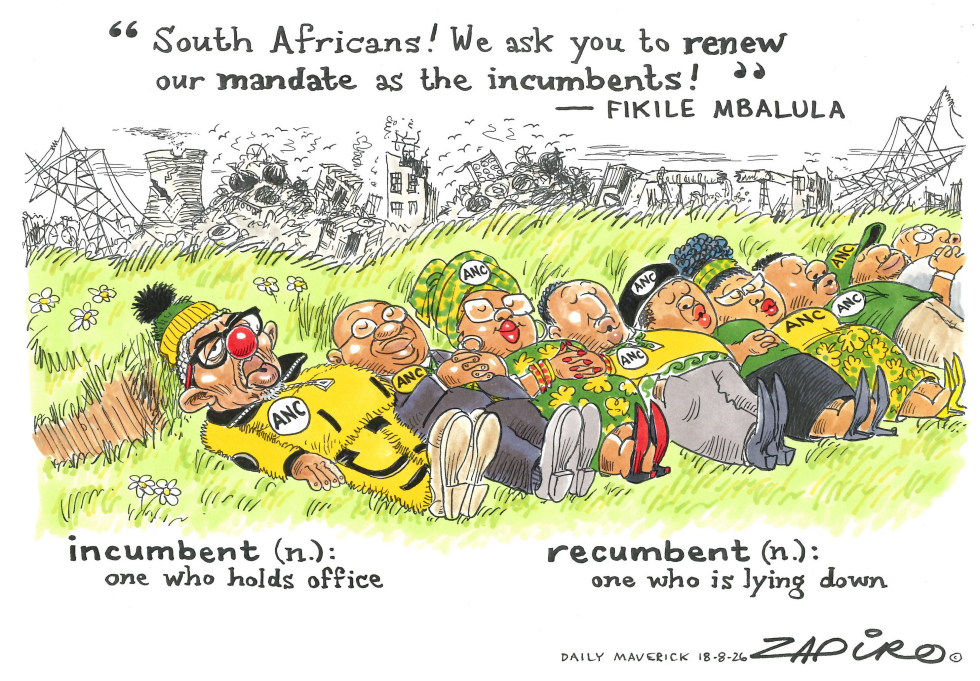
ANC secretary general Fikile Mbalula publicly called for South Africans to renew the party's mandate as incumbents ahead of upcoming elections. The appeal comes as the party faces voter fatigue after years in power marked by infrastructure failures and governance challenges. The editorial position frames the ANC as literally recumbent and disconnected from the decay surrounding them.