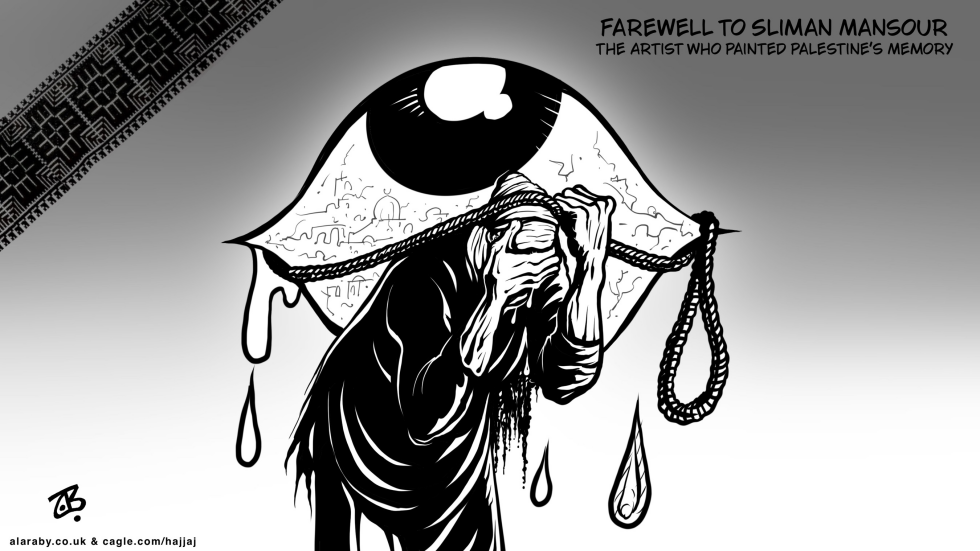
Sliman Mansour, the Palestinian artist known for works depicting national memory and identity, is remembered following his death. The tribute highlights his role in preserving cultural imagery amid ongoing regional tensions. The piece frames his legacy as a quiet act of resistance and remembrance.
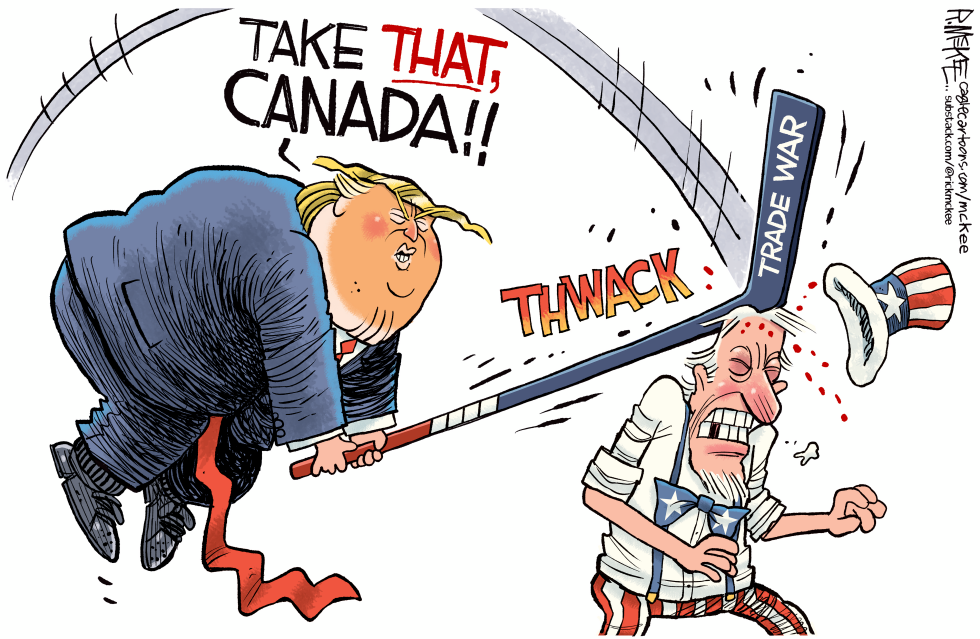
President Trump escalated trade tensions with Canada through new tariffs and barriers in August 2026. The moves targeted key sectors including lumber, dairy and autos. Domestic industries braced for retaliation while consumers faced higher prices. The action drew criticism for harming American interests alongside the intended foreign pressure. The cartoon portrays the policy as self-inflicted damage on the United States itself.
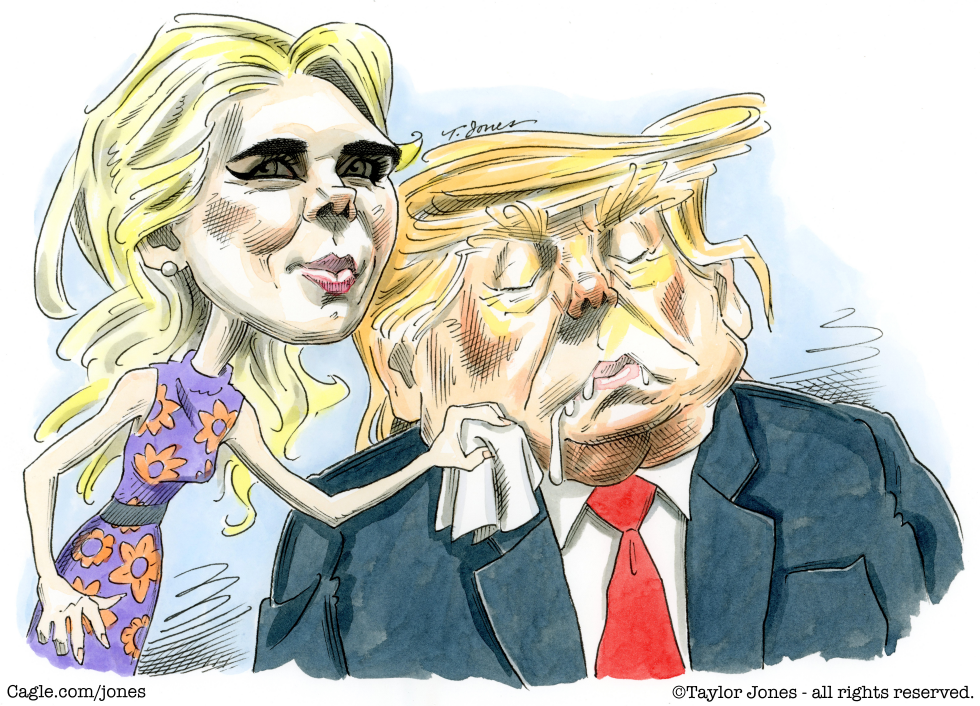
Donald Trump appears in a vulnerable state during a public or staff interaction in 2026. Natalie Harp, a known associate, tends to him by wiping drool from his face. The moment highlights ongoing scrutiny of the former president's health and stamina. Observers note the personal nature of the assistance amid continued political activity. The piece presents the scene as evidence of reliance on close aides.
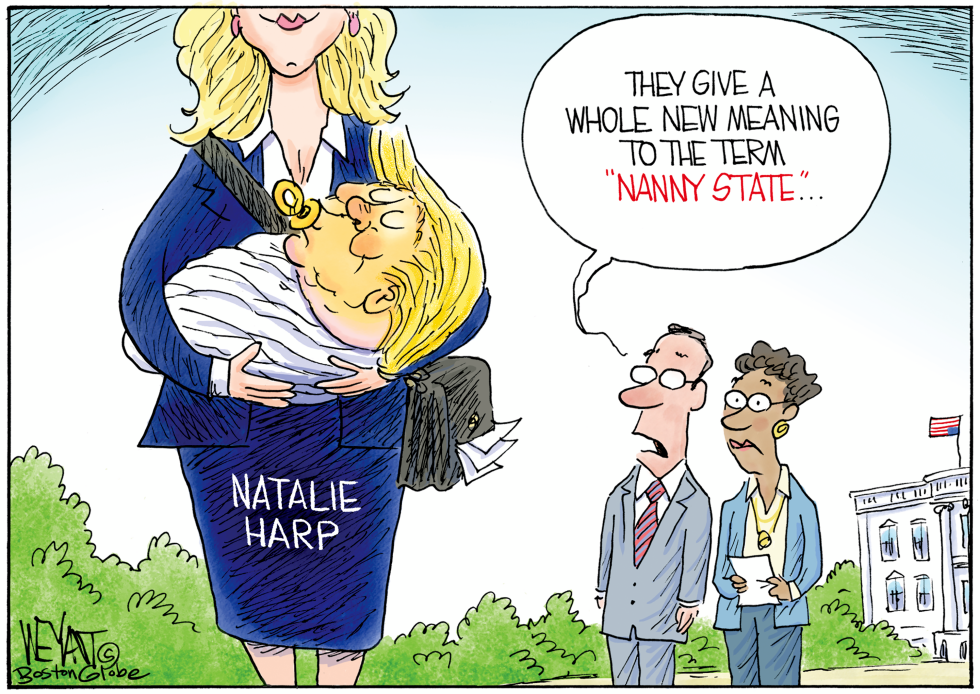
Natalie Harp, a Trump aide, appears in a Boston Globe cartoon holding an infant version of the former president. The image plays on the term nanny state as Harp carries Trump in a carrier. The piece comments on the close personal dynamic between the two figures amid ongoing political developments in 2026.
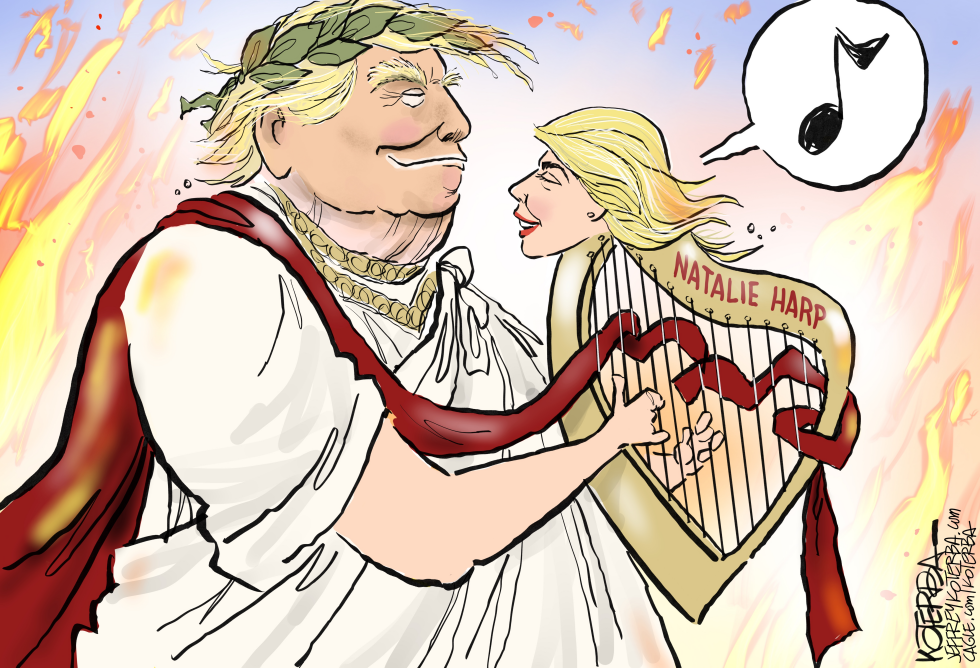
Donald Trump and aide Natalie Harp are shown in classical Roman dress amid spreading flames. The image draws on the Nero legend of fiddling while Rome burns. It comments on perceived detachment from crises during the current political cycle. The editorial stance highlights concerns over leadership focus and priorities in a turbulent period.
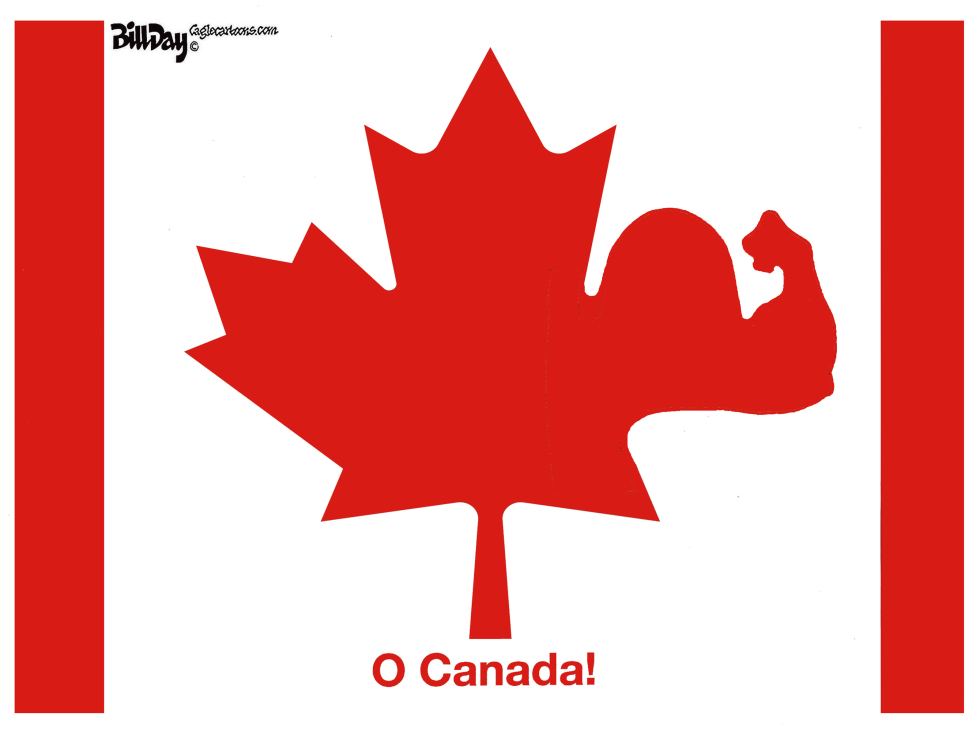
The Canadian flag appears with its central maple leaf altered to show a flexed bicep. No specific news event ties directly to the image on the publication date. The ongoing dynamic involves expressions of national pride and identity in Canada. The piece presents a straightforward visual of strength through the modified emblem paired with the national anthem phrase. It takes the position that Canada stands ready and capable on the world stage.
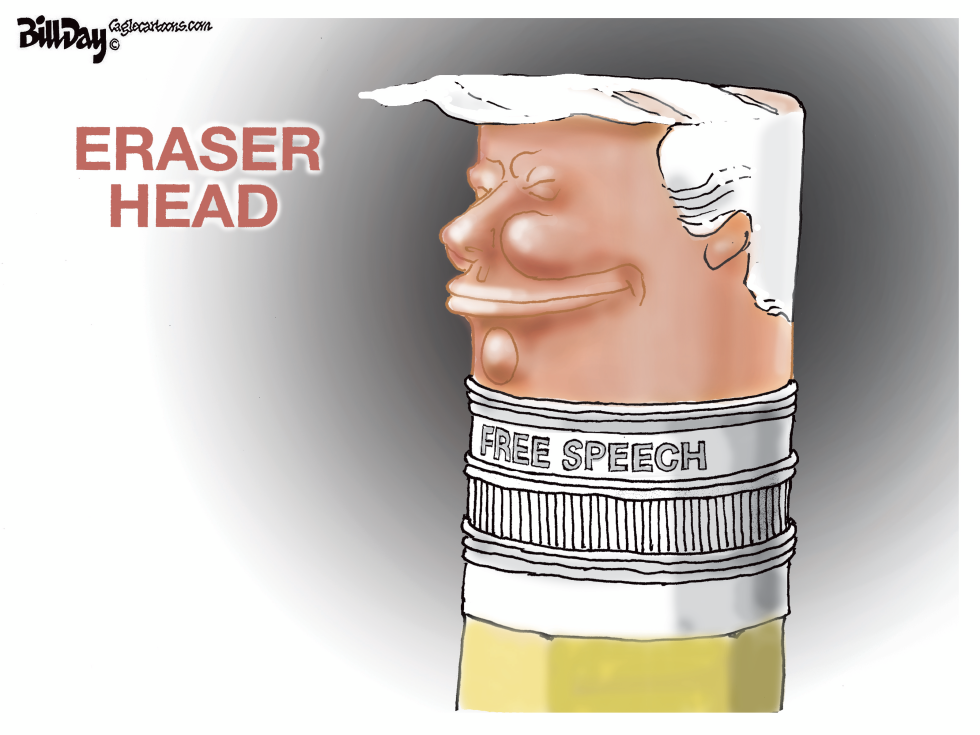
Donald Trump remains a central figure in debates over free speech protections. Critics argue his influence risks undermining open discourse in public institutions and media. The editorial takes the position that such influence acts to erase rather than safeguard those protections.
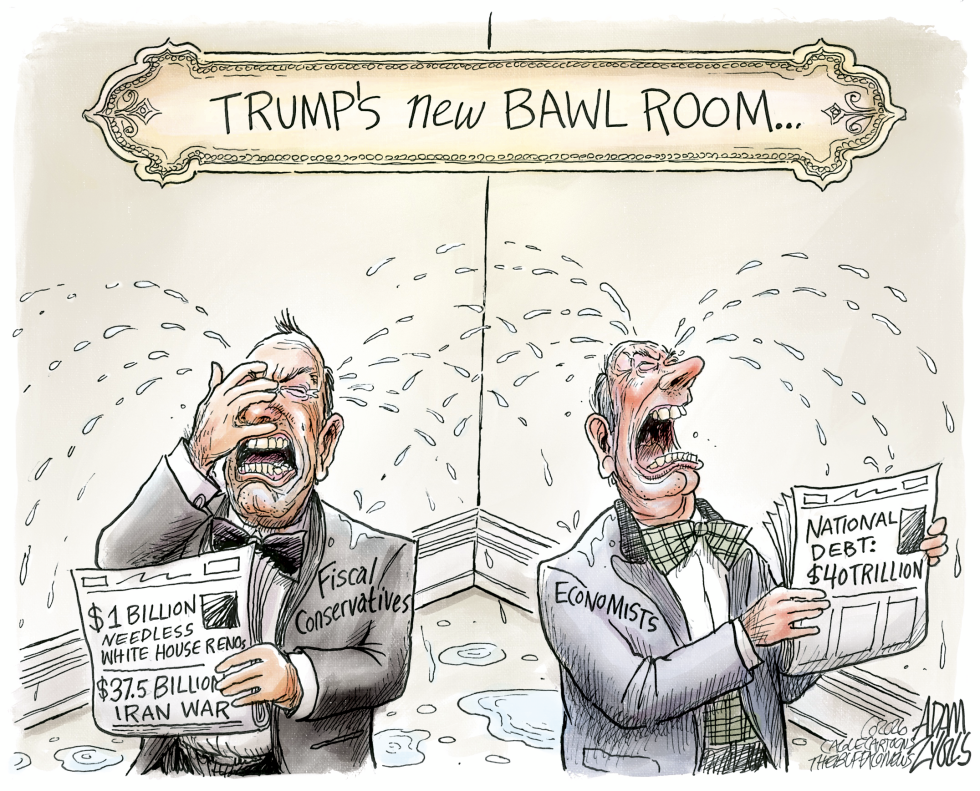
The cartoon depicts fiscal conservatives and economists weeping in a room labeled Trump's new bawl room. One holds documents citing a needless one billion dollar White House renovation and thirty seven point five billion dollar Iran war. The other displays a national debt of forty trillion dollars. The image highlights concerns over federal spending priorities.
The cartoon depicts a mother and son in a domestic setting where the son defends his use of vulgar language by citing the president's public example. The speech bubble from the son questions why he cannot use obscenities if the nation's leader does so without consequence. The scene includes household details such as a tablet in the mother's hands and mechanical parts on the wall. The argument highlights ongoing debates about language standards in public life and their influence on younger generations. The cartoon responds to recent discussions about presidential rhetoric and its broader societal effects.
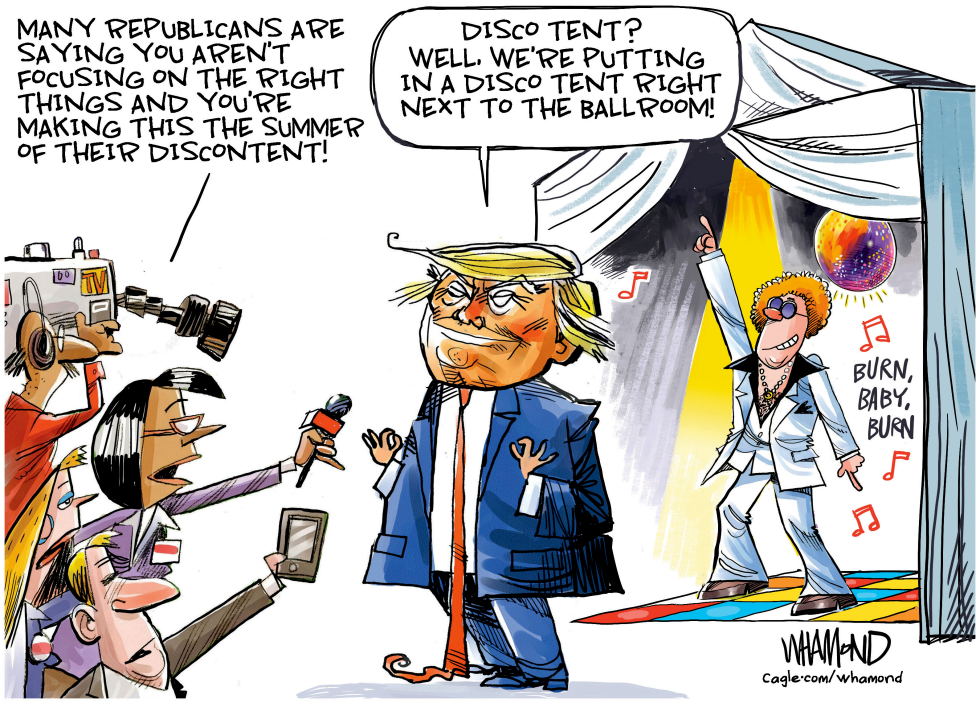
Republicans have publicly criticized Donald Trump for diverting focus from core issues during the summer of 2026, highlighting internal party friction over perceived misplaced priorities. The criticism centers on White House renovation choices that include adding a disco tent adjacent to the ballroom. Trump faces direct questions from the press about these decisions. The editorial position frames the episode as evidence of deepening discontent within the Republican ranks over the president's agenda.
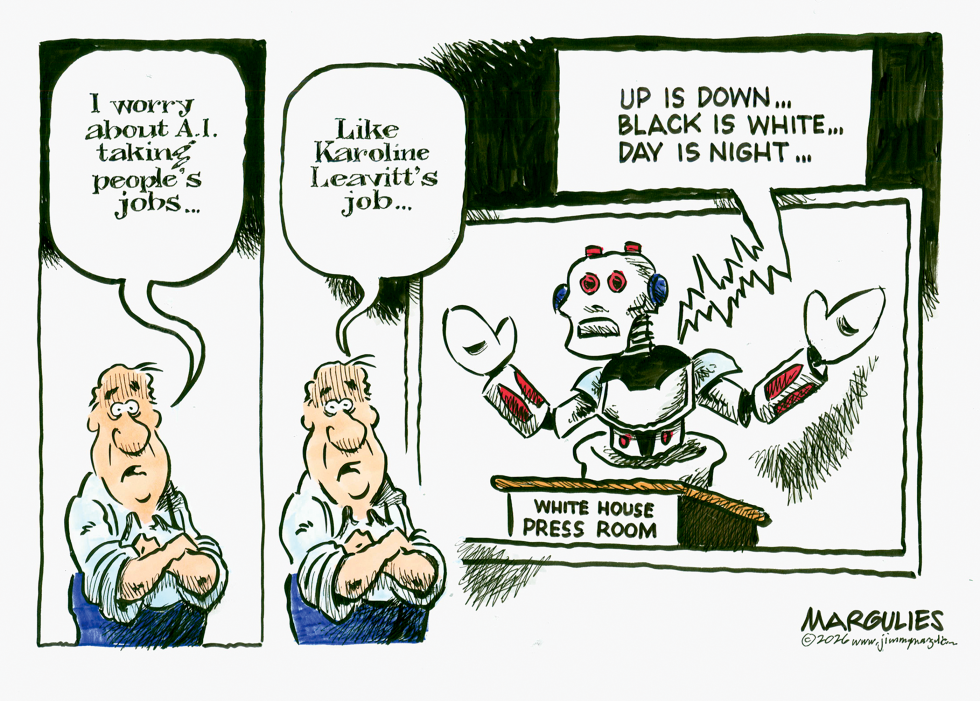
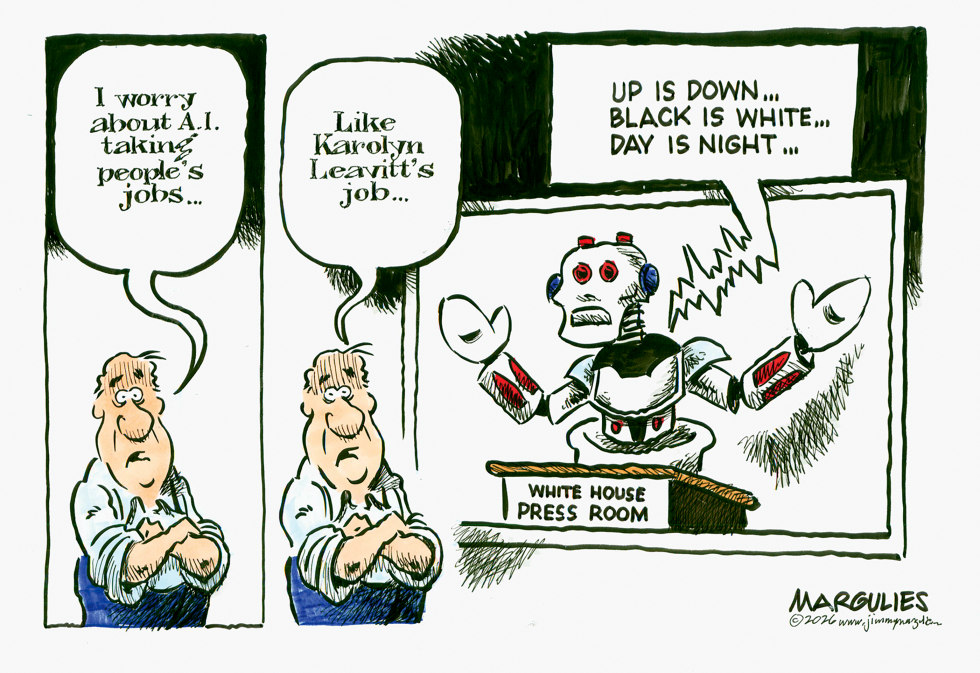
As artificial intelligence advances into government communications roles, concerns grow over job displacement for human staff including White House press secretary Karoline Leavitt. The piece responds to this development by depicting an AI robot assuming the podium and issuing contradictory statements. It takes the position that such automation risks eroding clarity and accountability in official messaging.
An AI robot has assumed duties as White House press secretary amid ongoing debates over automation displacing human roles in government communications. The development highlights tensions between technological efficiency and traditional staffing in high-profile federal positions. The piece portrays the shift as enabling scripted, contradictory messaging from the briefing room.
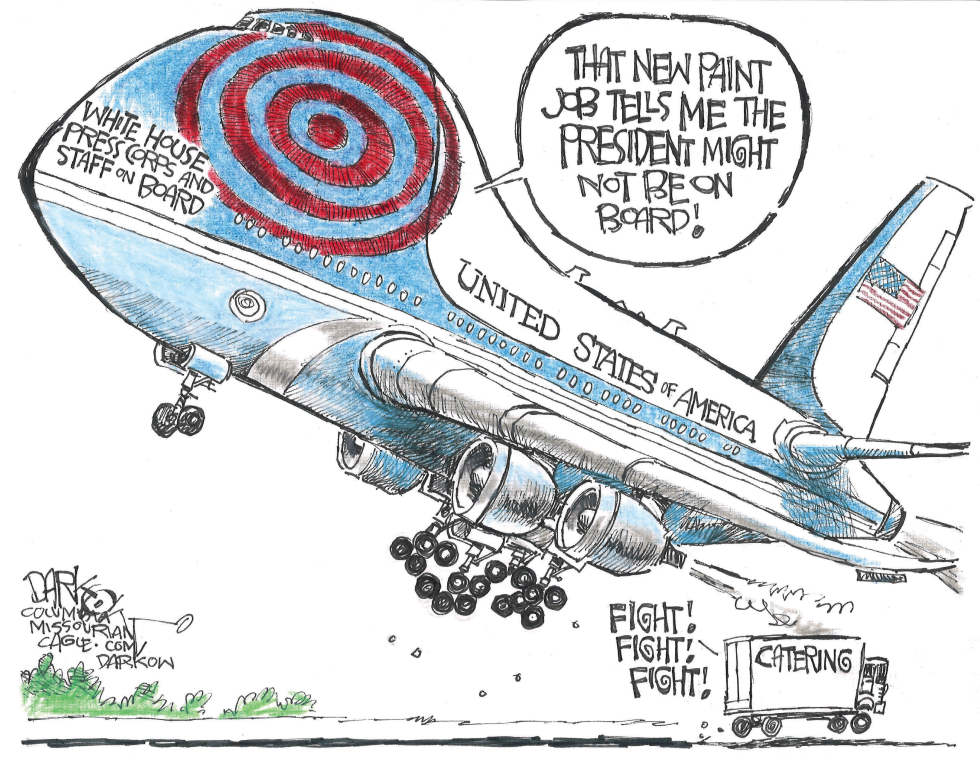
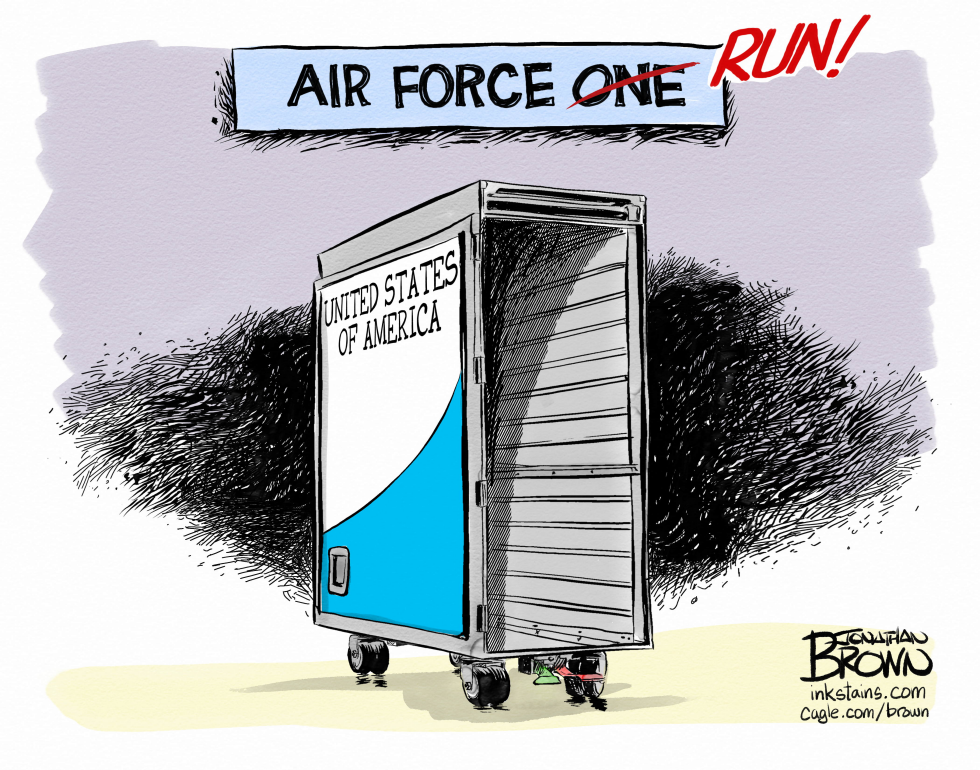
Air Force One appears with a large target painted on its upper fuselage while carrying White House press corps and staff. A nearby catering truck chants fight slogans as the plane descends. The image suggests the president may not be aboard the targeted aircraft. This visual plays on recent tensions surrounding presidential travel and security. The editorial stance highlights perceived risks or distancing from official duties.
A wheeled airline catering cart occupies the center of the frame, painted in the livery of the presidential aircraft: white upper body, curved blue lower panel, and UNITED STATES OF AMERICA lettered down the side. Its full height door hangs open on empty wire shelving. Above it a pale blue placard reads AIR FORCE ONE, with ONE struck through in red and RUN! added beside that word in the same color. Two neckties poke out from between the casters underneath, one of them the long red tie Donald Trump is known for, the only trace of the men folded up inside. The drawing responds to reports that Trump sheltered in an airline galley cart against an assassination threat traced to Iran, turning the most recognizable branding in presidential aviation into an instruction to flee. Jonathan Brown signed the lower right corner alongside inkstains.com and Cagle.com/brown.