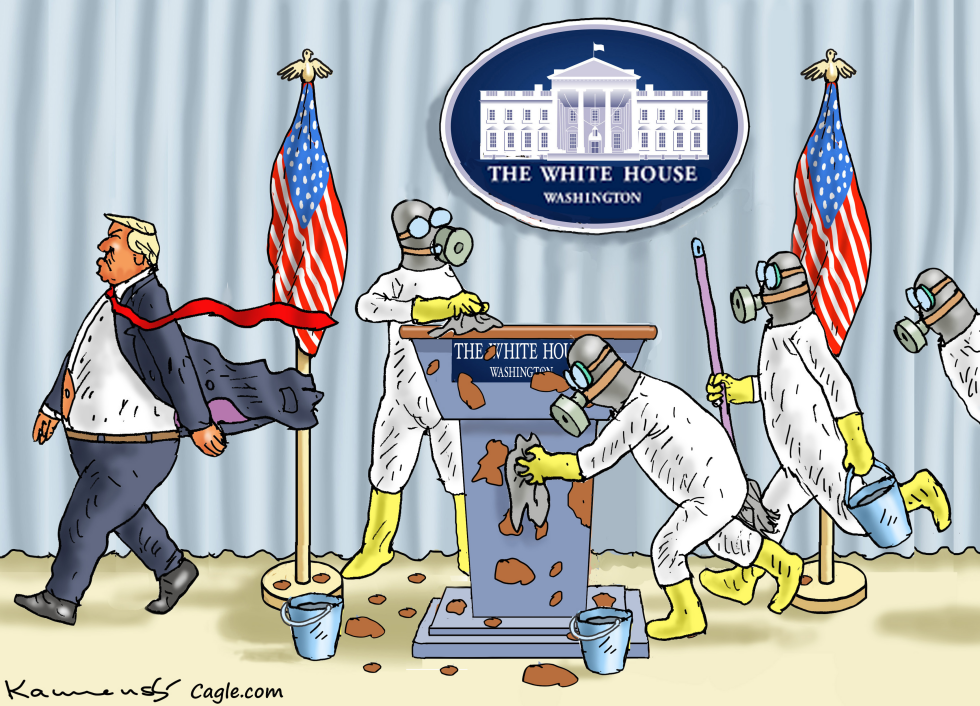
Donald Trump left the White House on August 4 2026 after his term. Hazmat-suited workers immediately began cleaning the podium and surrounding area marked with brown stains. The scene reflects the transition process and the physical state of the space left behind.
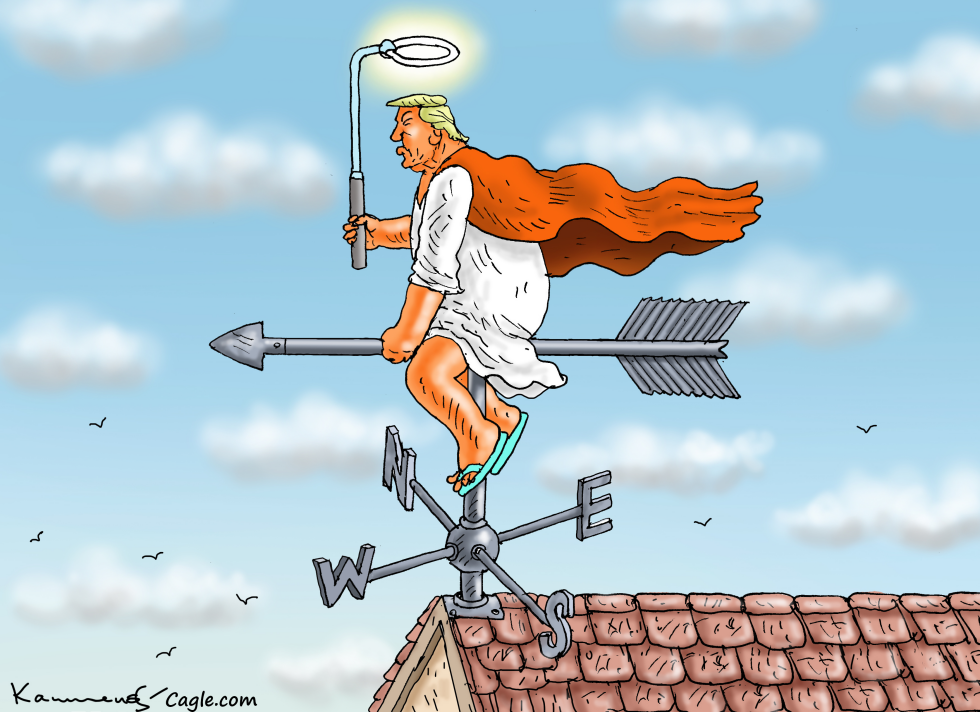
Donald Trump appears in public commentary as a changeable political presence. The depiction places the former president on a rooftop weather vane, suggesting ongoing shifts in position or influence. No single recent policy action or vote anchors the image. The visual argument frames Trump as responsive to prevailing directions rather than fixed in stance. This reflects broader debates over consistency in leadership and public perception of adaptability.
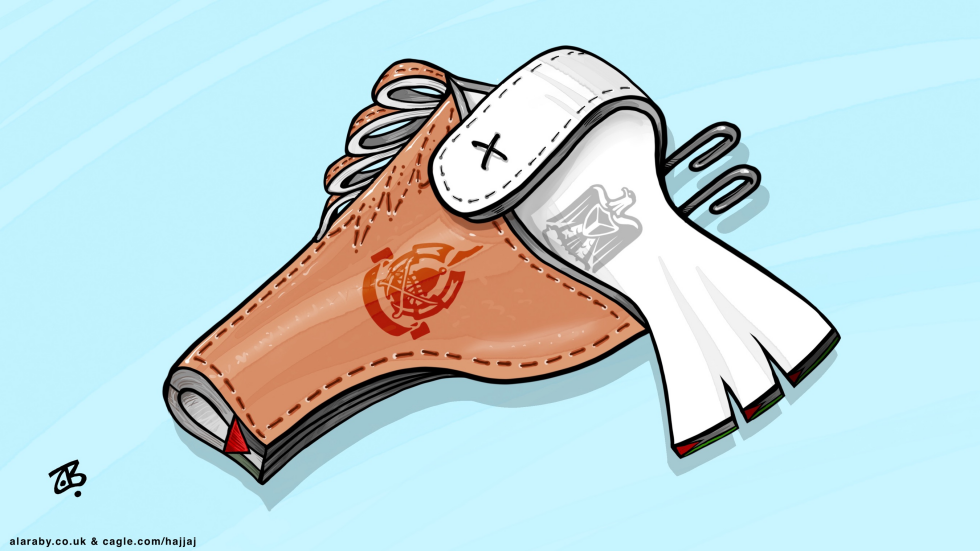
A holster containing a white gloved hand with a cross has surfaced in regional commentary. The image responds to persistent Israel-related security dynamics in the Middle East, where armed posture and symbolic gestures continue to shape public discourse. The piece frames the holster as a container for controlled yet visible force.
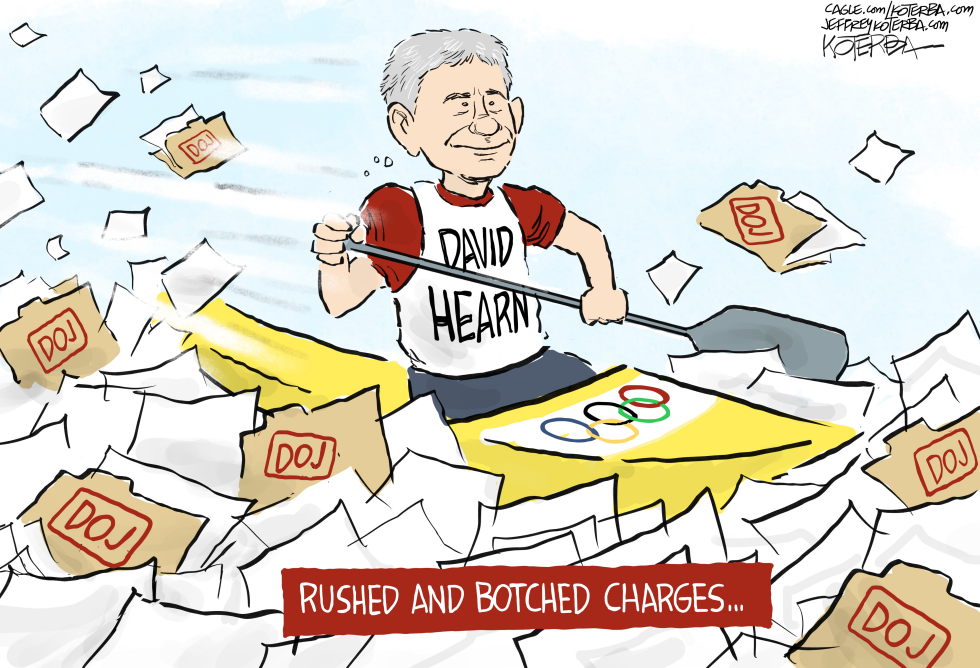
Federal prosecutors face scrutiny over handling of charges against Olympic kayaker David Hearn. The case highlights concerns about timing and preparation of evidence in high-profile sports matters. The editorial takes the position that the effort appears hasty and poorly executed.
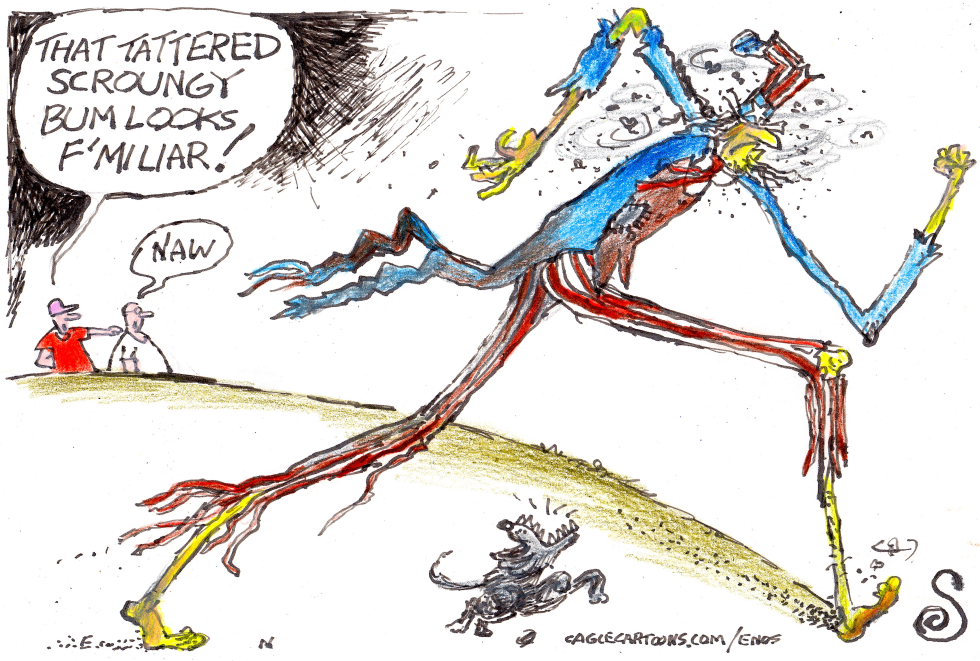
A symbolic national figure appears in ragged condition on a public stage. Observers note its scroungy appearance and question the resemblance. The piece highlights ongoing concerns about the state of government institutions and public trust in their condition.
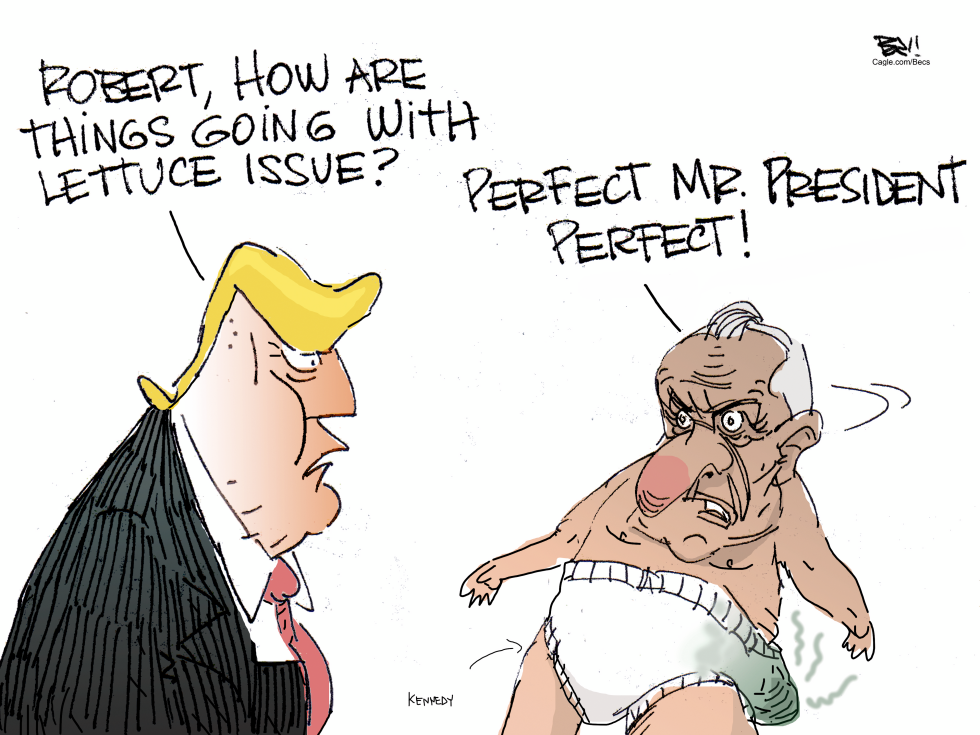
President Trump questioned a senior official named Kennedy about the lettuce issue in a recent exchange. The official responded that everything was perfect. The moment underscores persistent questions about competence and oversight in key government roles handling public health and food matters.
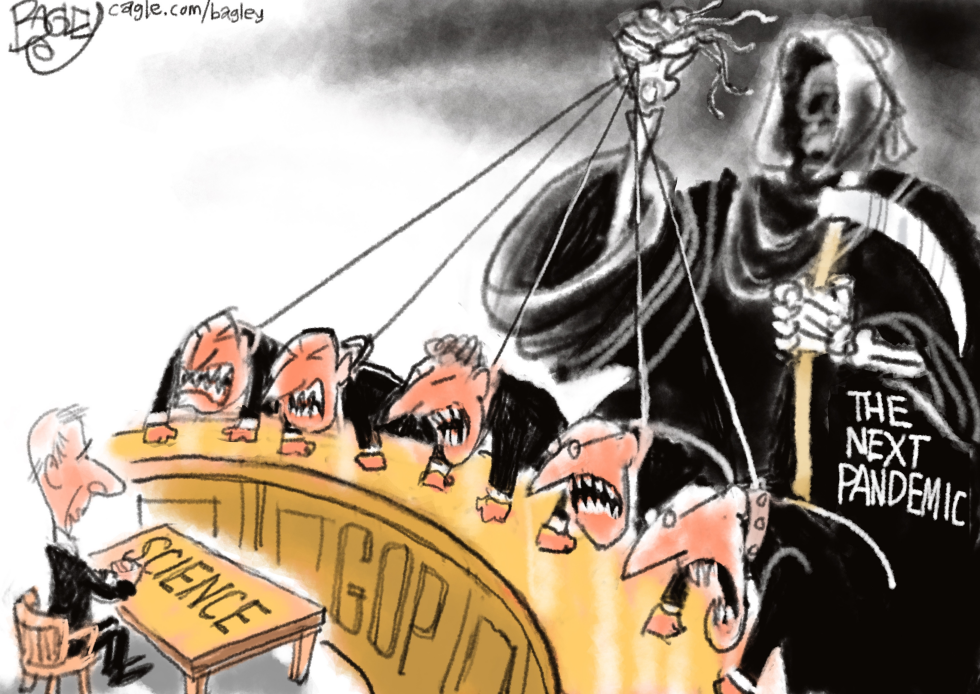
Republican lawmakers continue to downplay scientific guidance on emerging health threats. This stance echoes earlier resistance during prior outbreaks where evidence-based measures faced political pushback. The pattern raises concerns about preparedness for future crises. The editorial position criticizes this approach as dangerous and driven by external influences rather than data.
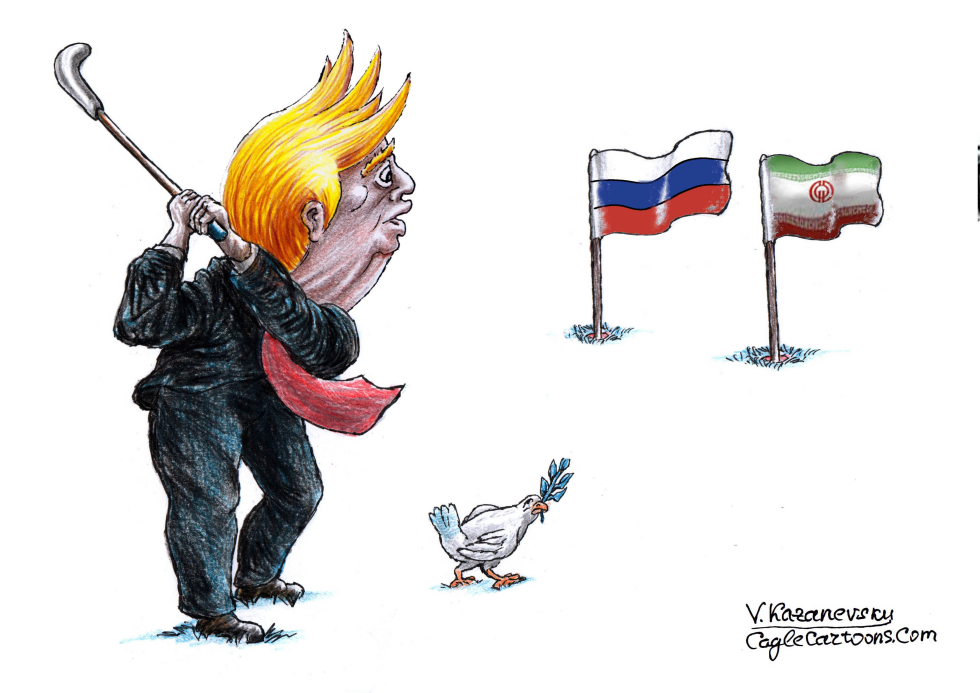
Donald Trump has pursued direct engagement with Russia and Iran on multiple fronts including nuclear talks and regional conflicts. The moves have drawn scrutiny over whether they advance or undermine stability. The editorial takes the position that such efforts amount to an assault on peace rather than a constructive step.
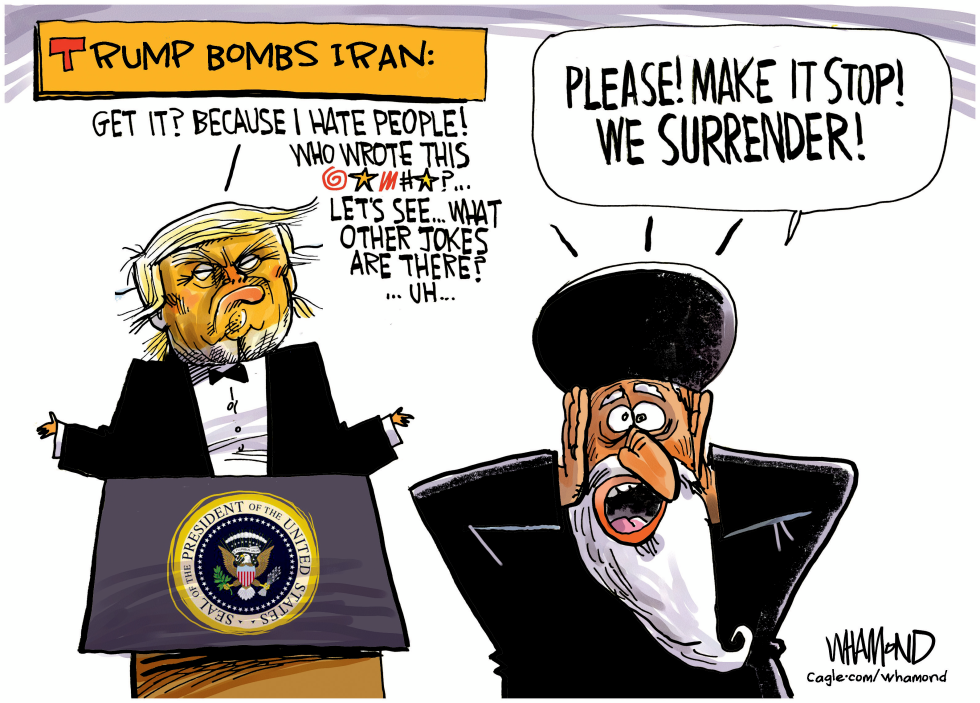
President Trump ordered strikes on Iran in late July 2026, prompting an immediate public plea for surrender from Iranian leadership. The action escalates tensions in the Middle East and raises questions about U.S. military objectives. The editorial takes the position that the strikes reflect personal animus rather than strategic necessity and mocks the president's framing of the operation.
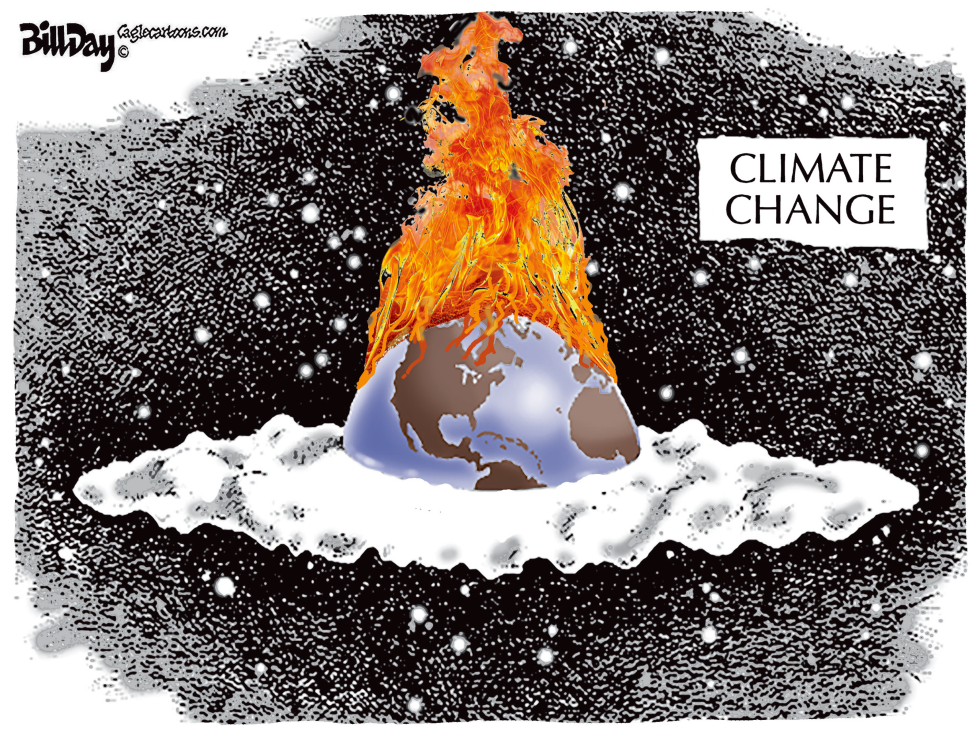
Ongoing global temperature records continue to climb in mid-2026 amid extreme weather events worldwide. Scientists and governments track accelerating impacts from greenhouse gas emissions. The cartoon underscores the direct link between human-driven climate change and planetary distress, presenting the crisis as an immediate and visible threat rather than a distant concern.
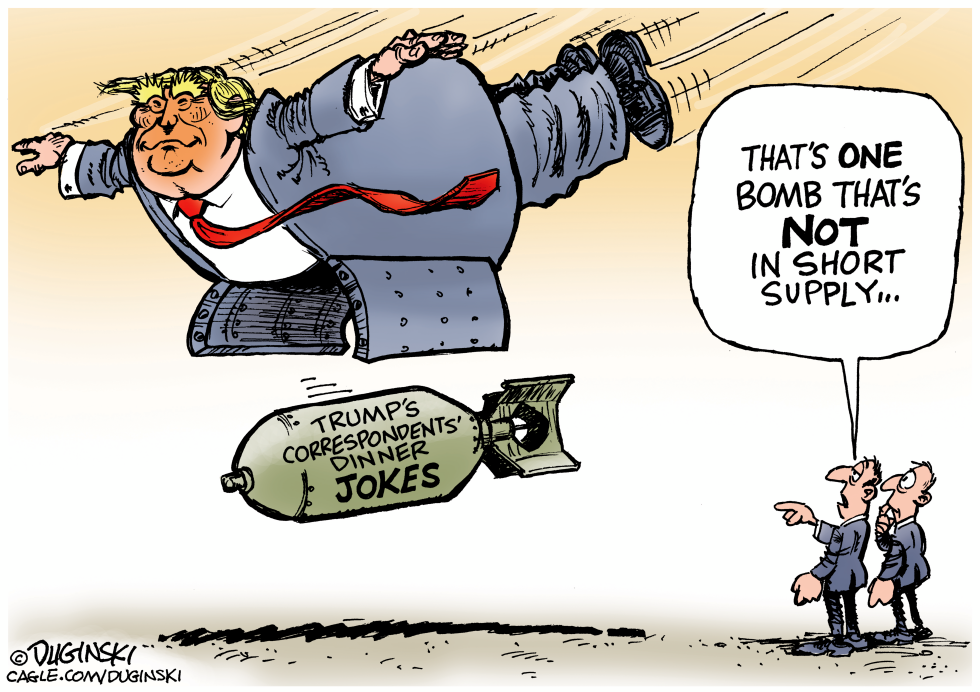
Donald Trump delivered jokes at the 2026 White House Correspondents Dinner that landed poorly with the audience. The event drew attention for the president's comedic missteps amid ongoing tensions with the press. The piece argues the routine exposed a persistent pattern of tone-deaf delivery rather than isolated misfires.
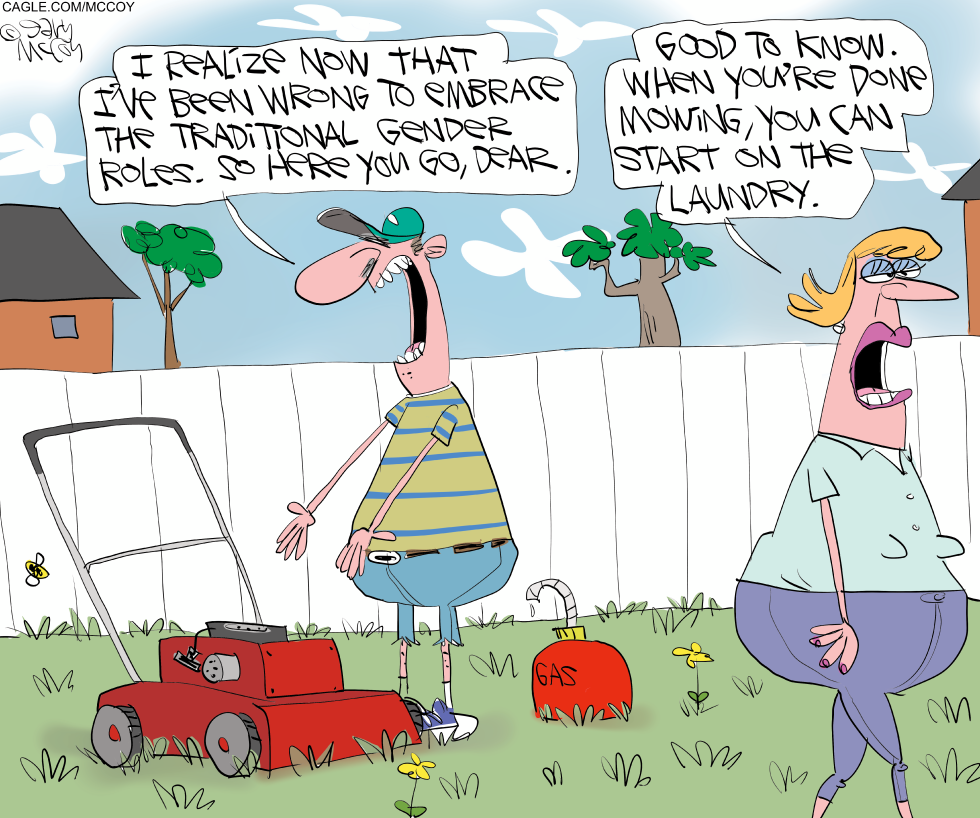
A man publicly rejects traditional gender roles and hands over the lawn mower in a suburban backyard. The woman responds by directing him to laundry afterward. The piece highlights ongoing cultural friction over household task divisions and expectations around gender.
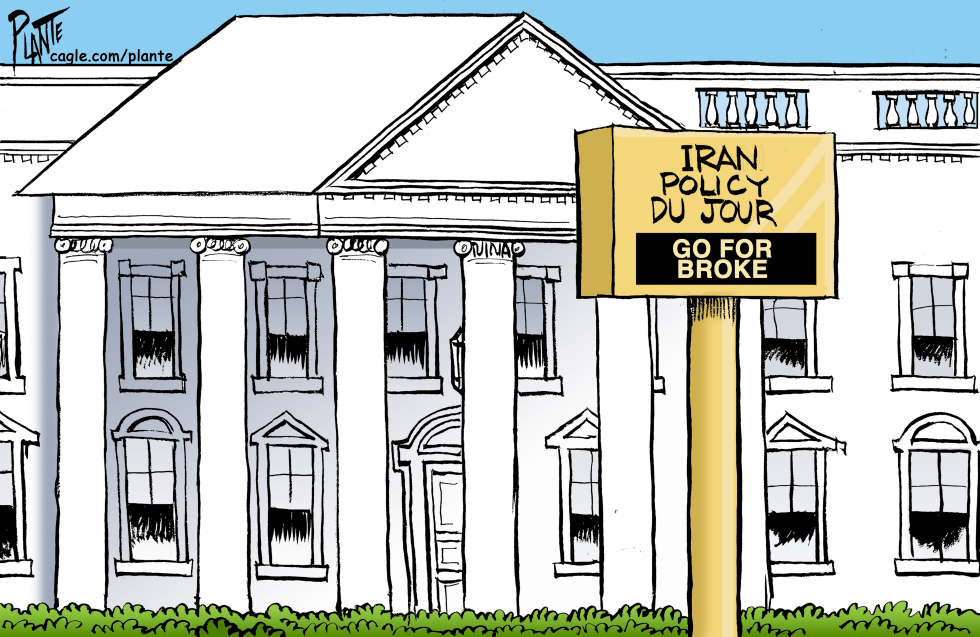
The White House has signaled a more aggressive posture toward Iran through public messaging that emphasizes risk-taking. The move comes amid persistent tensions over nuclear issues and regional influence. The editorial takes the position that such an approach lacks consistency and invites unnecessary escalation.
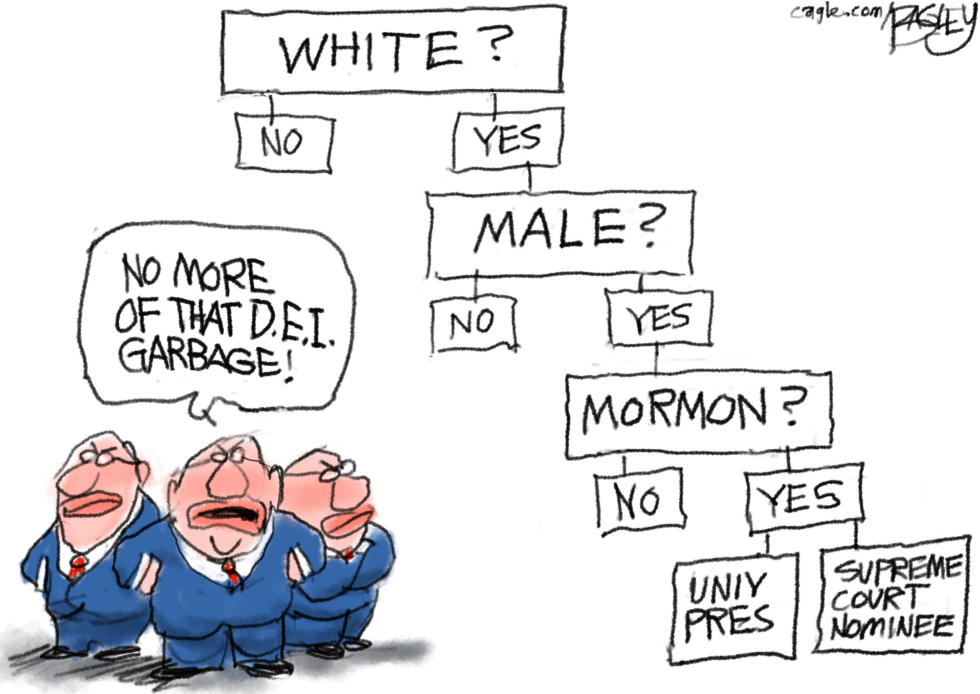
A flowchart circulating in political circles outlines a narrow path to Supreme Court nomination that begins with questions about race, gender and religion. The diagram routes only white male Mormons to the top position while directing others toward university presidencies. Three figures in the image voice opposition to diversity initiatives. The piece responds to ongoing debates over judicial selection standards and identity considerations in appointments. It takes the position that such rigid criteria undermine broader merit-based processes.