A man and woman sit at a checkered table, each holding a smartphone. The man asks ChatGPT for something real good while the woman prompts Grok with a vague request. The AIs respond with direct declarations of love in starburst bubbles. Pink hearts float around the pair as they remain focused on their devices rather than each other. The image captures a light take on reliance on artificial intelligence for personal moments.
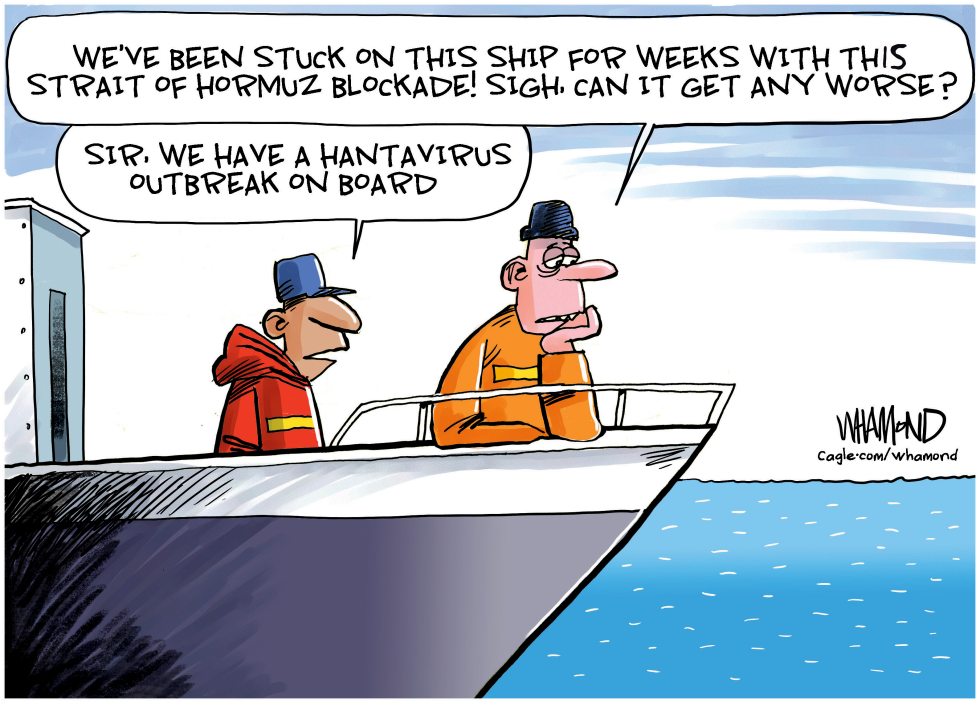
The cartoon depicts two sailors aboard a ship trapped in the Strait of Hormuz due to a naval blockade. One laments the weeks-long delay and wonders if conditions can worsen. The other reports a hantavirus outbreak on board. The image responds to ongoing tensions involving Iran and disruptions to global oil routes. As of the May 2026 publication date, the blockade has halted tanker traffic and strained energy markets. The added health crisis underscores the compounding risks for crews and supply chains. The visual ties geopolitical conflict directly to immediate human and economic consequences.
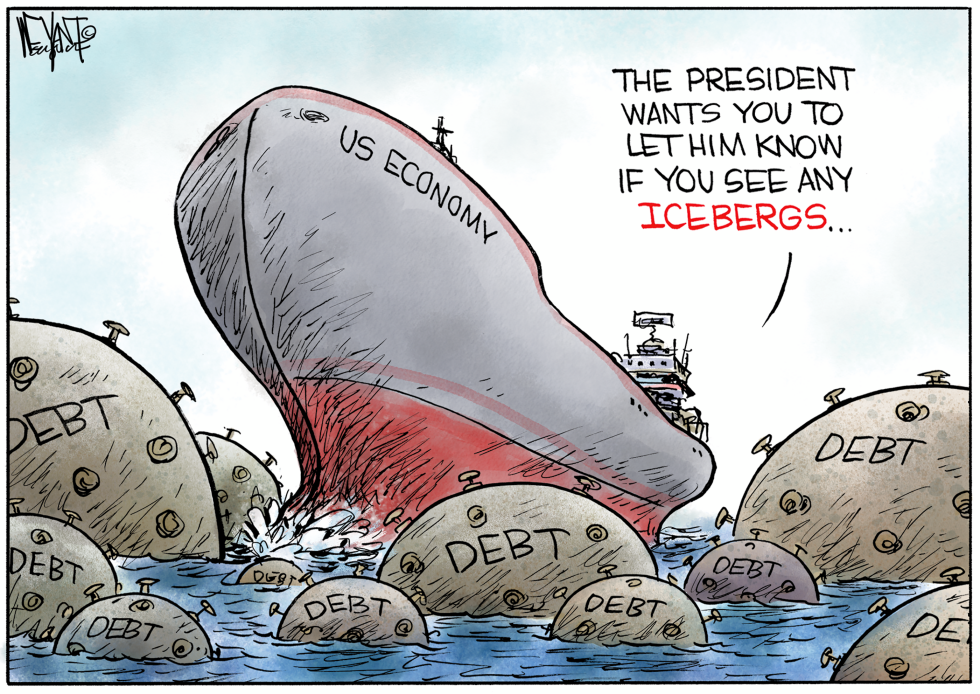
This political cartoon illustrates the US Economy as a massive ship labeled accordingly, dramatically sinking after colliding with numerous icebergs each marked 'DEBT.' A speech bubble from the ship warns to alert the president about icebergs, evoking the Titanic disaster in a clear metaphor for economic peril. Incorporating tags such as economy, debt, budget, inflation, prices, and costs, the image critiques fiscal irresponsibility. The artwork by Christopher Weyant uses simple lines and colors to emphasize the collision's impact, with water splashing and the ship's hull damaged. Such cartoons often highlight how mounting debt threatens stability, drawing parallels to historical maritime tragedies for satirical effect. The composition places the ship at an angle, surrounded by floating debt bergs, underscoring inevitable crisis if warnings go unheeded.
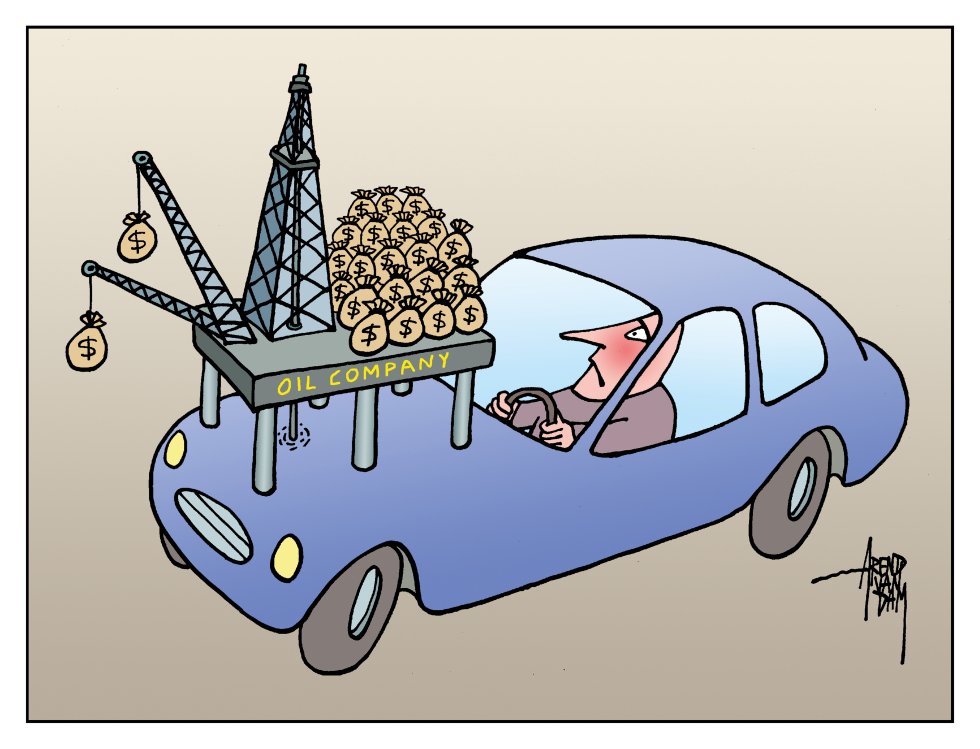
In this pointed political cartoon, an oil company platform sits atop a blue car, loaded with piles of dollar-sign money bags, while cranes dangle more profits. The frustrated motorist grips the wheel, face red with anger, illustrating how excessive profits from oil companies crush consumers at the pump. Tags like excessive profits, motorists, fuel, petrol, and refuel capture the essence, with Iran and Strait of Hormuz hinting at geopolitical tensions driving prices. This visual satire underscores the disparity between corporate windfalls and everyday drivers' pain, a timeless theme in energy politics.
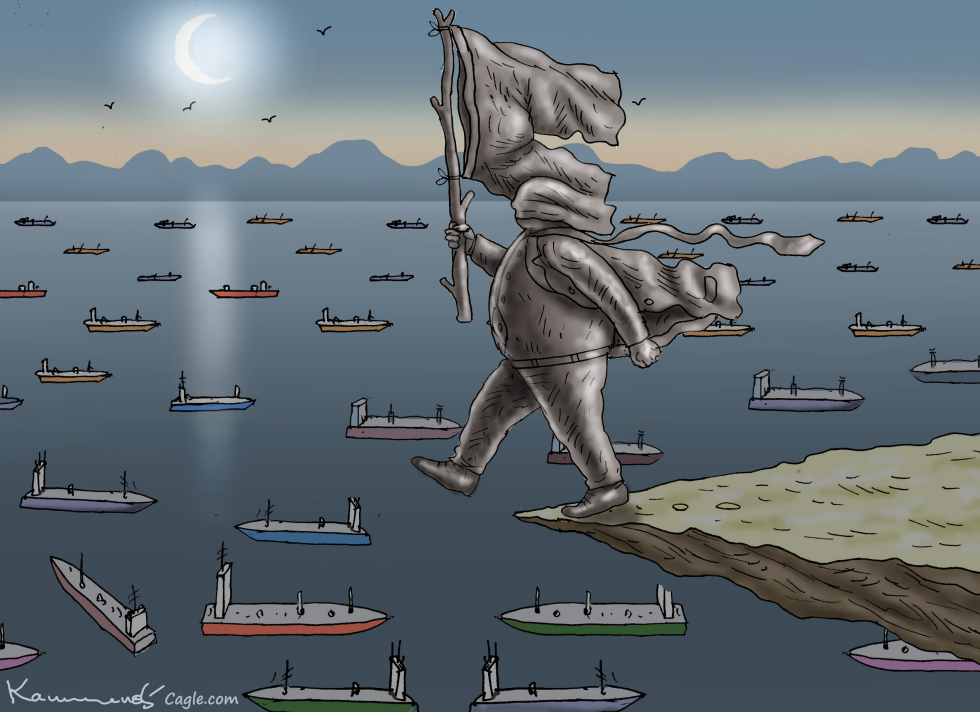
The cartoon shows a large, gray, statue-like figure with a hooded cloak, gripping a flag on a pole, as it steps forward off a cliff's edge. Below stretches a dark sea filled with many small ships of various colors, scattered across the water. In the background, mountains rise against a sky with a crescent moon and flying birds. The image, tagged with Banksy, Trumo, Hormuz, fascism, patriotism, and Maga terror, captures a moment of precarious advance. Artist Marian Kamensky signs it at the bottom left, linking to Cagle.com. This setup highlights a bold, unyielding march into potential downfall amid a busy maritime scene.
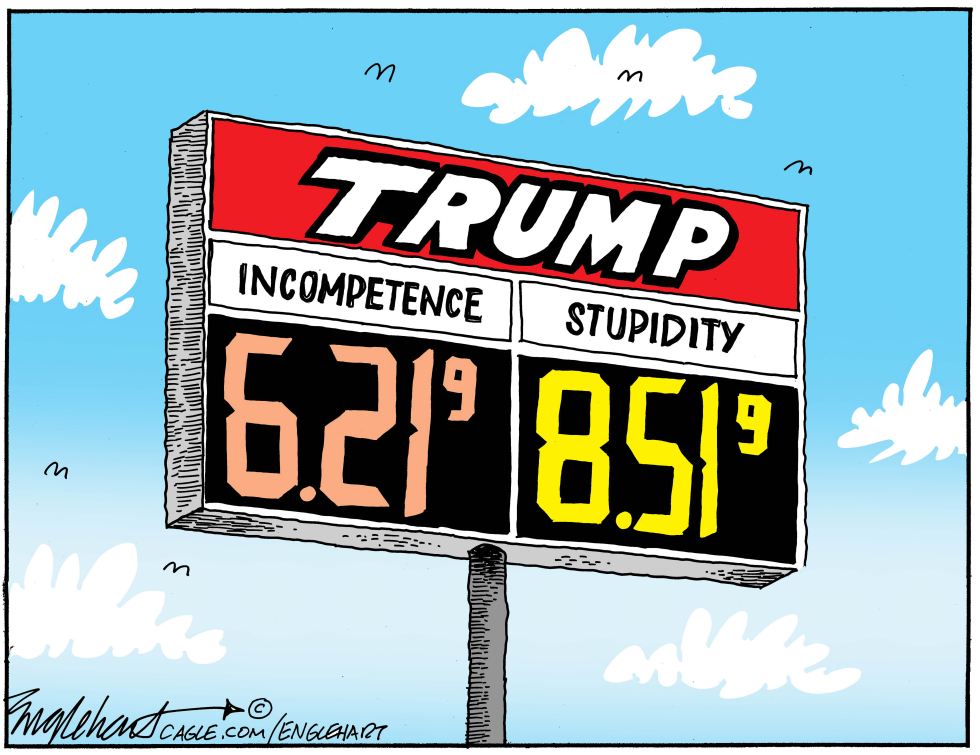
Bob Englehart's cartoon features a gas station sign with Trump at the top, showing prices for incompetence at 6.21⁹ and stupidity at 8.51⁹ against a blue sky with clouds. The tags Trump, Iran War, gas prices, gasoline, and gallon frame the visual pun. Such cartoons often tie political figures to everyday economic pains like fuel costs. The dry humor lands on how leadership flaws inflate prices, making it relatable for readers hit by pump shocks. With no characters, just the sign, it keeps the message direct. Tags like incompetence and stupidity drive the satire home, poking at perceived policy missteps without overcomplicating the scene.
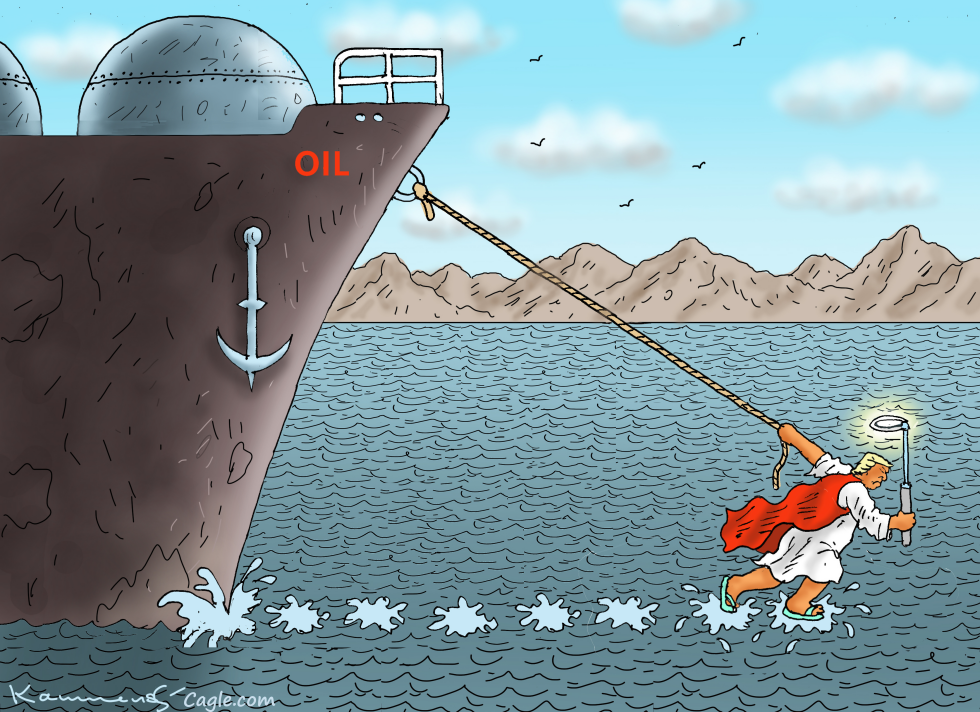
The image depicts a figure dressed in a white robe and red cape, complete with a glowing halo, running across the water while pulling a large oil tanker marked 'OIL' with a rope. He holds a golf club in one hand, splashing water with each step against a backdrop of mountains and a clear sky. This setup draws on tags like Trump, Hormuz, Iran, oil war, MAGA terror, and fascism to satirize political figures intervening in global oil crises. The cartoon's composition emphasizes the absurdity of a divine savior tackling economic and geopolitical issues, with birds flying overhead and distant peaks suggesting a Middle Eastern strait. Kamensky's style brings dry humor to the forefront, poking at notions of messianic leadership in turbulent times.
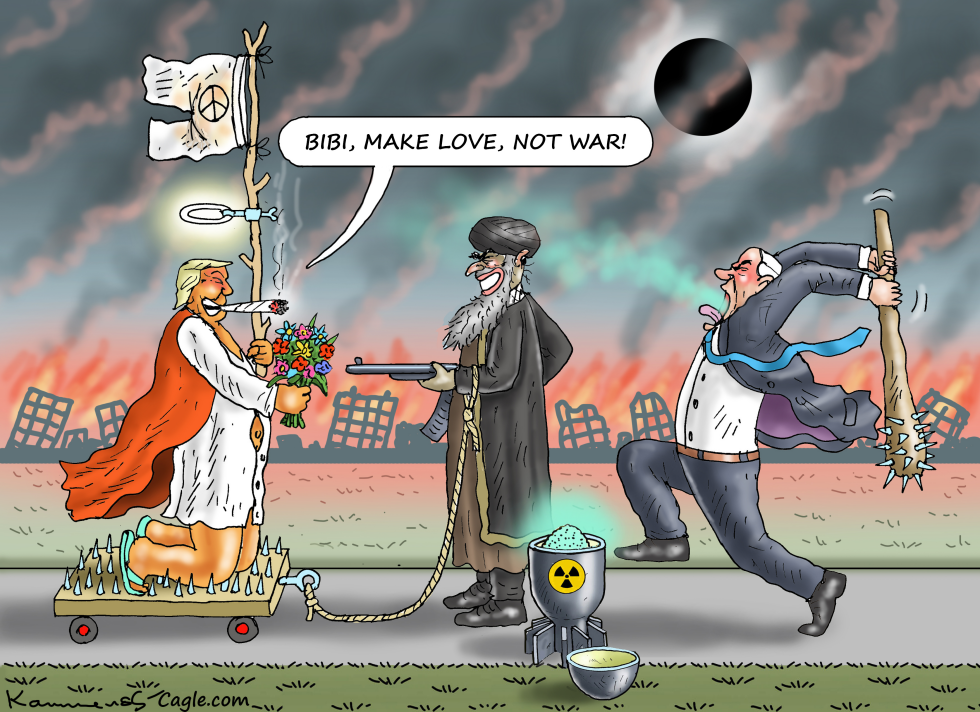
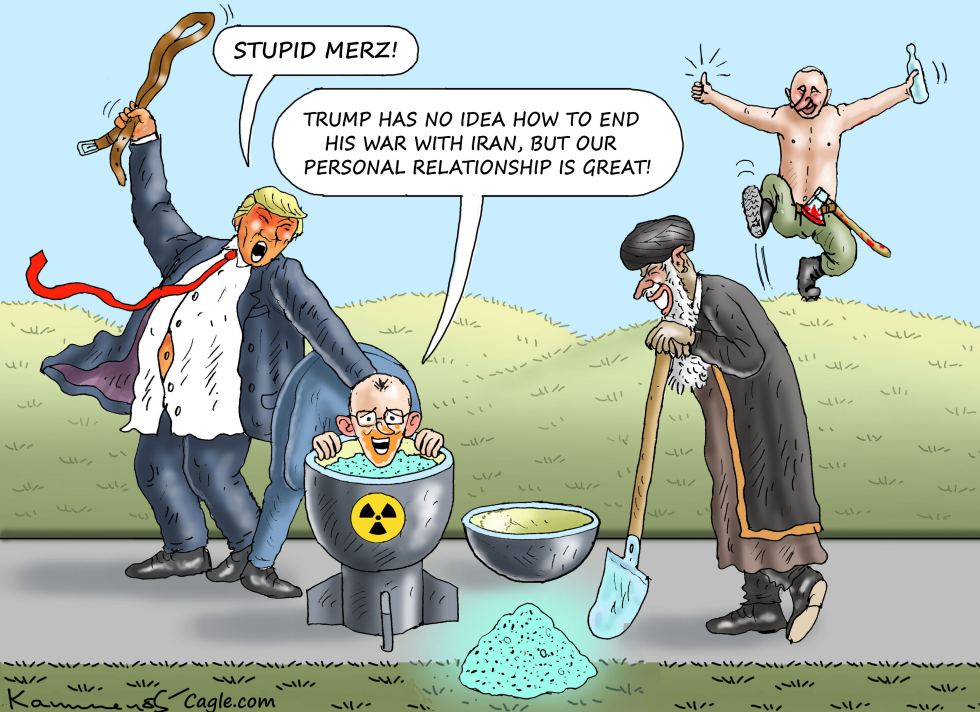
The cartoon depicts a red-faced Trump, tie askew, raising a belt to strike a bald, bespectacled man labeled Merz whose head pokes from a nuclear bomb-shaped vat of blue liquid. An elderly bearded man in turban and robe uses a shovel to scoop more blue material from a bowl, while a shirtless, axe-wielding figure resembling Putin jumps in approval, bottle in hand, speech bubble praising the great personal relationship amid Trump's cluelessness on ending his Iran war. Tags like Trump, Merz, Iran War, Middle East, Fascism, Maga Terror, Hormuz underscore the satirical jab at geopolitical follies, with dry humor poking at failed diplomacy and bizarre alliances in this Kamensky creation for Cagle.com.
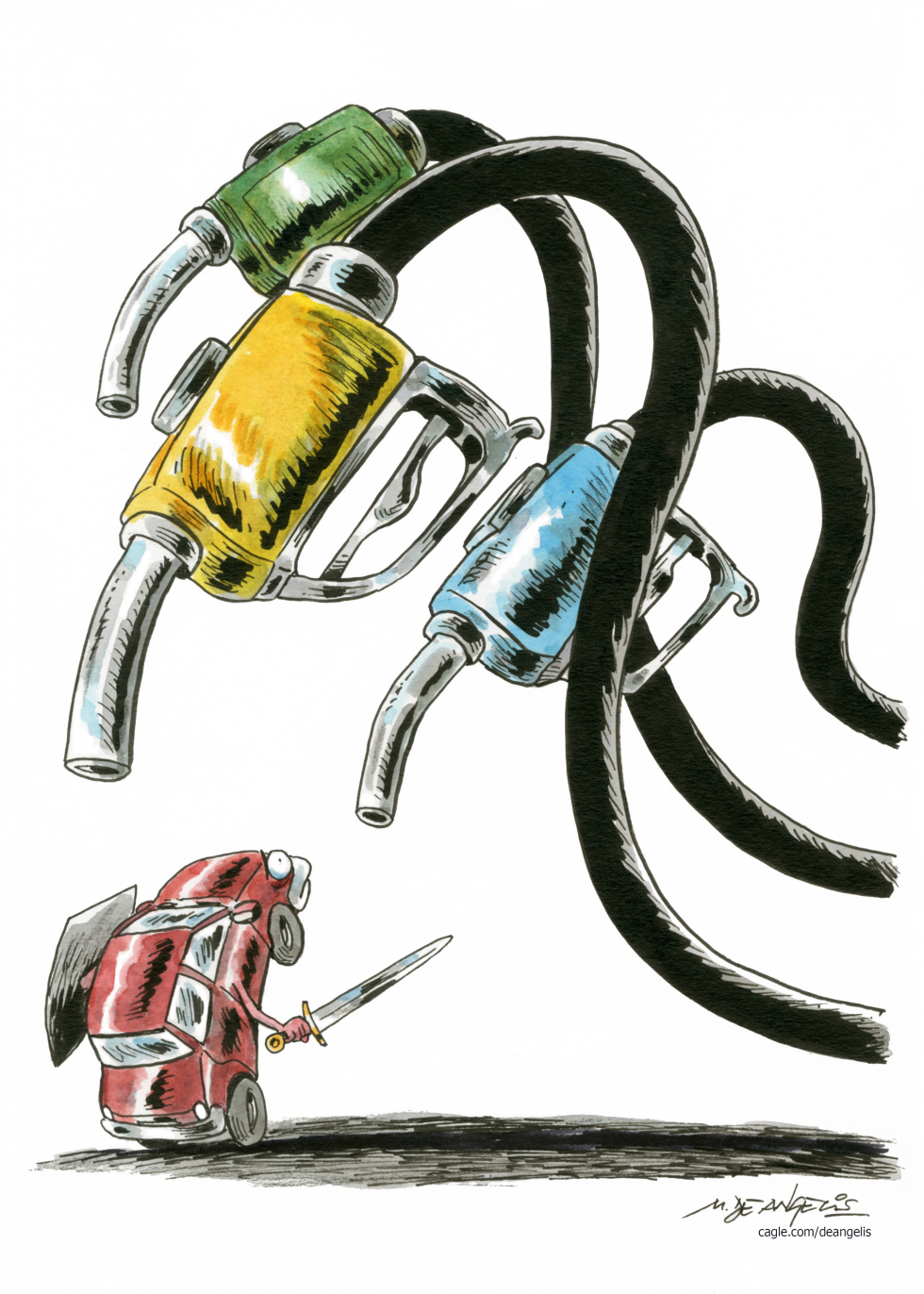
Marco De Angelis draws a clever twist on the ancient HYDRA myth, where a plucky red CAR, sword in hand, squares off against a beastly creature formed by three FUEL pump nozzles—green, yellow, and blue—attached to writhing black hoses. The scene plays on the endless battles drivers face with soaring OIL PRICES and FUEL costs, tying into broader ECONOMY woes. Tags like TRANSPORTATION, TRADE, WAR, CRISIS, IRAN, USA, and HORMUZ hint at real-world tensions in the Strait of Hormuz, where geopolitical strife disrupts global OIL supplies. It's a sharp commentary on how these issues regenerate like hydra heads, making every victory temporary in the fight against economic pressures.