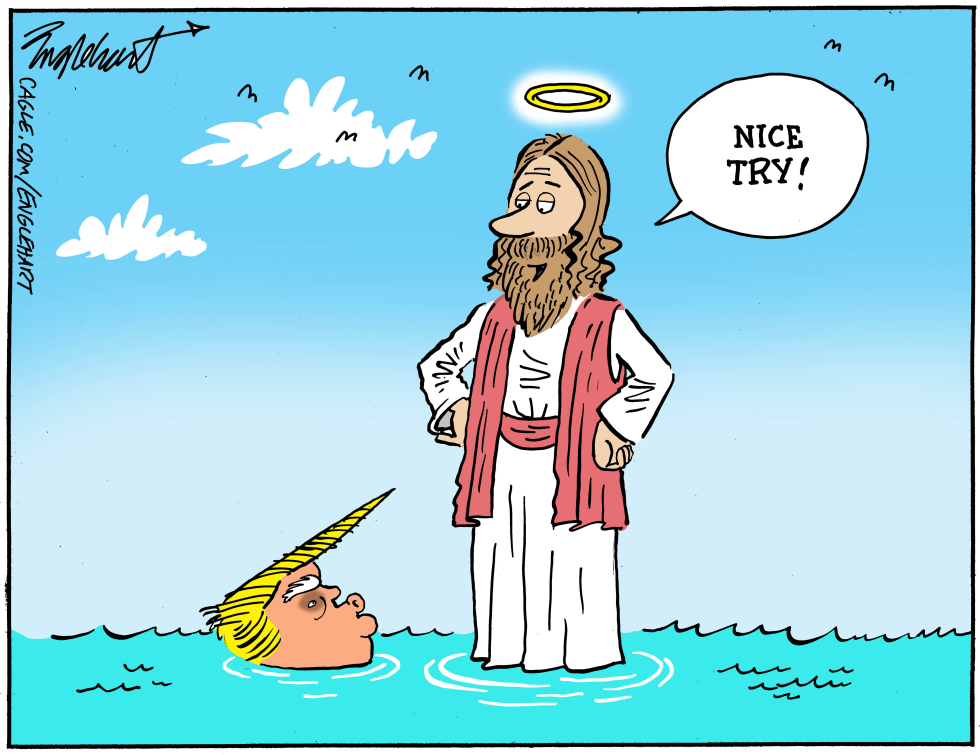
Bob Englehart's cartoon features a Jesus-like figure with a halo and robe, standing effortlessly on blue water under a clear sky, hands on hips, saying 'NICE TRY!' in a speech bubble. Below, a caricature head with exaggerated blonde hair sinks, eyes squinted, mouth open. Birds fly above fluffy clouds. Tags include political cartoon Trump Jesus comparison, satirical illustration Donald Trump biblical reference, Bob Englehart cartoon Trump walking on water fail, humorous depiction Trump messiah complex, editorial cartoon Trump self-comparison to Christ, and cartoon Trump sinking in water Jesus standing. The image pokes fun at overreaching self-images without deeper inference.
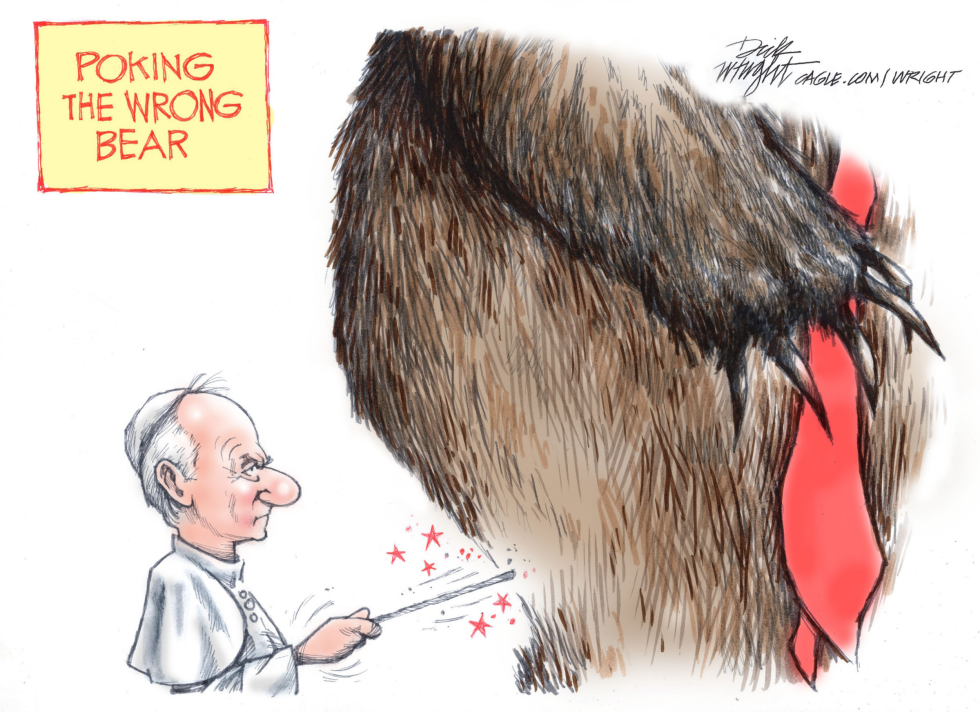
Dick Wright's political cartoon depicts a Pope-like figure in white attire, extending a thin rod toward the rear of a massive brown bear, complete with a dangling red tie and sparkling effects at the point of contact. The yellow label reads 'POKING THE WRONG BEAR,' playing on the idiom with a twist. This satirical illustration ties into the Trump-Pope feud, using the bear as a stand-in for power, the red tie evoking Trump's signature look, and the poking action suggesting provocation. Cartoonists often employ such animal metaphors for political commentary, and Wright's style here delivers clear lines and exaggerated features for impact. The image avoids overstatement, sticking to visible elements like the bear's claws and fur details, making it a straightforward jab at ongoing tensions.
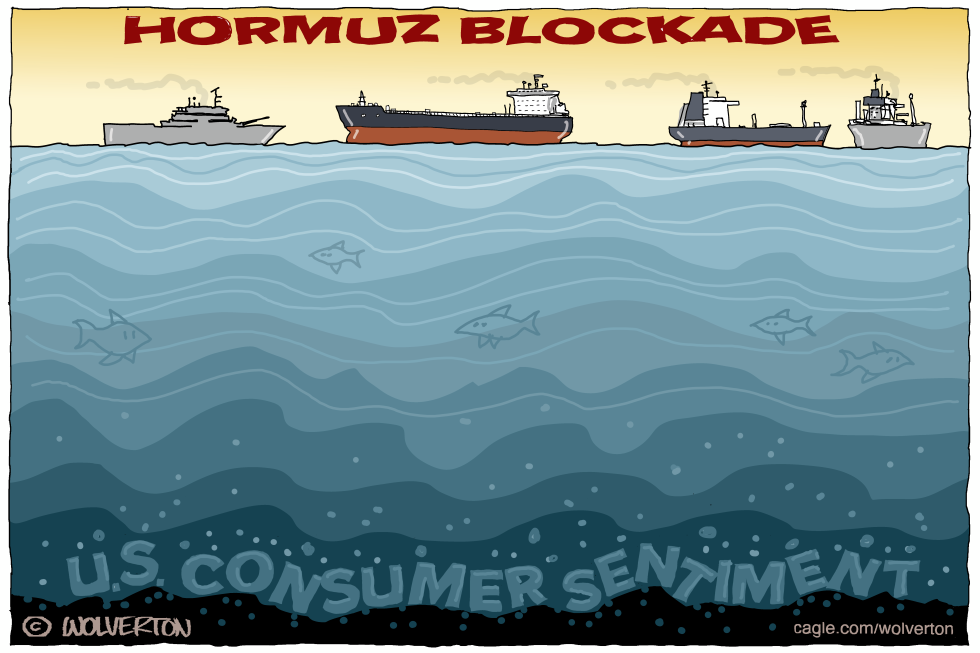
Monte Wolverton's cartoon captures the Hormuz Strait blockade with warships and tankers lined up on the water's surface, a clear nod to geopolitical strife in key oil passages. Below, the phrase U.S. consumer sentiment is etched into the ocean floor, surrounded by fish, driving home the idea of economic morale hitting rock bottom. This piece uses simple lines and color to highlight how international blockades can sink domestic confidence, tying into broader themes of global trade disruptions. The dry humor shines through in the visual pun, making it a standout in political satire circles. Tags like Hormuz Strait blockade political cartoon, US consumer sentiment sinking economy illustration, oil tanker ships naval blockade satire, Strait of Hormuz geopolitical tension comic, economic impact of Middle East conflict drawing, and consumer confidence underwater metaphor cartoon amplify its SEO reach.
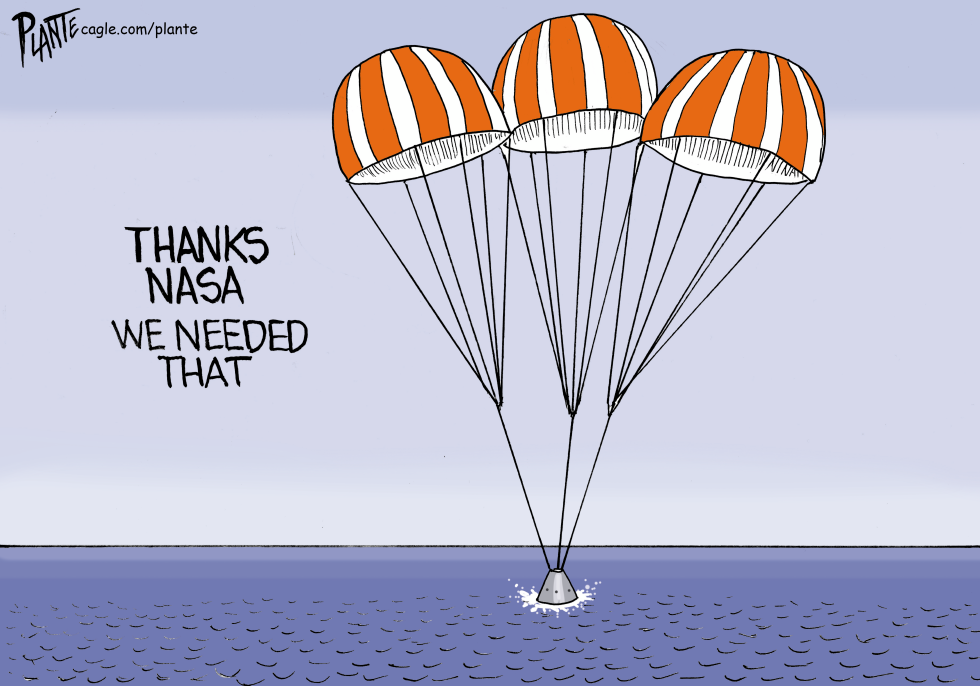
Bruce Plante\'s cartoon captures a space capsule\'s splashdown, complete with three orange and white striped parachutes guiding it to a blue ocean teeming with black fish-like forms. The prominent text \'Thanks NASA We Needed That\' adds a layer of sarcasm, typical in editorial illustrations commenting on high-profile events like the Artemis II mission. The simple composition, with a light blue sky and wavy ocean surface, emphasizes the moment of impact, shown by a small splash at the capsule\'s base. This piece fits into the tradition of political cartoons that highlight public sentiments toward government projects, using minimal elements for maximum impact. The artist\'s signature and website appear in the top left, grounding it in syndicated cartoon style.
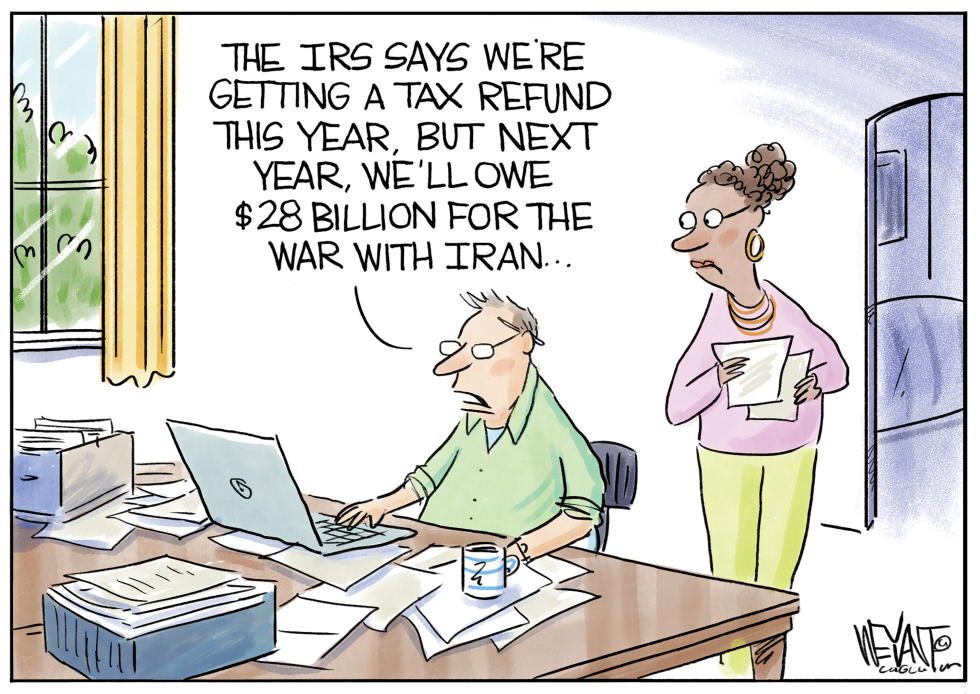
Dive into this biting political cartoon tax refund piece where a woman, holding papers, informs a laptop-working man about their IRS windfall this year, only to drop the bomb of owing $28 billion next for the war with Iran. The satirical cartoon Iran war vibe captures the absurdity of US taxes funding wars, with cluttered desks and exasperated expressions underscoring the humorous take on federal spending. It's a classic taxpayer burden Iran conflict jab, poking fun at government spending satire while illustrating the disconnect between personal finances and massive military expenses. Through cartoon about military expenses, it cleverly critiques fiscal policy in an office setting, making the war with Iran taxpayer joke both relatable and irreverently insightful for viewers pondering editorial cartoon fiscal policy.
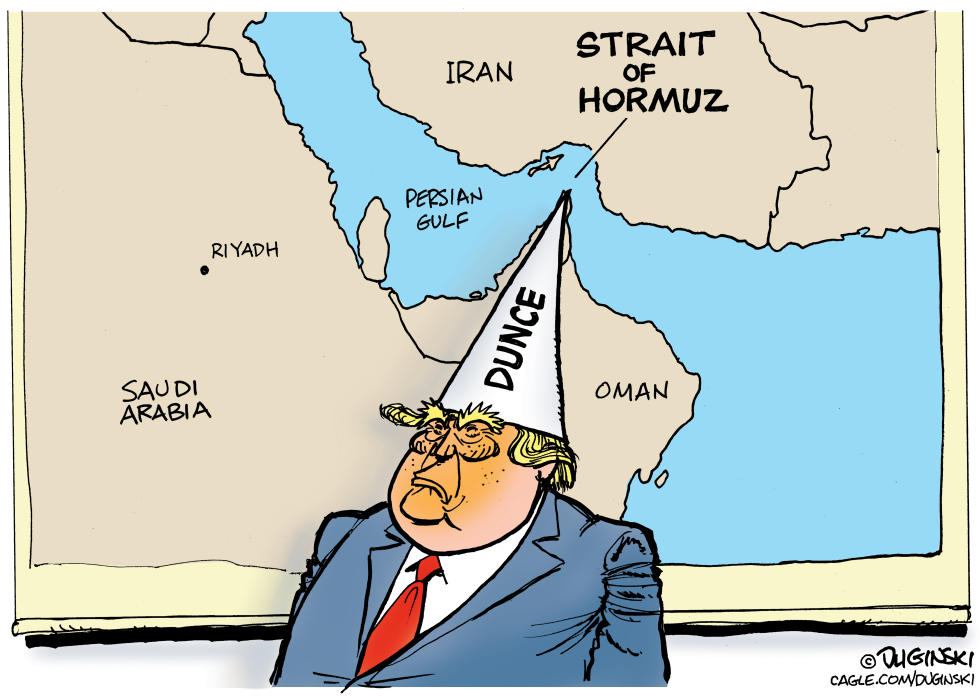
The cartoon depicts a simplified map of the Middle East, including labels for Iran, Saudi Arabia, Oman, Riyadh, and the Persian Gulf. The Strait of Hormuz is prominently marked, with a caricatured man in a suit and red tie wearing a dunce cap labeled \'DUNCE\' positioned over it. This setup uses the strait as a choke point for oil and energy, tying into themes of foreign policy, war, and ignorance. The image critiques handling of Middle East waterway issues, possibly linked to closure threats, tankers, and ceasefire efforts. Artist signature appears in the bottom right.
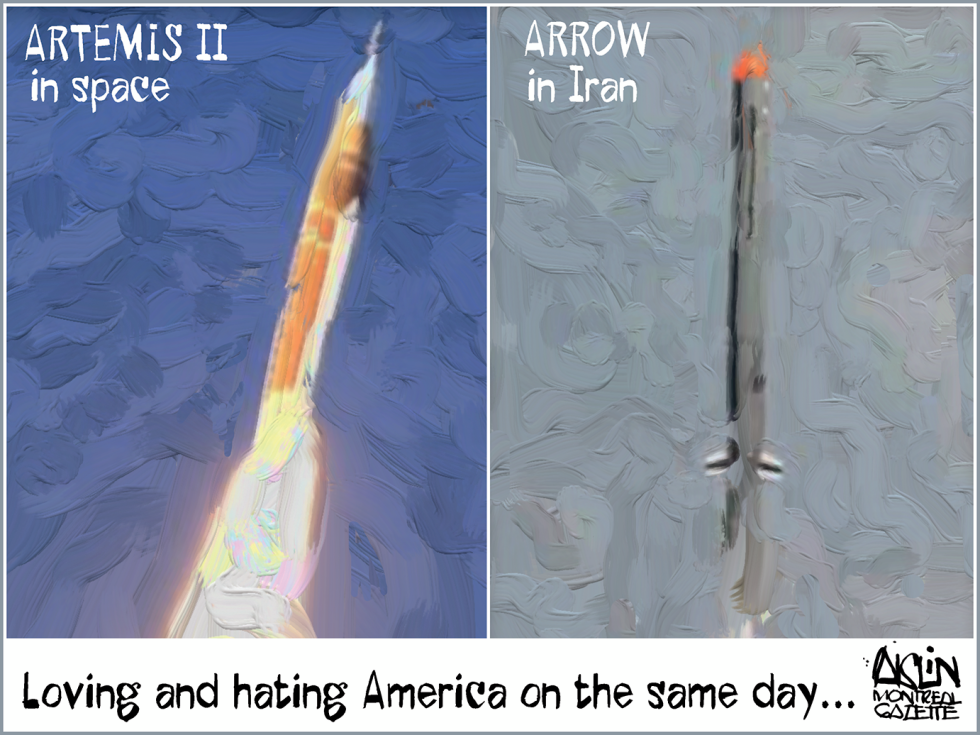
In this irreverent political cartoon, a vibrant Artemis II space launch rockets upward in a blue expanse on the left, symbolizing American innovation and triumph in US space exploration. Contrasting sharply on the right, a stark Arrow in Iran points downward with an orange glow against a gray sky, evoking geopolitical tension and Iranian weaponry. The caption 'Loving and hating America on the same day....' ties it together, offering a humorous take on the bipolar view of America in world news. With its simple yet effective composition, the artwork captures the absurdity of global perceptions, blending satire on international conflict with admiration for NASA's feats. This piece underscores the dichotomy in how the world engages with American power, from awe at space missions to ire over foreign policy frictions.
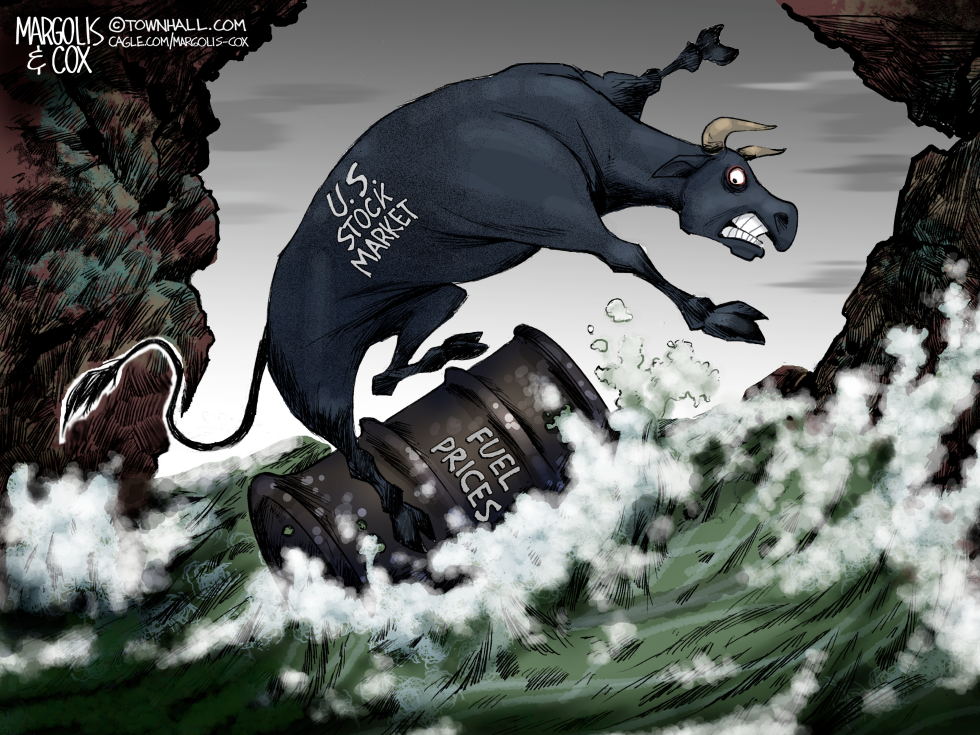
The cartoon shows a fierce black bull, emblazoned with 'U.S. Stock Market,' plummeting off jagged cliffs into a turbulent green sea where an oil barrel labeled 'Fuel Prices' tips over amid white foam. This visual packs a punch on how rising fuel prices can drag down the bull market, touching on economy, stocks, oil, prices, portfolio, and market tags. It's a classic setup: the bull charges ahead but hits the wall of energy costs, splashing into chaos. Editors see these often, where financial optimism meets harsh commodity realities, making it relatable for readers watching their investments swirl in the currents.
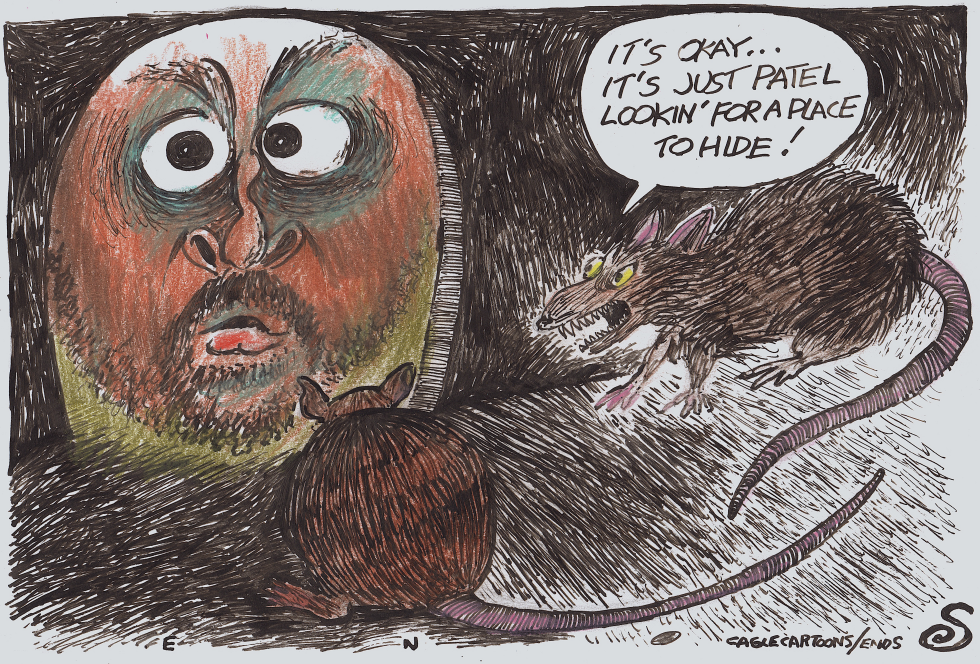
Randall Enos draws a big, bug-eyed face labeled as Patel gazing into a dark hole where a fierce rat speaks, saying it's just Patel seeking a hiding spot. The cartoon tags Kash Patel, director of FBI, Trump firings, rats, Trump lackeys, sycophants, Pam Bondi, pointing to the chaos of Trump appointments and firings. The rat's aggressive pose and the face's shock amplify the humor in political survival tactics. This piece mocks how loyalists scramble for cover amid purges, a timeless jab at sycophancy in power circles. Enos's scratchy style adds grit to the scene, making it shareable for those tracking Trump-era drama.
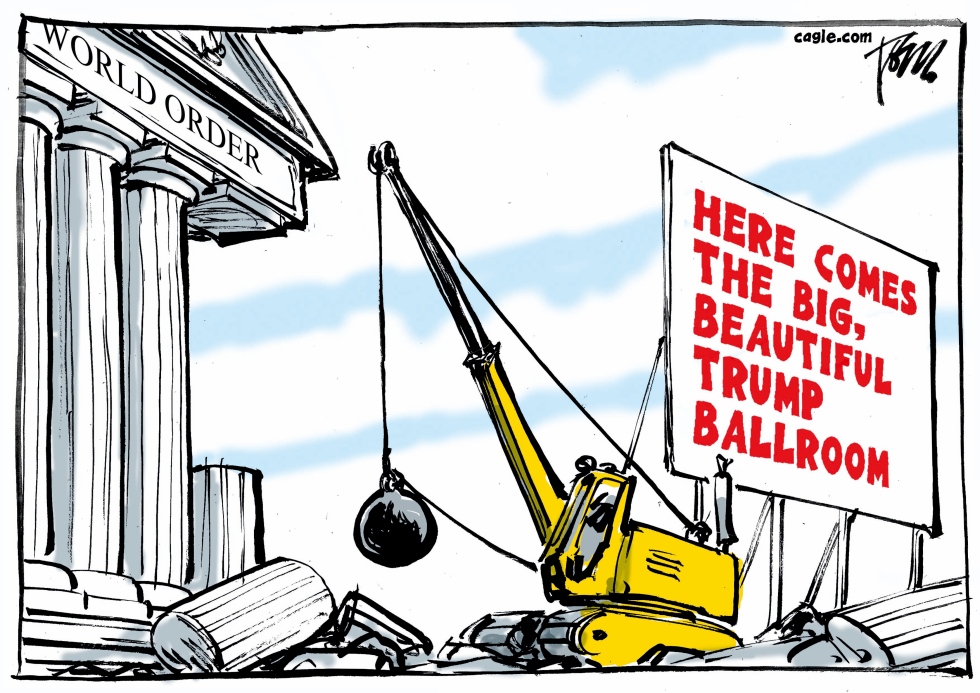
The cartoon depicts a classical building labeled 'World Order' being demolished by a yellow crane's wrecking ball, with debris scattering below and a prominent sign announcing 'Here Comes the Big, Beautiful, Trump Ballroom.' Tags like world order, NATO rift, allies, unreliable, chaos, and tariffs underscore the imagery of disruption. The scene captures a straightforward visual metaphor for upheaval, with broken columns and rubble emphasizing destruction. No characters appear, keeping the focus on structural collapse. Europe and Asia tags suggest broader implications, while the dry humor lies in rebranding ruin as a luxurious ballroom. Oil prices and economy tags tie into the fallout, making it a pointed commentary on global shifts.
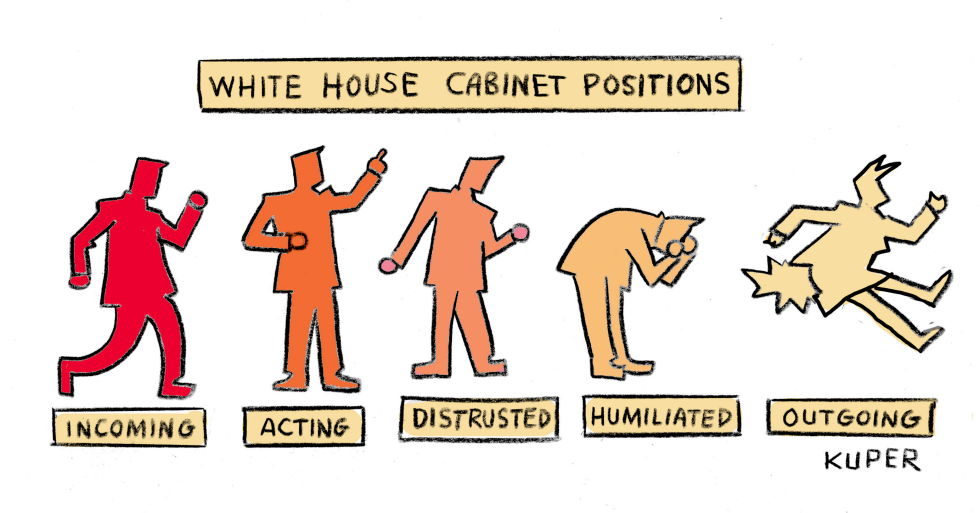
Peter Kuper nails the absurdity of Trump White House cabinet positions in this sharp cartoon. Five stylized figures march through stages: incoming in red, striding confidently; acting with a pointing gesture; distrusted standing still; humiliated bent over in shame; outgoing fleeing with a kick. Labels underscore the progression from promise to humiliation. Tags like cabinet turnover, political satire, administration instability, Trump firings, White House staff cycle, and executive distrust highlight the revolving door of appointments. It's a dry commentary on the chaos, where loyalty meets betrayal in quick succession. The simplicity amplifies the bite, making it perfect for syndication.
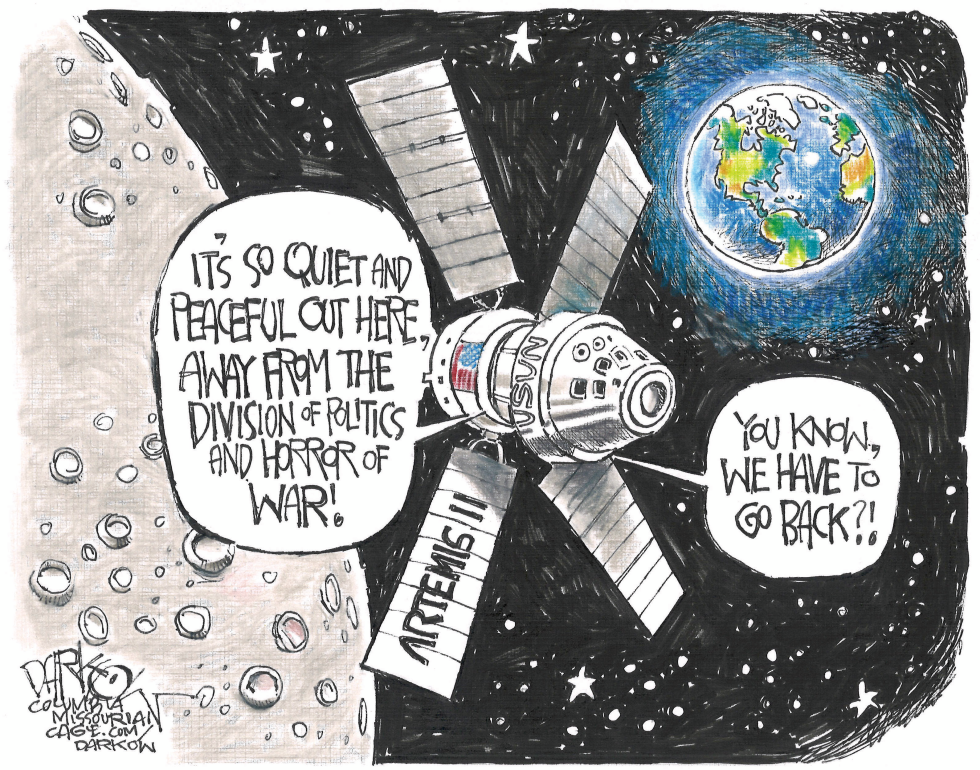
This Daryl Cagle political cartoon analysis features the Artemis II spacecraft floating in serene space, with Earth glowing in the background and the moon nearby. The left speech bubble extols the quiet peace away from division of politics and horror of war, while the right one resignedly notes the need to go back. It's a satirical cartoon on politics and war division, poking fun at how space exploration escaping earthly conflicts offers temporary respite. The NASA Artemis program humor illustration underscores the irony of advanced space missions contrasting with unresolved human divisions on Earth. Through this humorous take on returning to political division, the cartoon cleverly comments on the allure of peaceful space vs chaotic Earth without delving into specifics.
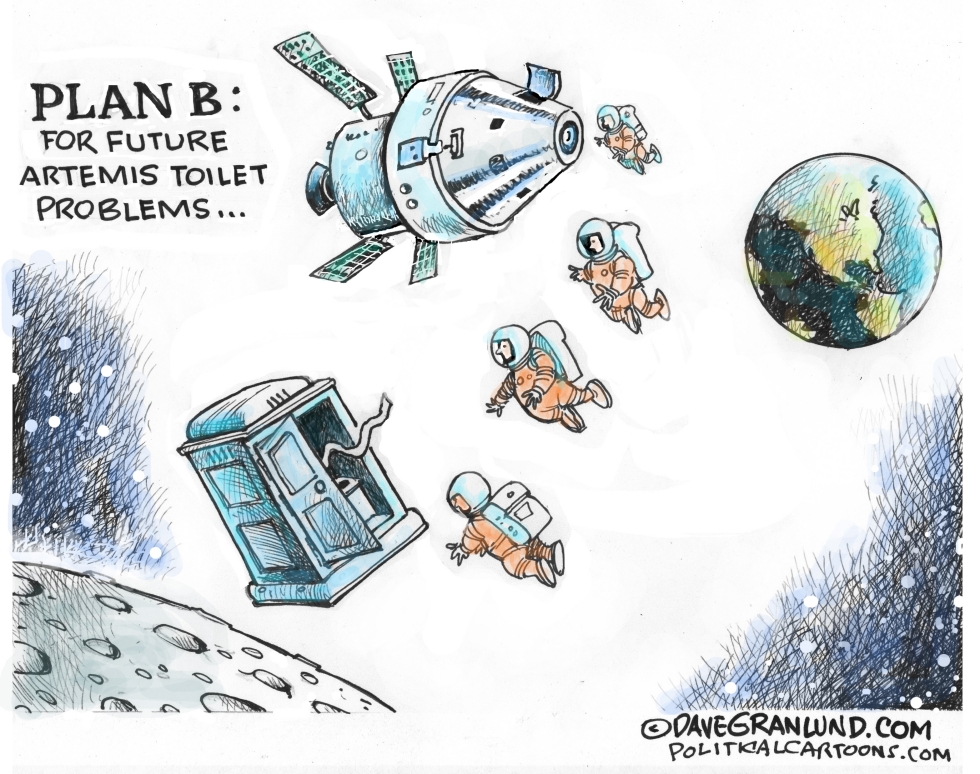
Dave Granlund\'s cartoon captures the absurdity of potential toilet glitch in the Artemis mission around moon, showing astronauts drifting toward a floating porta-potty labeled as Plan B for future Artemis toilet problems. The scene includes a spacecraft, the moon below, and Earth in the background, highlighting backup plan necessities in space travel. With tags like mission around moon, astronauts, toilet glitch, alternate, and one toilet, the image pokes fun at logistical challenges in lunar expeditions. Such humorous takes remind viewers of the everyday hurdles even in high-tech endeavors like NASA\'s Artemis program.
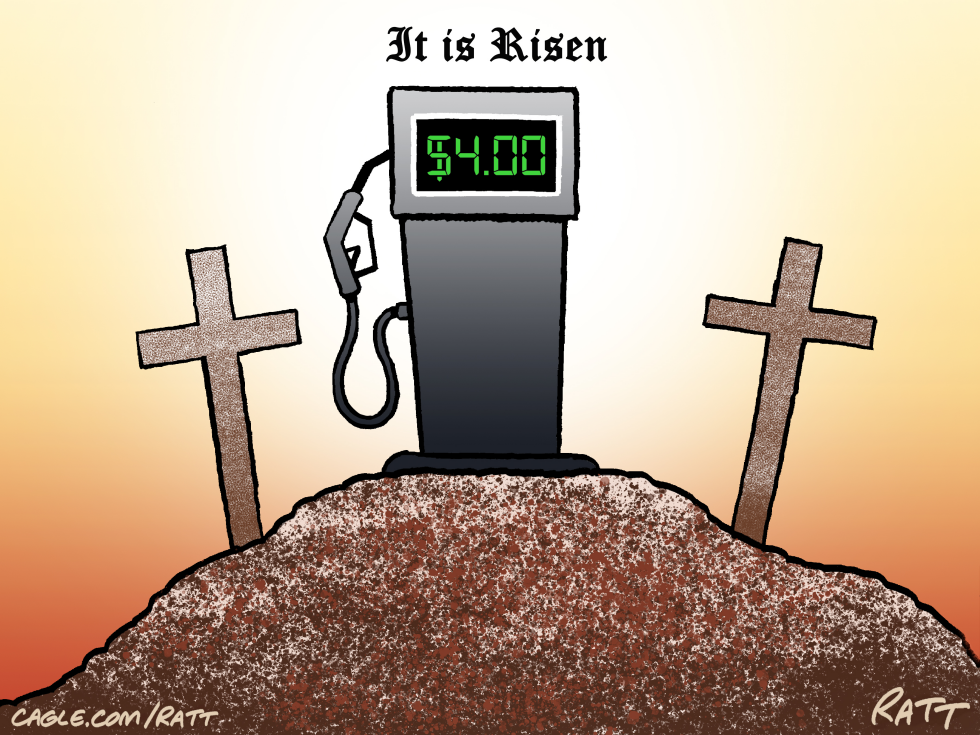
Ratt's cartoon captures Easter in America 2026 with a gas pump standing in for the central cross on a Calvary hill, showing $4.00 on its display and the text 'It is Risen' above, playing on rising gas prices. Tags like Easter, gas prices, oil, Iran war, and Strait of Hormuz suggest a future where geopolitical tensions drive fuel costs skyward. The artwork uses simple lines and a sunset background to evoke the biblical scene, but replaces resurrection with economic pain. This satire highlights how global events, including potential conflicts in the Strait of Hormuz, could lead to exorbitant oil prices by 2026. The dry humor underscores American dependence on foreign oil, making the cartoon timely and shareable amid ongoing energy debates.