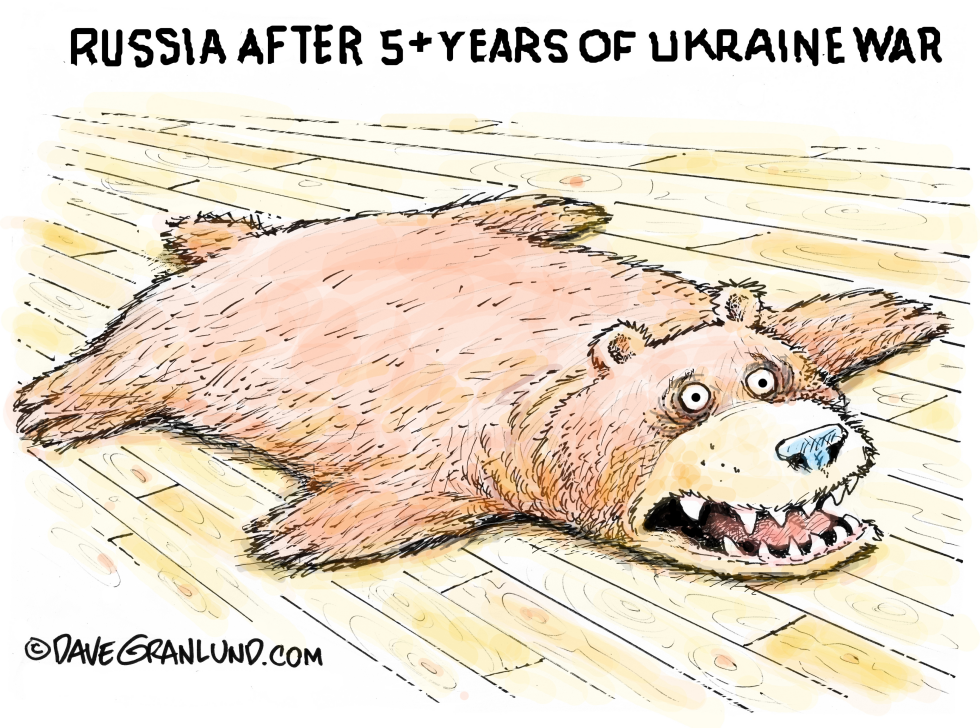
The cartoon depicts Russia as a large brown bear sprawled on a wooden floor, its eyes wide and mouth open in a weary expression. The title directly references the ongoing Ukraine war after five years. This visual metaphor illustrates the strain on Russia from the prolonged conflict. The drawing responds to the extended nature of the war that began in 2022 and continued into 2026. It highlights how the invasion has left Russia in a weakened state without resolving the underlying issues.
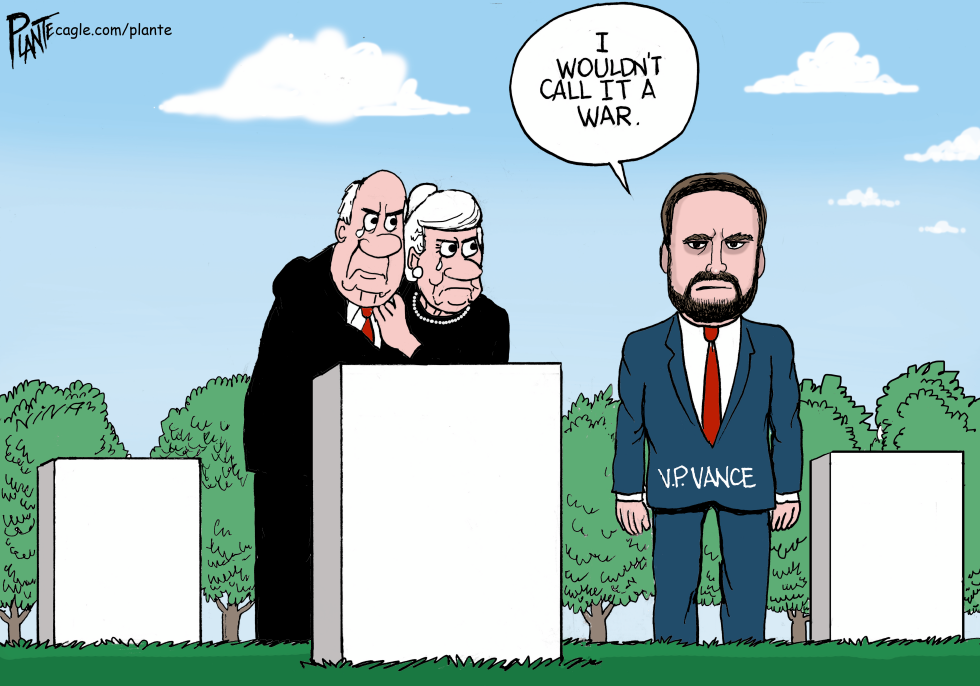
Vice President JD Vance has publicly stated that the United States is not at war with Iran even as reports indicate American casualties in the region. The administration frames operations as limited strikes rather than full conflict. This downplaying occurs amid broader tensions over Iran's nuclear program and regional influence. The cartoon argues that the human cost in the cemetery makes the denial untenable and that the situation qualifies as war.
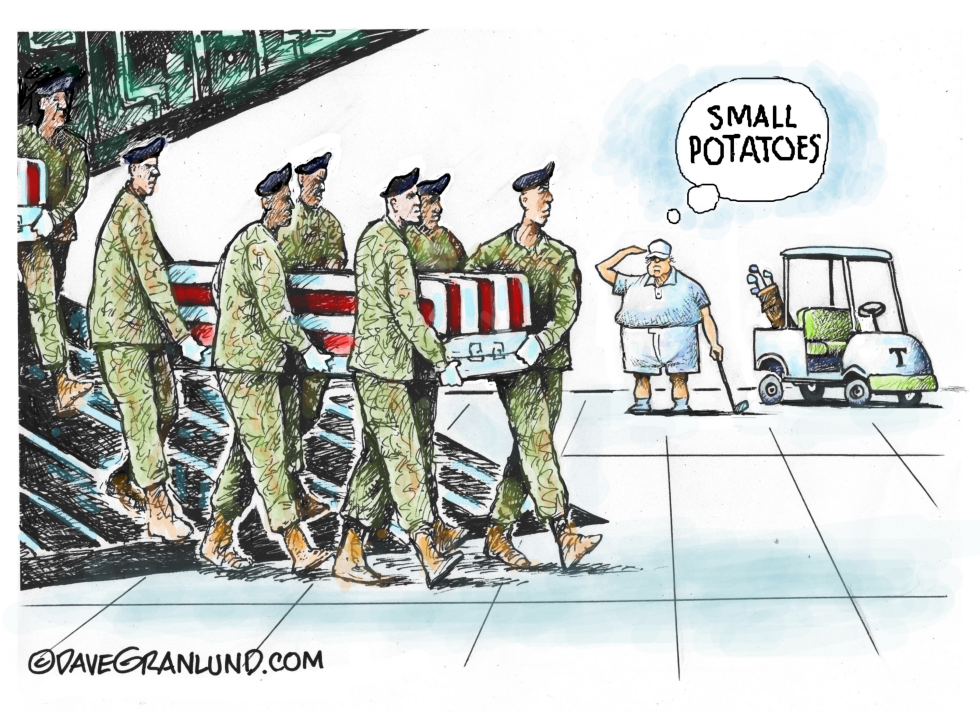
The cartoon depicts Donald Trump in golf clothes standing beside a golf cart labeled T as an honor guard carries a flag-draped military casket down stairs from an aircraft. Trump salutes while a thought bubble above him reads small potatoes. The image responds to ongoing criticism of Trump's public comments and scheduling choices involving military funerals and veterans issues during his political career. The visual contrasts the solemn casket procession with Trump's casual golf attire and dismissive remark to highlight perceived disrespect.
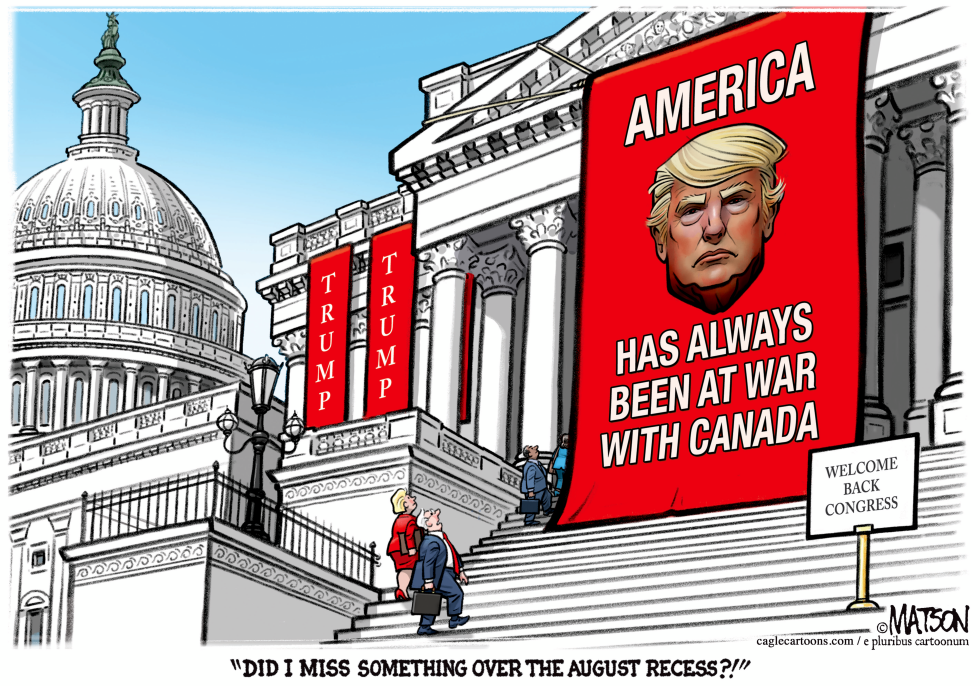
President Trump has intensified trade measures against Canada, prompting comparisons to classic dystopian rhetoric as lawmakers reconvene after the August recess. The move revives long-standing bilateral tensions over tariffs and economic policy. The cartoon frames the development as an attempt to normalize conflict through repeated messaging, underscoring concerns that familiar disputes are being recast as perpetual struggle.
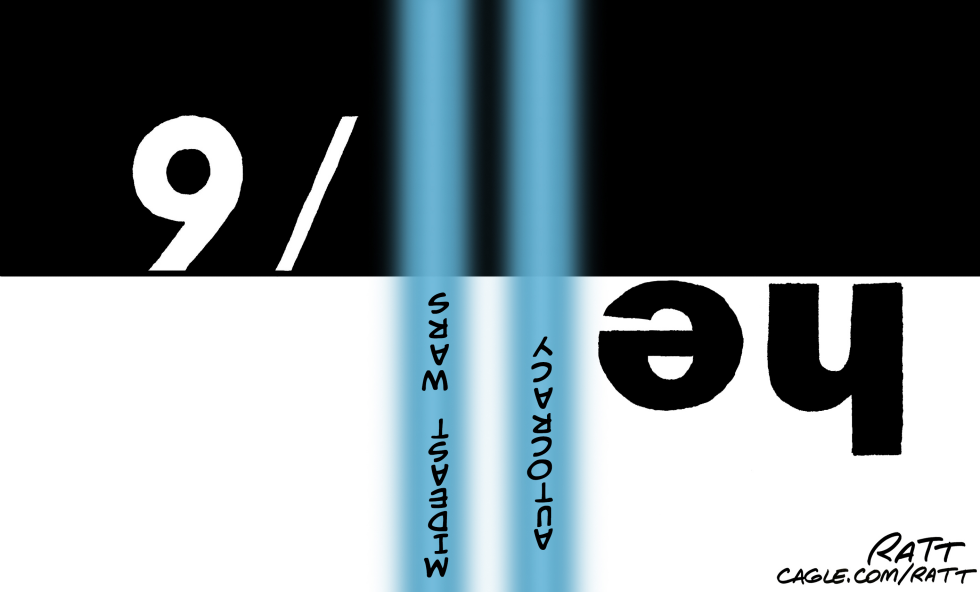
September 11 anniversary observances in 2026 coincide with ongoing debates over the long-term costs of U.S. and European involvement in Middle East conflicts that followed the attacks. The piece underscores how far removed current realities remain from the original site and moment of the 2001 attacks.
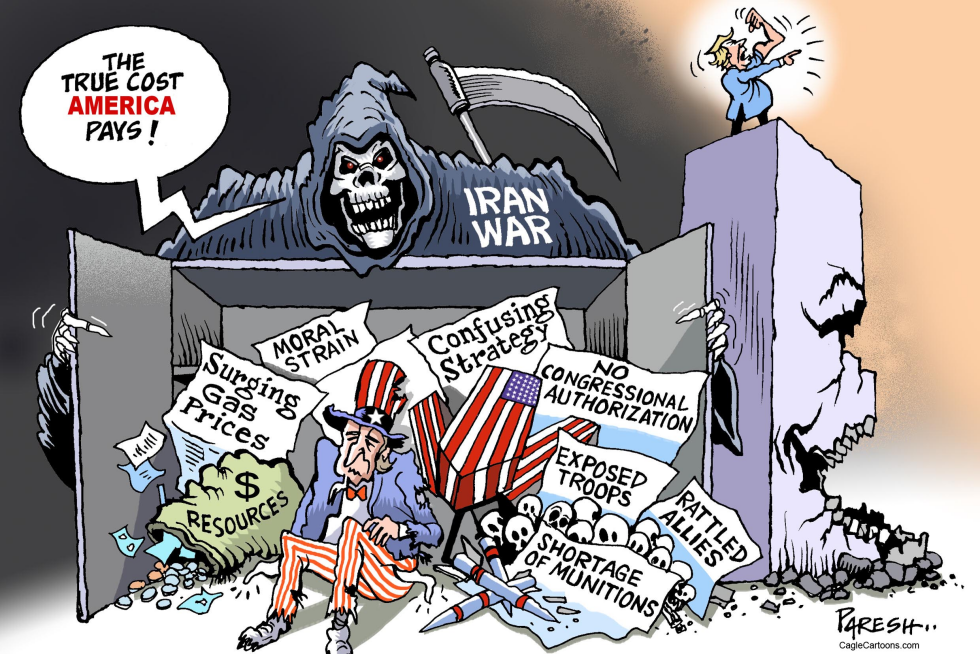
The cartoon depicts the Grim Reaper personifying the Iran War looming over a box of American costs including surging gas prices, moral strain, confusing strategy, no congressional authorization, exposed troops, shortage of munitions and rattled allies. Uncle Sam sits defeated among the debris with a broken flag and skulls. Donald Trump stands on a pedestal pointing upward. A speech bubble declares the true cost America pays. Published September 4, 2026, the piece critiques the drain on U.S. resources and lack of oversight in the conflict.
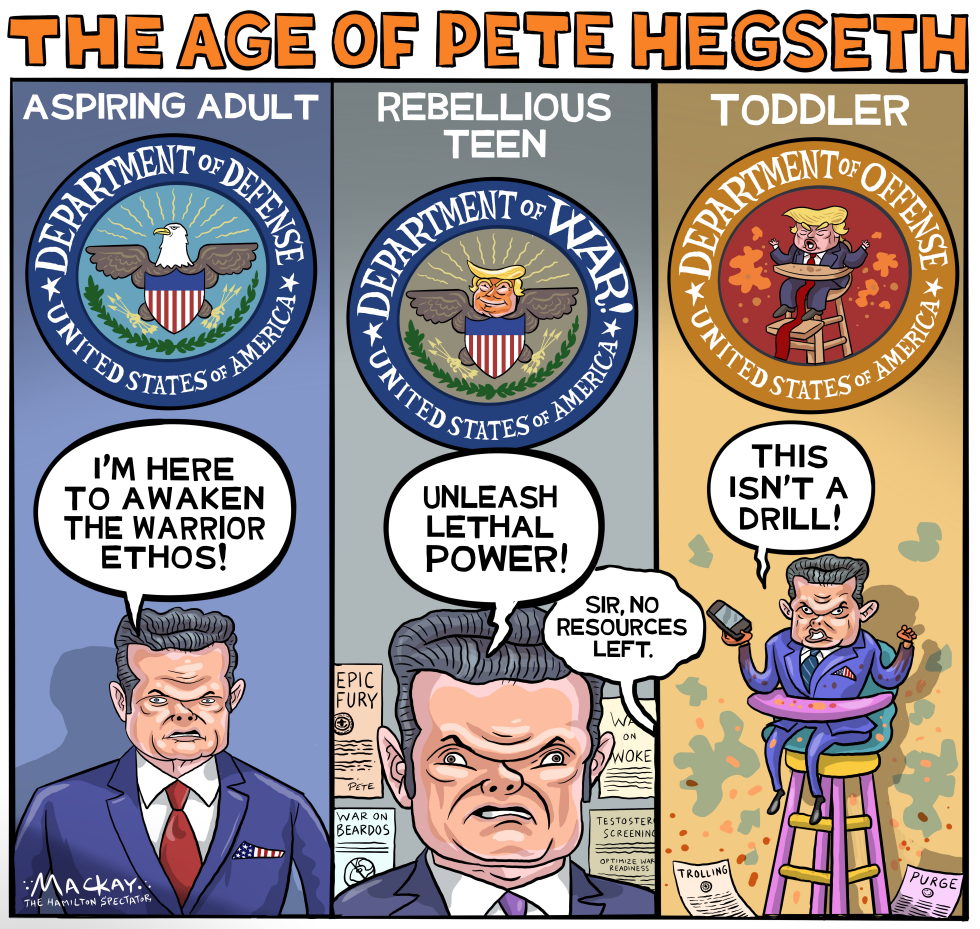
The cartoon by Graeme MacKay portrays Pete Hegseth's progression through three stages at the Pentagon under President Trump. In the first panel Hegseth pledges to awaken the warrior ethos at the Department of Defense. The middle panel shows him calling to unleash lethal power while an aide reports no resources remain. The final panel depicts a toddler Trump at the Department of Offense with Hegseth as a frantic aide amid papers about testosterone screening and purges. The work comments on the Trump administration's approach to military leadership and policy priorities as of September 2026.
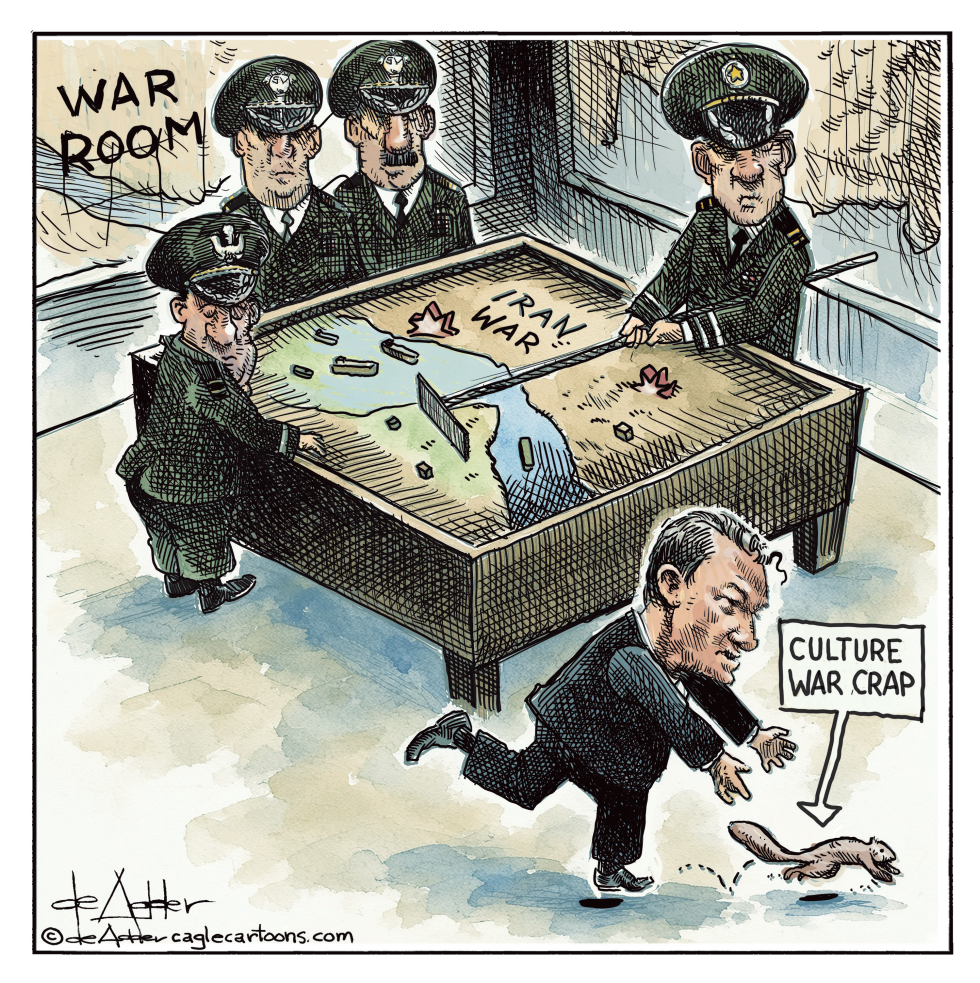
Defense Secretary Pete Hegseth has drawn scrutiny for emphasizing culture war issues while military planners address potential Iran contingencies. The cartoon depicts him pursuing a squirrel marked culture war crap instead of joining officers at the Iran war table. Critics argue this reflects a pattern of prioritizing domestic cultural battles over strategic readiness. The piece suggests such focus undermines effective leadership in the Pentagon. It critiques the administration's approach to balancing internal politics with national security demands.
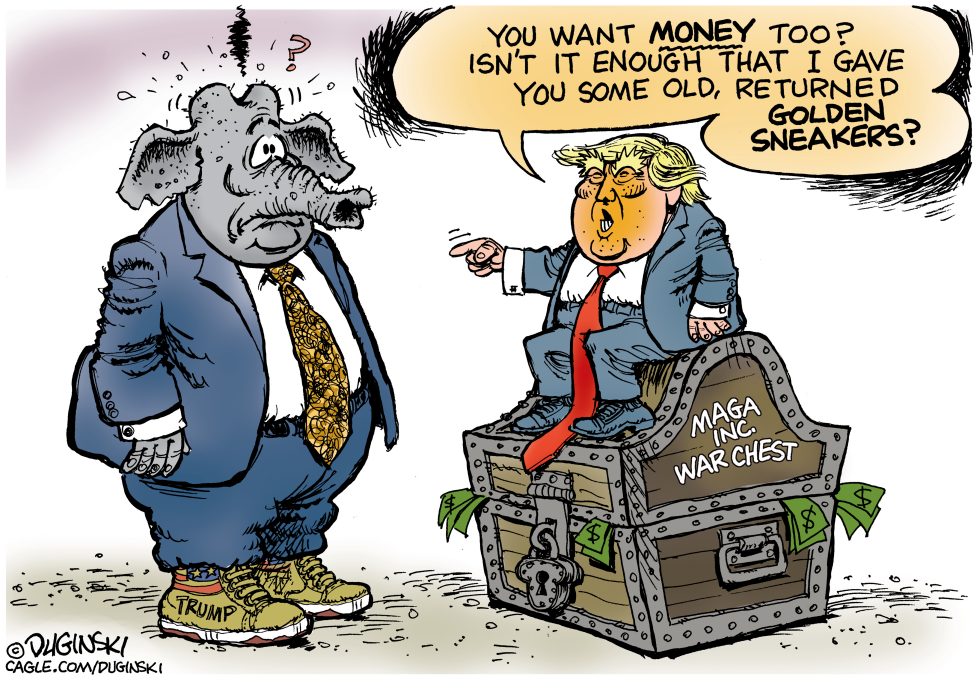
Donald Trump maintains tight control over his substantial campaign funds in the lead-up to the 2026 elections. Fellow Republicans have expressed frustration that he is unwilling to distribute resources from his war chest to support their races. The dynamic highlights ongoing tensions within the party over access to donor money. Trump has instead pointed to past gestures such as distributing returned merchandise. The cartoon criticizes this reluctance as self-serving and detrimental to broader Republican efforts.
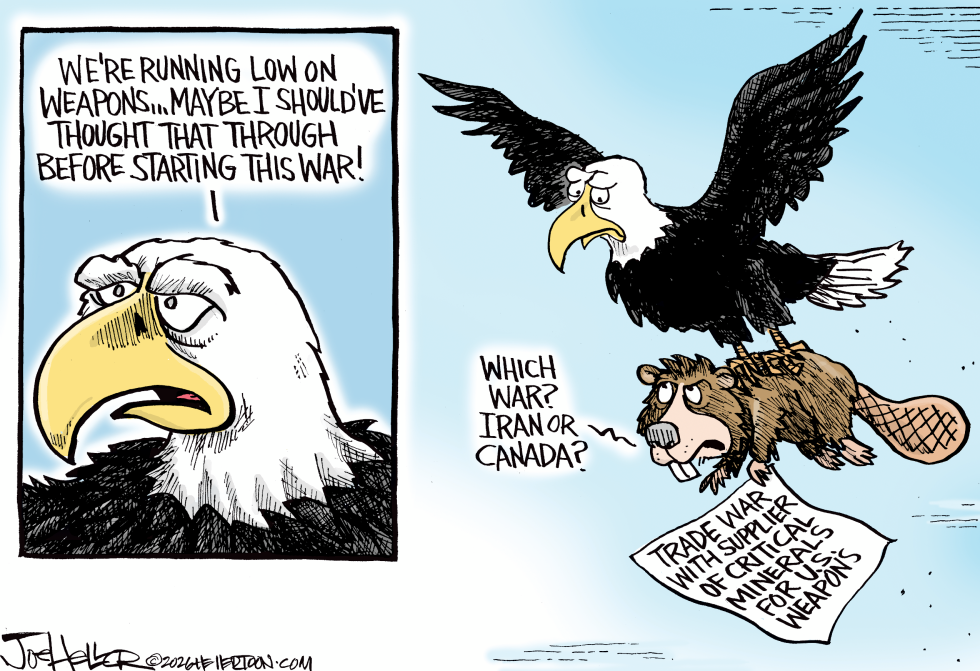
The United States faces potential weapons shortages linked to trade tensions with Canada, a key supplier of critical minerals, while also managing conflicts involving Iran. The situation highlights risks to military readiness from disrupted supply chains. The piece argues that initiating trade disputes with essential partners undermines defense capabilities at a critical time.
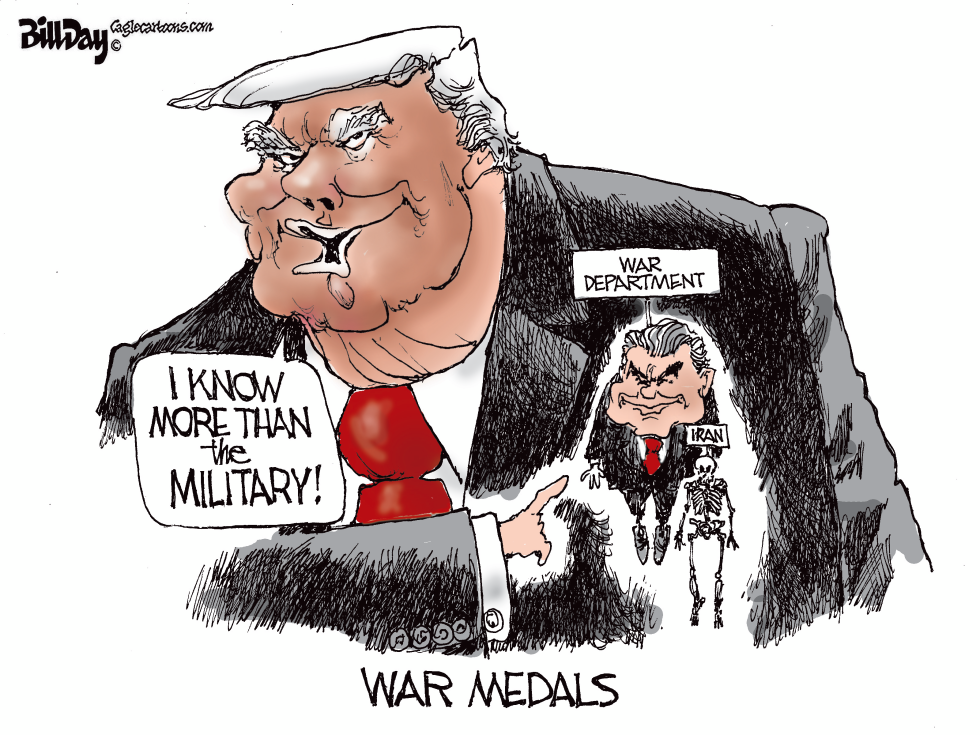
Donald Trump publicly stated he knows more than the military on defense matters as tensions with Iran persisted into late summer 2026. The remark revived questions about civilian oversight of the armed forces and the administration's approach to potential conflict. Critics argued the comment undermined professional military advice at a sensitive time. Supporters viewed it as decisive leadership. The cartoon frames the statement as hollow by linking it to a depleted war department and Iran references, suggesting the boast lacks substance and risks escalation without real expertise.
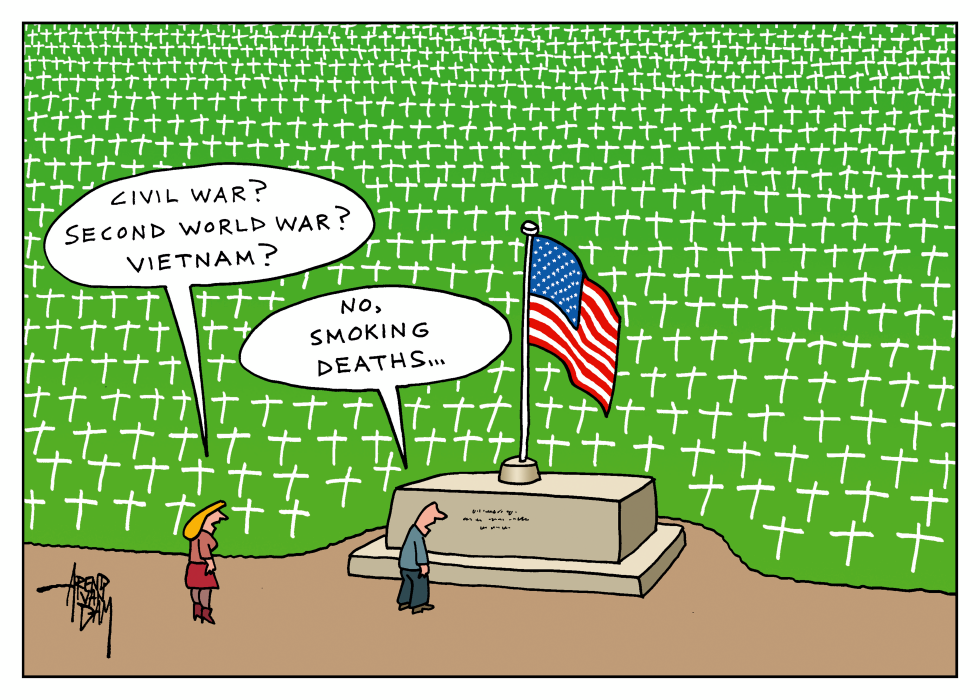
Tobacco-related deaths in the United States continue to surpass combined fatalities from major 20th-century conflicts. The piece uses a veterans cemetery motif to underscore that ongoing public health crisis and argues for greater recognition of smoking as a leading cause of preventable mortality.
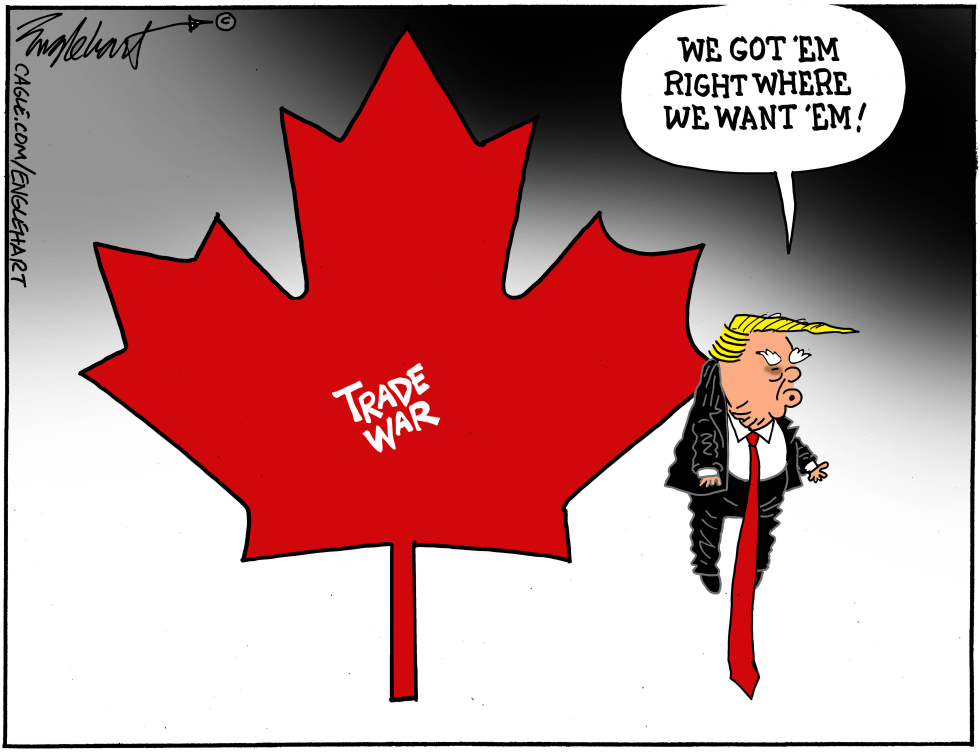
President Donald Trump has escalated tariffs on Canadian goods in a widening trade dispute. Ottawa responded with targeted countermeasures that hit key US exports. The standoff raises costs for American consumers and businesses while straining long-standing alliance ties. The cartoon portrays Trump as overconfident in a confrontation where Canada holds leverage.
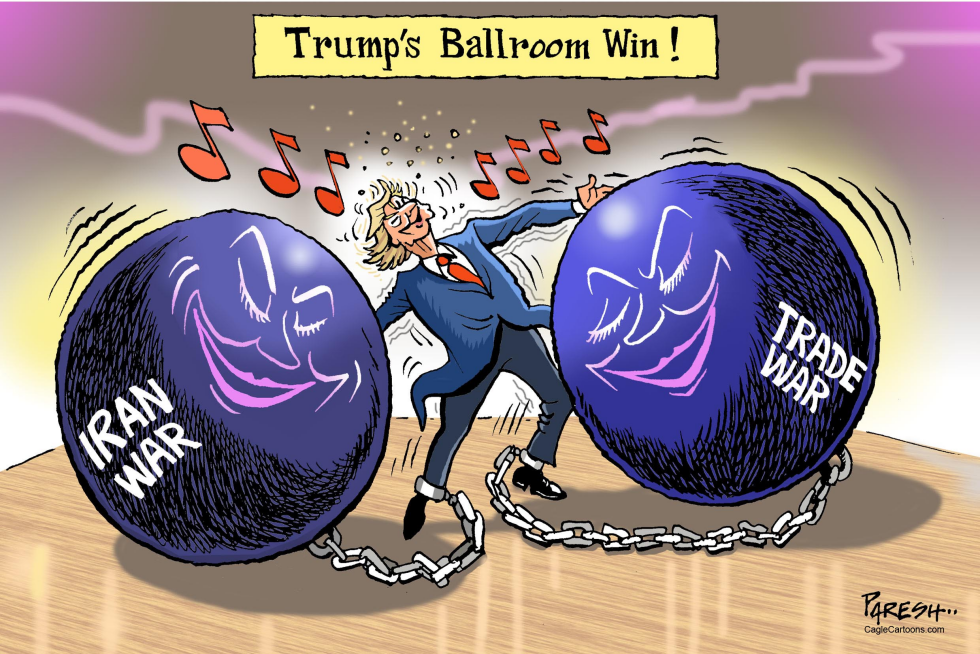
A political cartoon published September 1, 2026, portrays Donald Trump dancing energetically in a ballroom while his ankles are chained to two large balls labeled Iran War and Trade War. The image suggests the president is weighed down by simultaneous foreign policy and economic conflicts. Music notes and a banner reading Trump's Ballroom Win add ironic flair to the scene. The cartoon responds to ongoing tensions involving U.S. relations with Iran and persistent trade disputes. It visually argues that these issues continue to constrain administration actions despite any claimed victories.
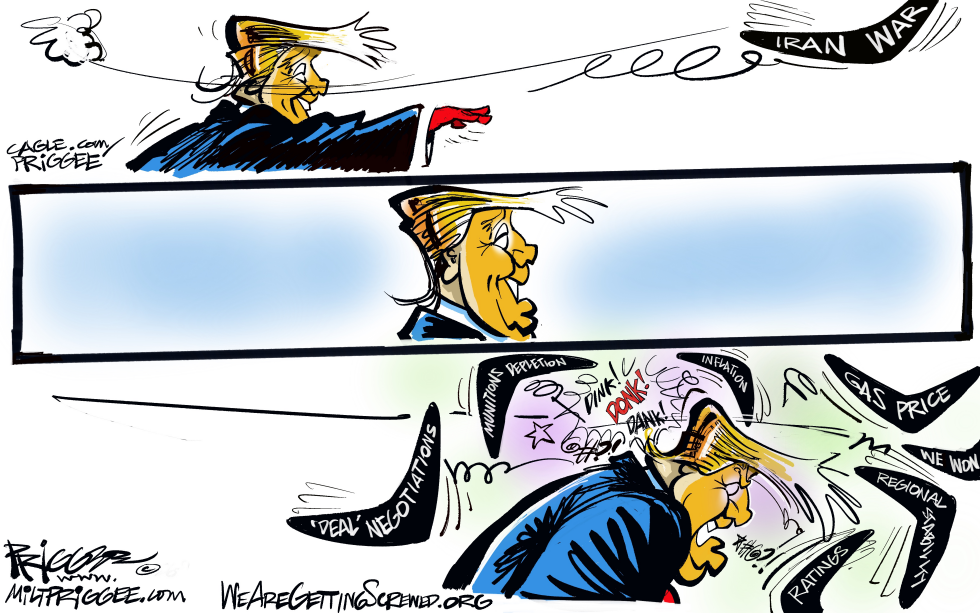
A political cartoon depicts Donald Trump launching an Iran war boomerang that returns to strike him with multiple crises. The image shows the former president hit by labels including inflation, gas prices, munitions depletion and falling ratings. The cartoon responds to ongoing tensions with Iran and the domestic fallout from military engagement. It illustrates how the conflict decision led to economic pressures and political damage as of the September 2026 publication date.