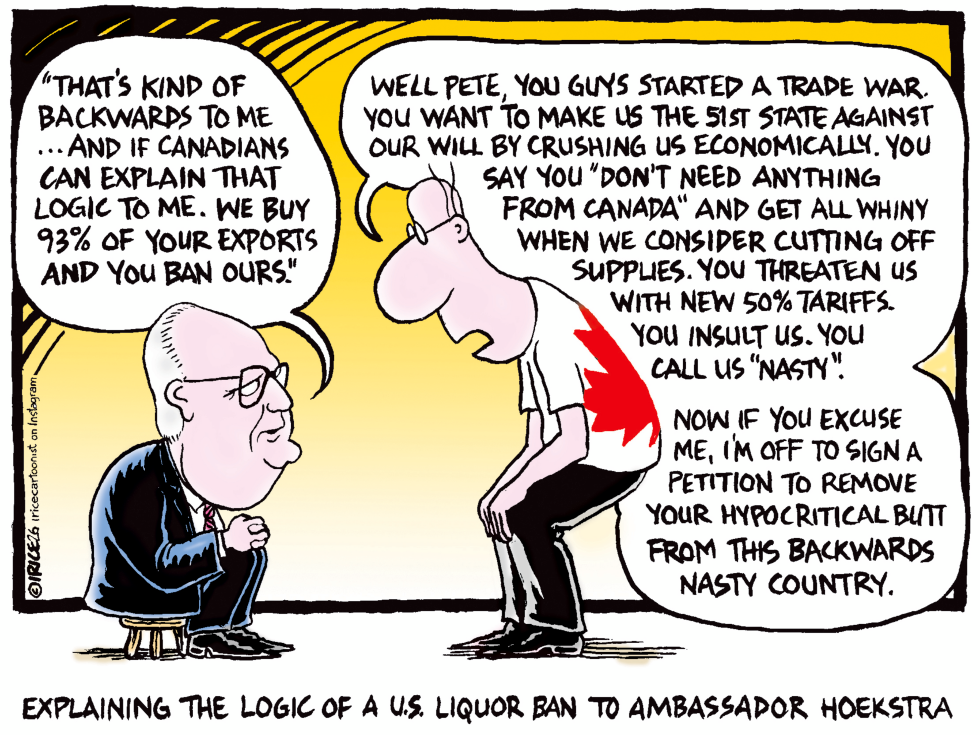
The United States has enacted a liquor ban targeting Canadian products as part of broader trade measures. Ambassador Hoekstra receives direct criticism over the policy's economic impact and perceived hypocrisy. The response underscores Canada's role as a major buyer of U.S. exports and its readiness to retaliate with supply cuts and petitions.
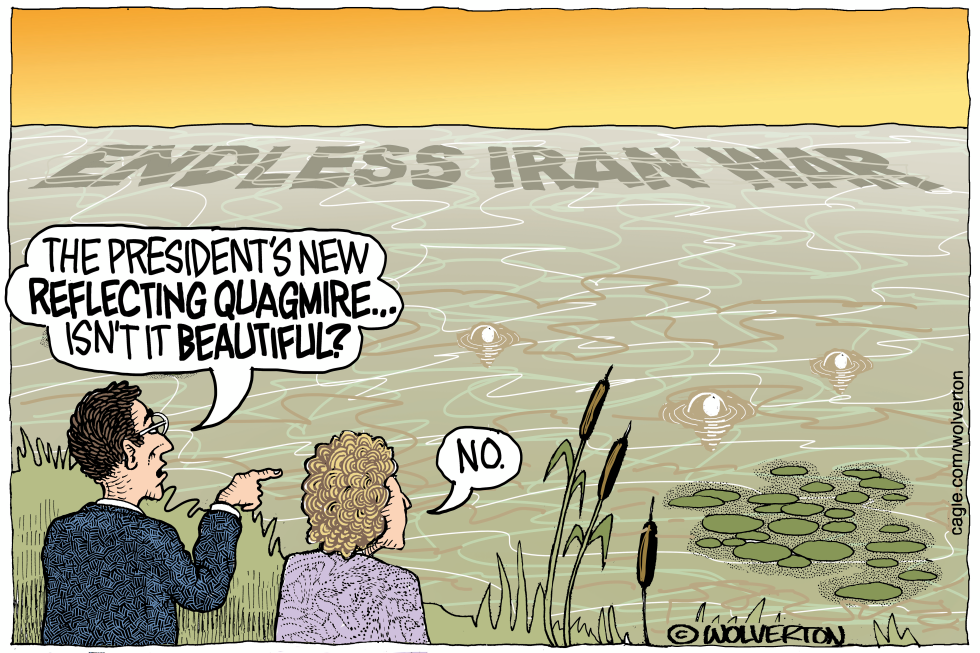
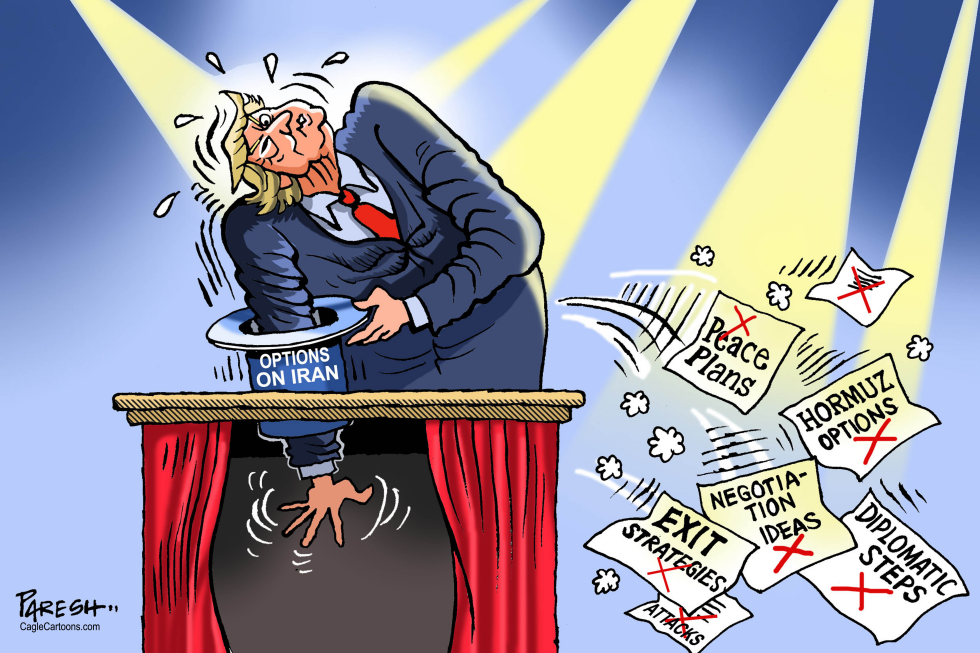
Ongoing debate surrounds U.S. policy toward Iran and the risk of prolonged military involvement in the Middle East. The situation highlights divisions over whether recent actions risk repeating past patterns of extended conflict. The piece argues that such engagement offers little to admire and merits outright rejection.
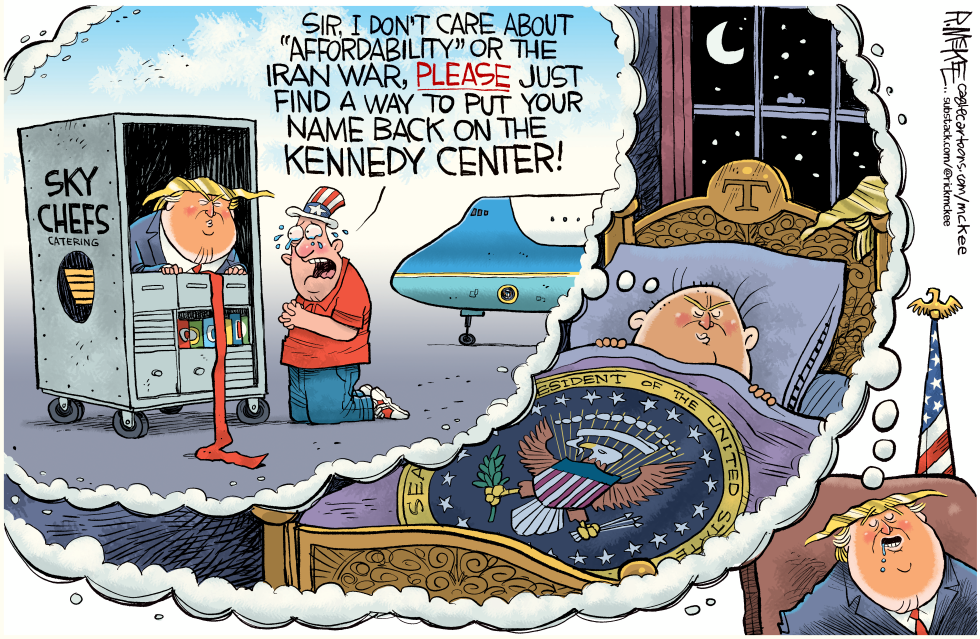
Donald Trump has repeatedly expressed interest in attaching his name to prominent public institutions. The Kennedy Center, a major arts venue in Washington, has drawn his attention as a potential target for rebranding. Critics argue such moves distract from pressing national issues including foreign conflicts and domestic spending. The cartoon depicts this fixation as a nighttime preoccupation that sidelines other responsibilities.
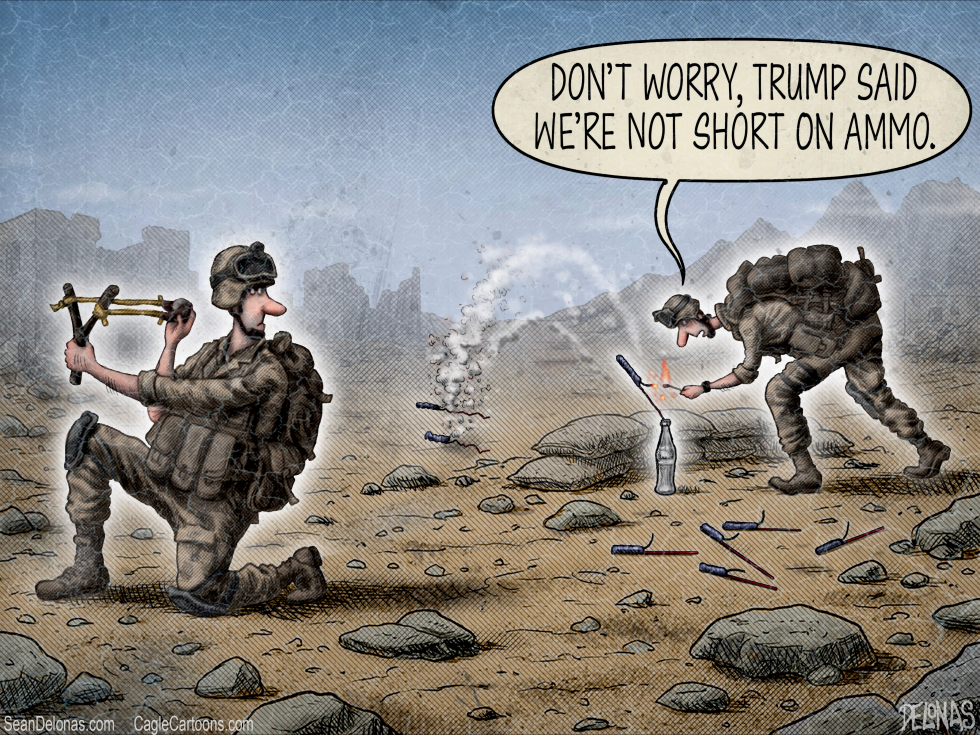
U.S. forces in a desert conflict zone report ammunition shortages forcing improvised weapons. The situation highlights strains on military logistics during ongoing operations. The piece critiques assurances from leadership that supplies remain adequate.
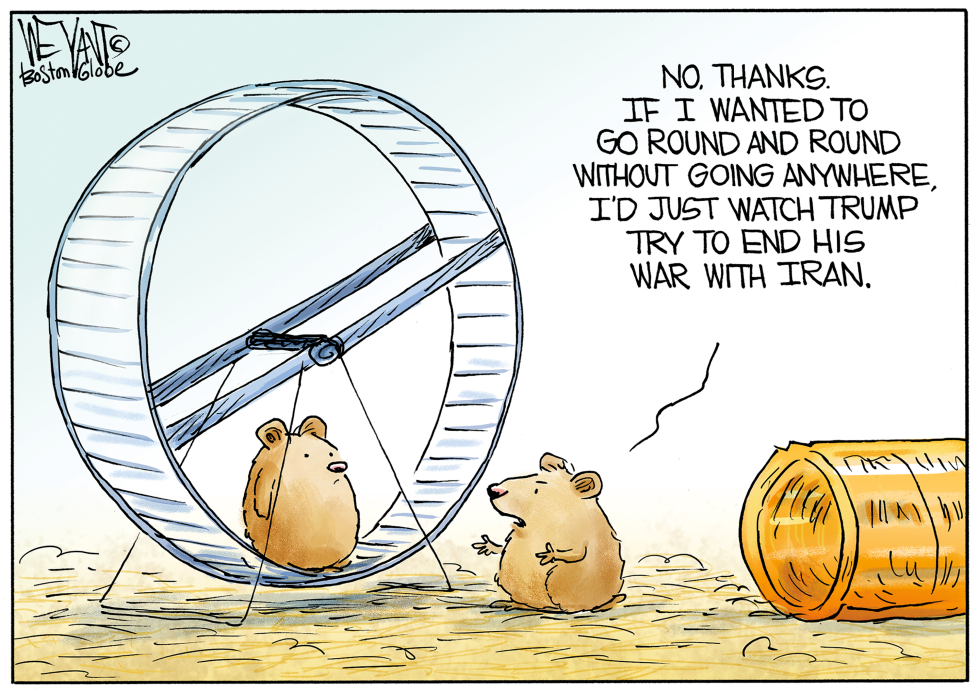
President Trump continues efforts to resolve the ongoing conflict with Iran through repeated diplomatic rounds. The situation remains stalled with no clear progress after multiple attempts. Observers note the repetitive nature of the process without advancement. The piece portrays the hamster's refusal as a commentary on the futility of the approach.
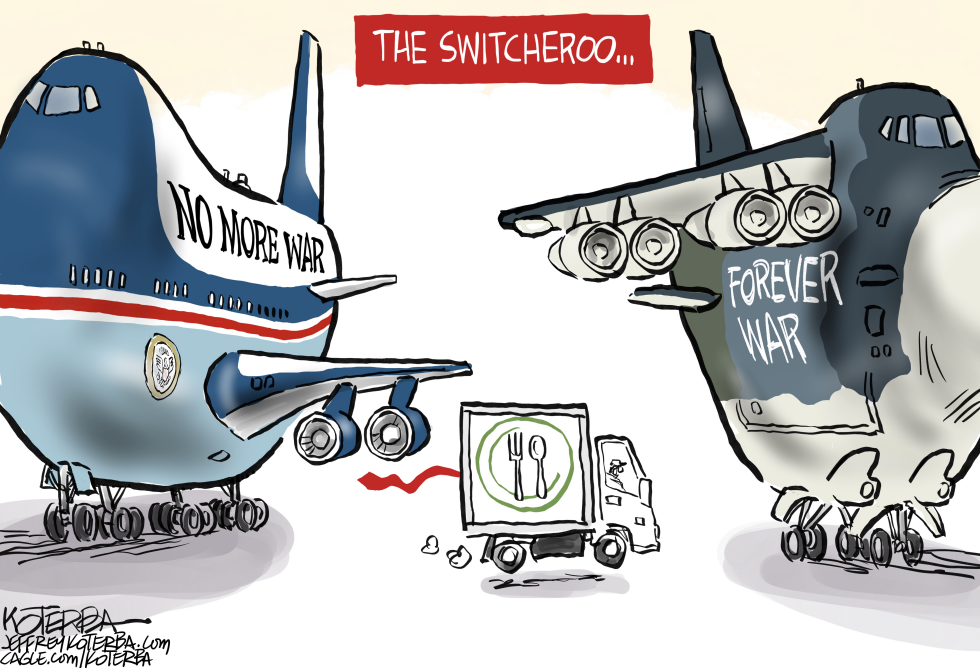
A political shift in military posture draws attention as commitments move from ending wars to sustaining them indefinitely. The editorial critiques the reversal as a cynical about-face on foreign engagements.
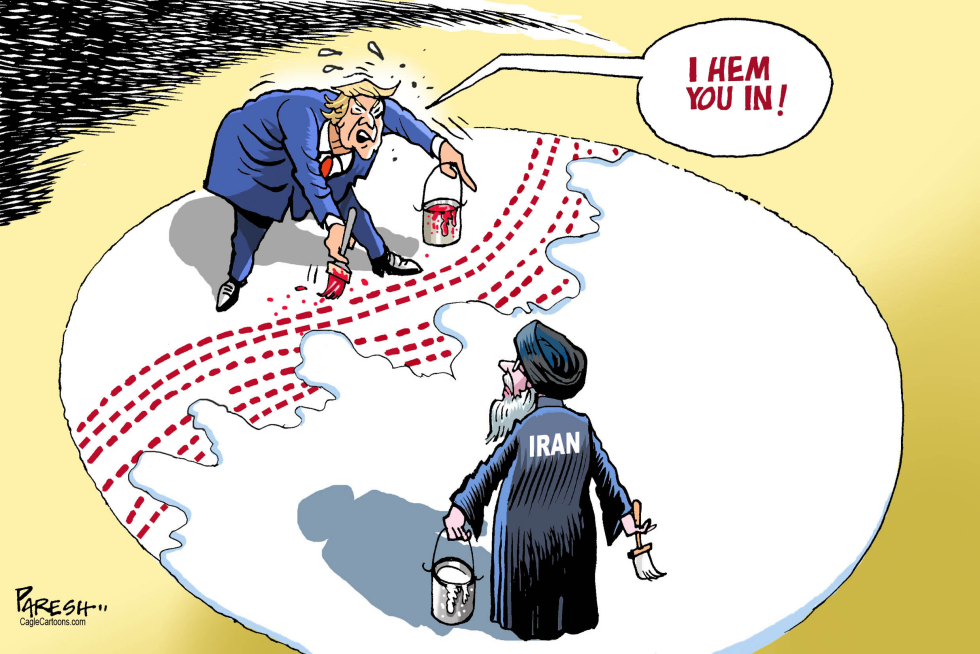
Donald Trump appears on a globe painting red dashed lines near a region labeled Iran. A robed figure marked Iran stands nearby holding a paint bucket. Trump points and declares through a speech bubble that he will hem the country in. The image responds to recent developments in U.S. policy toward Iran as of August 2026. The visual uses the act of painting boundaries to illustrate efforts at containment in the Middle East.
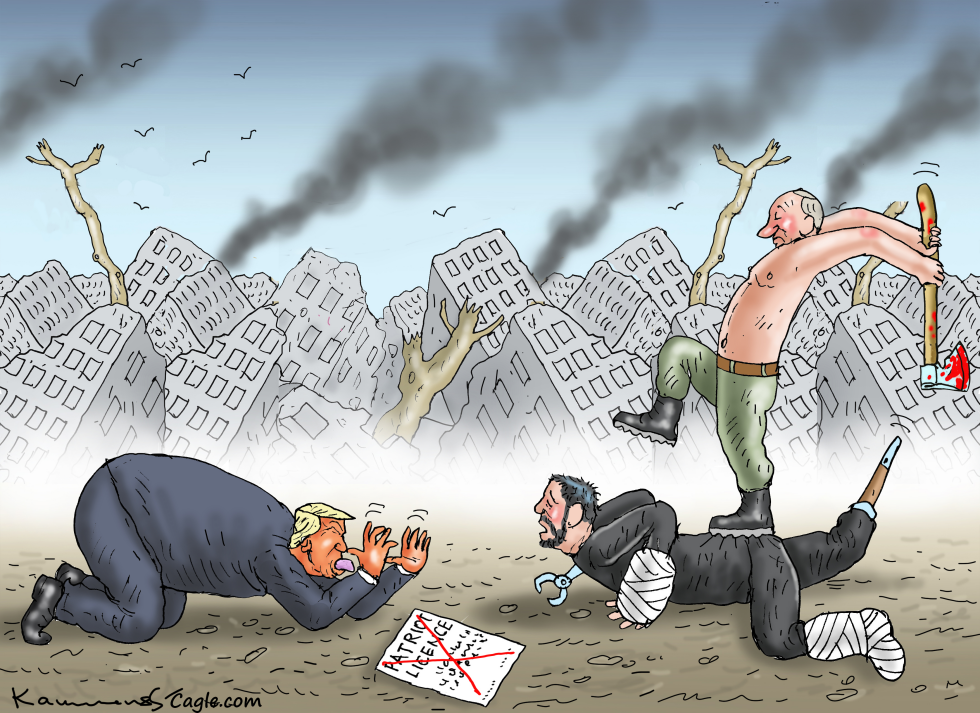
Russian President Vladimir Putin asserted dominance in the ongoing Ukraine conflict as US President Donald Trump and Ukrainian President Volodymyr Zelenskyy faced mounting pressure in mid-2026. The war continued to devastate Ukrainian cities with no immediate resolution in sight. The editorial depicts Putin as the unchallenged power broker leaving both leaders vulnerable and sidelined.
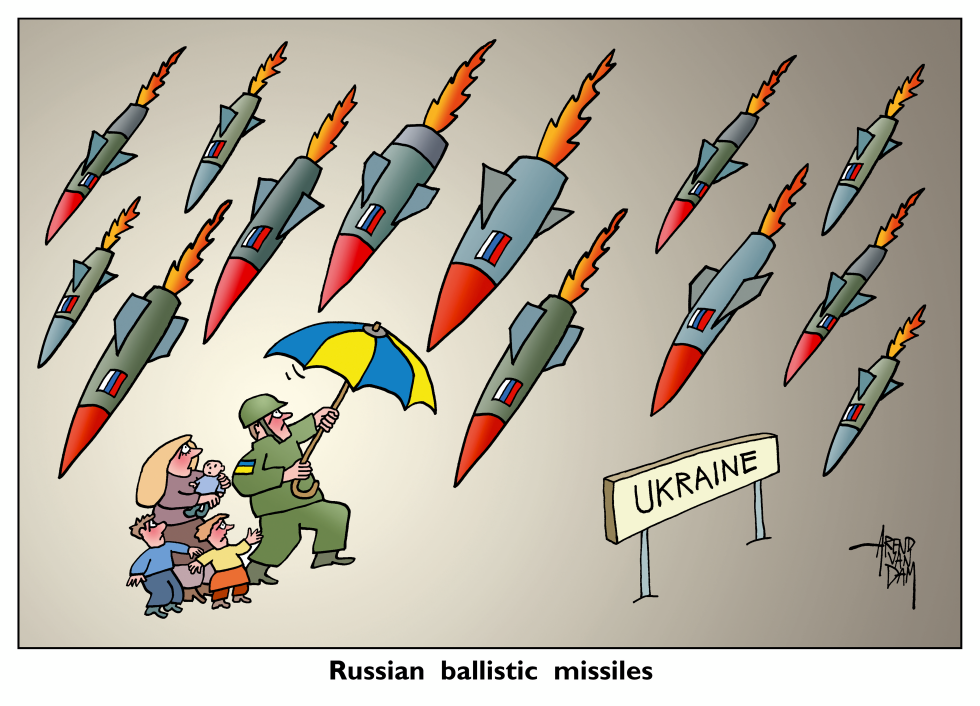
Russian ballistic missile strikes continue to target Ukrainian territory amid the prolonged conflict. A Ukrainian soldier stands at the forefront shielding a family of civilians from the barrage. The attacks underscore the persistent threat to noncombatants and infrastructure. The image frames the soldier's action as a direct barrier between the incoming weapons and those under protection. It emphasizes the role of Ukrainian forces in sustaining civilian safety during sustained aerial assaults.
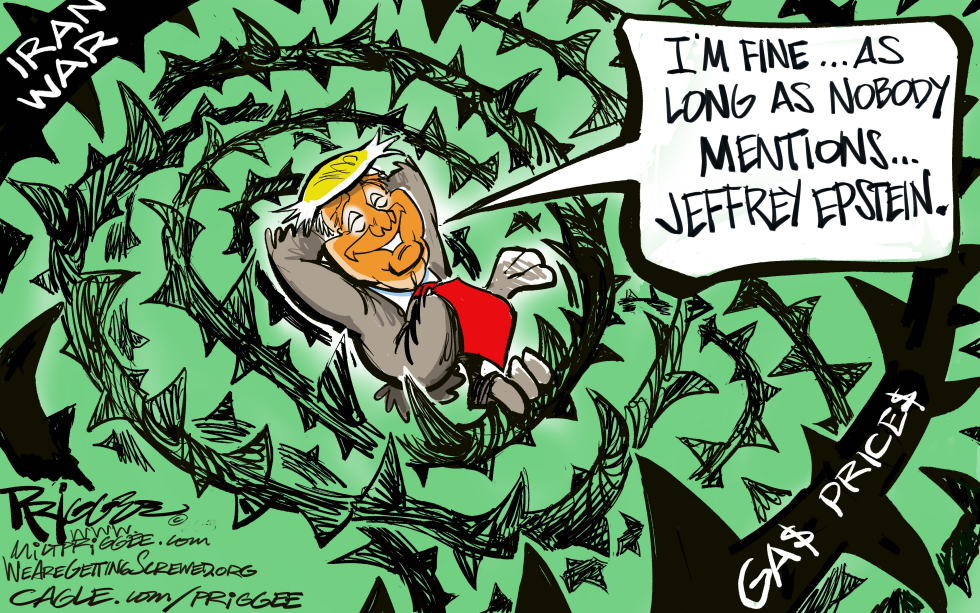
The cartoon depicts Donald Trump caught in a swirling vortex of thorns marked Iran war and gas prices. His speech bubble reveals an attempt to avoid any mention of Jeffrey Epstein. Published amid ongoing tensions in the Middle East, the image comments on how the president uses foreign conflict to shift focus from past associations. The visual metaphor of entrapment highlights the inescapable nature of the Epstein issue despite efforts at distraction. It reflects public concerns over energy costs rising with geopolitical instability.
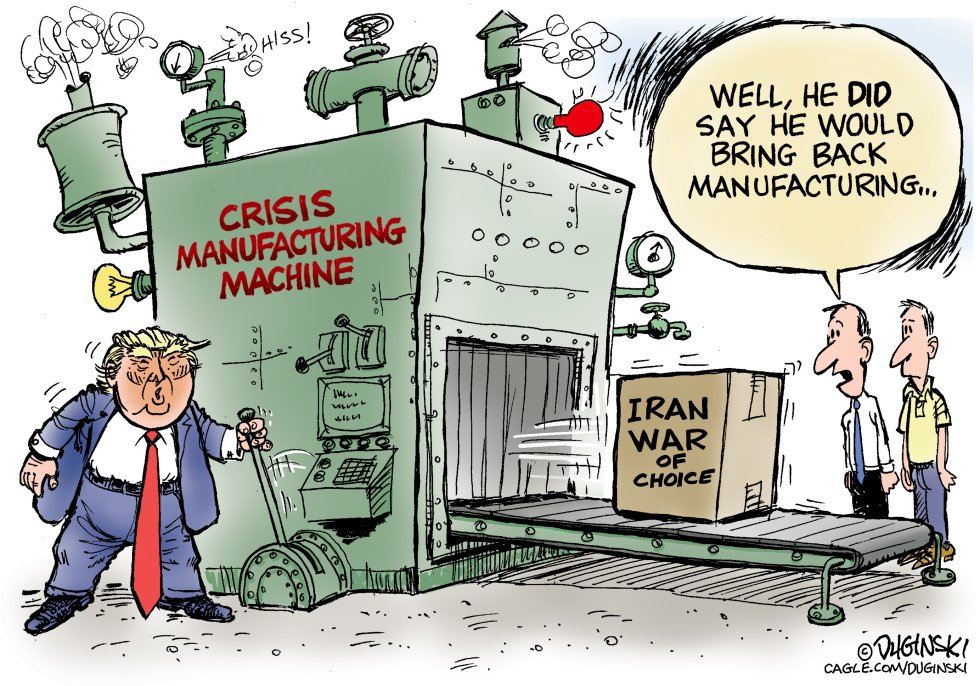
Donald Trump, holding the presidency in 2026, faces renewed scrutiny over foreign policy toward Iran. Recent statements revive campaign pledges to restore domestic manufacturing while tensions with Tehran escalate. The administration\\\'s approach draws criticism for prioritizing confrontation over diplomacy. Observers note the pattern of generating external crises rather than economic gains at home. The cartoon argues that Trump\\\'s actions fulfill a literal version of his manufacturing rhetoric by producing conflict instead of jobs.
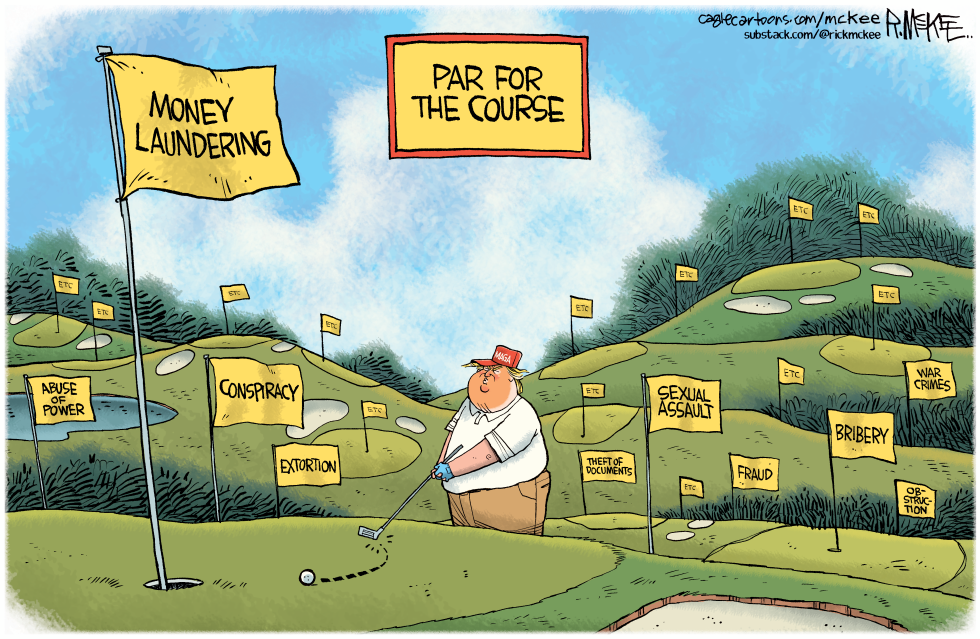
Donald Trump appears on a golf course in an editorial cartoon dated August 6 2026. Multiple yellow flags label alleged offenses including money laundering, conspiracy, extortion, sexual assault, bribery, fraud and obstruction. The piece responds to ongoing legal and political scrutiny of the former president. It frames these issues as routine for Trump through the visual metaphor of a golf course. The editorial position presents the allegations as expected elements of his record.
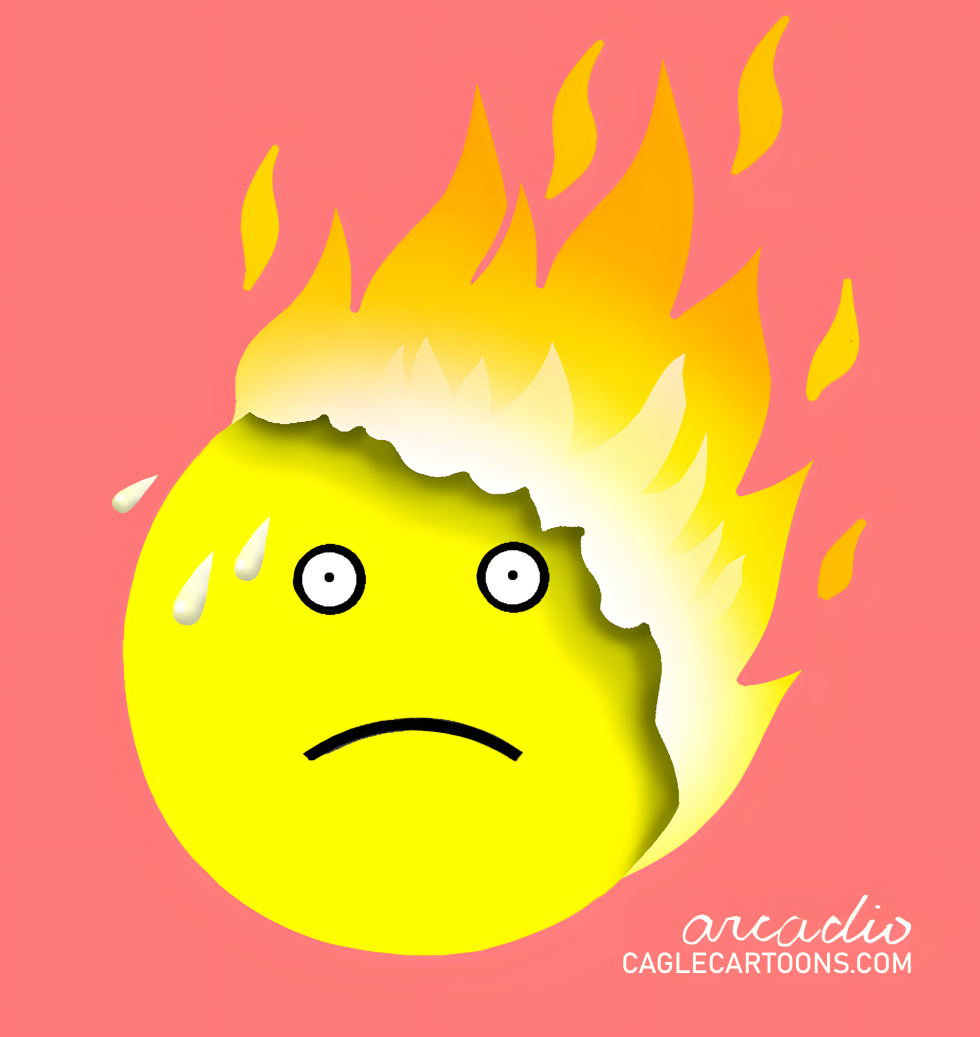
Ongoing wildfire seasons and fire-related disasters continue to disrupt communities and personal well-being across affected regions. The piece frames these events as forces that directly eliminate everyday happiness and security for those impacted. It presents fire as an eraser of positive emotion rather than a manageable natural occurrence.