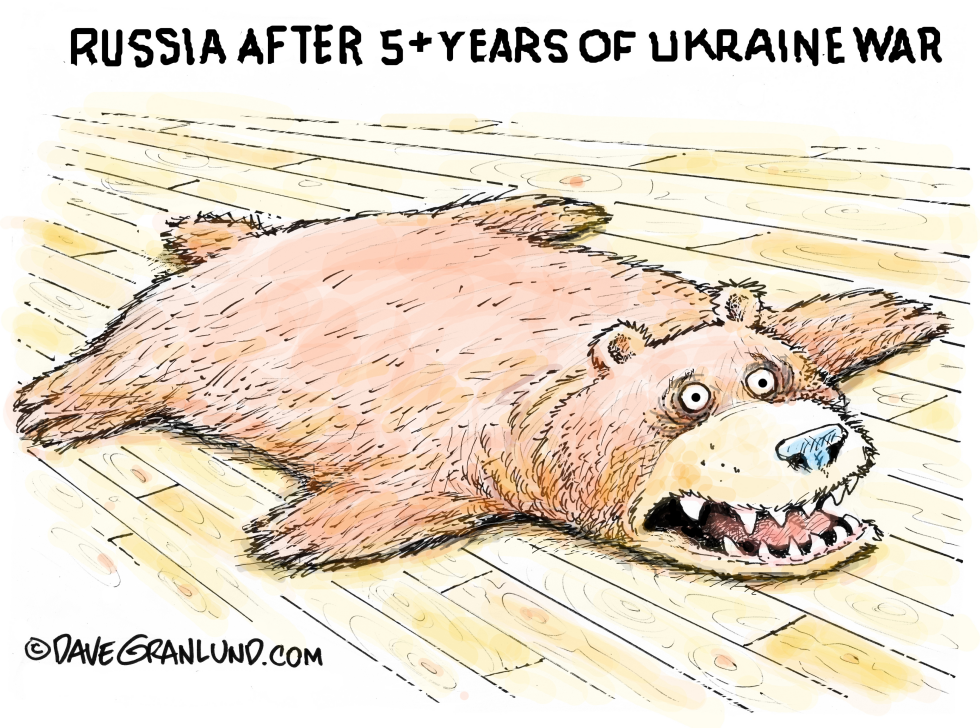
The cartoon depicts Russia as a large brown bear sprawled on a wooden floor, its eyes wide and mouth open in a weary expression. The title directly references the ongoing Ukraine war after five years. This visual metaphor illustrates the strain on Russia from the prolonged conflict. The drawing responds to the extended nature of the war that began in 2022 and continued into 2026. It highlights how the invasion has left Russia in a weakened state without resolving the underlying issues.
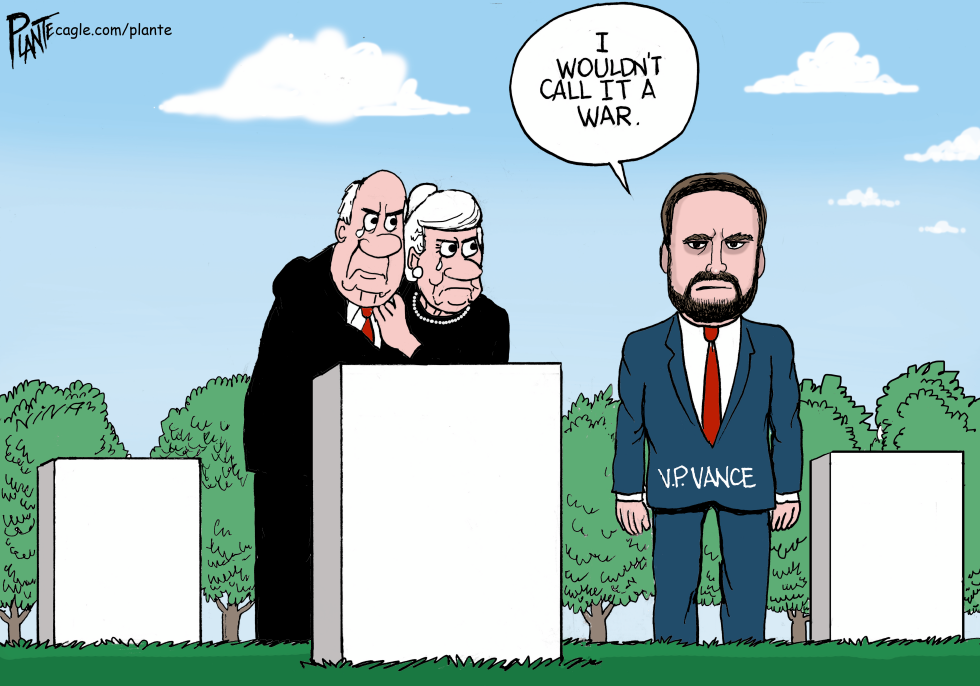
Vice President JD Vance has publicly stated that the United States is not at war with Iran even as reports indicate American casualties in the region. The administration frames operations as limited strikes rather than full conflict. This downplaying occurs amid broader tensions over Iran's nuclear program and regional influence. The cartoon argues that the human cost in the cemetery makes the denial untenable and that the situation qualifies as war.
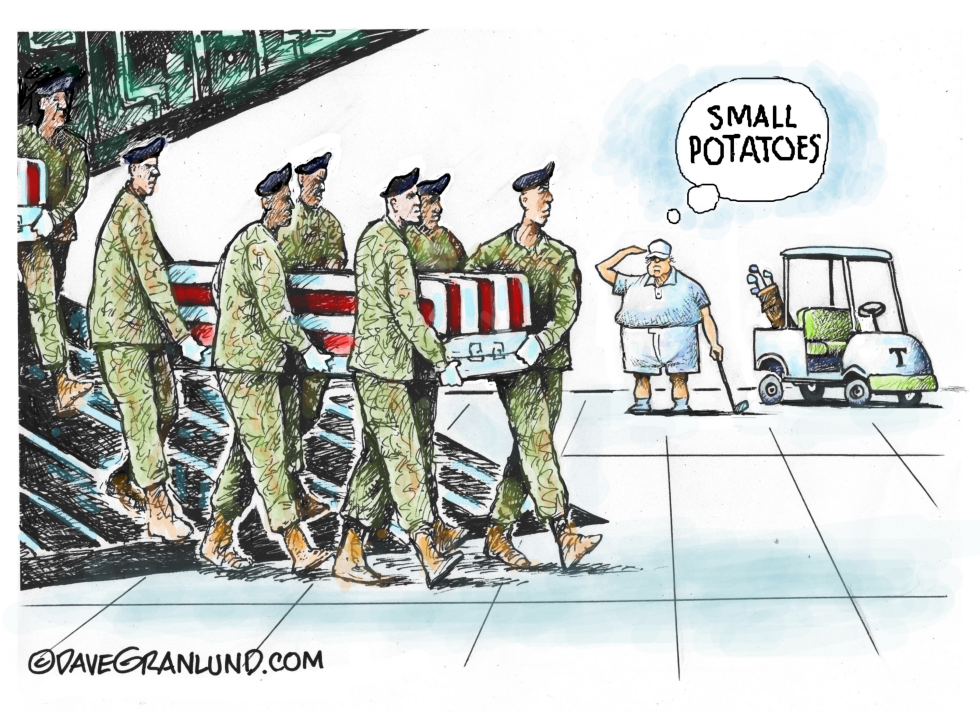
The cartoon depicts Donald Trump in golf clothes standing beside a golf cart labeled T as an honor guard carries a flag-draped military casket down stairs from an aircraft. Trump salutes while a thought bubble above him reads small potatoes. The image responds to ongoing criticism of Trump's public comments and scheduling choices involving military funerals and veterans issues during his political career. The visual contrasts the solemn casket procession with Trump's casual golf attire and dismissive remark to highlight perceived disrespect.
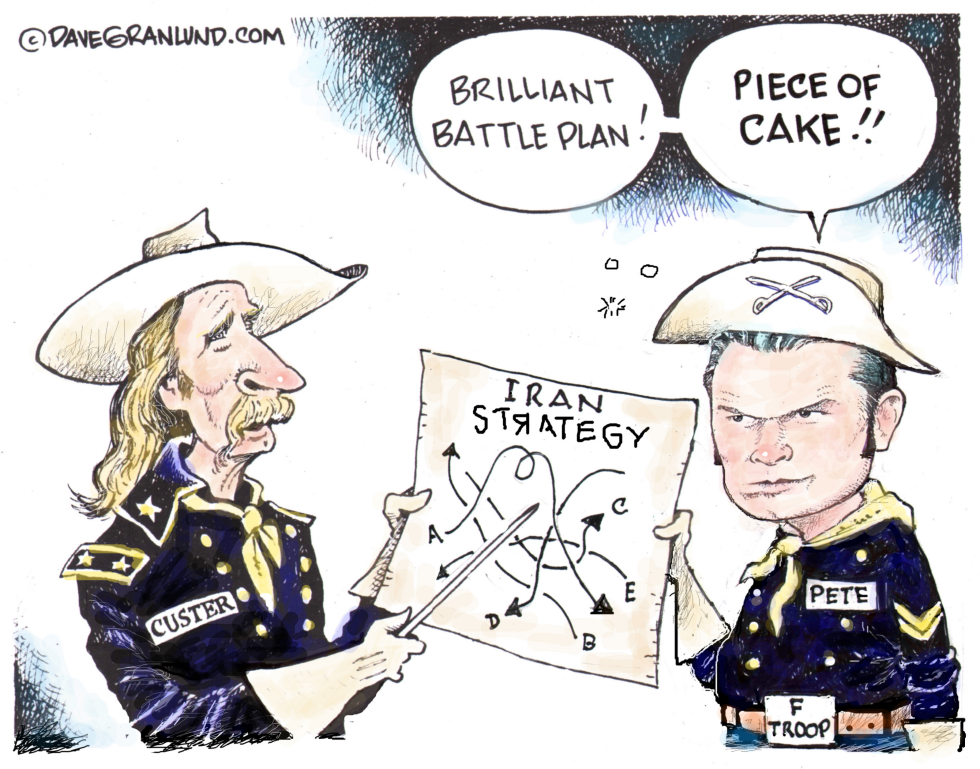
The cartoon depicts two uniformed figures labeled Custer and Pete examining a document titled Iran Strategy. Speech bubbles show them calling the plan brilliant and a piece of cake. The drawing uses the F Troop label and Custer reference to highlight risks of overconfidence in military planning for Iran. The publication date places the work in a period of ongoing discussion about US approaches to Iran. The visual argument centers on the disconnect between stated optimism and known historical outcomes for similar ventures.
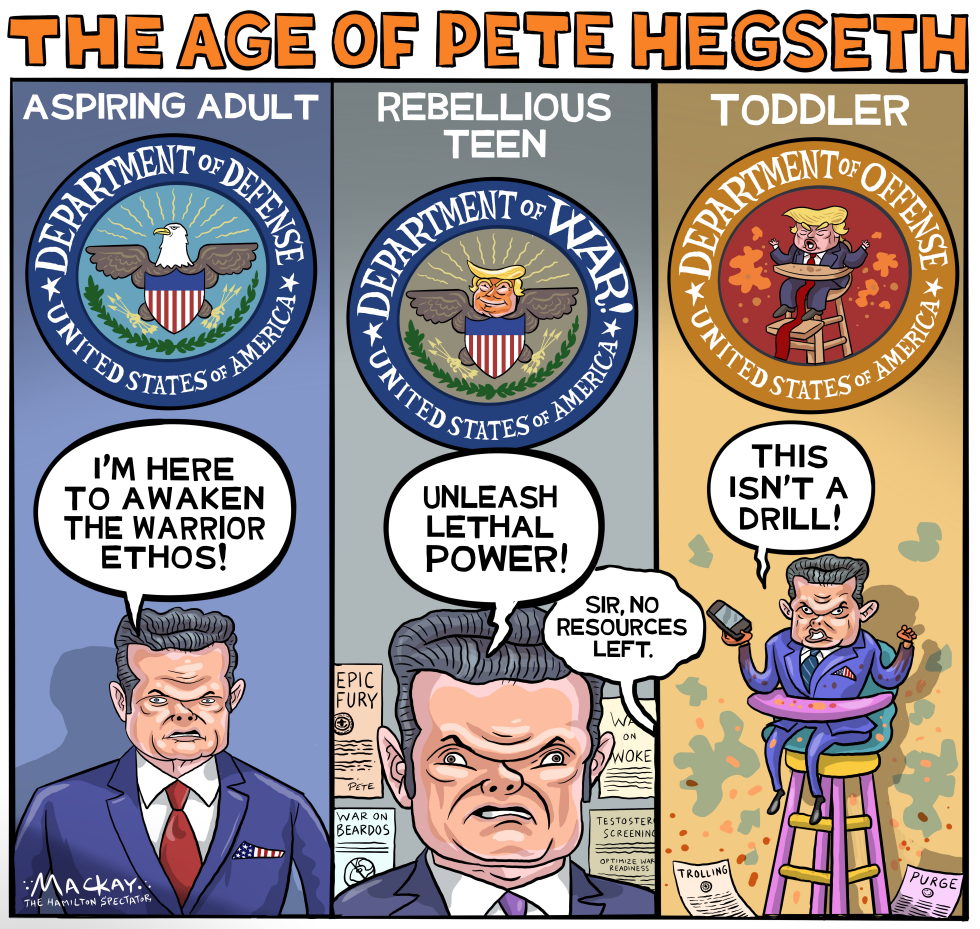
The cartoon by Graeme MacKay portrays Pete Hegseth's progression through three stages at the Pentagon under President Trump. In the first panel Hegseth pledges to awaken the warrior ethos at the Department of Defense. The middle panel shows him calling to unleash lethal power while an aide reports no resources remain. The final panel depicts a toddler Trump at the Department of Offense with Hegseth as a frantic aide amid papers about testosterone screening and purges. The work comments on the Trump administration's approach to military leadership and policy priorities as of September 2026.
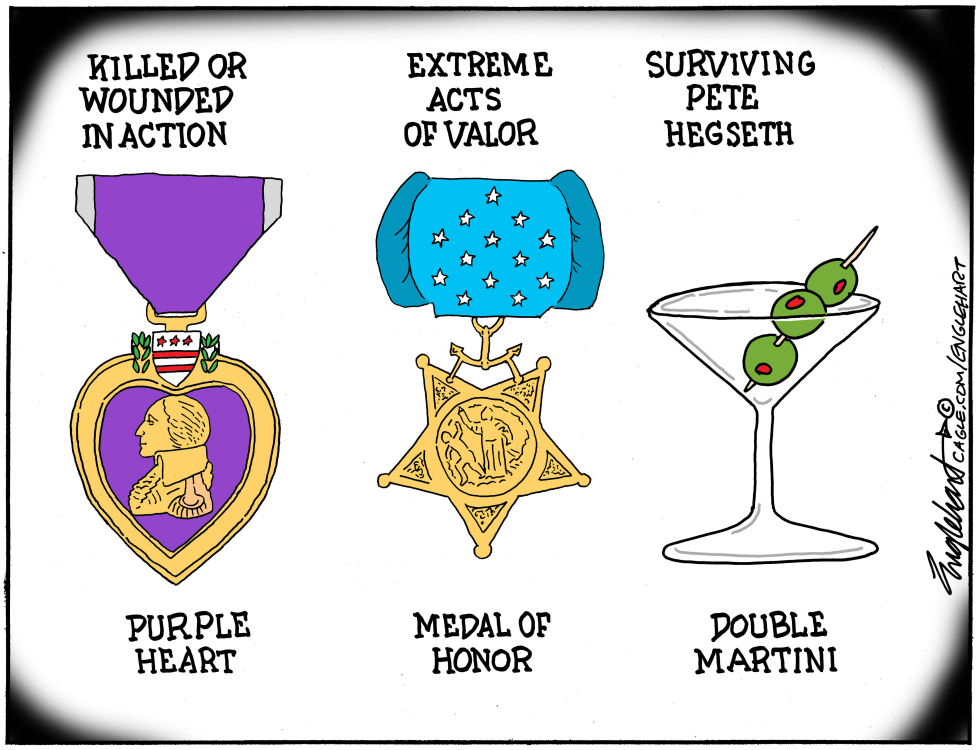
Pete Hegseth's nomination for a senior defense post in 2026 revived questions about his military service record and personal conduct. Critics highlighted past statements and behavior that some viewed as disqualifying for oversight of the armed forces. The cartoon responds by equating endurance under Hegseth with a dubious achievement on par with battlefield valor awards.
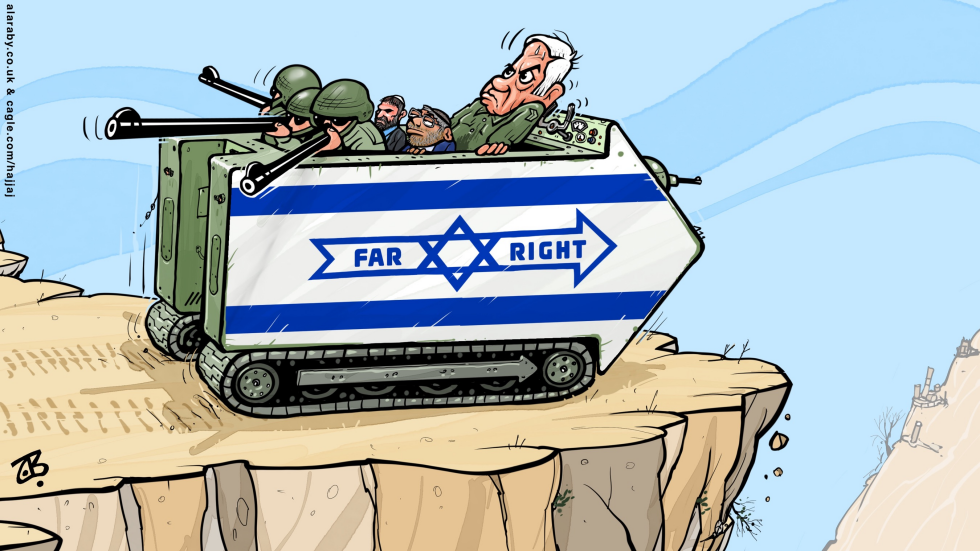
Israeli Prime Minister Benjamin Netanyahu leads a far-right coalition whose policies face mounting domestic and international criticism. The government has pursued aggressive military actions and settlement expansion while navigating coalition partners with extreme views. This direction risks further isolation and internal division. The cartoon argues that Netanyahu's embrace of the far right is propelling the country toward self-inflicted political and strategic damage.
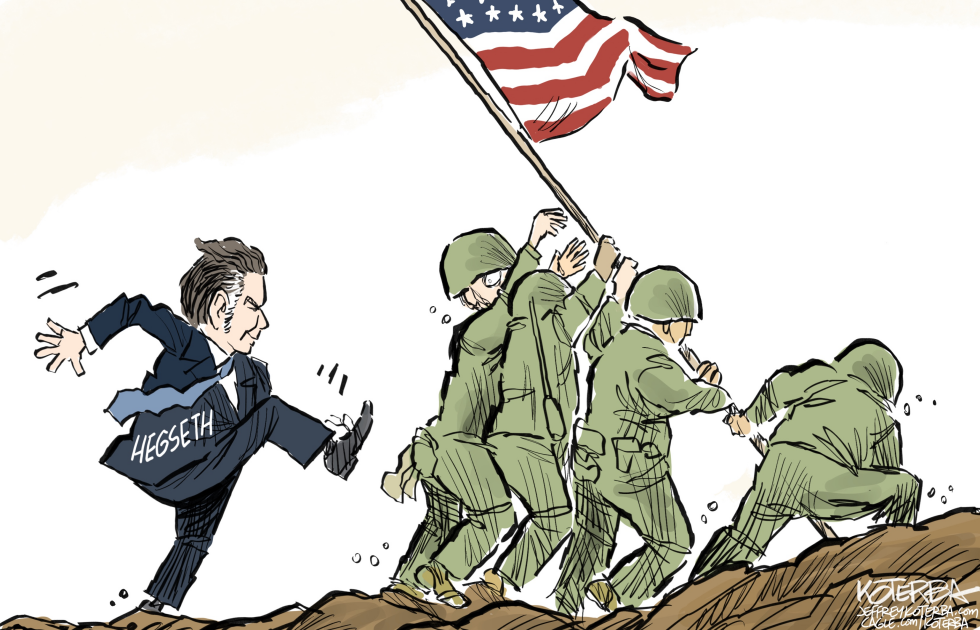
Pete Hegseth's conduct as a defense figure has drawn scrutiny for its effects on military readiness. Reports and commentary point to internal friction and lowered morale within the armed forces. The cartoon frames these developments as direct interference that leaves troops struggling to maintain core functions. Critics argue the pattern reflects broader leadership shortcomings at a time when force preparedness faces external pressures. The piece takes the position that Hegseth's approach actively harms the institution rather than strengthening it.
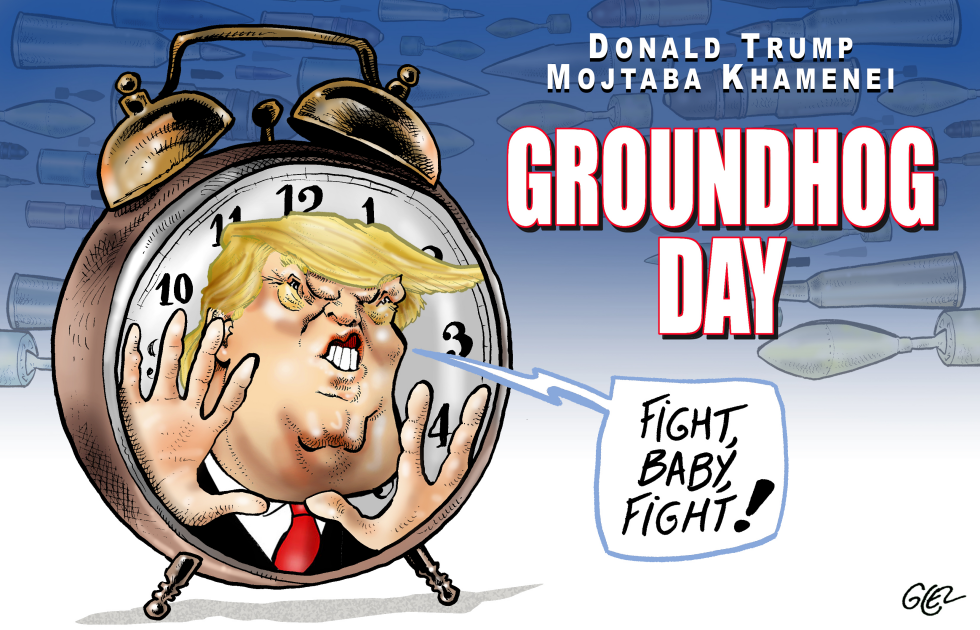
On September 3 2026 the cartoon highlights the recurring pattern of US-Iran tensions involving Donald Trump and Mojtaba Khamenei. The piece frames their renewed standoff as an endless Groundhog Day loop marked by missile threats and bellicose rhetoric. It argues that the same actors and dynamics keep producing the same dangerous cycle without resolution.
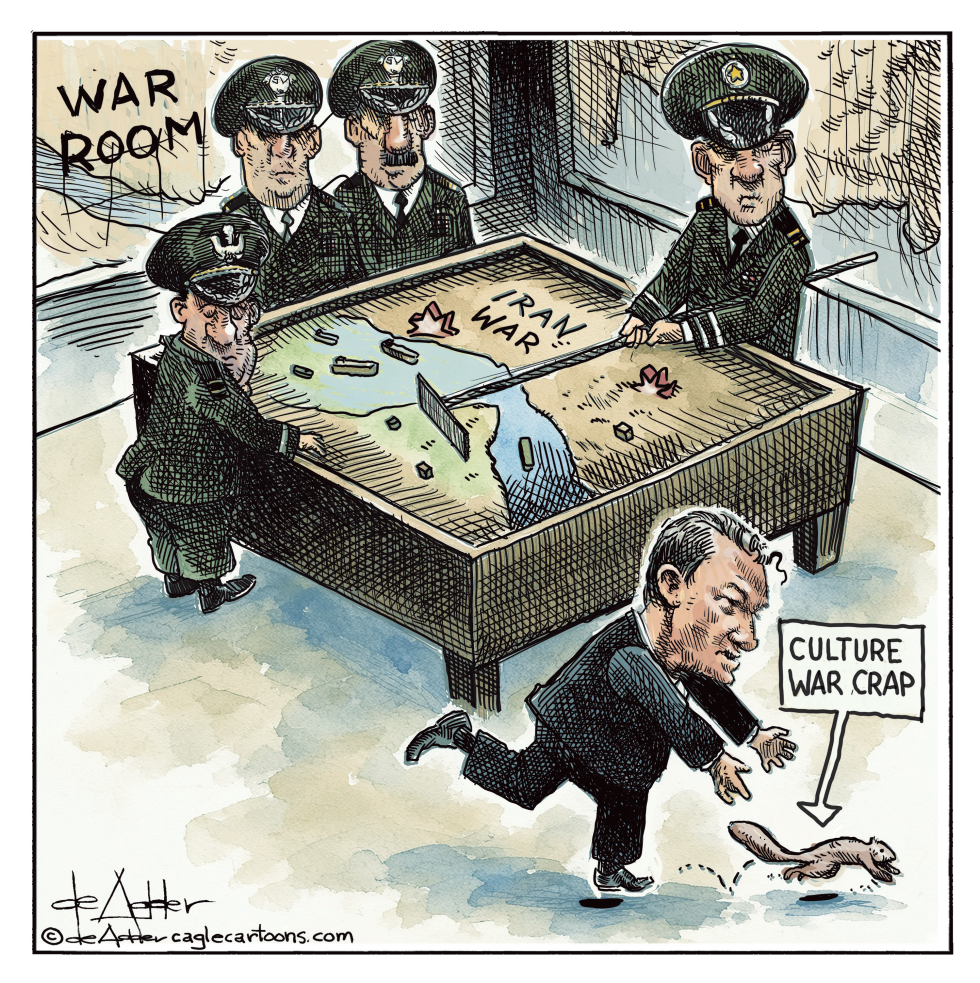
Defense Secretary Pete Hegseth has drawn scrutiny for emphasizing culture war issues while military planners address potential Iran contingencies. The cartoon depicts him pursuing a squirrel marked culture war crap instead of joining officers at the Iran war table. Critics argue this reflects a pattern of prioritizing domestic cultural battles over strategic readiness. The piece suggests such focus undermines effective leadership in the Pentagon. It critiques the administration's approach to balancing internal politics with national security demands.
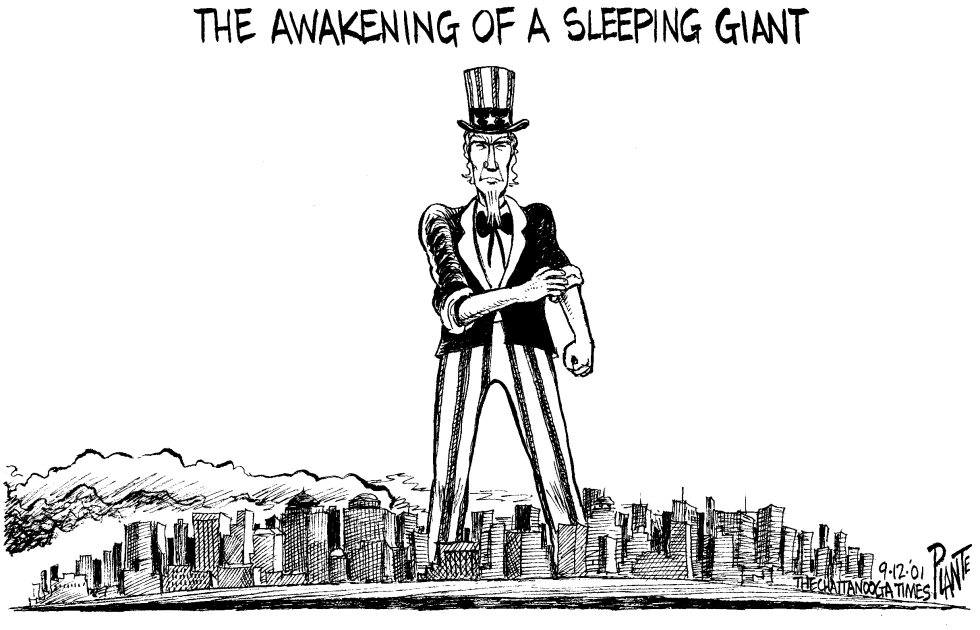
On September 11, 2001, al-Qaeda terrorists flew planes into the World Trade Center and the Pentagon, killing nearly 3,000 people. The attacks prompted an immediate national mobilization and the launch of the war on terror. The cartoon frames the United States as a sleeping giant now roused to action, reflecting the widespread view that the country would respond with unified strength and resolve.
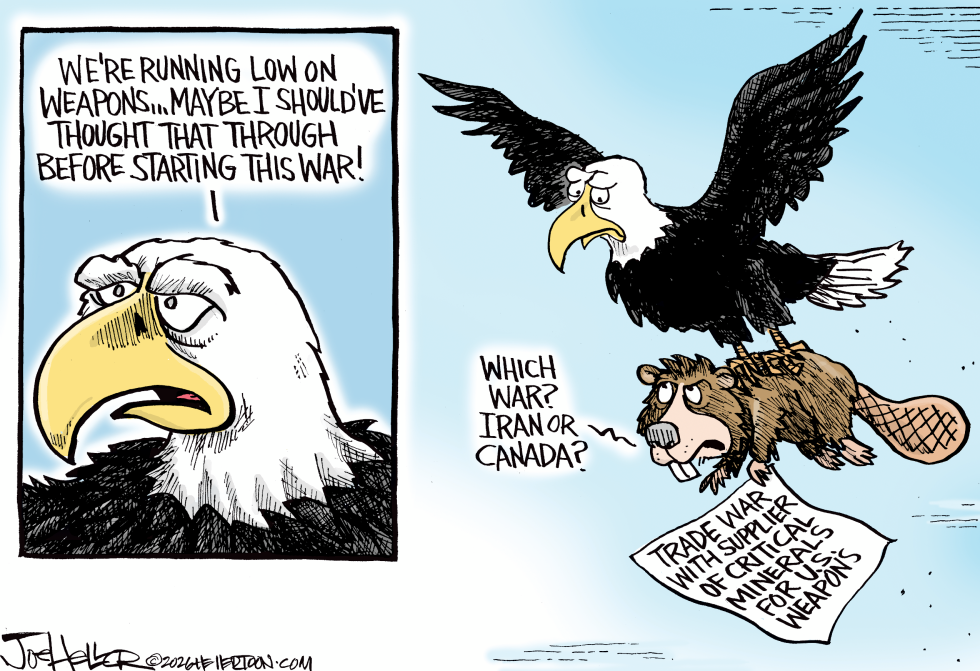
The United States faces potential weapons shortages linked to trade tensions with Canada, a key supplier of critical minerals, while also managing conflicts involving Iran. The situation highlights risks to military readiness from disrupted supply chains. The piece argues that initiating trade disputes with essential partners undermines defense capabilities at a critical time.
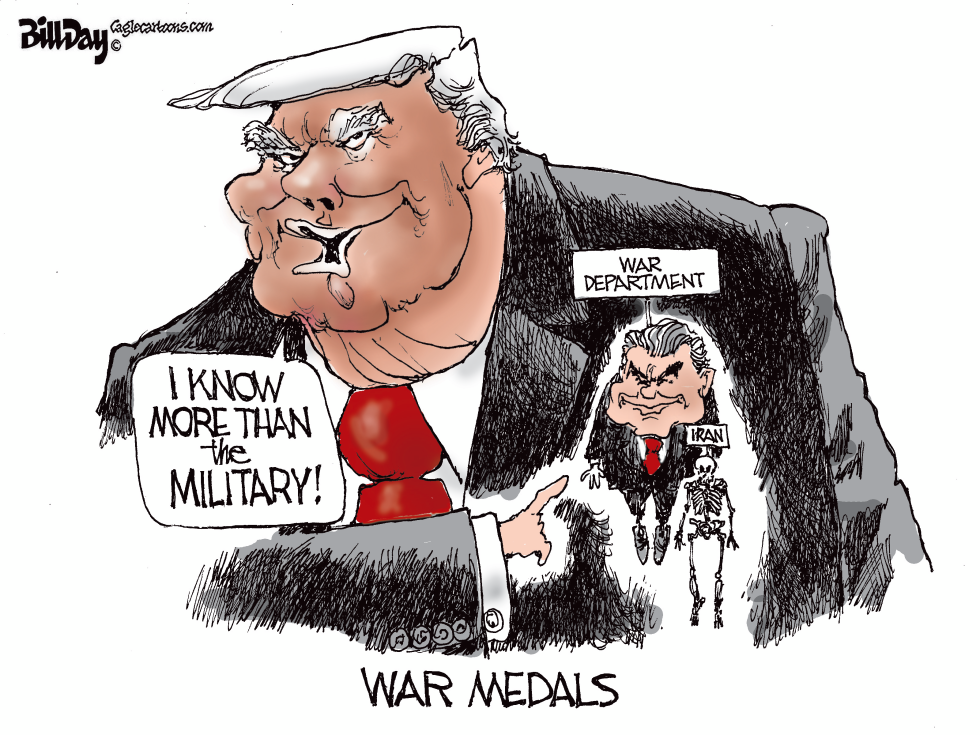
Donald Trump publicly stated he knows more than the military on defense matters as tensions with Iran persisted into late summer 2026. The remark revived questions about civilian oversight of the armed forces and the administration's approach to potential conflict. Critics argued the comment undermined professional military advice at a sensitive time. Supporters viewed it as decisive leadership. The cartoon frames the statement as hollow by linking it to a depleted war department and Iran references, suggesting the boast lacks substance and risks escalation without real expertise.
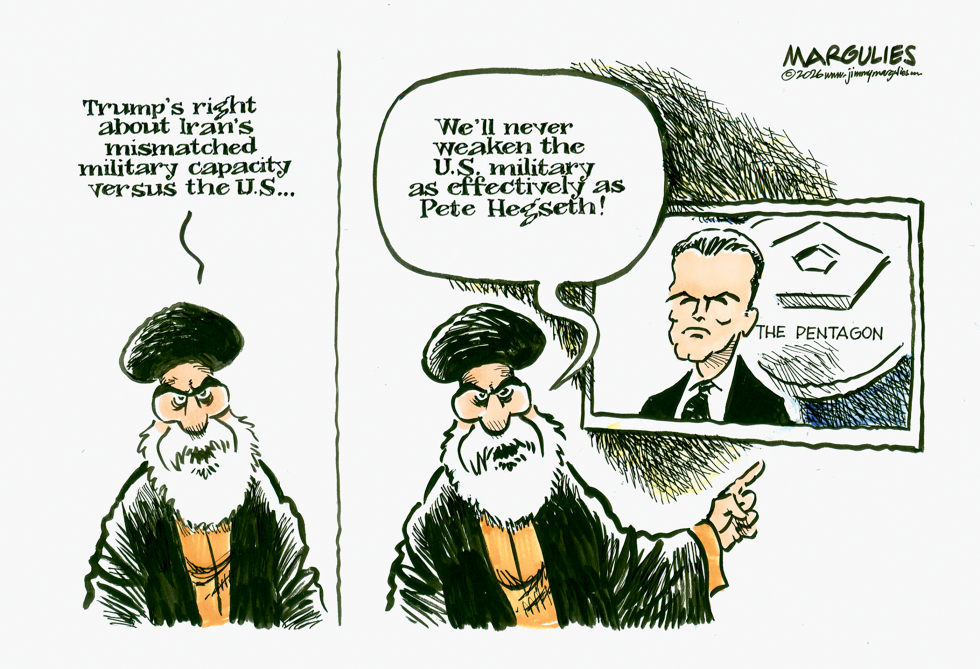
On September 2, 2026, an editorial cartoon shows Iran's Ayatollah endorsing Pete Hegseth's leadership at the Pentagon by claiming he weakens the US military more effectively than Iran could. The piece references Trump's prior assessment of Iran's inferior military capacity. It highlights concerns over Hegseth's qualifications and potential damage to US defense readiness under the Trump administration. The cartoon argues that Hegseth's appointment poses a greater internal threat to American military strength than external adversaries like Iran.
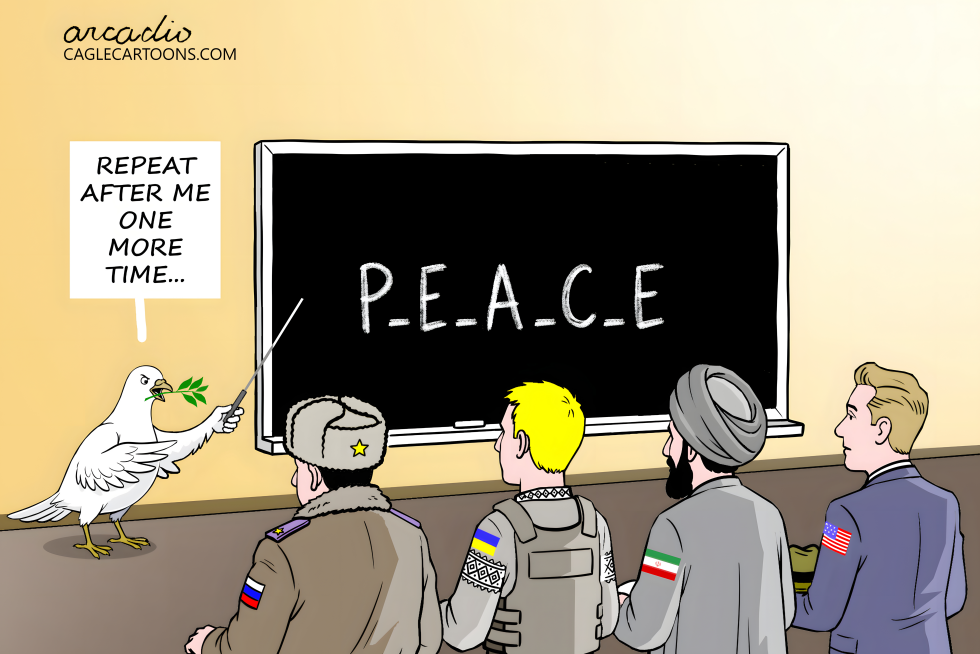
Ongoing tensions in the Russia-Ukraine war continue to draw in Iran and the United States with little progress toward resolution. The four nations remain locked in a cycle of confrontation and limited talks. The cartoon argues that the parties still cannot grasp even the simplest concept of peace despite repeated instruction.