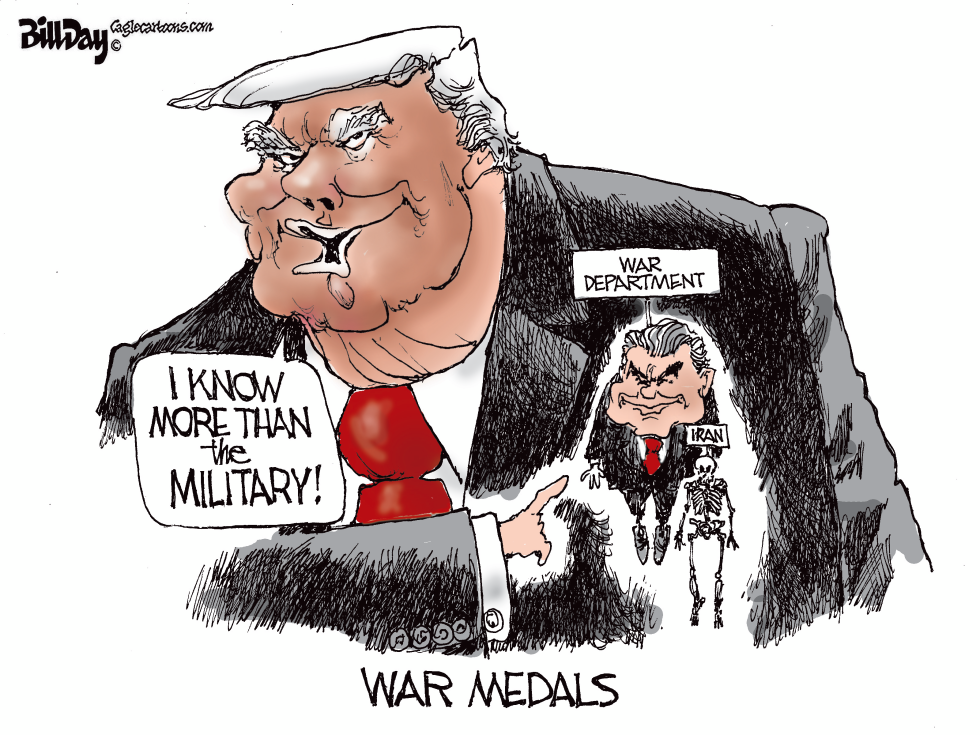
Donald Trump publicly stated he knows more than the military on defense matters as tensions with Iran persisted into late summer 2026. The remark revived questions about civilian oversight of the armed forces and the administration's approach to potential conflict. Critics argued the comment undermined professional military advice at a sensitive time. Supporters viewed it as decisive leadership. The cartoon frames the statement as hollow by linking it to a depleted war department and Iran references, suggesting the boast lacks substance and risks escalation without real expertise.
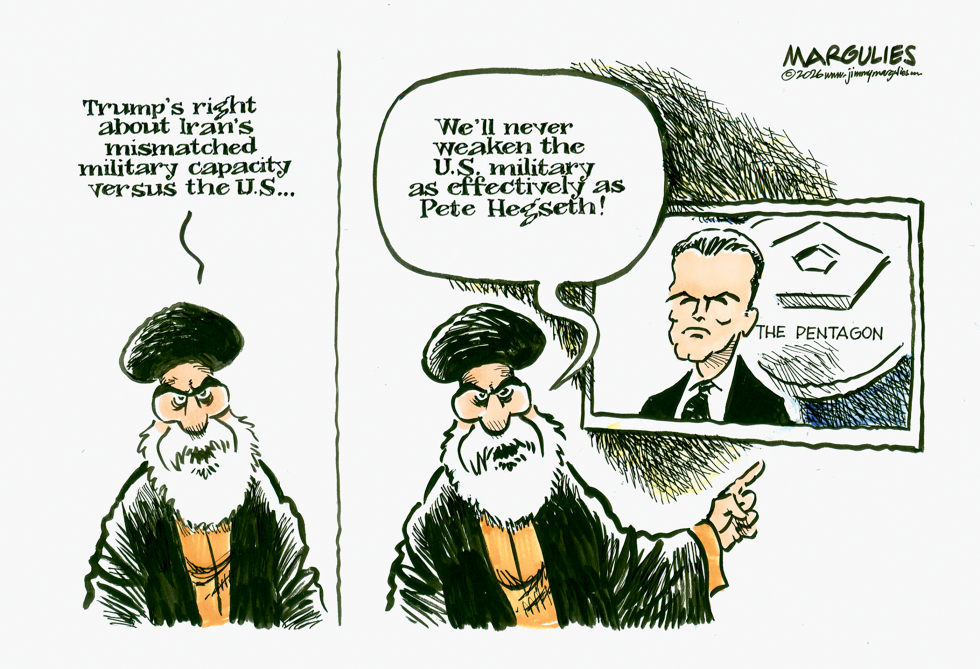
On September 2, 2026, an editorial cartoon shows Iran's Ayatollah endorsing Pete Hegseth's leadership at the Pentagon by claiming he weakens the US military more effectively than Iran could. The piece references Trump's prior assessment of Iran's inferior military capacity. It highlights concerns over Hegseth's qualifications and potential damage to US defense readiness under the Trump administration. The cartoon argues that Hegseth's appointment poses a greater internal threat to American military strength than external adversaries like Iran.
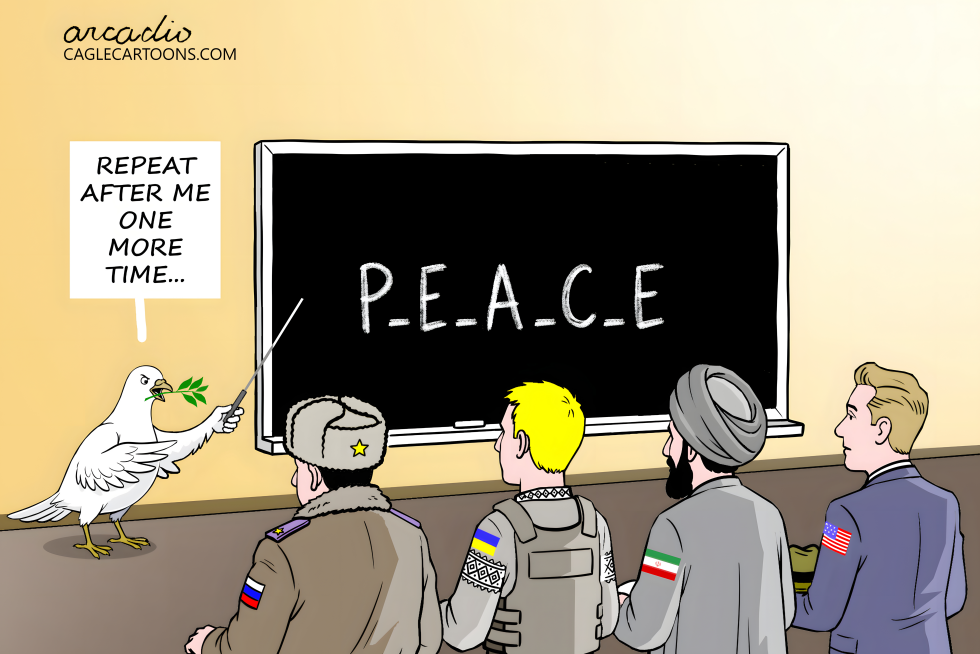
Ongoing tensions in the Russia-Ukraine war continue to draw in Iran and the United States with little progress toward resolution. The four nations remain locked in a cycle of confrontation and limited talks. The cartoon argues that the parties still cannot grasp even the simplest concept of peace despite repeated instruction.
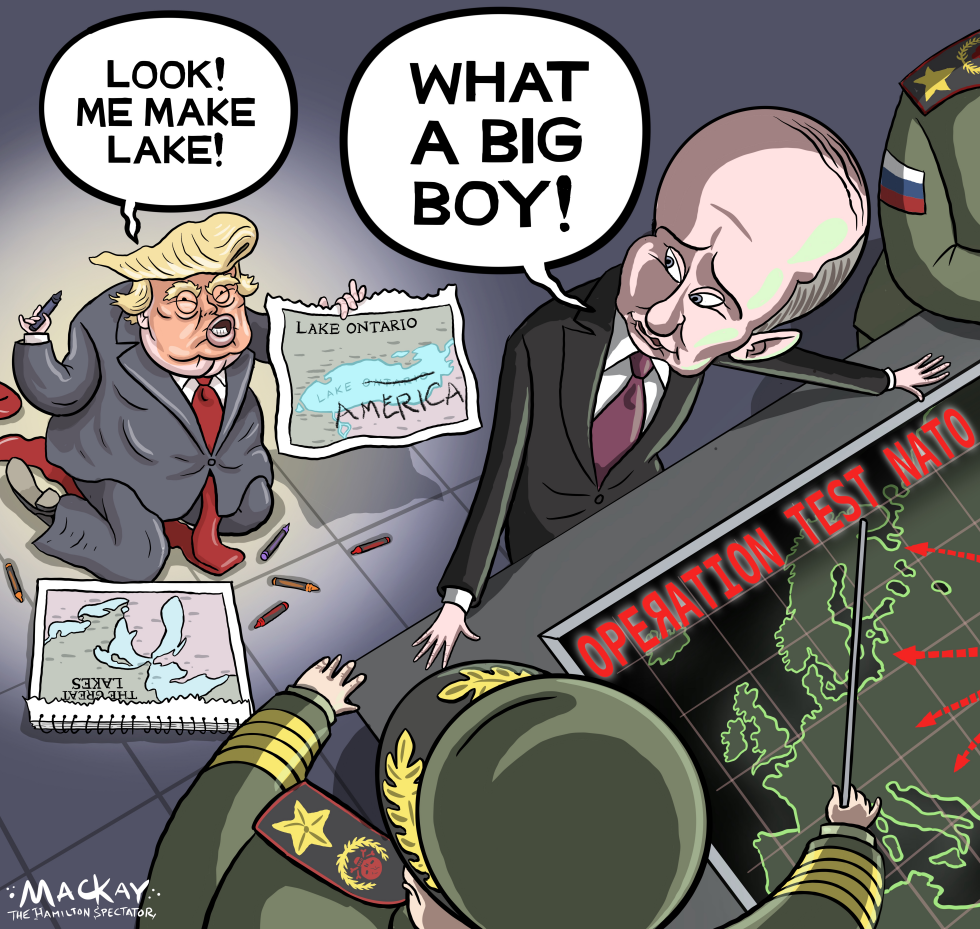
On August 31 2026 Donald Trump presented a hand-altered map renaming Lake Ontario as Lake America during a meeting with Vladimir Putin and Russian military officers reviewing NATO operations. The exchange highlights ongoing tensions over territorial assertions and alliance testing in the Great Lakes region. The cartoon depicts Putin endorsing the claim while officers coordinate a simulated response.
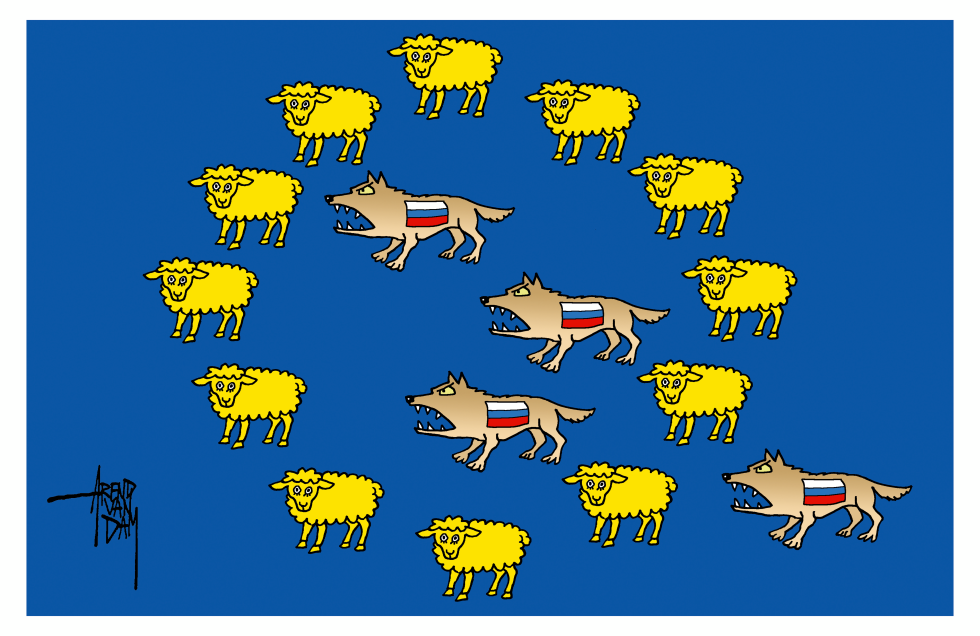
Russian hybrid warfare operations continue to target Eastern European nations through infiltration and influence campaigns. These tactics blend conventional pressure with covert actions to destabilize neighbors without triggering full-scale conflict. The editorial argues that European states must recognize and counter these disguised threats before they erode security further.
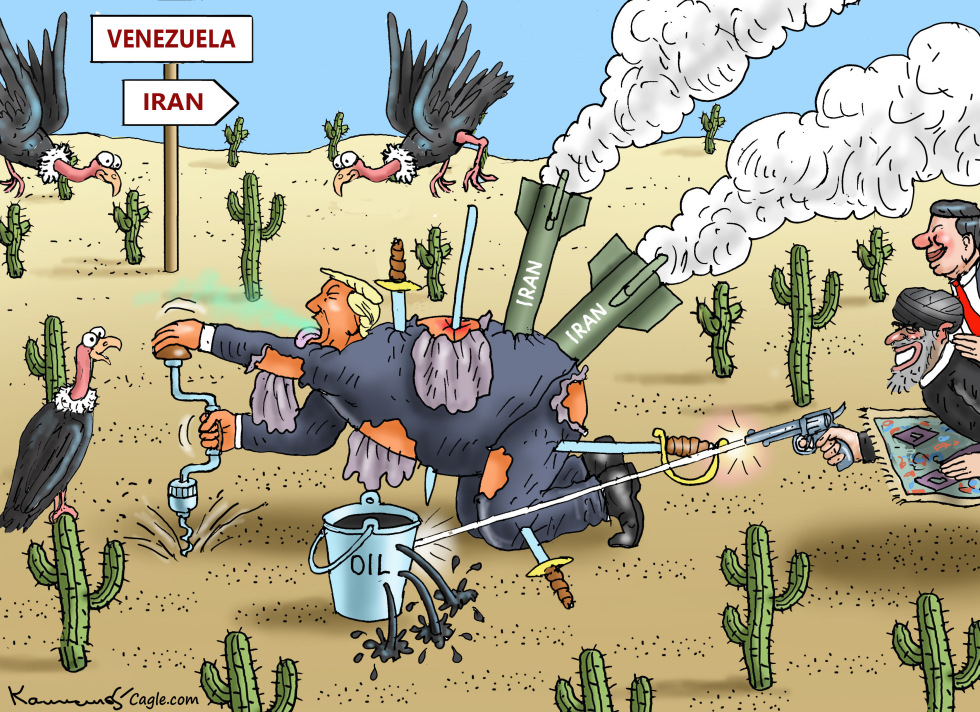
Donald Trump continued efforts to secure oil resources from Venezuela and Iran despite ongoing missile strikes and political pressure from those nations. The moves highlight US energy independence goals amid regional instability. The piece portrays these actions as defiant and opportunistic in the face of direct threats.
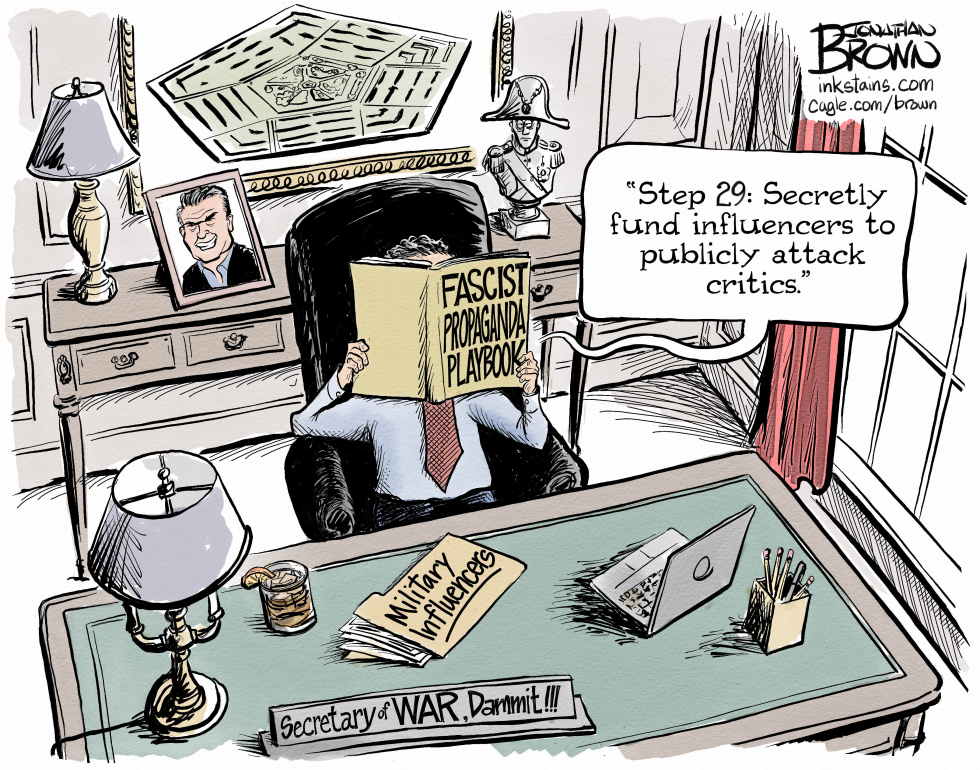
The cartoon shows a government official identified as the Secretary of War seated at a desk while holding open a book labeled Fascist Propaganda Playbook. A speech bubble lists Step 29 about secretly funding influencers to attack critics. Papers on the desk are labeled Military Influencers and a nameplate reads Secretary of WAR, Dammit. The scene includes office items such as lamps, a laptop, and a framed photo. The image responds to concerns over use of military-related influence operations in domestic political disputes.
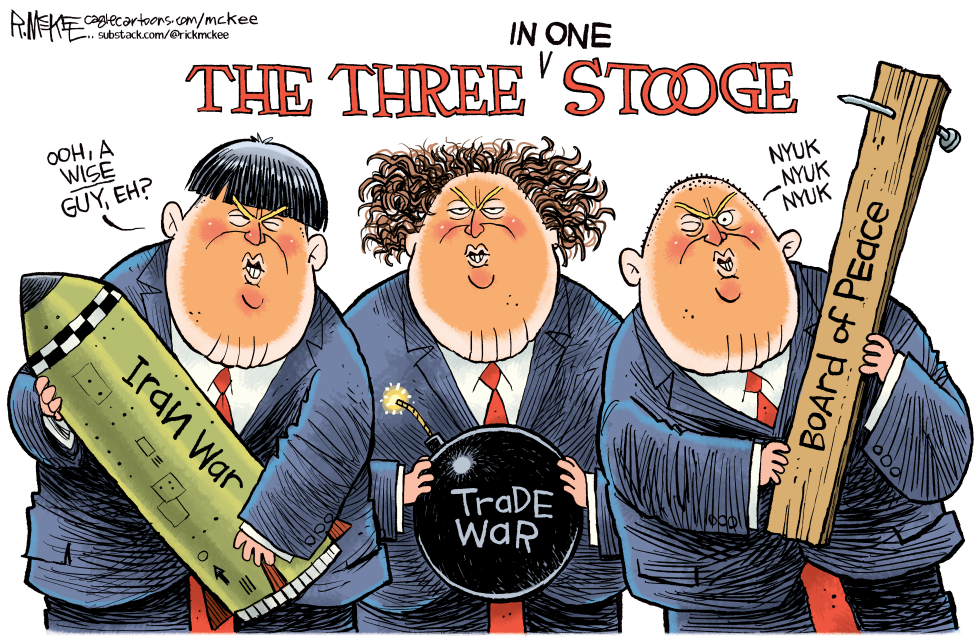
The cartoon depicts three political figures styled as the Three Stooges holding symbols of an Iran War missile, a Trade War bomb and a Board of Peace plank. It responds to ongoing tensions involving Iran policy and trade disputes by using the comedy trio to portray chaotic leadership. The visual argument suggests that efforts at peace coexist with aggressive posturing in both military and economic arenas.
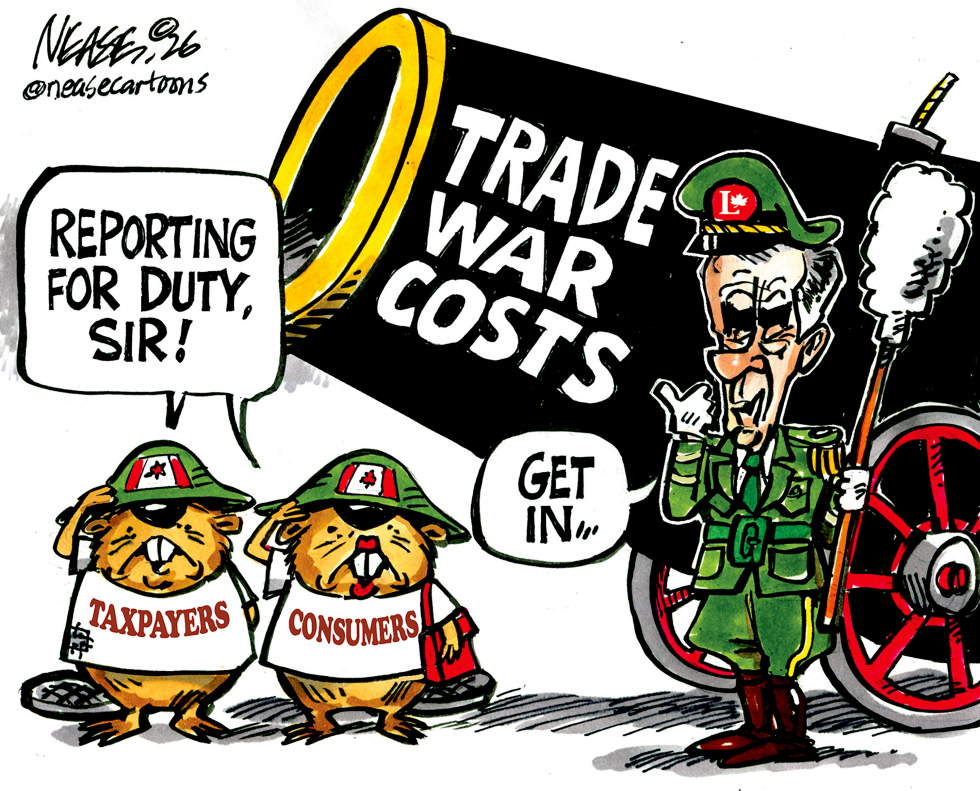
Canadian taxpayers and consumers face rising costs from an ongoing trade dispute. The situation places direct financial pressure on households through higher prices and economic measures. The editorial takes the position that ordinary citizens bear the burden while leadership directs the effort.
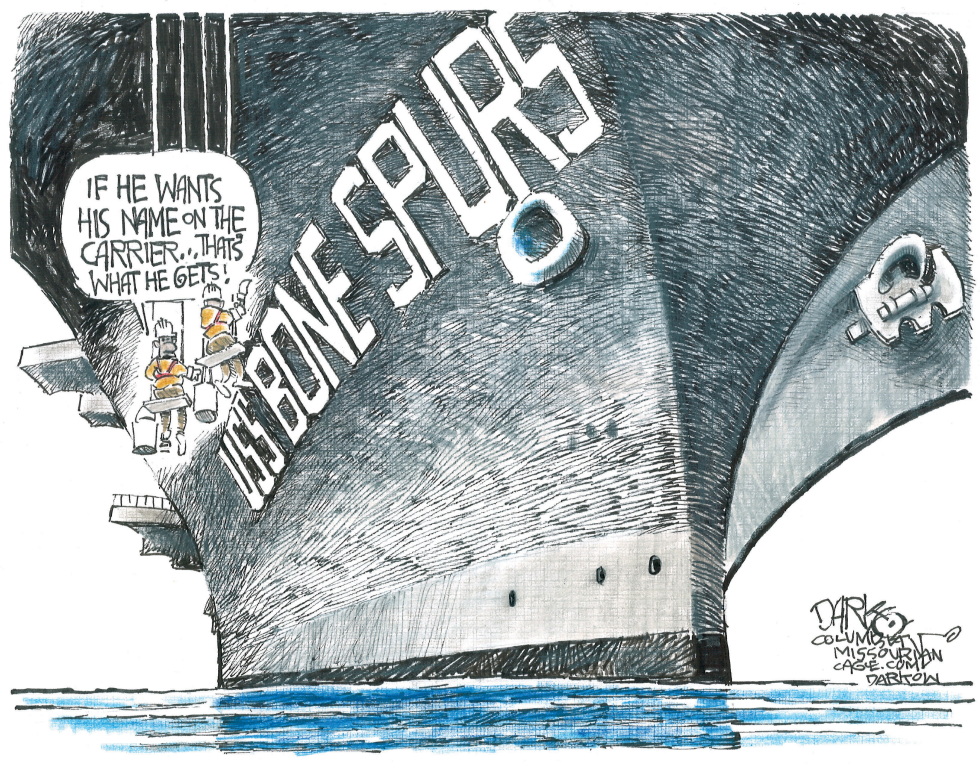
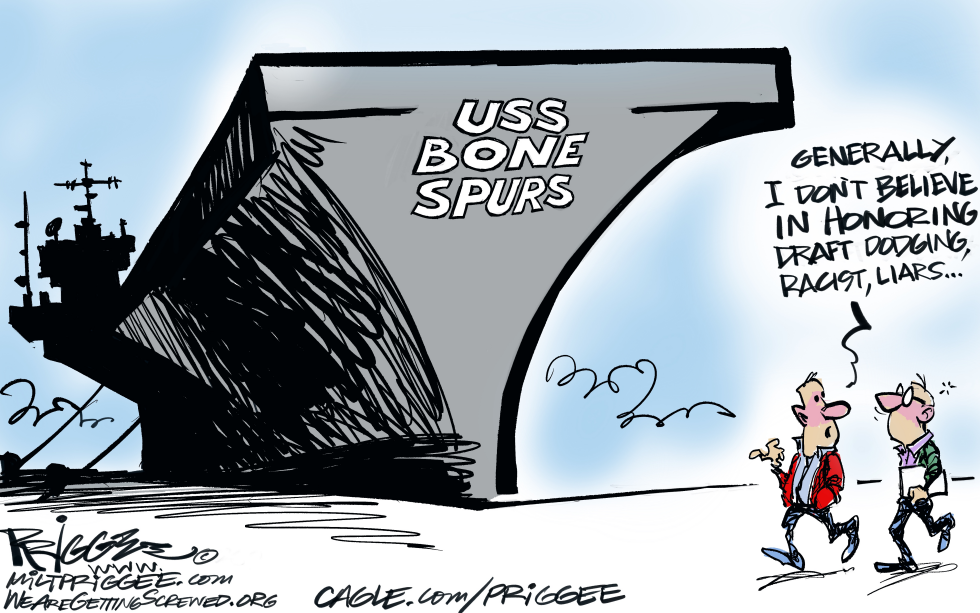
A proposal to rename a U.S. aircraft carrier after Donald Trump has drawn attention to his Vietnam-era draft deferments for bone spurs. The move highlights ongoing debate over military service records of political figures. The piece portrays the renaming as a pointed reminder of those deferments.
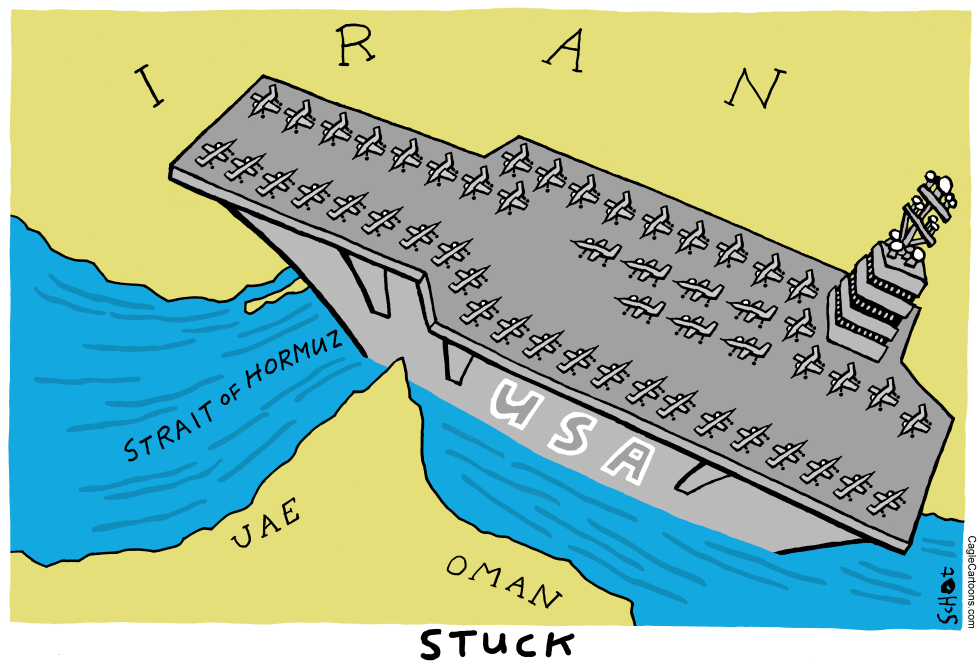
A political cartoon depicts a large US aircraft carrier marked USA jammed in the Strait of Hormuz between land labeled Iran, UAE and Oman. The vessel carries dozens of fighter jets on its deck. The word STUCK appears prominently below the scene. The image responds to persistent concerns over freedom of navigation in the vital oil shipping route. Iran has long threatened to close the strait during conflicts. The cartoon uses the visual of a grounded carrier to illustrate potential US military vulnerability in the narrow passage.
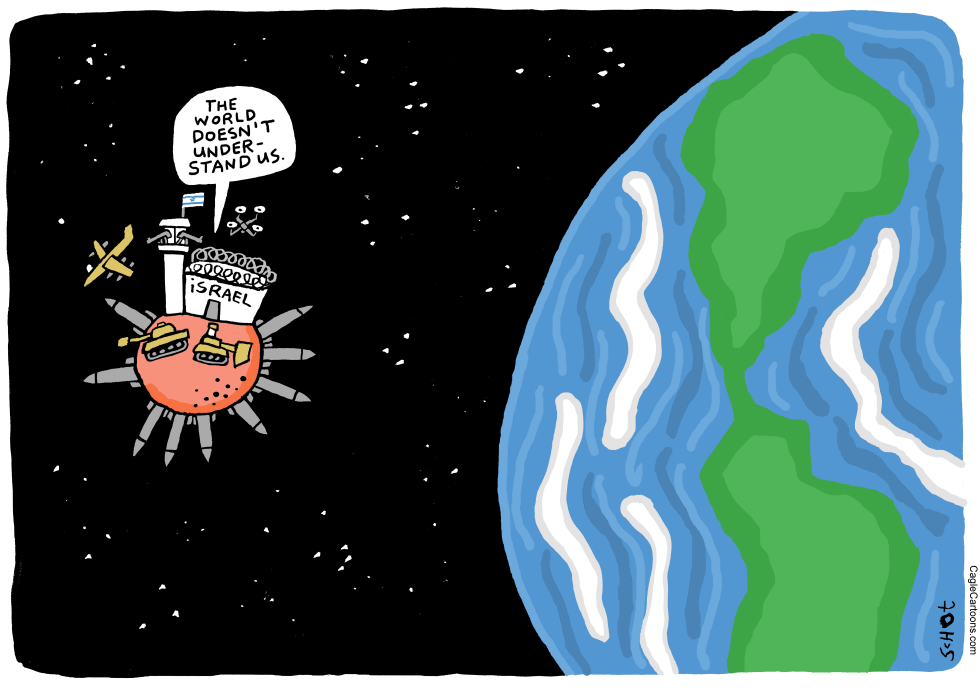
Israel's international standing faces ongoing strain from conflicts in Gaza and tensions with neighbors as of mid-2026. Allies express frustration over military operations and settlement policies while domestic leaders defend actions as necessary for security. The piece presents Israel as a self-contained entity asserting that external observers fail to grasp its circumstances amid growing diplomatic distance.
The cartoon shows a massive ship labeled USS Bone Spurs dominating the frame while two men walk away. One delivers a line rejecting honors for draft dodging, racist liars. The image responds to ongoing political debates over military service records and public honors as of the 2026 publication date.
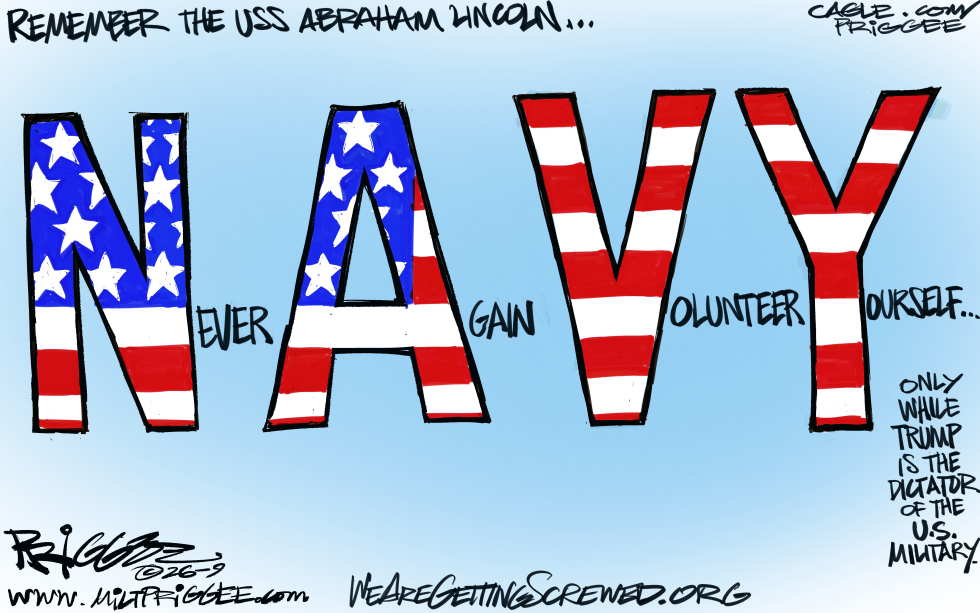
The image reworks the Navy acronym using stars and stripes segments. Inserted words create a full phrase discouraging enlistment. Text at bottom right specifies the condition tied to one individual's role. Top reference recalls a named carrier. Bottom elements include artist credit and website.
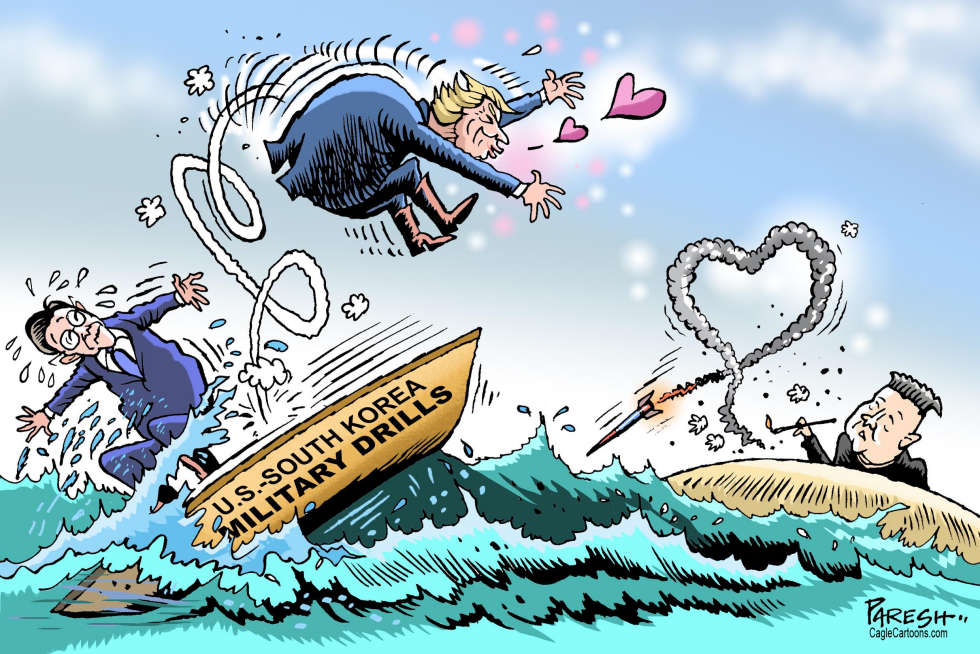
The image depicts Donald Trump being pulled from a boat labeled U.S.-South Korea military drills toward a heart formed by smoke from a missile launched by Kim Jong-un. Trump reaches out with hearts nearby while the other figure tumbles into the water. The scene illustrates tension between ongoing joint exercises and apparent interest in the North Korean leader. Publication occurred on August 21 2026 amid recurring discussions of regional security.