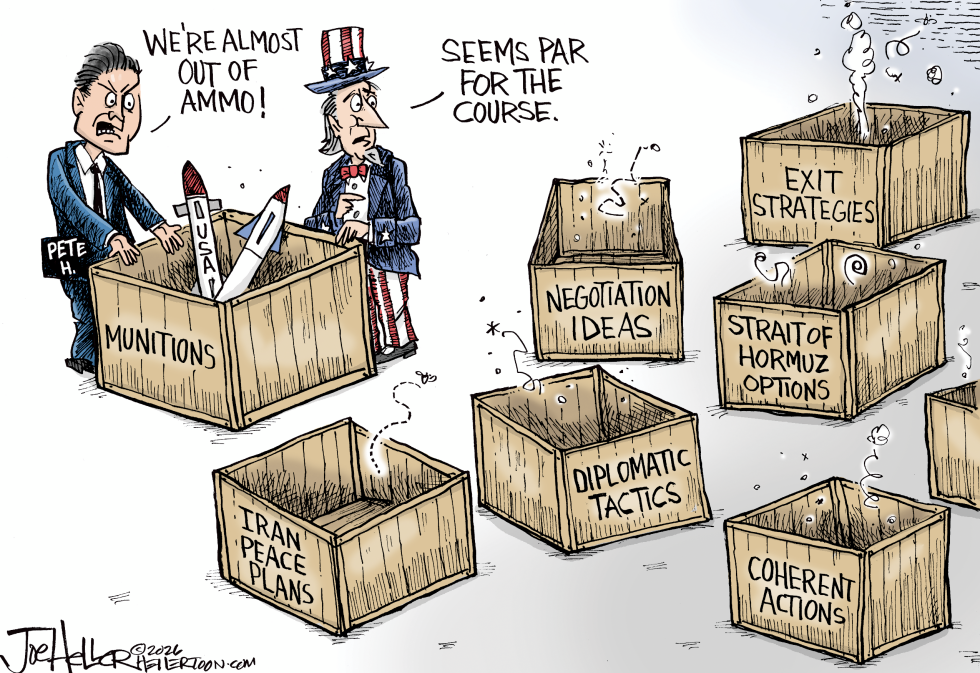
Defense Secretary Pete Hegseth alerts that the United States is nearly out of munitions while pursuing Iran policy options. The cartoon depicts Uncle Sam acknowledging the situation as routine, underscoring limited remaining diplomatic and strategic tools for addressing Iran.
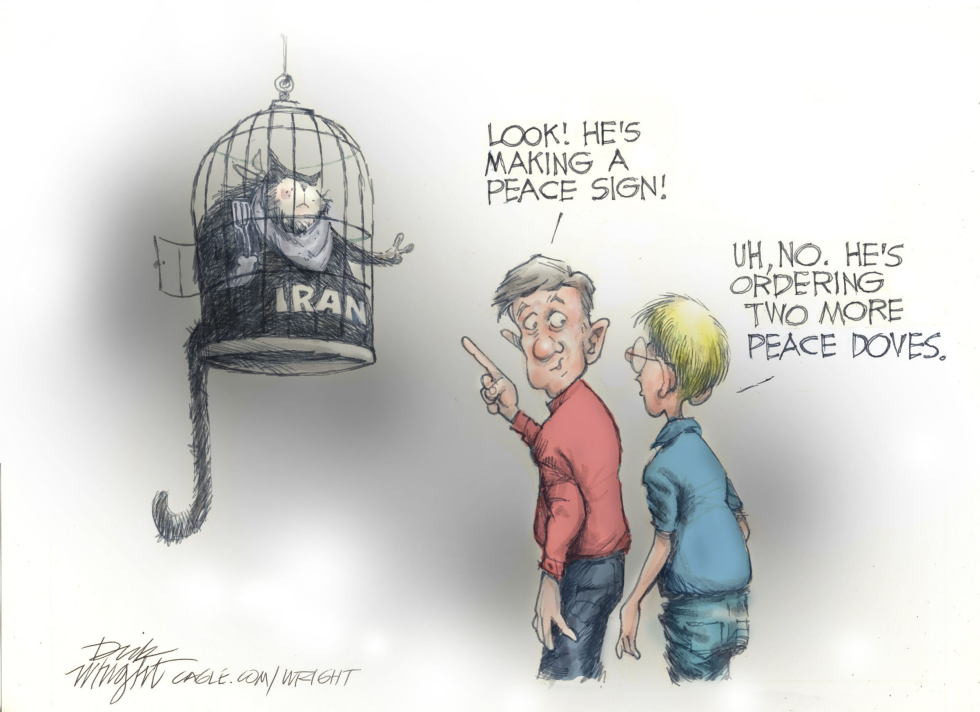
Iran continues to project peaceful intentions while advancing its military capabilities. Recent diplomatic overtures have been met with skepticism from observers who note ongoing weapons development. The piece argues that Iran's gestures are being misinterpreted as peaceful when they signal further aggression.
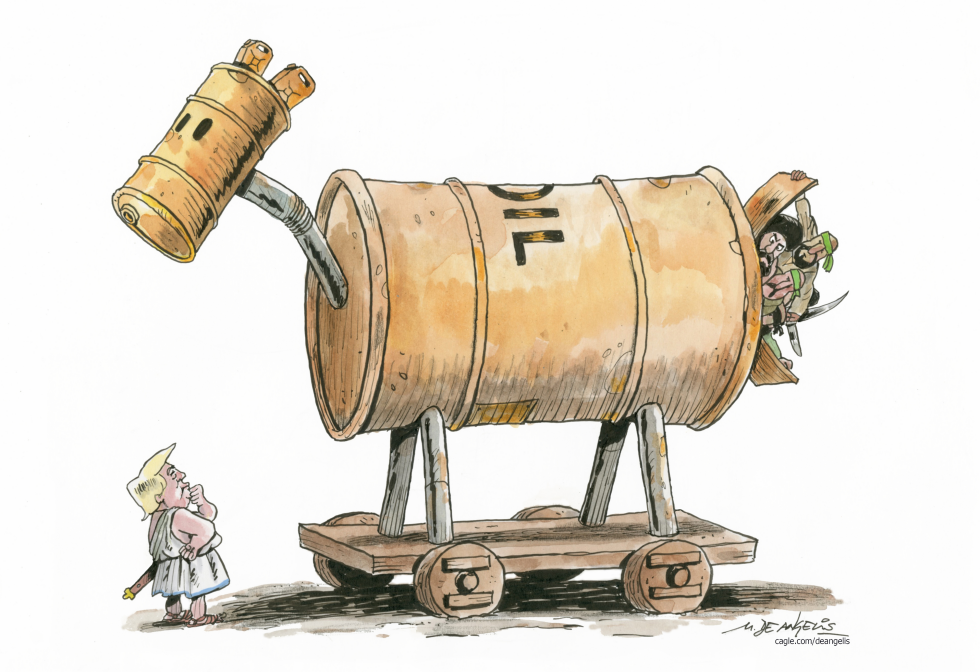
Donald Trump examines an oil barrel presented as a Trojan horse containing hidden armed figures. The image highlights risks in energy dealings or foreign entanglements involving oil supplies. The editorial position warns against accepting such barrels without scrutiny due to concealed threats.
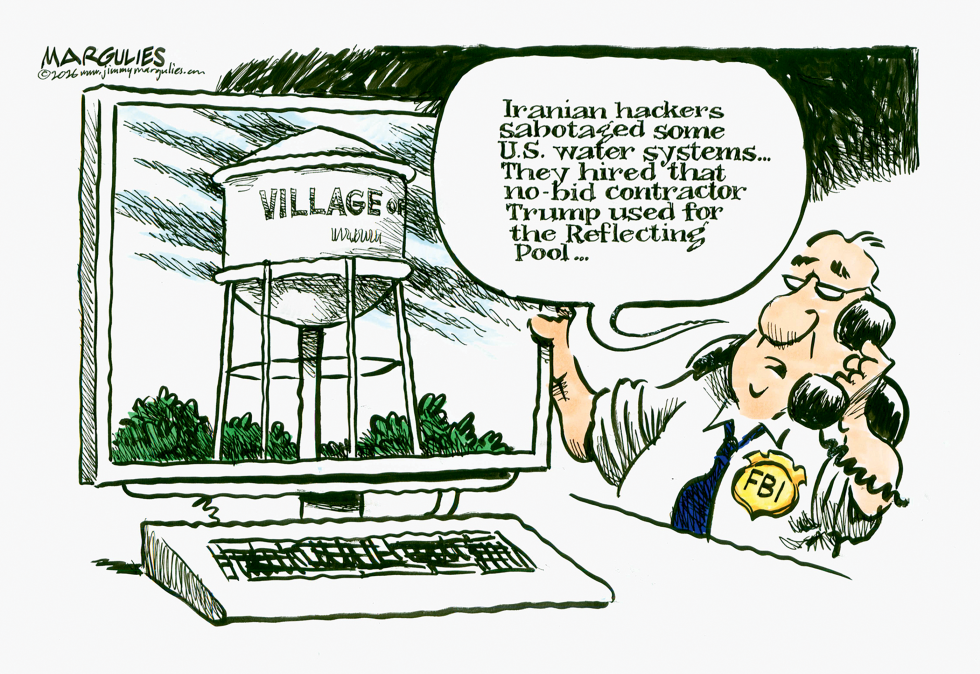
The FBI has attributed recent sabotage of U.S. water systems to Iranian hackers while highlighting their use of a no-bid contractor previously employed by Trump on the Reflecting Pool. The claim surfaces amid ongoing concerns over critical infrastructure vulnerabilities and contractor oversight. This development raises questions about procurement practices and accountability in federal responses to foreign cyber threats. The editorial position criticizes the reliance on such contractors and questions the logic of the blame assignment.
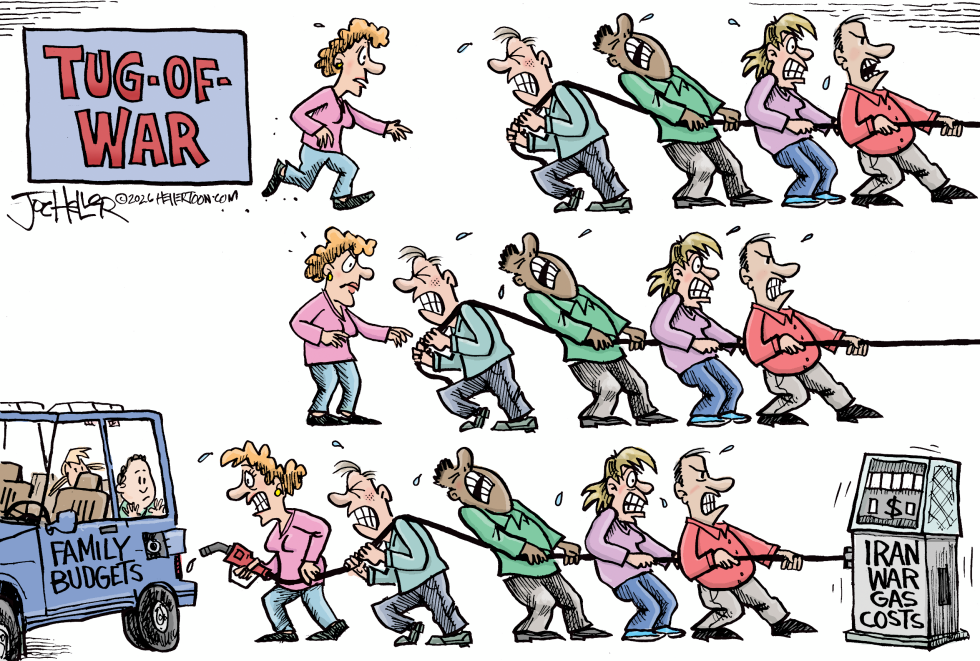
Rising gas prices linked to potential conflict with Iran are pressuring household budgets across the country. The cartoon illustrates the direct economic tug between military action abroad and everyday costs at the pump, arguing that families bear the immediate burden of such decisions.
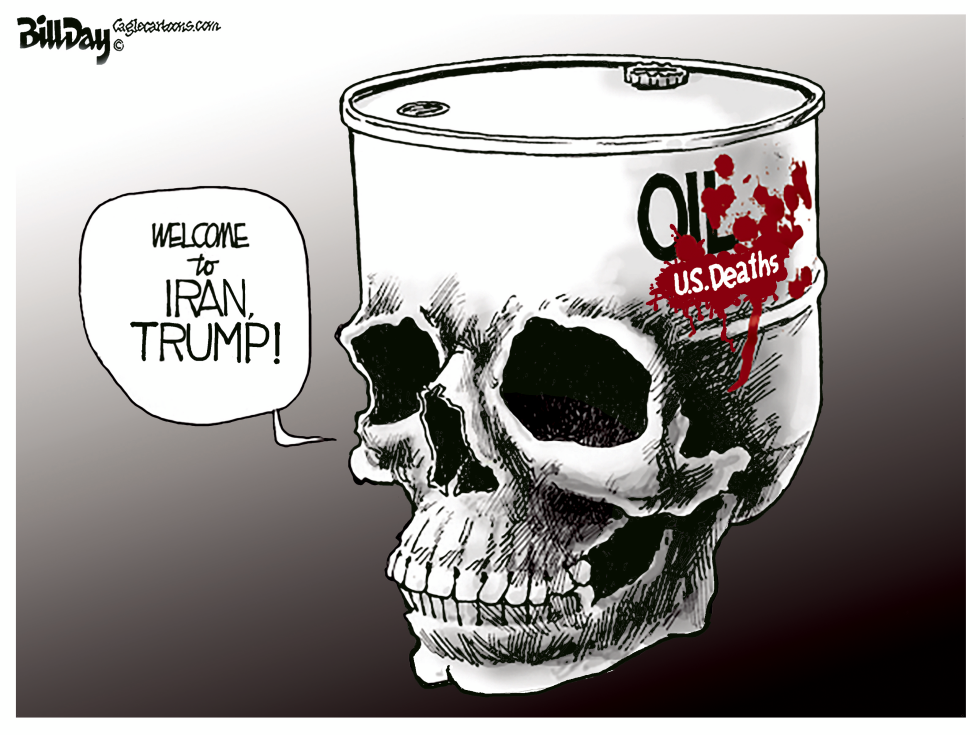
Donald Trump confronts a pointed visual rebuke linking US involvement in Iranian oil to American deaths. The image responds to persistent tensions over energy resources and foreign policy decisions in the Middle East. Critics argue such engagements carry heavy human costs without clear strategic gains. The piece takes the position that Trump's approach risks repeating costly patterns of intervention driven by oil interests rather than broader security needs.
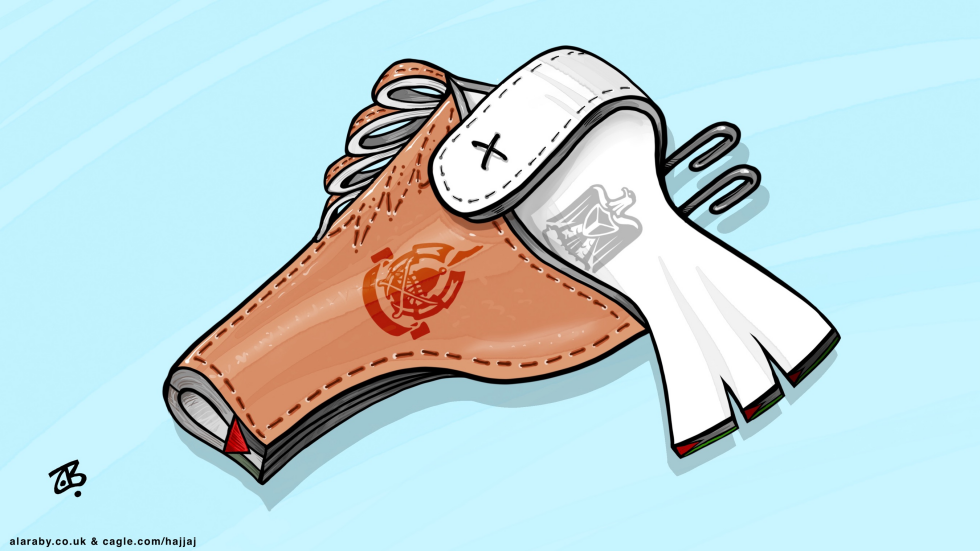
A holster containing a white gloved hand with a cross has surfaced in regional commentary. The image responds to persistent Israel-related security dynamics in the Middle East, where armed posture and symbolic gestures continue to shape public discourse. The piece frames the holster as a container for controlled yet visible force.
Donald Trump announced he had called off a major military strike on Iran in favor of a pending nuclear deal. The move drew immediate skepticism from Iranian officials who questioned both the threat and the agreement. The cartoon highlights the disconnect between the announcement and Tehran\'s response.
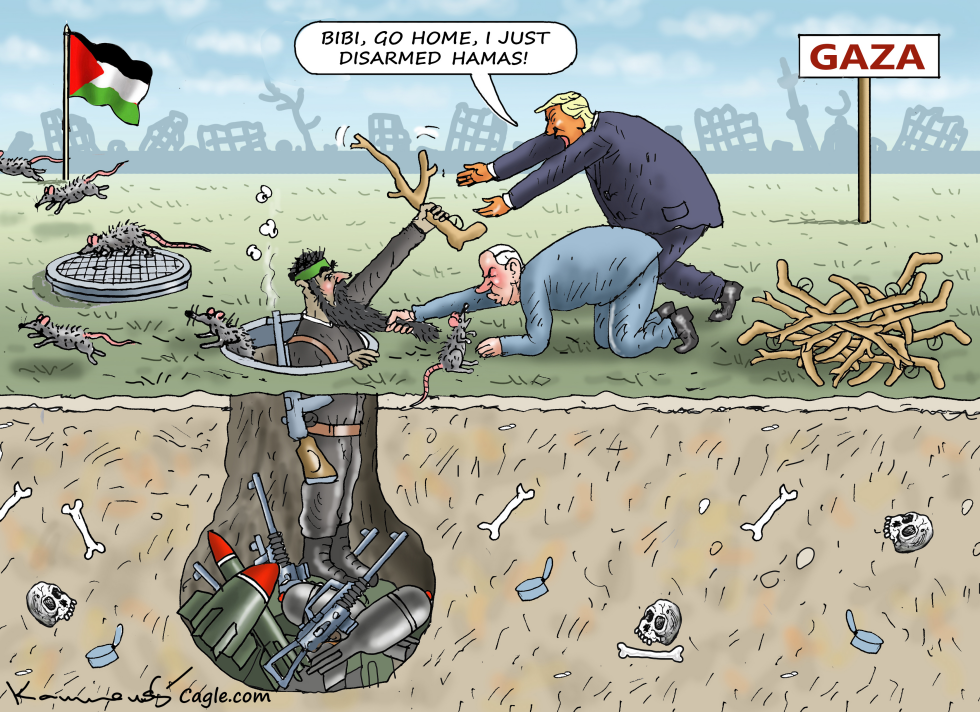
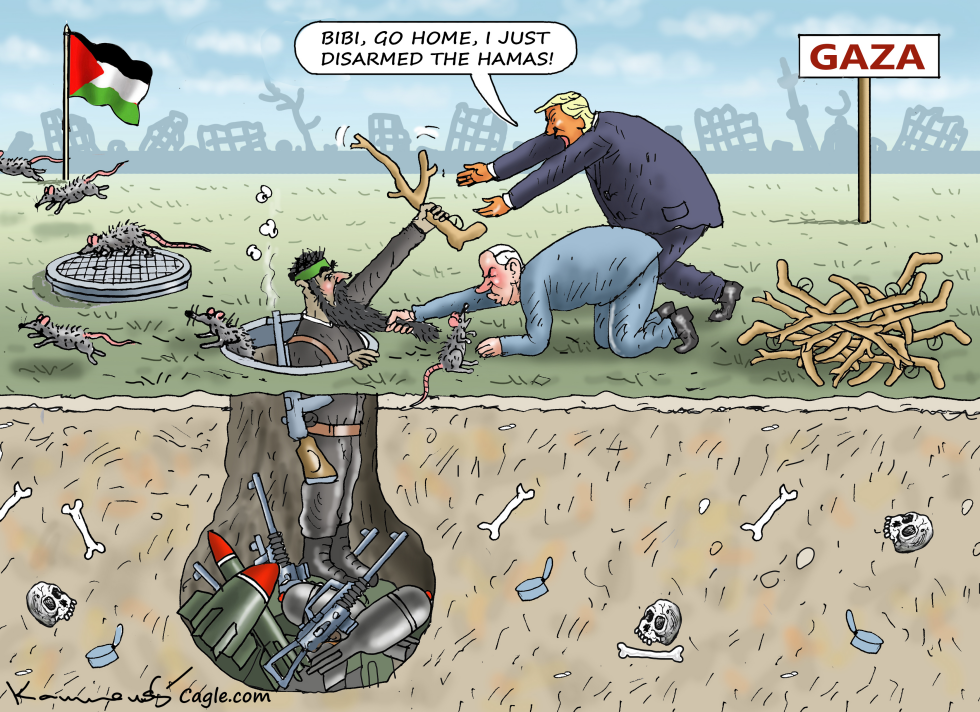
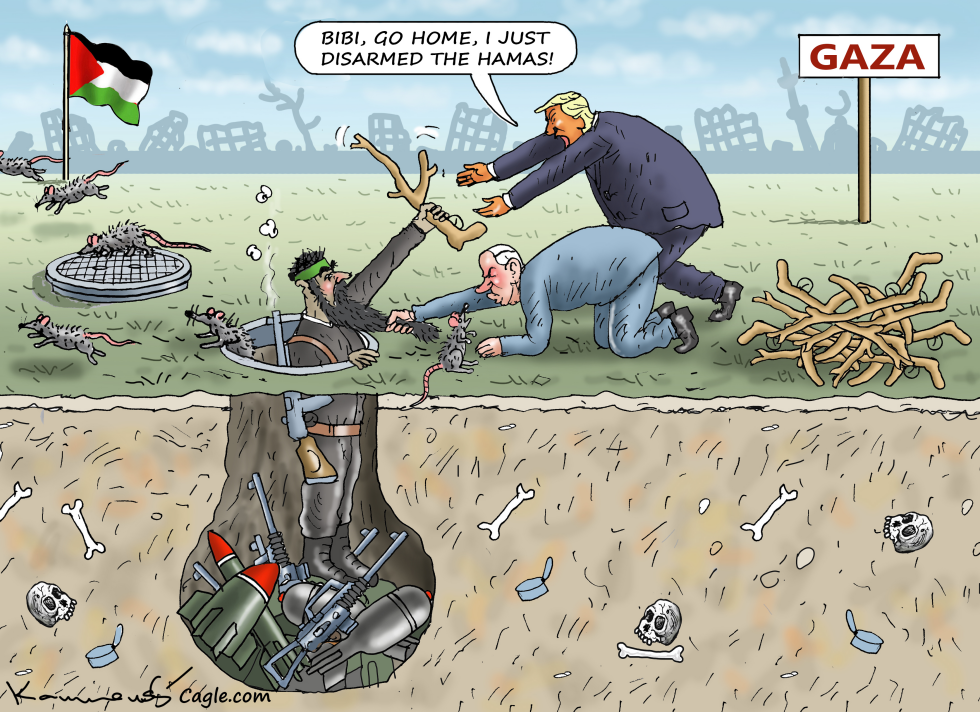
Donald Trump publicly urged Benjamin Netanyahu to leave Gaza, asserting that Hamas had been disarmed, while Joe Biden assisted in efforts to clear remaining tunnel networks. The statement came amid ongoing operations against Hamas infrastructure in the territory. The piece portrays the U.S. leaders as directing the Israeli prime minister's withdrawal from the conflict zone.
Donald Trump publicly urges Israeli Prime Minister Benjamin Netanyahu to return home, asserting that Hamas has been disarmed. The claim occurs amid ongoing Gaza operations involving U.S. and Israeli figures. The editorial highlights competing U.S. political approaches to Middle East security and questions the effectiveness of recent disarmament efforts.
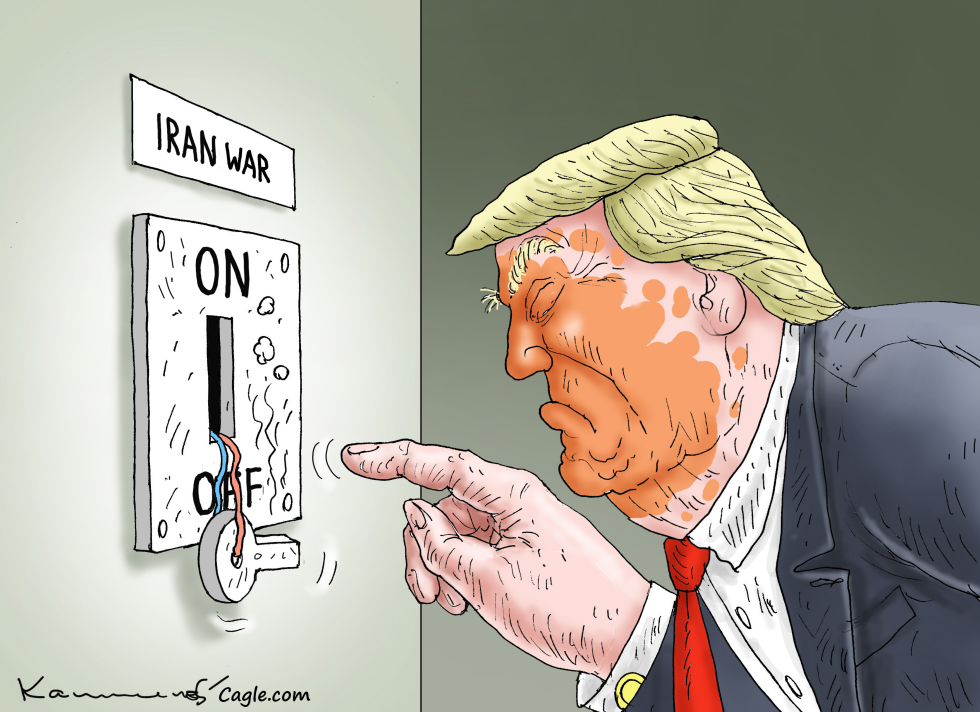
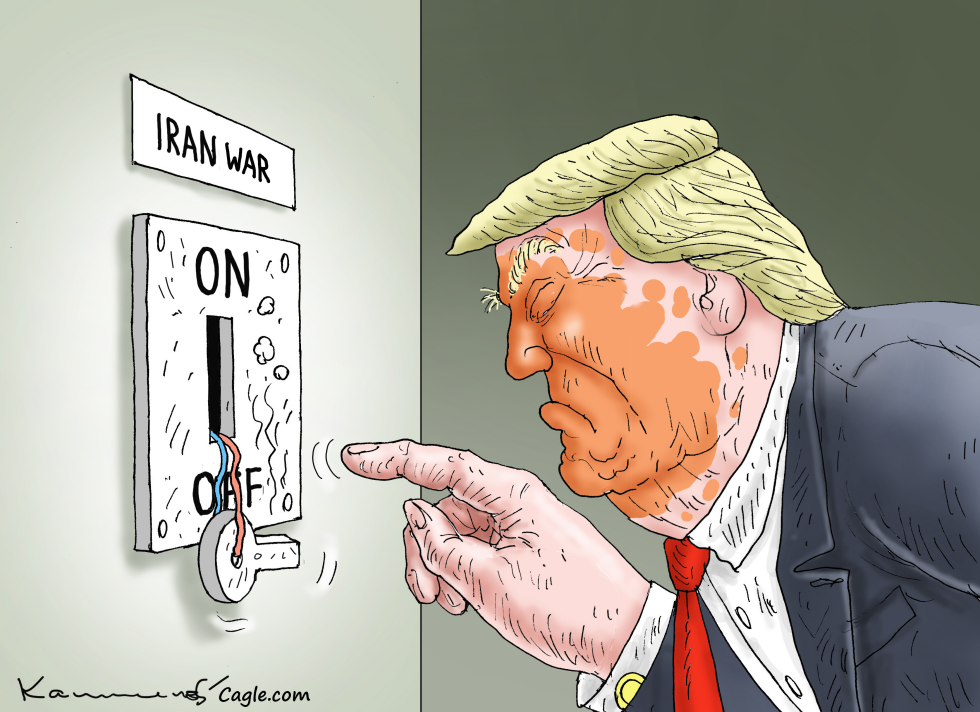
On August 2, 2026, former President Donald Trump is shown reaching to flip a switch labeled Iran War from off to on. The image responds to ongoing tensions with Iran and questions about U.S. military involvement in the Middle East. The piece argues that Trump is eager to initiate or escalate conflict despite the high stakes for regional stability and American interests.
Donald Trump publicly claims to have disarmed Hamas while addressing Israeli Prime Minister Netanyahu. The assertion comes amid ongoing operations in Gaza where underground weapon stores remain active. The piece portrays the claim as premature given the scale of remaining armaments and the involvement of other U.S. figures in the effort.
Donald Trump has signaled readiness to initiate military action against Iran as tensions in the Middle East persist. The decision carries significant implications for regional stability and U.S. foreign policy commitments. The piece portrays this choice as a reckless and avoidable step toward unnecessary conflict.
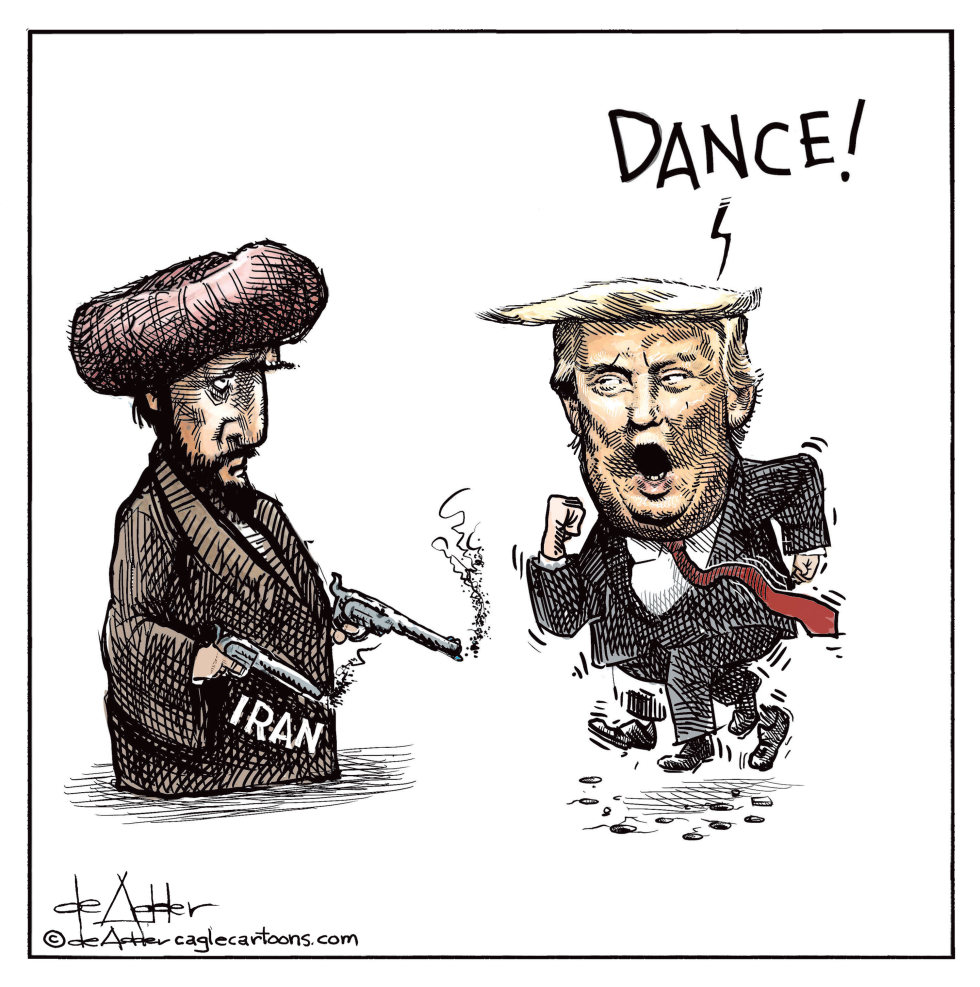
The image presents a man marked Iran holding two pistols with one discharging smoke toward the feet of a dancing Donald Trump. Trump appears with mouth open and one fist raised under the word Dance. The scene draws from longstanding tensions between the United States and Iran as of late July 2026. No specific new event within thirty days anchors the work so the visual addresses the persistent dynamic of pressure and response between the two sides. The composition places the Iran figure on the left in traditional headwear and the Trump figure on the right in motion.
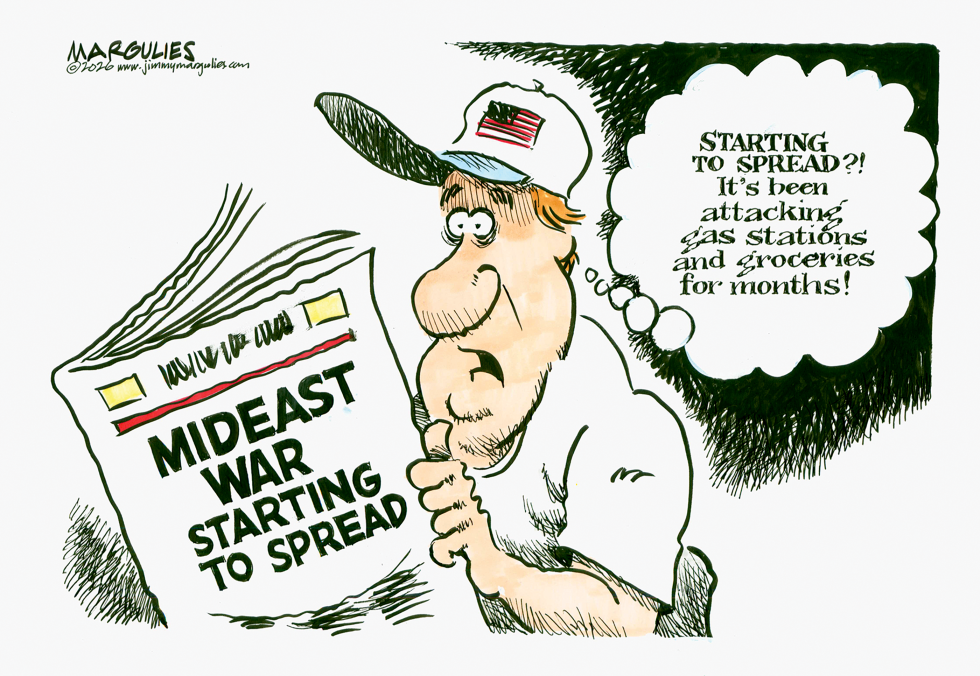
A newspaper headline declares the Mideast war starting to spread, prompting public reaction over its effects on daily costs. The piece highlights how energy and food prices have already risen due to ongoing regional conflict. It takes the position that the economic consequences for Americans have been evident long before any formal expansion of the fighting.