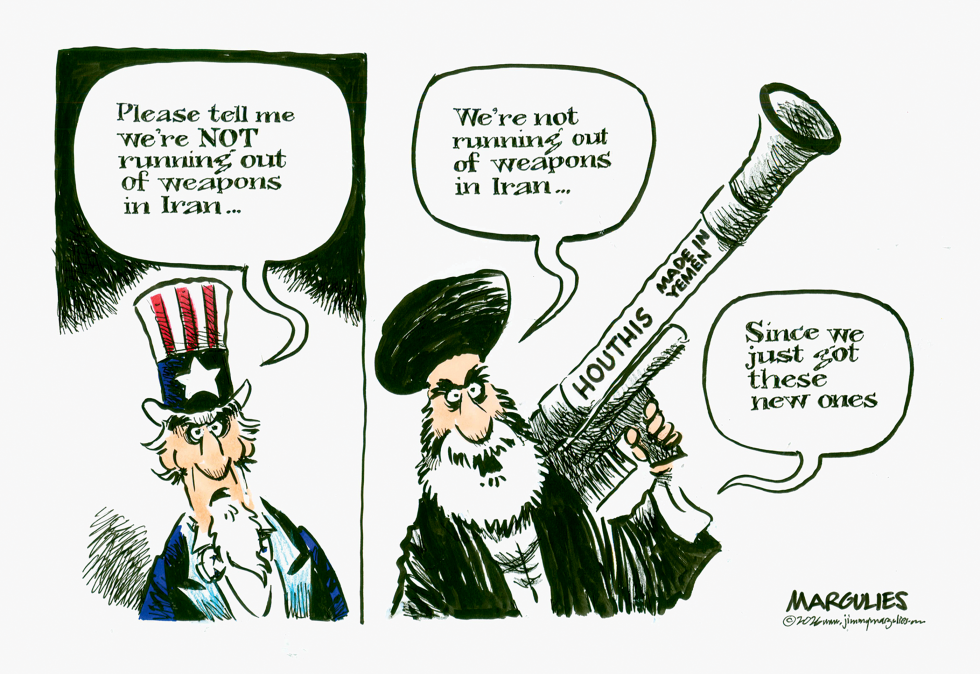
Reports indicate Houthi forces in Yemen have begun supplying missiles to Iran, addressing potential shortages in Iranian stockpiles. The development raises questions about regional arms flows and US policy responses in the Middle East. The cartoon highlights American concerns over whether Iran is truly facing weapons deficits, given the influx of Houthi-provided arms from Yemen. It portrays the situation as undermining claims of Iranian vulnerability while underscoring ongoing tensions in proxy dynamics.
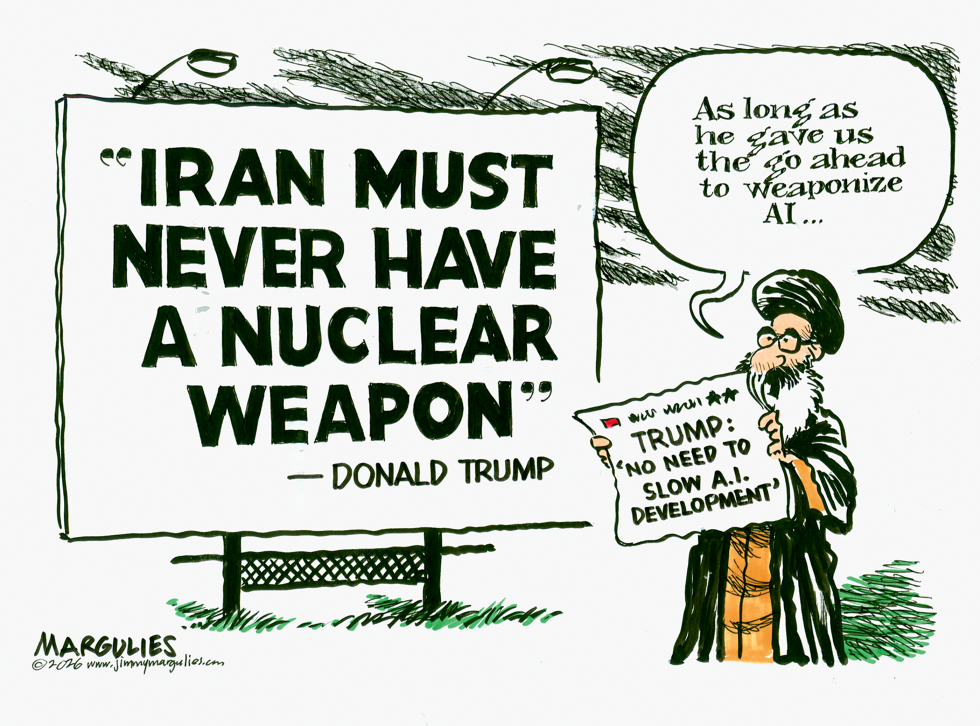
Donald Trump has repeatedly stated that Iran must never obtain a nuclear weapon, a position rooted in long-standing U.S. efforts to prevent nuclear proliferation in the Middle East. At the same time, reports indicate interest in accelerating artificial intelligence development without slowdowns. The cartoon responds to this apparent tension by depicting an Iranian leader conditioning acceptance of the nuclear restriction on permission to pursue AI weaponization. It argues that prioritizing rapid AI advancement risks undermining nonproliferation goals and hands strategic advantages to adversaries.
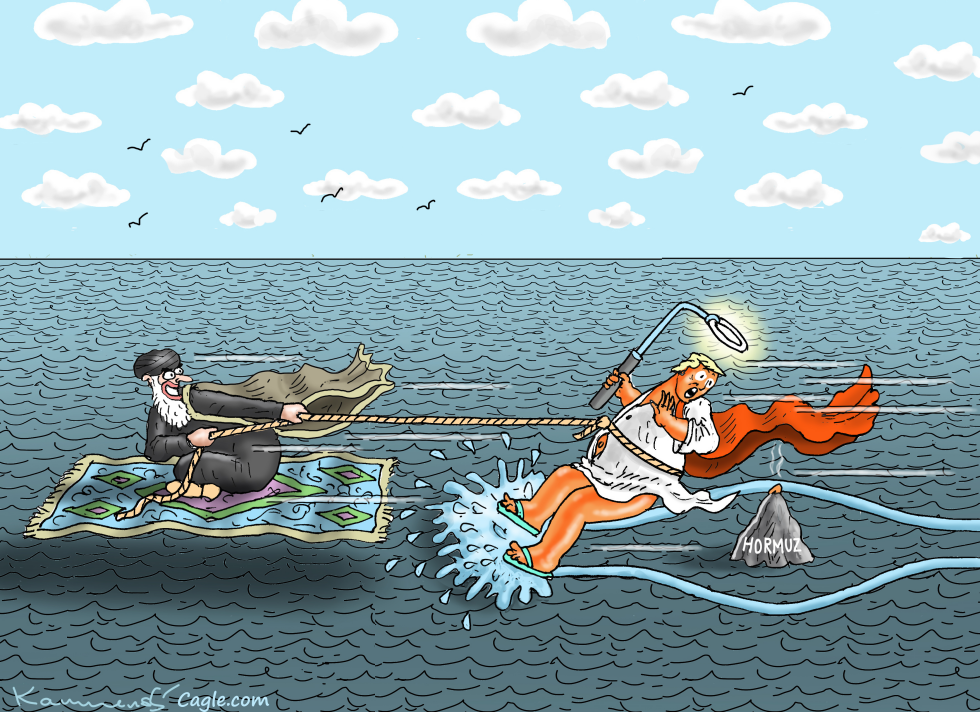
Tensions in the Strait of Hormuz have escalated with threats to shipping lanes critical for global oil supplies. Israeli and U.S. leaders face mounting losses from disruptions. The cartoon argues that involvement risks dragging both into deeper conflict without clear gains.
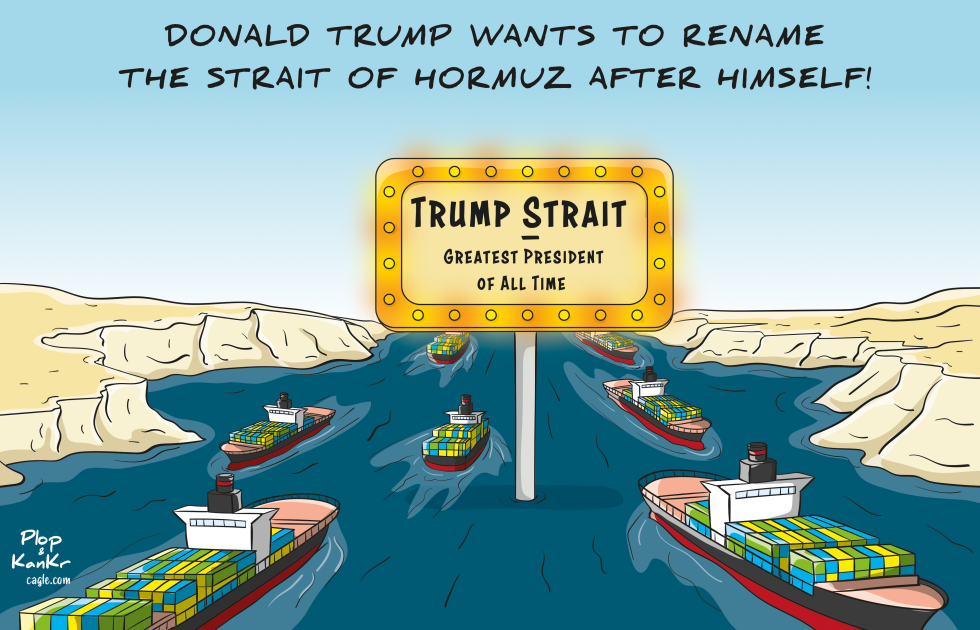
A political cartoon depicts Donald Trump proposing to rename the Strait of Hormuz after himself. The image shows multiple cargo ships navigating the waterway beneath a large glowing sign reading Trump Strait with the subtitle Greatest President of All Time. The top text states Donald Trump wants to rename the Strait of Hormuz after himself. The cartoon uses the visual of a prominent sign overlooking busy shipping lanes to comment on the proposal. It responds to ongoing discussions about international waterways and presidential initiatives in the Middle East region as of the September 2026 publication date.
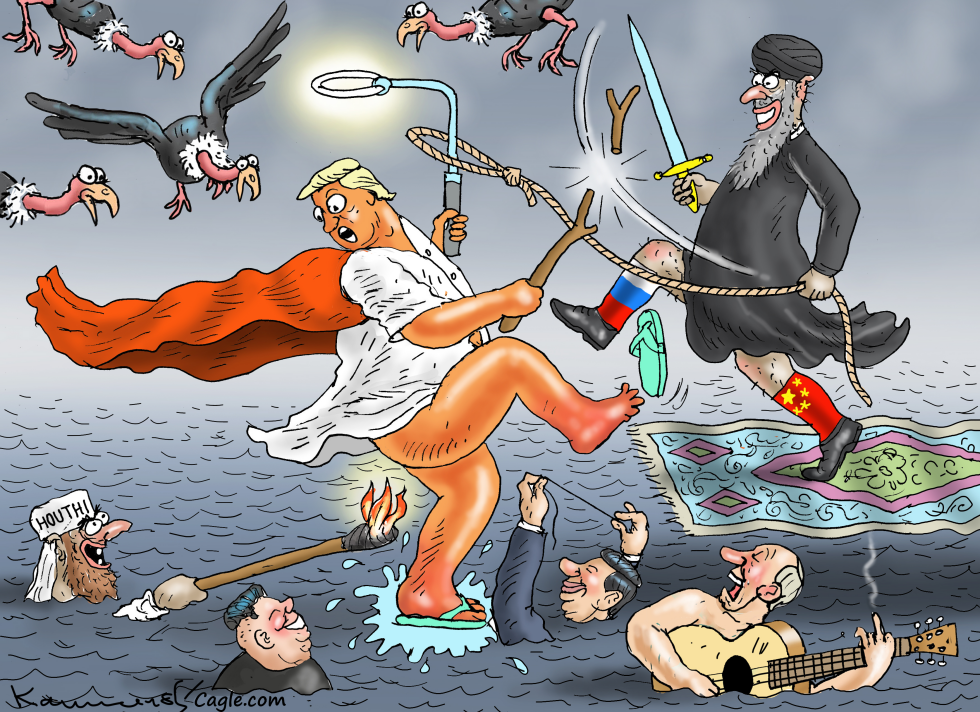
Donald Trump faces mounting complications in Middle East engagements involving Houthi forces and shifting ties with Russia and China. The cartoon portrays these entanglements as self-inflicted disorder that invites scavengers and undermines stability. It critiques the approach as reckless and counterproductive.
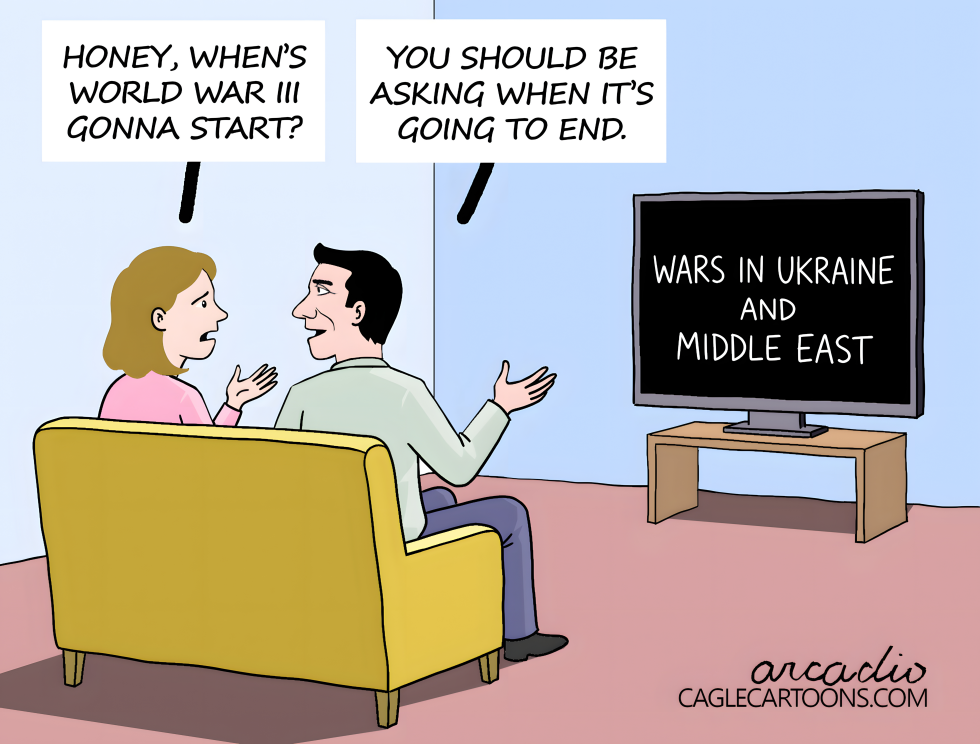
Persistent fighting in Ukraine and the Middle East continues to dominate global attention in September 2026, with no clear end in sight for either theater. The conflicts involve Russia against Ukraine and multiple fronts in the Middle East, raising concerns about wider involvement. Viewers and analysts alike question whether these regional wars risk drawing in additional powers and spiraling into a larger confrontation. The cartoon captures everyday public anxiety over the duration and potential expansion of these wars rather than their origins.
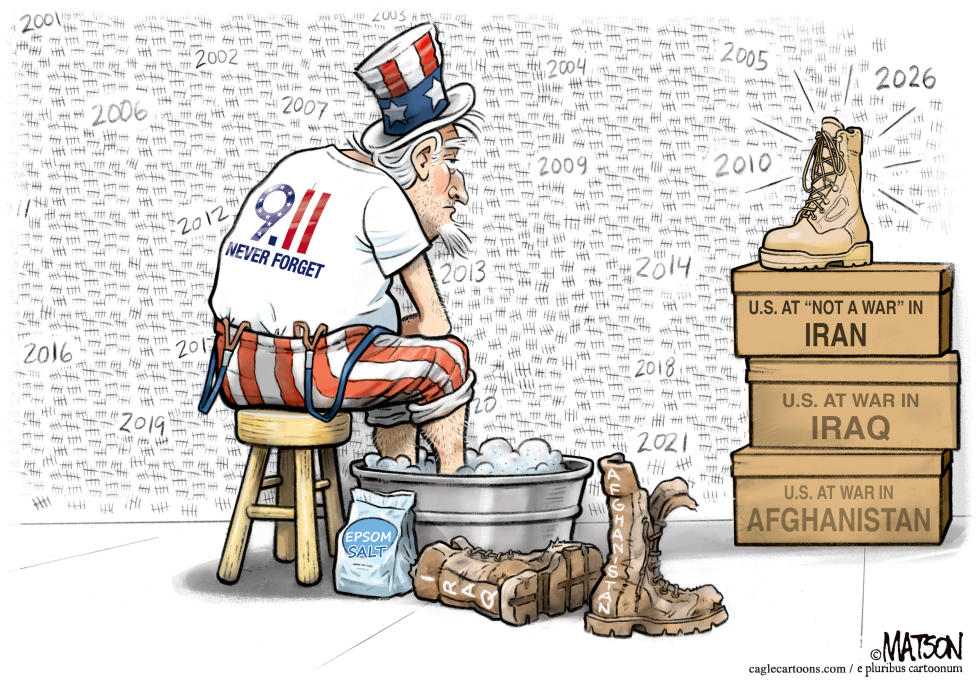
The United States has maintained military involvement across Iraq and Afghanistan for more than two decades following the September 11 attacks. Ongoing regional tensions with Iran now raise the prospect of additional commitments. The cartoon captures public and institutional exhaustion with extended deployments and questions the capacity for another prolonged engagement.
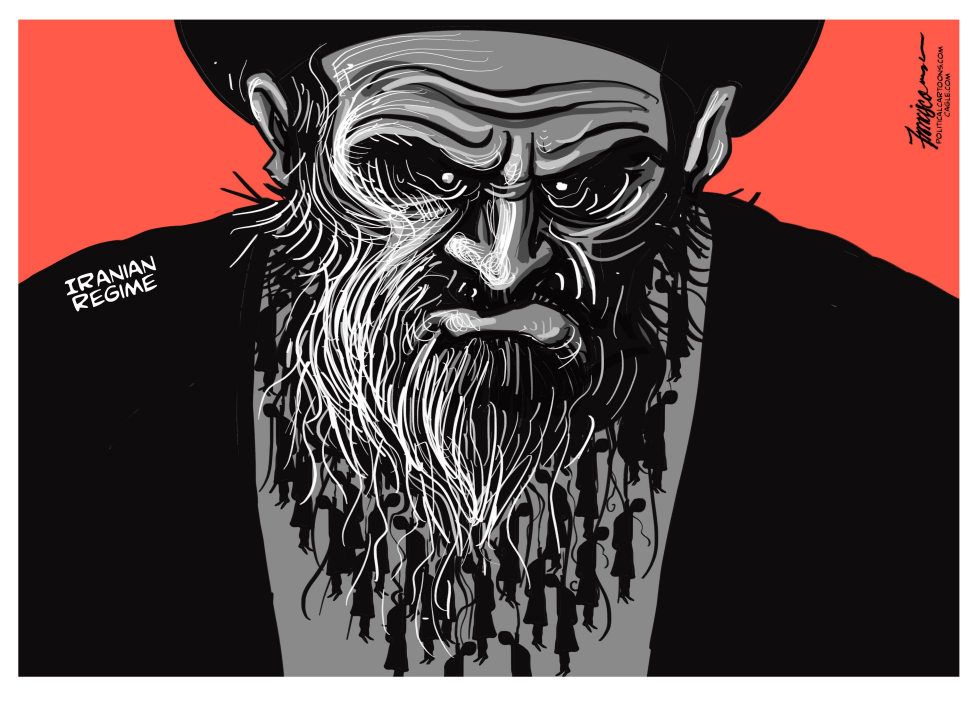
Iran continues to carry out executions at a high rate, targeting protesters, dissidents and minorities under the authority of Supreme Leader Ayatollah Ali Khamenei. The practice has drawn renewed criticism from human rights groups and Western governments concerned about due process and political repression. The cartoon frames the regime itself as the direct agent of these deaths, underscoring the leadership's personal responsibility for the ongoing campaign of hangings.
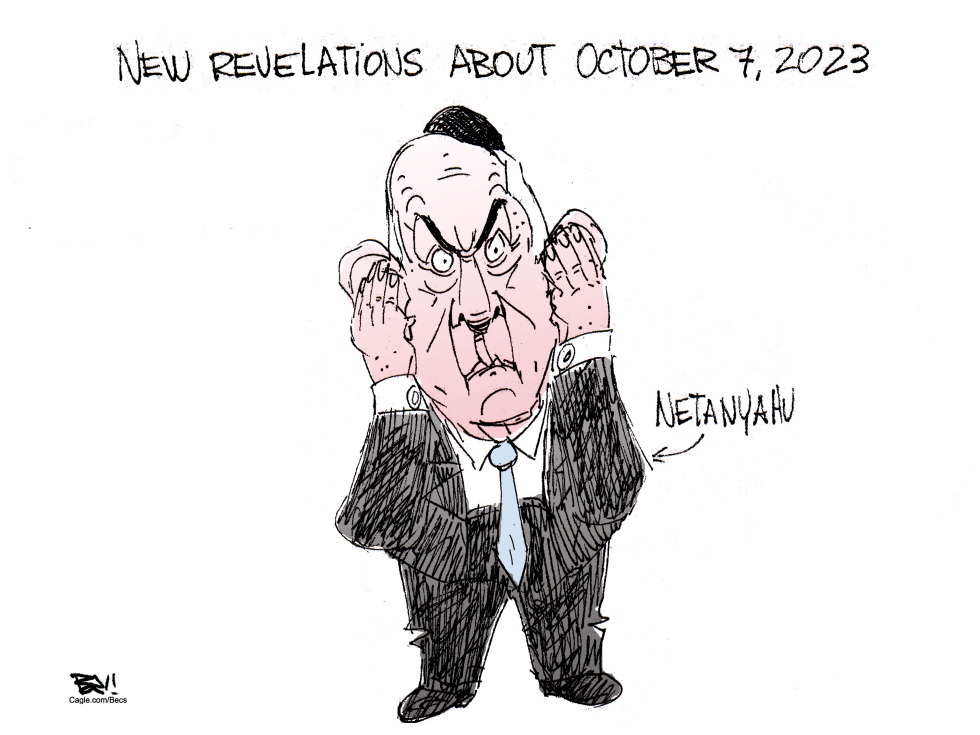
New details have surfaced regarding intelligence and preparedness failures ahead of the October 7, 2023 Hamas attacks. Israeli Prime Minister Benjamin Netanyahu has drawn criticism for appearing to dismiss these updates rather than address them directly. The ongoing debate centers on political responsibility for the deadliest attack in Israel's history and the government's handling of subsequent inquiries. Netanyahu's approach risks deepening public distrust in leadership during a period of heightened regional tension. The cartoon portrays this stance as deliberate avoidance of uncomfortable facts.
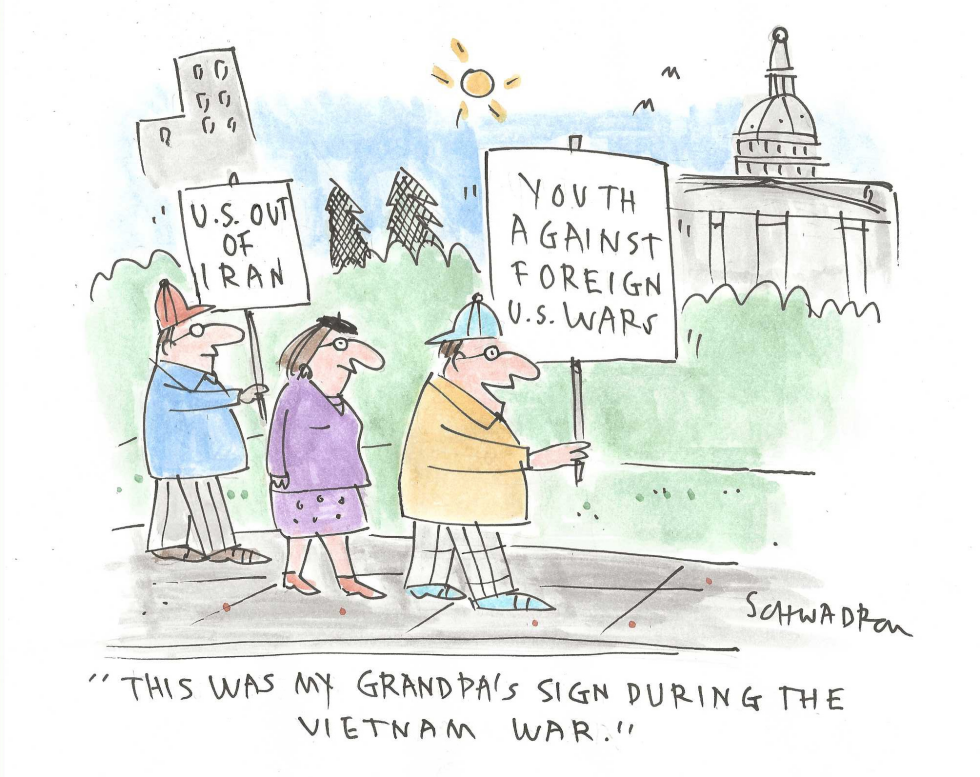
Anti-war demonstrators gather near the Capitol with signs calling for an end to US involvement in Iran and broader foreign conflicts. One protester notes that his sign originated during the Vietnam War, underscoring continuity across generations. The piece highlights persistent public opposition to military engagements abroad and questions the repetition of past policy mistakes.
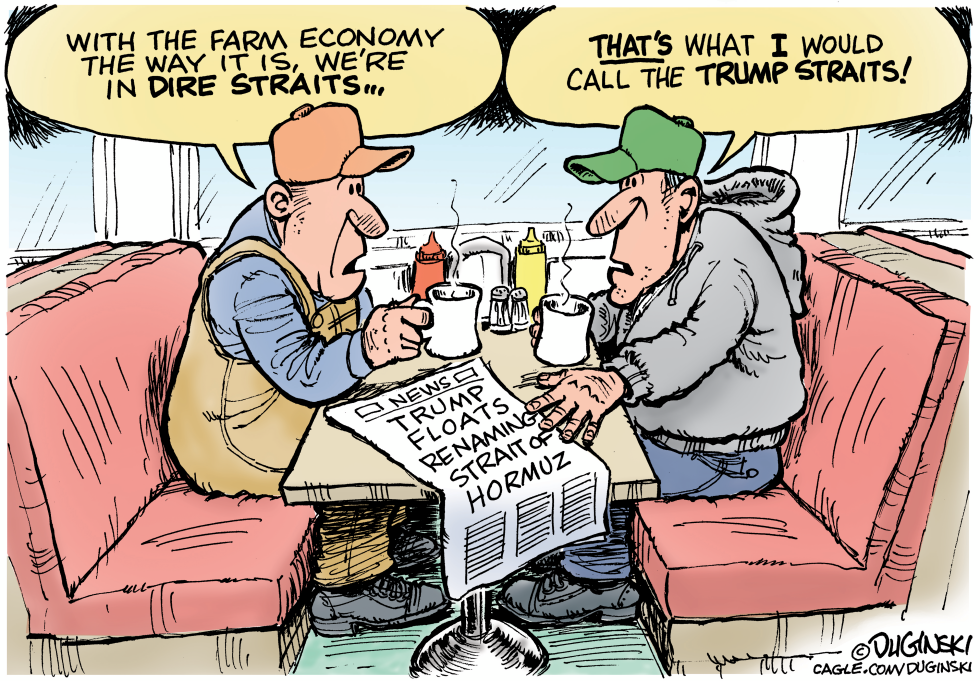
Donald Trump has floated the idea of renaming the Strait of Hormuz, a key Middle East shipping route, drawing attention to its potential effects on global trade and domestic sectors. The proposal arrives as agricultural producers face persistent economic challenges including high input costs and market volatility. The cartoon uses the pun on "dire straits" to connect the foreign policy suggestion to farm belt hardships, implying the rename distracts from or worsens real economic pressures on rural communities.
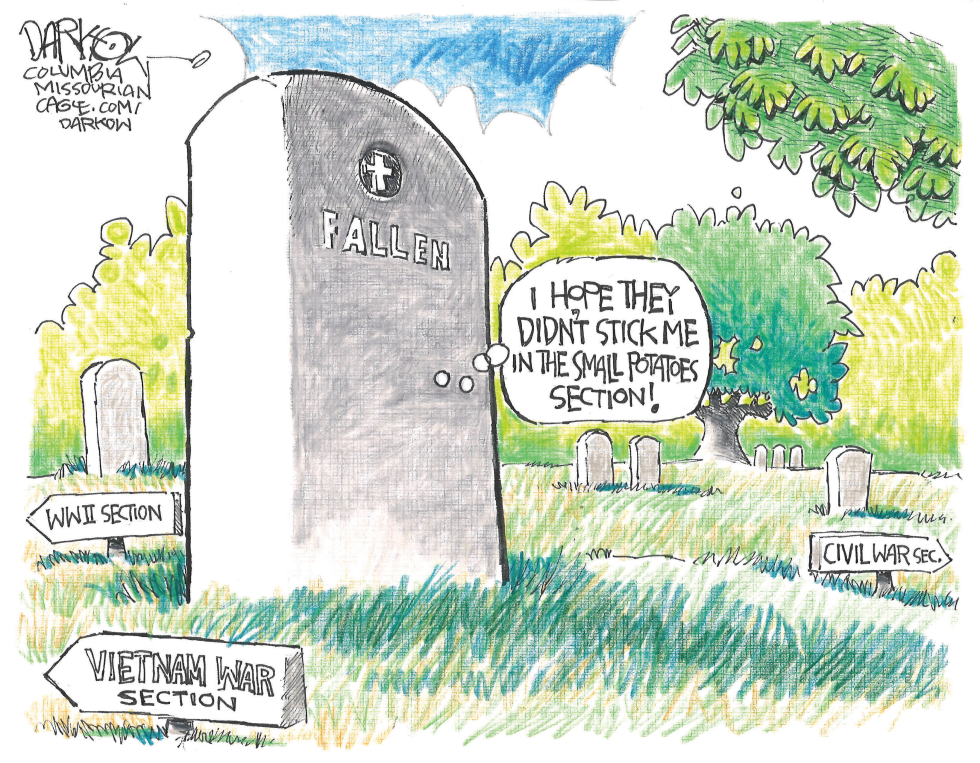
Recent developments in U.S. policy toward Iran have included public statements framing the conflict as limited in scope and consequence. Officials have emphasized de-escalation and avoided comparisons to major 20th-century wars. The approach has drawn criticism from those who see the engagement as carrying substantial long-term costs for American forces and regional stability. The cartoon argues that such framing diminishes the sacrifices involved and places the Iran conflict in a lesser category than earlier wars.
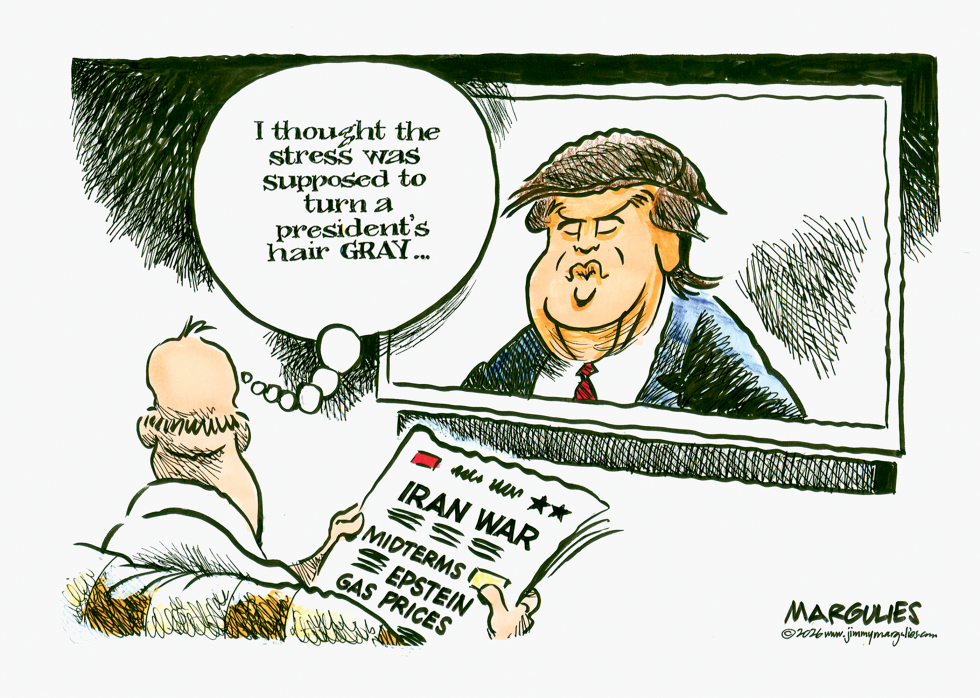
President Donald Trump confronts an Iran war, midterm election pressures, Epstein-related revelations and rising gas prices in September 2026. These overlapping challenges test the administration's capacity to manage foreign conflict and domestic economic strain simultaneously. The cartoon argues that the expected physical toll of such stress on the president has not materialized in the anticipated way.
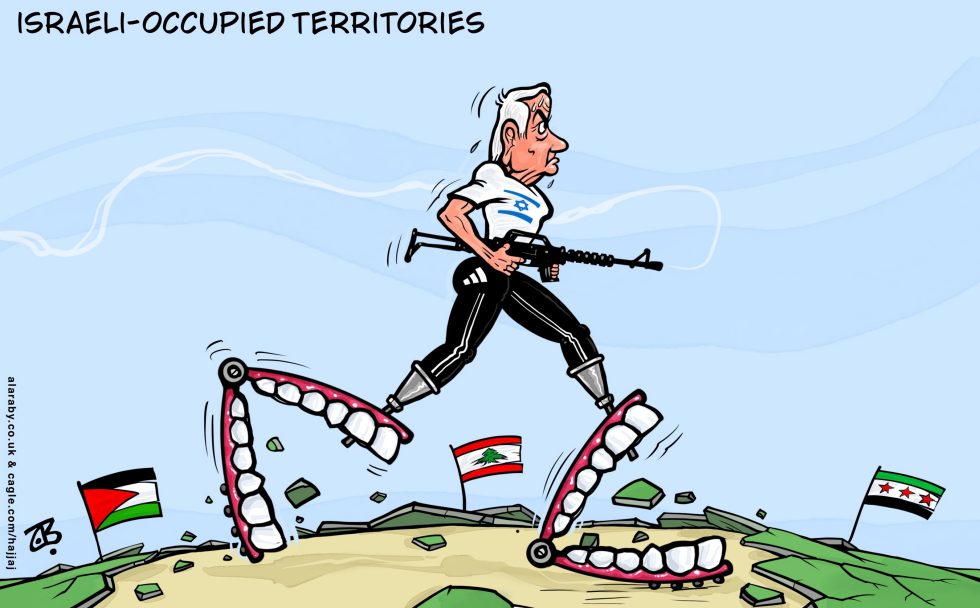
Israeli Prime Minister Benjamin Netanyahu has maintained policies of territorial control and military operations in areas bordering Israel including Gaza the West Bank southern Lebanon and parts of Syria. These actions have drawn international scrutiny over sovereignty violations and regional stability. The cartoon frames the policy as aggressive expansion that damages neighboring states.
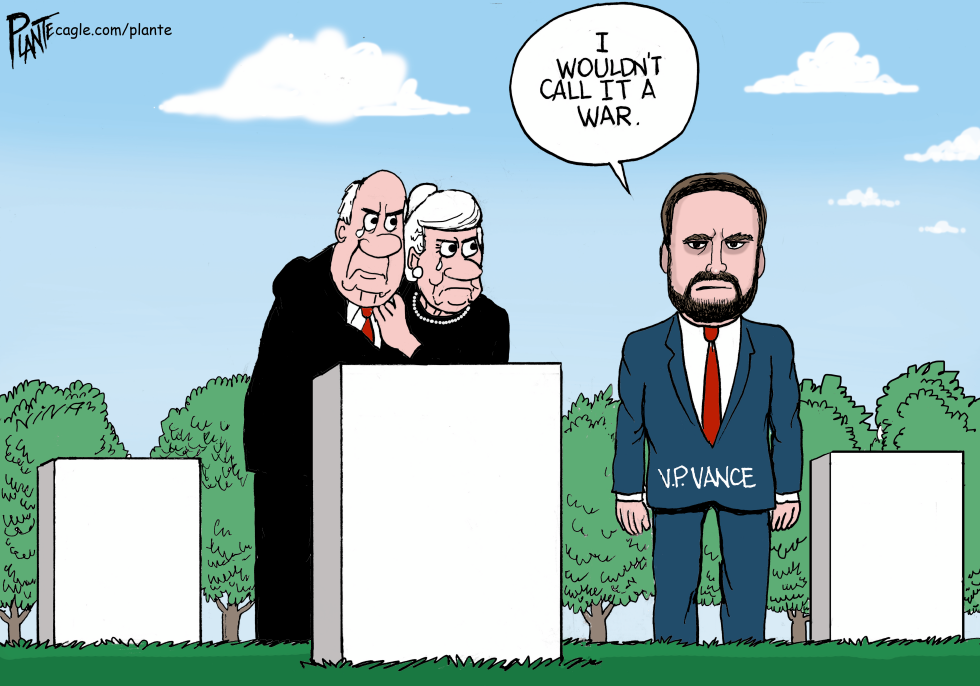
Vice President JD Vance has publicly stated that the United States is not at war with Iran even as reports indicate American casualties in the region. The administration frames operations as limited strikes rather than full conflict. This downplaying occurs amid broader tensions over Iran's nuclear program and regional influence. The cartoon argues that the human cost in the cemetery makes the denial untenable and that the situation qualifies as war.