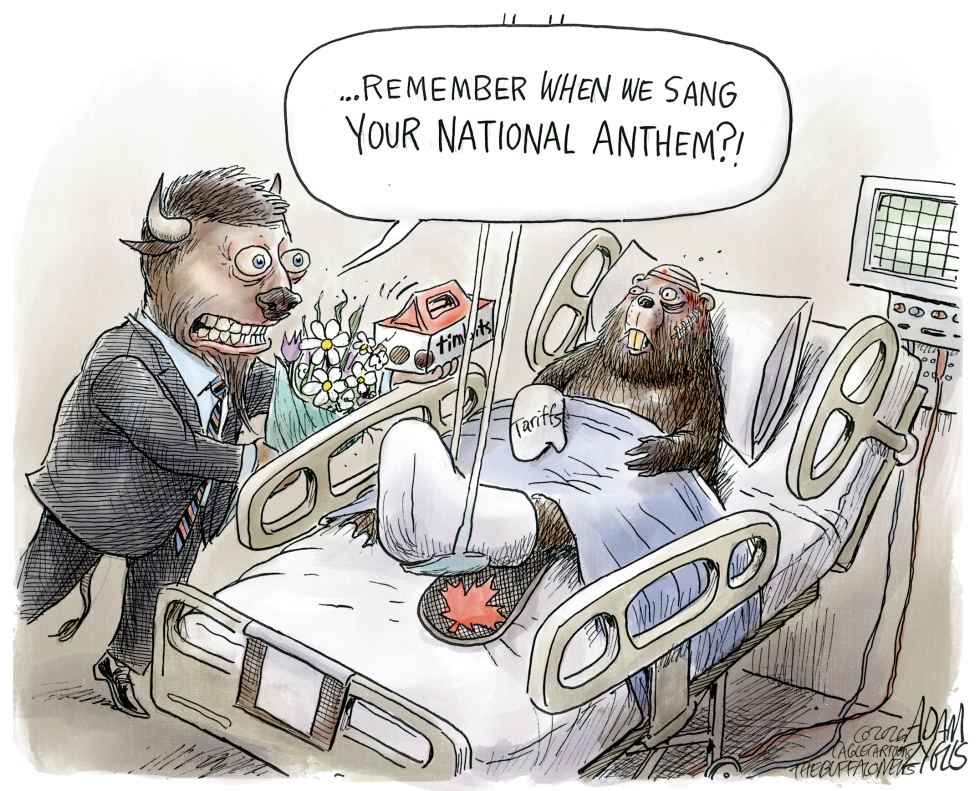
The cartoon depicts a suited bull figure at the bedside of an injured beaver wearing a hospital gown labeled Tariffs. The beaver lies in a hospital bed with a maple leaf emblem visible. A speech bubble from the bull references singing the national anthem. Medical equipment and a Tim Hortons box appear in the room. The image addresses ongoing tariff policies affecting US Canada trade relations as of the September 2026 publication date. The visual metaphor highlights economic harm to the Canadian side of the partnership while recalling past cooperative gestures between the two nations.
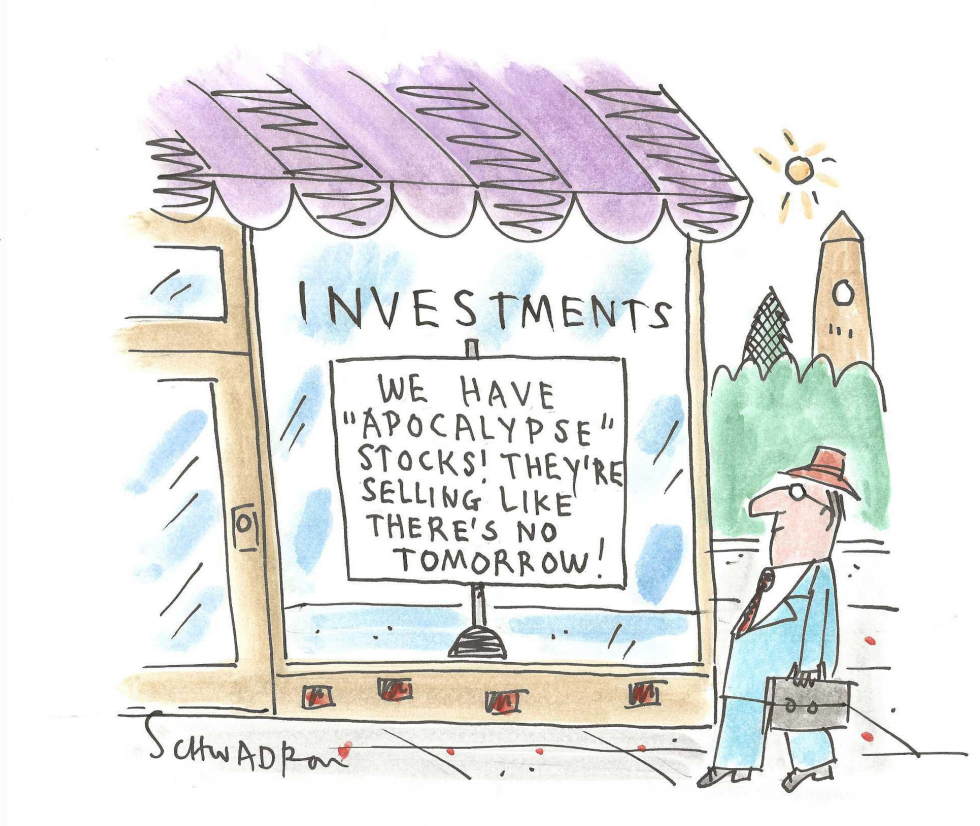
Investor interest in so-called apocalypse stocks has risen as markets reflect broader economic uncertainty. The trend highlights how some traders position for worst-case scenarios in business and finance. The cartoon underscores the ironic appeal of such products, suggesting hype around end-times investing reveals deeper anxieties about stability.
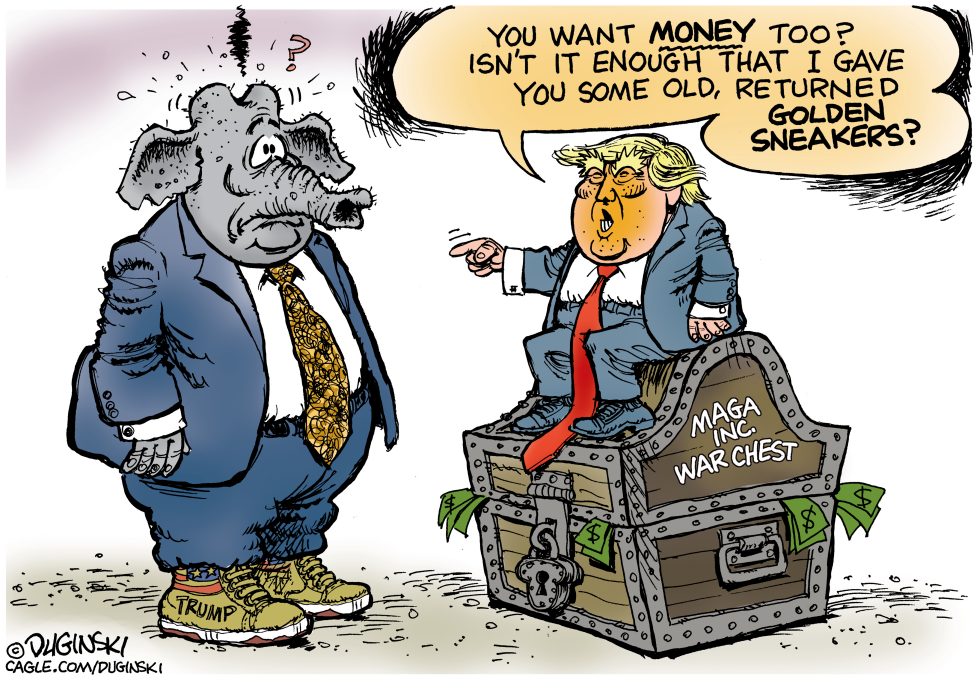
Donald Trump maintains tight control over his substantial campaign funds in the lead-up to the 2026 elections. Fellow Republicans have expressed frustration that he is unwilling to distribute resources from his war chest to support their races. The dynamic highlights ongoing tensions within the party over access to donor money. Trump has instead pointed to past gestures such as distributing returned merchandise. The cartoon criticizes this reluctance as self-serving and detrimental to broader Republican efforts.
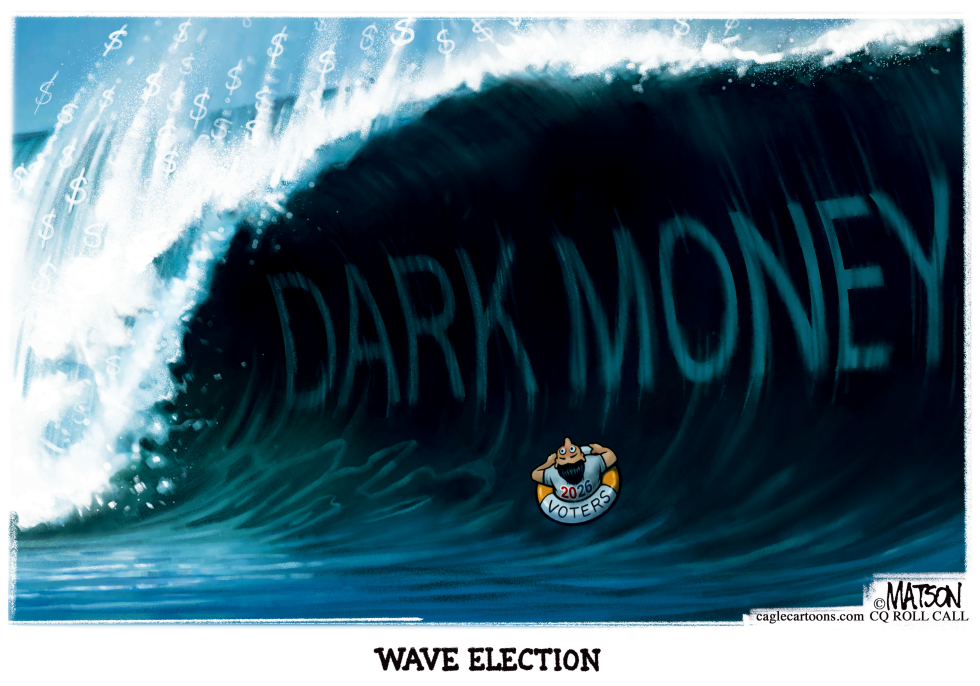
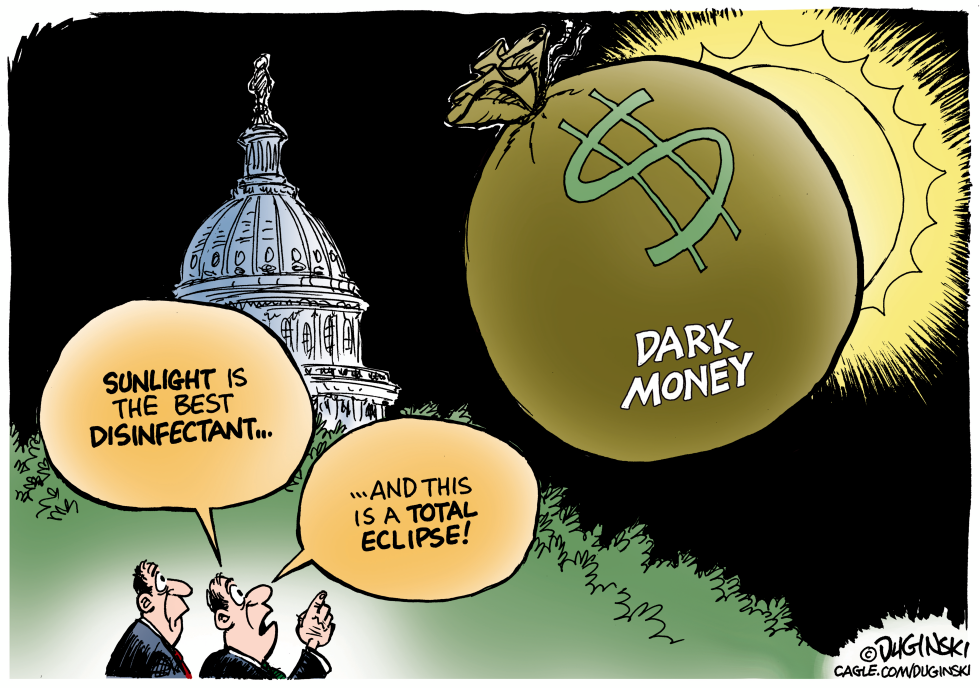
Unregulated dark money continues to pour into the 2026 election cycle, raising concerns that voters will be sidelined by massive undisclosed spending. The influx comes as candidates and outside groups prepare for midterm contests across the country. Critics argue the surge distorts democratic participation and drowns out ordinary voices. The editorial cartoon depicts this dynamic as an overwhelming wave labeled dark money bearing down on a lone voter buoy. It takes the position that such spending poses a direct threat to fair elections and calls for stronger safeguards.
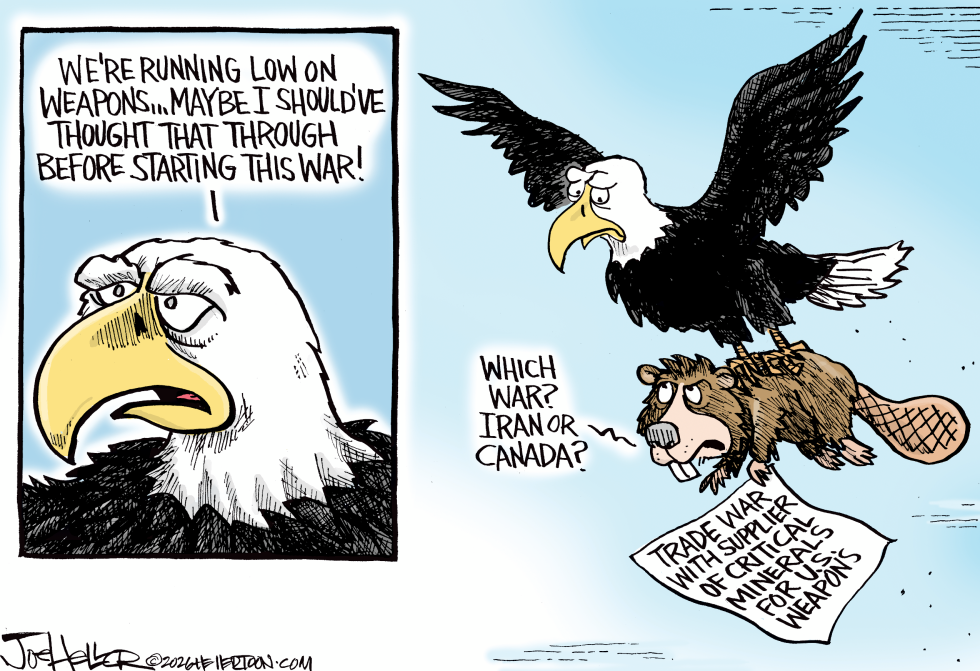
The United States faces potential weapons shortages linked to trade tensions with Canada, a key supplier of critical minerals, while also managing conflicts involving Iran. The situation highlights risks to military readiness from disrupted supply chains. The piece argues that initiating trade disputes with essential partners undermines defense capabilities at a critical time.
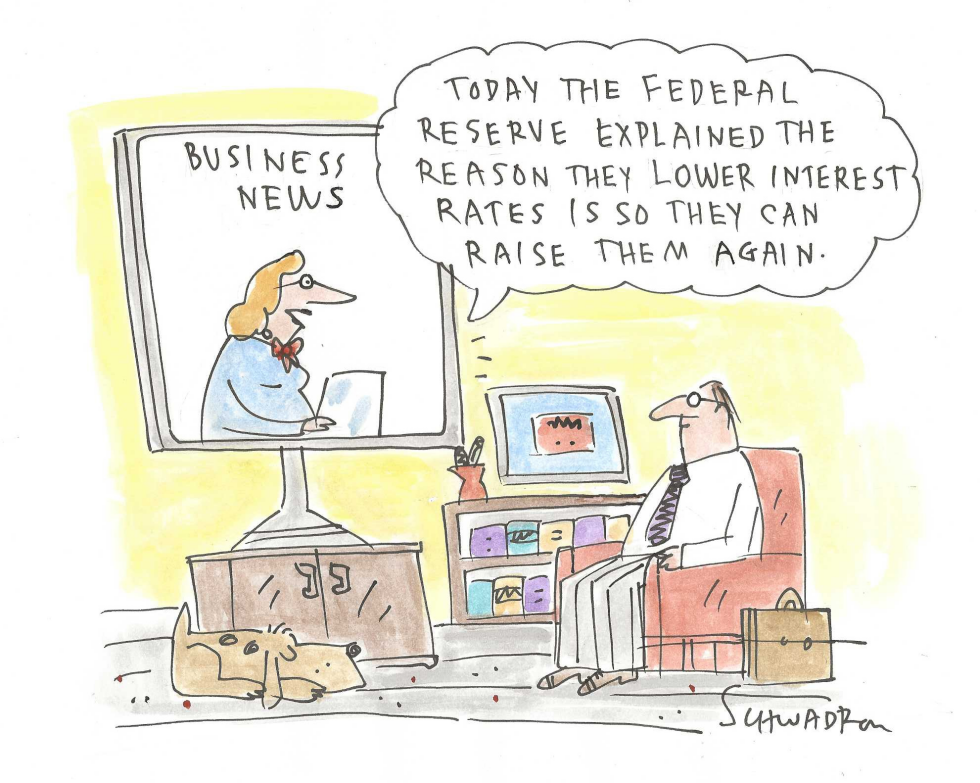
The Federal Reserve announced interest rate reductions in late summer 2026 to support economic conditions. Observers noted the central bank's stated goal of eventual rate increases created confusion about policy direction. The move affects borrowing costs for businesses and households nationwide. Markets reacted with mixed signals on inflation control and growth prospects. The cartoon presents the explanation as self-contradictory, underscoring public doubt about the clarity of Fed communications.
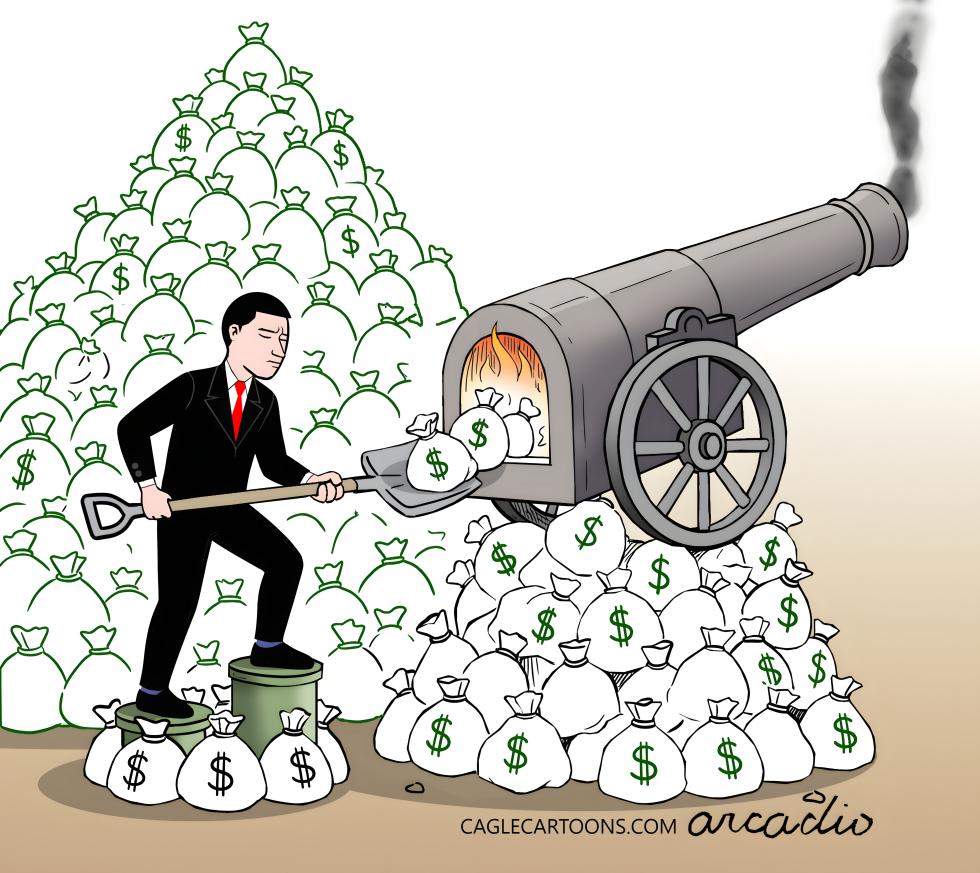
Business leaders continue to allocate large sums toward unproductive or destructive ends, drawing criticism for prioritizing short-term displays over sustainable practices. The pattern reflects ongoing concerns about corporate priorities where substantial resources vanish without clear returns. The piece argues that such spending represents a fundamental misallocation that harms long-term stability.
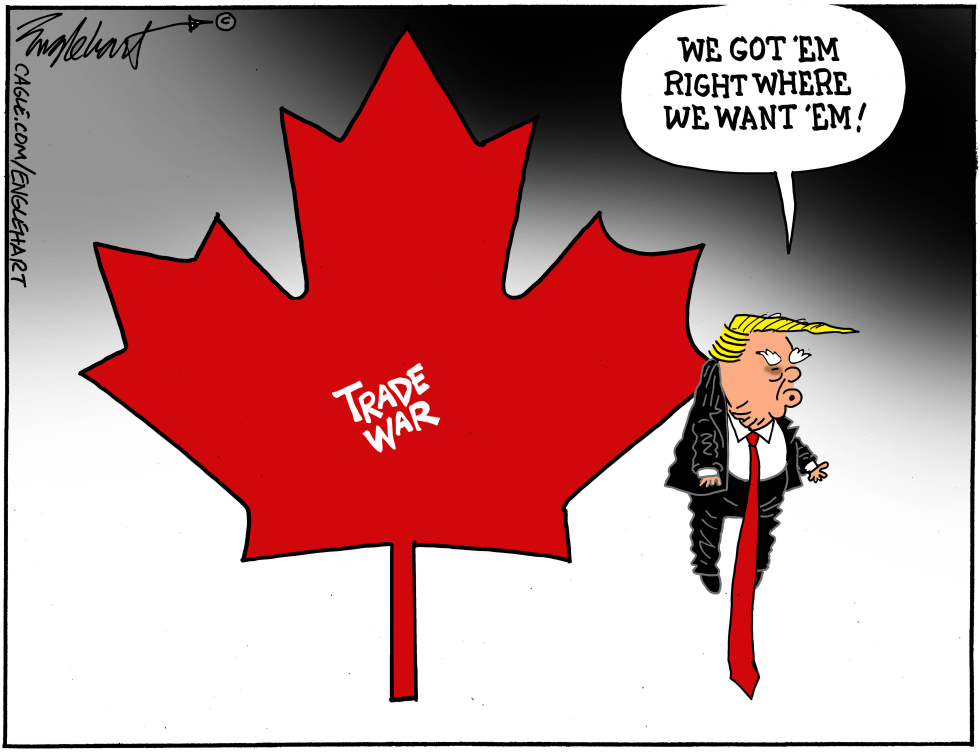
President Donald Trump has escalated tariffs on Canadian goods in a widening trade dispute. Ottawa responded with targeted countermeasures that hit key US exports. The standoff raises costs for American consumers and businesses while straining long-standing alliance ties. The cartoon portrays Trump as overconfident in a confrontation where Canada holds leverage.
Dark money continues to shape congressional races and policy debates through undisclosed channels. Lawmakers face pressure to address donor secrecy amid calls for stronger disclosure rules. The cartoon argues that such funds directly undermine public oversight of government actions.
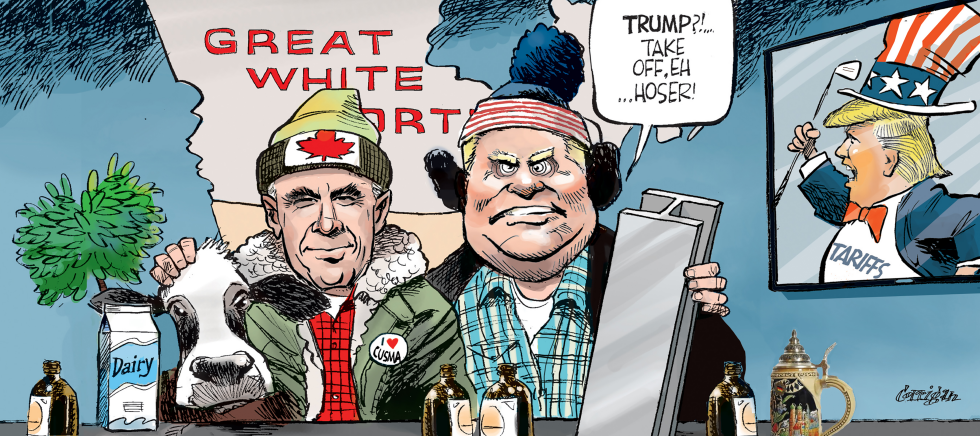
President Trump renewed tariff threats against Canada focused on dairy imports in late August 2026. Canadian leaders responded by highlighting domestic protections and cultural stakes. The move risks straining long-standing trade ties under existing agreements. The cartoon frames the confrontation as a direct challenge to Canadian sovereignty in agriculture. It portrays US policy as aggressive posturing that ignores mutual economic interests.
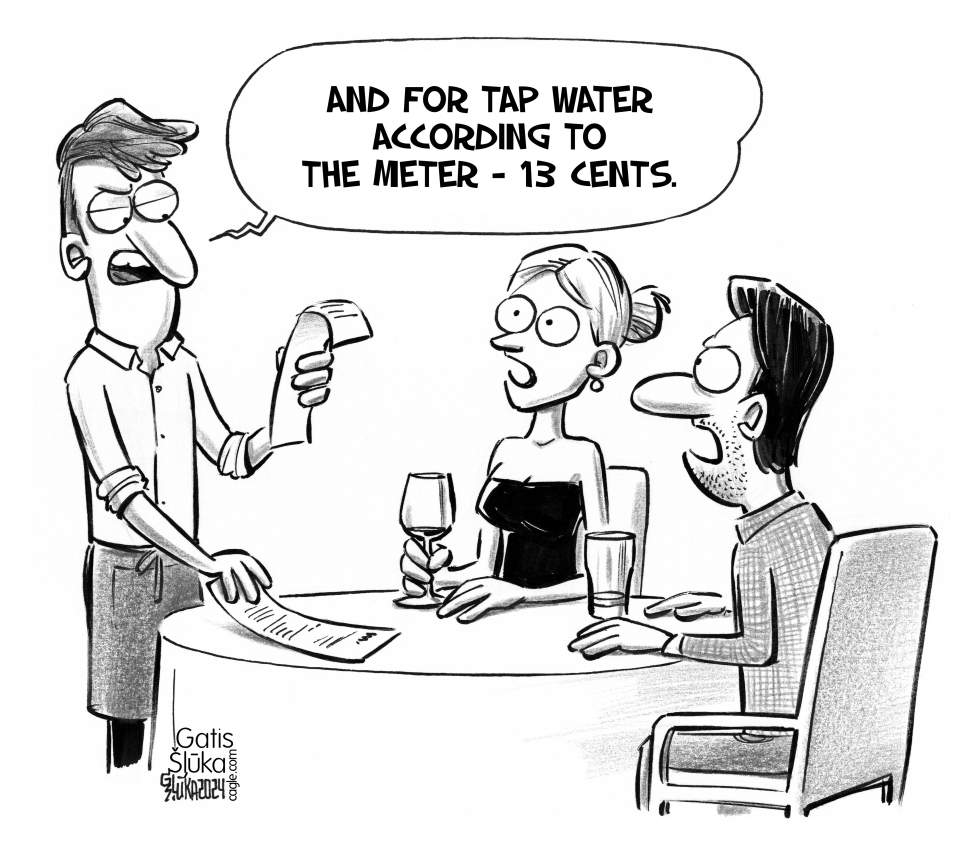
The cartoon depicts a waiter informing two diners that tap water costs 13 cents based on meter readings. It responds to ongoing discussions about restaurants charging for previously free tap water. The visual uses the meter concept to highlight billing surprises in dining.
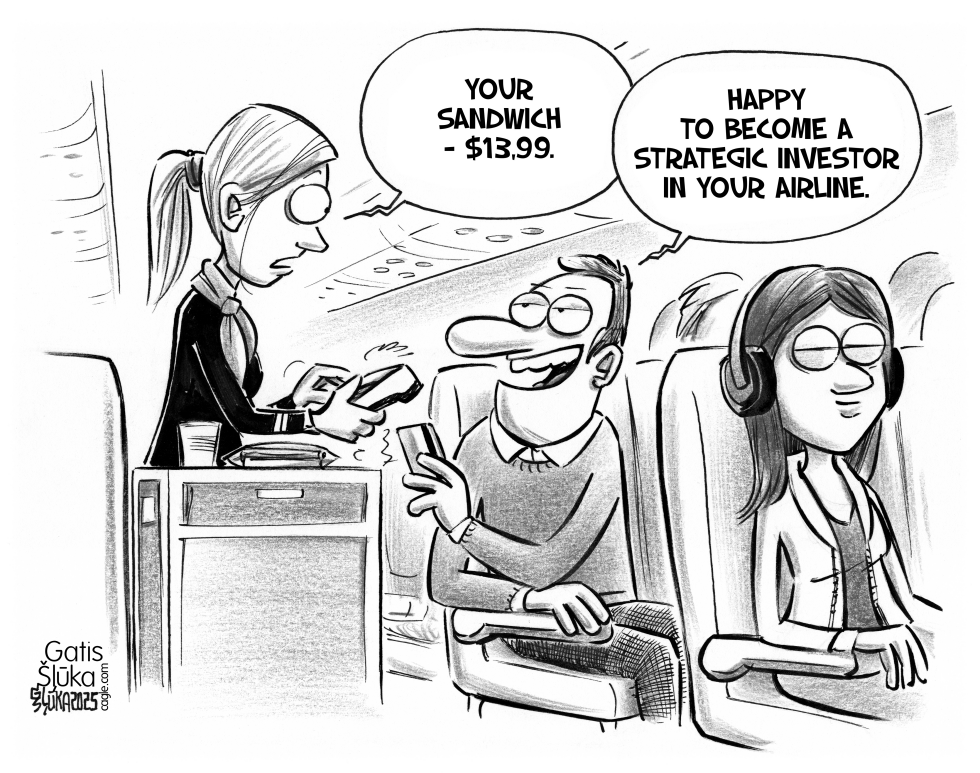
A passenger on a commercial flight faces a $13.99 charge for a sandwich from the flight attendant. Rather than pay, the passenger offers to become a strategic investor in the airline. The exchange occurs in the cabin with another traveler seated nearby. The scene captures common complaints about elevated prices for basic in-flight items. It reflects ongoing passenger frustration with airline ancillary fees and service costs.
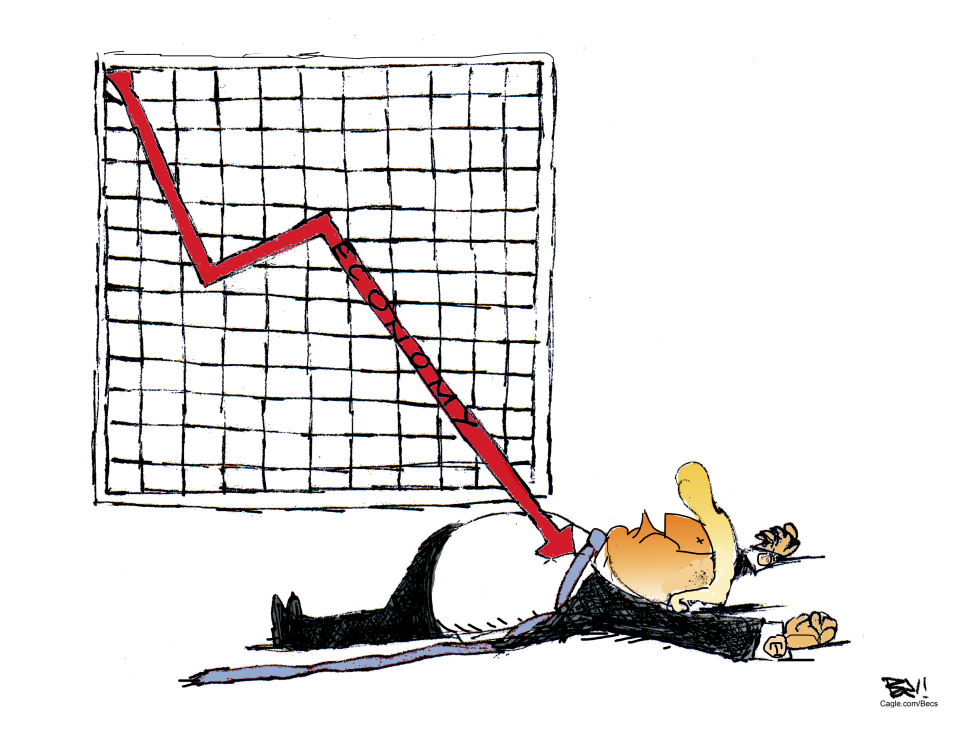
Economic indicators released in late August 2026 showed continued contraction in key sectors including manufacturing and consumer spending. President Donald Trump faced direct political fallout from the downturn. The data underscored challenges in sustaining growth amid inflation pressures and global trade tensions. The cartoon depicts the president flattened by the falling trend line, underscoring the administration's vulnerability on economic performance. It argues that the president bears responsibility for the slide and cannot escape its consequences.
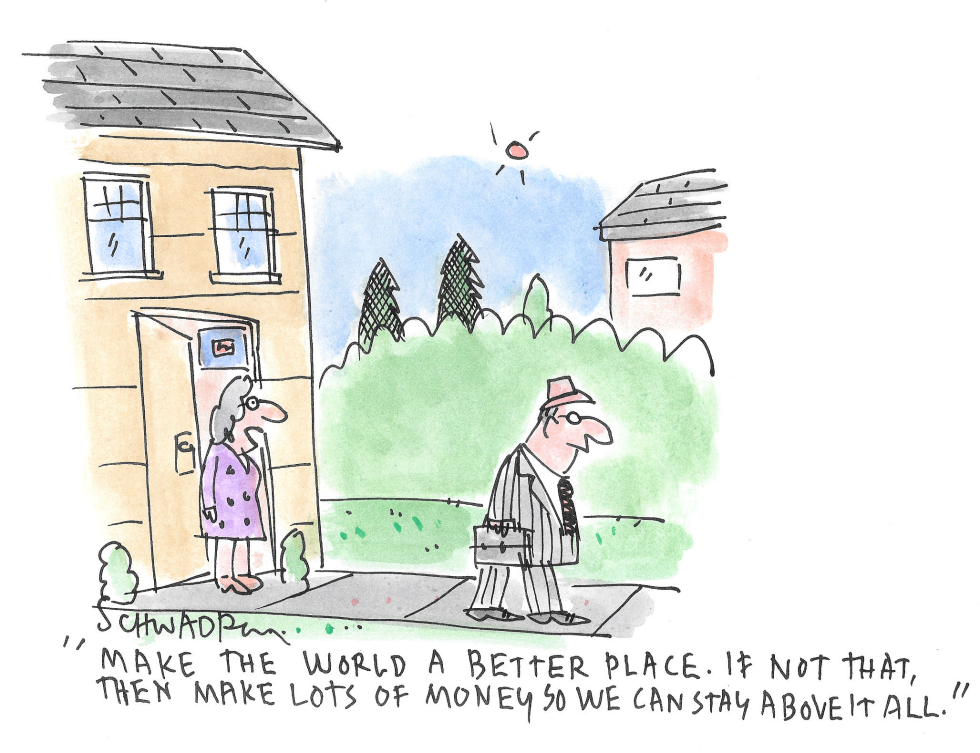
A homeowner delivers blunt counsel to a suited visitor about choosing financial success when efforts to improve the world fall short. The exchange highlights a common tension between altruism and self-preservation in daily decision making. The piece presents the advice as straightforward guidance rather than critique.
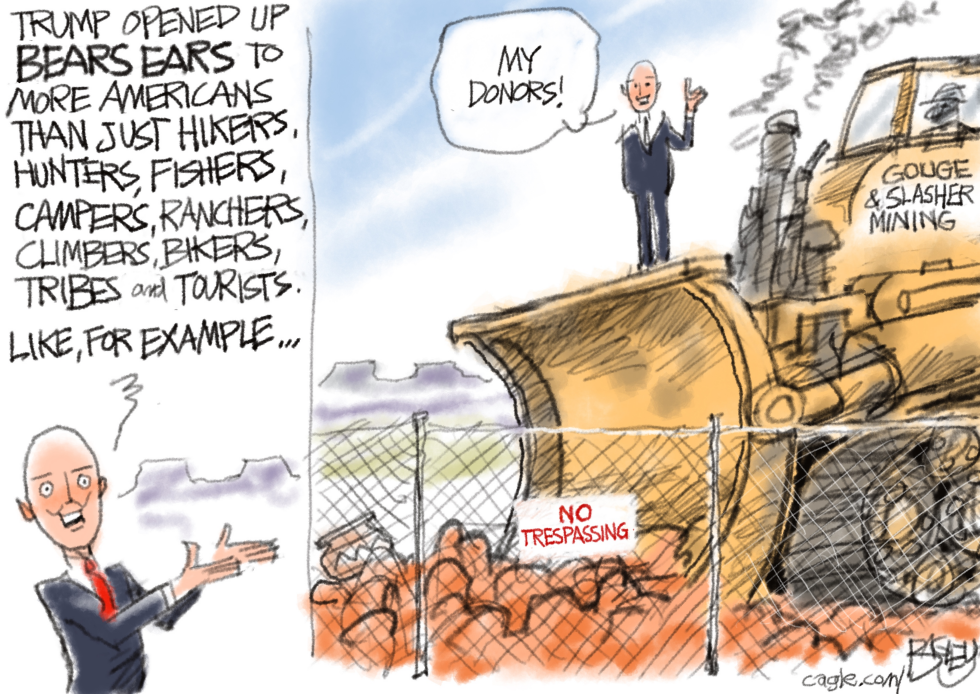
President Trump opened Bears Ears National Monument to expanded mining operations, citing broader public access. The move benefits mining companies and political donors while limiting protections for hikers, tribes and recreational users. The cartoon criticizes the decision as donor-driven favoritism over conservation.