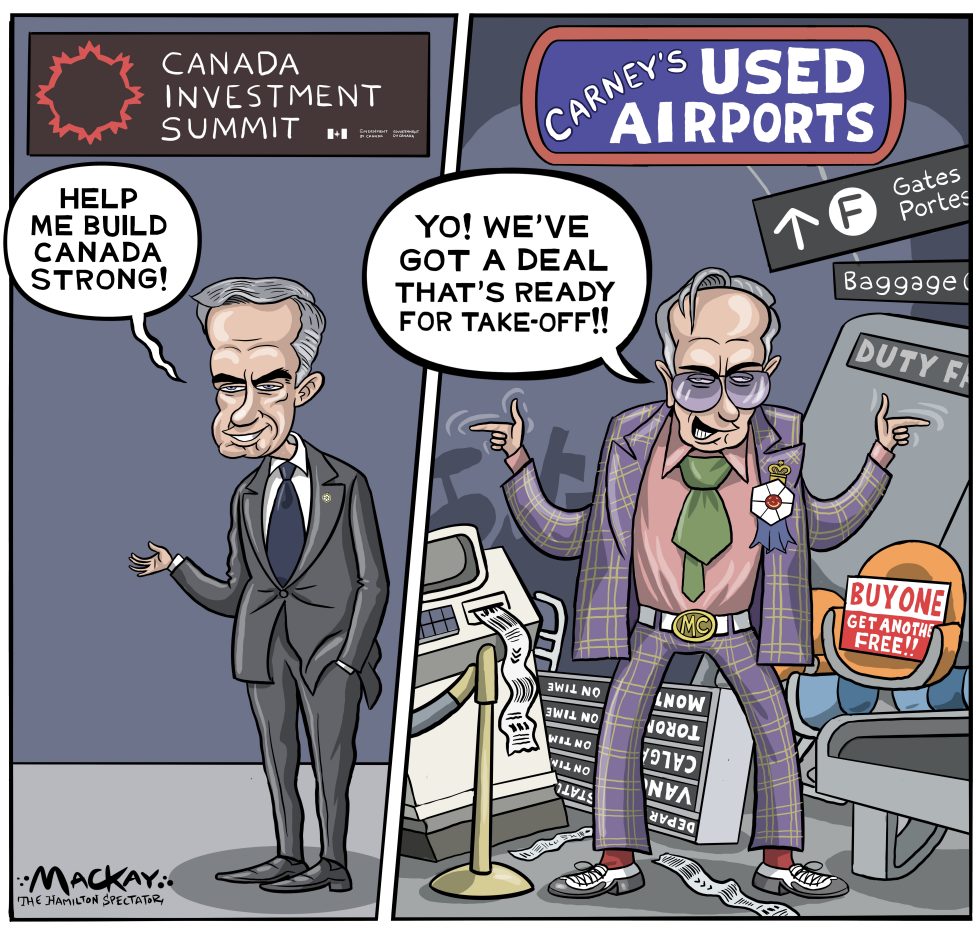
The cartoon depicts Justin Trudeau at a Canada Investment Summit appealing for help to build the country strong. In the adjacent panel, Mark Carney appears as a used-car-style salesman hawking airports with a buy-one-get-one-free offer and a ready-for-takeoff deal pitch, highlighting a satirical take on airport privatization efforts.
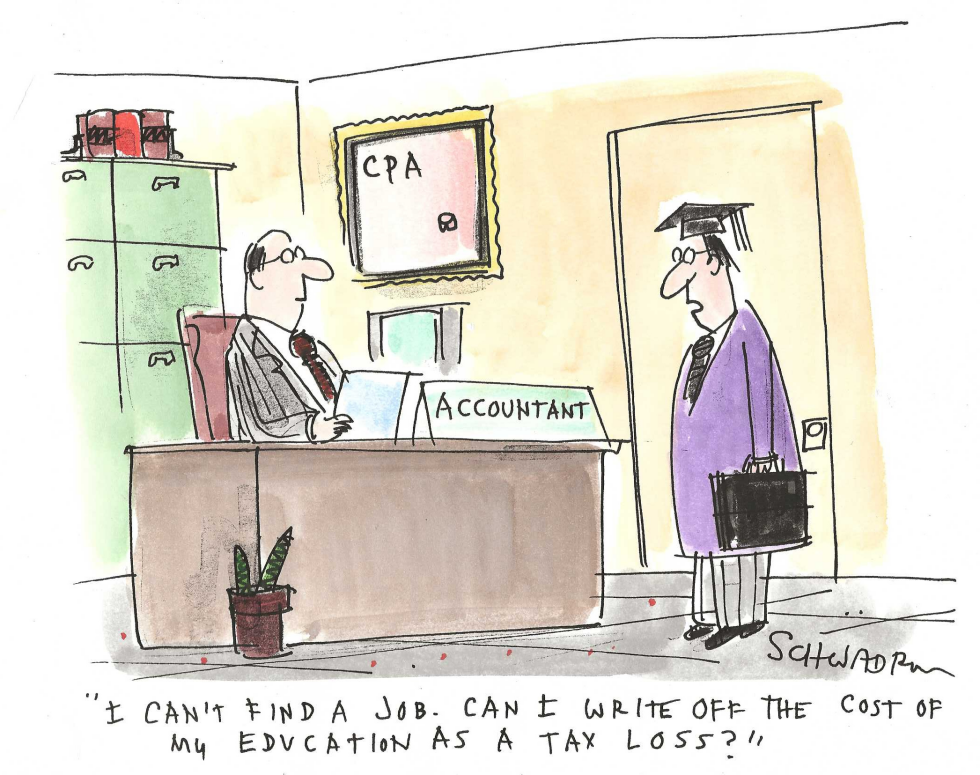
Recent college graduates facing extended unemployment have begun inquiring whether the cost of their degrees can be treated as a tax-deductible loss. Accountants report fielding more such questions as hiring in some sectors remains slow. The inquiry reflects broader frustration with the return on investment for higher education when entry-level positions are scarce. The cartoon captures this practical, if unconventional, approach to offsetting student debt through the tax code. It underscores ongoing debates about the value of degrees and the limits of existing tax relief for education expenses.
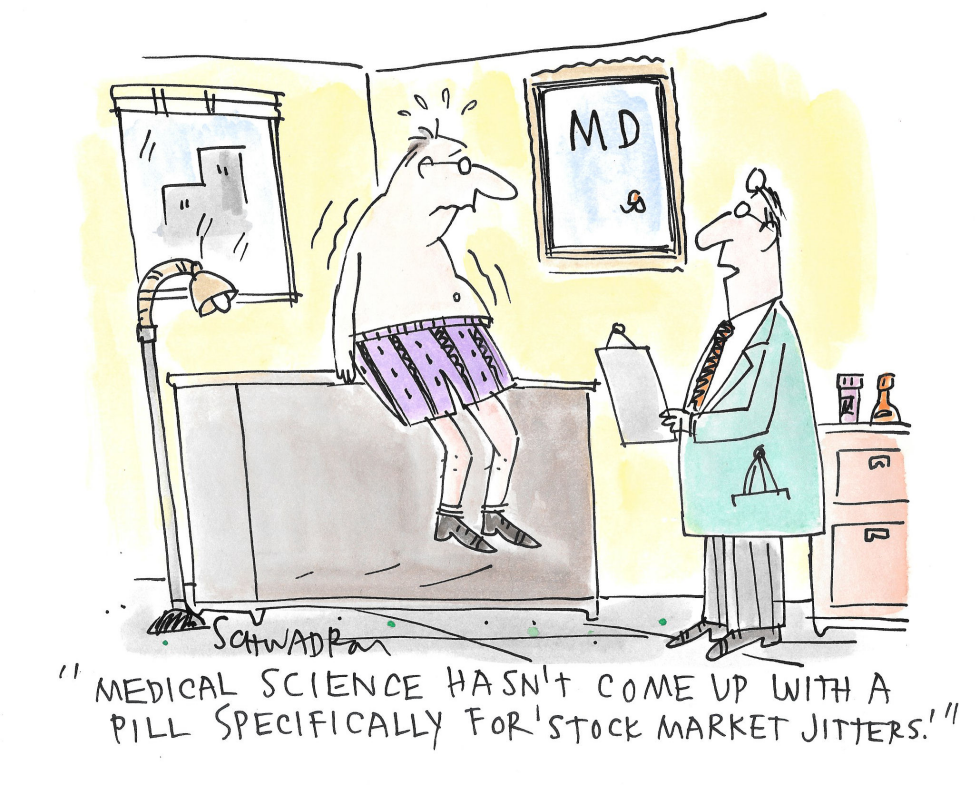
Stock market fluctuations continue to generate widespread investor anxiety amid ongoing economic uncertainty. Market swings tied to interest rates, trade policy, and corporate earnings have left many without clear remedies. The cartoon highlights that medical science offers no specific treatment for this form of financial stress, underscoring the limits of medicine when confronting market-driven worries.
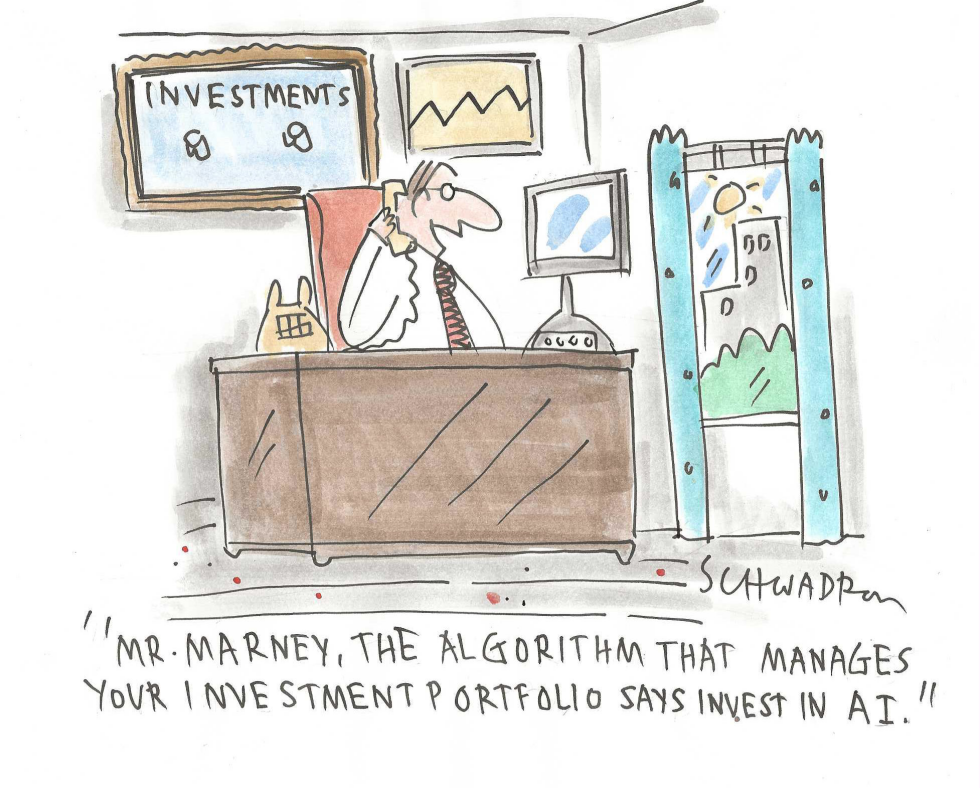
Financial institutions have expanded use of algorithmic systems to oversee client portfolios, with many such tools now directing capital toward artificial intelligence companies. The trend raises questions about self-reinforcing investment cycles where the managing software favors its own sector. The cartoon highlights the circular logic of automated recommendations that benefit AI developers and related stocks.
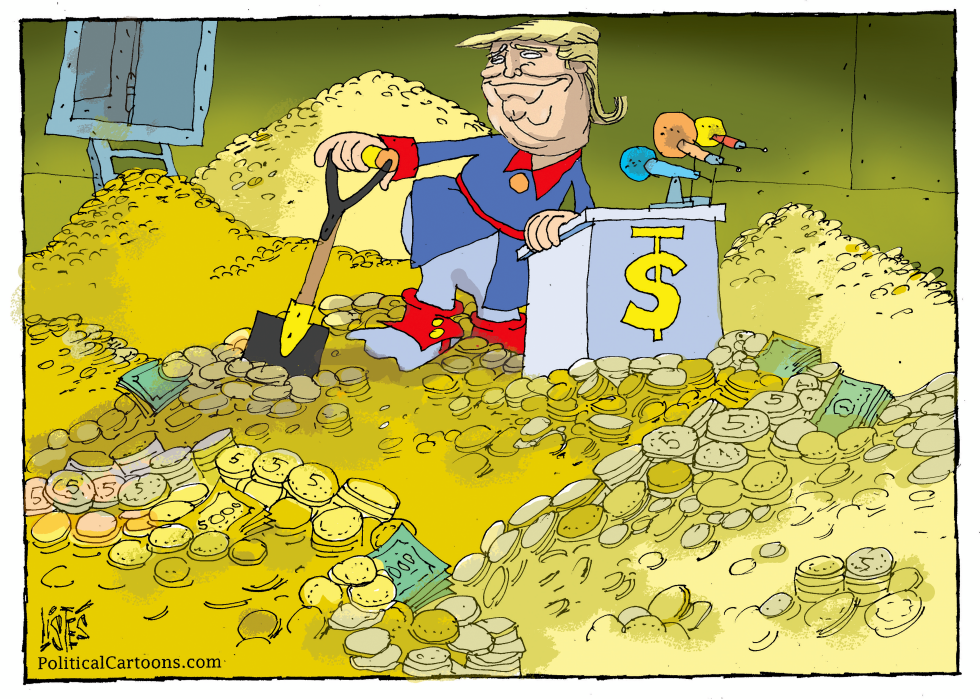
Donald Trump remains a central figure in debates over wealth and political power as of September 2026. The cartoon responds to ongoing scrutiny of how personal fortune intersects with public life and policy influence. It portrays the former president amid symbols of money to critique that dynamic. The editorial position frames Trump's association with wealth as a defining and problematic feature of his political presence.
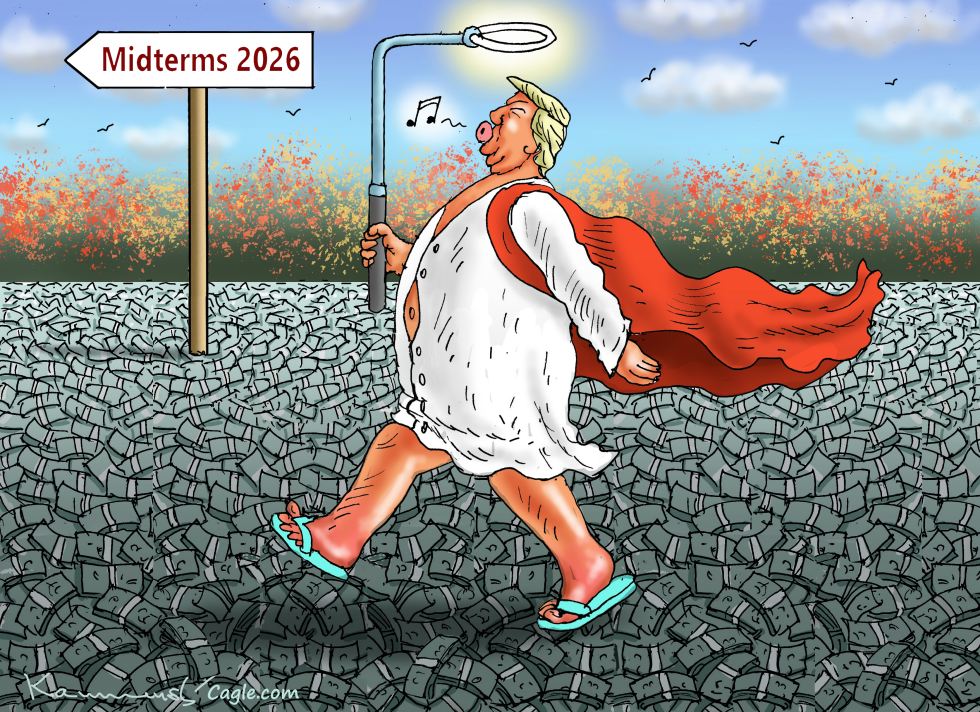
As the 2026 midterm cycle heats up, Donald Trump has positioned himself at the center of Republican fundraising efforts. Large donor contributions and party infrastructure have given GOP candidates a financial edge in key races. The cartoon portrays this advantage as a decisive factor heading into November. Critics argue the focus on money risks overshadowing policy substance. Supporters see the resources as essential to counter Democratic spending. The piece frames the cash flow as a clear path to victory for the MAGA-aligned slate.
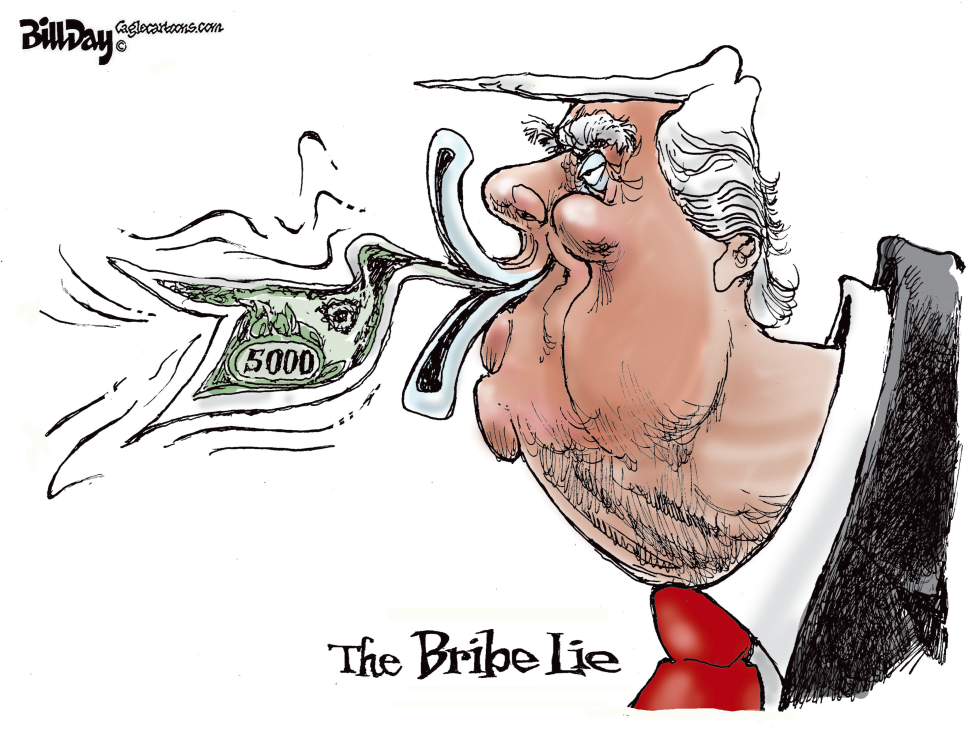
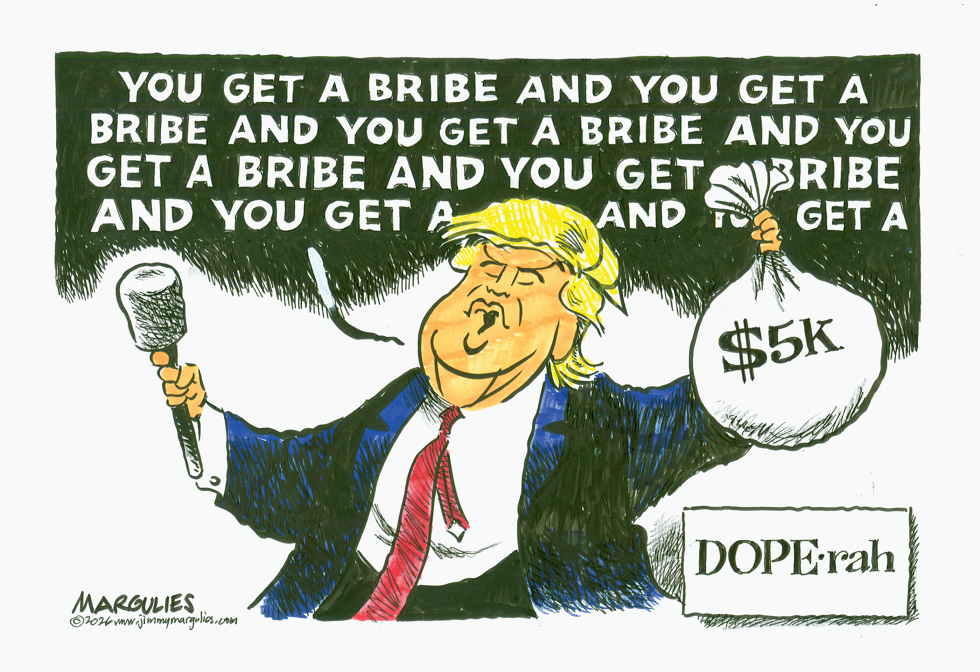
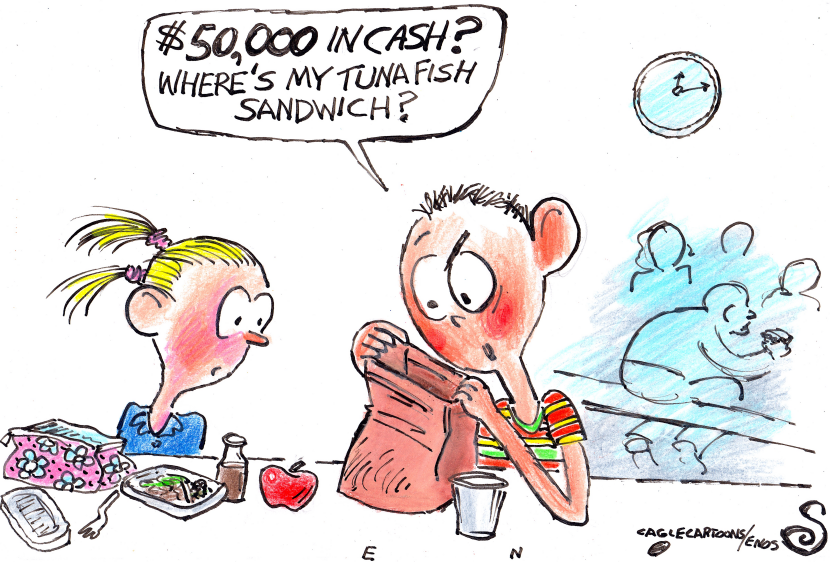
Donald Trump has repeatedly denied receiving improper payments or bribes tied to official actions. Recent reports have raised questions about large cash transfers and their origins. The cartoon argues that these denials amount to a lie, with the money trail contradicting public statements. It positions the issue as a test of accountability for the former president and his circle. The piece suggests the public should view such explanations with skepticism given the visible evidence of financial gain.
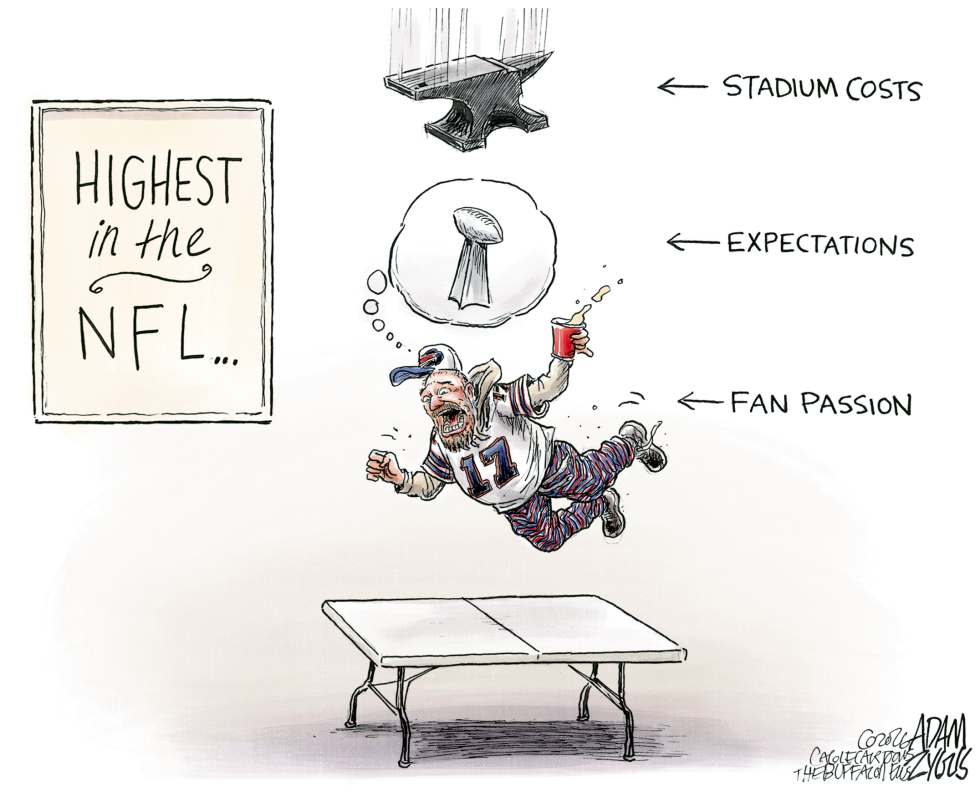
The cartoon illustrates a Buffalo Bills fan tumbling through the air after being struck by an anvil labeled stadium costs. A thought bubble shows a Super Bowl trophy while labels point to expectations and fan passion. A sign on the left declares the team highest in the NFL. The scene comments on the team's new stadium project carrying the highest costs in the league. Fans remain enthusiastic despite the financial weight. The ping pong table below suggests a precarious landing. The work responds to ongoing discussions about public funding for the Bills stadium.
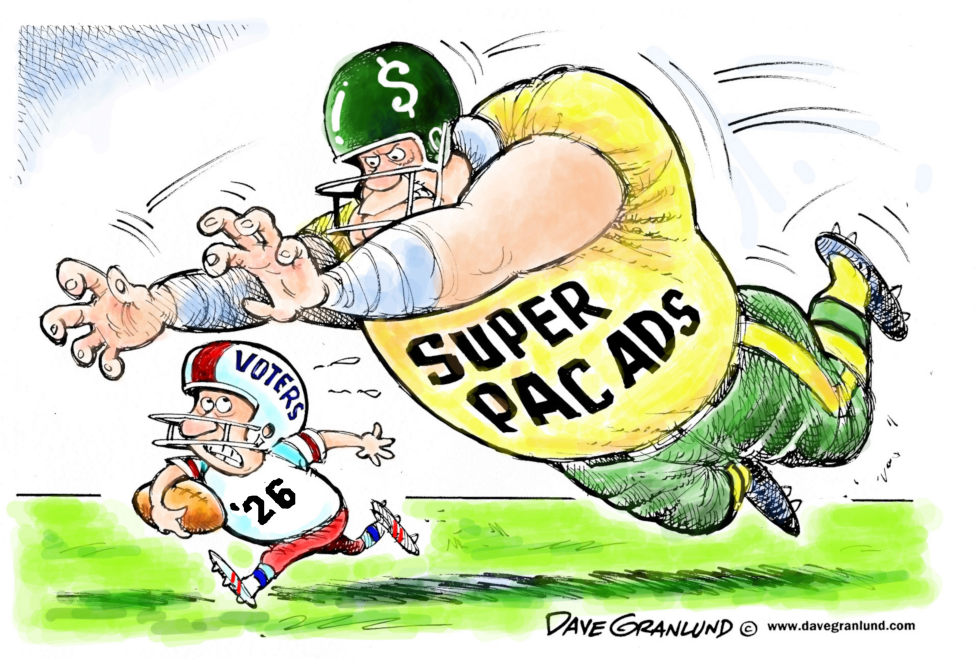
The cartoon depicts a large football player representing Super PAC ads pursuing a much smaller voter figure on a football field. Published on September 11, 2026, the image comments on the growing influence of Super PAC spending in U.S. elections. The oversized player wears a helmet marked with a dollar sign and a jersey labeled Super PAC Ads, while the smaller figure wears a helmet reading Voters and a jersey with the number 26. The visual emphasizes the imbalance between well-funded political advertising and ordinary voters. This reflects ongoing debates about campaign finance and the role of independent expenditure groups following recent election cycles.
Donald Trump has faced renewed scrutiny over allegations of using official authority to distribute favors and payments. The pattern involves judicial and executive actions that critics say cross into bribery. Such conduct raises questions about accountability in high office. The cartoon frames the behavior as a deliberate, widespread distribution of bribes to allies and supporters. It argues that this approach undermines public trust and normalizes corruption at the highest levels.
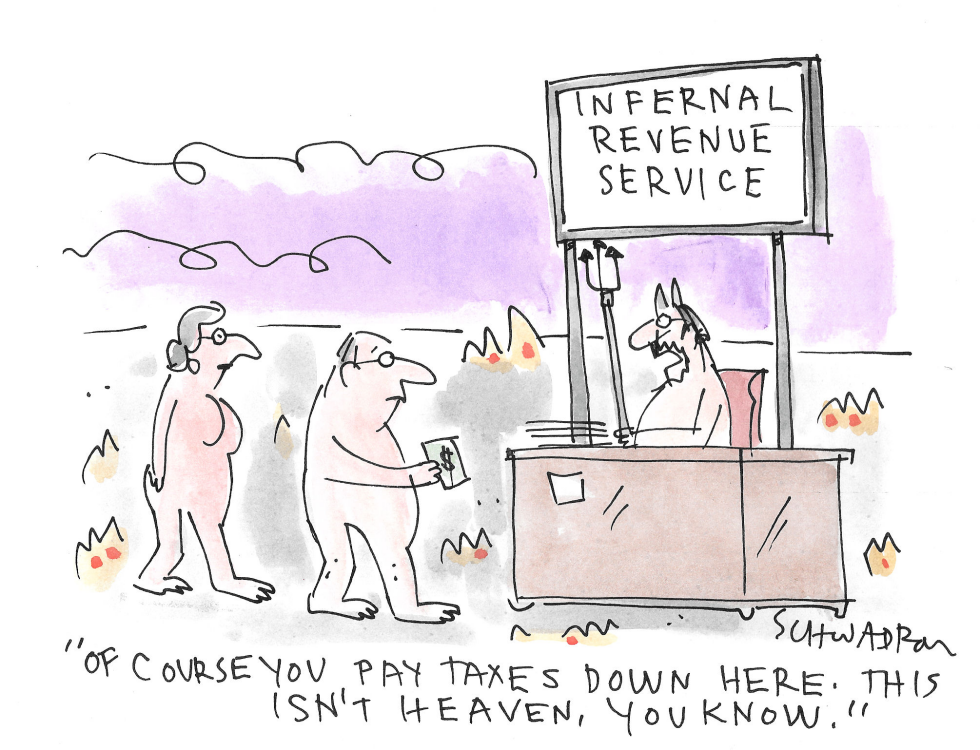
The long-standing adage that only death and taxes are certain receives fresh treatment in a cartoon depicting an IRS outpost operating in hell. No specific policy change or ruling prompted the piece, which instead plays on the enduring public frustration with tax collection as an inescapable force. The editorial stance pokes at bureaucratic persistence, suggesting the tax man follows citizens beyond the grave with the same relentless efficiency seen in life.
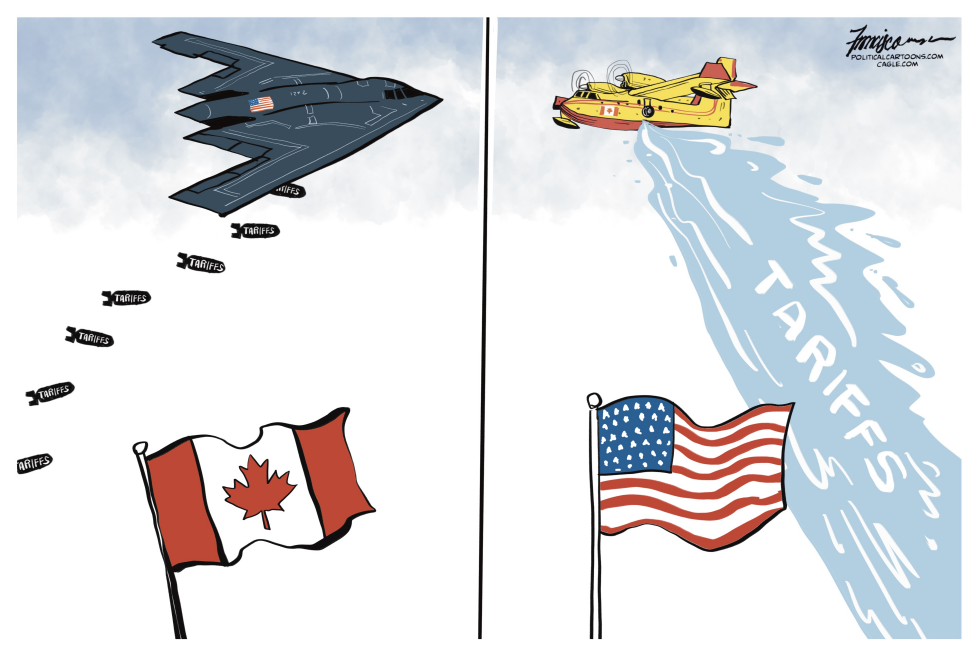
The United States imposed tariffs on Canadian goods, prompting Ottawa to enact matching retaliatory tariffs. The moves risk disrupting integrated supply chains and raising costs for consumers and industries on both sides of the border. The cartoon frames the exchange as mutual escalation with each side deploying tariffs against the other.
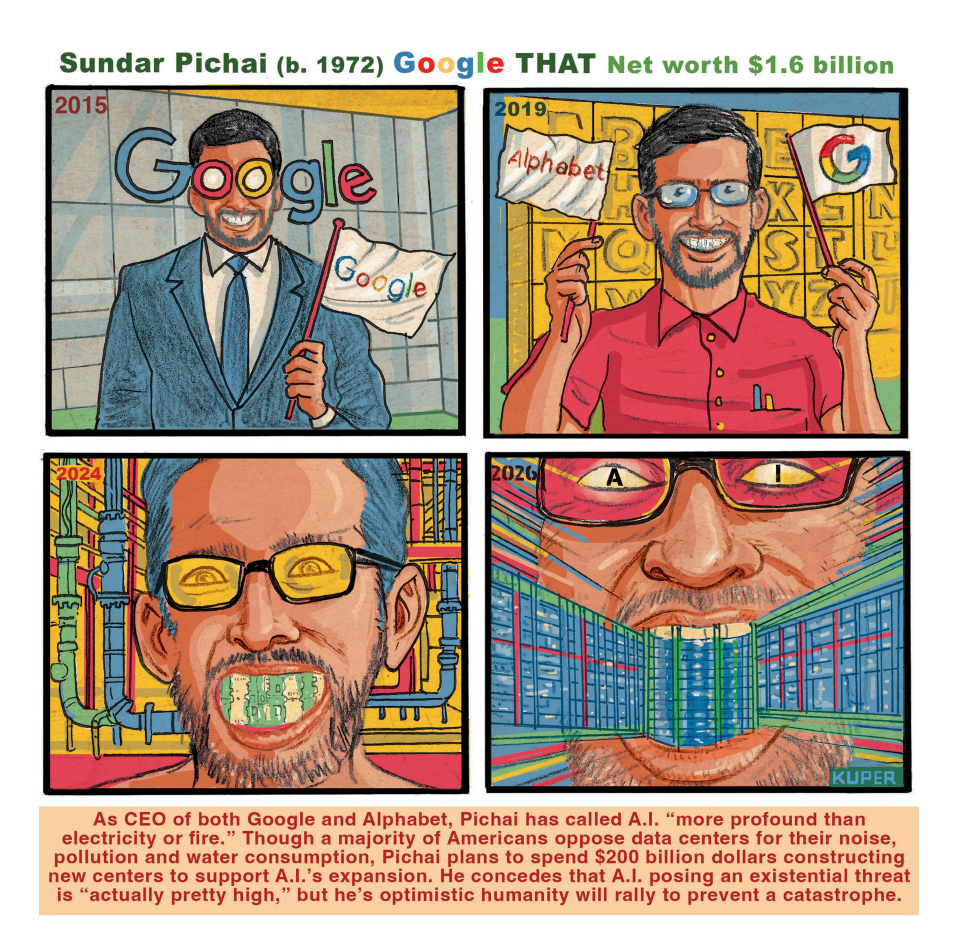
Sundar Pichai, CEO of Google and Alphabet, announced plans to invest $200 billion in new AI data centers to support rapid expansion of artificial intelligence systems. The move comes as polls show most Americans oppose such facilities due to noise, pollution, and heavy water consumption. Pichai has described AI as more transformative than electricity or fire and has acknowledged a high risk of existential threats from the technology, while expressing confidence that humanity can avoid catastrophe. The editorial cartoon frames this corporate push as aggressive and tone-deaf to local opposition and environmental limits.
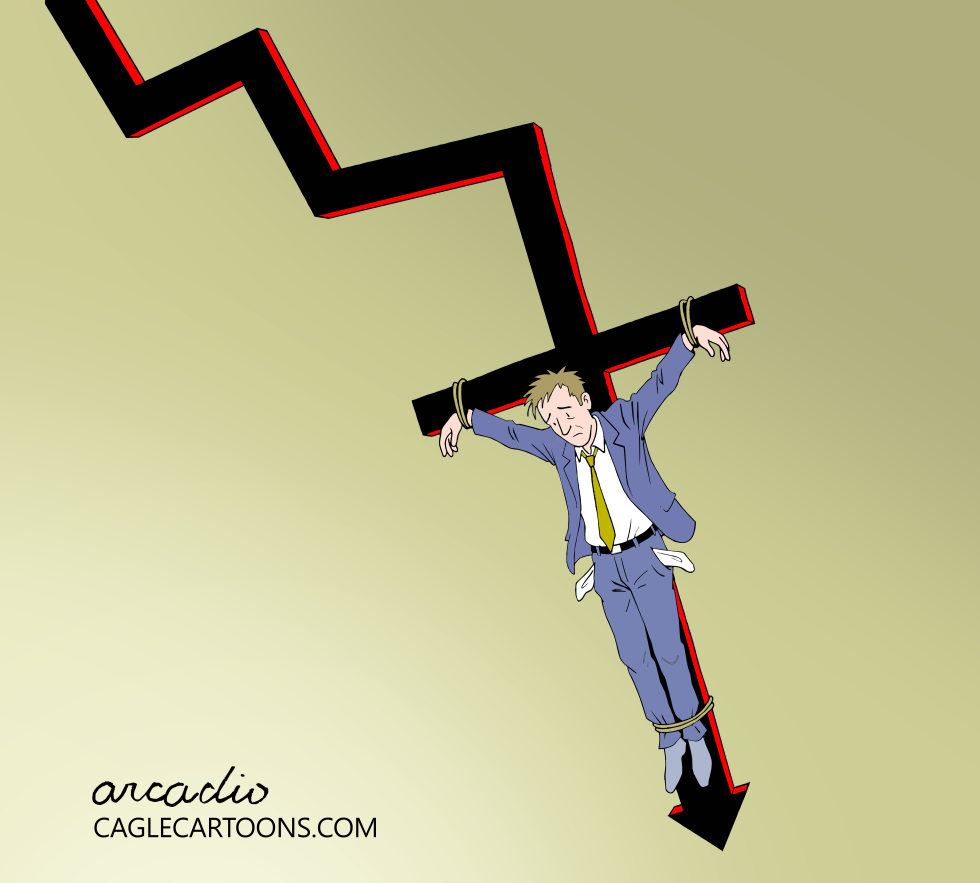
Corporate leaders continue to confront sharp market drops that directly affect company performance and investor confidence. The situation underscores how executives remain closely tied to negative financial trends rather than insulated from them. The piece argues that such binding reflects the reality of accountability in failing markets.
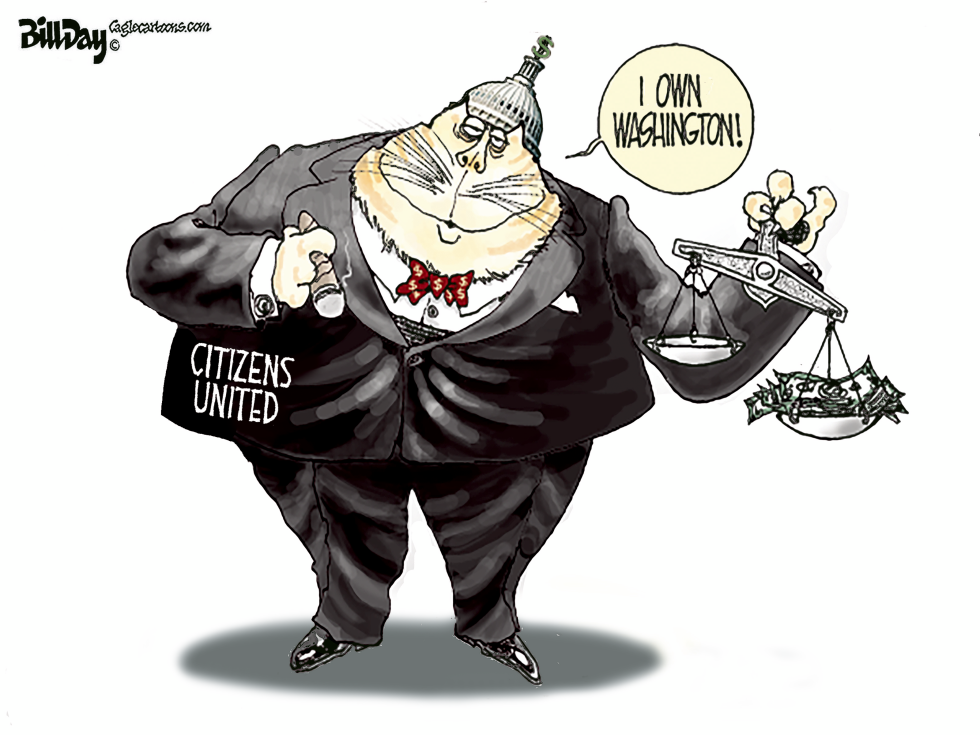
The 2010 Citizens United Supreme Court ruling opened the door to unlimited independent expenditures by corporations and unions in elections. Critics argue the decision amplified the voice of wealthy donors and special interests over average voters. The cartoon responds to the ongoing effects of that precedent by depicting a powerful corporate figure claiming control of the capital. It highlights how the ruling has reshaped campaign finance and public trust in government institutions.