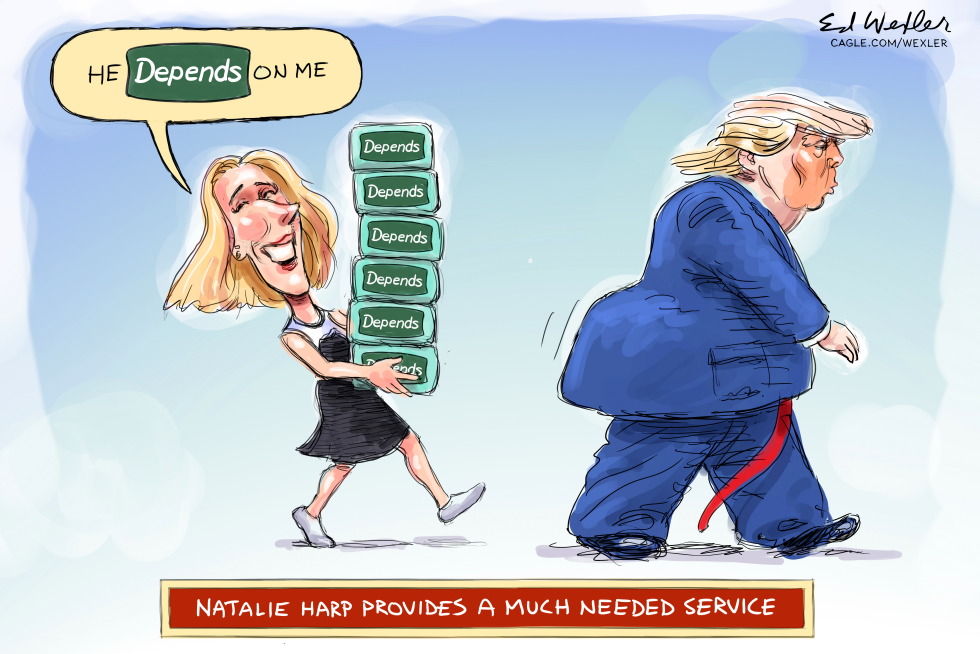
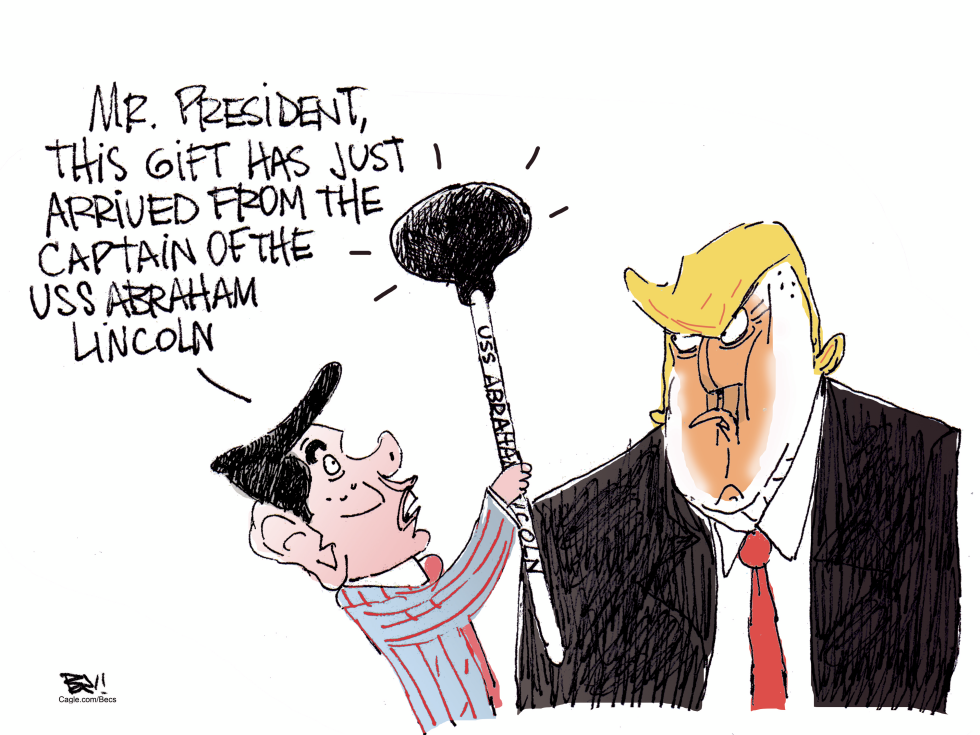
Natalie Harp, a Trump associate, is depicted supplying adult diapers to Donald Trump. The image responds to ongoing public discussion of Trump's age and physical condition during his 2024 campaign and subsequent activities. No specific new event occurred in the days before August 22 2026. The piece takes the position that Trump requires such assistance and that Harp fulfills that role.
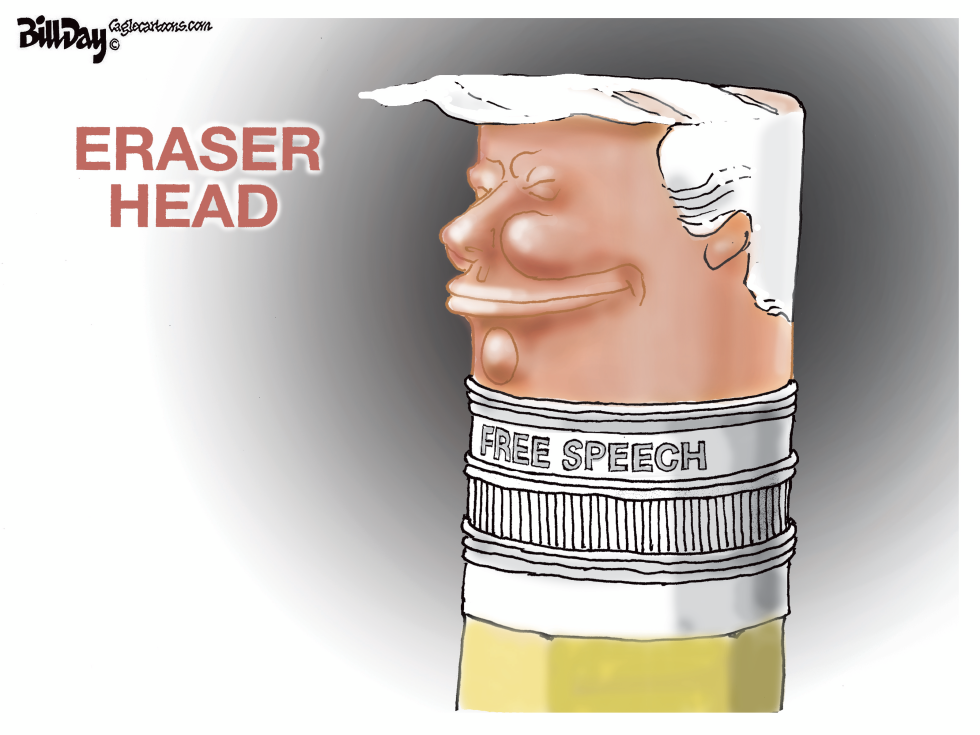
Donald Trump remains a central figure in debates over free speech protections. Critics argue his influence risks undermining open discourse in public institutions and media. The editorial takes the position that such influence acts to erase rather than safeguard those protections.
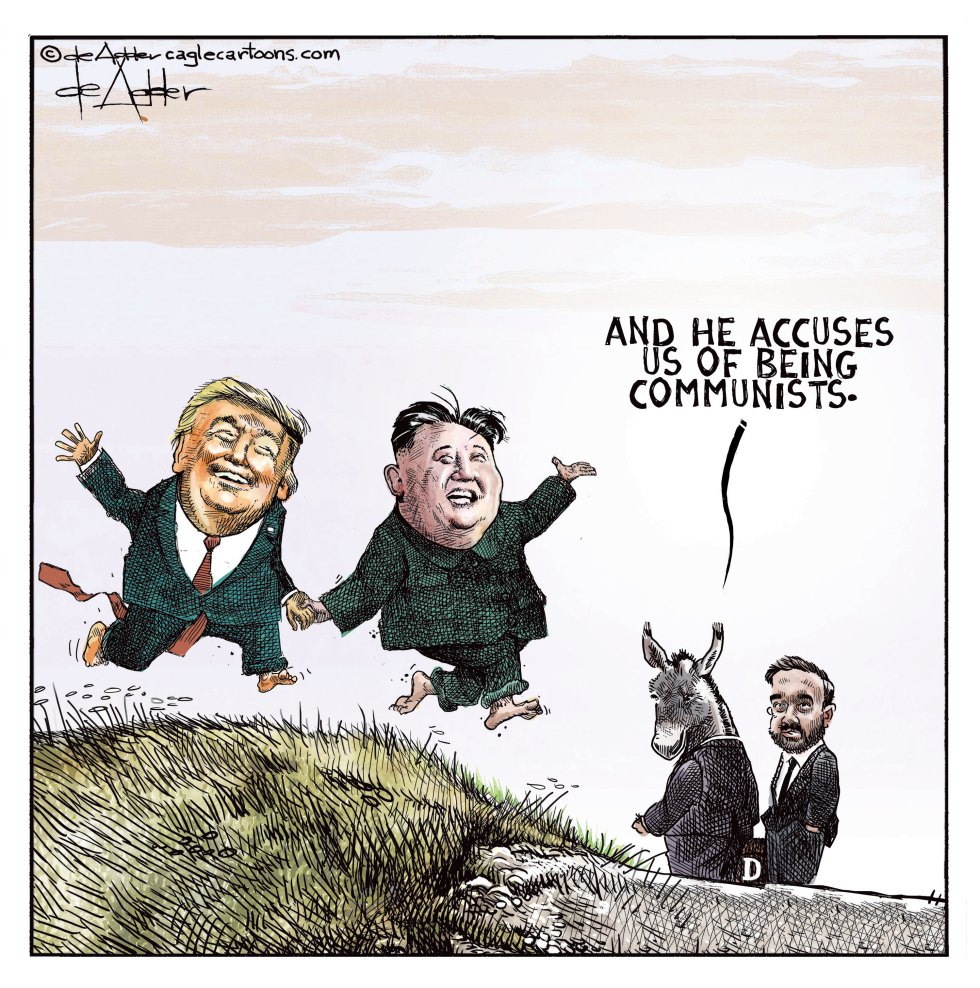
Donald Trump and Kim Jong Un appear together in a political scene accusing Democrats of communist leanings. The depiction highlights their joint action amid ongoing partisan rhetoric. The editorial position frames the accusation as inconsistent given the shared leap.
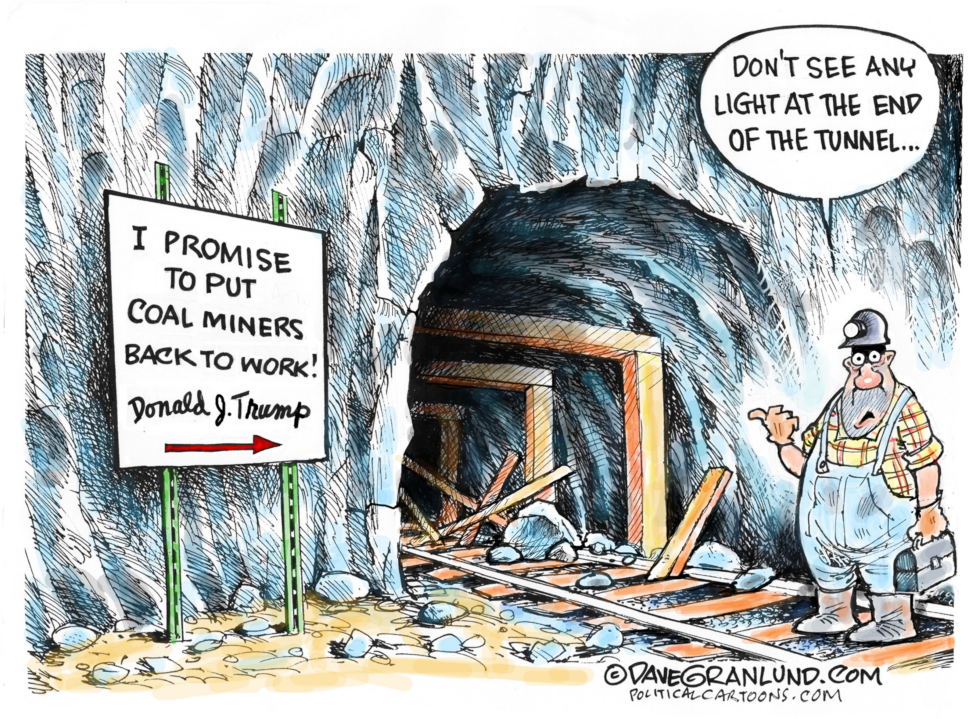
Donald Trump repeatedly pledged during his campaigns and terms to revive coal mining employment by rolling back regulations and boosting domestic production. Those commitments have not translated into sustained job growth for miners amid shifting energy markets and automation. The cartoon underscores the gap between the repeated assurances and the persistent lack of visible progress for workers in the sector.
President Trump receives a ceremonial mallet sent by the captain of the USS Abraham Lincoln. The presentation occurs during routine military engagement with the White House. The gift underscores ongoing ties between the administration and naval forces. The editorial highlights the unusual nature of the item and questions its timing and purpose. It suggests the exchange reflects broader patterns in how the president interacts with the armed services.
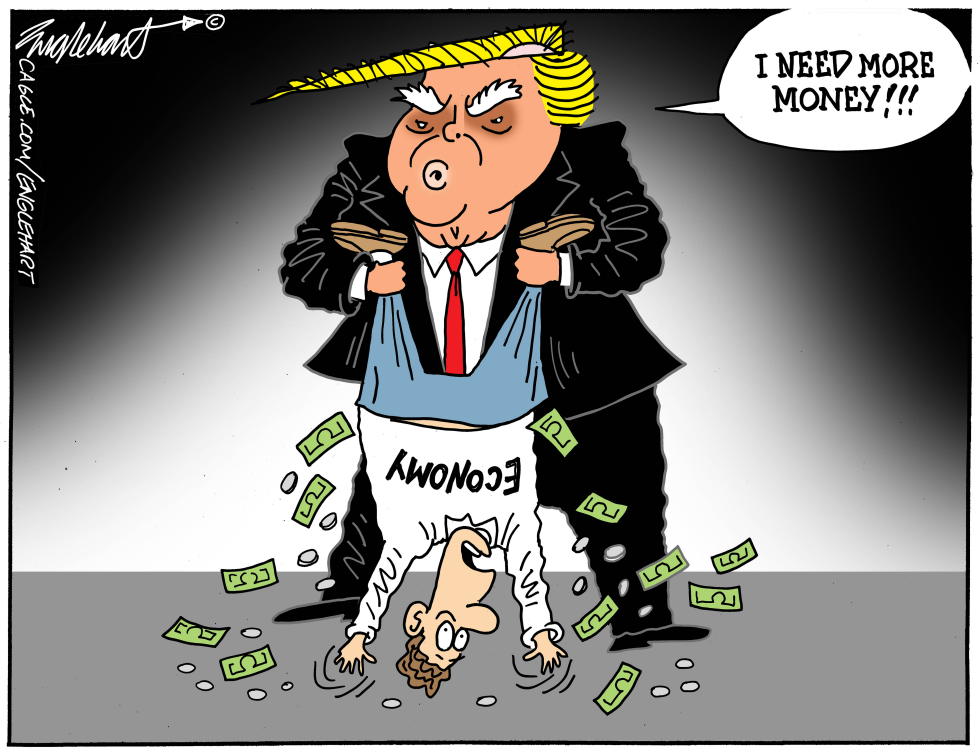
Donald Trump has pressed for additional revenue streams amid ongoing economic pressures. The move highlights tensions over fiscal demands and growth priorities. The piece portrays the action as direct extraction from economic resources.
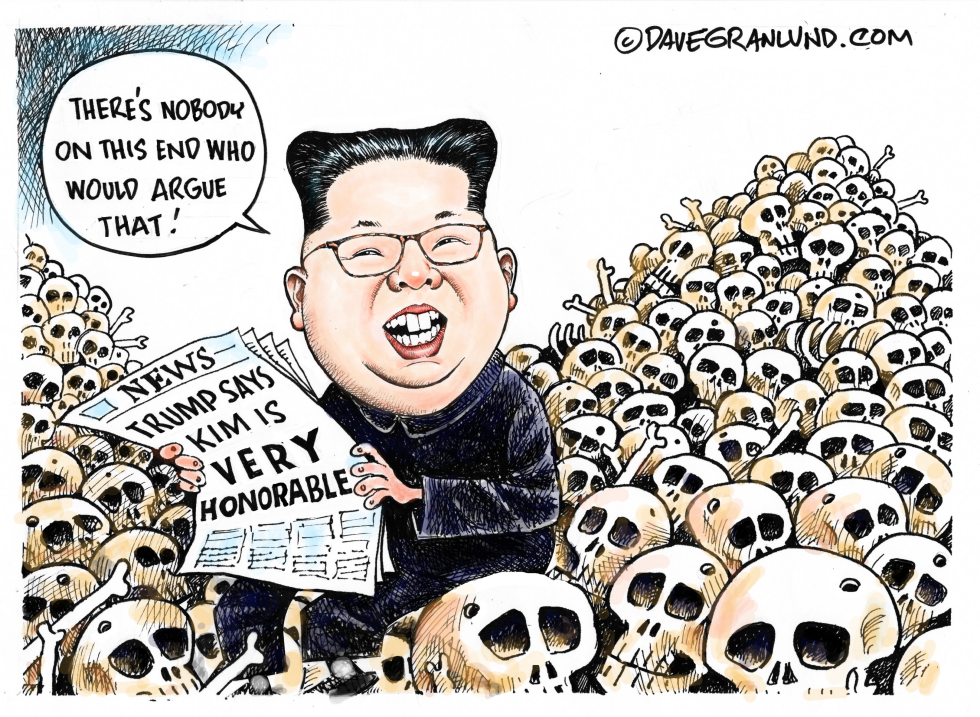
Donald Trump publicly described North Korean leader Kim Jong-un as very honorable. The remark revives questions about U.S. engagement with a regime long accused of severe human rights abuses and internal purges. Critics argue such language undercuts pressure on Pyongyang and signals weakness to allies. Supporters see it as pragmatic diplomacy aimed at reducing nuclear risks. The statement fits a pattern of personal assessments of foreign leaders that have drawn both support and condemnation depending on the political side. The editorial position holds that the praise ignores the human cost inside North Korea and weakens the moral standing of U.S. foreign policy.
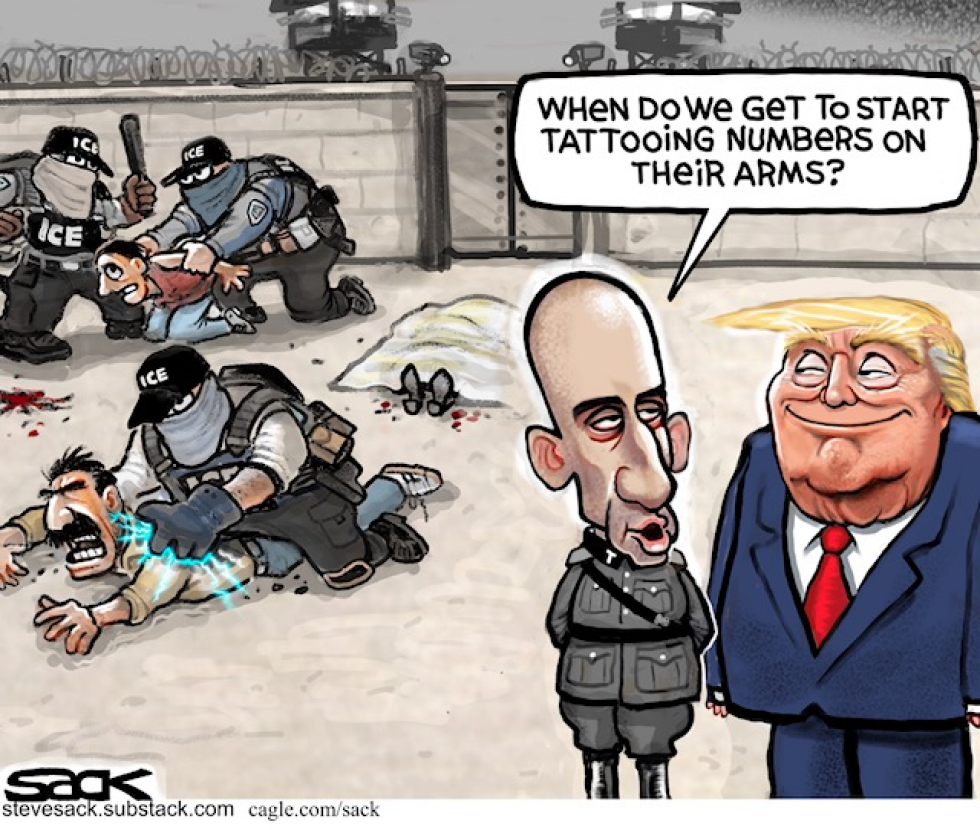
Donald Trump has publicly discussed aggressive measures in immigration detention facilities amid ongoing enforcement operations. The remarks come as ICE conducts arrests and holds individuals at secure sites. Critics argue the approach echoes past abuses. The piece portrays the comments as crossing into prohibited territory by invoking forced numbering.
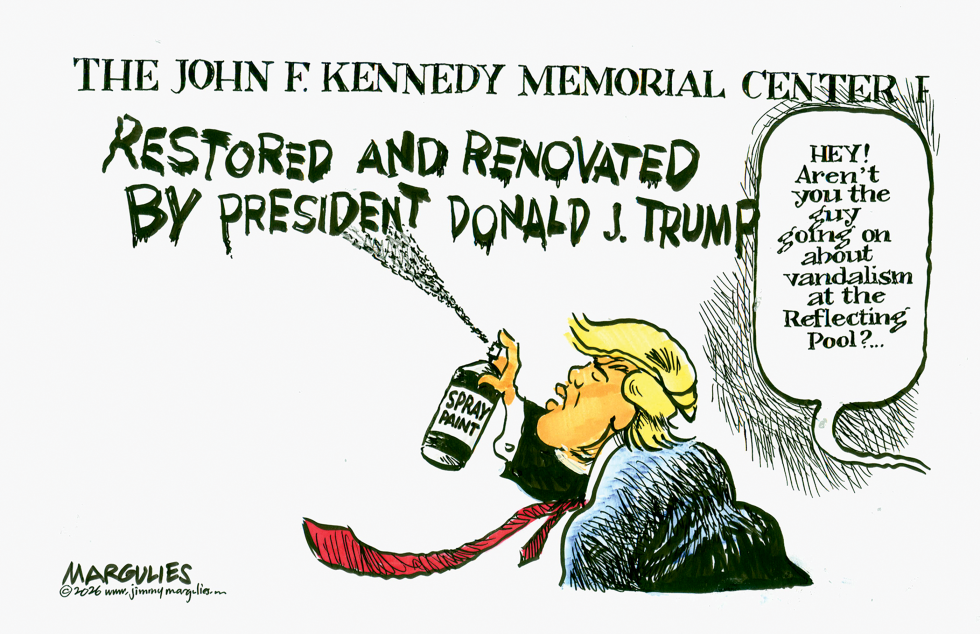
President Donald J. Trump faces accusations of altering the John F. Kennedy Memorial Center sign to claim personal credit for restoration work. The move draws immediate pushback tied to prior statements on vandalism at the Reflecting Pool. Critics see the action as an attempt to insert his name into a site honoring a predecessor.
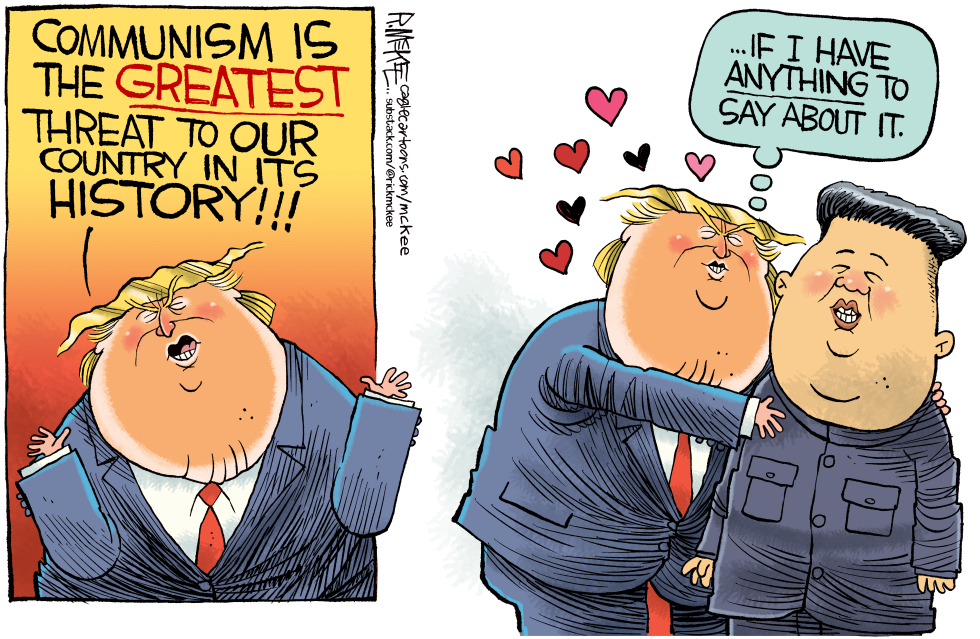
Donald Trump publicly labeled communism the greatest threat to the country before embracing North Korean leader Kim Jong Un. The image captures the shift in tone through contrasting scenes of protest and affection. The editorial position criticizes the inconsistency in the approach to the regime.
Donald Trump faces ongoing scrutiny over expanding allegations of misconduct and deception in public office. Recent developments have heightened concerns among associates about the accumulating impact. The editorial takes the position that these issues are intensifying and demand accountability.
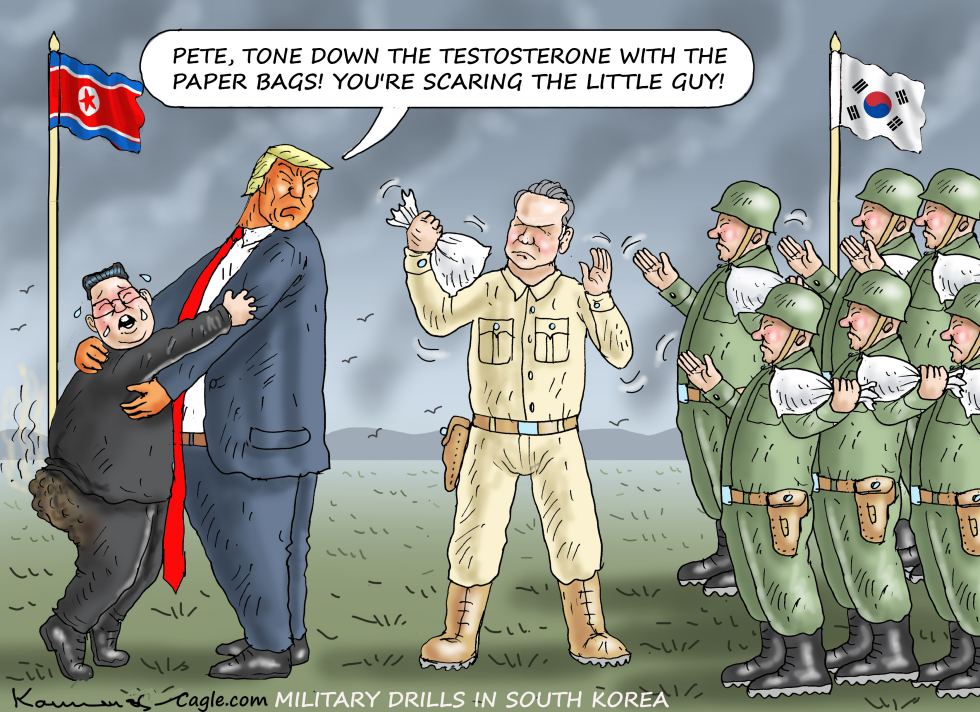
US and South Korean forces conducted joint military drills in mid-August 2026, prompting sharp North Korean protests over perceived threats. Donald Trump appeared at the scene restraining Kim Jong-un while a uniformed figure urged restraint with paper bags to calm the North Korean leader. The image frames the drills as overly provocative and mocks the testosterone-driven posturing on all sides.
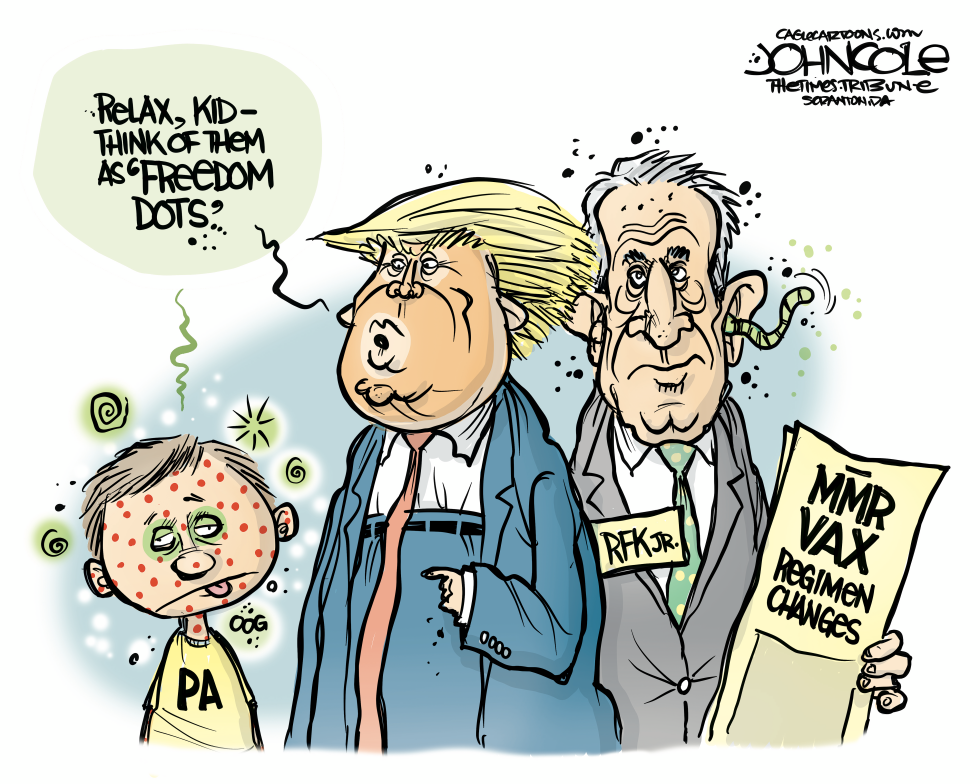
Donald Trump and RFK Jr. drew criticism in mid-August 2026 after Trump referred to measles spots as freedom dots during a Pennsylvania visit. The remarks coincided with proposed changes to MMR vaccine schedules. The piece portrays the comments as dismissive of a child's suffering and questions the administration's public health approach.
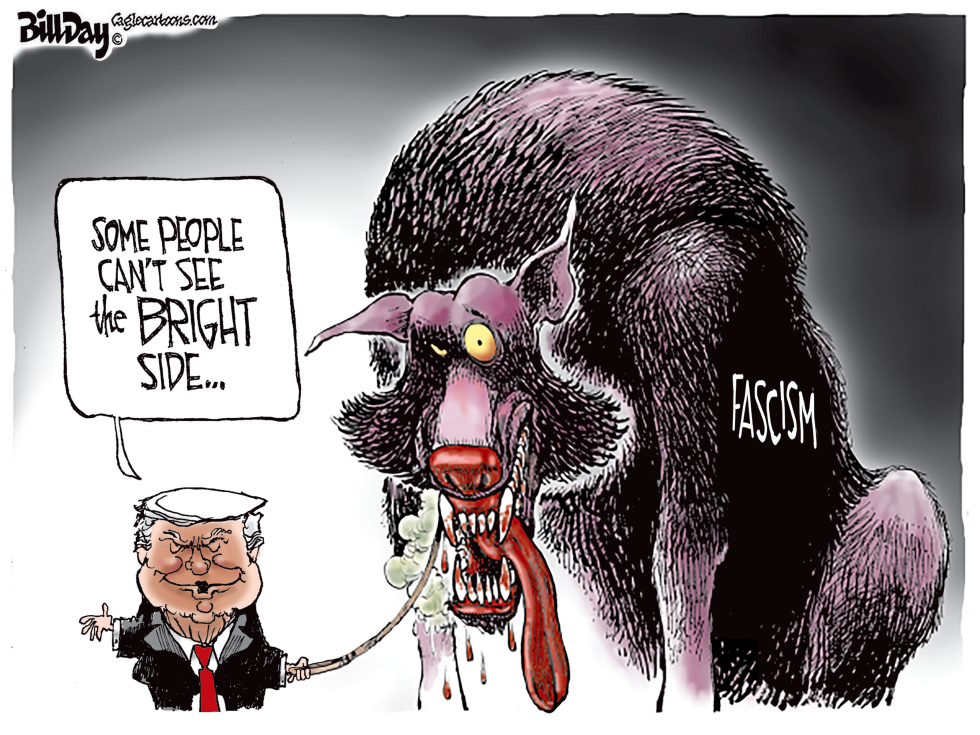
Donald Trump appears in public comments framing his actions in optimistic terms amid ongoing debates over authoritarian tendencies in American politics. The depiction shows him restraining a creature explicitly labeled fascism. Critics argue such rhetoric downplays real institutional risks while supporters view it as resistance to overreach. The piece takes the position that Trump actively manages or embodies the threat rather than opposing it.
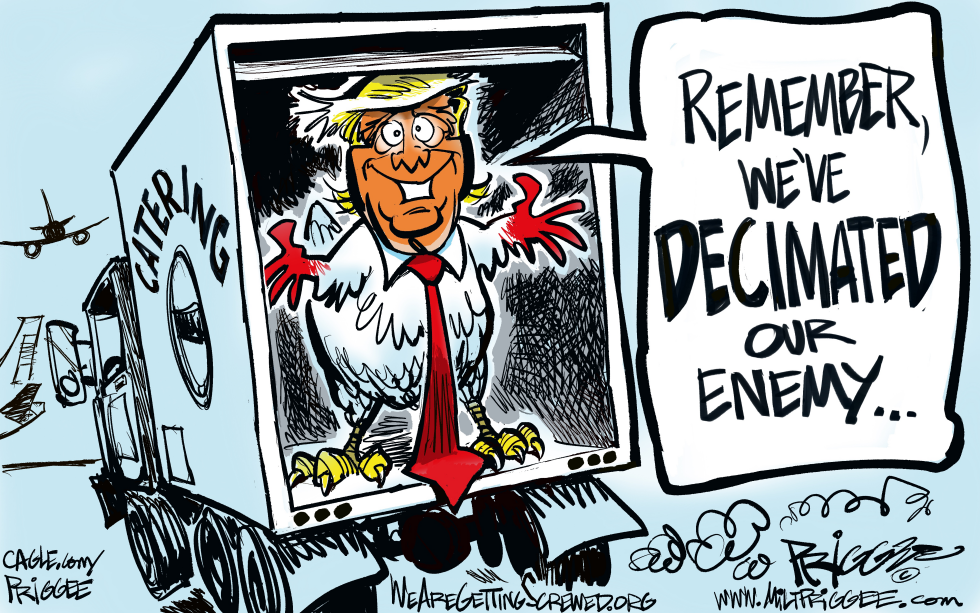
The cartoon by Milt Priggee shows Donald Trump with eagle wings and talons inside an open catering truck at an airport. Trump extends his arms while a speech bubble states he has decimated the enemy. The truck displays catering lettering and the scene includes a website reference to wearegettinggreener.org. The image uses the eagle form to reference national symbols while placing the figure in a service vehicle context.