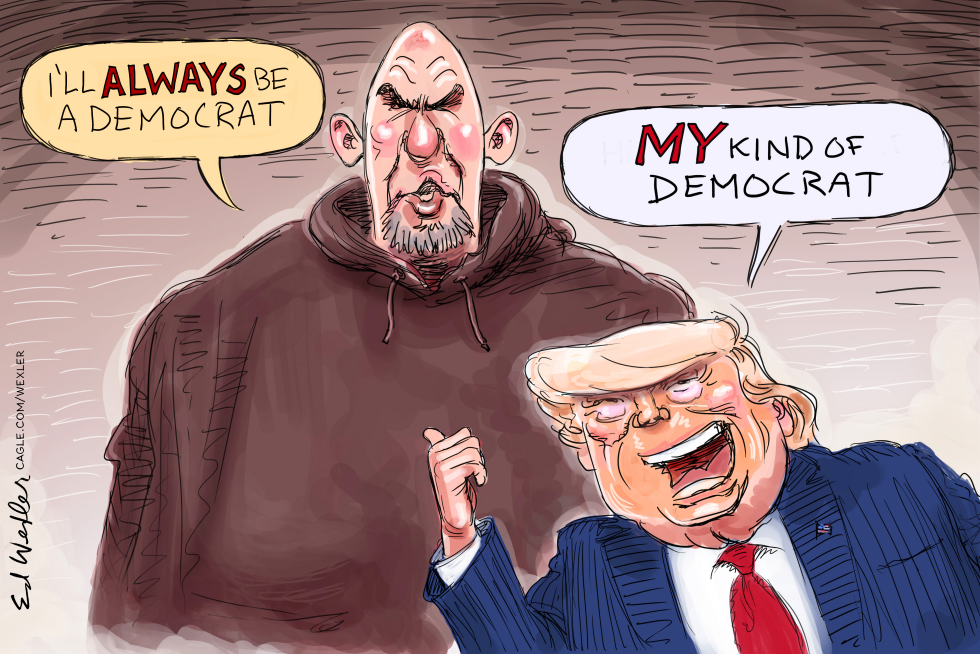
Donald Trump publicly endorsed a Democrat who declared he would always remain in the party. The statement drew attention because it came from a figure outside Trump's usual base. Observers noted the remark as part of ongoing efforts to attract voters across traditional lines. The cartoon presents the exchange as evidence that Trump sees value in Democrats who refuse to change affiliation. It frames the moment as revealing Trump's strategic tolerance for opposition loyalty when it suits his purposes.
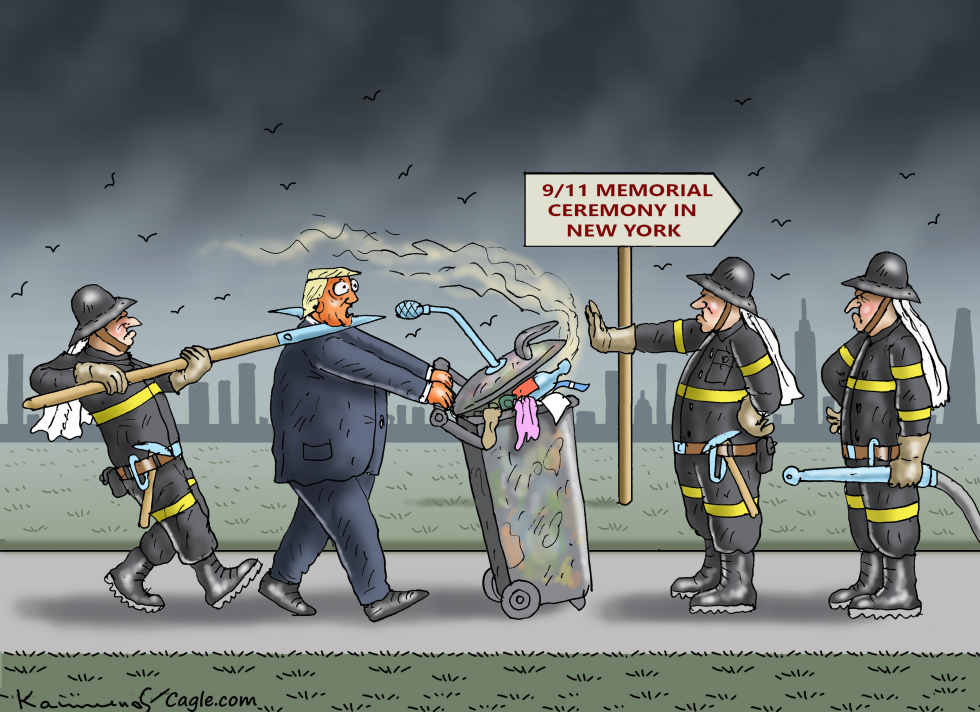
On the 2026 anniversary of the September 11 attacks, New York firefighters prevented Donald Trump from delivering remarks at the memorial ceremony in New York. The action reflects ongoing tensions between the former president and first responders over his past comments and conduct. The cartoon portrays the rejection as decisive and final, underscoring that Trump's presence remains unwelcome at the site.
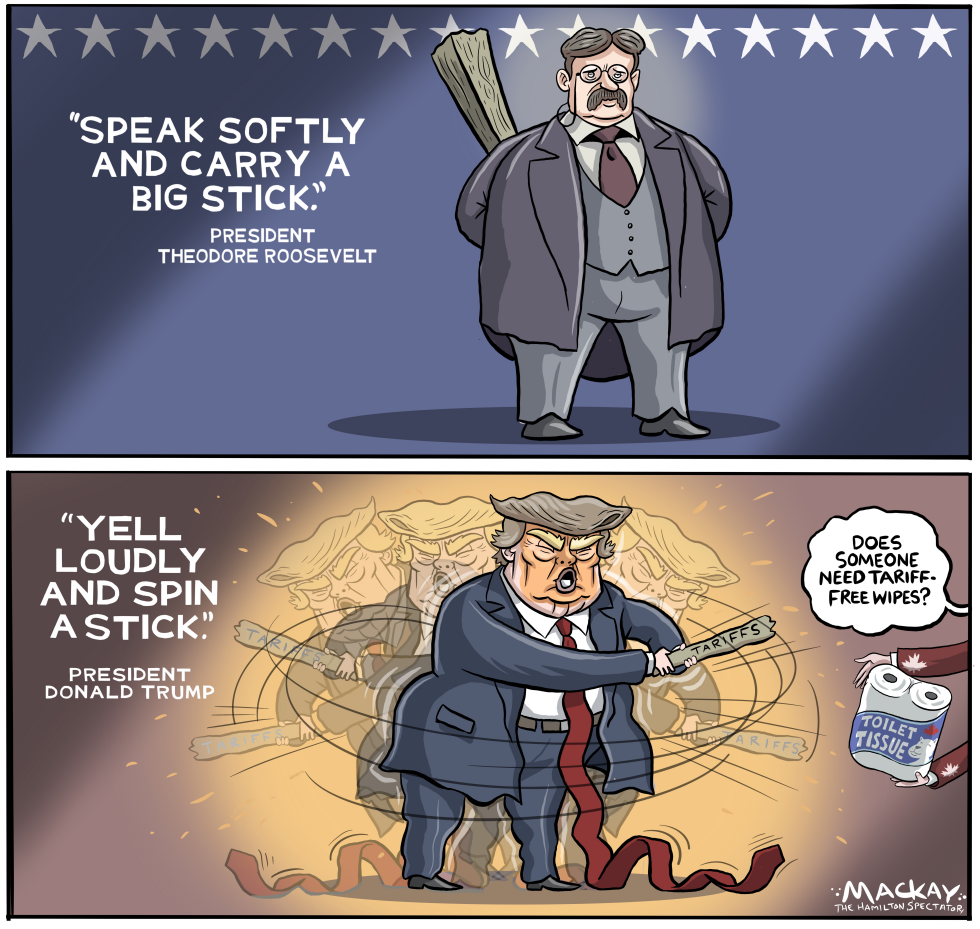
The cartoon by Graeme MacKay contrasts Theodore Roosevelt's famous speak softly and carry a big stick approach with Donald Trump's version of yelling loudly and spinning a stick covered in tariffs. In the lower panel Trump appears dizzy from the motion as a Canadian hand offers toilet tissue labeled tariff-free wipes. The image comments on recent US tariff actions and their impact on Canadian trade relations as of the September 2026 publication date.
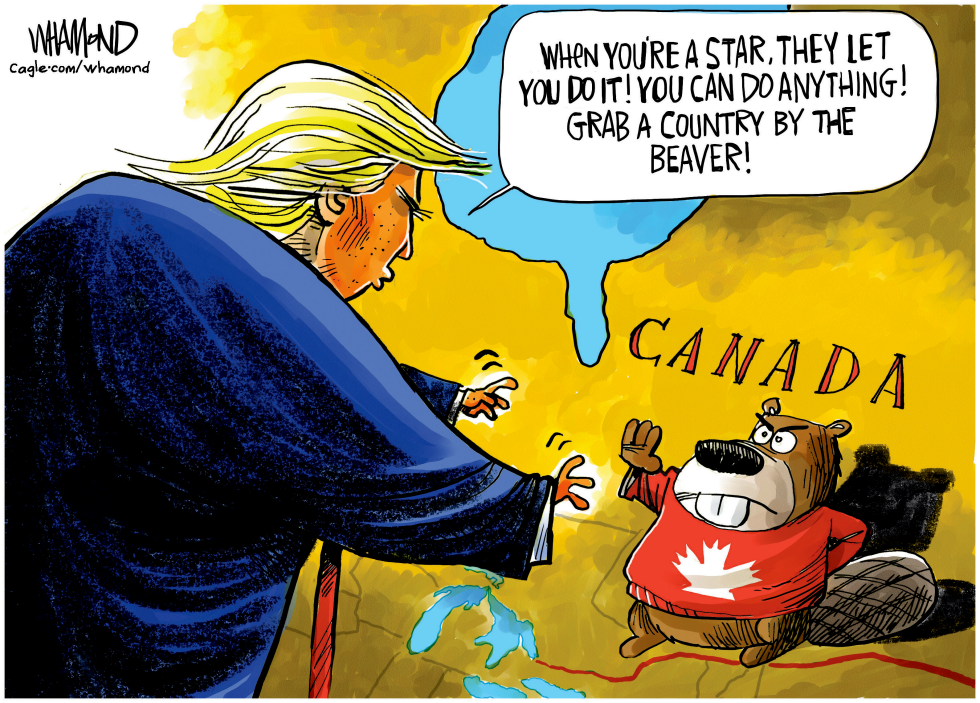
Donald Trump renewed comments suggesting the United States could annex Canada, framing the idea with a reworded version of his 2005 Access Hollywood remarks. The statement comes as bilateral relations face strain over trade and border issues. The editorial cartoon uses the beaver metaphor to underscore the crude nature of the rhetoric and its potential to damage diplomatic ties.
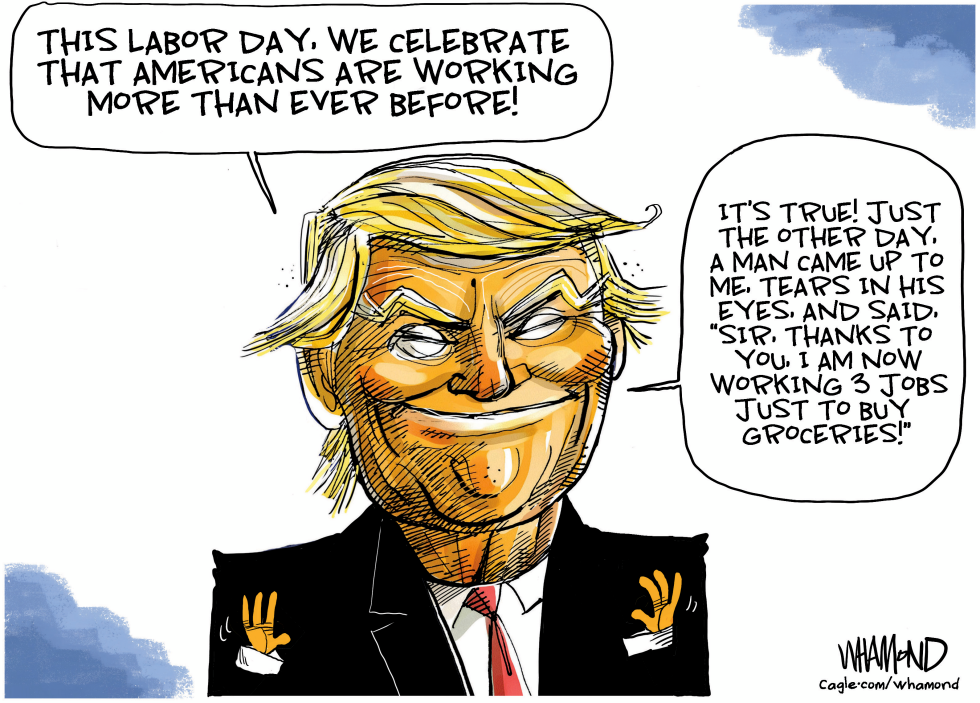
On Labor Day 2026, President Trump highlighted what he described as record employment levels in a public address. He pointed to Americans taking on more work as evidence of economic strength. The remarks come amid ongoing public concern over household costs and wage pressures. Critics argue the comments underscore the gap between official job numbers and the lived experience of workers needing multiple positions to cover basic expenses. The cartoon presents the remarks as tone-deaf to economic strain.
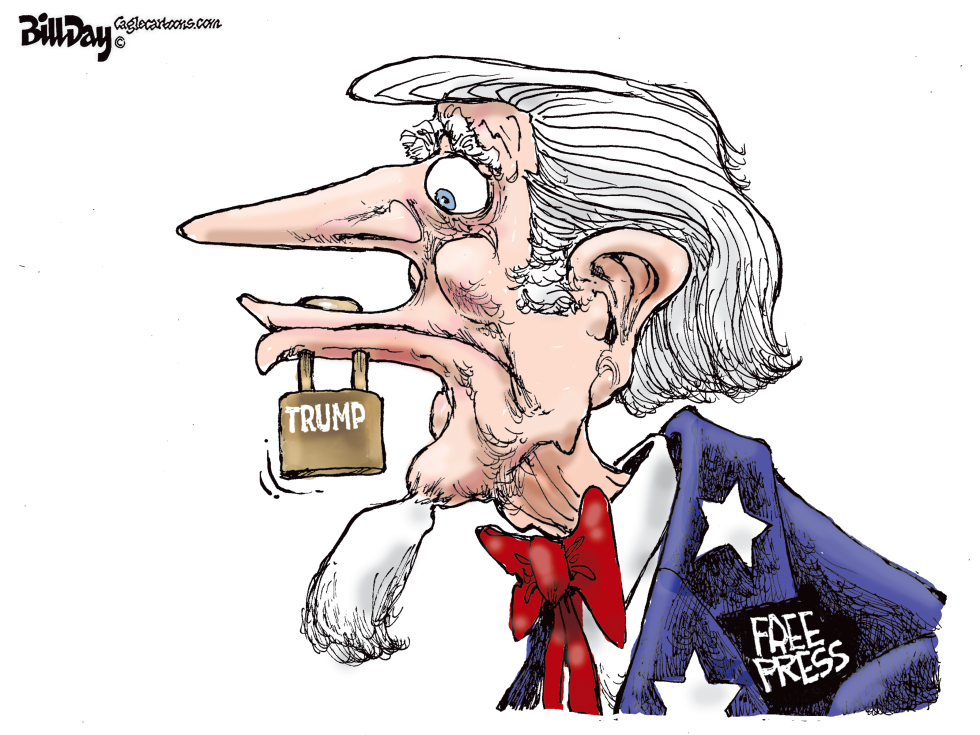
Donald Trump, holding office in 2026, faces renewed scrutiny over efforts to limit press access and information flow. Critics argue these moves undermine democratic oversight. The cartoon portrays the administration as actively securing or restricting the free press through direct control.
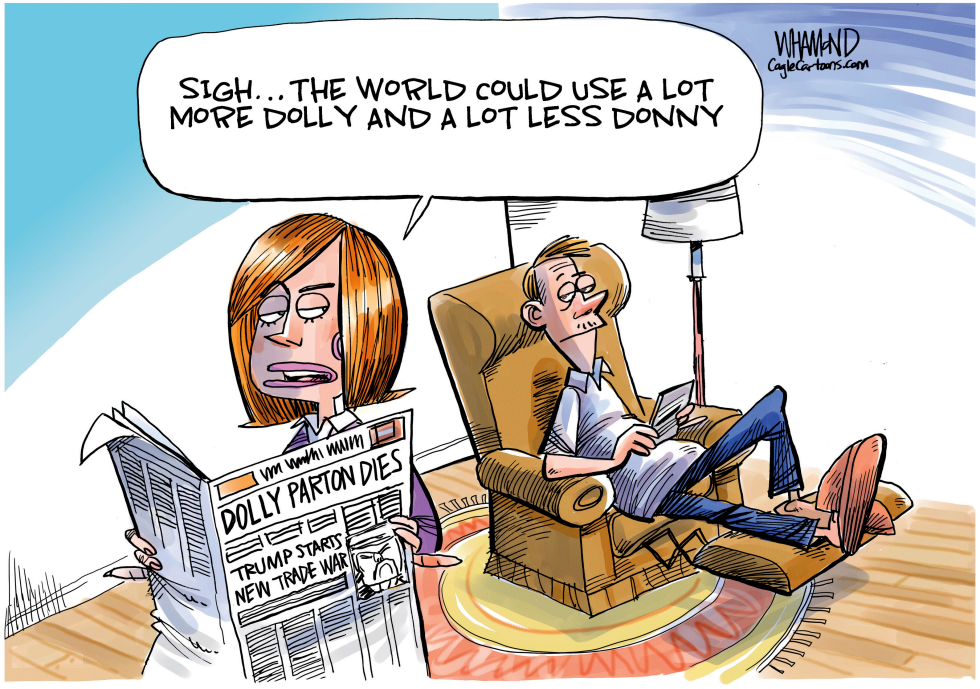
Donald Trump initiated a new trade war, coinciding with the reported death of Dolly Parton. The development drew public reactions contrasting the entertainer's legacy with the president's economic policies. The piece portrays a citizen preferring more of Parton's influence and less of Trump's.
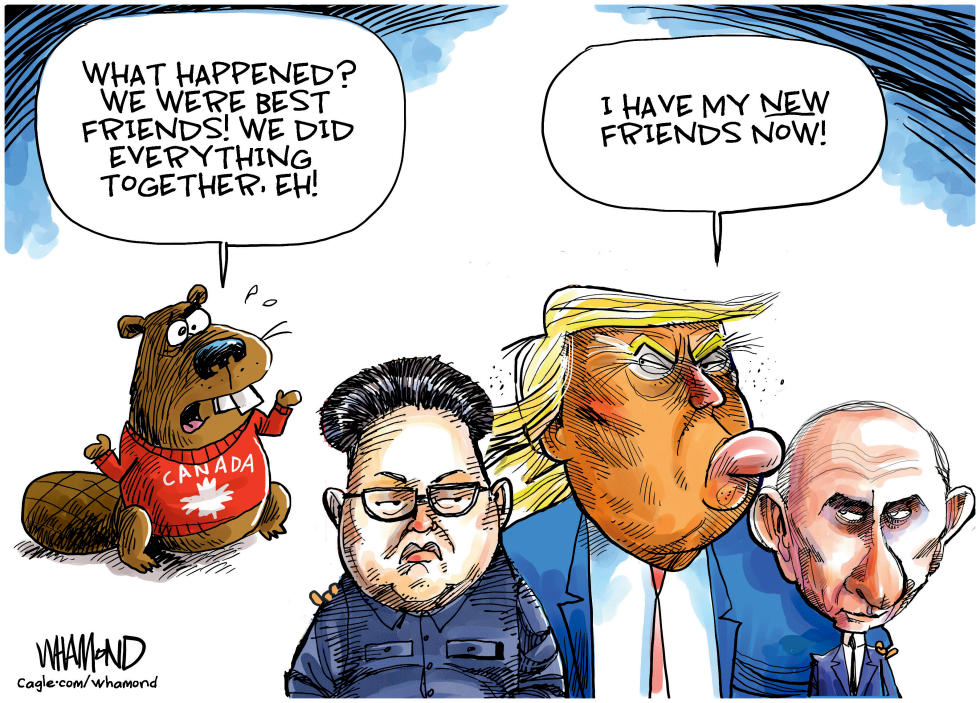
President Trump has redirected diplomatic priorities toward closer ties with Russian President Vladimir Putin and North Korean leader Kim Jong Un. Traditional partners such as Canada now face reduced engagement. The move reflects a broader realignment in U.S. foreign policy that favors authoritarian counterparts over longstanding democratic allies. Observers note the shift carries risks for trade, security cooperation, and international norms. The editorial position criticizes the pivot as shortsighted and damaging to established relationships.
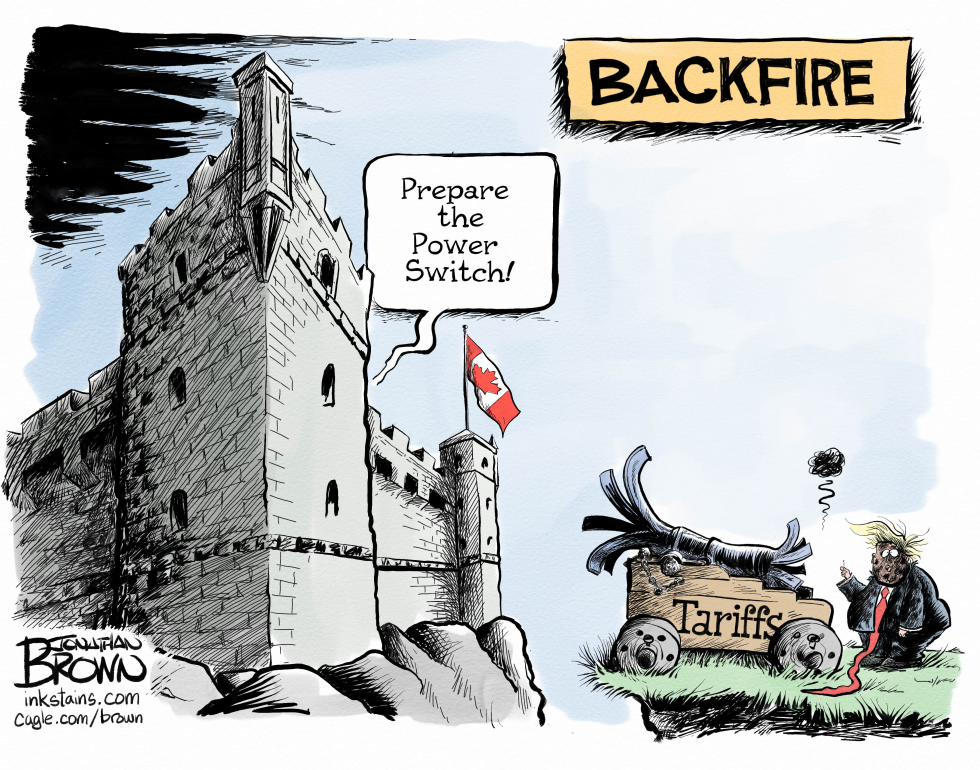
The cartoon shows a Canadian castle flying its flag while a cannon labeled Tariffs explodes backward toward a figure resembling Donald Trump. The scene responds to ongoing trade tensions where U.S. tariffs on Canadian goods prompted retaliatory measures. The visual emphasizes the policy rebounding on its originator rather than achieving intended pressure.
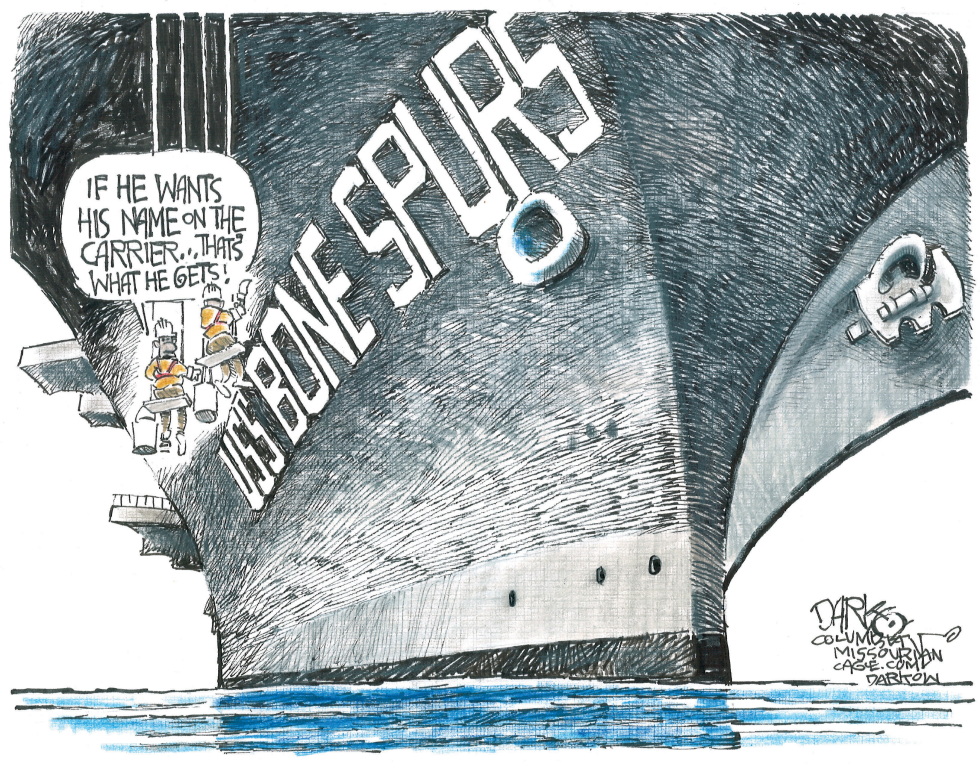
A proposal to rename a U.S. aircraft carrier after Donald Trump has drawn attention to his Vietnam-era draft deferments for bone spurs. The move highlights ongoing debate over military service records of political figures. The piece portrays the renaming as a pointed reminder of those deferments.
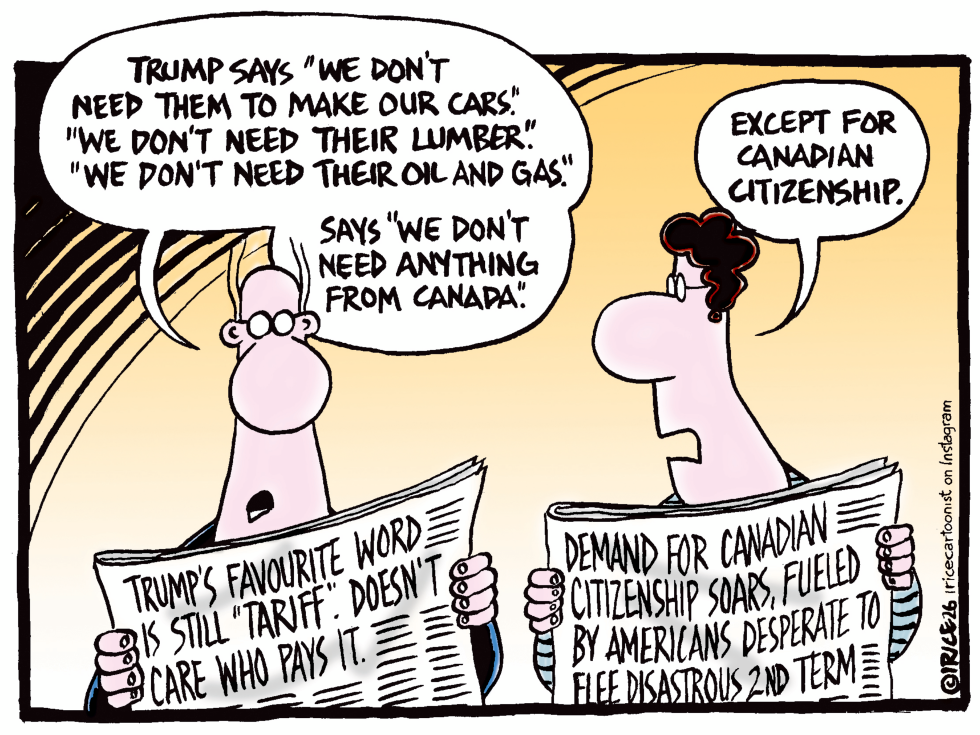
Trump's renewed tariffs on Canadian cars, lumber, oil and gas have triggered a sharp rise in applications for Canadian citizenship from Americans wary of his second term. The move underscores ongoing US-Canada trade friction and domestic policy backlash. The cartoon frames the policy as self-defeating, highlighting the irony of Canadians becoming the one Canadian product still in demand.
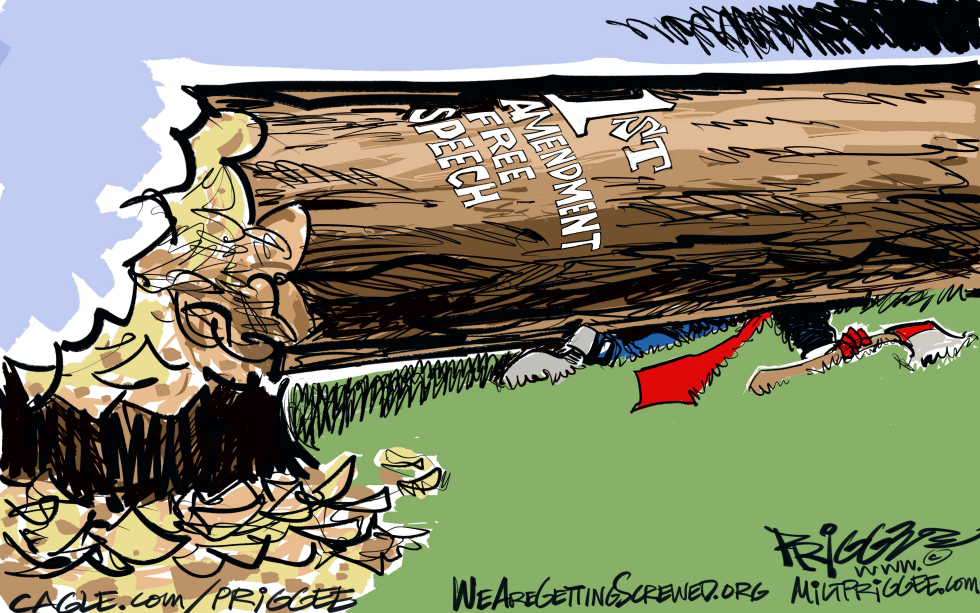
The cartoon shows a massive wooden beam marked First Amendment Free Speech crushing a prone man on a grassy field. Wood chips fly from the impact point near the figure's head. The scene includes the website WEAREGETTINGSCREWED.ORG at the bottom. Artist Milt Priggee signed the work in the lower right. The image uses the beam as a literal weight representing free speech impacts.
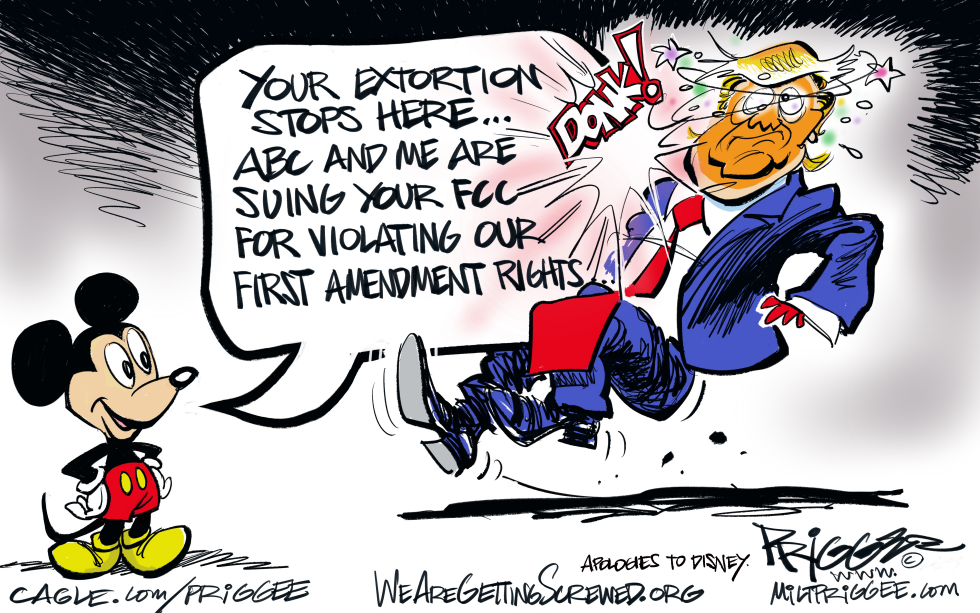
The cartoon depicts Mickey Mouse confronting a reeling Donald Trump, with a large speech bubble stating that ABC and Disney are suing the FCC for violating First Amendment rights. The scene shows Trump knocked off balance with a red folder, stars around his head, and the word Doh! above. Bottom text includes site references and an apology to Disney. The image responds to ongoing tensions between the Trump administration and media companies over regulatory actions at the FCC.
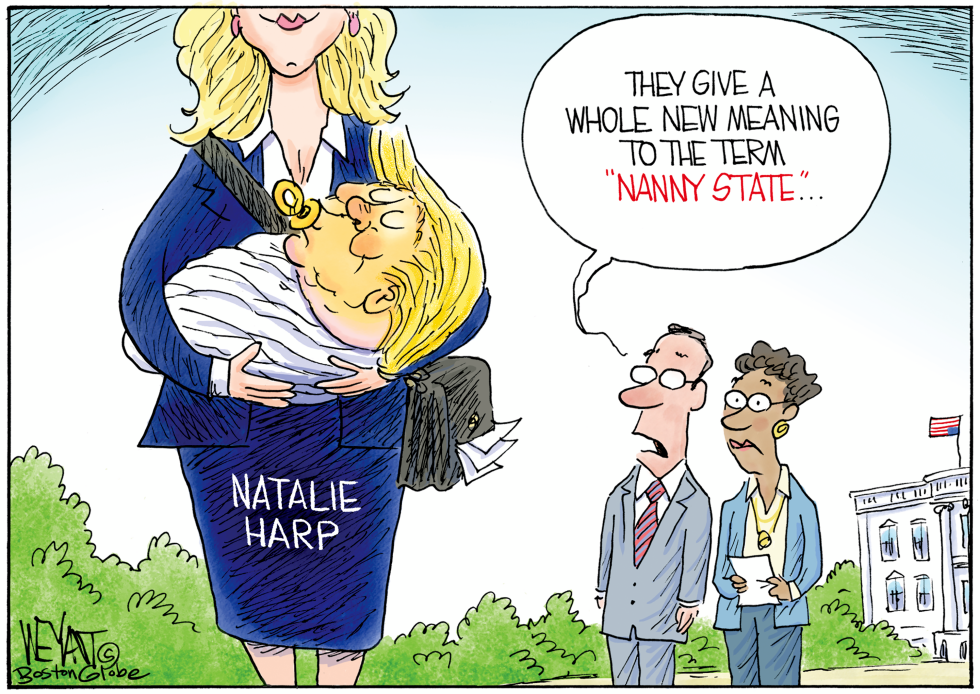
Natalie Harp, a Trump aide, appears in a Boston Globe cartoon holding an infant version of the former president. The image plays on the term nanny state as Harp carries Trump in a carrier. The piece comments on the close personal dynamic between the two figures amid ongoing political developments in 2026.
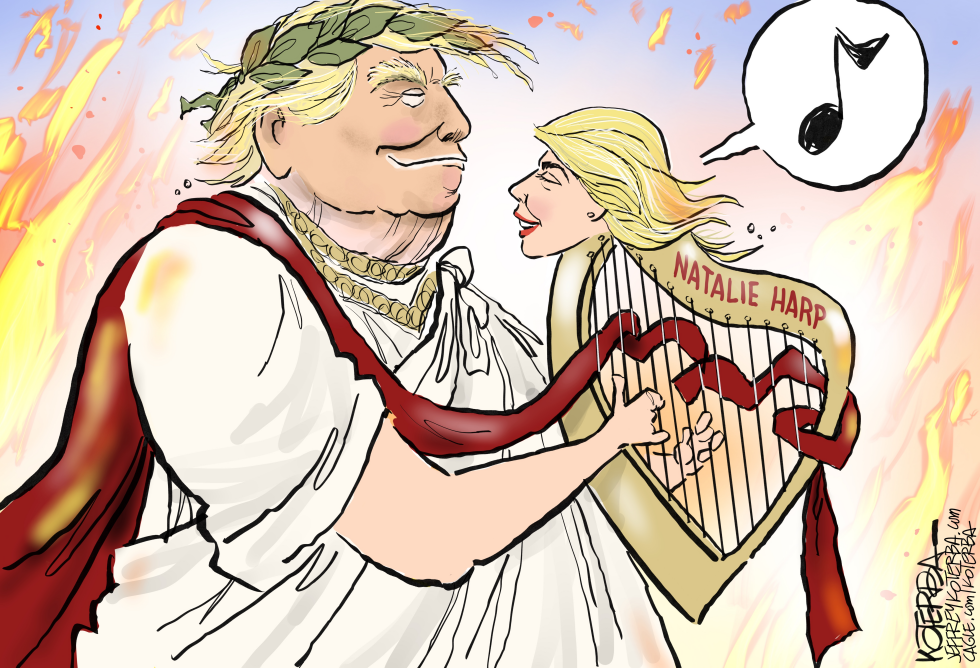
Donald Trump and aide Natalie Harp are shown in classical Roman dress amid spreading flames. The image draws on the Nero legend of fiddling while Rome burns. It comments on perceived detachment from crises during the current political cycle. The editorial stance highlights concerns over leadership focus and priorities in a turbulent period.