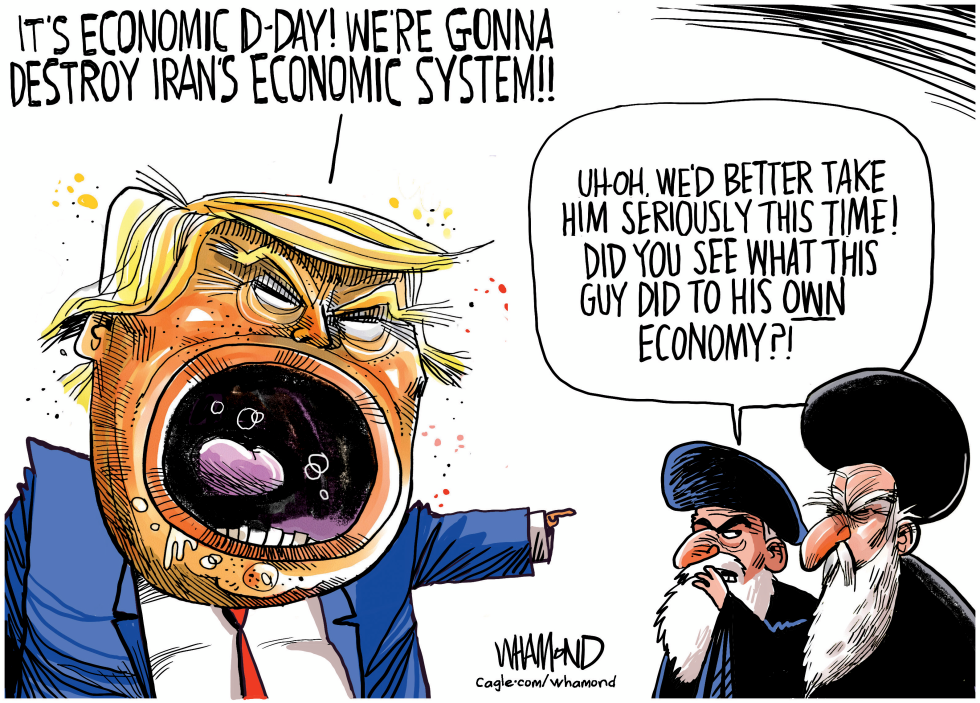
Donald Trump has warned of an economic D-Day targeting Iran's economic system. The statement comes as part of ongoing pressure on Tehran. Iranian leaders in the scene respond by urging seriousness, citing the impact Trump had on the US economy during his term. The development highlights continued tensions in US-Iran relations and the use of economic measures as leverage. The piece portrays the threat as potentially undermined by Trump's own economic legacy.
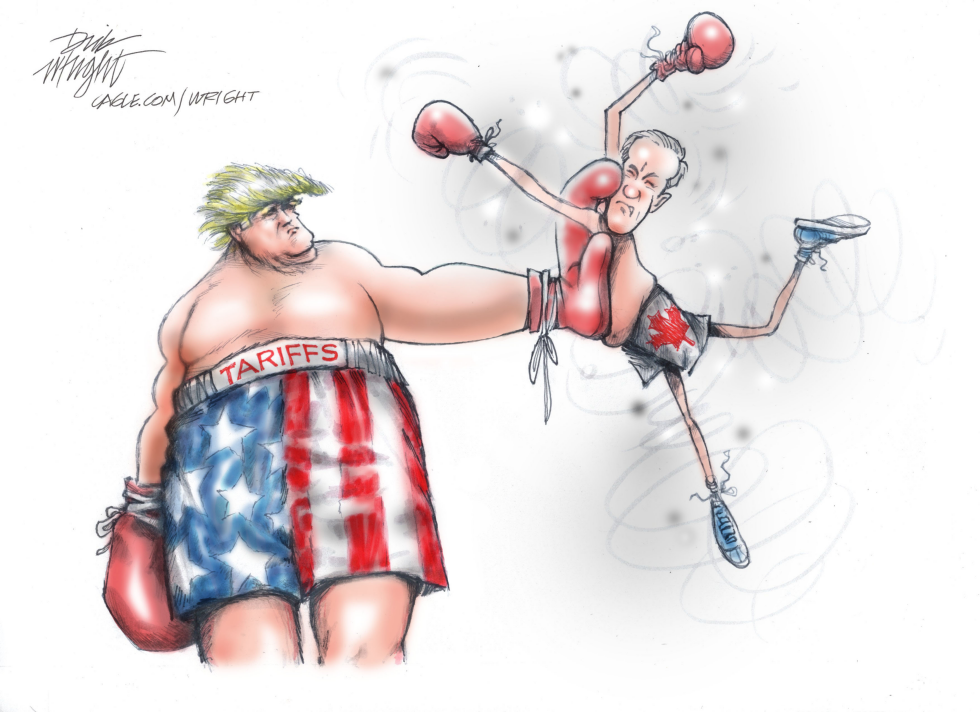
President Trump imposed new tariffs targeting Canadian goods in August 2026, escalating bilateral trade friction over lumber, dairy and autos. The measures aim to protect U.S. industries and renegotiate terms. Markets reacted with volatility in both countries. The editorial argues the tariffs represent necessary leverage that weakens Canada's position and forces concessions.
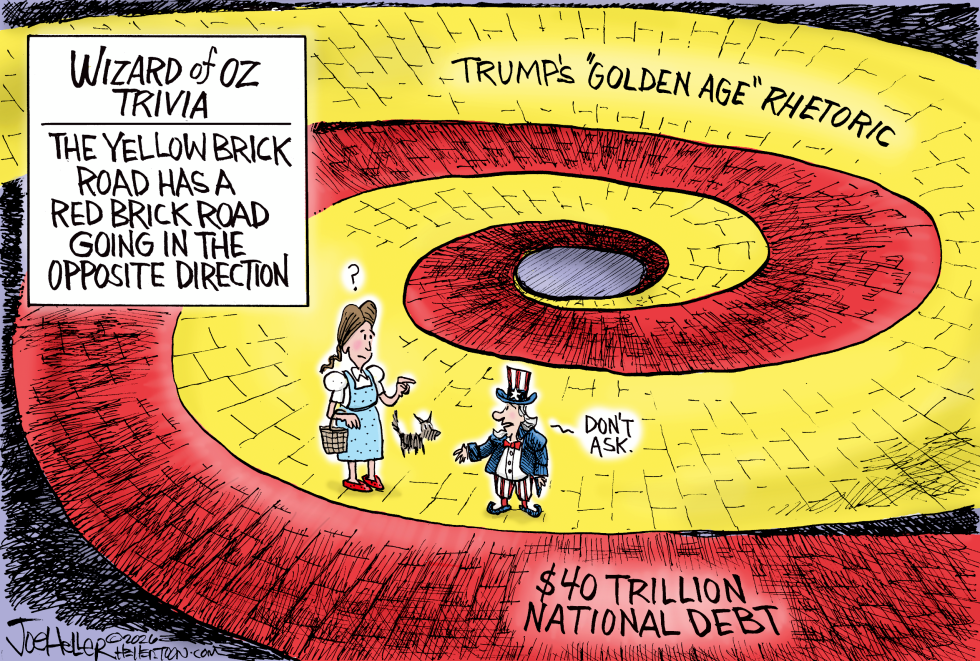
National debt has reached forty trillion dollars amid ongoing debate over fiscal policy. The administration promotes a golden age vision while critics highlight unsustainable borrowing. The piece argues that optimistic rhetoric masks a path leading directly into deeper financial trouble.
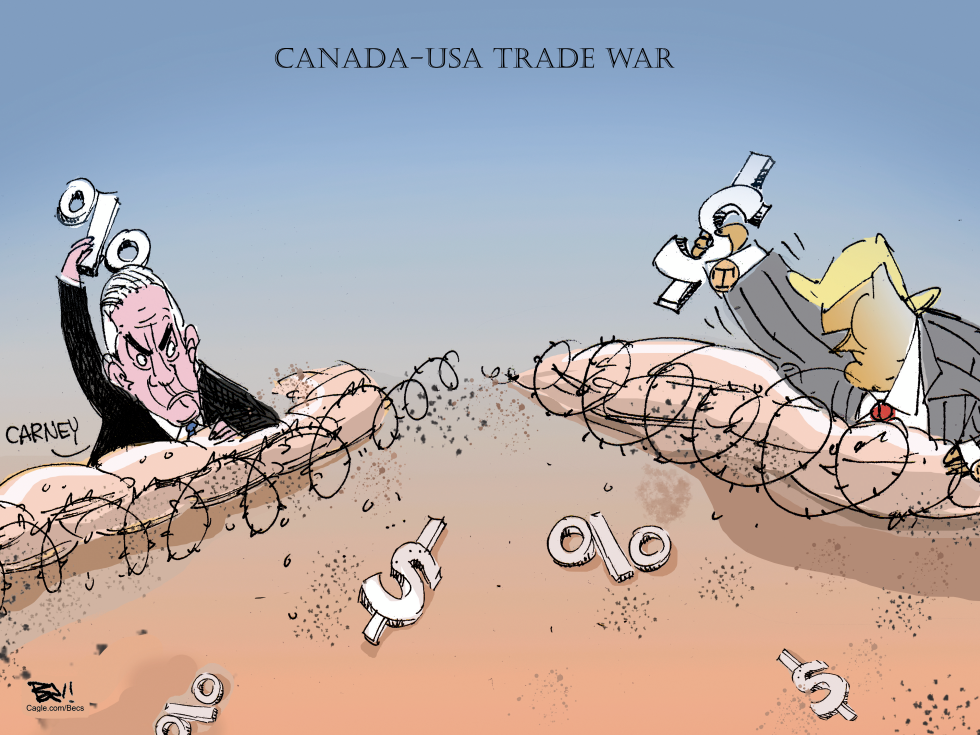
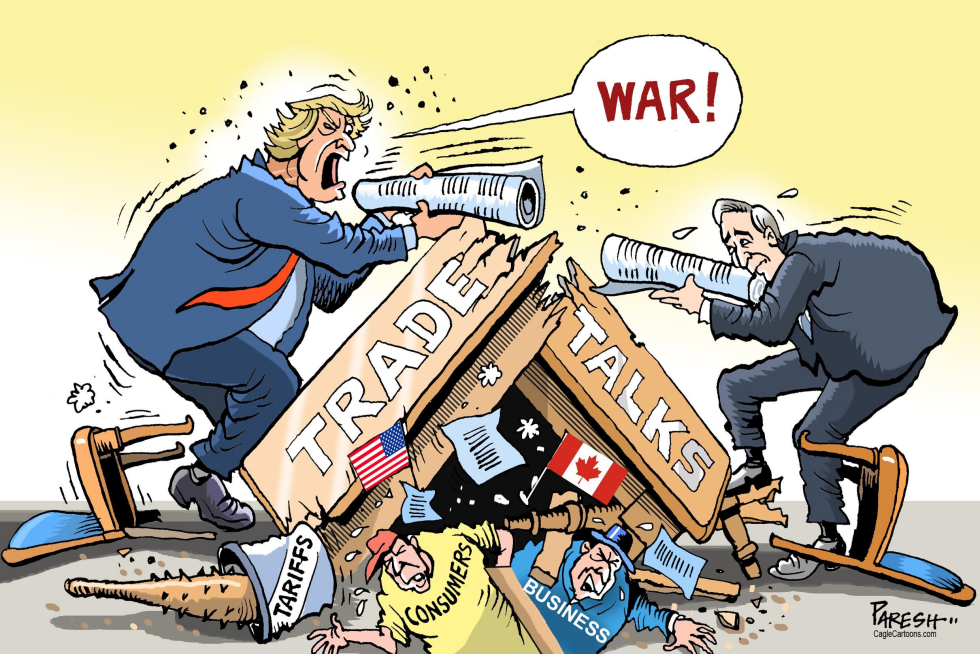
Mark Carney and President Trump clashed over Canada-U.S. trade policies in August 2026, with both sides imposing tariffs and barriers that disrupted cross-border commerce. The dispute centers on economic protections and retaliatory measures affecting businesses and consumers in both countries. The editorial highlights the mutual damage from escalating trade hostilities between the two nations.
The cartoon depicts former President Donald Trump and a Canadian counterpart locked in combat, wielding rolled documents labeled tariffs and talks that smash apart a table marked trade talks. American and Canadian flags lie amid the debris while two figures representing consumers and business lie pinned underneath. Trump shouts war from a speech bubble. The image responds to ongoing US-Canada trade tensions by illustrating how aggressive tariff measures and failed negotiations harm everyday economic interests on both sides of the border.
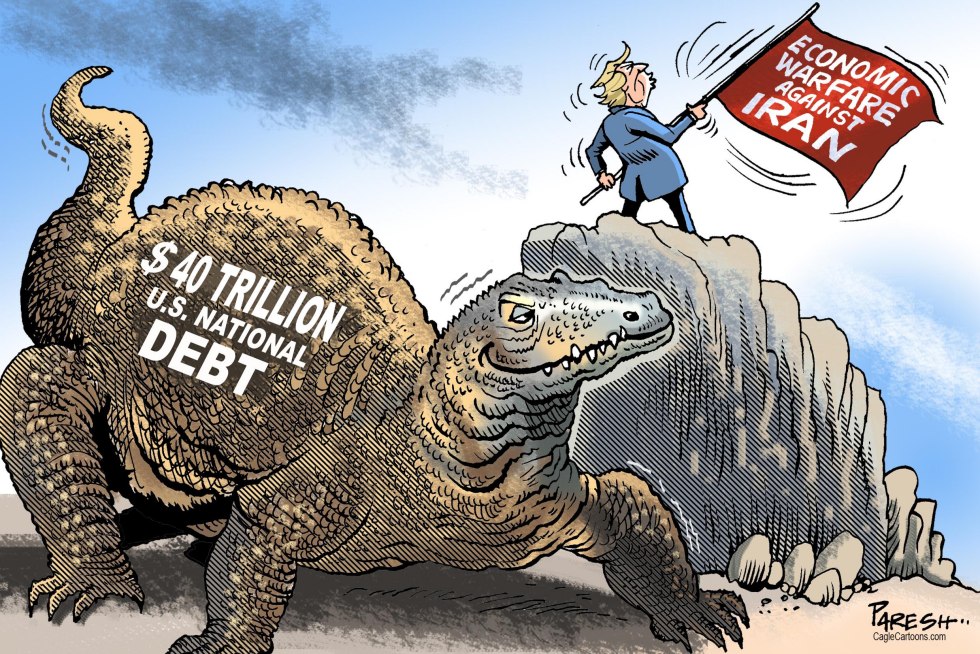
The image depicts Donald Trump standing on a rocky outcrop and waving a red flag reading Economic Warfare Against Iran. Below him a large dinosaur carries the label $40 Trillion U.S. National Debt on its side. The composition places the debt creature in motion near the rock formation. The scene responds to ongoing discussions of U.S. policy toward Iran and the size of federal obligations. The visual places the foreign policy action directly above the debt figure to link the two elements.
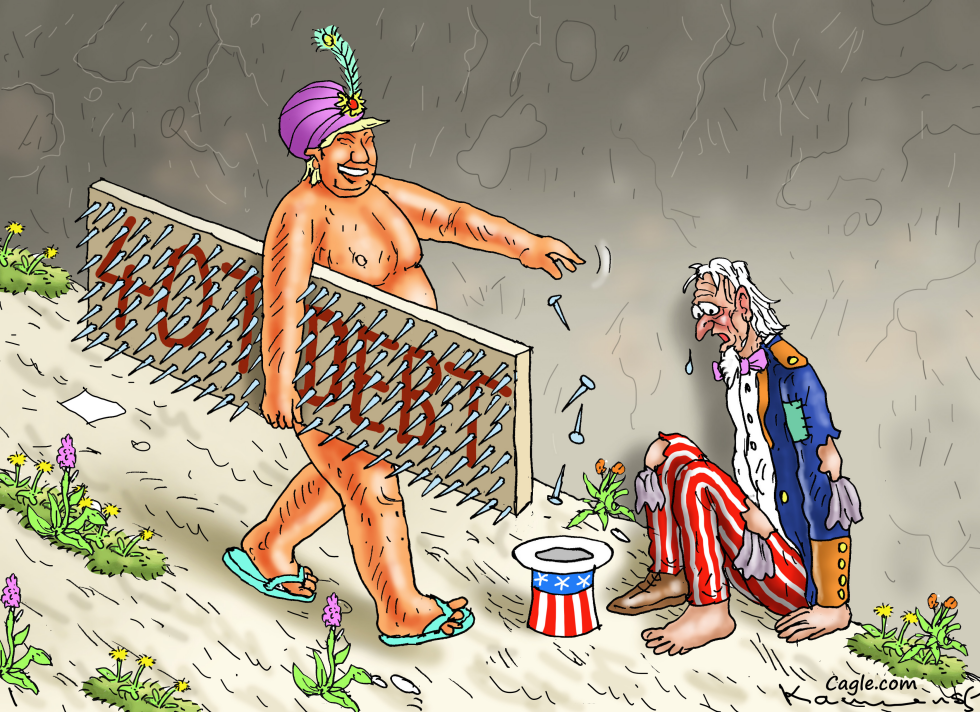
National debt has climbed toward 40 trillion dollars under the current administration. The figure of Donald Trump appears in the role of a fakir performing a bed-of-nails act while Uncle Sam sits nearby in evident distress. The image underscores concerns that fiscal policies have left the federal government in a precarious position with little relief in sight.
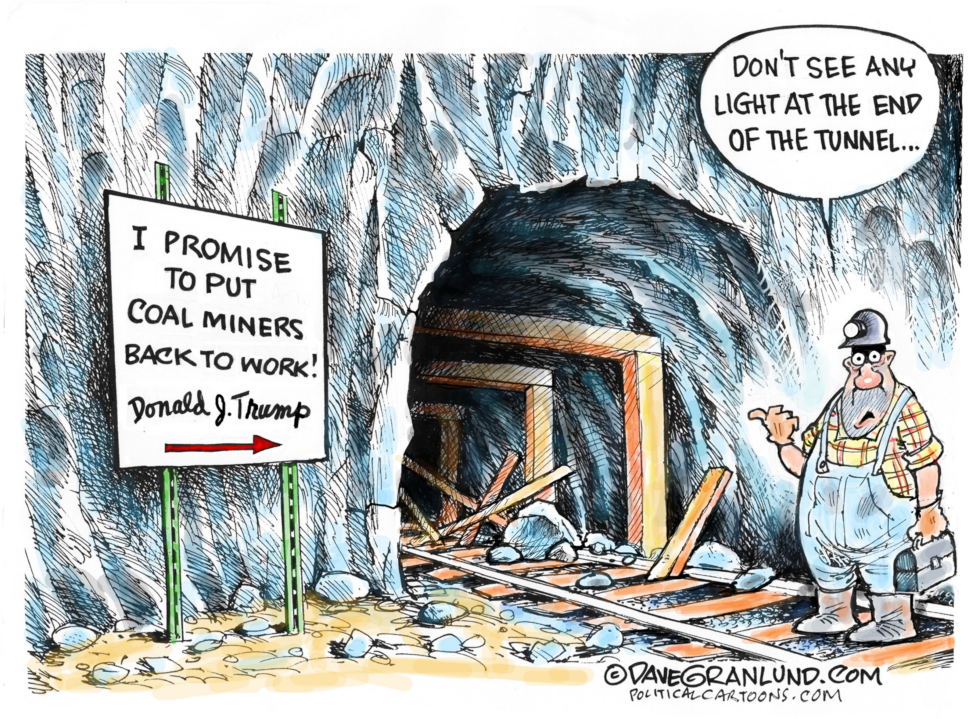
Donald Trump repeatedly pledged during his campaigns and terms to revive coal mining employment by rolling back regulations and boosting domestic production. Those commitments have not translated into sustained job growth for miners amid shifting energy markets and automation. The cartoon underscores the gap between the repeated assurances and the persistent lack of visible progress for workers in the sector.
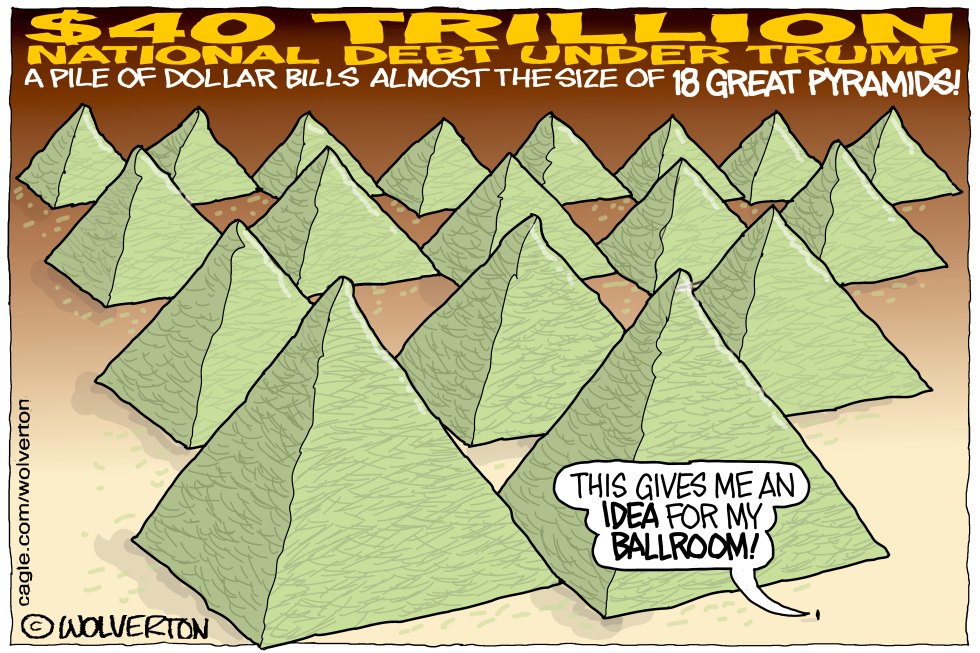
The image presents a field of green pyramids constructed from dollar bills set against a brown and tan background. Large text at the top states the $40 trillion national debt figure under Trump and compares the pile size to 18 great pyramids. A speech bubble emerges from one pyramid in the foreground with a remark about a ballroom idea. The composition places the largest structures toward the front and smaller ones receding into the distance. The visual ties the debt total directly to the current administration period referenced in the text.
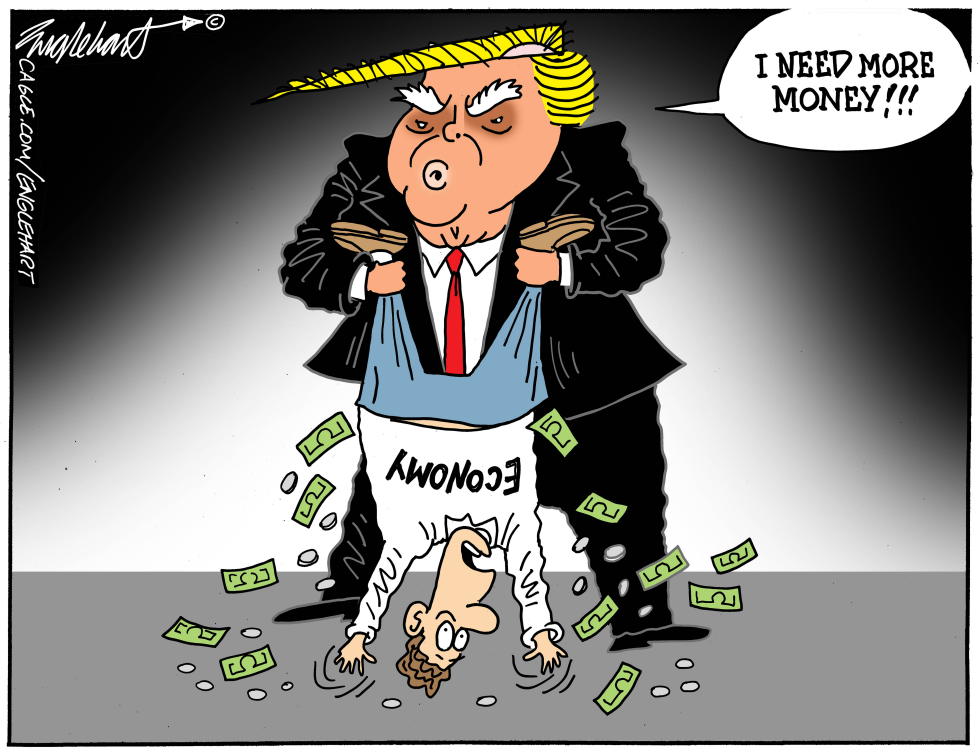
Donald Trump has pressed for additional revenue streams amid ongoing economic pressures. The move highlights tensions over fiscal demands and growth priorities. The piece portrays the action as direct extraction from economic resources.
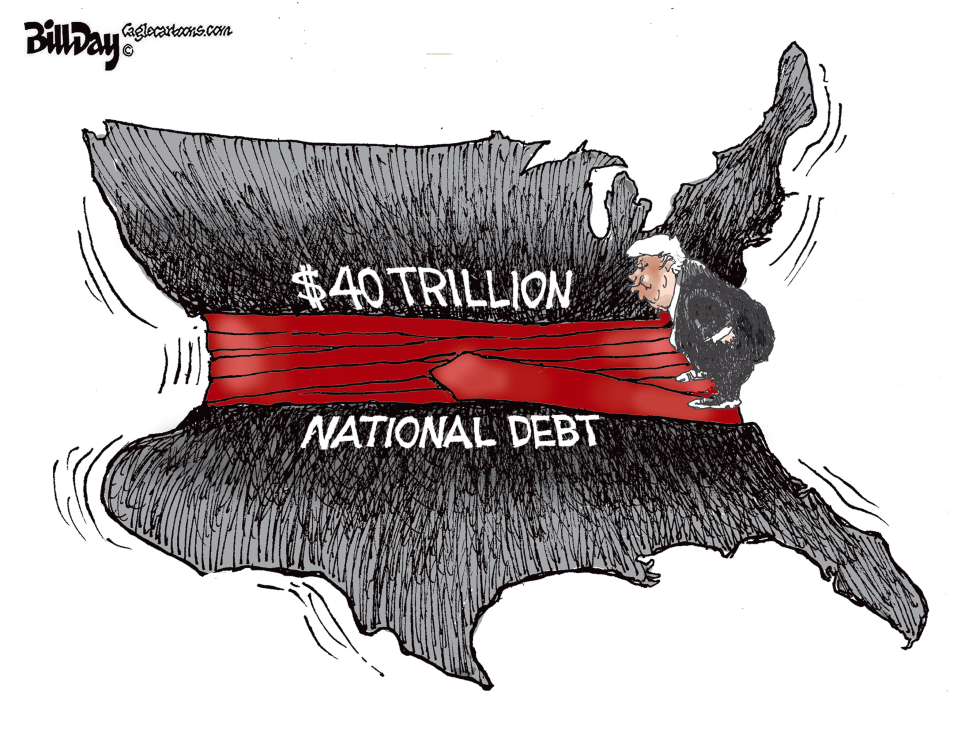
The cartoon shows Donald Trump positioned next to a red band labeled $40 trillion national debt stretched across a shaded map of the United States. The red band cuts through the map with motion lines suggesting strain. Text identifies the debt amount and the national debt label below it. The image responds to ongoing concerns about federal debt levels projected to reach that figure. It places the president in direct visual association with the fiscal challenge.
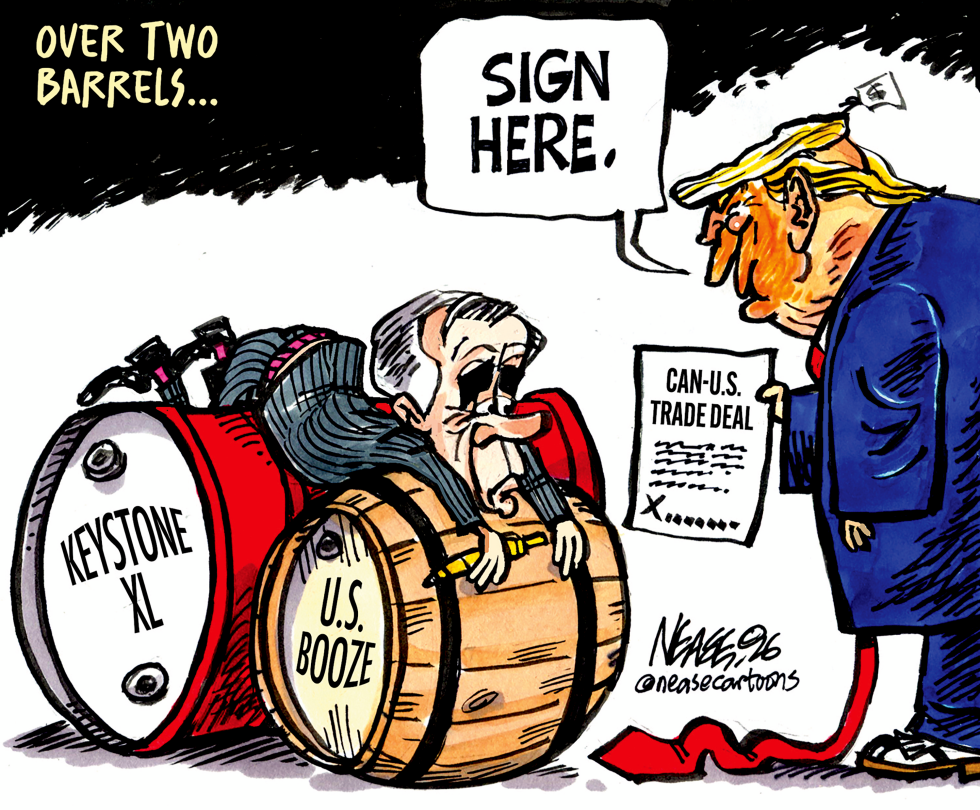
Donald Trump is pressing Canada to finalize a bilateral trade agreement by positioning the Canadian leader between a Keystone XL pipeline barrel and a U.S. booze barrel. The move ties energy infrastructure approval to broader trade concessions including alcohol exports. The editorial takes the position that such barrel-based pressure tactics risk undermining stable Canada-U.S. economic relations.
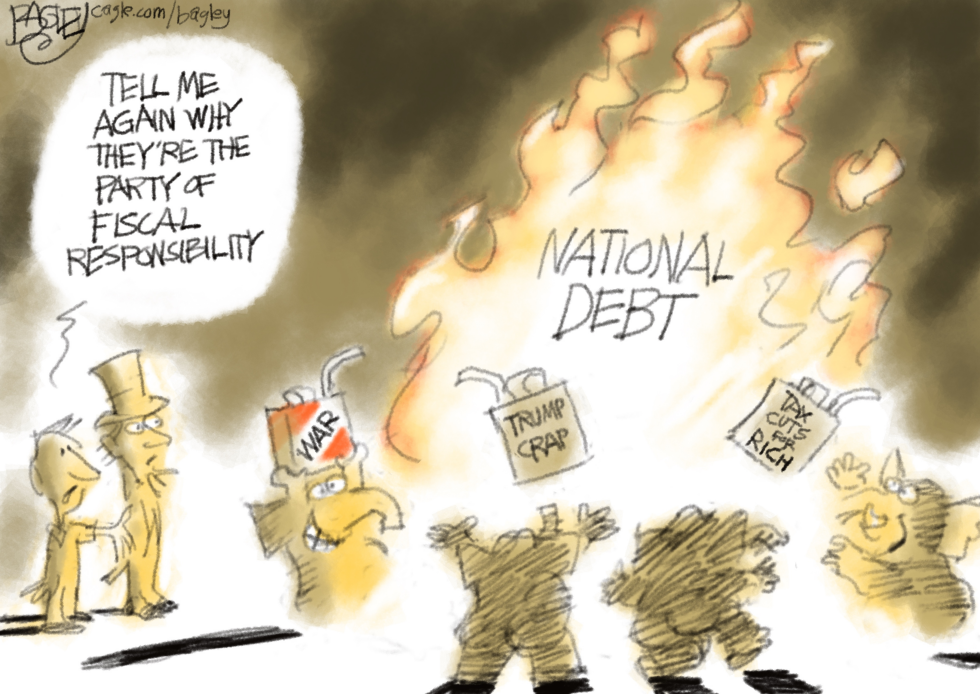
Republicans continue to promote themselves as the party of fiscal responsibility even as national debt rises sharply from sustained war spending and tax cuts favoring the wealthy. The editorial takes the position that these policies directly contradict the fiscal responsibility label.
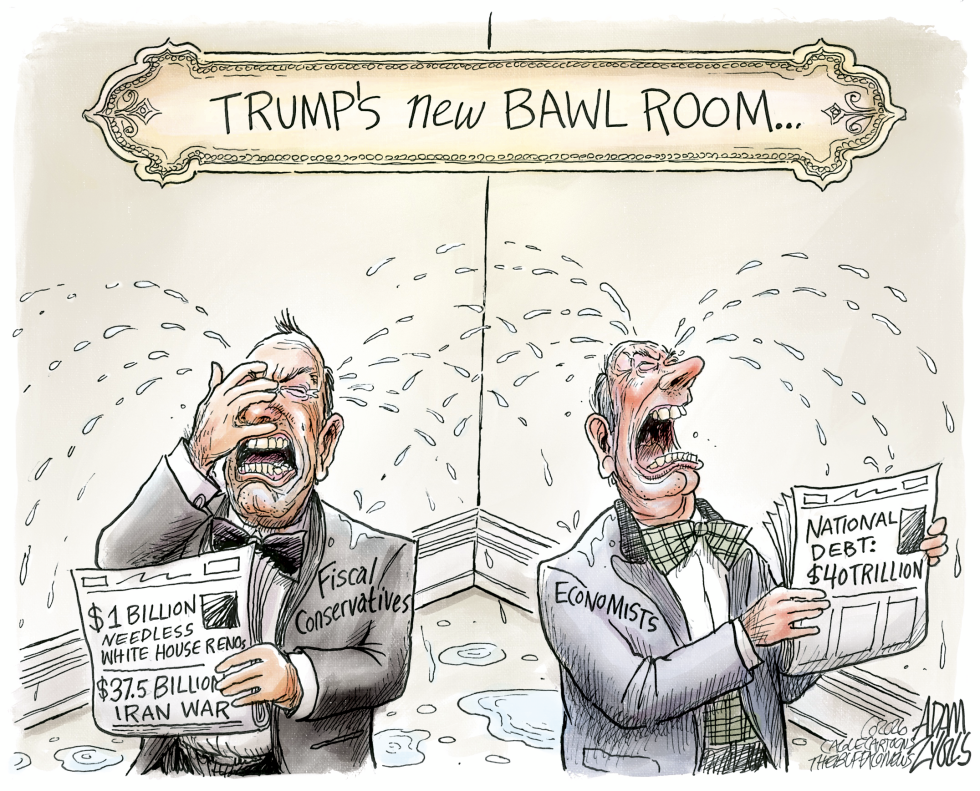
The cartoon depicts fiscal conservatives and economists weeping in a room labeled Trump's new bawl room. One holds documents citing a needless one billion dollar White House renovation and thirty seven point five billion dollar Iran war. The other displays a national debt of forty trillion dollars. The image highlights concerns over federal spending priorities.
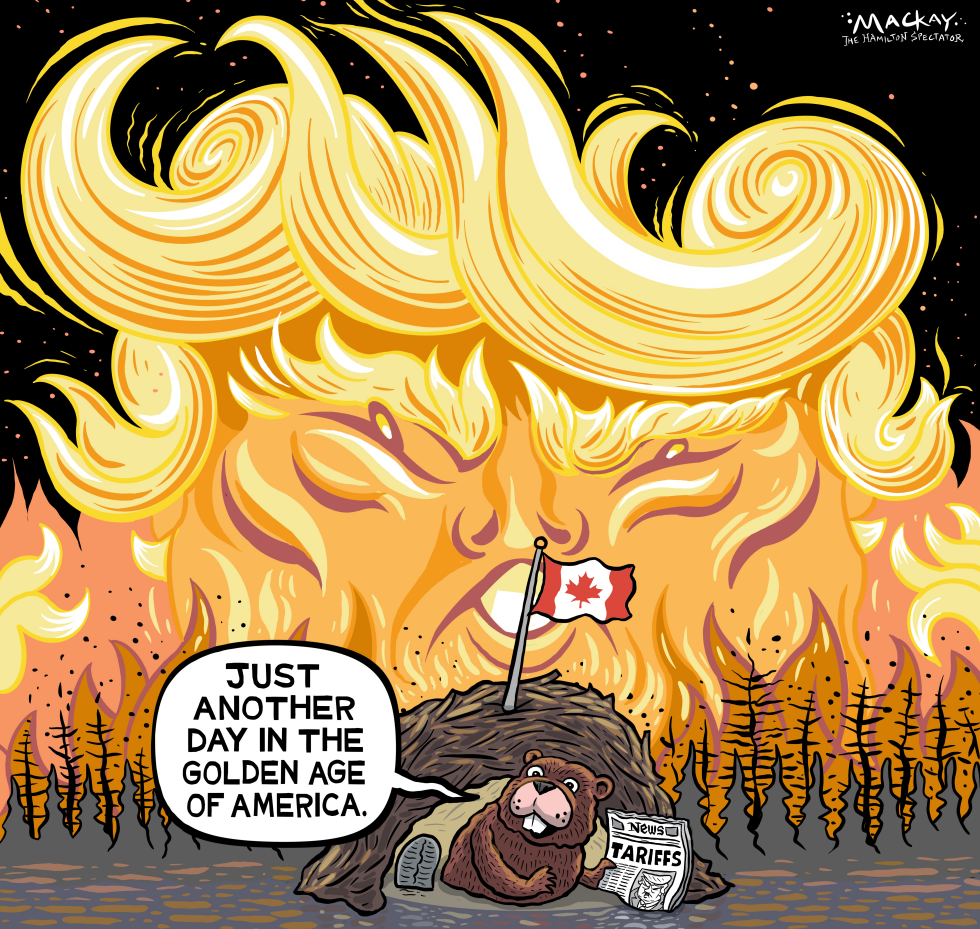
President Trump escalated tariff threats against Canada in mid-August 2026, targeting key exports and prompting Ottawa to brace for economic pressure. The move reignites bilateral trade tensions that have simmered since earlier rounds of duties. The cartoon portrays Canada hunkering down while dismissing the disruption as routine under the current administration.