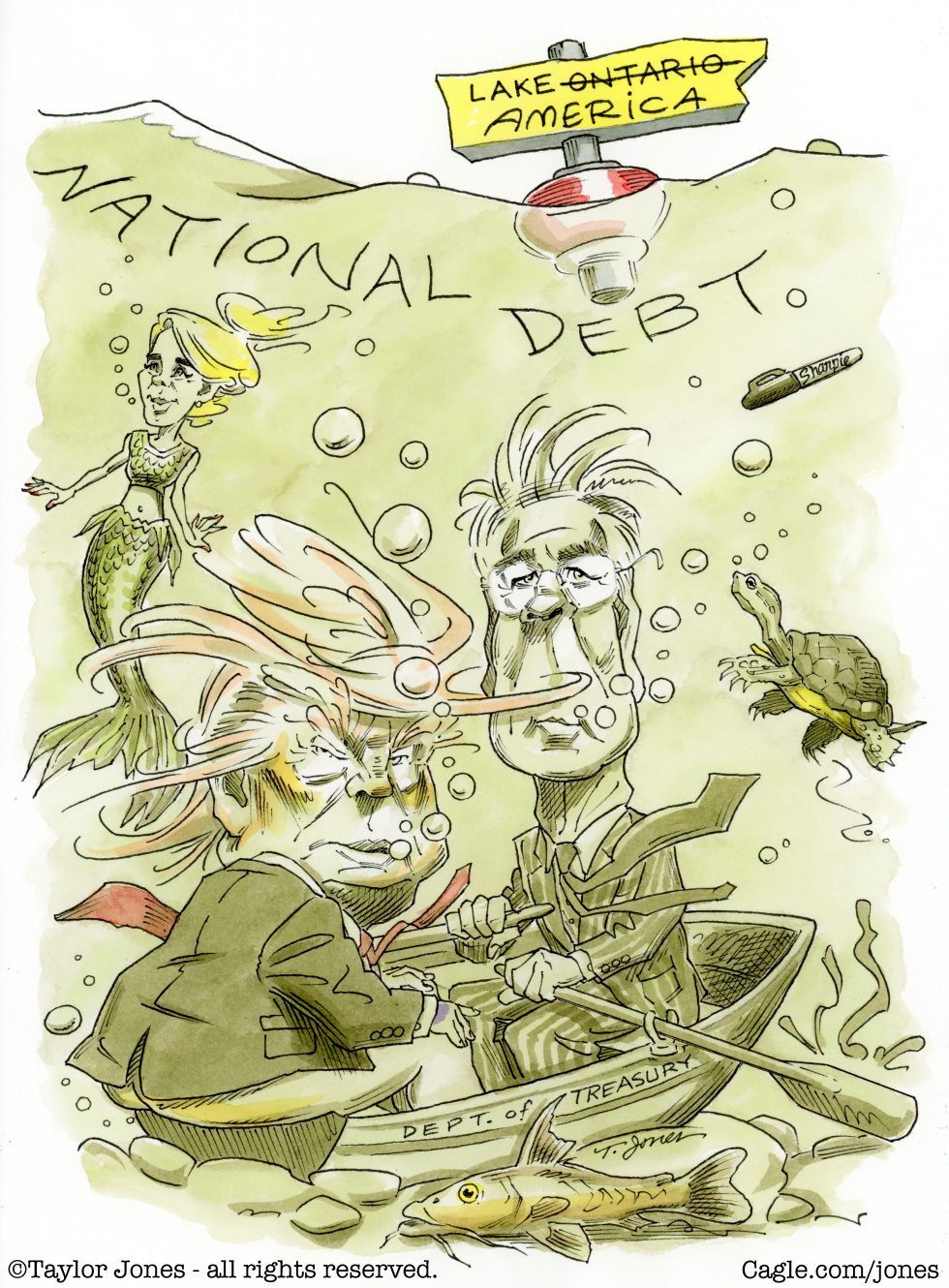
President-elect Donald Trump and Treasury Secretary nominee Scott Bessent are reportedly at odds over how to address the national debt. The disagreement comes as Trump prepares to take office again in 2025 amid concerns about rising deficits and interest costs. The dispute highlights tensions within the incoming administration on fiscal priorities. The cartoon depicts the pair in a sinking Treasury boat surrounded by debt, underscoring the scale of the challenge. It suggests the conflict could undermine efforts to stabilize federal finances.
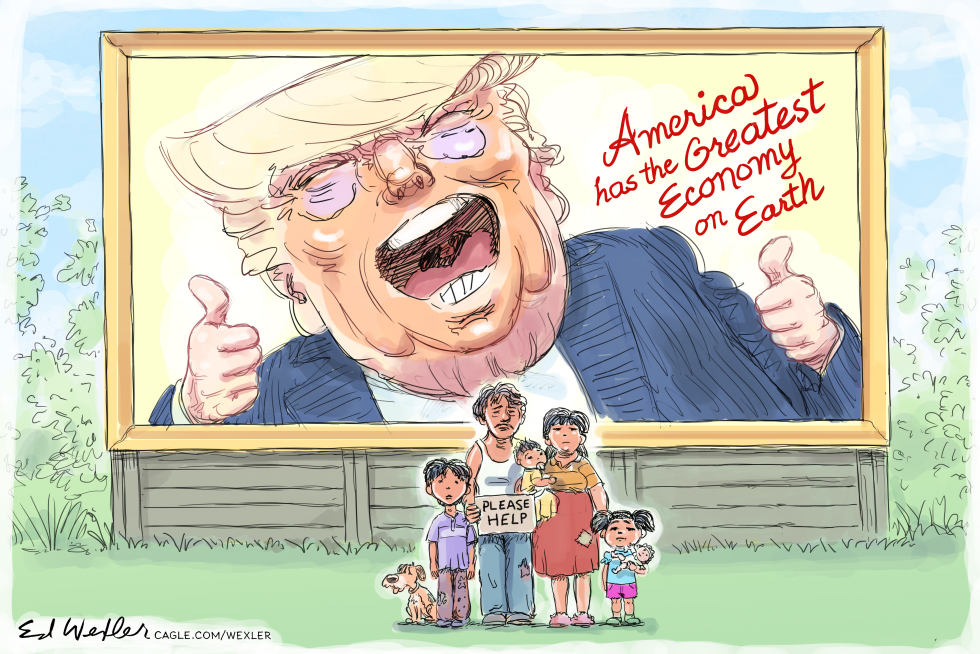
On August 29 2026 President Donald Trump continued promoting claims of an unmatched U.S. economy amid ongoing reports of persistent poverty and wage stagnation for many households. The billboard message highlights administration assertions of national prosperity. The accompanying image underscores the disconnect between official rhetoric and daily struggles for families facing unemployment and insufficient support. The piece argues that such promotional messaging ignores the lived experience of economic hardship.
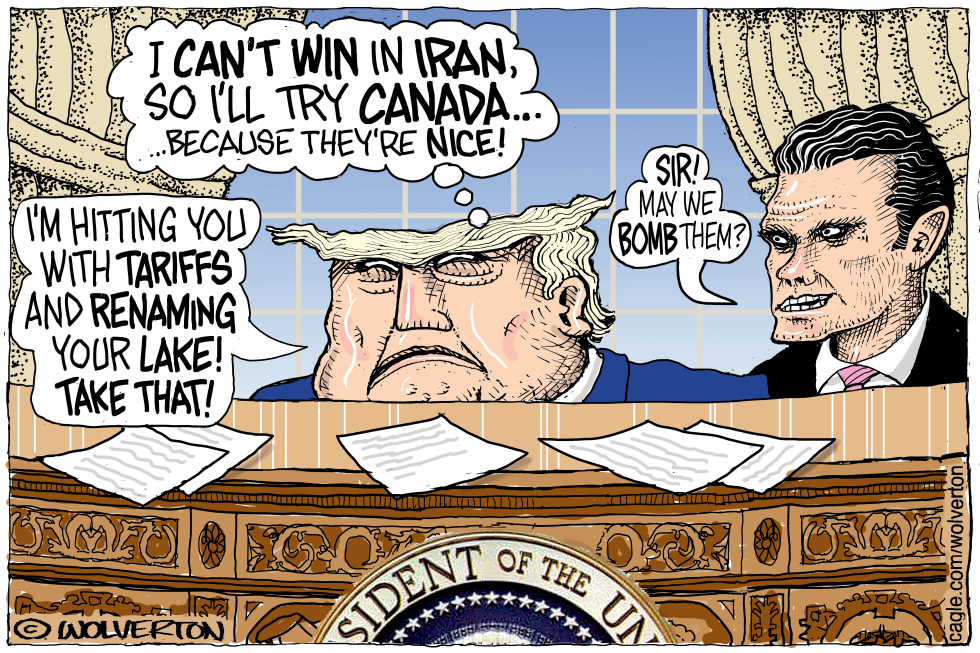
In the cartoon, President Trump appears frustrated at his desk, declaring tariffs and a lake renaming against Canada after setbacks in Iran. His advisor interjects with a suggestion to bomb the northern neighbor. The scene plays on recent trade tensions and foreign policy frustrations as of late August 2026. The visual uses speech and thought bubbles to highlight the shift in targets from a difficult adversary to a more cooperative one. This reflects ongoing debates over tariffs as leverage in international relations.
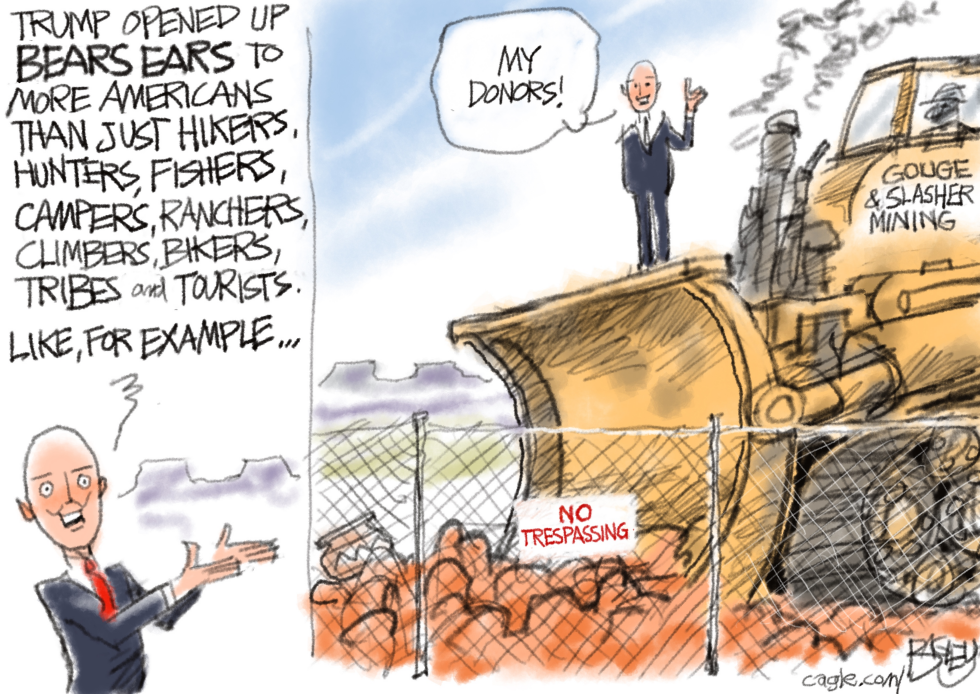
President Trump opened Bears Ears National Monument to expanded mining operations, citing broader public access. The move benefits mining companies and political donors while limiting protections for hikers, tribes and recreational users. The cartoon criticizes the decision as donor-driven favoritism over conservation.
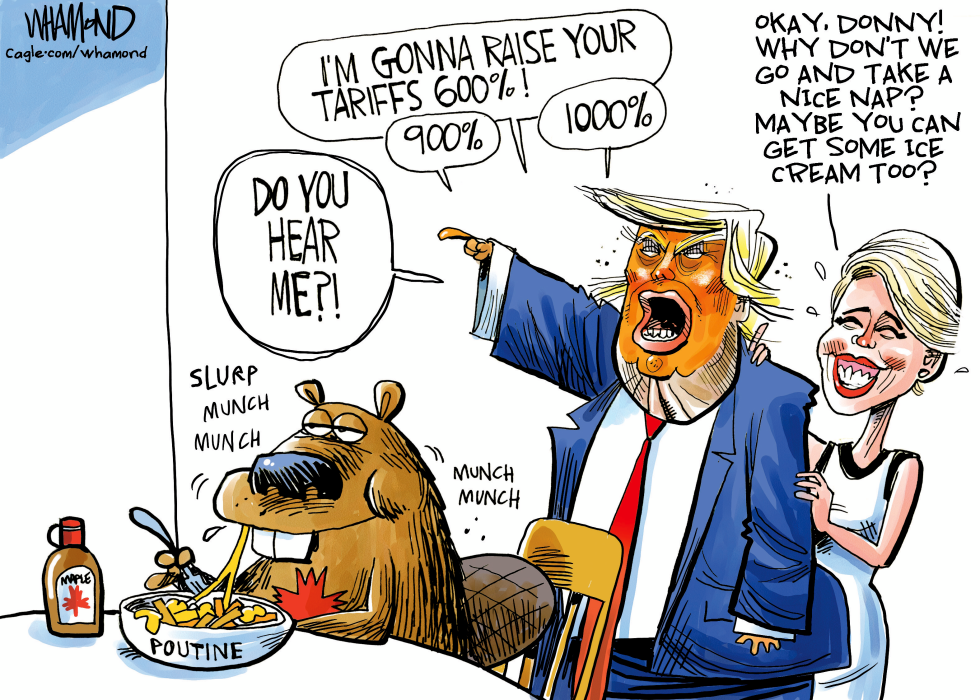
Donald Trump has renewed threats to impose tariffs as high as 1000 percent on Canadian goods. The move targets longstanding trade partners and risks disrupting supply chains for autos, lumber and agriculture. Canada has responded with calls for calm negotiations rather than retaliation. The escalation comes as both nations seek to stabilize economic ties ahead of potential policy shifts. The cartoon portrays the threats as an overreaction best met with indifference and redirection rather than escalation.
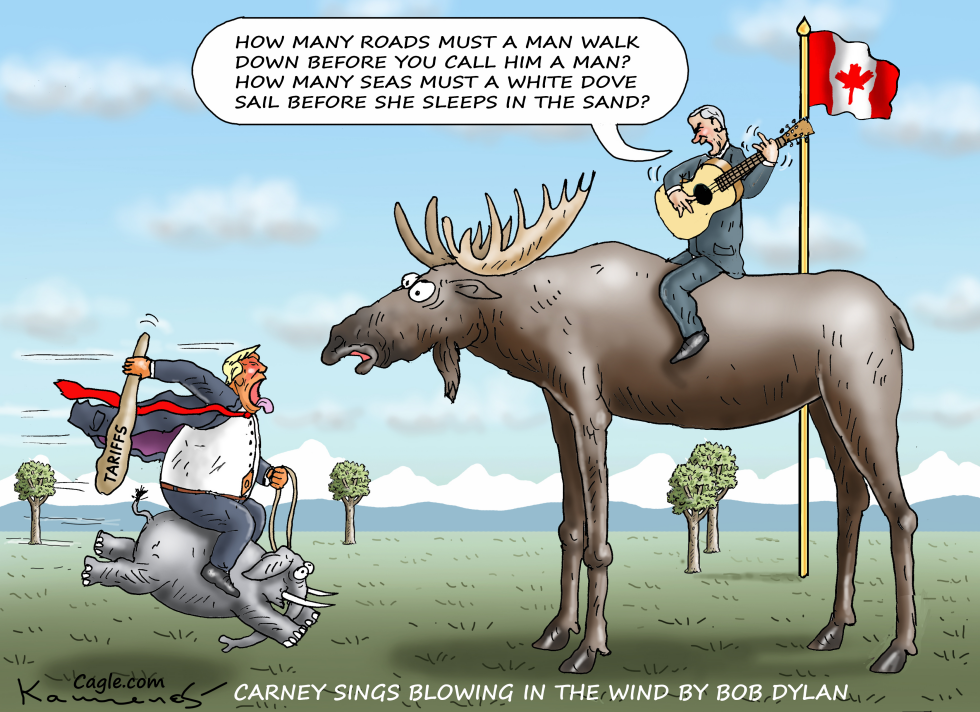
On August 27 2026 President Trump escalated tariffs against Canadian goods in a bid to pressure Ottawa on trade terms. The move drew immediate pushback from Canadian officials including Mark Carney who framed resistance through cultural references to enduring protest songs. The action risks higher consumer costs and strained bilateral relations at a time when supply chains remain fragile. The cartoon portrays the tariff push as a futile assault on Canadian resolve symbolized by the steadfast moose and the defiant singer.
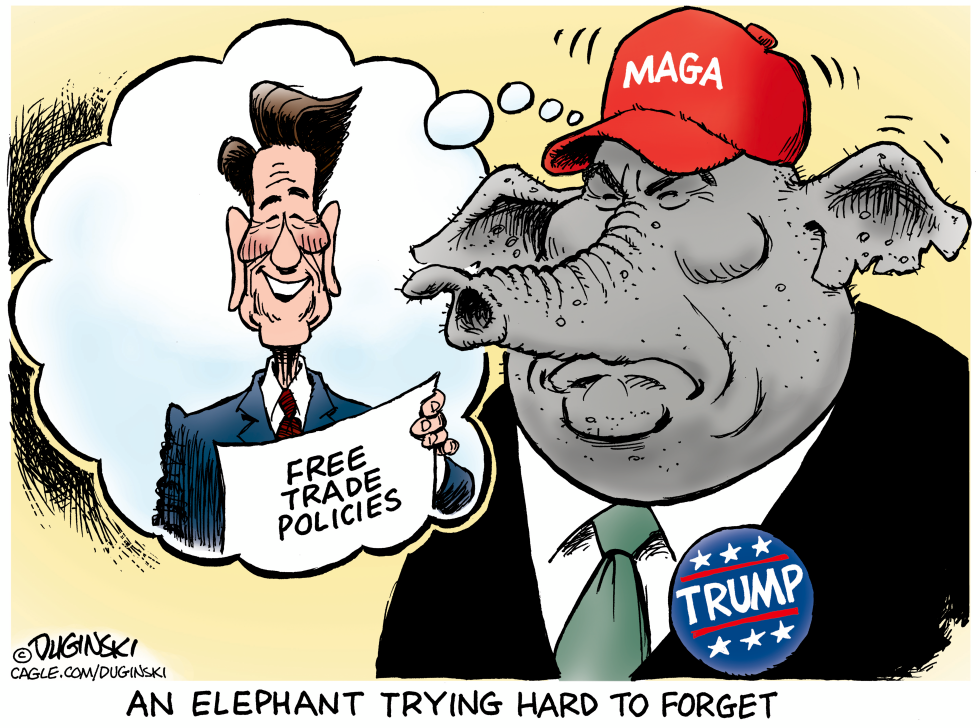
Republicans under Donald Trump have moved away from Ronald Reagan's free trade advocacy toward protectionist policies. The shift reflects internal party tensions over economic strategy and global engagement. The cartoon criticizes the GOP for abandoning a core Reagan principle in favor of current leadership priorities.
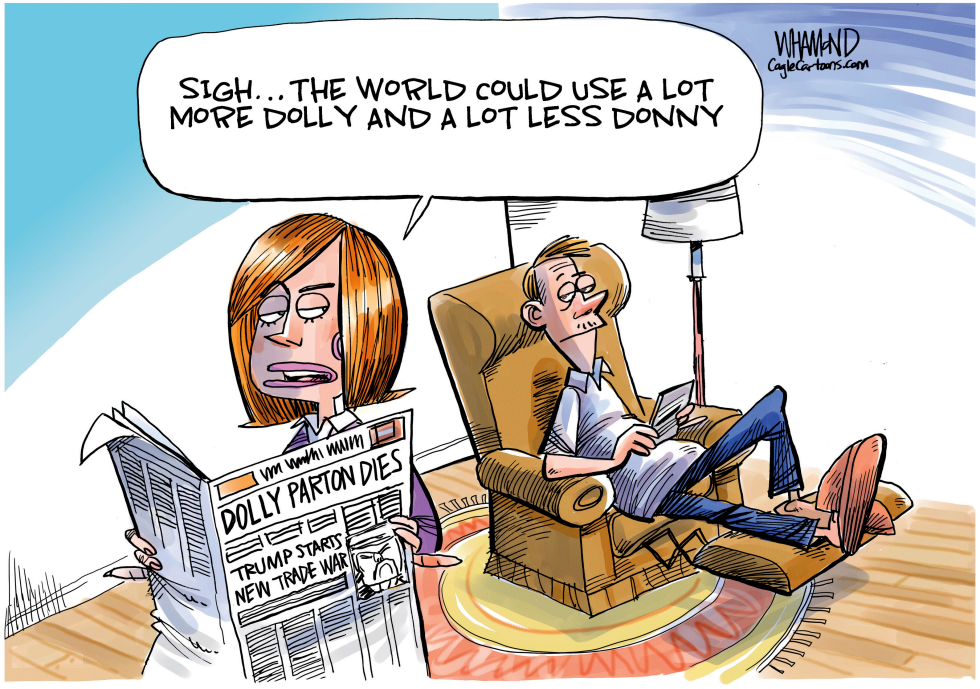
Donald Trump initiated a new trade war, coinciding with the reported death of Dolly Parton. The development drew public reactions contrasting the entertainer's legacy with the president's economic policies. The piece portrays a citizen preferring more of Parton's influence and less of Trump's.
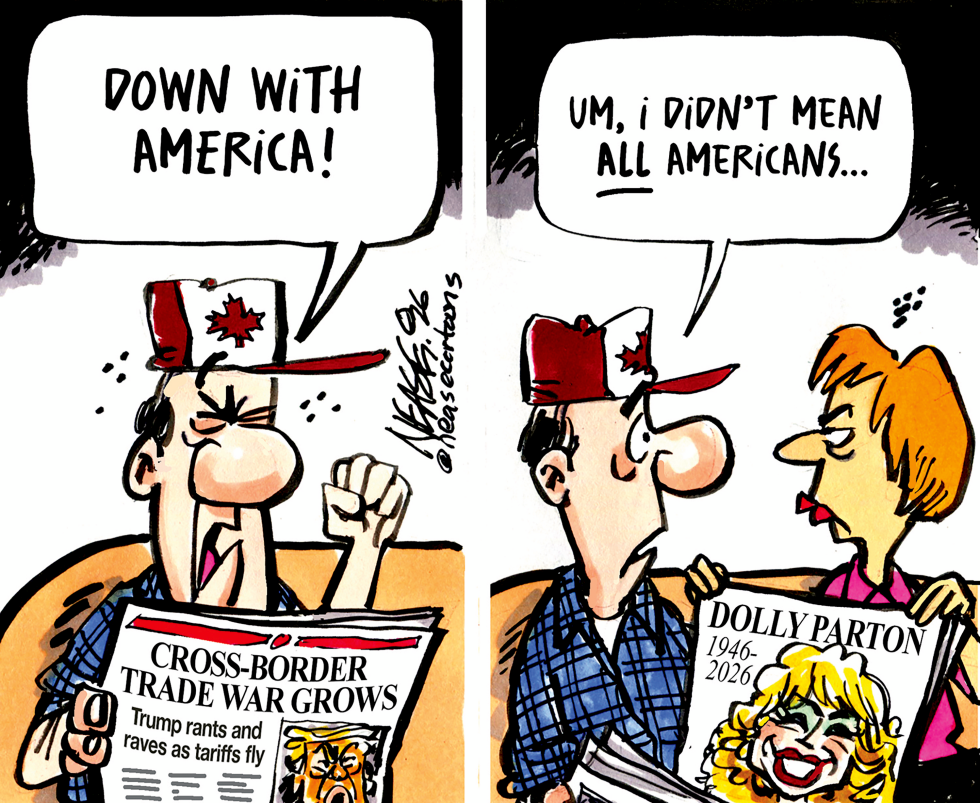
US-Canada trade tensions intensified in August 2026 as tariffs mounted amid heated rhetoric from President Trump. The dispute drew sharp reactions north of the border. The cartoon takes the position that even vocal critics of America make exceptions for beloved figures like Dolly Parton.
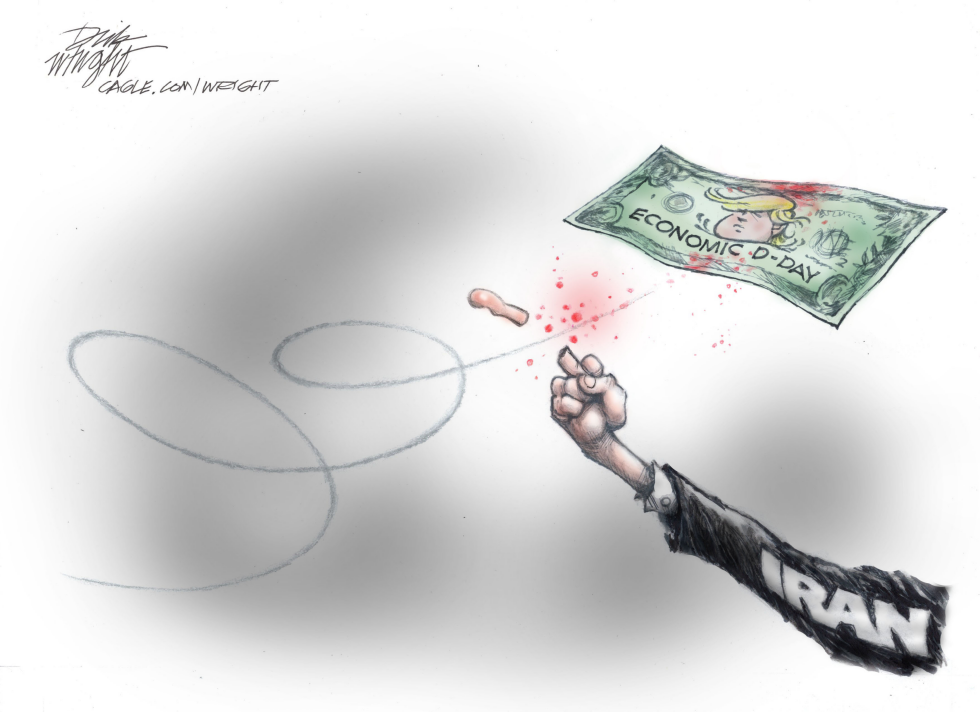
Iran has positioned itself to ignite economic pressure on the United States through direct actions targeting financial stability. The move comes amid ongoing tensions with the Trump administration over sanctions and regional influence. This development raises stakes for global markets already sensitive to Middle East volatility. The piece frames Iran as deliberately lighting a fuse aimed at an economic tipping point centered on Trump.
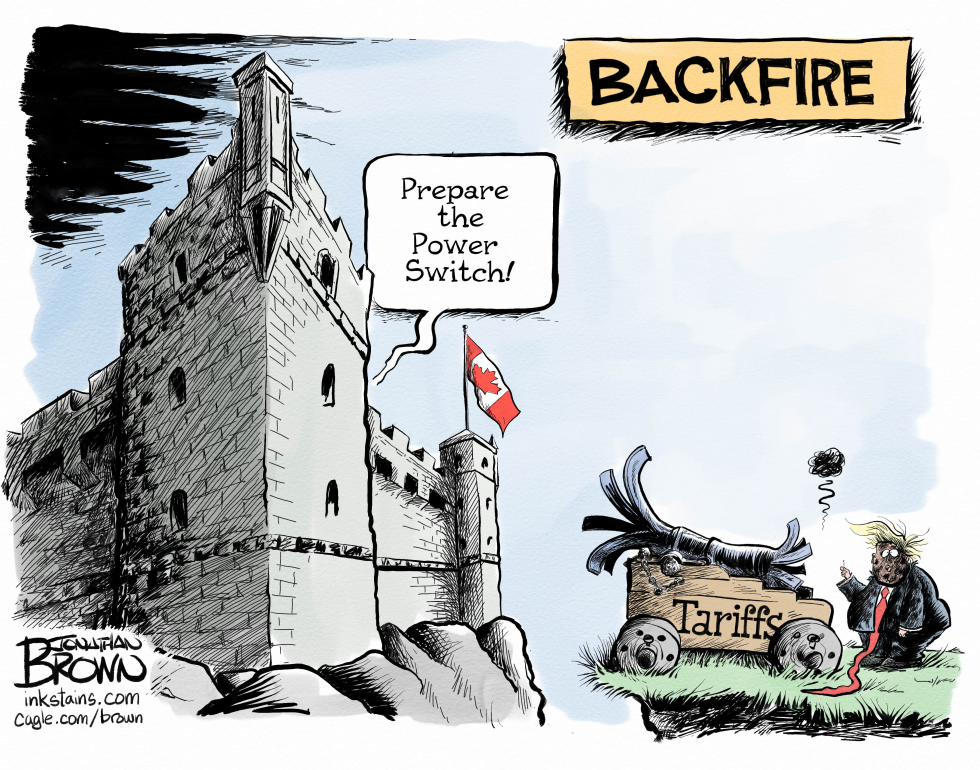
The cartoon shows a Canadian castle flying its flag while a cannon labeled Tariffs explodes backward toward a figure resembling Donald Trump. The scene responds to ongoing trade tensions where U.S. tariffs on Canadian goods prompted retaliatory measures. The visual emphasizes the policy rebounding on its originator rather than achieving intended pressure.
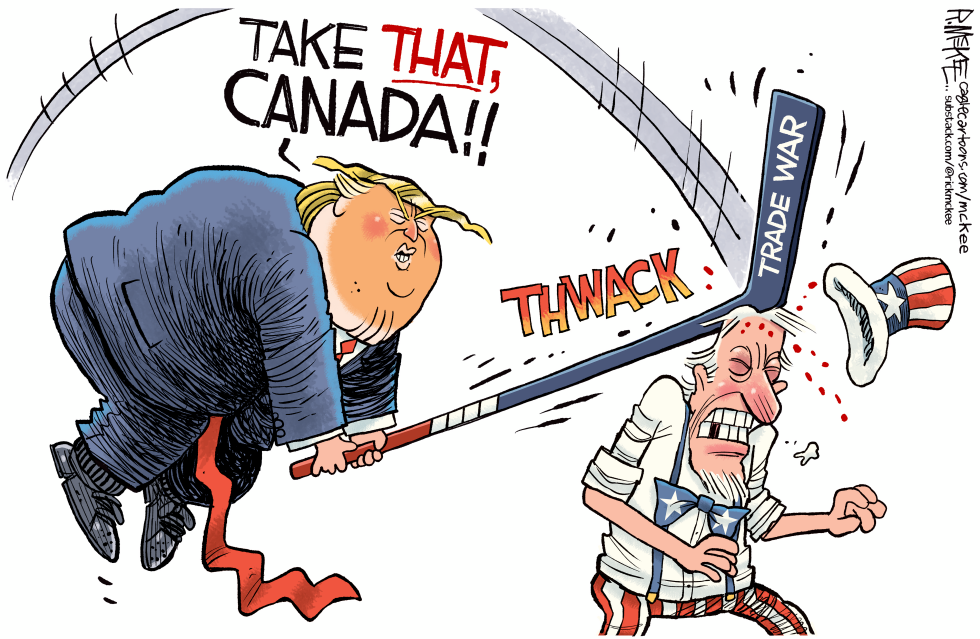
President Trump escalated trade tensions with Canada through new tariffs and barriers in August 2026. The moves targeted key sectors including lumber, dairy and autos. Domestic industries braced for retaliation while consumers faced higher prices. The action drew criticism for harming American interests alongside the intended foreign pressure. The cartoon portrays the policy as self-inflicted damage on the United States itself.
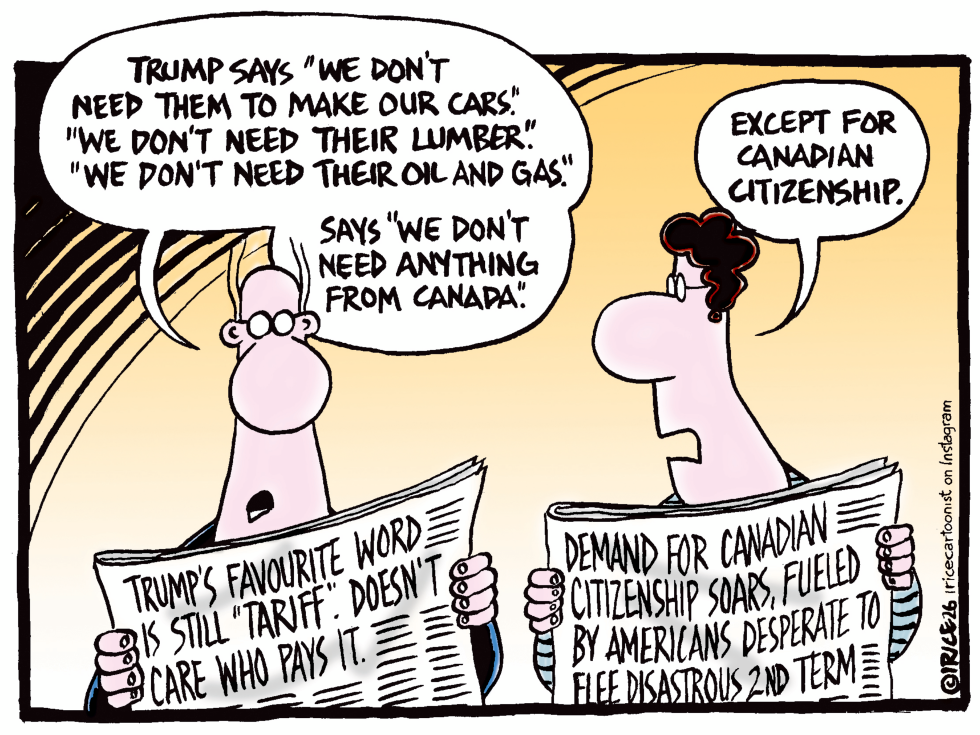
Trump's renewed tariffs on Canadian cars, lumber, oil and gas have triggered a sharp rise in applications for Canadian citizenship from Americans wary of his second term. The move underscores ongoing US-Canada trade friction and domestic policy backlash. The cartoon frames the policy as self-defeating, highlighting the irony of Canadians becoming the one Canadian product still in demand.
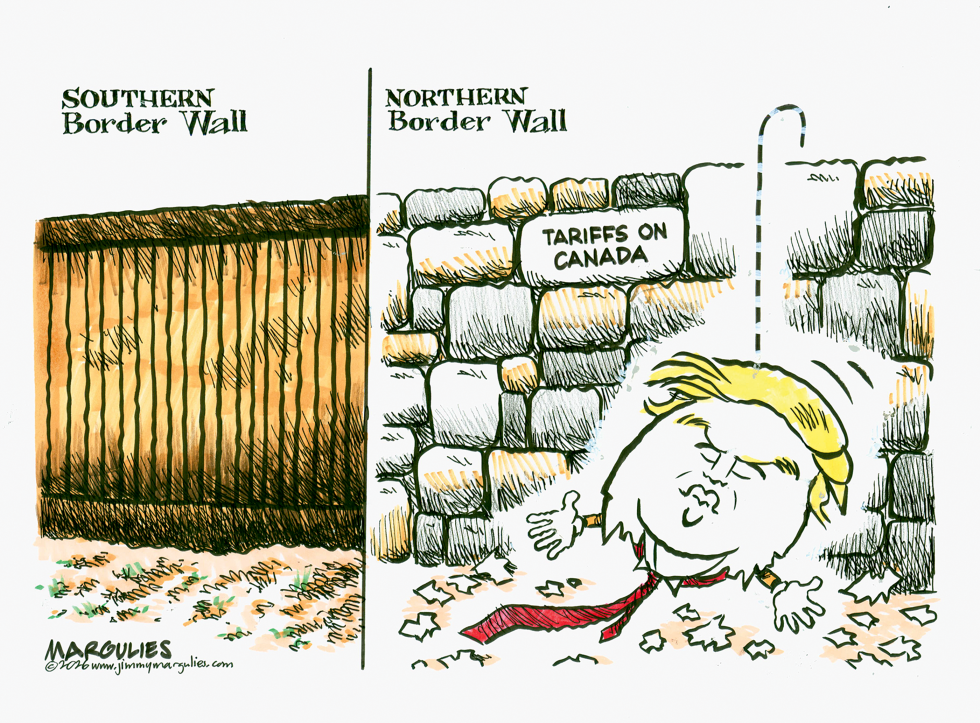
Tariffs targeting Canada have produced immediate political fallout for the administration. The move has drawn attention to trade tensions along the northern border and raised questions about the effectiveness of the policy. The piece portrays the tariffs as directly undermining the president's position.