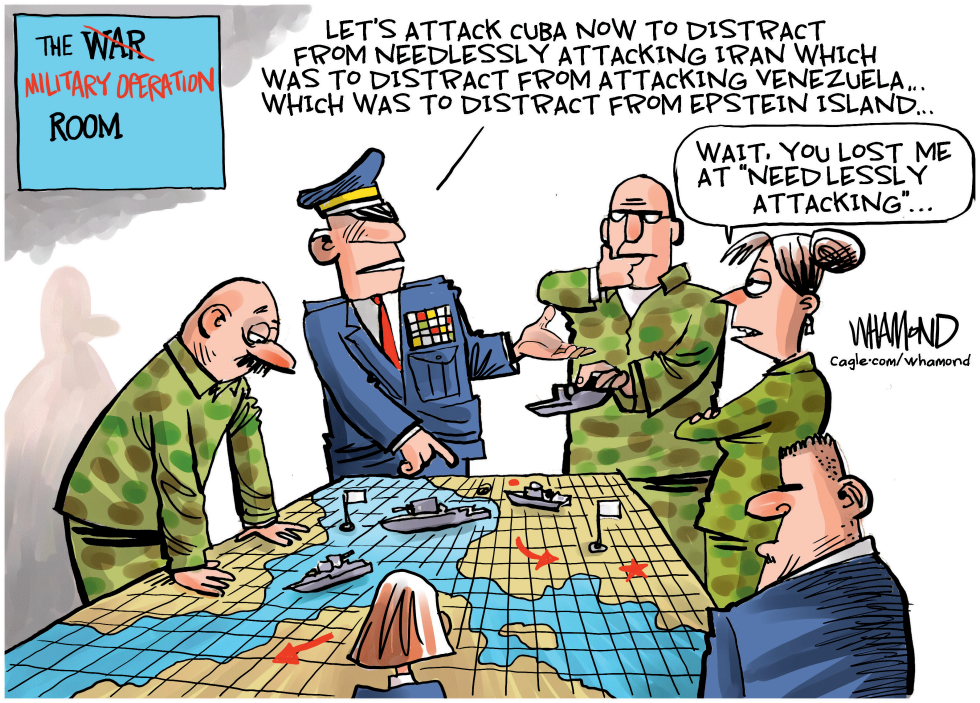
Dave Whamond's political cartoon depicts a group of military officials in a war room, gathered around a map with toy ships, discussing a chain of distractions starting from attacking Cuba to cover needless attacks on Iran, which distracted from Venezuela, looping back to Epstein Island. The scene captures the absurdity with one figure pointing at the map and another expressing confusion over 'needlessly attacking.' This satirical illustration uses dry humor to comment on convoluted military strategies and political diversions, incorporating elements like crossed-out 'War' sign replaced by 'Military Operation Room' for added irony. Tags like political satire, war distractions, foreign policy cartoon, Epstein Island reference, military humor, and endless distraction chain emphasize the cartoon's sharp critique.
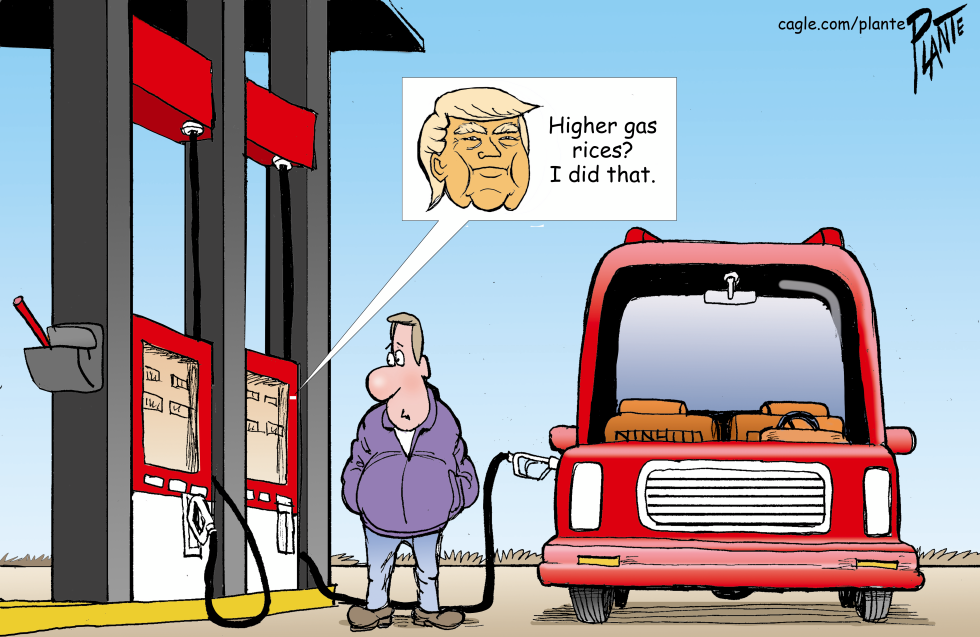
Bruce Plante's cartoon shows a gas pump topped with President Donald J. Trump's head, smirking as it says, 'Higher gas rices? I did that,' while a driver fuels his red truck. The image ties into tags like higher gas prices, war, Iran, Israel, Middle East, and energy crisis, poking at Trump's potential role in escalating fuel costs through foreign policy missteps. It's a straightforward jab, clear in its satire without overcomplicating the visuals. The dry humor lands on the absurdity of a politician claiming credit for economic pain at the pump. With tags covering UAE, Saudi Arabia, and other regional players, the cartoon nods to broader geopolitical tensions driving oil prices up. Editors see these kinds of cartoons circulate well when gas prices spike, reminding readers of the human cost in everyday routines.
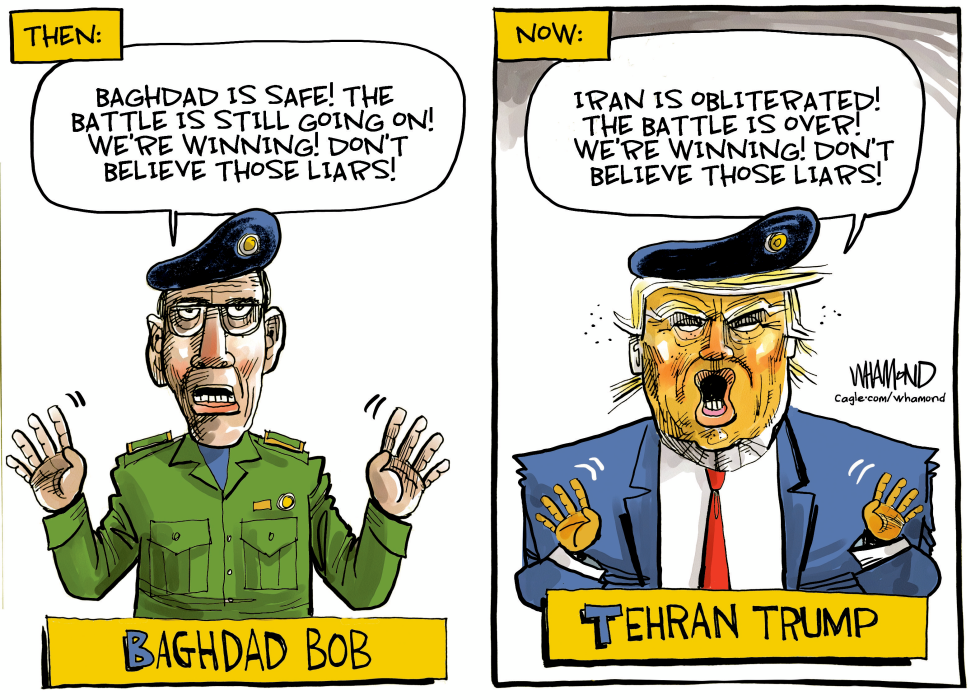
Dave Whamond's political cartoon splits into 'Then' and 'Now' panels, showing Baghdad Bob in military garb proclaiming Baghdad's safety and ongoing victory, dismissing liars. On the right, a Trump-like figure dubbed Tehran Trump, wearing a beret and suit, declares Iran obliterated and battle over, again urging disbelief in liars. The satire underscores parallels in propaganda and denialism, with tags like political satire, Trump caricature, Iraq War reference, Iran conflict, misinformation leaders, and historical parallel. This visual commentary critiques how figures twist realities in wartime narratives, blending dry humor with sharp observation on political exaggeration.
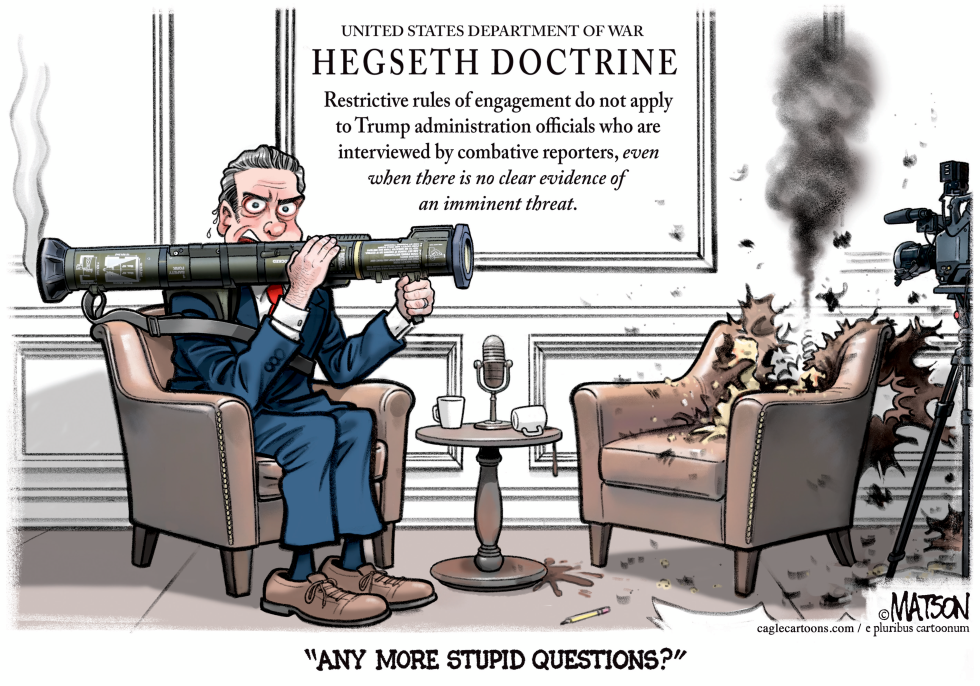
R.J. Matson's cartoon depicts a stern-faced official in a formal setting, wielding a massive rocket launcher that has just obliterated the interviewer's chair, smoke billowing from the debris. The header proclaims the 'Hegseth Doctrine' under the 'United States Department of War,' stating that restrictive rules of engagement don't apply to Trump administration officials facing combative reporters, even without clear evidence of an imminent threat. The official snarls, 'Any more stupid questions?' as a camera topples amid the chaos. This setup skewers the notion of overreactive defenses in political interviews, blending dry humor with sharp commentary on media relations. Tags like Hegseth Doctrine, Trump administration satire, press interview violence, combative reporters parody, imminent threat joke, and political cartoon Matson capture the essence of this visually punchy critique.
Bruce Plante's cartoon depicts a typical American driver at a gas station, his purple car parked under the canopy, as he reacts with censored profanity to a coin-operated viewer. The sign reads 'TO SEE GAS PRICES DEPOSIT 25¢,' cleverly satirizing how #HighGasPrices have soared beyond easy visibility, like distant sights needing magnification. The man's USA shirt and coffee cup add a relatable everyman touch, emphasizing consumer shock. This piece fits into ongoing #FuelCosts debates, blending #InflationHumor with #EconomicSatire. Plante's style, straightforward and punchy, targets #EnergyPrices and their impact on daily life, making it shareable for #PoliticalCartoons enthusiasts. The dry humor underscores the absurdity without overstatement, a hallmark of syndicated work.
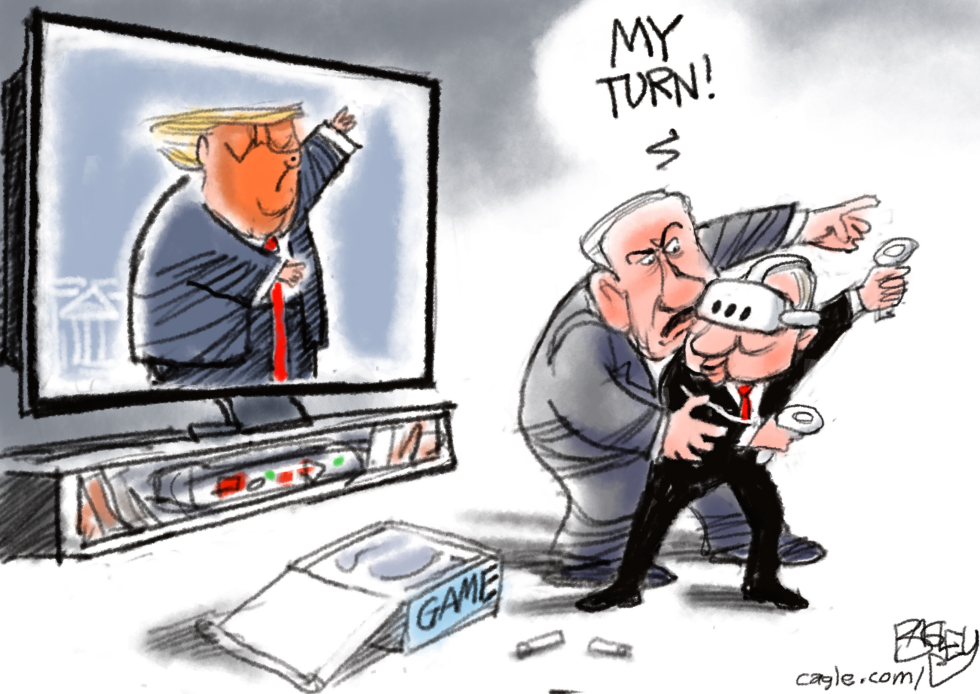
Pat Bagley's cartoon captures Vladimir Putin in a suit, firmly holding a smaller Benjamin Netanyahu who wears a VR headset and wields controllers, exclaiming 'My Turn!!' with frustration. Donald Trump dominates the TV screen, arm raised dramatically against a White House-like backdrop. The floor features a tipped 'GAME' box, underscoring the video game metaphor. This setup highlights themes of manipulation and turn-taking among leaders, delivered with sharp lines and exaggerated features typical of political satire. The dry humor lies in reducing global tensions to childish squabbles over a game, a classic cartoon trope that packs punch without overstatement.
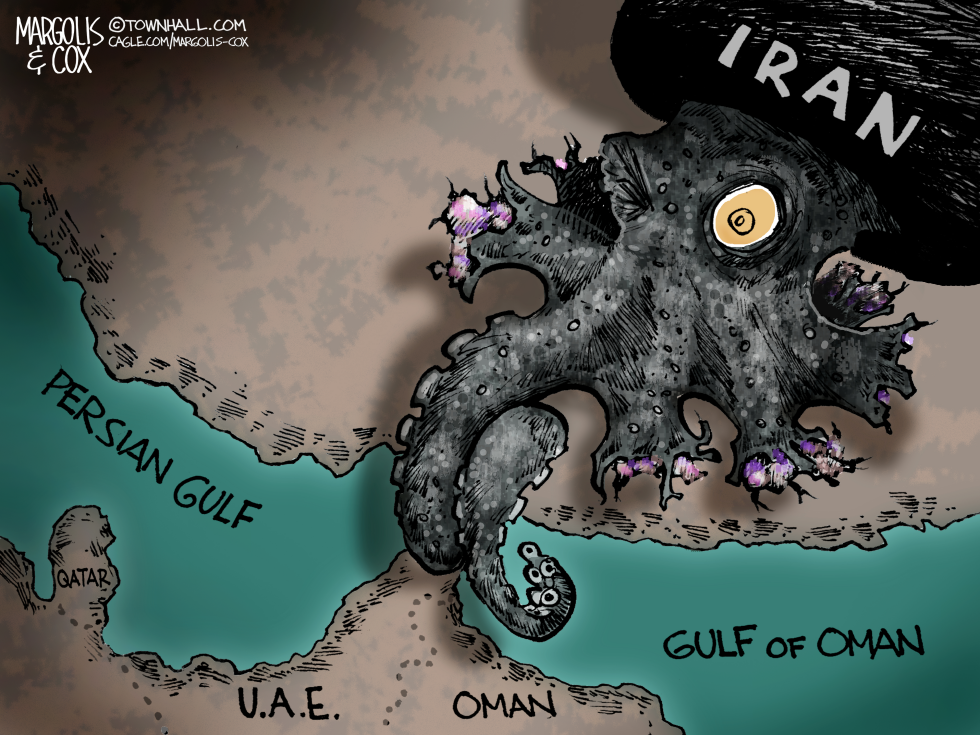
Cartoons like this one from Margolis and Cox cut straight to the absurdity of international posturing. Here, an oversized octopus labeled 'Iran' looms over a simplified map of the Persian Gulf and Gulf of Oman, its tentacles coiling tightly around the Strait of Hormuz. The creature's single eye glares out, while purple-tipped suckers grip the landmasses labeled Qatar, UAE, and Oman. It's a classic visual metaphor for control, poking at Iran's threats to block this crucial oil route. waterway. Such images remind editors how satire distills complex geopolitics into something shareable, even if the humor lands dry as desert sand. With tags like Iran Strait of Hormuz blockade, Persian Gulf tension, octopus metaphor, Middle East satire, oil route choke, and strategic dominance, the piece fits neatly into discussions of global energy security.
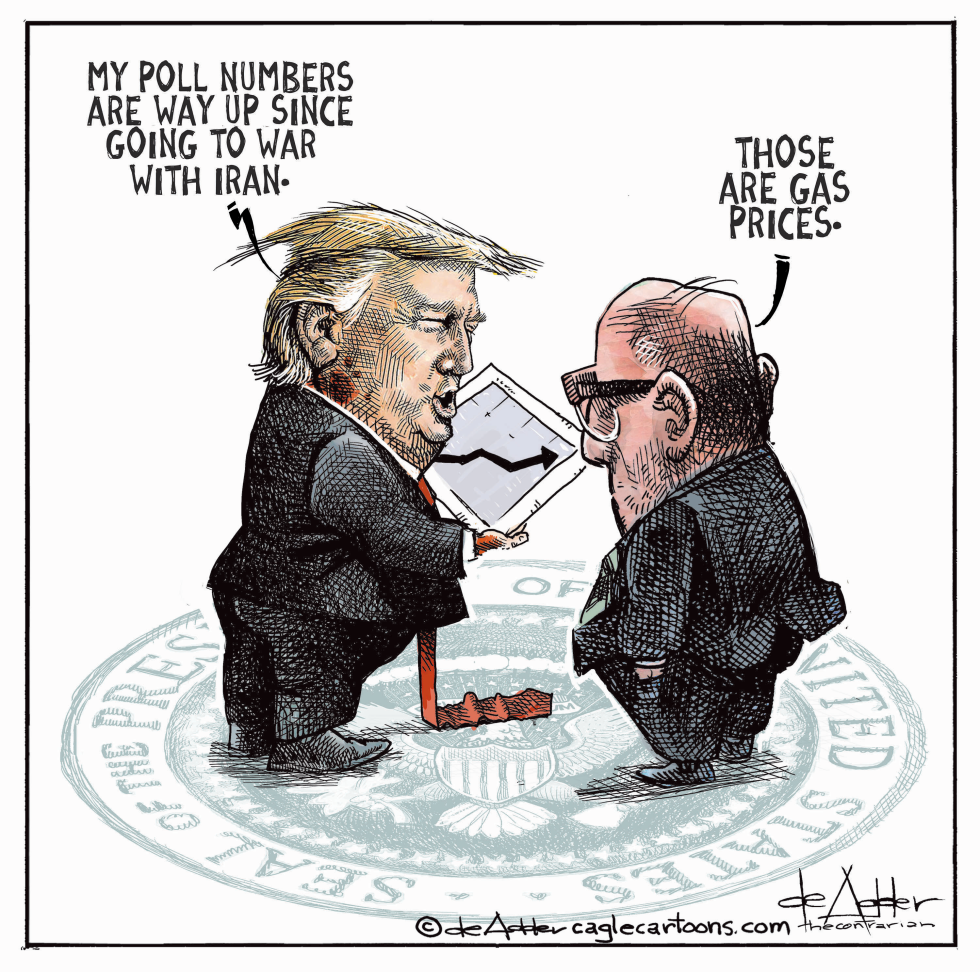
This sharp political cartoon by Michael de Adder captures Donald Trump triumphantly holding a chart of upward trends, claiming his poll numbers have skyrocketed since going to war with Iran. However, a bespectacled Dick Cheney corrects him, revealing those are actually gas prices soaring. The satire highlights the ironic consequences of Middle East conflict on the US economy, blending humor with commentary on presidential approval ratings tied to foreign policy blunders. Incorporating elements of US politics, oil prices, and war economy, the image stands on the presidential seal, emphasizing official folly. It's a witty jab at how leaders might misread economic fallout as personal gains, perfect for editorial discussions on satire and current events.
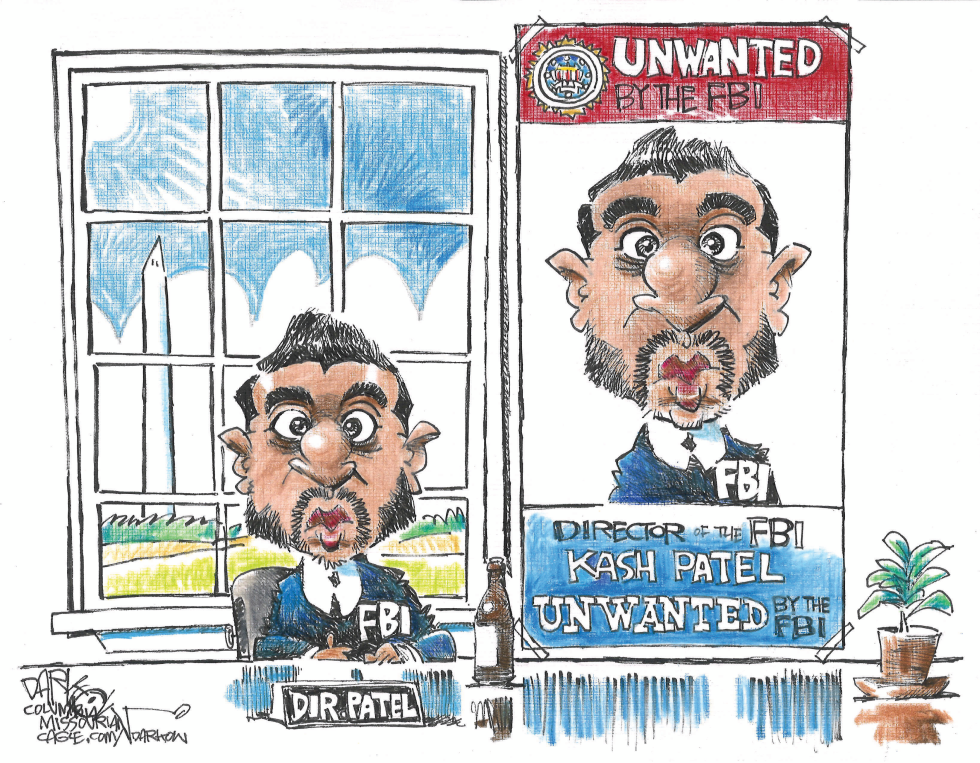
John Darkow's cartoon shows a caricature of Kash Patel seated at a desk marked 'Dir. Patel' with FBI insignia, gazing out a window toward the Washington Monument. Next to him hangs a poster declaring 'UNWANTED BY THE FBI' featuring his exaggerated portrait and the label 'DIRECTOR OF THE FBI KASH PATEL UNWANTED BY THE FBI.' A bottle and a potted plant sit on the desk, emphasizing a scene of ironic isolation. The artwork critiques themes like Kash Patel, FBI director, use of official plane, Epstein files, botched investigations, taxpayer dime, and joyriding through stark visual irony. This piece captures the tension of an appointee rejected by his own agency in a straightforward satirical style.
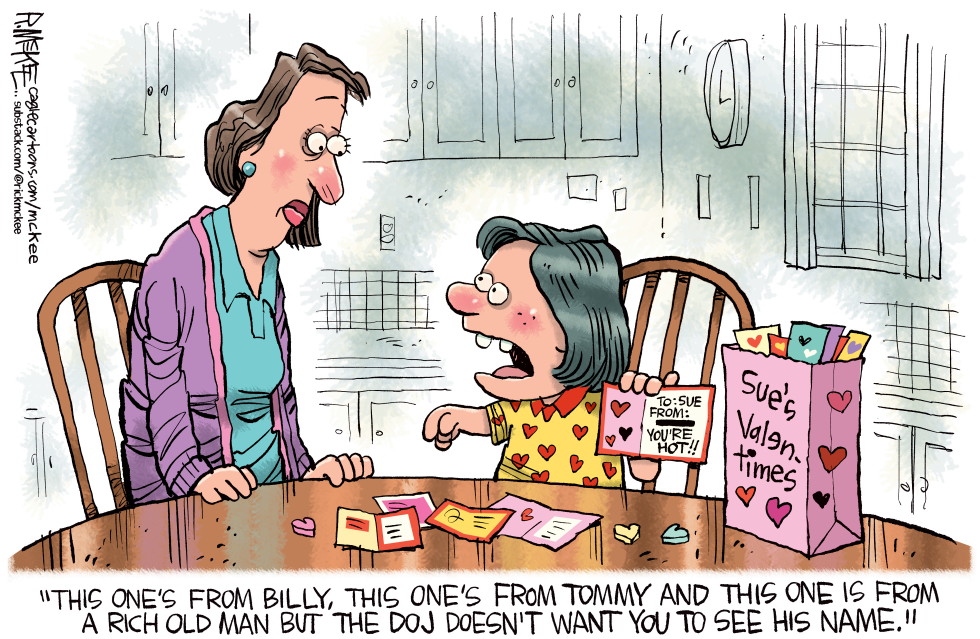
Rick McKee's cartoon captures a domestic scene where a young girl excitedly lists her Valentines from Billy, Tommy, and a rich old man whose name the DOJ conceals, tying into tags like Epstein, Trump, Bondi, DOJ, Kash Patel, FBI. The image, set in a kitchen with cards and a pink bag labeled 'Sue's Valen Times,' uses humor to poke at ongoing scandals in criminal justice and domestic policy. Hearts and exclamations add a light touch to the heavy undertones of secrecy in GOP and Republicans circles, even touching on stocks and economy implications. This piece blends holiday cheer with pointed satire on hidden truths.
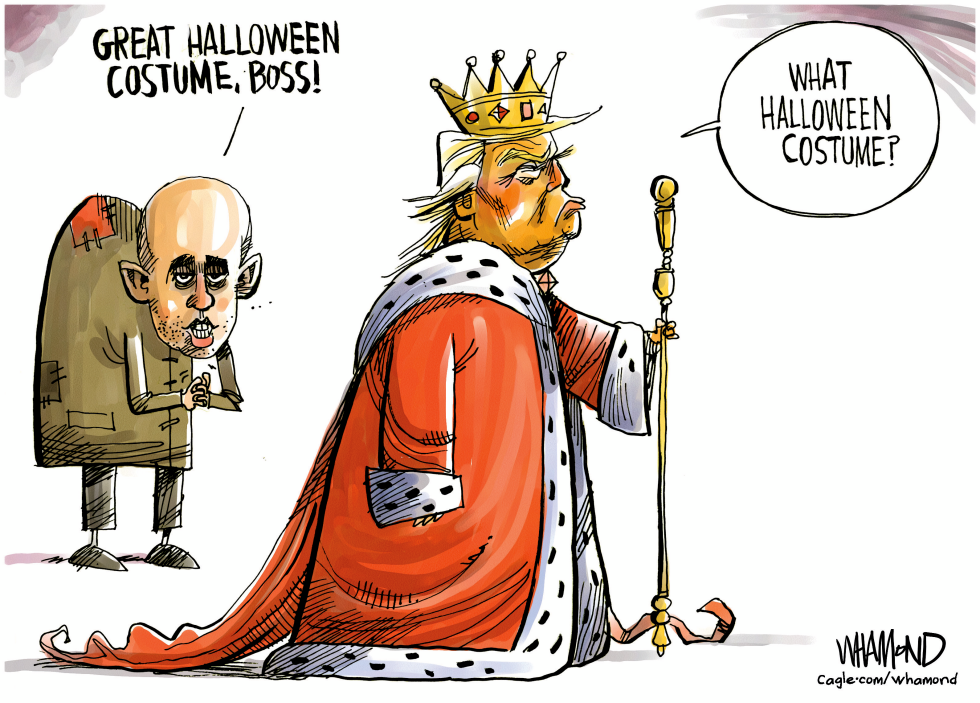
Dave Whamond's cartoon titled 'The Man who would be king' captures a caricatured Donald Trump donned in regal themes, complete with crown and red robe, wielding a scepter. A subservient, bald figure with pointy ears bows and praises the 'Great Halloween Costume, Boss!' while Trump retorts 'What Halloween Costume?' The image tags highlight themes of No Kings, Trump wants kinglike powers, and concerns over constitution and democracy. It satirizes ideas of president transitioning government into a monarchy, with elements of shutdown, taking control, and totalitarian state. The humor lies in Trump playing dress up yet denying it's a costume, symbolizing real aspirations for kinglike authority.
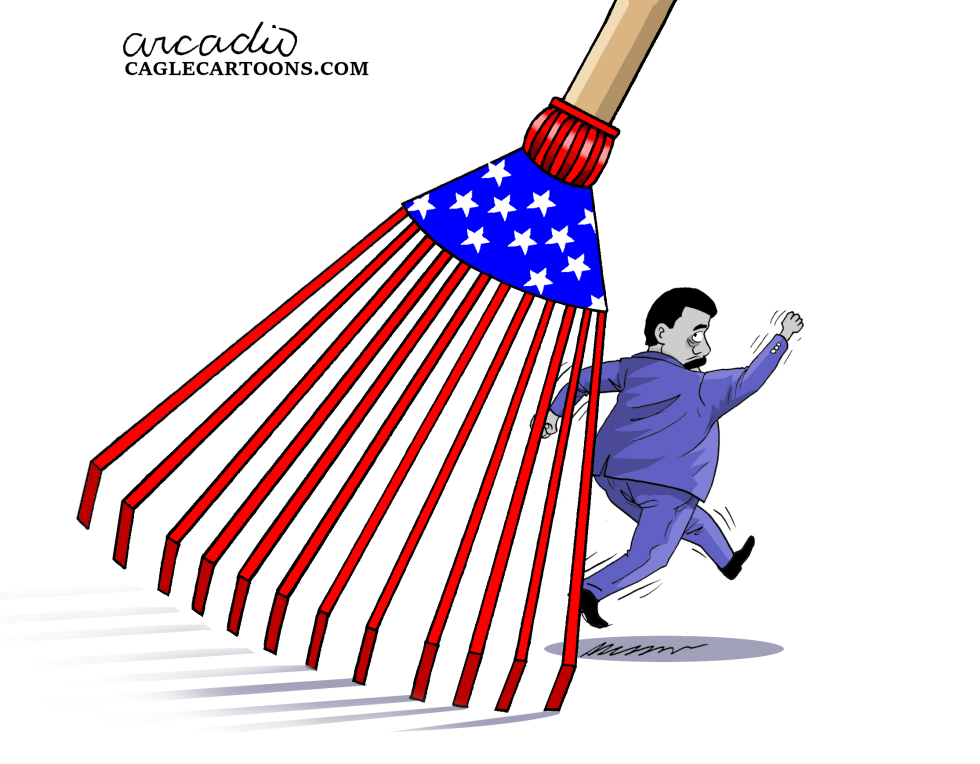
Arcadio Esquivel's cartoon shows a giant rake with the US flag's blue stars and red stripes bearing down on a portly man in a suit, running away with a cry of 'HELP!' The image ties into tags like Trump, Venezuela, Maduro, narcodictator, drugs, and cartels, illustrating America's aggressive stance against the Venezuelan leader accused of narco ties. Such visuals often highlight the ongoing tensions, with the US depicted as an unrelenting force sweeping in. Cartoons like this thrive on simple metaphors, here using a rake to suggest raking over or pursuing Maduro relentlessly. The dry humor lies in the absurdity of the oversized tool chasing a fleeing figure, a nod to real-world indictments and sanctions. Syndicated through Cagle Cartoons, it fits the mold of international commentary that's sharable and pointed.
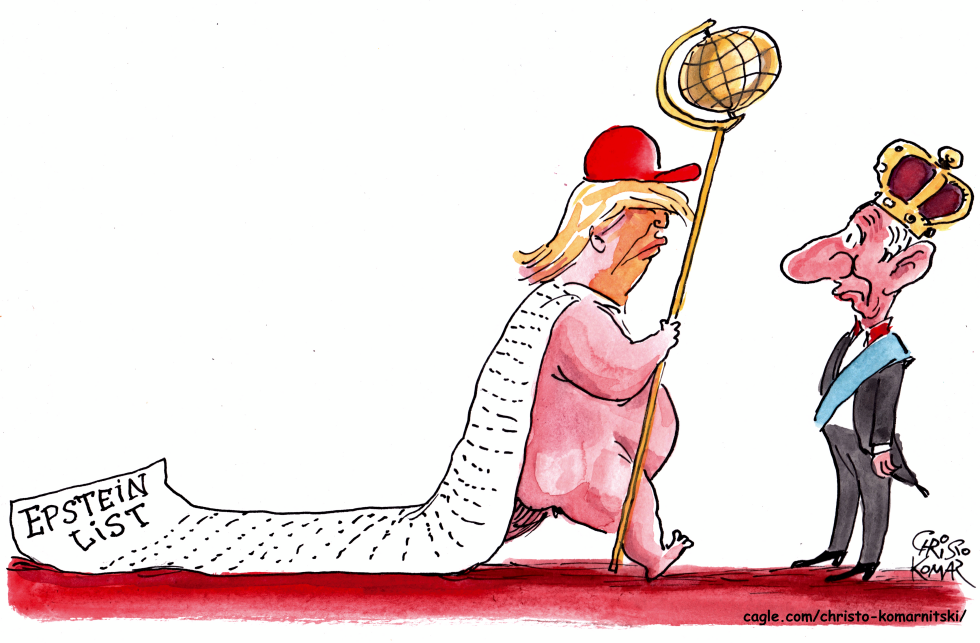
Christo Komarnitski's cartoon captures Trump in a vulnerable, naked state, wearing only a red cap and holding a staff topped with a globe, symbolizing perhaps world domination ambitions. He drags a long train labeled 'Epstein list,' tying into scandals from Epstein connections. Facing him is King Charles III, depicted in formal attire with a crown, during what metadata calls a Trump UK visit. The tags like USA, UK, royal, crown highlight the diplomatic yet satirical encounter. Dry humor shines through the exaggerated features and absurd situation, poking at political figures' baggage. This piece fits political cartoon traditions, blending current events with visual wit.
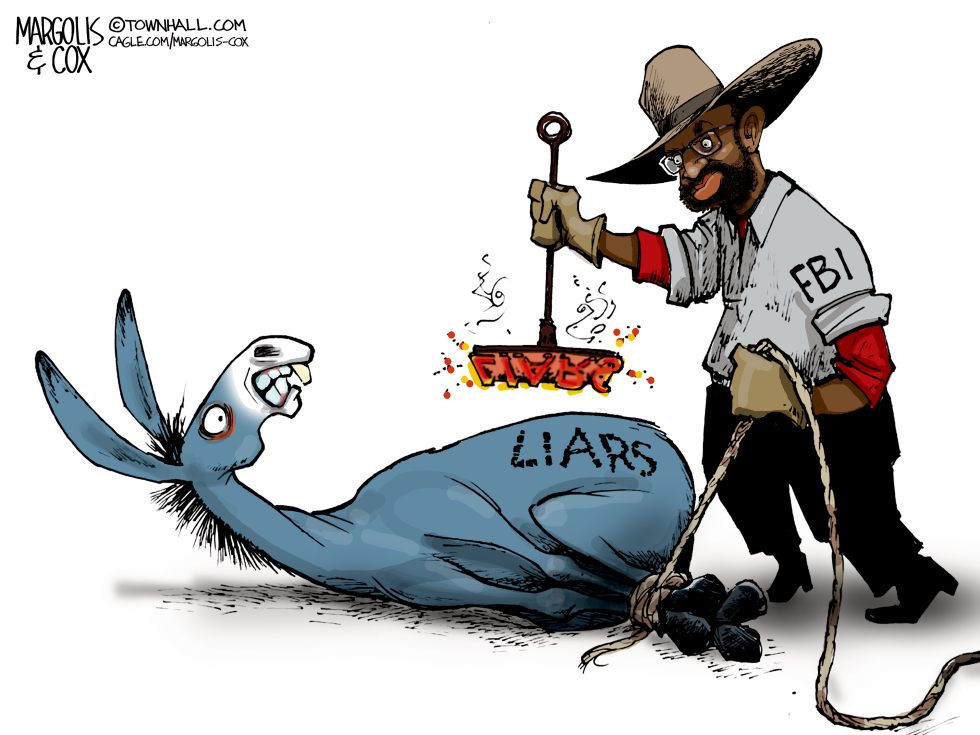
This political cartoon by Margolis & Cox depicts a bearded man wearing an FBI shirt and large hat, wielding a hot branding iron to mark a blue donkey with 'LIARS.' The donkey, symbolizing Democrats, lies on the ground tied with a rope, grimacing in pain as sparks fly from the brand. Smoke rises from the contact point, emphasizing the heated accusation. Dated 2025, the artwork critiques political deception through bold imagery. Tags like Kash Patel FBI, Democrats liars, political satire, branding iron cartoon, Democratic donkey, and conservative humor underscore its pointed message on partisan conflict.
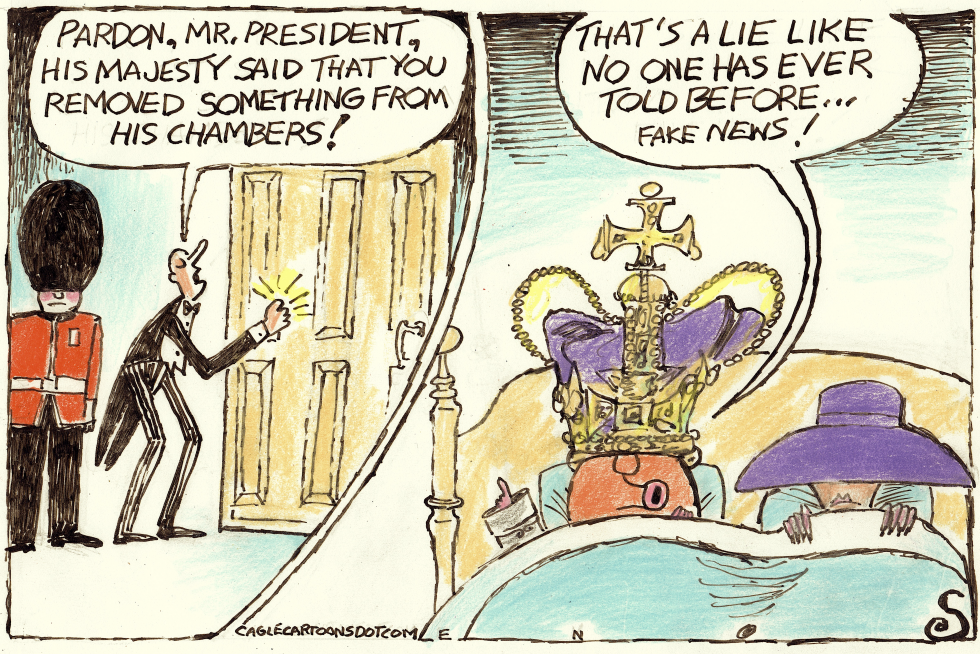
Randall Enos captures Donald Trump in a state visit to England, caricatured as King Trump lounging in bed with Melania, donning a massive crown while dismissing a servant's accusation of removing something from King Charles' chambers as 'fake news.' The cartoon cleverly merges Trump's signature phrases with royal pomp, highlighting the absurdity of his denials in a foreign, majestic context. Tags like state visit, King Charles, and fake news underscore the humor in blending American politics with British monarchy, making it a sharp commentary on Trump's larger-than-life persona.