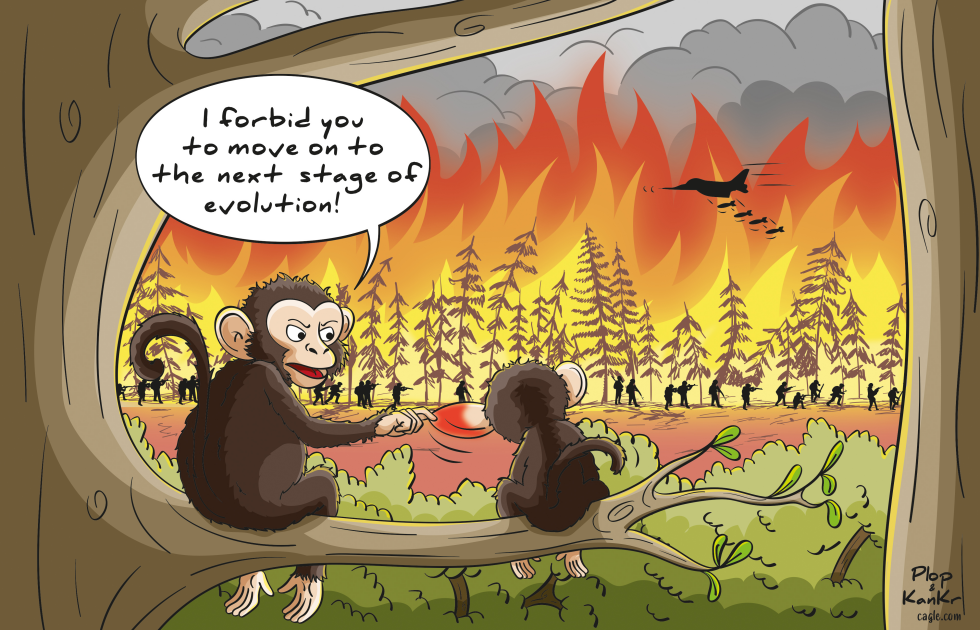
The cartoon published on September 7, 2026, shows two monkeys on a tree branch overlooking a forest fire. One monkey holds a red object and declares it forbids the next stage of evolution. In the background, soldiers stand in formation and a fighter jet flies overhead. The image responds to ongoing themes of war disrupting societal and human development. It uses the monkeys to represent humanity stalled by violence and destruction rather than advancing.
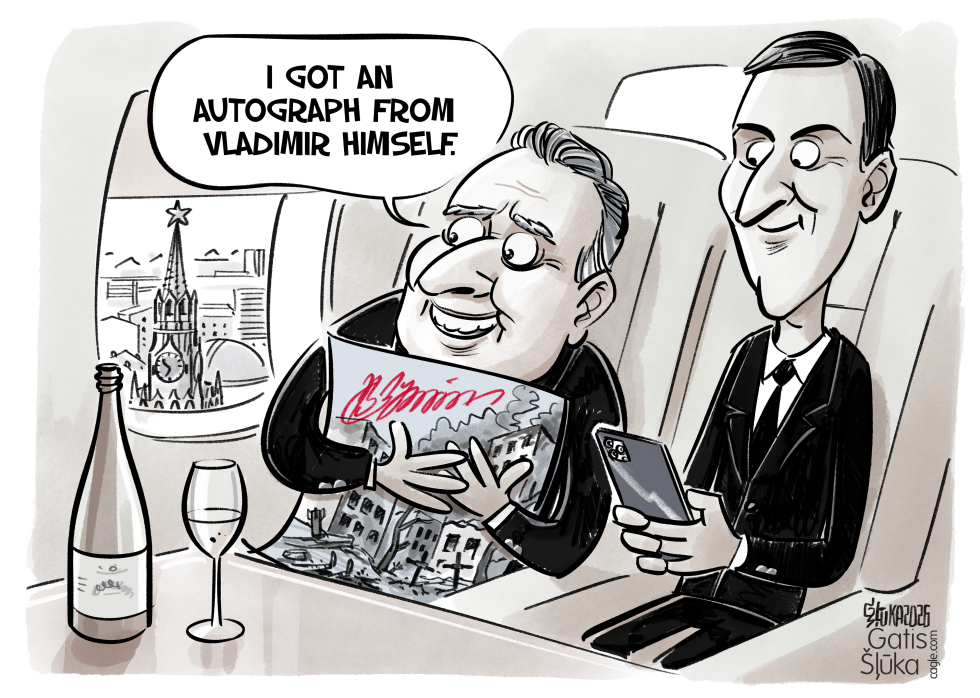
The cartoon depicts a politician on an airplane excitedly showing a colleague an autograph from Vladimir Putin on a book or document. The speech bubble reads that the autograph came from Vladimir himself. A bottle of wine and glass sit on the table, with a view of a city featuring a star-topped tower outside the window. The second man smiles while holding a phone. Published on September 7, 2026, the image comments on political figures maintaining or displaying ties to Russia despite international strains. The visual emphasizes the politician's enthusiasm for the souvenir as a point of pride.
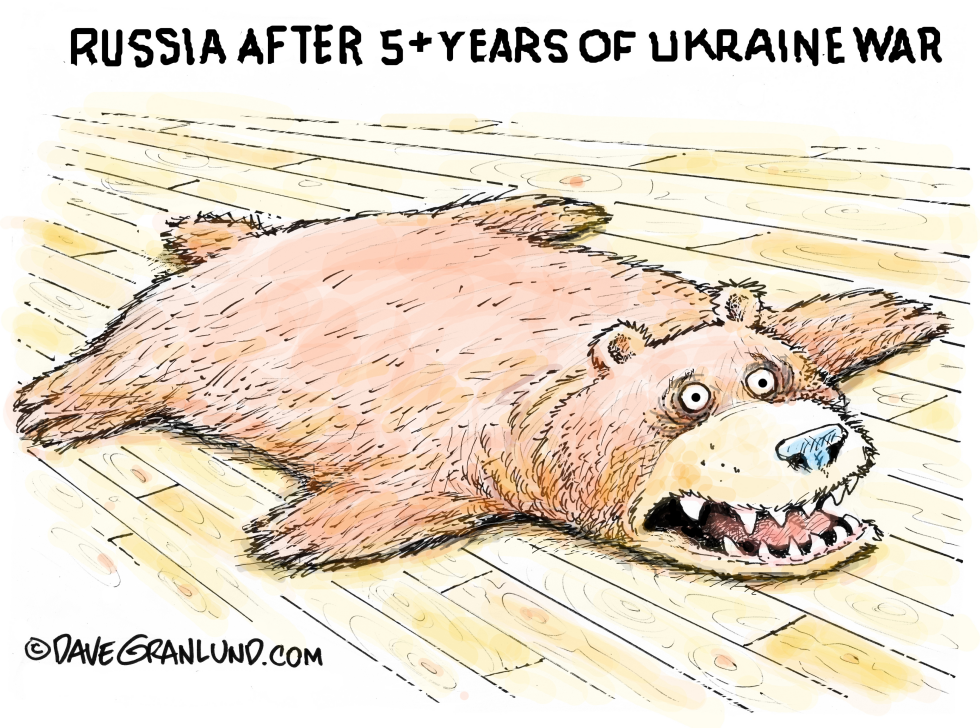
The cartoon depicts Russia as a large brown bear sprawled on a wooden floor, its eyes wide and mouth open in a weary expression. The title directly references the ongoing Ukraine war after five years. This visual metaphor illustrates the strain on Russia from the prolonged conflict. The drawing responds to the extended nature of the war that began in 2022 and continued into 2026. It highlights how the invasion has left Russia in a weakened state without resolving the underlying issues.
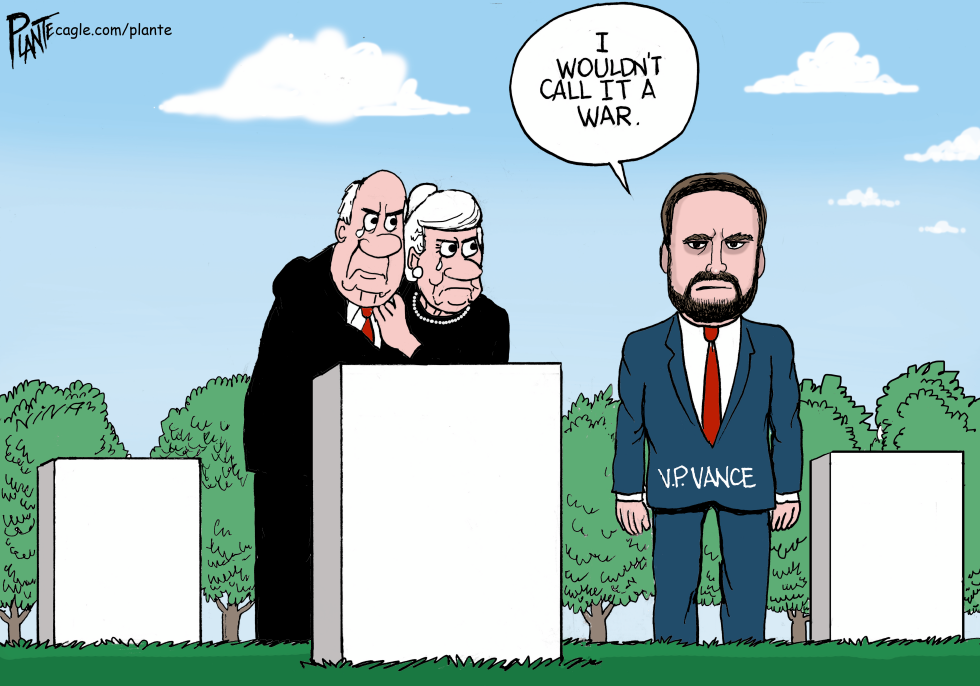
Vice President JD Vance has publicly stated that the United States is not at war with Iran even as reports indicate American casualties in the region. The administration frames operations as limited strikes rather than full conflict. This downplaying occurs amid broader tensions over Iran's nuclear program and regional influence. The cartoon argues that the human cost in the cemetery makes the denial untenable and that the situation qualifies as war.
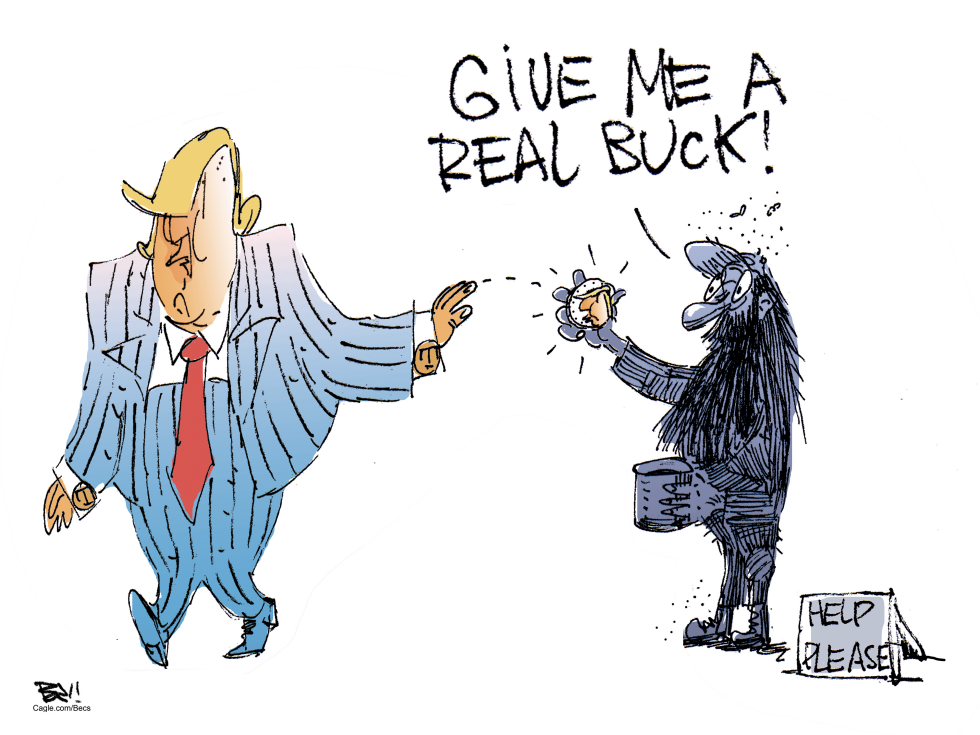
Donald Trump promotes a dollar bearing his image as a symbol of economic strength. The move draws immediate public pushback questioning its actual worth. Critics argue the branding fails to address underlying fiscal challenges. The cartoon frames the dollar as an unconvincing substitute that fails to satisfy basic needs for credible value.
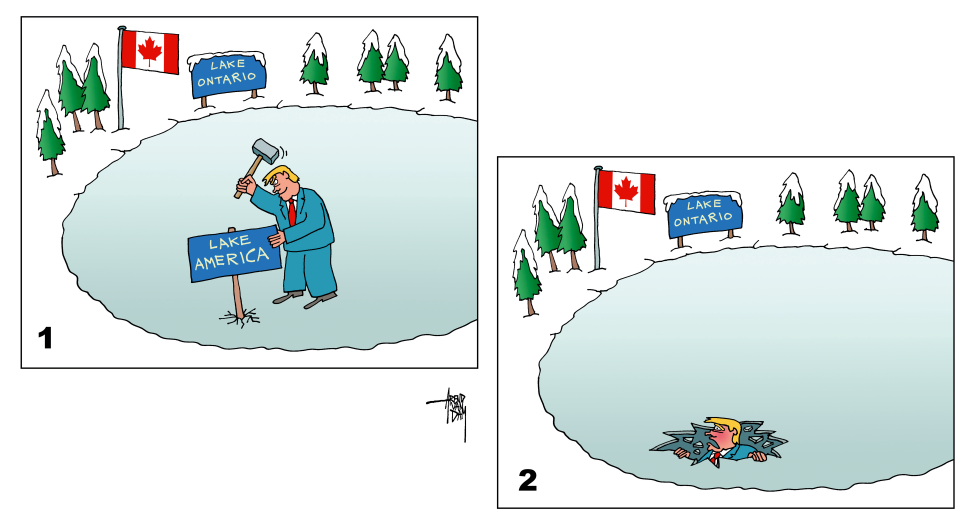
Donald Trump directed an aide to plant a Lake America sign on the frozen surface of Lake Ontario in a symbolic claim on Canadian waters. The move was part of ongoing US-Canada friction over shared resources and border definitions. The ice broke, sending the figure through the surface. The episode underscores the practical limits of unilateral US assertions against a close neighbor whose cooperation remains essential on trade, security, and environmental issues. The cartoon presents the effort as self-defeating and poorly timed.
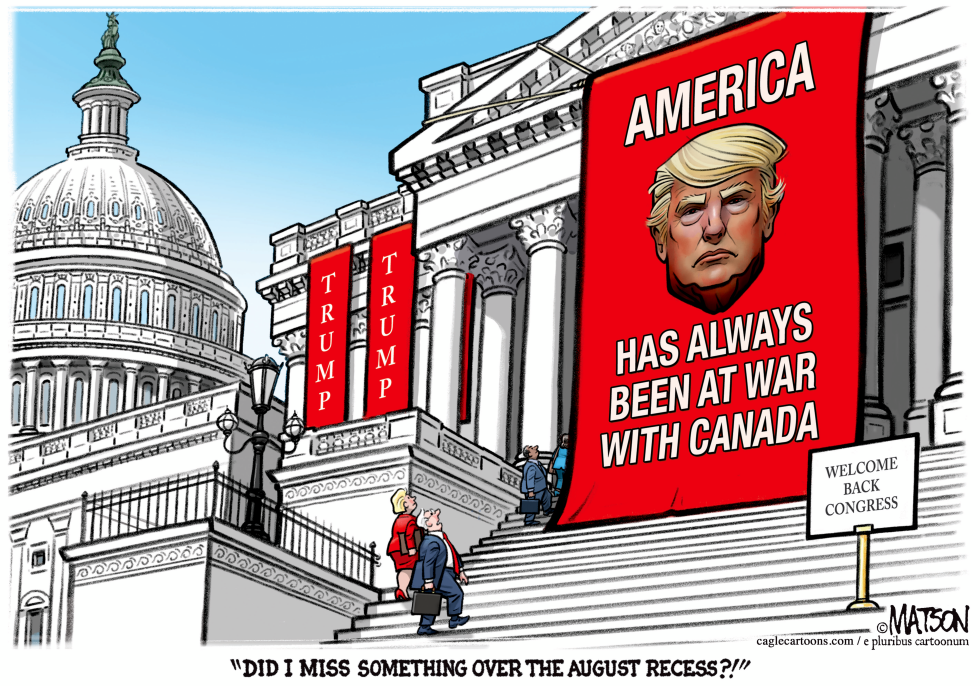
President Trump has intensified trade measures against Canada, prompting comparisons to classic dystopian rhetoric as lawmakers reconvene after the August recess. The move revives long-standing bilateral tensions over tariffs and economic policy. The cartoon frames the development as an attempt to normalize conflict through repeated messaging, underscoring concerns that familiar disputes are being recast as perpetual struggle.
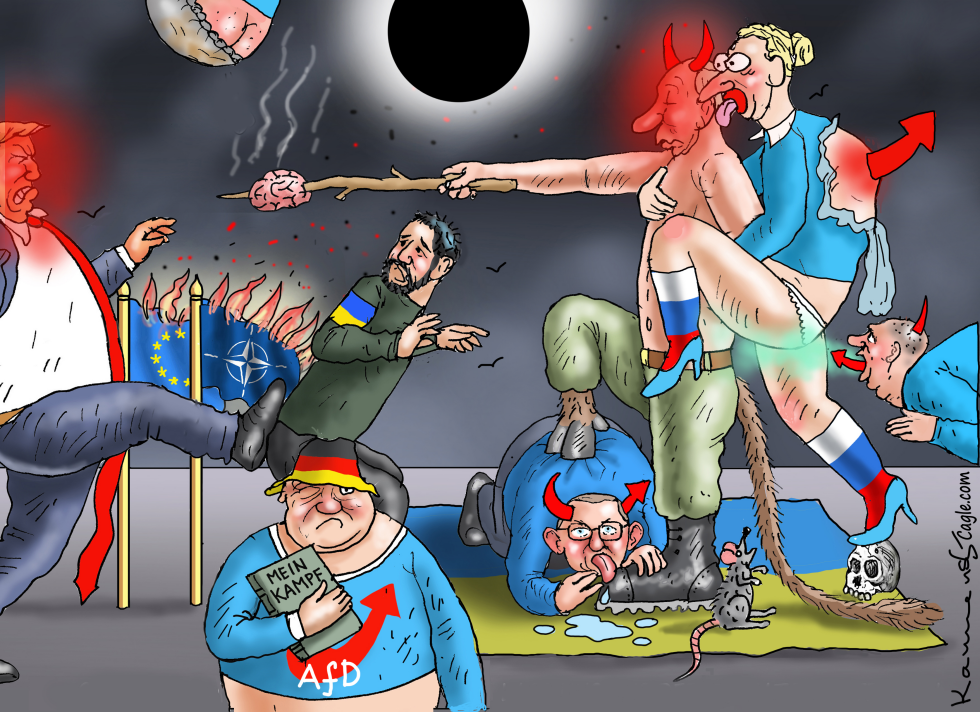
Russian President Vladimir Putin and former President Donald Trump are shown aiding Germany's AfD party in the run-up to elections. The piece argues that external interference from these figures is boosting the far-right German party while harming domestic U.S. political elements.
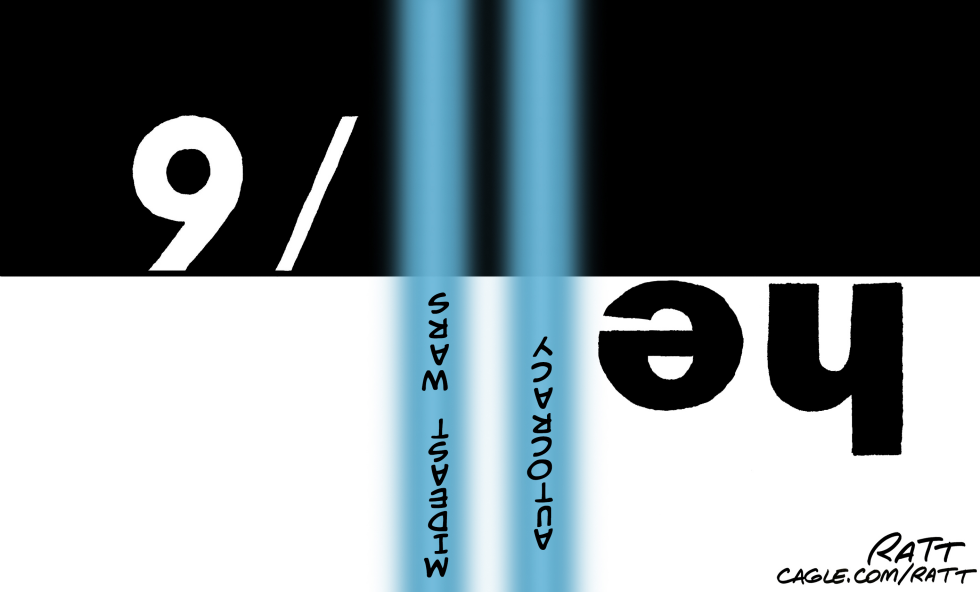
September 11 anniversary observances in 2026 coincide with ongoing debates over the long-term costs of U.S. and European involvement in Middle East conflicts that followed the attacks. The piece underscores how far removed current realities remain from the original site and moment of the 2001 attacks.
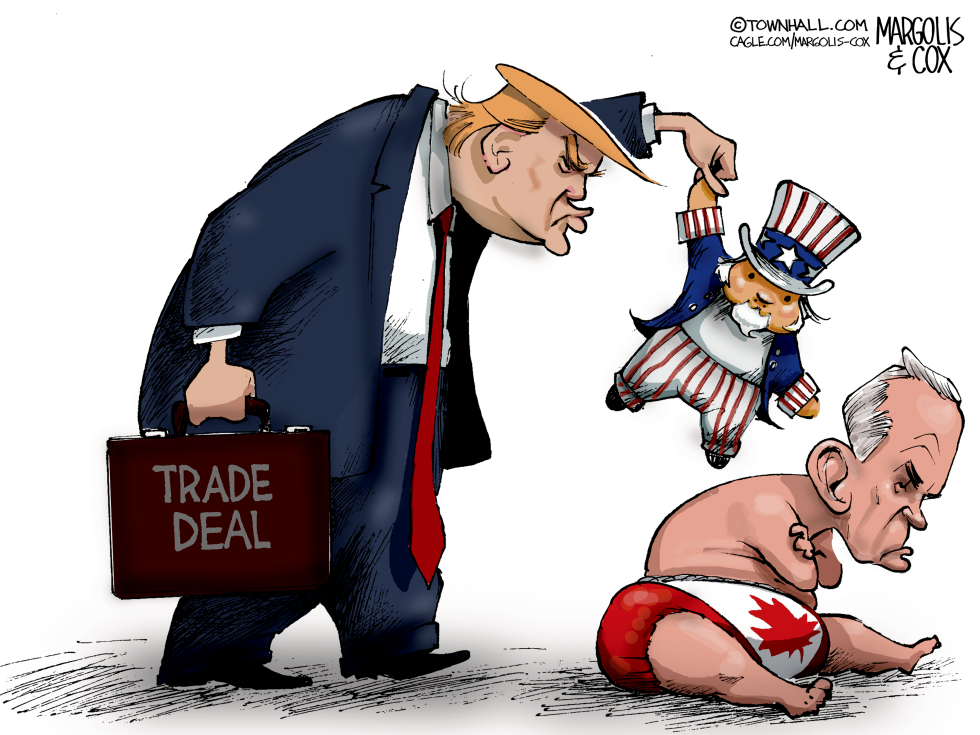
Donald Trump holds a briefcase labeled trade deal while dangling an Uncle Sam puppet above a baby figure wearing a Canadian flag diaper, identified as Mark Carney. The September 2026 cartoon responds to ongoing US-Canada trade tensions under the Trump administration. Carney, a prominent Canadian figure eyed for leadership, faces portrayal as vulnerable in negotiations. The piece argues that Trump exerts direct control over Canadian interests through economic leverage rather than equal partnership.
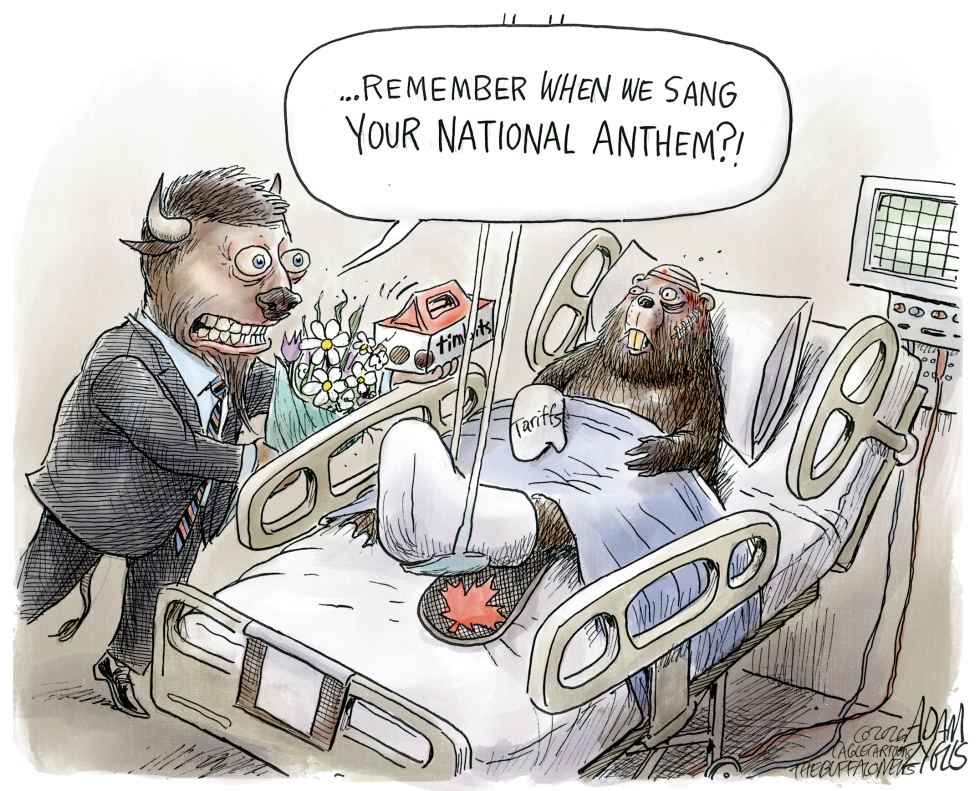
The cartoon depicts a suited bull figure at the bedside of an injured beaver wearing a hospital gown labeled Tariffs. The beaver lies in a hospital bed with a maple leaf emblem visible. A speech bubble from the bull references singing the national anthem. Medical equipment and a Tim Hortons box appear in the room. The image addresses ongoing tariff policies affecting US Canada trade relations as of the September 2026 publication date. The visual metaphor highlights economic harm to the Canadian side of the partnership while recalling past cooperative gestures between the two nations.
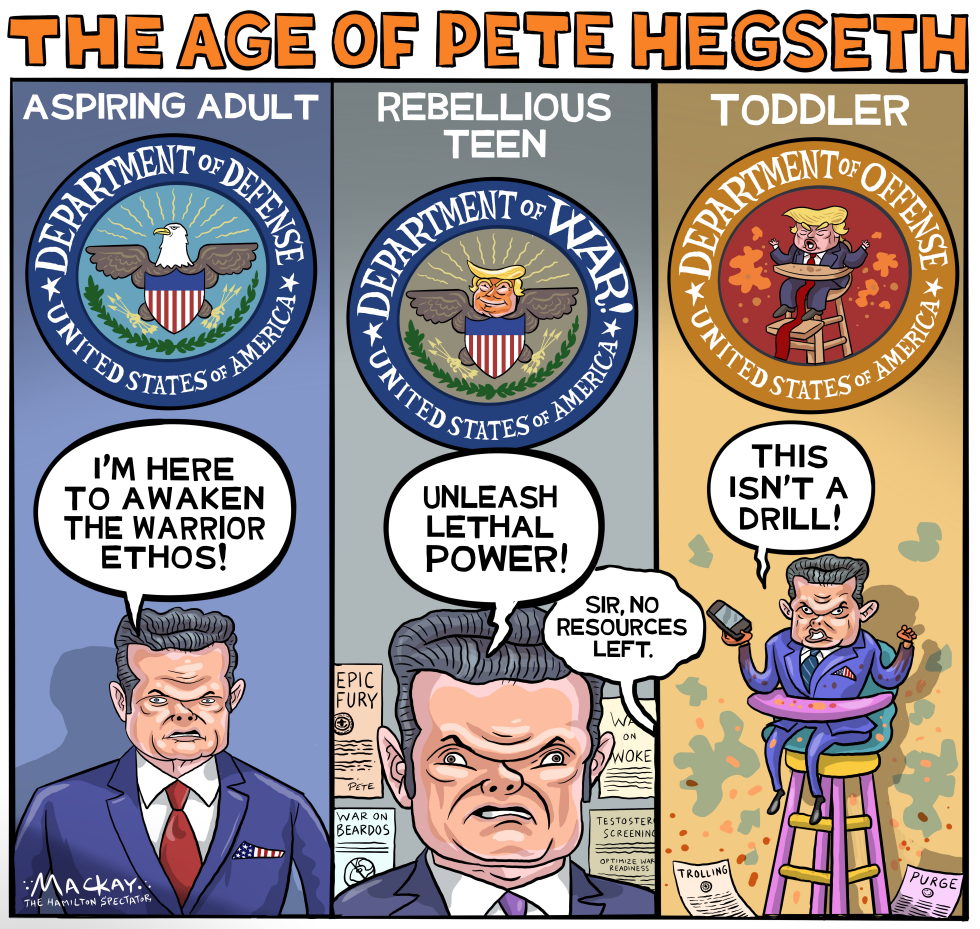
The cartoon by Graeme MacKay portrays Pete Hegseth's progression through three stages at the Pentagon under President Trump. In the first panel Hegseth pledges to awaken the warrior ethos at the Department of Defense. The middle panel shows him calling to unleash lethal power while an aide reports no resources remain. The final panel depicts a toddler Trump at the Department of Offense with Hegseth as a frantic aide amid papers about testosterone screening and purges. The work comments on the Trump administration's approach to military leadership and policy priorities as of September 2026.
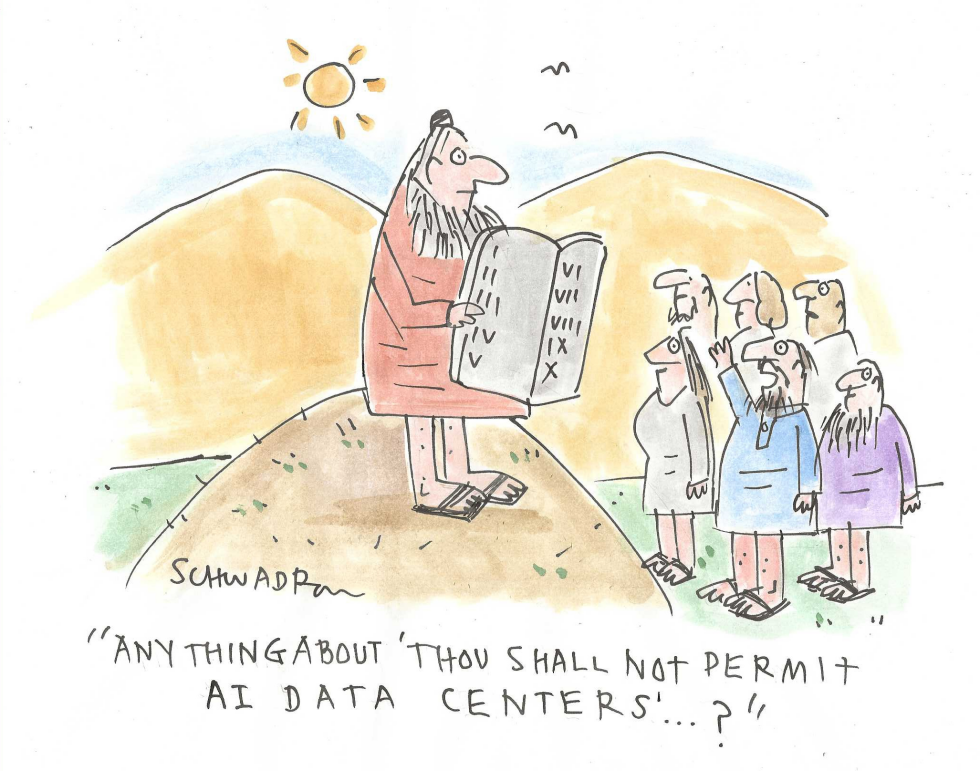
AI data centers face growing regulatory scrutiny over energy use and land impact in 2026. Lawmakers weigh new permitting standards as facilities expand rapidly. The cartoon uses the Moses figure to highlight the absence of explicit restrictions in foundational rules. It suggests modern governance struggles to apply old frameworks to new infrastructure demands. The editorial stance favors clearer limits on data center approvals.
The Alternative for Germany party faces renewed criticism for its associations with international far-right figures including Donald Trump and apparent sympathy toward Vladimir Putin amid the Russia-Ukraine conflict. The cartoon portrays AfD embracing these influences while rejecting NATO and EU structures. It argues that such alignments expose the party's extremist leanings and undermine Germany's democratic commitments.
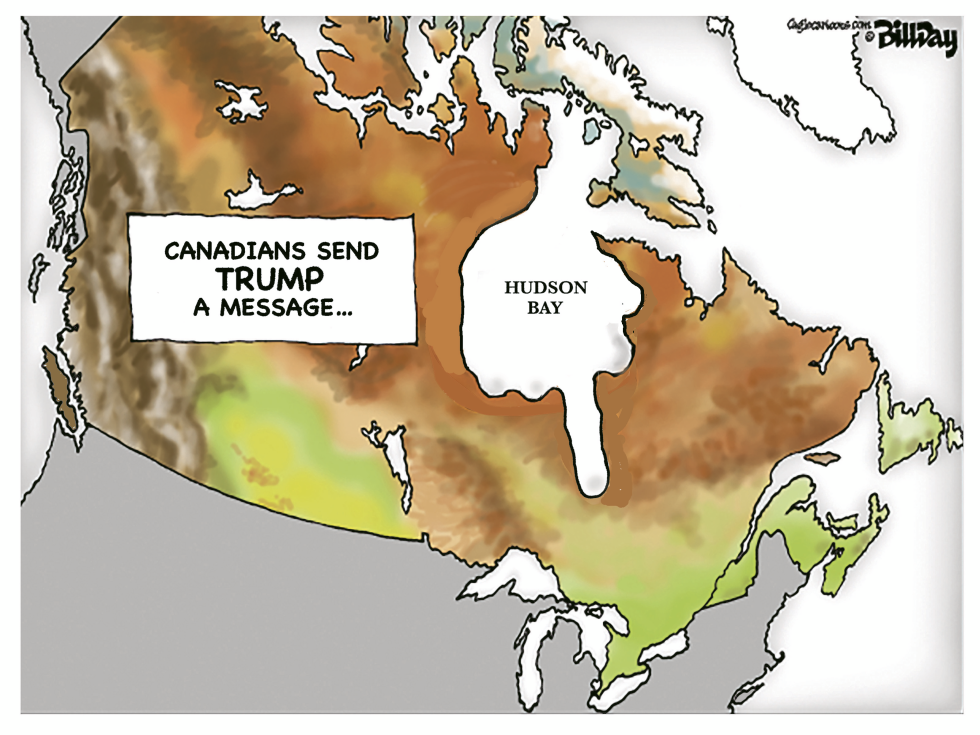
On September 3 2026 Canadians used a map of their country to send a pointed message to President Donald J. Trump. The image highlights Hudson Bay whose shape forms a recognizable rude gesture aimed southward. The editorial points to ongoing tensions in Canada US relations and uses geography as the vehicle for public sentiment. The piece criticizes Trump policies that have strained ties with Canada and portrays the map as a direct rebuke from Canadian citizens.