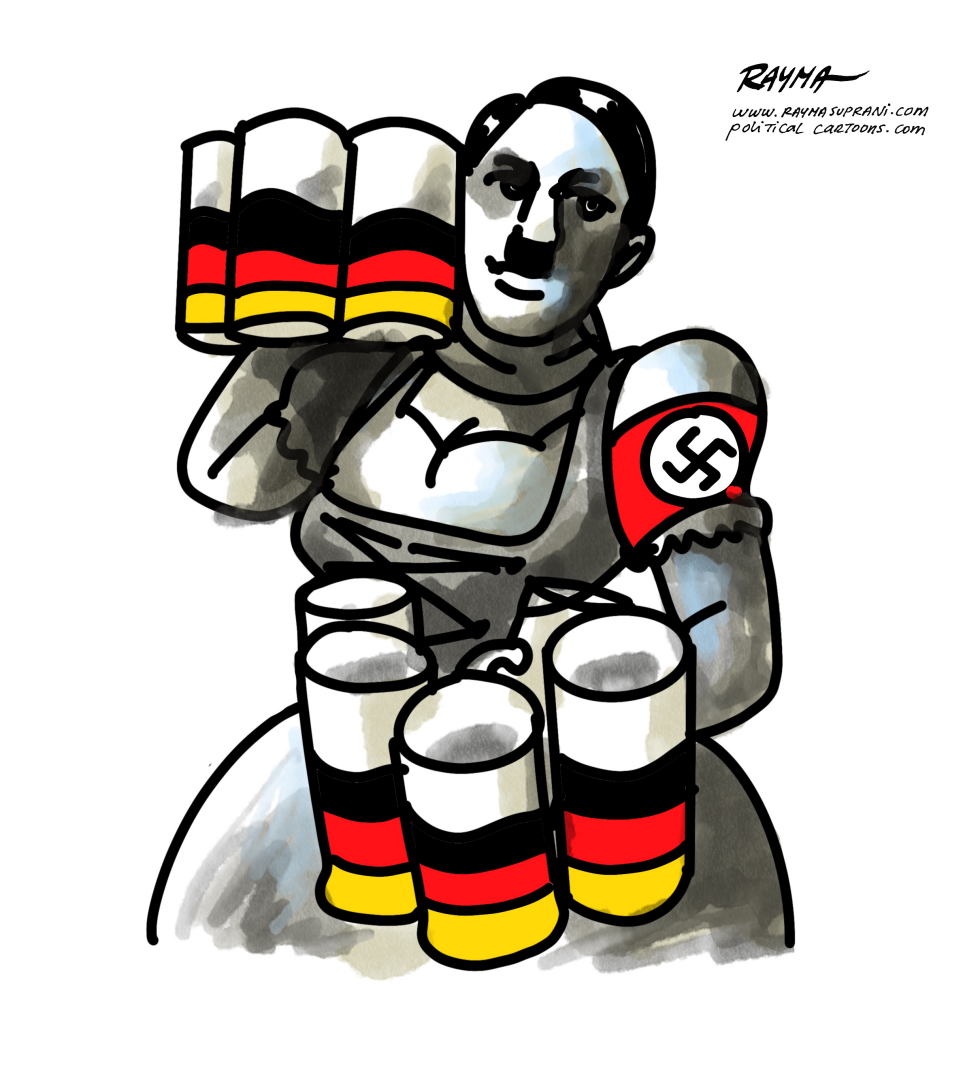
The cartoon depicts a figure resembling Adolf Hitler clad in armor and bearing a swastika armband while surrounded by beer mugs colored like the German flag. It responds to ongoing discussions about far-right movements in Germany by blending historical Nazi references with contemporary beer culture symbols. The work highlights perceived connections between political radicalism and national social customs as of the 2026 publication date. No specific recent event anchors the piece beyond recurring themes of extremism in European politics.
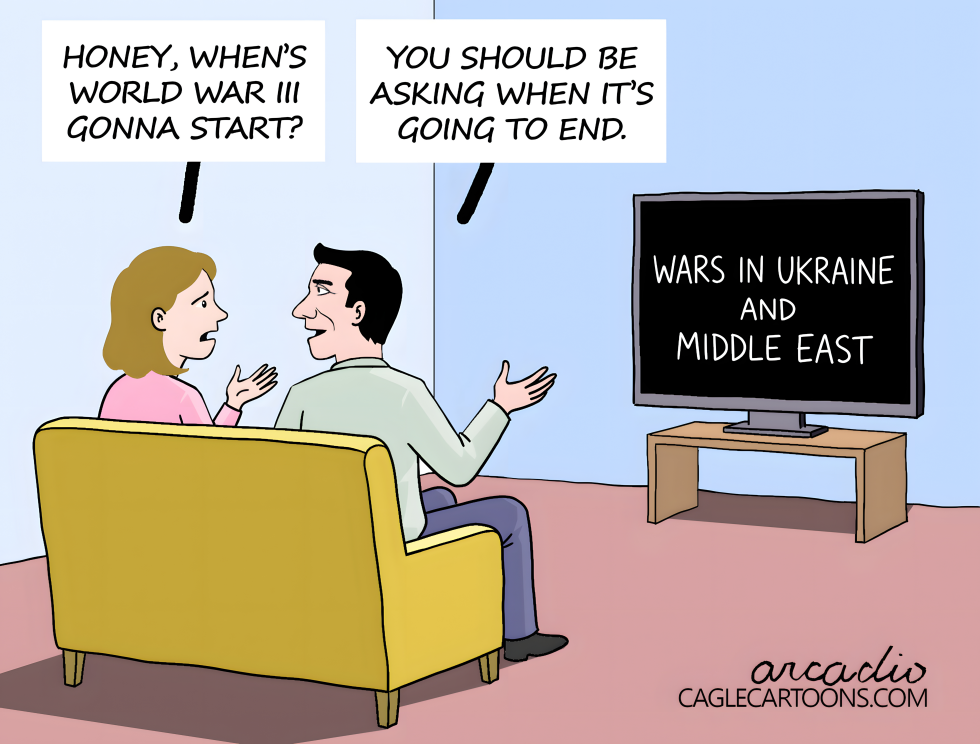
Persistent fighting in Ukraine and the Middle East continues to dominate global attention in September 2026, with no clear end in sight for either theater. The conflicts involve Russia against Ukraine and multiple fronts in the Middle East, raising concerns about wider involvement. Viewers and analysts alike question whether these regional wars risk drawing in additional powers and spiraling into a larger confrontation. The cartoon captures everyday public anxiety over the duration and potential expansion of these wars rather than their origins.
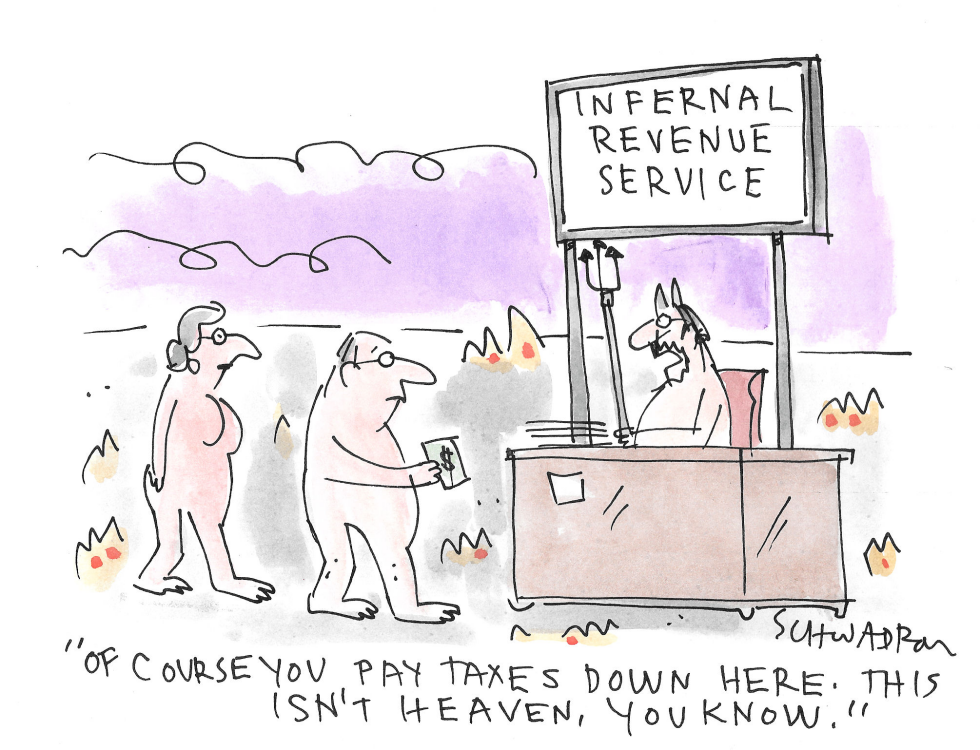
The long-standing adage that only death and taxes are certain receives fresh treatment in a cartoon depicting an IRS outpost operating in hell. No specific policy change or ruling prompted the piece, which instead plays on the enduring public frustration with tax collection as an inescapable force. The editorial stance pokes at bureaucratic persistence, suggesting the tax man follows citizens beyond the grave with the same relentless efficiency seen in life.
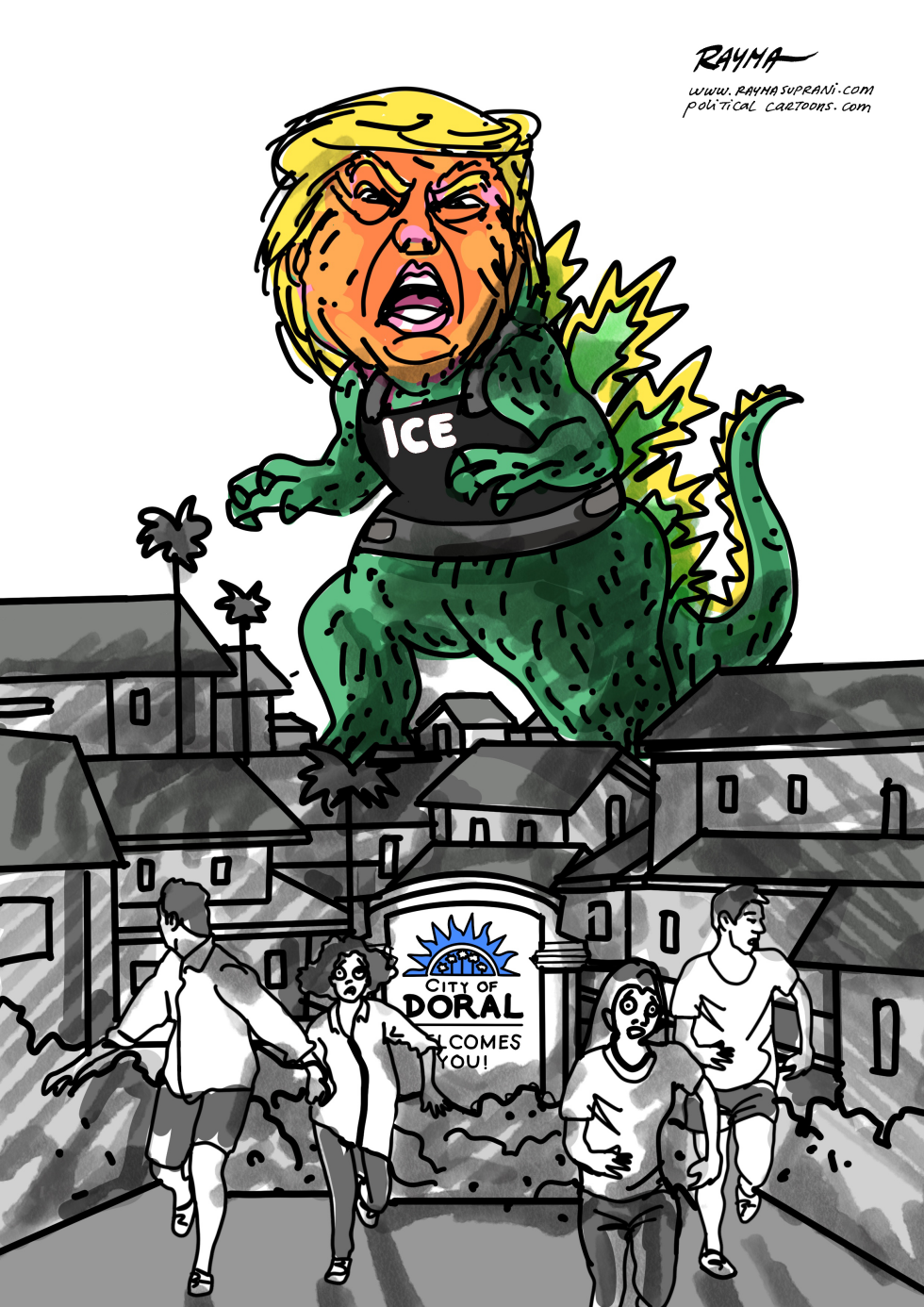
The image shows a large figure resembling Donald Trump dressed as an ICE agent towering over the city of Doral. People run from the scene near a welcome sign. The work addresses immigration enforcement policies active in Florida during 2026.
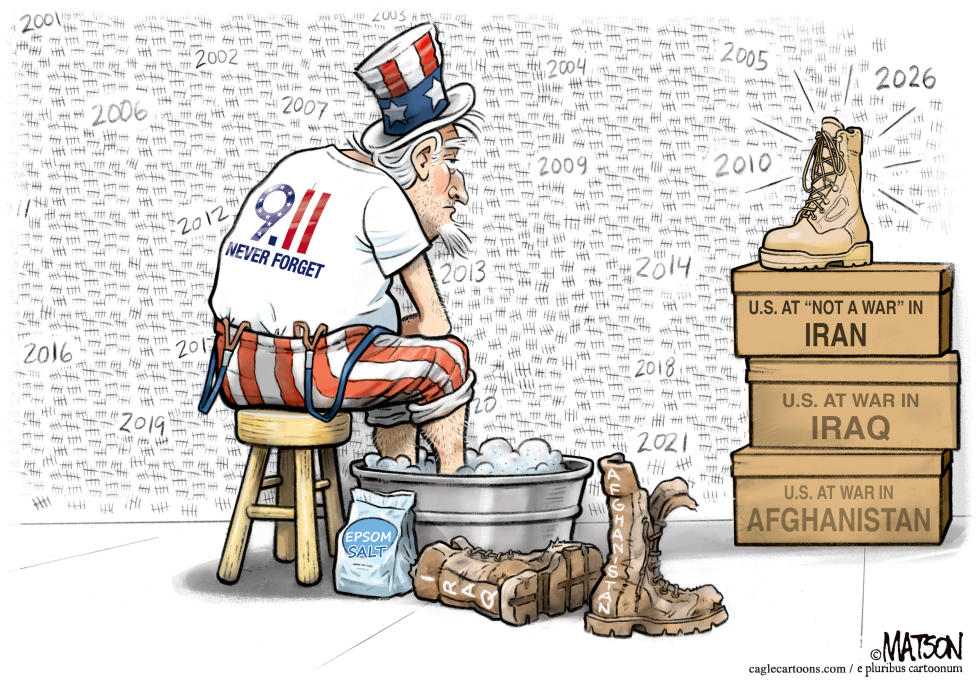
The United States has maintained military involvement across Iraq and Afghanistan for more than two decades following the September 11 attacks. Ongoing regional tensions with Iran now raise the prospect of additional commitments. The cartoon captures public and institutional exhaustion with extended deployments and questions the capacity for another prolonged engagement.
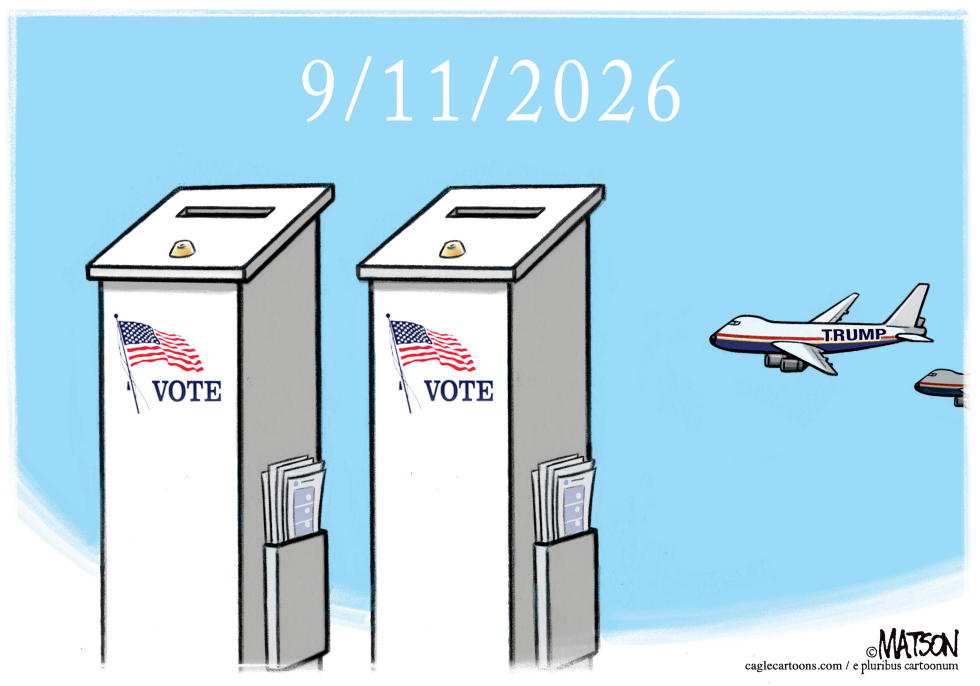
Donald Trump has signaled plans to impose new voting restrictions before the 2026 midterm elections. The moves come as Republicans seek advantages in key races. Critics argue the changes would suppress turnout among Democratic-leaning voters. Supporters claim the steps address fraud concerns. The cartoon frames the timing as an attack on voting access itself.
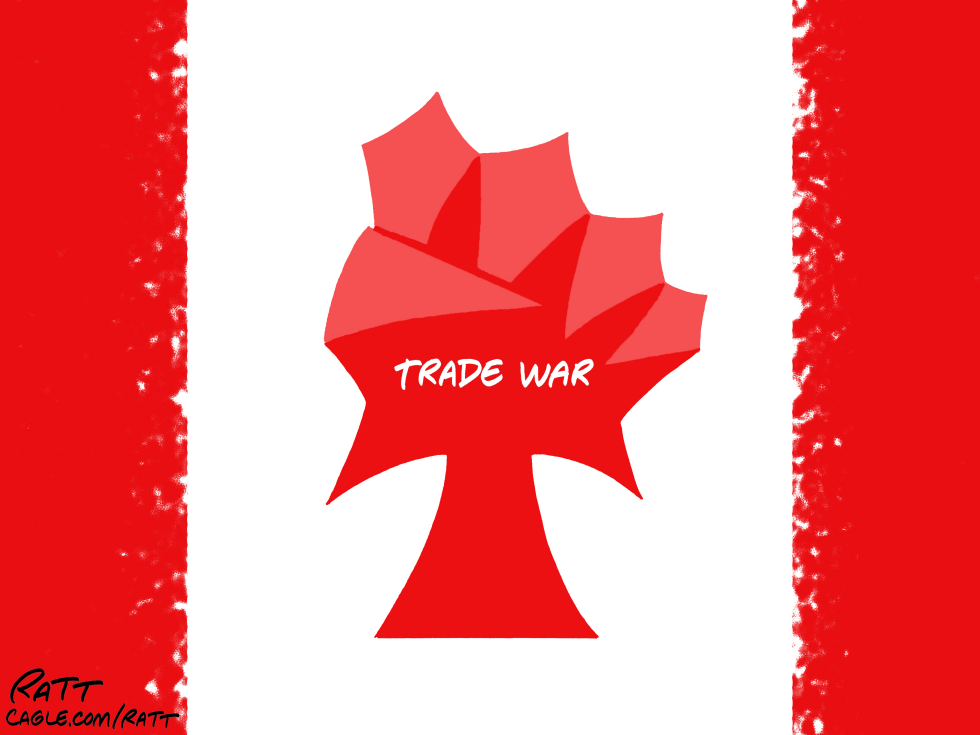
Ongoing US-Canada trade tensions escalated in 2026 with new tariff threats targeting Canadian exports. The dispute threatens key sectors including autos, lumber and agriculture, raising costs for consumers on both sides of the border. Canada has signaled plans to diversify markets and strengthen domestic industry. The cartoon frames the conflict as a direct assault on Canadian sovereignty and economic stability. It portrays the trade war as fracturing national symbols while urging a stronger northern response.
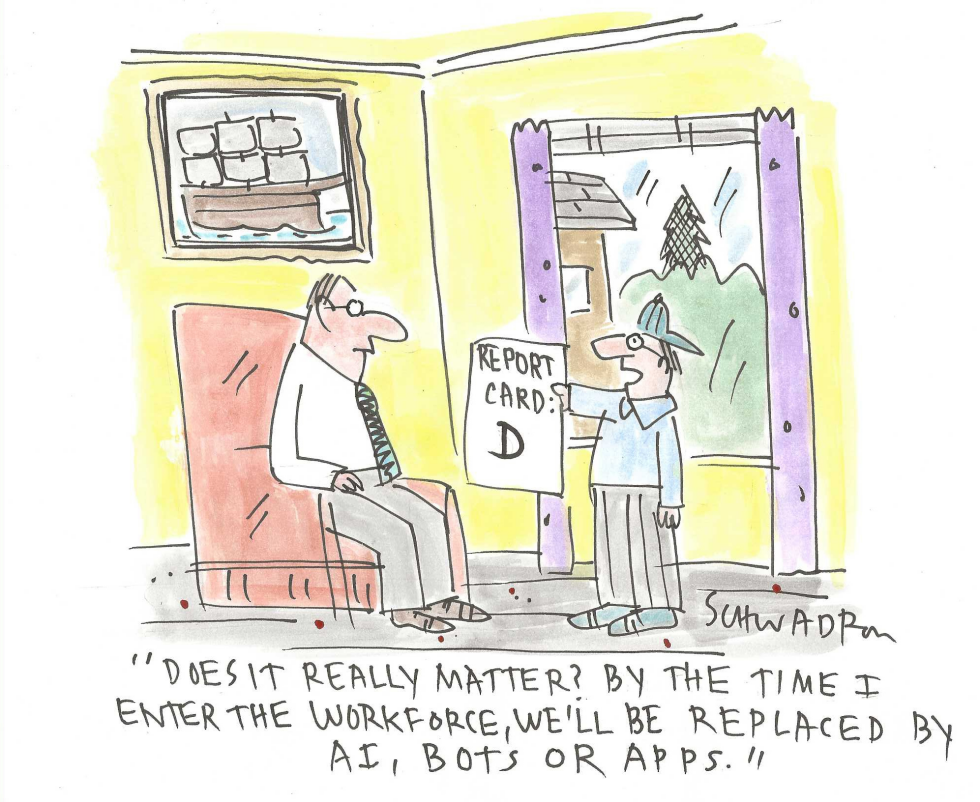
Rising student skepticism about academic effort stems from widespread predictions that AI and automation will eliminate many jobs before today's students graduate. The cartoon responds to this dynamic by showing a student using those forecasts to shrug off a poor grade. It highlights how fears of technological displacement may undermine motivation in schools. The piece suggests such excuses reflect a broader cultural shift where traditional education credentials appear less relevant. The editorial stance questions whether this mindset accelerates the very problems it cites.
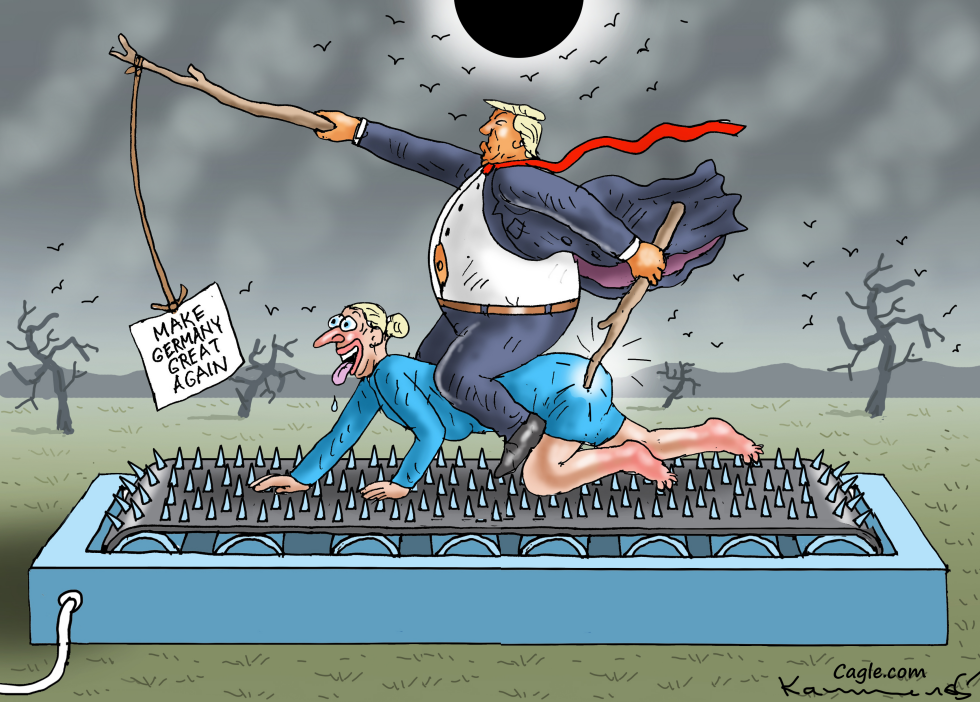
Donald Trump promotes a revival slogan aimed at Germany while Angela Merkel faces the consequences. The effort highlights ongoing tensions in transatlantic relations and questions about external influence on European domestic policy. The piece argues that such interventions impose unnecessary hardship without delivering benefits.
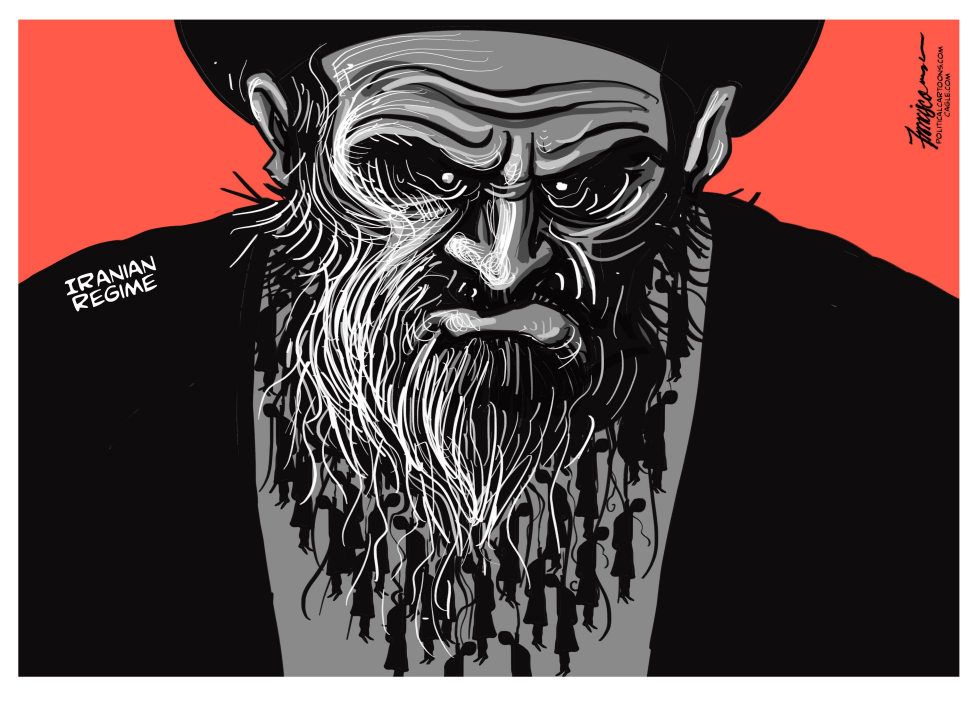
Iran continues to carry out executions at a high rate, targeting protesters, dissidents and minorities under the authority of Supreme Leader Ayatollah Ali Khamenei. The practice has drawn renewed criticism from human rights groups and Western governments concerned about due process and political repression. The cartoon frames the regime itself as the direct agent of these deaths, underscoring the leadership's personal responsibility for the ongoing campaign of hangings.
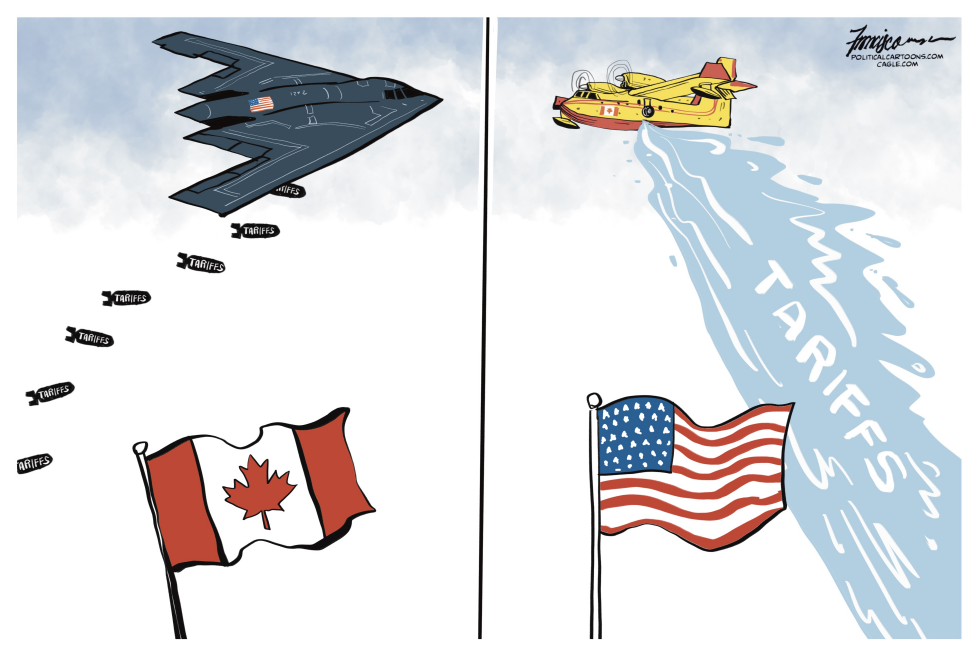
The United States imposed tariffs on Canadian goods, prompting Ottawa to enact matching retaliatory tariffs. The moves risk disrupting integrated supply chains and raising costs for consumers and industries on both sides of the border. The cartoon frames the exchange as mutual escalation with each side deploying tariffs against the other.
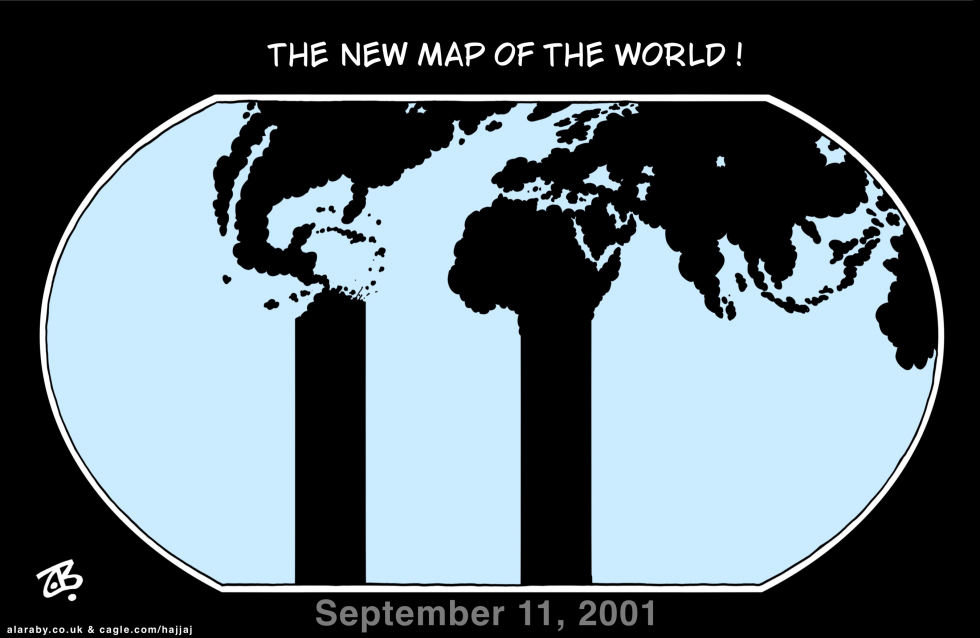
September 11, 2001, attacks on the World Trade Center and Pentagon killed nearly 3,000 people and triggered two decades of wars, surveillance expansions, and realignments in global alliances. The cartoon marks the anniversary by depicting the towers as continents emitting smoke, arguing that the event created an entirely new geopolitical order still felt today.
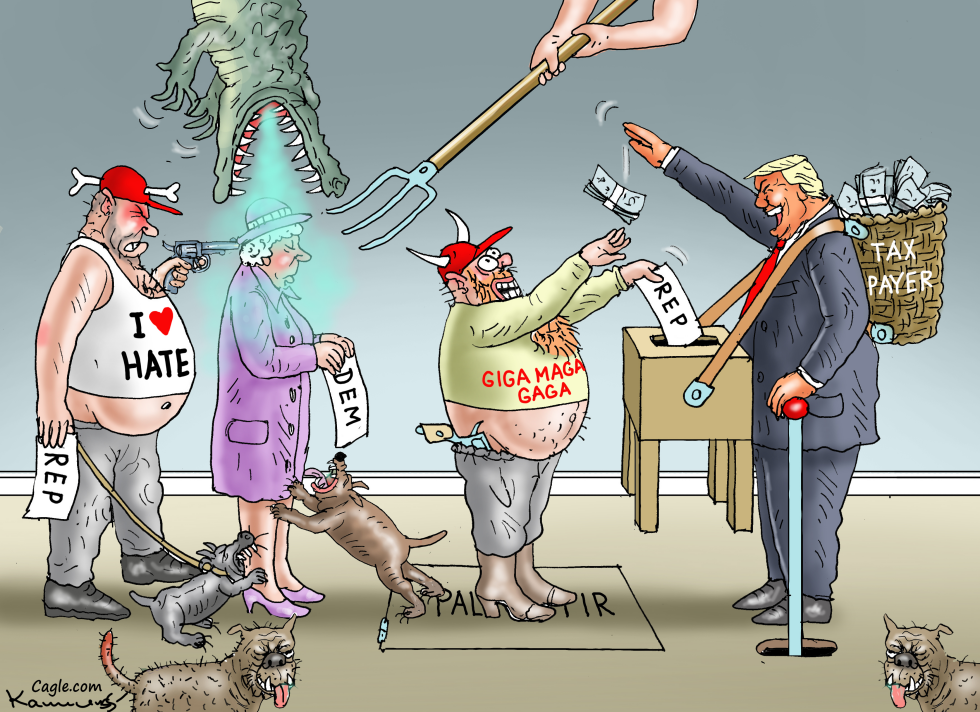
As the 2026 midterm elections approach, former President Trump has positioned himself as a central force in Republican campaigns, directing resources and mobilizing supporters. The cartoon highlights the use of taxpayer money in these efforts and the intense partisan divide, with Democrats portrayed as under attack. It takes the position that such involvement risks undermining fair electoral processes.
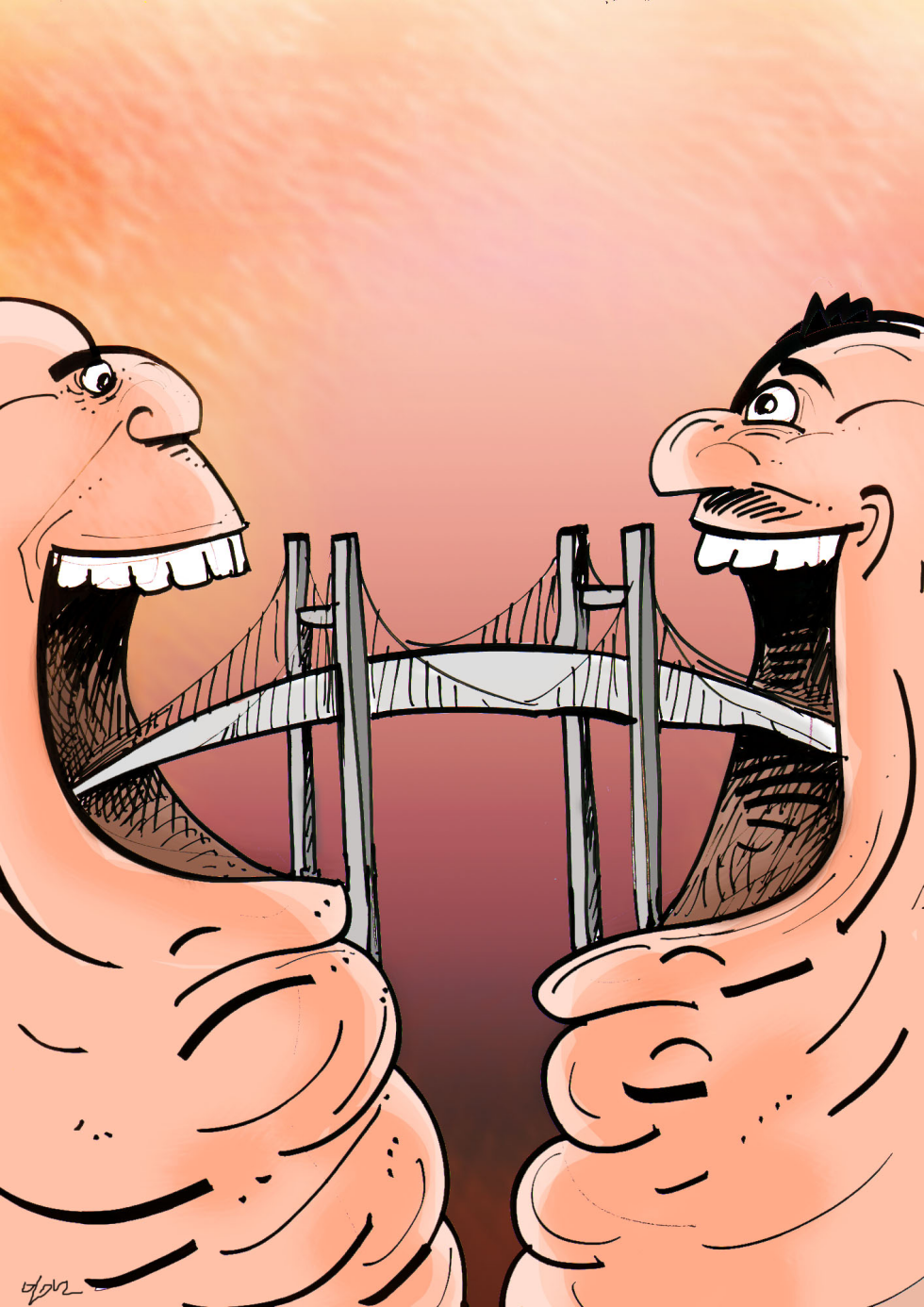
Political leaders from opposing camps are locked in a struggle over control of a major infrastructure initiative. The dispute highlights how shared projects become battlegrounds for influence and credit. The cartoon portrays the tension as each side seeks dominance rather than cooperation, underscoring risks to timely completion and public benefit.
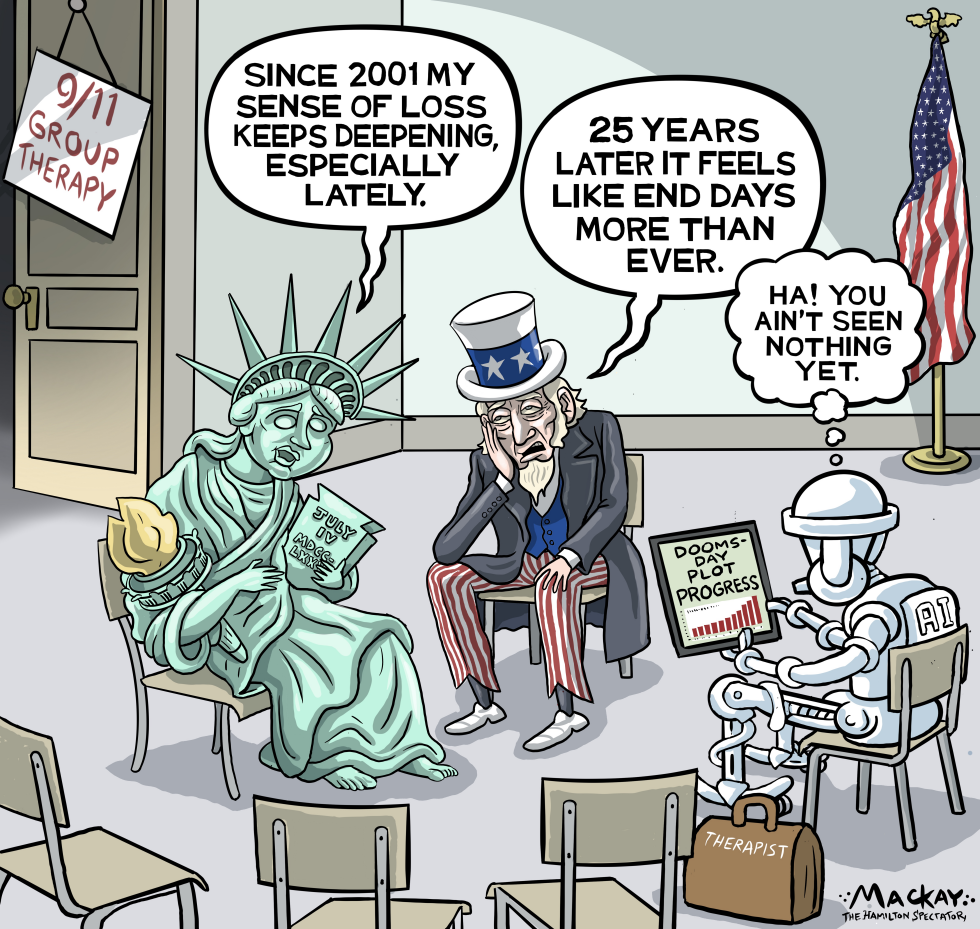
The cartoon depicts the Statue of Liberty, Uncle Sam and an AI robot seated in a 9/11 group therapy session on the 25th anniversary of the attacks. The Statue of Liberty holds a book marked July IV MDCCLXXVI and speaks of deepening loss since 2001. Uncle Sam echoes the sentiment of end days. The AI figure, labeled with a rising doomsday plot progress chart, retorts that the others have seen nothing yet. The scene uses national symbols to reflect persistent national trauma and emerging technological threats two and a half decades after the September 11 attacks.