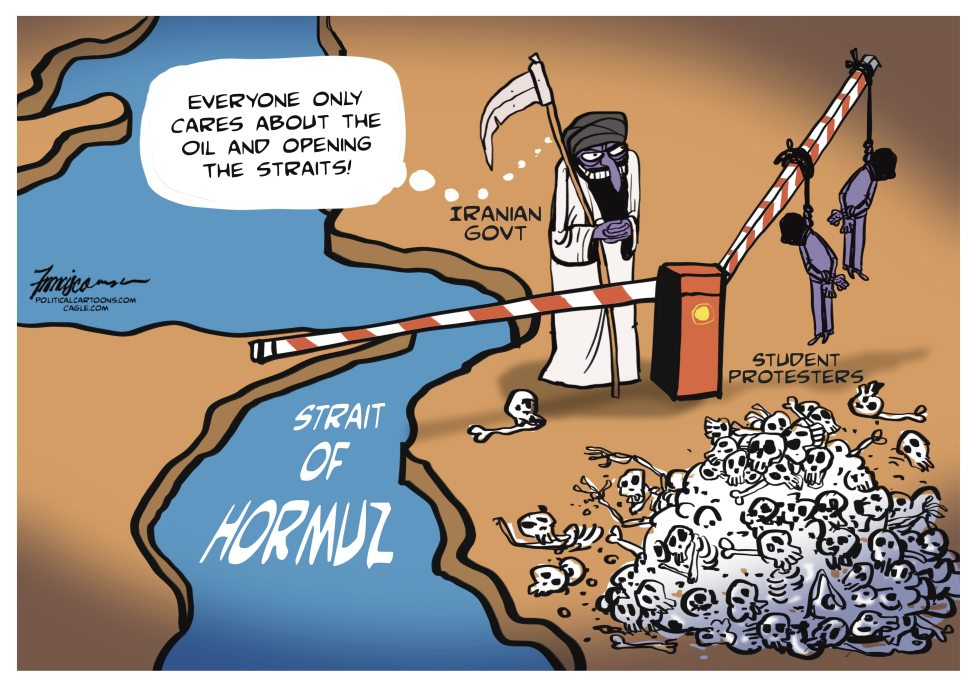
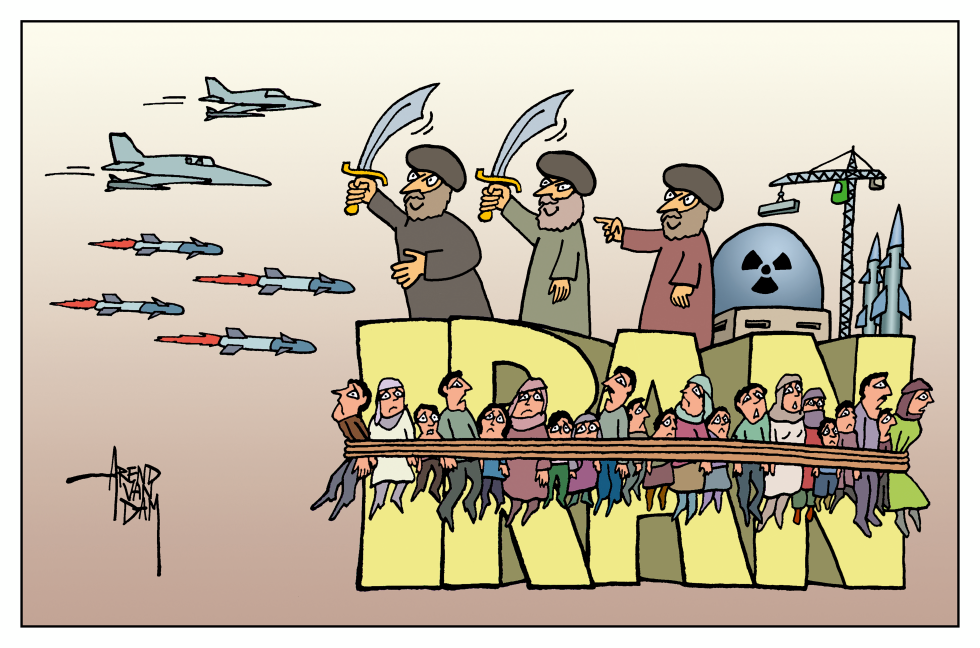
The Iranian government continues to suppress domestic student protests while maintaining control over the Strait of Hormuz, a critical global oil transit point. International attention remains fixed on energy flows rather than internal repression. The editorial position criticizes the regime for valuing oil revenue and strait access above the lives of its citizens.
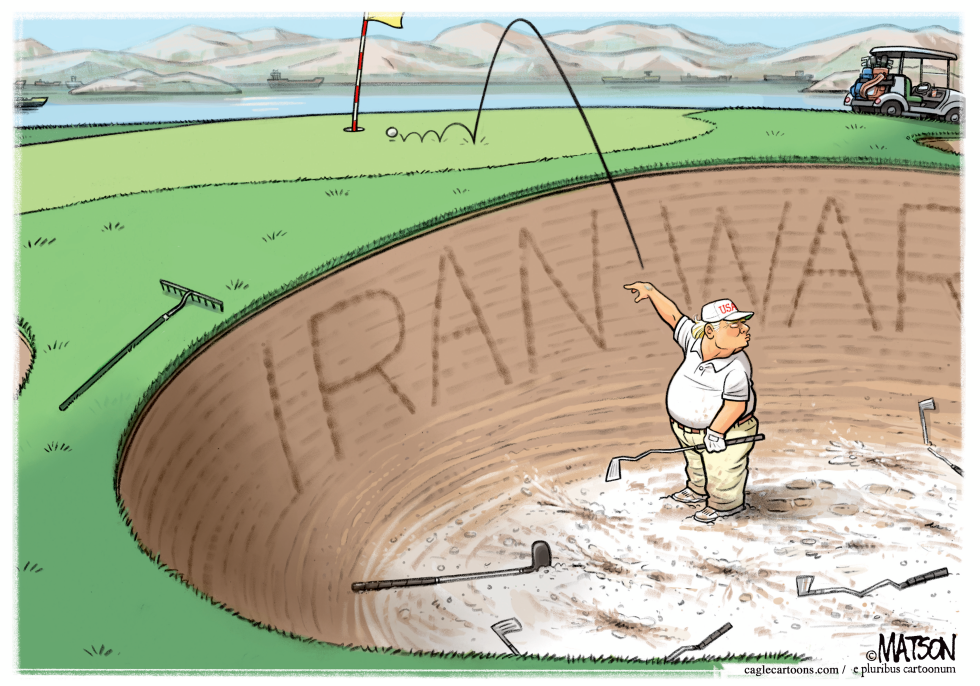
Tensions in the Strait of Hormuz have escalated with increased naval traffic and warnings of potential conflict involving Iran. President Trump, depicted golfing in a sand trap labeled Iran War, faces questions about his administration's handling of the crisis. The situation matters because any disruption to oil shipping lanes could spike global energy prices and draw the United States deeper into regional hostilities. The piece portrays the president as treating a serious foreign policy challenge like a casual round of golf, suggesting misplaced priorities during a period of heightened risk.
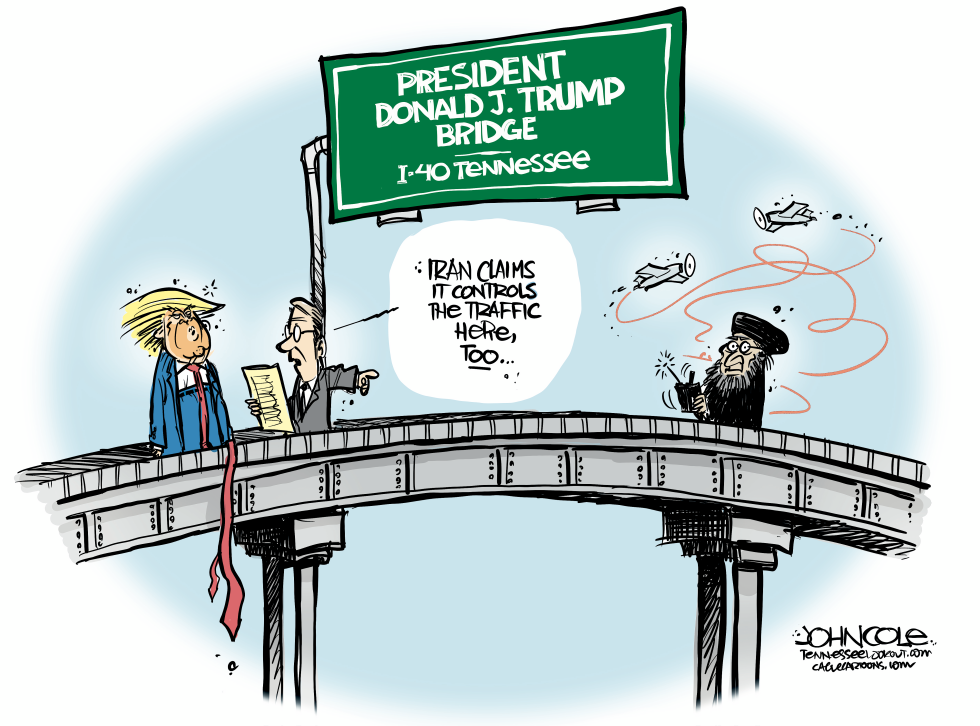
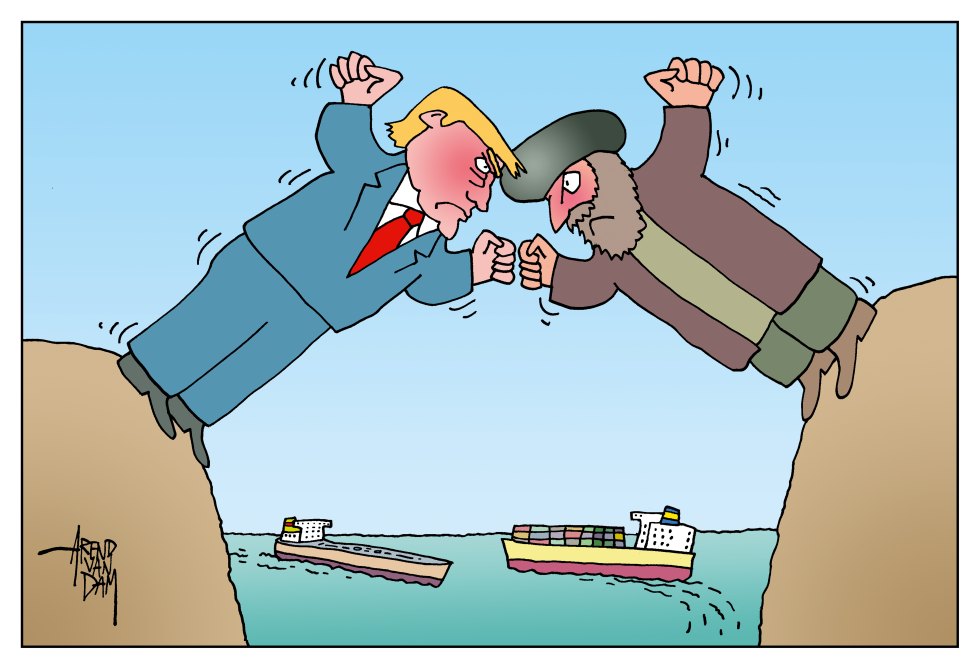
President Donald J. Trump attended the naming of the President Donald J. Trump Bridge on I-40 in Tennessee. The event drew attention when an Iranian figure appeared to claim control over traffic on the span. The development highlights ongoing tensions with Iran over shipping lanes and international routes. The cartoon frames the claim as an extension of Iran's broader pattern of asserting dominance over key passages. It positions the bridge naming as a domestic moment overshadowed by foreign threats.
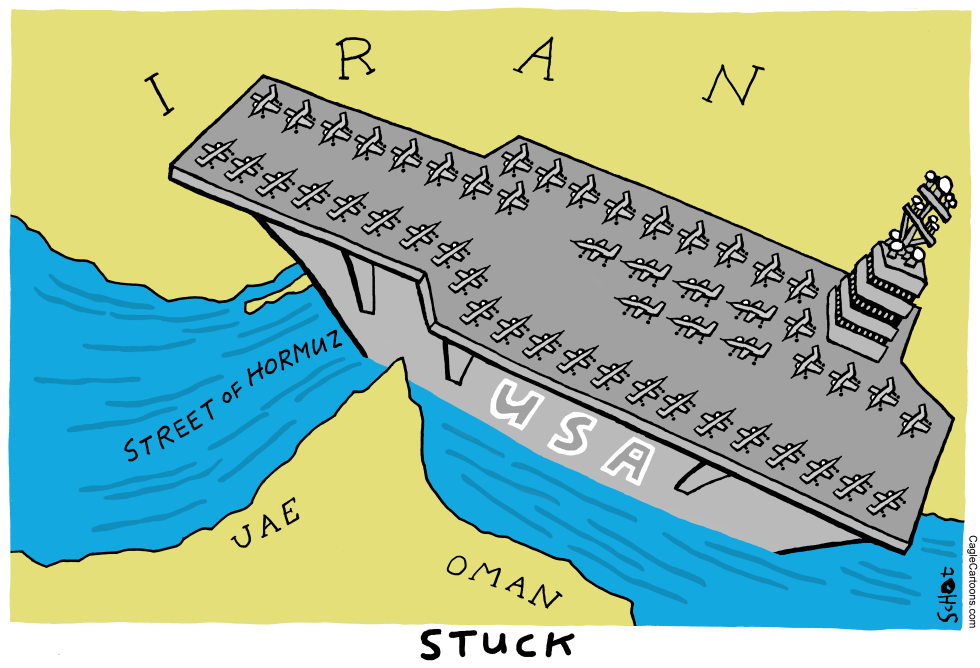
Tensions persist in the Strait of Hormuz where US naval forces maintain a presence amid ongoing disputes with Iran over shipping access and regional influence. The narrow waterway remains a critical chokepoint for global oil transit between the Persian Gulf and open seas. No single triggering incident stands out in the days before July 22 2026 yet the strategic standoff continues. The cartoon frames the US carrier as physically immobilized by the surrounding geography and neighboring states.
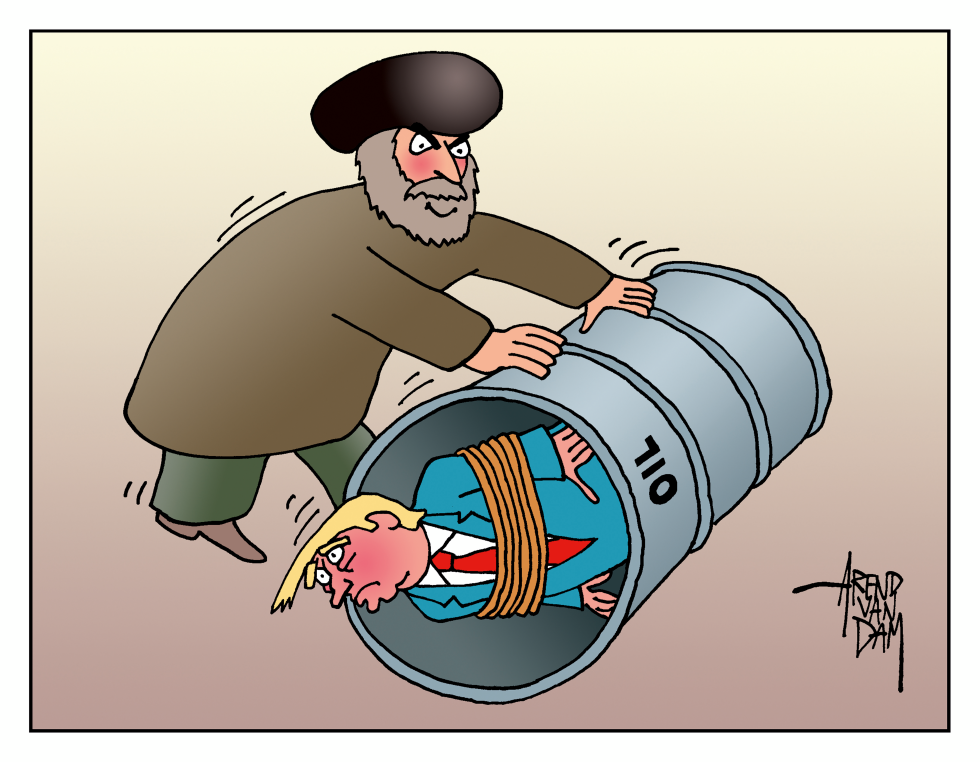
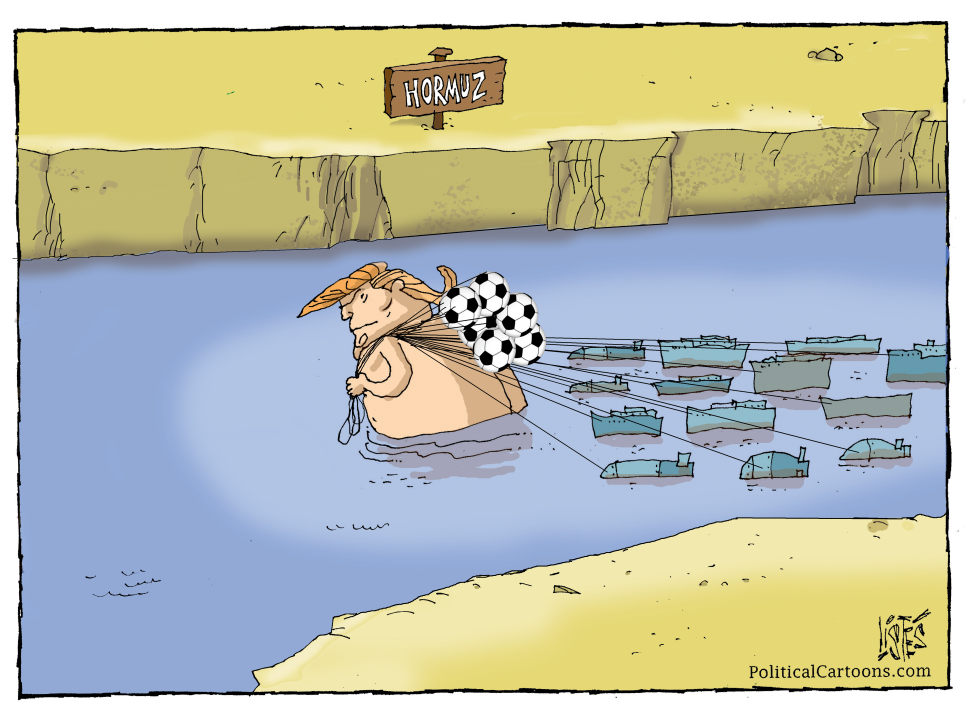
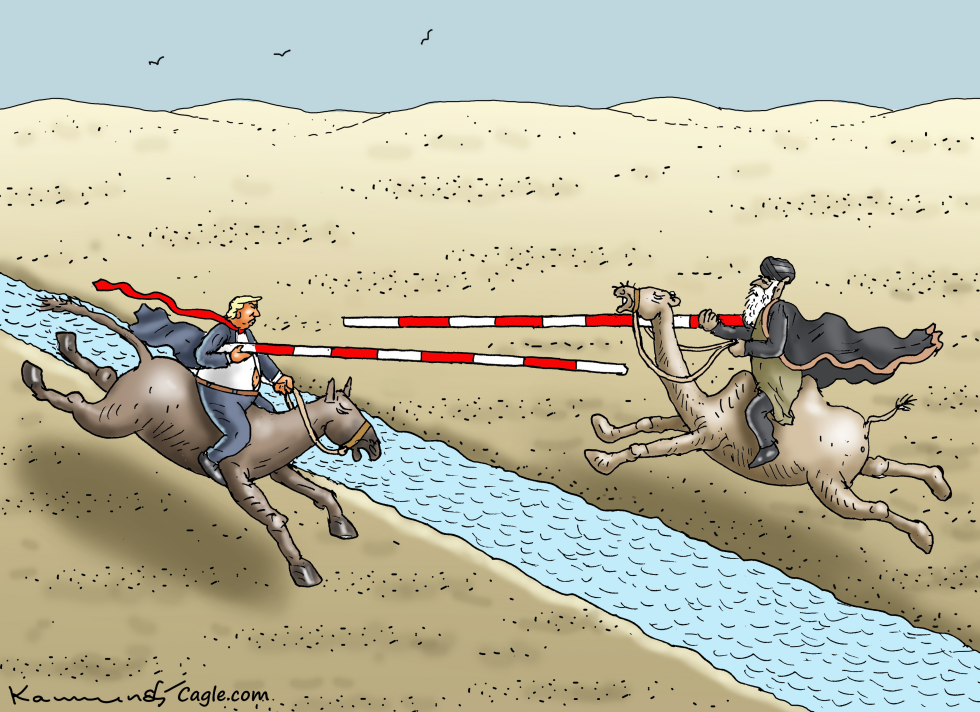
Tensions over the Strait of Hormuz escalated in mid-2026 as shipping disruptions threatened global oil flows. Donald Trump faced renewed scrutiny for his approach to the region. The piece argues that U.S. leverage has been undermined by recent developments.
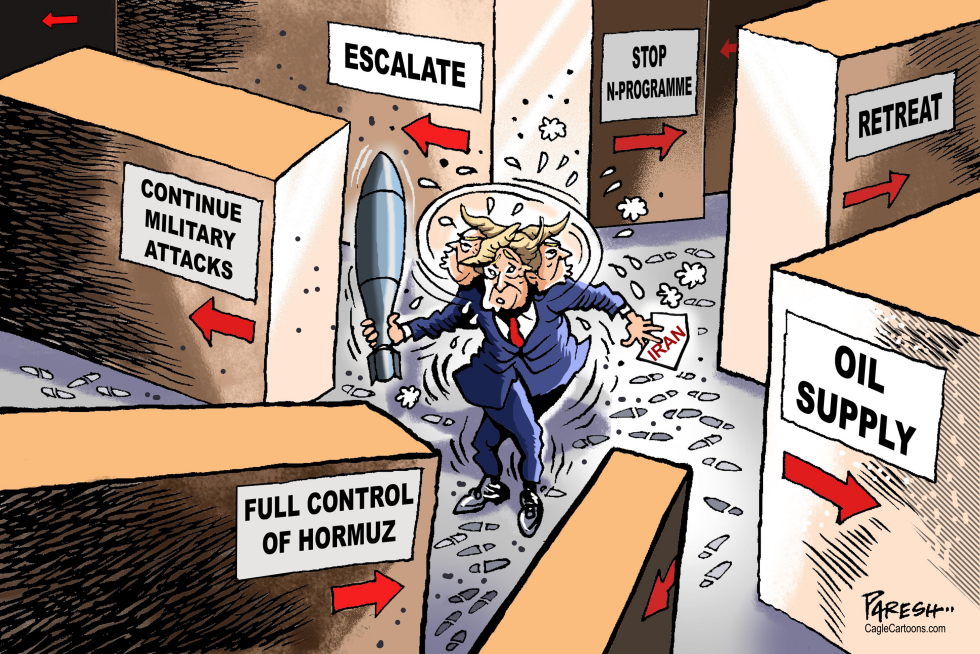
The cartoon shows Donald Trump caught between contradictory policy boxes on Iran, including continuing military attacks, escalating, stopping the nuclear programme, retreating, securing full control of Hormuz and protecting oil supply. Arrows point in conflicting directions while Trump clutches a missile and a paper labeled Iran. Published on July 19, 2026, the image captures the tangled options confronting the administration in the Middle East.
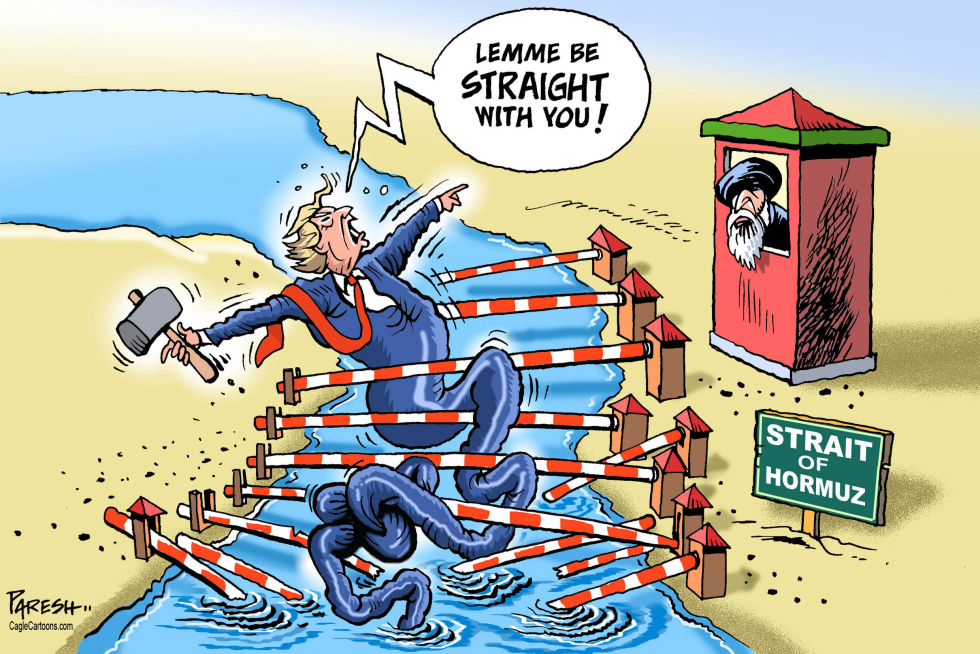
The cartoon depicts Donald Trump entangled in red-and-white barriers stretching across the Strait of Hormuz. He holds a hammer in one hand while gesturing with the other and declares through a speech bubble that he wants to be straight with the viewer. A bearded figure in traditional attire observes from inside a red booth on the shore. A green sign identifies the waterway. The scene references ongoing tensions involving navigation rights and U.S.-Iran relations in the strategic chokepoint.
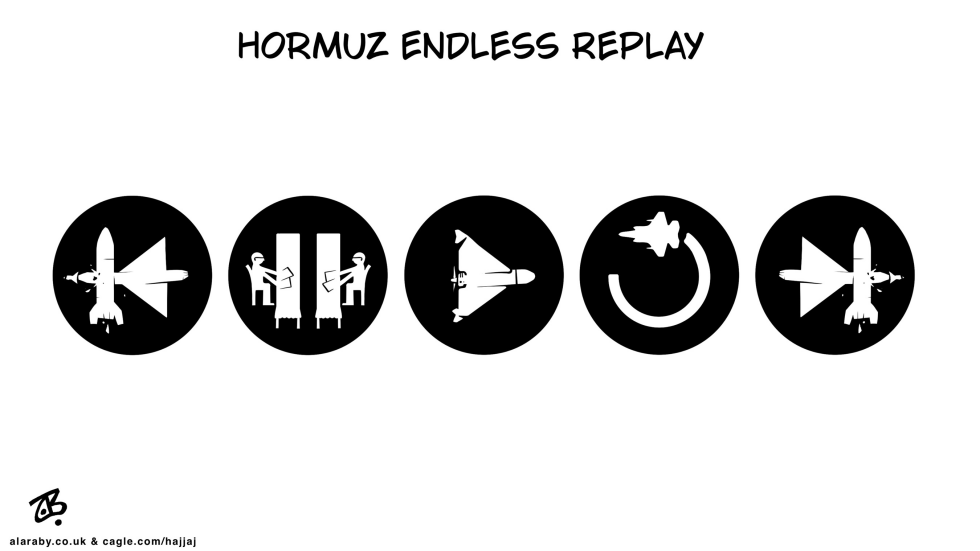
The graphic presents five circular icons arranged horizontally. They depict a missile, figures with barriers, a play button with missile, a jet with arc, and another missile with play symbol. The title above reads Hormuz Endless Replay. The sequence mixes military imagery with video player controls to indicate repetition.
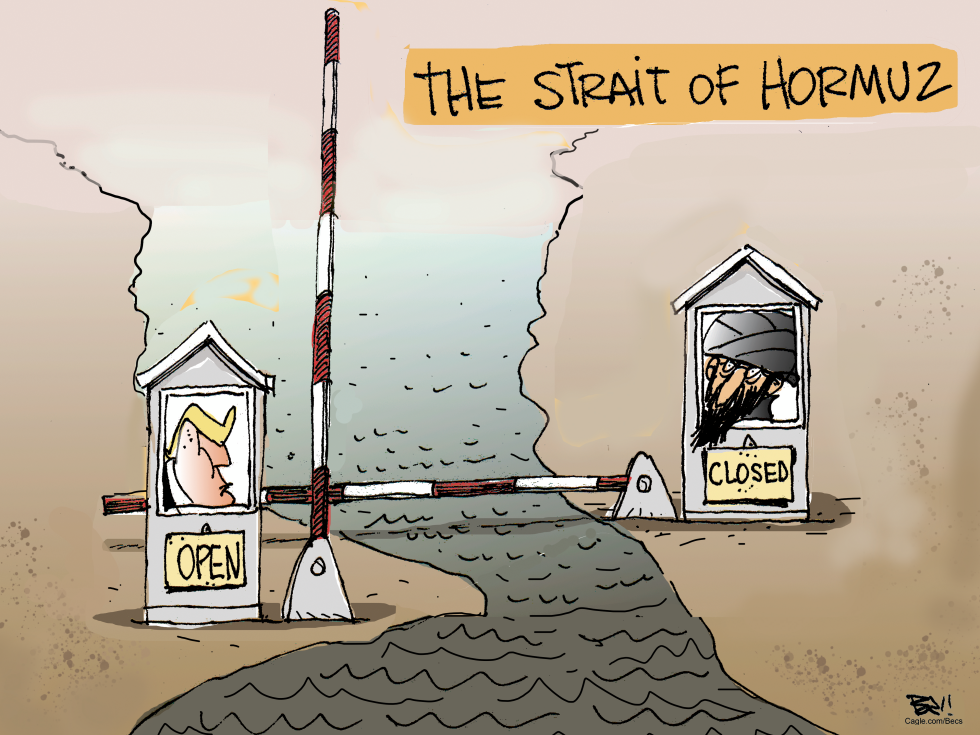
The Strait of Hormuz remains a flashpoint for global oil transit as the United States and Iran maintain opposing stances on access. Donald Trump positions an open checkpoint while an Iranian official signals closure. The editorial highlights the standoff's direct impact on energy markets and shipping security.