Tensions in the Strait of Hormuz have escalated with threats to shipping lanes critical for global oil supplies. Israeli and U.S. leaders face mounting losses from disruptions. The cartoon argues that involvement risks dragging both into deeper conflict without clear gains.
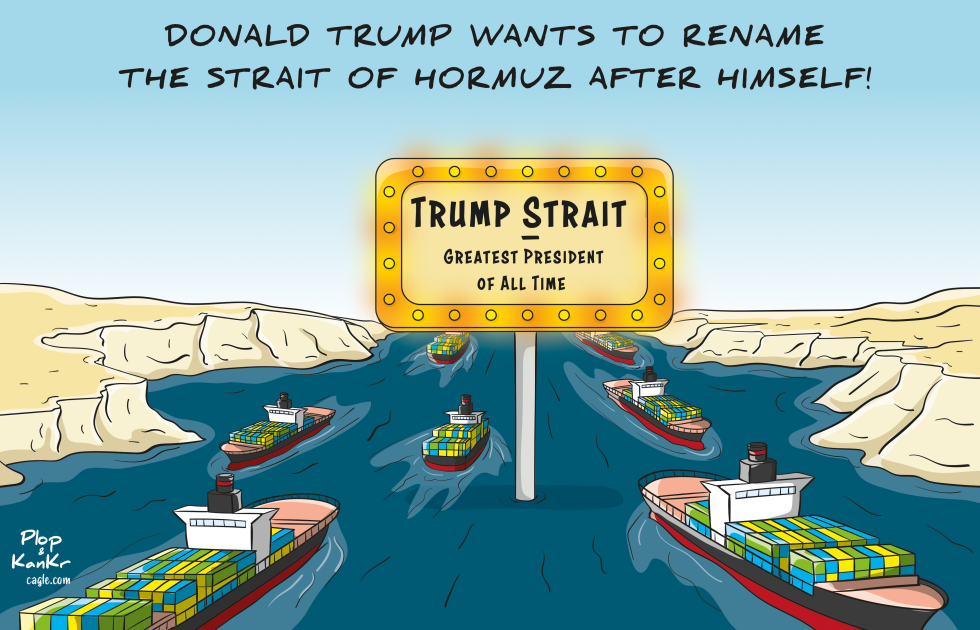
A political cartoon depicts Donald Trump proposing to rename the Strait of Hormuz after himself. The image shows multiple cargo ships navigating the waterway beneath a large glowing sign reading Trump Strait with the subtitle Greatest President of All Time. The top text states Donald Trump wants to rename the Strait of Hormuz after himself. The cartoon uses the visual of a prominent sign overlooking busy shipping lanes to comment on the proposal. It responds to ongoing discussions about international waterways and presidential initiatives in the Middle East region as of the September 2026 publication date.
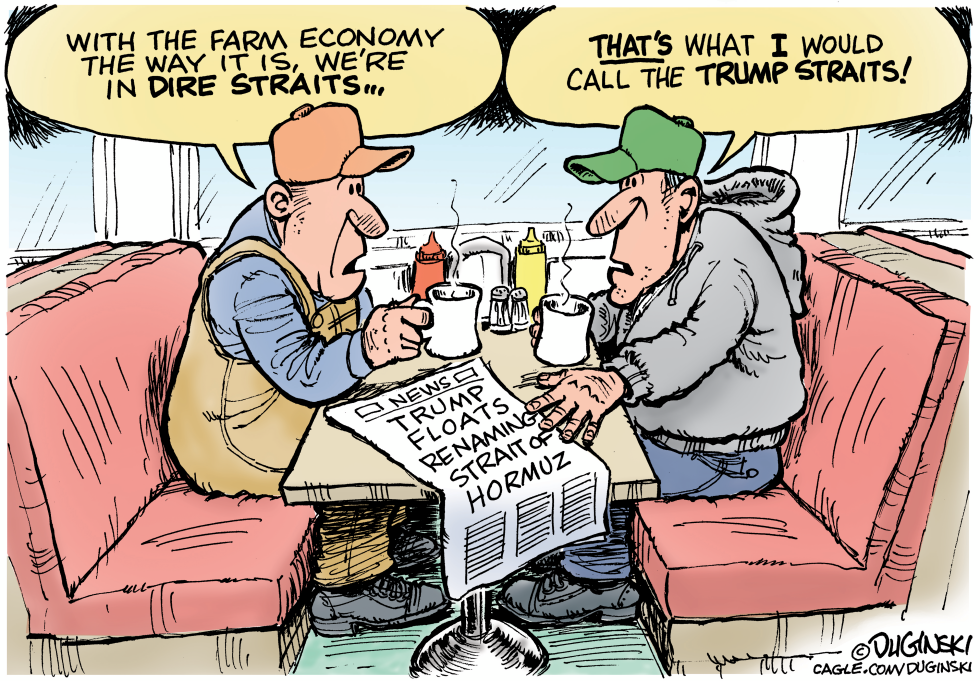
Donald Trump has floated the idea of renaming the Strait of Hormuz, a key Middle East shipping route, drawing attention to its potential effects on global trade and domestic sectors. The proposal arrives as agricultural producers face persistent economic challenges including high input costs and market volatility. The cartoon uses the pun on "dire straits" to connect the foreign policy suggestion to farm belt hardships, implying the rename distracts from or worsens real economic pressures on rural communities.
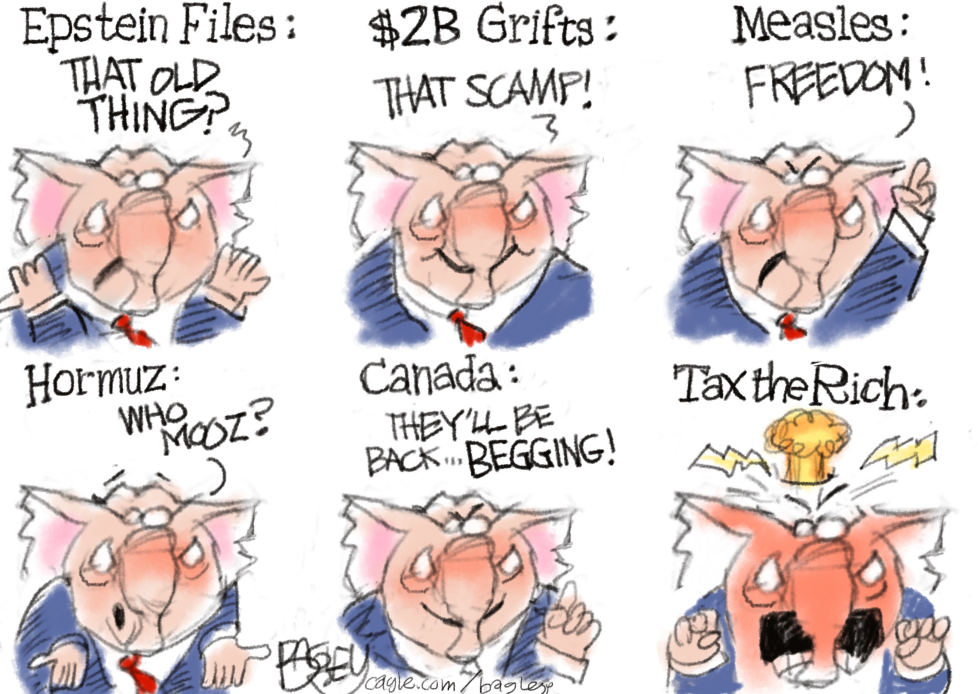
A political figure downplays the Epstein files, billion-dollar grifts, measles outbreaks, Hormuz tensions, Canada relations and wealth taxes. The piece critiques selective indifference to ongoing controversies and policy flashpoints.
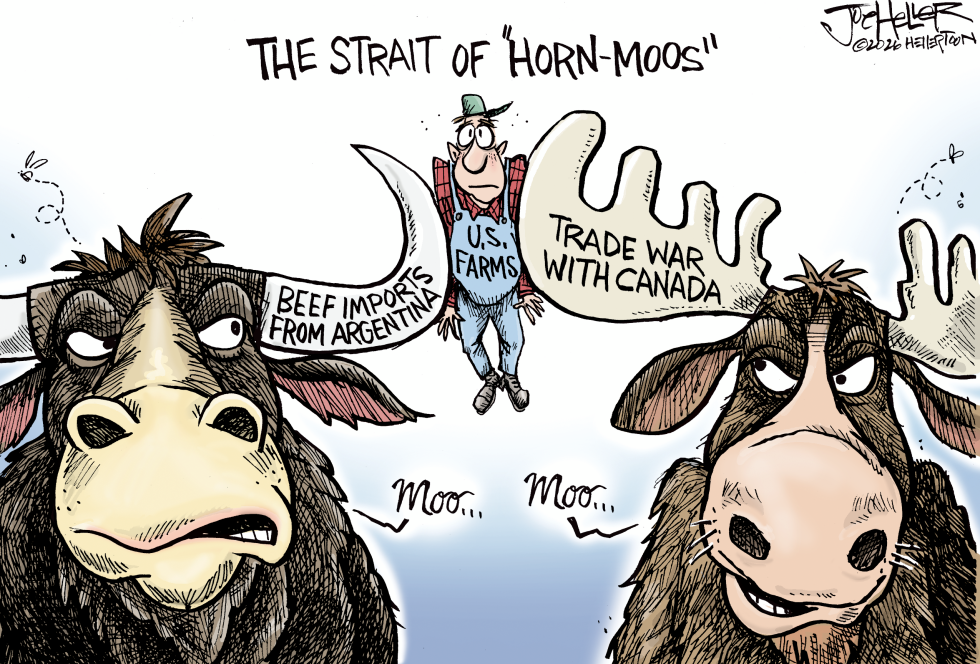
US agricultural interests face simultaneous pressure from increased beef imports from Argentina and an escalating trade dispute with Canada. The situation highlights how competing international trade policies directly affect domestic producers. The piece portrays American farms as caught in the middle of these conflicting pressures.
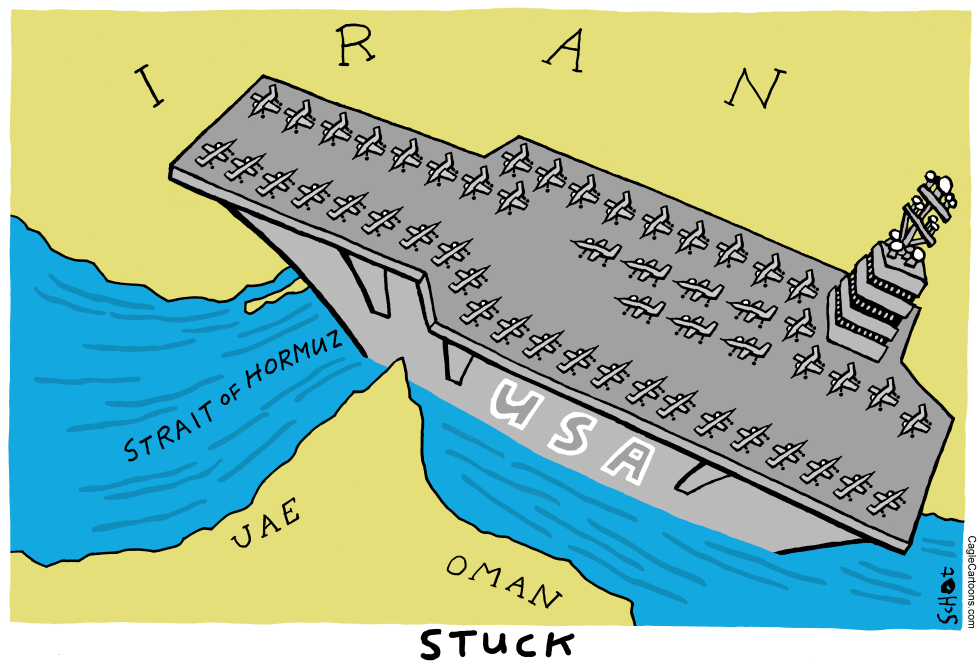
A political cartoon depicts a large US aircraft carrier marked USA jammed in the Strait of Hormuz between land labeled Iran, UAE and Oman. The vessel carries dozens of fighter jets on its deck. The word STUCK appears prominently below the scene. The image responds to persistent concerns over freedom of navigation in the vital oil shipping route. Iran has long threatened to close the strait during conflicts. The cartoon uses the visual of a grounded carrier to illustrate potential US military vulnerability in the narrow passage.
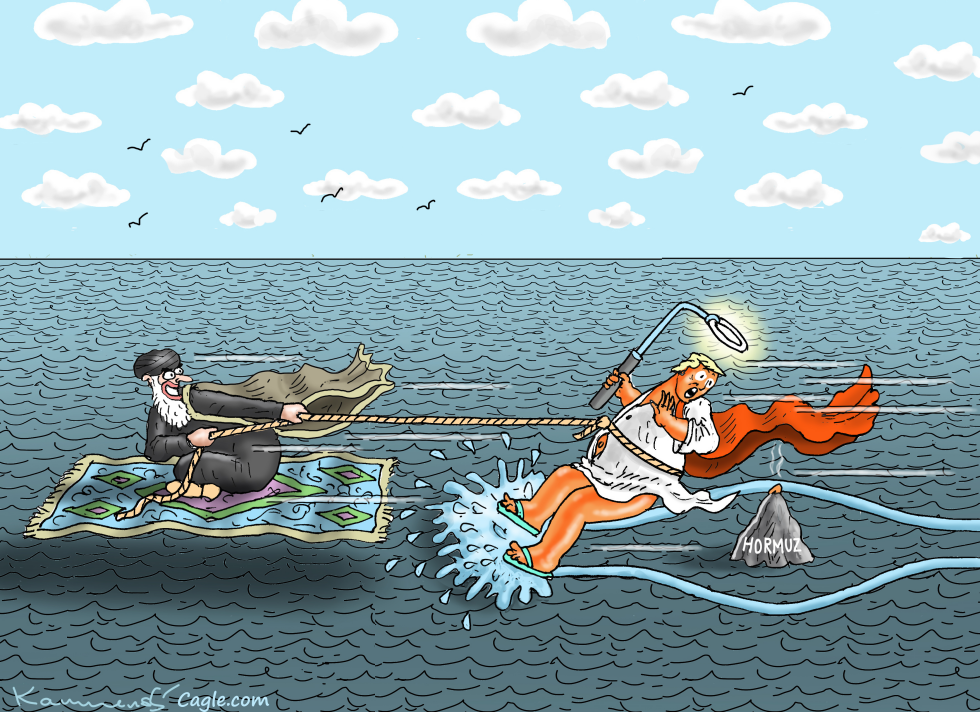
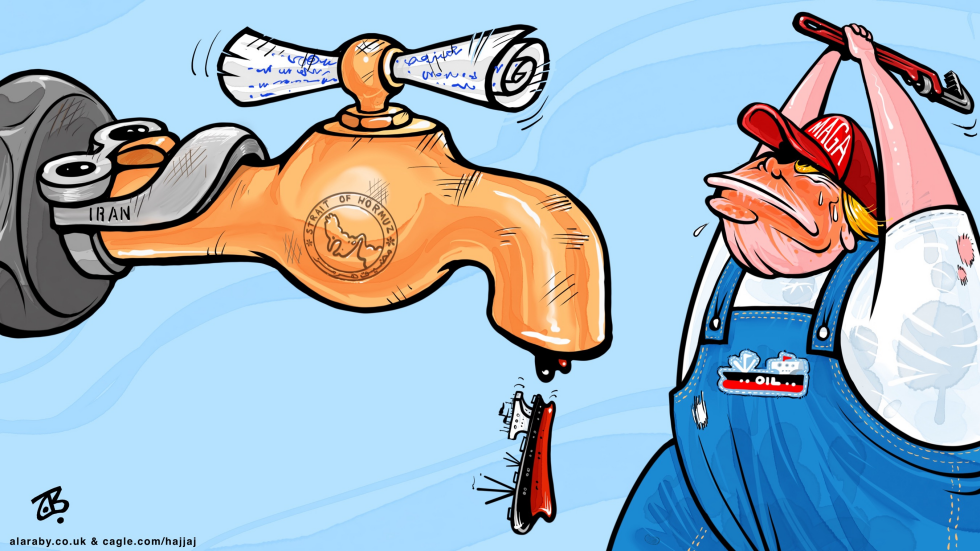
Donald Trump faces ongoing friction with Iran over control of the Strait of Hormuz, a vital oil transit route. Recent shipping incidents and sanctions disputes have kept the waterway in focus. The piece portrays these pressures as a plumbing crisis that resists easy fixes.
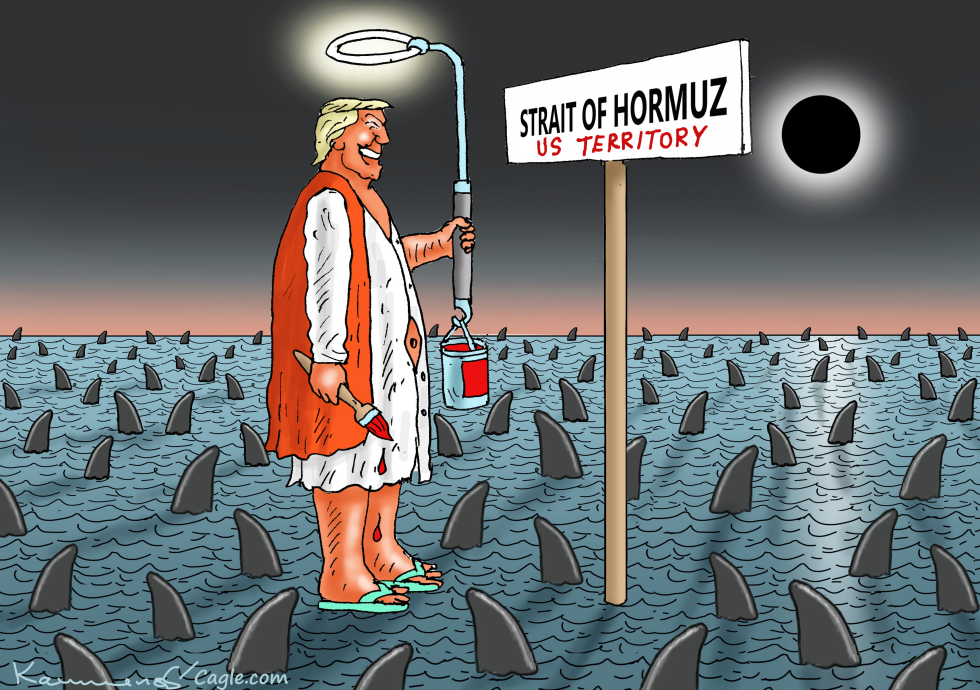
Donald Trump has asserted US sovereignty over the Strait of Hormuz, a critical waterway for global oil shipments. The move comes amid ongoing friction with Iran and other regional actors over navigation rights and energy security. Such a claim challenges established international maritime law and risks escalating tensions with multiple nations that rely on the passage. The editorial takes the position that the assertion is reckless and ignores the practical dangers and diplomatic fallout involved.
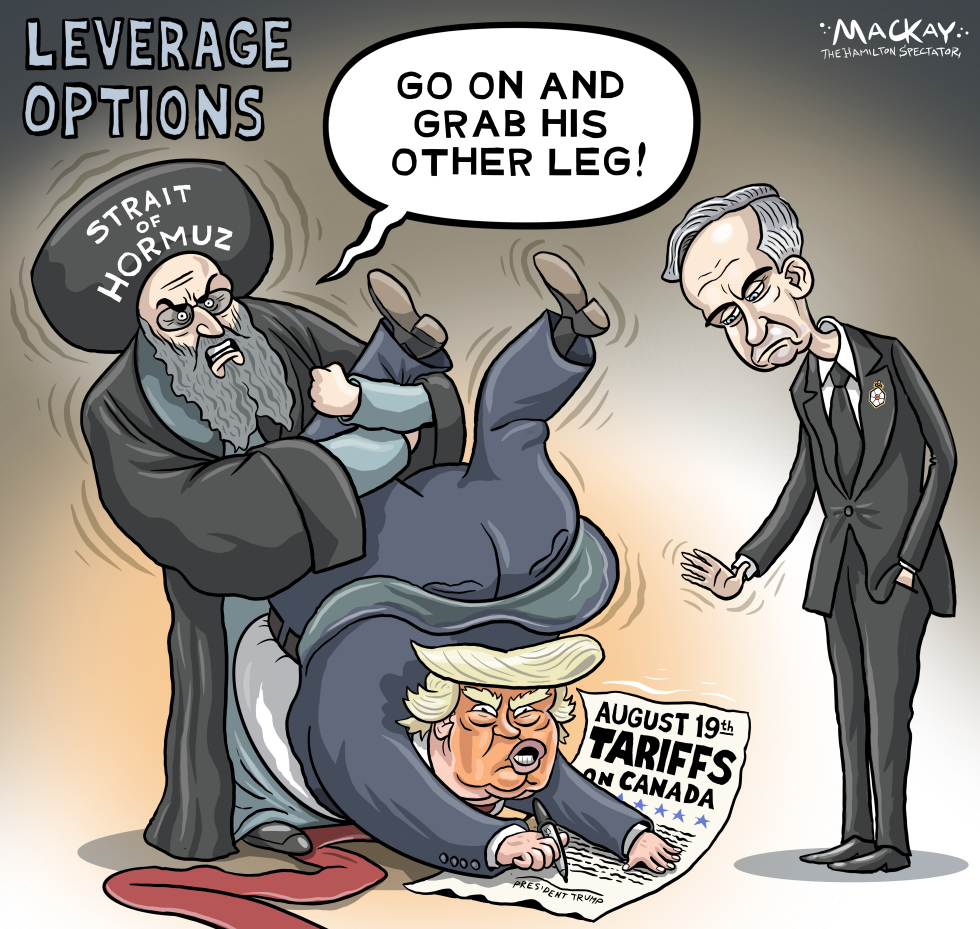
On August 12 2026 President Trump prepares to impose tariffs on Canada amid tensions involving the Strait of Hormuz. The move draws immediate pushback from Iran-linked actors seeking leverage. The piece argues that tariff policy invites risky entanglements that weaken U.S. position.
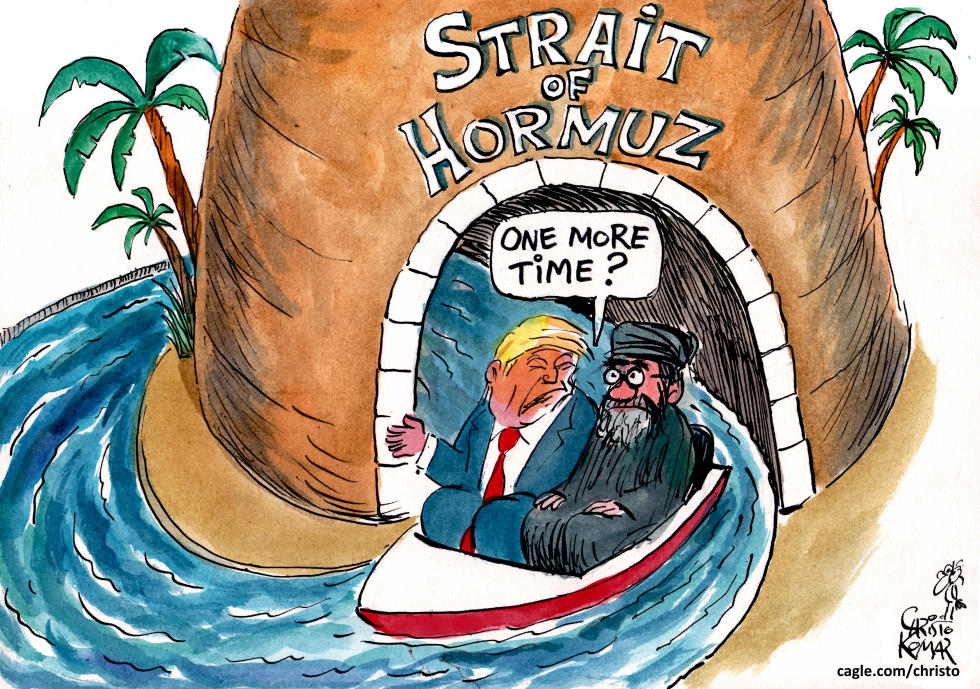
On August 5 2026 renewed friction over shipping lanes in the Strait of Hormuz draws attention as former President Donald Trump appears alongside Iran's Supreme Leader in a symbolic return to the chokepoint. The episode underscores ongoing US-Iran friction over energy exports and naval presence. The piece portrays the pair repeating a risky transit that highlights persistent strategic vulnerabilities in the Persian Gulf.
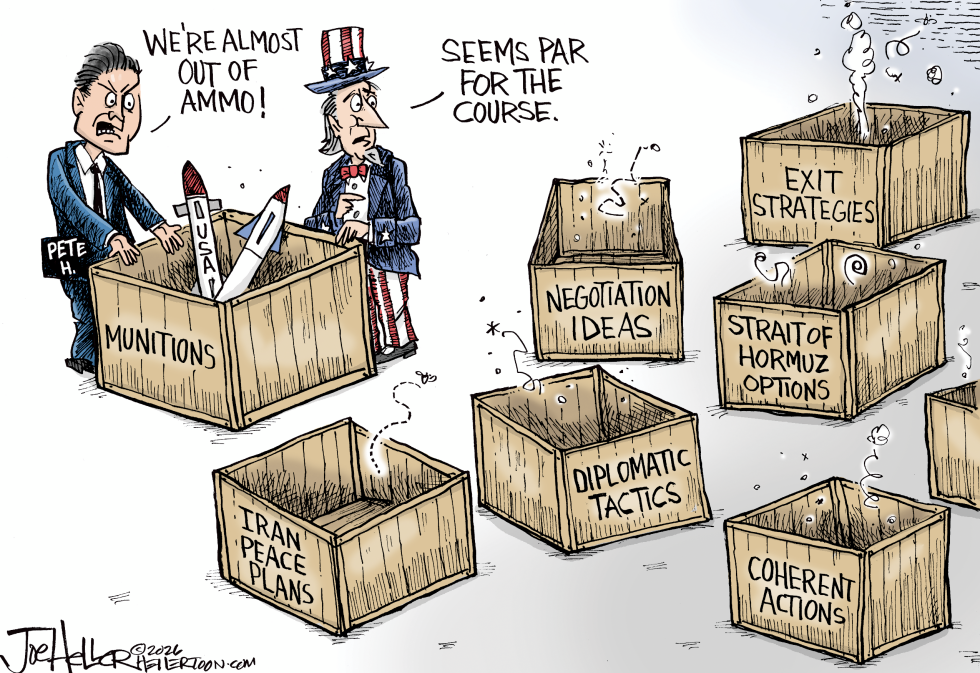
Defense Secretary Pete Hegseth alerts that the United States is nearly out of munitions while pursuing Iran policy options. The cartoon depicts Uncle Sam acknowledging the situation as routine, underscoring limited remaining diplomatic and strategic tools for addressing Iran.
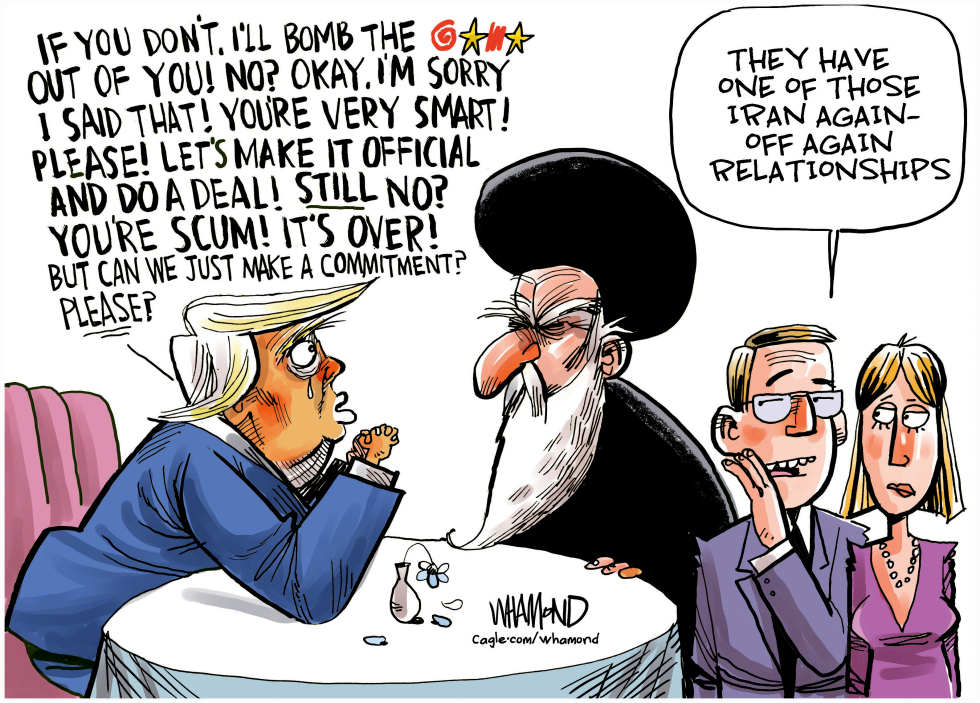
Donald Trump engaged in direct outreach to Iranian Supreme Leader Ayatollah Ali Khamenei amid stalled nuclear talks. The effort mixed ultimatums with appeals for a deal. The cartoon portrays the approach as inconsistent and ineffective.
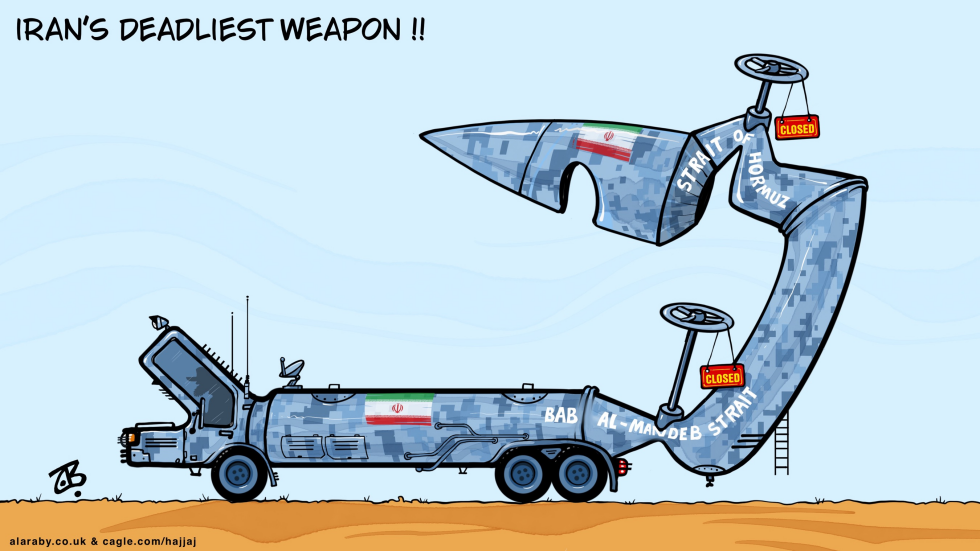
A new cartoon by Emad Hajjaj illustrates Iran's control over the Strait of Hormuz and Bab al-Mandeb Strait as its most potent weapon. The image renders a large camouflaged missile launcher bearing Iranian flags and marked with the two straits, each valve labeled closed. The work responds to ongoing concerns about potential disruptions to global oil shipments through these critical waterways in the Middle East. It emphasizes how Tehran could leverage geographic position to pressure adversaries without direct military engagement. The visual underscores the strategic importance of these passages amid heightened regional tensions.
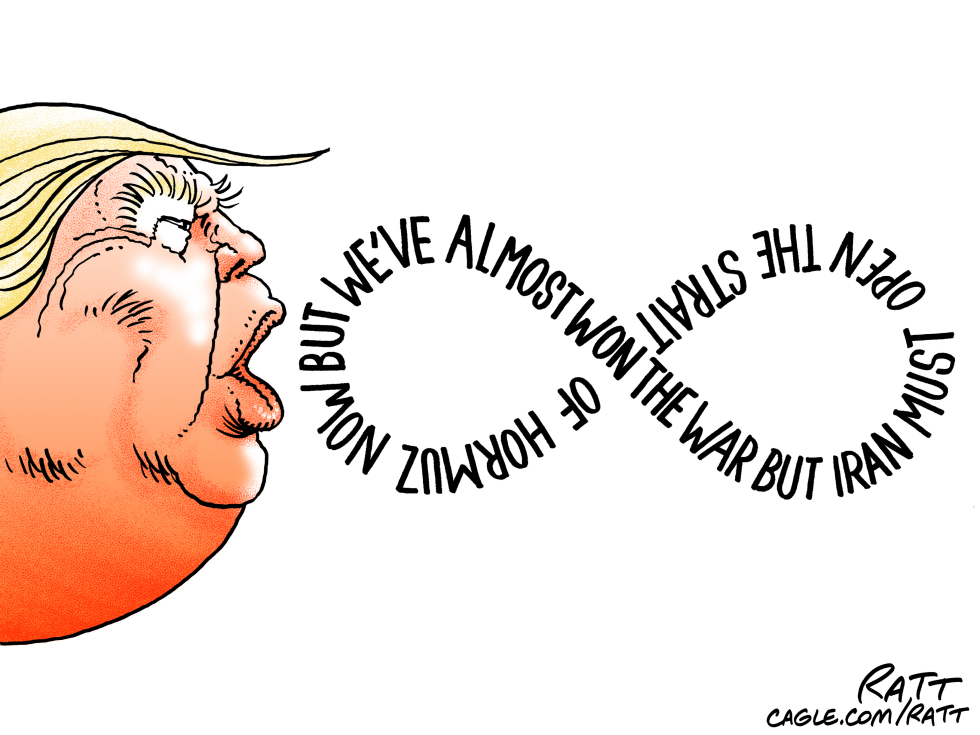
Tensions persist between the United States and Iran over control of the Strait of Hormuz, a vital oil transit route in the Persian Gulf. Recent statements from former President Trump emphasize near-victory in any conflict while insisting on open passage. The dynamic underscores repeated cycles of confrontation without resolution, raising risks to global energy supplies. The editorial position critiques the contradictory messaging that sustains indefinite engagement without clear end.
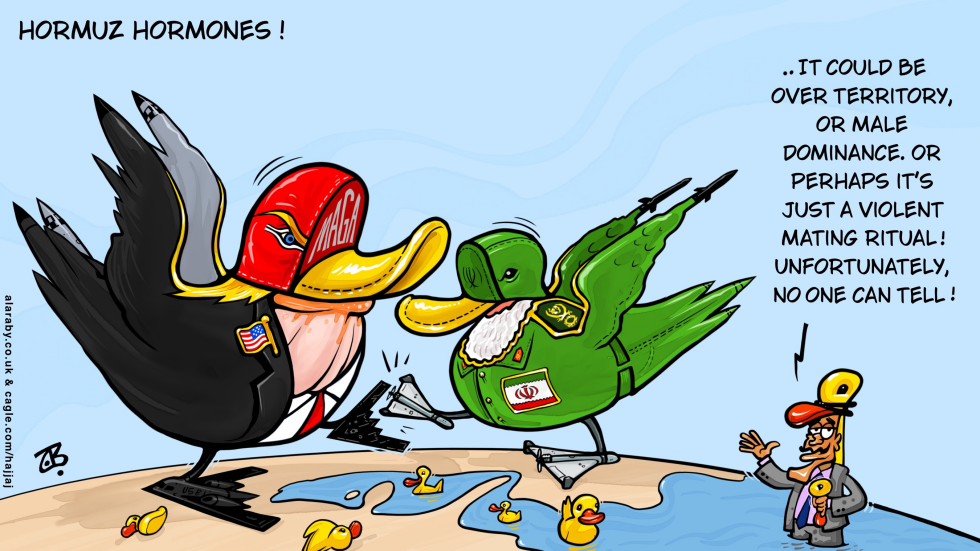
The cartoon shows a black bird wearing a MAGA hat facing off against a green bird bearing Iran's flag, both armed and aggressive over a body of water labeled with Hormuz references. Small ducks swim below while a commentator speculates on motives ranging from territory to mating rituals. The image responds to ongoing US-Iran frictions in the Strait of Hormuz by framing the standoff through animal behavior analogies.