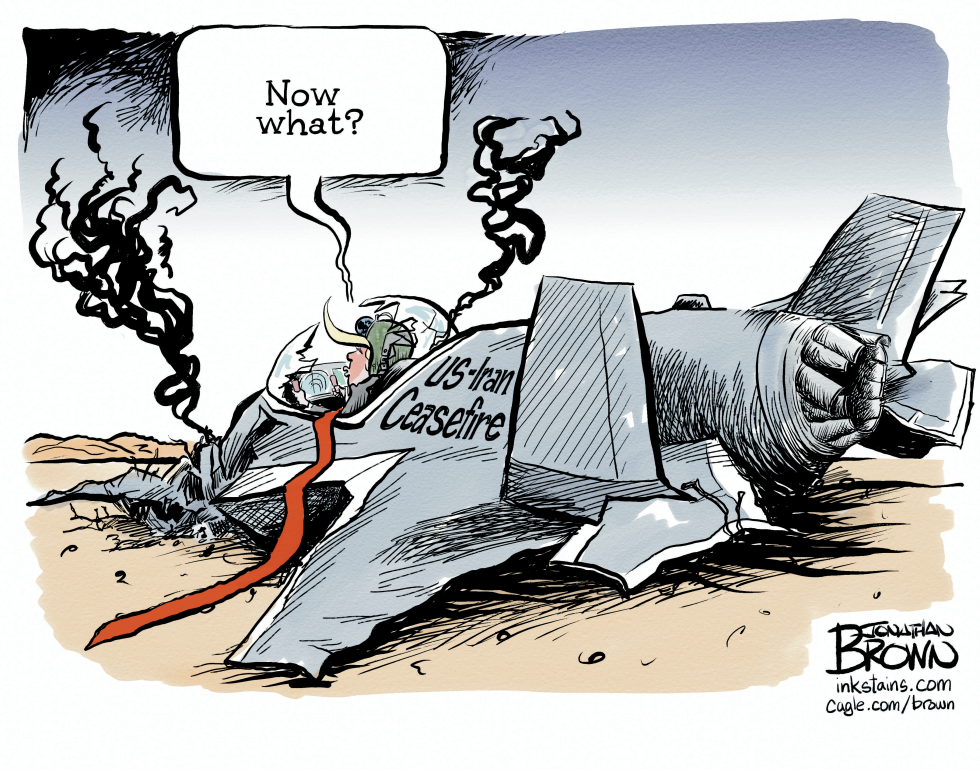
A crashed aircraft labeled US-Iran Ceasefire lies in desert sand with rising smoke. The pilot, visible in the cockpit, asks what comes next after the agreement fails.
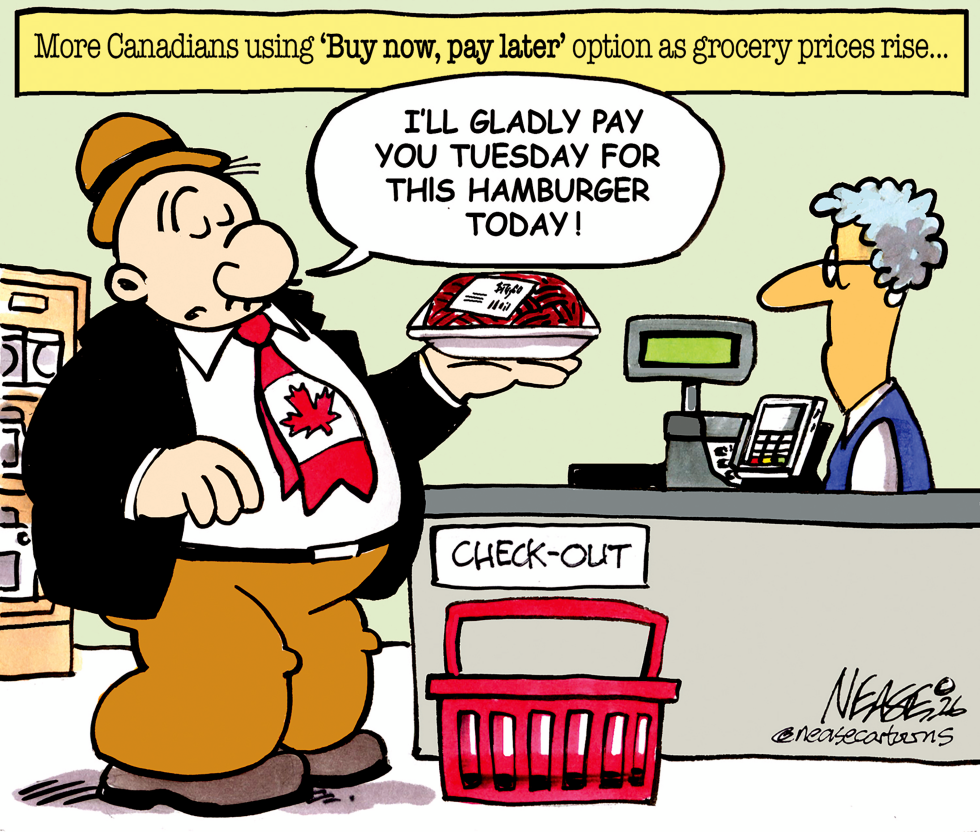
A cartoon published July 8, 2026, shows a Canadian shopper at a grocery checkout counter holding a package of hamburger meat while declaring he will gladly pay Tuesday for the item today. The scene references the classic Wimpy line and highlights growing use of buy now pay later services as grocery prices continue to climb in Canada.
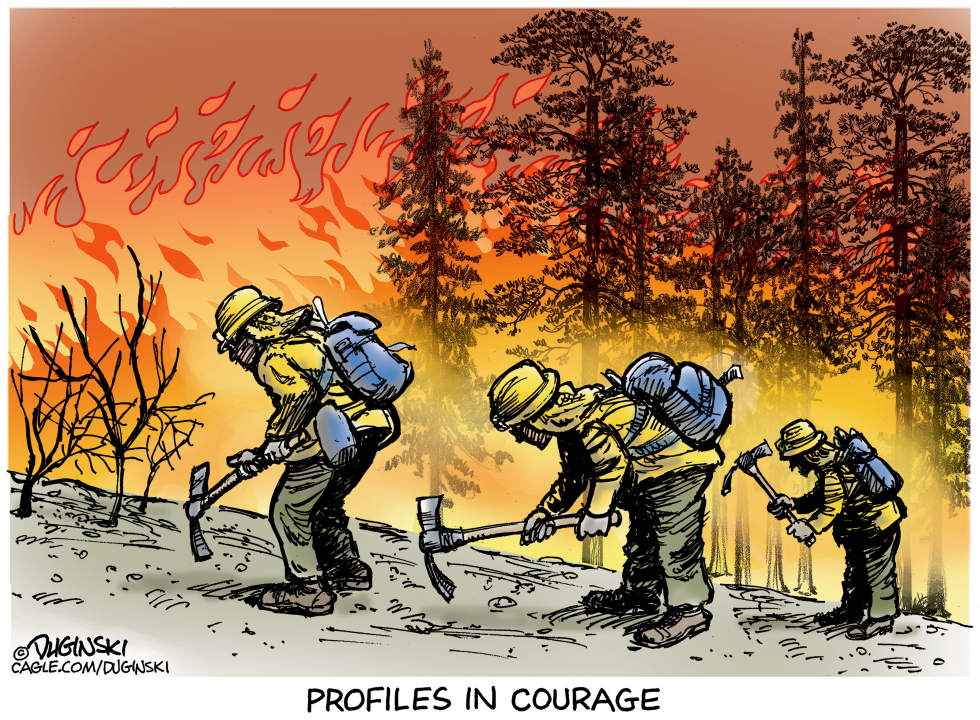
Three wildland firefighters in yellow protective gear and helmets dig along a slope using hand tools. Flames rise through the trees behind them while smoke fills the air. The image shows their focused work to build a barrier against the fire front. Their backpacks and posture indicate sustained physical effort in the heat.
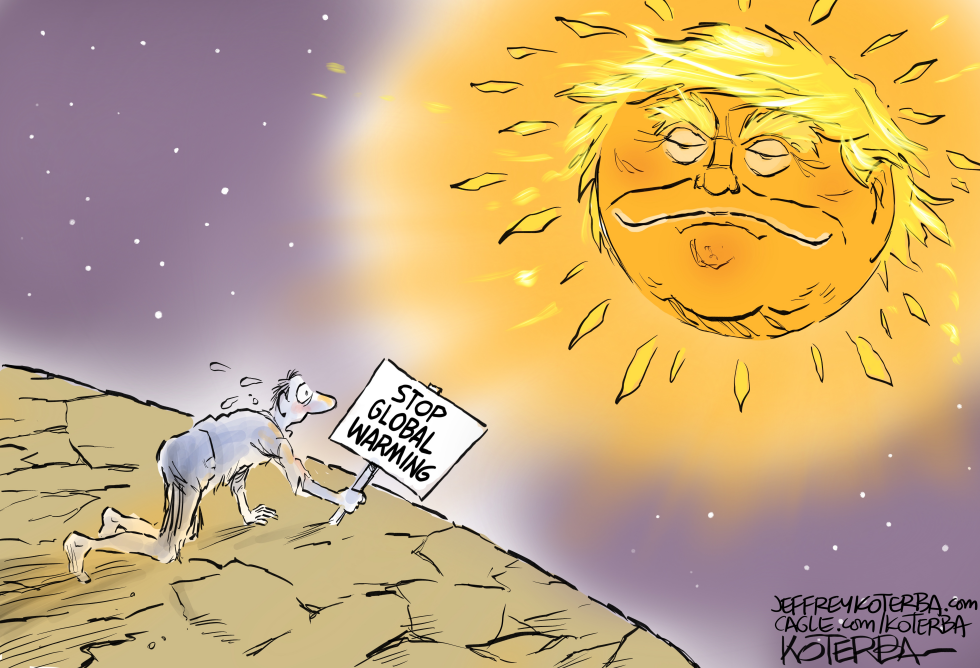
Donald Trump remains a central figure in U.S. politics on June 26, 2026. Ongoing debates over climate policy continue amid his influence. The piece portrays the sun as Trump to highlight resistance to warming efforts.
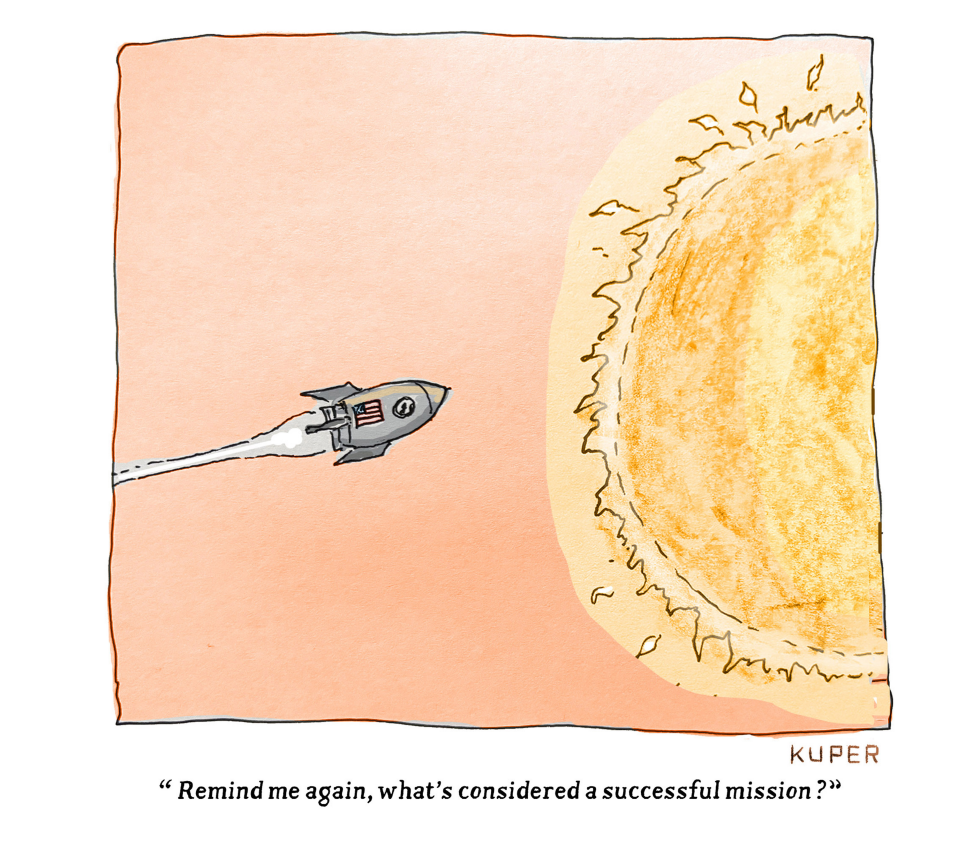
The cartoon shows a US-flagged missile streaking toward a large fiery orb, evoking an ill-defined strike on Iran. The caption questions the meaning of a successful mission. Published amid reports of Iranian nuclear activity and regional tensions, the image critiques the absence of an exit strategy. It references potential economic fallout such as closed shipping lanes and higher oil prices. The work also nods to internal administration finger-pointing involving JD Vance. Overall the piece underscores the hazards of military action without a coherent plan.
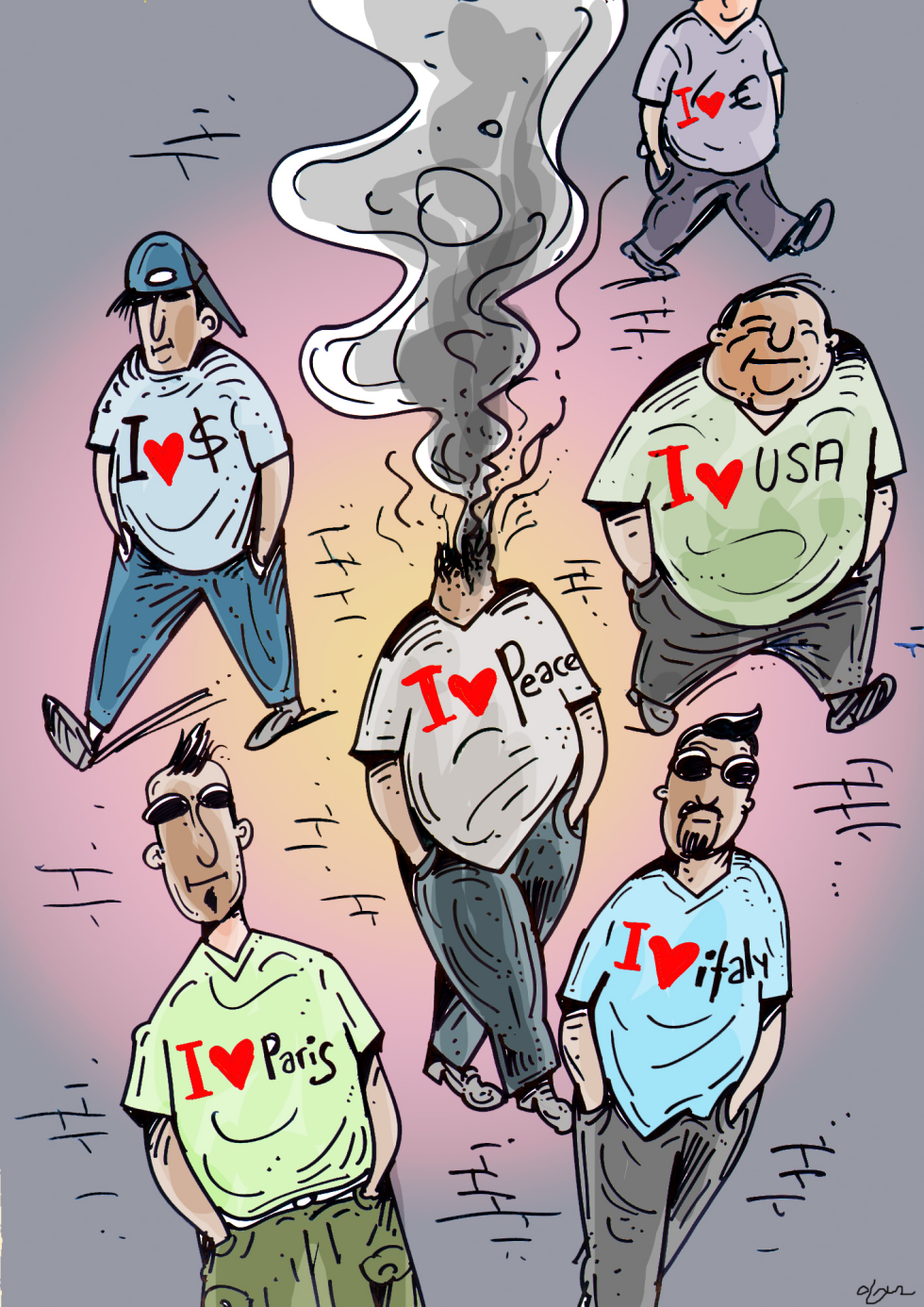
A figure wearing an I love peace shirt shows smoke rising from the head, suggesting hidden danger amid claims of nonviolence. Surrounding individuals display shirts loving money, Paris, the USA, Italy and the euro. The scene highlights contradictions between stated ideals and actions in public discourse around security threats.
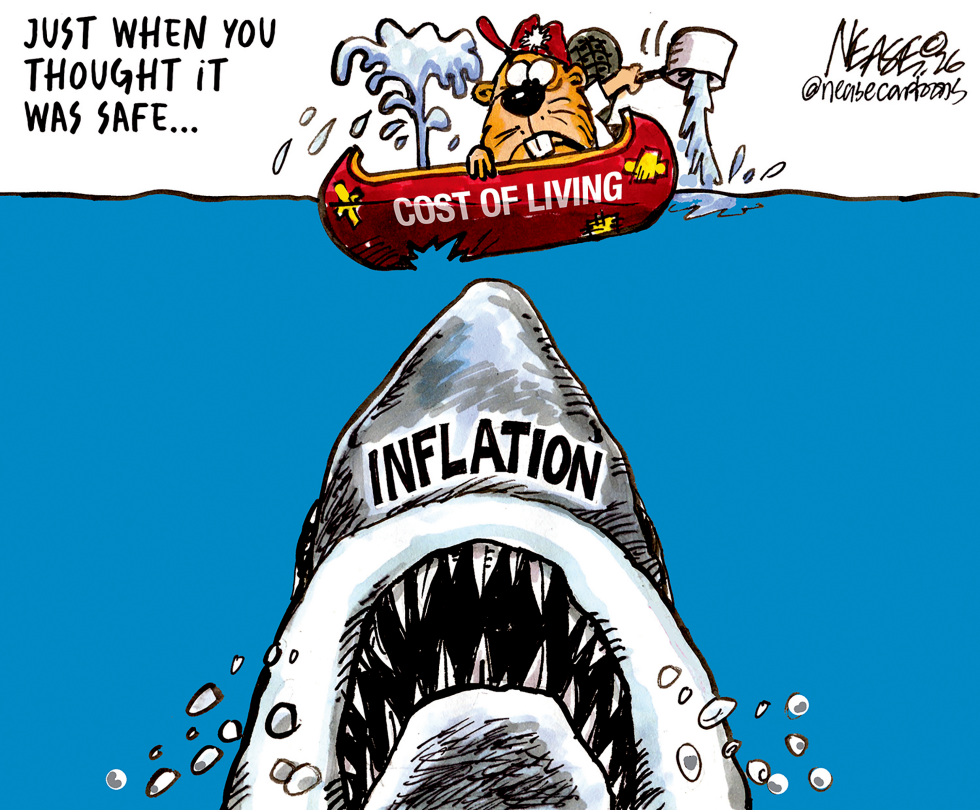
Steve Nease cartoon from June 22 2026 depicts a large shark labeled INFLATION approaching a red canoe marked COST OF LIVING. A beaver-like figure sits inside the vessel with a paddle raised. Text above reads JUST WHEN YOU THOUGHT IT WAS SAFE. The image uses a water setting to illustrate ongoing economic strain on household budgets.
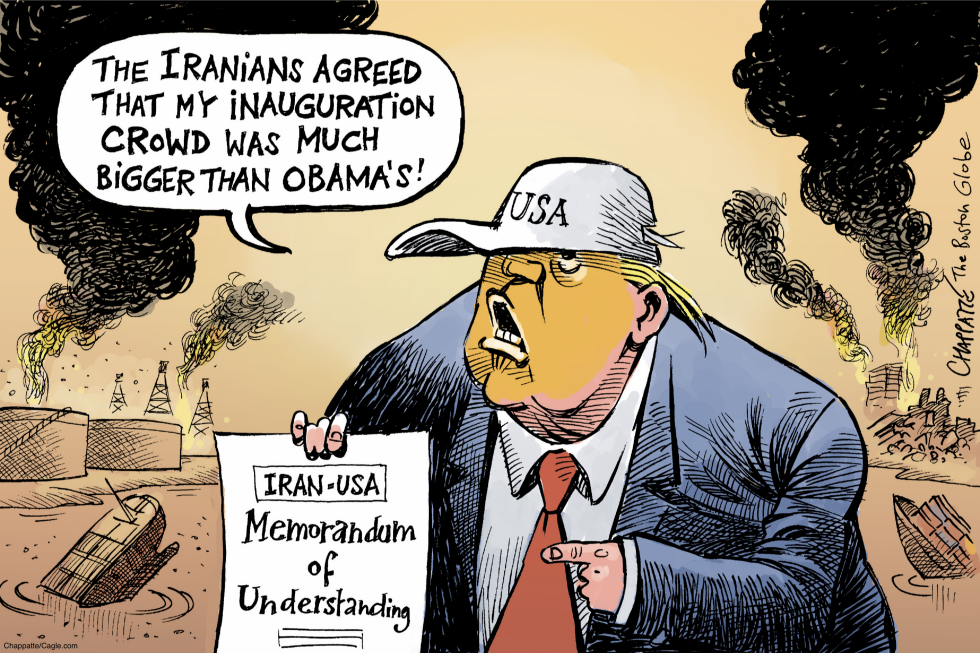
The cartoon shows Donald Trump holding an Iran-USA Memorandum of Understanding document while declaring his inauguration crowd larger than Obama's. Burning oil rigs and structures fill the background with thick smoke. The scene references tensions in US-Iran relations around the 2026 date.
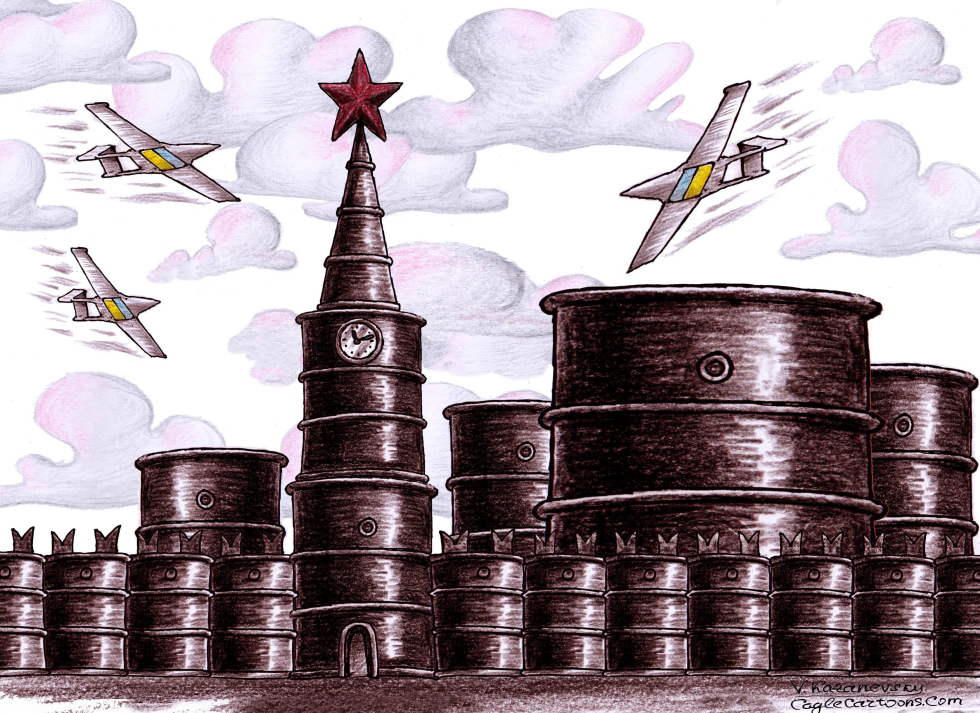
Ukrainian drones approach a Kremlin structure constructed entirely from oil barrels under a red star spire on June 18 2026. The image responds to ongoing strikes on Russian energy sites during the Ukraine conflict.
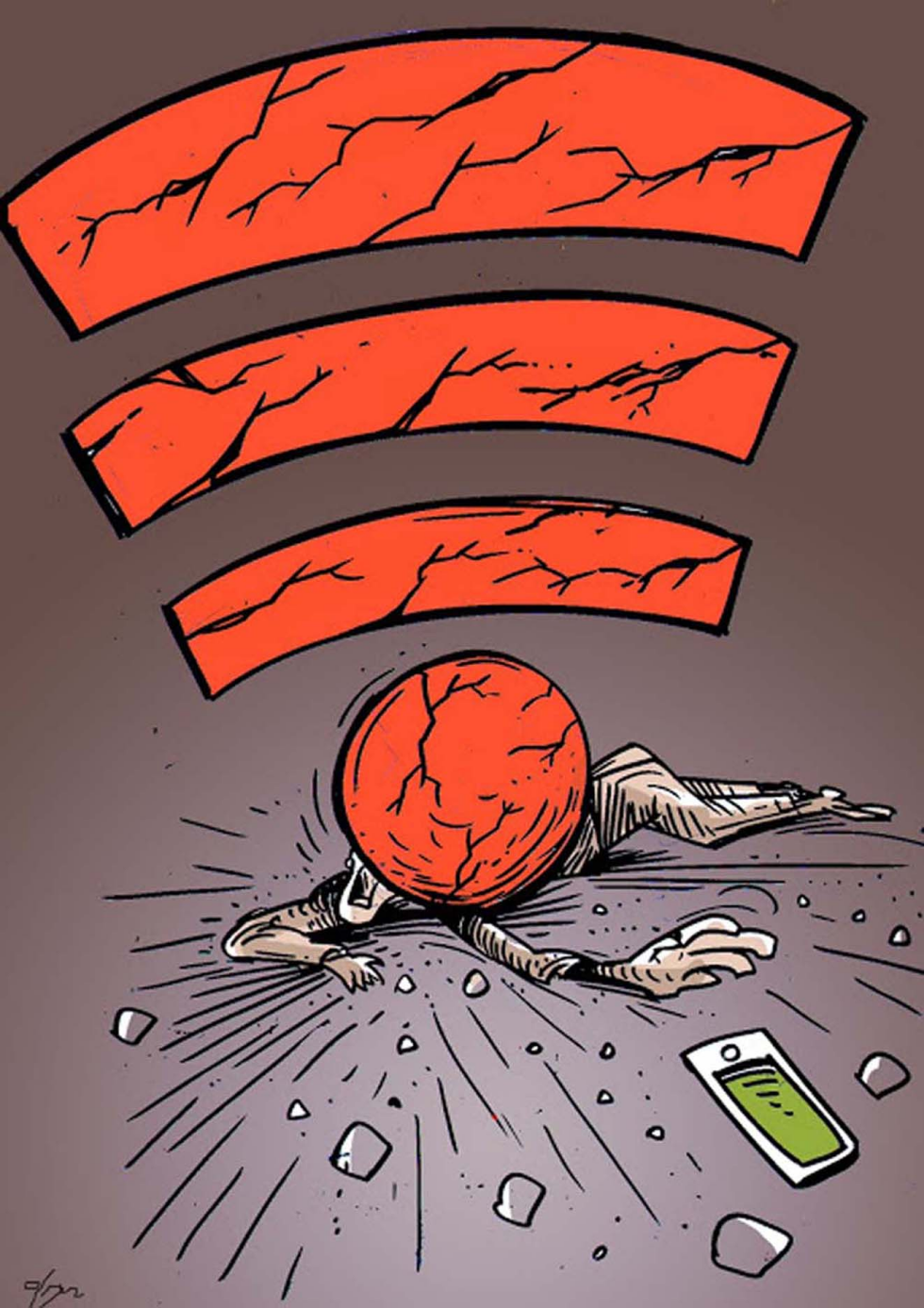
Wireless networks face mounting pressure from rising demand and aging infrastructure, leaving users stranded when signals falter. A dead phone battery compounds the isolation during outages. The piece frames this as a cautionary view of overreliance on fragile digital systems that can collapse without warning.
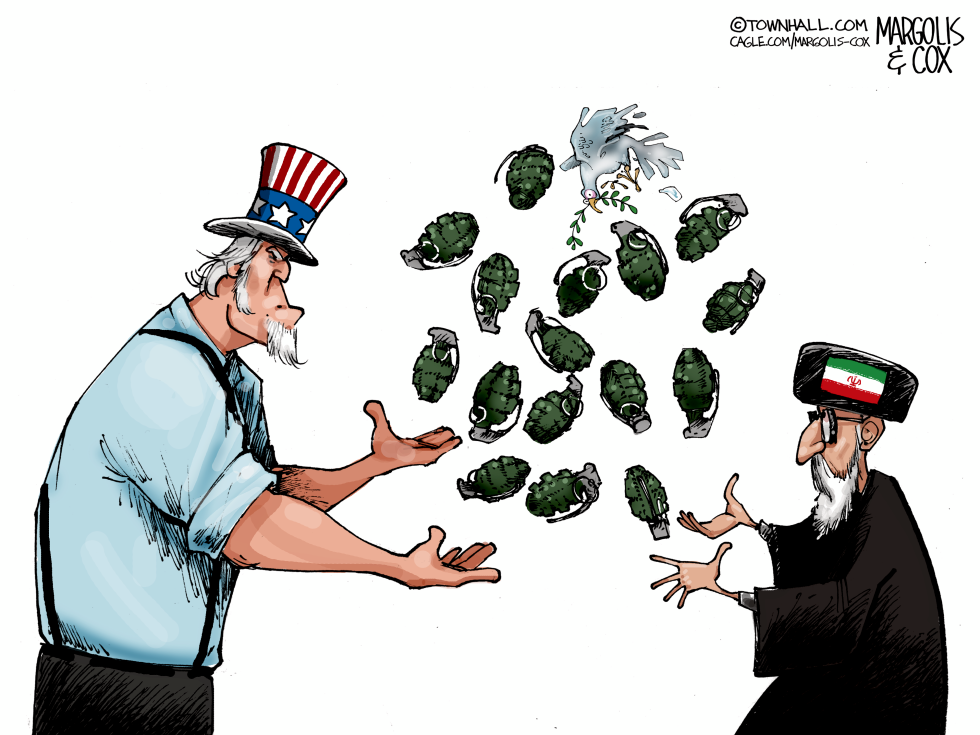
On June 16, 2026, the Margolis & Cox cartoon depicts Uncle Sam and an Iranian leader juggling grenades while a peace dove is struck mid-flight. The image responds to ongoing US-Iran tensions over nuclear issues and regional conflicts in the Middle East. The visual shows the two figures facing each other with outstretched hands as explosives arc between them. A wounded dove drops its olive branch above the scene. The cartoon highlights the precarious nature of diplomacy between Washington and Tehran at that moment.
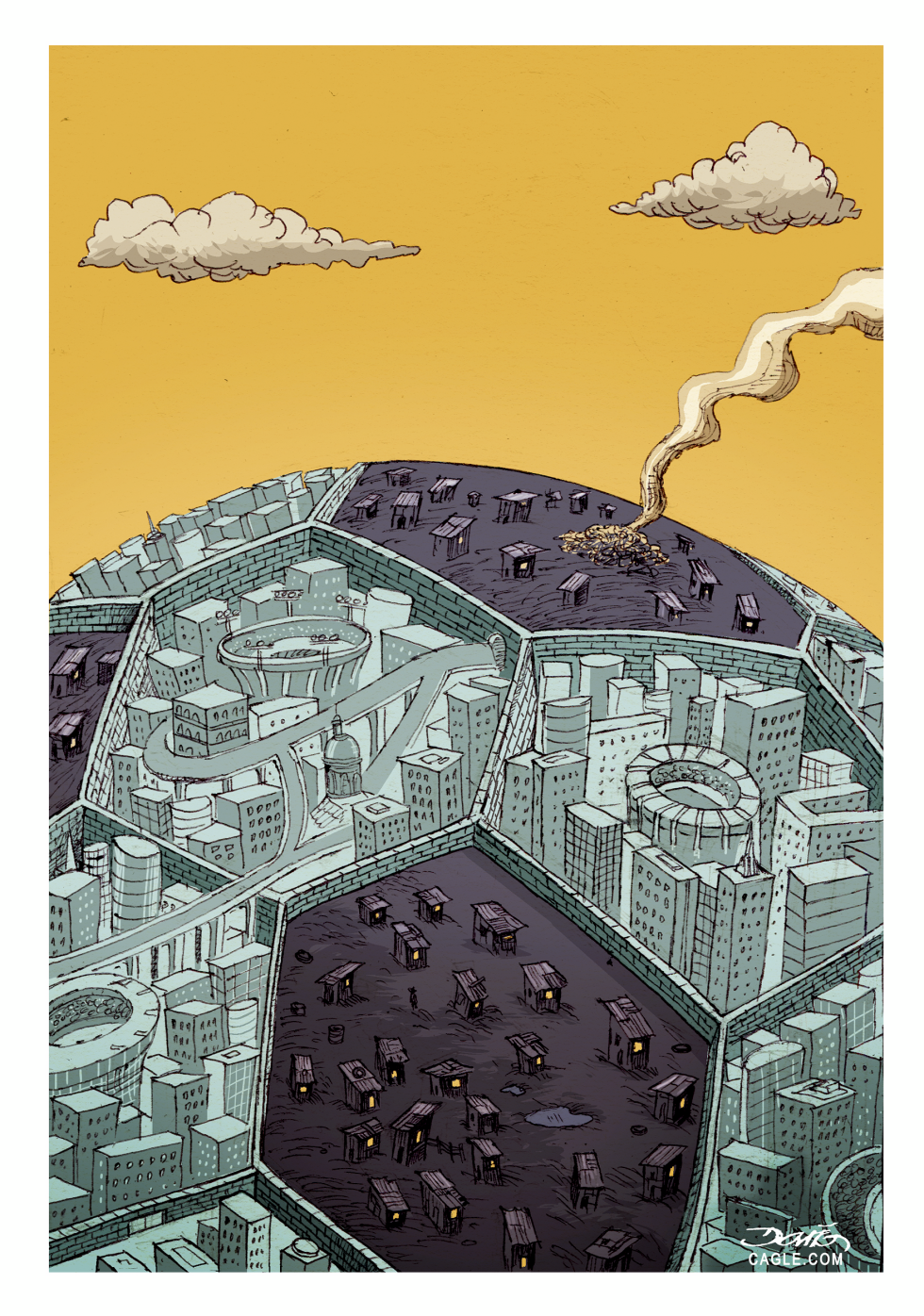
The June 2026 cartoon by Dario Castillejos depicts a segmented globe where modern stadiums and skyscrapers stand beside crowded shantytowns. Smoke drifts from a debris pile in one sector. The image coincides with preparations for the FIFA World Cup hosted by Mexico, Canada, and the United States.
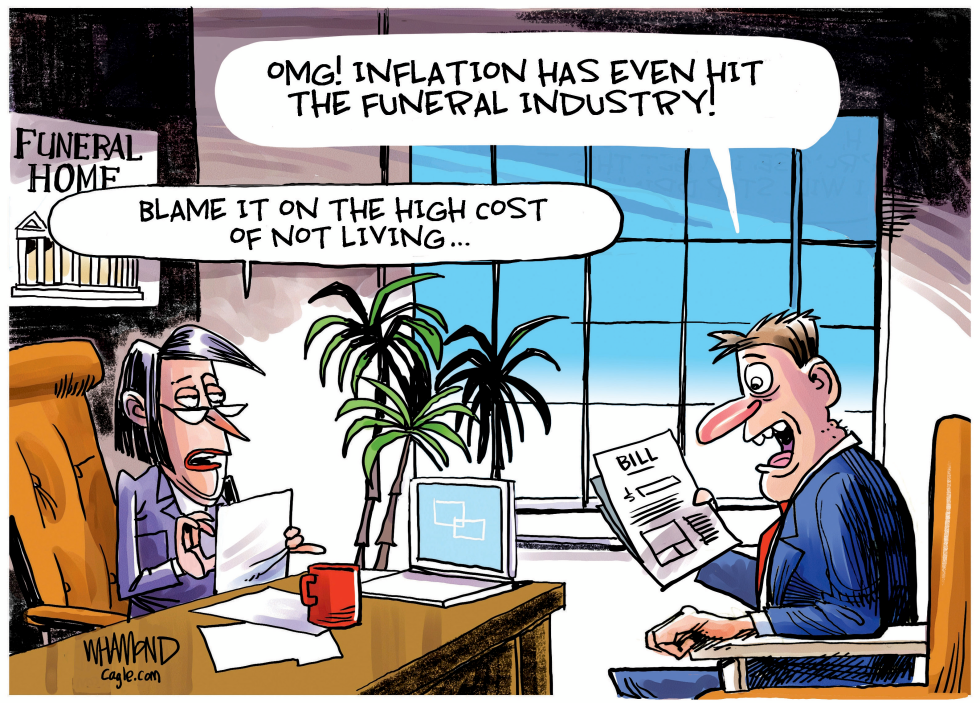
A funeral home director and client react to a high bill in an office setting. The exchange highlights how inflation has extended to the funeral sector. Speech bubbles deliver a pun on the high cost of not living. The scene reflects ongoing economic pressures on consumers including tariffs and rising prices for essentials. Publication occurs amid discussions of affordability challenges tied to recent policy decisions.
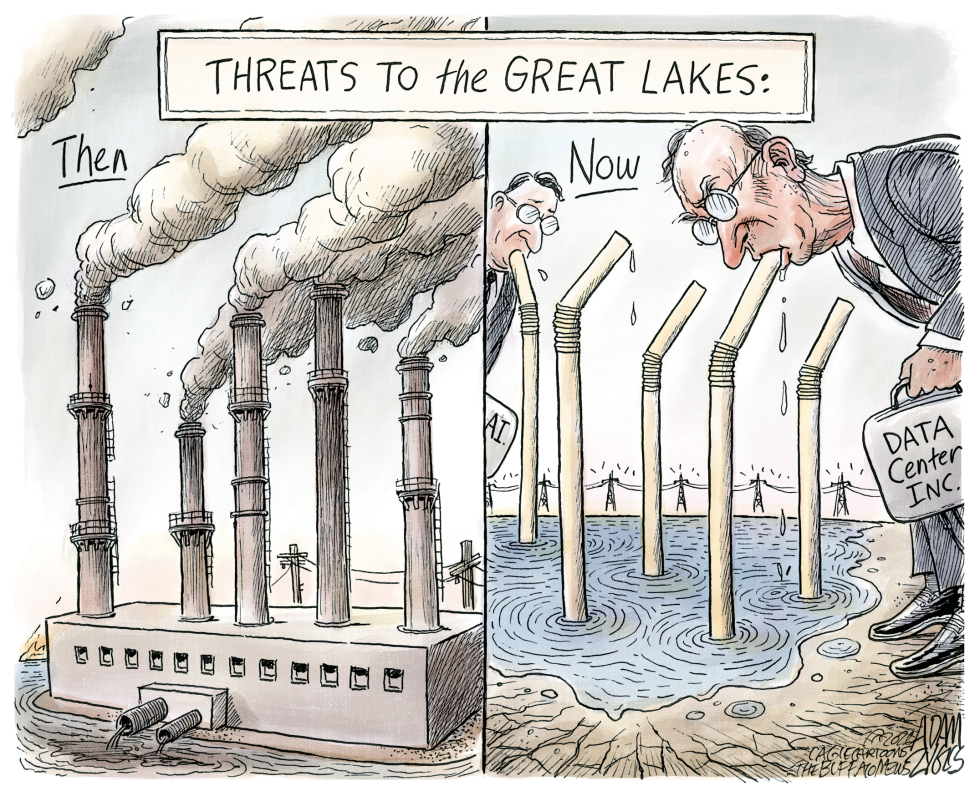
The cartoon contrasts historical industrial pollution of the Great Lakes with modern data center water consumption driven by artificial intelligence growth.