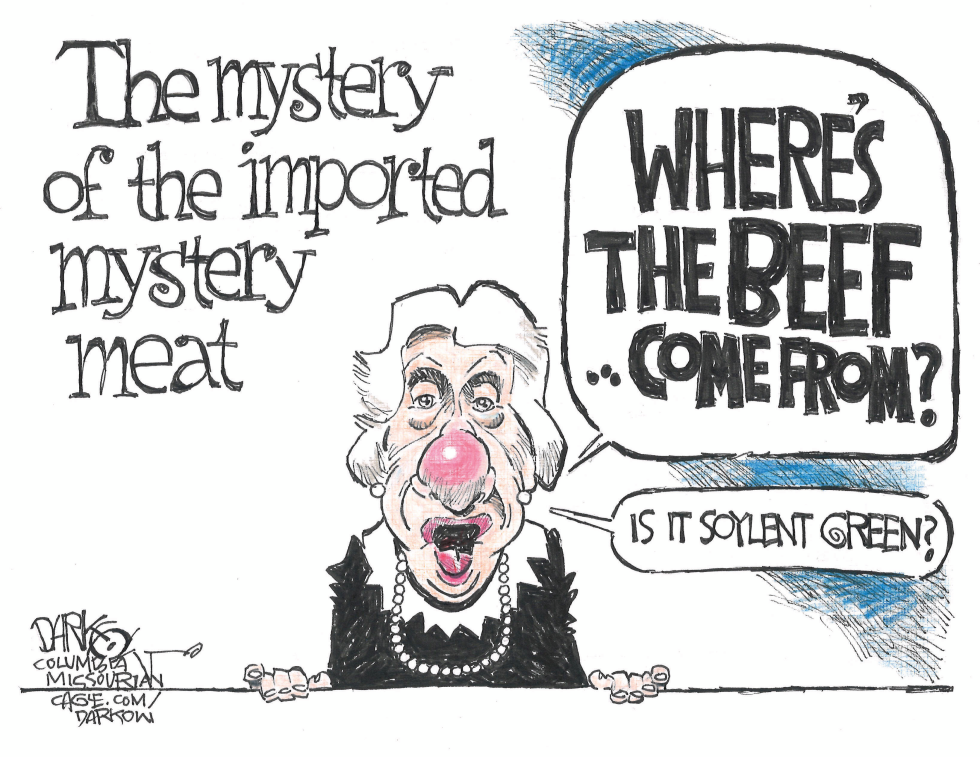
Questions about the origins and safety of imported beef have resurfaced amid broader debates over food supply chains. Regulators and consumers alike have raised concerns that labeling and inspection gaps allow lower-quality or misidentified products to reach shelves. The cartoon uses a classic slogan twist and a pop-culture reference to underscore public skepticism toward these imports. It argues that the lack of transparency turns everyday purchases into a guessing game with potential health risks. The piece positions the issue as one of accountability in trade and regulation rather than abstract policy.
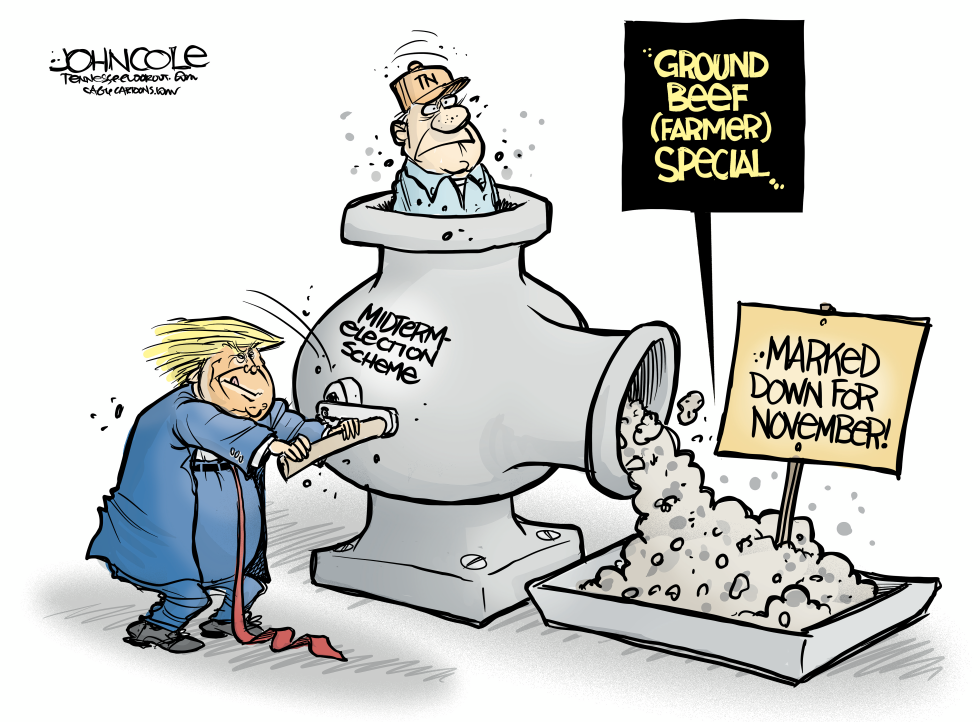
President Trump pushes a midterm election scheme that grinds down farmers ahead of the 2026 vote. The move reflects ongoing tensions between administration policies and rural constituencies whose support remains critical in key states.
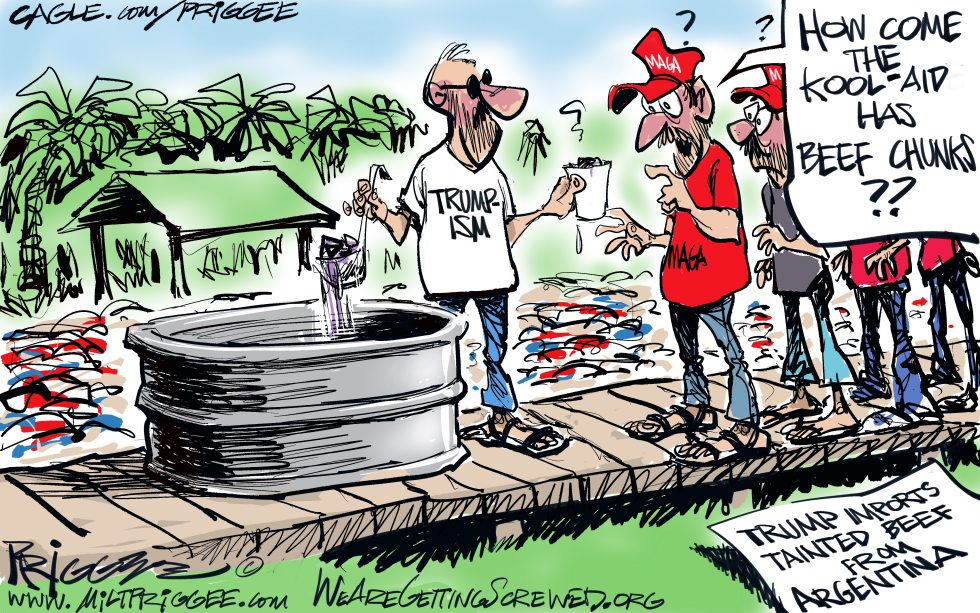
The cartoon depicts a figure labeled Trumpism pouring liquid into a well while two men in MAGA hats question why the Kool-Aid contains beef chunks. A sign at the bottom states Trump imports tainted beef from Argentina. The scene references recent policy allowing beef imports from Argentina amid concerns over quality. Supporters appear puzzled by the outcome of the trade decision. The image uses the classic Kool-Aid metaphor to illustrate how backers process the news of the imports.
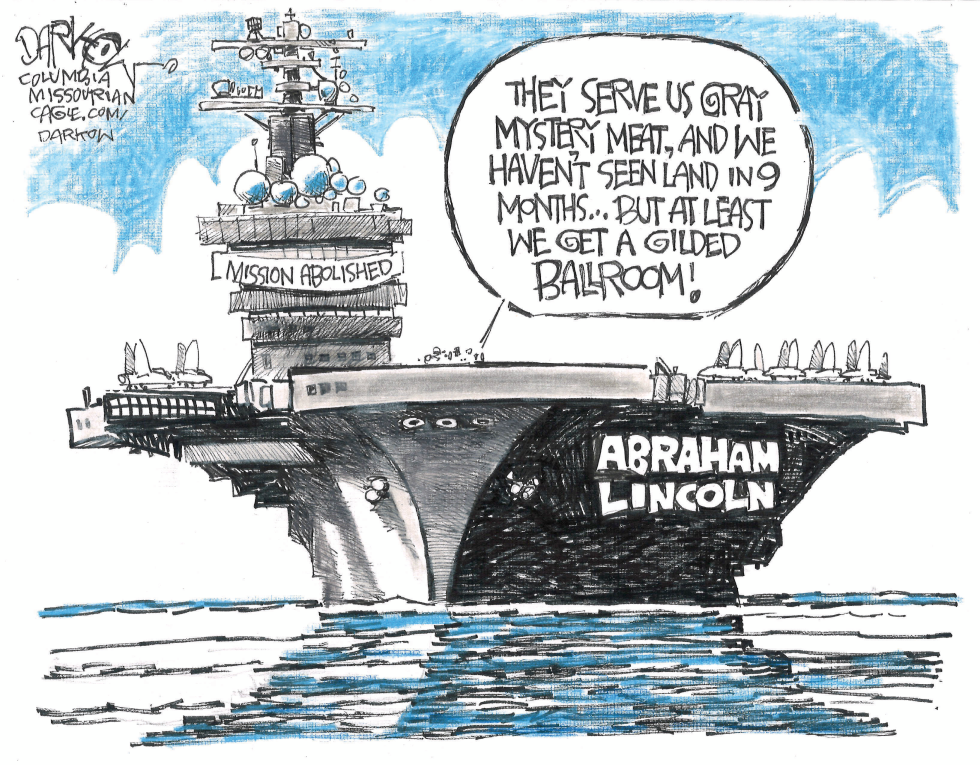
The USS Abraham Lincoln remains on extended deployment with sailors citing ongoing issues with food quality and time at sea. The addition of a gilded ballroom has drawn attention to priorities in naval operations. The piece highlights crew discontent with conditions despite the upgrade.
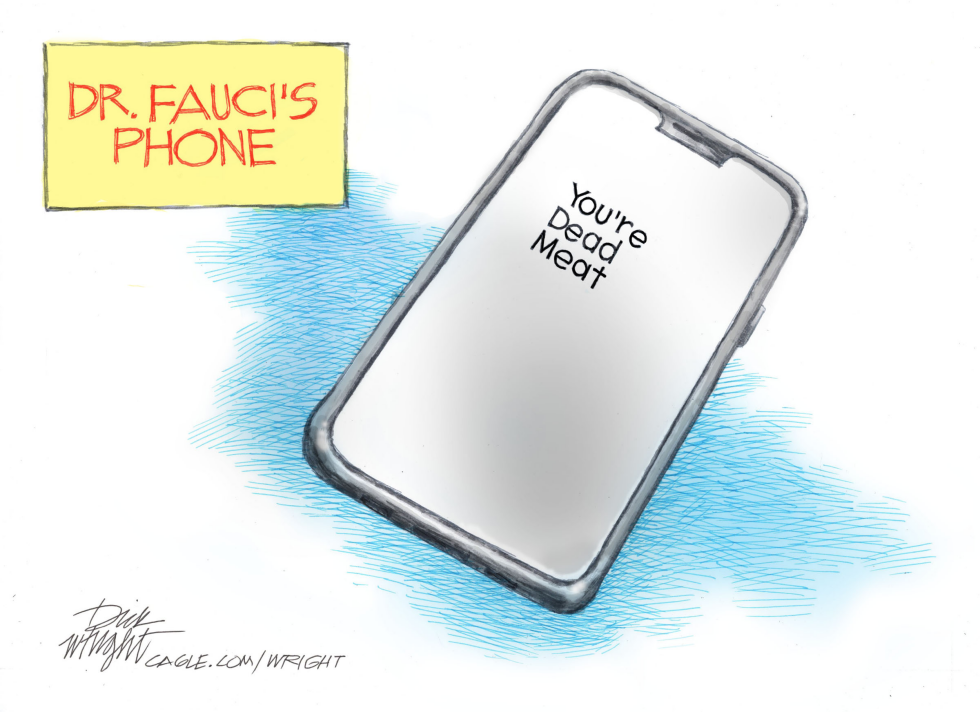
A death threat surfaces on a phone identified as belonging to Dr. Anthony Fauci. The incident underscores persistent security risks faced by high-profile public health figures. Such threats reflect broader tensions over pandemic-era decisions and erode trust in institutions. The piece highlights the personal danger these messages pose and criticizes the climate that encourages them.
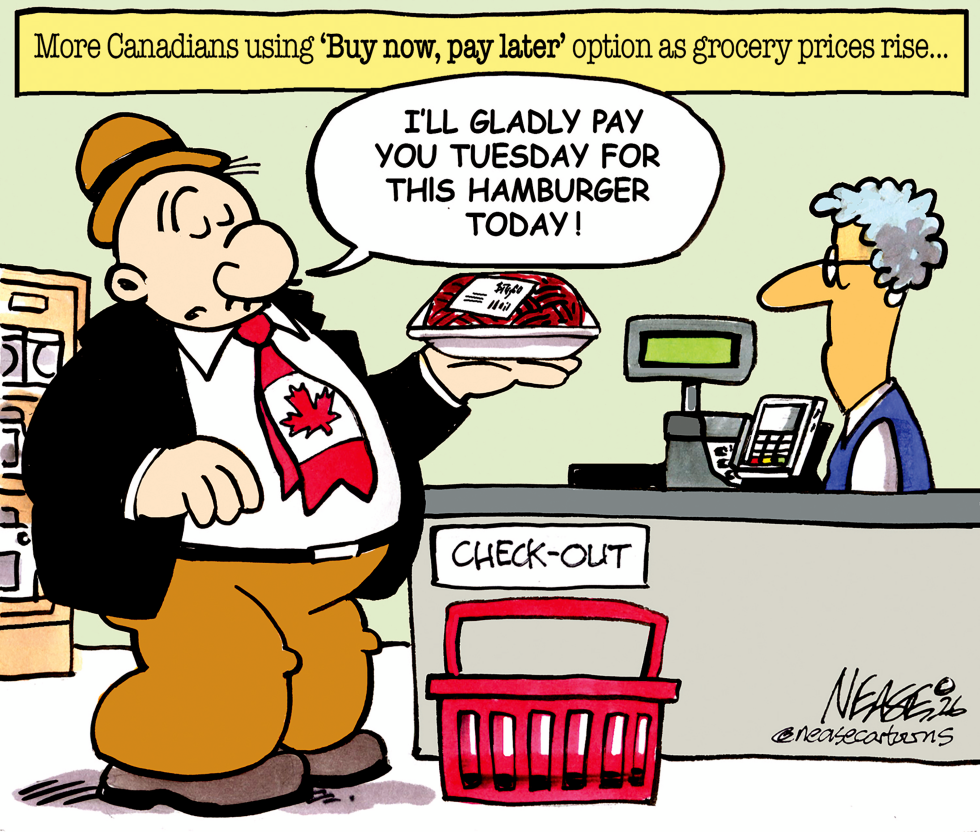
A cartoon published July 8, 2026, shows a Canadian shopper at a grocery checkout counter holding a package of hamburger meat while declaring he will gladly pay Tuesday for the item today. The scene references the classic Wimpy line and highlights growing use of buy now pay later services as grocery prices continue to climb in Canada.
On Father's Day a father stands on a balcony facing his two children who present him with tongs, an apron labeled The Grill Father, a meat thermometer and a wrapped box. The children announce the items will allow BBQ cooking that day. The father replies that they do not have a grill. A caption below attributes the mismatch to social media marketing influence and obliviousness.
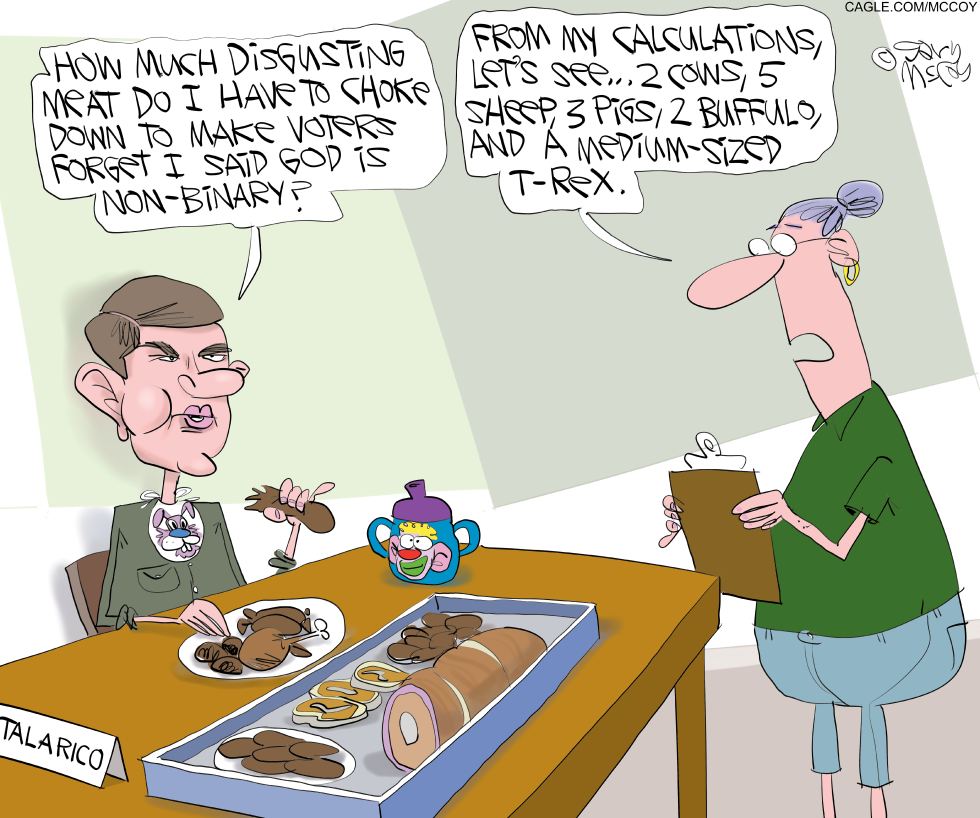
Texas state Representative James Talarico appears at a table laden with meat dishes in this June 2026 cartoon. He questions how much animal protein is needed to make voters overlook his earlier statement that God is non-binary. An aide tallies consumed livestock including cows, sheep, pigs, buffalo and a T-Rex. The scene references Talarico's progressive positions and upcoming political considerations.
A political cartoon by Dave Granlund depicts an armored security truck labeled Security Escort Service surrounded by uniformed guards with rifles. A woman carries grocery bags past the vehicle while a speech bubble recalls cheaper times. The image responds to recent spikes in grocery prices linked to tariffs. Food costs for items like coffee and meat have jumped sharply. Families face tighter budgets as inflation pressures mount. The cartoon uses the escort motif to highlight how ordinary shopping now requires protection due to high prices.
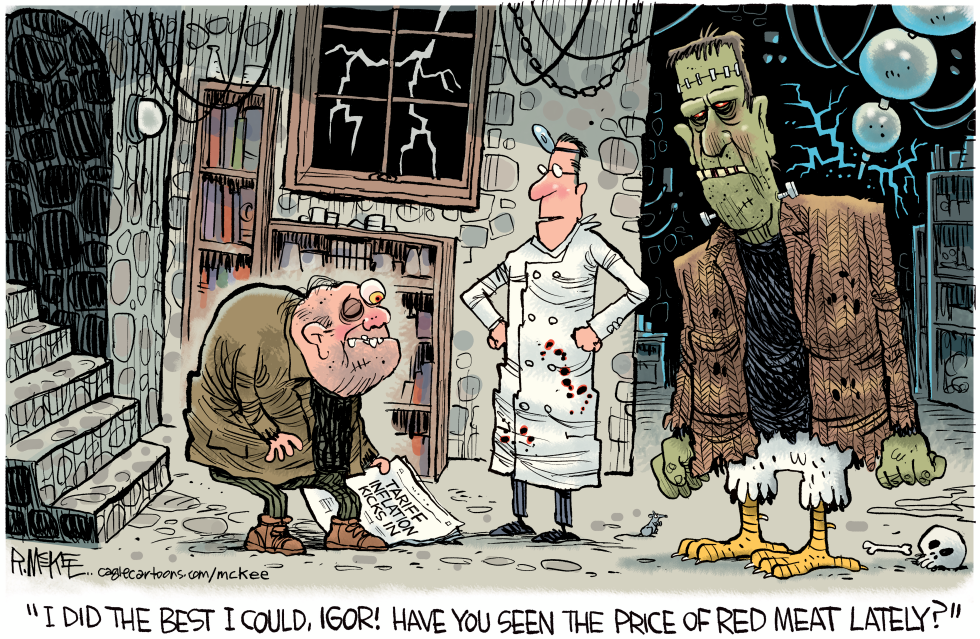
A laboratory scene shows a scientist in a coat labeled Tariff Inflation standing beside a hulking Frankenstein-style monster assembled from meat cuts. The creature has a stitched head, angry expression, and chicken feet. A hunched assistant named Igor holds a newspaper headlined Tariff Inflation while complaining about red meat prices. The caption reads: I did the best I could, Igor! Have you seen the price of red meat lately? The October 2025 cartoon links recent tariff policies to higher grocery costs.