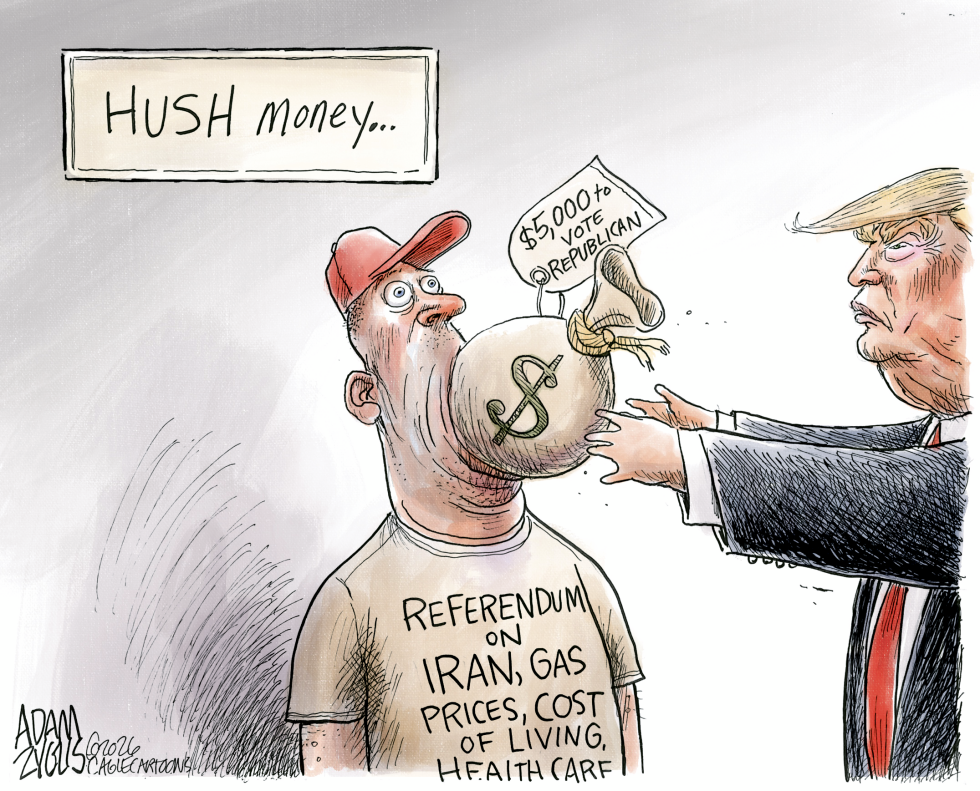
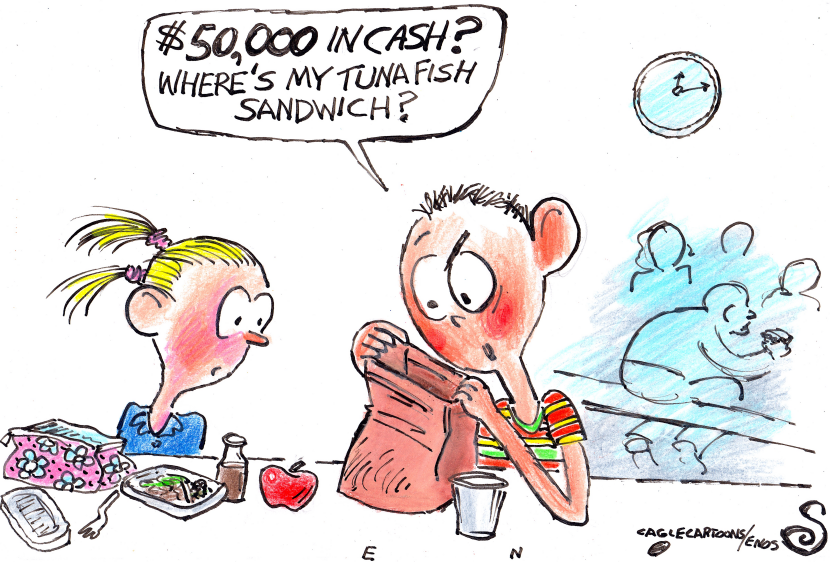
The cartoon shows Donald Trump handing a large bag of cash labeled as hush money to a man in a referendum shirt covering Iran, gas prices, cost of living and health care. A tag on the bag promises $5,000 to vote Republican. The scene responds to ongoing debates over election integrity and foreign policy issues involving Iran as of September 2026. It uses the visual metaphor of a bribe to comment on alleged attempts to influence voter priorities through financial incentives.
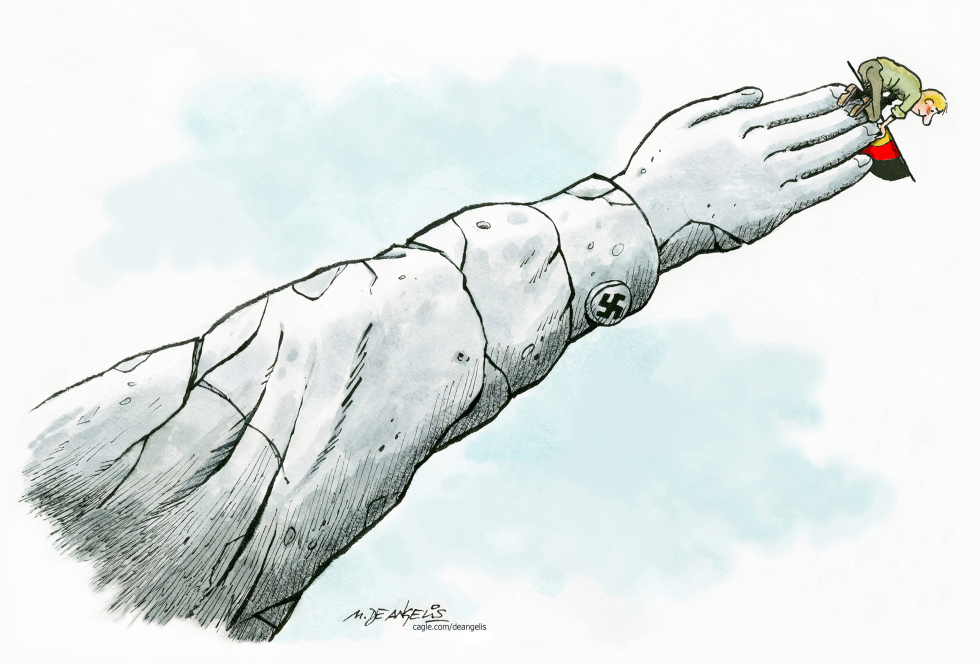
Concerns over far-right political gains in Germany have intensified in recent years, with parties embracing nationalist rhetoric drawing scrutiny for echoing historical extremist movements. The development matters because it tests the resilience of post-war democratic institutions in Europe's largest economy. The cartoon argues that such influences continue to exert a controlling grip on German political life despite decades of denazification efforts.
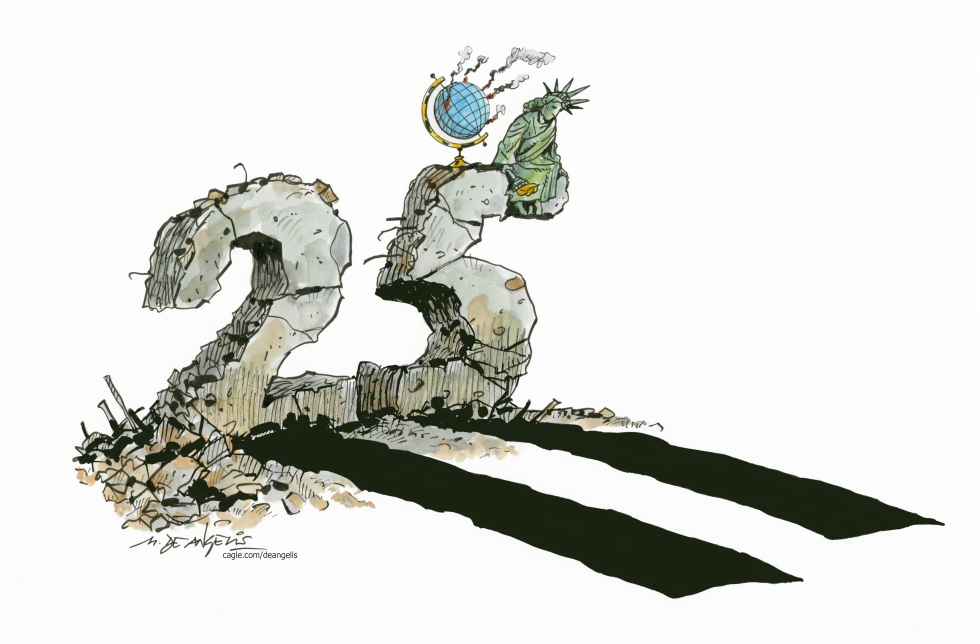
September 11, 2026 marks the 25th anniversary of the attacks that reshaped U.S. foreign policy and domestic security. The milestone arrives amid ongoing global conflicts, eroded alliances, and questions about whether the post-9/11 era delivered promised security. The cartoon frames the anniversary as a moment of visible strain on core American symbols and the broader international order they once anchored.
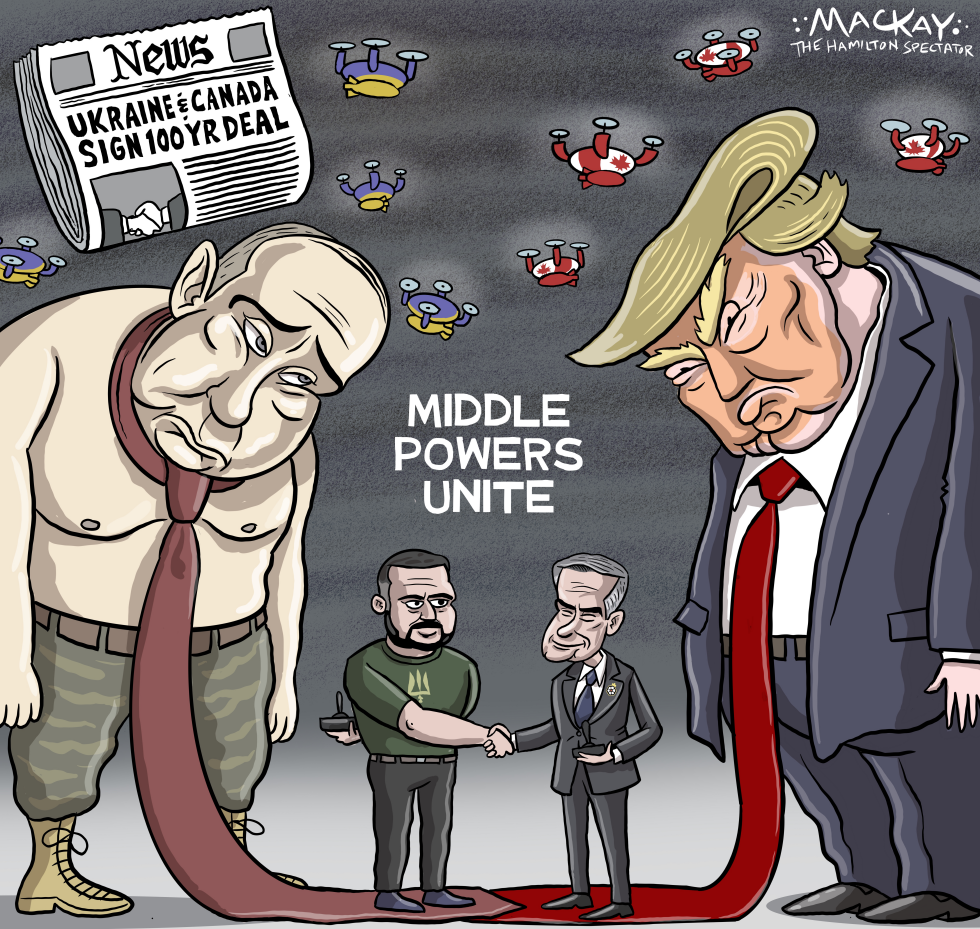
The political cartoon illustrates the signing of a 100-year agreement between Canada and Ukraine, with President Zelenskyy and a Canadian leader shaking hands on a red carpet. Large caricatures of Vladimir Putin and Donald Trump stand on either side, looking down at the smaller central figures. Canadian flag drones fill the background sky near a newspaper announcing the pact. The central text reads Middle Powers Unite. The image comments on how the bilateral deal elevates secondary nations in global affairs while established powers watch the development.
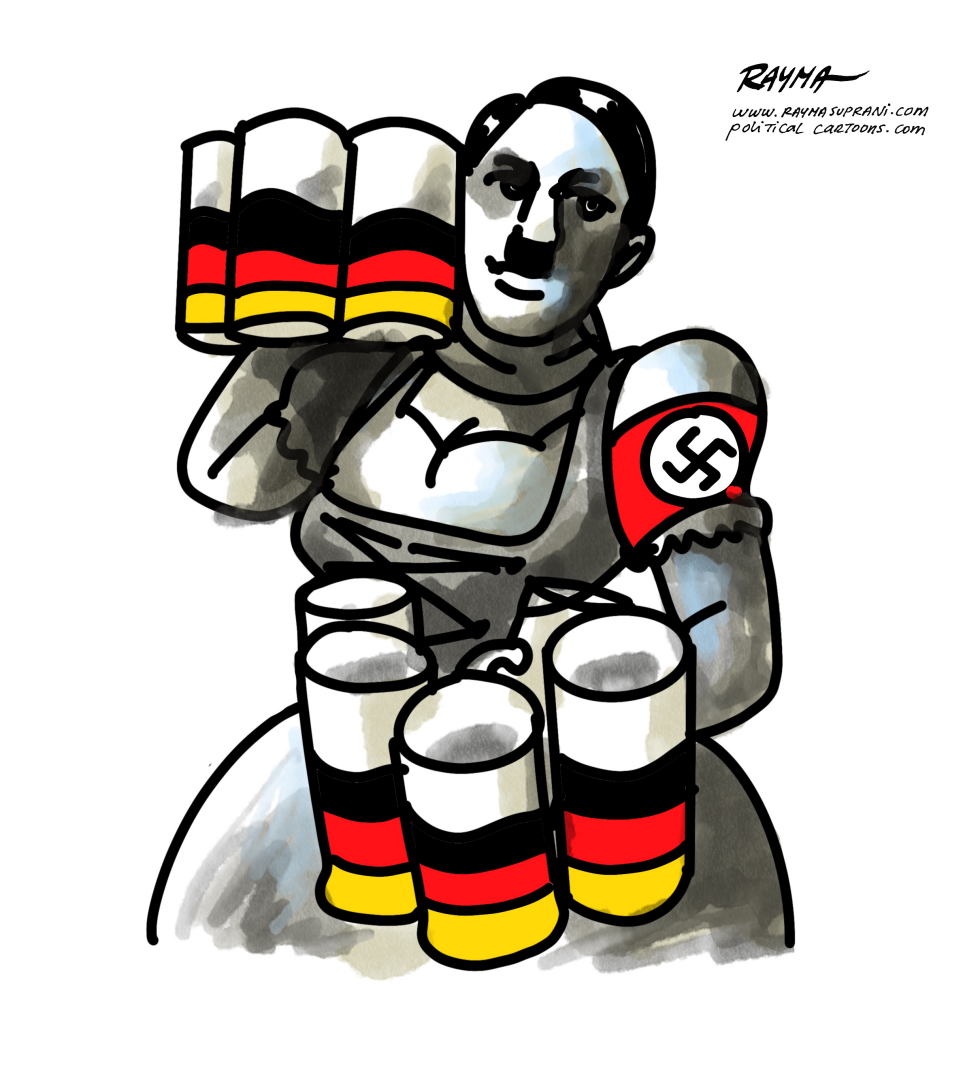
The cartoon depicts a figure resembling Adolf Hitler clad in armor and bearing a swastika armband while surrounded by beer mugs colored like the German flag. It responds to ongoing discussions about far-right movements in Germany by blending historical Nazi references with contemporary beer culture symbols. The work highlights perceived connections between political radicalism and national social customs as of the 2026 publication date. No specific recent event anchors the piece beyond recurring themes of extremism in European politics.
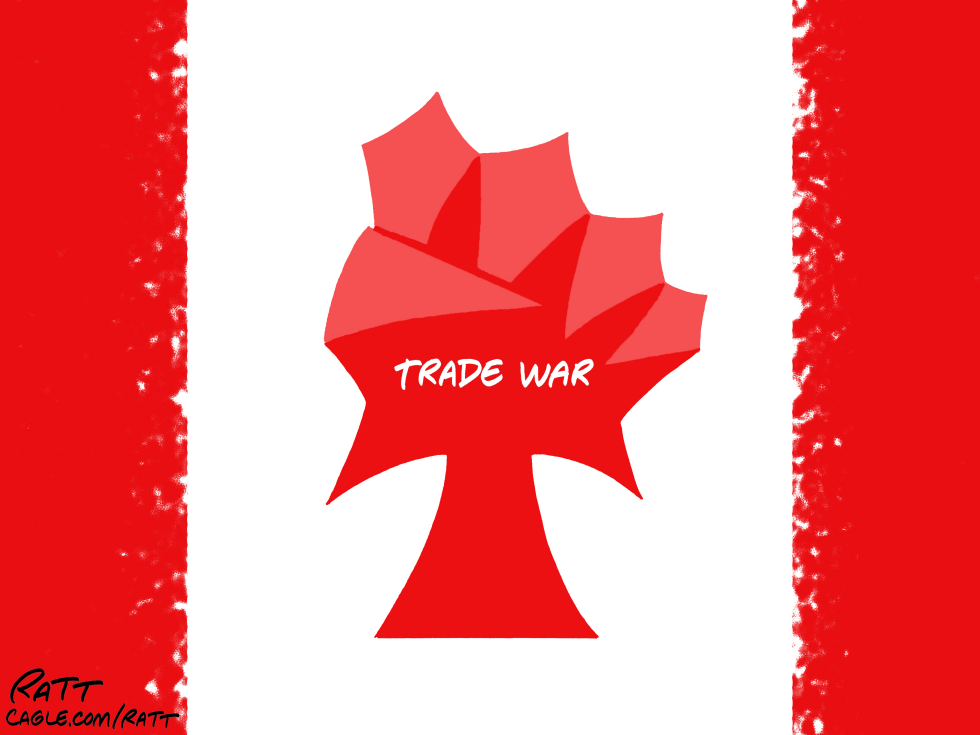
Ongoing US-Canada trade tensions escalated in 2026 with new tariff threats targeting Canadian exports. The dispute threatens key sectors including autos, lumber and agriculture, raising costs for consumers on both sides of the border. Canada has signaled plans to diversify markets and strengthen domestic industry. The cartoon frames the conflict as a direct assault on Canadian sovereignty and economic stability. It portrays the trade war as fracturing national symbols while urging a stronger northern response.
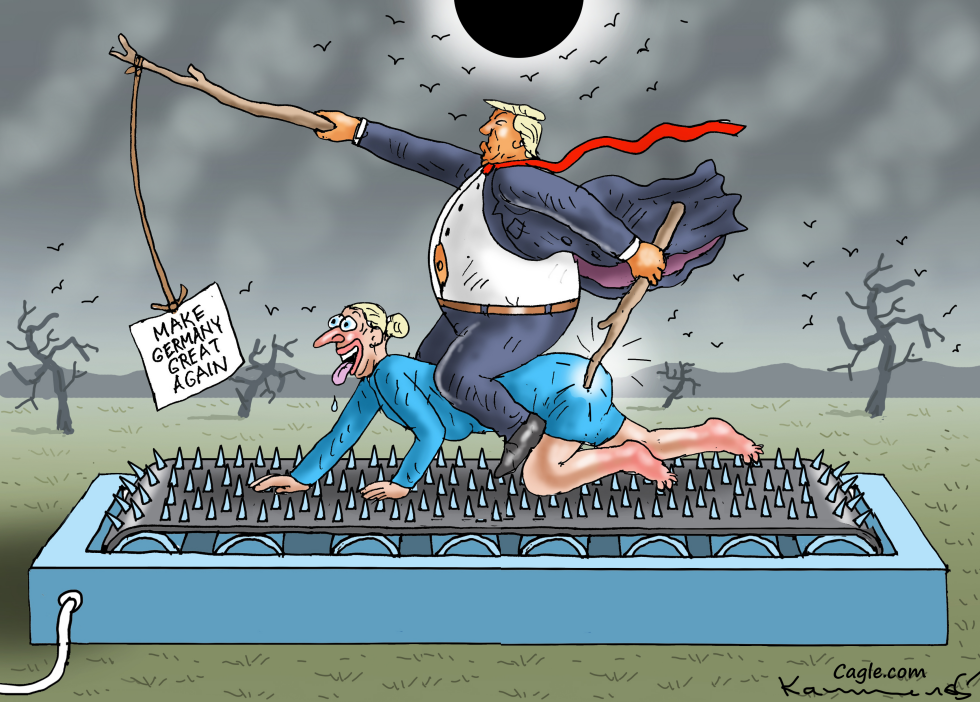
Donald Trump promotes a revival slogan aimed at Germany while Angela Merkel faces the consequences. The effort highlights ongoing tensions in transatlantic relations and questions about external influence on European domestic policy. The piece argues that such interventions impose unnecessary hardship without delivering benefits.
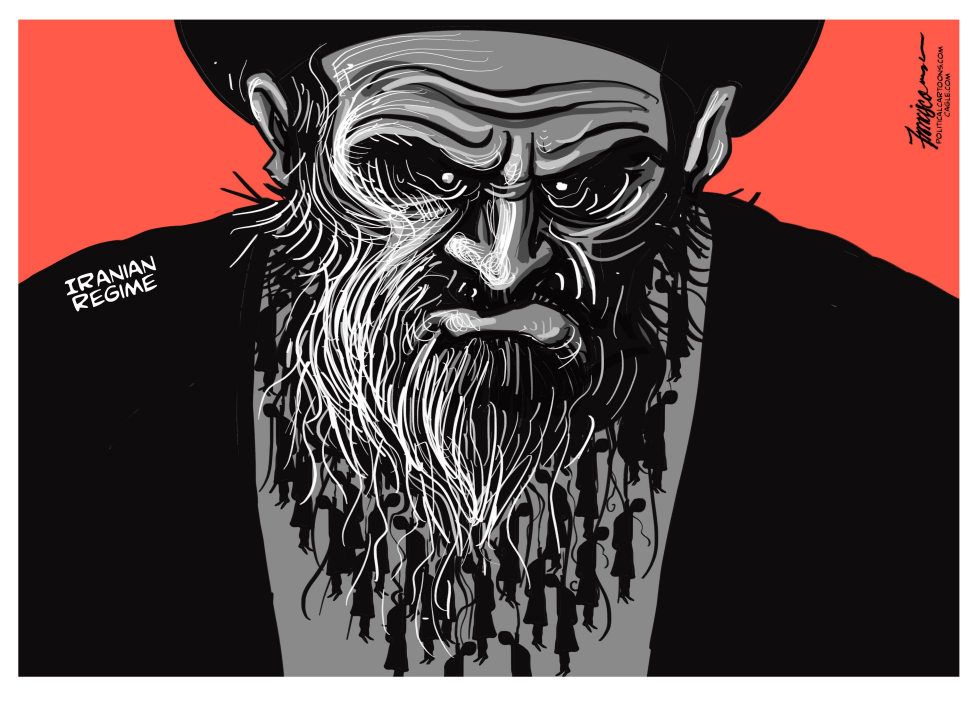
Iran continues to carry out executions at a high rate, targeting protesters, dissidents and minorities under the authority of Supreme Leader Ayatollah Ali Khamenei. The practice has drawn renewed criticism from human rights groups and Western governments concerned about due process and political repression. The cartoon frames the regime itself as the direct agent of these deaths, underscoring the leadership's personal responsibility for the ongoing campaign of hangings.
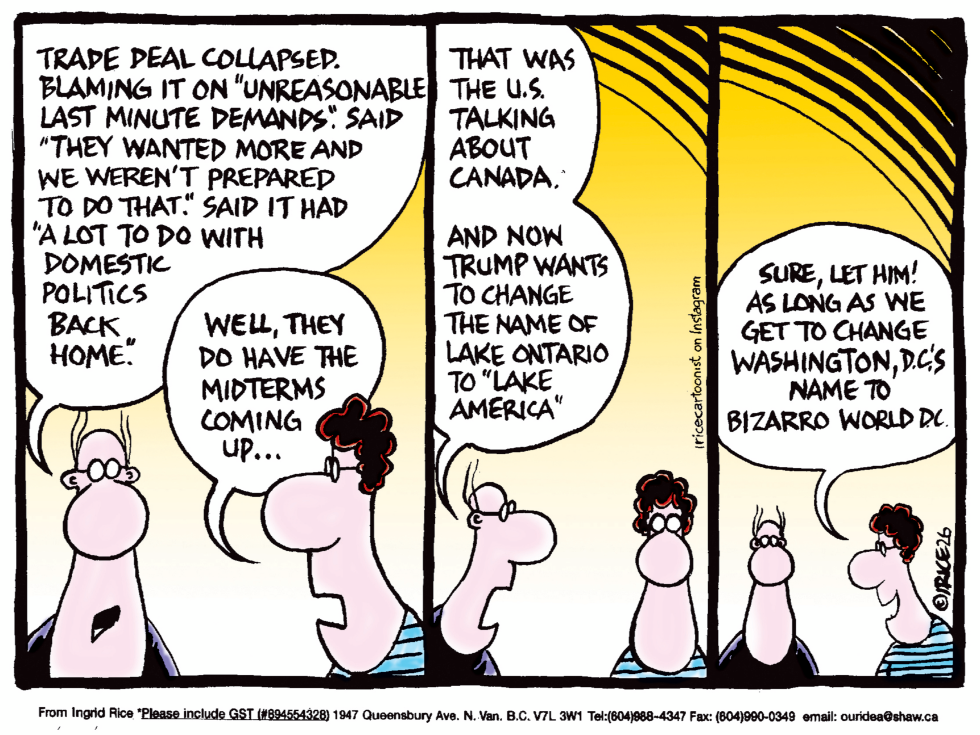
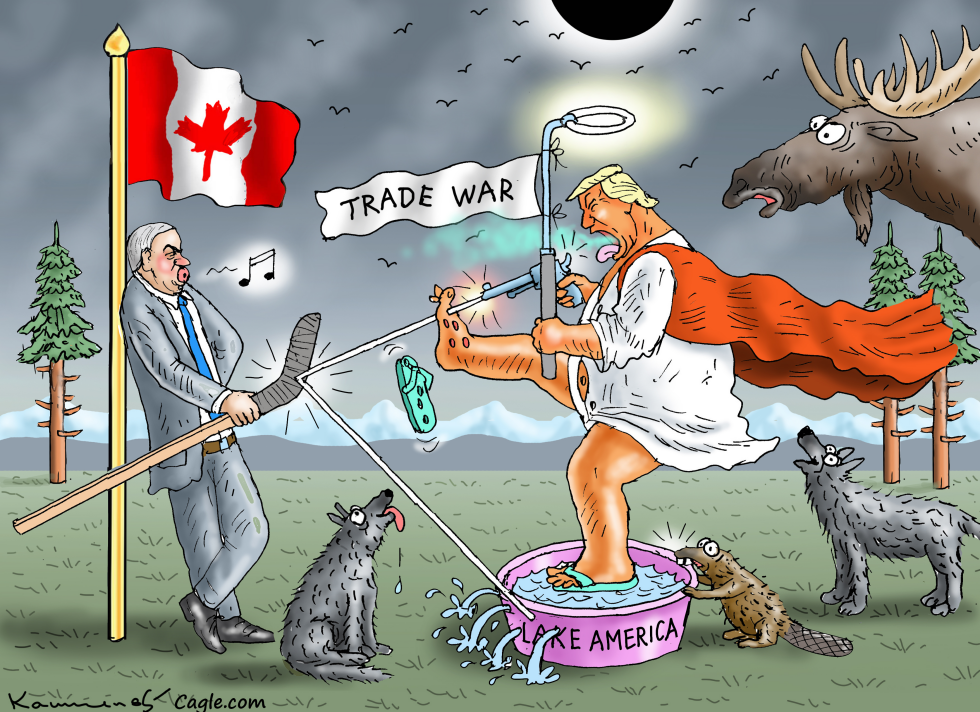
A Canada-U.S. trade deal collapsed after U.S. negotiators cited unreasonable last-minute demands and linked the failure to domestic politics ahead of midterms. President Trump then proposed renaming Lake Ontario to Lake America. Canadian officials responded by offering to rename Washington D.C. to Bizarro World DC if the change proceeds. The exchange highlights how trade tensions and political posturing are escalating between the two countries. The cartoon mocks the name-change idea as emblematic of broader dysfunction in bilateral relations.
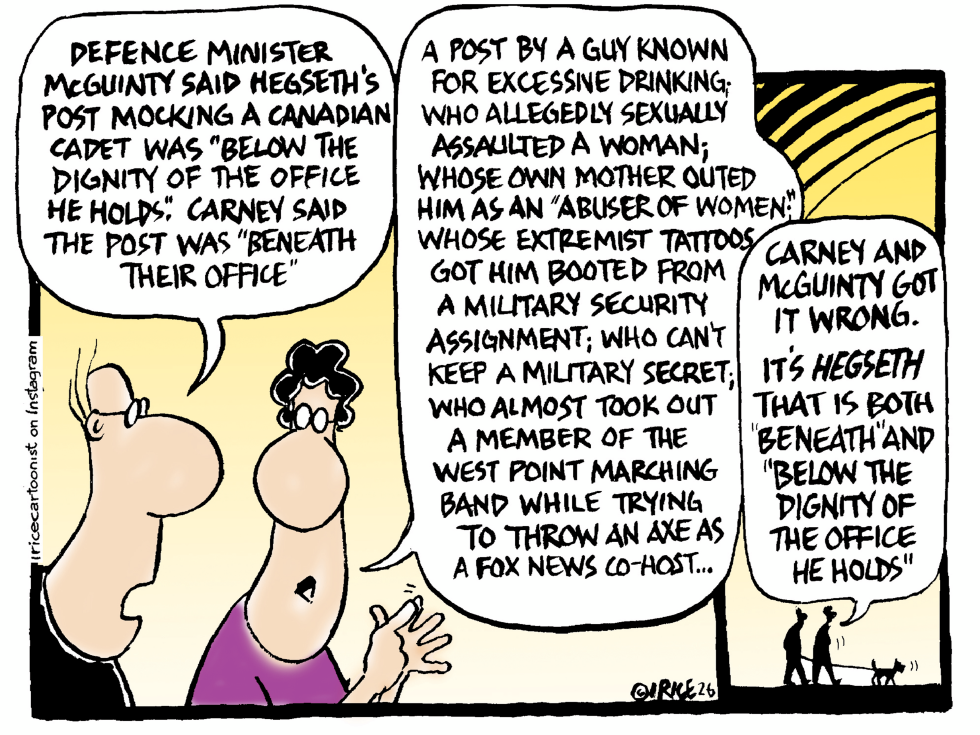
Canadian Defence Minister David McGuinty and Mark Carney publicly condemned a social media post by Pete Hegseth mocking a Canadian cadet, calling it beneath the dignity of the office. The remarks came amid Hegseth's nomination process for a senior U.S. defense position. The cartoon argues the ministers have the assessment backward, pointing instead to Hegseth's history of alleged misconduct, security clearance problems, and public incidents as the true disqualifiers. This reflects ongoing debate over nominee vetting standards and cross-border political commentary on U.S. appointments.
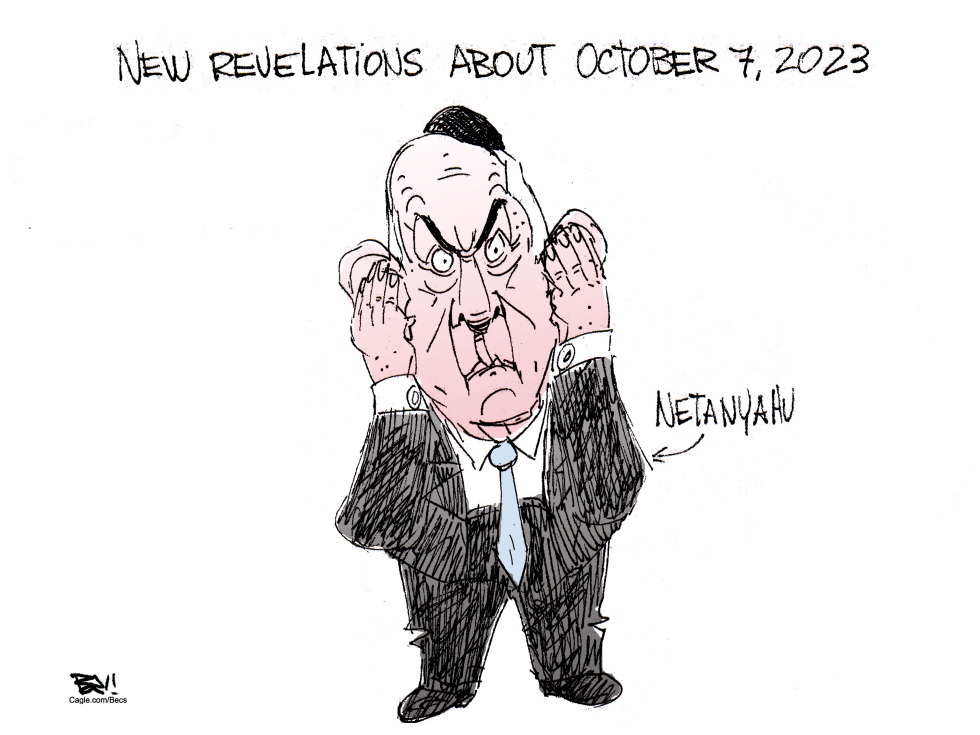
New details have surfaced regarding intelligence and preparedness failures ahead of the October 7, 2023 Hamas attacks. Israeli Prime Minister Benjamin Netanyahu has drawn criticism for appearing to dismiss these updates rather than address them directly. The ongoing debate centers on political responsibility for the deadliest attack in Israel's history and the government's handling of subsequent inquiries. Netanyahu's approach risks deepening public distrust in leadership during a period of heightened regional tension. The cartoon portrays this stance as deliberate avoidance of uncomfortable facts.
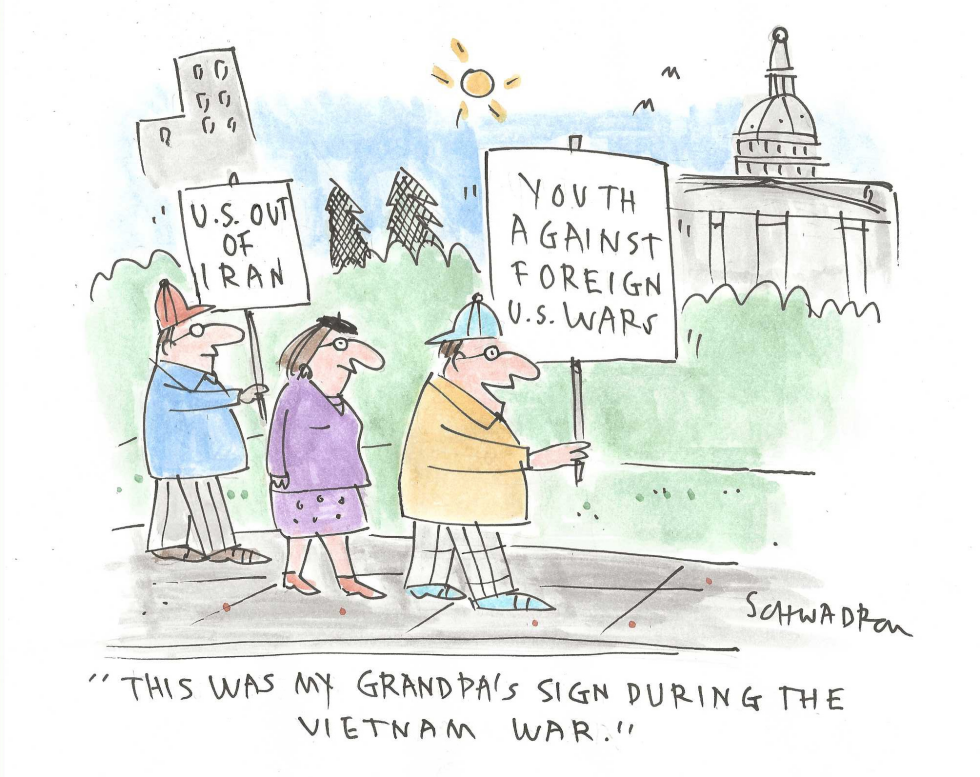
Anti-war demonstrators gather near the Capitol with signs calling for an end to US involvement in Iran and broader foreign conflicts. One protester notes that his sign originated during the Vietnam War, underscoring continuity across generations. The piece highlights persistent public opposition to military engagements abroad and questions the repetition of past policy mistakes.
President Trump launched new tariffs on Canadian goods in early September 2026, citing trade imbalances and border issues. The move immediately prompted Canadian countermeasures including duties on US exports. The policy shift disrupts integrated supply chains in autos, energy and agriculture that support millions of jobs on both sides of the border. Markets reacted with volatility as investors weighed the costs of renewed protectionism. The cartoon portrays the tariff campaign as self-inflicted harm that leaves the US exposed to swift Canadian pushback.
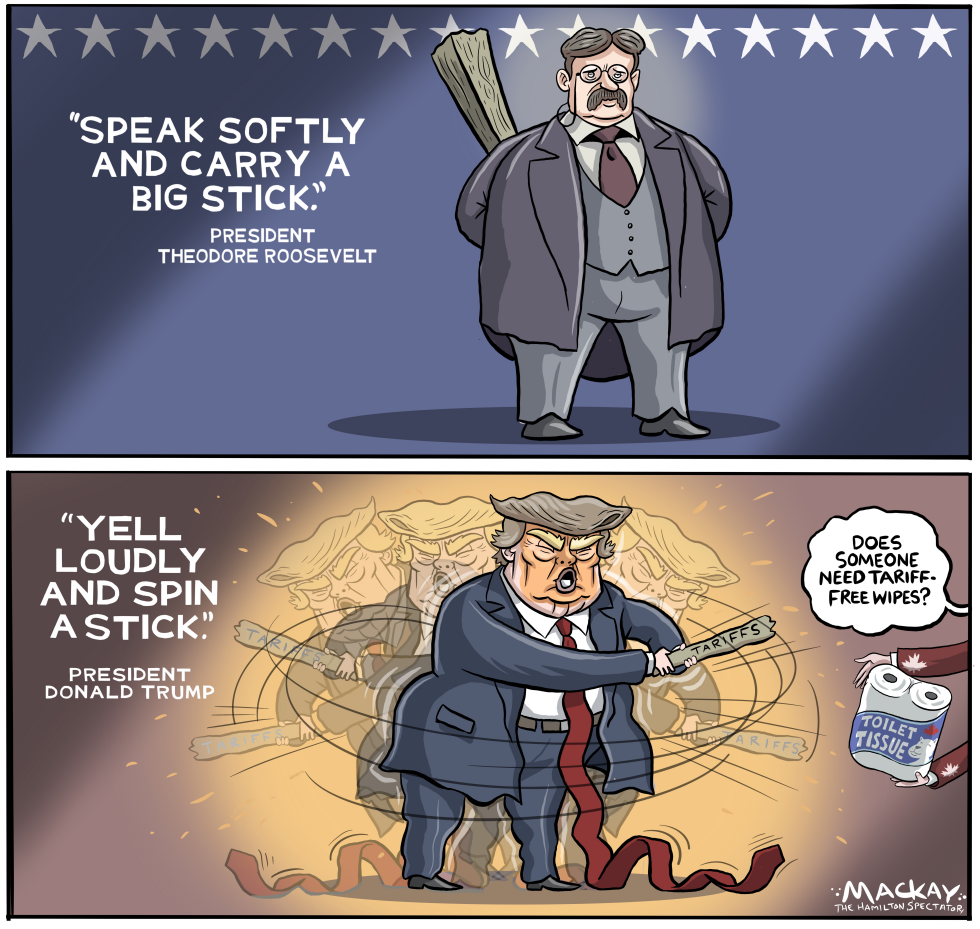
The cartoon by Graeme MacKay contrasts Theodore Roosevelt's famous speak softly and carry a big stick approach with Donald Trump's version of yelling loudly and spinning a stick covered in tariffs. In the lower panel Trump appears dizzy from the motion as a Canadian hand offers toilet tissue labeled tariff-free wipes. The image comments on recent US tariff actions and their impact on Canadian trade relations as of the September 2026 publication date.
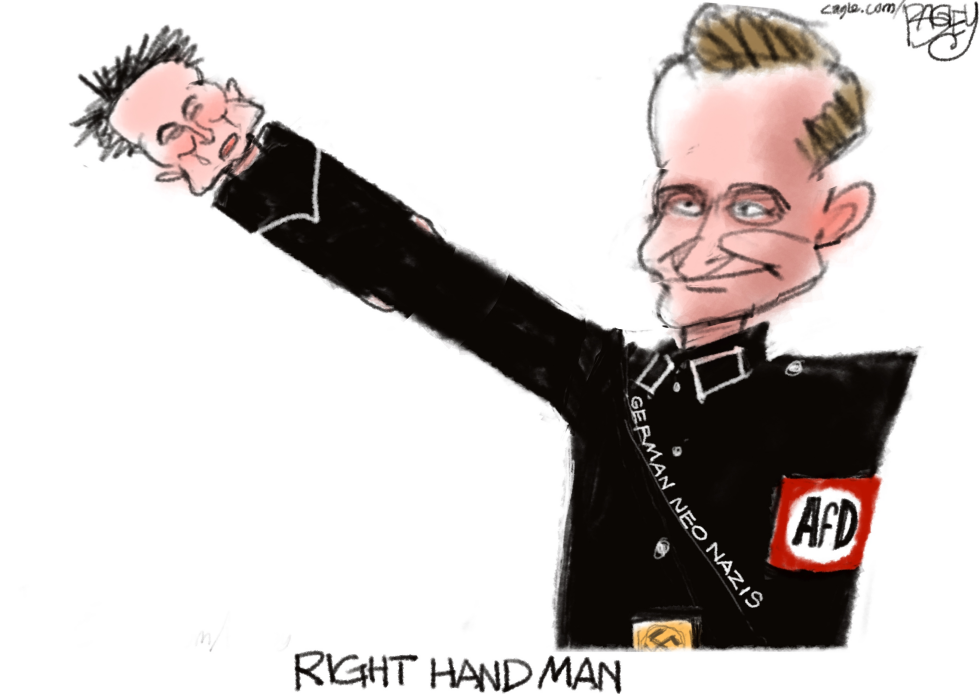
The Alternative for Germany party continues to draw accusations of harboring neo-Nazi elements as recent events spotlight its members and rhetoric. The party has gained electoral ground while facing investigations and public backlash over extremist ties. This development matters because it reflects broader challenges to democratic norms in Europe. The cartoon takes the position that AfD operates as a vehicle for neo-Nazi influence rather than a legitimate political force.