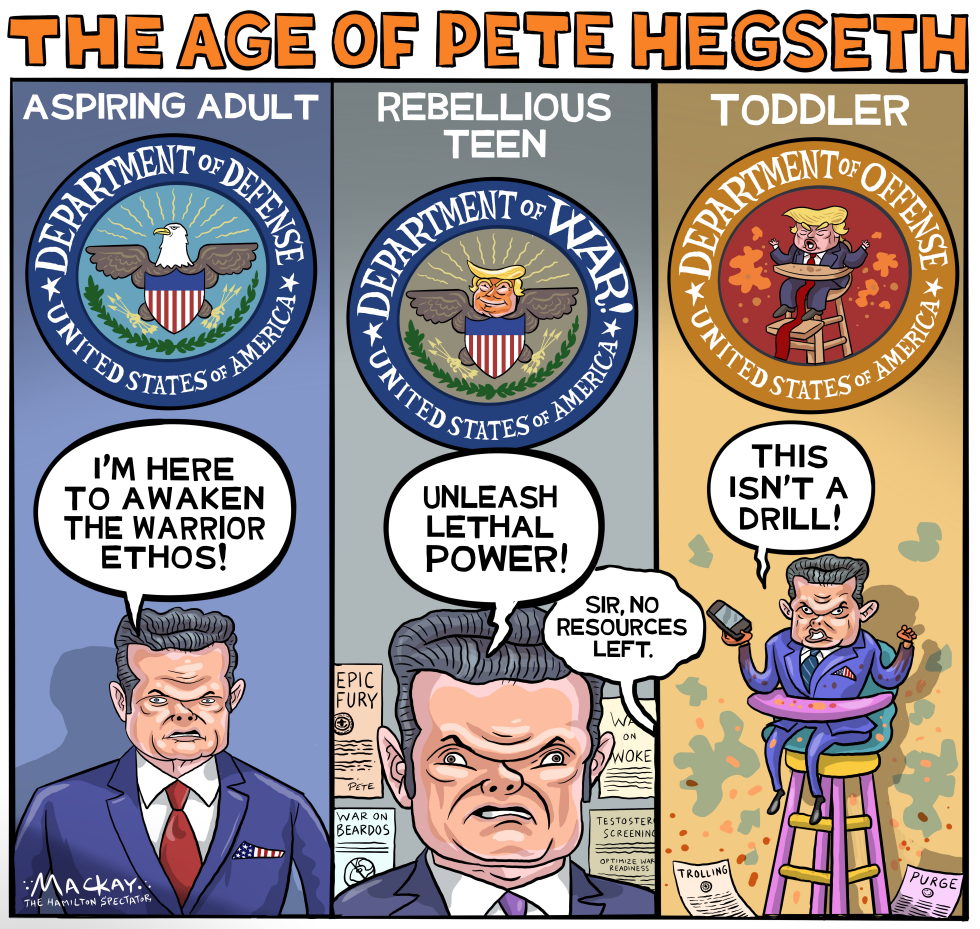
The cartoon by Graeme MacKay portrays Pete Hegseth's progression through three stages at the Pentagon under President Trump. In the first panel Hegseth pledges to awaken the warrior ethos at the Department of Defense. The middle panel shows him calling to unleash lethal power while an aide reports no resources remain. The final panel depicts a toddler Trump at the Department of Offense with Hegseth as a frantic aide amid papers about testosterone screening and purges. The work comments on the Trump administration's approach to military leadership and policy priorities as of September 2026.
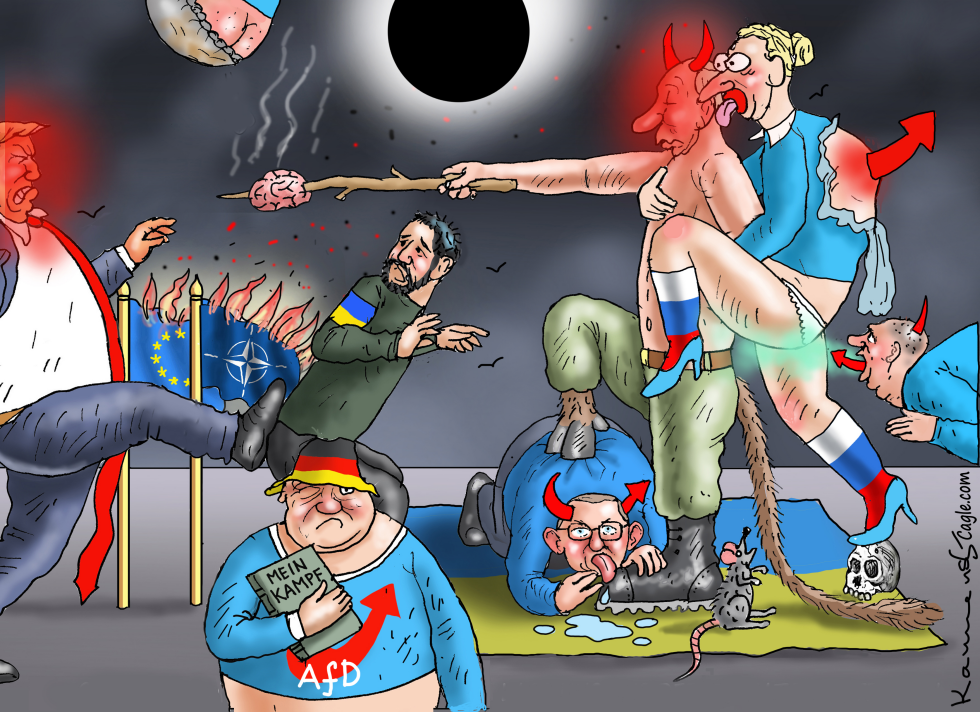
The Alternative for Germany party faces renewed criticism for its associations with international far-right figures including Donald Trump and apparent sympathy toward Vladimir Putin amid the Russia-Ukraine conflict. The cartoon portrays AfD embracing these influences while rejecting NATO and EU structures. It argues that such alignments expose the party's extremist leanings and undermine Germany's democratic commitments.
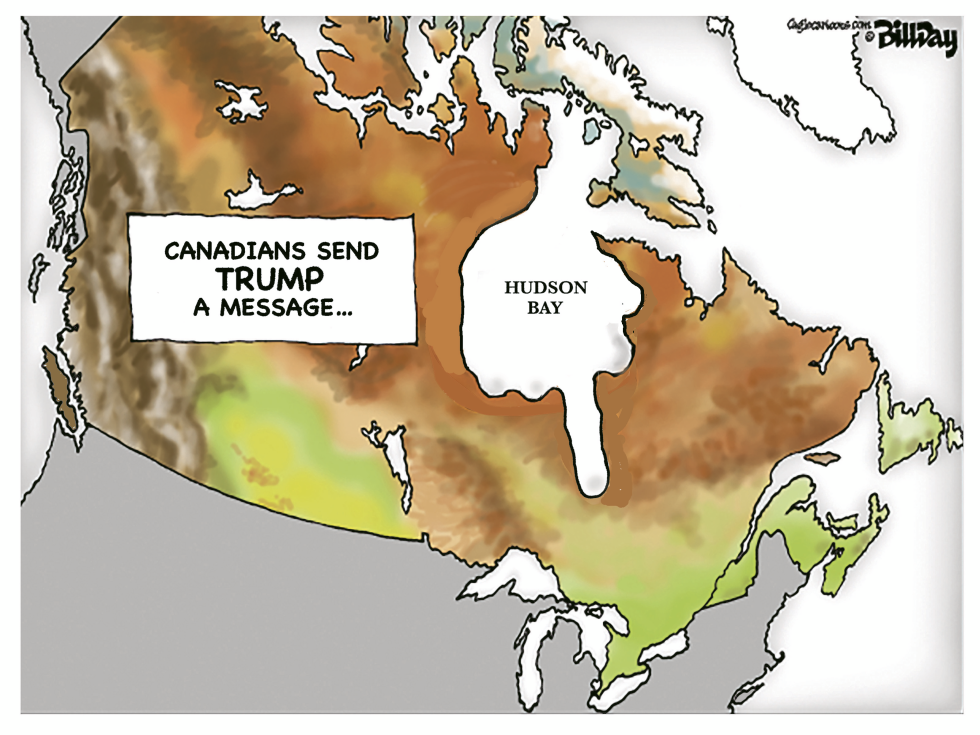
On September 3 2026 Canadians used a map of their country to send a pointed message to President Donald J. Trump. The image highlights Hudson Bay whose shape forms a recognizable rude gesture aimed southward. The editorial points to ongoing tensions in Canada US relations and uses geography as the vehicle for public sentiment. The piece criticizes Trump policies that have strained ties with Canada and portrays the map as a direct rebuke from Canadian citizens.
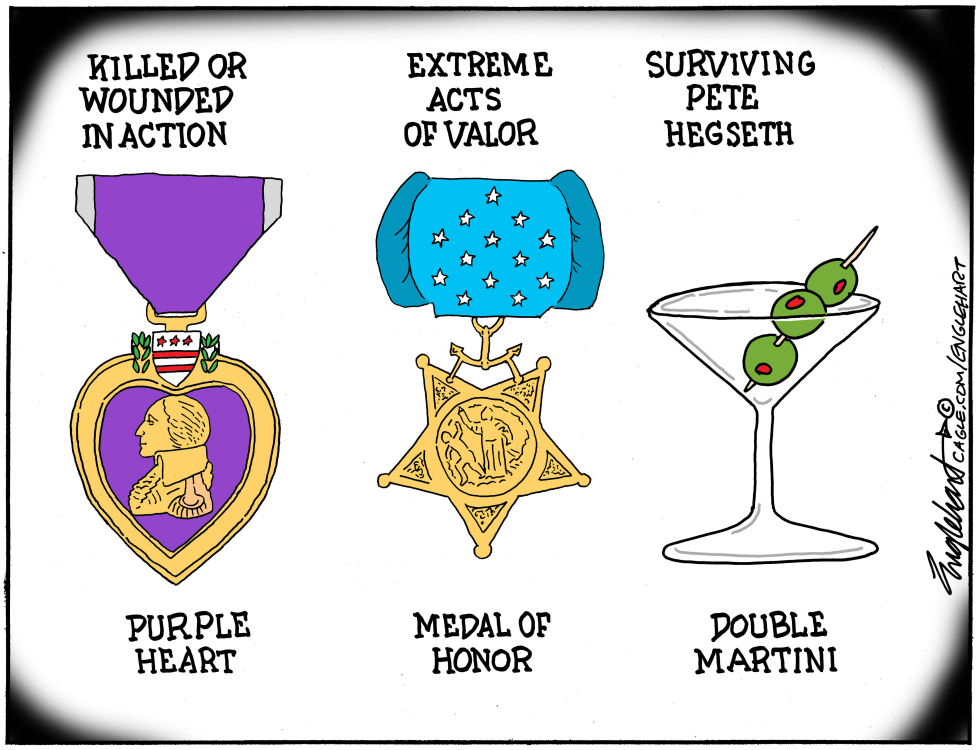
Pete Hegseth's nomination for a senior defense post in 2026 revived questions about his military service record and personal conduct. Critics highlighted past statements and behavior that some viewed as disqualifying for oversight of the armed forces. The cartoon responds by equating endurance under Hegseth with a dubious achievement on par with battlefield valor awards.
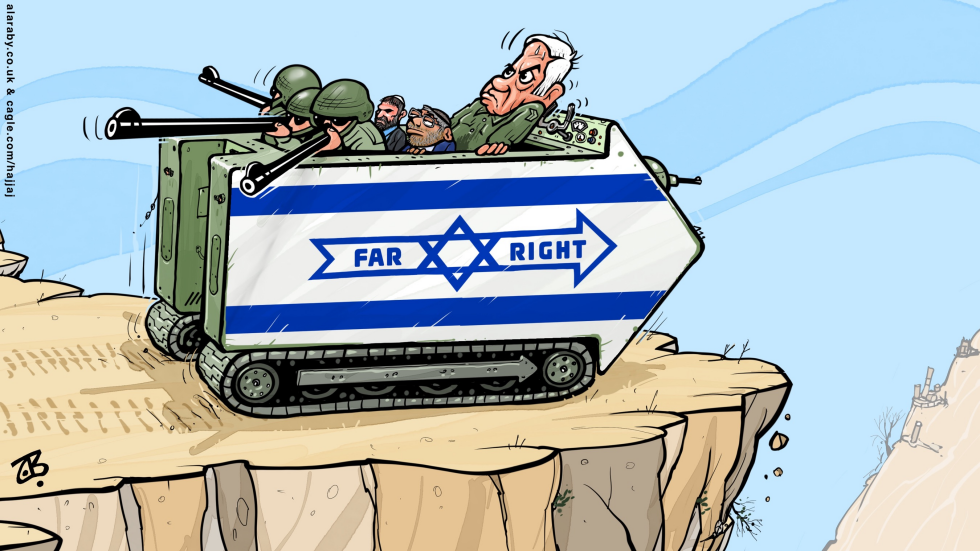
Israeli Prime Minister Benjamin Netanyahu leads a far-right coalition whose policies face mounting domestic and international criticism. The government has pursued aggressive military actions and settlement expansion while navigating coalition partners with extreme views. This direction risks further isolation and internal division. The cartoon argues that Netanyahu's embrace of the far right is propelling the country toward self-inflicted political and strategic damage.
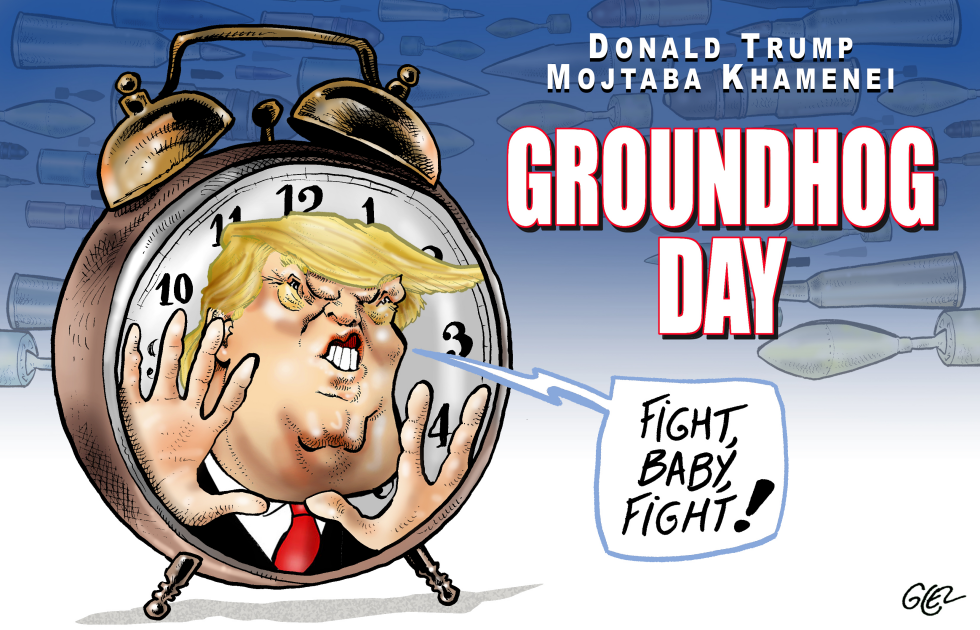
On September 3 2026 the cartoon highlights the recurring pattern of US-Iran tensions involving Donald Trump and Mojtaba Khamenei. The piece frames their renewed standoff as an endless Groundhog Day loop marked by missile threats and bellicose rhetoric. It argues that the same actors and dynamics keep producing the same dangerous cycle without resolution.
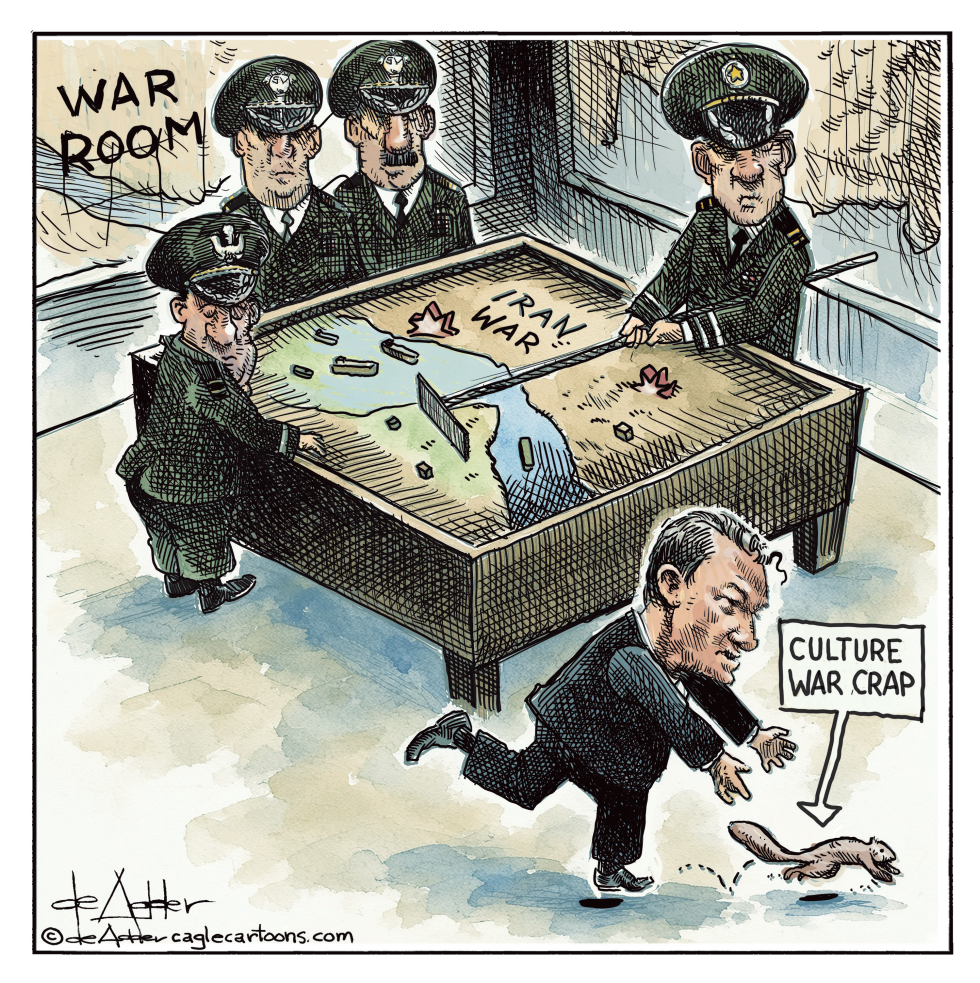
Defense Secretary Pete Hegseth has drawn scrutiny for emphasizing culture war issues while military planners address potential Iran contingencies. The cartoon depicts him pursuing a squirrel marked culture war crap instead of joining officers at the Iran war table. Critics argue this reflects a pattern of prioritizing domestic cultural battles over strategic readiness. The piece suggests such focus undermines effective leadership in the Pentagon. It critiques the administration's approach to balancing internal politics with national security demands.
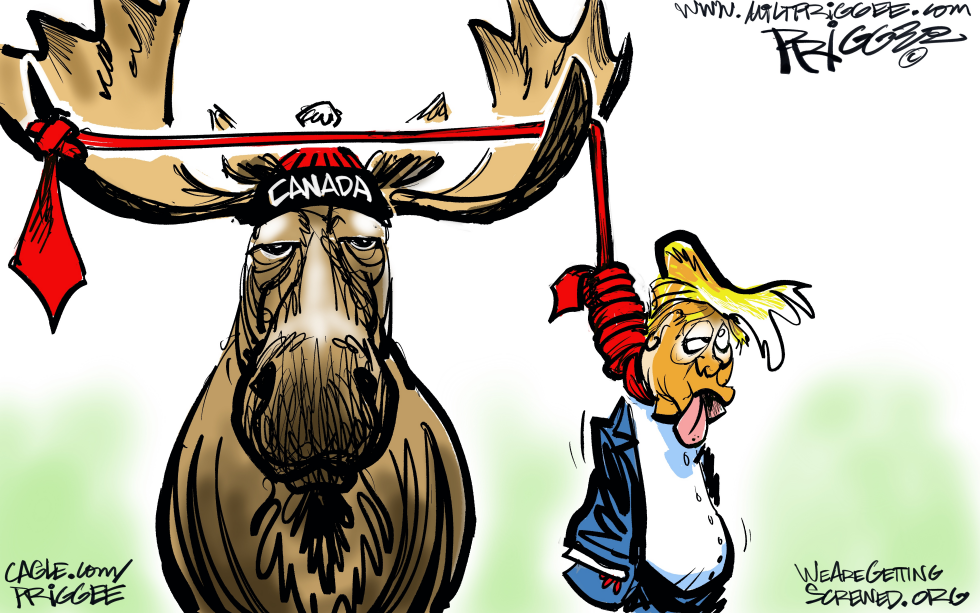
The cartoon shows a large moose labeled Canada with a weary expression as a caricature of Donald Trump yanks on its antler using a red strap. The moose wears a black cap with Canada written on it and has a red bar across its antlers. Trump appears disheveled with tongue out and sweat drops. Text at the bottom reads WEAREGETTINGS CREWED.ORG suggesting Canada feels exploited. Published on September 3 2026 the piece addresses US Canada relations under renewed Trump influence on trade and diplomacy.
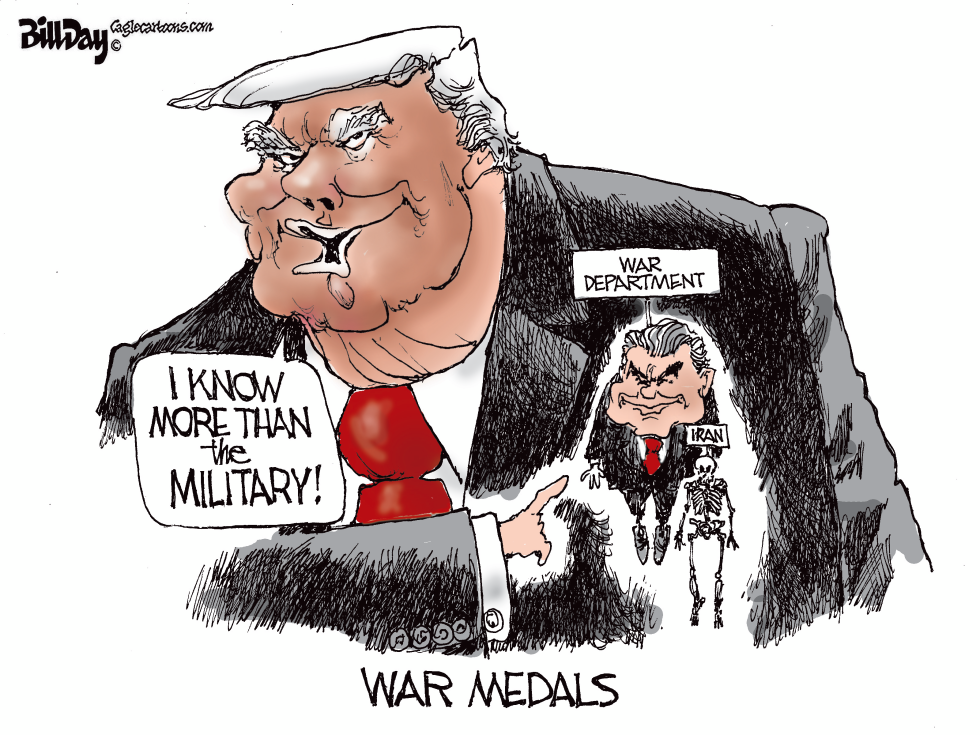
Donald Trump publicly stated he knows more than the military on defense matters as tensions with Iran persisted into late summer 2026. The remark revived questions about civilian oversight of the armed forces and the administration's approach to potential conflict. Critics argued the comment undermined professional military advice at a sensitive time. Supporters viewed it as decisive leadership. The cartoon frames the statement as hollow by linking it to a depleted war department and Iran references, suggesting the boast lacks substance and risks escalation without real expertise.
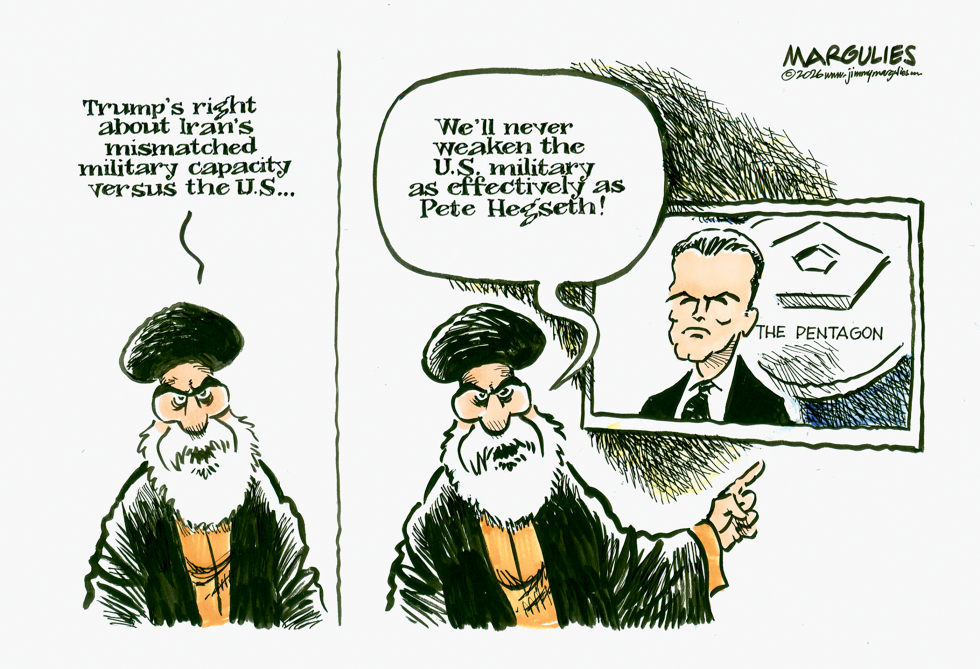
On September 2, 2026, an editorial cartoon shows Iran's Ayatollah endorsing Pete Hegseth's leadership at the Pentagon by claiming he weakens the US military more effectively than Iran could. The piece references Trump's prior assessment of Iran's inferior military capacity. It highlights concerns over Hegseth's qualifications and potential damage to US defense readiness under the Trump administration. The cartoon argues that Hegseth's appointment poses a greater internal threat to American military strength than external adversaries like Iran.
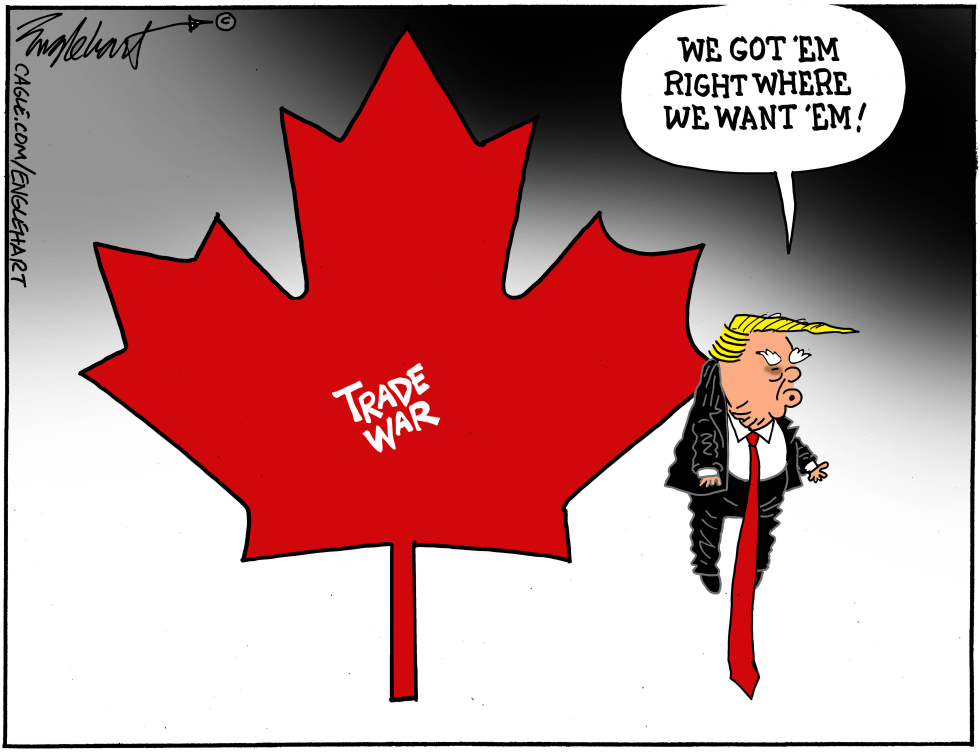
President Donald Trump has escalated tariffs on Canadian goods in a widening trade dispute. Ottawa responded with targeted countermeasures that hit key US exports. The standoff raises costs for American consumers and businesses while straining long-standing alliance ties. The cartoon portrays Trump as overconfident in a confrontation where Canada holds leverage.
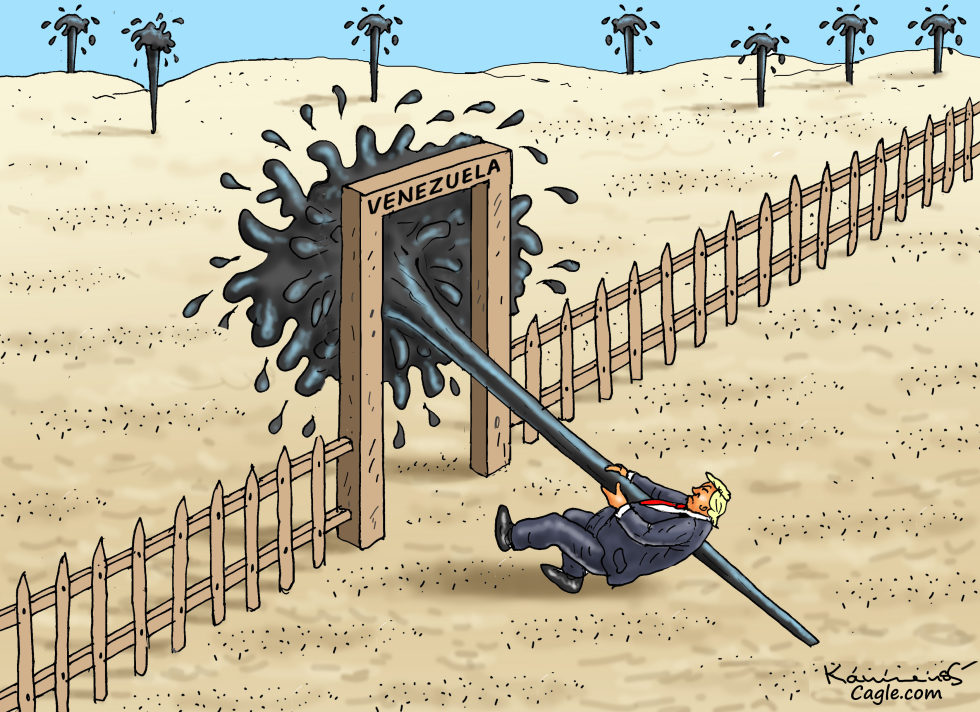
US policy toward Venezuelan oil exports shifted in 2026 as the Trump administration eased certain sanctions. This allowed increased crude shipments to reach American markets. The change raised questions about energy security and relations with Caracas. Critics argued the move undermined prior pressure on the Maduro government. The cartoon depicts the oil surge directly impacting Trump, suggesting the policy backfired on its architect.
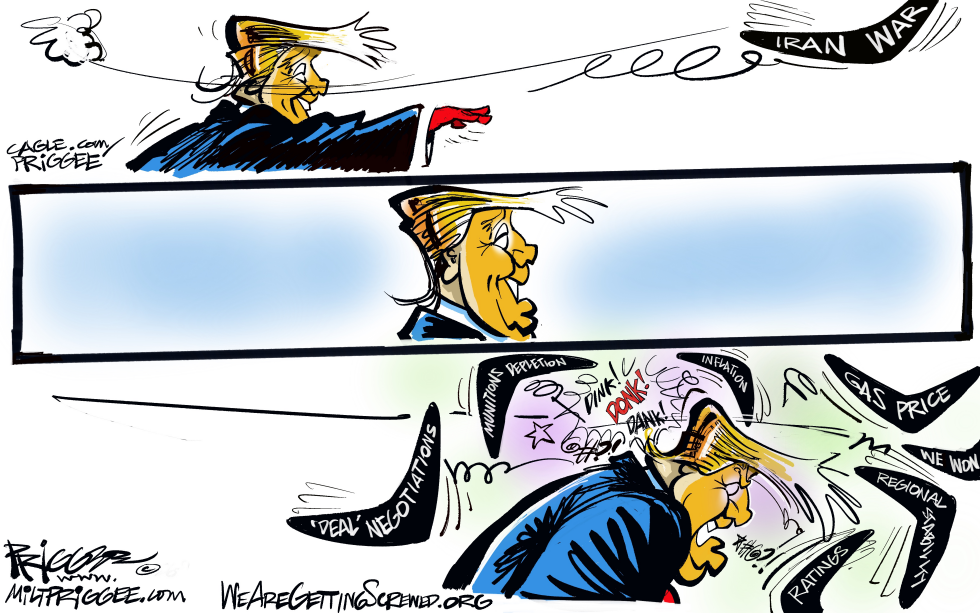
A political cartoon depicts Donald Trump launching an Iran war boomerang that returns to strike him with multiple crises. The image shows the former president hit by labels including inflation, gas prices, munitions depletion and falling ratings. The cartoon responds to ongoing tensions with Iran and the domestic fallout from military engagement. It illustrates how the conflict decision led to economic pressures and political damage as of the September 2026 publication date.
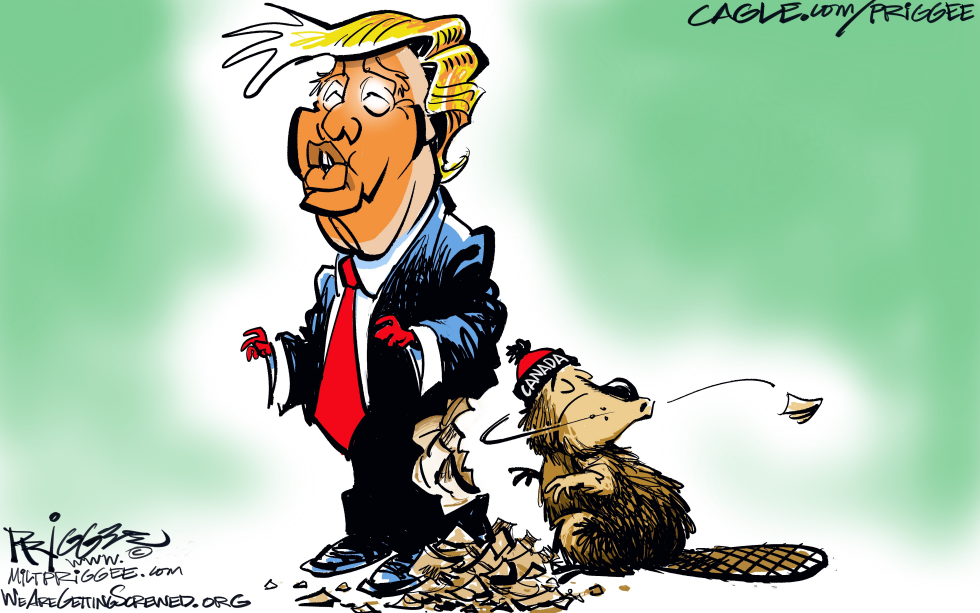
A political cartoon shows Donald Trump with his pants chewed by a beaver wearing a Canada hat. Wood chips litter the ground around his feet. The image captures friction in U.S.-Canada relations as of September 2026. The beaver represents Canada responding to policies from the Trump administration. Trade and diplomatic issues form the backdrop for the visual metaphor.
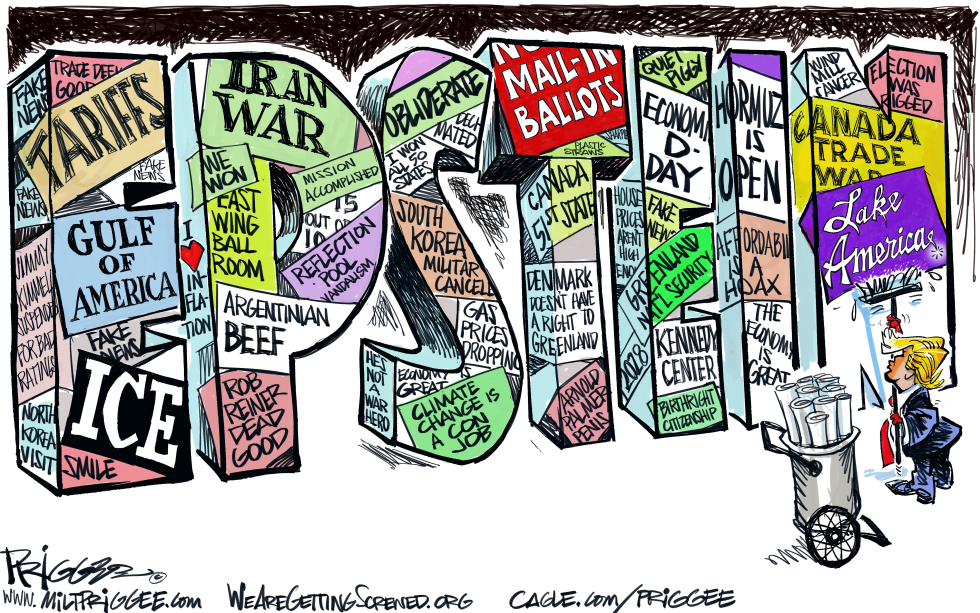
Donald Trump appears in a September 2026 cartoon pushing a cart stacked with signs promoting tariffs, questioning mail-in ballots, and asserting claims about Iran, Canada trade, and domestic issues. The image captures a pattern of public messaging that blends economic nationalism with repeated challenges to established processes. The editorial position frames these statements as a deliberate strategy to keep multiple controversies in motion at once.