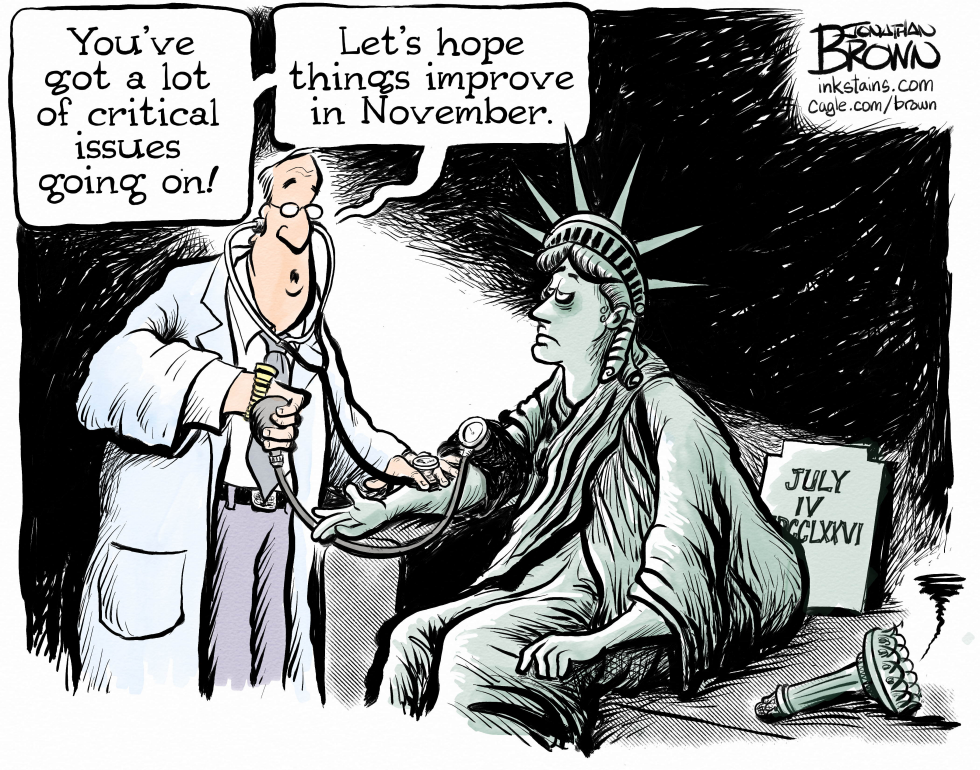
The cartoon depicts a doctor examining the Statue of Liberty's blood pressure and noting numerous critical issues. The Statue responds with hope that things will improve in November. A sign references July 4, 1776, and a broken torch rests on the ground. Published on September 15, 2026, the image uses the iconic figure to comment on the state of the nation ahead of upcoming elections. The visual metaphor highlights concerns about American institutions and public sentiment.
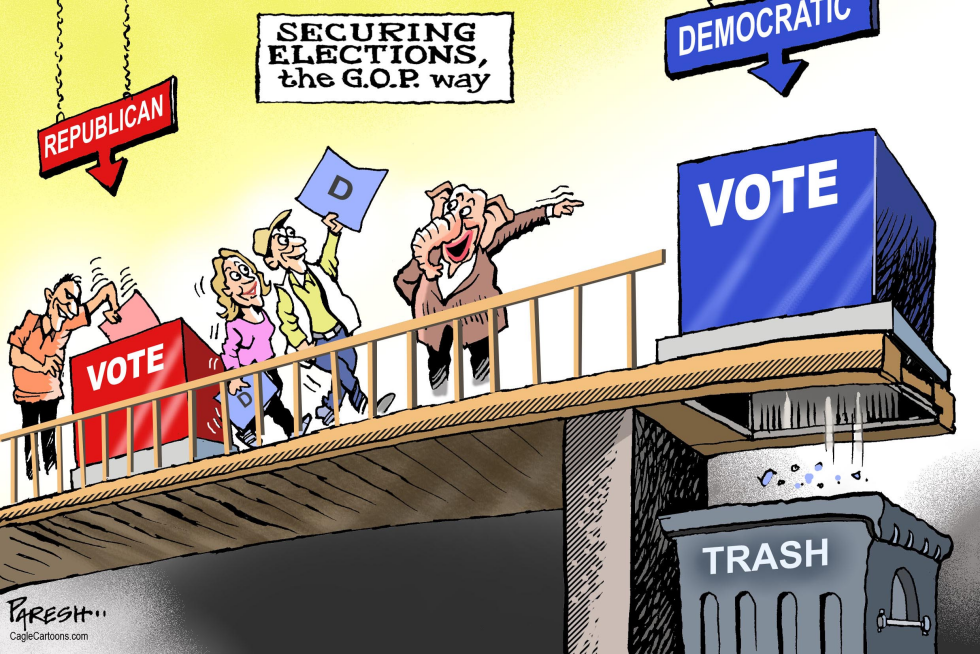
The cartoon depicts Republicans on a platform guiding a large blue vote box labeled Democratic into a trash can below while a red Republican vote box remains on the structure. A sign reads Securing Elections the G.O.P. way. The elephant symbol of the GOP points toward the action as figures including one holding a D flag stand nearby. The image comments on claims of election integrity by showing ballots from one party discarded. This reflects ongoing partisan debates over voting procedures and access as of the 2026 publication date.
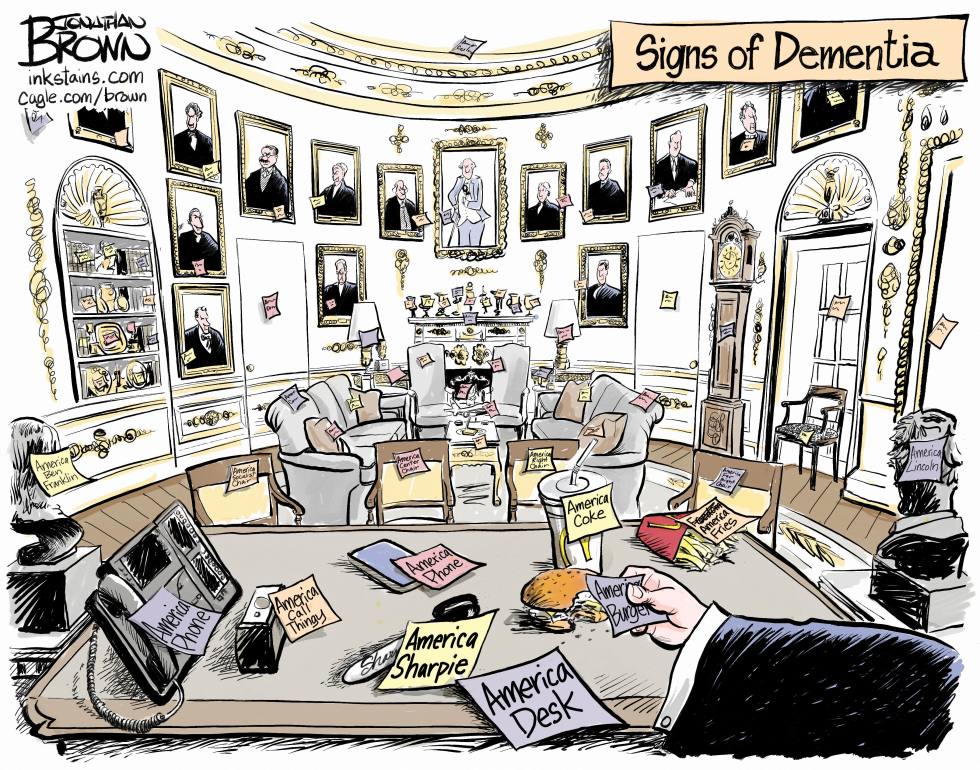
A new editorial cartoon depicts the Oval Office overrun with sticky notes labeling everyday items as America. The scene highlights signs of dementia through repeated branding on phones, desks, food and furniture. Published on September 9, 2026, the work comments on ongoing concerns about cognitive fitness in the presidency. The visual uses the familiar setting of the White House to underscore confusion and memory issues. Observers note the cartoon captures public debate over leadership capacity without naming specific individuals.
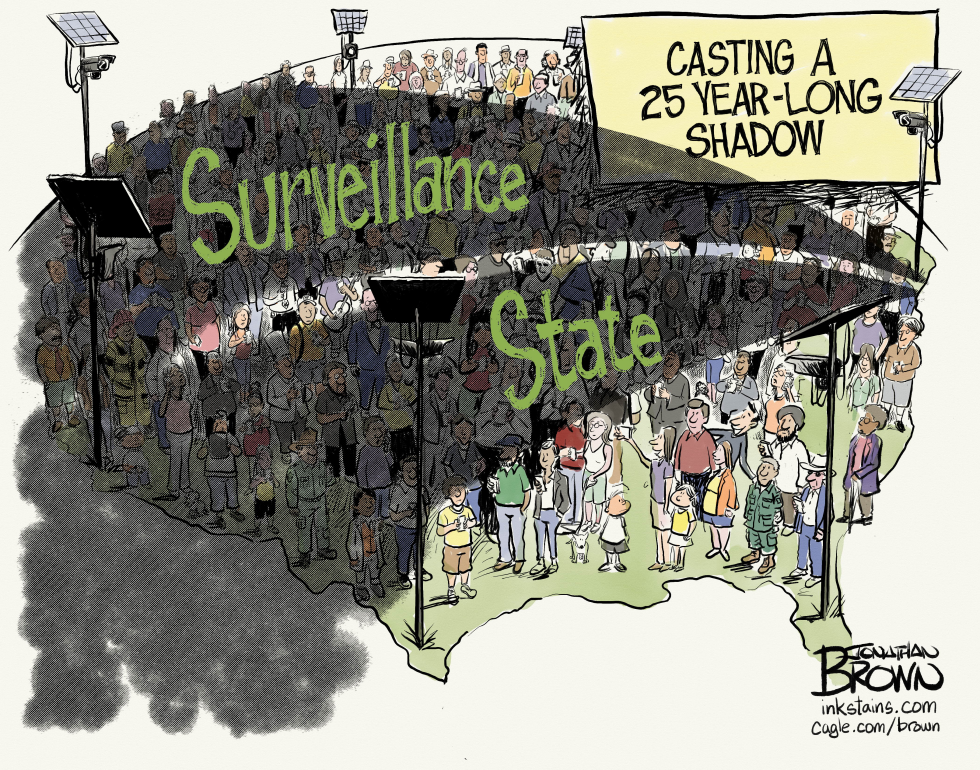
The cartoon depicts a dense crowd of Americans standing on a map of the United States, partially obscured by a large dark shadow cast by surveillance cameras mounted on poles. The words 'Surveillance State' appear prominently in green lettering across the scene, while a sign in the upper right reads 'CASTING A 25 YEAR-LONG SHADOW.' The image comments on the lasting effects of expanded government surveillance programs that began after the September 11 attacks, now spanning a quarter century. It illustrates how these measures continue to influence daily life and public spaces in 2026.
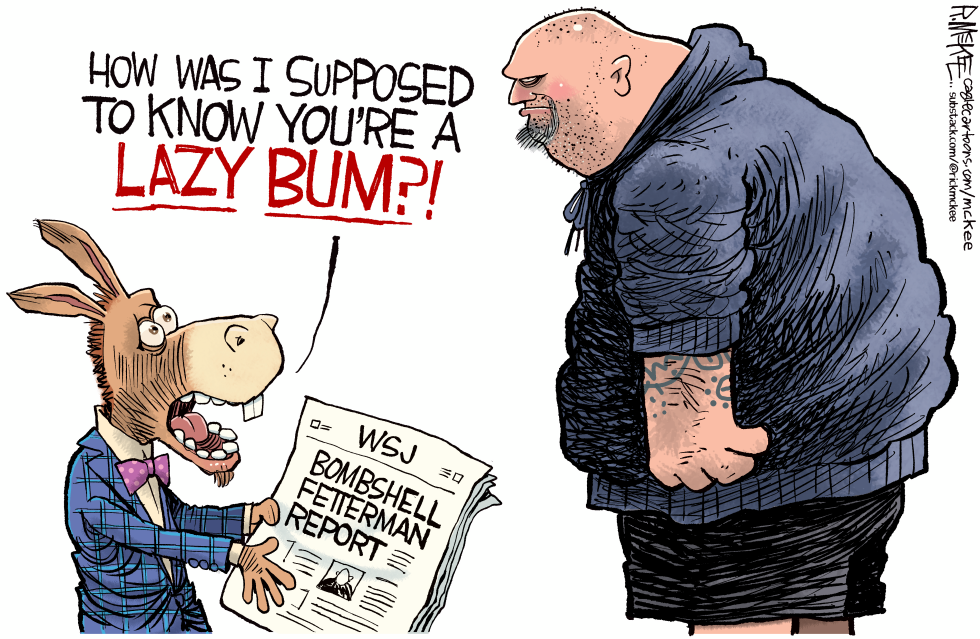
A Wall Street Journal report labeled Sen. John Fetterman a lazy bum, prompting a sharp response from the Pennsylvania Democrat. The piece highlights ongoing questions about his Senate attendance and engagement. Fetterman dismissed the characterization as unfair. Democrats portrayed the coverage as an attack on one of their members. The cartoon captures the party's defensive posture toward the criticism.
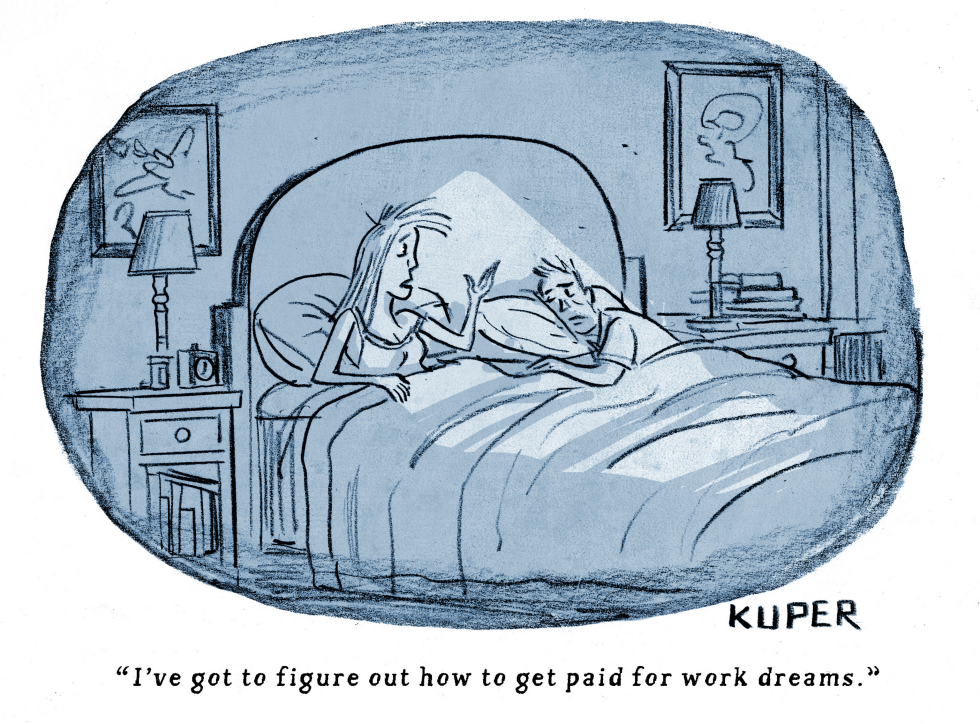
The cartoon addresses the expanding reach of work into personal time through dreams, reflecting ongoing debates about compensation for mental and emotional labor in the modern economy. With side hustles and constant connectivity blurring lines between rest and productivity, many workers feel the grind never stops. The piece takes the position that this intrusion underscores the need for better boundaries and recognition of unpaid cognitive effort as part of broader labor concerns.
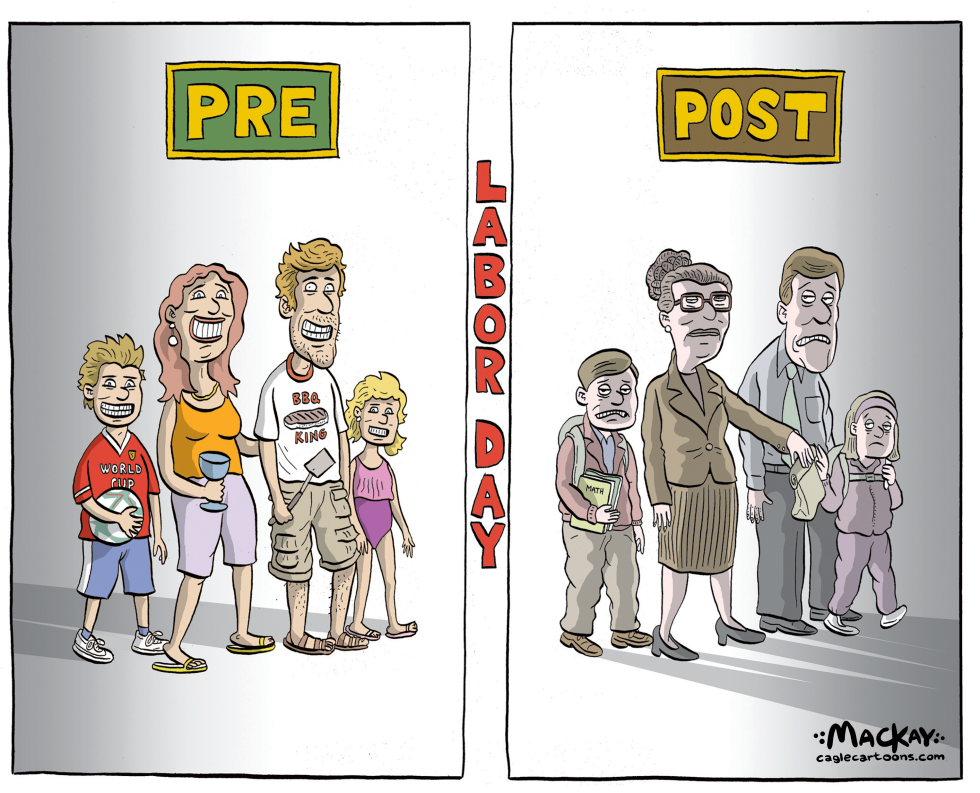
The cartoon by Graeme MacKay contrasts a joyful pre-Labor Day family scene with a weary post-Labor Day version. On the left, parents and children smile in casual summer attire while holding leisure items. On the right, the same family appears drained as they prepare for school and work. The vertical label emphasizes the holiday as the dividing line. This reflects the annual transition many households experience each September. The piece uses simple visual comparison to highlight the end of vacation freedom.
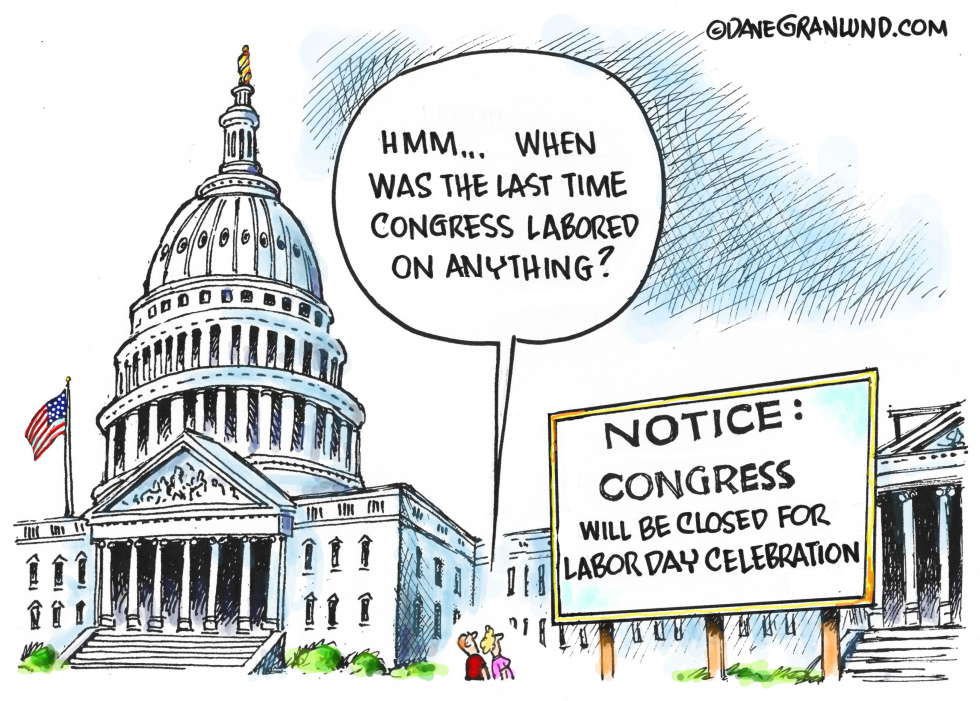
A political cartoon depicts the US Capitol Building with a prominent notice announcing Congress will be closed for Labor Day celebration. A speech bubble from onlookers asks when Congress last labored on anything. The image, dated September 1, 2026, comments on legislative inactivity during a federal holiday. It reflects common public frustration with congressional productivity and frequent recesses. The cartoon uses the holiday to underscore perceptions of limited legislative output in recent sessions.
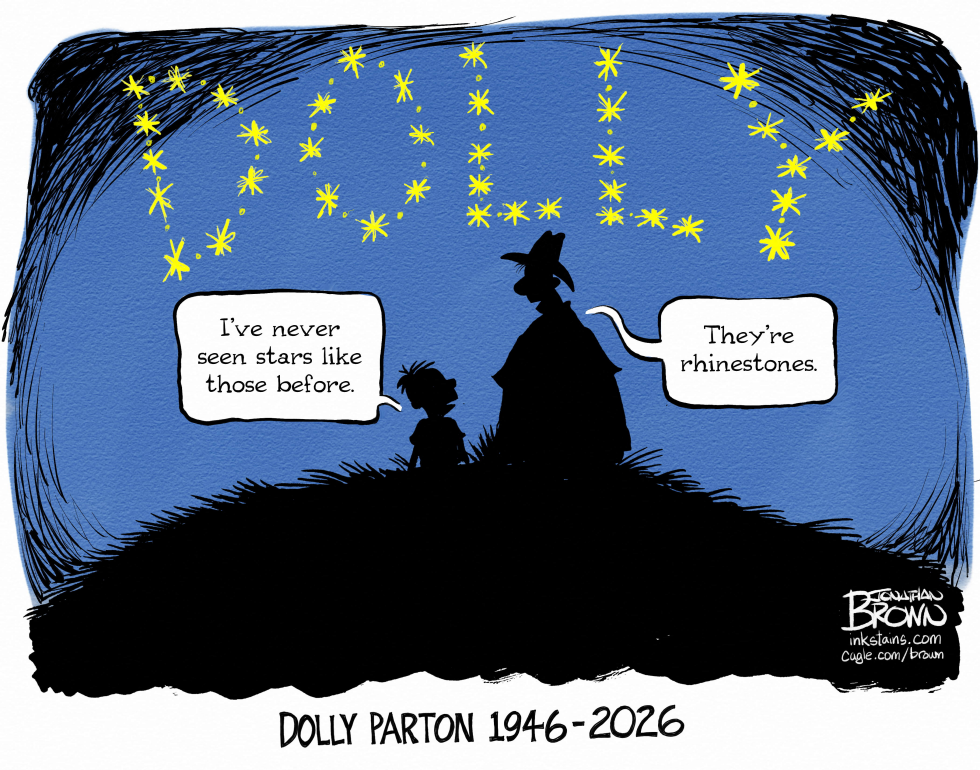
Dolly Parton passed away in 2026 at age 80. Fans and the public mourned the loss of the country music legend known for her rhinestone outfits and charitable work. The tribute highlights her enduring sparkle and cultural impact through a celestial memorial image. The piece positions her legacy as one of warmth, generosity, and unmistakable glamour that continues to shine.
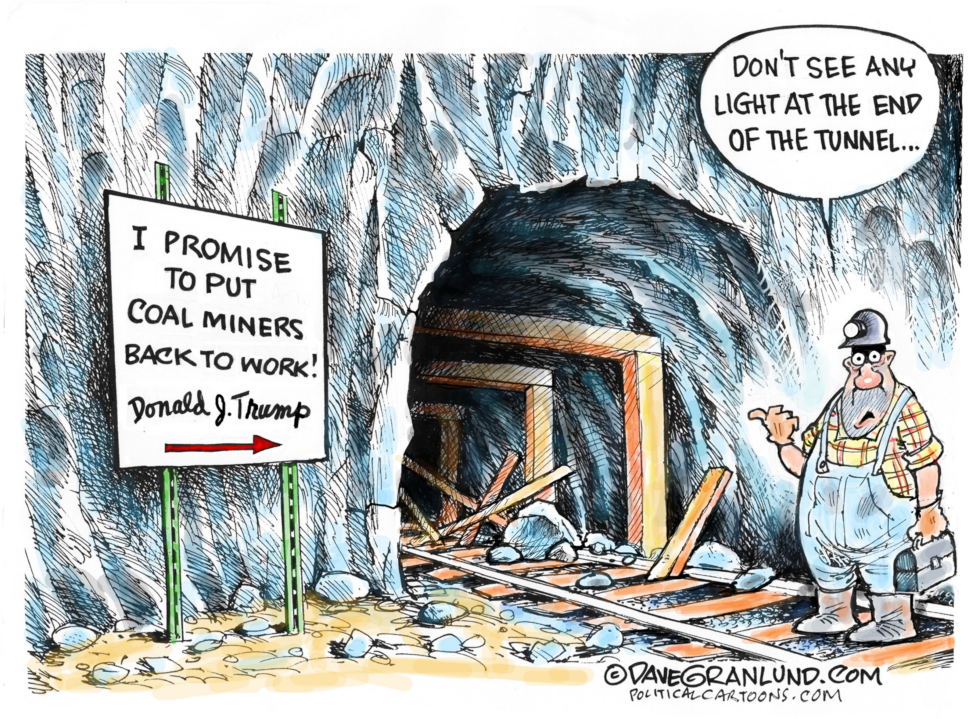
Donald Trump repeatedly pledged during his campaigns and terms to revive coal mining employment by rolling back regulations and boosting domestic production. Those commitments have not translated into sustained job growth for miners amid shifting energy markets and automation. The cartoon underscores the gap between the repeated assurances and the persistent lack of visible progress for workers in the sector.
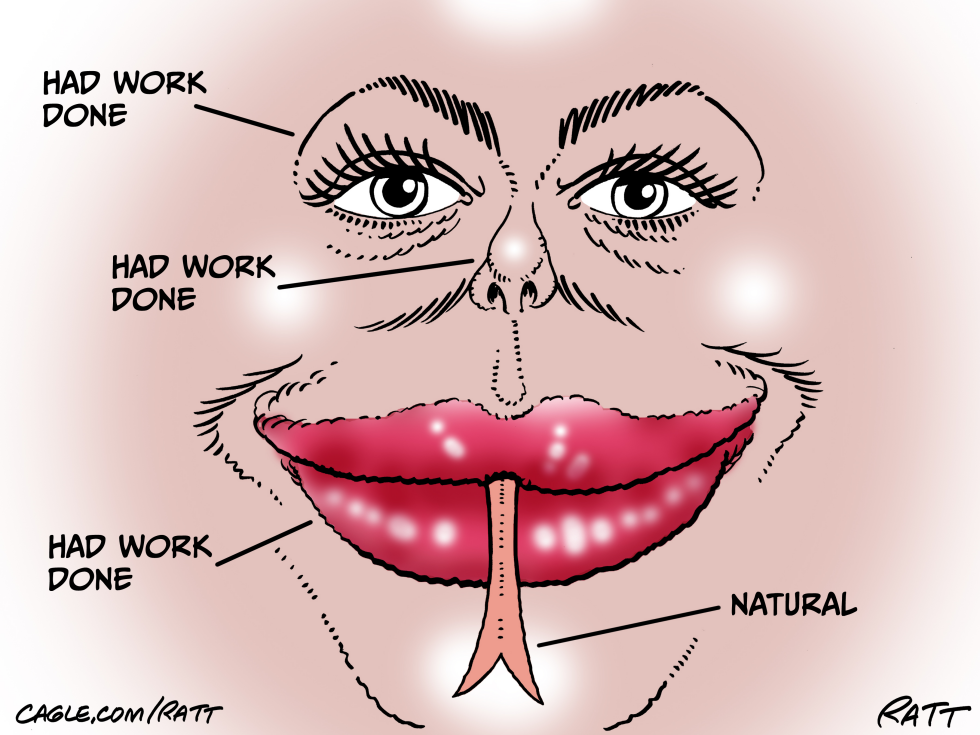
White House Press Secretary Karoline Leavitt is the subject of a cartoon spotlighting visible cosmetic procedures. Labels note repeated enhancements to eyes, nose and lips, while her forked tongue is marked as the one natural feature. The contrast carries the editorial point: what is unaltered is the part that forks.
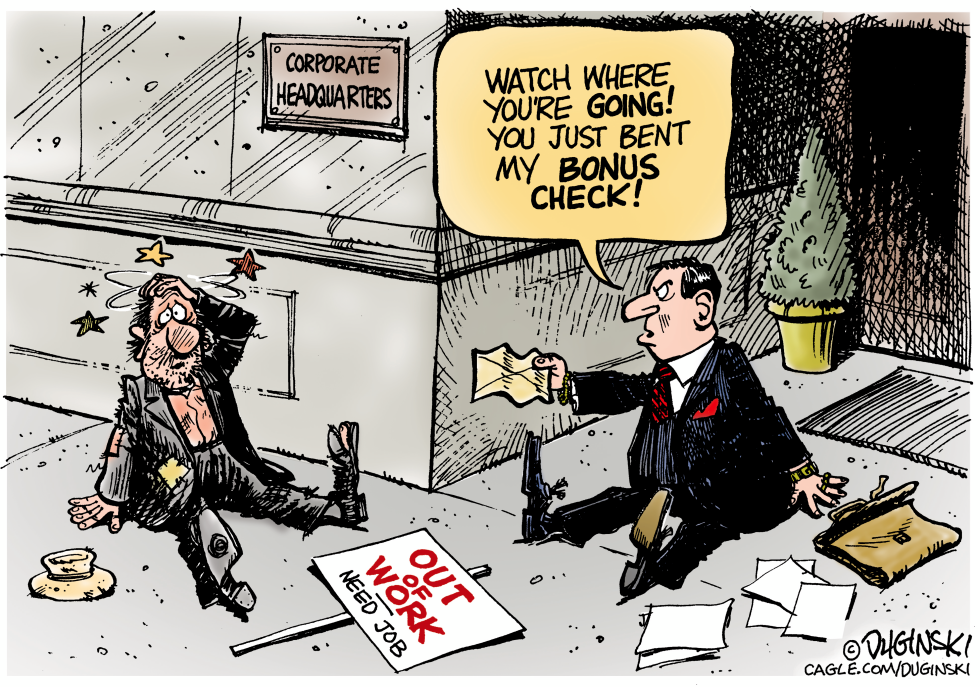
Corporate executives continue to receive large bonuses even as layoffs persist across sectors. The piece responds to ongoing debates over executive compensation packages during periods of workforce reduction. It takes the position that such bonuses appear disconnected from the realities facing displaced employees.
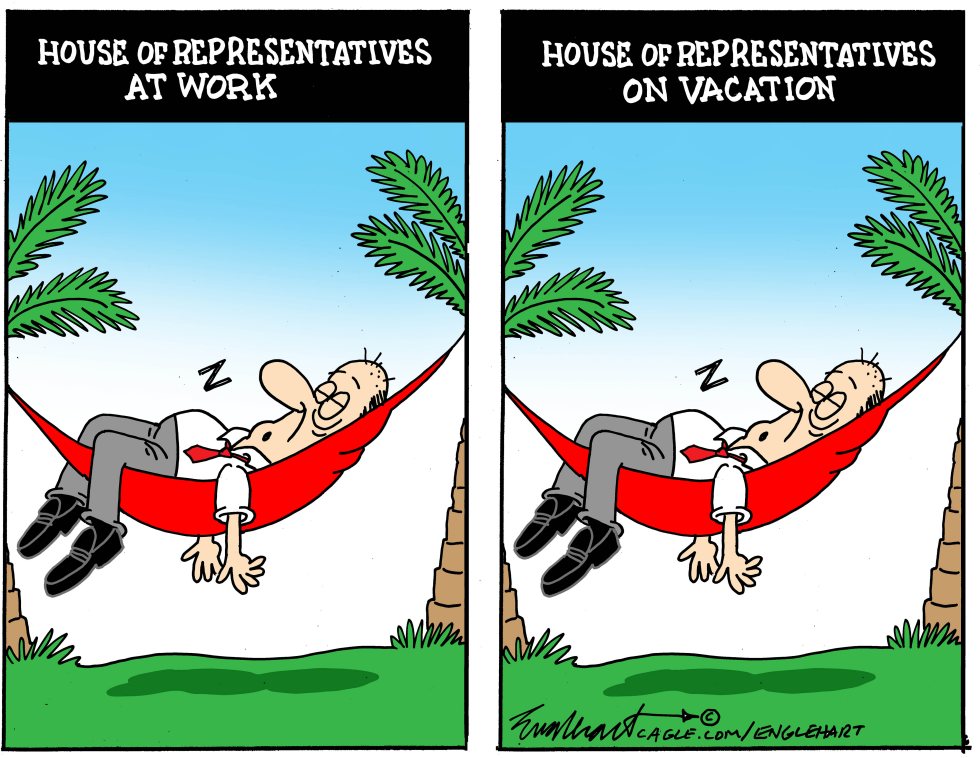
The House of Representatives faces ongoing criticism for extended recesses and perceived inactivity even during session periods. Members often balance legislative duties with breaks that critics say resemble full vacations. The piece argues that the distinction between official work time and time off has blurred to the point of being meaningless for the chamber.
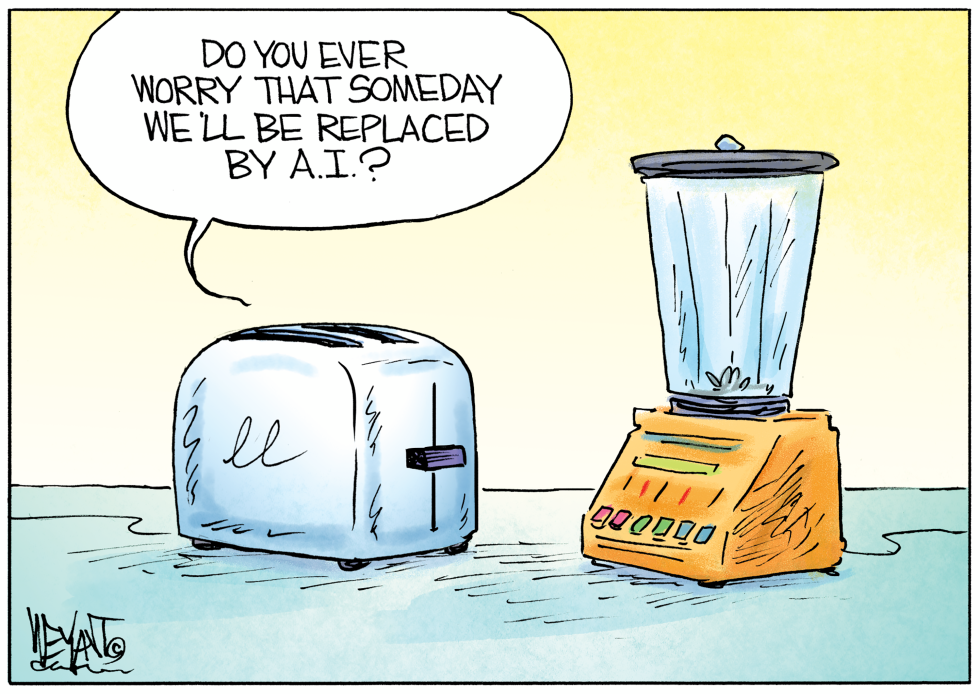
Anxiety about artificial intelligence replacing human work has spread across industries. The piece responds to widespread uncertainty over which roles automation will absorb next. It treats the worry as universal enough to reach even household appliances.