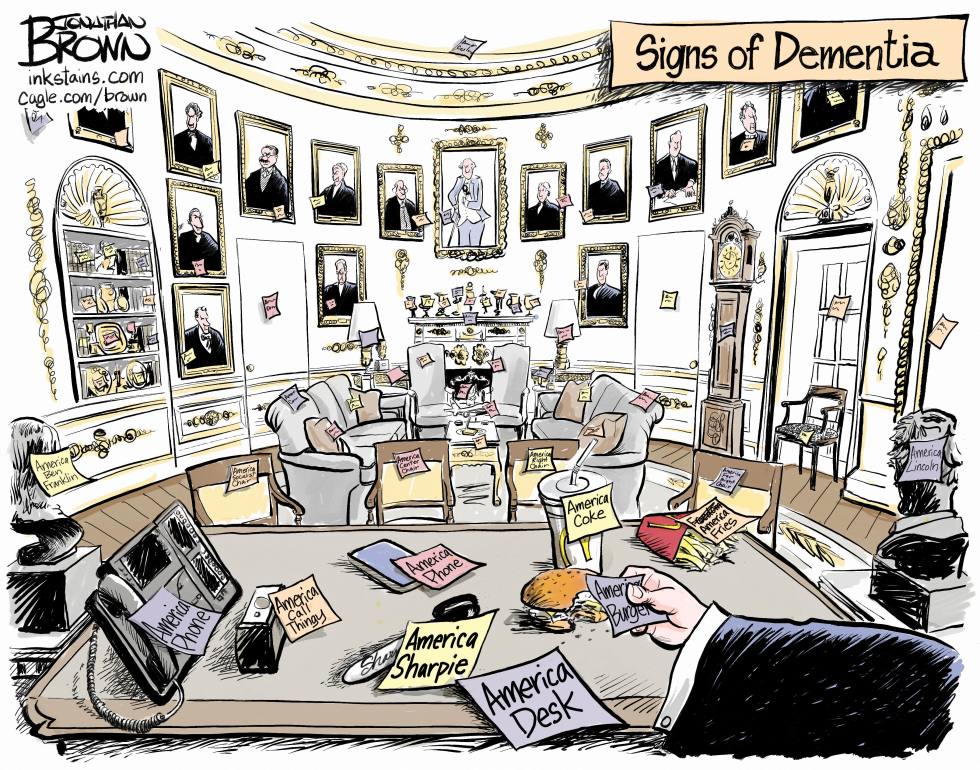
A new editorial cartoon depicts the Oval Office overrun with sticky notes labeling everyday items as America. The scene highlights signs of dementia through repeated branding on phones, desks, food and furniture. Published on September 9, 2026, the work comments on ongoing concerns about cognitive fitness in the presidency. The visual uses the familiar setting of the White House to underscore confusion and memory issues. Observers note the cartoon captures public debate over leadership capacity without naming specific individuals.
no debate
Sep
8
2026
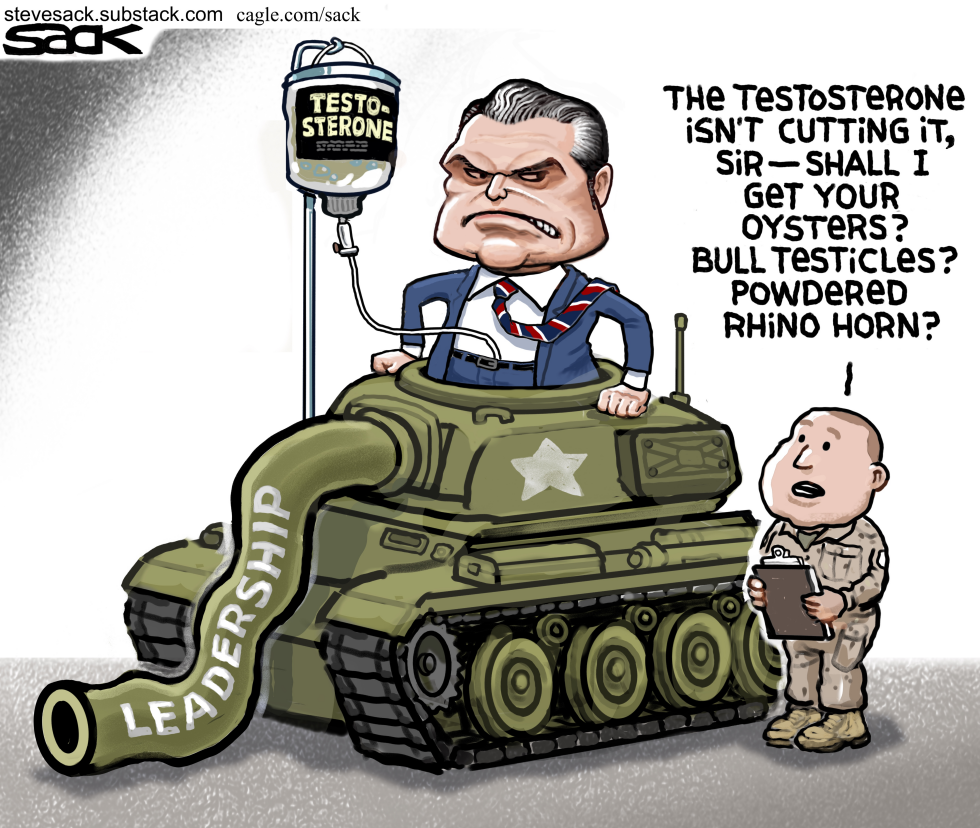
Pete Hegseth's nomination and early actions as a top defense official have spotlighted his emphasis on testosterone levels as a solution to perceived military leadership gaps. The approach has prompted questions from within the ranks about whether hormone supplements address core readiness and command issues. The cartoon portrays the policy as misguided and ineffective.
Sep
8
2026
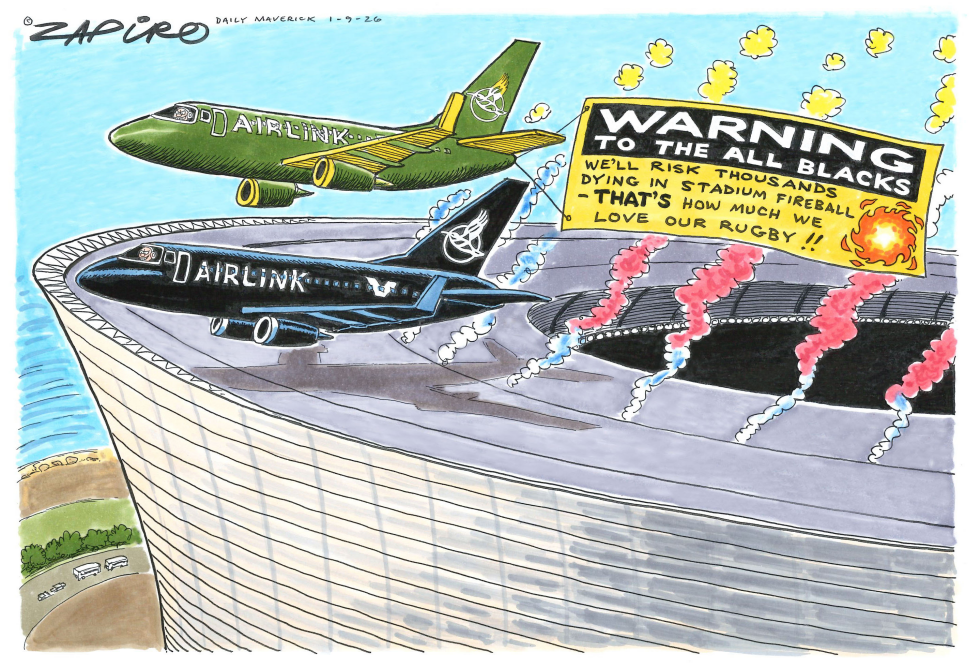
Airlink flights near a major rugby stadium have prompted direct warnings to the All Blacks team and fans about the danger of a stadium fireball. The incident underscores ongoing tensions between aviation safety protocols and large public events. The cartoon argues that intense rugby loyalty is leading supporters to accept unacceptable risks to life.
Sep
7
2026
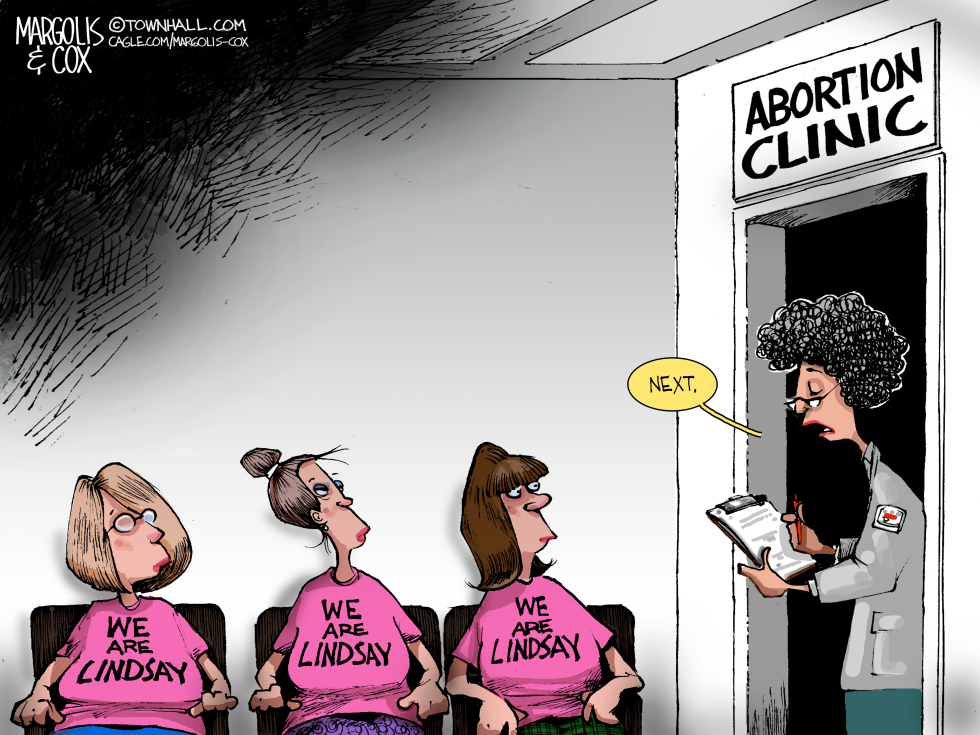
The Lindsay Clancy case has prompted renewed attention to reproductive healthcare access and clinic policies. Multiple women identifying with the case have appeared at facilities, highlighting ongoing debates over abortion rights and patient privacy. The cartoon critiques the use of personal tragedy to advance clinic protests and identity-based activism.
Post 9/11 Surveillance Extends 25-Year Shadow Across America
Post-9/11 Surveillance State Shadow Reaches 25 Years
Sep
7
2026
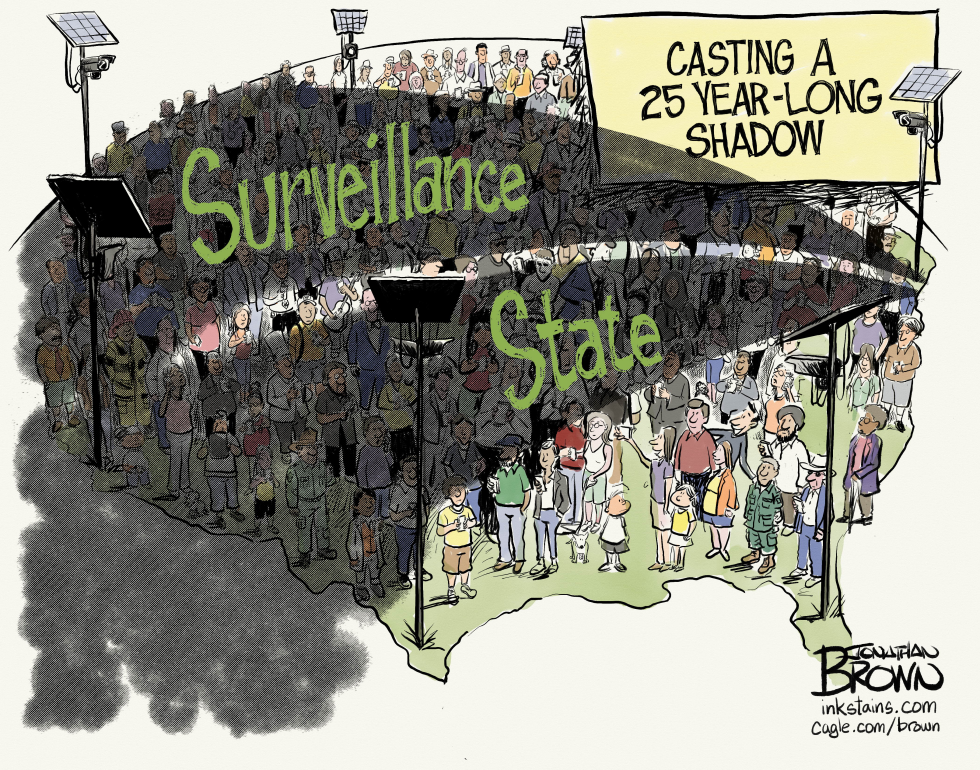
The cartoon depicts a dense crowd of Americans standing on a map of the United States, partially obscured by a large dark shadow cast by surveillance cameras mounted on poles. The words 'Surveillance State' appear prominently in green lettering across the scene, while a sign in the upper right reads 'CASTING A 25 YEAR-LONG SHADOW.' The image comments on the lasting effects of expanded government surveillance programs that began after the September 11 attacks, now spanning a quarter century. It illustrates how these measures continue to influence daily life and public spaces in 2026.
Sep
4
2026
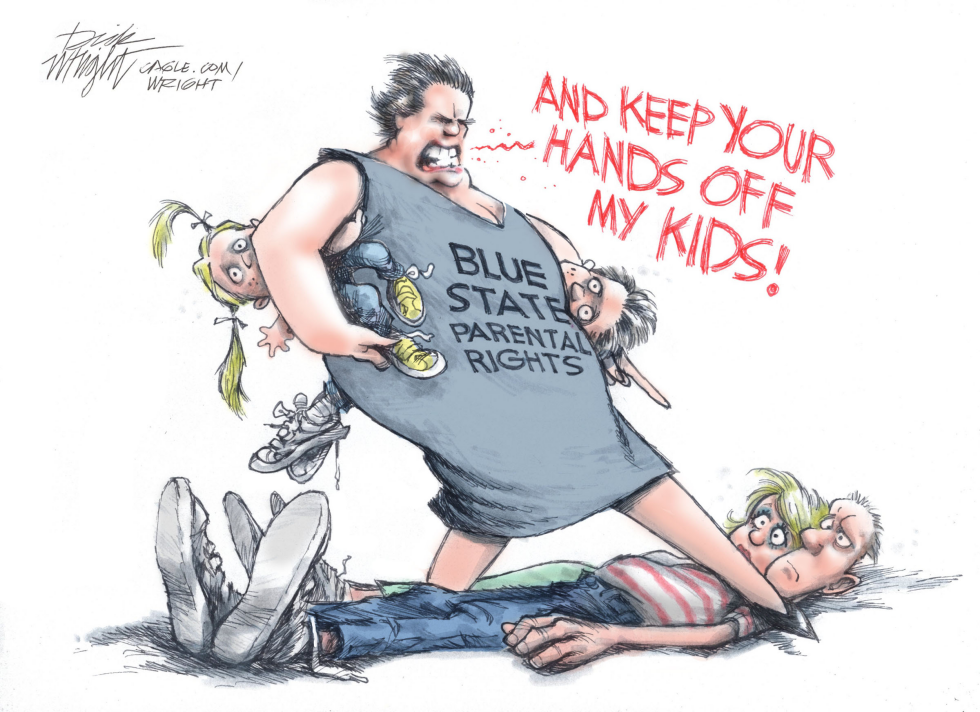
Blue state governments have expanded authority over child welfare and education decisions in recent years, often overriding parental objections on issues like curriculum and medical choices. This has sparked lawsuits and protests from families arguing loss of rights. The cartoon portrays these policies as aggressive state takeover rather than protection, criticizing the shift of power from parents to officials.
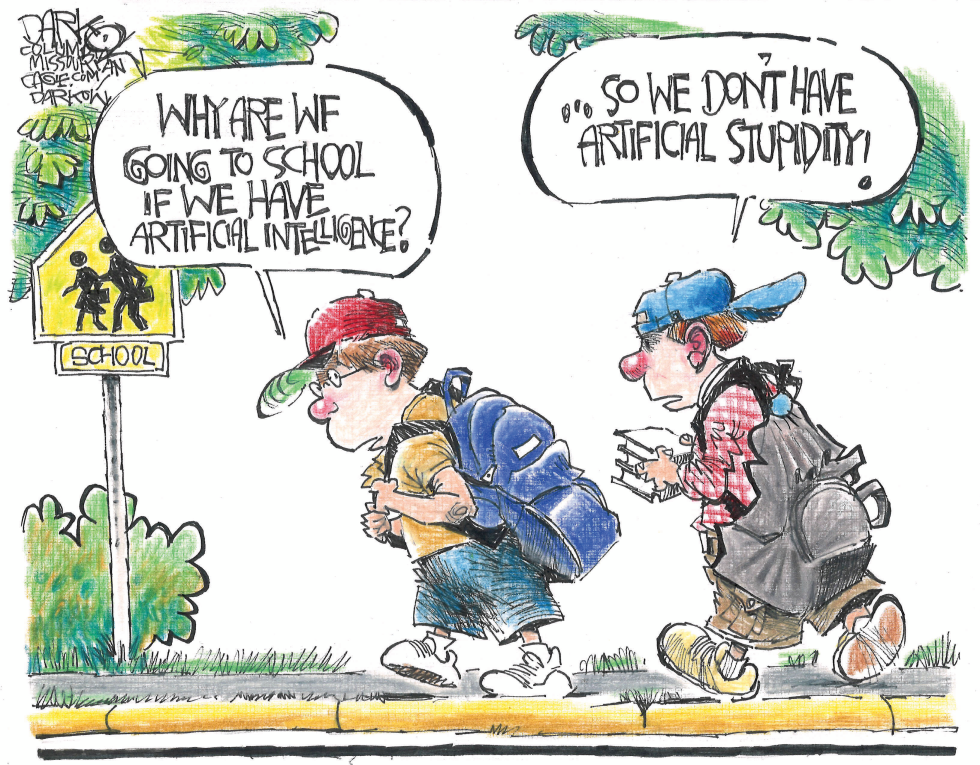
By 2026, rapid advances in artificial intelligence have prompted widespread questions about the ongoing role of traditional schooling. Students and educators alike wonder whether classroom learning retains value when AI tools can supply instant answers and assistance. The debate centers on whether reliance on AI risks producing graduates lacking critical thinking skills. Without structured education, society could face a generation marked by artificial stupidity rather than genuine understanding. The piece argues that schools remain necessary to build real intelligence and avoid that outcome.
Sep
3
2026
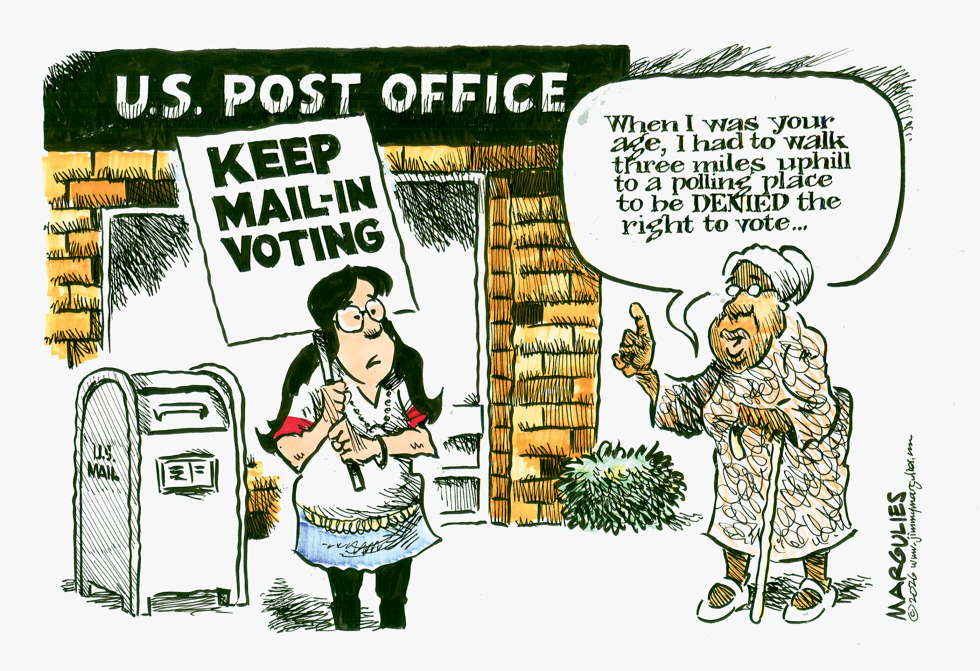
A protest sign at a U.S. Post Office calls for an end to mail-in voting. The cartoon responds to ongoing state-level efforts to restrict mail ballots after expanded use in recent elections. Such limits disproportionately affect older voters and those with mobility issues who previously faced physical barriers at polling places. The piece argues that rolling back mail-in options revives the very obstacles elderly citizens once endured, undermining broader access to the ballot.
Sep
3
2026
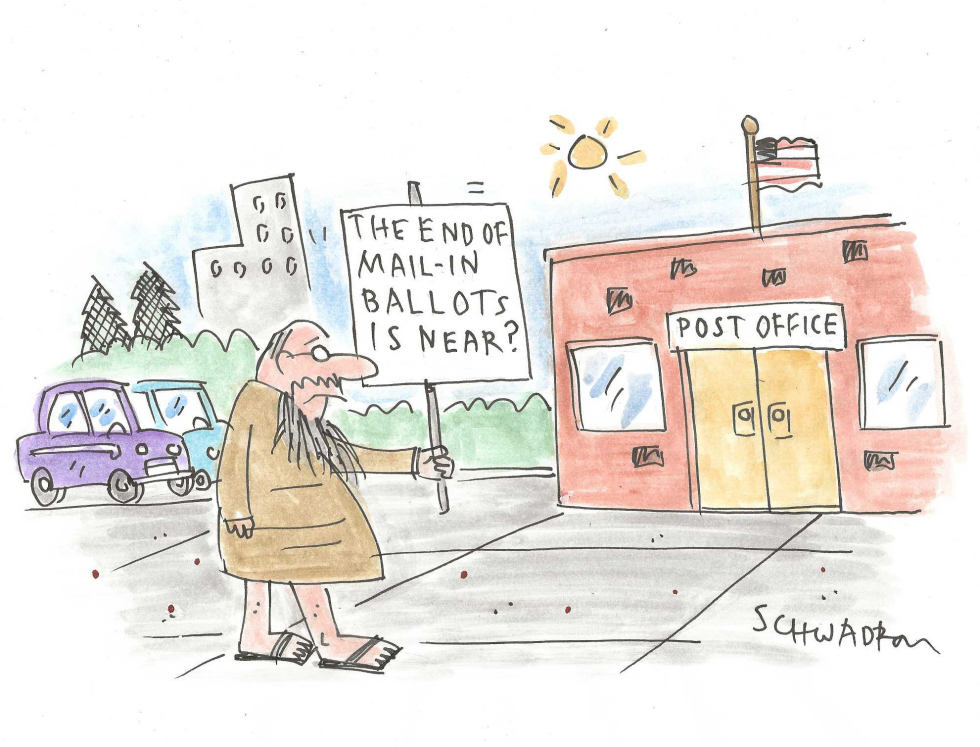
Proposals to restrict or end mail-in ballots have gained traction in several states ahead of upcoming elections, prompting concerns from voting rights advocates about reduced access for elderly, rural, and disabled voters. The post office has long served as a key conduit for absentee ballots. Critics argue the changes prioritize unproven fraud concerns over convenience and turnout. Supporters say tighter rules restore confidence in results. The cartoon frames the debate as an abrupt shift that could sideline a proven voting method.
Sep
3
2026
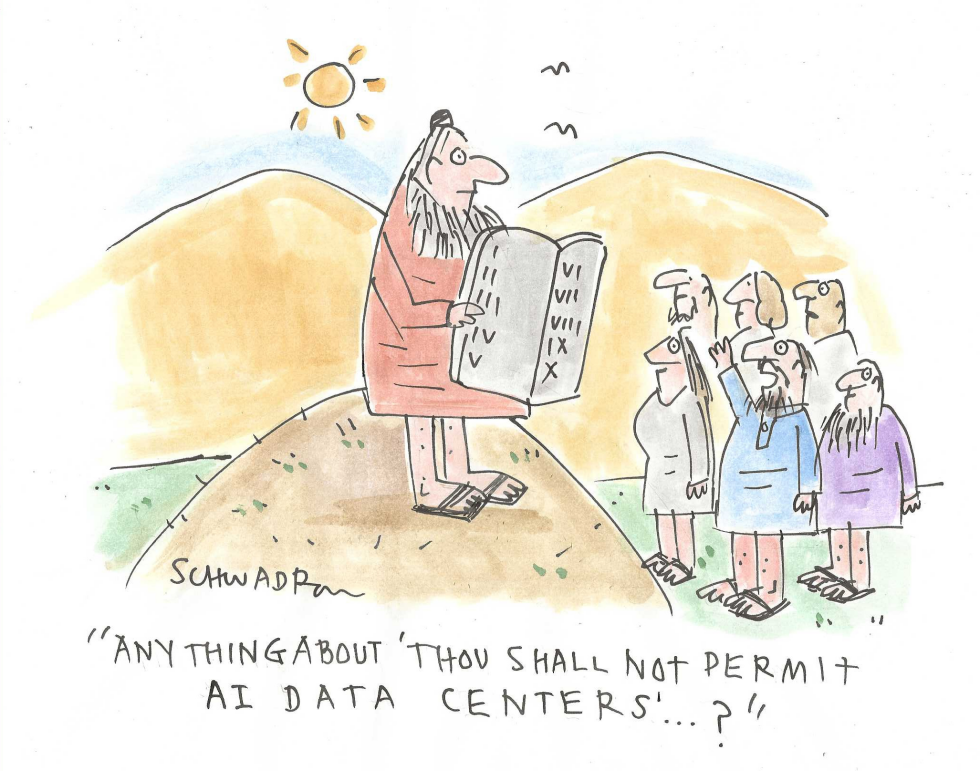
AI data centers face growing regulatory scrutiny over energy use and land impact in 2026. Lawmakers weigh new permitting standards as facilities expand rapidly. The cartoon uses the Moses figure to highlight the absence of explicit restrictions in foundational rules. It suggests modern governance struggles to apply old frameworks to new infrastructure demands. The editorial stance favors clearer limits on data center approvals.
Sep
1
2026
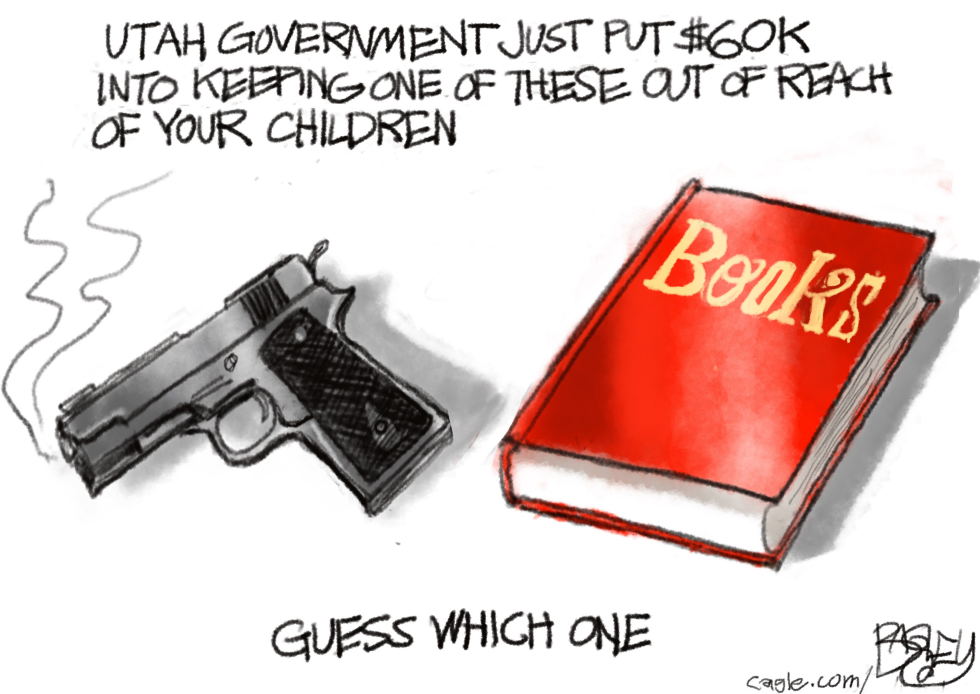
Utah officials directed $60,000 toward measures keeping certain books from children. Firearms remain readily available in the state. The decision highlights priorities in public safety and education policy. The piece criticizes the allocation as misplaced emphasis on censorship instead of addressing gun risks.
Aug
31
2026
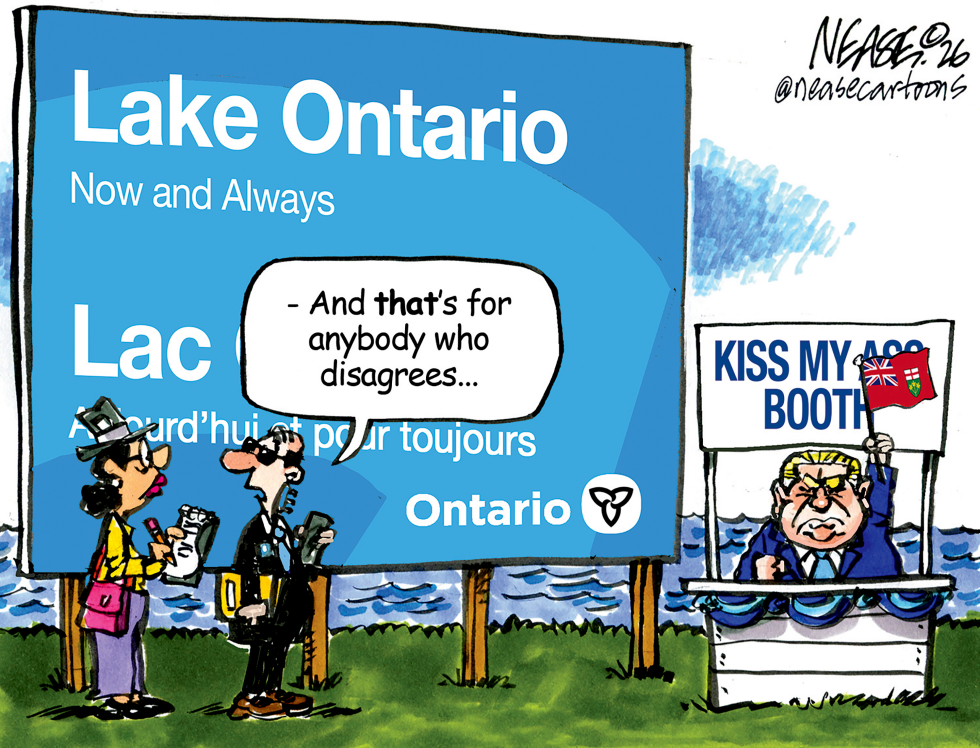
Ontario Premier Doug Ford has set up a protest booth opposing a bilingual sign for Lake Ontario that includes French wording. The move comes amid ongoing debates over language policy and signage in the province. Ford's action highlights tensions between English-first preferences and official bilingual requirements. The editorial position criticizes the protest as an unnecessary escalation that distracts from practical governance.
Aug
31
2026
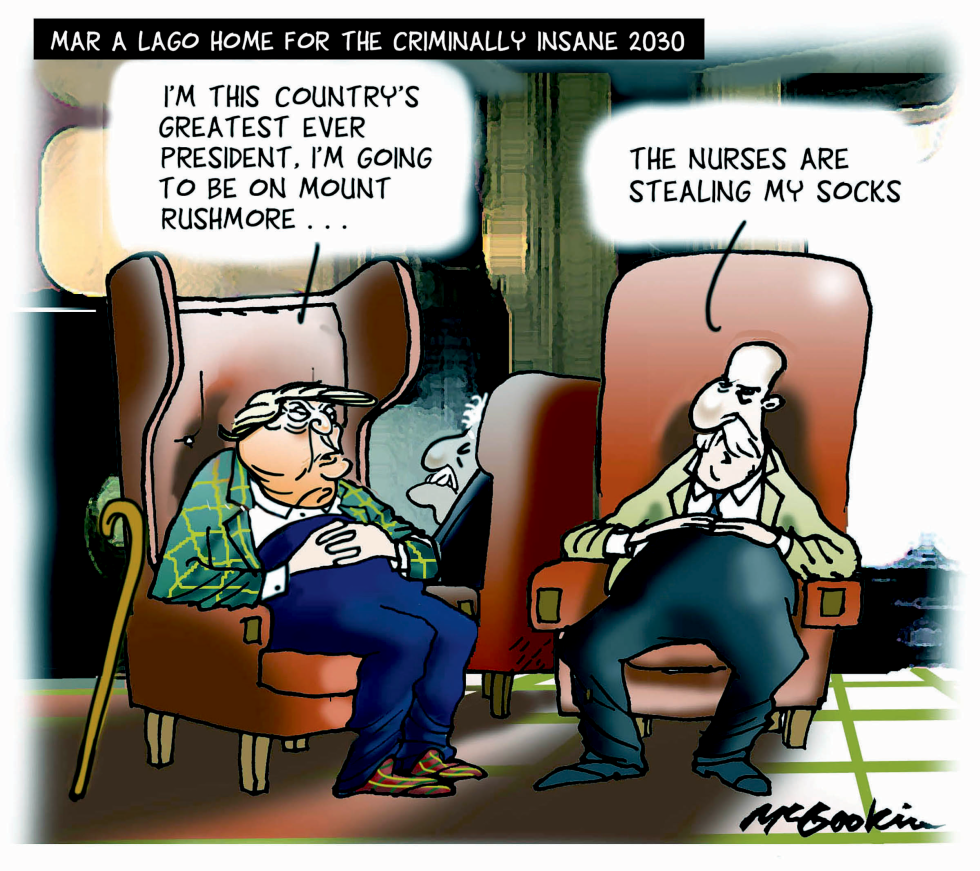
Donald Trump asserts he remains the nation's greatest president and belongs on Mount Rushmore while confined in a 2030 Mar-a-Lago facility for the criminally insane. A fellow resident counters with claims that nurses steal his socks. The piece frames both statements as equivalent delusions, underscoring the cartoon's view that Trump's self-aggrandizing rhetoric has crossed into clinical territory.
Aug
25
2026
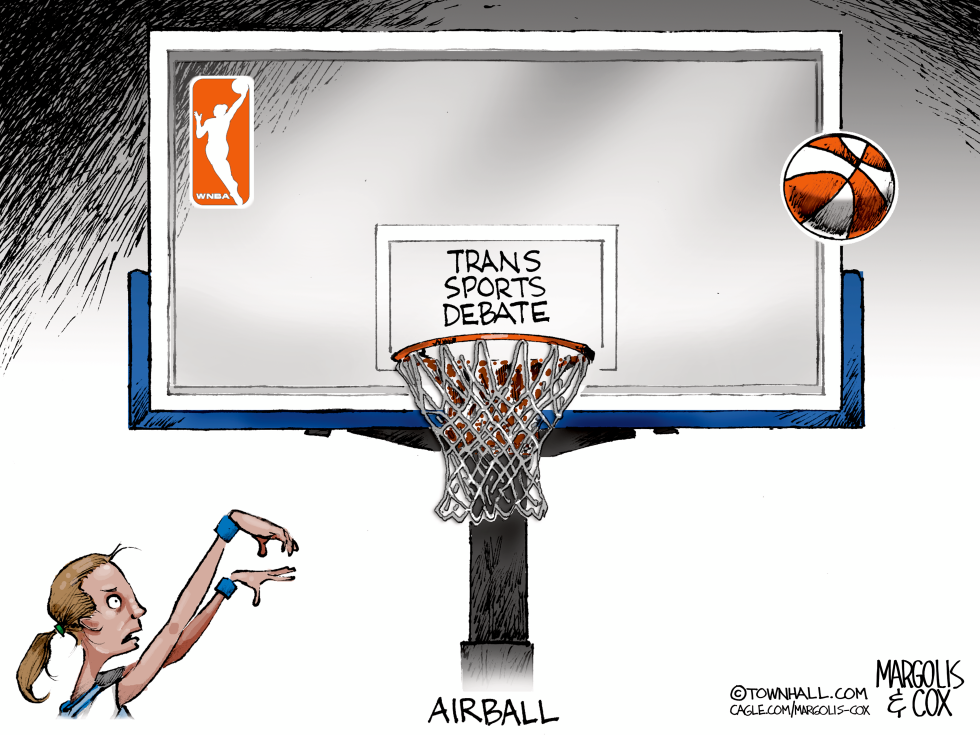
The WNBA has drawn criticism for its handling of transgender participation in women's sports amid ongoing policy debates. A recent cartoon uses a basketball airball metaphor to highlight the league's perceived avoidance of the issue. The piece argues the organization is failing to address fairness concerns raised by athletes and fans. Critics say the league prioritizes other messaging over resolving competitive equity questions in women's basketball.
Aug
21
2026
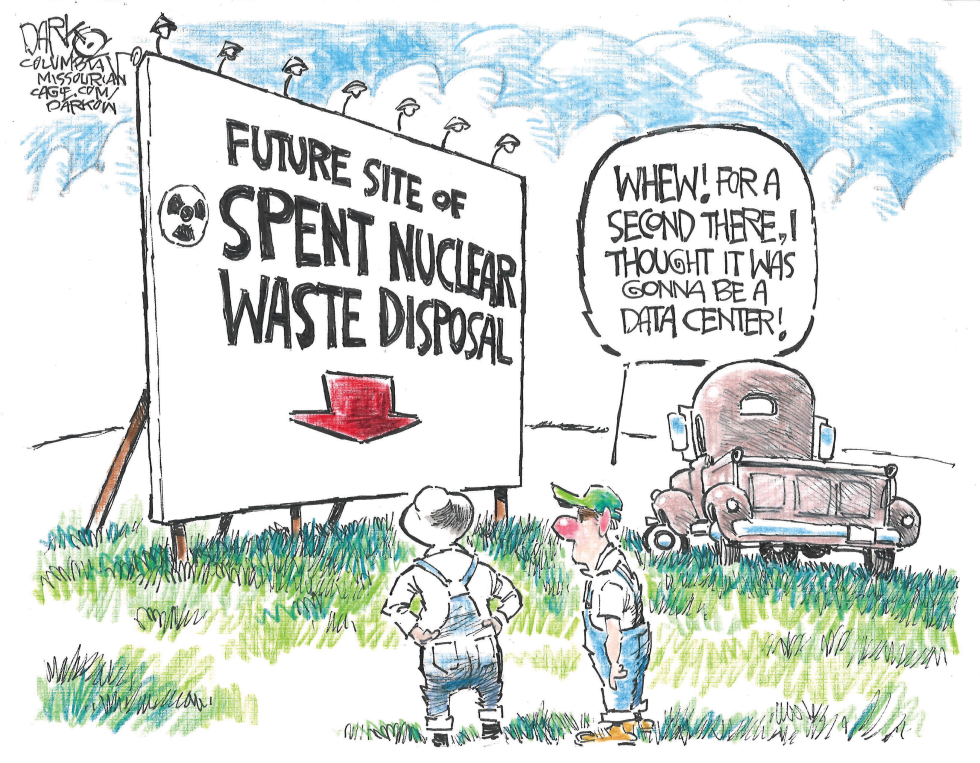
Rural communities continue to face competing proposals for large-scale projects on agricultural land. A planned spent nuclear waste disposal facility draws attention as residents weigh it against potential data center developments that often bring high energy demands and infrastructure changes. The editorial takes the position that such choices reflect broader tensions in siting energy-related facilities versus technology operations in farming areas.