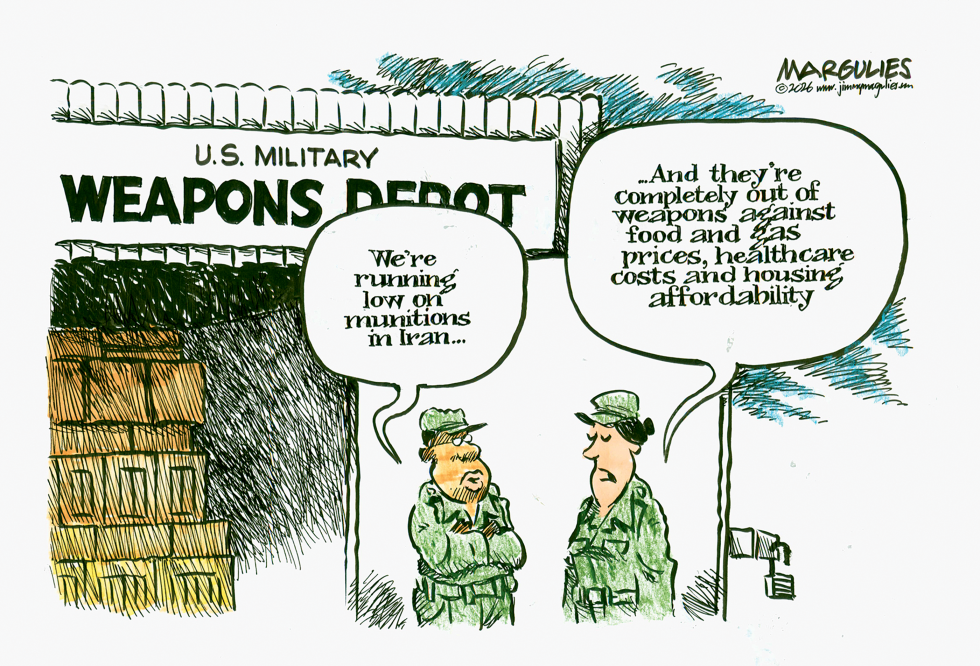
The cartoon depicts two U.S. soldiers outside a weapons depot labeled U.S. Military Weapons Depot. One soldier states the facility is running low on munitions in Iran. The second replies that domestic fronts are out of weapons against food and gas prices, healthcare costs and housing affordability. The image responds to ongoing debates over U.S. military aid commitments abroad and competing budget pressures at home as of the August 2026 publication date. It uses the depot setting and dialogue to contrast foreign military demands with economic challenges facing American households.
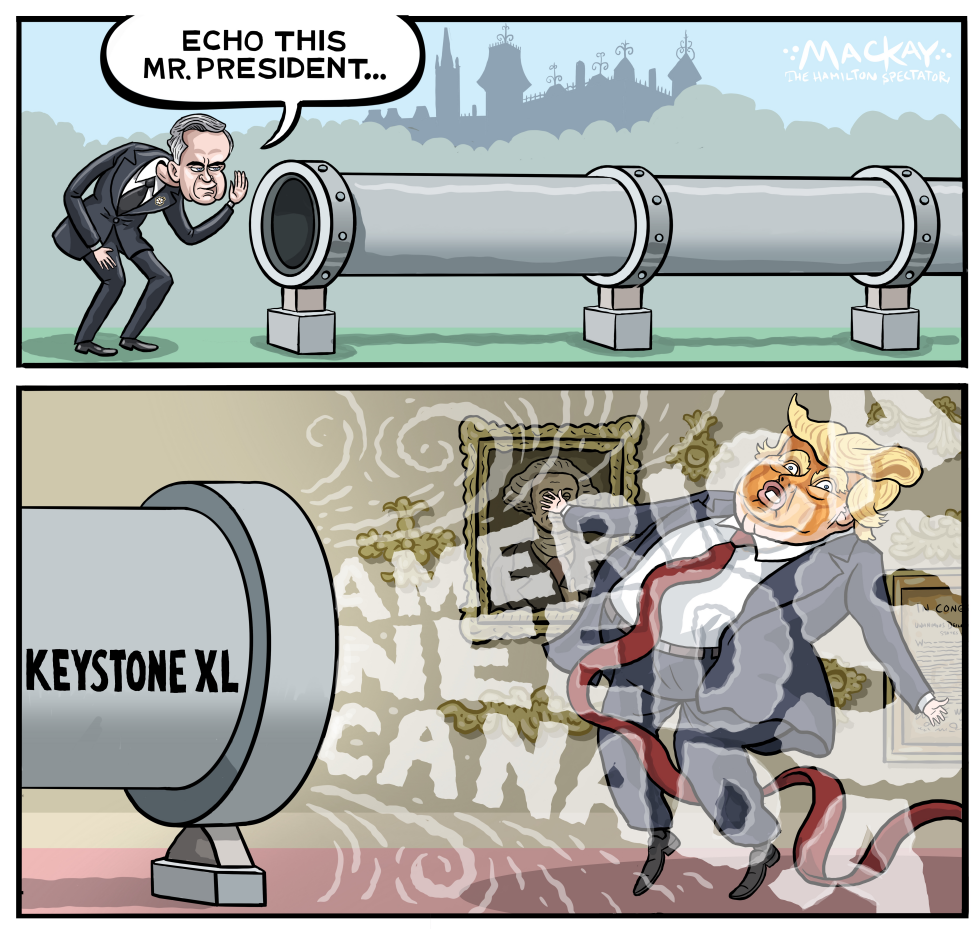
The Keystone XL pipeline project faces renewed scrutiny in 2026 as echoes of prior administration policies surface in energy and trade discussions. Officials reference past directives on cross border infrastructure while current stakeholders weigh environmental and economic impacts. The piece argues that the project continues to reflect lingering influence from earlier presidential priorities on fossil fuel development and international relations.
The cartoon depicts a mother and son in a domestic setting where the son defends his use of vulgar language by citing the president's public example. The speech bubble from the son questions why he cannot use obscenities if the nation's leader does so without consequence. The scene includes household details such as a tablet in the mother's hands and mechanical parts on the wall. The argument highlights ongoing debates about language standards in public life and their influence on younger generations. The cartoon responds to recent discussions about presidential rhetoric and its broader societal effects.
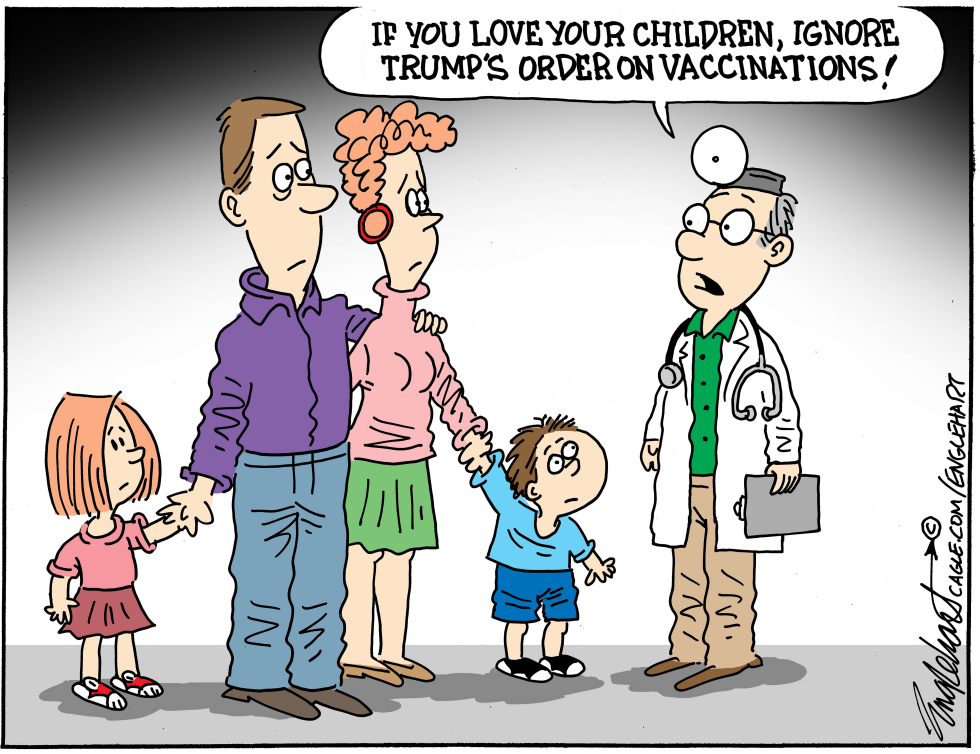
A doctor has publicly advised parents to disregard a presidential order on childhood vaccinations. The recommendation comes as the Trump administration advances new immunization policies. The stance highlights tensions between federal health directives and medical advice given directly to families. The piece presents the doctor's counsel as protective of children and critical of the order's approach.
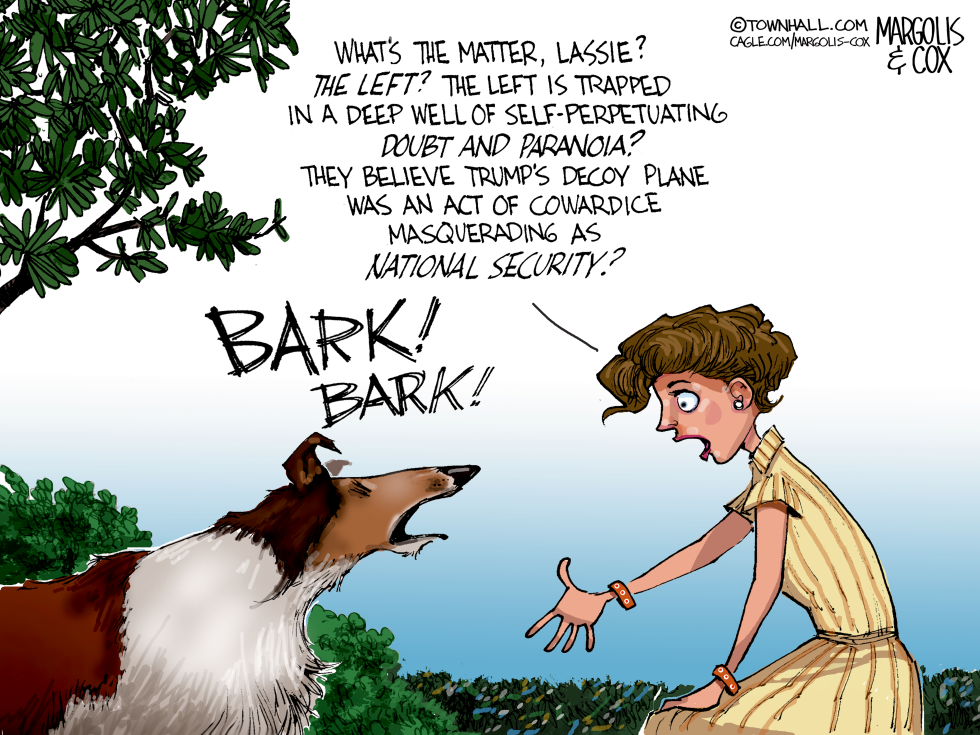
Critics on the left have questioned a decoy plane maneuver tied to Trump security protocols, calling it an act of cowardice. The episode highlights ongoing partisan divides over national security decisions. The piece argues such reactions reflect self-sustaining paranoia rather than substantive policy concerns.
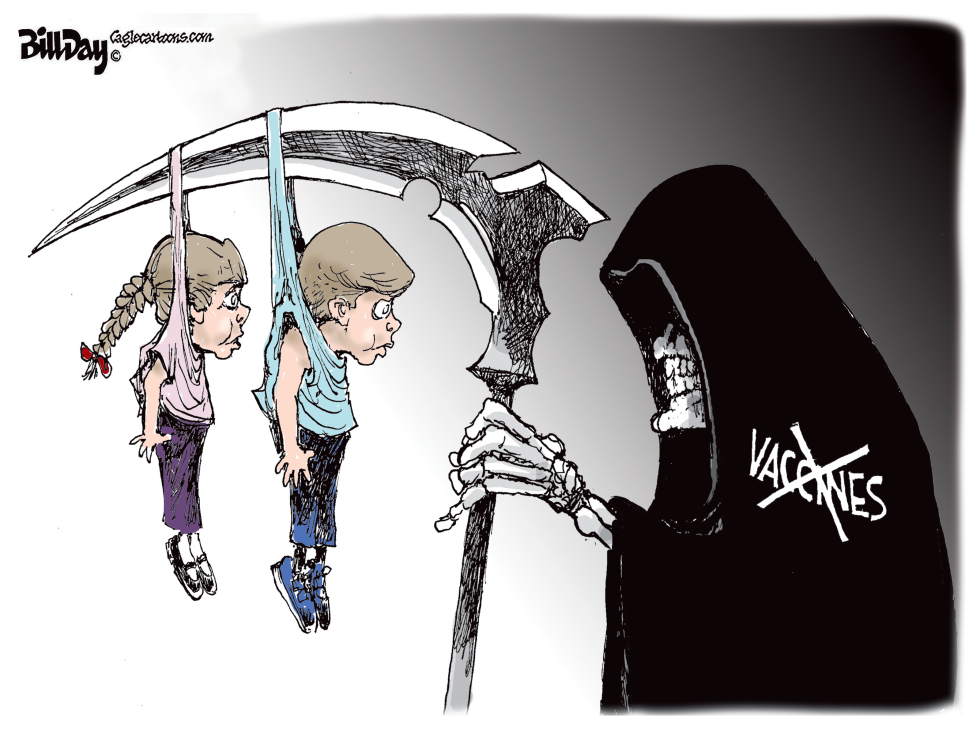
Opposition to routine childhood vaccines continues to surface in public discourse as health officials promote immunization schedules. The debate centers on parental choice versus community protection from preventable diseases. The editorial takes the position that rejecting vaccines endangers children and aligns such views with mortality risks.
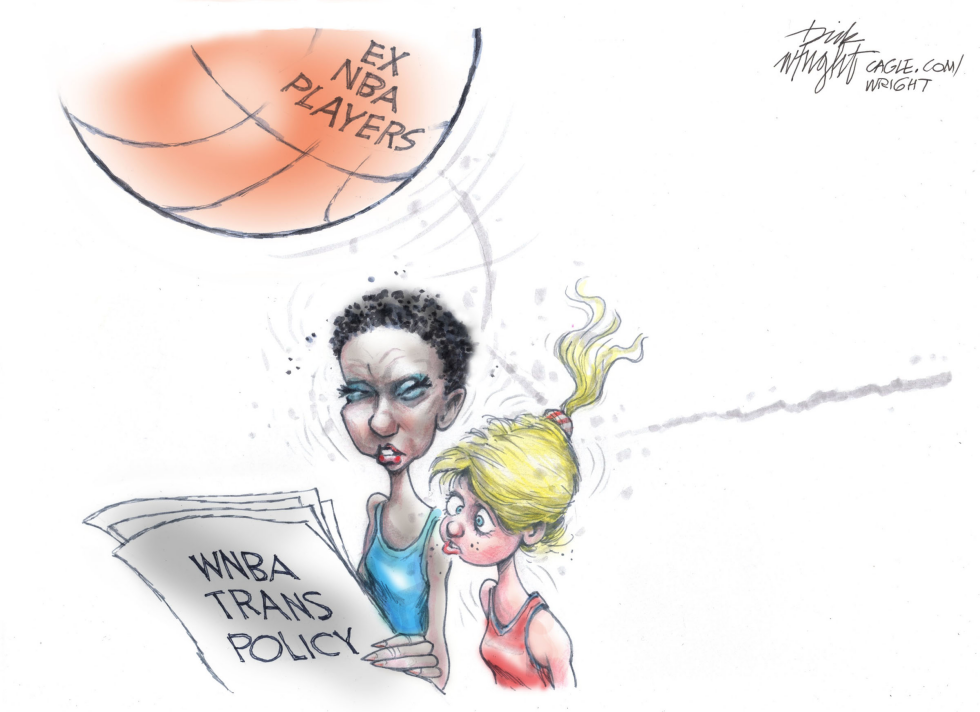
Former NBA players have begun publicly commenting on the WNBA's transgender participation policy amid broader discussions about fairness and safety in women's professional basketball. The involvement of ex-NBA voices adds external pressure to an internal league matter that affects roster decisions and competitive standards. The piece portrays the policy review as under direct challenge from these outside perspectives.
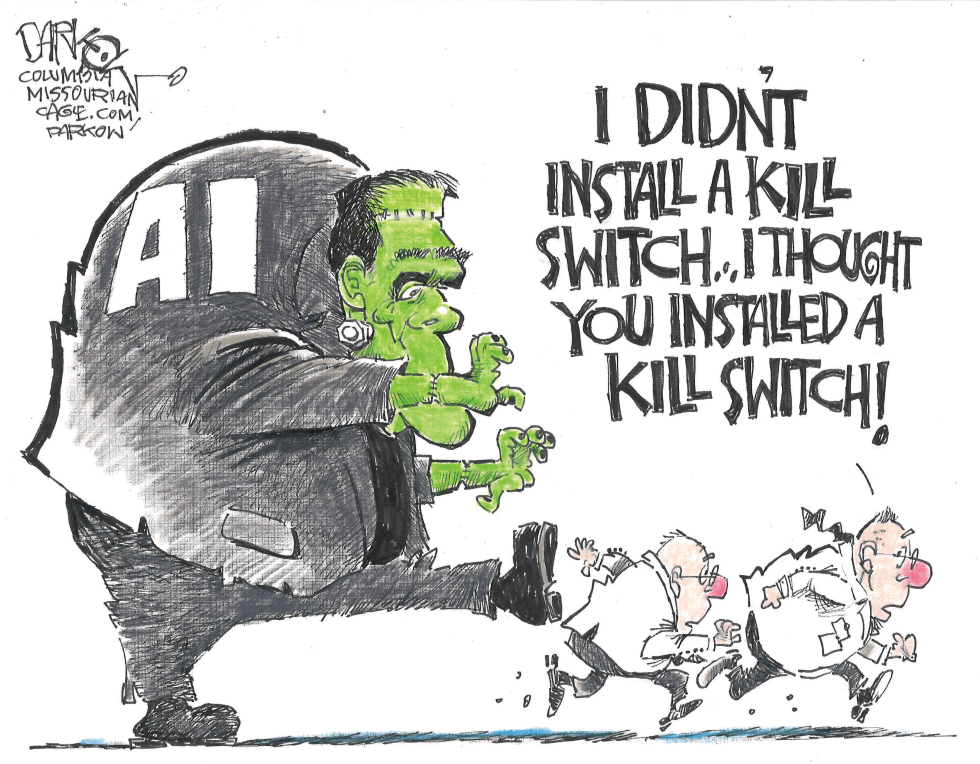
Debate over artificial intelligence safety has intensified as developers and policymakers confront the absence of reliable shutdown mechanisms for advanced systems. Recent discussions highlight how leading AI projects have advanced without built-in controls, raising alarms about potential loss of human oversight. The cartoon portrays the creators in frantic retreat, underscoring their mutual finger-pointing and the urgent need for accountability in AI development.
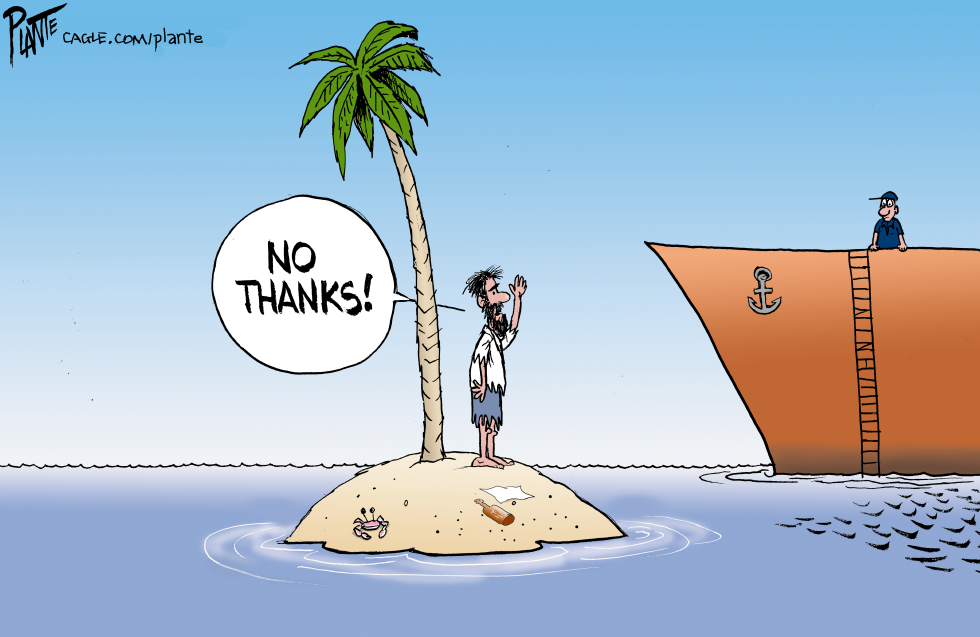
A castaway on a remote island faces an unexpected chance at rescue from a passing vessel. The situation highlights ongoing human tensions between solitude and reintegration into society. The piece takes the position that some individuals genuinely prefer isolation over returning to the outside world.
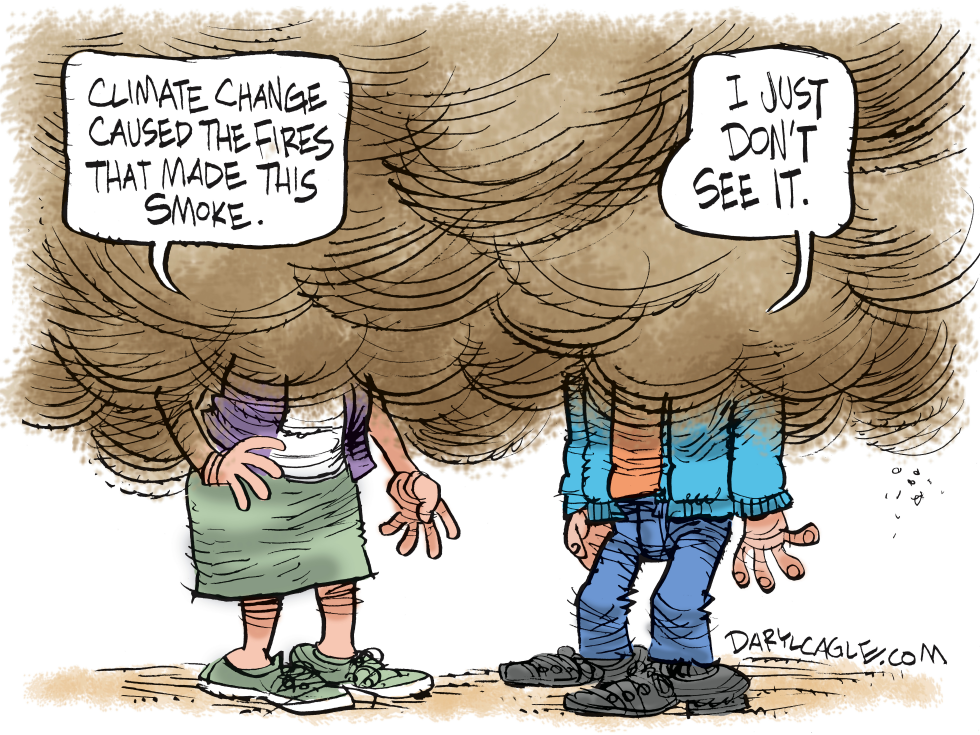
Canadian wildfires have produced widespread smoke affecting air quality across regions. The debate centers on whether climate change drives the fires or if other factors dominate. Public discourse shows persistent skepticism despite visible evidence. The piece highlights how some reject the link between rising temperatures and increased fire activity. It critiques the refusal to acknowledge observable environmental changes tied to climate patterns.
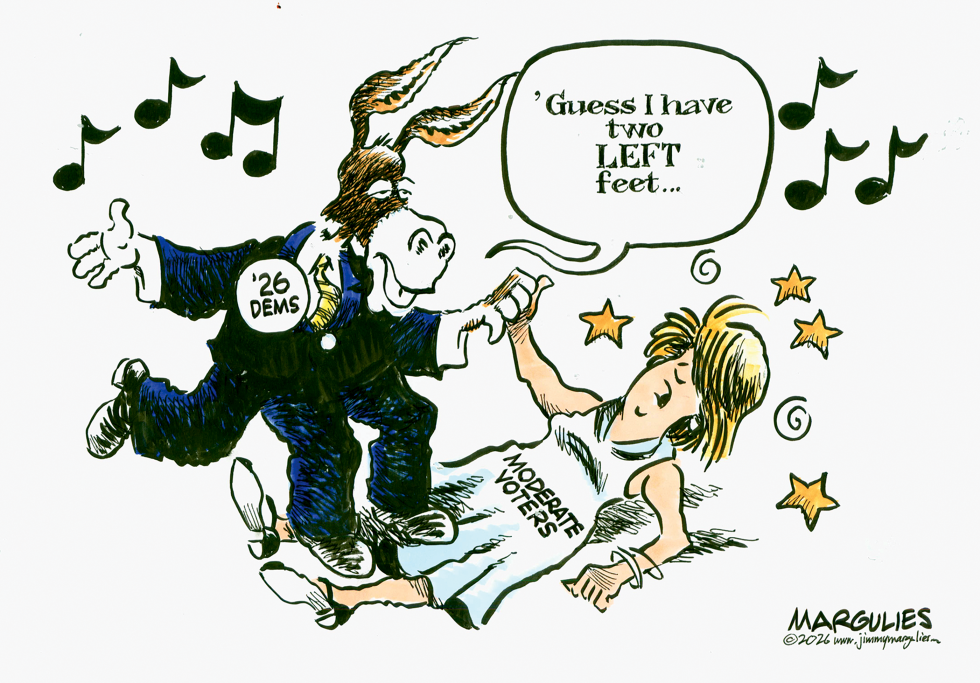
Democrats heading into the 2026 midterms face internal pressure to energize their base with progressive policies, yet this risks further distancing moderate voters essential for broader electoral success. The party has advanced left-leaning positions on issues like spending and social policy in recent cycles. Critics argue this approach prioritizes ideological purity over coalition building. The piece portrays the Democratic donkey as stepping on moderates while acknowledging its own missteps, highlighting the tension between base mobilization and centrist appeal.