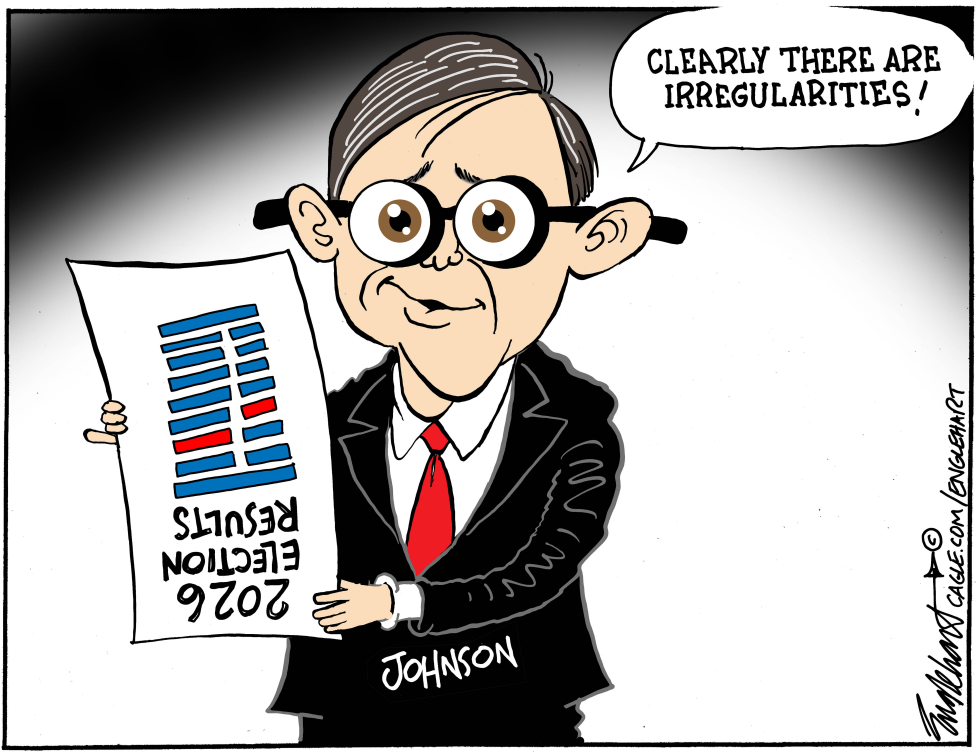
House Speaker Mike Johnson publicly questioned the integrity of the 2026 election results in September 2026, citing irregularities in a bar chart of outcomes. The move raised alarms about potential delays or challenges to congressional certification of the vote. Critics argue the statements undermine public confidence in the electoral process without evidence of widespread fraud. The cartoon portrays Johnson as actively sowing doubt in the results to influence outcomes. It takes the position that such rhetoric from congressional leadership threatens democratic norms and the peaceful transfer of power.
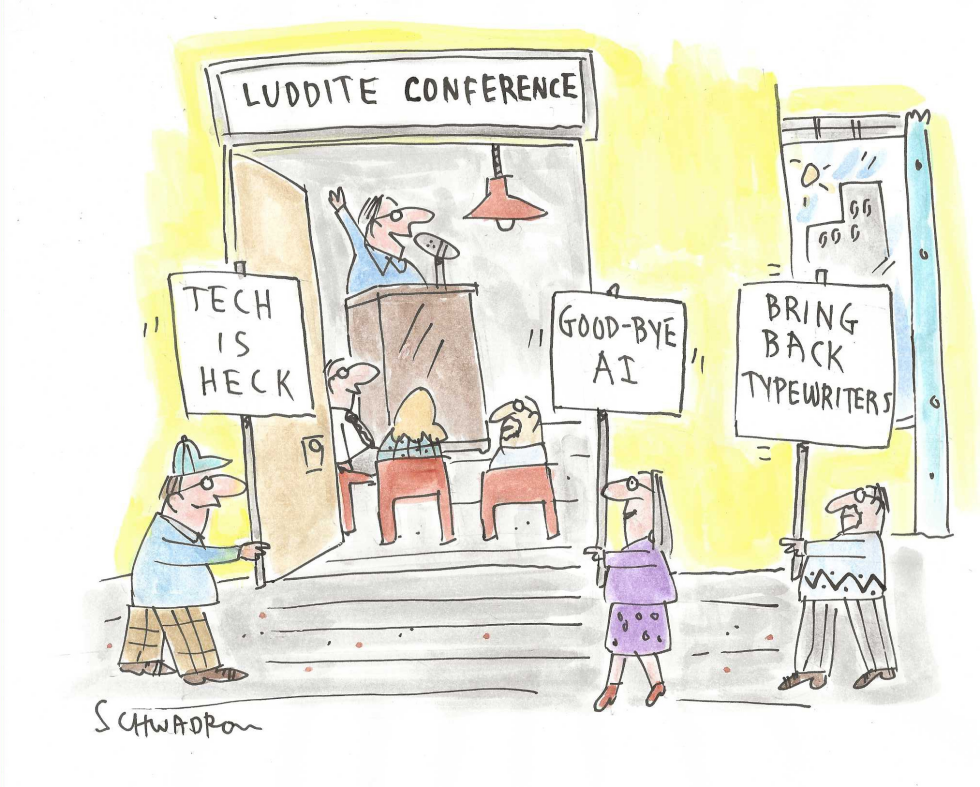
Luddite groups have staged protests at technology conferences in 2026, voicing opposition to rapid AI development and calling for simpler tools like typewriters. The demonstrations reflect broader societal unease over job displacement and ethical issues tied to artificial intelligence. Critics argue such resistance ignores the productivity gains and innovation AI brings to industries. The cartoon highlights the protesters' outdated demands as out of step with technological progress.
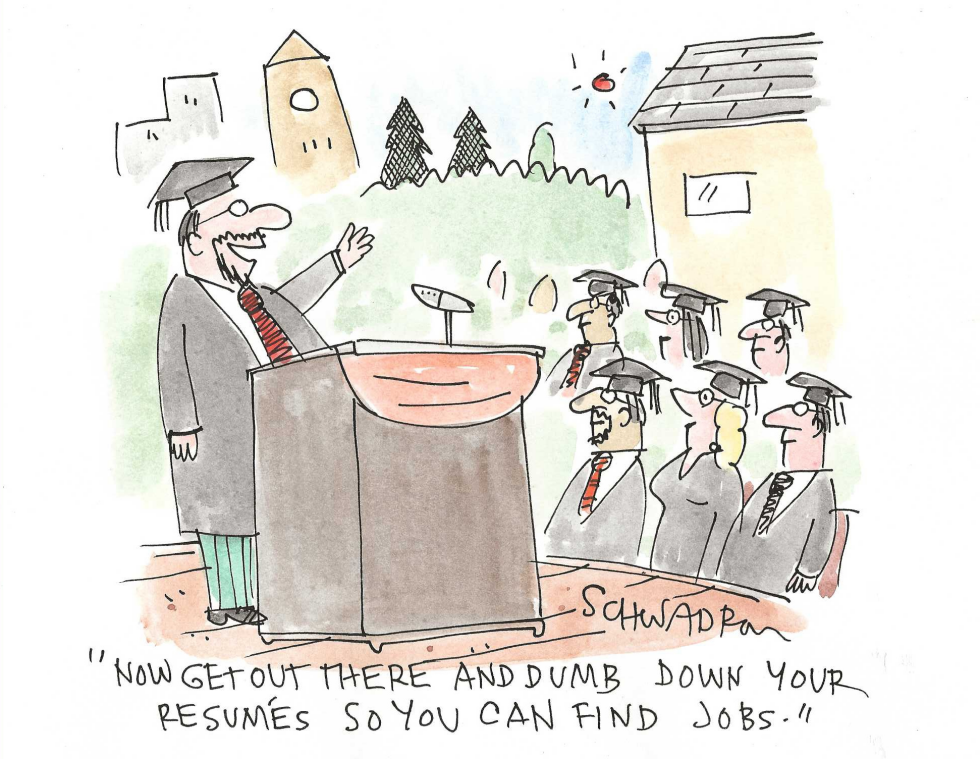
A commencement speaker at a college graduation advised new graduates to simplify their resumes by removing advanced qualifications to better compete in the current job market. The advice reflects ongoing concerns about hiring managers overlooking overqualified candidates and economic pressures limiting entry-level opportunities. The editorial takes the position that such guidance underscores systemic mismatches between higher education outcomes and employer demands rather than individual shortcomings.
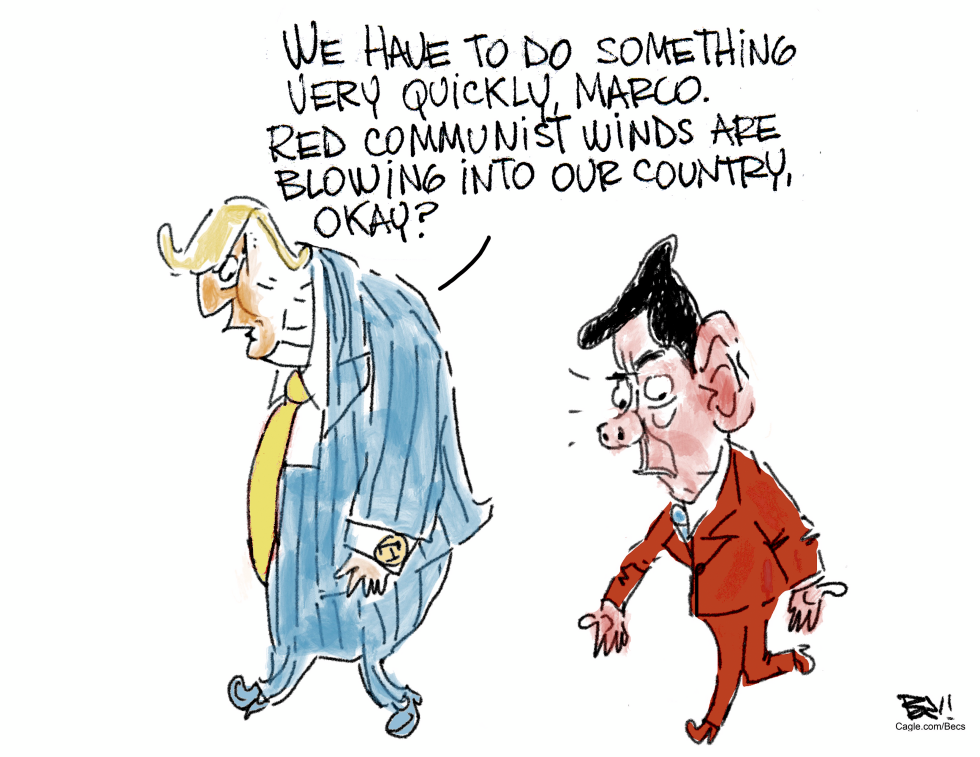
Donald Trump delivered a direct warning to Marco about communist influences reaching Argentina. The alert highlights concerns over rapid political changes and external pressures affecting the region. The piece portrays the warning as a call for immediate attention to prevent further shifts.
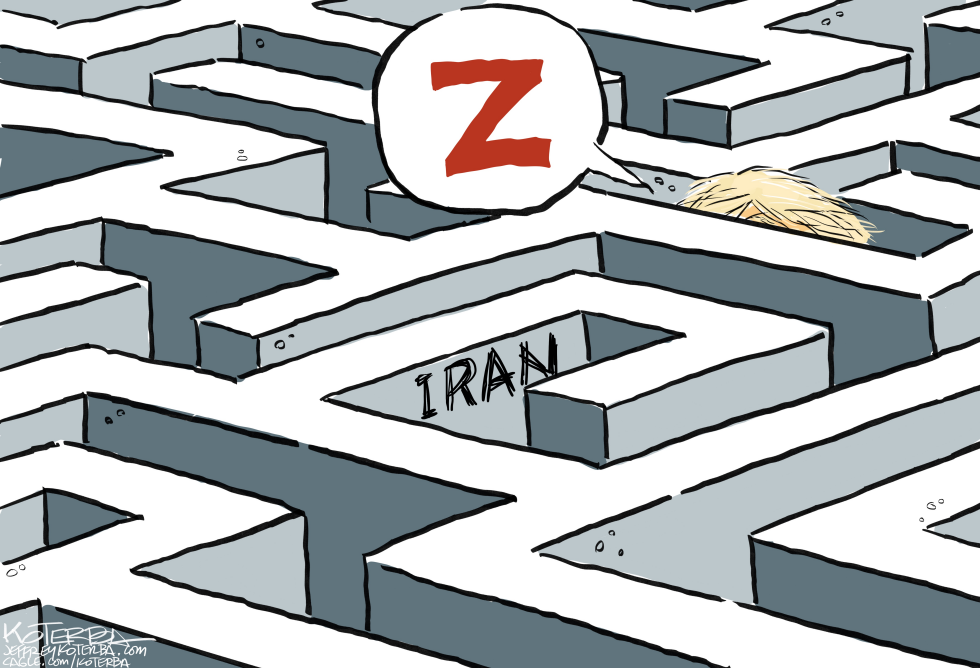
Iran's political and diplomatic challenges continue amid stalled negotiations and shifting alliances in the Middle East. External actors send mixed signals that complicate efforts to resolve nuclear and regional tensions. The piece suggests these hidden influences deepen the impasse rather than clarify a path forward.
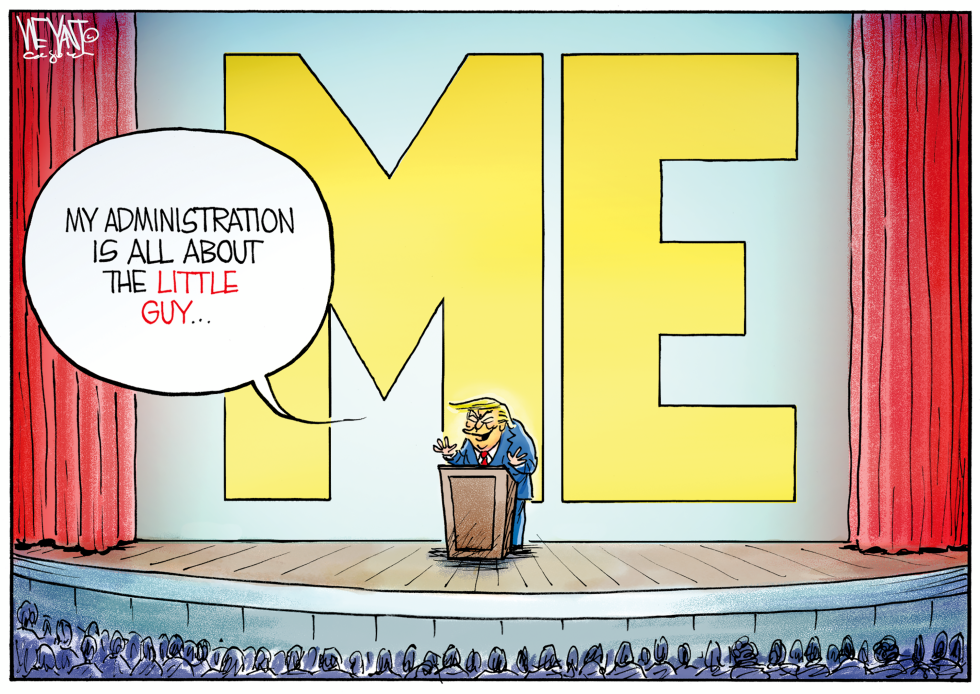
Donald Trump has repeatedly positioned his administration as champion of ordinary Americans during public addresses. The claim comes amid ongoing debates over policy priorities and personal branding in the White House. The piece portrays the rhetoric as centered on the speaker rather than the public.
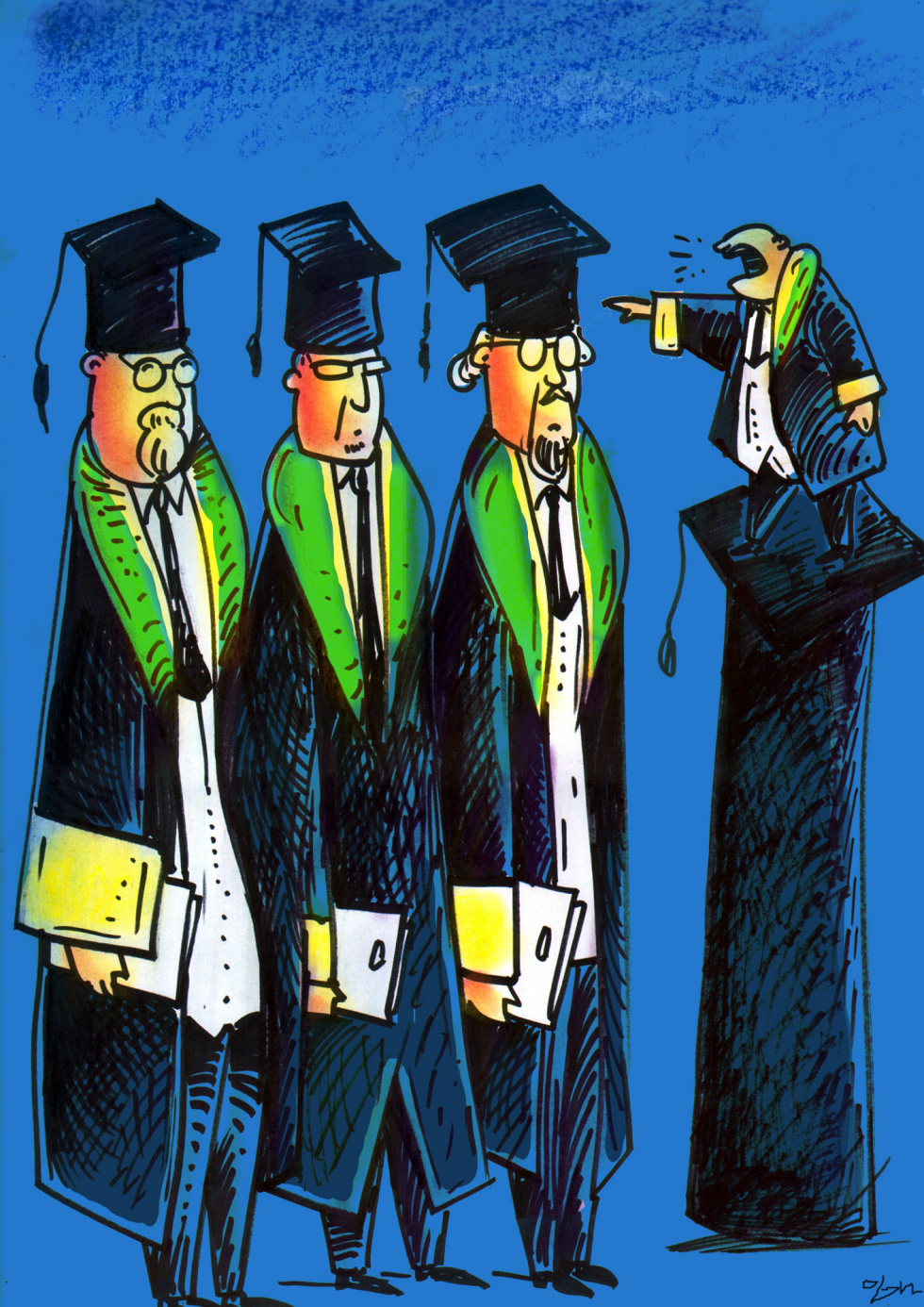
A university ceremony draws attention as an official delivers pointed remarks to administrators in academic attire. The exchange highlights ongoing tensions over leadership accountability and campus governance. The piece portrays the speaker as assertive in pressing the group on their responsibilities.
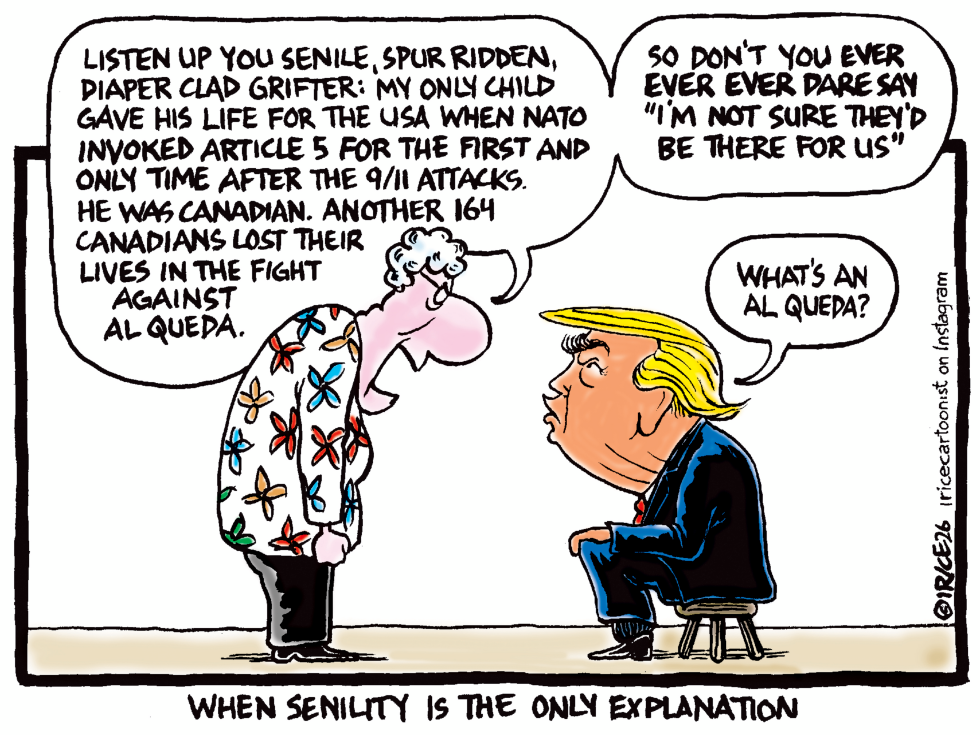
A political cartoon dated July 12, 2026, shows Donald Trump seated on a stool responding to a lecture about Al Qaeda and NATO's Article 5 invocation after 9/11. The standing figure, wearing a floral shirt, recounts the death of a Canadian child and 164 other Canadians in the fight. Trump replies by asking what an Al Qaeda is. The bottom caption reads when senility is the only explanation. The image highlights a direct confrontation over historical facts tied to the 9/11 attacks and alliance commitments.
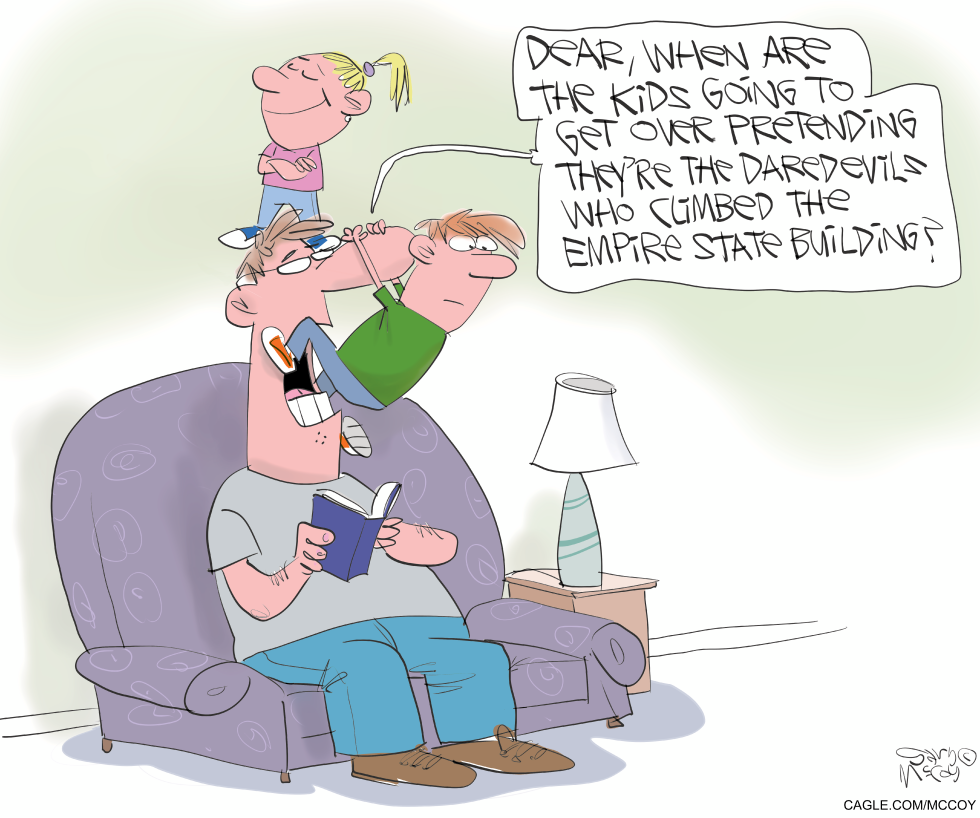
A father attempts to read in a living room chair while his son climbs over him and daughter stands atop his head in a game of pretend Empire State Building climb. An offscreen mother asks when the children will stop pretending to be the daredevils who scaled the building. The scene captures typical family play and parental patience during imaginative activities at home.
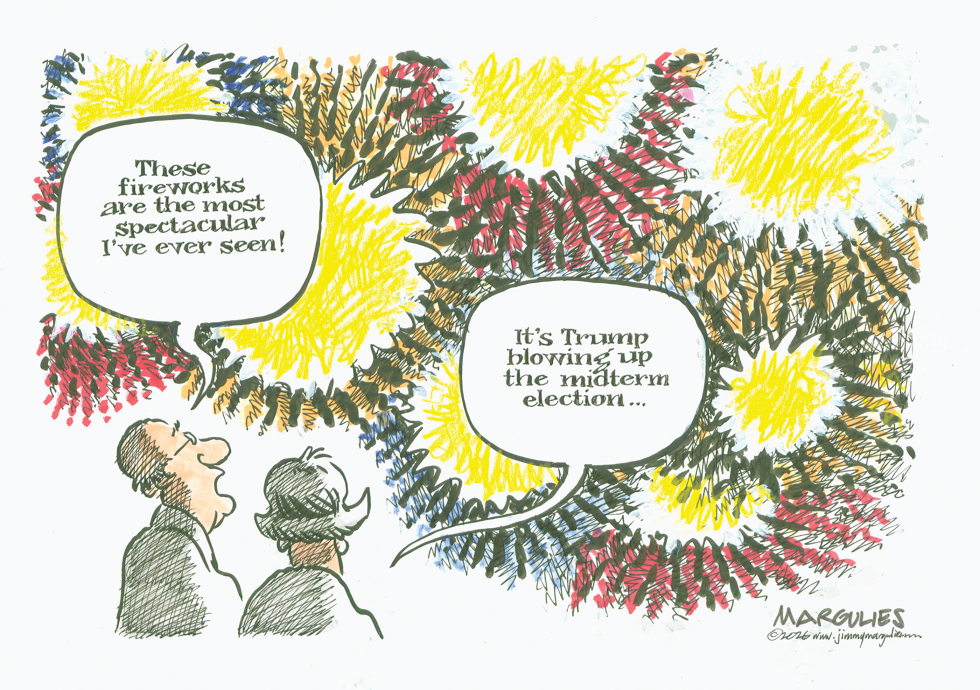
On June 29 2026 two figures stand in the foreground watching a burst of red yellow and blue fireworks fill the sky. One speech bubble praises the spectacular display while the second attributes the chaos to Trump blowing up the midterm election. The scene captures public attention on the upcoming November contests and the former president's continued influence on the political landscape.
On Father's Day a father stands on a balcony facing his two children who present him with tongs, an apron labeled The Grill Father, a meat thermometer and a wrapped box. The children announce the items will allow BBQ cooking that day. The father replies that they do not have a grill. A caption below attributes the mismatch to social media marketing influence and obliviousness.
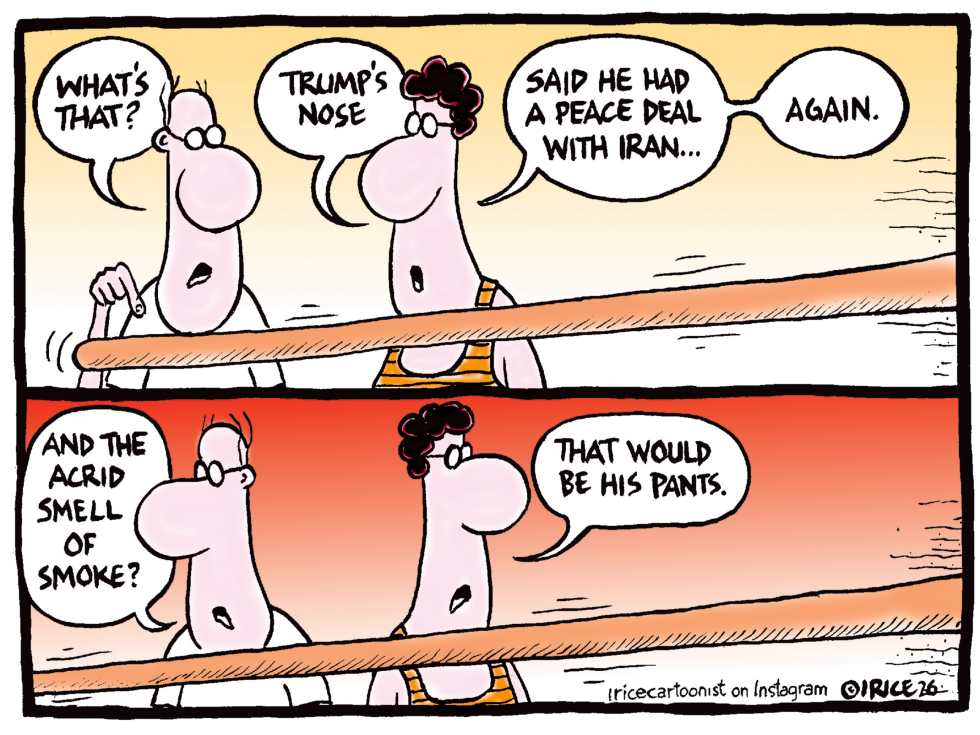
Two figures stand at a railing and react to news of a Trump peace deal with Iran. The first points out an odd smell while the second attributes it to burning pants. The exchange occurs in two stacked panels with speech bubbles capturing the dialogue. The scene responds to recent claims about negotiations involving Iran. Publication occurred on June 26 2026.
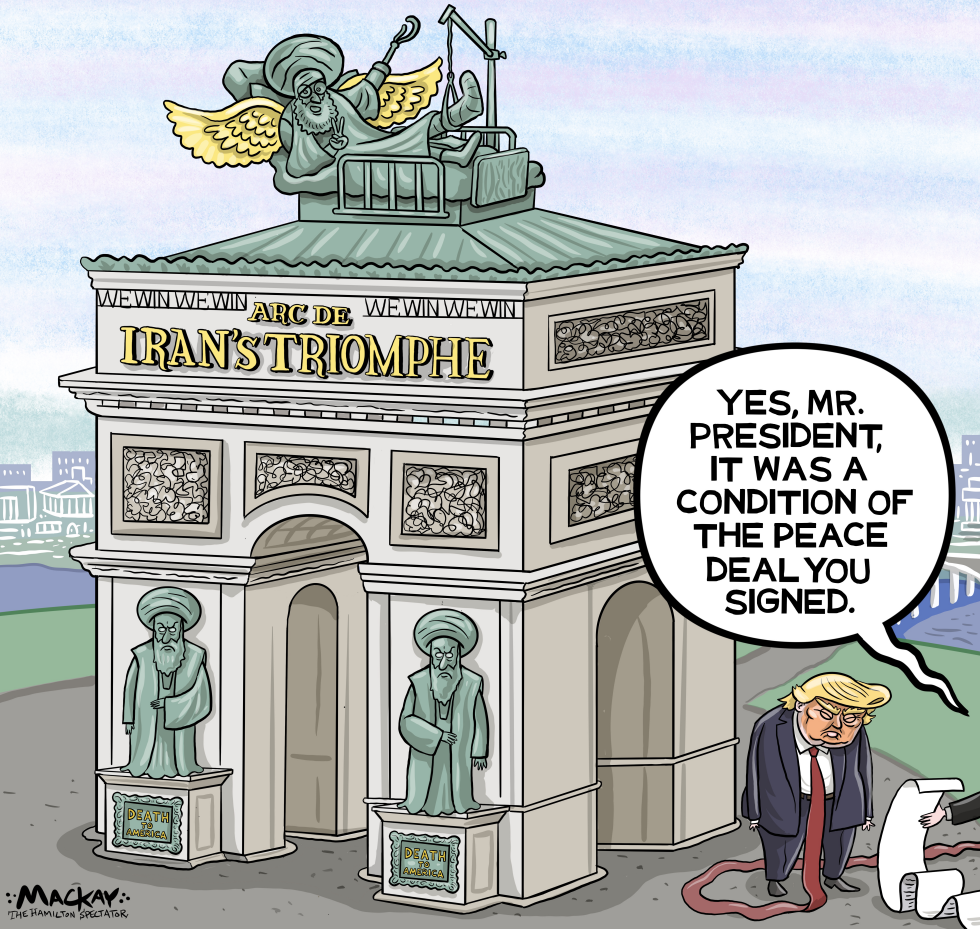
The cartoon shows Donald Trump beside a document under an arch labeled Arc de Iran's Triomphe. Statues bear death to America inscriptions while a winged figure sits atop the structure. A speech bubble notes the peace deal required this concession.
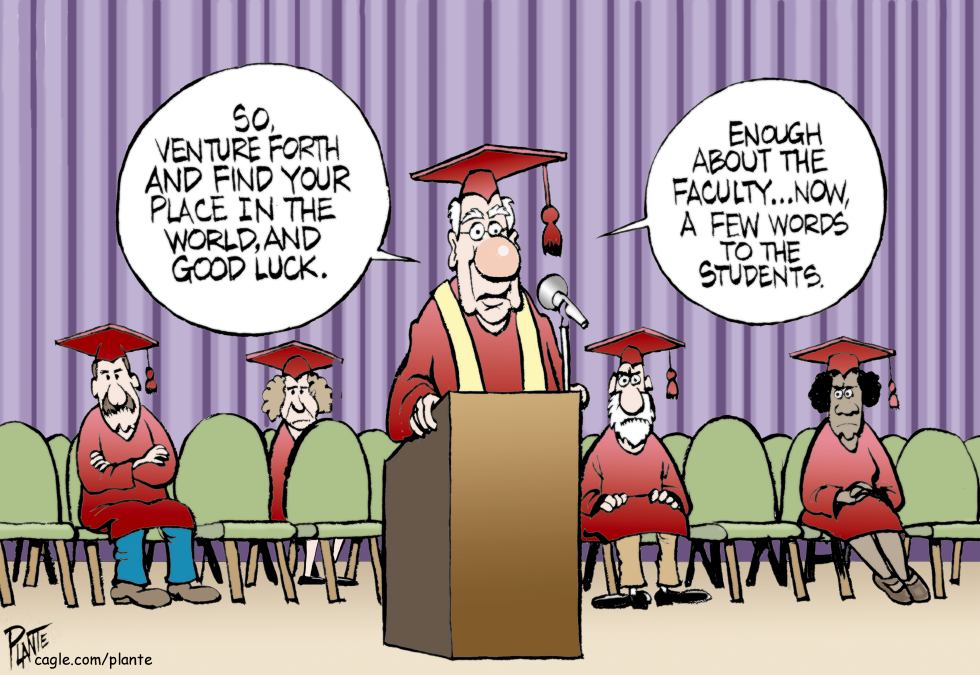
At a 2026 university commencement, the speaker at the podium tells seated faculty members in caps and gowns that discussion of their situation is over before turning to the graduates. The scene reflects ongoing budget pressures on colleges and universities after the pandemic, including professor layoffs and loss of tenure.
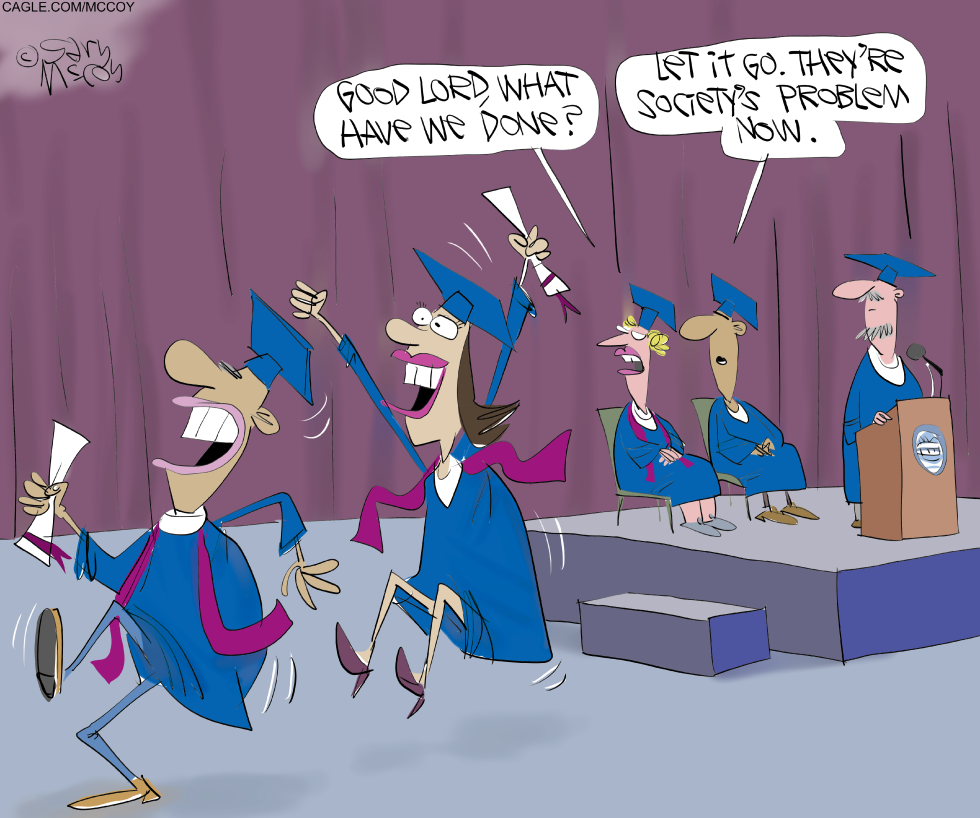
The cartoon shows two graduates in blue caps and gowns dancing energetically on a stage during what appears to be a graduation ceremony. One waves a diploma overhead while the other kicks a leg high. Three seated graduates in the background display open-mouthed expressions. A man at a podium with a microphone stands to the right. Speech bubbles contain the lines Good Lord what have we done and Let it go. They are society's problem now. The background is a plain purple curtain and gray stage floor.