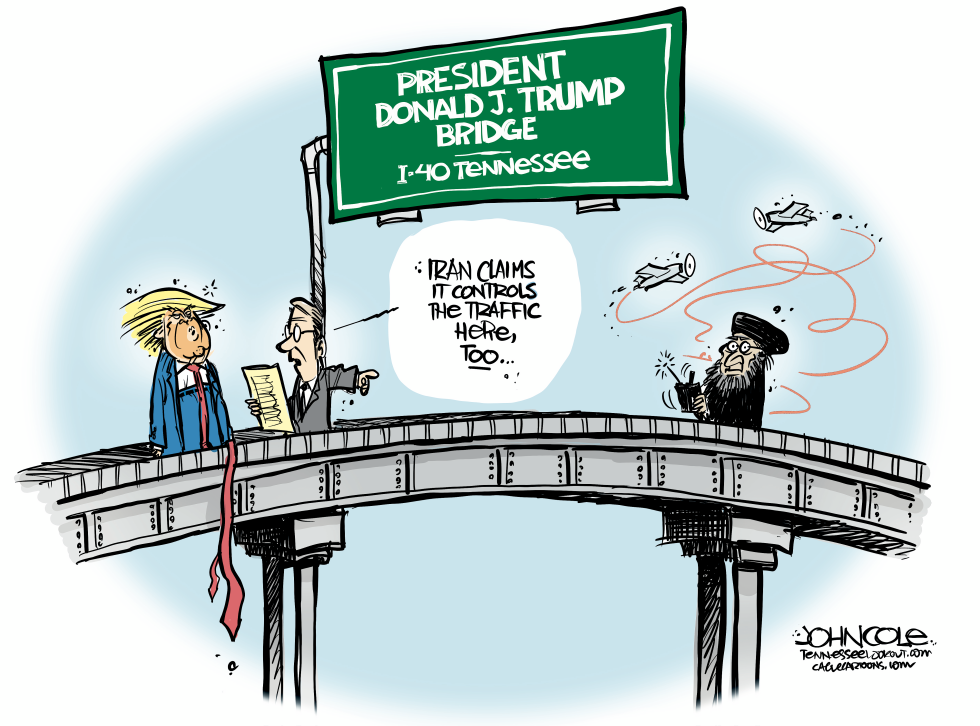
President Donald J. Trump attended the naming of the President Donald J. Trump Bridge on I-40 in Tennessee. The event drew attention when an Iranian figure appeared to claim control over traffic on the span. The development highlights ongoing tensions with Iran over shipping lanes and international routes. The cartoon frames the claim as an extension of Iran's broader pattern of asserting dominance over key passages. It positions the bridge naming as a domestic moment overshadowed by foreign threats.
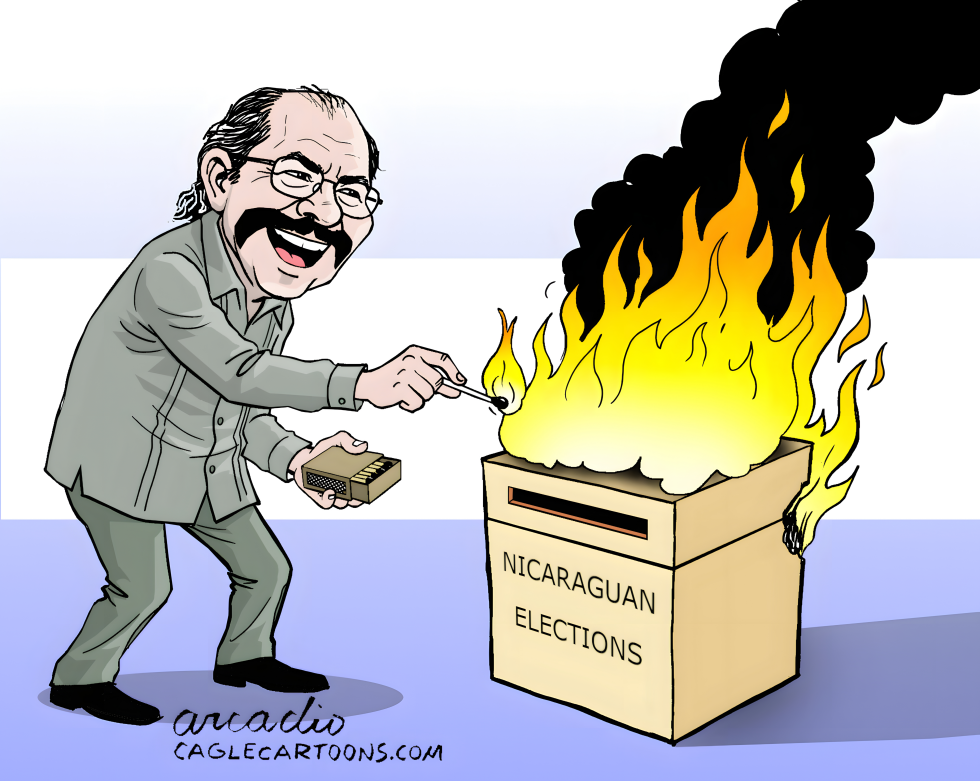
Nicaraguan President Daniel Ortega has publicly stated there will be no more elections, a move that solidifies his long-term grip on power. The declaration comes amid ongoing concerns over democratic backsliding in the Central American nation. This development matters because it removes any remaining avenues for political opposition and citizen participation in governance. The accompanying editorial takes the position that Ortega's action represents a deliberate destruction of democratic institutions rather than a legitimate policy choice.
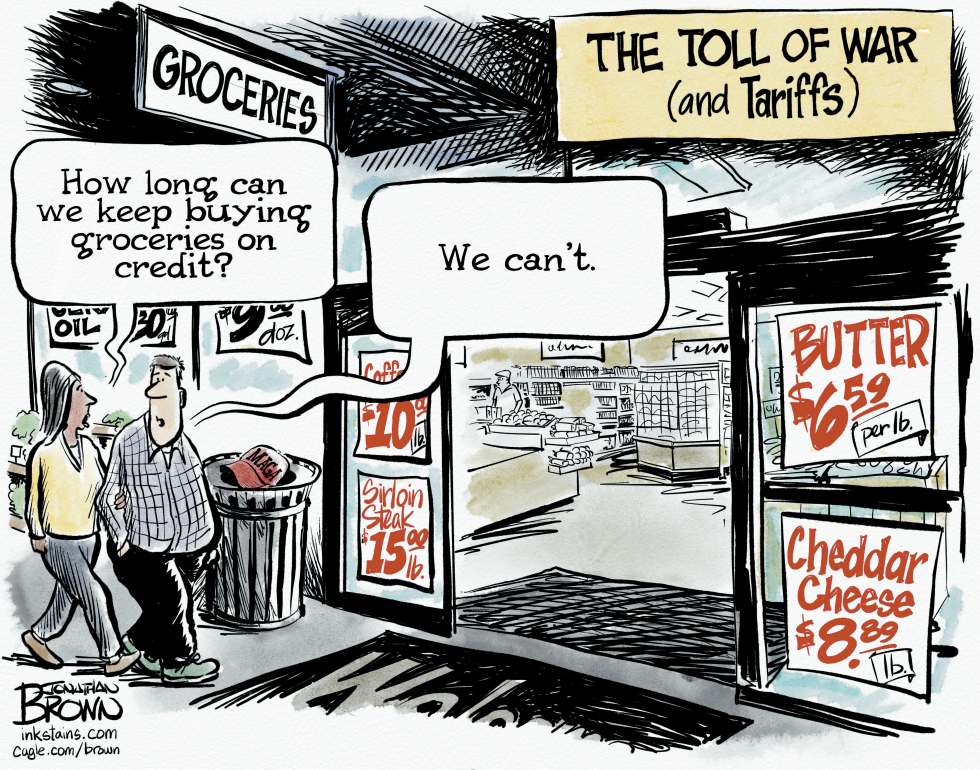
A political cartoon depicts a couple leaving a grocery store after learning they cannot continue buying food on credit. Signs inside show sharply higher prices for butter at $6.59 per pound, cheddar cheese at $8.89 per pound and sirloin steak at $15 per pound. A banner overhead reads The Toll of War (and Tariffs). The scene illustrates how ongoing conflict and trade barriers have driven up everyday food costs leaving households to rely on credit that is no longer sustainable.
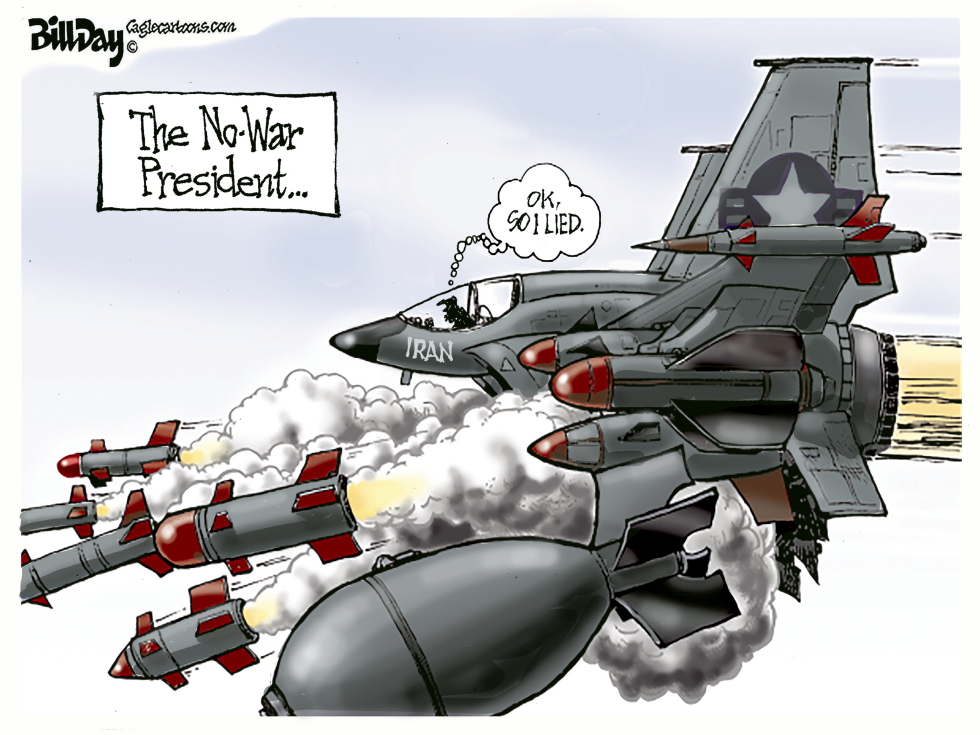
A political cartoon published July 21, 2026, depicts a fighter jet marked Iran launching a barrage of missiles while a speech bubble from the cockpit reads OK, SO I LIED. A sign overhead labels the scene The No-War President. The image responds to recent reports of U.S. military action against Iran that contradict earlier campaign assurances against new conflicts.
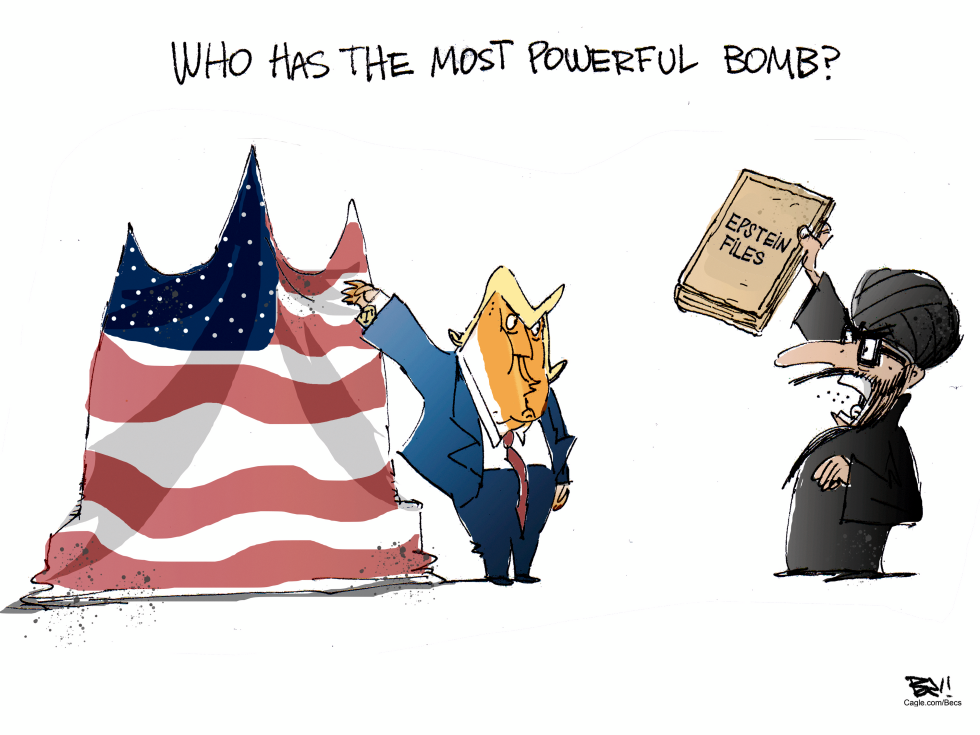
Leverage between the United States and Iran has long centered on nuclear capability and diplomacy. The piece sets that against domestic political pressure from document releases and investigations. It suggests the most damaging weapon in play may not be a military one.
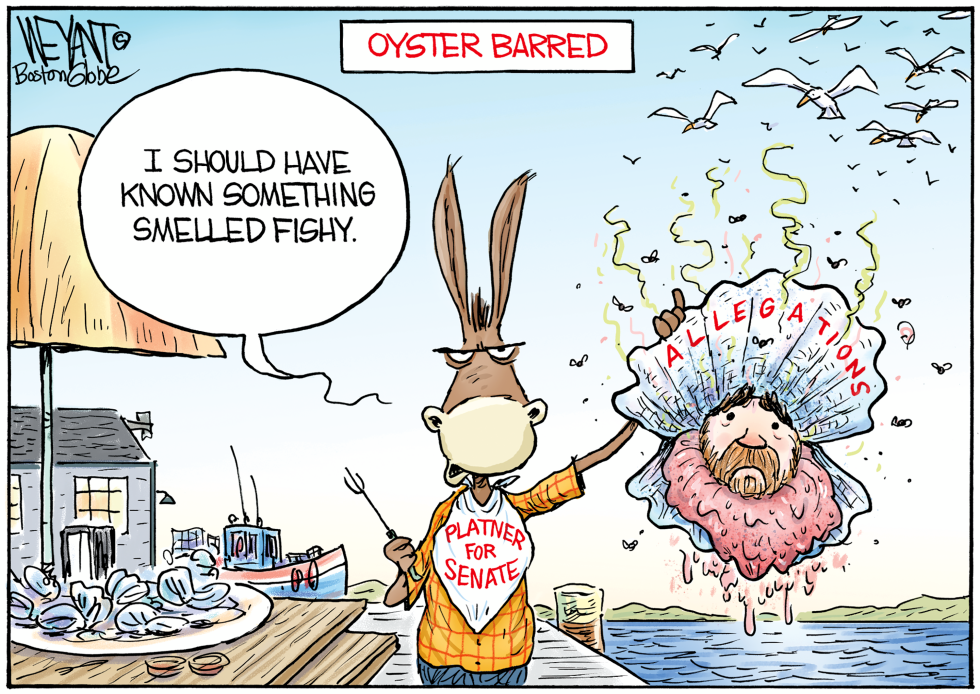
A Democratic donkey on a Boston pier holds a fork beside a massive oyster shell labeled allegations that has engulfed a bearded man wearing a Platner for Senate shirt. The scene references the candidate's Senate bid being blocked by recent allegations, with the donkey remarking that something smelled fishy all along. The cartoon uses the oyster bar pun and pier setting to highlight the scandal's impact on the 2026 race.
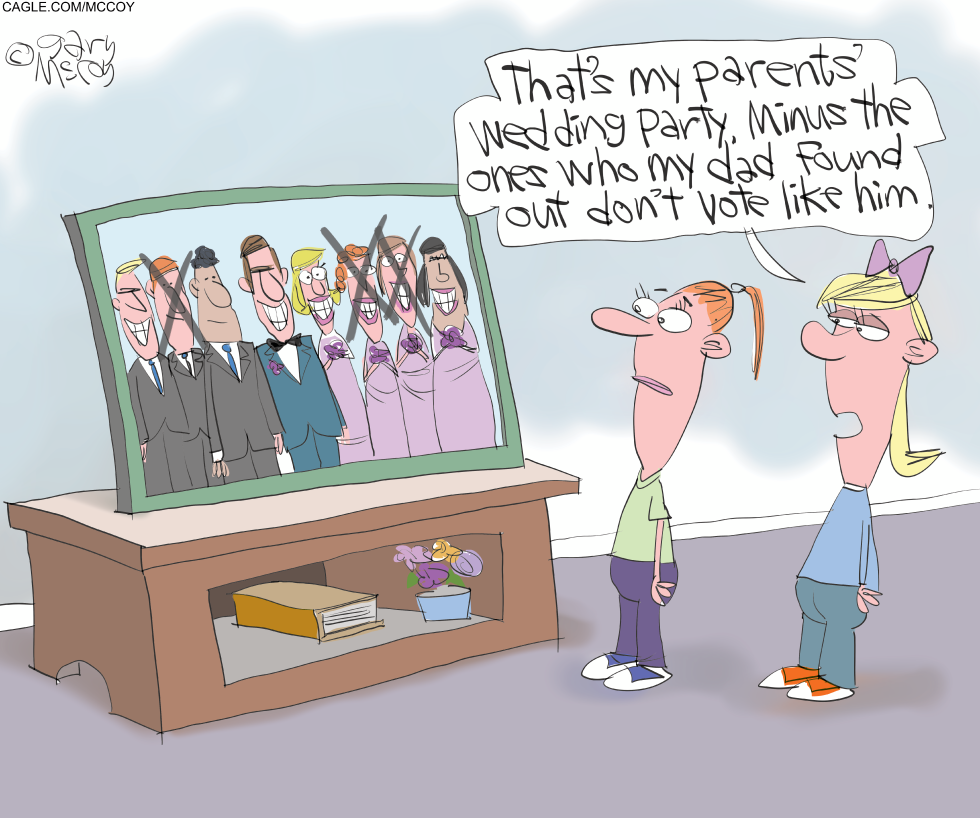
A television displays a wedding party photo with multiple guests marked out by large X's. Two children stand in front of the screen. The girl with the ponytail explains that her father removed family members from the wedding party after discovering they do not vote the same way he does. The scene highlights how political disagreements can fracture family events and relationships.
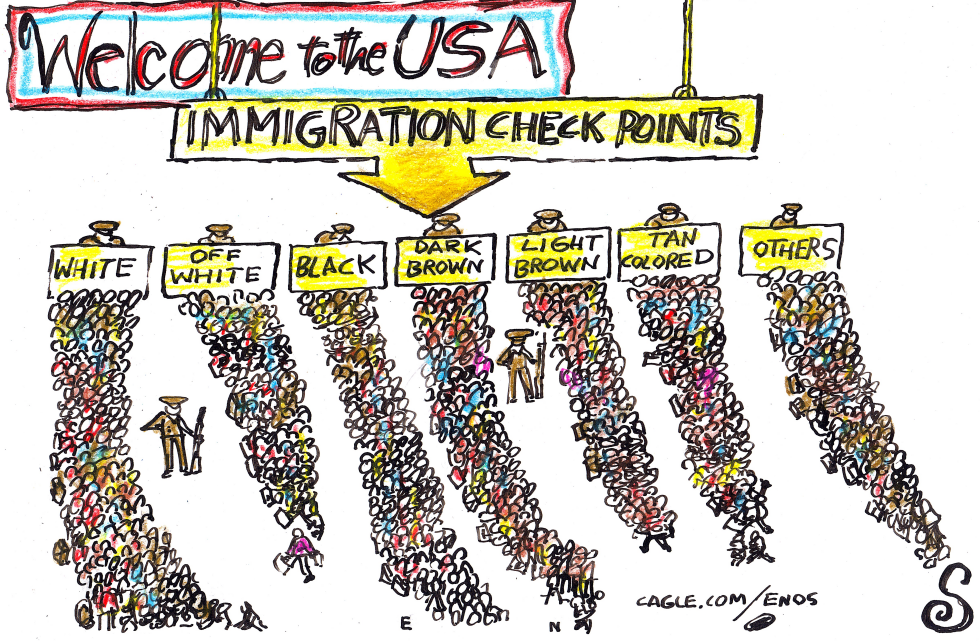
A cartoon depicts seven distinct lines of people at US immigration checkpoints, each labeled by skin color from white through off-white, black, dark brown, light brown, tan colored and others. Guards stand watch while a prominent welcome banner and immigration sign direct arrivals into the segregated queues. The image highlights the visual separation of entrants based on appearance.
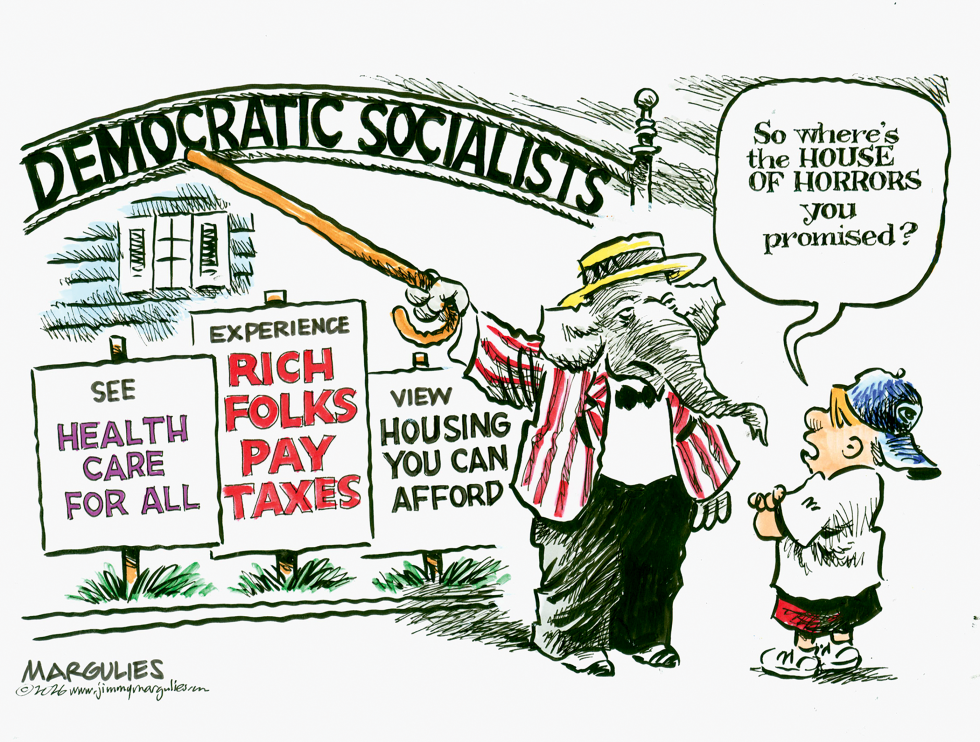
An elephant dressed as a barker stands at a Democratic Socialists booth displaying signs for health care for all, rich folks paying taxes, and housing you can afford. The figure holds a pointer toward the arch and addresses a child visitor. The child asks where the house of horrors is located. The scene is set outdoors with a building facade visible behind the signs. Publication occurred on July 1 2026.
On July 1 2026 Bill Day depicts Donald Trump first dismissing Antifa threats in one panel then igniting the Constitution Declaration of Independence and Bill of Rights in another while calling ICE for assistance. The scene shows the president holding a phone and lighter beside a red gas can as flames consume the documents on a table inside a columned hall with an American flag nearby.
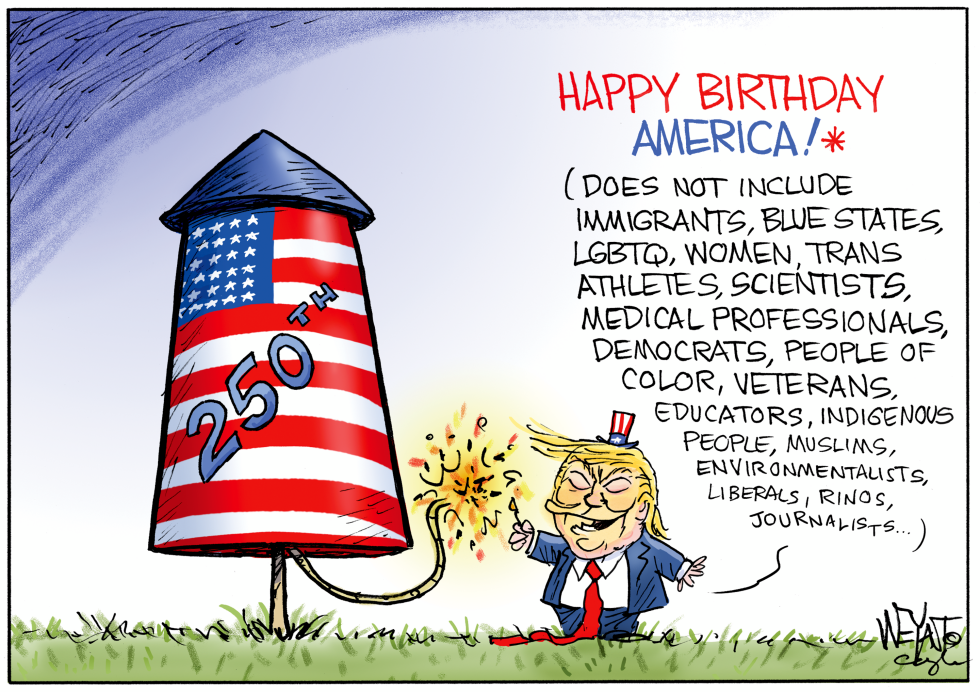
On June 30, 2026, a cartoon depicts Donald Trump lighting the fuse of a large American-flag firework rocket labeled 250th. The greeting Happy Birthday America carries an asterisk that expands into a lengthy parenthetical list of omitted groups including immigrants, blue states, LGBTQ individuals, women, trans athletes, scientists, medical professionals, Democrats, people of color, veterans, educators, Indigenous people, Muslims, environmentalists, liberals, RINOs, and journalists. The image appears days before the July 4, 2026, semiquincentennial.
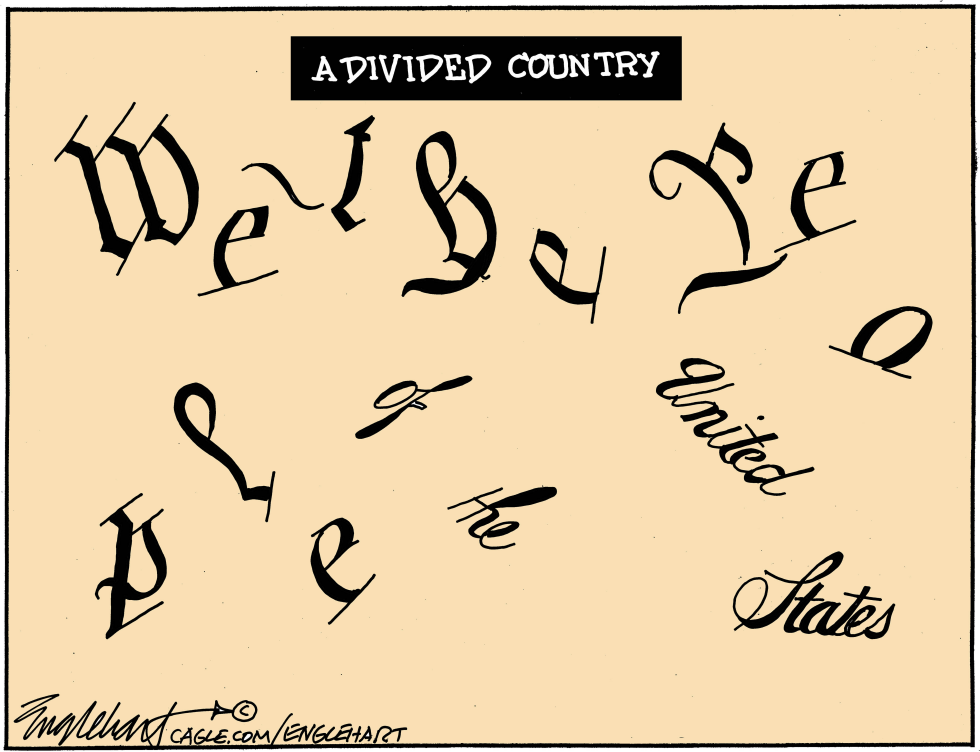
The cartoon displays the opening words of the U.S. Constitution scattered in disconnected segments across a plain background. A black banner at the top reads A DIVIDED COUNTRY. The arrangement of the familiar preamble text visually breaks the phrase into isolated parts. This presentation coincides with the approach of Independence Day on the 2026 calendar. The work draws attention to fractures within the national fabric without naming specific events or figures.
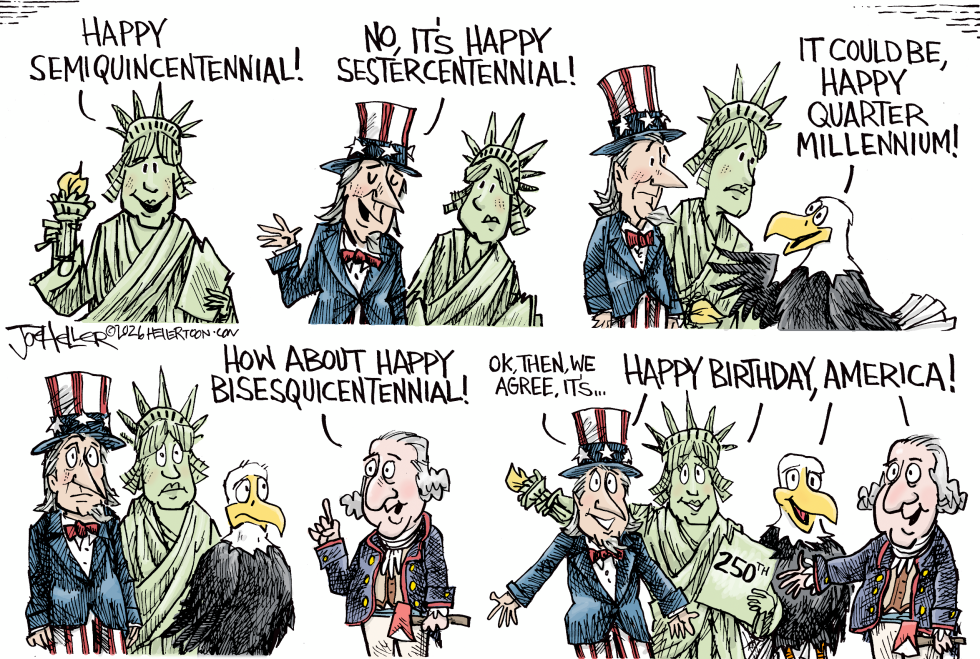
On June 29, 2026, Joe Heller's cartoon depicts Uncle Sam, the Statue of Liberty, Benjamin Franklin, and a bald eagle debating elaborate names for America's 250th anniversary. Proposals range from semiquincentennial and sestercentennial to quarter millennium and bisesquicentennial. The group ultimately agrees on the straightforward greeting Happy Birthday, America, accompanied by a 250th banner. The exchange highlights the challenge of selecting a fitting term for the milestone tied to the 1776 founding.