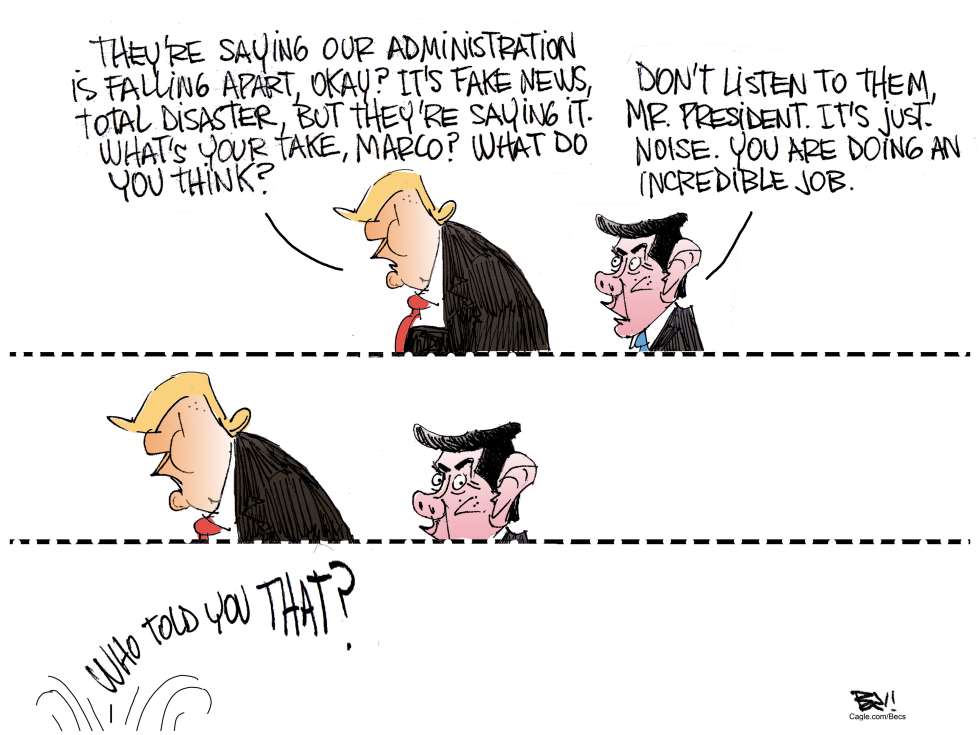
President Trump asked Senator Marco Rubio for his assessment of reports that the administration is in disarray, labeling them fake news. Rubio dismissed the reports as noise and praised Trump's performance. Trump responded by questioning who had told Rubio that assessment. The exchange highlights tensions over loyalty and information flow inside the administration. The cartoon portrays Rubio's positive reply as triggering suspicion rather than reassurance.
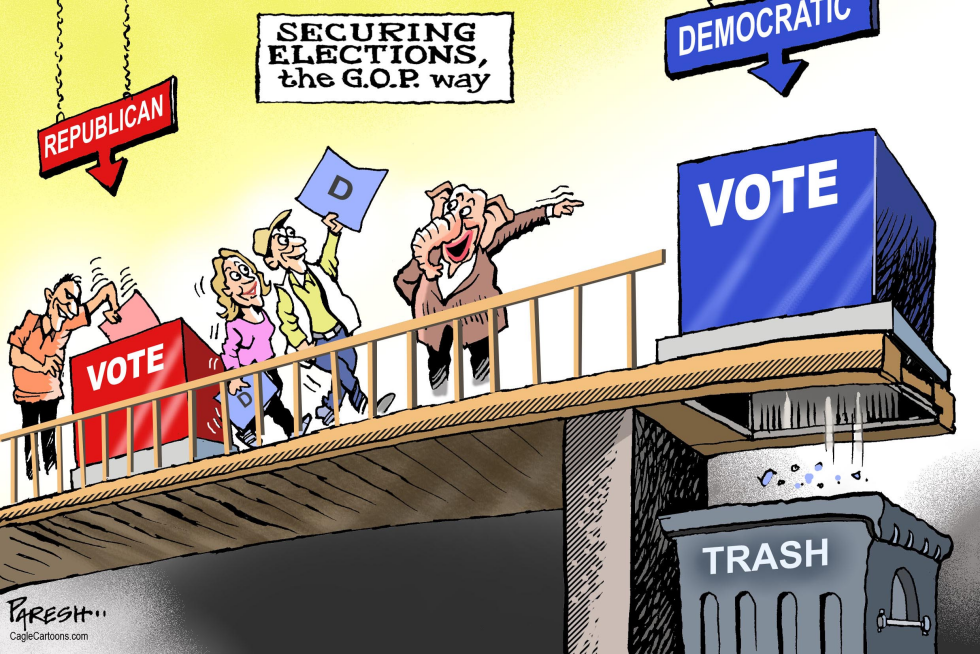
The cartoon depicts Republicans on a platform guiding a large blue vote box labeled Democratic into a trash can below while a red Republican vote box remains on the structure. A sign reads Securing Elections the G.O.P. way. The elephant symbol of the GOP points toward the action as figures including one holding a D flag stand nearby. The image comments on claims of election integrity by showing ballots from one party discarded. This reflects ongoing partisan debates over voting procedures and access as of the 2026 publication date.
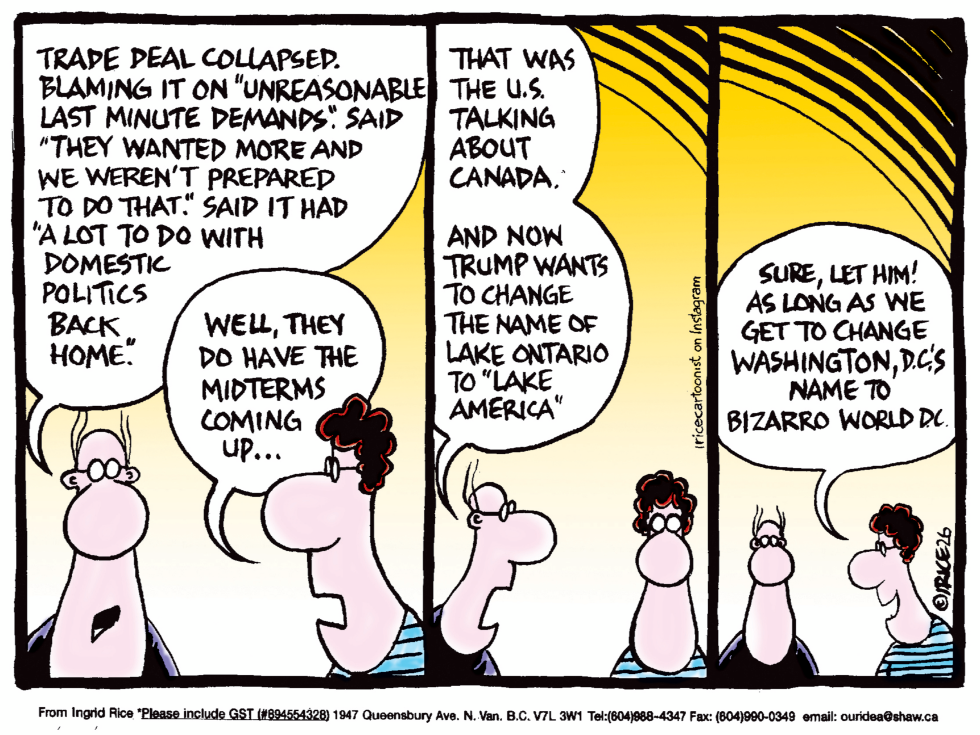
A Canada-U.S. trade deal collapsed after U.S. negotiators cited unreasonable last-minute demands and linked the failure to domestic politics ahead of midterms. President Trump then proposed renaming Lake Ontario to Lake America. Canadian officials responded by offering to rename Washington D.C. to Bizarro World DC if the change proceeds. The exchange highlights how trade tensions and political posturing are escalating between the two countries. The cartoon mocks the name-change idea as emblematic of broader dysfunction in bilateral relations.
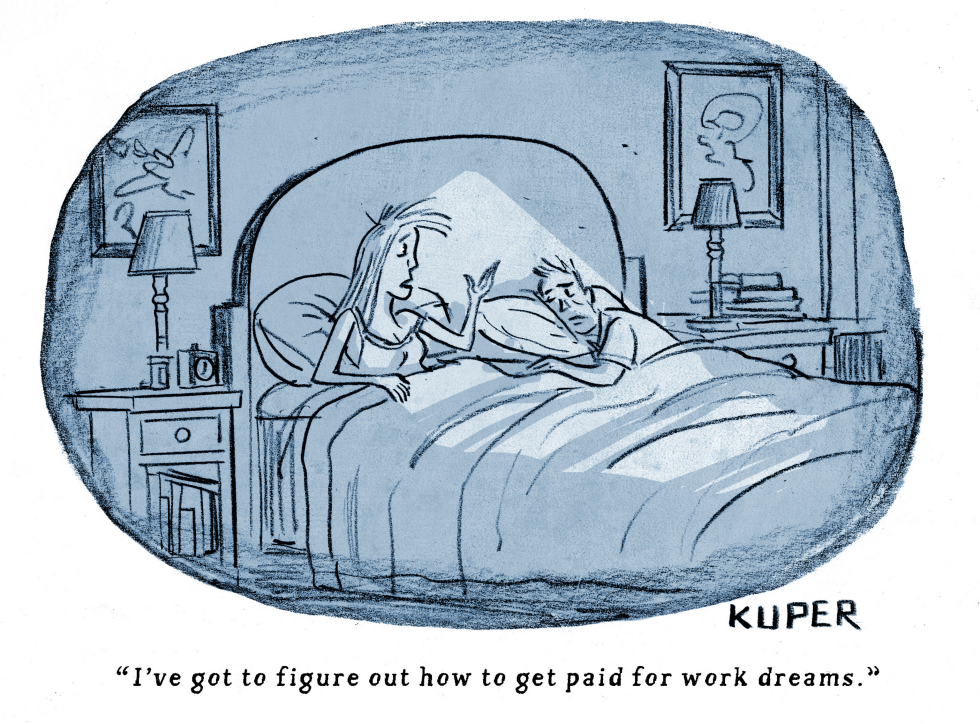
The cartoon addresses the expanding reach of work into personal time through dreams, reflecting ongoing debates about compensation for mental and emotional labor in the modern economy. With side hustles and constant connectivity blurring lines between rest and productivity, many workers feel the grind never stops. The piece takes the position that this intrusion underscores the need for better boundaries and recognition of unpaid cognitive effort as part of broader labor concerns.
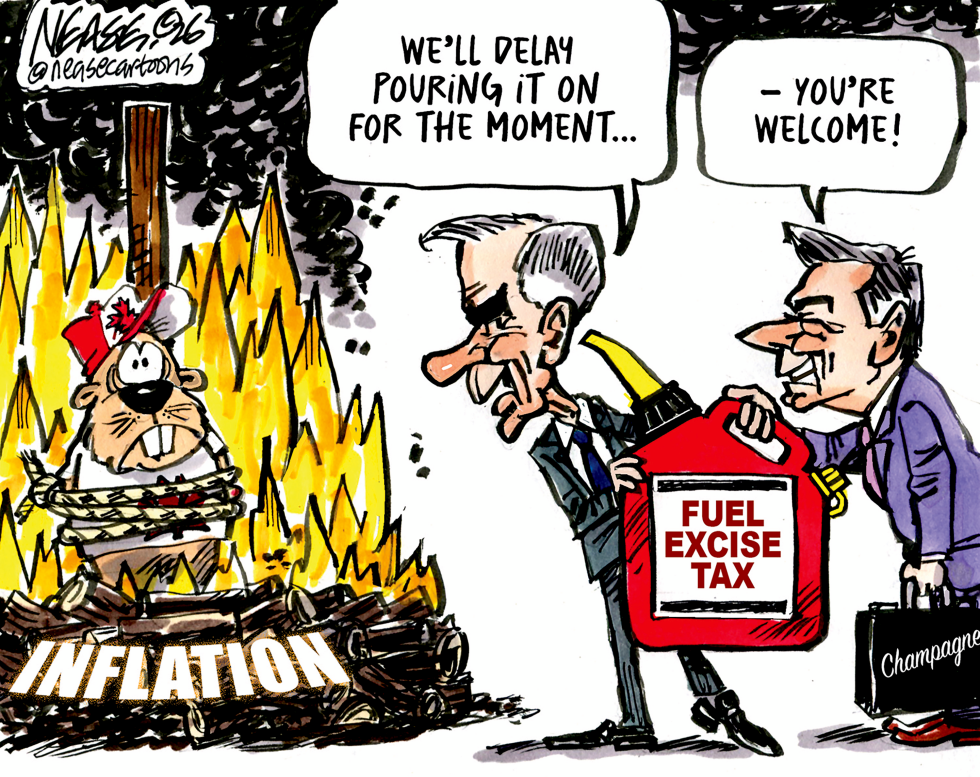
President Biden announced a delay in implementing a fuel excise tax increase amid ongoing inflation pressures. The move aims to ease costs at the pump for consumers. Critics argue the delay offers only temporary relief without addressing root causes. Supporters see it as a pragmatic step to stabilize prices. The editorial takes the position that such delays highlight inconsistent economic leadership.
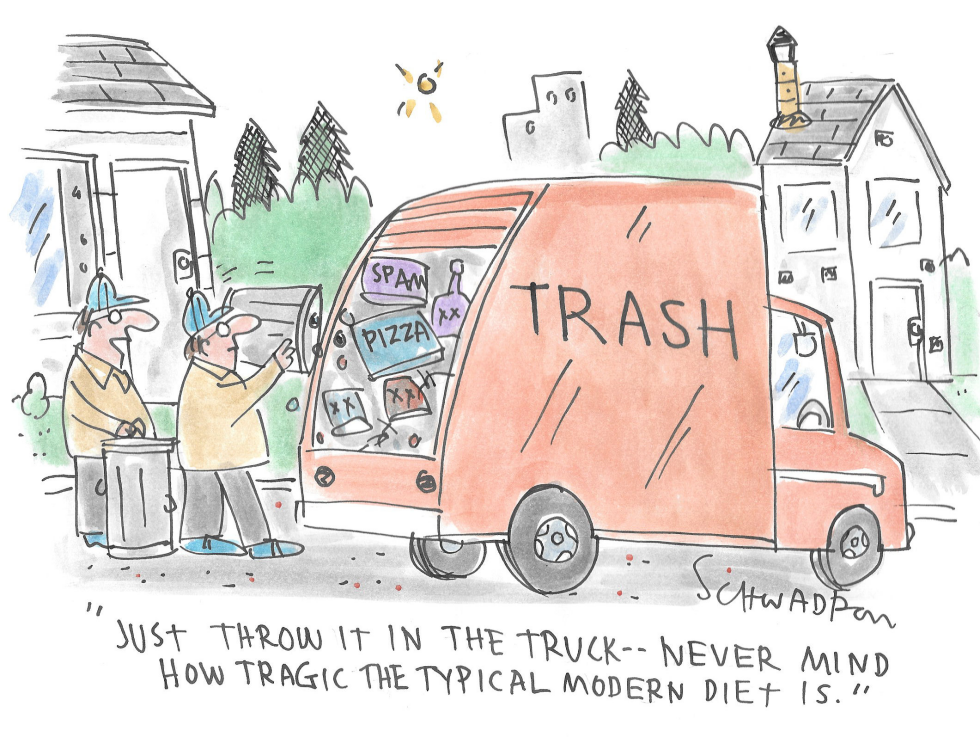
Public discussion continues over the health impacts of widespread junk food consumption and other modern lifestyle habits. The piece takes the position that these elements of daily life are so poor they belong in the garbage.
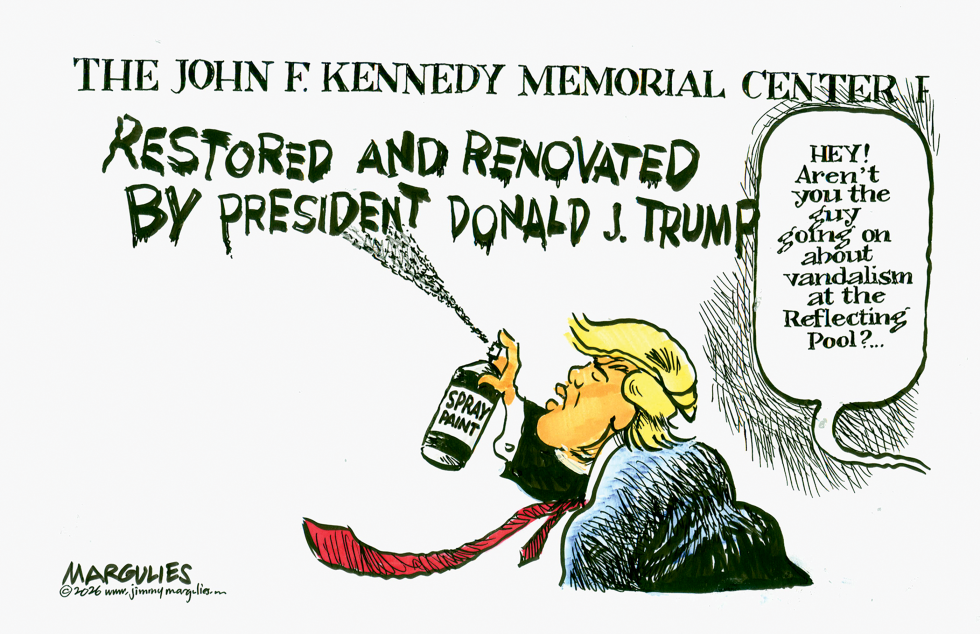
President Donald J. Trump faces accusations of altering the John F. Kennedy Memorial Center sign to claim personal credit for restoration work. The move draws immediate pushback tied to prior statements on vandalism at the Reflecting Pool. Critics see the action as an attempt to insert his name into a site honoring a predecessor.
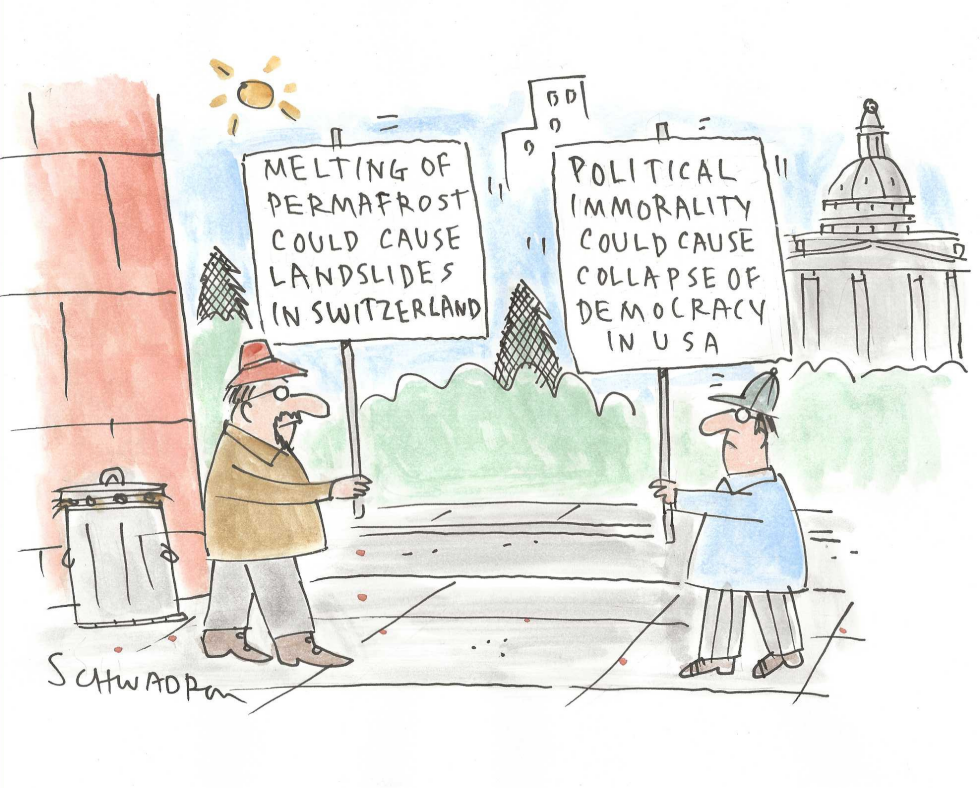
Activists in public spaces continue to draw parallels between accelerating climate impacts such as thawing permafrost and landslides in Switzerland and warnings about political conduct undermining democratic institutions in the United States. The signs highlight how environmental changes and governance failures each carry risks of sudden structural breakdown. The editorial stance underscores that both threats deserve equal public attention as visible warning indicators.
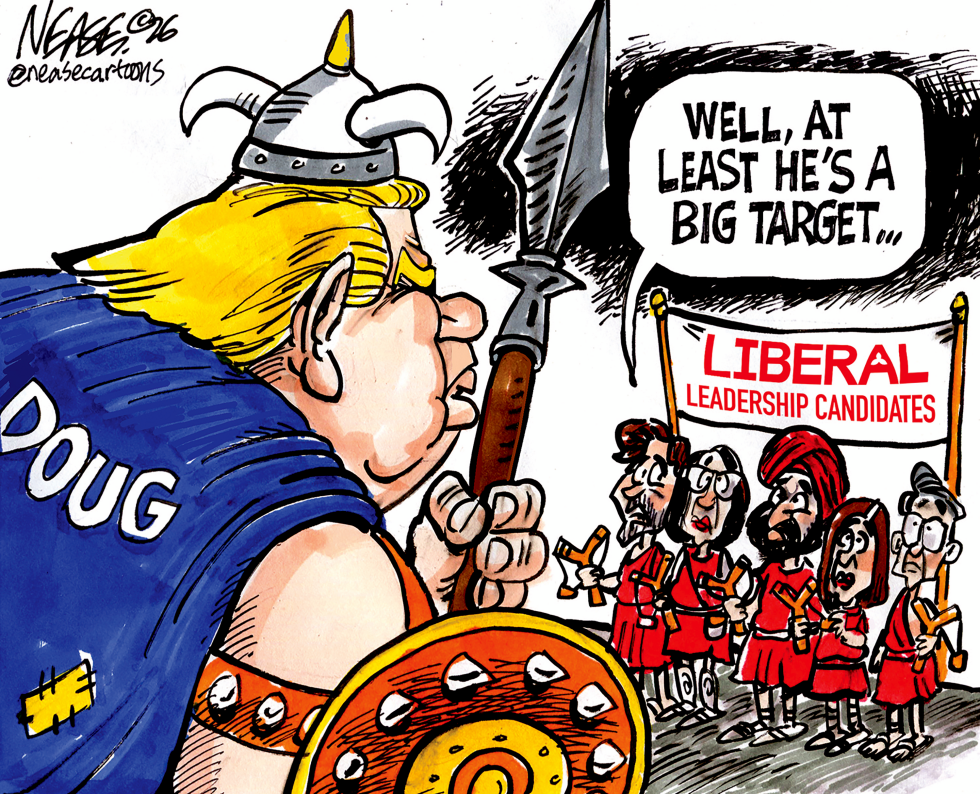
Liberal leadership candidates have identified a prominent opponent as their primary focus in an ongoing contest. The opponent, labeled Doug, appears as a large and visible figure in the political landscape. This dynamic highlights how one individual can dominate attention during a party’s internal selection process. The piece presents the situation as an opportunity for the candidates to rally around a clear adversary rather than internal divisions.
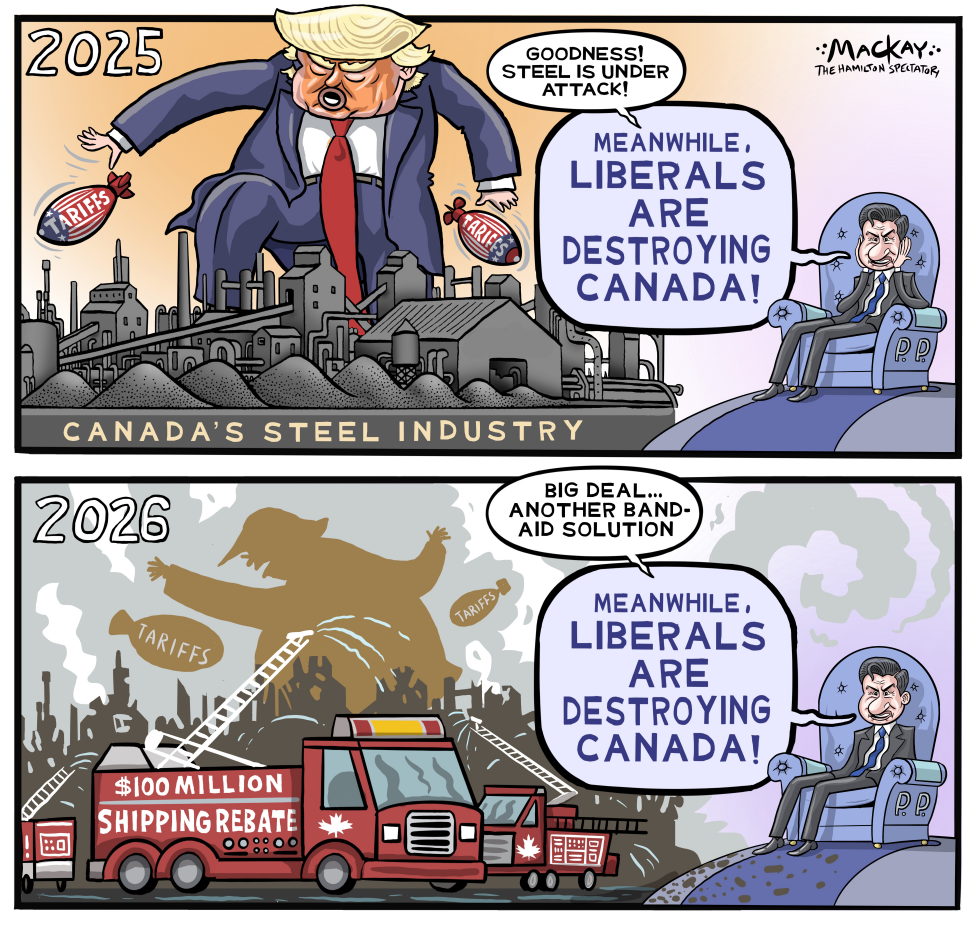
U.S. tariffs imposed on Canadian steel in 2025 triggered sharp declines in the domestic industry by 2026. The federal government responded with a $100 million shipping rebate. Conservative Leader Pierre Poilievre continued to focus attacks on the Liberal government rather than the trade shock. The cartoon argues this stance amounts to a repeated distraction from the core economic damage.
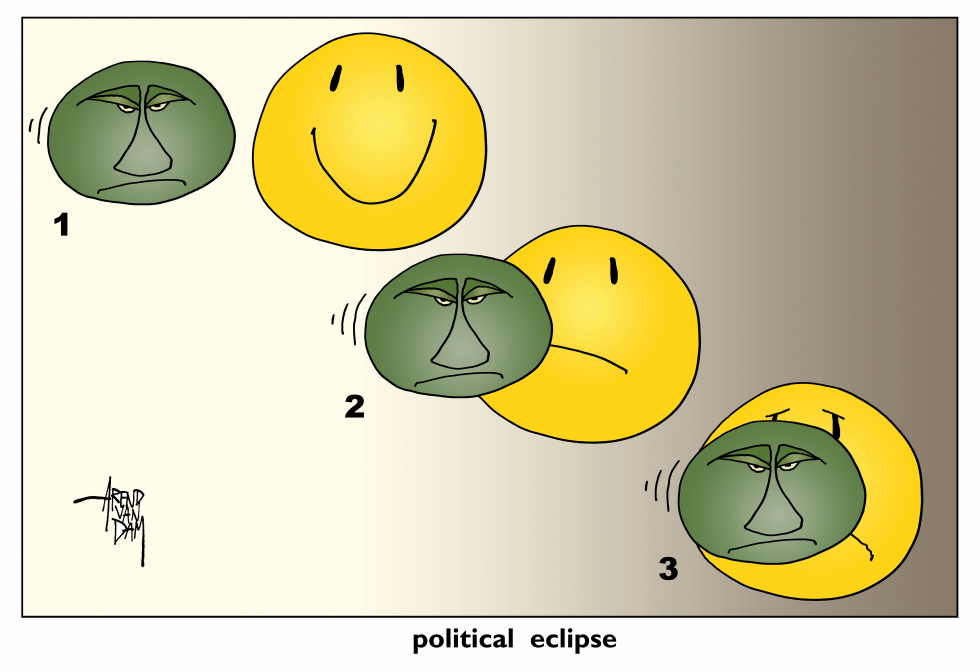
A political figure represented by a green frowning face progressively covers a yellow smiling face across three labeled stages. The interaction illustrates one presence gaining dominance while diminishing the other. The piece comments on the dynamics of political competition and shifting influence between rivals.
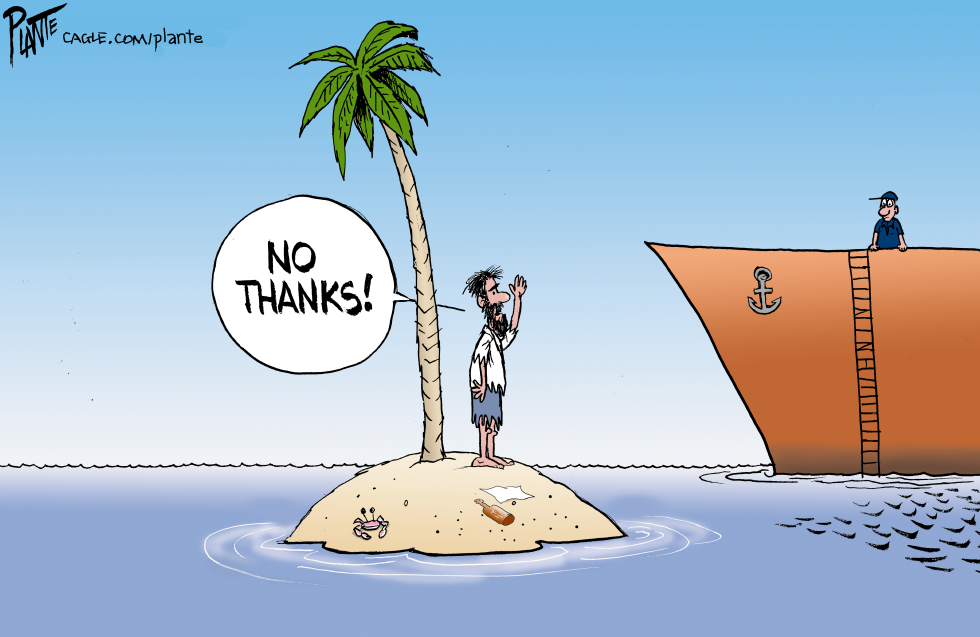
A castaway on a remote island faces an unexpected chance at rescue from a passing vessel. The situation highlights ongoing human tensions between solitude and reintegration into society. The piece takes the position that some individuals genuinely prefer isolation over returning to the outside world.
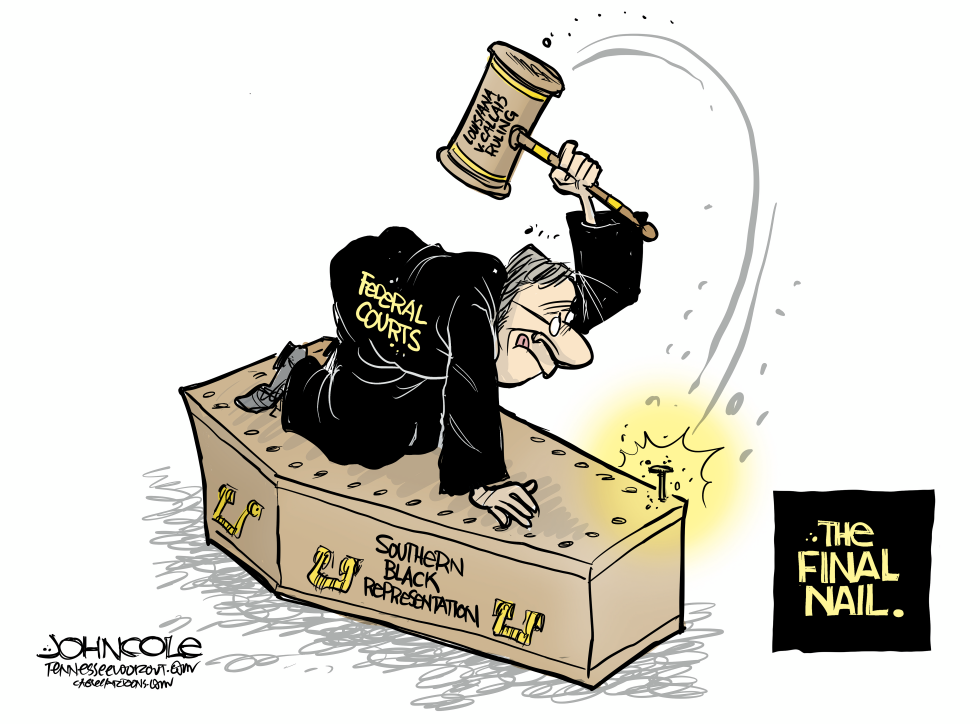
A federal court ruling on Louisiana redistricting has reduced black congressional representation across southern states. The decision follows ongoing litigation over district maps and voting access. It matters because it alters the number of majority-minority seats available in Congress. The piece argues the ruling delivers a decisive setback to those representation gains.
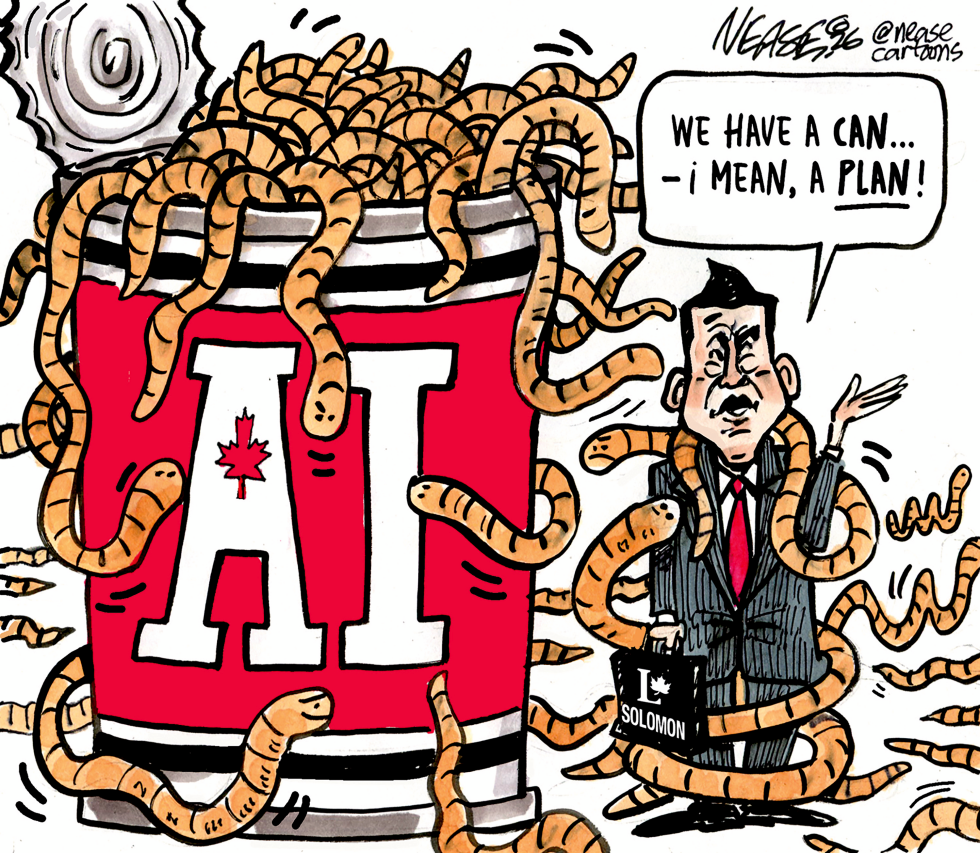
A Canadian official entangled in worms emerging from an AI-labeled container attempts to present a coherent plan. The situation highlights ongoing challenges in managing rapid AI development within government frameworks. The piece portrays the difficulty of containing technological disruptions once released into public and policy spheres.