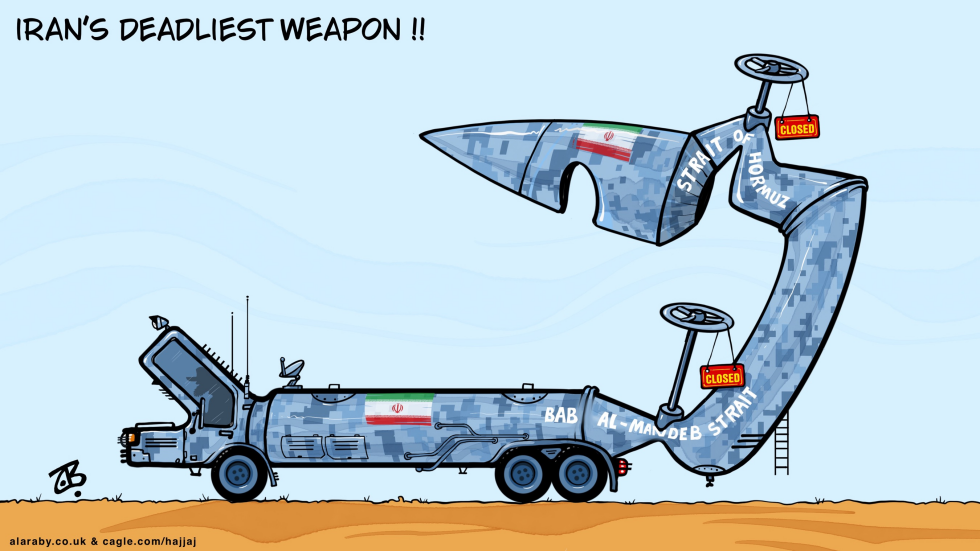
A new cartoon by Emad Hajjaj illustrates Iran's control over the Strait of Hormuz and Bab al-Mandeb Strait as its most potent weapon. The image renders a large camouflaged missile launcher bearing Iranian flags and marked with the two straits, each valve labeled closed. The work responds to ongoing concerns about potential disruptions to global oil shipments through these critical waterways in the Middle East. It emphasizes how Tehran could leverage geographic position to pressure adversaries without direct military engagement. The visual underscores the strategic importance of these passages amid heightened regional tensions.
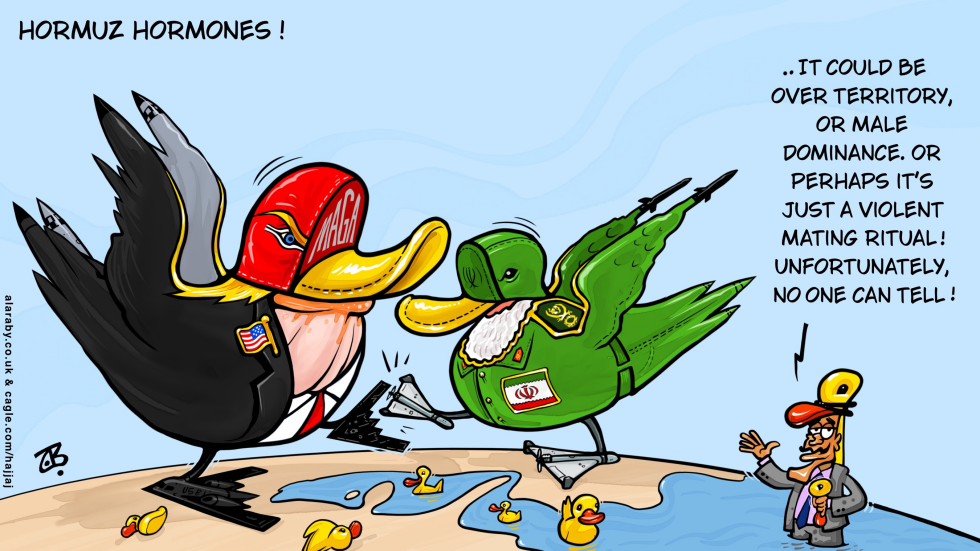
The cartoon shows a black bird wearing a MAGA hat facing off against a green bird bearing Iran's flag, both armed and aggressive over a body of water labeled with Hormuz references. Small ducks swim below while a commentator speculates on motives ranging from territory to mating rituals. The image responds to ongoing US-Iran frictions in the Strait of Hormuz by framing the standoff through animal behavior analogies.
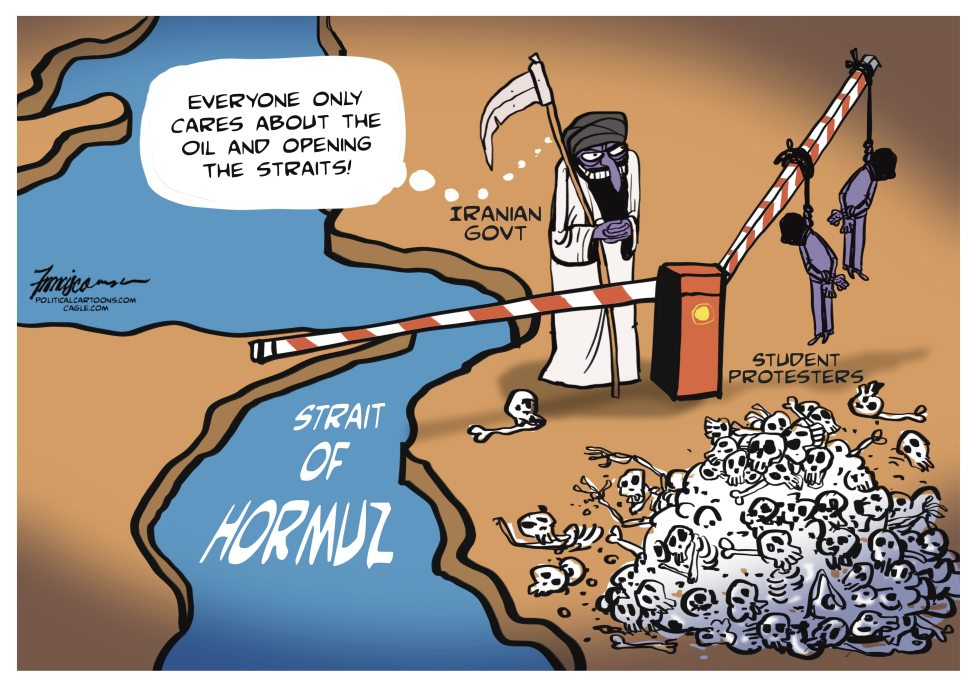
The Iranian government continues to suppress domestic student protests while maintaining control over the Strait of Hormuz, a critical global oil transit point. International attention remains fixed on energy flows rather than internal repression. The editorial position criticizes the regime for valuing oil revenue and strait access above the lives of its citizens.
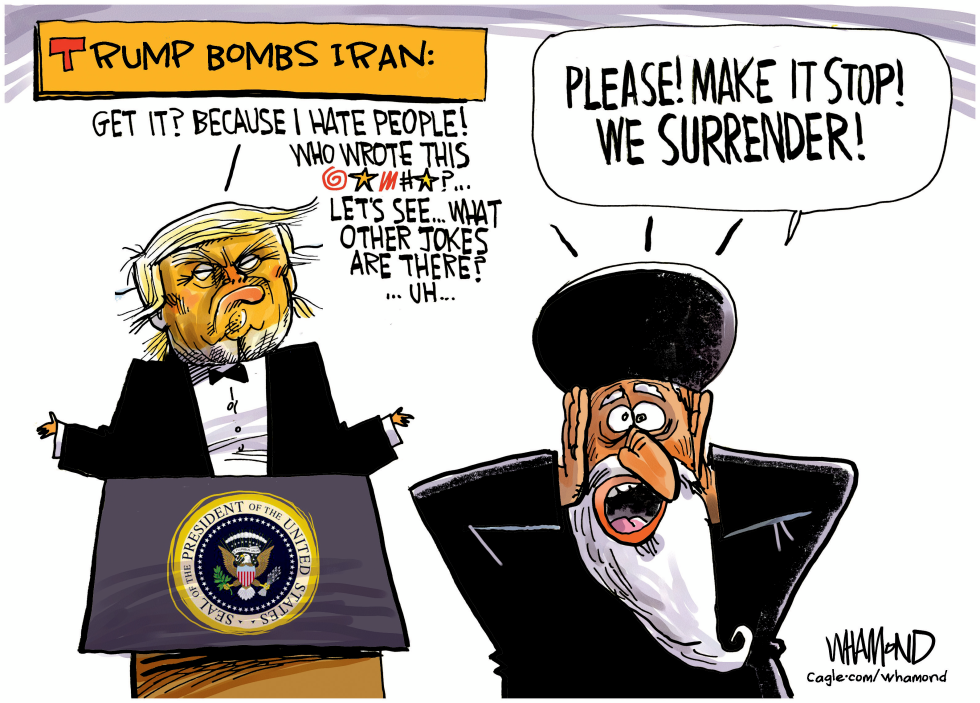
President Trump ordered strikes on Iran in late July 2026, prompting an immediate public plea for surrender from Iranian leadership. The action escalates tensions in the Middle East and raises questions about U.S. military objectives. The editorial takes the position that the strikes reflect personal animus rather than strategic necessity and mocks the president's framing of the operation.
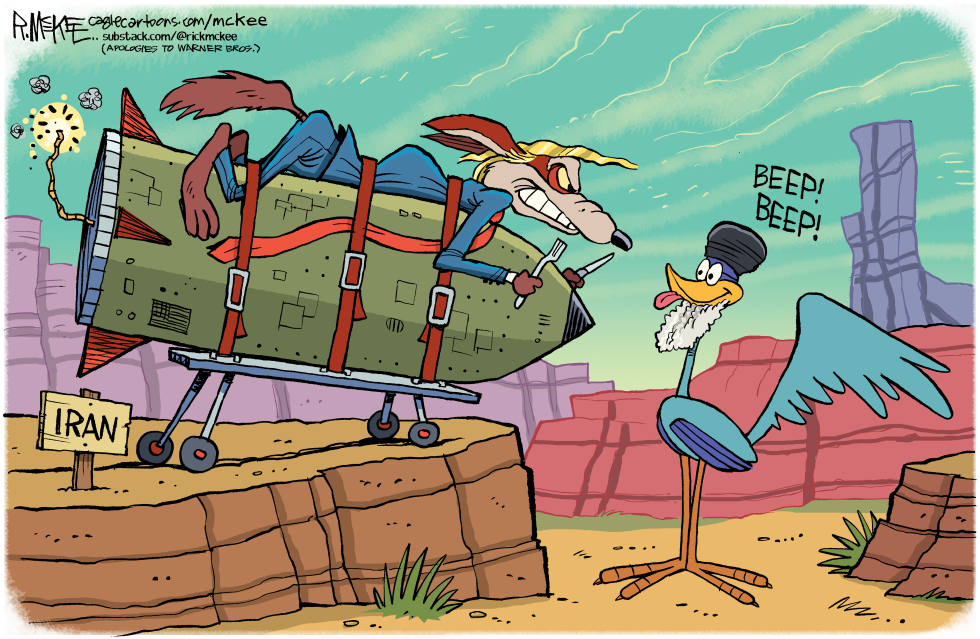
Donald Trump has renewed pressure on Iran through statements and policy signals in recent weeks. The moves come amid ongoing nuclear concerns and regional instability. The piece argues that such aggressive posturing risks backfiring in ways similar to past miscalculations.
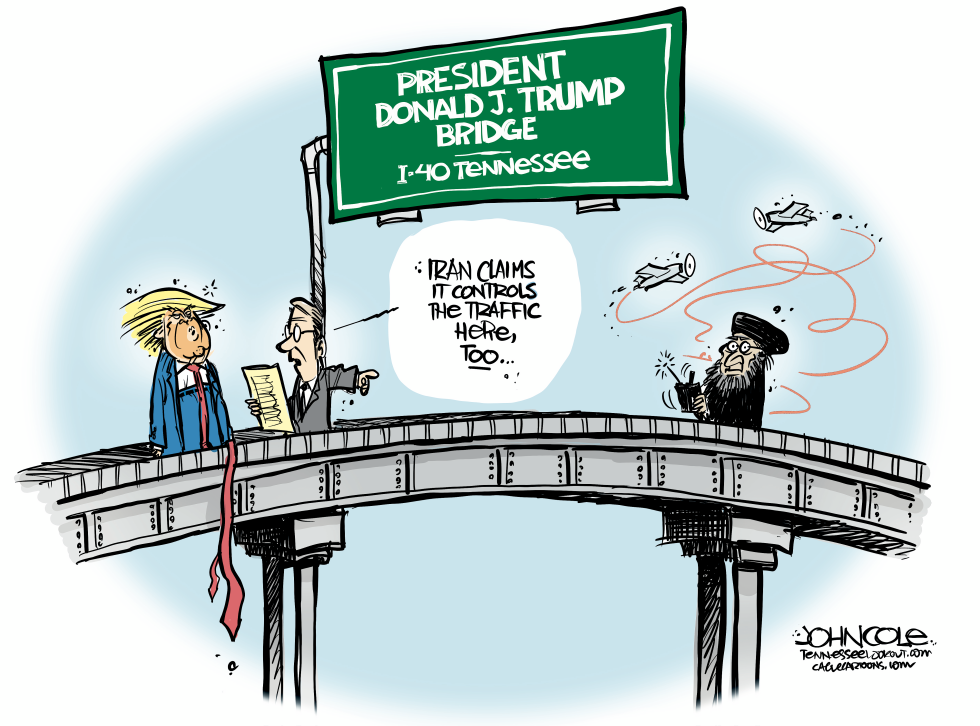
President Donald J. Trump attended the naming of the President Donald J. Trump Bridge on I-40 in Tennessee. The event drew attention when an Iranian figure appeared to claim control over traffic on the span. The development highlights ongoing tensions with Iran over shipping lanes and international routes. The cartoon frames the claim as an extension of Iran's broader pattern of asserting dominance over key passages. It positions the bridge naming as a domestic moment overshadowed by foreign threats.
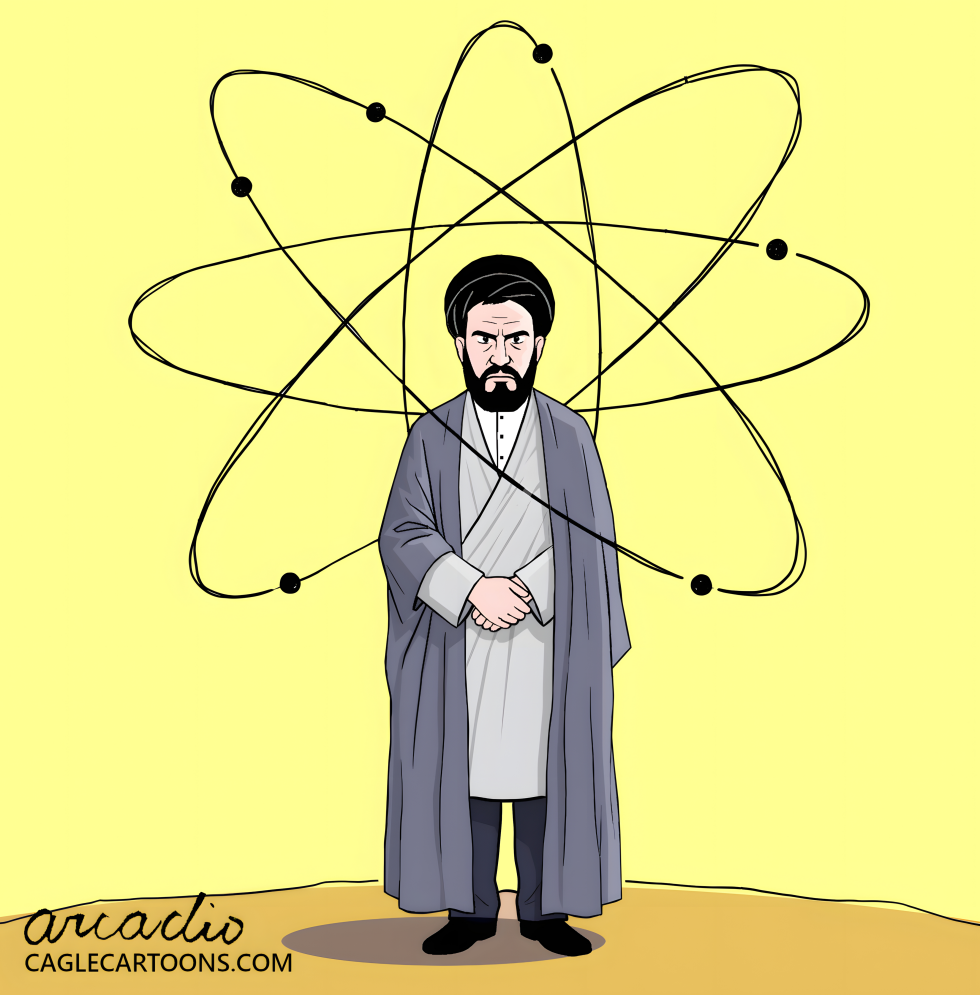
The cartoon shows Iran's supreme leader positioned in front of a large atom symbol. It responds to persistent international concerns over Tehran's nuclear activities as of mid-2026. The visual places the figure directly under the orbiting electrons, underscoring the central role of the nuclear issue in global discussions about the country.
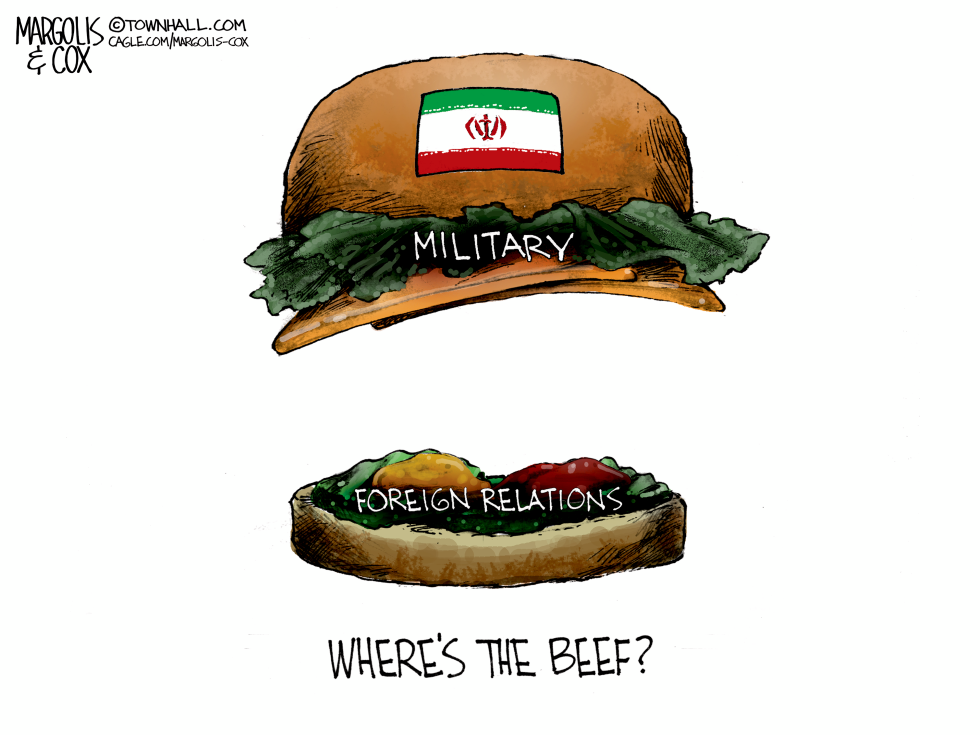
The drawing depicts an Iranian flag military cap positioned above a nearly empty sandwich bun. The cap bears the word military while the bun carries the label foreign relations. A caption below reads where's the beef. The composition points to the Iranian regime placing military concerns ahead of substantive diplomatic engagement. As of mid 2026 the regime continues to face international scrutiny over its regional activities and nuclear program. The visual underscores a perceived absence of meaningful concessions or progress in talks with Western powers. Observers note that military posturing often overshadows negotiation efforts in official statements from Tehran.
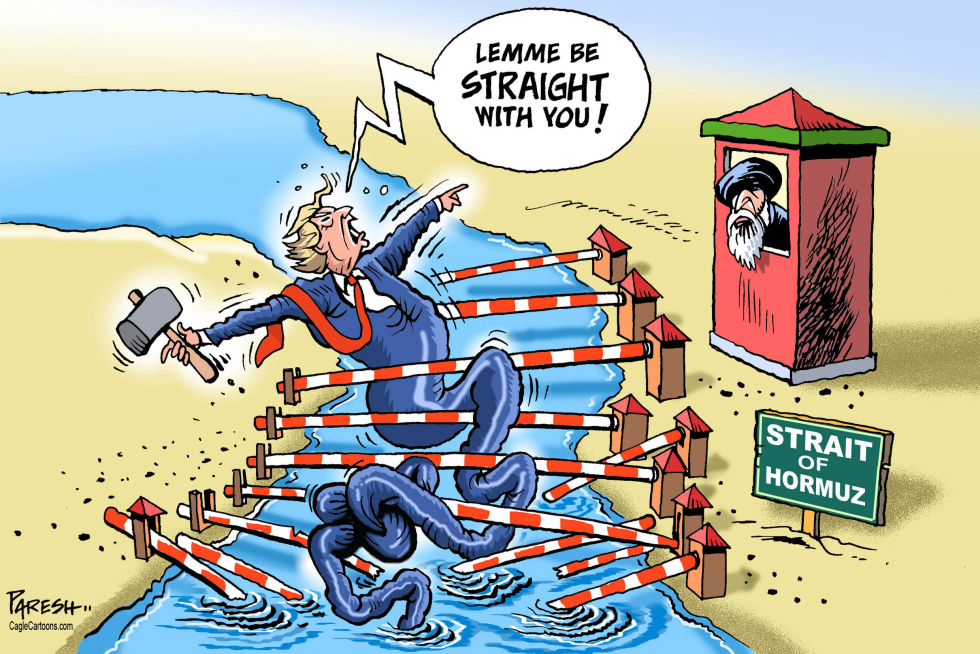
The cartoon depicts Donald Trump entangled in red-and-white barriers stretching across the Strait of Hormuz. He holds a hammer in one hand while gesturing with the other and declares through a speech bubble that he wants to be straight with the viewer. A bearded figure in traditional attire observes from inside a red booth on the shore. A green sign identifies the waterway. The scene references ongoing tensions involving navigation rights and U.S.-Iran relations in the strategic chokepoint.
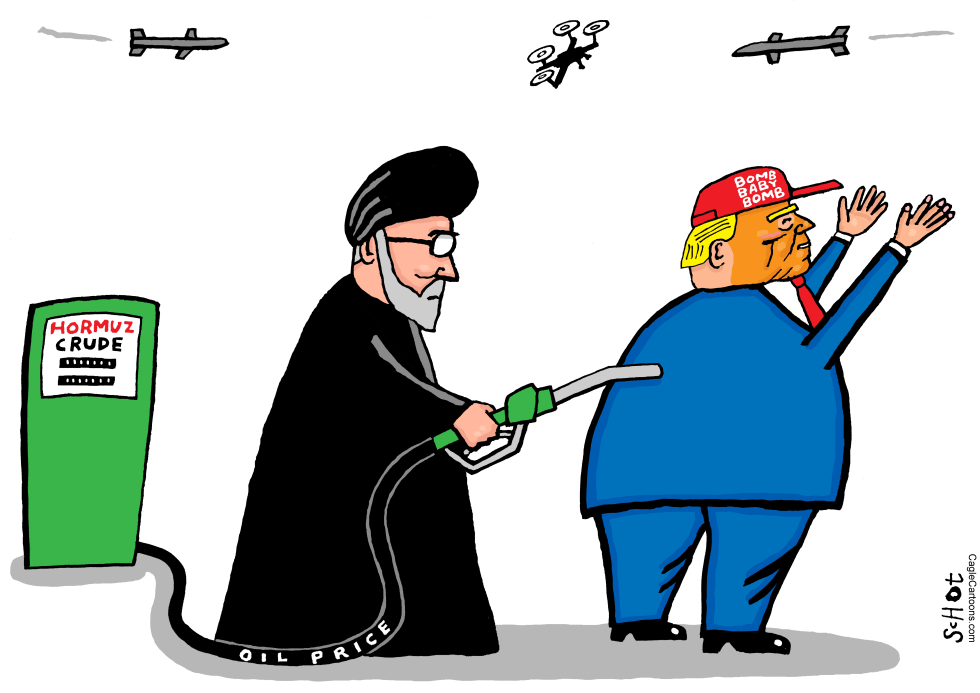
A robed Iranian figure operates a Hormuz crude gas pump with the hose labeled oil price inserted into the back of a blue suited Donald Trump wearing a red hat marked bomb baby bomb. Trump stands with both hands raised while military planes and a drone appear in the sky overhead.
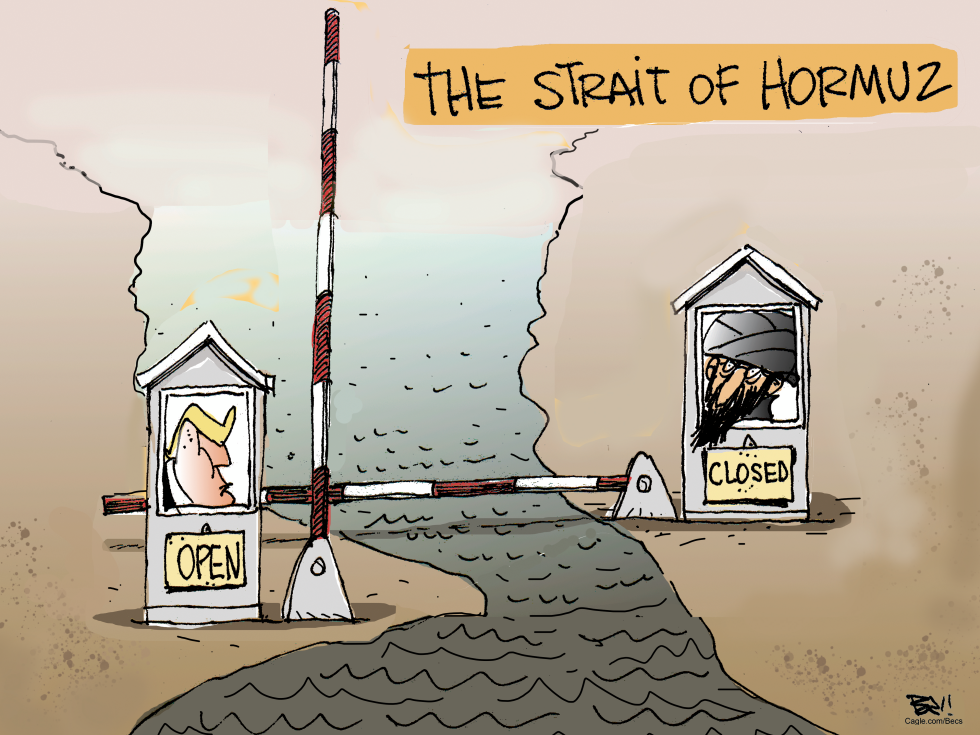
The Strait of Hormuz remains a flashpoint for global oil transit as the United States and Iran maintain opposing stances on access. Donald Trump positions an open checkpoint while an Iranian official signals closure. The editorial highlights the standoff's direct impact on energy markets and shipping security.
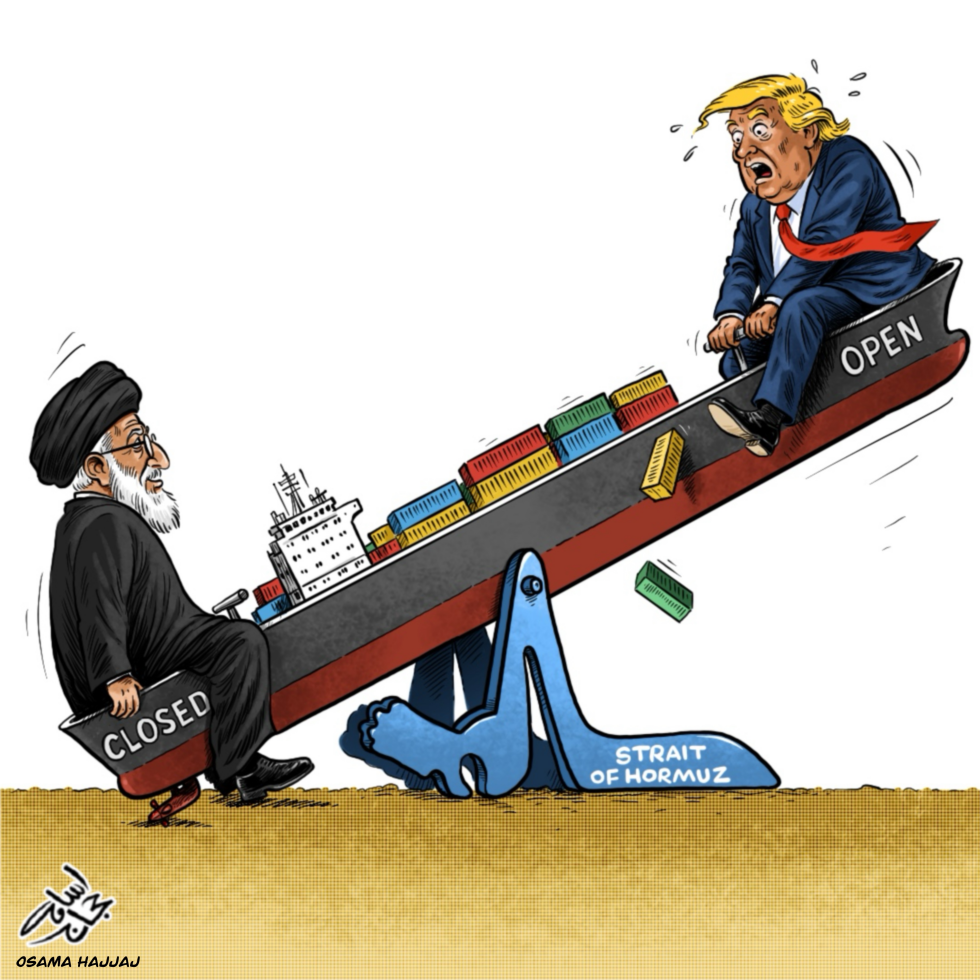
A political cartoon shows Donald Trump and Ayatollah Khamenei on opposite ends of a seesaw labeled Strait of Hormuz. Trump occupies the open side while the Iranian leader sits on the closed side. Colorful shipping containers line the beam with some falling off. The image highlights tensions over the vital oil shipping route. The cartoon uses the seesaw to illustrate competing efforts to control access through the strait.
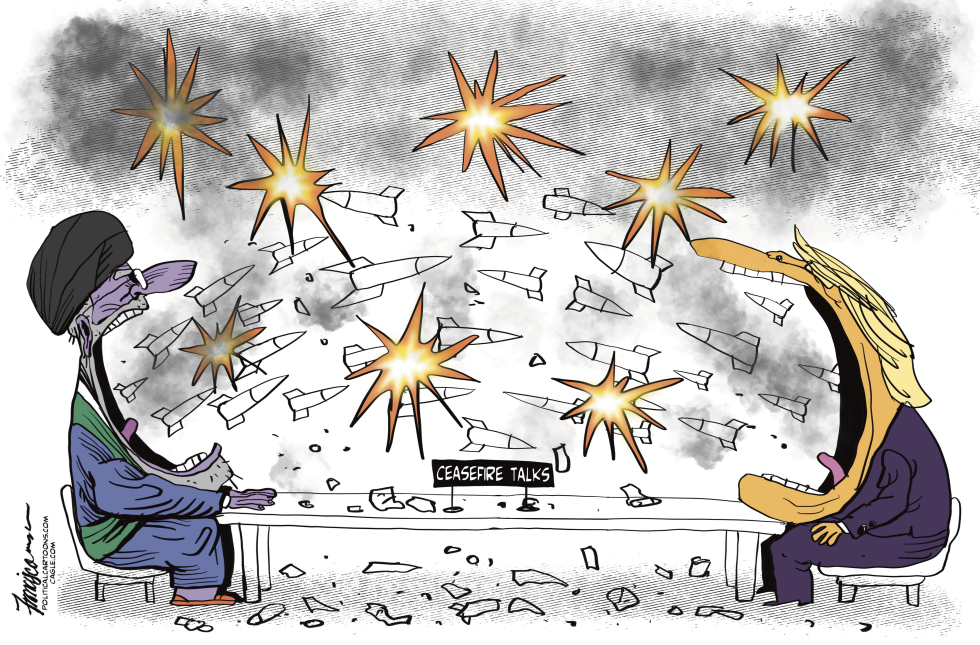
Two caricatured leaders sit across a table marked CEASEFIRE TALKS while missiles streak overhead and explosions erupt between them. The July 2026 image captures ongoing Middle East tensions where direct talks coincide with active strikes.
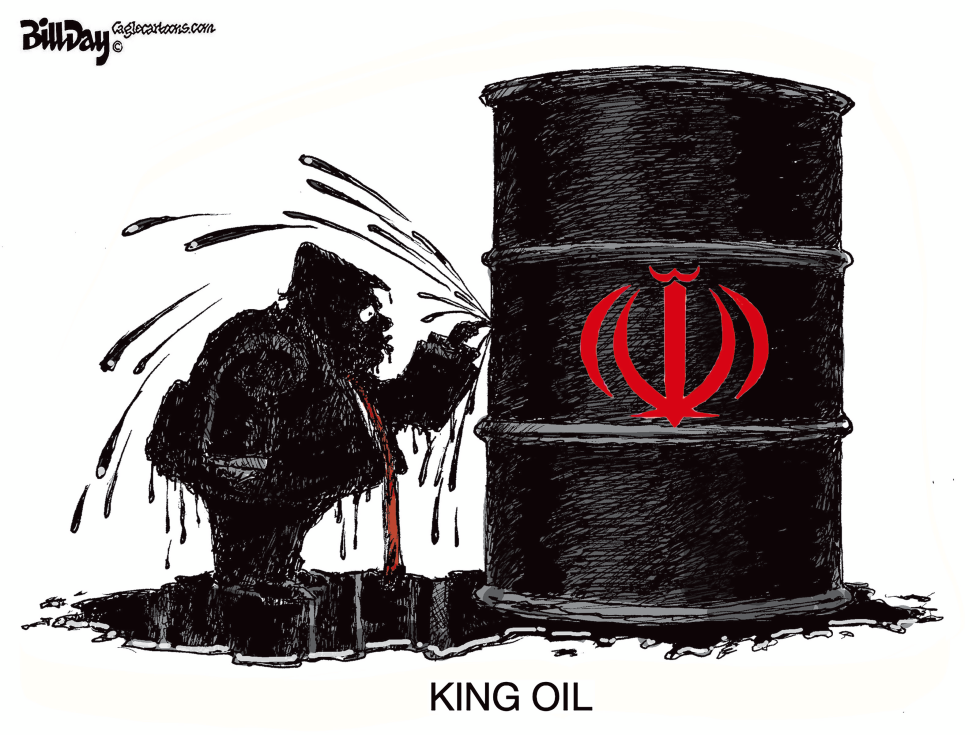
A dark figure spits oil at a barrel bearing the Iranian emblem on July 11 2026. The barrel rests in a puddle and carries the label KING OIL. The scene addresses ongoing energy and regional tensions involving Iran.
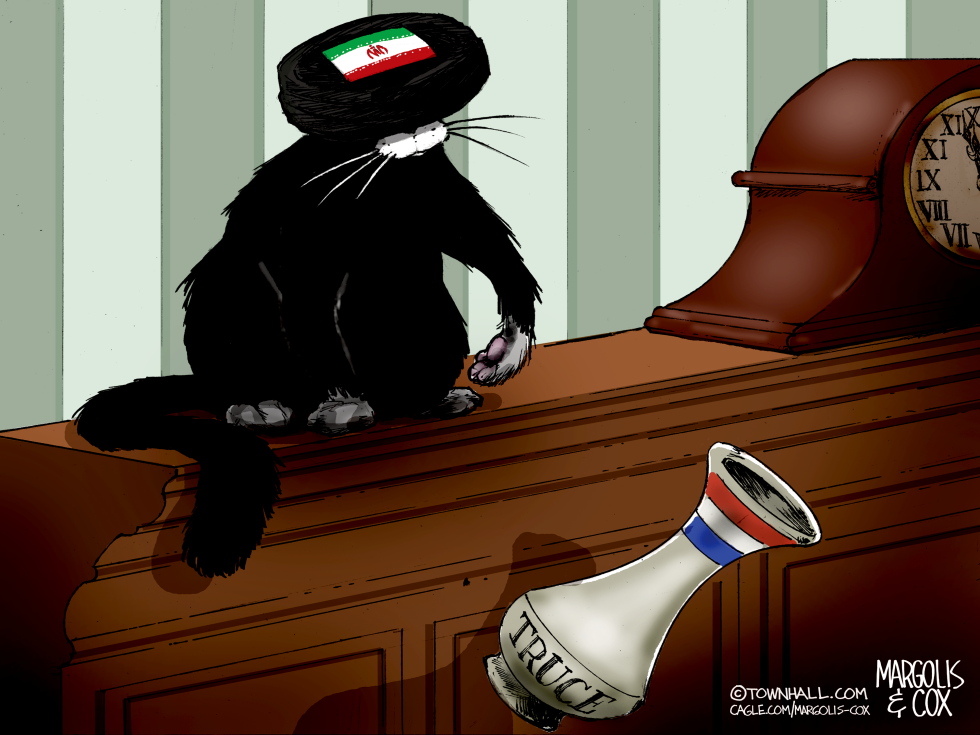
A black cat marked with the Iranian flag perches on a wooden desk and swats a vase labeled TRUCE to the floor. A mantel clock sits nearby as the fragile vessel tips over, capturing a moment of diplomatic disruption tied to recent Middle East developments around the July 2026 publication date.