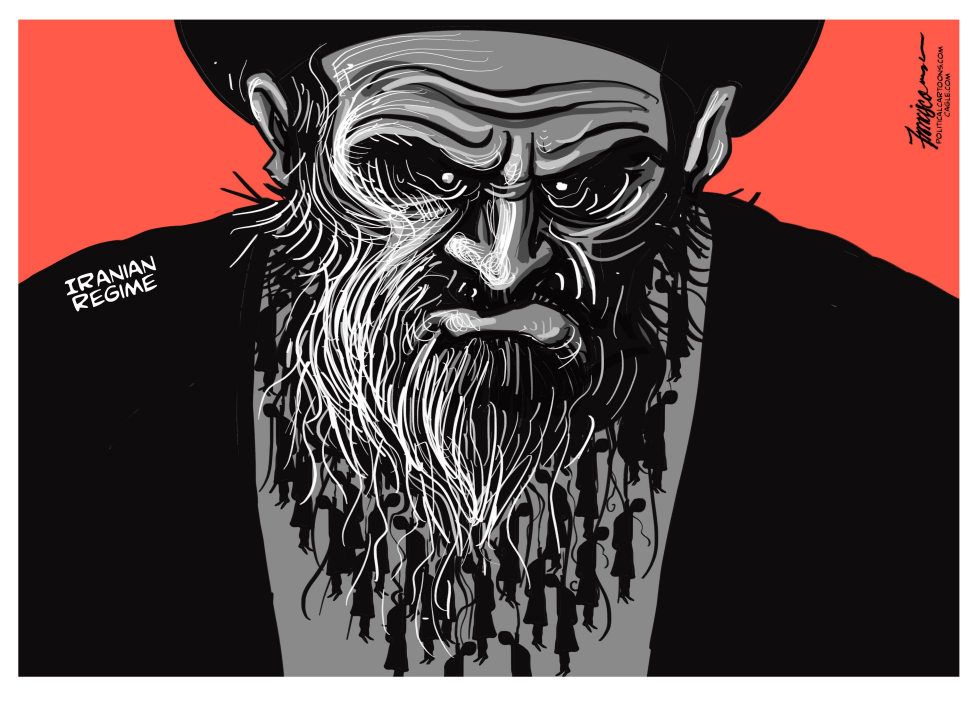
Iran continues to carry out executions at a high rate, targeting protesters, dissidents and minorities under the authority of Supreme Leader Ayatollah Ali Khamenei. The practice has drawn renewed criticism from human rights groups and Western governments concerned about due process and political repression. The cartoon frames the regime itself as the direct agent of these deaths, underscoring the leadership's personal responsibility for the ongoing campaign of hangings.
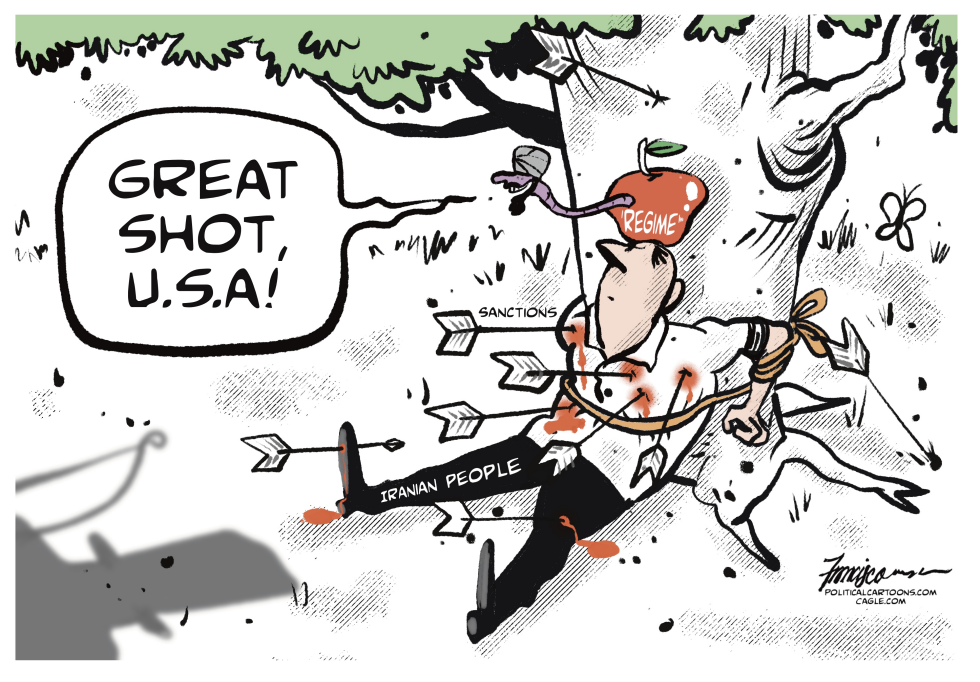
A political cartoon published August 30, 2026, illustrates US sanctions on Iran striking the Iranian people rather than the regime. The image shows a prone figure with an apple marked regime on its head and arrows labeled sanctions embedded in the body marked Iranian people. A speech bubble from the figure praises the shot by the USA. The work comments on the collateral effects of sanctions policy amid ongoing tensions between Washington and Tehran.
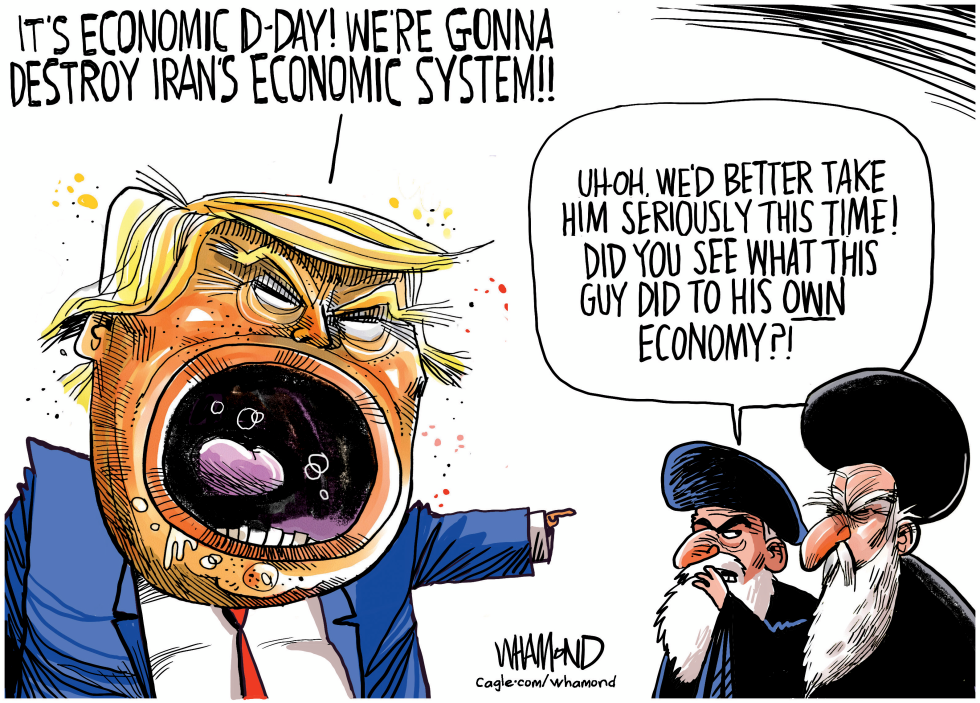
Donald Trump has warned of an economic D-Day targeting Iran's economic system. The statement comes as part of ongoing pressure on Tehran. Iranian leaders in the scene respond by urging seriousness, citing the impact Trump had on the US economy during his term. The development highlights continued tensions in US-Iran relations and the use of economic measures as leverage. The piece portrays the threat as potentially undermined by Trump's own economic legacy.
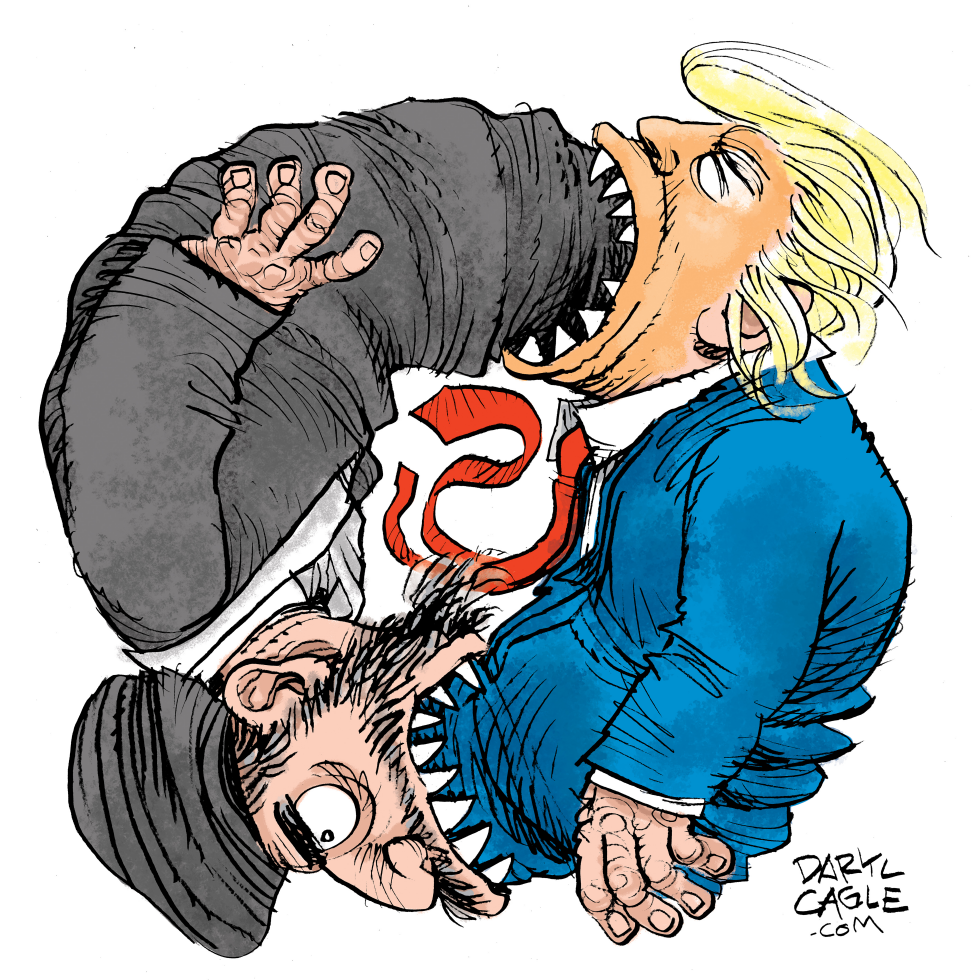
Tensions between the United States and Iran continue amid ongoing disputes over nuclear issues and regional influence. The editorial portrays the two sides as trapped in a self-perpetuating cycle of hostility with no resolution in sight.
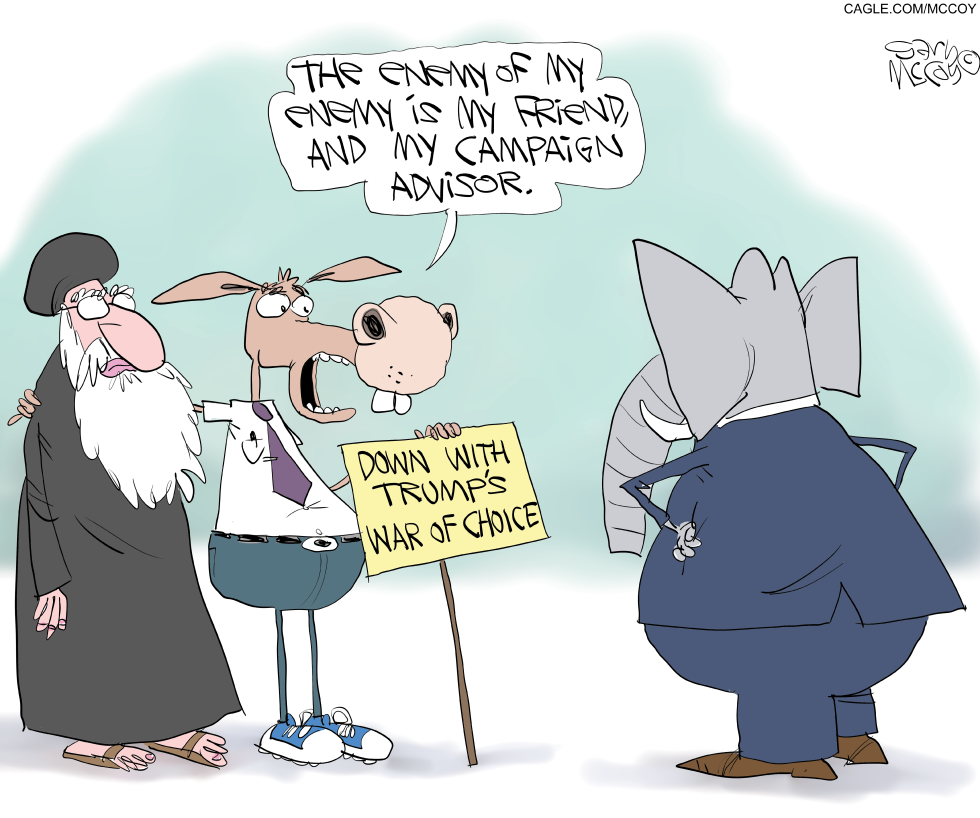
Democrats have signaled opposition to potential Trump administration actions toward Iran, framing them as unnecessary conflict. The alliance draws on shared criticism of U.S. policy in the Middle East. This dynamic highlights partisan divides over foreign engagement and raises questions about domestic political strategy. The piece portrays the partnership as opportunistic and shortsighted.
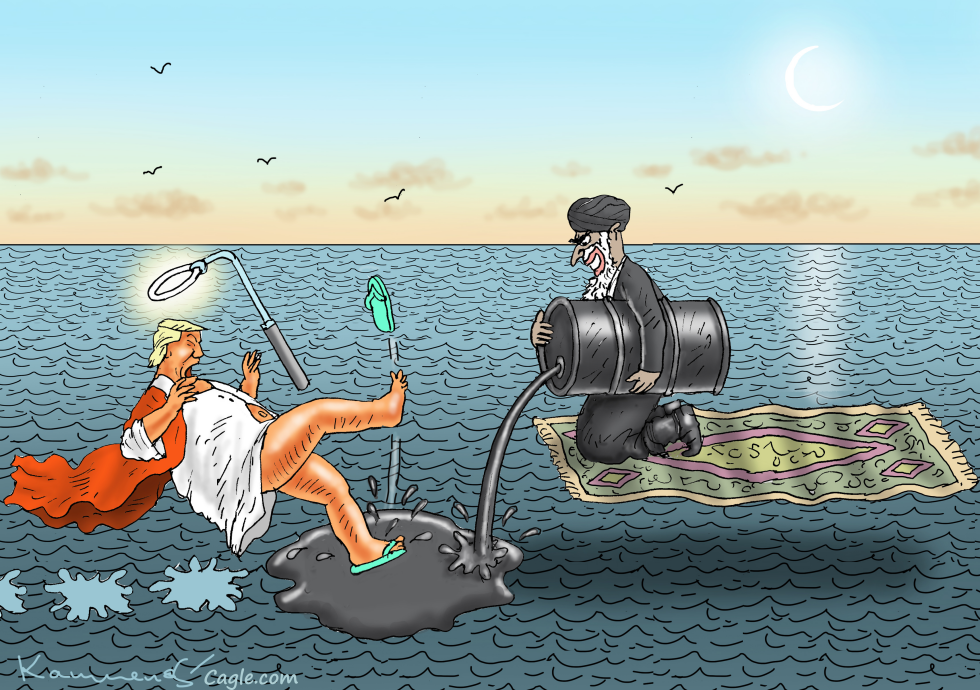
Donald Trump faces renewed friction with Iran over oil exports and sanctions enforcement. The administration's approach to Tehran has drawn criticism for mixed signals on energy deals and regional stability. The piece portrays the encounter as a self-inflicted setback for U.S. policy.
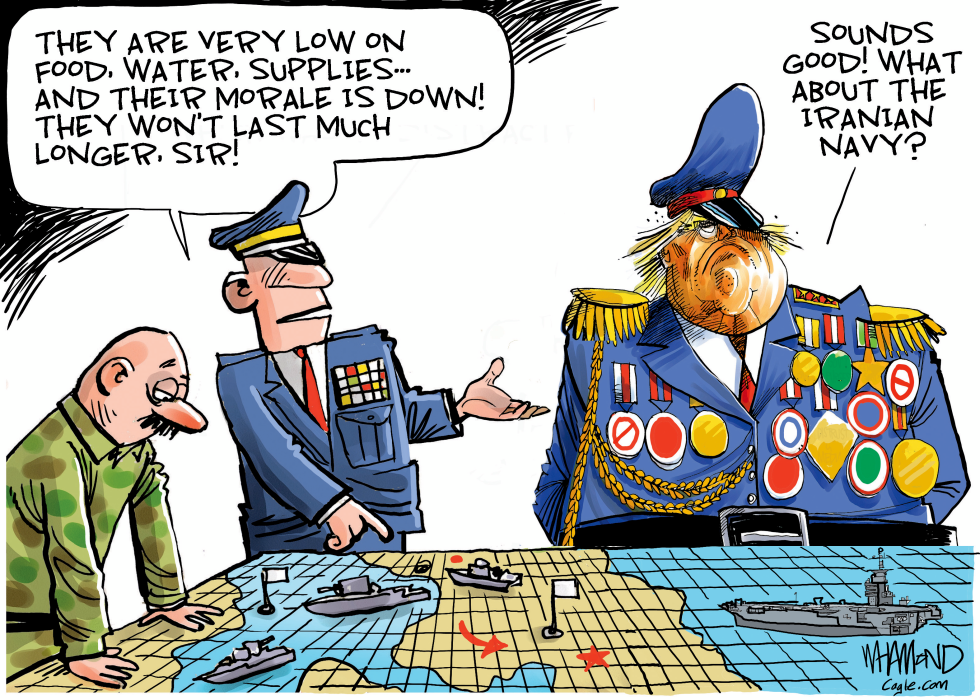
A U.S. Navy carrier faces reported shortages of food, water and supplies along with declining morale in mid-2026. Senior officers brief the president on the situation. The president responds by inquiring about the Iranian Navy instead. The piece portrays the administration as detached from operational readiness concerns in the region.
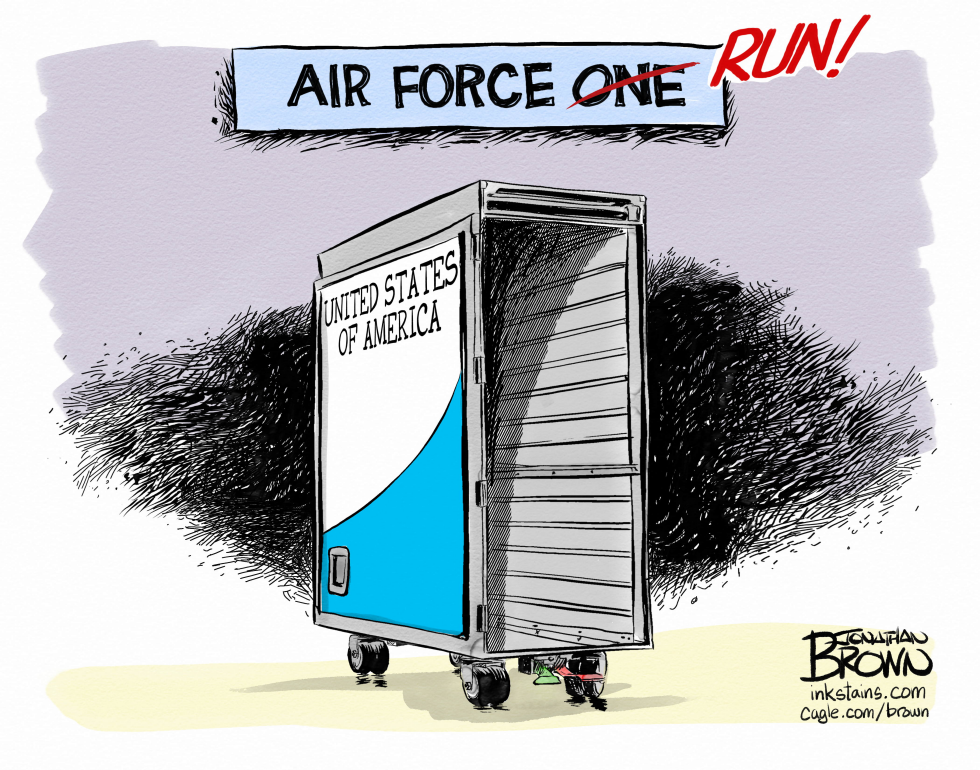
A wheeled airline catering cart occupies the center of the frame, painted in the livery of the presidential aircraft: white upper body, curved blue lower panel, and UNITED STATES OF AMERICA lettered down the side. Its full height door hangs open on empty wire shelving. Above it a pale blue placard reads AIR FORCE ONE, with ONE struck through in red and RUN! added beside that word in the same color. Two neckties poke out from between the casters underneath, one of them the long red tie Donald Trump is known for, the only trace of the men folded up inside. The drawing responds to reports that Trump sheltered in an airline galley cart against an assassination threat traced to Iran, turning the most recognizable branding in presidential aviation into an instruction to flee. Jonathan Brown signed the lower right corner alongside inkstains.com and Cagle.com/brown.
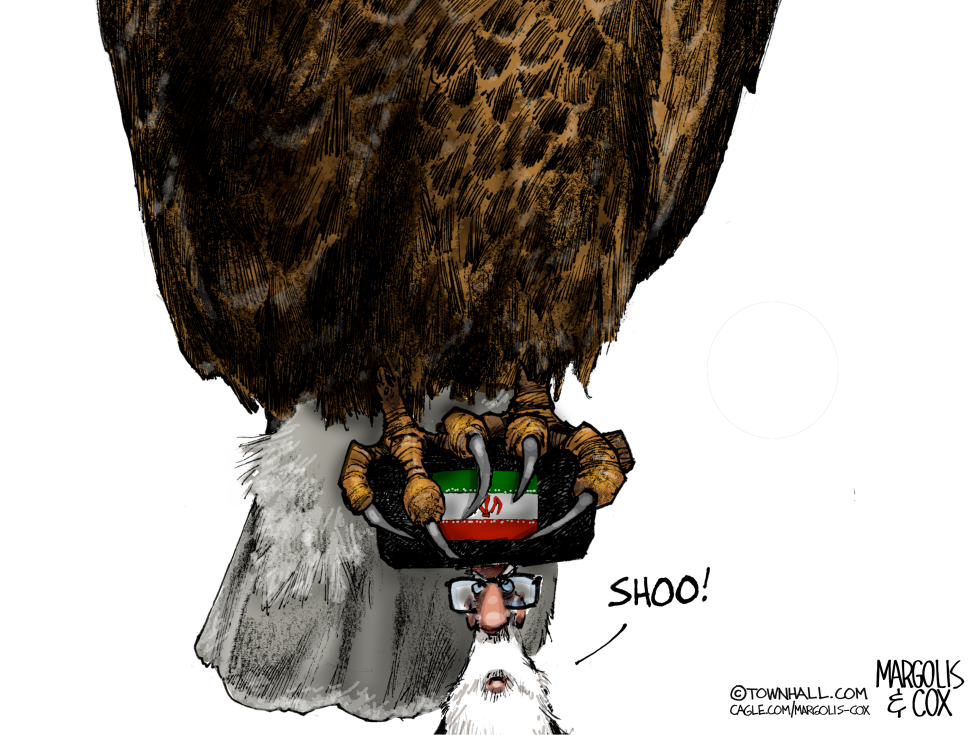
An American bald eagle uses its talons to grip and dismiss a figure representing Iran's leadership, marked by the national flag and traditional attire. The scene captures ongoing tensions between the United States and Iran over nuclear ambitions and regional influence. The editorial position frames the United States as actively pushing back against Iranian actions through symbolic strength rather than engagement.
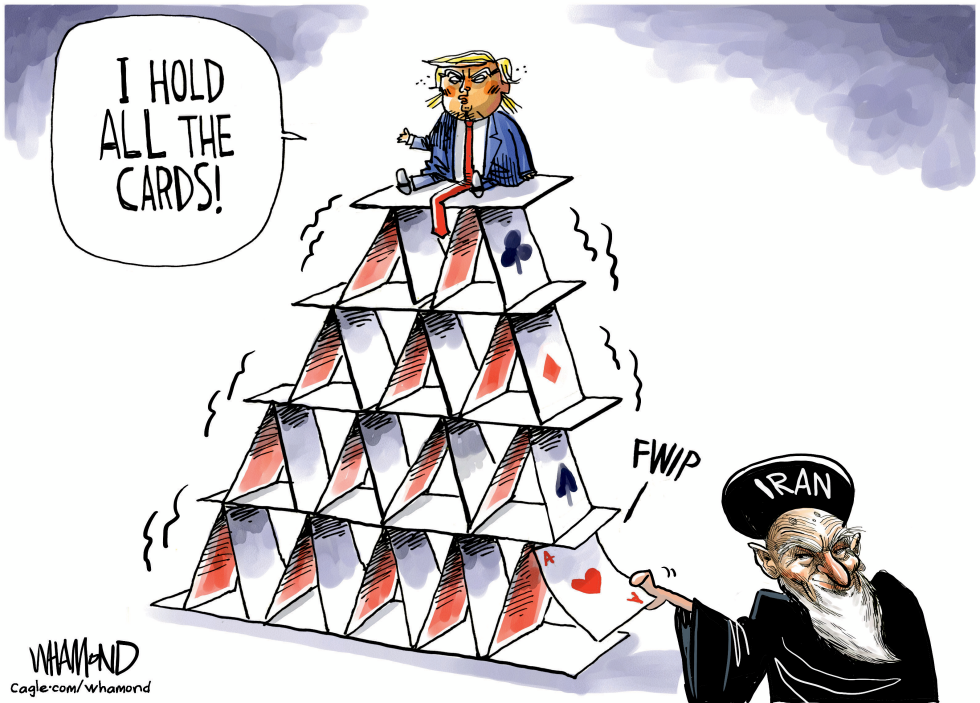
Donald Trump publicly asserted that the United States holds all leverage in dealings with Iran. The claim came amid ongoing tensions over nuclear issues and regional influence. Iran responded with actions that directly challenged that position. The editorial cartoon depicts the assertion as resting on an unstable foundation that Iran can readily disrupt. It frames the dynamic as one where bold statements outpace actual structural strength.
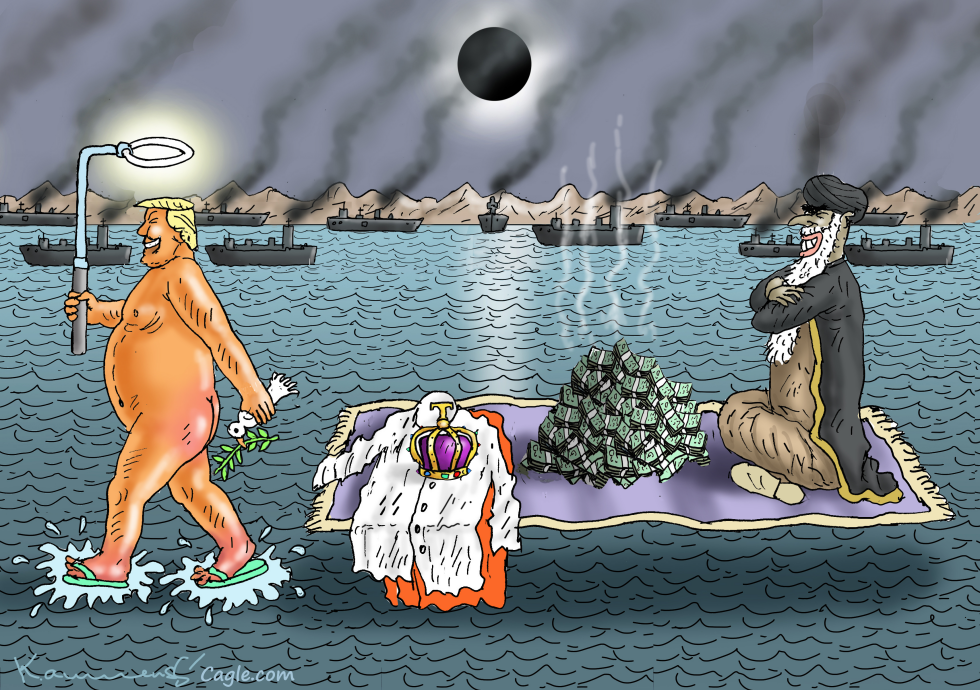
Donald Trump has floated a direct peace gesture toward Iran at a moment of heightened naval presence in the region. The move arrives against a backdrop of longstanding tensions over nuclear ambitions, sanctions, and proxy conflicts. Observers note the offer coincides with visible military assets and financial incentives. The editorial position frames the gesture as an attempt to reset relations through symbolic and material means rather than sustained diplomacy.
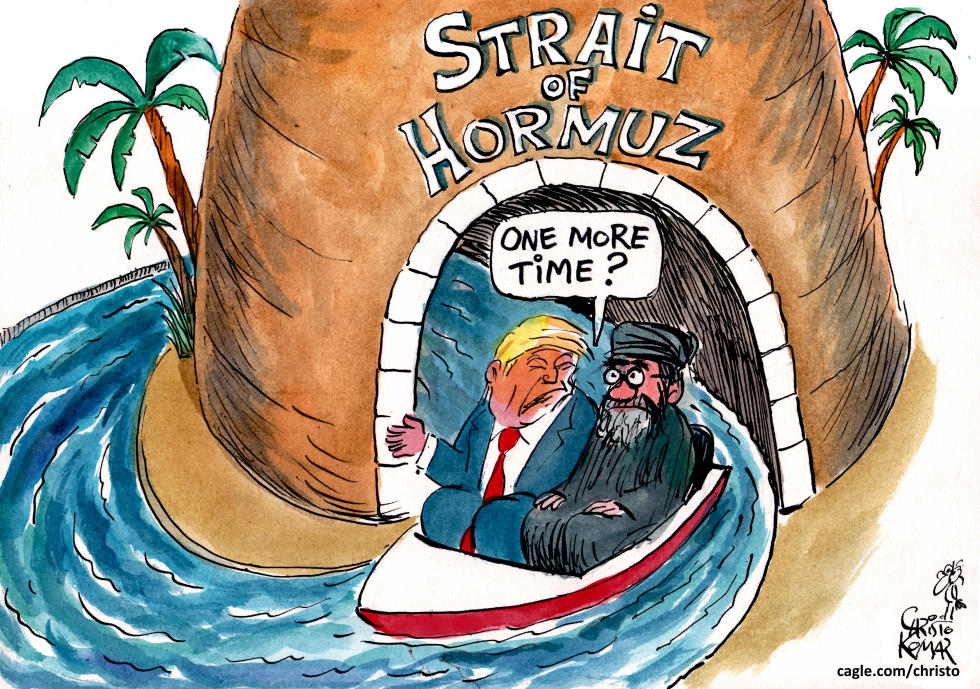
On August 5 2026 renewed friction over shipping lanes in the Strait of Hormuz draws attention as former President Donald Trump appears alongside Iran's Supreme Leader in a symbolic return to the chokepoint. The episode underscores ongoing US-Iran friction over energy exports and naval presence. The piece portrays the pair repeating a risky transit that highlights persistent strategic vulnerabilities in the Persian Gulf.
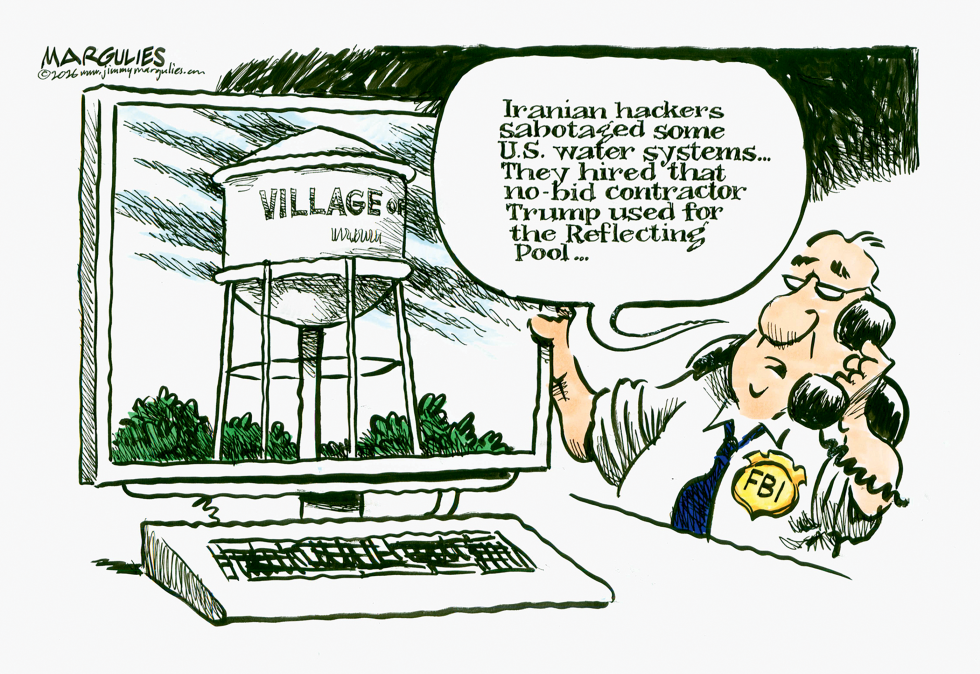
The FBI has attributed recent sabotage of U.S. water systems to Iranian hackers while highlighting their use of a no-bid contractor previously employed by Trump on the Reflecting Pool. The claim surfaces amid ongoing concerns over critical infrastructure vulnerabilities and contractor oversight. This development raises questions about procurement practices and accountability in federal responses to foreign cyber threats. The editorial position criticizes the reliance on such contractors and questions the logic of the blame assignment.
Donald Trump announced he had called off a major military strike on Iran in favor of a pending nuclear deal. The move drew immediate skepticism from Iranian officials who questioned both the threat and the agreement. The cartoon highlights the disconnect between the announcement and Tehran\'s response.
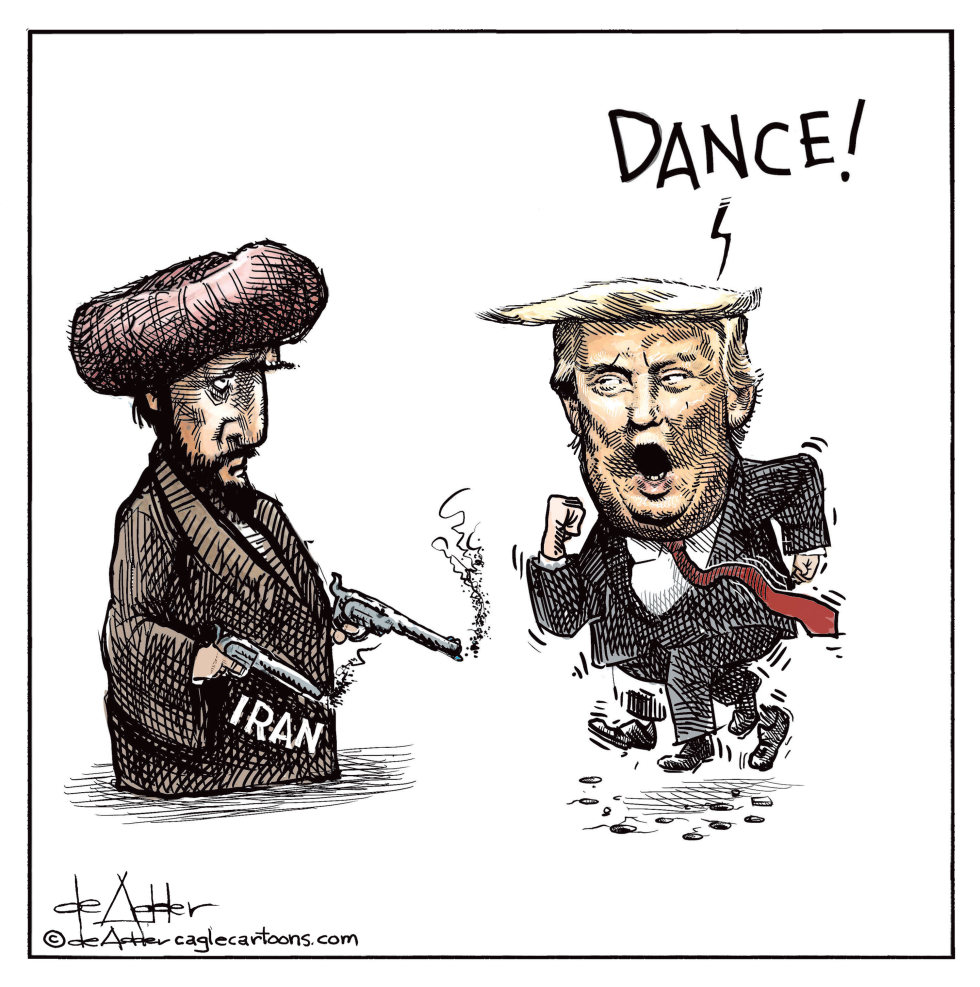
The image presents a man marked Iran holding two pistols with one discharging smoke toward the feet of a dancing Donald Trump. Trump appears with mouth open and one fist raised under the word Dance. The scene draws from longstanding tensions between the United States and Iran as of late July 2026. No specific new event within thirty days anchors the work so the visual addresses the persistent dynamic of pressure and response between the two sides. The composition places the Iran figure on the left in traditional headwear and the Trump figure on the right in motion.