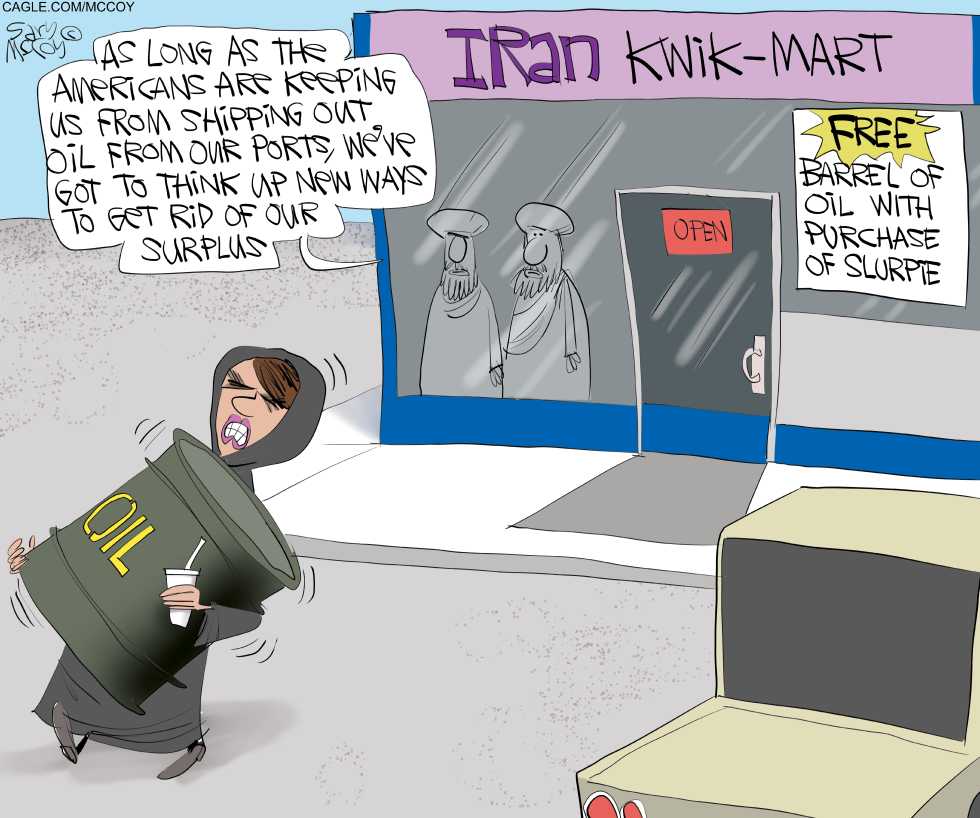
Gary McCoy's cartoon depicts two bearded Iranian clerics inside the Iran Kwik-Mart, promoting a free barrel of oil with Slurpee purchase to handle surplus crude. Outside, a hooded figure dumps an oil barrel into a car trunk, lamenting U.S. blockades on shipping ports. The image ties into Strait of Hormuz tensions, oil prices, Trump-era policies, Iran's Revolutionary Guard, and Middle East conflicts, highlighting ironic solutions to energy surplus amid international sanctions and naval standoffs. Commercial ships and tankers face barriers, forcing creative disposal methods in this dryly humorous take on global oil dynamics.
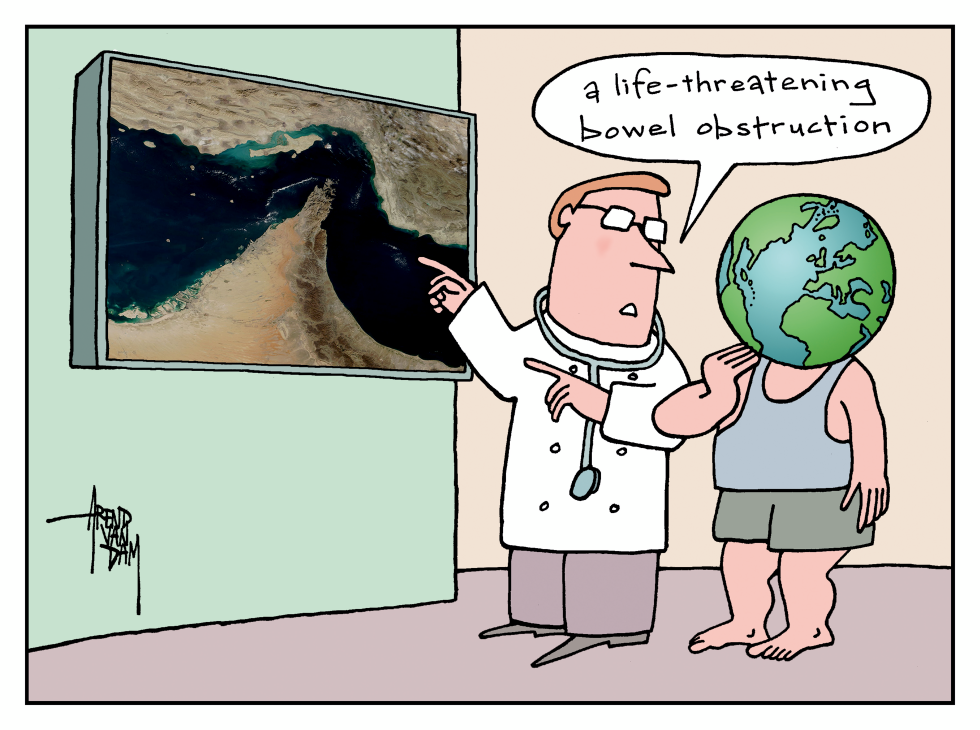
Arend van Dam\'s cartoon depicts a doctor diagnosing a child-like figure with a globe for a head, pointing to a screen showing the Strait of Hormuz as a life-threatening bowel obstruction. This visual metaphor ties into tags such as economy, world, oil, gas, obstruction, and war, illustrating how blockages in key trade routes threaten global stability. The barefoot patient in casual attire underscores vulnerability, while the doctor\'s serious demeanor adds dry humor to the geopolitical satire. Negotiations with ayatollahs and regime sanctions loom in the background, making the image a pointed commentary on how such conflicts create economic chokepoints. The overall composition blends medical analogy with international affairs for sharable impact.
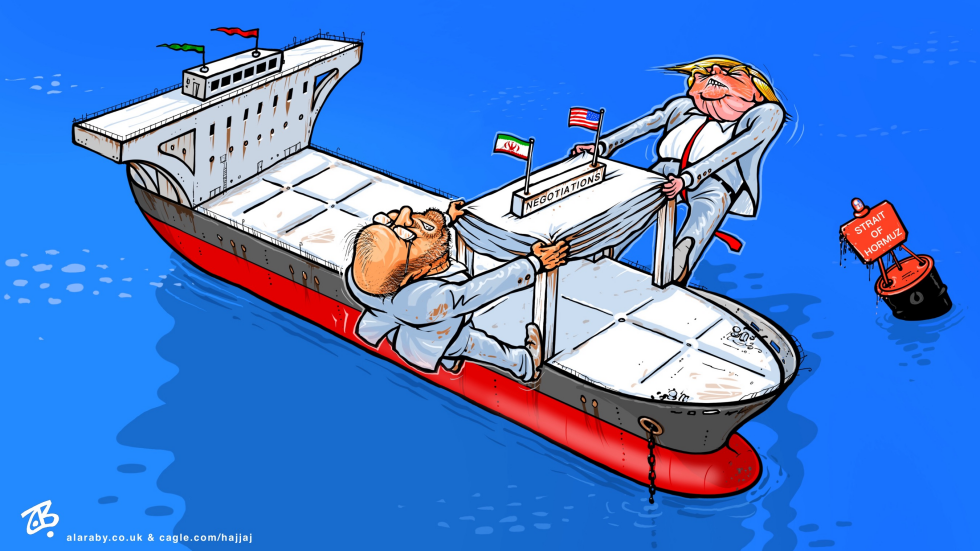
Emad Hajjaj\'s cartoon captures the tense Hormuz Strait negotiations between Trump and an Iranian figure on a massive tanker ship flying US and Iran flags. The scene shows them balancing a \'NEGOTIATIONS\' table on the tilting vessel, with an anchor chain and a leaking \'Strait of Hormuz\' buoy spilling oil. This Gulf war satire highlights the precarious talks amid potential sea block, where the ship appears damaged and unstable. Tags like ship, anchor, Gulf, war, tanker, talks underscore the maritime conflict theme. The dry humor lies in the literal sinking of diplomatic efforts.
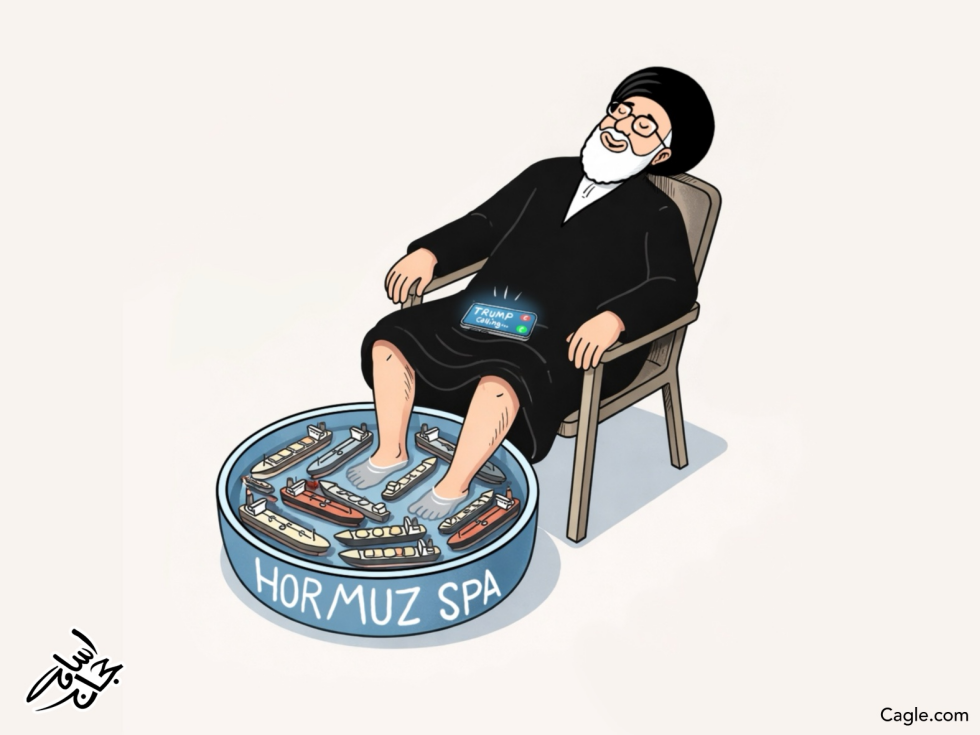
Osama Hajjaj draws an Iranian leader, resembling a cleric in black robes and turban, slouched in a chair with feet immersed in a blue basin labeled Hormuz Spa. Tiny ships float around his feet, evoking the Strait of Hormuz. A phone on his lap displays Trump with a green light, implying a call or alert. The scene captures dry satire on Iran-Trump relations, with the spa pun highlighting control over vital shipping lanes. Tags like Hormuz, Iran, Donald Trump, spa, and political cartoon underscore the humor in geopolitical friction.
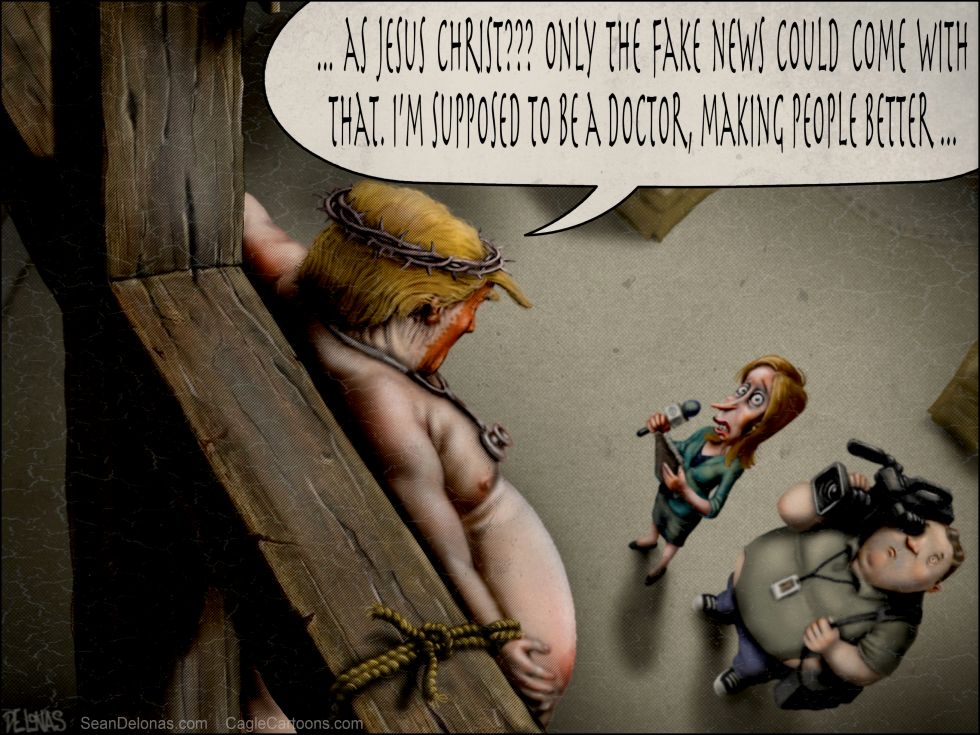
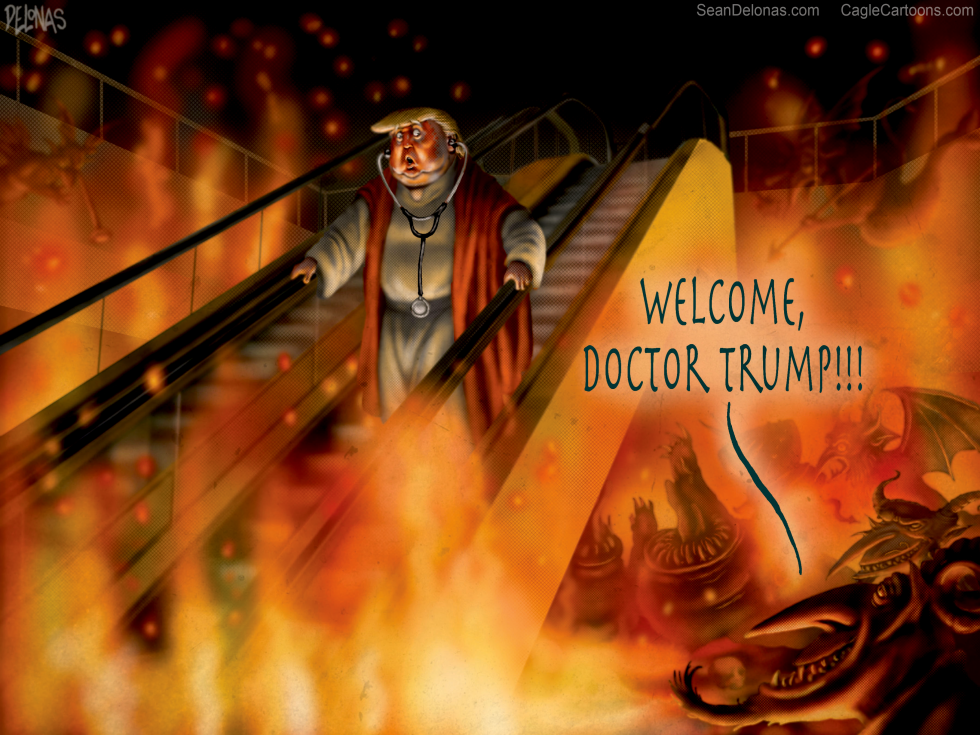
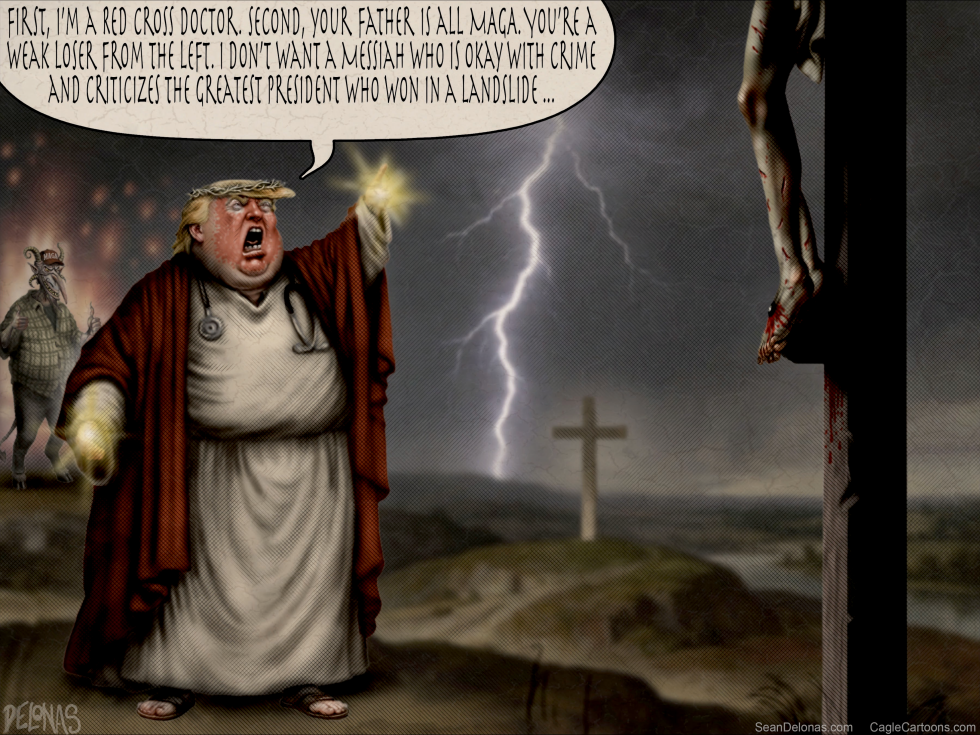
Delonas places Trump in a crucifixion scene, robed with stethoscope, rejecting the messiah as a weak leftist. Stormy skies and a demon add drama, blending politics and religion for dry satire. Tags like Trump, Jesus, Crucifixion highlight the bold commentary on leadership cults.
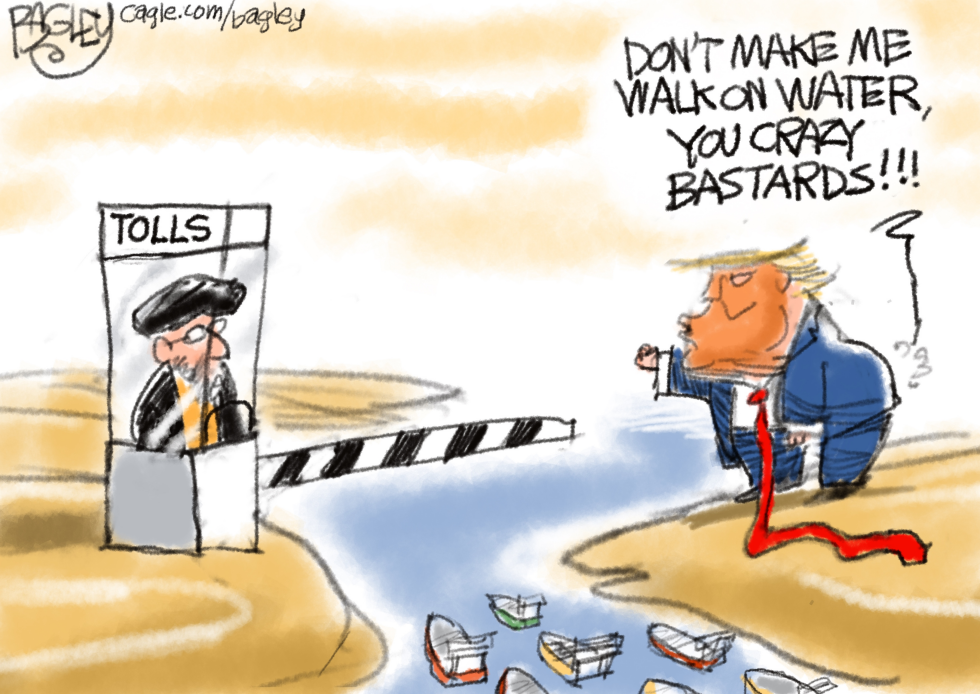
Donald Trump stands at the edge of a body of water confronting a toll booth operated by a figure resembling Ayatollah Khamenei. Small tankers sit in the water below while Trump issues a warning about walking on water. The scene references shipping routes through the Strait of Hormuz and surrounding nations.
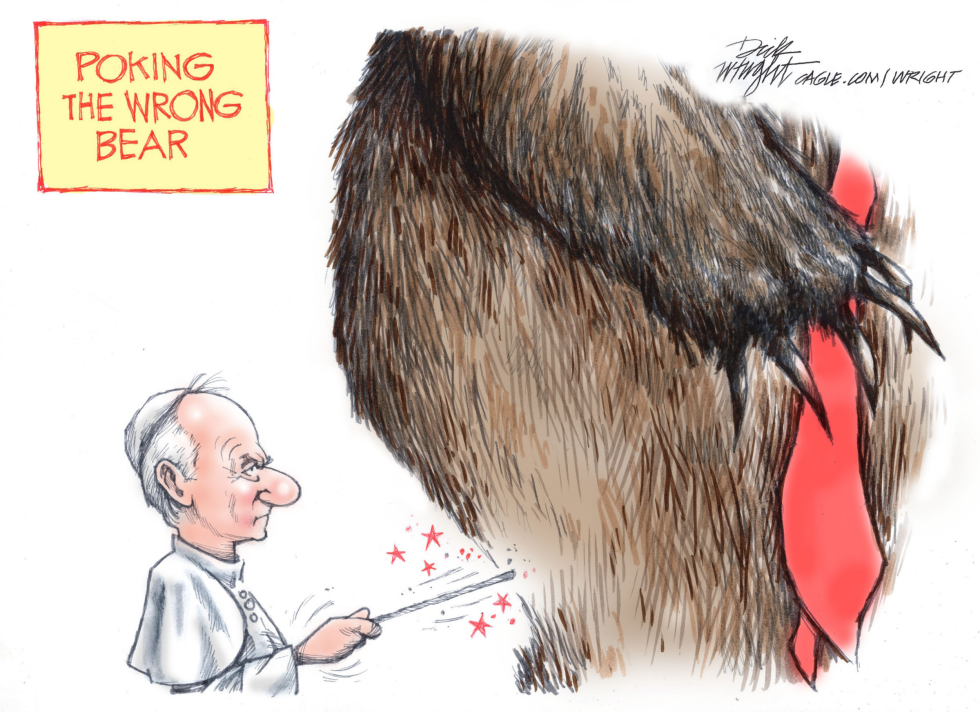
Dick Wright's political cartoon depicts a Pope-like figure in white attire, extending a thin rod toward the rear of a massive brown bear, complete with a dangling red tie and sparkling effects at the point of contact. The yellow label reads 'POKING THE WRONG BEAR,' playing on the idiom with a twist. This satirical illustration ties into the Trump-Pope feud, using the bear as a stand-in for power, the red tie evoking Trump's signature look, and the poking action suggesting provocation. Cartoonists often employ such animal metaphors for political commentary, and Wright's style here delivers clear lines and exaggerated features for impact. The image avoids overstatement, sticking to visible elements like the bear's claws and fur details, making it a straightforward jab at ongoing tensions.