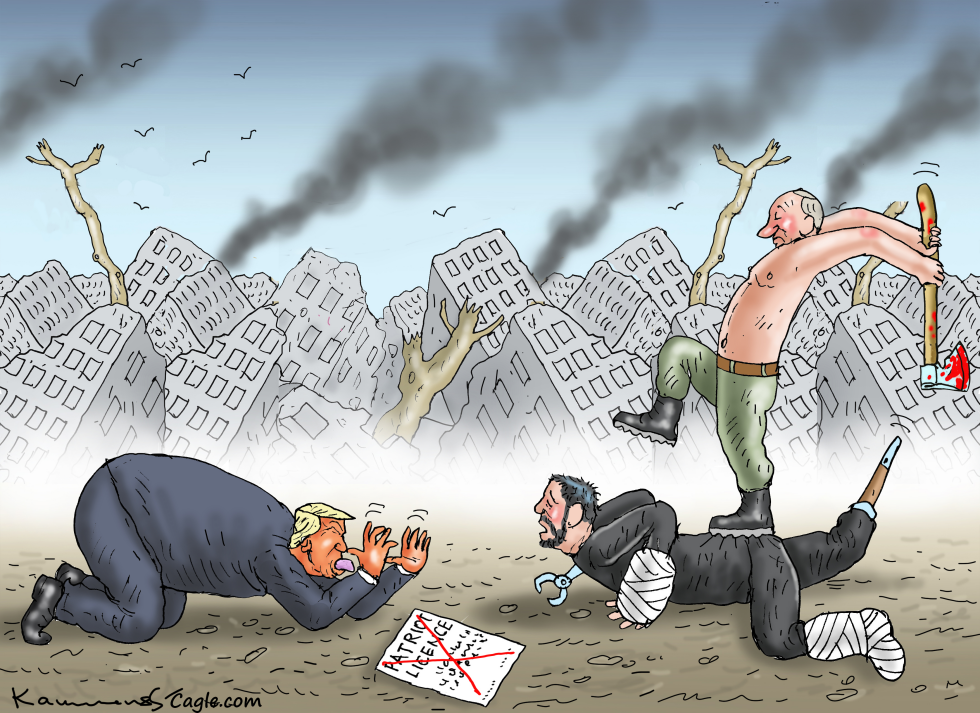
Russian President Vladimir Putin asserted dominance in the ongoing Ukraine conflict as US President Donald Trump and Ukrainian President Volodymyr Zelenskyy faced mounting pressure in mid-2026. The war continued to devastate Ukrainian cities with no immediate resolution in sight. The editorial depicts Putin as the unchallenged power broker leaving both leaders vulnerable and sidelined.
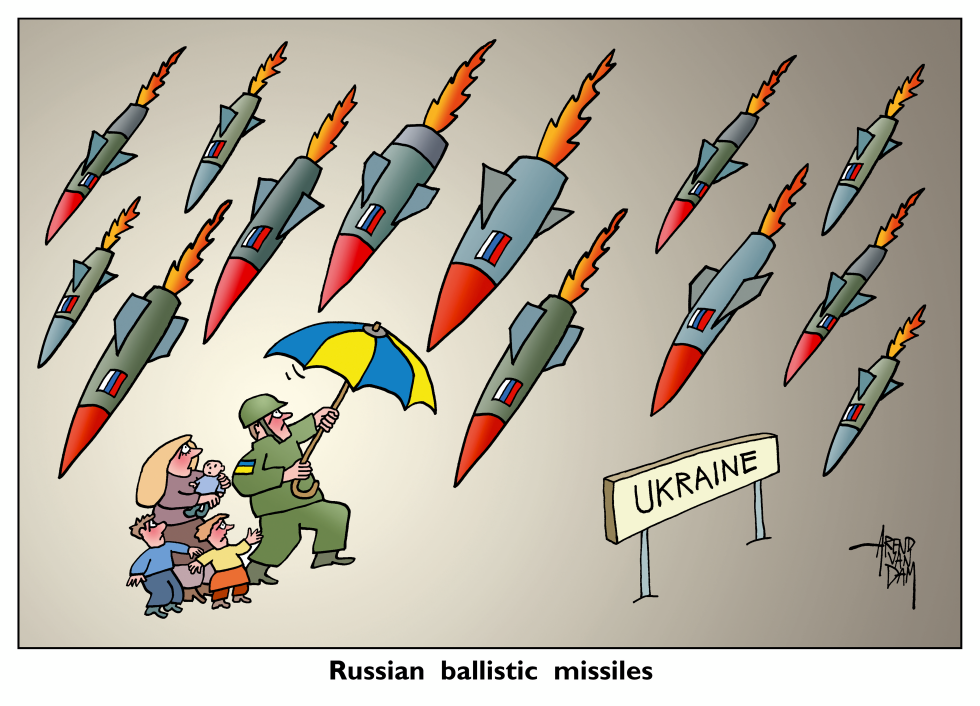
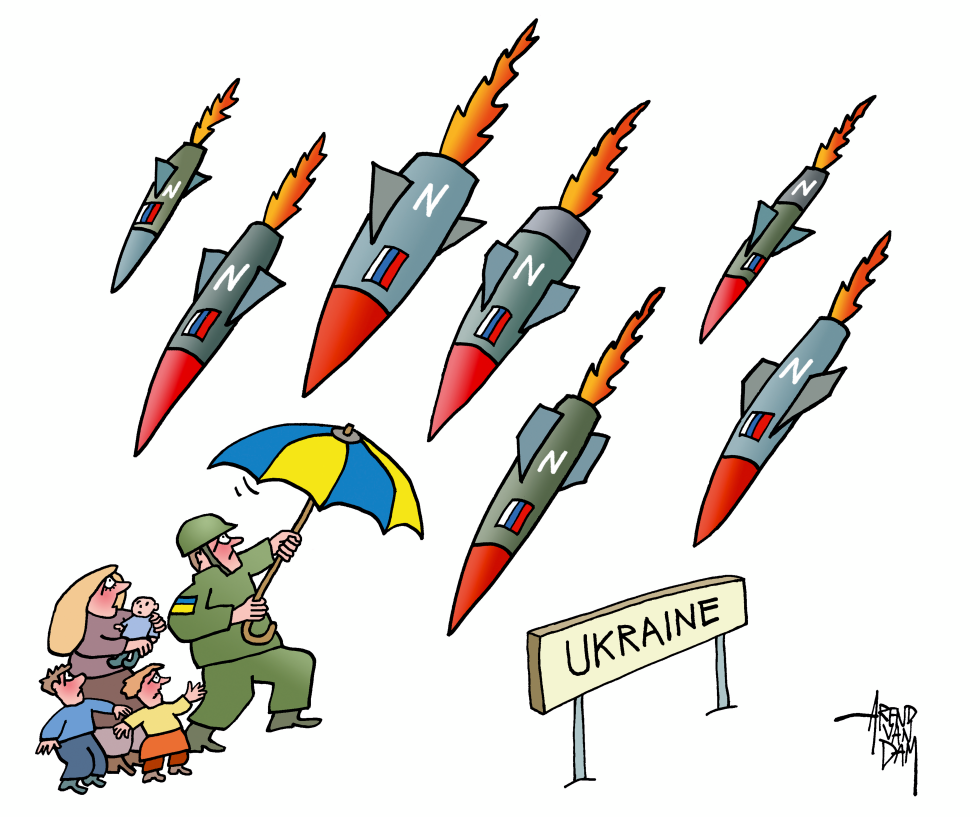
Russian ballistic missile strikes continue to target Ukrainian territory amid the prolonged conflict. A Ukrainian soldier stands at the forefront shielding a family of civilians from the barrage. The attacks underscore the persistent threat to noncombatants and infrastructure. The image frames the soldier's action as a direct barrier between the incoming weapons and those under protection. It emphasizes the role of Ukrainian forces in sustaining civilian safety during sustained aerial assaults.
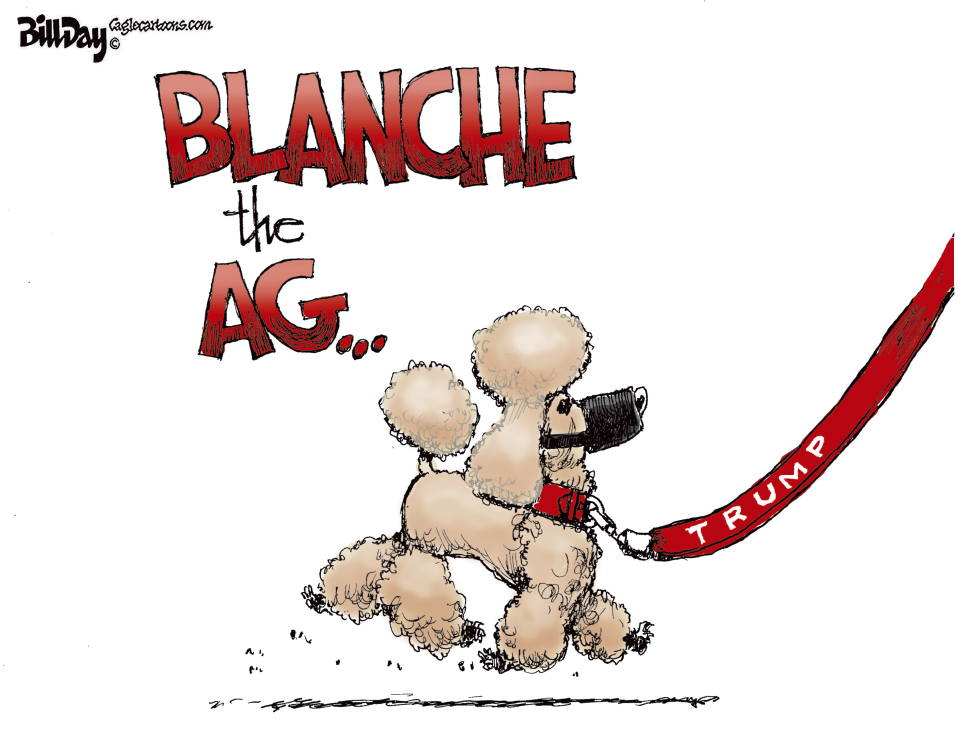
The cartoon responds to ongoing questions about the independence of the attorney general under a Trump administration. Blanche, depicted as the AG, faces scrutiny over whether the office operates free from direct presidential direction. The piece argues that the attorney general remains tethered to Trump rather than acting as an independent legal authority.
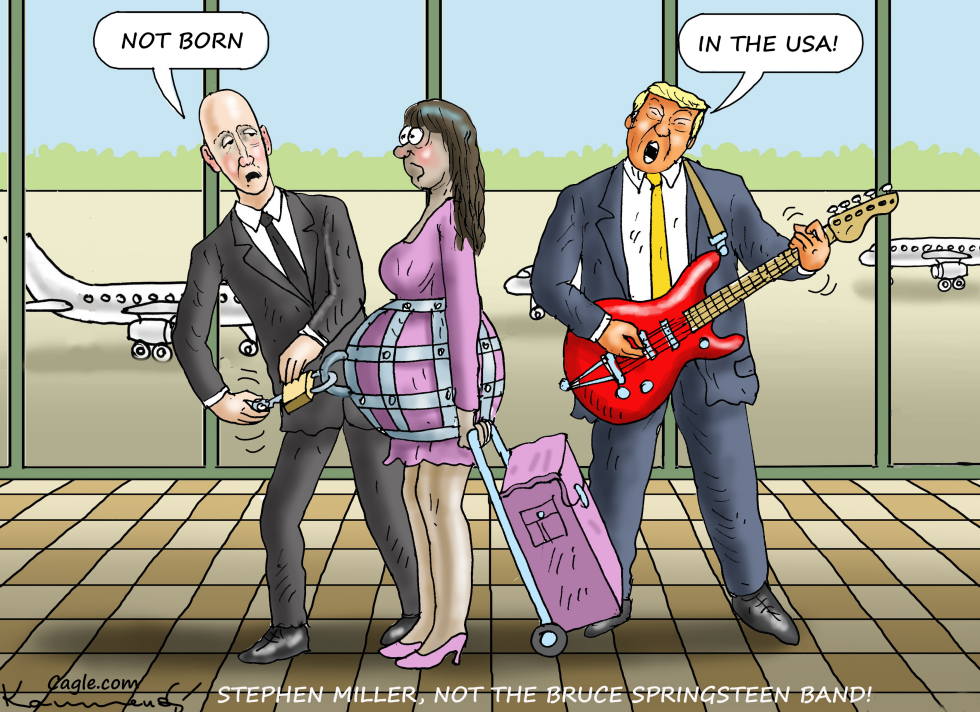
On August 7 2026 the Trump administration renewed focus on ending birthright citizenship through executive action targeting children of non-citizens. Stephen Miller has led policy efforts to reinterpret the 14th Amendment and increase deportations. The cartoon depicts Miller securing a pregnant traveler at an airport while Trump performs a Springsteen parody. It criticizes the administration's approach as overly aggressive and musically off-key.
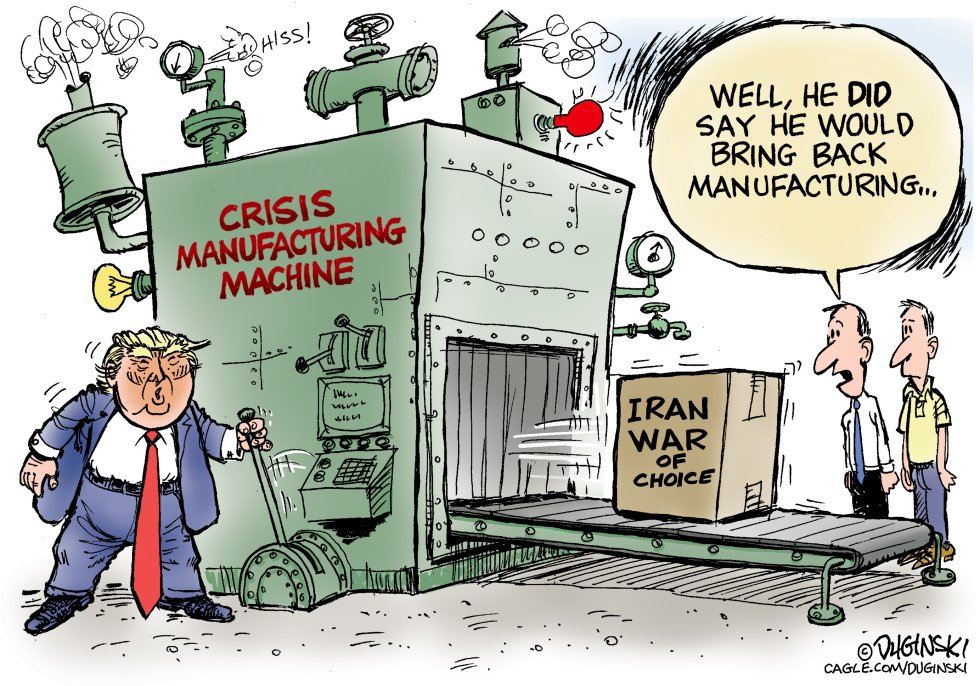
Donald Trump, holding the presidency in 2026, faces renewed scrutiny over foreign policy toward Iran. Recent statements revive campaign pledges to restore domestic manufacturing while tensions with Tehran escalate. The administration\\\'s approach draws criticism for prioritizing confrontation over diplomacy. Observers note the pattern of generating external crises rather than economic gains at home. The cartoon argues that Trump\\\'s actions fulfill a literal version of his manufacturing rhetoric by producing conflict instead of jobs.
Russia has escalated its campaign against Ukraine with ballistic missiles carrying nuclear markings. The strikes heighten risks to civilian populations already under sustained attack. The editorial argues that such threats underscore the need for stronger defensive measures and international resolve to deter further escalation in the protracted conflict.
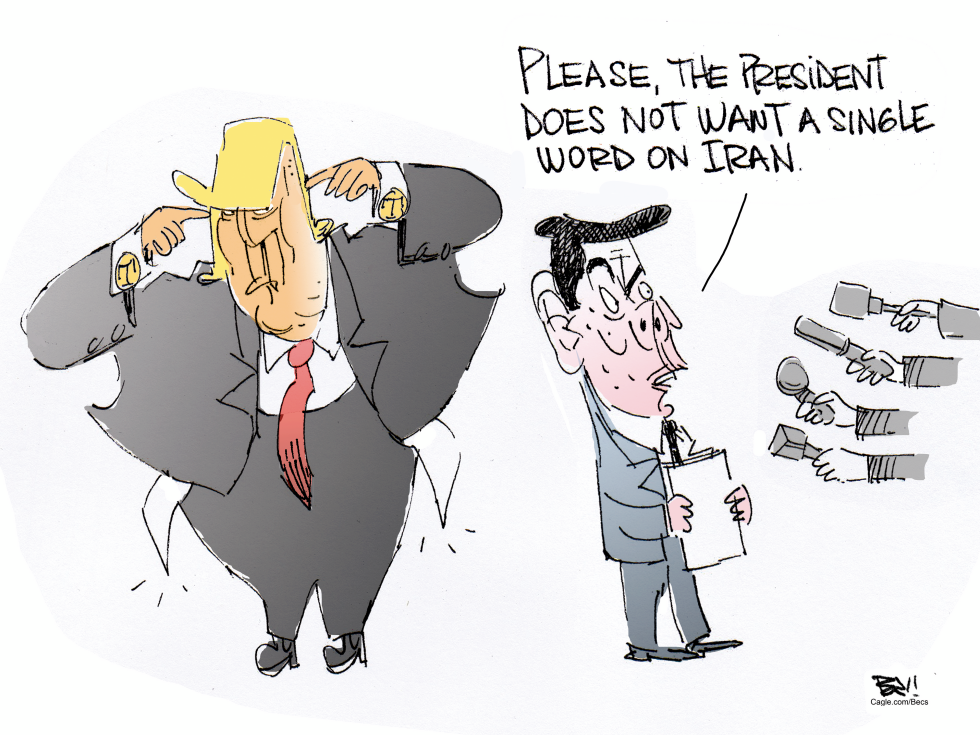
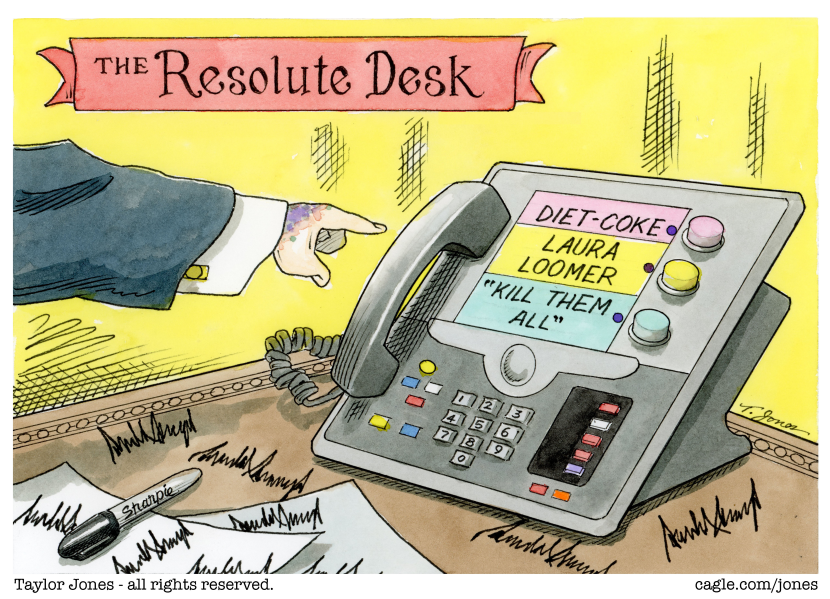
President Trump directed staff to avoid any public discussion of Iran policy. The move drew immediate pushback from reporters seeking clarification on administration plans. The editorial takes the position that the order reflects an effort to avoid accountability on a key foreign policy issue.
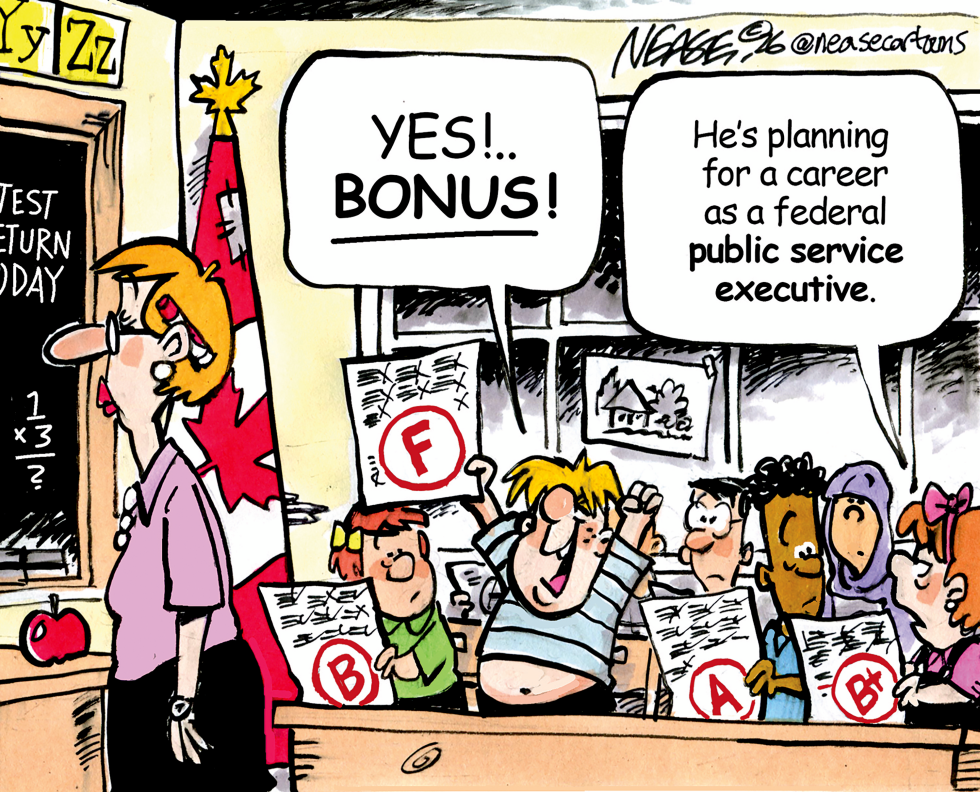
A Canadian classroom cartoon depicts a failing student celebrating a potential federal public service bonus. The piece critiques how government bureaucracy may reward poor performance through executive incentives rather than merit-based advancement.
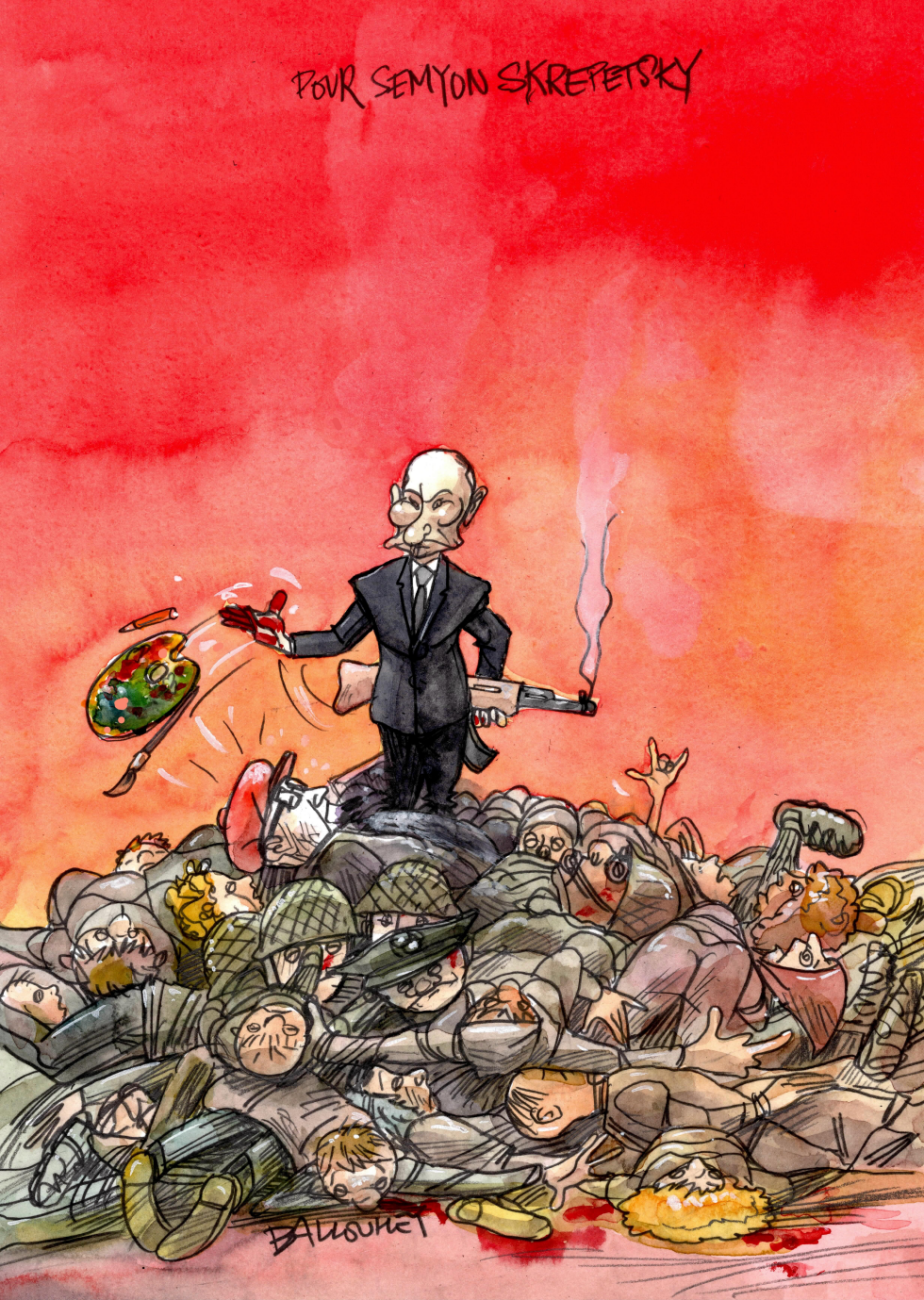
The illustration shows Semyon Skrepetsky standing on a heap of dead soldiers. He grips a rifle in one hand and a painter's palette in the other. Smoke rises from the weapon. The red-orange background suggests conflict. Text above reads 'POUR SEMYON SKREPETSKY'. The scene responds to ongoing military developments involving Russian forces as of the August 2026 publication date. The composition places the central figure above the casualties to emphasize the human cost of the fighting.
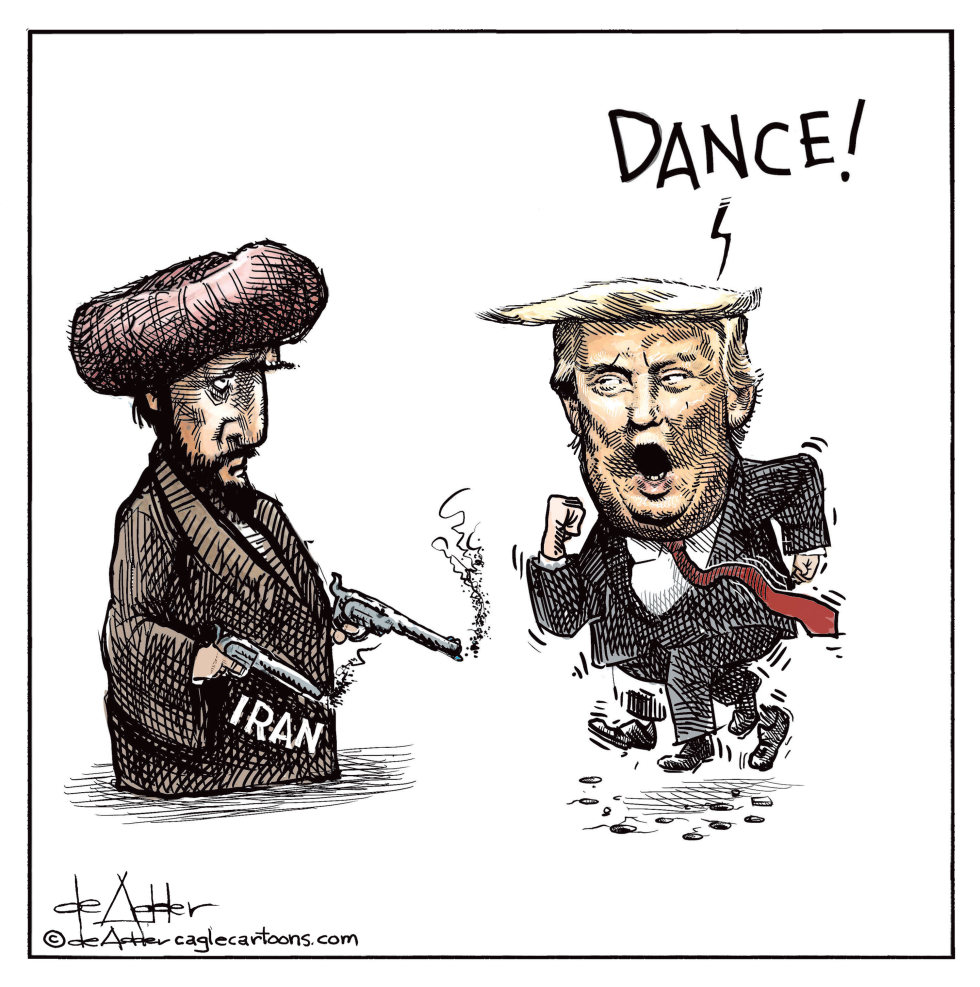
The image presents a man marked Iran holding two pistols with one discharging smoke toward the feet of a dancing Donald Trump. Trump appears with mouth open and one fist raised under the word Dance. The scene draws from longstanding tensions between the United States and Iran as of late July 2026. No specific new event within thirty days anchors the work so the visual addresses the persistent dynamic of pressure and response between the two sides. The composition places the Iran figure on the left in traditional headwear and the Trump figure on the right in motion.
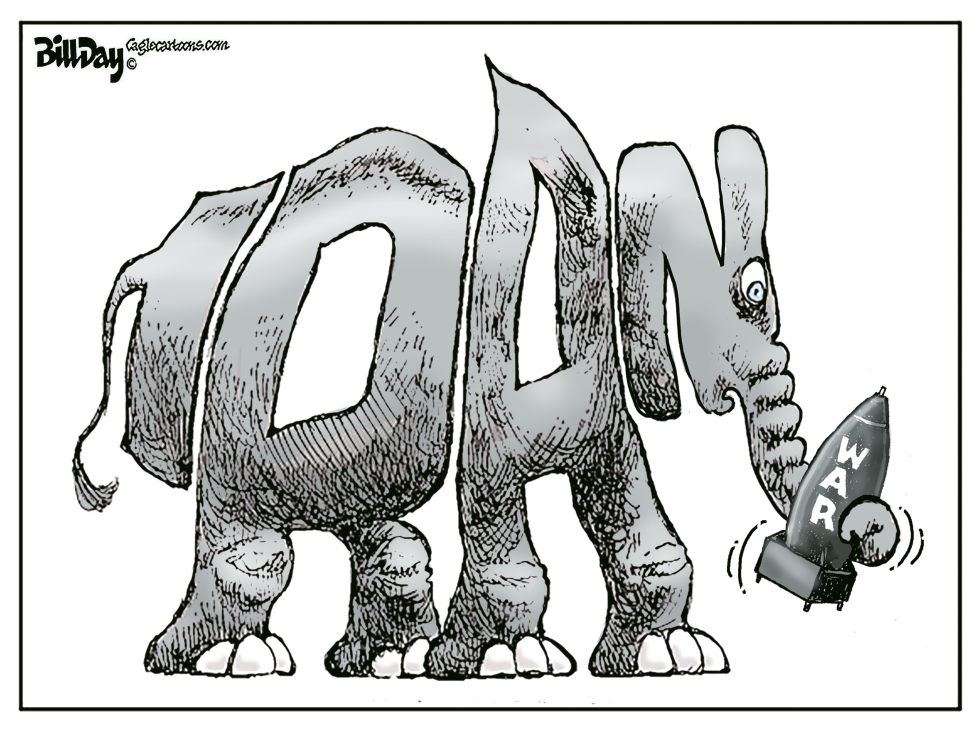
The Republican Party continues to navigate internal divisions over foreign policy and military engagement. Recent statements from party leaders have emphasized strength abroad while avoiding specific commitments on ongoing global conflicts. The piece portrays the GOP elephant as directly handling a war bomb, underscoring the risks of escalating rhetoric. It highlights how party identity remains tied to assertive defense postures. The editorial position criticizes the embrace of war imagery as potentially reckless.
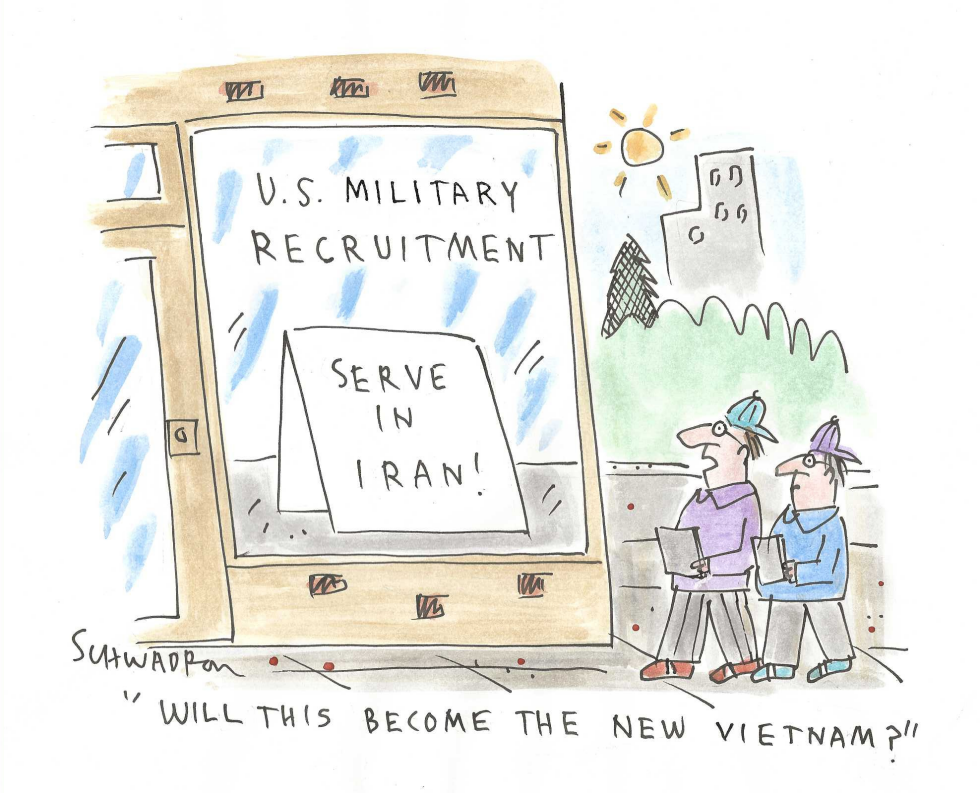
U.S. military recruitment efforts have begun highlighting opportunities to serve in Iran, prompting public questions about potential escalation. The move comes amid ongoing regional tensions and draws direct comparisons to the Vietnam War era. Observers worry the campaign signals a shift toward deeper U.S. military commitments overseas. The editorial takes the position that such recruitment tactics risk repeating past mistakes by underestimating public resistance to prolonged conflicts.
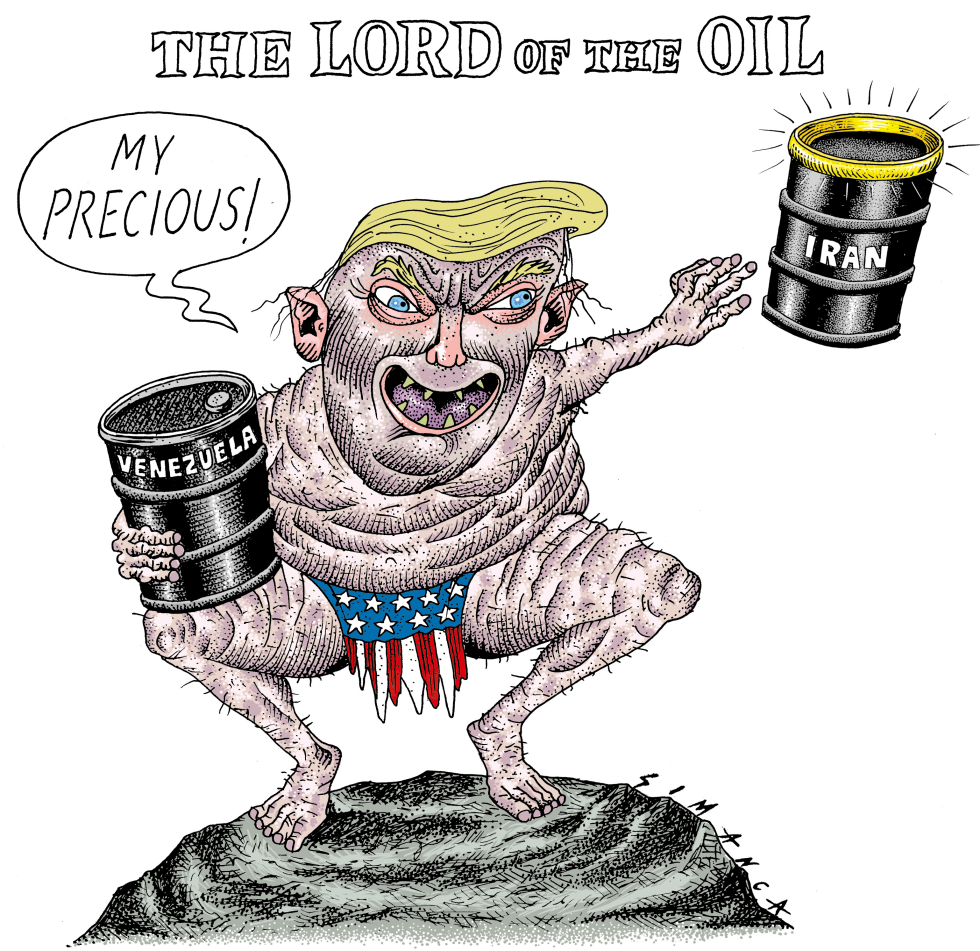
Donald Trump has intensified pressure on Iranian oil exports through renewed sanctions while maintaining claims on Venezuelan resources. The moves aim to reshape global energy markets and counter rivals in the Middle East and Latin America. The editorial portrays this focus as an obsessive drive for control over foreign oil supplies.
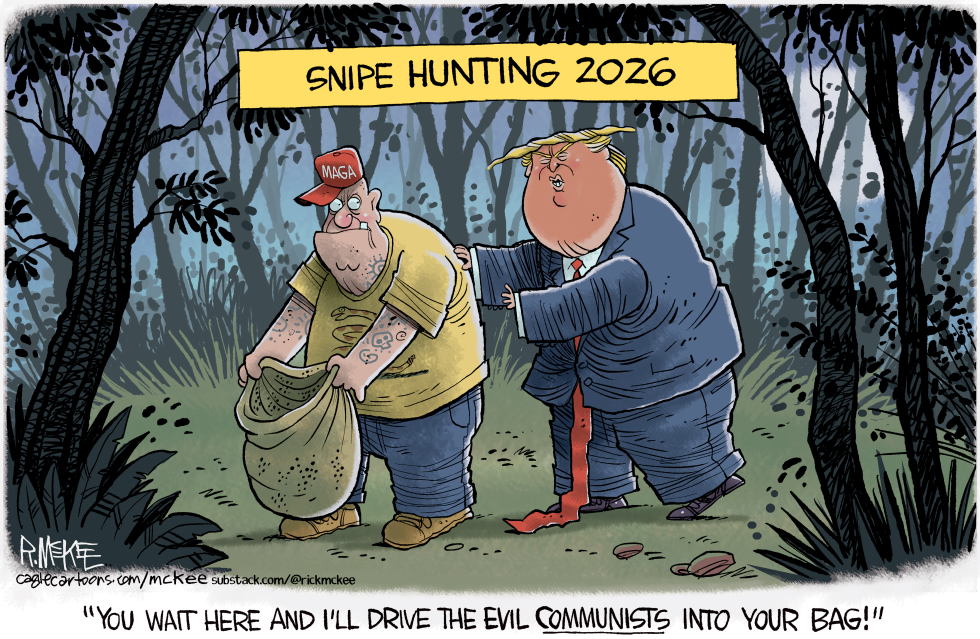
Donald Trump appears in a wooded setting with a MAGA supporter holding an open bag. Trump gestures ahead and vows to drive evil communists into the trap. The image frames the effort as a classic snipe hunt, highlighting the futility of the promised purge.